









Chinese Mainland
HKTDC Research | 3 Aug 2015
Israeli Technology: Targetting the Emerging Markets
Facilitating Technology Transfer to Asia: The Hong Kong Bridge
Accounting for 57% of the world’s GDP[1] , developing countries are becoming the new investment and export destinations for many global corporations. In view of the rapid economic growth in developing Asia, many multinationals are progressively expanding into Asia’s emerging markets. With its technology-dominated export sector, Israel is looking beyond the developed markets and increasingly targeting emerging markets. In particular, it is focussing on the Chinese mainland and a number of countries in Southeast Asia, looking to provide technologies as well as high-tech products to cater to their needs.
As the premier business and financial hub in Asia – and as a technology marketplace – Hong Kong is the ideal partner and gateway for Israel’s technologies and high-tech exports when they come to enter the region’s emerging markets, particularly the Chinese mainland. Thanks to its strong intellectual property (IP) rights protection, Hong Kong is in a good position to facilitate technology transfer from Israel to the emerging markets in Asia, while providing full-fledged professional services, including legal and financial services, and assisting in the customisation and localisation of Israeli technologies.
Israeli Technologies – Addressing Global Environmental Issues
In recent years, climate change and abnormal weather conditions have increased the demand for environmental technologies, including renewable energy and water management systems. With developed disaster-proof facilities found to be immature, developing countries are relatively vulnerable to adverse natural conditions. In this regard, Israeli cutting-edge R&D in environmental and clean-tech sectors is in a good position to meet the technological demand in the emerging markets. Israel is a global leader in environmental technologies for water conservation and greenhouse gas reduction, which are important for addressing global environmental issues, such as drought and water treatment.
|
Israel’s Cutting-edge Water Technologies With its scarcity of water resources, Israel has striven hard to develop water preservation and wastewater treatment technologies. Israel has the world’s highest water recycling rate (80%), and it is home to the world’s largest seawater reverse osmosis desalination plant[2]. In terms of agriculture, Israel is home to the world’s largest company for drip irrigation, a process which sees water and fertilizers delivered directly to the root system, rather than to the entire field surface, thereby saving water and fertilizers. Drip irrigation has been in use in Israel since the mid-1970s, and currently Israel exports more than 80% of its drip irrigation products. |
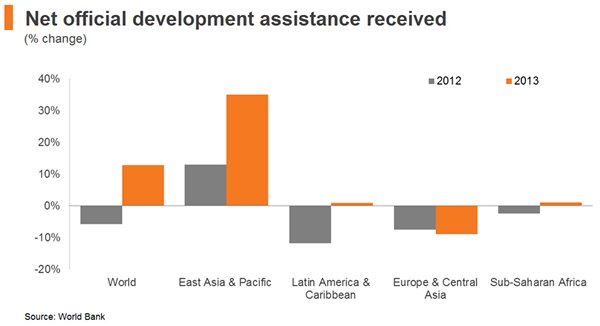
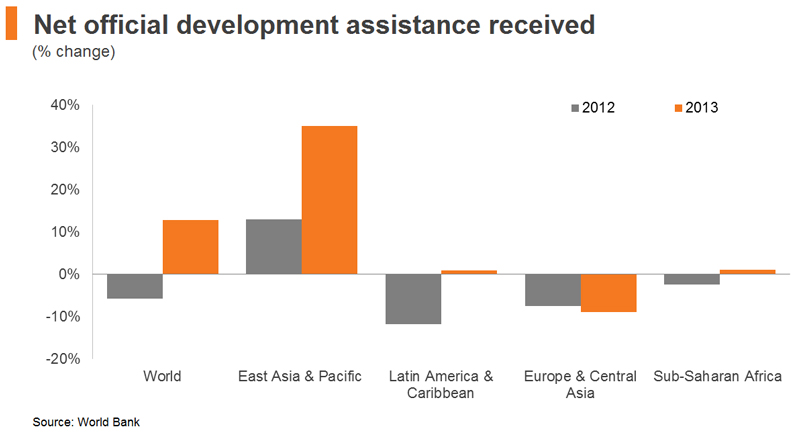
Continued urbanisation of developing countries has driven up water and energy consumption by the household, commercial and industrial sectors. To an extent, such demand has been strengthened by the growing number of infrastructure projects in those developing countries that are supported by official development assistance (ODA). This has induced more government and private sector procurement needs for projects in energy, water, telecommunications and agriculture. In particular, ODA inflow in the East Asia and Pacific region registered double-digit growth in 2012-2013, surpassing that of other regions.
Complementing existing multinational institutions, such as the World Bank and Asian Development Bank, the establishment of the China-led Asian Infrastructure Investment Bank (AIIB), along with the "One Belt, One Road" initiative, is expected to accelerate infrastructure construction in developing Asian countries. In this regard, urbanisation in emerging markets presents great potential for the Israeli technology sector to help establish modern infrastructure in those expanding cities. Hong Kong has a large pool of world-class services providers in engineering, surveying and project management. These, along with the city’s legal professionals who can provide comprehensive legal advice on construction, financing and environmental issues, place Hong Kong in the ideal position to connect Israeli technology exporters with those Asian countries that need appropriate technological solutions for infrastructure development.
Targeting the Consumer Markets in Developing Countries
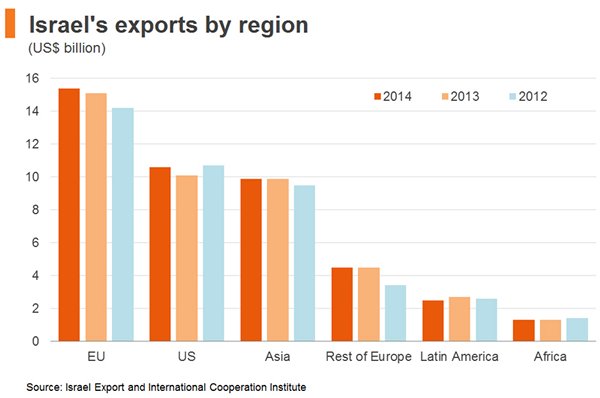
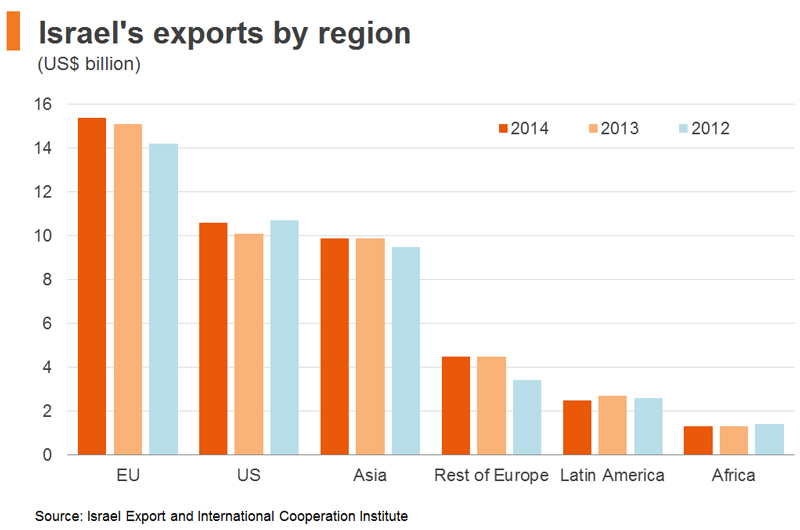
The opportunities arising from the fast-expanding consumer markets in developing countries are also being recognised by the Israeli business community. Despite the increased focus on the growing middle-class in the emerging markets over the past decade, Israel has yet to make significant inroads into these consumer markets. Since the 2008 financial crisis that weakened the economic performance in the West, Israeli exporters have started to develop emerging markets in Asia. In 2014, Israeli exports to Asia totalled US$10 billion, accounting for 21% of the country’s total exports. The EU market accounts for a 32% share, and the US for 22%. China was Israel’s largest export destination in Asia, accounting for about a quarter of Israeli exports to the region. Currently, the bulk of exports to Asia are dominated by industrial inputs - in particular, electronic components shipped to Intel’s assembly plants across Asia.
According to a number of Israeli technology industry players interviewed during a recent HKTDC field trip to Israel, many local SMEs and exporters are not familiar with the distribution networks in Asia and are unable to engage in the mass-production of technological products that is necessary in order to be price-competitive in Asia’s emerging markets. As a result, they are neither targeting nor developing products for the consumers in this region. In this regard, Hong Kong intermediaries could play a useful role in linking Israeli technology entrepreneurs with those multinationals that have a presence in developing Asia, or to help them partner with local firms in the development of products targeting the emerging markets.
Healthcare Market Gaining Heed
Growing concerns over health and fitness, an aging population and an expanding middle-class in the emerging markets are all driving the demand for more advanced medical devices, pharmaceuticals and healthcare services. In 2014, consumer expenditure on health products and medical services in developing countries reached US$318.7 billion, up by 60% compared to 2009. In particular, the figure for Chinese consumers doubled during the same period. To seize opportunities in the fast growing healthcare markets, Israeli healthcare exporters have become more active in penetrating Asia. For example, Teva Pharmaceutical, the world’s largest generic medicines producer, has expanded to China, Japan and Korea over the past decade. Moreover, during that decade, the number of life science companies in Israel has grown fivefold to about 1,000, with about half of them engaged in exports. Many international healthcare and pharmaceutical companies, including GE Healthcare, Siemens and Phillips Healthcare, have established operations in Israel and are developing advanced medical equipment, medications and healthcare IT solutions.
According to industry experts in the Israeli healthcare and medical sector, several challenges are hindering the growth of Israel’s health goods exports to the emerging markets, notably China and India. Constantly changing regulations, for example, make it hard for Israeli products to comply with the latest standards and requirements. In addition, there is a lack of well-trained professionals and advanced facilities to perform R&D activities. In this regard, Hong Kong is the ideal platform for the marketing and distribution of Israeli healthcare products in Asia.
Notably, the 2015 edition of the Hong Kong International Medical Devices and Supplies Fair welcomed more than 250 exhibitors from 11 countries and regions, all showcasing a wide range of healthcare equipment and household medical products. With solid market knowledge and strong experience in developing the China market, Hong Kong companies make ideal partners for Israel when it comes to developing healthcare goods to meet local needs and in compliance with the relevant regulations. In addition, Hong Kong companies could find opportunities to collaborate with Israeli counterparts to conduct R&D and develop new healthcare products.
Strengthening R&D Collaboration with Emerging Markets
Israel has been active in fostering technological R&D collaboration with developing countries in recent years. The Israeli government has entered into bilateral Industrial R&D Support Agreements with a number of major emerging markets, such as India and the Chinese mainland. The first Israel-China bilateral R&D co-operation programme was launched in 2009 with Jiangsu Province. Since then, more than 200 applications have been submitted by joint companies from both countries, with total funding of more than US$20 million as of 2014. Israel has signed a Memorandum of Understanding (MoU) with the Chinese mainland and Hong Kong respectively, providing the framework for bilateral programmes to promote joint R&D and innovation activities. The MoU enhances Hong Kong’s role as a springboard for those Israeli companies aiming to expand in Asia (more details can be found in “Israel: Technology and R&D Collaboration Opportunities”).
Through collaborative research and product development with Israeli companies, Hong Kong could serve as the bridge for Israeli innovations to the technology markets in Asia. Israeli technology firms could leverage the strong production capacity and distribution network of Hong Kong manufacturers on the mainland to establish a foothold in China and the rest of Asia. Notably, Hong Kong is one of world’s top five exporters of technological products, including telecoms devices and equipment, electronic integrated circuits, and computer parts and accessories. With well-established global networks and close business ties with the Chinese mainland, Hong Kong companies may partner with Israeli high-tech firms to facilitate the production, sales and distribution of technological products, as well as any necessary customisation and repackaging to cater for local market preferences across Asia. In addition, Hong Kong could be a platform for technology transfer and commercialisation, and act as a springboard for Israeli R&D services providers, including engineers and scientific researchers, to market their technical know-how and expertise in the region.
Useful Contacts
| The Israel Export & International Cooperation Institute (China Unit) |
Tel: +972-3514 2866 Email: peggym@export.gov.il Website: www.export.gov.il/eng/Branches/Technologies/TargetMarkets/ |
| The Israel Industry Center for R&D (China-Israel R&D Co-operation programmes) |
Tel: + 972-3511 8166 Email: talia@matimop.org.il Website: www.matimop.org.il/china.html |
| Federation of Israeli Chambers of Commerce | Tel: +972-3563 1020 Email: chamber@chamber.org.il Website: www.chamber.org.il |
| The Office of the Chief Scientist (OCS), Ministry of Economy |
Tel: +972-02-6662456 Email: Aviram.Zolti@ocs.moital.gov.il Website: economy.gov.il/RnD/pages/default.aspx |
| Hong Kong Trade Development Council (Tel Aviv Consultant) |
Tel: +972-52633 3644 Email: tel.aviv.consultant@hktdc.org Website: http://hkmb.hktdc.com/en/contact-hktdc/TEL-AVIV |
| Consulate General of Israel in Hong Kong and Macau (Economic and Trade Department) |
Tel: +852-2821 7509 Email: winkie.lui@israeltrade.gov.il Website: embassies.gov.il/hong-kong/Departments/Pages/economic-affairs.aspx |
[1] According to IMF’s estimate for 2014, World Economic Outlook Database (April 2015)
[2] A cost-efficient water purification facility built by Israel’s IDE Technologies , producing more than 200 million cubic metre annually and accounting for 20% of the household water consumption.
| Content provided by |  |
Editor's picks
Trending articles
HKTDC Research | 5 Aug 2015
“The Belt and Road” and Hong Kong’s Economic Transformation and Challenges
To Hong Kong, the Belt and Road initiative is in one way a cause for joy, but in another, a matter of concern. The reason for rejoicing is that business opportunities brought about by the initiative may allow Hong Kong a chance to embark on a whole new course of development. The reason for concern is that the epochal changes that may be triggered off by the initiative may further marginalise Hong Kong. Yet nothing is absolute in the affairs of the world; whether it is a cause for joy or a matter of concern is not predestined. From past records, I believe it is more likely joy than concern; but the key is to grasp and respond to situations flexibly.
Capitalise on strengths by leveraging geographic and sector advantages
The notion of marginalisation is not a new one: as early as the 1980s when the local manufacturing sector relocated northwards en masse, there were already worries about a “hollowing out of industries”. Later, as the mainland opened up, intermediary sectors such as trading and logistics had also been under the threat of “dis-intermediation”. It turned out that old and outdated industries were “hollowed out” in no time, while related but higher value added industries in business services such as design, finance and marketing emerged quickly. Of course, in the process of conversion there was much suffering, but being such a tiny place, if Hong Kong had not changed with time, the outcome would have been much worse.
At first glance, the Belt and Road initiative presents Hong Kong with two predicaments. The first is geography: along the Belt and the Road are many regions such as Central Asia, Western Asia and Central and Eastern Europe, with which Hong Kong does not have strong ties. The second is industry sectors: high-speed rails, resources development, mining and metallurgy do not play into the strengths of Hong Kong.
The key in turning these predicaments into opportunities lies with responding flexibly to situations, capitalising on strengths and avoiding weaknesses. In terms of geography, Hong Kong should focus on regions with which it has stronger economic and business ties, such as Southeast Asia, South Asia and the Middle East. Particular attention should be paid to countries such as India, Indonesia, Vietnam and hub cities like Dubai, which are either among Hong Kong’s top export destinations or ones with great potential. There is a need to tighten ties with relevant countries; to participate actively and enter into bilateral and multi-lateral economic, trade and taxation agreements; and to intensify our promotion efforts and encourage multi-level exchanges and training. For regions such as Central and Western Asia and Central and Eastern Europe, to better build a strong foundation for more extensive economic and trade exchanges we should concentrate on developing official and civilian exchange channels and facilitate tourism, trade and investment by improving convenience in visa granting, transportation, customs clearance, certification and tax matters.
In terms of industry sectors, we should provide support to the Belt and Road initiative by leveraging our advantages as a service centre along the Belt and Road routes that are most internationalised and most familiar with Chinese matters. We should zero in on four sectors in particular:
- Finance: Including raising funds, financing, foreign exchange, insurance, treasury and risk management, and renminbi internationalisation.
- Shipping and logistics: Including regional distribution, intermodal transportation and value chain management.
- Business and trade promotion: Including conventions and exhibitions, business matching, quality inspection, design, property right transactions and brand management.
- Cross-border investments: Including services such as helping the “going out” of Chinese enterprises through mergers and acquisitions, as well as legal, arbitration and regional headquarters related services.

Source: HKTDC


Source: UN World Investment Report 2013

Market-oriented and Global Approach
In addition to the above-mentioned regional and sector focuses, Hong Kong also has two roles in the development of the Belt and Road initiative that should not be ignored. The first is its grasp of international market rules, and the second is its connections to regions outside the Belt and the Road.
To a large extent, the success of the Belt and Road initiative depends on whether or not it can align organically to the long-term economic development needs of the countries along the Belt and Road routes and achieve mutual benefit. This requires giving maximum play to market functions and doing things according to economic needs and international practices. The Belt and Road initiative, however, involves a large number of infrastructure projects that require the planning and participation of public sectors. So how to integrate market planning with balancing the interests of public and private institutions would be the key to success. In Hong Kong, many infrastructure areas such as power, harbour, telecommunication, bridges, tunnels, railways and airports are invested or operated either by private companies, or through public-private partnership or statutory corporations. Many local examples of such infrastructure are run very efficiently and have attained a high level of international standards. They can serve as important references, and help with the development of Belt and Road infrastructure projects.
Another key factor to the success of the Belt and Road initiative is that it should eventually reach beyond the Belt and Road and evolve into a global development strategy that drives the new world economic order. This requires a super connector that can convey the message of the Belt and Road to places outside its realm, particularly to the main industrial centres of North America, Europe and Japan. With its extensive economic and trade connections in developed markets, Hong Kong fits squarely into this indispensable role and can contribute towards extending the Belt and Road concept to the whole world. This way, Hong Kong not only can leverage the strengths of the Belt and Road initiative to consolidate the advantages of its own pillar industries, expand into markets along the Belt and Road routes and accelerate its transformation and upgrading. It can also play a more important role in the new world economic order.
This article originally appeared in Hong Kong Economic Times (4 August, 2015)
| Content provided by |  |
Editor's picks
Trending articles
HKTDC Research | 6 Aug 2015
Post-Soviet States Jostle For Role in One Belt One Road Initiative
Following an initially cool reception, many former USSR republics have been lured by the sheer size of China's investment in the OBOR project, with a number of them now keen to capitalise on the wider initiative in line with their own domestic interests, according to Alexander Gabuev, Chair of the Russia in Asia-Pacific Program at the Carnegie Moscow Center.


When Xi Jinping, the Chinese President, made his now famous speech in Astana [the capital of Kazakhstan] in September 2013, announcing the launch of the Silk Road Economic Belt, few post-Soviet leaders took notice. The language of the speech was too vague and the content of Xi's proposals too imprecise to create any meaningful response. As the project matured, however, more attention was paid in all 15 capitals of the former USSR republics.
Questions were raised, though, both about China's internal motivation and about the future routes. Chinese officials' general responses to direct requests and the frequently changing maps of the future routes (published by Xinhua, China's state-owned news agency) didn't offer much in the way of transparency with regard to the initiative.
At the March 2015 Boao Forum, the Chinese National Development and Reform Commission finally presented a blueprint of the One Belt One Road (OBOR) initiative, together with a declaration of its guiding principles. This, coupled with the establishment of the US$40 billion Silk Road Fund, saw the initiative taken much more seriously by officials and business communities across the post-Soviet space.
The reaction of each individual state, though, was largely determined by three factors – the size and structure of their economy, their membership of supranational communities, such as the EU or the EEU (Eurasian Economic Union – Armenia, Belarus, Kazakhstan, Kyrgyzstan and Russia), and the level of expertise inside their respective governments and business communities.
The EEU Link
When it was first mooted, Russia's reaction to the OBOR was mixed. Following the initial 2013 announcement, the Kremlin was reluctant to engage in any meaningful negotiation as to how Xi's initiative would coexist with the EEU, the pet project of Vladimir Putin, Russia's President. A number of people in Moscow, concerned over Russia's fading status as a regional superpower in Central Asia, regarded OBOR as an intrusion into Russia's sphere of influence. They, therefore, argued that the Kremlin should pressure the Central Asian states into not participating in the Chinese project. This kind of reaction was one of the major concerns among Beijing's Russia-watching community.
Chinese officials were clearly relieved when Igor Shuvalov, Russia's First Deputy Prime Minister, announced at the Boao Forum that the EEU was ready to cooperate with the OBOR project. He then personally undertook to negotiate a framework document with Chinese leaders on Putin's behalf.
On 8th May this year, during an official visit to Moscow, Xi and Putin signed a joint statement formally linking OBOR with EEU. The document pledged to create a "joint economic space" in Eurasia. China has officially recognised the EEU and has indicated its willingness to deal with this body rather than talk directly to individual member-states. Similarly, the Eurasian Economic Commission, the supranational body of the EEU, has now been mandated to start negotiations on a trade and investment agreement with China. The question of a free trade agreement with China – a sensitive problem for both Russia and Central Asian states given their high levels of protectionism – was declared a distant goal and effectively postponed to a later date.
For the Russian leadership, the agreement came as the result of painful internal discussions. In the end, the Kremlin concluded that the benefits of coordinating the EEU alongside the Chinese initiative outweighed the risks. It is now understood that it is inevitable that China will become the major investor in Central Asia and the major market for the region's vast natural resources.
The only way Russia can maintain its influence, then, is to recalibrate its role in the region to accommodate its own ambitions and Beijing's quest for raw materials, as well as the region's appetite for Chinese money. What the Kremlin is hoping for is a division of labour between Moscow and Beijing in Central Asia. In this grand scheme, China will be the major driver for economic development, while Moscow will remain the dominant hard security provider in the region through its Collective Security Treaty Organization.


The biggest problem now is the actual linking process. Moscow still sees it as a bureaucratic project and has created a team of officials, led by the Ministry of Foreign Affairs (MFA), to write the rules. The reality, though, will be more complicated as China has no masterplan for prioritising land-based routes to Europe and possibly wants to build them all simultaneously – partly in order to secure more projects for its stagnating domestic infrastructure industry. What the terms of the Chinese financial loans will be and how much Russian companies will be involved remains to be seen.
The first project, which both have sought to position as a consequence of linking the EEU and OBOR, is the construction of a high-speed rail between Moscow and Kazan. The Russian Railways initiated the project back in 2012, hoping for government money and a German contractor. In the wake of the Ukrainian crisis, the Railways changed tact and agreed a loan-for-contract scheme with the Chinese.
Another issue for Russia is its concerns that that land-routes through Central Asia and the European part of Russia will undermine the chances of the Trans-Siberian Railway becoming the major land link between the markets of Europe and Asia. As a result, Moscow will be pushing Beijing to include the Trans-Siberian Railway and the northern Baikal-Amur Railway as part of the OBOR project. At the same time it will looking for pledges to improve the infrastructure and regulatory issues regarding the ports of the Russian Far East. Vladivostok, for instance, was declared a free port this year by President Putin. Moscow hopes that Chinese investment, coupled with efforts to facilitate the required transit procedures, will strengthen Russia's position as a bridge between the East and West.
Belarus is also hoping to secure its own role in the project by emphasising (together with Russia) the strengths of the Customs Union, under which a cargo coming from China will need to cross just two customs borders (China/Kazakhstan and then Belarus/Poland) to get into the EU. Previously, Ukraine had some hopes of participating in OBOR, with former President Victor Yanukovich seeking to include Crimean ports in the scheme. Following Russia's annexation of the peninsula and the military conflict in the east of the country, however, Ukraine is now unlikely to be included.
The Stans and the Baltic States
Overall, the Central Asian states – the five "Stans" – may be most affected by the OBOR initiative. Kazakhstan will play an important role as three of the planned Silk Road routes are passing through the country. The Northern Route will be going through northern Kazakhstan, crossing into Russia, then proceeding to the EU either via Belarus or through the Baltic ports.
The Central Route, meanwhile, is intended to cross the Caspian Sea through the ports of Aktau and Baku and then continue to Turkey through Azerbaijan and Georgia. The Southern Route will go through Turkmenistan and then on to Iran. Astana was quick to realize the potential of OBOR and presented its own national infrastructure development plans ("Nur Zhol") as a part of the initiative that needs to be financed. Kazakh officials and entrepreneurs, however, do have a number of private concerns, particularly that China's dominance in all contracts will leave no place for local companies, as well as Russia's likely anxiety about its status and the role of the EEU.
Many of the other Stans have less to offer the OBOR and are, consequently, unable to lobby Beijing for participation in their domestic projects. There are two countries, in particular, which are unlikely to benefit from the OBOR initiative – Tajikistan, due to its worsening security situation, and Uzbekistan, due to the growing isolationism favored by its President, Islam Karimov. Among the Baltic States, OBOR has been most welcome in Latvia – a country that is the principal transit destination in the region, largely thanks to its combination of developed seaports and well-managed railways.


Above and beyond that, a number of problems exist outside of Russia' sphere of influence. A number of big players inside the EU, including both Germany and the Brussels-based European Parliament, haven't decided on their policy and regulatory standing with regard to OBOR-sponsored projects within the EU. The other concern is the EU's worsening relationship with Russia, which may lead to Moscow lobbying for the Baltic States to be bypassed by the OBOR initiative.
Alexander Gabuev is Senior Associate and Chair of the Russia in
Asia-Pacific Program at the Carnegie Moscow Center
| Content provided by |  |
Editor's picks
Trending articles
HKTDC Research | 6 Aug 2015
Sri Lanka: A Key Node on the 21st Century Maritime Silk Road
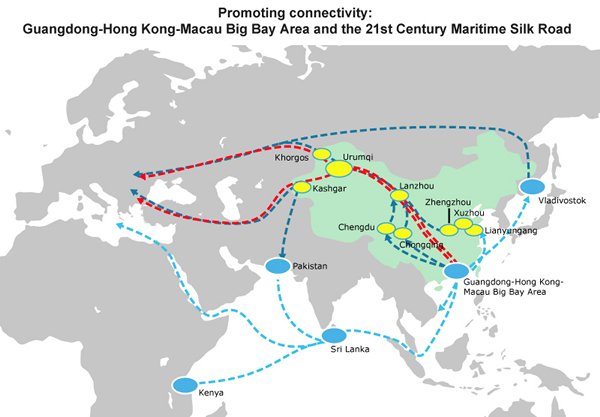
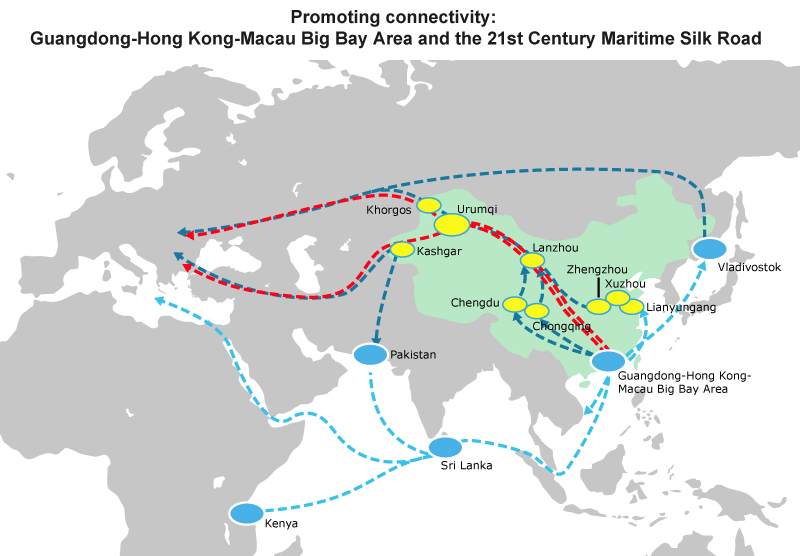
According to Vision and Actions on Jointly Building the Silk Road Economic Belt and the 21st Century Maritime Silk Road, a key strategy document produced by the Chinese government, the “maritime silk road” will consist of two routes, one of which will run from China's coastal ports to Europe via the South China Sea and Indian Ocean. As the key Eurasian shipping route, the Indian Ocean plays a major role in facilitating China’s overseas trade and the transportation of fuel and raw materials. Sri Lanka, an island country in the Indian Ocean, is seen as one of the vital nodes along the maritime Silk Road. In line with this, the Chinese province of Guangdong will ally with Sri Lanka to build the proposed sea-rail multi-modal transportation corridor as part of its participation in the “One Belt, One Road” initiative and the plan of developing the Guangdong-Hong Kong-Macau Big Bay Area into an international logistics hub as part of the Silk Road Economic Belt.
Sri Lanka’s Logistics Strengths
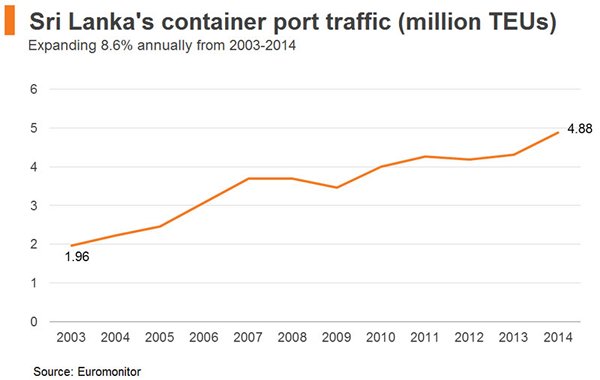
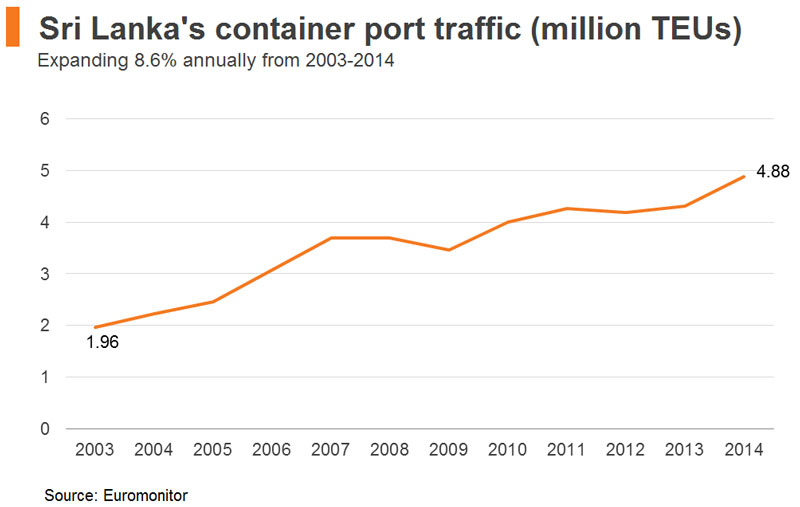
Situated in the Indian Ocean, along some of the world’s busiest shipping routes and close to India, Sri Lanka has a distinct locational advantage, which should see it develop into a key shipping centre and logistics hub in South Asia (See Sri Lanka: An Emerging Logistics Hub in South Asia). Despite being a small economy, with a total trade amounting to about US$31 billion in 2014 (only 4% of India’s US$778 billion), Sri Lanka is an important transhipment hub in the region. It is a site where many shipping companies consolidate and deconsolidate cargo for transhipping to other destinations. In 2014, the Port of Colombo reported a growth of 12.3% in container traffic to 4.88 million TEUs, of which transhipment cargo accounted for 75% of total container throughput.
World Shipping Council statistics show that the Port of Colombo – Sri Lanka’s major container port on the west coast – was the busiest port in South Asia in 2013, handling 4.31 million TEUs. This puts it ahead of India’s largest container port, Jawaharlal Nehru (4.12 million TEUs in 2013).
Port of Colombo
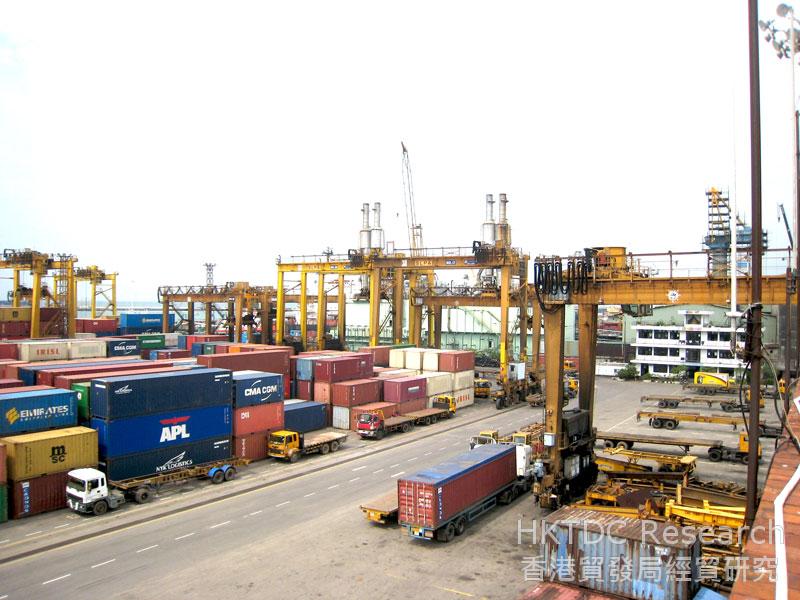
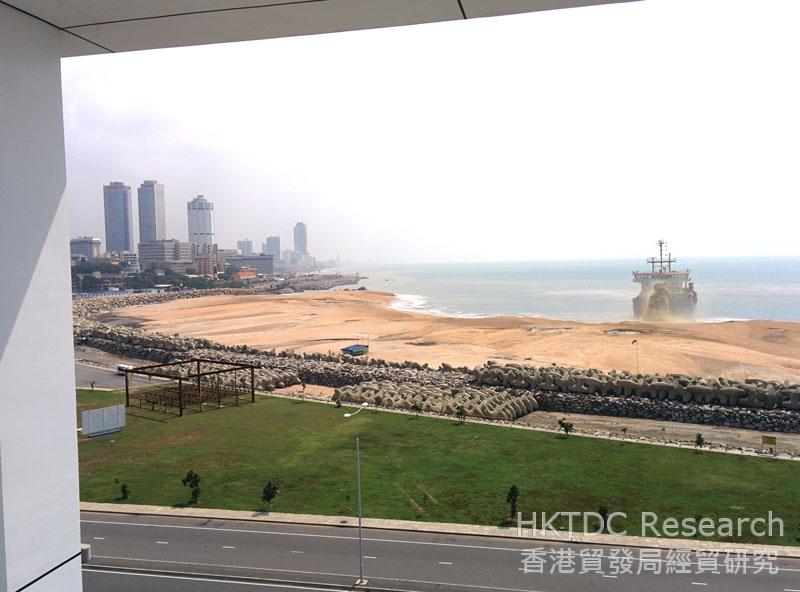
Amid the growing demand for international logistics services, Sri Lanka has launched the Colombo Port Expansion Project (CPEP). Prior to the project, there were three terminals in the Port of Colombo: Jaya Container Terminal, Unity Container Terminal and South Asia Gateway Terminal, with seven main container berths and four feeder berths.
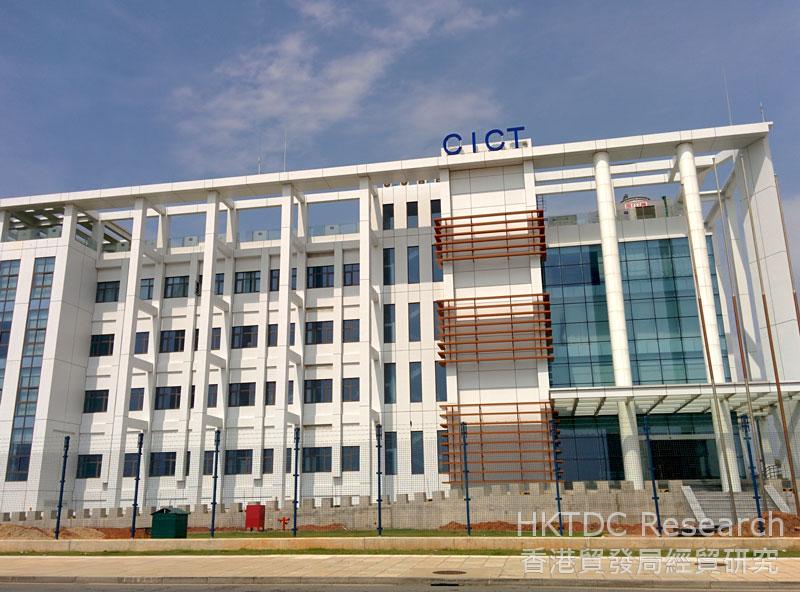
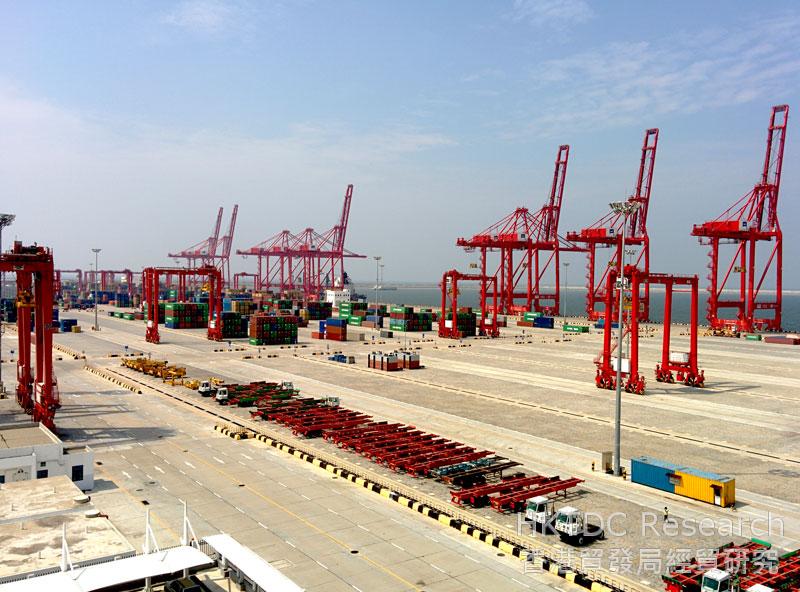
Following the completion of the CPEP, three more terminals will be available. The first of these, the South Container Terminal (developed by Colombo International Container Terminals Limited, a joint venture (JV) between China Merchants Holdings (International) Co Ltd and SLPA) has already commenced operations. This is the first terminal in South Asia that can accommodate a mega-sized vessel. The SLPA-owned East Container Terminal (ECT) will come into operation in late 2015, while the West Container Terminal is still at the planning stage. It is expected that the container handling capacity of Port of Colombo could be increased from slightly more than 4 million TEUs to 12 million TEUs per year, making it one of the world’s largest container ports.
Hambantota Port
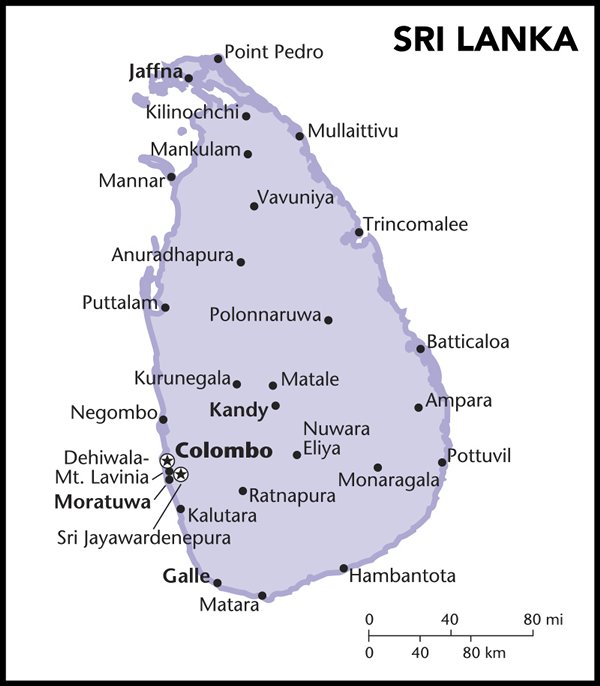
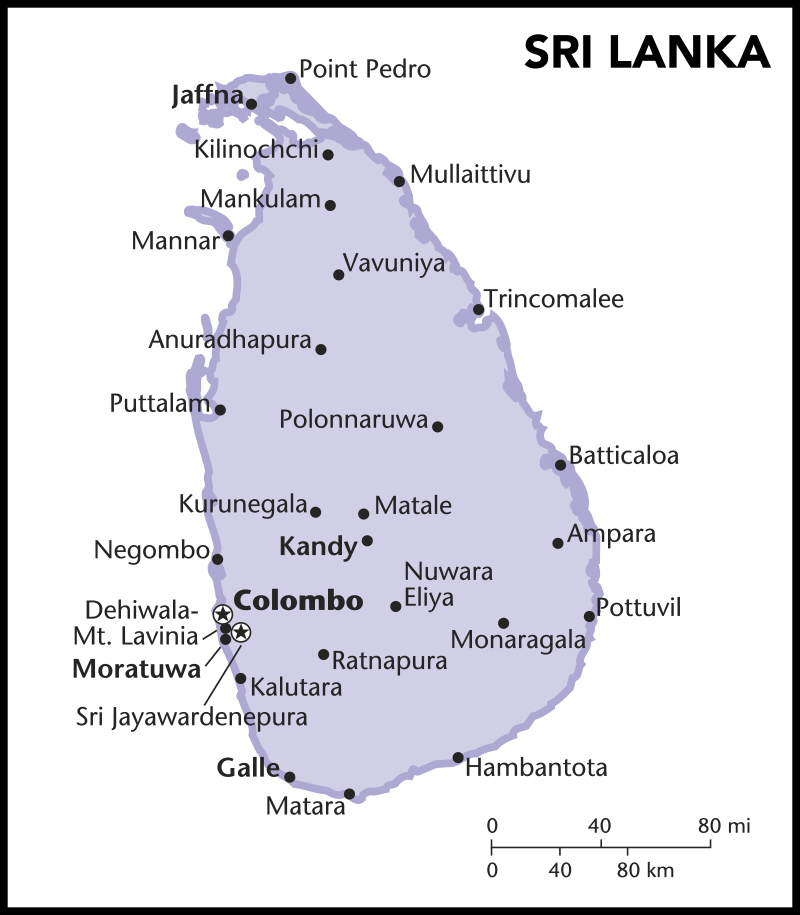
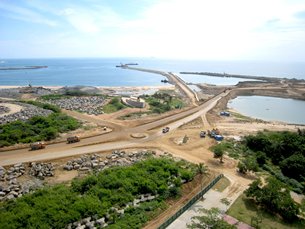
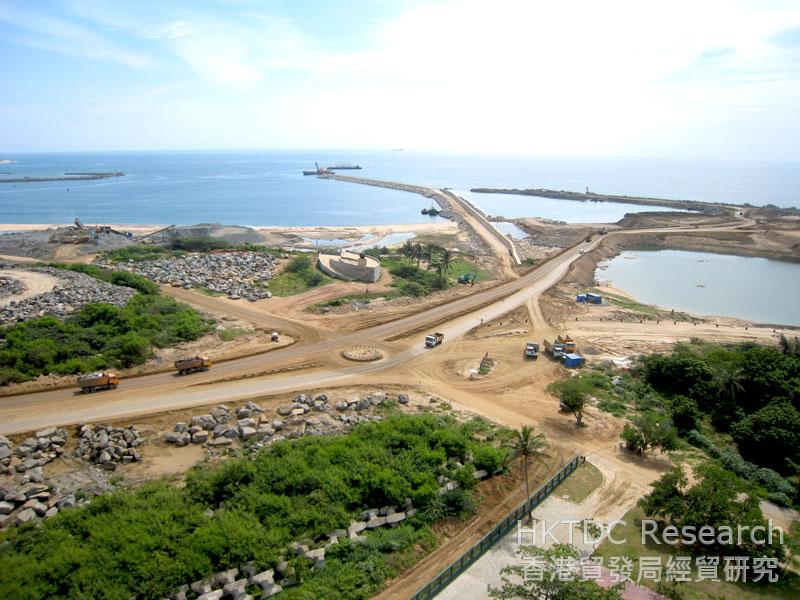
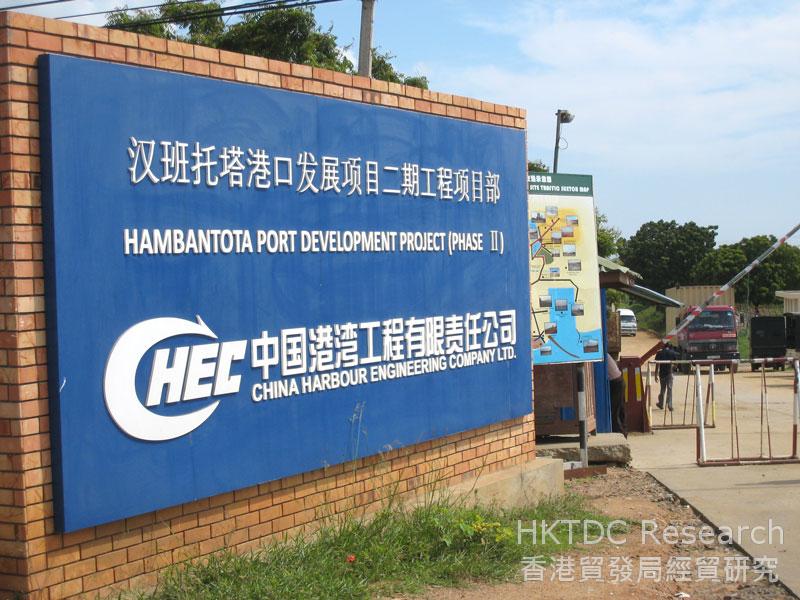
In order to further expand the country’s logistics sector, the Sri Lankan government is developing a new port and economic zone in Hambantota, a southern coastal district. Significantly, the designated contractor for the whole project is a JV between China Harbour Engineering Co and Sinohydro Corporation Ltd.
Phase one of the projects has already been completed, delivering a port capable of berthing four vessels and a bunkering terminal that started operation in 2014. The current plan will see the second phase of the port’s development add a container terminal with seven berths, while a dockyard will be added in third phase. It is expected that the construction of phase two will be completed by the end of 2015. While a vast proportion of the project is still under construction, the Hambantota port has already made good progress, handling a total of 388 ships in 2014 - more than double its 2013 throughput.
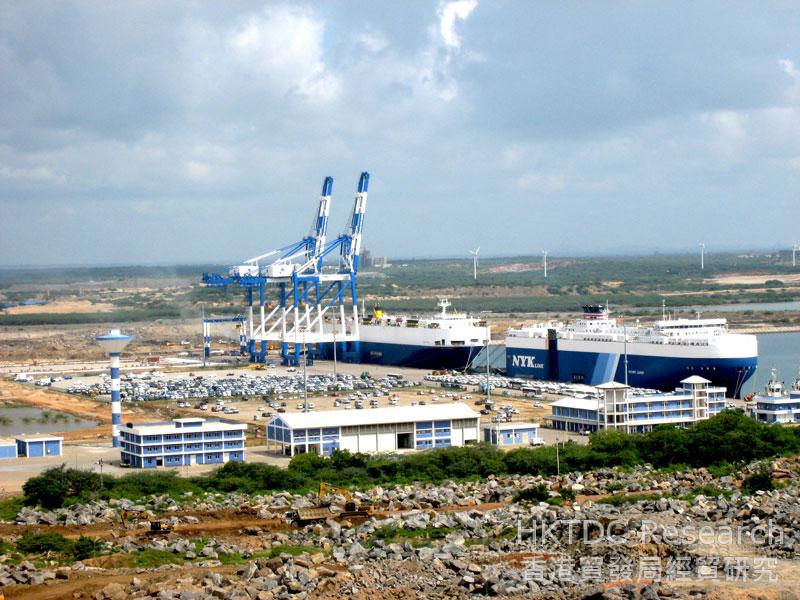
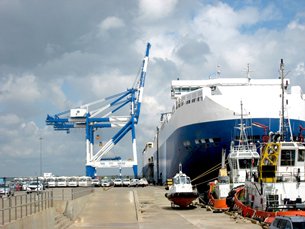
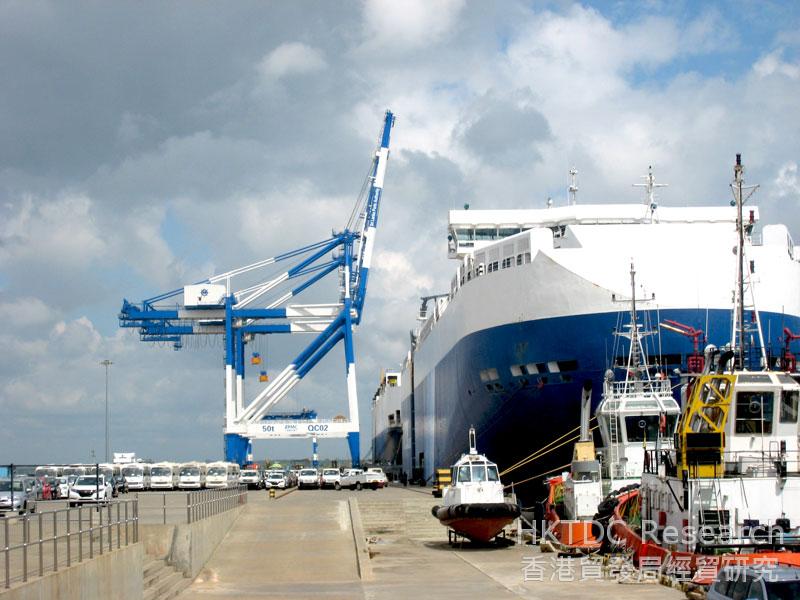
Although Sri Lanka does not manufacture automobiles, Hambantota is now becoming a transshipment hub for finished vehicles. Given its desirable location, augmented by its deep-water port, carmakers from Japan, Korea and India are increasingly using Hambantota as a nexus for transshipping vehicles built in India, Thailand, Japan and China to markets in Africa, the Middle East, Europe and the Americas. According to SLPA, the port handled 254 Ro-Ro vessels (i.e. ships carrying vehicles) in 2014, an 85% increase on the previous year. The total number of motor vehicles handled approached 190,000 in 2014, compared to about 65,000 in 2013. Aside from vehicles, the Hambantota port is also set to become a transshipment hub for a range of other merchandise, similar to the Port of Colombo. In particular, it is looking to service goods manufactured in OEM plants in other Asian production bases.
Foreign Participation
Despite heavy public and private investment in infrastructure – long considered an essential ”tangible factor” for a logistics hub - Sri Lanka is encountering challenges in terms of “intangible factors”, including access to a sufficient number of qualified professionals and international participants in the field. Not surprisingly, the country’s logistics and transport industry still lags behind a number of the region’s other leading hubs, including Hong Kong, Singapore and Dubai.
Sri Lanka was ranked 89th out of 160 countries in the World Bank’s 2014 Logistics Performance Indicator (LPI). Notably, Sri Lanka scored 2.91 on competence and quality of logistics services, compared to India’s 3.03, UAE’s 3.5, Hong Kong’s 3.81 and Singapore’s 3.97. This indicates a need for Sri Lanka to improve the quality of its logistics services, as well as a requirement for greater investment in “hardware” - ports, roads and railways.
The participation of foreign logistics service suppliers, many of whom could bring in the level of services that meet international standards, is important for the future development of Sri Lanka’s logistics industry. Currently, the permitted foreign shareholding of a shipping agency in Sri Lanka can be up to 40%, while requests for a larger share has to be approved by the Board of Investment (BOI) on a case-by-case basis.
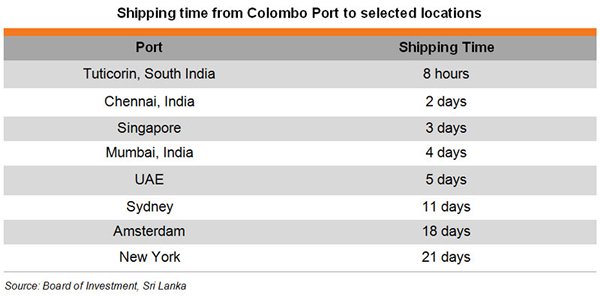
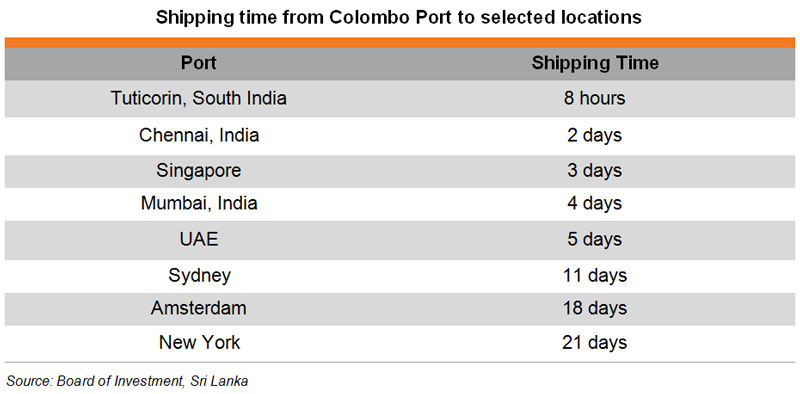
Apart from its locational benefits, Sri Lanka has other advantages likely to appeal to foreign logistics companies. Unlike a number of other developing nations, Sri Lanka seldom experiences port congestion or large-scale industrial unrest. In addition, the relevant costs involved in undertaking international trade in Sri Lanka are cheaper than when carrying out comparable activities among its regional peers. According to the World Bank’s Doing Business Report 2015, the per-container cost for exporting and importing to and from Sri Lanka are, respectively, US$560 and US$690 – much lower than the South Asian average (US$1,923 and US$2,118) and in Mumbai (US$1,120 and US$1,250).
During a HKTDC Research field trip to a Hong Kong-based shipping and logistics services provider operating in Sri Lanka in early 2015, it was pointed out that an increasing number of liner and barge transport companies are moving to the country. This is gradually helping Sri Lanka achieve the economies of scale required to succeed in the logistics industry. APL Logistics, one of the world’s largest logistics companies, for example, has announced it will set up a regional consolidation hub for South Asia in Sri Lanka this year. Its company statement said that the logistics service provider will operate container freight stations, warehouses and other logistics-related businesses in the country. In a similar vein, Hong Kong logistics services suppliers who are considering expanding their business further afield can work with their Sri Lankan counterparts to access the opportunities in South Asia.
Useful Contacts
| Sri Lanka Ports Authority (SLPA) | Tel: (+94 11) 2421201 Fax: (+94 11) 2440651 Email: webmaster@slpa.lk Website: www.slpa.lk |
| The Chartered Institute of Logistics and Transport | Tel: (+94 11) 5657357 Fax: (+94 11) 2698494 Email: admin@ciltsl.com Website: www.ciltsl.com |
| Sri Lanka Logistics & Freight Forwarders’ Association | Tel: (+94 11) 4943031 Fax: (+94 11) 2507577 Email: secretary.general@slffa.com Website: www.slffa.com |
| Ceylon Association of Ships’ Agents (CASA) | Tel: (+94 11) 2696227 Fax: (+94 11) 2698648 Email: info@casa.lk Website: www.casa.lk |
| Shipper's Academy Colombo | Tel: (+94 11) 3560844 Fax: (+94 11) 2874065 Email: enquiries@shippersacademy.lk Website: www.shippersacademy.lk |
| Sri Lanka Shippers’ Council | Tel: (+94 11) 2392840 Fax: (+94 11) 2449352 Email: slsc@chamber.lk Website: www.shipperscouncil.lk |
| Content provided by |  |
Editor's picks
Trending articles
13 Aug 2015
The Silk Road Economic Belt and the 21st Century Maritime Silk Road
By Fung Business Intelligence Centre
While the Belt provides ample opportunities for sourcing resources and commodities from the West and Central Asia, the emerging South and Southeast Asian countries along the Road are potentially vast consumer markets. It was estimated that countries along the Belt and Road would create an “economic cooperation area” that jointly account for 64.2%, 37.3% and 31.4% of the world’s population, GDP and household consumption respectively. The report also pointed out that in implementing the “One Belt One Road” initiative, business opportunities would be seen in sectors such as infrastructure construction, finance, trade and logistics, distribution and retail.
Please visit the Fung Business Intelligence Centre website for the full report.
Editor's picks
Trending articles
HKTDC Research | 20 Aug 2015
Turkey's Business Leaders and Academics Welcome Belt and Road Plan
Despite concerns over the continuing trade imbalance between Turkey and China, the Turkish business community has given a cautious welcome to the Chinese blueprint for streamlining 21st century trade and boosting market access.


Turkey is one of the key stopping-off points along the Belt, and Road Initiative, China's ambitious plan to upgrade the world's trading routes and streamline access to many of the key global markets. The foundations for Turkey's involvement in the scheme were laid as long ago as 2010, with the signing of The Framework Agreement on Further Expanding and Deepening Bilateral Trade and Economic Co-operation Between Turkey and China.
This agreement was designed to facilitate the development of high value building and infrastructure projects for public utilities, telecommunications companies, railways, energy companies, airports, ports and Turkey's highways network. It was also geared to boosting Sino-Turkish trade, then worth around US$28 billion a year, to 50 billion by 2015 and 100 billion by 2020.
With the Belt and Road Initiative seen as the logical progression of this earlier undertaking, a number of Turkish businessmen and academics have cautiously welcomed China's plans. There are, however, several reservations and concerns on the part of the Turkish contingent.


Professor Selçuk Çolakoğlu
Professor of International Relations at Yildirim Beyazit University in Ankara and an advisor for the Center for Strategic Research, under the jurisdiction of Turkey's Ministry of Foreign Affairs.
Since the collapse of the Soviet Union, there have been a number of Silk Road-type projects. In the main, they have suffered from a lack of political will and a shortage of genuine financial support.
The Belt and Road initiative, however, seems to carry with it a presidential eagerness, while also being backed by sizable financial resources. To date, though, the two countries do not appear to have fully realised the potential of the 2010 agreement.
Back then, there was talk, for example, of a high-speed rail project. This has yet to materialise. When the 2010 agreement was signed, expectations were very high. Progress, however, has been slow.
In terms of bilateral trade, there is now something of a problem – a trade deficit highly in favour of China. As a result, Turkey wants to see some balancing factors. In particular, it wants to see more Chinese foreign development investment in Turkey. It wants to see China sponsoring some big projects.


There is enormous potential for this. An improved transport infrastructure would open up markets for Turkish businesses in Central Asia, Pakistan, Afghanistan and China itself, benefitting both countries. There is a need to see more concrete projects, however. If Chinese investment is secured, Turkey will clearly be a key transportation hub.
J Melvin Cottrell
An Istanbul-based business consultant and former Vice-chairman of the British Chamber of Commerce of Turkey with a 35-year history of working in the country.
Rebuilding the Silk Road is a catchy idea. It will appeal to Turks, many of whom take pride in the fact that their language can be spoken all the way to the Chinese border.
There will, however, be difficulties in fully implementing the strategy. China clearly has to keep its businesses happy by finding and developing new markets, but this is a very long road and the Chinese may find there are ways of accessing the Middle Eastern markets that are quicker and more practical.


Dr Altay Atli
Lecturer at Boğazici University and an expert in Sino-Turkish trade relations.
We need to look beyond the trade deficit with China and we need to address the many misconceptions about Chinese products. There is a general feeling in Turkey that goods from China are of a low quality and can be dangerous. Chinese manufacturing techniques, however, are changing fast.
Turkey is reliant on imported technology and China can clearly provide much of that. The entire world, for example, now uses Chinese railroad technology. If some of the proposed transportation projects come to fruition, this will also help Turkey once again fulfil its historical role as the link between Europe and Asia.
One temporary obstacle is that the Chinese and Turkish governments are at odds over China's treatment of the Uyghurs [a primarily Moslem grouping living in China's Xinjiang Uyghur Autonomous Region]. The two parties, however, are in constructive dialogue and my feeling is that the issue will soon be resolved and we can move on. After all, one of the chief beneficiaries of the Belt and Road will be the Uyghur region.
Make no mistake the Chinese very much want this initiative to succeed. China's growth is not only slowing down, its whole business model is changing and is in transition. As a result, it needs to improve the development of its Western regions.
For Turkey, improved transport links will boost its production of oil and gas. They will also prove a boon to those sectors – notably tourism and education where the trade imbalance is overwhelmingly in Turkey's favour. Closer links between the two countries will only enhance these valuable business opportunities.
This year, Turkey is chair of the G20 and next year it is China's turn. I hope and expect that their respective roles will only bring the two countries ever closer together.


Sayhin Saylik
General Manager of Kirpart, an automotive parts company with operations in China.
Of course the Belt and Road concept is a good idea and it should also work. It will not be easy, however, and it will take more time than people think before it is running efficiently.
When it is realised, in some form, I believe this will definitely add to the prosperity of both Turkey and China. Turkey's cultural and historical connection with the Silk Road and its role as the intersection of Europe and Asia place it in an extremely important position within the programme.
Over the last few years, politicians from both countries have underlined the flourishing economic and trade ties between Turkey and China. These have also been highlighted by a number of new projects, notably the establishment of the Silk Road Economic Belt, which will provide for the facilitation of investment and trade along the route.
China and Turkey already have extensive co-operation in a number of areas, such as high-speed rail, electricity generation, aerospace and satellites. Turkey has also become an important overseas engineering, procurement and construction market for Chinese enterprises. The establishment of the Silk Road Economic Belt will further broaden the scope of co-operation between the two countries when it comes to developing infrastructure projects.
Regardless of the Belt and Road, however, the trade deficit between Turkey and China has to be addressed. Apart from that, I have no real concerns about the programme. I believe this will create new areas for co-operation, bring more investment into Turkey and expedite the development of a number of other sectors, notably tourism. This is an opportunity for Turkey to narrow some of the current trade deficit.
As bilateral trade increases among the Silk Road countries, co-operation in a number of major areas – roads, railways, banking, tourism, manufacturing, investment, logistics, energy and tourism – will certainly flourish. As a result, Turkey's business leaders all seem optimistic about the programme and I have yet to hear any negative views being expressed.
If all of the countries concerned work closely together, making the upmost effort to generate mutual benefits, the initiative will be a success. If, however, every country puts its own interests first, the project will surely fail.


Murat Kolbaşi
President of Arzum, Turkey's leading small electrical appliances company, and an executive board member of DEİK, a body set up in 1986 to explore inward and outward investment opportunities as well as looking to increase Turkish exports.
The relations between Turkey and China goes far back and there is our shared history along the legendary Silk Road. In terms of the Belt and Road Initiative, our trade deficit with China does not pose any real obstacle to its success. On the contrary, Turkish culture was originally exported to China along the Silk Road. I believe that the trade deficit will be affected positively by the project.
It will increase our levels of exports to China, particularly with regard to such cultural items as Turkish coffee, Turkish delight, and Turkish bagels. It will also provide a boost to Turkish tourism and to our food exports. I think greater co-operation with China will also provide opportunities for the export of our TV programming, something that will further help spread our culture.
The conclusion of free trade agreements with other countries along the Silk Road is seen as highly desirable by the Turkish business community. The overall initiative has been received positively by the country's commercial leaders.
George Dearsley, Special Correspondent, Istanbul
| Content provided by | |
Editor's picks
Trending articles
HKTDC Research | 27 Aug 2015
Infrastructure Projects Mount as Africa Readies for Belt and Road
East Africa clearly plays a key role in China's Belt and Road Initiative, with its clear endgame of accessing new markets and additional natural resources, but many nations across the continent are now asking what exactly is in it for them…


In 1896, the British colonial government began construction of a narrow-gauge railway line from the Kenyan port city of Mombasa to Nairobi. Back then, it took three decades to extend the line to Uganda. The initiative, however, did establish a transport corridor, allowing the landlocked British protectorate's natural resources to be shipped out for the good of the Empire.
Today, the railway builders are back. This time, though, it is China's economic integration strategy in East Africa that is behind the construction of a new rapid rail link between Mombasa and Nairobi. The new line, due to reach the Kenyan capital by 2018, will eventually extend to Uganda, Rwanda, Burundi and South Sudan. This is where China's Maritime Silk Road ends and where its trade connectivity with the East African region begins.
The Maritime Silk Road, part of the mainland government's Belt and Road Initiative, will change the way China engages with its trading partners in East Africa – particularly Kenya and Tanzania and, to a lesser extent, Uganda and the Horn. Africa, in general, is a growing consumer market for Chinese products and, at the same time, a prime source of essential mineral commodities.
Developing closer trade ties with Africa, via the Belt and Road, underpinned by investment in new regional infrastructure, is clearly a priority for China. It forms a key part of its broader international drive to restore momentum to its slowing economic cycle, primarily by deriving greater efficiency from its trade links.
Tellingly, a number of China's current infrastructure projects are focussed on East Africa. There are also clear indications that China is prioritising infrastructure investments in the region. In terms of enlightened self-interest, this will provide it with more efficient trade connectivity in the region and allow it to take advantage of Africa's improving economic conditions.
In addition to the East Africa Railway, China is also financing a number of essential port developments, including a US$10 billion deepwater harbour in Bagamoyo on the eastern coast of Tanzania. With many African ports already approaching capacity, China sees port upgrades across the continent as a critical part of its strategy of cementing further trade agreements and opening up trade lanes.
Although the funding sources for specific projects are not always clear, China is financing many of these facilities through a small number of institutions – the Asian Infrastructure Investment Bank, the Silk Road Fund and, specific to Africa, the Forum on China-Africa Co-operation (FOCAC) and the China-Africa Development Fund (CAD Fund). At times, projects are funded from a combination of sources and it's unclear as to the extent to which any such agreements are bilateral or continental in nature.
A number of analysts and scholars believe, however, that there is a direct connection between China's maritime trade strategy and its military plans for the region. It has been widely reported, for example, that China is considering setting up a naval base in Djibouti – already home to the only US naval base in Africa. It is also believed to have plans for Walvis Bay in Namibia.
Assessing the likelihood of this covert agenda, Yu-Shan Wu, a researcher with the South African Institute of International Affairs, said: "Understandably, as Chinese economic engagement expands in Africa, it will inevitably intersect with security issues. The question is whether China's presence could create areas for co-operation on peace and security issues in Africa, or whether it will be perceived as competition. At present, it is too soon to tell."


As its economy slows, China may also be looking to Africa as a cheaper manufacturing base for its more labour-intensive industries. In 2012, the Chinese-owned Huajian Shoes opened a factory in Ethiopia, a country keen to boost its level of industrialisation and attract foreign investment in manufacturing. The project is now often cited as a case study of China's interest in offshoring elements of its production to Africa. Over recent years, there has been a notable increase in the number of funding sources for Chinese businesses looking to expand abroad. In Huajian's case, it was the CAD Fund that backed its Ethiopian venture.
The successful implementation of Chinese offshore manufacturing projects would very much depend on the development path adopted by the African countries concerned. It would be influenced, for example, by whether individual nations were looking to move away from a resource-intensive growth model to more of a manufacturing-based economy. Certain African countries, it could be argued, need the necessary environment and investment that China is willing to provide in order to facilitate such industrialisation. The long-term impact of all these projects, however, will need to be assessed by all of the participants.
It is clear that East Africa is a key part of China's ambitious integration strategy and its bid to engage its Belt and Road trading partners. What is less clear, however, is the particular emphasis that China will place on Africa in the long term or the degree to which its economic drive in Kenya and the region will be of benefit to the wider continent.
Seeing it as a two-way process, Yu-Shan Wu said: "Regional integration is a priority for Africa, and China seems to be addressing those concerns. It is up to individual African countries, however, to determine just what they want from China's engagement. There could, for example, be potential for collaboration between Africa's own regional initiatives – such as the North-South Corridor, an integrated continental transport programme – and the Belt and Road Initiative."
It could, indeed, be argued that while China knows what it wants from Africa, Africa doesn't know what it wants from China. Addressing a conference in Cape Town earlier this year, Nkosazana Dlamini-Zuma, Chair of the African Union, however, left delegates in no doubt as to her stance on the benefits of China's greater economic integration with Africa, saying: "China is putting its relationships with Africa at a different level."
Speaking at the same event, Dlamini-Zuma, a pan-Africanist with a hugely ambitious vision of an economically integrated, connected continent, clearly welcomed China's greater participation. She said: "African states are benefiting from their partnership with Chinese companies in a number of areas, including transport infrastructure integration, energy, broadband technology, and healthcare and disease control."
This kind of ambitious Sino-African co-operation has also been reflected in an agreement between the African Union and China, signed earlier this year. This aims to connect Africa's capital cities through a vast network of road, rail and air transport routes – all of which are to be built by China. The deal has been hailed as the "most substantive project the African Union has ever signed with a partner".
Professor Lin Jiang, Chair of the Department of Public Finance and Taxation at Hong Kong's Lingnan University, believes that both parties can benefit from China's activities in Africa. He said: "The African component of the Belt and Road Initiative offers a new type of opportunity. This is not just open to Chinese private enterprises, but also those African countries that are able to collaborate when it comes to infrastructure development and manufacturing."
China's greater economic integration with Africa, though, is not without its challenges. Many of the countries in the region are among the poorest in the world, raising the question as to whether China will ever be able to make a return on its investment.


Nonetheless, if China's policy solely succeeds in developing infrastructure in the region, it will still make a clear impact. A number of these initiatives – notably the East Africa Railway, which will see high-speed freight trains replacing a 120-year-old colonial railway line and massively reducing the cost of regional transport logistics – will undoubtedly help to support economic growth and trade. For China, and Africa, it could well be a strategic win-win outcome.
Mark Ronan, Special Correspondent, Cape Town
| Content provided by | |
Editor's picks
Trending articles
Fung Business Intelligence | 2 Sep 2015
Asia Sourcing South and West Asia Sep 2015
BANGLADESH
GARMENT EXPORTS TO US REBOUND IN 1H15
Bangladesh’s apparel exports to the US bounced back in the first half of the year, as the political situation began to stabilize and safety compliance in factories was showing pr ogress, drawing US buyers back to the country.
In the first six months of this year, Bangladesh’s garment exports to the US rose 9.5% yoy to US$2.68 billion, according to the Office of Textiles and Apparel (OTEXA) under the US Department of Commerce. In 2014, Bangladesh’s garment exports to the US fell 2.2% yoy.
Although the country’s garment exports to the US registered a significant rebound, the growth is still lower than those of other regional contenders. In the same period, garment exports to the US from Vietnam, India and Sri Lanka grew 15.4% yoy, 10.0% yoy and 16.5% yoy, respectively. At the same time, FOB prices of Bangladeshi garments did not increase in line with the rising production cost (particularly due to wage hike and rising electricity prices), raising concerns over the industry’s long-term development.
CLUSTER RELOCATION DELAY POSES RISKS TO LEATHER SECTOR
In the fiscal year 2014-15 (1 July 2014 – 30 June 2015), Bangladesh exported US$1.13 billion worth of leather and leather goods, making the leather sector the second largest contributor to national exports after the garment sector. Key export categories in the sector include leather shoes, travel bags, wallets, belts and finished leather.
For decades, pollution from Dhaka’s tanneries has poured into the Buriganga River, wiping out aquatic life and forcing the city to rely heavily on groundwater for washing and drinking. In response, the country’s high court has ordered tanneries in the city’s Hazaribagh subdivision, which process over 90% of the country’s leather, to relocate to the outskirts of the city at the Savar subdivision, where there will be a modern industrial campus with a central effluent treatment plant (CETP).
On 19 August, the government decided to extend the relocation again from December this year to possibly July 2016, as the installation of the CETP is delayed. The deadline was originally set at June this year. If the relocation cannot be carried out swiftly, polluting activities in Hazaribagh may once again come under scrutiny by environmental groups.
BGMEA PROMISES TO EM PLOY PEOPLE WITH AUTISM
In a unique event on 20 August spearheaded by Saima Wazed Hossain Putul, US-licensed school psychologist and chairperson of the National Committee on Autism and Neurodevelopment Disorders, the Bangladesh Garment Manufacturers and Exporters Association (BGMEA) announced that the garment industry is going to recruit people with autism in a move to create job opportunities for them.
Workers with autism are focused and enjoy repetitive tasks that other workers tend to dislike. They follow routine strictly and are suitable for tasks such as quality control, numbering, placing stickers, collar pressing, button matching, poly packing and cleaning. They can also work as security guard and liftman.
During the event, Putul stressed on the need to create a model for employing people with autism. Autistic children’s training must be started at a very early stage to identify their area of interest, as they will work only on what interest them, and those interests have to be matched with manufacturers’ needs.
To view the full article, please go to page top to download the PDF version.
| Content provided by |  |
Editor's picks
Trending articles
HKTDC Research | 8 Sep 2015
Hong Kong Services for Mainland’s Outbound Investment (5): High-end Logistics Services Help Bolster International Business Expansion
As Chinese investment rapidly turns outwards, many mainland enterprises are seeking expansion by leveraging their overseas investments in conjunction with domestic and foreign supply chains to develop high value-added business. Such moves have generated a keen demand for high-end logistics services. Hong Kong, as a trade and logistics hub in Asia Pacific, is highly experienced in international logistics management. In an increasingly demanding market, local players can provide mainland investors with one-stop logistics services by making use of the latest generation of information technology in areas such as high quality cold chain logistics services and their extensive international logistics networks.
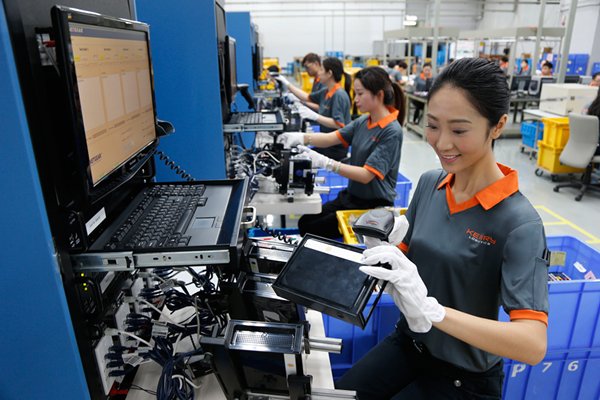
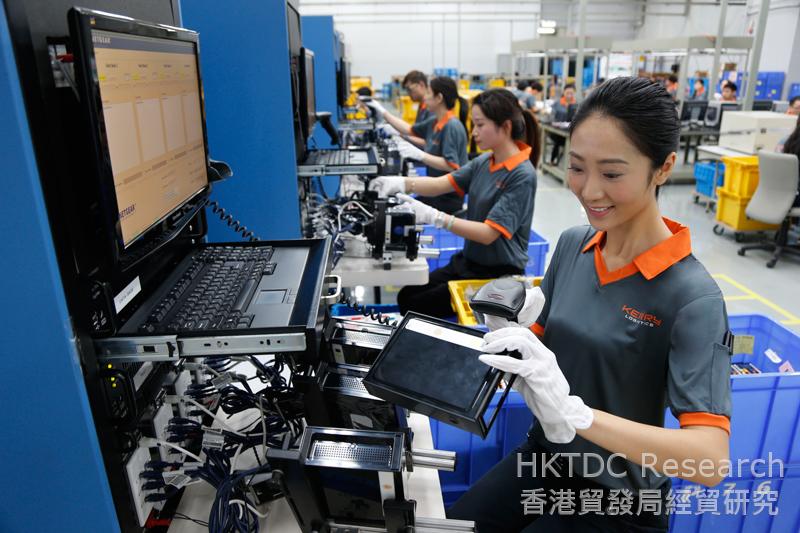
Meeting Demand for Integrated Services
Samuel Lau, Executive Director of Kerry Logistics (Hong Kong) Ltd, told HKTDC Research: “The demand of mainland enterprises for high-end logistics services is growing, particularly for integrated services. Logistics services ranging from production transport to sea-air intermodal transportation, warehouse management, customs clearance, inspection and quarantine, buyer data processing, and bank collateral / insurance are all in great demand.
“While mainland enterprises have a sound domestic network, the majority of mainland service suppliers and third-party logistics enterprises only provide basic services, such as cargo transport, loading and unloading, and local delivery. These, however, can barely meet the market demand for high-end international logistics services.”


Headquartered in Hong Kong, Kerry Logistics has a global logistics distribution network comprising more than 550 offices and 20,000 employees that provide integrated logistics, international freight forwarding services, and supply chain solutions. Clients include well-known international brands in various industries, such as trendy fashion and premium goods, electronics, food and beverages, fast-moving consumer goods, industrial and materials technology, automobiles and pharmaceuticals. The group has offices in key cities in China which, backed by its mainland networks and company resources, supply a full range of logistics services to mainland and foreign-invested enterprises.
Lau said: “As the number of middle-class-and-above consumers continues to increase on the mainland, consumer demand for upmarket live, fresh and imported food will stay strong. This has stimulated demand among distributors and importers for cold chain logistics services to deliver such food products. Meanwhile, medicines and certain electronic parts and components also require cold chain logistics for storage and delivery in a low-temperature environment.
“As mainland enterprises further invest overseas and strengthen their sourcing of high-end products – and as they set up production lines in foreign countries – they have consolidated connections between China and the world in terms of consumer goods and the high-tech products supply chain. As a result, demand for high-end cold chain logistics services keeps surging. No matter whether they are exported from or imported into the mainland, these goods must be kept in a strictly specified low-temperature environment at every stage of the delivery process to assure quality and reduce the chances of damage and deterioration.”
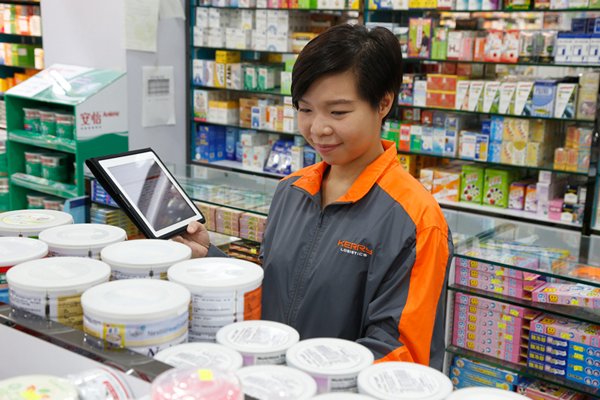

Apart from supplying advanced cold chain logistics services, Lau said that Hong Kong logistics providers use advanced monitoring and Internet of Things (IoT) technology to supervise the whole transportation process. Stringent inspection and testing services are also in place to check goods when they arrive at the cold storage to ensure that the refrigerated goods have not spoiled or been contaminated during the journey. “This, coupled with effective one-stop, value-added services including information and warehouse management, and customs clearance, can satisfy the demand of high-end clients for logistics services.”
Capturing the Belt and Road Opportunities in ASEAN Market
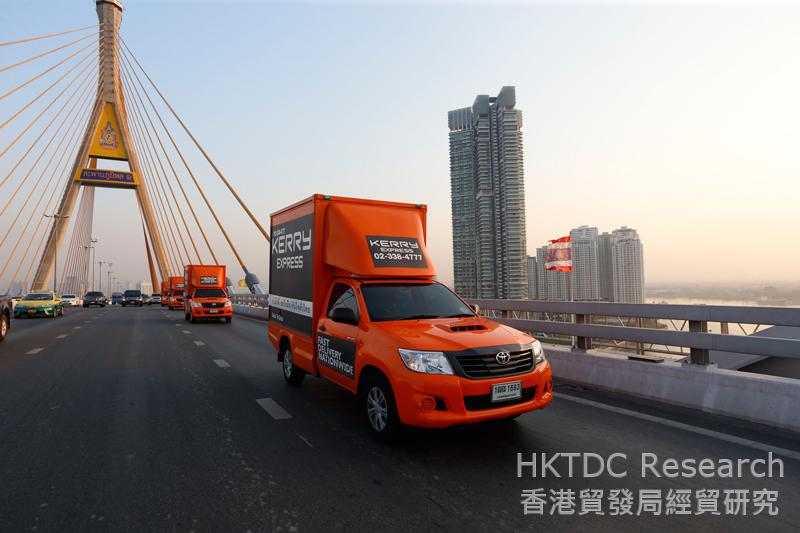
China is currently embracing the Belt and Road development strategy. The Belt refers to the economic belt along the Silk Road, and the Road refers to the 21st Century Maritime Silk Road. As ASEAN’s economy becomes increasingly buoyant, Lau noted that the “go global” strategy of mainland enterprises is embracing investment in manufactories in the ASEAN market. In turn, demand from ASEAN and mainland enterprises operating there for logistics and transportation services is bound to rise rapidly. To effectively serve ASEAN and mainland clients, Kerry Logistics, as a pioneer service provider in cross-border transportation in ASEAN, has launched Kerry Asia Road Transport (KART). This overland cross-border transport network links ASEAN countries and China, and supplies high-efficiency long-haul overland transport and door-to-door delivery services.[1]

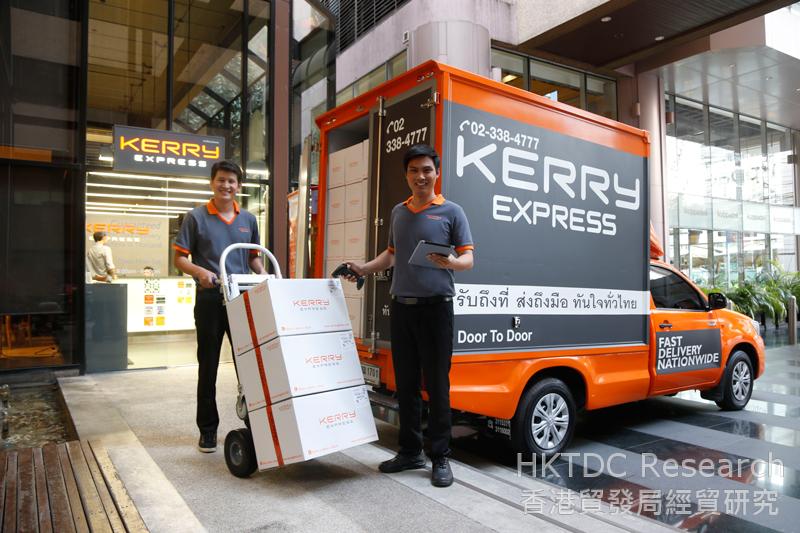
Lau said: “As China’s economy grows, in future the one-sided situation of foreign firms coming to invest in the China market will come to an end. Rather, mainland enterprises will quicken their pace of “going out” to foreign markets to invest and “bringing in” foreign resources. In the course of this “going out” and “bringing in” strategy, they can make use of Hong Kong’s highly efficient logistics services to link up mainland and foreign supply chains. They can also take advantage of Hong Kong’s trade and logistics networks in the Asia-Pacific region to support their investment activities in ASEAN and other Asian markets in preparation for business opportunities resulting from the mainland’s Belt and Road Initiative.”
[1] KART’s operation headquarters is located in Bangkok, Thailand. Its service network covers seven logistics centres which operate seven routes linking ASEAN and the Chinese mainland, offering cross-border transportation services. Visit Kerry Logistics website for further details.
| Content provided by |  |
Editor's picks
Trending articles
HKTDC Research | 9 Sep 2015
Singapore Bids to Play Pivotal ASEAN Role in Belt and Road Initiative
While welcoming the Belt and Road Initiative, Singaporean business leaders, academics and politicians have emphasised the need for 'co-creation' in order to ensure that all participating countries fully commit to China's economic masterplan.


The potential impact of the Belt and Road Initiative on Southeast Asia needs to be viewed through the prism of China's robust relationship with Singapore, as well as its diplomatic ties to the ASEAN bloc, according to many in the region. The complexity of these relationships means that China is obliged to take a distinctly à la carte approach to dealing with the ASEAN nations. In some cases, it would be best to deal with certain countries directly, while others might be best accessed via Singapore, with a number of the remainder more appropriately tackled as a constituent part of ASEAN.
Dr Zhao Hong, a Visiting Senior Fellow with Singapore's Institute of Southeast Asian Studies, has clear views as to the value of the Belt and Road. He says: "China is coming to terms with the 'new normal' of slower, but better quality, growth and this marks a shift in strategic thinking towards engaging neighbouring countries.
"For Southeast Asia, the initiative provides an attractive platform for mutually beneficial economic development in various fields, notably infrastructure and industrial production. It also fits in with ASEAN's Masterplan on Connectivity and the vision of the Indonesian President, Joko Widodo, with regard to enhancing his country's maritime capability."
The fact that Xi Jinping, the Chinese President, chose to launch the Belt and Road Initiative in Indonesia in October 2013 is seen as an indication of the importance that China attaches to its ASEAN partners. Just over a year later, in November 2014, Indonesia announced a US$6 billion plan to develop its port infrastructure across the archipelago.
Xuhua Huang, a Singapore-based Partner with King & Wood Mallesons, a global law firm, sees the initiative as being the key driver of growth for Southeast Asia. He says: "By capitalising on this initiative, Southeast Asia will become one of the primary destinations for those Chinese enterprises seeking to expand globally. Undeniably, China's recent deal with Thailand on the construction of the Thai section of the Singapore-Kunming rail link brings this dream one step closer to fruition. This sees ASEAN members – with Singapore at the centre – inextricably moving closer to forging an impressive pan-Asian trade sphere. Singapore's next step, as one of the region's leaders in infrastructure and logistics, will be to aid neighbouring countries and fellow trading partners in developing their own resources."
With Singapore the most economically advanced country in the Southeast Asian region, Huang sees it as likely to take a lead role in bringing the Belt and Road Initiative to fruition. This was borne out by a March 2015 survey by Grand View, a Chinese think-tank, which ranked Singapore as the country with the highest investment value out of the 64 nations included on China's proposed programme.
Expanding on Singapore's likely role, Huang said: "The country's key industries have already drawn the attention of many Chinese businesses looking to invest in the region. In fact, a significant number of mainland enterprises have already successfully integrated their regional resources and achieved internationalisation through investing via Singapore. It is no surprise that Singapore has established itself as the second leading offshore hub for Rmb trading.
"We also expect to see Singapore's status become more prominent as a shipping and aviation hub for Southeast Asia. There is also likely to be an increase in trade and personnel exchange across the region. This will come as an inevitable consequence of the construction and development of a variety of infrastructure projects, such as ports and airports.
"At the same time, we anticipate that Singapore's central role in Southeast Asia's financial, trade and logistics services will expand significantly. These enhancements will be driven by the Initiative, but complemented by Singapore's established investment and financial services markets, its strong legal system, sound infrastructure and experience in financial systems, as well as by its political and social stability."


At the government level, many are also optimistic as to Singapore's likely role in the Belt and Road. Josephine Teo, Singapore's Minister of State for Transportation, says: "Given the scale of the Initiative – in particular, the maritime component that potentially spans 65 countries across three continents – there is much to be gained by approaching the Belt and Road as a process of co-creation. This will allow participating countries to see themselves as being capable of influencing the outcome, while retaining a sense of ownership over the pace and texture of any collaboration. If this can be achieved, the Initiative will usher in a new era of co-operation that will benefit all concerned."
The Minister also saw opportunities not just for Singapore, but also for Singapore's role within ASEAN. Highlighting this, she said: "Countries along the maritime belt will inevitably benefit from participating in the co-creation of this Initiative. Given Singapore's roots as a regional trading hub, it should adopt a more active role in a number of key areas related to connectivity, namely transport, finance and trade.
"Businesses can also operate out of Singapore to tap growth opportunities in the larger ASEAN and broader Asian region. It is important to remember, that the Initiative is not just ASEAN-related. The Belt and Road also extends to Asia, West Asia, and Eurasia – and we must not forget that. Those who have already set up businesses in China or elsewhere in the region will be able to expand further with every new flow developed under the Belt and Road programme."
Teo's words came in July this year as part of her address to the first Singapore Regional Business Forum, an event organised by the Singapore Business Federation (SBF). The forum saw 400 delegates from 18 countries discuss the implications, opportunities and challenges represented by the Belt and Road Initiative.
Assessing the prospects for the programme, Teo Siong Seng, Chairman of SBF, said: "The Belt and Road is an important initiative in terms of collaboration and sustainable development, specifically with regard to maritime infrastructure, shipping and trade, finance, tourism, hospitality and culture. Its success will inevitably result in huge economic, social and political benefits for Asia.
"As part of this, Singapore will leverage its role as a major financial, transportation, logistics and maritime hub in order to facilitate trade and investment in this fast-growing region."
While the vision is still taking shape, Teo believes that managing the multilateral ties and existing agreements will be critical for its success, especially bearing in mind its multinational scope. He said: "It all has to be achieved through mutual understanding. While the project has been initiated by the Chinese, we have to look at it as being owned by the people all along the route, ensuring that the flow can be truly smooth."
One note of caution, however, comes from Professor David Lee of the Singapore Management University. He said: "It is not possible for China and a number of ASEAN countries to dispel all reservations and co-operate merely on the basis of economic gains. Trusted by both sides, Singapore could act as a platform for China to enter the ASEAN market.
"Furthermore, Singapore could adopt a strategy in line with its Smart Nation policy, which has seen it committed to setting up infrastructure to boost internet finance and inclusive investment. This is seen as not only likely improve the quality of life in the more underdeveloped ASEAN regions, but also as a boost for Singapore's leading role in the bloc."


While it is only logical that Singapore will play a key role in the maritime components of the Belt and Road Initiative, the country sees itself as having a wider remit. In line with this, Singapore has long been investing in building ties with China – most notably with the Shaanxi province, a focal point for the new economic initiative and a region where Singapore has a 25-year trading history.
In April this year, marking this quarter-century milestone, the Shaanxi provincial government and the Commercial Bank of China organised a commemorative forum for industry and government leaders. As part of the event, five Singaporean companies and five Chinese private and government entities signed agreements aimed at furthering their collaborative efforts, with a particular focus on finance, logistics, technology and tourism.
Ronald Hee, Special Correspondent, Singapore
| Content provided by | |