









Chinese Mainland
Hong Kong is set to become a significant hub for cooperation in R&D and advanced biomedical services in the Greater Bay Area and beyond. The Outline Development Plan for Guangdong-Hong Kong-Macao Greater Bay Area, promulgated in February 2019, looks to improve the environment for innovation in the region. It says that a plan will be drawn up to foster the research and development of clinical medicine, and facilitate the cross-boundary use of medical data and bio-samples (such as blood needed for R&D cooperation projects in higher education institutions, R&D institutes and laboratories in the Greater Bay Area).
Hong Kong will be in an excellent position to fill the gap between mainland China and overseas in the field of genetic and biomedical information. It can build major databases which will benefit biomedical firms and research institutes in Hong Kong, particularly in genetics-related research and medicine development. Coupled with the city’s strong protection of intellectual property rights and proprietary information, as well as the logistics support for the delivery of bio-samples, Hong Kong can become a bridgehead for biomedical companies looking to extend their research and services from the Greater Bay Area to the Belt and Road and other overseas markets.
The Bay Area is to Liberalise Controls
Currently mainland China maintains strict controls on the export and trading of human genetic data and bio-samples such as blood because of health and safety concerns. Under CEPA, Hong Kong investors enjoy national treatment when investing in the mainland’s human health services sector. However, they are expressly excluded from launching services on genetic information, blood collection, pathological data and other services that may endanger public health and safety.
These are major hurdles for Hong Kong businesses, as well as foreign investors based in the city, looking to conduct cross-boundary cooperation with their mainland counterparts in front-end biomedical research in areas like genetics-based therapy and medicine. The Greater Bay Area development plan is set to deal with obstacles like these, so players affected by them should watch developments closely to see how the governments of the Bay Area implement the liberalisation measures envisaged in the plan.




Liberalising controls will come as welcome news to biomedical firms and laboratories like Hong Kong-based Sanomics Limited, which has been advocating cross-boundary data sharing in order to strengthen technological cooperation in the Bay Area. In an interview with HKTDC Research, Sanomics’ CEO and Director Stanley Sy stressed the difference between the way traditional therapies work and new medical approaches. He pointed to the way treatments such as chemotherapy are applied in a one-size-fits-all method, based on the needs of the average cancer patient; and contrasted that to precision medicine, currently emerging as a new approach for treating cancer, which considers individual variations in the genes, environment, and lifestyle of each patient.
New Technology Facilitates Precision Medicine
This new approach is made possible by advances in genetic and genomic technologies with which medical practitioners can precisely detect different gene mutations that cause cancer. Through precision medicine, the analysis of different gene mutations can lead to targeted therapies for individual patients.
Sy used an example to explain how this worked, saying: “In the case of lung cancer, studies found that targeted therapy treatment for patients with mutation in the epidermal growth factor receptor (EGFR) gene was more effective than chemotherapy for the condition. Therefore, the relevant EGFR test is the key for assessing which targeted therapy, such as tyrosine kinase inhibitor (TKI), would be effective for certain lung cancer patients.”
Sanomics carries out genomic diagnostics for patients in Hong Kong, Asia and other regions all over the world. The company is looking to develop its in-house expertise and deploy the latest genetic and genomic technologies to serve its clinical and pharmaceutical clients worldwide. As well as tissue-based profiling tests for assessing patients diagnosed with various types of cancer, Sanomics has successfully developed proprietary liquid biopsy tests to trace the cancer’s cell-free DNA in the blood. This allows tests to be carried out with a simple blood sample rather than via expensive and invasive surgical biopsies. These liquid biopsies can assess the gene mutation with a high degree of accuracy, and in turn help medical practitioners rapidly formulate targeted treatment and prescribe precision medicine for their patients.
Potentials along Belt and Road Routes
Since its inception as a technological start-up in the Hong Kong Science Park in 2015, Sanomics has expanded its biomedical team from a few founding experts to more than 30 personnel. It opened another office and laboratory in Bangkok in January 2019 under Board of Investment (BOI) company registration, both to help serve the Thailand market and also to reach out more effectively to clients from other Belt and Road regions.
Explaining the reasoning behind his company’s attraction to the Belt and Road markets, Sy said: “Certain cancers like lung cancer and nasopharyngeal cancer are more common in Asia, which has a similar demand for genomic tests to Hong Kong and south China. Enhanced marketing along the Belt and Road routes would certainly help Sanomics expand its services to Asian clients and beyond with scale of economy advantages. To date, Sanomics has handled more than 7,000 patient cases across 20 countries and regions, and has worked with over 830 health care professionals and more than 260 clinics and hospitals worldwide.”
Hong Kong Provides Quality Professional Service Supports
Hong Kong’s capacity to expand as a biomedical services hub rests not just on the strength of its companies, but also on its worldwide appeal as a platform for technological cooperation. The city’s sound legal system and protection of intellectual property rights and other proprietary information enjoy an excellent reputation internationally, which encourages the sharing of biomedical data and other proprietary information by biomedical players from Hong Kong, mainland China and elsewhere. With the Greater Bay Area set to relax regulatory biomedical requirements, Hong Kong is likely to see an even greater level of cross-boundary technological cooperation among biomedical players.
Pointing to the quality of Hong Kong’s professional talent as a factor in the growth of the city’s biomedical sector, Sy said: “In addition to outstanding R&D capabilities and leading expertise, biomedical players here also greatly benefit from the city’s wide array of professional services.” He also highlighted its comprehensive logistics network, which he reckoned gave the city an edge in the field of biomedical research. Quality cold-chain services for delivering bio-samples from clients to laboratories, and effective customs clearance arrangements in accordance with the health and export control requirements of countries and customs territories, are a must for biomedical companies looking to serve clients around the world. As Hong Kong is an international transportation hub with quality cold-chain logistics services, this is another factor which should help the city capitalise on the Greater Bay Area advantages and link it to the Belt and Road’s biomedical services market.
[Remark: For more information, please refer to HKTDC research article: Hong Kong Leading the Way in Greater Bay Area Biomedical Services Cooperation]
Editor's picks
Trending articles
By CGCC Vision
The “Belt and Road Initiative” (B&R), China’s diplomatic strategy that stresses on economic benefits, has generally received support from countries in the area, but in the international arena, the Indo-Pacific Strategy (IPS) linking Japan, the US, Australia and India is regarded as a regional cooperation alliance that rivals the B&R. The subtle relationship between the B&R and IPS is characterised by both competition and coexistence, which will add more uncertainties to the global political and economic situations.
Simon Shen: Balancing diplomacy seeks cooperation amid competition
The IPS stemmed from a joint statement issued by India and Japan in 2016, when the leaders of the two countries proposed to improve the “connectivity between Asia and Africa” through a “free and open IndoPacific”. Simon Shen, co-director of the International affairs Research Institute at the chinese University of Hong Kong, said that the IPS, which was discussed in more detail in Japan’s Diplomatic Bluebook 2017, points to a prosperous society consisting of two continents (Asia and Africa) and the two oceans (Pacific Ocean and Indian Ocean). Japan will expand infrastructure, trade and investment for Asian countries; it will support national construction for African countries, and commit to promoting good governance with the aim of achieving “confluence of the two seas” and connectivity between Asia and Africa through humanity support, peacekeeping, etc.
According to Shen, Australia began to position regional strategic interests in the Indo-Pacific region in its 2013 National Defence White Paper, where it mentioned the need to strengthen economic and security relations with India; and India, with its foreign policy influenced by pragmatism, advocates stepping up new military cooperation with its allies and actively participates in global governance. Since 2011, India has been strengthening relations with the US and Australia through the Indo-Pacific region. The most frequently used new phrase by US President Trump in his foreign policy is precisely “Indo-Pacific”. He has repeatedly stressed the freedom of navigation in the Pacific Ocean, which is in line with the right to freedom of navigation in the Indian and Pacific Oceans espoused by the IPS. The US’s emphasis on the IPS is self-evident.
IPS does not impede cooperation among countries
Shen admitted that the US, Japan, Australia and India indeed have common strategic goals and economic complementarities: “Japan’s advanced production technology and India’s population market can be structurally integrated, while the US and Australia can mutually benefit each other through trade. Moreover, none of the four countries want China to be the only dominant force in the region, so they have a common strategic goal.” Shen added that the current IPS roadmap is relatively clear, i.e. to use the ASEAN countries as a centre and buffer zone in the Indo-Pacific region to offset or at least balance out China’s influence on ASEAN.
However, Shen believes while it is relatively easy for these countries to strengthen economic cooperation through the IPS, it is quite difficult for them to use it to form a substantive military alliance. He pointed out that although China regards the IPS as a new containment effort of the US, it is not possible for all the countries involved in the strategy to become a single entity: “After the IPS is put in place, China can still cooperate with individual countries on different issues. India, Japan and Australia are not willing to undermine relations with China on the economic front, and China also wants to rope in these three countries in response to the trade war with the US.” Shen pointed out that India’s decision not to participate in Indo-Pacific military cooperation also shows that China’s efforts to win over India is beginning to bear fruit.
Balancing diplomacy seeks cooperation amid competition
Shen expected that the IPS and B&R will not turn the global situation into a binary opposition similar to that during the old Cold War era, because countries, especially
India, want to pursue a balancingdiplomacy strategy. (Note: “Balancing diplomacy” means that the country refuses to join any camp, but it is not passively being “non-aligned” or “neutral”. Instead, it adopts a series of policies that contradict and influence each other in objectives and that offset each other, always keeping “a way out” for itself in terms of policy and stance in order to maintain its own vague position.) “The Middle East and East Africa within the Indo-Pacific region will welcome options other than the B&R; Russia with its own geostrategic Eurasian Union should be pleased to see an Indo-Pacific that is more south-focused than Asia Pacific; and the EU is mulling over a ‘connectivity strategy' to link up with Asia, which can be seen as echoing the IPS.”
Who will be the biggest beneficiary in the rivalry between the IPS and B&R? Shen expected the ASEAN countries, which are set to be the centre of India-Pacific and outpost of the “Belt and Road”, will be offered more projects. In addition, they have always been adopting hedge diplomacy between the major powers; thus, they are expected to be the biggest beneficiary.
Looking ahead at the future development of the global situation, Shen believes there is no absolute exclusivity in such grand strategies as the IPS and B&R. “Just like the relationship between the B&R and Russia’s Eurasian Union where cooperation and competition co-exist, the B&R and IPS can also compete and cooperate with each other concurrently, which all the countries in the region will be happy to see.”
George leung: B&R is a chorus involving and benefiting countries across the world
After taking office, US President Trump actively canvassed support from India, Japan and Australia for the Indo-Pacific Strategy (IPS). Recently, US Secretary of State Pompeo unveiled a USD113 million “Indo-Pacific Economic Vision” investment plan, which seems intended to compete with China’s B&R. However, the IPS still lacks a blueprint to take it forward, so inevitably, it sounds more like a slogan.
In contrast, the B&R, an initiative that covers the Asia, Europe and Africa continents, has entered its fifth year. Although there have been some controversial issues during its launch, the initiative has always received wide support from countries along the “Belt and Road”, enabling it to gradually move from vision to fruition. HSBc asia Pacific adviser george leung believes the China-initiated B&R is fundamentally an international economic cooperation platform for multilateral participation, and Southeast Asian countries stand to benefit the most from it.
Funding from china is essential in the early stages
Leung said that infrastructure is the core and priority area of the B&R. A number of infrastructure development demonstration projects were launched over the past five years. The Mombasa–Nairobi Standard Gauge Railway was completed and opened to traffic; the Addis Ababa–Djibouti Railway commenced operation; the second phase of the Hambantota Port development project was completed; Pakistan’s Gwadar Port resumed operations; and the SinoThai railway, the Hungary-Serbia railway and the China-Russia highway bridge in Heihe began construction. The huge capital needed for these cross-border infrastructure projects triggers concern that B&R projects may lead to greater debt burden on many debt-ridden Southeast Asian countries and may even cause a crisis there.
Indeed, the B&R involves mostly developing countries. Leung pointed out that as these countries have weak infrastructure and their financial systems are also not well developed, investment risks are high and there are rarely any financial institutions that can provide sufficient funding support alone. However, the Asia Development Bank projects that the Asian region needs as much as USD26 trillion for infrastructure projects in 2016-2030. Hence, in the early stages of the B&R, the Chinese government has been the main funder for project implementation. In addition, the Chinaled Asian Infrastructure Investment Bank has approved more than USD5.3 billion in project investments and earmarked USD41 billion for the New Development Bank. China will also contribute an additional RMB100 billion to the Silk Road Fund. China's investments are evident.
Attract international capital to grow bigger
As the BRI enters the intensive stage, Leung stressed that it is important to have more international cooperation and private capital participation. In particular, commercial banks can serve as major fund providers to offer loans at an early stage; investment banks can broaden direct financing channels to provide diversified financial intermediation services; pension funds and insurance companies can provide long-term funding through capital markets and asset management; and private capital can participate via publicprivate partnerships. At the same time, some funds can attract international capital participation through the issuance of green bonds, infrastructure securitisation and RMB-denominated products in Hong Kong.
Meanwhile, Southeast Asian countries have gradually become global manufacturing bases. Leung believes by improving their infrastructure and bringing their products closer to the Asian consumer markets, especially China’s large consumer base of 1.4 billion people, they are creating a truly win-win situation. He is convinced that given the current anti-economic globalisation sentiment and rising trade protectionism, the B&R’s importance is more prominent as it not only focuses on construction and interconnection of infrastructure, but also guides investment to the real economy. The B&R is not China’s solo show, but rather a chorus involving and benefiting countries around the world.
This article was first published in the magazine CGCC Vision. Please click to read the full article (P. 7-12).
Editor's picks
Trending articles
By Hui Lu, Charlene Rohr, Marco Hafner and Anna Knack, RAND Corporation (Europe)
In 2013, Chinese President Xi Jinping announced plans to build a Silk Road Economic Belt and a 21st Century Maritime Silk Road, which have come to be known as the Belt and Road Initiative (BRI). The BRI is geared towards encouraging policy coordination, infrastructure connectivity, investment and trade cooperation, financial integration, cultural exchange and regional cooperation between Asia, Europe and Africa by creating jointly built trade routes emulating the ancient Silk Road. The colossal scale of the BRI is exemplified by the 4.4 billion people (70 per cent of the world population) and the cumulative gross domestic product (GDP) of around US$21 trillion that it is set to encompass.
The Silk Road Economic Belt connects China, Central Asia, Russia and Europe, and the 21st Century Maritime Silk Road runs along China’s coast towards Europe in one direction and from China’s coast, cutting through the South China Sea and the South Pacific, in the other. The overland path will leverage existing international transport routes and key economic industrial parks as springboards for cooperation, while the sea route aims to build transport routes bridging major sea ports across the BRI.
Main research question: understanding the impact of improving multimodal transport connectivity on multilateral trade and economic growth in countries and regions across the BRI
This project aimed to gather evidence to understand and quantify the potential impact of the BRI investment on multilateral trade and economic growth. The research team undertook both qualitative and quantitative analyses consisting of desk research, literature review and econometric modelling.
This is a proof-of-concept study which is targeted at stimulating discussion and providing empirical evidence on the impact of transport infrastructure improvements in the BRI region. The study’s findings aim to be of use to policymakers and stakeholders who are interested in this infrastructure plan.
Key findings
Qualitative research suggests that multimodal transport infrastructure and connectivity is key to boosting international trade and economic growth
More specifically:
-
Good transport infrastructure reduces transport costs and transport times and improves delivery reliability. Empirical evidence shows that cost of transport, in both time and money, has a significant impact on trade flows. Good transport infrastructure facilitates trade expansion.
-
Efficient transport infrastructure facilitates industrialisation and also enables more efficient regional and global production networks. This results in more employment, positively affecting industries and sectors.
-
Better transport infrastructure enables regions to be well connected and supports regional economic integration.
-
Better transport infrastructure can lower transport and trade costs, accelerate industrial agglomeration, increase labour productivity and foster development and regional and national welfare.
We identify key facilitators of and barriers to transport connectivity to facilitate multilateral trade in the general BRI context. Many barriers could become facilitators, if resolved. The barriers and facilitators are broadly classified into two types: physical and soft.
Physical barriers could include inadequate capacity of infrastructure and equipment, speed and cost of transporting goods or topographical factors such as deserts or mountainous regions. Soft barriers could include legal and regulatory barriers, project financing and security, (inhospitable) terrain and security surrounding trade routes. We also discuss the role of technology in facilitating supply-chain resilience and resource efficiency.
Overall, the BRI promises to boost trade and economic growth but several barriers will need to be overcome.
Quantitative research reveals that improving transport infrastructure across the BRI will result in a win-win situation for trade, both for the BRI region and areas further afield
In the second stage, we develop an econometric model to quantify the impact of improving transport connectivity on multilateral trade between areas covered by the BRI and the rest of the world. The study area comprises 65 BRI countries (up to 2016), 28 European Union (EU) countries and over 40 other countries that are directly or indirectly affected by the BRI. Because of a lack of data, we are restricted to the development of a preliminary gravity model (Anderson and van Wincoop 2003, 2004).
The model development uses readily verifiable data from publicly accessible sources, such as the World Bank and United Nations. A series of indices are defined to measure the quality of transport infrastructure including rail, road and airport densities, maritime logistics performance and the World Bank logistics performance index (LPI). To measure transport connectivity, bilateral distances between countries by rail, aviation and maritime transport are used, which provide a proxy for transport costs by each mode.
The models provide essential input for examination of a set of policy scenarios. Using ongoing BRI project information, we simulate a series of policy scenarios and examine the impact of improving transport connectivity and infrastructure within the BRI region and in the wider study area.
From the quantitative analysis we find that:
-
There is a large variation in the quantity and quality of transport infrastructure in the BRI region. On average, the region suffers from having less developed transport infrastructure and connectivity compared to other regions (EU and elsewhere), which hampers trade development. As of 2013, the airport density (number of airports per 1,000 km2) in the BRI region was nearly one-sixth that of the EU and one-third those of the other economic entities included in the study. In the same time period, railway density (per km2) in the BRI region was one-fifth that of the EU.
-
The econometric model analysis finds a statistically significant positive association between transport connectivity and bilateral trade. More specifically, in the BRI region, the existence of a rail connection between trading partners is associated with a large impact on improving trade, e.g. improving total exports by 2.8 per cent in the BRI region, including the wider region. We also find that a 10 per cent reduction in air and maritime distance increases trade by 0.4 per cent and 0.1 per cent, respectively. Moreover, improvements in road density by 10 per cent would increase trade by 0.34 per cent. In addition, transport service quality is found to have an important impact on bilateral trade.
-
Our statistical analysis suggests that, with the proposed level of investment in transport infrastructure in the BRI region, total trade volumes could increase not only in the BRI region, but also in areas outside the initiative (such as the EU). Improving transport infrastructure in the region would appear to present a win-win scenario in terms of the impact on trade.
Recommendations
Our analysis finds that the area covered by the BRI suffers from having less developed infrastructure than other regions and that this hampers trade. Therefore, investing in trade- and transport-related infrastructure such as ports, airports and road and rail links should remain a priority and sufficient funding should be made available for this purpose.
In addition to improving ‘physical’ transport infrastructure and connectivity, ‘soft’ barriers will need to be overcome. Legal and regulatory inconsistencies need to be addressed and streamlined across the BRI’s overland and maritime corridors in order to reduce trade friction. Creating clear security arrangements and mechanisms to ensure the safety and security of goods travelling across the BRI can also help protect investments. Advancements in information and digital technology and automation can help improve multimodal transport connectivity by creating digital and information-sharing networks, collaborative platforms and opportunities to improve efficiency and supply-chain resilience.
Further, there could be substantial benefits if countries and regions across the BRI coordinate their development plans to achieve compatibility and complementarity between policies and infrastructure implementations. Countries should work together to ensure the initiative delivers sustained economic, social and environmental benefits.
Please click to read full report.
Editor's picks
Trending articles
By Greg Earl, Deputy Editor of The Australian Financial Review
Watching Shinzo Abe try a high wire act with China’s Xi Jinping, and what tourism tells us about Asia’s economic ties.
Bonsai diplomacy
Australia’s China-befuddled political class could do worse than observe how the world’s leading centre-right politician Shinzo Abe manages a masterclass in “bifurcated hedging” when he arrives in Beijing today.
The Japanese Prime Minister will be trying to rebuild old economic supply chains with China in response to US President Donald Trump’s erratic protectionism, while not retreating from the US security alliance that runs through his family bloodline.
It’s a delicate task, given the Japan-China historic rivalry. However, Abe and China’s President Xi Jinping both appreciate that their countries are among the greatest beneficiaries of the global liberal economic order that the US used to defend.
And the fix is already in. It is little appreciated that Japanese investment has been flowing back into China for several months led by car makers, with the encouragement of Chinese officials worried about Trump. (See Canon Institute for Global Studies Kiyoyuki Seguchi here). And more business deals are set to flow in the next three days.
And the same goes for the infrastructure Great Game. It appears likely that Japan and China will agree to cooperate on Thailand’s huge eastern seaboard development plans. This could be a role model for delivering some of the estimated US$26 trillion in infrastructure needed across Asia in a decade.
In a neat bit of pea and thimble diplomacy, Abe will reportedly end Japan’s development aid to China and offer to instead provide it to more needy countries in an equal partnership with China.
Abe appears confident that he can rely on the US commitment to Japan’s defence under the bilateral mutual security treaty. But he can’t be confident about the security of Japanese commercial supply chains around the world under the US determination to protect its high technology companies from Chinese competition.
It’s a high wire act, but Abe has shown more willingness (for example with the revamped Trans-Pacific Partnership) to deal with these dilemmas than most of his peers.
BRI watch
The emergence of a democratic backlash against China’s infrastructure building Belt and Road Initiative (BRI) is gathering pace, this time with Indonesia’s alternative president Prabowo Subianto threatening to review Chinese-funded projects.
Prabowo’s brother and financier Hashim Djojohadikusumo has specifically attacked the high profile, soft-loan financed China Development Bank project to build a fast train line between Jakarta and Bandung as too expensive. Given this congestion-busting venture was meant to be a flagship of President Joko Widodo’s new “Father of Development” styled election campaign next year, there are obvious local political factors in play.
But the BRI is facing an unexpected new obstacle from the electoral cycle in the region’s democracies. This has been led by Malaysia’s new leader Mahathir Mohamad, with his delays or cancellation of several BRI-funded projects amid warnings about new colonialism. Hashim pointedly aligned his brother with Mahathir’s mix of populism and fiscal conservatism.
Election opposition to BRI lending has been reinforced in the Maldives. Authoritarian former President Abdulla Yameen was rejected at the polls after embracing Chinese finance for major projects. Chinese funded projects have also come under scrutiny in Sri Lanka and Pakistan after recent elections.
Democracy might be under pressure in Asia and the Chinese funding remains attractive, but it is hard to imagine the BRI designers in Zhongnanhai would have anticipated this sort of roadblock.
Digging deep in India
The Minerals Council of Australia (MCA) has sprung to the defence of Australia’s moribund bilateral trade deal negotiation with India. It marks the latest contribution to the vexed question of how to build a new economic relationship with the world’s fastest growing major economy.
Former diplomat Peter Varghese’s weighty India Economic Strategy, released in July, tended towards shelving the bilateral approach – at least for some considerable time – in favour of concentrating on the plurilateral Regional Comprehensive Economic Partnership (RCEP) and various non-trade initiatives.
The latest volume of the MCA-commissioned New Frontiers series acknowledges Varghese’s approach. But it nevertheless argues the bilateral negotiation “is too important for advancing the economic relationship to be allowed to remain in limbo”.
The New Frontiers study, written by former trade diplomats, argues that the bilateral deal is a high priority for Australian business. It would provide certainty about trade and investment in the challenging Indian economy.
They want a more formalised approach than Varghese, in which whatever happens with the RCEP negotiation would become a baseline for further bilateral negotiations, with no backtracking from RCEP. This type of approach allowed Australia to cut a bilateral deal with Malaysia in 2012, built on the pre-existing regional agreement with the Association of Southeast Asian Nations group.
While Varghese, and others such as Australia India Council chairman Ashok Jacob, talk up fields such as education and vocational training as the cutting edge of bilateral economic engagement, the New Frontiers report argues India’s inefficient domestic resources industry means it will remain a big market for Australia mining, equipment and training services.
Tourists to the rescue
Asia’s regional economic integration has increased modestly over the past year amid the global tensions over trade protectionism and the great firewall emerging between the US and China over technology development.
The Asian Development Bank says the evidence of greater integration in trade, investment, and even tourism, measured by its Regional Cooperation and Integration Index, may help provide some regional stability in a global financial upheaval. This would be important to Australia which depends on Asia for about two thirds of its trade.
Intraregional trade rose to 57.8% in 2017. This compared with the five-year average of 55.9%. In addition, Asian trade volume grew faster than global trade, and faster than Asian economic growth, for the first time since 2012. The volume of trade grew 14% after two years of declines.
Even though Asia remains the biggest recipient of foreign direct investment (FDI) from all over the world, intraregional inward foreign direct investment rose slightly above 50% of total investment last year. It suggests Asia is producing more of its own capital.
While most of this intra-Asian investment occurs close to home in each respective sub-region, the overall trend is for more pan-Asian investment, which has doubled to 18.9% of the total in the past 14 years.
But tourism is one of the strongest measures of integration, with intra-regional Asian tourists accounting for 295 million of the region’s 378 million inbound tourists in 2016.
This article was first appeared in The Interpreter, published by the Lowy Institute. Please click to read full report.
Editor's picks
Trending articles
世界華商組織聯盟《華商世界》
中國國家主席習近平7月在非洲四國訪問,包括塞內加爾、盧安達、南非和模里西斯。緊接著9月在北京舉行的「中非合作論壇峰會」,更讓非洲各國見識到中國的大手筆與強勢。「一帶一路」的版圖,已延伸至非洲更多國家。
中國國家主席習近平在7月進行任內第三次非洲國是訪問,由有「西非門戶」之稱的塞內加爾揭開序幕,並至盧安達。接著參加在南非約翰尼斯堡舉行的金磚國家領導人峰會,最後訪問印度洋島國模里西斯。據了解,習近平此行除加強對非洲影響力,選擇塞、盧兩個人口與過往合作量皆不高的國家訪問,與中方欲進一步發展「一帶一路」有關。
與塞內加爾簽署 「一帶一路」版圖進入西非
中國國家主席習近平在塞內加爾首都達卡,與塞內加爾總統薩勒舉行會談。會談後習近平表示,歡迎塞內加爾成為第一個與中國簽署「一帶一路」合作文件的西非國家。中國「一帶一路」版圖正式進入西非。
此前,中非「一帶一路」建設主要以東非的鐵路、公路和港口開發為主,塞內加爾的加入讓這一局面得以改變。官方數據顯示,中國是塞內加爾第二大貿易夥伴,僅次於法國,雙邊貿易2016年突破20億美元。塞國出口至中國的主要商品包括堅果、金屬、鋯和鈦。中國進口同樣穩定成長,從2013年的2270億非洲法郎(約4億1000萬美元)成長至去年的3670億非洲法郎。
盧安達期望融入東非新興鐵路網
首度選擇盧安達進行國是訪問,則與該國位於「一帶一路」路線關鍵位置有關,英國聖安德魯斯大學非洲問題專家泰勒說:「盧安達也希望融入東非新興鐵路網,成為『一帶一路』參與者」。中國目前已是盧安達第一大貿易夥伴與第一大工程承包方。
習近平2013年就任國家主席後推出「一帶一路」經濟戰略,企圖打通陸上和海上貿易之路,輸出中國過剩產能,並發揮中國影響力。中國官方原本公布的「一帶一路」路線圖,西非並未包含在內,然而隨著塞內加爾加入「一帶一路」,顯示「一帶一路」版圖再度向外擴張。盧安達據稱也想加入「一帶一路」,以融入東非鐵路網。
東非鐵路是肯亞國家鐵路總規劃的三條主要鐵路幹線之一,線路從肯亞港口城市蒙巴薩開始,連接烏干達、坦桑尼亞、盧旺達等東非國家。資料佐證,東非鐵路網中,在肯亞境內由中國大陸鐵路工程首次全套輸出的蒙內鐵路建設,推動肯亞GDP增長1.5%,降低了40%物流成本,為當地帶來超過4.6萬人就業機會。也難怪盧安達積極的想加入「一帶一路」。
此前,南非、埃及、肯亞、坦桑尼亞、莫三比克、埃塞俄比亞等多個非洲國家已經加入「一帶一路」建設。這次習近平非洲之行,又同塞內加爾、盧安達簽署共建「一帶一路」諒解備忘錄,同模里西斯就儘快簽署「一帶一路」協定達成共識。隨著「一帶一路」在非洲大陸的成員國不斷增多,中非合作將會日益融入到「一帶一路」的發展進程中。
「中非命運共同體」概念
2013年3月,習近平首次非洲行提出「中非命運共同體」概念;2000年至今,中國和非洲的合作進入全面深化階段,中非合作論壇機制以及多項合作的簽署,將中非合作從專案式行動,逐漸發展成規範的制度化和可持續的中非合作發展戰略。
2008年中非貿易額就達到1070億美元,首次超過美國與非洲的貿易額,目前非洲至少18%的貿易來自中國,是美國的2倍。近年來,中非貿易保持了每年30%的高速增長,中國大陸對非投資則以每年40%的速度增長,對非洲各類投資已超過1000億美元。當下整個非洲正如火如荼展開各種基礎建設計畫,多由中國大陸負責管理及提供低利融資,這亦是北京「一帶一路」倡議的一部分。
美國智庫全球發展中心(Center for Global Development,CGD)在報告中指出,中東和非洲共有17個國家與中國簽署「一帶一路」協議,其中非洲國家包括吉布地、埃及、衣索比亞和肯亞等。
中國是非洲的最大貿易夥伴
中國與非洲的貿易已超越任何其他國家。根據安永聯合會計師事務所(Ernst & Young)去年在報告中說,自2005年以來,中國斥資664億美元,在非洲投資了293個項目,是外國直接投資的最大單一貢獻者。
中國是非洲的最大貿易夥伴,中國也尋求與非洲建立更為密切的軍事關係。去年,中國在非洲吉布地(Djibouti)建立第一個海外軍事基地。
國際財經日報(International Business Times)報導,中國目前在非洲35個國家有基礎建設計畫,包括預算達130億美元、連接肯亞首都奈洛比(Nairobi)到港口城市蒙巴薩(Mombasa)的鐵路興建項目。
中國的非洲戰略
上個世紀90年代,中國即以省為單位,作為非洲國家投資責任區的劃分。「一帶一路」倡議,中國更動員國家整體力量進擊位居關鍵位置的非洲國家,全面體現在水力發電、機場、港口、鐵道等基礎建設項目。
- 水力發電大進擊
過去10年間,中國先後在埃及、蘇丹、衣索比亞、安哥拉、幾內亞、烏干達、尼日、尚比亞、剛果、辛巴威等超過十二國家地區,建立15座大型水庫發電廠。其中蘇丹「三峽」之稱的麥洛維水電站Merowe Dam,壩長9.8公里,總裝機125萬瓩,灌溉、水力發電兼而有之,是尼羅河流域僅次於埃及亞斯文第二大水庫。
中國在水資源豐富的衣索比亞,興建3座巨型水利電廠,提升該國發電力近一倍。位於衣索比亞西北部、鄰近蘇丹邊境正興建中的復興大壩Grand Ethiopian Renaissance Dam,預計耗資47億美元,完工後的裝機容量可達600萬瓩,將是非洲最大的水力發電設施,將使衣索比亞發電量翻5倍。
- 泛興建國際機場
烏干達、肯亞、莫三比克、模里西斯、多哥、安哥拉等,不下10個正在興建或完工的國際機場,都是中國的貢獻。位於非洲心臟的查德與中國簽署10億美元的興建協議,查德首都國際機場,即是中方提供融資、國企中工國際負責建造。新建成的衣索比亞首都阿迪斯阿貝巴國際機場新航廈,計畫發展成非洲航訓中心。
- 港口全包辦
為鞏固在非洲地緣優勢,中國環繞非洲20個國家地區承建港口多達25處。投資33億美元興建阿爾及利亞的舍爾沙勒港(阿國第一大港),扼紅海出口的厄立特里亞馬薩瓦港,瀕臨亞丁灣2016年完工的吉布提港,2017年5月開工東非口岸的多哈雷港,肯亞主要貨物集散地的蒙巴薩港,非洲東南的馬達加斯加最大深水港他馬他夫擴建工程、聯外高速公路;大西洋岸的幾內亞、象牙海岸的阿必尚港,西非重要口岸迦納第一大港特馬港;多哥、尼日、喀麥隆、剛果等國家主要港口的興建、擴增都有中國的足跡。
- 建立非洲鐵道網
集中在撒哈拉沙漠以南、南非以北的主要城市、港口間,鐵路網全長超過7,400公里。「一帶一路」倡議推動中國載入最新鐵道工程。其中又以去年5月在肯亞新近完成「蒙內鐵路」-肯亞首都內羅比到印度洋岸的蒙巴薩港、全長487.5公里的現代鐵路系統,最具代表性。
另一代表為衣索比亞首都亞的斯亞貝巴城市輕軌鐵路。這條非洲首座現代化都市輕軌系統,全長34.25公里,採用電子通信自動系統。以上兩條軌道系統,從興建到營運都是中國負責,肯亞與衣索比亞不須負擔資金,換得兩國願以國內市場回報。
- 確保資源、開創市場、戰略地位
中國官方宣稱,中國對非洲投資總額超過1,100億美元,不止達到鞏固非洲豐富天然資源(提供幾內亞20年、200億美元援助項目、換取鋁土礦的礦權)、強化其在印度洋大西洋的戰略地位(在背靠非洲大陸與阿拉伯半島隔海相望的吉布提,設立全球首個海外軍事基地),更換來連續9年是非洲第一大交易夥伴國的斐然成果。
結合非洲各國 發展一帶一路
中國長期經營與非洲關係,尤其習近平5年前提出「一帶一路」經濟戰略後,中非關係更急速升溫。
中國在非洲耕耘已久,投資礦產及各項重大基礎建設,是「一帶一路」戰略重要地區之一。中國最重視非洲的礦業,2005∼2016年,中國境外投資有一半投入採礦業,其中的三分之一就是投入非洲,主要集中在南非、尚比亞、辛巴威及剛果。
北京將再支援非洲600億美元
2018年中非合作論壇峰會於9月3日至4日在北京舉行,非洲近50國家領袖和代表與會,國家主席習近平親自主持。這是繼「中東歐16國+1(中國)合作框架」、「上海合作組織青島峰會」,中國再次密集火力以發展區域合作為號召,牽引「一帶一路」,經由地緣政治,建立全球強國的策略體現。
中國國家主席習近平宣布,為共築更加緊密的中非命運共同體,中國決定再以六百億美元實施「八大行動」。600億美元的支援,其中包括政府援助、金融機構和企業投融資等方式,並且推動中國企業未來3年對非洲投資不少於100億美元。同時,免除與中國大陸有外交關係的非洲最不發達國家、重債窮國、內陸發展中國家、小島嶼發展中國家,截至2018年底到期未償還政府間無息貸款債務。
習近平說,自2015年中非合作論壇南非約翰尼斯堡峰會以來,中國承諾提供的六百億美元中非「十大合作計畫」:鐵路、公路、機場、港口等基礎設施以及經貿合作區等都已陸續兌現建成或在建設中。且「中非早已結成休戚與共的命運共同體」,中國將在未來3年和今後一段時間重點實施「八大行動」,內容包括共建一帶一路基礎建設、支持符合條件的非洲教育機構辦孔子學院,及促進中非軍事交流和設中非和平安全論壇。
中國爭取的是國際參與及話語權
中國著眼的是國家利益─參與並增加國際社會的話語權。有了非洲友邦的幫助,中國大陸在非洲區域政治將愈來愈有影響力。
非洲過去是英、法、德、義、荷、比等國的殖民地,當這些西方國家勢力退出後,非洲各國陸續獨立(目前有54國),但除北非幾個阿拉伯語系國家和南非比較穩定富裕外,其餘各國多屬貧病交迫,政局不穩區。
非洲許多國家缺錢、缺糧、缺技術,醫療衛生又落後,對於中國大手筆的投資非常歡迎;而中國也期望藉助「一帶一路」開發非洲,打造中非命運共同體。這也是習近平能自信的說:「中非合作好不好,只有中非人民最有發言權」。
原文刊載於世界華商組織聯盟《華商世界》第三十九期2018年10月至12月號,請按此閱覽原文。(P.32-35)
Editor's picks
Trending articles
By Junrong Liu, Trans-Himalaya Studies Center, Leshan Normal University, Leshan, China
Yuan Liu, Trans-Himalaya Studies Center, Leshan Normal University, Leshan, China
This paper empirically analyzes the FDI Pattern of China and the other economies along the Belt & Road Initiative. The analysis results show that 1) the mutual FDI between China and the economies along the Belt & Road regions has continuously increased, and the mutual dependence of FDI continues to deepen, but there still is some imbalance existing in FDI dependence and distribution; 2) the Belt & Road Initiative has its objective material basis and subjective willingness for regional FDI cooperation; 3) China and the other economies along the Belt & Road Initiative, need to further utilize the complementary advantages in their industrial and economic structures for deepening the bilateral and multilateral FDI cooperation; 4) China and the countries along the Belt & Road need to clear the investment barriers and achieve a win-win situation for international investment and cooperation, in order to promote the continuous deepening of the Belt & Road Initiative and realize regional common prosperity.
Conclusion and Discussion
1) Obvious Growing Trend of Direct Investment of OBOR Regions with China
From above analyses, it is easy to sum up that the mutual direct investment between OBOR economies and China evidently grows up, which manifests OBOR promoting economic cooperation and evident complimentary advantage.
From the data of 2003-2014, increasing direct investment of the OBOR regions with China shows that the international economic cooperation has been gradually deepening and bilateral economic cooperation has been continually strengthening. Specifically, direct investment of OBOR regions with China also suggests that these countries have complementary advantages in the industry and in the consumer market, especially larger mutual direct investment scale and quick investment growth of China with 11 countries of the Southeast Asia and 19 countries of the western Asia and the Middle East, which are the main destinations of direct investment, with complementary advantages between regional and national, industry and market. The cooperation between China with ASEAN based on CAFTA “10 + 1” is an efficient platform for promoting the complementary advantages and international investment cooperation and providing a good demonstration effect for the OBOR. And analyses result still shows OBOR collaborative mechanism needs to be desired to enhance regional DI.
2) The Enhancing Investment Interdependence Level of China and OBOR Economies
Although investment dependence has regional imbalance, from the data of 2003-2014, the investment interdependence level of China and gradually increased. To be specific, China and 11 economies in Southeast Asia has the highest direct investment dependence on each other, while it has the lowest with 19 economies in Central and Eastern European. In overall, the trend of one-way investment dependence of the OBOR Economies to China is obviously rising, other region’s investment dependence on China is more apparent, except for the 19 economies in Central and Eastern Europe.
From the tendency of 2003-2014, China’s one-way investment dependence on OBOR is weakening. This is because of the reform and opening-up policy of China for nearly 30 years, which has comprehensive benefits of economic scale, economic structure, industrial structure, the domestic market and the policy itself, diversifying the sources of external direct investment and reducing INFDI’s dependence on a particular area. For 30 years, through a reform and opening policy, China has demonstrated a high FDI and FDI flows and scale, sharing the international investment cooperation and experience with countries along the OBOR.
In short, the FDI interdependence between OBOR economies and China is continuously strengthening. The mutual economic interdependence and mutual beneficial opportunity among the economies along OBOR have provided the objective and subjective foundation for OBOR promotion as well in their existence already.
Generally, summing-up, based on the above analysis, China and the countries along the OBOR have the foundation of the international investment cooperation. According to OBOR Initiative framework, countries in OBOR regions will benefit from the agreeable win-win and sharing cooperation in the aspects of industry cooperation, market cooperation, and financial cooperation and so on. The OBOR regional investment cooperation will optimize and promote the nations’ economic and industrial structure, and hence the people living-hood will be bettered off, and eventually lead to OBOR common prosperity with peaceful development and hence the regional peace would be warranted.
However, the coverage of Belt & Road is changing with more and more economies participation into the OBOR Initiative and FDI pattern studied in the article would change. And importantly, with deepening and promotion of BRI, the FDI pattern of China and the economies along Belt & Road will be optimized to the great extent, which needs further systematic researches on. The paper only provides a current scenario of the FDI pattern that manifests the subjective and objective foundation for BRI.
Editor's picks
Trending articles
中國社會科學院世界經濟與政治研究所助理研究員田旭
“一帶一路”在西巴爾幹:設施聯通驅動標準對接
對於“一帶一路”倡議而言,西巴爾幹的區位優勢、經濟潛力、市場條件以及對歐關係等均是中國企業進行建設的重要考量。第一,西巴爾幹臨近歐盟和土耳其等重要市場,區位優勢明顯;第二,西巴爾幹歷經戰亂,經濟基礎較為脆弱,迫切需要借助外資實現發展;第三,西巴爾幹勞動力素質較高但價格相對較低;第四,西巴爾幹的政府治理和法制法規都在向歐盟標準靠攏,中國企業在西巴爾幹的經營可以熟悉歐盟市場規則並獲得市場渠道,為進入歐盟市場積累經驗。這些都為中企進入該地區進行“一帶一路”建設提供了有利條件。然而相較于歐盟企業在該地區的長期存在,中國企業直到2010年左右才開始逐漸進入西巴爾幹市場。歷經多年深耕細作,中企在西巴爾幹地區參與建設的“一帶一路”項目從融資渠道到項目類別均逐漸實現了多元化。整體而言,當前西巴爾幹地區“一帶一路”建設項目具備以下特徵。
(一) 實現制度和規範對接
由於交通基礎設施建設項目通常涉及區域廣、能源消耗大且對環境有直接影響,各國均設立相應政策法規對項目設計、採購和施工等環節進行嚴格管理。在西巴爾幹地區,除了已於2013年加入歐盟的克羅地亞外,其他國家目前都在積極尋求入盟,並努力將自身制度與歐盟標準對接。中國企業在目前多以屬地化管理為原則,尊重當地建造法、規劃法、勞工法、環保法和稅法等系列標準,主動對接所在國家和歐盟的相關制度與規範。
以中國路橋通過公開競標所獲得的“佩列沙茨跨海大橋”項目為例,該項目為中國基建企業在歐盟市場第一個使用歐盟資金實施的大型基礎設施項目。中國路橋在投標的全程嚴格遵守歐盟相關法律法規,最終依靠過硬的專業技能、較低的施工成本、先進的管理經驗以及豐富的國際化經驗擊敗了奧利地知名建造商斯特拉巴格(Strabag)等其他競爭對手。而其他部分項目,如塞爾維亞的澤蒙大橋和黑山南北高速是東道國政府提供主權擔保獲取來自中國進出口銀行的優惠出口買方信貸,項目承包主要以議標形式展開。然而,此類工程在設計、預算、施工、採購、分包以及驗收等環節同樣需要嚴格按照當地相關法律法規接受本地工程監理團隊和業主方的監督和評估。此外,中企不僅做到遵守屬地法律和相關制度,還能夠運用這些制度維護自身的合法權益。如面臨施工過程中遇到的政府征地延期及極端氣候等意外因素,中國路橋與當地政府積極溝通,且夠熟練運用土木工程施工合同條件(FIDIC)合同條款,以法律武器合理地維護企業權益,保證了企業的盈利目標。
(二)融資動能轉化:從優惠貸款到直接投資
在中國企業進入西巴爾幹地區進行“一帶一路”建設的前期,多數項目使用的是由中方國有銀行提供的優惠貸款。這些資金的體量較大、利息較優惠且還款週期長,對於缺乏資金的西巴爾幹地區很有吸引力。然而,由於西巴爾幹成員經濟體量普遍偏小,接受大量的中方貸款給它們造成了公共債務方面的困擾,引發了歐盟和國際貨幣基金組織的顧慮。其中塞爾維亞2018年6月最新公共債務佔GDP比為59.7%14,而黑山2017年公共債務佔GDP比為近80%,均接近或超過了歐盟對候選國的債務控制要求(60%)。儘管希臘和葡萄等歐盟國家公共債務水平超過100%,且歐盟國家公共債務平均水平超過80%,但由於西巴爾幹以入盟為主要發展目標,因此需要在入盟前妥善處理這一問題。
基於東道國對“共同投資,特許經營”的倡導,當前中企在西巴爾幹建設的一些項目已在融資動能上逐漸從優惠貸款轉變為直接投資。如2018年8月山東玲瓏輪胎計劃投資9.94億美元在塞爾維亞自貿區內建設1362萬套高性能子午線輪胎項目就是直接投資的典型代表。而中國路橋已分別同塞爾維亞與黑山政府簽訂了以公私合營方式(PPP)承建E763高速部分標段以及南北高速剩餘第二和第三標段的諒解備忘錄,同樣也代表了中企在海外運營融資模式的轉型。隨著塞爾維亞中國工業園的落地,會有越來越多的中歐中小企業到西巴爾幹投資建廠,撬動更大規模的資本流入。
(三)推進西巴爾幹內部和周邊國家的互聯互通
當前中國在西巴爾幹承建的公路、橋樑和鐵路項目中,既包括西巴爾幹和地區內部的交通基礎設施項目,又包括跨國跨區域合作項目。這些項目或是翻新現有設施,或是規劃重建,對完善西巴爾幹地區交通網絡以及助力其融入泛歐運輸網絡都存在積極的助推作用。
對於交通基礎設施而言,匈塞高鐵連接布達佩斯和貝爾格萊德,是“一帶一路”倡議的重點工程,也是泛歐十號走廊B段支線。其延長線“中歐陸海快線”穿越馬其頓和塞爾維亞兩個西巴爾幹國家連接希臘比雷埃夫斯港,是一個代表性的跨境跨區域交通基礎設施。澤蒙大橋作為中國建築企業在歐洲承建的第一座大橋,改善了貝爾格萊德此前只有一座橋所造成的道路擁堵,極大地方便了民眾出行。佩列沙茨大橋連接克羅地亞被波黑隔斷的兩部分國土,助力克羅地亞加速進入申根協定。而黑山南北高速是黑山的第一條高速公路,是黑山經濟發展的命脈。其北方延長線E763公路是泛歐十一號走廊的一部分,多個標段目前正由中國企業承建。道路建成後將聯通黑山深水港巴爾港(Bar)與塞爾維亞貝爾格萊德,為兩國創造新的商機。中國土木中標歐洲復興開發銀行資金項目黑山“科拉-欣科斯”段鐵路修復工作,同樣是中國企業助力泛歐運輸網絡進一步完善的成就。
而在能源基礎設施領域,中國和西巴爾幹同樣展開合作。中國機械承建的塞爾維亞科斯托拉茨電站B廠項目不僅帶來了新技術,改善了企業原先落後的產能,保障了當地民眾的工作生計,帶動了該國電力行業的發展,更確保了塞爾維亞的電力供給。東方電氣在波黑建設的斯坦納瑞火電站同樣為當地提供了符合歐盟環保標準的清潔能源。而上海電力聯合馬耳他能源公司和遠景能源開發黑山莫祖拉風電項目已完成施工,年內投產後可為風場周邊區域提供穩定且綠色的電力供應,並將接入意大利電網,直接進入全歐能源網絡。這對黑山清潔環保能源進入歐盟有重要現實意義,也是中資、歐資和當地經濟三方合作共贏的標杆。
(四)助力西巴爾幹發展
在西巴爾幹地區加快基礎設施建設和增加投資有利於巴爾幹地區實現穩定的經濟增長。受到戰後區域經濟環境惡化的影響,西巴爾幹地區經濟發展進程緩慢。然而隨著地區政治局勢恢復穩定及外部經濟環境好轉,西巴爾幹的經濟狀況將逐漸步入上升軌道。此時加速該地區交通與能源的互聯互通旨在幫助西巴爾幹從經濟發展水平上向歐盟國家靠攏,在發達程度上早日實現入盟標準。中企在西巴爾幹地區的基礎設施建設均與這一目標並不衝突,甚至還是重要動力。同時,基礎設施項目不僅對當地交通、就業和社會發展做出了貢獻,還吸引和培養了一批忠誠度高、業務能力強的當地人力資源。通過對當地員工進行理論與技術培訓,為東道國培養了一批優秀的本土工程管理和技術人才,填補了當地基礎設施行業的人員斷層,為行業實現可持續發展提供了人力資源基礎。此外,資助本土員工到當地孔子學院學習漢語或到中國培訓,出資修建環城自行車道,以及路橋捐款完成黑山境內的塔拉河谷大橋修繕工作等活動。部分企業在西巴爾幹積極履行社會責任,增強了企業與當地社會的聯繫。
整體而言,中國在西巴爾幹地區進行“一帶一路”建設對當地的經濟發展、基礎設施水平的提高以及產業發展都起到了積極作用,同時也推動了西巴爾幹的入盟進程。
合作還是競爭:“一帶一路”與歐盟戰略之間的張力
歐盟是中國最大的貿易夥伴,中國是歐盟的第二大貿易夥伴,2017年中歐貿易額達到5730億歐元。在全球貿易保護主義愈演愈烈的大背景下,穩定的中歐關係是“一帶一路”在歐洲順利推進的前提條件。然而,中國在西巴爾幹地區影響力的上升不可避免地引起了歐盟的關注。以德國為代表的部分歐盟國家質疑中國在西巴爾幹進行“一帶一路”建設的動機,對中國介入該地區抱有較強的戒備心理。如德國總理默克爾公開指出中國不應該將在西巴爾幹地區的投資與政治訴求掛鉤。因此,中國如何回應這些質疑就顯得尤為關鍵。
(一)規範方面
歐盟對於中國進入西巴爾幹的第一個質疑來自規範和制度層面。莫卡托研究中心研究報告《威權的進擊》認為中國“挑戰歐盟規範,宣揚中國模式”,德國時任外長加布裡埃爾批評北京借“一帶一路”打造有別于自由、民主與人權等西方價值的制度。此外,歐盟對西巴爾幹部分基礎設施工程的招標方式以及其中可能造成的腐敗存在疑慮。
對於加入歐盟的期盼驅使著區域成員不斷對自身制度進行改革以適應歐盟標準。經過一段時間的“歐盟化”後,西巴爾幹的基礎設施項目的相關標準均已在很大程度上與歐盟保持一致。大部分中國企業通過與當地法務公司合作,對不斷變動的法律體系進行跟蹤,依法對項目進行嚴格管理。與此同時,西巴爾幹地區的監理團隊往往大部分由西歐國家專家組成,能熟練運用當地和歐洲標準。在此情況下,即便中國承包商對東道國標準有所質疑,多是基於科學依據而與業主展開溝通與討論,而非意在用中國標準取而代之。儘管部分中資項目在西巴爾幹地區遇阻,但主要因素並非腐敗。
(二)資金方面
歐盟對於中國介入西巴爾幹地區的第二個顧慮在於中國資金進入西巴爾幹會破壞該地區融入歐盟的向心力。由於西巴爾幹存在對於資金的迫切需求,而歐盟恰恰有能力提供這方面的幫助,西巴爾幹的入盟意願一直較為迫切,但是受制於西巴爾幹改革進程無法滿足歐盟標準,歐盟無法將大筆資金投入到該地區。中資的進入打破了西巴爾幹漫長的等待過程,也間接地減弱了西巴爾幹對於歐盟資金的需求,進而削弱了歐盟對該地區的影響力。此外,莫卡托報告稱中國的投資帶有政治條件,目的是增加中國在歐盟成員國和區域其他國家的影響力,以便分化歐盟對於南海等問題的態度。以德國為代表的部分歐盟國家也持類似態度。
這些說法從表面上看能夠得到一些事實證據,如近年歐盟加強了中資並購審查,反映出歐盟內部對於“一帶一路”的顧慮。目前,由於受制於公共債務問題,西巴爾幹在接受中方貸款時已有所顧慮。這一顧慮的來源恰恰是對加入歐盟的深切渴望。這說明歐盟在該地區的影響力並未因為中資的介入而被明顯地削弱。與此同時,中國優惠貸款在西巴爾幹受歡迎的原因還在於其相較于一些歐盟資金(如歐洲復興開發銀行項目)而言,貸款利率相對較低、還款週期較長且單筆貸款額度高。從這點看,中方資金是對歐盟資金的補充而非替代。且中方在目前已開始轉換投資方式,意味著以優惠貸款為主的建設方式已告一段落。中方資金將會通過與歐洲乃至全球夥伴進行合作,以直接投資的形式進入當地。
(三)項目方面
對於中國在西巴爾幹興建基礎設施項目的第三個質疑,是中國對於一些西巴爾幹國家的貸款超過了其償債能力,並透支了這些國家未來的發展潛能,有設置“債務陷阱”之嫌。
如黑山南北高速項目僅在一期就需投資8億歐元,85%的中國優惠貸款使得黑山的公共債務佔GDP超過80%。即便後續標段計劃以PPP方式進行,但是黑山的經濟體量以及南北高速車流量均無法支撐其盈利。儘管這一質疑有合理之處,但其忽略了南北高速建成之後,Bar深水港被激活所帶來的運力需求和經濟效應。
整體而言,中國目前在西巴爾幹所承建的道路基礎設施既有翻修或新建區域內各國所急需的工程,同樣有助於巴爾幹交通網絡與泛歐運輸網絡的對接。如塞爾維亞蘇爾欽至奧布萊諾瓦茨地區的高速公路項目是塞爾維亞E763高速公路項目的一段,是貫通E763高速公路及泛歐十一號走廊的節點。該項目的完工有助於塞爾維亞融入歐洲公路一體化的進程。而上海電力的風電項目更是造福當地民生與環境的綠色環保工程,展現了“一帶一路”追求高質量發展的目標。可以說,目前中國在西巴爾幹地區的基礎設施項目不僅與泛歐交通運輸網絡以及泛歐走廊等官方規劃相符,並且與柏林進程中的互聯互通議程相互補充,更體現了歐盟互聯互通議程中所鼓勵的跨境合作精神。
(四)成效方面
第四個質疑在於中資基建項目可能對社會和環境造成的不良影響。福山等指出,中國往往高估基礎設施項目的正面溢出效應,而低估了其無論是在經濟、社會還是環境方面的潛在危害。相比之下,西方的措施則更具事務性,並且對特定項目的經濟、社會與環境方面的後果都進行了充足的考量。這些保障措施符合發展中國家普通民眾的利益。中國企業用周密的前期項目策劃、現代化的產能合作方式與對環保要求的嚴格遵守打消了對於中國輸出落後產能的質疑。
中國企業在當地運營的過程中,能做到充分預估項目對社會、經濟以及環境方面可能帶來的危害,並採取措施儘量避免這些問題的出現。如中國路橋在建設澤蒙大橋時不僅滿足了業主方對本土元素的要求,更為塞爾維亞本已凋敝的造橋行業重新培養了一批優秀的本地人才。此外,河鋼集團收購塞爾維亞斯梅代雷沃鋼鐵廠的案例更能充分說明中國企業的社會責任。斯梅代雷沃鋼鐵廠由於國際市場競爭激烈以及管理不善等因素曾一度陷入困境,瀕臨倒閉。2016年4月,河鋼集團收購斯梅代雷沃鋼鐵廠成立塞鋼,並保留5000多位當地員工。在僅派駐9名中方員工的情況下,通過輸入先進管理和技術,配置全球優勢資源,當年就實現盈利,並在第二年上繳了約4000萬美元的稅款。塞爾維亞的總統、政府及人民給予塞鋼很高的關注和評價。
可以看出,中國與歐盟在西巴爾幹的相遇已經引發了各界對於中歐之間在西巴爾幹存在利益競爭還是合作的各類猜想。通過分析中國企業在“一帶一路”建設過程中的具體做法與成就,中國在西巴爾幹地區“一帶一路”建設在整體上有助於歐盟的西巴爾幹戰略的落實,特別是對西巴爾幹和歐盟交通和能源網絡的對接起到了促進作用。中方基於自身在資金和施工方面的優勢,對歐盟的西巴爾幹戰略進行了補充。儘管中國企業在公開競標大型基礎設施項目的時候和歐洲本土企業存在競爭,但是這並不妨礙中歐突破互相間的刻板印象,謀求更好的合作。
結語
展望未來,中歐之間在西巴爾幹的合作應以“中歐互聯互通平台”為依託,通過推進中國與歐盟之間在規範、標準、資金和規劃方面的進一步對接,來有效推動中歐乃至亞歐互聯互通的大格局。
首先,在規範對接方面,甄別西巴爾幹東道國制度與歐盟規範之間的區別,推進中歐在合作理念和技術標準方面的協調。在合作理念上,中歐雙方已就“一帶一路”倡議與歐洲投資計劃的對接展開磋商。中歐雙方應在“以具體項目合作為導向的歐盟方案”和“以宏觀戰略對接為基礎的中國方案”之間找到平衡。在技術標準上,應建設和利用好現有的“中歐雙邊標準信息平台”,為企業進入歐盟市場提供更全面的資訊。此外,中國應妥善應對歐盟關於基礎設施建設項目公開招標的相關法律。當前,匈塞鐵路匈牙利段正在進行的公開招標進程可能成為中國企業展示自身規範、回應歐盟質疑的機遇。
其次,在融資合作方面,應積極推進與西巴爾幹投資框架(WBIF)在該地區具體事務的合作。同時還可進一步落實現有的合作框架,如財政部與歐洲投資銀行簽署的合作諒解備忘錄等,深化中國金融機構和歐洲主要開發性金融機構的合作。同時,還可考慮加強與歐洲復興開發銀行的合作,如通過絲路基金對其增資。儘管歐洲復興開發銀行並非一個嚴格意義上的歐盟機構,但是其代理執行歐委會的行動計劃。中國與這些歐洲機構的良好合作不僅能夠進一步擴展中歐雙方在資金方面的對接,更能夠通過具體的合作來增進中歐雙方之間的共同認知,實現增信釋疑。此外還應鼓勵有能力的民企走出去,私人資本的非官方屬性能夠部分地打消歐盟顧慮。
再次,為更好地促進“一帶一路”倡議和泛歐交通運輸網絡在設施、政策和資金等方面的無縫對接,2015年中歐峰會首次正式提出了建設“中歐互聯互通平台”這一倡議。該平台現已成為中國和歐盟圍繞基礎設施議題進行溝通與協調的主要對話機制。至今,中歐雙方已確定了包括中歐互聯互通平台工作組會議、投融資合作專家組會議和主席會議在內的年度對話機制,並就協調技術標準和工作機制等內容制定了短期行動計劃。2018年雙方經商定推出了18個歐洲項目以及16個中國項目作為雙方合作的試點,其中不乏匈塞鐵路等重點建設項目。通過選擇其中合適的項目,中企在未來有望獲得更直接地參與泛歐運輸網絡建設的機會,為“一帶一路”創造新的機遇。
最後,積極在理念和實踐上助推西巴爾幹入盟。在理念和輿論上堅定支持歐洲一體化,在國際平台,如16+1合作綱要等文本中強調和申明支持西巴爾幹加入歐盟是中國的一貫立場。在行動上,扶持當地產業,發展西巴爾幹地區產業的國際競爭力。同時,一些中國優勢企業還應肩負起培育本土人才的責任。民族衝突和經濟蕭條造成了西巴爾幹地區人才的大量流失,導致一些產業出現了斷層。中國在力所能及的情況下應該通過企業屬地化經營過程,積極彌補這一斷層,促進當地產業的可持續發展,培育其未來在歐盟內部的競爭力。同時,中國與歐盟還可考慮在官方層面合作,共同出資建設西巴爾幹人才計劃,將原先由中國企業所資助的留學項目與歐盟伊拉斯莫項目結合起來。
總之,從目前中歐在西巴爾幹的交匯來看,中方“一帶一路”建設中的大量基礎設施工程將泛歐交通運輸網絡在西巴爾幹的規劃部分變成了現實。既是“一帶一路”與歐盟周邊區域戰略的對接,更可被視作中歐互聯互通平台建設的初步實踐。通過互補互應來實現互聯互通有助於中歐跳出零和博弈思維,推動“一帶一路”在歐洲行穩致遠。
請按此閱覽原文。
Editor's picks
Trending articles
世界華商組織聯盟《華商世界》
繼美中兩國貿易戰的持續發燒,美國總統特朗普提出「印太倡議」以抗衡中國推行5年的「一帶一路」經濟倡議。此舉也揭開了太平洋兩岸國力競賽的序幕,各國如何維持與美、中的互動,各有各的盤算。
美國總統特朗普退出跨太平洋夥伴協定(TPP)後,就致力推動新的「印太」戰略,以強化對成長迅速的印度洋和太平洋地區的承諾。去年11月的亞洲行,特朗普提出「印太戰略」,要與日本、印度、澳洲等民主國家共同衛護太平洋與印度洋的自由與穩定。把亞太加上印度洋,成為跨越兩洋的民主國家安全合作,有抗衡「一帶一路」之意,此外,也是基於國安體系對中國定位的改變而定的策略。
美國認為,中國的「一帶一路」,是以中國主導的「開發銀行」,對高風險地區的鐵路、公路、水壩、發電廠、港口等基礎建設提供融資,藉此輸出過剩產品與設備,並由國企包攬工程,增加中國影響力。「一帶」的陸路經過中亞、中東極度不穩定地區,美國並不在意;印太戰略重點在牽制由廣州經南海、印度洋到非洲以至威尼斯的海線「一路」。中國規劃在這一路投資興建港口、碼頭當備用轉運基地,以防止麻六甲海峽被封鎖。
美國將投入4.13億美元打造「印太倡議」
美國國務卿蓬佩奧(Michael Pompeo)在7月底指出,特朗普政府初期將投入1億1300萬美元打造「印太倡議」,聚焦三大領域,包括數位經濟、能源及基礎設施,這是展現美國對區域的承諾。蓬佩奧表示,「自由與開放」的印太戰略在貿易上是追求真正以市場為主導的公平競爭。接著,美國國務卿蓬佩奧8月初宣布,美國將投資3 億美元,為美國與印太國家的安全合作挹注新的資金。這是美方對印太戰略下的印太經濟的近一步「加碼」。儘管蓬佩奧未點名中國,外界多將美國的「印太倡議」與中國的「一帶一路」相比。
2030中國超越美國
金融海嘯之後,中國大陸對於全球經濟成長率的貢獻不僅遠高於美國,且從2012年以來都大於美國、歐盟、與日本的總和。
經濟實力的快速增長讓中國大陸在2010年超越日本成為全球第二大經濟體,然後,逐步拉開領先日本的差距,縮短和美國的距離。世界銀行曾經在2013年出版一份名為《中國2030》的研究報告,假設的情境就是中國大陸在 2030年超越美國,成為世界第一大經濟體。這份報告同時向中國大陸官方提出了達成目標的興革建議,這些建議有許多被納入了「十三五規畫」中。
美國對於中國大陸趕超的可能顯然是忌憚的,所以,從歐巴馬時代的「重返亞洲」與「亞太再平衡」,到如今特朗普的貿易戰和「印太戰略」,都是鎖定了中國大陸作為戰略競爭對手,想要阻撓中國成長壯大。
103個國家和國際組織簽署118份「一帶一路」合作協定
美國國務卿蓬佩奧高調宣布設立「印太戰略」基金,被認為是針對大陸的「一帶一路」倡議,中國大陸商務部同一天公布的最新數據也顯示,今年上半年,中國企業對「一帶一路」沿線55個國家直接投資76.8億美元,僅占同期大陸對外直接投資總額12.3%,較去年同期下降15%,主要投向新加坡、寮國、馬來西亞、越南、巴基斯坦、印尼、泰國和柬埔寨等國家。今年上半年,中國大陸對外直接投資共624.3億美元,年增17.8%。
在中國的積極努力下,目前已經有100多個國家或國際組織對「一帶一路」持肯定態度,「一帶一路」建設在國際合作、項目合作、經貿合作、金融服務、文化交流等五個方面都取得了一定的成績。在國際合作方面,已有 103個國家和國際組織同大陸簽署118份「一帶一路」方面的合作協定,這也意味著全世界半數國家參與到「一帶一路」建設當中。
日前,習近平出訪阿拉伯聯合大公國等波斯灣與非洲國家時,展現與各國加強「一帶一路」合作的期望。中國國務院總理李克強6月底訪問歐洲國家保加利亞時,中方強調,中保兩國近年在「一帶一路」合作框架下,在貿易、投資、農業等領域合作成果豐碩。
中歐班列已開行1萬列 分散單靠美市場風險
「中歐班列」已累積開行達1萬列,初步達成重去重回,今年上半年返程班列占去程的69%,已成為一帶一路上的「鋼鐵駝隊」。代表中歐班列形成規模效應後,將帶動產業鏈的重新布局,從海洋轉向內陸,可分散只靠美國市場的風險。
中歐班列是指按照固定車次、線路、班期和全程運行時刻開行,往來於中國大陸與歐洲以及「一帶一路」沿線各國的國際鐵路聯運班列。日漸密集的班次和日漸豐富的貨物,連結了中國大陸和中亞及歐洲,更豐富了沿線民眾的生活。
中歐班列開行至今已取得十大主要成效。舉例來說:在去程的路上,目前中歐班列運輸貨物品類已從單一的IT 產品,擴大到衣服鞋帽、汽車汽配、糧食食品、葡萄酒、咖啡豆、木材、家具、化工品、小商品、機械設備等品類;返程已形成以汽配、機械設備、日用品、食品、木材為主的固定回程貨源。中歐班列的開行,不僅促進了中歐之間經貿往來,更拉近了歐亞的距離。
在運能保障上,根據大陸發運需求動態調整運行圖, 第三十九期∣2018∣華商世界 23 基本形成了65條中歐班列路線,統一從西中東三條通道出境與國外鐵路順暢銜接。在開行範圍上,逐步實現由大陸 48個城市開往歐洲14個國家、40多個城市。運行時間上,在大陸國內壓縮近 小時,寬軌段運行時間最快壓縮至135小時。
部分國家缺乏償債能力,陷入債務危機
又名「新絲路」的「一帶一路」計畫,由中國國家主席習近平在2013年首度宣布,目標鎖定環繞地球建設鐵公路和港口,北京則提供許多參與計畫國家數十億美元的貸款,來進行建設。然而5年下來,越來越多人擔憂,這些參與「一帶一路」的國家可能缺乏償債能力,反而陷入債務危機。
馬來西亞首相馬哈地(Mahathir Mohamad)8月訪問北京時便表示,馬國將暫時停止兩項由北京出資的「一帶一路」計畫,包括中國分別出借200億美元給馬來西亞興建的東海岸鐵路項目,及23億美元的沙巴天然氣管道項目。巴基斯坦因一帶一路的建設而積欠中國620億美元,正在尋求紓困方案。外界擔憂,為建設斥資數百億美元的「中巴經濟走廊」(China-Pakistan Economic Corridor,CPEC),巴國向中國借貸,但未來可能無力償還。
斯里蘭卡則已因積欠中國龐大債務,而付出沉重代價。由於無力償還斥資14億美元興建的戰略性港口相關債務,斯里蘭卡去年將港口出租給中方99年,讓中國在印度洋有一個重要立足點。
緬甸政府也表示,希望能壓低孟加拉灣皎漂深水港計畫的建造成本。中國參與這項造價達90億美元的計畫,這座港口對中國而言相當關鍵,是中國南部從印度洋取得石油距離最短的管道,避開麻六甲海峽戰略咽喉。
美國抗議--IMF介入紓困,等於間接助力中國
在中美貿易戰升溫之際,中國倡議的「一帶一路」戰略傳出導致多國債台高築,並準備向國際貨幣基金(IMF)求助。對此,多名美國參議員聯署向美國總統特朗普政府施壓,要求華府應明確表態讓「一帶一路」踩煞車,因為IMF一旦介入紓困,亦等於間接助力中國。
目前約有70個國家正在建設由中國資助的項目。斯里蘭卡已向IMF請求救助,預計巴基斯坦也將在今秋提出救助請求。巴基斯坦的債務危機主要是受到620億美元基礎設施升級專案影響,其中包括價值20億美元的空調地鐵系統等專案。
「美國國際開發金融公司」抗衡中國「絲路基金」
中國「一帶一路」經濟倡議邁入5周年之際,美國為了與一帶一路抗衡,正準備整併政府的海外投資單位,成立一個年度預算600億美元、名為「美國國際開發金融公司」的機構,專責處理海外的投資案件。新的機構將有廣泛的權力和中國針鋒相對。
特朗普原有意把尼克森1971年成立的「海外私人投資公司」(OPIC)裁撤,後來在國安會和行政管理暨預算局建議下,反而打算強化OPIC的功能,甚至把其它與海外投資相關的單位都整併到以OPIC為主體、名為「美國國際開發金融公司」(U.S. International Development Finance Corporation)的機構,預算也從原本OPIC的230億美元大增至600億美元。
OPIC雖是冷衙門,但過去40年來年年獲利,為削減赤字做出了85億美元貢獻。業務涉及貸款擔保、直接貸款以及政治風險保險。該機構投資或擔保的項目包括哥倫比亞一條收費公路、洪都拉斯一座地熱發電廠、烏干達多個蜂窩塔(行動通信基地台)以及烏克蘭一核燃料存儲設施。
此法案日前已在眾院通過,接下來只剩參院這一關。中國為推動一帶一路建設,2014年底在北京成立了「絲路基金」,以便向一帶一路沿線國家的基礎建設、開發、產業合作等項目提供融資。
中國政府在「絲路基金」成立之初出資400億美元,去年又宣布增資1000億人民幣,總計約1.7兆台幣,如今美國準備投入600億美元成立「美國國際開發金融公司」,與絲路基金對槓的味道相當明顯。
美國聯日澳印 推動印太戰略
美國推動印太戰略,要與日、澳、印度等國聯合遏制中國大陸,專家分析,日本澳洲是美國傳統盟友,印太戰略能否成功,很大程度要看印度。而近來中國大陸與印度回暖,可說是中國大陸應對印太戰略所採取的對抗策略。
此外,美國和印度首次外交與國防2+2對話已於9月初舉行,雙方會後發表聯合聲明指出,印度和美國簽署了具歷史意義的通訊相容與安全協定(COMCASA)。
這場2+2對話,是由印度外交部長史瓦拉吉、國防部長希塔拉曼(Nirmala Sitharaman),與美國國務卿龐培歐(Mike Pompeo)、國防部長馬提斯(Jim Mattis)率領各自的團隊進行,對話的重點在確保印度太平洋地區的海洋自由與遵行國際法。史瓦拉吉說,四位部長在討論中對印度太平洋地區的觀念逐漸相同,「我們認為印太是一個自由、開放與包容的概念,且以東協為核心,並以(美印)兩國追求的共同規則為基礎來定義」。美印雙方認為,印太地區已成為美印雙邊合作重要的一部分,有必要對海上貿易維持開放。這場對話被視為美國印太戰略攜手印度,共同對抗中國在印太地區擴張的關鍵對話。
各國如何維持與美、中交往,各有盤算
儘管美國釋出1.13億美元,投入印太戰略的基礎建設,欲在經濟方面與大陸「一帶一路」倡議一較高下,補足印太戰略只有軍事、卻沒有經濟的缺點。但東協各國目前的反應明顯對此都存有高度疑慮,顯然仍希望依照傳統的「軍事安全靠美國、經濟利益靠中國」的路線。
分析家認為,由於東南亞國家和中國出口商的供應鏈密不可分,美國恐怕難以向他們推銷「印太倡議」,甚至還可能令美中緊張關係火上加油,因為中國也持續透過「一帶一路」開發計畫,在東南亞撒錢和擴大影響力。
新加坡7月已正式通過「跨太平洋夥伴全面進步協定」(Comprehensive and Progressive Agreement for TransPacific Partnership, CPTPP)。有的國家願意參與標準較高的CPTPP,有的國家則是選擇加入「區域全面經濟夥伴協定」(RCEP),至於美國要如何與區域內的成員交往,相信各成員會有自己的選擇。此外,新加坡作為東南亞國家協會(ASEAN)成員,今年又是輪值主席國,期待RCEP能有進展,讓ASEAN更強大。
美中貿易情勢緊張之際,對區域國家來說,如何維持自身最大利益,尤其是美國退出跨太平洋夥伴協定(TPP),尋求以雙邊協定拓展關係,各國要如何維持與美、中交往,各有盤算。
原文刊載於世界華商組織聯盟《華商世界》第三十九期2018年10月至12月號,請按此閱覽原文。(P.22-25)
Editor's picks
Trending articles
A Central Government-Led Initiative
The Hainan Free Trade Zone (FTZ) is expected to play a major role in the Chinese government’s development strategy, as the Overall Plan of the China (Hainan) Pilot FTZ announced on 16 October 2018 makes clear. In order to facilitate this, the central government has set up a top-level body to shape and coordinate the policies of the various departments involved. The National Development and Reform Commission (NDRC) has put together the Hainan Leading Group for Deepening Overall Reform and Opening Up, under the leadership of State Council vice premier Han Zheng.
In recent years, the NDRC has been involved in setting up a number of high-level groups responsible for coordinating regional strategic development. Others include the Leading Group for the Development of the Guangdong-Hong Kong-Macao Bay Area, the Leading Group for the Coordinated Development of the Beijing-Tianjin-Hebei Region, the Leading Group for Advancing the Belt and Road Initiative, and the Leading Group for the Development of the Yangtze River Economic Belt, all under the leadership of Han Zheng.
This would suggest that the strategic importance of the Hainan FTZ is on a par with that of the Guangdong-Hong Kong-Macao Bay Area, Beijing-Tianjin-Hebei Region, Yangtze River Economic Belt, and the Belt and Road Initiative. However, it is also significant that the Hainan Leading Group for Deepening Overall Reform and Opening Up is the only one of these leading groups that covers only one province or region. This shows how important the establishment of the Hainan FTZ is to regional and national economic development.
Central Government Policy Moves
Since the central government promulgated the Guiding Opinions of the CPC Central Committee and the State Council on Supporting Hainan’s Comprehensive Deepening of Reform and Opening Up (also known as Central Document No. 12) on 11 April 2018, the central government departments involved have introduced a series of policies setting out the direction for the Hainan provincial government. As of January 2019, these include:
| Important Documents Issued by Central Government Departments and Their Salient Points | ||
| Department | Title and issue date of document | Salient points |
| National Immigration Administration | National Immigration Administration Announcement 18 April 2018 | • Starting from 1 May 2018, a visa-free policy will apply to visitors from 59 countries/regions. Tourists arranging trips via travel agencies in Hainan can enter the province visa-free and can stay there for up to 30 days |
| Ministry of Transport | Plan of the Ministry of Transport for Implementing the Guiding Opinions of the CPC Central Committee and the State Council on Supporting Hainan’s Comprehensive Deepening of Reform and Opening Up 25 July 2018 | • Accelerate the construction of a batch of major transport infrastructure projects, and look into the possibility of building the Qiongzhou Strait passage • Fully replicate the free trade zone maritime freight policy and let Hainan take the lead in fully opening up to the outside world in terms of international maritime transport • Introduce a preferential policy for maritime transport taxation • Implement an innovative cruise and yacht management policy, and promote the establishment of an international tourism and consumption centre |
| Supreme People’s Court | Opinions of the Supreme People’s Court on Providing Judicial Services and Safeguards for Supporting Hainan’s Comprehensive Deepening of Reform and Opening Up 1 August 2018 | • Encourage Hainan to strengthen its judicial powers • Support the creation of a diversified international commercial dispute settlement body |
| Ministry of Finance | Implementation Plan for Financial and Tax Policies Supporting Hainan’s Comprehensive Deepening of Reform and Opening Up 11 October 2018 | • To support Hainan’s spending on infrastructure construction and economic restructuring, government funding allocated to the province will be increased for five consecutive years starting from 2018 in order to reduce the provincial government’s reliance on real estate • Where risks are controllable, greater support will be given to local governments taking on new debt, while at the same time encouraging them to develop innovative financial measures, such as encouraging Hainan to set up a free trade port construction investment fund |
| State Administration for Market Regulation, National Drug Administration, National Intellectual Property Administration | Several Opinions of the State Administration for Market Regulation, National Drug Administration, and National Intellectual Property Administration on Supporting the Establishment of the China (Hainan) Free Trade Zone 15 November 2018 | The Hainan FTZ will: • Revamp the business registration system and streamline the enterprise registration procedures • Build a quality assurance mechanism, such as a green standard system • Pursue risk regulation system innovation, e.g. imposing credit constraint on businesses which have seriously broken the law. Meanwhile, the inspection process will be improved to reduce disruption to normal business activities • Advance the establishment of a fair market environment • Improve intellectual property protection |
| Ministry of Human Resources and Social Security | Implementation Opinions on Supporting Hainan’s Comprehensive Deepening of Reform and Opening Up in Human Resources and Social Security Sector 27 November 2018 | The Hainan FTZ will: • Proactively implement the employment and entrepreneurship policy and “talents first” strategy • Steadily raise the level of social security |
| Ministry of Finance, General Administration of Customs, State Administration of Taxation | Announcement on Further Adjusting the Duty-free Shopping Policy for Outward-bound Travellers from Hainan 27 November 2018 | • The cumulative per person per year duty-free shopping limit on outward-bound travellers from the island (including local residents) has been raised to RMB30,000 from 1 December 2018 |
| Ministry of Agriculture and Rural Affairs | Plan of the Ministry of Agriculture and Rural Affairs for implementing the Guiding Opinions of the CPC Central Committee and the State Council on Supporting Hainan’s Comprehensive Deepening of Reform and Opening Up 7 December 2018 | • Help implement the plan to build the National Nanfan Scientific and Research Breeding Base (Hainan) • Support the development of the National Tropical Agriculture Science Centre and National Modern Agriculture Base • Support the establishment of the South China Sea Fishery Resources Development and Conservation Area • Promote the opening up of Hainan’s agriculture to the outside world |
| National Development and Reform Commission | Circular of the National Development and Reform Commission on Issuing the Implementation Plan for Building Hainan into an International Tourism and Consumption Centre 12 December 2018 | • Support the development of an international tourism island • Explore the development of a consumption-led economy by encouraging tourist consumption |
Provincial Government Presses on with Reform
As China’s central government looks to streamline government functions and administration and delegate powers, the provincial government in Hainan is beginning to enjoy greater autonomy over the development of the FTZ. It has already introduced policies designed to improve the business environment in the province and open it up further to the outside world by 2020.
Among these policies is the provincial government’s Action Plan for Attracting 1 Million Talents to Hainan (2018-2025), unveiled in May 2018. It’s aimed at bringing in foreign talent of all kinds and strengthening training in the province. In June, measures to provide guaranteed housing for foreign talent and offering employment to their spouses were also introduced.
Another – announced in December 2018 -- is the Action Plan of Hainan Province for Optimising the Business Environment (2018-2019), which expands the measures listed in the Overall Plan for the opening up of key industries, cuts the time required to register a new business to a maximum of three working days, and enlarges the programme for separating business licences from operation permits to 130 sectors.
In January 2019, the Hainan Free Trade Account was launched, a convertible accounting system which uses RMB as its base currency. Clients can open an independent Free Trade Account with a number of financial institutions in the province, including the Hainan Branch of the Bank of China, and use it to convert their money between RMB and foreign currencies.
The provincial government also published documents promoting the development of the agricultural products processing industry, improving the ecological environment, and making examination and approval services easier to use, during the second half of 2018.
Work has also begun on the construction of infrastructure projects related to the FTZ. The first batch of projects includes the extension of the Hainan International Convention and Exhibition Center, designed to allow it to host large-scale international exhibitions, and the Sanya Science and Technology Complex, which is projected to become an internationally recognised first-class deep-sea science and technology innovation platform.
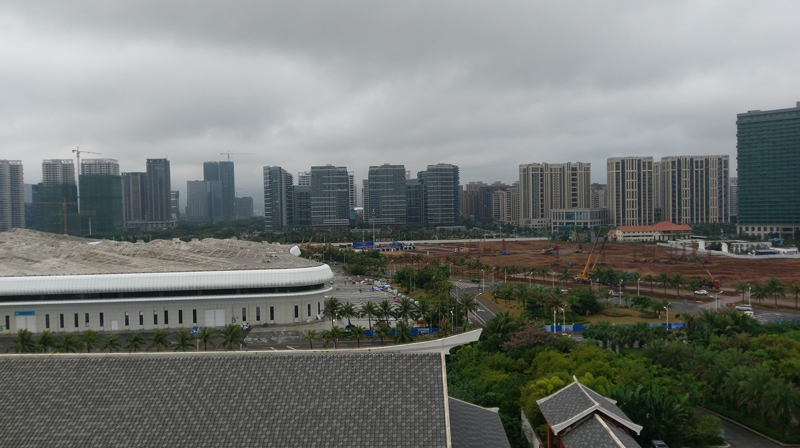
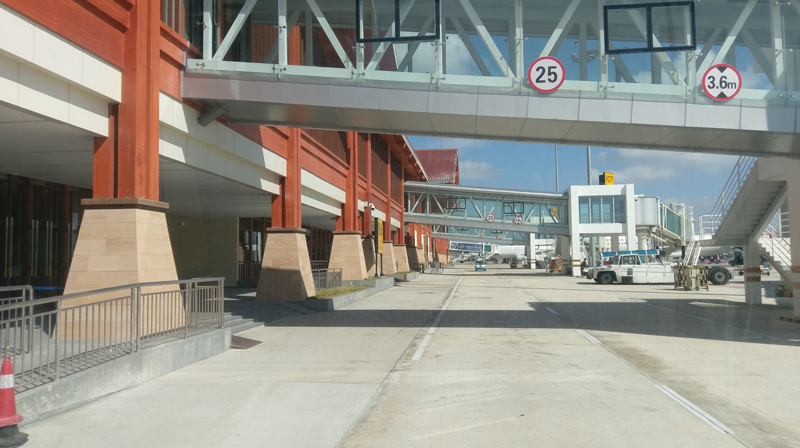
The second batch includes an international school in Jiangdong New Area, Haikou, and an internet headquarters project, both of which are aimed at attracting foreign talent to work in Hainan and providing facilities for the internet economy. Meanwhile, work to upgrade duty-free shops in Haikou and Sanya Airport should be finished soon, which will allow Hainan to receive and attract more tourists.

In January 2019, the Ministry of Finance announced that Hainan will be allowed to issue additional bonds worth RMB16.6 billion in 2019. This will help the province guarantee financing for key projects such as poverty relief, pollution containment and transportation. The development of Hainan’s infrastructure is set to become a major focus of the province’s economic activity this year.
Opportunities for Hong Kong Companies
The Hainan FTZ will increase market access for foreign-funded services. The table below lists the measures on the liberalisation of market access for the services industry contained in the Overall Plan, compared to those offered by the Mainland-Hong Kong Closer Economic Partnership Arrangement (CEPA):
| Comparison of Market Access Liberalisation Measures under the Overall Plan and CEPA Agreement on Trade in Services | ||
| Overall Plan | Sector | CEPA |
| Restriction on foreign equity ratio in the provision of multi-party communications services, internet access services for online users, and store-and-forward services in the mainland will be lifted | Telecommunications | Hong Kong service suppliers are allowed to set up equity joint-venture or wholly-owned enterprises in the mainland to provide multi-party communications services, internet access services for online users, and store-and-forward services, with no restriction on the equity ratio of the Hong Kong party |
| Foreign investors will be allowed to invest in IP-based virtual private network services in the mainland, with equity ratio not exceeding 50% | Hong Kong service suppliers are allowed to set up equity joint-venture enterprises in the mainland to invest in IP-based virtual private network services in the mainland, with the equity ratio of the Hong Kong party not exceeding 50% | |
| Foreign investors will be allowed to set up foreign-invested performing arts groups (with the Chinese party as the controlling shareholder) | Cultural | Hong Kong service suppliers are allowed to set up equity joint-venture performing arts groups in the mainland, with the mainland party as the controlling shareholder |
| Foreign professionals, who have obtained a class 1 registered architect or class 1 registered structural engineer qualification, will be allowed to act as partners to set up construction and engineering design offices in accordance with the relevant qualification requirements | Construction | Hong Kong professionals, who have obtained mainland's class 1 registered architect or class 1 registered structural engineer qualification, are allowed to act as partners to set up construction and engineering design offices in the mainland in accordance with the relevant qualification requirements |
| Restriction on foreign equity ratio in life insurance companies will be relaxed to 51% | Insurance | Foreign insurance companies can set up equity joint ventures with mainland enterprises, with the equity ratio of the foreign party not exceeding 50% of the joint venture’s total capital investment |
| Restriction on foreign equity ratio in international maritime transport companies will be lifted | Maritime transport | Maritime transport services (passengers and freight) are restricted to equity joint ventures and the capital contribution of the Hong Kong service supplier may not exceed 50% |
| Restriction on foreign equity ratio in international shipping agency companies will be lifted | Freight forwarding | Provision of third-party international shipping agency services is restricted to equity joint ventures and the equity ratio of the Hong Kong service supplier may not exceed 51% |
| Restriction on foreign equity ratio in projects involving the selection of new species of vegetables and seed production will be lifted | Agriculture | In projects involving the selection of new species of crops and seed production, the mainland party shall be the controlling shareholder |
| Source: Overall Plan, Hong Kong Trade and Industry Department | ||
It can be seen from the table above that, in parts of the telecommunications, cultural and construction sectors, the Hainan FTZ will grant foreign investors the same market access as that currently enjoyed by Hong Kong companies; while in parts of the insurance, maritime transport, freight forwarding and agriculture sectors, the liberalisation measures go even further than those set out in CEPA. While these generous market access measures are likely to encourage more foreign investors to Hainan and thus intensify the competition faced by Hong Kong companies in the province, it may also encourage other mainland regions to open up further, which may in turn create more new opportunities for Hong Kong companies.
The Overall Plan specifically promotes an increased role for Hong Kong companies in the development of Hainan, stating that the pilot free trade zone has been authorised to formulate administrative measures for Hong Kong and Macao professionals, allowing practitioners in the financial, architecture, planning and patent agency service sectors who possess qualifications to practise in Hong Kong and Macao to provide professional services for enterprises in the pilot free trade zone upon filing records with the competent department. This clearly shows that the Hainan FTZ will grant special access treatment to Hong Kong and Macao residents. With the Hainan FTZ offering generous market access liberalisation measures to foreign investors, professionals in the construction, planning and patent agency sectors can expect to find development opportunities in Hainan.
At the same time, the Hainan FTZ is also set to liberalise its financial sector further. This will include measures such as expanding cross-border RMB settlements, reforming foreign exchange control, and exploring the feasibility of making currency conversion easier in investment and financing. Given that Hong Kong is the largest offshore RMB business hub in the world, Hong Kong companies should be exploring how they can provide financial services in the Hainan FTZ within its policy framework.
Hainan FTZ Opens up to the World
The Hainan FTZ is set to open up even further to the world through its development of tourism, new tech and hi-tech sectors and modern services, as well as by improving its business environment through adjustments to the relationship between the government and the market. At the Boao Forum for Asia on 10 April 2018, President Xi Jinping said, “China’s open doors will not close but will only open wider and wider.” The Hainan FTZ is the latest move China has taken to promote comprehensive, deep-level reform and “opening up”. As the FTZ launches more new policies and plans in the future with this aim in mind, continued attention should be paid to its development.
Editor's picks
Trending articles
By Md Nazirul Islam Sarker, School of Public Administration, Sichuan University, Chengdu, China
Md Altab Hossin, Department of Information Management and Ecommerce, University of Electronic Science and Technology of China, Chengdu, China
Xiaohua Yin, School of Automation Engineering, University of Electronic Science and Technology of China, Chengdu, China
Md Kamruzzaman Sarkar, Department of Zoology, National University, Gazipur, Bangladesh
One Belt One Road (OBOR) initiative is a historical initiative which connects the people over the world and facilitates various opportunities for global peace. The main purpose of this study is to explore implication of One Belt One Road initiative for global future development. It also analyzes the reasons of origin, strategy, opportunities and challenges of OBOR initiatives on the basis of business, economic, political, social and environmental aspects. This study uses qualitative approach and secondary data particularly journal articles, conference proceedings, various documents of government, books, newspaper articles, magazine articles, and various websites of internet have been extensively used to determine the objectives. This article argues that partner countries and agencies will get economic and political benefits from these initiatives. It facilitates to connect people through road ways, air ways and water ways, coordinating policies of various governments, financial integration through cross border business, productivity and regional energy security. This study also analyzes risks and challenges associated to OBOR initiative implementation. It suggests that strong coordination among partners of OBOR is necessary to get full fruits of OBOR through supportive law, policy, rules and regulations, proper strategy implementation, transparent procurement system, sincere consideration on political, financial, environmental and social factors……
Implication for Future of Global Development
The philosophy of OBOR is not to threat the other nations but bring a sustainable economic growth by combining some key development initiatives. OBOR can influence the Chinese major policy, development strategy, foreign relations and investment in future which will be helpful for regional and global economic development. It also helps to connect its partners in terms of physical, political, cultural, financial, and psychological interactions. It is actually a way for future economic development through developing infrastructure from Asia to Africa and Europe and promoting economic flows among all partner countries. The six economic corridors of OBOR initiative connects the geopolitically important part from Southeast Asia, Central Asia, South Asia and Europe which helps to promote the business, economics, and influence of china over other countries. China already made success to make land links from Southeast China to Southeast Asia which was intended target of Asian Development Bank and others for making land connection. It is happened because of making economic corridor of OBOR initiative. Another corridor connects China from Kunming to Vietnam, Laos, and Myanmar. The economy of central Asia is very smaller than China. Due to OBOR initiative, China will be the top supplier of manufactured goods to Central Asia as well as top consumer of agricultural output and resources of Central Asia. Some geopolitical places would be economically viable after proper implementation of OBOR strategy.
Challenges Related to Implementation of OBOR
1) Absolute size and scale of understanding in case of infrastructure development is one of the major challenges for OBOR initiative. Private funding is necessary alongside with the funding from Chinese government and AIIB for accomplishment of the infrastructure of OBOR initiative.
2) A huge amount infrastructure development requires enough time to accomplish. No infrastructure will be effective for economic return before full accomplishment. Since china is now facing an economic slowdown, challenge of finance from local government and bad debt so in near future funding for infrastructure development may face difficulties and under pressure. So, it is necessary to invite some potential financial partner to improve the situation.
3) The infrastructure of OBOR is not enough for bring proper economic benefits from OBOR initiative. The infrastructure of partner countries should be considered during infrastructure development for effectiveness of OBOR initiative. Some advanced countries have no requirement for infrastructure development but some developing countries require enough infrastructure to connect with other partners.
4) Geography and topography of all partner countries are not same. It is very difficult to make smooth transportation way connecting high topography to low topographical region. Long distance, high and low topography, densely forest areas and high-mountain should be considered during planning and construction of land routes.
5) Geopolitical challenges are the major challenge for implementation of OBOR initiative. Relationship between India-Pakistan is not good and favor to OBOR initiative. Since China-Pakistan corridor passes through Pakistan controlled Kashmir which is extremely opposed by the Indian government. Dispute between Russia and Ukraine, civil wars in Syria, Iraq and Afghanistan are not favorable for OBOR initiative. Some other partner countries are suffering from political instability, and sanctions, corruption, expropriation and inefficiencies which affect the success of OBOR initiatives.
6) Security challenges are the major challenges for partner countries. Some scholars think that it is very difficult to manage the internal and external national security of partner countries. In some cases, it may be influenced by Chinese military or navy.
Conclusion and Recommendation
The study analyzes the suitability of OBOR for future of global development in terms of economic sustainability, political stability and cultural exchange. The study argues that OBOR initiative has a great potential for future of global development. It also analyzes the context of origin, vision, strategy, challenges and opportunities of OBOR initiative considering its applicability for global development. It also argues that China has a great influence on the OBOR initiative as an initiator and encouraging China’s Go-West policy at all but it has a good impact on the economy of its partner as a whole. The article finds out some major challenges of OBOR like absolute size and scale, large infrastructure development, various geography and topography, geographical challenges and security challenges within the region. It suggests that strong coordination among partners of OBOR is necessary to get full fruits of OBOR through supportive law, policy, rules and regulations, proper strategy implementation, transparent procurement system, sincere consideration on political, financial, environmental and social factors. This study contributes to the ongoing debate on the positive and negative effect of OBOR initiative through exploring the context of origin, strategy, challenges, opportunities and implication for global future development.