






Momentum for collaboration strengthens at AFF 2026
Discussions also reaffirm Hong Kong’s strategic role in global finance.
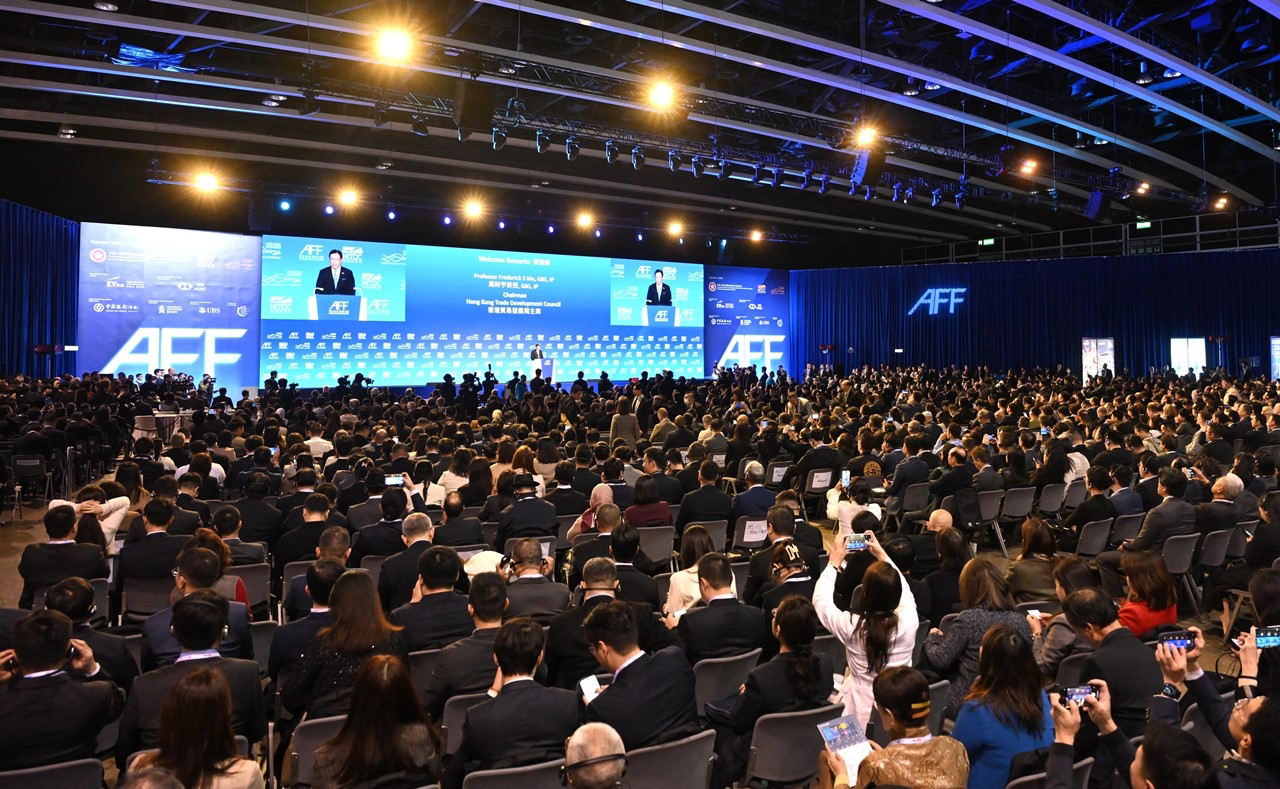
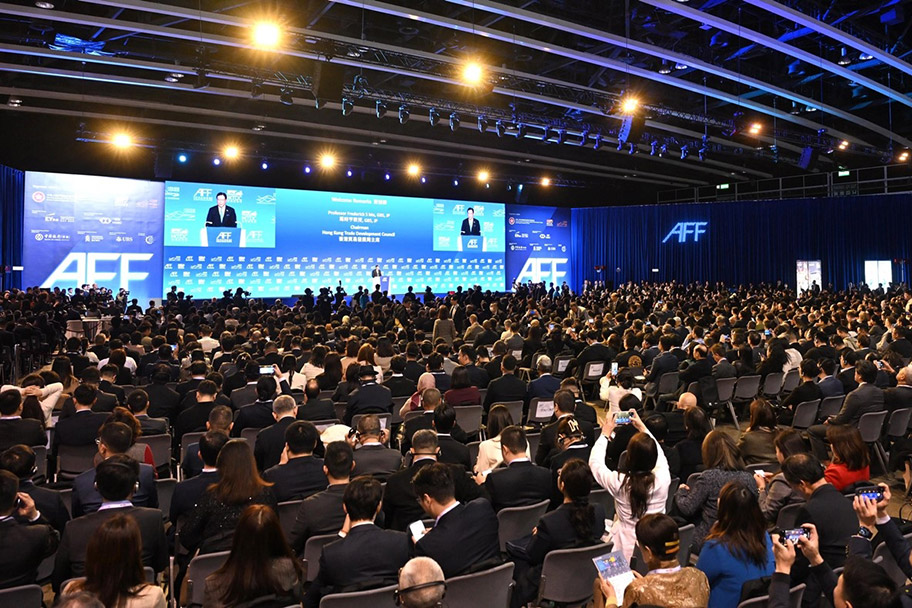
New models for investment, growth and cooperation were high on the agenda at this year’s Asian Financial Forum (AFF), which brought together influential policymakers, senior finance executives and business leaders from around the world.
AFF 2026, co-organised by the Hong Kong SAR Government and the Hong Kong Trade Development Council (HKTDC), was held in Hong Kong earlier this week against a backdrop of ongoing geopolitical turbulence and disruptions to global trade.
In such times, greater mutual understanding can pave the way for new partnerships, noted Klemen Boštjančič, Deputy Prime Minister and Minister of Finance for Slovenia, speaking on one of this year’s plenary sessions.
Slovenia is deepening its engagement with global capital markets. As part of this push, the eurozone economy plans to issue its first panda bonds – RMB-denominated debt – later this year to foster closer ties with China.
“This crisis we face today is an enormous opportunity to build bridges among Europe, Asia and the rest of the world,” Mr Boštjančič explained.
While most global trade remains rule-based, safeguarding this system has become increasingly challenging, pointed out Mehmet Şimşek, Türkiye’s Minister of Treasury and Finance.
Multilateral discussions, he contended, should focus on how to work together in such an environment, rather than questioning the merits of cooperation. “That’s why this forum is relevant,” he remarked.
Türkiye, a bridge between Europe and Asia, is investing in regional integration and new trade corridors to support long-term economic growth. The country is also implementing fiscal reforms while pursuing twin digital and green transformations.
“On that basis, we see a lot of scope for cooperation,” Mr Şimşek said.
An upbeat outlook
Despite the uncertainty, there are many reasons to be optimistic about the global economy, argued Douglas Flint, Chairman of Scottish investment group Aberdeen.
Supply chains have adjusted following last year’s tariff shocks, while interest rates and inflation in major markets should ease this year, he suggested.
Advanced technologies, including AI, are poised to unlock fresh opportunities, while investment capacity and corporate finances remain relatively robust.
“We start 2026 with the balance sheet of the world and the optimism within the world much, much better than it was 12 months ago,” observed Mr Flint, who is set to join Hong Kong-based insurer Prudential in March.
Geopolitical tensions, however, are inhibiting private-sector enthusiasm for development financing, noted Zou Jiayi, newly appointed President of the Asian Infrastructure Investment Bank (AIIB).
Nonetheless, demand for investment remains high, especially for resilient physical and digital infrastructure, as well as climate-related funding.
Multilateral development banks (MDBs), including the Beijing-based AIIB, can join hands with other stakeholders to unlock much-needed resources.
“Looking ahead, the focus of AIIB is very clear: to channel long-term capital into sustainable infrastructure and other productive investment by working closely with partners, including sister MDBs, bilateral development institutions, the private sector and also financial centres, like Hong Kong,” Ms Zou said.
AIIB plans to open an office in Hong Kong this year, reinforcing the SAR’s status as an international finance hub. The new facility will be the AIIB’s second physical location outside the Chinese Mainland, following its Abu Dhabi office, which opened in 2023.
Hong Kong’s golden future
This year’s AFF attracted more than 4,000 participants from over 60 countries and regions, including business delegations from the Chinese Mainland, Australia, South Korea, Southeast Asia, Europe, the Middle East and the United States.
The value of Hong Kong’s experience and expertise in international finance, for both Chinese Mainland and overseas organisations, was another recurring topic throughout the forum.
The Global Business Summit, which debuted at AFF this year, examined how high-growth sectors – including AI, biomedicine, green energy and more – can leverage financial services to drive innovation and long-term growth.
“Financial services help industries and investors maximise their investments and their impact,” remarked HKTDC Chairman, Prof Frederick Ma. “This will have far-reaching benefits, supporting continued technological breakthroughs, as well as closer integration and sustainable development.”
In a further testament to Hong Kong’s appeal, the number of foreign and Chinese Mainland companies in Hong Kong rose by 11% last year to a record high of 11,070, Hong Kong Chief Executive John Lee revealed in his opening remarks on AFF’s first day.
He also summarised plans to further boost Hong Kong as a financial centre, by reinforcing its strengths, expediting the development of new growth areas and continuing to prioritise international exchanges and cooperation.
Hong Kong’s ambitions to become an international gold trading hub also gained significant attention.
On AFF’s opening morning, the Hong Kong SAR Government’s Financial Services and the Treasury Bureau signed a cooperation agreement with the Shanghai Gold Exchange to set up a gold clearing platform in Hong Kong.
The two parties will also explore collaboration on physical infrastructure and market connectivity.
Zou Lan, Deputy Governor of the People’s Bank of China, said the central bank would support the development of Hong Kong’s gold market, as well as its offshore RMB market, the largest in the world.
Hong Kong serves as an important bridge for the opening up of China’s financial market, Mr Zou stated.
Zhu Jing, GM of Global Markets for Bank of China (Hong Kong), speaking on a dedicated session on gold, highlighted possibilities for the precious metal in Southeast Asia.
“The ASEAN market has great prospects for gold, with strong purchasing power and lots of potential,” Ms Zhu said. “Hong Kong can provide the whole region with more solutions for liquidity.”
Original article published in https://hkmb.hktdc.com