






Hong Kong’s strategic gateway to Africa
HKTDC’s South Africa office is the ideal partner for businesses seeking new growth opportunities.
As Africa’s largest and most advanced economy, South Africa combines world-class infrastructure with a vibrant entrepreneurial ecosystem, making the country a strategic gateway to the African Continental Free Trade Area – an ambitious initiative spanning 1.3 billion people and liberalising tariffs on 90% of goods traded within the region.
Hong Kong businesses are finding diverse opportunities in South Africa. Well-known brands active in South Africa include the nationwide electronic components distributor and retailer Mantech Electronics, owned by HKEX-listed Mobicon. They are joined by Cathay Pacific, which has long provided passenger and air freight services through its daily non-stop flight to Johannesburg.
This year marks 30 years since the Hong Kong Trade Development Council (HKTDC) opened its first Africa office in Johannesburg. We spoke with HKTDC’s South Africa consultant Conrad Hendry to find out more about the opportunities in Africa’s most industrialised economy.
Many see South Africa as Africa’s business bridgehead. Why is this?
Across a continent brimming with opportunity yet facing logistical and competitiveness challenges, South Africa stands out with well-developed, reliable infrastructure – spanning airports, shipping terminals and energy plants – alongside international-standard professional services in finance, construction and law.
These strengths make Johannesburg – the country’s financial centre and largest city – a natural choice for the regional headquarters of multinationals, such as Huawei, Xiaomi, Unilever, GSK, Bank of China and more.
There is substantial Chinese investment in many local companies. For example, since 2007, the Industrial and Commercial Bank of China (ICBC) has held a 20% stake in the country’s largest bank Standard Bank.
Cape Town is home to a thriving tech scene centred around South Africa’s most valuable company Naspers, a significant investor in Tencent and other emerging market tech ventures. Online retail is growing at a rate of 40% per year, fuelling huge demand for lifestyle products.
Together, these cities foster an environment that drives growth, sparks innovation and enables cross-border partnerships.
What are the key trade and investment links between South Africa and Hong Kong?
Trade between South Africa and Hong Kong is well-established and continues to grow. South Africa’s main exports include minerals, especially manganese, iron ore, coal and gold, and fruit, in particular oranges, limes and other citrus fruits marketed under the well-known Capespan brand. Rounding off the list are wine, beef and seafood – products that appeal to Hong Kong’s sophisticated consumer market or are trans-shipped to the Chinese Mainland.
In return, Hong Kong supplies electronics, apparel, jewellery and lifestyle goods, reinforcing its role as a global trading hub.
In terms of investment, Hong Kong is an attractive destination thanks to its low tax regime, efficient logistics and unrivalled access to the mainland.
An example is South African company SMD Technologies, which began as a distributor of electronic products, such as headphones, across Africa. The company went on to set up branches in Hong Kong and Shenzhen to originate and source a range of electronics for export.
A rising player to watch out for is Tencent-backed TymeBank, which has 15 million customers across South Africa and the Philippines and has announced plans to offer SME financing in Hong Kong.
What about opportunities in newer sectors?
The country’s abundant renewable energy resources and significant reserves of platinum group metals – critical for producing hydrogen – make it a key player in the transition to clean energy.
As the country’s green infrastructure build-out begins, investment opportunities abound in renewable energy storage, EV charging networks and drones.
This presents exciting prospects for Hong Kong businesses seeking to invest in sustainable technologies and energy solutions. Collaboration in this sector could accelerate innovation, support decarbonisation goals and open new markets for green products and services – in South Africa and across the continent.
Where should Hong Kong businesses start?
Finding reliable local partners and distributors can make all the difference. Support services, such as the HKTDC’s Transformation Sandbox and the Hong Kong-South Africa Chamber of Commerce provide vital connections to business networks and professional service companies.
The HKTDC’s South Africa office also holds regular promotional seminars in Johannesburg and Cape Town, linking Hong Kong companies with key buyers and clients and bringing them to trade fairs, such as the Electronics Fair, Lighting Fair and International Jewellery Show.
After 30 years of operation, what are some of the changes you have observed?
While Hong Kong’s role as Asia’s premier trading hub remains unchanged, its position as a superconnector has come to the foreground in recent years through initiatives such as the Belt and Road Summit. Each year, we bring project owners to the Summit to connect with Hong Kong investors and financiers.
Another key development is Hong Kong’s innovation agenda, which has brought new opportunities to diversify and showcase our city’s rapidly advancing I&T capability through exhibitions such as InnoEX.
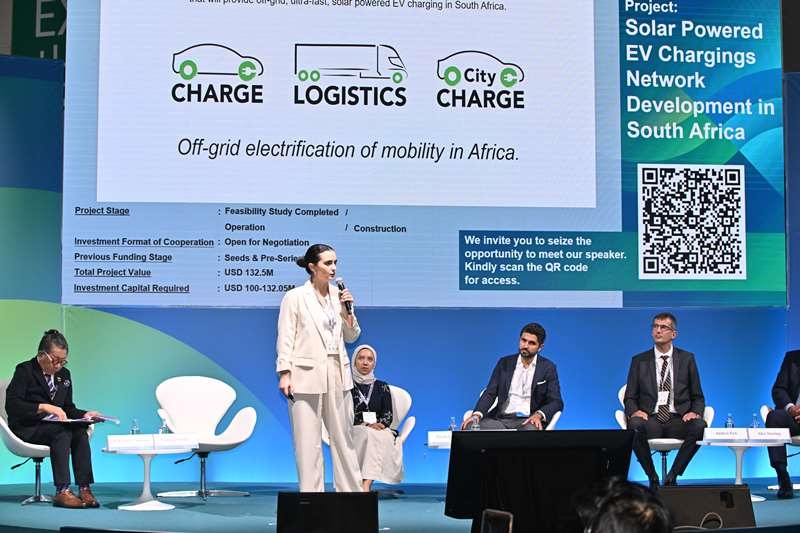
South African greentech start-up Zero Carbon Charge pitched for funding at the 2025 Belt and Road Summit
What’s your final takeaway for Hong Kong businesses?
Hong Kong firms will find attractive opportunities in South Africa across technology, energy, and consumer goods – offering businesses a chance to diversify and innovate. By leveraging the HKTDC’s regional resources and strategic support, Hong Kong companies can unlock South Africa’s vast potential and position themselves at the heart of Africa’s growth story.
Original article published in https://hkmb.hktdc.com