









Infrastructure
 2326 Views
As part of Thailand’s plan to upgrade electricity and transport infrastructure across the country, Bangkok is moving forward to transform the city into a wireless metropolitan area. Internationally-recognised project management services and advanced expertise in electricity infrastructure replacement works are in keen demand for the project, which is spearheaded by Thailand’s Metropolitan Electricity Authority (MEA).
At the signing ceremony of the Third Belt and Road Summit jointly organized by the Hong Kong Government and the Hong Kong Trade Development Council (HKTDC) on June 28, 2018, Deputy Prime Minister of Thailand Dr Somkid Jatusripitak and HKTDC Chairman Dr Vincent Lo congratulated Hong Kong Energy Infrastructure Limited (HEI), a wholly-owned subsidiary of Kum Shing Group, on the signing of a Memorandum of Understanding with MEA for "The Provision of Feasibility Study on Undergrounding Overhead Power Lines". This is the first time for a Hong Kong company to provide consulting services to a Thai state enterprise in the power and energy sector, and a milestone result of Kum Shing Group’s participation in the HKTDC-led Hong Kong-Shanghai joint infrastructure investment delegation to Thailand in May 2017, during which the company met with MEA and confirmed their partnership after rounds of discussion.
With over 55 years of experience, Kum Shing Group is Hong Kong's energy and mobility infrastructure specialist that provides engineering solutions to the city’s electricity supply system from power generation, transmission, distribution to utilization, assisting the local utilities in achieving a world-class supply reliability of 99.999%. Kum Shing Group possesses the experience and expertise to offer advisory services for Thailand’s MEA to manage its overhead line works and underground cable installation.
Mr Rex Wong, Executive Director and CEO of Kum Shing Group and Managing Director of HEI, said, "We appreciate the trust and confidence MEA has placed with us. We will utilize our engineering and management expertise to support the improvement and development of electricity system in the Greater Bangkok area."
The Thai Government has injected 51.7 billion Thai baht (approximately USD$1.58 billion) to the undergrounding project. Currently, 214.6 km of the MEA’s underground power transmission system project is under development on 39 roads in Bangkok, with completion slated for 2021. Kum Shing Group provides advisory services to MEA from technical design, application know-how, engineering expertise to resources deployment and stakeholder engagement planning. Not only does the project aim to beautify the streetscape, improve the neighbourhood environment and maximize land-use, but also enhance the electrical power distribution system to supply sufficient, stable and safe electricity for the city. Recently, Kum Shing Group has also offered stakeholder management consultancy services and training to MEA.
On the unique strengths of Hong Kong companies when participating in such projects, Wong said it is easier for Hong Kong, one of the world’s top-ranked cities in terms of reliability of electricity supply and transport network, to reach out to and gain the favour of the project owners and investors in the emerging markets of the neighbouring places who are looking for experienced and trusted consultancy to guide them through their local projects. Wong also advised the above-mentioned two types of people to get relevant consultancy and advisory services before jumping into investment to “ensure that the resources and time spent on the projects will not be wasted”.
For companies looking to tap into Belt and Road opportunities, Wong said companies should first focus on local projects before planning to venture overseas. “When you manage your local projects well and build up your organisation’s reputation, you’ll be better placed to find the right partners abroad and engage in a mutually trusting partnership.”
He believed that such collaboration with MEA will serve as a stepping stone for the Group to expand its business to the neighbouring regions, bringing its long-standing expertise and integrated technology and design solutions to other cities in the area to help meet the local demand for infrastructure development.


 1620 Views
The experience, comprehensive construction and technical know-how accumulated in Hong Kong is key to tapping into Belt and Road opportunities, according to Dominic Pang, Chairman of Asia Allied Infrastructure Holdings Limited (AAIH), whose company has recently secured a major water-supply infrastructure contract in the Philippines.
Having participated in a number of large-scale integrated construction projects in Hong Kong, including the Central-Wan Chai Bypass project, MTR Guangzhou-Shenzhen-Hong Kong Express Rail Link (Hong Kong Section) and Happy Valley Underground Stormwater Storage Scheme, AAIH accumulated extensive experience in the construction sector enabling it to expand business to the Belt and Road countries.
“The Philippines is a starting point to explore other Belt and Road-related construction opportunities around the region. Through this project, we hope to expand our business in the Philippines and find relevant partners. Technology transfer will help the local partners develop and list in Hong Kong, bringing project and investment returns to AAIH,” said Pang, who believed that construction projects, however they are tied to the Belt and Road Initiative, provides the Hong Kong construction industry with an opportunity to export its hard-earned reputation for managing and constructing world-class infrastructure projects. “As more Belt and Road projects are announced, we should be looking at ways to export our Hong Kong premium brand of construction and engineering capabilities and skills of handling complex projects to other regions,” said Pang.
With two independent thirdparty construction contractors, AAIH has entered into a contract with Manila Water Company, Inc to design and construct the Novaliches-Balara Aqueduct 4, water conveying facilities. Due for completion in 2021, the 5.4 billion-Peso (approximately HK$800 million) project will improve the long-term water supply services between Novaliches and Balara in Quezon City, the most populated city in the Metro Manila area. One of the two contractors also worked with AAIH previously on the Sha Tin-Central Rail Link project, constructing the tunnel between the Kai Tak and Diamond Hill MTR Stations.
In addition to the Novaliches-Balara Aqueduct 4 project, Pang said AAIH is exploring collaborative relationships with construction firms in Malaysia, the Philippines and Vietnam. “Other than project management, we are looking at ways to set up material and equipment sourcing collaborations to provide benefits along the construction supply chain,” said Pang. He said establishing connections with local stakeholders and introducing best construction project management practices is a good example of the Belt and Road ethos of promoting cooperation, mutual learning and mutual benefits.
Stephen Lee, Chief Executive Officer of Chun Wo Construction Holdings Limited, said it is noteworthy the Novaliches-Balara Aqueduct 4 project, which features a 7km long and nearly 4m diameter tunnel, will be the first tunnel in the Metro Manila area to be constructed using a tunnel boring machine (TBM). Used as an alternative to drilling and blasting methods, the use of TBMs requires expert planning and operating processes. “Our project management team has worked on challenging tunnelling projects in Hong Kong and will apply their skills and experience on the Philippines tunnelling project,” Lee said. Ahead of the commencement of tunnelling work, currently, geotechnical inspection work is being conducted to evaluate soil conditions and groundwater conditions.
With a wealth of experience in the construction industry, Edward Yeung, Assistant to the Chief Executive Officer of AAIH said by working with Philippine sub-contractors and employing local labour, AAIH can introduce the latest construction techniques and help fast track up-skilling. “The Philippines may lag behind the sophistication of Hong Kong's construction industry, but there is a lot of enthusiasm and commitment to improve,” noted Yeung. Dubbed by the government as the “golden age of infrastructure”, the Philippines has launched a major public spending programme focused on the construction of new roads, bridges, railways, and airports costing some US$167 billion. “As a company that possess extensive experience in project management and construction, AAIH is looking forward to sharing our expertise with suitable partners,” said Yeung.
1369 Views
The Hong Kong University of Science and Technology (HKUST) is leading a five-year study to reduce the effects of landslides, including among China’s Belt and Road countries. HKUST’s Charles Ng says the multi-disciplinary, multinational study includes student participation in developing a world-leading standard of landslide barriers for “export” to many countries.
Speakers:
- Charles Ng, Chair Professor, Civil and Environmental Engineering, HKUST
- George Goodwin, UK Student
- Kelvin Au, Hong Kong Student
- Hengdu Liu, Chinese mainland Student
- Rafa Tasnim, Student from Bangladesh
Related Links:
Hong Kong Trade Development Council
http://www.hktdc.com
HKTDC Belt and Road Portal
http://beltandroad.hktdc.com/en/
By The Association of Southeast Asian Nations (ASEAN)
FDI flows into ASEAN in 2016 remained high despite a decline to USD 97 billion, which reflects the general downfall trend of global FDI flows into the developing economies.
FDI flows from most ASEAN Dialogue Partners and intra-ASEAN investment actually increased, with the latter reaching an all-time high and accounting for a 25 per cent share of FDI flows into the region.
However, these increases were not enough to help overcome the decline which was due to divestment, acquisition of foreign assets by ASEAN companies in their home countries and repayment of intracompany loans by affiliates within the region.
Many foreign companies have a long historical association with the region, some dating as far back as the 1800s and they continue to invest and expand in the region.
This year’s Report examines the historical investment development of two Dialogue Partners of ASEAN, namely the European Union (EU) and India. Major multinational enterprises (MNEs) from these countries have been present in ASEAN in a wide range of industries. Many of them operate in multiple locations across the region in different segments of the value chains.
This year’s Report also features the development of economic zones in ASEAN. This is a welcome follow-up to the “ASEAN Guidelines for Special Economic Zones Development and Collaboration” adopted by ASEAN Economic Ministers (AEM) in 2016. ASEAN has at least 1,600 economic zones of various types.
These zones, ranging from free trade zones, export processing zones, IT parks to mega special economic zones, have played a significant role in the socioeconomic development in the region and in attracting FDI. Given the rapid economic growth and demand, ASEAN Member States continue to develop more economic zones to boost FDI.
Policy makers, entrepreneurs, and other stakeholders may find this Report useful in understanding economic zones in ASEAN, as well as the business and investment development in the region in general.
Please click to read full report.
Editor's picks
Trending articles
By Craig Sugden, external contributor to Lowy Institute for International Policy
China’s push for the new normal has seen its local governments convert to public-private partnerships (PPPs), long-term contracts between a private party and government to provide a public asset or service. More than 12,000 such projects worth around US$2 trillion have kicked off since public finance reforms were announced in late-2013.
China’s enthusiasm for PPPs has carried through to the Belt and Road initiative (BRI). Under the auspices of the lead planning agency, the National Development and Reform Commission, mechanisms were established in early-2017 to promote infrastructure PPPs for BRI. The promotion is to be through ‘along the way’ and ‘vicinity of the way’ mechanisms.
Others have added their support. Last month more than 130 countries and 70 international organisations, including the UN, the World Bank, and the IMF, attended the BRI Summit in Beijing. Those attending agreed on guiding principles on financing that encourage countries to open public service markets, and to develop PPPs to channel funds while improving the efficiency and quality of infrastructure.
It is easy to see why PPPs are being promoted for BRI. China’s budget is already stretched and it would struggle to directly finance the wide array of major projects envisaged under BRI. Many other participating countries also face tight budgets and PPPs are a way of mobilising alternative sources of finance.
For China, PPPs will alleviate pressure on the government with state-owned enterprises (SOEs) and state banks sharing responsibility for BRI implementation. Under the post-2013 reforms, the government is relying more on the social capital sector, which in China includes state-owned entities and the private sector. Reforms have opened public services to competition and eroded the widespread practice of simply allocating public projects to local SOEs.
But such an active role for these state-owned entities may raise concerns outside China. What will China Inc. hold for BRI countries?
China’s own State Council has expressed concern in its mix of SOEs and PPPs. There were calls last year for better protection of investor rights so the private sector can participate in fair competition with SOEs. There are other features of China’s PPPs to be wary of. Last month, central government agencies had to clamp down on local government's using PPPs as a means of backdoor borrowing. China’s PPPs tend to be relationship-heavy. Key issues - such as the pricing of services - are often not tightly defined up front in the contract process but left to be resolved by partners during implementation. Mixing a relationship-heavy approach to PPPs with the weak governance that is found in some BRI countries would carry obvious risks.
Yet China’s reforms have seen international practices adopted and adapted to fit the institutional setting. These changes were achieved with the help of the UK, where many good PPP practices originated, and international organisations like the World Bank. If Chinese entities work offshore the way they are meant to work onshore, many BRI countries could benefit from better infrastructure.
These observations lead to the identification of a potential role for Australia in BRI focused on PPPs.
Australia is one of the countries that has not signed onto the BRI, along with India, whose government stayed away from the May BRI forum, and Japan and the US, who are not mentioned in the forum’s communique. Australia is also not mentioned in the communique. The highest profile Australian contribution to the forum was a speech by former prime minister Kevin Rudd. Should Australia continue to keep its distance, or engage, as its neighbours Indonesia, New Zealand, and the Fiji Islands have done?
Views are divided. As is the case with many other issues involving China, opinion on BRI is torn between apprehension regarding China’s leading role and appreciation of the huge business opportunities on offer.
What is clear, however, is that PPPs can provide a natural niche for Australia. Australia can contribute to BRI by helping ensure that PPPs live up to their potential to deliver higher quality and lower cost services faster. By promoting good PPP practices, Australia can help avoid a free-for-all of unconstrained strategic or commercial interests.
Australia has one of the world’s best resumes on PPPs. It's a leader in delivering infrastructure and other public services through PPPs, with an enabling environment that defines good practice benchmarks. It has many skilled, experienced service providers, financiers, and advisors that can generate value for money through innovation.
Australia's aid program has helped other countries learn from the Australian experience. Much more can be done though to share Australia’s PPP knowledge of and resources in PPPs which may provide an alternative way of delivering essential public services that developing countries badly need.
The need for development partners to prioritise private sector solutions when deploying scarce public resources, including for infrastructure, was highlighted at the recent World Bank/International Monetary Fund Spring meeting. It is widely accepted that the post-2015 Sustainable Development Goals can only be met if private investment plays a bigger role in development.
Raising Australia’s presence in offshore PPPs would be in the national interest in that it would provide an outlet for particular skills and management practices, and provide new opportunities for Australian capital seeking the long-term investment offered by infrastructure.
If Australian service providers, financiers, and advisors win BRI projects, they will export good PPP practices. Project-level activity can be backed up by knowledge sharing with advocacy on how to do PPPs well. Australia can, for example, play a part in encouraging transparency in BRI projects including open competitive bidding.
Specialised investment funds have been set up by China, such as the Silk Road Fund, with billions of dollars in resources. The World Bank and the Asian Infrastructure Investment Bank are engaged in BRI, along with many other international organisations. So, the potential partners for Australian organisations are in place. Conditions are ready for Australia to take on a thought-leader role.
Australia took a bold step when it joined the Asia Infrastructure Investment Bank without the United States. It could now take another pragmatic step by assertively promoting good PPPs, using BRI as a platform.
The qualifier ‘good’ is an important one. Every country that is serious about PPPs has had some bad outcomes, such as projects that didn’t deliver the promised services, that strained the government’s budget, that cost investors dearly, or earned excessive profits. PPPs, just like conventionally delivered projects, can fail. Those who have been down this road before are well-placed to help others avoid the pitfalls.
Please click to read the full report.
Editor's picks
Trending articles
Thawing China-Philippines relations sees Beijing sign up as backer for country's ambitious infrastructure makeover.
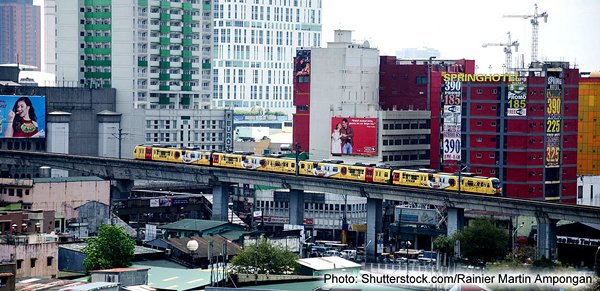
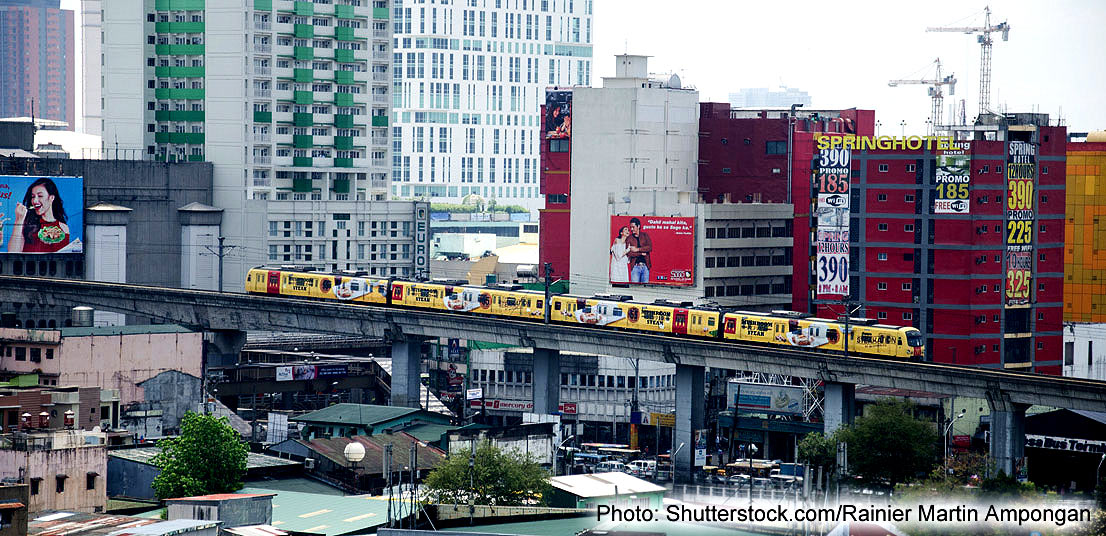
A proposed 610km railway line – linking Manila, the Philippine capital, to Matnog, a town to the south of the country and the site of a new 50-hectare eco-city – is set to be the latest beneficiary of Belt and Road Initiative (BRI) investment. Following detailed negotiations during last November's ASEAN summit in Manila, the final loan agreement is expected to be ratified early this year, almost exactly 12 months from the date that initial discussions began.
The origins of the scheme, formally known as the Philippine National Railways (PNR) South Long Haul Project, date back to 2015, when it was first mooted by the Bicol Regional Development Council, the trans-provincial body responsible for the region's economic regeneration. It was subsequently adopted as one of the flagship projects of the Build, Build, Build initiative, the massive infrastructure development programme initiated by Rodrigo Duterte, the Philippine's controversial President. It is believed that Duterte is committed to seeing the project completed before the end of his term in office in the summer of 2022.
Once completed, the massive P151 billion (US$3.01 billion) rail initiative will run south from Manila to Matnog, connecting the provinces of Sorsogon, Laguna, Batangas, Quezon, Camarines Sur and Albay along the way, as well as a number of international seaports and Special Economic Zones. It is also envisaged that it will vastly improve connectivity between Southern Luzon's urban centres and several regional growth hubs, ultimately enhancing productivity in the industrial, services and agricultural sectors.
As an added bonus, it is also expected to boost tourism within the Bicol region by as much as 30%, while carrying up to 400,000 passengers in its first year of operation. In total, it will cut the transit time between Manila and Bicol from 11 hours to just six.
The huge cost of the project is largely down to the need to replace the legacy PNR track with, in the first instance, a single-track at-grade (at the same level) rail system. According to the country's Department of Transportation, in addition to the costs of replacing the track, the project's budget will also extend to the provision of new carriages/engines and a number of other supplementary requirements. On top of the Chinese investment, between P800 million and P7 billion of funding has been allocated to the project from the Philippine government's 2016 and 2017 budgets, with a further P3 billion expected to be diverted from the 2018 public spending round.
In addition to the South Long Haul project, the Philippines' government has also approved two other major rail projects over the past 12 months – the P358 billion Metro Manila Subway and the P134 billion PNR-South Commuter Line. It is envisaged that, ultimately, these three projects will segue into one integrated commuter rail system.
Overall, the confirmation of the mainland funding is seen as yet another sign that relations between China and the Philippines are continuing to thaw. A consequence of this improved diplomatic relationship is that Duterte can now rely on BRI funding to help bankroll many of his administration's priority economic redevelopment and job-creation initiatives, which have been costed at about US$167 billion. To date, China has pledged US$24 billion in order to help realise these proposals.
Marilyn Balcita, Special Correspondent, Manila
Editor's picks
Trending articles
Transformative East Coast Rail Link secures mainland investment, enhancing connections to China-funded port.
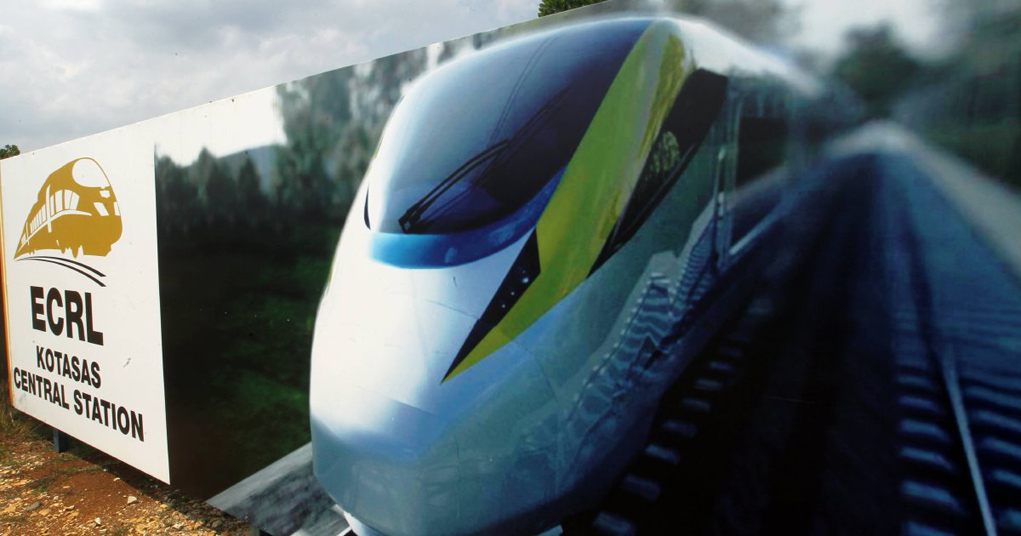
Work is set to begin on two of Malaysia's most ambitious infrastructure development projects – the construction of the East Coast Rail Link (ECRL) and a major upgrade to the Kuantan Deepwater Port. Both projects are being bankrolled by Chinese investment, with their development managed by two mainland-led consortiums, a sure sign that Beijing sees the programmes as an integral part of the Belt and Road Initiative (BRI), China's ambitious infrastructure and trade facilitation programme.
The ERCL is one of the key planks in Malaysia's bid to economically rejuvenate its eastern region. With a proposed budget of some RM55 billion (US$13 billion), the 700km rail line is being constructed by the China Communications Construction Company (CCCC), the state-owned infrastructure development giant, and is expected to be operational by July 2024.
Fully-electrified, the oxbow-shaped line will be built in two phases, ultimately connecting Port Klang on the west coast, the country's largest container port, with Kuala Lumpur, the Malaysian capital, while also servicing several urban centres and ports along the eastern seaboard. Its northernmost terminal will be Pengkalan Kubor, a strategically significant town on the Thai-Malaysia border. The line will carry both a 160 kph passenger service and a more sedate 80kph freight service.
With 15 viaducts and 10 tunnels – the longest being 5.6km in length – 70% of the ECRL's capacity will be given over to freight services, with a throughput of more than 54 million tonnes of cargo anticipated by 2030. The remaining 30% will be allocated to the 5.4 million passengers expected to travel the route every year, making it the country's primary inter-regional transport system.
The initial 600.3km phase of the project will run from the Gombak Integrated Transport Terminal in the state of Selangor to Kota Bharu, the capital of the north-eastern state of Kelantan. With 21 stops along the way, it will connect Kota Sas, Kuantan Port, Cherating, Kertih Port, Kertih Airport and Kuala Terengganu, the largest city on the east coast. The second phase will deliver two extension lines – a 24.5km northern link running from Kota Bharu to Pengkalan Kubor and a 78.6km southern spur connecting Gombak and Port Klang.
In total, 85% of the funding for the project has been provided by the Export-Import Bank of China (EximBank) with the loan repayable at a rate of 3.25%. The remaining 15% has been sourced via Malaysia's sukuk Islamic bond scheme, an initiative managed by three of the country's domestic banks.
Overall, developing the country's rail infrastructure has been designated as a priority by the Malaysian government and forms a key component of its economic transformation plan. This focuses on providing enhanced links between the country's eastern and western seaboard ports, while reducing the development gap between the west coast and the country's less-industrialised eastern states.
It also seeks to remedy one of the country's most pressing infrastructure shortcomings. With the majority of Malaysia's inter-city rail lines running on a north-south axis, many of the towns, cities, ports and industrial zones in the country's eastern region have long been left solely reliant on road links. It is now hoped that the huge investment planned for the rail sector will bring it up to the standard of the country's existing port, air and road networks.
Once completed, the ECRL is expected to jumpstart economic activity in the East Coast Economic Region, which extends across 51% of Peninsular Malaysia and is home to some five million people. It is hoped the new line will boost the region's per annum GDP by 1.5% annually for the next 50 years.
Aside the from the economy of eastern Malaysia, the other key beneficiary of the ECRL is expected to be Kuantan, the state capital of Pahang and the site of the country's most significant east coast port. The port, which offers strategic access to the South China Sea, is currently undergoing a major upgrade. This will double its capacity to 52 million freight weight tonnes (FWT) and allow the largest container ships to berth.
The first phase of the work on the port's new deep-water terminal is expected to be completed by the summer of this year, with phase two scheduled to go online in 2019. Already one of the country's prime conduits for imported goods and raw materials for industrial production and manufacturing, the expanded facility is also expected to handle a greater throughput of imported oil and gas.
The redevelopment work on the port is being headed by the Kuantan Port Consortium, a joint venture between IJM Corporation Berhad, one of Malaysia's leading construction groups, and Beibu Gulf Holding (Hong Kong), a subsidiary of the Guangxi Beibu Gulf International Port Group, one of China's largest port development and management specialists. At present, ownership of the consortium is split on a 60:40 basis in favour of IJM, with the Malaysian government also having a special rights share.
One of the key beneficiaries of the port's redevelopment will be the nearby China-Kuantan Industrial Park, the first Special Economic Zone to be jointly developed by Malaysia and China. At present, the park primarily focuses on power generation, energy-saving initiatives, environmentally-friendly technology, high-end equipment and the manufacturing of advanced materials.
Geoff de Freitas, Special Correspondent, Kuala Lumpur
Editor's picks
Trending articles
Thailand's Department of Highways will meet with investors interested in the M6 and M81 motorway PPP projects on 31 January.
Project information will be released at the pre-tender meeting, with feedback from infrastructure investors as well as financial and legal firms being solicited ahead of the release of requests for proposal for the projects.
The scope of private financing for the M6 and M81 projects includes the design and construction of toll plazas and installation of toll collection and traffic control systems, at an estimated to cost USD 240m and USD 180m respectively.
The concessionaires will also be responsible for operation and maintenance over 30-year concession periods. They will receive availability payments while all toll-related revenues will go to the public sector under the PPP gross cost model.
The 196km M6 will start from Bangpa-in and the 96km M81 start from Bangyai, both located on the Eastern Bangkok Outer Ring Road.
Construction of the M6 and M81 is due to be completed in 2020. Registration for the 31 January meeting is here.
M7 expansion
The government is adding 32km to the M7 (from Pattaya to Map Ta Phut), also due for completion in 2020.
At its first meeting of the year, Thailand's Cabinet yesterday approved a 75% hike in tolls on the existing Bangkok to Pattaya M7 motorway: from THB 60 (USD 1.85) to THB 105 for passenger cars and up to THB 170 and THB 245 for six and ten-wheeled vehicles. The government is converting the motorway to a closed system by blocking entry points between toll booths.
Editor's picks
Trending articles
Export-Import Bank of China to fund completion of Padma Bridge Rail Link, a key conduit of the Belt and Road Initiative.

The Padma Bridge Rail Link: Carrying cars, trains and a nation's economic aspirations.
Later this month, the Export-Import Bank of China is expected to confirm its willingness to cover the US$300 million funding shortfall that has left the Padma Bridge Rail Link in development limbo over the past few months. As well as being a key element in Bangladesh's bid to radically overhaul its internal transport network, the 6.15km bridge is also seen as a prime conduit for the Belt and Road Initiative, China's massively ambitious international infrastructure development and trade facilitation programme.
First mooted in 1999, but not formally commissioned until 2006, the contract to develop the multi-purpose, 42-pillar, $3.69 billion bridge was awarded to China Railway Group, the Beijing-headquartered, state-owned construction company that is, arguably, the world's largest civil engineering conglomerate. As of October this year, progress on the project was said to be approaching the halfway mark.
Once completed, this multi-purpose, double-decker bridge will span the Padma River – actually the lower course of the Ganges, the world's third-largest river – connecting the Louhajong region, south of Dhaka, the Bangladeshi capital, with the districts of Munshiganj, Shariatpur and Madaripur. In addition to the rail link on its lower level, the bridge will also house a four-lane highway on its upper deck. When it comes online in late 2018, it will be the largest bridge in Bangladesh and the country's first fixed river crossing open to road traffic.
The bridge is a key component in the far larger Dhaka-Khulna Railway Project, itself an integral part of Bangladesh's grand strategy to improve access to the capital from the southwest of the country. It is also expected to boost Dhaka's ambitions to become a transport hub for passengers and freight in transit from the coastal areas of the country to its northern and eastern regions.
The railway itself is scheduled to be up and running by 2022 and will cut the travel time from Dhaka and Khulna, Bangladesh's third-largest city, to just three and a half hours, a significant reduction on the current journey time of seven hours or more. As well as installing 215km of upgraded track, 66 large and 244 small bridges have been constructed in order to bring the project to fruition, in addition to the building of 14 new stations and the redevelopment of six existing facilities.
The line itself will also feed into the Southern Corridor of the Trans-Asian Railway, a 14,080km rail route that will eventually run from Singapore to Turkey. One of the primary roles of the Dhaka-Khulna link will be to act as a rapid land transport conduit for goods in passage to and from the Mongla Port, the second-busiest marine cargo handling facility in Bangladesh. A further rail project will also see Dhaka linked to Payra, a new deep-sea port facility being developed in the south of the country.
For Bangladesh, the bridge and its subsequent rail links are just one of seven state-initiated mega development projects set to transform the country, broadening its economic base, upping its appeal for overseas investors, creating jobs and helping to alleviate the poverty that blights the lives of many of its citizens. Among the other key projects under way are the construction of a series of nuclear and coal-fired power-generation plants, upgrades to several of the country's sea ports and a new gas processing terminal.
From China's point of view, the Padma Bridge Rail Link forms part of the Bangladesh-China-India-Myanmar Economic Corridor (BCIM), a key BRI channel. Once completed, the 2,800km corridor will link Kolkata, the capital of the Indian state of West Bengal, with Kunming, the largest city in southwest China's Yunnan province, via Assam, Bangladesh, Manipur and Myanmar.
Geoff de Freitas, Special Correspondent, Dhaka
Content provided by 
Editor's picks
Trending articles
By Asian Development Bank
Highlights
- Developing Asia will need to invest $26 trillion from 2016 to 2030, or $1.7 trillion per year, if the region is to maintain its growth momentum, eradicate poverty, and respond to climate change (climate-adjusted estimate). Without climate change mitigation and adaptation costs, $22.6 trillion will be needed, or $1.5 trillion per year (baseline estimate).
- Of the total climate-adjusted investment needs over 2016–2030, $14.7 trillion will be for power and $8.4 trillion for transport. Investments in telecommunications will reach $2.3 trillion, with water and sanitation costs at $800 billion over the period.
- East Asia will account for 61% of climate-adjusted investment needs through 2030. As a percentage of gross domestic product (GDP), however, the Pacific leads all other subregions, requiring investments valued at 9.1% of GDP. This is followed by South Asia at 8.8%, Central Asia at 7.8%, Southeast Asia at 5.7%, and East Asia at 5.2% of GDP.
- The $1.7 trillion annual estimate is more than double the $750 billion Asian Development Bank (ADB) estimated in 2009. The inclusion of climate-related investments is a major contributing factor. A more important factor is the continued rapid growth forecasted for the region, which generates new infrastructure demand. The inclusion of all 45 ADB member countries in developing Asia, compared to 32 in the 2009 report, and the use of 2015 prices versus 2008 prices also explain the increase.
- Currently, the region annually invests an estimated $881 billion in infrastructure (for 25 economies with adequate data, comprising 96% of the region’s population). The infrastructure investment gap—the difference between investment needs and current investment levels—equals 2.4% of projected GDP for the 5-year period from 2016 to 2020 when incorporating climate mitigation and adaptation costs.
- Without the People’s Republic of China (PRC), the gap for the remaining economies rises to a much higher 5% of their projected GDP. Fiscal reforms could generate additional revenues equivalent to 2% of GDP to bridge around 40% of the gap for these economies. For the private sector to fill the remaining 60% of the gap, or 3% of GDP, it would have to increase investments from about $63 billion today to as high as $250 billion a year over 2016–2020.
- Regulatory and institutional reforms are needed to make infrastructure more attractive to private investors and generate a pipeline of bankable projects for public–private partnerships (PPPs). Countries should implement PPP-related reforms such as enacting PPP laws, streamlining PPP procurement and bidding processes, introducing dispute resolution mechanisms, and establishing independent PPP government units. Deepening of capital markets is also needed to help channel the region’s substantial savings into productive infrastructure investment.
- Multilateral development banks (MDB) have financed an estimated 2.5% of infrastructure investments in developing Asia. Excluding the PRC and India, MDB contributions rise above 10%. A growing proportion of ADB finance is now going to private sector infrastructure projects. Beyond finance, ADB is playing an important role in Asia by sharing expertise and knowledge to identify, design, and implement good projects. ADB is scaling up operations, integrating more advanced and cleaner technology into projects, and streamlining procedures. ADB will also promote investment friendly policies and regulatory and institutional reforms.
This article was first published by the Asian Development Bank. Please click to read the full report.