









Pakistan
Country Region
Crowe Horwath (HK) CPA Ltd.
Professional Services
 459 Views
Company Profile
Crowe Horwath (HK) CPA Limited is a full-service CPA member firm of Crowe Horwath International and is based in Hong Kong. We provide a comprehensive range of professional services including audit, tax, risk management, merger and acquisition, trust, estate planning, data security and IT audit, ESG and sustainability consulting, business and property valuation, human resources, executive coaching and business advisory services to clients in the Greater China region.
As one of the pioneer accounting firms exploring the China market, we are accustomed to the culture, economy and business environment in Hong Kong and Mainland China. We have also built up strong connections with both the public and private sectors in China. Together with the support from member firms of the top 9 accounting network globally, we assist Chinese enterprises to access the international markets and at the same time help our international clients to establish presence in the vast China market.
BDO Limited
Professional Services
9068 Views
Company Profile
BDO Limited is the Hong Kong member firm of BDO International Limited, the fifth largest worldwide accountancy network with over 1,300 offices in more than 150 countries and almost 60,000 people, including 31 offices in Mainland China as well as covering all the major countries and cities within the One Belt One Road.
BDO Limited has 50 directors and a staff of over 1,000 in Hong Kong. Our professional services include assurance, taxation, business recovery, forensic accounting, litigation support, matrimonial advisory, risk advisory and business services. Our professionals are well-versed in all accounting and auditing standards, tax and investment regulations prevailing in Hong Kong, Mainland China as well as other major countries. We conform to the highest international standards in a full range of professional services.
Hongkong International Terminals Limited
Logistics and Transportation Services
945 Views
Company Profile
Hongkong International Terminals Limited (HIT) is a member of HPH Trust, the world's first container port business trust. HIT is also a part of Hutchison Ports’ global network of port and logistics operations in 52 ports, spanning 27 countries throughout Asia, the Middle East, Africa, Europe, the Americas and Australasia. In answer to dynamic global trade landscape and the need for logistics chain management, HIT diversified its operations beyond the traditional role of a container port operator by leveraging the strength of Hutchison Ports to develop a logistics network based on the principles of efficiency, productivity and cost-effectiveness.
HIT operates 12 berths at Kwai Tsing Container Terminals. Established in 1969, HIT has continuously set industry benchmarks for productivity, efficiency and value-added services. Using state-of-the-art computer systems and award-winning IT applications, HIT has become a pinnacle of industry excellence. In addition, HIT substantially contributes in the continuing development of the Port of Hong Kong and plays a key role in “facilities connectivity”, one of the five major goals of the Belt and Road Initiative. The Port of Hong Kong, recognized as an international transshipment hub, is served by a high frequency of sailings and service coverage: about 310 liner services per week connecting the port to around 450 destinations worldwide.
In January 2019, HIT, Modern Terminals Limited, COSCO-HIT Terminals (Hong Kong) Limited, and Asia Container Terminals Limited formed the Hong Kong Seaport Alliance, a joint operating agreement designed to deliver more efficient service offerings to carriers that call Hong Kong, while enhancing the overall competitiveness of the Port of Hong Kong across the region.
Standard Chartered Bank (Hong Kong) Limited
Financial Services
470 Views
Company Profile
Standard Chartered is a leading international banking group, with more than 86,000 employees and an over 150-year history in some of the world’s most dynamic markets. We bank the people and companies driving investment, trade and the creation of wealth across Asia, Africa and the Middle East. Today we have a unique on-the-group presence across the Greater China region.
Corporate and Institutional Clients
Our cross-border network helps clients facilitate trade and finance across the fastest growing markets in today’s global economy. We serve clients via the Greater China Platform with our experience in the RMB business and our broad network across China, Hong Kong and Taiwan. We offer a full suite of products in areas such as Financial Markets, Transaction Banking, Research Islamic Banking and Corporate Finance.
Retail Clients
Spanning more than 30 countries our retail banking business serves over 9 million clients through almost 1,200 branches and 5,000 ATMs as well as award-winning digital channels such as Breeze. We offer internet banking in 32 markets, mobile banking in 19 markets and Breeze in 13 markets.
Commercial & Private Bank
Our footprint in the Greater China markets and key geographies across Asia, Africa and the Middle East ensures that we are well placed to support mid-sized firms as they continue to grow and internationalise. As the private bank for business owners our geographic footprint coincides with some of the fastest growing wealth pools in the world.
Citibank NA
Financial Services
251 Views
Company Profile

Project Experience
Company Profile
Citi, a leading global bank, has approximately 200 million customer accounts and does business in more than 160 countries and jurisdictions. Citi provides consumers, corporations, governments and institutions with a broad range of financial products and services, including consumer banking and credit, corporate and investment banking, securities brokerage, transaction services, and wealth management.
Project Experience
South Asia
Power and Energy, Natural Resources (including oil and gas), Highways, Bridges and Tunnels, Rail and Mass Transit, Ports, Terminals and Airports, Logistics Parks/Centres, Water and Waste Management, Smart City, Telecommunications
Southeast Asia
Power and Energy, Natural Resources (including oil and gas), Highways, Bridges and Tunnels, Rail and Mass Transit, Ports, Terminals and Airports, Logistics Parks/Centres, Water and Waste Management, Smart City, Telecommunications
Chinese Mainland
Power and Energy, Natural Resources (including oil and gas), Highways, Bridges and Tunnels, Rail and Mass Transit, Ports, Terminals and Airports, Logistics Parks/Centres, Water and Waste Management, Smart City, Telecommunications
Pinsent Masons – Advising infrastructure projects in Pakistan
641 Views
Pinsent Masons, an international law firm with a presence in Hong Kong for more than 30 years, represented a mining company and a power company involved in the Thar II project in Pakistan, one of the first projects to be financed under China's Belt and Road Initiative and the first of the planned US$ 46 billion of investments under China-Pakistan economic cooperation agreements.
Completed in 2015, the Thar II project includes the US$ 700-million development of the Thar Block II coal mine, and the US$ 821-million financing of the associated 2 x 330 MW power station.
The project involved a hybrid of Chinese and Islamic financing and two financings (financing for the power station of USD$821 million and financing for the mine of USD$700 million), comprising a combination of Chinese credit from Sinosure, with additional conventional and Islamic Pakistan rupee tranches.
The mining company represented by Pinsent Masons is a joint venture between the government of Sindh, Engro Corporation, various Pakistan and Chinese strategic and financial investors, and China Machinery Engineering Corporation (CMEC); the power company is a joint venture between Engro, CMEC and a financial investor.
Pinsent Masons' lawyers served as the bridge connecting the infrastructure needs of Pakistan with the development capability of China. The lawyers have long been advising on the delivery of complex infrastructure around the world in some of the most challenging environments. The successful delivery of this project has demonstrated the unique expertise of the firm’s Hong Kong partners, who have deep understanding of international infrastructure project financing and experience of advising Chinese investors on their outbound investments. Hong Kong has long been regarded for its tradition of rule of law and advanced legal profession, and the involvement of Pinsent Masons' Hong Kong team enabled the firm to bring such values and qualities to the delivery of the project.

Market(s)

Sector(s)

Country(ies) / Region(s)
Once completed, US$1.74 billion project will provide electricity for more than seven million households.
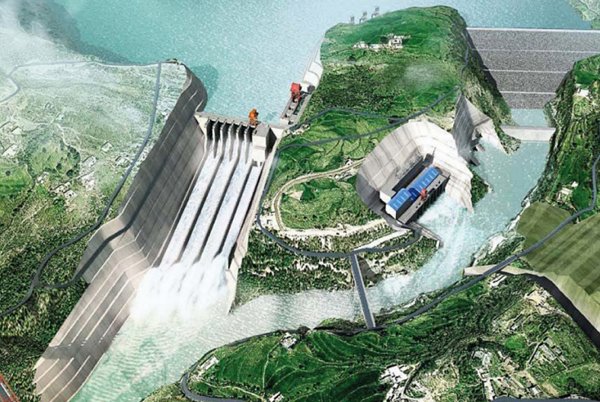
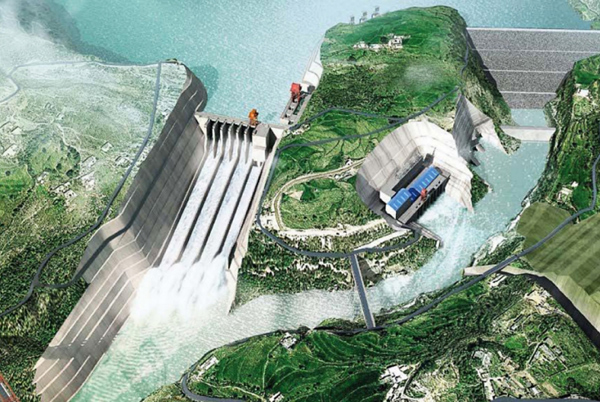
Construction of the Karot Hydropower Project in Pakistan will be completed in two years, with power generation commencing in April 2021, according to the China Three Gorges Corp (CTGC), the project's Beijing-headquartered development partner. A landmark Belt and Road Initiative (BRI) project, it is the first to be funded by the US$40 billion Silk Road Fund, a China-backed investment body established to support the country's ambitious international infrastructure development and trade facilitation programme.
The $1.74 billion Karot Hydropower Project is the fourth of five cascade hydropower stations planned for the Jhelum River. It will generate 3,174GWh (net) of energy a year, which will be sold to the National Transmission and Despatch Company under a 30-year power-purchase agreement.
The dam will be about 95m high and stretch for 460m across the river, while the reservoir created will extend 27km upstream and the surface powerhouse, consisting of four turbines, will be situated approximately 650m downstream of the dam crest. The project specifications also cover four 316m headrace tunnels, a spillway, three 447m diversion tunnels and coffer dams upstream and downstream of the main dam. Once online, it is estimated that the power generated will be sufficient to run approximately seven million households.
The project is managed by the Karot Power Company (KPCL), a special-purpose vehicle established by Pakistan-based Associated Technologies and China Three Gorges South Asia Investment (CSAIL), with the latter responsible for about 93% of the project's funding.
CSAIL is already a big player in Pakistan's energy sector. It currently has five greenfield investments in Pakistan, all of which are clean-energy projects, including hydro and wind power, with a total installed capacity exceeding 2.6 million kW. According to the company, it accounts for about 9% of the country's current installed electricity capacity.
Financing for the Karot project has been arranged on the basis of 20% equity and 80% debt. In addition to the Silk Road Fund, among the other key financing participants is the International Finance Corporation (IFC), which has provided $100 million. The Export-Import Bank of China – the lead player in the consortium – and the China Development Bank are also scheduled to extend loans to the Karot Power Company.
The participation of the IFC has added to the project's credibility and provided reassurance that it will address a number of environmental concerns. The original project environmental impact assessments were conducted and approved in 2010 and 2011. In its own evaluation of the project, the IFC conducted a further environmental and social-impact assessment report and identified a number of further provisions that needed to be put in place in order to bring the project up to the required standards.
Aftab Alam, Senior Manager of Environment for the project's Social and Safety Department, said the IFC, as a member of the World Bank Group, has done all it can to ensure the project meets all international standards relating to a safe work environment. Quarterly monitoring by third-party consultants is also being carried out in order to assess any potentially negative environmental impact.
Once completed, it is hoped that the project will help to significantly remedy Pakistan's chronic power supply shortage. Located on the Jhelum River in northeastern Pakistan and just 55km from Islamabad, the country's capital, the 720MW project will generate about 3.2 billion kWh of power annually, equivalent to about 10% of the country's total hydropower output in 2017.
In addition to the much-needed increase in power, the project is also expected to pay $23 million in taxes to the government and provide more than 2,200 jobs for local workers during the peak construction period, as well as about 3,500 regular jobs over the long-term.
Geoff de Freitas, Special Correspondent, Islamabad