









Pakistan
Country Region
As well as boosting Pakistan's power generation, deal establishes China as key nuclear technology exporter.
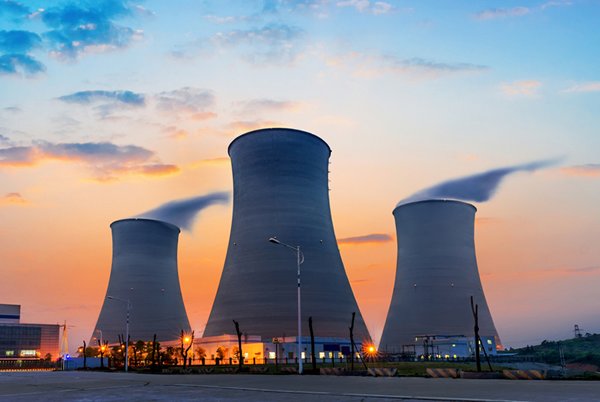
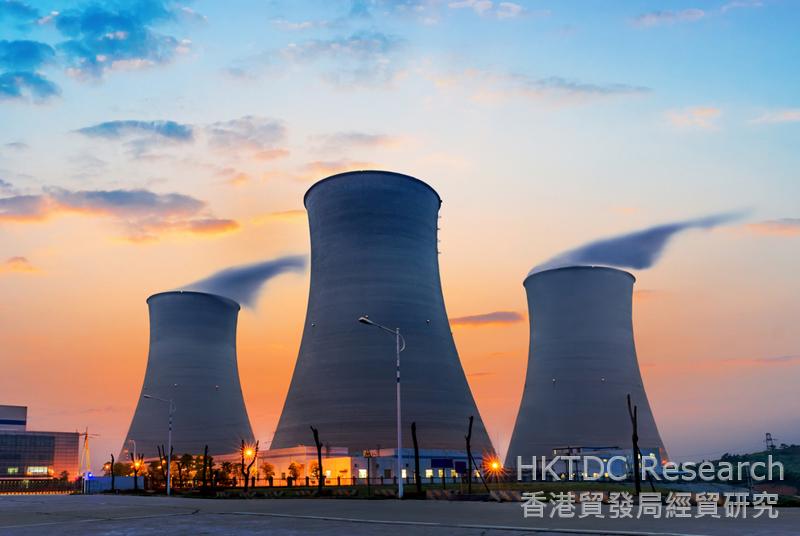
In perhaps one of the more politically sensitive Belt and Road Initiative (BRI) developments, last month saw China and Pakistan agree terms on the installation of an 878-km power transmission line. Once in place, this will link Lahore with southeastern Matiari, a hub city for the electricity generated in many of the China-backed power plants already operational within the China-Pakistan Economic Corridor, the massive infrastructure redevelopment and energy generation programme at the heart of Pakistan's bid to address its acute logistical problems and its vast power undersupply, as well as the BRI, China's own hugely-ambitious infrastructure and trade facilitation programme.
While – aside from a few environmental concerns and suggestions that China's largesse represents a form of financial colonisation – the developments have largely found approval within Pakistan, they have become something a flashpoint with neighbouring India. The relationship between the two countries has long been fraught, with distrust and recriminations dating back to well before 1947, when they emerged as independent states amid the gradual dismantling of the British Empire.
Now, in addition to several territorial issues, India – one of the few major economies not to embrace the benefits of the BRI – is known to be unhappy that China is effectively wooing a number of countries, such as Pakistan and Nepal, that it sees as rightly within its own sphere of influence. Perhaps most gallingly, China is seen as helping Pakistan further develop its nuclear-power sector, a hugely sensitive issue given the long-term nuclear-weapons standoff between the two South Asian countries.
While this latest development does not relate to Pakistan's rapidly expanding nuclear-power sector, with the electricity set to be transmitted via the new power transmission line actually sourced from several China-backed, coal-fired facilities in the west of the country, that is not to say that China's isn't heavily committed to helping Pakistan boost its nuclear-power generation capacity. Indeed, much of the basis of the present and continuing China-Pakistan economic co-operation revolves around power generation – both conventional and nuclear – as the Pakistan government looks to solve its longstanding energy-generation shortfall.
As recently as 2013, with the country's demand topping 15,000 MW, Pakistan only had a total generational capacity of 11,000 MW. With the gap between demand and supply only set to grow, the country has since set about accelerating the expansion of its nuclear-power programme, with China acting as financial backer, technical consultant and lead contractor. Ultimately, it is hoped that this tactical alliance between the two countries will result in Pakistan having a domestic power generation capacity of 40,000 MW by 2050.
That is not to say that China sponsored Pakistan's introduction into the still relatively small number of nations with nuclear-power facilities. Predating China's initial involvement by more than 20 years, 1971 saw Toronto-headquartered GE Canada install and then manage KANUPP1, the Karachi-based facility that produced Pakistan's first nuclear-derived electricity. Although Canada cut all ties to the plant in 1976 after Pakistan refused to sign the Non-Proliferation of Nuclear Weapons Treaty, the plant continued in service until 2002. Following a four-year upgrade, it resumed operation and continues to produce electricity, albeit at a reduced level.
China's involvement with the country's nuclear programme began in August 1993, when the two countries jointly developed the Chashma Nuclear Power Complex in Punjab, Pakistan's most populous province. Marking the first time China had exported its nuclear technology, the installation initially comprised two 300 MW generating units and two subsequent 340 MW units, all of which are now connected to the national grid.
In 2013, China and Pakistan agreed to add a fifth unit to the Chashma facility, which is due to go online in 2020. That same year, construction also began on two state-of-the-art 1,000 MW+ reactors – KANUPP-2 (K-2) and KANUPP-3 (K-3) – close to the original reactor site, with both due to be operational by 2021. Acting under the auspices of the International Atomic Agency, the sector's global regulator, three of the mainland's leading nuclear-power companies – the China General Nuclear Power Group, the China National Nuclear Corporation (CNNC) and the China Atomic Energy Authority – co-operated in the development of the two new facilities, with CNNC covering at least US$6.5 billion of the costs of the $10 billion project through a series of low-cost loans.
At the core of the two new facilities is the third generation HPR1000 Hualong One reactor, the model at the forefront of China's bid to export its nuclear technology. One such model is currently undergoing acceptance tests in the UK, while another has been earmarked as the centrepiece for Argentina's fifth nuclear facility with work on the project scheduled to begin in 2020. In the meantime, as well as helping Pakistan meet the shortfall in its electricity supply, while tying the country into wider goals of the BRI, the Punjab nuclear facility is also acting as China's calling card as it looks to establish itself as a world leader in safe and cost-effective nuclear-power generation.
Geoff de Freitas, Special Correspondent, Lahore
Editor's picks
Trending articles
US$57 billion of Belt and Road Initiative funding is set to help remedy Pakistan's chronic energy shortages.
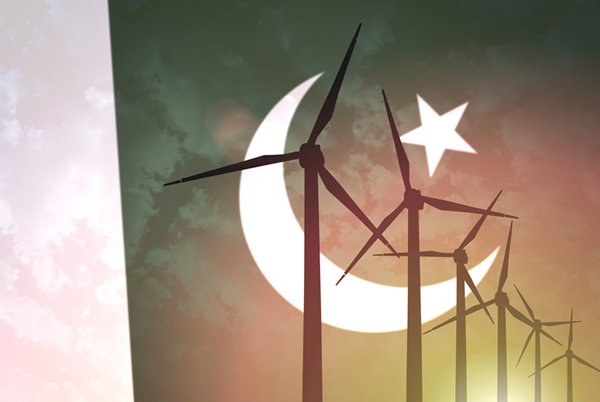
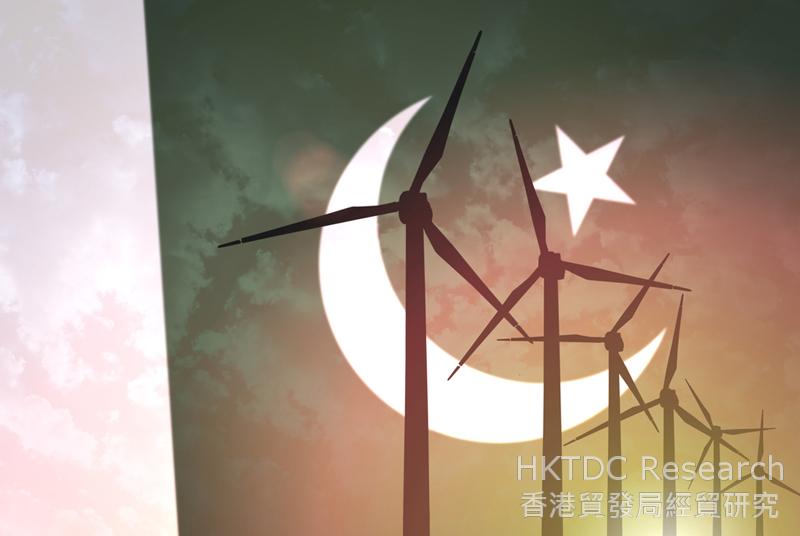
The selection of Karachi, Pakistan's largest city, as the location for the 17th World Wind Energy Conference and Exhibition (held earlier this month) was far from random. Over recent years, Pakistan has invested heavily in wind-power, while also enlisting Chinese backing, under the Belt and Road Initiative (BRI) framework, in order to bring its new environmentally-friendly facilities online.
As a result, in September 2017, the country's National Electric Power Regulatory Authority announced that the share of wind power in the nation's overall energy mix had increased by 0.46% to 1.23%. This has ensured that the country is well on track to meet its 2030 target of having 5% of its overall electricity derived from wind-power, a goal set back in 2006.
Pakistan's ambitious energy-development program has been driven by its long-overdue need to address its chronic electricity shortfall. Although the bulk of its enhanced supply is expected to be derived from domestic coal reserves, the development of wind, solar and hydro sources has also been prioritised in recent years. This has been spurred by growing environmental awareness in the country and, crucially, a steady fall in the cost of renewable-energy generation.
The first commercial wind project in the country came online in 2009 as part of the initial development phase of the Jhimpir Wind Power Plant. The project was overseen and managed by Zorlu Energy Pakistan, a subsidiary of Turkey's Zorlu Enerji. With additional wind turbines coming into operation, the plant's capacity reached 56.4MW in July 2013, all of which was fed into the country's national grid.
To date, though, this is a seen as only scratching the surface in terms of what could ultimately be delivered. Set in the Gharo-Jhimpir Wind Corridor, a 180km strip of coastal land, the Pakistan Meteorological Department sees the facility as having the potential to produce up to 11,000MW of wind-derived electricity.
Following the success of this first plant, a number of additional wind-power projects were swiftly commissioned. By the end of 2015, according to the Alternate Energy Development Board (AEDB), the Pakistani government's renewable-energy agency, there were more than 40 wind-energy projects under development across the country. Once online, they are expected to contribute about 2,050MW to the national grid. By mid-2017, 13 such projects had become operational, representing a net grid contribution of 200MW.
Subsequently, once the China-Pakistan Economic Corridor (CPEC) – one of the key BRI conduits – was established, some US$57 billion of mainland funding was earmarked for investing in the development of Pakistan's infrastructure, with much of this allocated to energy-related projects. Of these, four wind-farm investments were prioritised – Sapphire Wind Power Plant, Sachal Wind Farm, Dawood Wind Farm and Jhimpir Wind Farm.
The first of these to be completed was the 52.8MW Sapphire Wind Power Plant, which became operational at the end of November 2015. Beijing-headquartered HydroChina, a subsidiary of the Power Construction Corporation of China, was the lead contractor on the project, its first such installation in Pakistan.
The company also took the lead on the 50MW Sachal Wind Farm, which came online in April 2017 and is, again, based in the Jhimpir Wind Corridor. The farm is owned by Sachal Energy, a wholly-owned subsidiary of the Arif Habib Corporation, one of Pakistan's leading investment groups. Debt financing was provided by the Industrial and Commercial Bank of China (ICBC) and the estimated cost of the project was $134 million.
The third priority project, the 50MW Dawood Wind Farm, was developed on tidal flats near the city of Banbhore, about 80km east of Karachi. Also coming online last April, the project was backed by a $78.8 million ICBC credit line, while its turbines came courtesy of Guangdong's China Ming Yang Wind Power Group in association with Aerodyn Energiesysteme, a German wind-power specialist. The final project – the UEP 100MW Jhimpir Wind Farm – was also developed by HydroChina. Following investment of about $250 million, it became operational in June last year.
At present, there are nine more Chinese-backed wind-power projects at various stages of completion across Pakistan. Once operational, they will feed an additional 445MW into the country's national grid.
Geoff de Freitas, Special Correspondent, Karachi
Editor's picks
Trending articles
Logie Group Limited
Infrastructure and Real Estate-Related Services
 133 Views
Company Profile
Andrew has been Lead Arranging and advising on infrastructure finance for 30+ years.
In 2003, he set up in business as Logie Group to provide specialist advice on infrastructure finance in Asia across the whole investment cycle namely:
- governments and public sector on policy including in Indonesia the MOF on its $15 billion of support for PLN in the power sector and Bappenas on a $235 million water supply project; and how to finance a $7 billion new state capital city in India.
- institutional investors on strategy across the region.
- transaction preparation and M & A advisory, e.g. hydro in Sri Lanka.
- acting as an expert witness in arbitrations such as for Fraport re the $600 million Manila airport terminal 3; for a US developer in a $125 million power plant in Cambodia where he was cross examined in person and sat in a “hot tub” exchange of views with the other side’s expert (both rare experiences); and for a Canadian investor in a gold mine in a ’Stan country.
- Capacity building / training.
- Acting as a Non – Executive Director of e.g. an aircraft lessor.
Andrew is a member of the UNECE roster of PPP experts; acts as a peer reviewer for them; and is on IFC’s Nominee Directors database. He is a Fellow of the HKICPA, ICAEW and HKIoD; and a member of the HKSI, HKIB and APIEx.
Andrew worked originally with KPMG then PWC in London, Hong Kong and Sydney; then in tax driven financing at Westpac’s investment bank in Australia; Lead Arranging project finance at Mizuho then UBS in London; before he returned to Asia in 1998 as Head of Global Structured Finance, Asia Pacific for WestLB when it was a top five Lead Arranger of project finance globally.
Melchers (H.K.) Ltd.
Professional Services
|
Infrastructure and Real Estate-Related Services
|
Logistics and Transportation Services
302 Views
Company Profile

Project Experience
Company Profile
Melchers (H.K.) Ltd. is a Hong Kong-based company and part of a global group of German origin and a wide range of competencies in diverse business areas. With a market experience of 150+ years and a network of more than 17 locations across Greater China we have a strong focus on Mainland China and Hong Kong, which makes us a powerful, dependable partner in the region. In our core sectors machinery & industrial, software and retail, we work on the complete value chain of projects from sourcing & quality control, marketing and corporate services to after sales services. As a service provider we are strong in the following areas and have completed many successful projects for our partner companies: • Professional Services • Infrastructure Services / Smart City • Logistics and Transportation Services It is our mission to create long-term value through customer-centric and customized approaches. Our equally valued international business partners range from resource-limited and capital constrained small and medium-sized enterprises (SMEs), to hidden champions and global established well-known brands. Being able to leverage our competencies gained from collaborating with numerous national and international businesses in China, we are able to provide a comprehensive range of service solutions across all functional areas and the entire value chain to make your China business a success.
Project Experience
Chinese Mainland
Manufacturing (industrial parks, logistics parks, machinery), Natural Resources (including oil and gas), Power and Energy, Technology
Southeast Asia
Manufacturing (industrial parks, logistics parks, machinery), Natural Resources (including oil and gas), Power and Energy, Technology
3E Accounting Limited
Professional Services
|
Telecommunications and ICT Services
162 Views
Company Profile
3E Accounting Limited. is a Hong Kong-based accounting firm that specialises in providing affordable and quality professional incorporation, accounting, tax, and compliance services, based on Three Es: efficiency, effectiveness and economy – as part of our One-Stop Solution services for our clients. Our office is conveniently located in Central with a local team familiar with Hong Kong legislation. Founded by Chartered Accountant Lawrence Chai, we are recognized by ACCA as an Approved Employer. The ACCA Approved Employer Program only accepts companies that ACCA recognizes for having high standards of staff training and development. With this recognition, you are assured that 3E Accounting meets or exceeds global standards for teaching and developmental support. 3E Accounting Limited. is an independent member of 3E Accounting International Network, with presence in more than 80 countries to support clients in their overseas expansion to Asia, North and South America, Europe, Oceania, and Africa.
Colliers International (Hong Kong) Limited
Infrastructure and Real Estate-Related Services
|
Environmental Services
|
Professional Services
|
Financial Services
4172 Views
Company Profile
Project Experience
Company Profile
Colliers International (Hong Kong) Limited is a member of Colliers International Group Inc.
Colliers International Group Inc. (NASDAQ: CIGI) (TSX: CIGI) is a top tier global real estate services provider operating in 68 countries with a workforce of more than 14,000 professionals, including 2 offices in Hong Kong and 11 offices in mainland China. Through cooperation among members within Colliers International Group Inc., we provide service covering the Belt and Road countries.
We deliver a full range of services to real estate occupiers, owners and investors across all sectors worldwide. From property search and selection, to project management, to valuation and appraisal, we provide creative solutions to our clients’ most complex requirements. We also provide business enterprise valuation and advisory services for our clients for different purposes including IPO, Merge & Acquisition, investment, financial reporting, etc.
Federal Express (Hong Kong) Limited
Logistics and Transportation Services
1787 Views
Company Profile
FedEx Express is one of the world's largest express transportation company, providing fast and reliable delivery to more than 220 countries and territories. FedEx Express uses a global air-and-ground network to speed delivery of time-sensitive shipments by a definite time and date supported by a money-back guarantee1.
1Subject to relevant terms and conditions