









Hong Kong
Country Region
In tapping opportunities arising from the Belt and Road Initiative, Chinese enterprises are not confining themselves to investing in major infrastructure projects. In fact, quite a number of them have established distribution channels in Belt and Road markets to sell different kinds of products. Others have chosen to set up manufacturing plants or source raw materials in Belt and Road countries for the Chinese mainland market.
All told, the types of businesses involved are increasingly diversified. In order to boost overall operational performance and foster sustained development of their overseas business, many of these enterprises need a great deal of service support to link up mainland production systems with their overseas business operations. In addition to utilising networks in Shanghai, Hong Kong and elsewhere to improve international logistics efficiency, they also have to strengthen information and capital flow management.
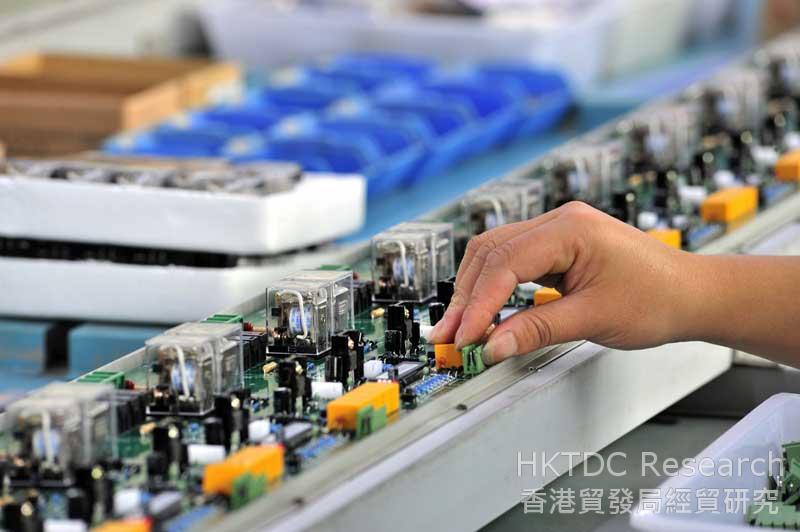
Maitrox, a supply chain service company headquartered in Shanghai, pointed out in an interview [1] that, although many mainland enterprises have high-tech production capabilities and the quality of their products is comparable to that of leading international brands, they need related service support in supply-chain management in “going out” and in developing Belt and Road markets. For example, in selling their own-label products in overseas markets, many enterprises are making considerable gross profits if reckoned only on a sales basis. But, if they want to develop their brand business and maintain brand loyalty and the support of overseas consumers, they would have to provide consumers with efficient after-sales and repair services, either through distributors or directly in the respective local markets. This may involve high fees and costs that might eat into the profits of the business concerned and, if not handled properly, might even affect the image of their brands in overseas markets.
Mainland enterprises are venturing into various overseas markets and Belt and Road related regions to set up comprehensive supply-chain management networks. The coverage spans across Asia, including Southeast Asia and India, Africa and even as far afield as Europe, and North and South America. According to Maitrox, many companies would like to use third-party services to raise the efficiency of such business processes as production, sales and after-sales services, and also to minimise the operation costs of expanding into international markets.
To be able to achieve these objectives, however, the service providers concerned need to have sophisticated IT, such as state-of-the-art big data analytics, before they can offer suitable solutions in designing and setting up networks in procurement, production, inventory, sales and after-sales services. They also need to utilise related financial services to help enterprises plan the income and expenses of each aspect of their business. In addition to improving cash flow in the entire business process and lowering funding costs, they also have to help solve problems in international payments and exchange risks.
Maitrox is currently providing comprehensive supply-chain services to mainland brands and other customers. This includes planning consultation and execution covering the entire production, sales and after-sales processes. For example, Maitrox provides its mobile phone business customers with after-sales supply-chain services to help set up overseas markets service networks. Such networks offer phone replacement, on-site repair, spare parts management, premium-grade repair and testing.
For customers with smaller overseas operations, Maitrox will help organise mail-in repair services by using logistics to send products requiring repairs back to the mainland, such as factories in Shanghai and Shenzhen bonded zones. In these factories, chip-level repairs, replacement and refurbishment will be carried out, before the mobiles are sent back to the overseas consumers expeditiously.
For this, in addition to running a number of repair centres and smart warehouses around the world, Maitrox has also set up a global repairing hub in Hong Kong. This way, with the support of advanced IT management systems, it can make use of Hong Kong’s international logistics network to transfer products, parts, components and spare parts for global distribution. Backed by its supply chains in Shanghai and elsewhere on the mainland, as well as Hong Kong’s financial services, Maitrox can provide customers with cost-effective global supply-chain management services.
Note: For details of the company interviews conducted jointly by HKTDC Research and the Shanghai Municipal Commission of Commerce, please refer to other articles in the research series on Shanghai-Hong Kong Co-operation in Capturing Belt and Road Opportunities.
[1] Maitrox Smart Supply Chain was interviewed jointly by HKTDC Research and the Shanghai Municipal Commission of Commerce in Q1 2018.
Editor's picks
Trending articles
The Yangtze River Delta (YRD) is one of the major economic engines of China, as well as the biggest source of China’s outward direct investment (ODI). Enterprises in this region are making haste to open and develop markets along the Belt and Road routes in the hope of further boosting their business growth.
An important focus of these enterprises is to more effectively connect the YRD with the industry chains of other mainland regions and international markets through its gradually maturing network of transportation with the outside world. This includes sea and air transport as well as the China-Europe Railway Express line (or CR Express), which has seen rapid development lately, in order to better tap into new markets along the Belt and Road routes and other overseas markets.
CR Express Attracts Much Interest
Many companies have already established distribution channels in Belt and Road markets to sell their products. Their business is wide-ranging and needs the support of transportation networks in the YRD, South China and even Hong Kong in order to improve international logistics efficiency, while connecting their production system on the mainland with overseas business operations (For further details, see Devising “Belt and Road” Supply Chain Management System). Companies in the YRD are actively making use of the sea and air transportation and logistics networks in the region to connect with overseas markets, and more and more companies are beginning to pay attention to the transport of goods by train as an alternative.
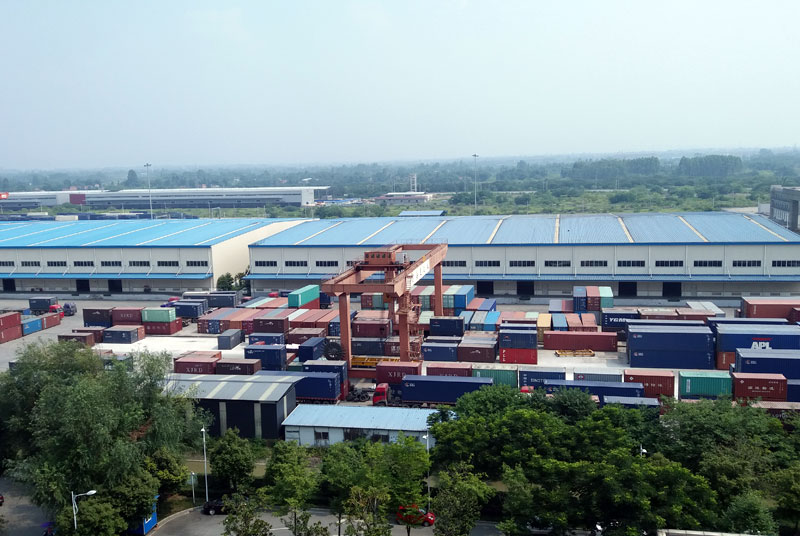
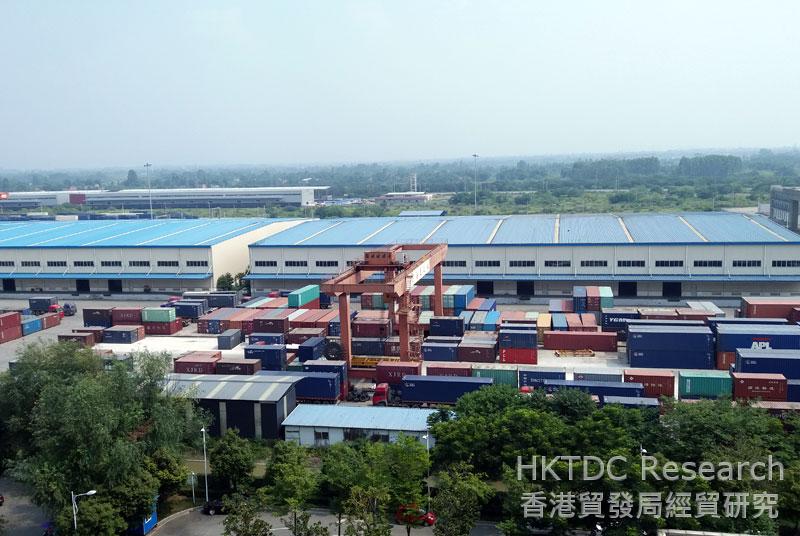
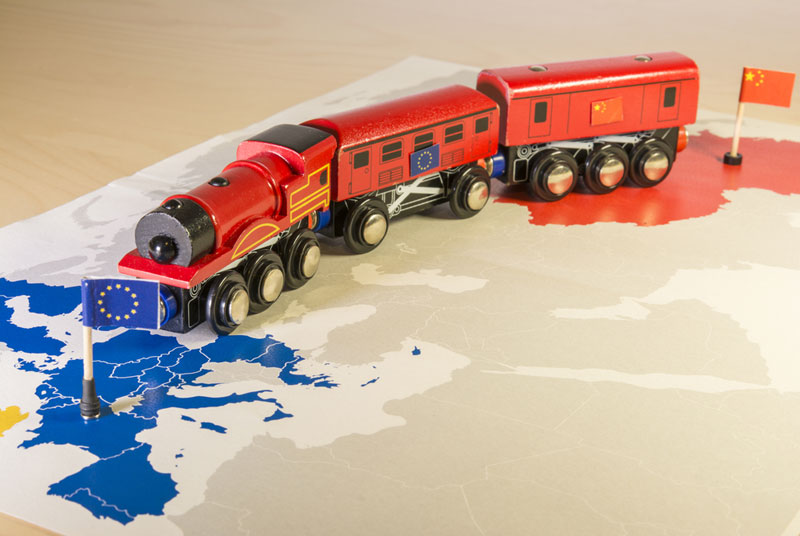
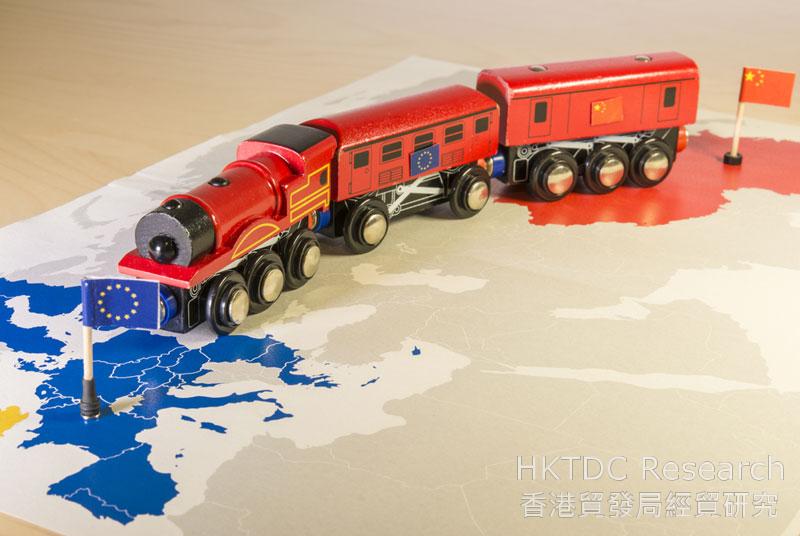
Compared with sea and air transport, the freight volume of rail transport is relatively small. In 2016, rail transport only accounted for about 2% of the total freight volume of Jiangsu and Zhejiang and less than 1% of Shanghai’s [1]. Following the accelerated development of CR Express services, however, the service frequency of freight trains running between China and Europe has seen rapid growth in recent years.
Rail links have been extended from inland provinces in the western region to the YRD and other coastal cities. Many logistics service suppliers have come to see the potential of rail transport, and some of them have started to make active use of freight trains to ship goods sourced from coastal and western regions to Europe. A foreign-invested logistics company in the YRD even expressed the hope of leveraging the CR Express to further develop rail freight transport between Japan and Europe through the Chinese mainland. (For further details, see Planning for CR Express Connectivity to “Belt and Road” Logistics Network.)
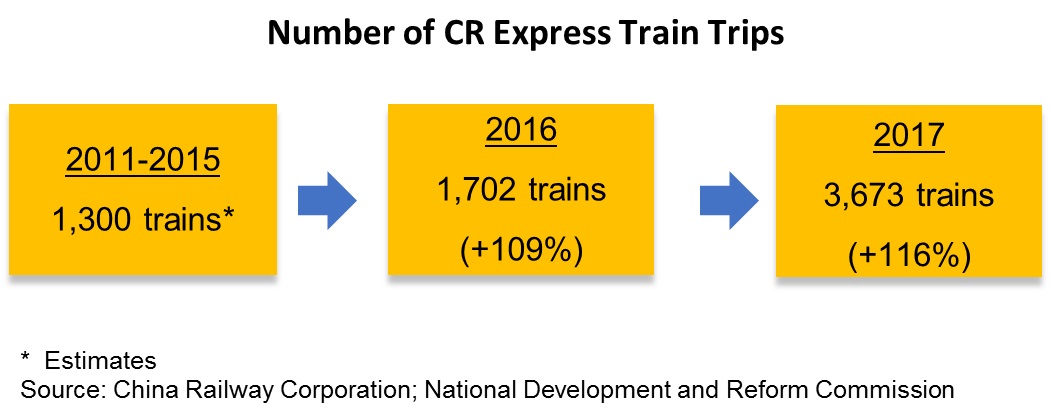
Since the first CR Express train set off from Chongqing to Duisburg (or Yuxinou, the Chongqing-Xinjiang-Europe International Railway) in Germany in 2011, about 6,600 trains had been dispatched up to the end of 2017. [2] In particular, the frequency of such train service has increased significantly in 2017, exceeding the total trips made during the six years between 2011 and 2016. This reflects the fact that mainland companies are relying more and more on trains to deliver goods to Europe.
The service was mainly used to ship Chinese goods to Europe in the early days, but the situation is gradually changing as more companies use rail links to import goods from Europe. In 2017, the number of inbound trains amounted to over half of that of outbound trains [3], putting trade between China and Europe by rail on the path of two-way development.
CR Express Provides an Alternative for Freight Transport
The National Development and Reform Commission announced the Development Plan for CR Express (2016-2020) in October 2016 with the aim of forming a convenient and efficient CR Express service system with steady transport volume by 2020. At the time of the announcement the CR Express had operated a total of 1,881 trips, with 16 departure cities in China and 12 destination cities abroad. [4]
According to the National Development and Reform Commission, departure cities in China had increased to 38 by the end of 2017, and the service had expanded to 36 cities in 13 countries across Europe in just a year. The range of outbound goods has gradually expanded from information technology products in the early days, like mobile phones and computers, to clothing, footwear and headwear, automobiles and auto parts, grain, wine, coffee beans, timber, furniture, chemicals, machinery and equipment.
Development Plan for CR Express (2016-2020) Aim: Increase frequency of freight train service to around 5,000 annually by 2020, with marked increase in freight volume on inbound trains. Western corridor: - Crossing the border at Alataw Pass (Khorgos) in Xinjiang, passing through Kazakhstan to connect to the Siberian Railway in Russia, crossing Belarus, Poland and Germany, and finally reaching other European countries. - Crossing the border at Khorgos (Alataw Pass) and finally reaching Europe after passing through Kazakhstan, Turkmenistan, Iran and Turkey, or passing through Kazakhstan and crossing the Caspian Sea into Azerbaijan, Georgia and Bulgaria, finally reaching Europe. - Connecting to the planned China-Kyrgyzstan-Uzbekistan Railway via the Torugart Pass (Irkeshtam), finally reaching Europe after crossing Kyrgyzstan, Uzbekistan, Turkmenistan, Iran and Turkey. Central corridor: - Crossing the border at Erenhot in Inner Mongolia to connect to the Siberian Railway after passing through Mongolia, finally reaching Europe. Eastern corridor: - Crossing the border at Manzhouli in Inner Mongolia (Suifenhe in Heilongjiang) and reaching Europe after connecting to the Siberian Railway in Russia. Departure/destination cities in China: - Chongqing, Zhengzhou, Chengdu, Wuhan, Suzhou, Yiwu, Shenyang, Changsha, Lanzhou, Beijing, Tianjin, Lianyungang, Yingkou, Qingdao, Urumqi, Xi’an, Hefei, Jinan and Dongguan. |
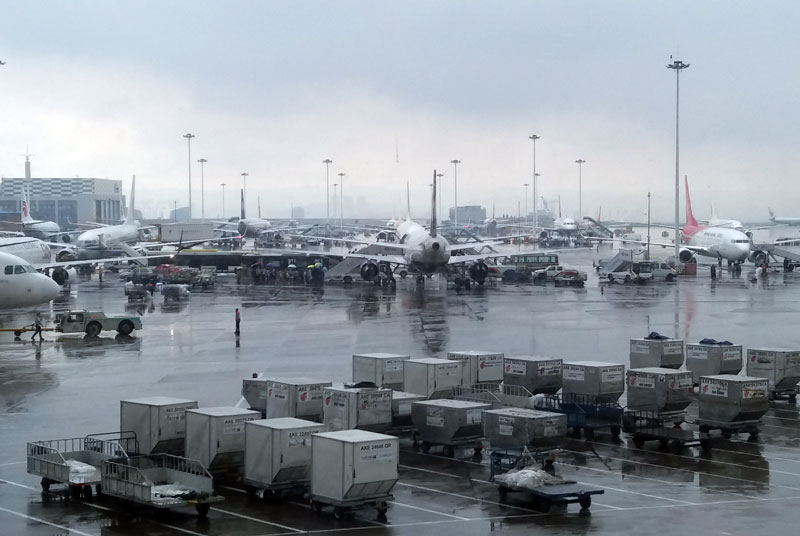
Besides Chengdu, Chongqing and other cities in western China, increasingly goods originating from production bases along the coastal region are exported through CR Express. For example, after the opening of the CR Express service between Yiwu in Zhejiang and the Spanish capital of Madrid in November 2014, small commodities from Yiwu were continually shipped to the European market via rail transport. On the other hand, goods imported from Europe on inbound trains are also becoming more diversified and cover a much wider range, including food and beverages like wine and olive oil, raw materials such as timber and pulp, and even electrical equipment, solar film, electronic components and machinery.
CR Express has also extended its service to South China. This includes the launch of the service from Shilong of Dongguan to Duisburg of Germany in April 2016 and another service from Guangzhou to Kaluga of Russia in August 2016. Clothing, footwear, computer accessories and electronic equipment produced in the Pearl River Delta (PRD) region can now be shipped by using standard 40-foot containers carried on CR Express. These developments help bring the YRD, PRD and other coastal regions closer to the European markets and suppliers.
It is worth noting that thanks to government support, CR Express can provide one-stop service in inspection, quarantine, customs declaration, customs clearance and other areas. Although trains bound for Russia, Central Asia (such as Kazakhstan) and even Eastern and Western Europe have to change tracks due to gauge differences, the technical problems have been resolved through the arrangement of railway and transportation companies. The logistic companies responsible for shipping the goods will also monitor the complete shipping process, provide the consignors with customs clearance service, and make sure that the goods are delivered to the required warehouses after reaching the respective railway terminals. These services contribute to the development of CR Express.In April 2017, a collaboration agreement was signed by railway departments of seven countries involved in the operation of CR Express, including China, Belarus, Germany, Kazakhstan, Mongolia, Poland and Russia. A broad consensus was reached on rail connectivity, optimisation of transportation organisations, perfection of service safeguards, improvement of customs clearance efficiency, and other issues. CR Express can expect steady growth in future thanks to cross-border collaboration.
The recent rapid expansion and increasing frequency of Europe-bound rail services, and the significantly shorter lead time of 10-12 days for the fastest routes, means rail has gradually become a viable alternative to sea and air transport for export and import businesses. Generally, these freight trains can transport cargo to their European destinations three times faster than shipping by sea for one-fifth of the cost of transport by air. While rail freight is still more costly than sea freight [5], CR Express can work as an adjunct to sea and air transport and attract more and more companies to use rail services to expand China-Europe trade.
These developments will effectively enhance the transport links between China and countries in Asia and Europe and strengthen the capabilities of related logistics providers of cargo transportation and distribution. Under such circumstances, companies not just in the western regions but also along the coast may need to consider the feasibility of the further rail transport use to enhance their flexibility in expanding into Eurasian markets. Furthermore, logistics operators can also strengthen partnerships and co-operation with the relevant railways, helping to connect them to logistics and transport networks in the YRD, South China and even Hong Kong and so enhance their advantage in the international transportation and integrated logistics business.
Note: For details of the company interviews conducted jointly by HKTDC Research and the Shanghai Municipal Commission of Commerce, please refer to other articles in the research series on Shanghai-Hong Kong Co-operation in Capturing Belt and Road Opportunities.
[1] Source: Jiangsu Statistical Yearbook, Zhejiang Statistical Yearbook, Shanghai Statistical Yearbook.
[2] Estimates.
[3] Source: China Railway Corporation.
[4] June 2016 figures.
[5] Source: National Development and Reform Commission.
Editor's picks
Trending articles
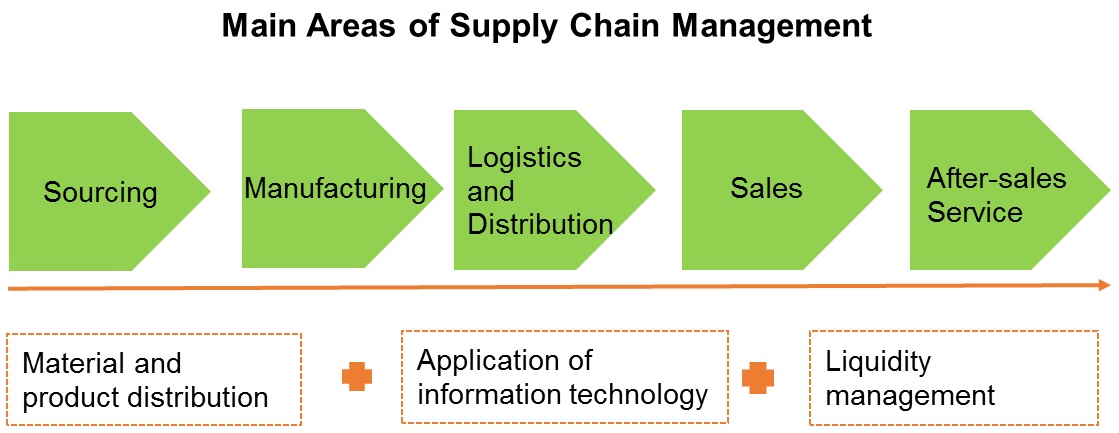
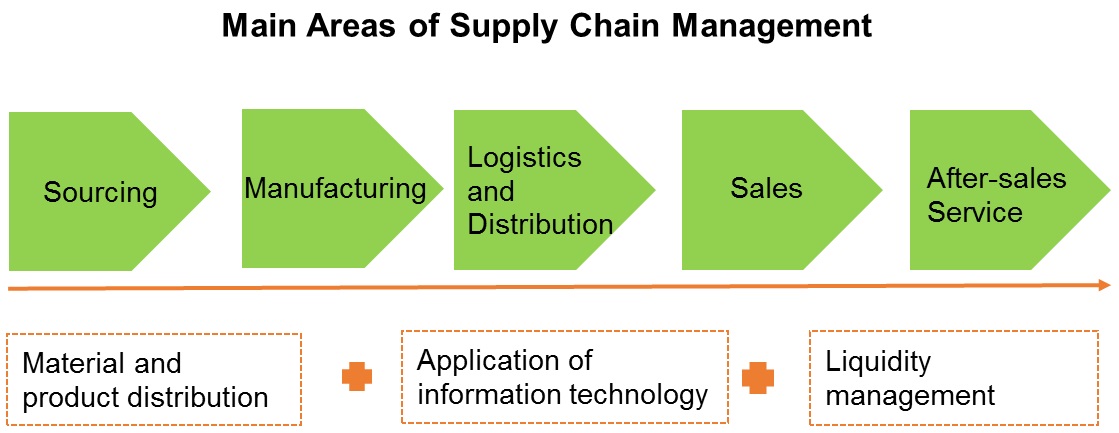
China has become the world’s largest industrial manufacturer. As such, it needs to import a wide range of raw materials and industrial products to sustain its massive manufacturing sector, while exporting all kinds of finished and semi-finished products to overseas markets. As transportation and production networks in Asia continue to develop, the division of labour between mainland enterprises and overseas countries is becoming increasingly complex, making China an important member of the global supply chain. In the wake of this industrial transformation and upgrade, many Chinese enterprises are aiming to enhance their supply chain management capability while focusing on the development of technology and brands. They are looking to improve the efficiency of the sourcing and production of materials and key components, raise the operational efficiency of related distribution and after-sales services, optimise the management of material flow, information flow and money flow, increase the added value of their business, and enhance competitiveness.
As a key driver of China’s economic development, the Yangtze River Delta (YRD) is seeing its internal infrastructure and transportation networks and links with other regions grow steadily. Strengthening the region’s logistics distribution capability and making its logistics and transportation connections with other mainland cities and international markets more efficient would help YRD enterprises in their efforts to establish a modern supply chain management system. Increasing numbers of YRD enterprises are using the industrial resources and advantages of other regions to improve their sourcing, production and sales service systems through industry chains in the coastal and inland provinces. The geographical span of their business is becoming ever wider.
Against this backdrop, YRD enterprises are trying hard to make better connections with overseas markets through logistics and transportation networks in the coastal areas, South China and Hong Kong. They are also using information and financial services to improve their supply chain management system. Hong Kong, as an international financial centre and the regional trading hub, is the preferred platform for many mainland enterprises “going out” as it can provide them with all kinds of professional services to help them expand their international business. With YRD enterprises looking to Hong Kong for help in managing their supply chains, this should generate more opportunities for Hong Kong service providers.


Steady Expansion of Logistics Networks
The YRD’s main city Shanghai has not only expanded its sea and air transport networks with other regions and countries in recent years but has also teamed up with neighbouring provinces Jiangsu and Zhejiang to accelerate the development of inter-city and regional transport construction. This has greatly facilitated freight transport services in the region and will improve the efficiency of local and international logistics and transportation services. Since 2000, Shanghai, Jiangsu and Zhejiang have made great efforts to expand their rail and road networks. Important developments include the Shanghai-Nanjing Intercity Railway which runs via Suzhou, Wuxi, Changzhou, and Zhenjiang in Jiangsu, and the Beijing-Shanghai High-Speed Railway which also passes through Jiangsu. Work is underway to electrify the whole of the Shanghai-Hangzhou Railway linking Shanghai with the provincial capital of Zhejiang, which will allow trains to travel the route faster. Jiangsu and Zhejiang have also stepped up the construction of expressways along the Yangtze River and the coastline, as well as intercity and urban highway networks aimed at increasing links between the transportation and logistics networks in the new development areas and new towns in major cities within the region.
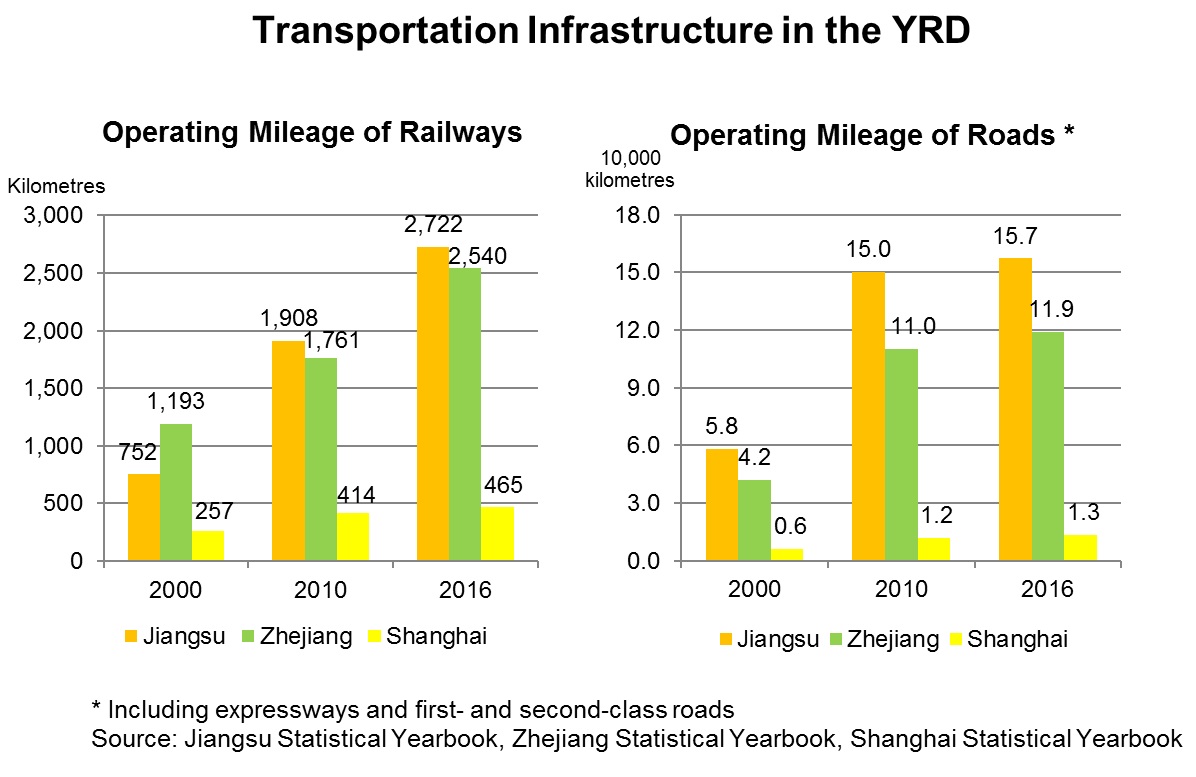
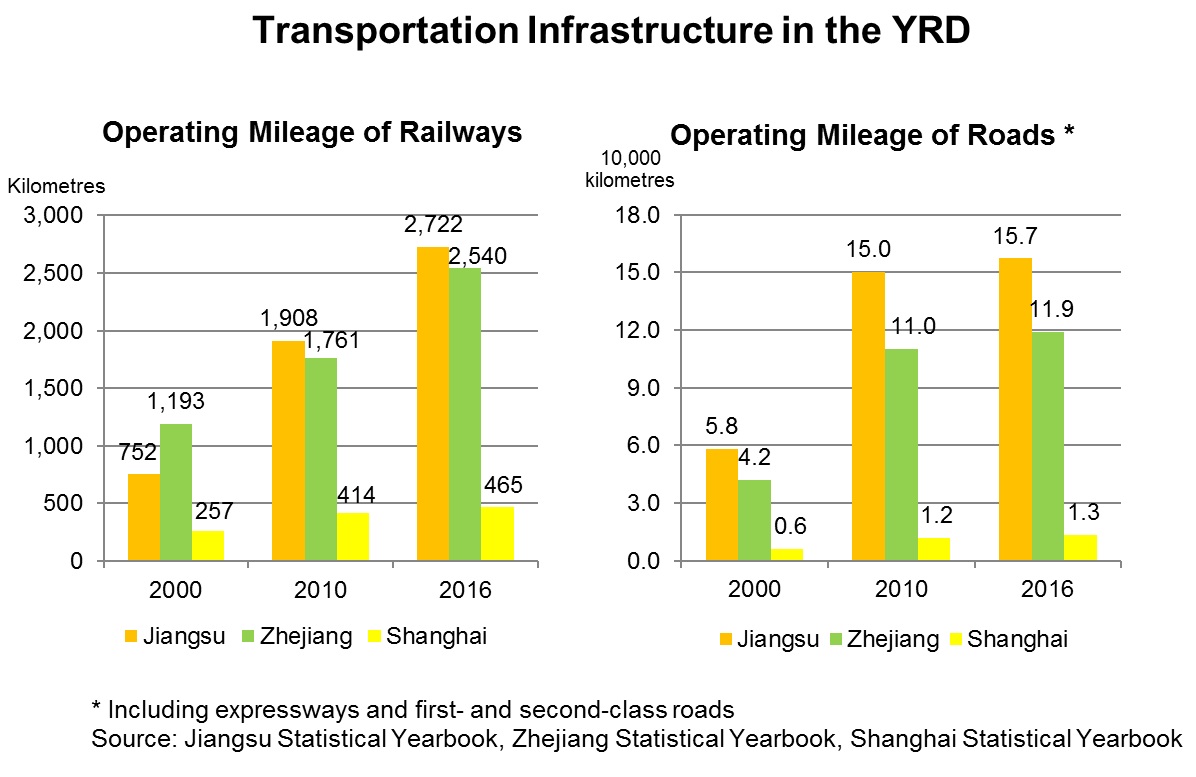
Continuous industrial development in the YRD, the Yangtze River Basin and the neighbouring areas has also increased the demand for logistics and transportation services. This, together with the expansion of transportation networks, has given a great boost to freight traffic in the YRD. Total freight traffic in Shanghai, Jiangsu and Zhejiang has grown exponentially over the past 10 years. Most freight traffic in 2016 was carried on roads linking different production bases in the region. It accounted for 44% of Shanghai’s total freight traffic, 54% of Jiangsu’s and 62% of Zhejiang’s. Railways accounted for just 2% of freight traffic in Jiangsu and Zhejiang and less than 1% of that of Shanghai. [1]
In recent years, however, growing numbers of logistics service providers have noticed the development potential of rail transport. CR Express has been increasing the frequency of its train services and expanding its network from inland provinces in the western part of the country to the YRD region and other coastal cities. Some service providers are actively using CR Express services to collect goods in the coastal and western regions for transport by rail to Europe and to tap business opportunities in China-Europe trade and the Belt and Road initiative. (For further details, see Leveraging CR Express to Tap “Belt and Road” Markets)
The development of air and sea transport linking the YRD with other regions and international markets varies from place to place. Although air transport accounts for a relatively small share of freight traffic, it is the main form of transport for more up-market commodities and higher value-added products. Demand for air transport is growing increasingly keen as China develops high-tech industries, selling electronic chips and key components of machinery and electronic products. The rapid expansion of the markets for high-quality consumer goods, foodstuffs and fast-moving consumer goods, many of which are imported, has also stimulated the demand for air freight.
Shanghai’s air freight soared from 880,000 tons in 2000 to 3.87 million tons in 2016 at an average annual growth rate of 10%. In comparison, air freight volume in Jiangsu and Zhejiang is relatively small. This is not just because Shanghai has many international air routes and Pudong and other airports have increased their air freight traffic and handling capacity, but also because Shanghai has been pursuing trade facilitation policies in recent years. For example, the Shanghai Pilot Free Trade Zone has adopted various measures to make customs clearance easier and improve the efficiency of customs declaration and commodity inspection. Shanghai’s inspection and quarantine authority has also improved upon its regulatory model, greatly shortening the time it takes to inspect imported products, including foodstuffs and cosmetics. Facilitating trade has played an important role in making Shanghai the air freight hub of China’s eastern coastal areas.
Each enterprise in the YRD and its neighbouring areas has its own place in the industry chain and has its own specific needs when it comes to logistics services. When deciding on what air transport routes and inter-modal transport system to use, a company will take into consideration a combination of factors alongside cost-effectiveness, such as the characteristics of different categories of products, the customs clearance efficiency and facilitation measures at different customs checkpoints, and the convenience of logistics distribution in the local and international markets. As well as adopting measures to facilitate trade, Shanghai, Jiangsu and Zhejiang have also made great efforts in recent years to upgrade the region’s aviation logistics services by strengthening their links with Hong Kong and other aviation hubs. (For further details, see Using Logistics Solutions to Enhance Air Freight Capability)
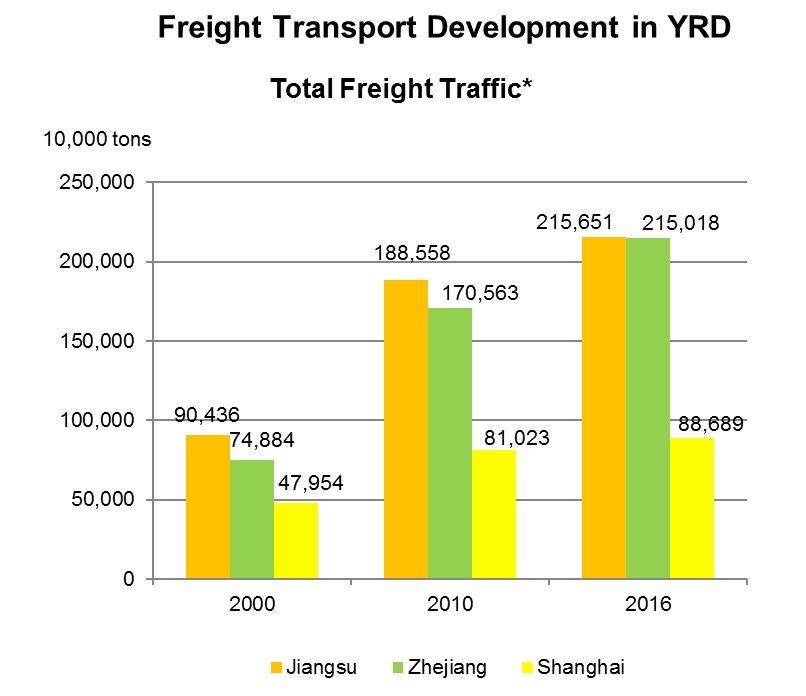
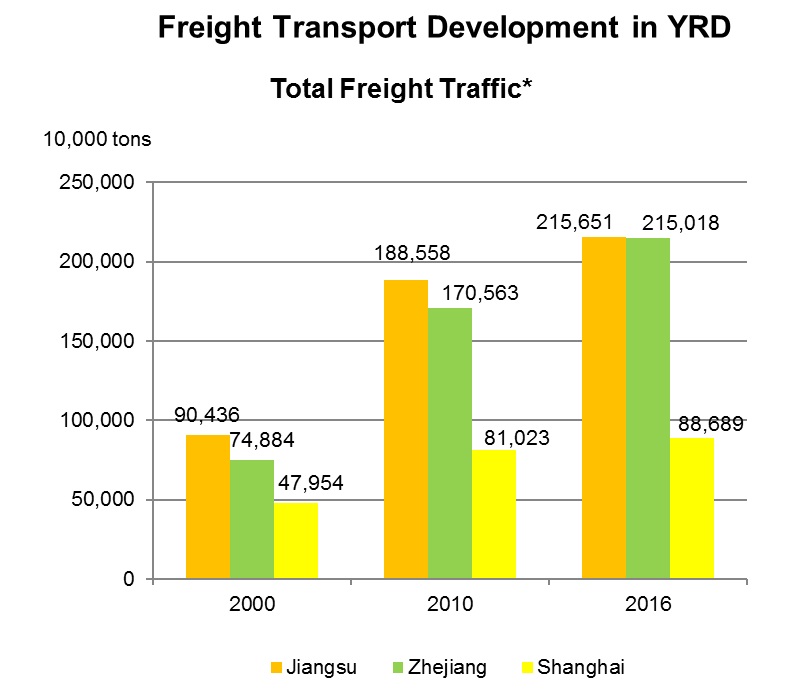
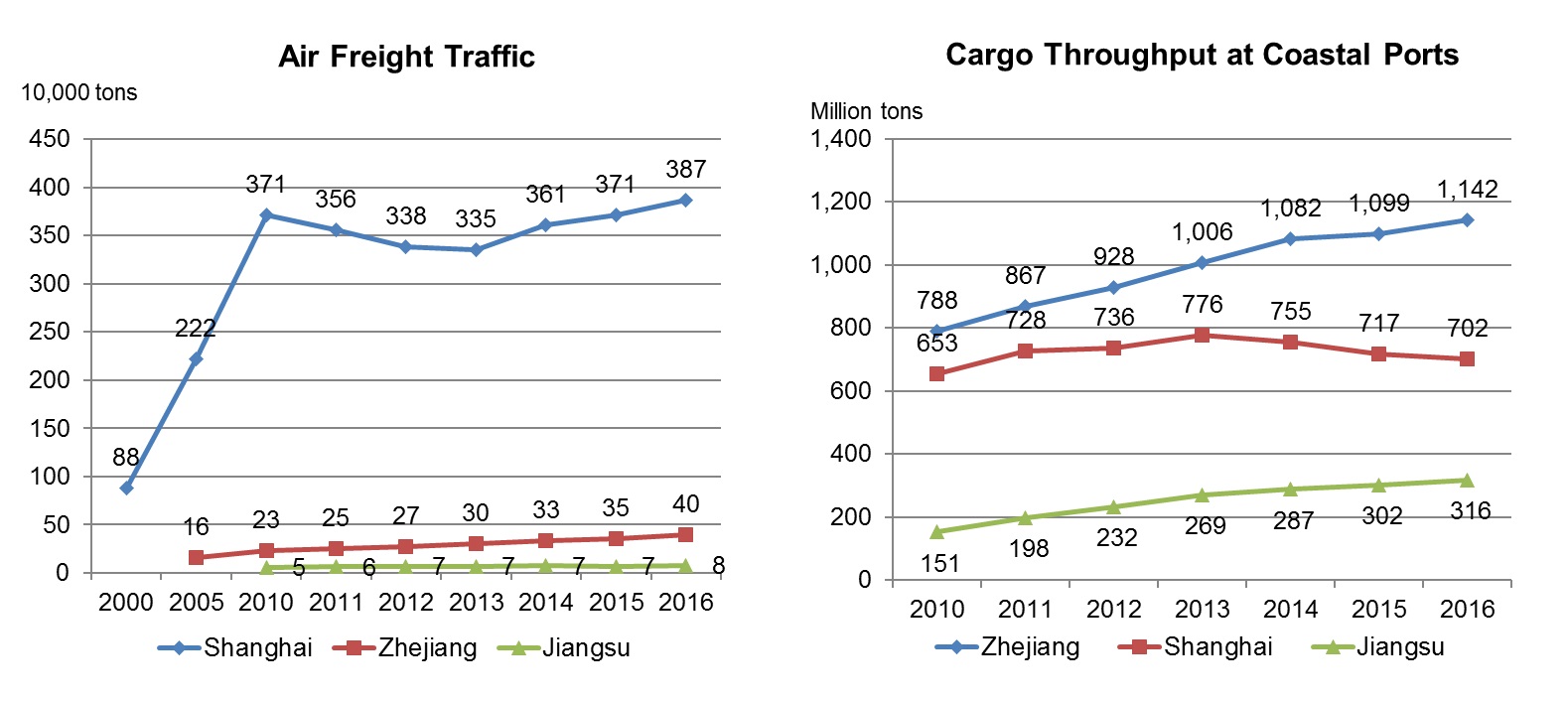
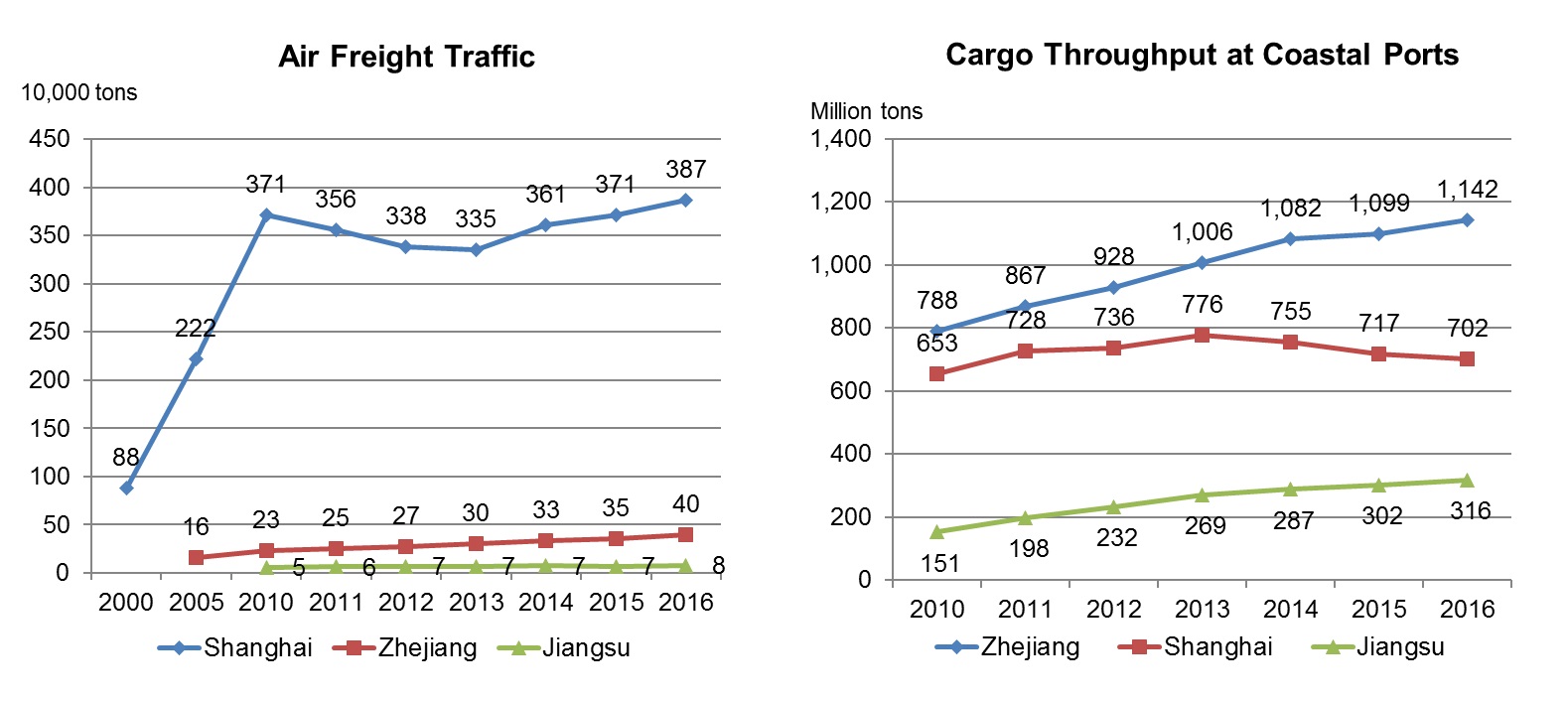
As regards freight transport shipped from coastal ports to other regions of China and international markets, the cargo throughput at ports along the Zhejiang coast has witnessed quite remarkable growth, reaching 1.14 billion tons in 2016. This is largely due to the rapid development of the Zhoushan Port in Ningbo. Shanghai’s cargo throughput paled in comparison, amounting to only 700 million tons in 2016. This was due to a drop in domestic trade in recent years. Although cargo throughput at ports in Jiangsu has trailed behind, the province’s Lianyungang Port has registered rapid annual throughput growth of over 13% on average during the 2010-2016 period. This shows that increasing numbers of businesses are beginning to use Jiangsu’s port facilities for trans-regional and even international trade.
Innovation in Supply Chain Management
The continuous expansion of logistics and transportation networks in the YRD has hastened the maturity of industries in the region. With growing competition in mainland and international markets and the need for industrial transformation and upgrade, YRD enterprises have lost no time in upgrading their product development and manufacturing technologies while also focusing their attention on improving their management of the entire supply chain. They hope that by making use of internal resources and third-party services to reform the whole business process, from product design, material sourcing and manufacturing to logistics distribution, sales and after-sales services, the overall operating efficiency and the quality of customer service can be raised.
The Chinese government also hopes to encourage enterprises to make improvements in supply chain management and promote industrial upgrading and development through innovations in management models and the use of technology. In October 2017, the State Council issued the Guiding Opinions on Actively Promoting Supply Chain Innovation and Application. This aims to create a number of new technologies and business models suited to China’s conditions, and to help form smart supply chains covering all key industries in the country by 2020. [2]


China’s economic slowdown has not only affected small and medium-sized enterprises but also created many challenges for big businesses. This has forced mainland enterprises to review their business and strengthen their supply chain management in order to boost their competitiveness.
Huayu Automotive Systems, the leading manufacturer of car parts in China, is a good example of this in action. It is taking steps to improve its car parts supply chain and update its management information system. It hopes this will enhance its ability to control supply chain resources in the light of the slowdown in China’s car market, the rapid changes in the ecosystem of the global automotive industry and the increasingly demanding requirements of its customers. As well as satisfying consumer needs, it also hopes to accelerate the development of its business in related areas.
Many domestic enterprises are currently acquiring the technologies and supply chain resources they need through co-operation with outside partners or mergers and acquisitions. Huayu has established a subsidiary in Hong Kong to handle foreign exchange income and international payments. It uses this foothold in Hong Kong to help find partners, capital, information and technologies in international markets, which it needs to improve its supply chain capability and invest in new projects for future development. Overseas investment and financing activities often involve complicated financial and business manoeuvring, which can best be accomplished using professional services support. Having a platform in Hong Kong is useful for companies seeking such support. (For further details, see Improving Supply Chain Systems in Line with New Market Challenges)
Third-party service providers can also help businesses make use of the transportation networks and facilities of different regions, improve their domestic and international logistics, and strengthen their supply chain management system with the aid of big data analysis and the application of other advanced information technology. Enterprises should also be looking to make use of financial services to manage the flow of funds and lower related costs. Only in this way will they be able to improve supply chain management and enhance their overall operational efficiency.
“Going Out” Stimulates Demand for Supply Chain Management Service
Companies in the YRD are actively investing in production automation to ease the difficulties caused by shortages of labour. They also hope it will help them produce higher quality goods which will allow them to stay competitive amid the increasingly tough conditions on domestic and international markets. Some are looking to develop more high-tech business while others are choosing to develop their own brands. As they diversify, they need more efficient management to cope with their increasingly complex operations. Against this backdrop, many YRD enterprises are looking to third-party service providers for support to help them connect different stages of their businesses, from product development to sales and after-sales service.
An efficient logistics service has thus become an indispensable part of many businesses. However, enterprises also need to improve the efficiency of their supply chain management. For example, many enterprises need to go through one or more transportation and sourcing platforms, such as those in the YRD, Pearl River Delta (PRD) and Hong Kong, and make use of sourcing and cargo transit services in different regions to secure a wide range of materials for production. They also need to make use of advanced management systems to handle spare parts and components or industrial products coming from or heading to different places. To meet these needs, service providers are now providing diversified supply chain management services. (For further details, see Upgrade Strategies Spur Demand for Supply Chain Management Service)
The acceleration of the pace of “going out” to develop trade with and invest in countries along the Belt and Road has further stimulated the demand for these services from mainland enterprises looking to support their growing international business. HKTDC Research commissioned a questionnaire survey in the YRD in 2017 to find out more about this demand.
The findings showed that a large majority of mainland enterprises (84% of those who responded) are considering trying to tap opportunities in Belt and Road countries, including those in South-east Asia, South Asia and Central/Eastern Europe, in the next three years. 58% hoped to sell more industrial products and related services and technologies to Belt and Road markets, 32% were looking to invest and set up factories in Belt and Road countries, 18% planned to source consumer goods/foodstuffs to sell on the Chinese mainland or source raw materials for production on the mainland, while 9% hoped to set up transit warehouses there to enhance their international logistics efficiency. (For further details, see Hong Kong Services Help YRD Enterprises Capture Belt and Road Opportunities)
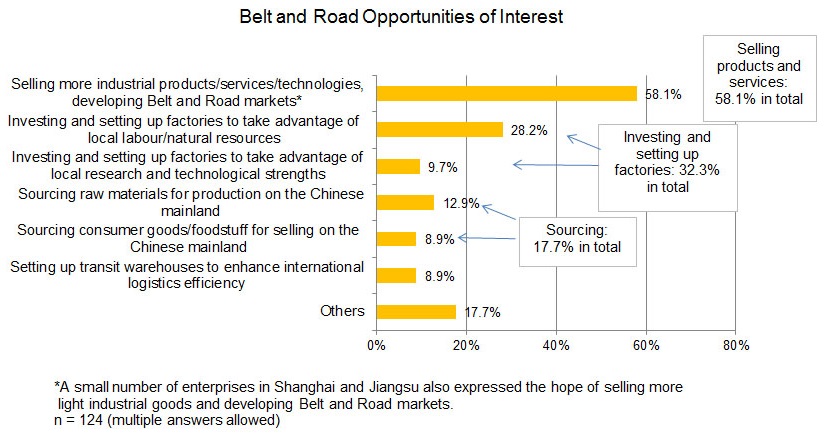
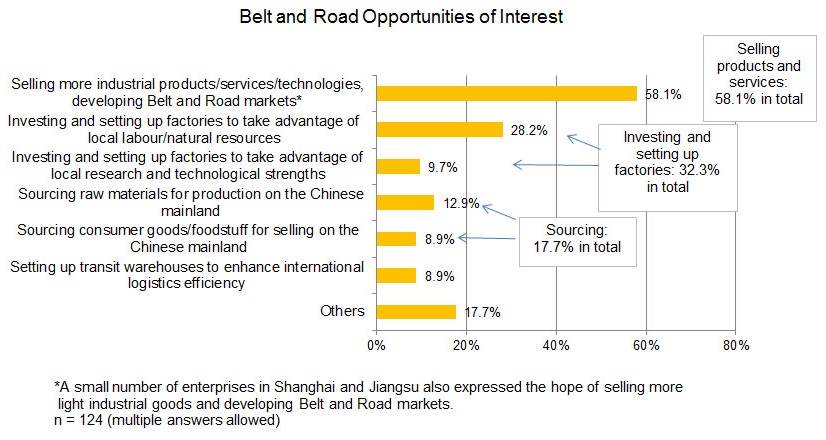
Source: HKTDC survey (For further details, see Hong Kong Services Help Yangtze River Delta Enterprises Capture Belt and Road Opportunities)
It seems that YRD enterprises planning to develop their business in different sectors require various types of services support to strengthen their supply chain management and create better links between their production facilities on the mainland and their overseas operations. According to a company that provides supply chain management services, many mainland enterprises have high-tech manufacturing capability and can produce products comparable to leading international brands, but still need the support of efficient supply chain management services in areas such as logistics, information flow and capital flow to help them tap opportunities in their target markets.
For example, many enterprises are selling their own brands in overseas markets and can reap handsome net profits from product sales alone. However, in order to develop their brand and maintain the loyalty and support of overseas consumers, they need to provide fast and efficient after-sales and maintenance services in the local markets either directly or through distributors. If that is not handled properly, it could involve high costs and could even adversely affect their image in overseas markets. (For further details, see Devising “Belt and Road” Supply Chain Management System)
An increasing number of domestic enterprises in the YRD and elsewhere are trying to improve their service systems for sourcing, production and sales by utilising the industrial resources and advantages of other places through industry chains in the coastal areas and even in the inland provinces. The geographical span of their business is expanding. As a result, many service providers are making use of transportation networks in the YRD, PRD and other places such as Shanghai, Shenzhen and Hong Kong, to enhance their logistics efficiency when serving overseas and international markets. At the same time, they are also helping clients improve their information and capital flow management and ensure the smooth development of their business.
The survey findings also indicate that many enterprises are hoping to seek professional services support both on the mainland and outside the country to help them “go out” and tap Belt and Road opportunities. Hong Kong was the most popular choice for this, with 46% of the businesses which were looking for services support indicating it as their preferred option. This matched the findings of a similar survey conducted by HKTDC Research in South China.
There is no doubt that Hong Kong is the preferred platform for mainland enterprises “going out” to invest overseas. Hong Kong’s service providers have helped many mainland enterprises handle their trade and investment business in Hong Kong and overseas markets over many years. As YRD enterprises look for more supply chain services support in their quest to capture Belt and Road opportunities, the opportunities for the city’s service providers should increase greatly.
Note: For details of the company interviews conducted jointly by HKTDC Research and the Shanghai Municipal Commission of Commerce, please refer to other articles in the research series on Shanghai-Hong Kong Co-operation in Capturing Belt and Road Opportunities.
[1] Source: Jiangsu Statistical Yearbook, Zhejiang Statistical Yearbook and Shanghai Statistical Yearbook.
[2] For further details, see China Seeks to Establish World Class Smart Supply Chains by 2020, under Regulatory Alert - China.
Editor's picks
Trending articles


Hong Kong, ranked by the Heritage Foundation as the world’s freest economy for 23 consecutive years, is renowned for its straightforward business environment, one where most commercial activities can be conducted free from government intervention. Its transparent, low tax regime, as well as its free flows of capital and information, all combine to effectively lower overall operational costs, while enhancing efficiency, ultimately facilitating rapid access to international market opportunities. Although Hong Kong does not offer specific incentives to target foreign investors, mainland enterprises often see Hong Kong as their preferred service platform when pursuing Belt and Road opportunities, because of the economic and commercial benefits it provides.
Preferred Platform for Foreign Investors
As a result of globalisation, countries and regions are keen to compete for foreign investment. In order to attract investors, many countries – including China, Singapore and other ASEAN countries – have drawn up specific foreign investment policies. These often include items such as preferential terms of tax exemption or concession, discounts on the cost of resources such as land, or talent subsidies. They are designed to encourage multinational companies to set up business operations there, in the hope of stimulating local economic growth and employment.
In contrast, Hong Kong does not offer any financial or other specific incentives to attract foreign investment. Yet it is one of the major recipients of foreign direct investment (FDI) in the world[1]. Hong Kong is the main stepping stone for foreign enterprises looking to invest on the Chinese mainland. Statistics show that, as of the end of 2016, 44.7% of approved foreign investment projects on the Chinese mainland were related to Hong Kong. Of the FDI that was actually utilised, a cumulative total of US$913.7 billion came from Hong Kong, 51.8% of the overall FDI inflow into China[2].
Hong Kong is also a major outbound investment platform for mainland enterprises. In 2016, the Chinese mainland made a total of US$114.2 billion worth of outbound direct investment (ODI) through Hong Kong, 58.2% of its overall ODI for the year. As of the end of 2016, a cumulative total of US$780.7 billion, or 57.5% of China’s cumulative ODI, had been made through Hong Kong[3]. The territory’s ability to attract foreign investment has made it the preferred platform both for foreign companies looking to invest on the Chinese mainland, and also for mainland Chinese enterprises wanting to invest overseas.
Market-oriented Business Environment


Unlike some Asian economies, Hong Kong does not offer specific preferential treatment to foreign companies. Indeed, any concessions and subsidies are available to all companies incorporated in Hong Kong, be they local businesses, or ones from the Chinese mainland or further afield. To discover whether this affected Hong Kong’s ability to compete for foreign investment against Asian economies which do offer preferential treatment, HKTDC Research and the Shanghai Municipal Commission of Commerce jointly interviewed a number of Hong Kong organisations and companies. The study found that although there were pressures on Hong Kong due to the competition in the region, this was more than offset by the territory focusing its development strategy on the provision of a favourable environment for businesses generally. Upholding the principles of impartiality and efficiency, Hong Kong offers a wide range of high-quality professional services to help businesses lower costs and take advantage of opportunities in international markets.
One example of this, often cited by Invest Hong Kong (InvestHK), is that no government approval is required to set up a regular company in Hong Kong. Another is that, because of its transparent low tax regime, the overall tax liability borne by a company in Hong Kong is lower than those in other economies, even those which offer specific tax incentives to foreign companies. Furthermore, Hong Kong’s world-class infrastructure, including international traffic and transport networks and communication facilities, means companies can connect easily and quickly with the Chinese mainland and other parts of the world. Other factors, such as the free flows of capital and information in Hong Kong, have made the territory one of the least restrictive economies in the world. All this has attracted ever increasing numbers of foreign investors who rely on Hong Kong as a service platform for expanding their operations in the Chinese mainland and international markets.
Support for foreign investors is also available through agencies such as InvestHK and other public institutions. They help investors find the professional services and staff they need; assist in liaising with other government departments and completing formalities such as applying for business licences and employment visas; put them in contact with local trade sectors; and provide consultation services to help companies apply for subsidies and start-up support from the Hong Kong government.
Shanghai-Hong Kong Co-operation in Tapping Global Business Opportunities
Under China’s Belt and Road Initiative, mainland enterprises have been stepping up their efforts to “go out” and go global. This is particularly true in the coastal areas that serve as China’s major centres for economic co-operation with foreign countries, and especially so in Shanghai and the Yangtze River Delta (YRD) region. In 2016, 83.4% of the Chinese mainland’s total ODI came from its eastern coastal areas, with Shanghai ranked first among all provinces and cities in terms of ODI volume. Companies in Shanghai and the YRD region have become increasingly active in working through Hong Kong to capture Belt and Road opportunities.


Against this backdrop, HKTDC Research and the Shanghai Municipal Commission of Commerce conducted a survey in Shanghai and the YRD region in the first quarter of 2017. Of those businesses who responded, nearly half (46%) said they regarded Hong Kong as their preferred destination for seeking professional services outside the mainland when looking to take advantage of Belt and Road opportunities[4].
Another survey, conducted by the same two organisations in Hong Kong in the 4th quarter of 2017, was aimed at assessing how Hong Kong can help mainland enterprises expand their international business. Many companies and organisations which responded to the survey acknowledged that local companies and foreign enterprises set up in Hong Kong enjoy the benefits offered by Hong Kong’s business environment.
Investors lacking a thorough knowledge of the picture, however, may be prone to presume that the absence of specific incentives has a negative effect on foreign investment in Hong Kong. Yet once they evaluate the overall costs and benefits available to their projects, it becomes clear that Hong Kong is the ideal and efficient service platform for their investment.
Given that Shanghai and other mainland provinces and cities are stepping up their efforts to strengthen co-operation with Belt and Road countries, Hong Kong is the ideal service platform to support the Chinese mainland, both in making overseas investments and in attracting foreign investors.
Note: For details of the company interviews conducted jointly by HKTDC Research and the Shanghai Municipal Commission of Commerce, please refer to other articles in the research series on Shanghai-Hong Kong Co-operation in Capturing Belt and Road Opportunities.
[1] According to the World Investment Report 2017 published by the United Nations Conference on Trade and Development (UNCTAD), Hong Kong was the 4th largest recipient of FDI in the world in 2016, behind the US, UK and Chinese mainland.
[2] Source: China Monthly Statistics
[3] Source: Statistical Bulletin on China’s Outward Foreign Direct Investment 2016
[4] For further details of the survey results, please refer to: Hong Kong Services Help Yangtze River Delta Enterprises Capture Belt and Road Opportunities
Editor's picks
Trending articles

Dashun Foundation
Professional Services
07 Mar 2018
Dashun Foundation
By Derrick Khoo, General Counsel, Marga Group
Like a phoenix rising out of the fire, Myanmar is soaring and embracing its new role as the go-to investment destination in Asia. To spur the country forward, the Myanmar government has wisely emphasised on the introduction of new modern laws and revision of obsolete ones as a key priority for its administration.
Recent encouraging developments in the Myanmar legal landscape are clear signs that the country is headed in the right direction to further cement businesses’ and investors’ confidence. Various progressive laws have been discussed, in consultation with industry stakeholders and the general public, and as advised by leading law firms. Many of these have already or are slated to take effect.
For example, the Condominium Law (2016) and its implementing rules (2017) have allowed foreigners to own units in a qualifying “condominium”. The Myanmar Investment Law (2017) combined the previous two separate regimes of Foreign
07 Mar 2018
Dashun Foundation
By Derrick Khoo, General Counsel, Marga Group
Like a phoenix rising out of the fire, Myanmar is soaring and embracing its new role as the go-to investment destination in Asia. To spur the country forward, the Myanmar government has wisely emphasised on the introduction of new modern laws and revision of obsolete ones as a key priority for its administration.
Recent encouraging developments in the Myanmar legal landscape are clear signs that the country is headed in the right direction to further cement businesses’ and investors’ confidence. Various progressive laws have been discussed, in consultation with industry stakeholders and the general public, and as advised by leading law firms. Many of these have already or are slated to take effect.
For example, the Condominium Law (2016) and its implementing rules (2017) have allowed foreigners to own units in a qualifying “condominium”. The Myanmar Investment Law (2017) combined the previous two separate regimes of Foreign
Anti-pollution solution for the Belt and Road
 1054 Views
While the Hong Kong University of Science and Technology (HKUST) has been developing ground-breaking air purification technology, Cathy Jim of Hong Kong marketing company RHT Industries has been promoting the solution to clients such as medical labs and factories in many Belt and Road countries. Ms Jim explains how Hong Kong’s role as a connecting point for advanced technologies is backing up HKUST’s research strengths.
Speaker:
Cathy Jim, Director, RHT Industries Limited
Related Links:
Hong Kong Trade Development Council
http://www.hktdc.com
HKTDC Belt and Road Portal
http://beltandroad.hktdc.com/en/

Market(s)

Sector(s)

Country(ies) / Region(s)
Thanks to the active overseas investment of Chinese enterprises in recent years and the Chinese government’s advancement of the Belt and Road Initiative, China was the world’s third-largest source of foreign investment for the fourth consecutive year in 2015. In fact, many mainland enterprises are stepping up their efforts in “going out” to look for brands, technologies and other resources to boost their competitiveness, while bringing in the advantages of foreign partners as a way to further develop Chinese and overseas markets.
HKTDC Research recently conducted a questionnaire survey with enterprises in western China. The results reveal that in order to deal with such challenges as securing financing, escalating production costs and market slowdowns, mainland enterprises are keen to seek outside professional services to help them achieve transformation and upgrading. These range from brand design and promotion strategies, to marketing and product research and development (R&D), to financial and legal services.
Moreover, the majority of enterprises surveyed said they would consider “going out” further to tap business opportunities in countries along the Belt and Road routes, particularly in ASEAN countries and other Southeast Asian markets. As well as aiming to sell more industrial/light consumer products to Belt and Road markets, they also wish to carry out sourcing and investment activities such as setting up factories.
The largest proportion of the surveyed enterprises (50%) said that, in the course of “going out”, they would be most interested in going to Hong Kong to seek professional supporting services and business partners. This is in line with the results of similar surveys carried out by HKTDC Research in the past three years, namely in the Pearl River Delta (PRD) in 2013, the Yangtze River Delta (YRD) in 2014 and the Bohai Rim in 2015. Therefore, whether in the coastal regions or in western China, it is apparent that Hong Kong is the preferred services platform for mainland enterprises intent on “going out”.
New Pattern of Opening Up Under the 13th Five-Year Plan


China is not only a leading destination for foreign direct investment (FDI), but it also ranks among the world’s top sources of FDI. Indeed, China has in recent years significantly relaxed its administrative measures on outbound investment in order to facilitate the “going out” of enterprises to invest overseas. Furthermore, the Belt and Road Initiative strengthens mutually beneficial co-operation with countries along its economic corridors.
Adopted in March 2016, China’s 13th Five-Year Plan[1] stresses the need to establish a new pattern of all-round opening up in the next five years (2016-2020). It encourages enterprises to “go out” to establish sales networks in foreign markets and to bring in the advantages of foreign partners to enhance competitiveness. Meanwhile, bilateral and multilateral co-operation mechanisms will be improved to encourage co-operation and investment in countries along the Belt and Road routes, infrastructure connectivity and trade facilitation advanced, and co-operation in energy and industry chains strengthened. It can therefore be expected that China’s outbound investment activities will see further expansion.
(For further details, please see Opportunities Arising from China’s 13th Five-Year Plan: An Overview.)
The World’s Third-Largest FDI Source
According to the latest United Nations Conference on Trade and Development (UNCTAD) figures[2], for four straight years since 2012 China has been the world’s third-largest source of FDI. China’s total outward FDI flows have increased from US$123.1 billion in 2014 to about US$127.6 billion in 2015, trailing only the United States (US$300 billion) and Japan (US$128.7 billion).
Although China has entered into a “new normal” of slower economic growth in the past few years, it has gradually become a main investor in certain developed countries. In particular, investment through cross-border mergers and acquisitions has been increasing, and has moved away from the previous pattern of focusing on energy and natural resources to a diversified pattern covering wholesale and retail, transportation and shipping/warehousing, and real property development. Furthermore, many Chinese enterprises have engaged with their foreign partners in co-operation projects involving technology, or are carrying out various types of commercial co-operation activities with foreign brands, as a way to further develop Chinese and overseas markets.


Meanwhile, China’s direct investment in Belt and Road countries is continually increasing, rising substantially from about US$400 million in 2004 to US$13.66 billion in 2014, an average annual increase of about 43%. Ministry of Commerce figures show that in 2015 Chinese enterprises made non-financial sector direct investment totalling US$14.8 billion (+18.2%) to 49 Belt and Road countries, accounting for 12.6% of China’s total non-financial sector direct investment that year. The investment flows were mainly directed towards Singapore, Kazakhstan, Laos, Indonesia and Russia.
It is worth noting that a considerable number of Chinese enterprises choose Hong Kong as their main channel for carrying out outbound investment – not only because Hong Kong is an international financial centre in the region with such advantages as free flow of capital. Abundant global communications and market network resources, as well as the availability of a complete range of professional services, are also key factors attracting mainland enterprises to use the Hong Kong platform in “going out”.
According to Ministry of Commerce figures, in 2014 the Chinese mainland routed US$70.9 billion in outward FDI through Hong Kong, accounting for 57.6% of the mainland’s total FDI outflows that year. Based on cumulative investment stock as at the end of 2014, the mainland has made US$509.9 billion in outward FDI through Hong Kong, accounting for 57.8% of the mainland’s outward FDI stock.[3]


Hong Kong: a Preferred Platform
Many cities and economic regions along China’s coast have been open to the outside world for many years. As China’s economy and investment outflows expand, coastal regions, provinces and cities, such as the PRD, YRD and Bohai Rim, have become main sources of outbound investment. On the other hand, with the western region including Sichuan province and Chongqing municipal benefiting from the Western Development strategy and other preferential policies, and with the efforts of provinces and cities concerned in attracting outside businesses and capital, the economy in the western region has been developing rapidly. Western China has always been an important gateway, a trading and logistics hub and an industry exchange ground connecting to Central Asia, South Asia and West Asia, and now enterprises in the region are also developing related investment and trading opportunities under the country’s “going out” and Belt and Road initiatives.
In May 2016, HKTDC Research conducted a questionnaire survey at the SmartHK fair held in Chengdu, the capital city of Sichuan province. As well as seeking to understand what challenges enterprises in western China are facing in their operations, the survey also aimed to find out about their intentions concerning transformation and upgrading, in “going out” to tap Belt and Road business opportunities, and their demand for professional services.
The survey followed similar studies carried out by HKTDC Research in the past three years in the PRD (2013), the YRD (2014) and Bohai Rim (2015) regions.[4] In the current survey, 237 effective questionnaires were completed by mainland enterprises (comprising trading companies, manufacturers and service suppliers) mainly from Sichuan, Chongqing and elsewhere in the western region.[5] The opinions of these 237 mainland enterprises on “going out” to tap Belt and Road business opportunities are outlined below.[6]


Challenges in Business Operations
Of the enterprises surveyed, 96% said they had come across different types of challenges in their operations in the past year. The three main problems they faced were (1) difficulties in financing; (2) rising labour, land and/or other production costs; and (3) a weak mainland market and inadequate orders. These accounted for 39%, 38% and 36%, respectively, of the enterprises surveyed.
In addition, 26% of the enterprises indicated they were worried about their lack of capability in product design and technological R&D; 22% pointed out that, in the face of keen competition in the international markets, they lacked competitive brands to help develop international markets and business; and 20% said they were affected by weak international markets and inadequate orders. By comparison, relatively few enterprises (only 9% of those surveyed) said the volatile renminbi exchange rate, including depreciation of the currencies in their target markets, was a hindrance.


Adjusting Operating Strategy
Confronted with market competition and other challenges, 95% of the enterprises surveyed said they had already adjusted their business and operating strategies and made relevant investment, or would consider doing so in the next one to three years. As to the direction of adjustments in business and operating strategies, most enterprises indicated they would do more to develop overseas markets, accounting for 44% of all enterprises surveyed (including 29% saying they would do more to develop overseas mature markets and 25% saying they would do more to develop overseas emerging markets). In addition, 43% said they would develop/strengthen their own-brand business, while 41% said they would like to do more to develop the Chinese mainland market.
Compared with the results of previous surveys, enterprises in western China appeared to be as keen as their PRD counterparts in wanting to develop both overseas markets and the Chinese mainland market. In comparison, enterprises in the YRD and Bohai Rim regions were more concerned with bringing in foreign advantages to develop the mainland market, showing that the development strategies of enterprises in different regions were not all the same.


Intention of Tapping Belt and Road Opportunities
In the current survey, enterprises were also asked about their opinion on Belt and Road opportunities. Among all the enterprises surveyed, 81% said they would consider tapping opportunities in countries along Belt and Road routes in the next one to three years. Among these enterprises, most (65%) said they would like to sell more industrial products and light consumer goods to Belt and Road markets. A smaller proportion of the enterprises (34%) would like to go to Belt and Road countries to carry out sourcing activities, including the sourcing of consumer goods/food products to sell in the mainland market or the sourcing of raw materials for production on the mainland. Some enterprises (26%) would like to invest and set up factories in Belt and Road countries. In addition, 17% would like to set up transit warehouses in overseas locations including Belt and Road countries to enhance international logistics efficiency.
On the other hand, more than half of the enterprises (53%) said they would be most interested in going to Southeast Asia, such as ASEAN countries, to tap Belt and Road opportunities. Other locations of interest included South Asia (27%), Central and West Asia (20%), Central and Eastern Europe (19%) and the Middle East and Africa (18%).


Keen Demand for Hong Kong and Overseas Services
Facing all types of business and operating challenges and aiming to advance transformation and upgrading, the enterprises surveyed were keen for various types of professional services. In line with the results of HKTDC’s surveys conducted previously in the PRD, YRD and Bohai Rim regions, the three main types of services most sought by western China enterprises were: (1) brand design and promotion strategy; (2) marketing strategy for the development of new business and new markets (including the development of Belt and Road markets); and (3) product development and design. These accounted for 46%, 45% and 44%, respectively, of the enterprises surveyed. This shows that, irrespective of the direction of transformation and upgrading of mainland enterprises or the focus of their operating strategies, the professional services needs of enterprises from different regions are more or less the same.
Other services western China enterprises need to seek from the outside included: marketing activities tailored to overseas markets, including Belt and Road markets (37%); financial services such as banking, financing and project valuation (36%); services in energy conservation, emission reduction and environmental protection technology (33%); and supply chain management and support services, such as materials and product inventory and logistics management (31%). Of those enterprises surveyed requiring these services, more than 60% indicated they would use the services provided by Hong Kong or overseas suppliers, with the exception of energy conservation and environmental protection technology.


“Going out” To Seek Business Partners
Meanwhile, 81% of the enterprises surveyed expressed an interest in seeking, or had already “gone out” to seek, business partners overseas. The majority of the enterprises (about 50%) said they were interested in co-operating with foreign brands to increase sales. This is similar to the results from the surveys previously conducted in the PRD, YRD and Bohai Rim regions. (Coincidentally, enterprises from different regions considered brand co-operation as their top reason for seeking foreign partners.)
In addition, 22% of the western China enterprises surveyed said they would like to acquire minority equity stakes in foreign companies to expand their overseas/mainland sales networks, 20% would like to enter into technological co-operation with overseas institutions, while 15% would like to redouble their efforts in purchasing high-tech equipment, raw materials and key parts and components from overseas.


Hong Kong as the Preferred Services Platform for the Mainland’s “Going Out”
About half (50%) of the enterprises surveyed indicated they would like to go to Hong Kong to seek the professional services mentioned above and/or to look for foreign business partners. Although this proportion is slightly lower than in the previous three surveys, Hong Kong remains the “going out” platform preferred by most western China enterprises, and attracts the preference of a much higher proportion of enterprises surveyed than other locations such as the US, Germany, Taiwan, Japan and Singapore, which account for 26%, 20%, 19%, 17% and 14%, respectively, of the enterprises surveyed. It is therefore apparent that, irrespective of the location of a mainland enterprise or whether it is from the PRD, YRD, Bohai Rim or China’s western region, Hong Kong is the preferred services platform for “going out” from the mainland.


[1] The 13th Five-Year Plan refers to the Outline of the 13th Five-Year Plan for National Economic and Social Development of the People’s Republic of China adopted at the fourth session of the 12th National People’s Congress in March 2016.
[2] World Investment Report 2016, UNCTAD.
[3] Source: 2014 Statistical Bulletin of China’s Outward Foreign Direct Investment.
[4] For the research topics and results of the surveys conducted respectively in the PRD, YRD and Bohai Rim, please see Guangdong: Hong Kong Service Opportunities Amid China’s “Going Out” Strategy published in December 2013; China’s “Going Out” Initiative: Jiangsu/YRD Demand for Professional Services published in September 2014; and China’s “Going Out” Initiatives: Professional Services Demand in Bohai published in September 2015.
[5] The HKTDC held a SmartHK Expo fair at Chengdu Century City New International Exhibition & Convention Centre on 12-13 May 2016. During the CEO Forum and four thematic seminar sessions related to “going out” to tap Belt and Road opportunities, HKTDC Research conducted a questionnaire survey on the attendees. Of the 469 questionnaires collected afterwards, 237 were deemed to be effective ones filled out by mainland enterprises (including trading companies, manufacturers and service suppliers).
[6] The options in the current survey are slightly different from those in the three previous surveys, so only some of the results can be compared.
Editor's picks
Trending articles


At the fifth plenary session of the 18th Central Committee of the Communist Party of China, held on 29 October 2015, the Suggestions of the Central Committee of the Communist Party of China on the 13th Five-Year Plan for National Economic and Social Development (Suggestions) were passed. It was later stated at a State Council Executive Meeting that the 13th Five-Year Plan (2016-2020) will be formulated according to the Suggestions [1].
President Xi Jinping and Premier Li Keqiang also remarked that the core goals of the 13th Five-Year Plan are to build a “moderately well-off society” and to overcome such challenges as the “medium-income trap”. While efforts will be made to optimise the economic structure, improve the environment, and enhance the quality and benefit of development, steps will be taken to achieve economic growth. Specific goals include: [2]
Maintaining economic growth at a medium to high speed, with average annual growth over 6.5%
Raising per-capita GDP to US$12,000 (up from around US$7,600 in 2014)
Accelerating industrial upgrade and propelling the economy to develop at medium to high level
Balancing urban and rural development and ecological construction
Strengthening social fairness and justice and balanced development
Where Hong Kong is concerned, the Suggestions mention that efforts will be made to deepen the joint development of the mainland and Hong Kong (as well as Macau and Taiwan), including giving support to Hong Kong to strengthen its position as an international financial, shipping and trading centre; participate in China’s two-way opening-up and Belt and Road Initiative; consolidate its position as a global hub for offshore renminbi business; and deepen Guangdong-Hong Kong-Macau cooperation.
From the Suggestions and the statements made by the leaders, it can be gathered that the 13th Five-Year Plan to be launched next year is likely to cover the following development directions, which can bring about new opportunities for Hong Kong players.
Encourage Innovation and Enhance Quality of Economic Development
According to the Suggestions, the 13th Five-Year Plan will place emphasis on advancing mass entrepreneurship, encouraging technological innovation, and promoting the development of new industries, in a bid to inject new vigour into the economy. It will focus on developing high technology and high value-added industries, while strengthening supporting infrastructure, revamping related financial systems, and improving the business environment to promote further growth of related industries. The target industries and development sectors will include:


Developing emerging industries
This includes developing such emerging industries as energy saving and environmental protection, biotechnology, information technology, smart manufacturing, high-end equipment, and new energy, as well as giving support to traditional industries to undergo upgrade.
Bolstering infrastructure construction and encouraging innovation
This includes building high-speed and safe next-generation information infrastructure, as well as quickening the pace of implementing the “Internet +” action plans, developing IoT (Internet of Things) and big data technology and application, and formulating plans to develop the next generation of Internet and related technology.
Encouraging corporate innovation
Efforts will be made to encourage R&D, strengthen technology integration capability, and import technology from abroad, targeting advanced technologies including next-generation information communication, new energy, new materials, aviation and space, biomedicine, and smart manufacturing. Action will also be taken to improve tax concession policies for corporate R&D expenses, and expand preferential treatment for accelerated depreciation of fixed assets to encourage enterprises to replace their equipment and apply new technology.
Steps will be taken to encourage mainland industries to develop from “Made in China” to “Created in China”, and to achieve the task of industrial upgrade moving “from big to strong”. This includes raising the level of product technology, technical equipment, energy efficiency and environmental protection across the board, as well as liberalising market access for modern services in a bid to promote development of the specialised high-value producer service industry, and assist the manufacturing industry in increasing value-added.
Developing new systems
Action will be taken to simplify the industry and commerce administration systems, accelerate the pace of financial system reform, raise the efficiency of the financial sector in serving the real economy, and further develop the capital market in a bid to lower the financing costs of medium, small and micro enterprises.
Based on the above development directions, it can be expected that implementation of the 13th Five-Year Plan will boost the mainland’s demand for various types of new and high technology. However, in certain high-tech industries such as IoT applications and development of the next-generation Internet, as China is currently still short of total and standard solutions and lacks user experience in certain areas, related R&D and technology application is somewhat constrained. Hong Kong’s technical personnel, who are well-versed in advanced foreign technology and excel in using technologies developed by international standards/frameworks to provide technological and management system solutions, can assist in the commercialisation of related projects in the mainland and meet the technological demands listed in the 13th Five-Year Plan.
Meanwhile, the mainland hopes to make use of innovation to facilitate industrial upgrades. For instance, the policy paper “Made in China 2025” stated that enterprises will be encouraged to strengthen their product design capability and brand building so that more enterprises will shift from OEM to ODM, as well as develop their own branded business. This should provide opportunities for Hong Kong’s design and branding service suppliers. A recent survey conducted by the Hong Kong Trade Development Council found that mainland enterprises wish to obtain service support from Hong Kong or foreign countries in the following areas: (i) product development and design; (ii) brand design and promotional strategy; and (iii) marketing strategy. [3]
Hong Kong, as an international financial centre in the region, can provide mainland enterprises with the necessary loan and financing services, such as providing cost-effective capital for relevant technology and industrial projects, helping mainland enterprises to lower financial cost. Also, as Hong Kong is one of the largest venture capital management centres in Asia, a large number of top-notch international fund managers wishing to grasp business opportunities in China have already established a foothold in Hong Kong, which can offer more financing channels for mainland enterprises. It can be expected that during the 13th Five-Year Plan period the mainland will further open up its financial services market, this should bring about more opportunities for Hong Kong financial service suppliers to enter the mainland market.
Balanced Regional Development
The Suggestions also stress that during the 13th Five-Year Plan period efforts will be made to strengthen the balanced development of various regions, including placing equal emphasis on urban and rural development, as well as synchronising the pace of development of the more developed eastern coastal region with that of the central and western regions. The emphasis of the plan is expected to include:
Advancing coordinated regional development
This includes deepening the Go West initiative and promoting development of the central region. Emphasis will be placed on encouraging the coordinated development of certain regions, such as advancing the coordinated development of the Beijing-Tianjin-Hebei region and the Yangtze River Economic Belt. Regional development will be achieved by way of optimising urban development planning, encouraging regional transportation integration, and improving regional environmental planning.
Advancing new urbanisation construction
Steps will be taken to advance a people-centred new urbanisation plan; enhance the level of urban planning, construction and management; deepen household registration system reform; and assist rural migrants capable of working steadily in urban areas in obtaining urban resident status.
The importance attached by the Suggestions to the strategy of balanced development of the eastern and western regions and urban and rural areas aims to tackle problems brought about by disparities in regional development in the past and by the rapid pace of urbanisation of some localities. These problems include:
Insufficient transport facilities, environmental resources and supporting municipal facilities in certain city clusters
The polarised development of the urban and rural areas has quickened the pace of people flow into cities, increasing the pressure on urban development
As the pressure on the transportation and communication systems continues to grow, the efficiency of logistics services is in dire need of improvement
Water and air pollution problems are increasingly serious, creating a strong demand for environmental services, such as energy saving and emission reduction


The rate of urbanisation in the mainland rose rapidly from 36% in 2000 to 55% in 2014. The pace is particularly fast in more developed regions, for instance, the urbanisation rate in some of the YRD provinces exceeds 65%, which has created the problems mentioned above. [4] In view of this, the 13th Five-Year Plan is likely to take a further step in making “new” urbanisation a development direction, devoting great efforts to enriching the content of urban and rural development and making the enhancement of urban quality a development objective, instead of simply seeking urban construction or expanding the boundary of cities.
Against this backdrop, the 13th Five-Year Plan will not only bring about the upgraded development of coastal cities, but will also stimulate the construction and economic activities of urban and rural areas in the central and western regions, as well as the old industrial regions in the northeast. For instance, where building new city clusters is concerned, efforts will be made to strengthen the construction of daily-life supporting facilities in the relevant urban and rural areas, and to upgrade infrastructure, such as cross-regional intercity and trans-regional transport systems.
Hong Kong is not only an international financial centre, but also an important commercial services platform in the Asia-Pacific region. With a pool of local and foreign infrastructure construction service suppliers in extensive fields, Hong Kong has rich experience in different modes of urban development and management. Meanwhile, in the mainland, as the scope of urban construction continues to expand, infrastructure enterprises with comprehensive service abilities are needed to satisfy market demand for infrastructure and overall planning services. Also, as mainlanders’ income level continues to rise, they are becoming more demanding where the quality of urbanisation is concerned. Hence, when government departments in charge of planning and developers set out to advance urbanisation, priority is given to development quality over speed and quantity. This will create opportunities for qualified service suppliers wishing to tap the China market.
On the other hand, regional development and urbanisation are bound to change the urban landscape rapidly in different regions. The emergence of new commercial districts will prompt the distribution and retail sector to shift toward modern business modes, as well as bolster development of the consumer market in small coastal cities and in the central and western regions. However, Hong Kong companies wishing to enter these “emerging markets” must assess local purchasing power, pay attention to the consumption pattern of different cities, and avoid intense price competition from online businesses.
Moreover, under the 13th Five-Year Plan, the mainland may quicken its pace of building smart city clusters and apply next-generation information technology to raise the efficiency of city management. This should directly boost the demand for the application of IoT technology in a number of areas, such as transport, environmental monitoring and municipal management, generating opportunities for relevant service suppliers to enter the market.
As development of the transport logistics network in the mainland becomes increasingly mature, it will promote the further development of logistics services and e-commerce. For instance, as the mainland’s demand for cold chain logistics is rising rapidly, it is in urgent need of importing advanced cold chain solutions in order to raise overall operation efficiency and quality. Moreover, while domestic online shopping is growing in leaps and bounds in the mainland, cross-border e-commerce and related logistics services have yet to develop. In comparison, Hong Kong not only has rich experience in cold chain logistics management but also a sound e-commerce and logistics platform. Hong Kong is therefore well positioned to capture additional opportunities created by the 13th Five-Year Plan.
Sustainability is Main Development Strategy
Both the Suggestions and the leadership have stressed on many occasions that, while efforts will be made to advance social and economic construction, action will also be taken to accelerate the building of a resource-efficient, eco-friendly society and strengthen environmental protection in order to ensure sustainable social and economic development. In fact, the extensive growth mode of China’s economic development in the past has caused serious environmental pollution, with the resulting economic cost and social problems arousing great concern from both the government and the general public. Against this background, it can be expected that the 13th Five-Year Plan will include the following development plans:
Strengthening environmental protection measures
Action will be taken to implement the green city development plan, strengthen clean production management, encourage enterprises to upgrade and revamp their technical equipment, develop green finance to help enterprises strengthen environmental management and green operation, and encourage society to pursue green consumption.
Tightening pollution control
This includes optimising the industrial structure of the developed Beijing-Tianjin-Hebei, YRD and PRD regions and encouraging these regions to move towards high-end production and low pollution. In key ecological functional zones, the negative list will apply to industrial market access; greater efforts will be made to contain air, water and soil pollution; regulatory requirements for industrial pollution sources to meet emission standards will be fully implemented; urban domestic sewage and refuse treatment will be fully advanced; and enforcement of relevant laws will be strengthened.
Developing environmental protection and related industries
This includes expediting energy technology innovation; encouraging the development of the new energy industry, such as wind, solar, bio, water and geothermal energy; strengthening smart power grid construction; continuing to promote the development of the new energy car industry; popularising green construction; and boosting development of the waste recycling system and industry.
During the 13th Five-Year Plan period, the mainland will further strengthen energy saving, emission reduction and environmental protection policies. In particular, the new Environmental Protection Law, which came into effect on 1 January 2015, aims to tackle environmental pollution issues, including authorising environmental protection departments to close down facilities which have caused serious environmental pollution and to order units emitting excessive pollutants to limit or cease production; as well as impose heavier penalties and punishment on non-compliance. [5]


The demand of mainland enterprises and relevant units for environmental protection services such as energy saving and pollution prevention and containment is bound to rise rapidly. These enterprises, while facing more stringent legal requirements, are also encouraged by government policies, such as green finance measures. As such, they will take greater initiative to seek environmental protection services in order to meet requirements for energy saving, emission reduction and emission standards. In view of this, the 13th Five-Year Plan should provide environmental protection service and technology companies possessing the right technology and expertise with extensive room for market expansion.
Hong Kong’s environmental protection companies and technical personnel have accumulated rich experience in specialised project management throughout the years. As such, they possess advantages in providing one-stop services and excel in combining advanced environmental protection technology in foreign countries with low cost parts and components in the mainland. With the support of various financial services in Hong Kong, they can also provide mainland clients with project financing services, such as performance contracting for energy and water efficiency, hence they are well-positioned to make a foray into the mainland environmental protection market. This, coupled with Hong Kong’s favourable business environment, has made Hong Kong companies ideal cooperation partners for foreign environmental protection technology players interested in undertaking technology transfer and licensing in the mainland.
It is worth noting that Hong Kong companies wishing to capitalise on the environmental protection opportunities in the mainland have to obtain a qualification licence issued by the relevant department of the mainland government. For instance, if they wish to provide environmental protection system engineering design services or environmental protection facilities operation services, they may need to obtain a qualification licence from the national or local environmental protection department. However, CEPA [6] has introduced a lot of liberalisation measures facilitating Hong Kong companies’ provision of environmental protection services in the mainland (including establishing wholly-owned enterprises in the mainland to provide such services as sewage and waste treatment) and to apply for qualifications to operate environmental pollution control facilities. Furthermore, as Hong Kong has signed an agreement on the liberalisation of trade in services with the mainland, Hong Kong service suppliers entering the mainland environmental protection market are entitled to national treatment. This has given Hong Kong companies the advantage of entering the mainland environmental protection market earlier than their foreign counterparts. [7]
New Horizon in Opening Up
In recent years China has significantly liberalised administrative measures on outbound investment to encourage enterprises to “go out” and invest overseas in a move to establish sales networks in foreign markets and at the same time “bring in” the advantages of foreign partners, in order to enhance competitiveness and seek transformation and upgrade. Meanwhile, China is proactively encouraging free trade zones in Shanghai, Guangdong, Tianjin and Fujian to open up, as well as advancing the Belt and Road initiative in the hope of capitalising on the comparative advantages of the PRD, YRD and Bohai Rim in order to strengthen economic ties with countries along the route. Against this backdrop, the Suggestions point out that the 13th Five-Year Plan should strengthen the following liberalisation measures and development directions:
Strengthening two-way opening up
Steps will be taken to strengthen the construction of ports and infrastructure facilities in inland border areas, build cross-border multimodal transport corridors, and bolster the development of border economic cooperation zones and cross-border economic cooperation zones. Efforts will be made to expedite the optimisation and upgrade of foreign trade, further develop trade in services, implement positive import policies, and further open up the market to the rest of the world.
New opening-up measures
Action will be taken to encourage enterprises to expand outbound investment and promote “going out” with their equipment, technology and services so that Chinese industries can integrate further with global industry and logistics chains. Meanwhile, efforts will be devoted to encouraging the development of new trade modes, such as cross-border e-commerce, and advancing the construction of free trade zones and related opening-up measures. Besides, steps will be taken to further open up the service sector to the outside world, especially expanding the two-way opening-up of the financial sector, orderly realising convertibility of the RMB under the capital account and paving the way for internationalisation of the RMB.
Advancing the Belt and Road initiative
This includes improving bilateral and multilateral cooperation mechanisms, encouraging enterprises to invest in countries and regions along the route, advancing infrastructure connectivity, and strengthening energy cooperation in a bid to jointly build an offshore industry cluster and establish a local industry system. At the same time, cooperation in such areas as education, technology, culture and environmental protection will be unfolded. Detailed measures include enhancing cooperation with international financial institutions; participating in the establishment of the Asian Infrastructure Investment Bank and New Development Bank BRICS; giving full play to the Silk Road Fund; and attracting international funds to jointly build a diversified financial cooperation platform.
The 13th Five-Year Plan enhances foreign trade and economic cooperation and introduces positive import policies, and the mainland encourages Guangdong and Hong Kong to jointly expand the international market and strengthen trade ties with economies along the Maritime Silk Road. These efforts should help to consolidate Hong Kong’s position as a trade and shipping hub in the Asia-Pacific region.


The deepening of the opening-up policies in Guangdong and other free trade zones under the 13th Five-Year Plan, and the deepening of liberalisation of trade in services between Guangdong and Hong Kong under the CEPA framework, will further increase the room for Hong Kong companies to enter the Guangdong and the entire mainland market.
Where further financial sector opening up is concerned, in recent years many Hong Kong companies have proactively taken advantage of the mainland’s liberalising financial policies and CEPA concessions to gradually participate in the mainland financial market, set up networks and accumulate practical operation experience. Today, Hong Kong is a leading RMB offshore trading centre and has developed cross-boundary RMB lending business via Qianhai. All these factors will give Hong Kong financial players the first-mover advantage during the 13th Five-Year Plan period when the mainland further liberalises related policies.
Moreover, China’s Belt and Road initiative will further encourage mainland enterprises to invest in countries along the route. Hong Kong has always been acting as the bridgehead for the mainland’s foreign trade and economic cooperation activities, and is also the mainland’s preferred service platform for making offshore investments. In the past, Hong Kong has handled trade and investment business in overseas markets for a lot of mainland enterprises, providing a full range of professional services, such as financial, legal, taxation, sustainable operation risk assessment, and international certification and inspection services. With the 13th Five-Year Plan strengthening the “going out” strategy and advancing the Belt and Road initiative, it can be expected that more opportunities will be made available to Hong Kong service suppliers.
Raise Level of Social Development
The Suggestions also mention that efforts will be made to strengthen public services, enhance the quality of education, and guarantee people’s basic livelihood in order that the country will evolve into a moderately well-off society. Therefore, it can be expected that where social development is concerned, the 13th Five-Year Plan will cover the following directions for reform and development:
Promoting balanced growth of the population
The two-child policy will be fully implemented, proactive action will be taken to tackle the problem of ageing population, and the elderly care service market will be fully liberalised.
Reforming the social security system
This includes improving the employee pension insurance system, broadening social insurance fund investment channels, strengthening risk management, and raising investment return rate. Action will be taken to improve the sustainable development of the medical insurance system and deepen medical and health system reform, including introducing separation of consultation from medication, and establishing a basic medical and health system and modern hospital management system covering both urban and rural areas.
Tightening food safety
Steps will be taken to advance a stringent and highly efficient food safety management system.
In a bid to promote balanced growth of the population, the two-child policy will be fully implemented during the 13th Five-Year Plan period. This represents a step to be taken to further improve the country’s population control policy after introducing the policy of allowing single-child parents to have two children in November 2013. According to the estimates of the National Health and Family Planning Commission, the new second child generation will mainly concentrate in urban areas, accounting for 76% of all newly born second children. It is projected that by the year 2030 China’s total population will reach 1.45 billion. And by 2050, the population of the labour force aged 15-59 will increase by about 30 million, this will help alleviate the problem of population ageing and contribute to population structure optimisation.


In the short term, introduction of the two-child policy can directly stimulate the demand for maternity, baby and infant products and services, such as food, health food, daily use articles, as well as mother and child health service and child care service. In the long run, it will boost the demand for housing, education and medical care. As mainland parents are attaching more and more importance to product quality and safety, as well as the level of professional services, such as education and medical care, Hong Kong companies can capture the opportunities arising from this new development.
Moreover, the 13th Five-Year Plan’s aim to accelerate the pace of old-age insurance and medical insurance system reform is bound to stimulate the growth of the insurance market. Currently, as China liberalises its financial and services markets, financial and insurance industry players stand to benefit from the emerging market opportunities.
As China’s population gradually ages and the pace of life quickens in tandem with rapid urbanisation, the health care expenses of mainlanders continue to rise, particularly the case with middle-class or above citizens. Coupled with the proposal put forward in the 13th Five-Year Plan for medical system reform and market liberalisation, this will generate opportunities for Hong Kong service suppliers in related fields.
Hong Kong medical service suppliers, by combining health, medical and leisure services and taking advantage of the policy offered by the mainland allowing Hong Kong players to set up wholly-owned hospitals and traditional Chinese medicine hospitals in the mainland on a pilot basis starting from mid-2014, can tap the mainland’s high-end health and medical services market. Apart from capitalising on Hong Kong’s financial services to offer strategic recommendations on financing arrangements for these health and medical projects, Hong Kong companies can also make use of next-generation IoT technology and their experience in providing sustainable medical care service to Hong Kong’s diversified community in the form of private institution to offer custom-made management solutions to mainland projects.
The 13th Five-Year Plan also devotes great efforts to food safety. It can be expected that the mainland government will strengthen food safety system management as well as food certification, supervision and random check measures in a move to protect public health. At the same time, in order to boost consumer confidence, many food production enterprises have joined voluntary food certification schemes, including food safety and green and organic certification.
These developments will directly bolster market demand for food testing, inspection and certification services. Under CEPA, Hong Kong companies are granted concession to enter the mainland testing and inspection service market, this includes allowing Hong Kong testing and inspection organisations offering certification services to expand their business scope to cover food products and voluntary food certification in Guangdong province on a pilot basis. This can help Hong Kong industry players to capture opportunities arising from the 13th Five-Year Plan.
[1] For more details, please see: http://www.gov.cn/guowuyuan/2015-10/31/content_2957504.htm (31 October 2015); http://www.gov.cn/guowuyuan/2015-11/05/content_5004881.htm (4 November 2015)
[2] For more details, please see: http://news.xinhuanet.com/ttgg/2015-11/03/c_1117029621.htm (3 November 2015); http://www.gov.cn/guowuyuan/2015-11/10/content_5006876.htm (10 November 2015)
[3] For details, please see HKTDC research report: Outbound Investment of Chinese Enterprises: Hong Kong the First Port of Call for Professional Services
[4] Source: China Statistical Yearbook
[5] For more details, please see HKTDC research article: Green Opportunities in the Yangtze River Delta amid China’s Urbanisation Drive
[6] CEPA here refers to the Mainland and Hong Kong Closer Economic Partnership Arrangement and its supplementary agreements.
[7] For more details about CEPA, please see HKTDC industry profile: Environmental Protection Industry in Hong Kong
Editor's picks
Trending articles
New concept for Belt and Road design
1152 Views
With online access to more than 2,000 architects and designers across 22 countries so far, Hong Kong startup architectural firm Archiparti is bringing international design to clients expecting to celebrate changing lifestyles. Founder Karbi Chan says the Belt and Road Initiative is “made for” the company’s aspirations and goals.
Speaker:
Karbi Chan, Founder, Archiparti
Related Links:
Hong Kong Trade Development Council
http://www.hktdc.com
HKTDC Belt and Road Portal
http://beltandroad.hktdc.com/en/
Market(s)
Sector(s)
Country(ies) / Region(s)