









Brunei Darussalam
Country Region
US$15 billion China-invested refinery and petrochemical complex seen as having essential part to play as Brunei looks to reinvent itself in the face of stubbornly-stalled international oil prices and its own rapidly-dwindling gas and oil reserves.
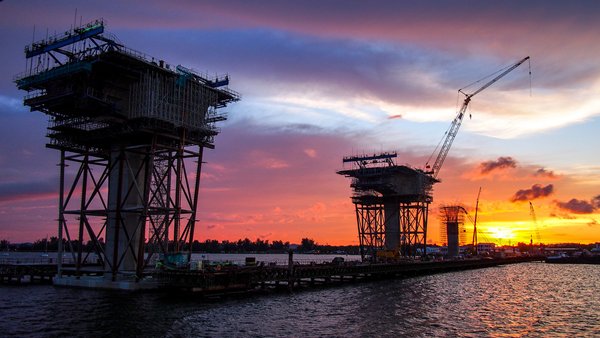
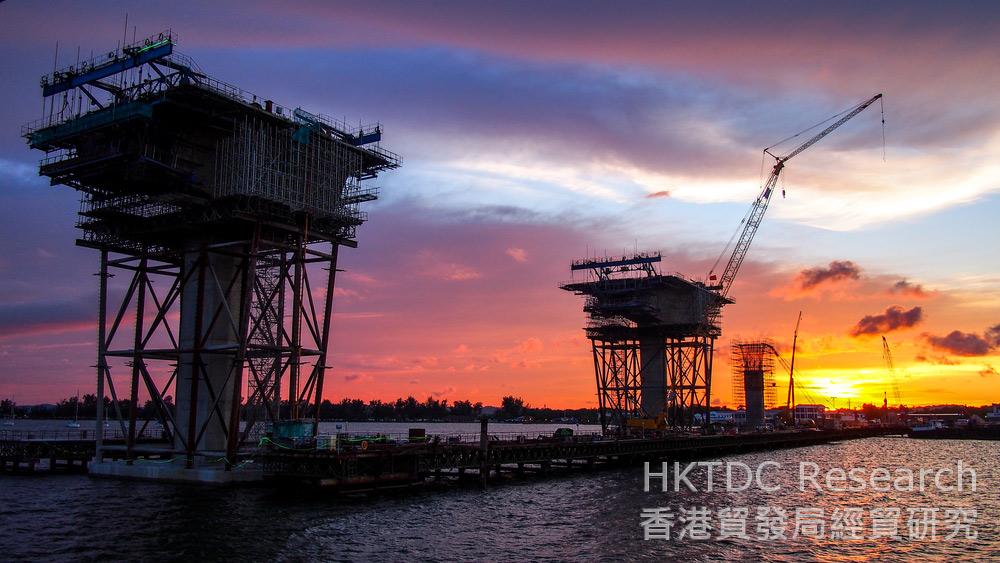
The news that work on a 2.7km bridge connecting Bandar Seri Begawan, the Brunei capital, with the neighbouring island of Pulau Muara Besar (PMB) had been completed late last month marked the successful conclusion of the country's first Belt and Road Initiative (BRI) project. It is, however, only one small element of the far wider-reaching China-backed development that will transform the island into one of the region's primary refining and petrochemical hubs.
Once completed, the US$15 billion refinery and petrochemical complex is expected to provide up to 10,000 jobs and play a crucial role in weaning the Brunei economy off its traditional dependence on its crude oil and natural gas exports. Although work on the bridge was led by the China Harbour Engineering Company, a Beijing-headquartered subsidiary of the huge China Communications Construction civil engineering conglomerate, the construction of the plant proper is down to the Hangzhou-based Zhejiang Hengyi Group (Hengyi). Under the terms of its agreement with the Brunei government, the company, one of China's largest suppliers of raw materials for the textile industry, funded the $3.4 billion facility and will be responsible for its day-to-day operations once it comes online late next year.
Another Chinese company, Lanzhou LS Heavy Equipment, a specialist in the provision of petrochemical systems, meanwhile, has been contracted to build a number of the refinery's key production units. These include an aromatics facility with a capacity of 1.5 million tonnes per annum and a 2.2 million TPY (throughput yield) hydrocracking unit.
Overall, the refinery is shaping up to be both China's largest, privately-owned facility outside the mainland and, by far, the most expensive overseas-backed project in Brunei's history. Once operational, it will have the capacity to process 160,000 barrels a day, while also providing feedstock for Hengyi's terephthalic acid production, an intermediate material required to make polyester. It is also hoped that, in time, it will produce a sufficient level of fuel to allow Brunei to successfully compete with Singapore, currently the dominant regional oil hub.
Back in March, in order to finance the project, Hengyi Petrochemicals became the first company to issue BRI corporate bonds – a financial instrument newly approved by the China Securities Regulatory Commission – and successfully raised US$79 million on the Shenzhen Stock Exchange. It is money that the company is clearly going to need.
Earlier this year, it was announced that the second phase of the PMB project will cost some $12 billion. This will see the refinery's capacity expanded to 280,000 barrels a day and will also fund units capable of producing an annual TPY of 1.5 million tonnes of ethylene and two million tonnes of paraxylene.
The scale of the project is a sure indication of its importance to Brunei. Although the country is the second-richest per capita in the ASEAN bloc, after Singapore, low oil prices have seen its economy contract significantly over recent years, while also driving up the level of unemployment. Although, after four years of contraction, the country's economy rallied slightly last year with its GDP growth estimated at 1%, it is still being far outstripped by many of its fellow ASEAN states.
As well as the currently stalled oil prices, the country's oil and gas reverses – long its economic lifeline – are expected to be exhausted within 20 years. In anticipation of this, many of the global petrochemical companies have already cancelled plans for further investment in the country.
The PMB facility, then, is therefore clearly a key initiative and will help the country maximise profits from its dwindling reserves. At the same time, it will also nurture the capability and expertise required to service the increasing number of oil and gas fields coming online across the wider region.
Some institutions, however, are not hanging around to see if Brunei can successfully reboot its economy. Back in 2014, Citibank shuttered its branches and pulled out after 41 years in the country. A year later, HSBC followed its example, again ending its ties to the country. Widely seen at the time as swimming against the tide, the Bank of China opened its first Brunei branch in 2016. Given recent events and current forecasts, that might not have been quite the reckless move it seemed at the time.
According to the International Monetary Fund's recently published Regional Economic Outlook for Asia and the Pacific, the country's economy may expand by up to 8% in 2019, maintaining average growth of 5% for several years thereafter. Significantly, one of the cited reasons for this likely resumed growth was the imminent completion of the PMB facility.
While climbing aboard the BRI bandwagon is clearly in Brunei's interest as the country seeks to reinvent itself in economic terms, Beijing's interest in its 3,900km distant trading partner is far from altruistic. Back in 2014, the two countries pledged to work together on the development of the Brunei-Guangxi Economic Corridor (BGEC) as a means of developing mutual trade, particularly with regard to halal products, tourism and shipping. Over recent years, the BGEC has been subsumed into the overall BRI project.
In terms of its BRI significance, Brunei also has the benefit of being set at the very heart of the Brunei-Indonesia-Malaysia-Philippines East-Asian Growth Area (BIMP-EAGA). Given the surging prosperity of this region, the BRI may allow Brunei to resume its classic role as a preeminent trading hub, boosting China's hopes of facilitating international trade to a scale never before seen.
More prosaically, China and Brunei have both staked a claim to the 370km-long Louisa Reef, one of the disputed areas of the South China Sea. It is now hoped that the close co-operation the two countries currently enjoy will allow them to jointly explore the reef's potential economic benefits, rather than remaining a continuing source of tension between the two.
Marilyn Balcita, Special Correspondent, Bandar Seri Begawan
Editor's picks
Trending articles
Euler Hermes Hong Kong Services Limited
Financial Services
|
Professional Services
 390 Views
Company Profile
Allianz Trade is the trademark used to designate a range of services provided by Euler Hermes.
Allianz Trade is the global leader in trade credit insurance and a recognized specialist in the areas of surety, collections, structured trade credit and political risk. Our proprietary intelligence network analyses daily changes in +80 million corporates solvency. We give companies the confidence to trade by securing their payments. We compensate your company in the event of a bad debt, but more importantly, we help you avoid bad debt in the first place. Whenever we provide trade credit insurance or other finance solutions, our priority is predictive protection. But, when the unexpected arrives, our AA credit rating means we have the resources, backed by Allianz to provide compensation to maintain your business. Headquartered in Paris, Allianz Trade is present in 52 countries with 5,500 employees. For more information, please visit https://www.allianz-trade.com/en_HK.html
3E Accounting Limited
Professional Services
|
Telecommunications and ICT Services
162 Views
Company Profile
3E Accounting Limited. is a Hong Kong-based accounting firm that specialises in providing affordable and quality professional incorporation, accounting, tax, and compliance services, based on Three Es: efficiency, effectiveness and economy – as part of our One-Stop Solution services for our clients. Our office is conveniently located in Central with a local team familiar with Hong Kong legislation. Founded by Chartered Accountant Lawrence Chai, we are recognized by ACCA as an Approved Employer. The ACCA Approved Employer Program only accepts companies that ACCA recognizes for having high standards of staff training and development. With this recognition, you are assured that 3E Accounting meets or exceeds global standards for teaching and developmental support. 3E Accounting Limited. is an independent member of 3E Accounting International Network, with presence in more than 80 countries to support clients in their overseas expansion to Asia, North and South America, Europe, Oceania, and Africa.
US$1.7 billion, 30km-long structure set to deliver on long-term commitment to link national capital and Temburong.
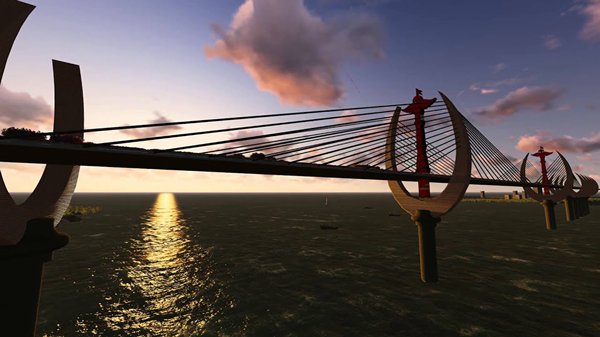
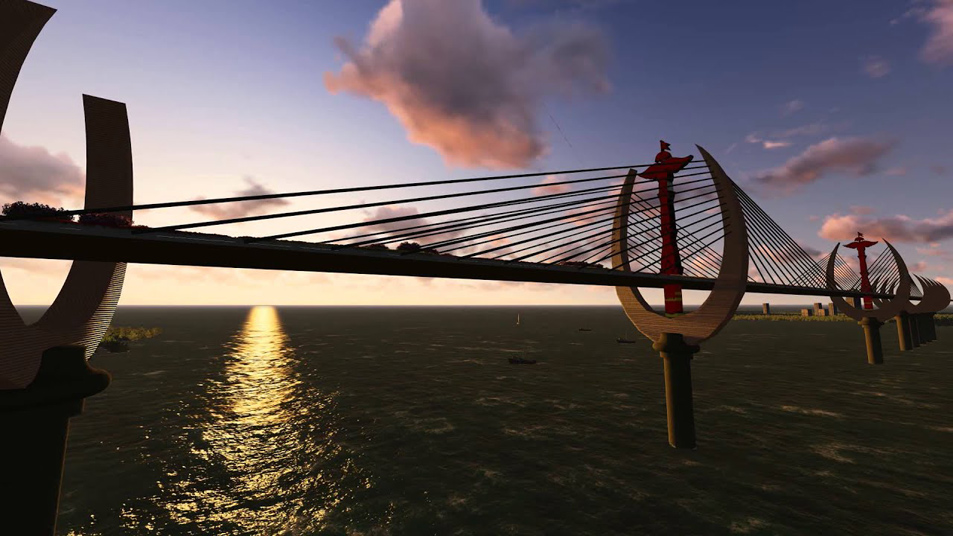
Work on a major section of Brunei's US$1.7 billion Belt and Road Initiative (BRI)-backed Temburong Bridge was completed late last month. Once fully constructed, the bridge will link Bandar Seri Begawan, the national capital, with Temburong, an enclave separated from the rest of Brunei by Malaysia and Brunei Bay.
The largest infrastructure project in Brunei's history, the 30km-long structure is set to become Southeast Asia's longest ocean-span bridge, easily outreaching the current record-holder – Malaysia's 24km Second Penang Bridge. Work on the project began in 2014, with construction said to be 97% complete. If all goes to plan, the bridge should open to road traffic later this year.
Brunei has high hopes that the project will deliver long-term economic benefits. Essentially, it represents the fulfilment of a long-term commitment to create a customs-free road link between the capital and Temburong, an increasingly popular tourism destination.
With a land area of just 5,765 sq km, Brunei comprises two territories – Brunei-Muara and Temburong – separated by the Malaysian state of Sarawak. Until the bridge opens, commuters travelling between the two must negotiate their way through four frequently congested Malaysia-Brunei immigration checkpoints.
Commissioned in 2014 by Brunei's Ministry of Development as part of efforts to stimulate the country's economic development, the bridge was always visualised as two distinct construction projects – a 11.6km land viaduct crossing the Labu Forest Reserve and the 18km bridge proper extending out across Brunei Bay. China State Construction Engineering Corporation (CSCEC) was appointed to oversee the viaduct, while Seoul-headquartered Daelim – South Korea's longest-established construction company – won the contract to build the bridge.
When CSCEC first began work on the project in October 2015, oppressive heat and humidity, combined with intermittent access to power and fresh water, hampered construction. An added challenge came from the statutory requirement to protect the region's rare mangrove vegetation and wildlife. To overcome this particular difficulty, CSCEC installed major sections of the viaduct using "fishing technology," an innovative construction process that keeps heavyweight equipment from impacting the ground and potentially harming local flora and fauna.
Once the bridge is open, the key beneficiary is expected to be the country's nascent tourism industry. The focus of this will be Temburong's prized, yet relatively unknown, Ulu Temburong National Park. A 50,000-hectare tract of tropical rainforest, it has been described by the Brunei Tourism Bureau as "without a doubt, the crown jewel of Brunei's green landscapes".
An engaging blend of lowland and mountain forests, the park's diverse ecosystem is home to a huge variety of unique species, as well as many of the country's traditional longhouse communities. Once officially opened, the bridge is expected to spur investment across the whole of the region's hospitality sector.
In line with this, work is already underway on Temburong's first luxury eco-resort – 30 riverside villas in the Kampung Perdayan district – which is due for completion later this year. In addition, a new river centre is being developed to service cruise boats heading into the Ulu Temburong National Park.
In preparation for this, Brunei is already actively engaged in moves to attract a higher number of Chinese tourists. In order to facilitate this, Royal Brunei Airlines, the national carrier, is launching direct flights to the new Beijing Daxing International Airport.
Chinese visitors accounted for 23.6% of Brunei's 278,000 inbound air passengers in 2018, a figure it is now hoping to boost to 450,000 in the near term. In a further move, 2020 has been officially announced as Brunei-China Year of Tourism by representatives of the two countries' governments.
Geoff de Freitas, Special Correspondent, Bandar Seri Begawan
Editor's picks
Trending articles
Federal Express (Hong Kong) Limited
Logistics and Transportation Services
1787 Views
Company Profile
FedEx Express is one of the world's largest express transportation company, providing fast and reliable delivery to more than 220 countries and territories. FedEx Express uses a global air-and-ground network to speed delivery of time-sensitive shipments by a definite time and date supported by a money-back guarantee1.
1Subject to relevant terms and conditions
WT Partnership (China) Limited
Infrastructure and Real Estate-Related Services
6245 Views
Company Profile

Project Experience
Company Profile
WT Partnership (WTP) is a leading global construction cost consultant. Founded in Australia in 1949. We have established more than 60 offices in Australia, Europe, Asia, Africa and America and offer clients a seamless and efficient consultancy service in all parts of the world. WTP global footprint can deliver more professional solutions for clients in Belt and Road countries.
WTP expertise covers the building, construction and infrastructure sectors, as well as the management of facilities and the provision of consultancy services. We help our clients achieve their ultimate commercial objectives through optimized cost solutions. WTP has been involved in construction projects in China for more than 40 years, with a wide range of projects including Aviation, Ports & Marine, Power, Land subdivisions, Public private partnership, Mixed-use, Hotel, Office, Residential, Entertainment, etc.
Project Experience
Africa
Agriculture and Rural Development, Manufacturing (industrial parks, logistics parks, machinery), Transport and Logistics Infrastructure, Ports, Terminals and Airports, Insurance
Australasia
Telecommunications, Natural Resources (including oil and gas), Agriculture and Rural Development, Transport and Logistics Infrastructure, Highways, Bridges and Tunnels, Ports, Terminals and Airports, Highways, Bridges and Tunnels, Rail and Mass Transit, Smart City, Water and Waste Management, Manufacturing (industrial parks, logistics parks, machinery), Technology, Urban Development, High-rise, Mixed-use Development, Transit-oriented Development
Western Europe
Agriculture and Rural Development, Manufacturing (industrial parks, logistics parks, machinery), Transport and Logistics Infrastructure, Urban Development, High-rise, Mixed-use Development, Transit-oriented Development, Telecommunications, Power and Energy, Water and Waste Management, Rail and Mass Transit, Highways, Bridges and Tunnels, Smart City, Logistics Parks/Centres
Central and Eastern Europe
Power and Energy, Telecommunications, Natural Resources (including oil and gas), Water and Waste Management, Ports, Terminals and Airports, Rail and Mass Transit, Highways, Bridges and Tunnels, Logistics Parks/Centres, Agriculture and Rural Development, Manufacturing (industrial parks, logistics parks, machinery), Urban Development, High-rise, Mixed-use Development, Transit-oriented Development
North America
Power and Energy, Telecommunications, Natural Resources (including oil and gas), Water and Waste Management, Ports, Terminals and Airports, Rail and Mass Transit, Highways, Bridges and Tunnels, Smart City, Logistics Parks/Centres, Bio-tech, Agriculture and Rural Development, Manufacturing (industrial parks, logistics parks, machinery), Clean-tech, Fin-tech, ICT infrastructure, Manufacturing-tech, Transport and Logistics Infrastructure, Urban Development, High-rise, Mixed-use Development, Transit-oriented Development
Latin America
Agriculture and Rural Development, Transport and Logistics Infrastructure, Urban Development
South Asia
Agriculture and Rural Development, Manufacturing (industrial parks, logistics parks, machinery), Transport and Logistics Infrastructure, High-rise, Mixed-use Development, Transit-oriented Development, Water and Waste Management, Ports, Terminals and Airports, Rail and Mass Transit, Highways, Bridges and Tunnels, Smart City, Logistics Parks/Centres
Central Asia
Agriculture and Rural Development, Transport and Logistics Infrastructure
Middle East
Power and Energy, Ports, Terminals and Airports, Rail and Mass Transit, Highways, Bridges and Tunnels, Agriculture and Rural Development, Manufacturing (industrial parks, logistics parks, machinery), Transport and Logistics Infrastructure, Urban Development, Mixed-use Development
Chinese Mainland
Power and Energy, Telecommunications, Natural Resources (including oil and gas), Ports, Terminals and Airports, Rail and Mass Transit, Highways, Bridges and Tunnels, Smart City, Water and Waste Management, Agriculture and Rural Development, Manufacturing (industrial parks, logistics parks, machinery), Technology, Transport and Logistics Infrastructure, Urban Development, High-rise, Mixed-use Development, Transit-oriented Development
Southeast Asia
Agriculture and Rural Development, Manufacturing (industrial parks, logistics parks, machinery), Technology, Transport and Logistics Infrastructure, Urban Development, High-rise, Mixed-use Development, Transit-oriented Development, Power and Energy, Telecommunications, Natural Resources (including oil and gas), Ports, Terminals and Airports, Rail and Mass Transit, Highways, Bridges and Tunnels, Smart City, Water and Waste Management
D&G Technology Holding Company Limited
Infrastructure and Real Estate-Related Services
197 Views
Company Profile
Project Experience
Company Profile
D&G Technology is a leading one-stop asphalt road infrastructure service provider in China. The Group’s core products include conventional hot-mix asphalt mixing plants and hot-mix asphalt mixing recycling plants. Asphalt mixtures produced by these plants are used in construction and maintenance of all grades of roads and highways. The Group also offers leasing of road construction equipment, provision of equipment modification services, sales of spare parts and components, hot mix supply and technical support and consulting service. Over 600 units of D&G’s asphalt mixing plants have been worked in most provinces, municipalities and autonomous regions in China as well as over 30 overseas countries and regions, including many “One Belt One Road” countries, such as South East Asia countries, Russia, India, Saudi Arabia, etc. The Group is also one of the asphalt mixing plant suppliers to a number of major infrastructure projects, including Beijing-Hong Kong-Macau Highway, Hangzhou Bay Bridge and Hong Kong-Zhuhai-Macao Bridge in China, airport project in Russia and China-Pakistan Economic Corridor project. With extensive experience in asphalt road construction and international markets, the Group is also actively participating in other Belt and Road’s road construction projects. In addition, the Group will further develop overseas markets and promote business expansion in the upstream and downstream of the industry chain. In the long run, D&G Technology will become a leading international brand with sustainable development capabilities.
Kerry Logistics (Hong Kong) Limited
Logistics and Transportation Services
7404 Views
Company Profile
Project Experience
Company Profile
Kerry Logistics is an Asia-based, global 3PL with the strongest network in Asia. Its core businesses encompass integrated logistics, international freight forwarding, express and supply chain solutions. With its head office in Hong Kong, Kerry Logistics has a global footprint in 53 countries and territories, supported by an agency network across six continents.
Currently, Kerry Logistics is serving more than 40 of the world’s Top 100 Brands ranked by Interbrand across a spectrum of industries. Its core competence is to provide highly customised solutions to multinational corporations and international brands, meeting their needs from sourcing, manufacturing to selling in Asia and across the globe. The benefits to customers include enhanced supply chain efficiency, reduced overall costs and improved response time to market.
By managing 60 million sq ft of land and logistics facilities, Kerry Logistics provides customers with high reliability and flexibility to support their expansion and long-term growth. With the most extensive rail and road freight network across Eurasia, it provides customers with flexible and cost-efficient multimodal solutions.
In 2018 and 2019, Kerry Logistics received several international recognitions: Best 3PL and Best Logistics Service Provider - Air Freight at the Asian Freight, Logistics and Supply Chain Awards 2019, and Logistics Award at the Lloyd’s List Asia Pacific Awards 2018.
Kerry Logistics Network Limited is listed on the main board of The Stock Exchange of Hong Kong Limited (Stock Code 0636.HK) and is a selected Member of the Hang Seng Corporate Sustainability Index Series 2017-2018.
Project Experience
Africa
Transport and Logistics Infrastructure, Logistics Business
Australasia
Transport and Logistics Infrastructure, Logistics Business
Western Europe
Transport and Logistics Infrastructure, Logistics Business
Central and Eastern Europe
Transport and Logistics Infrastructure, Logistics Business
North America
Transport and Logistics Infrastructure, Logistics Business
Latin America
Transport and Logistics Infrastructure, Logistics Business
South Asia
Transport and Logistics Infrastructure, Logistics Business
Central Asia
Transport and Logistics Infrastructure, Logistics Business
Southeast Asia
Transport and Logistics Infrastructure, Logistics Business
Northeast Asia
Transport and Logistics Infrastructure, Logistics Business
Chinese Mainland
Transport and Logistics Infrastructure, Logistics Business
Middle East
Transport and Logistics Infrastructure, Logistics Business