









Chinese Mainland
 237 Views
Integrated Solutions Limited (ISL) has been a developer of enterprise software application with 35 years of proven experience. ISL has been holding numerous awards including Total Quality Management (TQM) Award and the HKMA Quality Award and ERP, HRM, CRM, Mobility Solutions are its main products, which compliance for all enterprises.
ReportNOW is an interactive mobile solution which is able to integrate into your existing system with all different database formats, and provides various formats for real-time two-way reporting on multiple platforms (Android, iOS and Windows). You can just quickly drag and drop the ready-made business elements in ReportNOW to build entry form, report and enquiry to coordinate your business needs.
ReportNOW, in fact, is designed for ease of use with simple installation. Most importantly, there is no additional investment to acquire new hardware while enjoying these benefits. As long as you have a mobile device on hand, you can stay connected with your business anytime anywhere.
Through Belt and Road Initiative, ISL is exporting innovative products and services to Singapore and
Philippines. ISL also opened its first branch in Singapore in the recently, in the hope of providing professional
quality I.T. solutions for enterprise in ASEAN Market.
559 Views
BluePin is a startup formed by a group of Hong Kong researchers. The core product is to provide effective indoor positioning systems (IPS) for different venues, especially exhibitions. The system we built is low cost, easy to install and providing high precision positioning with good user experience.
There is basic need for people knowing their position in indoor environment (especially for the place first time they are visiting) and find the way to reach the destination. However, the present IPSs performance is not good that the experience cannot meet user’s expectation. BluePin is able to provide customers with effective end-to-end solution in terms of cost and user experience.
BluePin IPS uses a self-developed fusion algorithm (including optimized beacon settings, multilateral positioning, handling interference, changing floors and stabilization etc.). (US Provisional Patent Application Number 62/912,674).
BluePin IPS system has been deployed in different venues in China and HK, such as
- AsiaWorld-Expo
- SZCEC in Shenzhen
- PolyU EIE Department and Industrial Centre
- EMSD Headquarter
- InnoCenter
- A shopping mall in Guilin
Also, BluePin was awarded in below competitions:
- PolyU Micro Fund 2019
- Top 3 Winners award in Hong Kong X Foundation FYP+ Supporting Scheme 2018/19
- PolyU Lean Launchpad Programme 2019
- HKSTP Incu-Tech Programme
- Gold Medal in the 71st International Trade Fair for Ideas, Inventions & New Products (iENA 2019) held in Germany Nuremberg
- “Best of 2018” Award in PolyU Entrepreneurship Parade 2019
- PolyU Tech Launchpad Fund (TLF) 2019
129 Views
Aura Labs is an award-winning digital agency, with a primary focus of crafting Internet of Things solutions on interactive mediums. Founded in 2017, Aura Labs was recognized by HKSTP and Hong Kong Jockey Club as one of the fastest moving digital providers in the region. Since then, Aura Labs has received numerous awards, most recently from RTIA, and ETNet Fintech, along with multiple media mentions throughout the years. Aura Labs has worked with leading corporations in Hong Kong and Greater China; notable clients include Tencent, K11 New World Development, Sun Hung Kai Properties, and many others.
At Aura Labs, we have an interactive media and IOT centric development scope. We build systems that help people make better use of their space and devices in retail and corporate settings. Our solutions connect legacy devices with digitally enabled products, creating an ecosystem that streamlines control and monitoring. As the world gets more and more connected, the demand for better connectivity and IOT is on a steep rise. We have received multiple opportunities to carryout projects beyond our immediate region. Our aim is to introduce reliable and affordable iterations of our products in South East Asia and Belt and Road markets.
1176 Views
Marshall Day Acoustics (MDA) is one of the world’s leading firms of acoustic consultants, providing the highest standard of architectural and environmental acoustic consulting to our clients.
Our experience, both at an international and local level, encompasses performing arts design, building acoustics, sound system design, planning & resource consents, environmental noise, industrial noise control, underwater acoustics and structural dynamics & vibration analysis. MDA have experts in every field of acoustics who have the specialist knowledge required to deliver quality project out comes.
For over 30 years, we have been providing innovative acoustic designs on major projects in over 15 countries and employ over 85 professional staff in offices in Australia, New Zealand, China, Hong Kong, France and United Kingdom.
1816 Views

Munich Re founded in 1880 stands for exceptional solution-based expertise, consistent risk management, financial stability and client proximity. In the financial year 2018, Munich Re (Group) achieved a profit of €2,275m on premium income of €49.1bn. It operates in all lines of insurance, with more than 41,000 employees throughout the world.
Reinsurance
With premium income of €31.3bn from reinsurance alone, Munich Re is one of the world's leading reinsurers. We offer a full range of products, from traditional reinsurance to innovative solutions for risk assumption. Especially when clients require solutions for complex risks, Munich Re is a much sought-after business partner. Our roughly 12,000 staff in reinsurance possess unique global and local knowledge. Munich Re attaches great importance to its client service, which regularly receives top ratings.
Belt and Road Initiative (BRI)
Munich Re provides services in all relevant BRI countries and has (re-) insurance specialists on the ground. Our main focused segments in 2019/2020 include Property insurance, Engineering insurance, Project Cargo Insurance, and Credit Insurance (for more details, please refer to the attached BRI presentation).
1313 Views
FreightAmigo is a one-stop international logistics digital platform covering sea, air, courier, truck, and rail transportation, connecting business clients with global logistics service providers. We use big data analysis to provide instant freight quotes, cargo information, and cargo status. Offering door-to-door quotes in over 250 countries including the US, Europe, Asia, Africa, and the Middle East, with real-time comparison and booking, saving up to 60% on freight costs. Cargo tracking connects over 1,000 shipping companies, providing real-time updates on the latest status. Customers can search door-to-door freight quotes online 24/7, book warehouses, and manage freight, offering customized solutions, warehousing, customs clearance, trade financing, and cargo insurance, providing comprehensive international logistics services to simplify customers' freight and trade processes. Making trade easier.
By Henry Tillman, Founder and Chairman, Grisons Peak;
Yang Jian, Vice President and Senior Fellow, Shanghai Institutes for International Studies (SIIS); and
YE Qing, Director, Institute for Foreign Policy Studies, Shanghai Institutes for International Studies (SIIS).
Overview
While many analysts, observers, agencies and governments seem focused on plotting "Belt and Road Initiative" (BRI) projects as dots on a map, this paper will not only demonstrate the various components in the title, but also explore the inter-connectivity of each, both within a country (Oman) and extending into a region(the Middle East). There are now over 130 countries which have signed the BRI MoU with China, Oman’s case shows that it has implemented and utilized all 3 components of infrastructure, digital and SEZs, and now all 3 components are becoming fully functional, which may represent the path and characteristics in BRI’s future development.
Oman is located in the transportation hub of South Asia, West Asia, and East Africa along the Arabian Sea and the Red Sea, an important place for economic and trade shipping between Europe and Asia. It also stands at the intersection of the Silk Road on land and Maritime Silk Road. After China's "Belt and Road Initiative" was put forward, the Omani government and many sectors of the business community responded positively. Over the past 40 years since the establishment of diplomatic relations between China and Oman, The two sides have achieved fruitful results in the political, economic and cultural fields, laying a solid foundation for BRI cooperation. On May 25, 2018, China and Oman celebrated the 40th anniversary of the establishment of diplomatic relations. The cooperation between China and Oman is the contemporary embodiment of the historical inheritance of the ancient Maritime Silk Road.
The "Belt and Road Initiative" meets the fundamental needs of Oman's economic development. Oman's economy used to be heavily dependent on resource-based industries such as oil. In order to achieve the goal of economic diversification, the Government of Oman formulated plans such as Oman Vision 2040 in 2016, aimed at enhancing the contribution of agriculture, modern industry, tourism, fisheries and mining to GDP and promoting the construction of airports, seaports and industrial parks. China has technical advantage in all these industrial sectors, and China can provide important technical support, labour training and management experience for Oman.
Economic development is conducive to promoting regional cooperation and harmonious coexistence among the ethnic groups. The geopolitical situation and tension affects investment. Oman is neighboring with Saudi Arabia and Iran, the competing rivals in the Gulf region. Oman shares with Iran the Strait of Hormuz, one of the oil transportation routes. Oman is in an important strategic location and faces more geopolitical risks at the same time. U.S. sanctions against Iran, internal conflicts between Saudi Arabia and Iran, and the domestic conflicts in its neighbour Yemen have created a lot of instability for Oman since 2015. Focusing on economic development will be conducive to get rid of the lasting conflicts. The cooperation between China and Oman has just provided important reference value for the promotion of China's "Belt and Road Initiative" in the Middle East.
Conclusions
There are several interesting observations we can draw from our research on China’s cooperation with Oman.
As stated at the outset of this paper, the authors believe that Oman represents one of the first, if not the first, of the BRI countries to be operational across the BRI’s three initial components of infrastructure, digital and SEZs.
China has played an important role in developing Oman’s 2011 National Infrastructure Plan, with a focus on ports, rail, IT and desalination. While some of these projects (rail) were delayed due to oil price declines and financial strains, they are once again progressing. While AIIB led most of these financings, the 2017 $3.55 billion China-led loan was vital to Oman. It is important to note that all of these loans were multilateral well in advance of the Second Belt and Road Forum (2019).
In the digital component, there have been substantial improvements since 2016, including 8,100 km undersea fibre optic cable becoming active, construction of the national fibre optic broadband network, culminating with the 2019 launch of 5G. The combination of all of these factors will assist Oman in becoming a regional, digitised logistics centre in the Gulf, with links to Africa and the SCO.
As shown above, the China-Oman SEZ, agreed only in 2016, has seen a number of Chinese investments and pledges to date, with plans to grow to $10 billion by 2022. As importantly, Oman has also been able to attract considerable international investment into its SEZAD across many Middle East, Asian and European countries to accelerate its transition to an economy much less dependent on energy. It is also important to point out that SEZs in these regions have also begun to cooperate amongst each other. For example, the UAE has two of the world’s leading SEZs, each of which has a Chinese component.
We therefore believe that the above analysis reflects the interdependence of the BRI components (infrastructure, digital and SEZs)–and how they can function, in effect as a unified package in propelling BRI countries’ economic growth. In the experience of China's regional economic development, "infrastructure connectivity" and "construction of special economic zones" play an important role. It took nearly 30 years for China to develop step by step from infrastructure construction, special economic zone construction to digitisation. Through the case study on Sino-Oman cooperation in the framework of BRI, we can see that the development has the characteristics of being connected by infrastructure, led by SEZs, and upgraded by digitisation. The digitisation and infrastructure construction and SEZs support and promote each other.
It needs to be pointed out that China’s investment has also paved the way for attracting additional non-Chinese investment. Similar to Cambodia, it appears that later stage industrial investments include investors from outside of China, including the UAE, Saudi Arabia, India, Kuwait, ROK, Japan, France, Spain, Netherlands, the United Kingdom to name just a few. This is not a surprise in that a number of these countries have collaborated with China. The concept of 3rd party cooperation among the BRI was a key highlight of the past 2 years of the BRI. The 3rd party cooperation between Japan and China is a great example of this with their agreement signed during the 4th Quarter of 2018.
The Middle East today is facing tremendous challenges, many of the problems that ignited the fire of “Arab Spring” almost a decade ago still exist. Similar to Oman, most countries in the region are eager to develop themselves and have developed their national vision strategies. Therefore, the cooperation between China and Oman will have broader regional repercussions. It will not also only set an example for others to follow, but more importantly, if the expectation for Oman as the regional hub can be realized, it will benefit the whole region by releasing new dynamics to the regional economy. BRI in Oman as an example is of universal significance not only to China-Arab cooperation, but also to China's cooperation with other countries along the "Belt and Road".
Please click to read full report.
Editor's picks
Trending articles
US$1.7 billion, 30km-long structure set to deliver on long-term commitment to link national capital and Temburong.
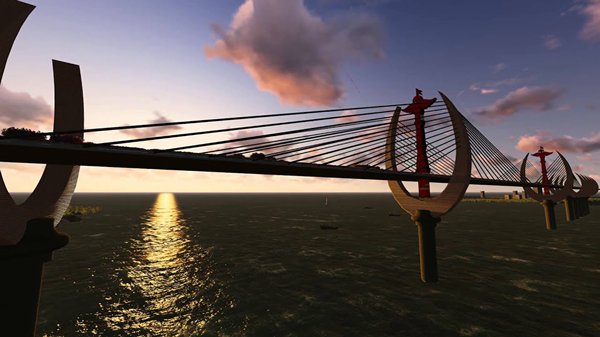
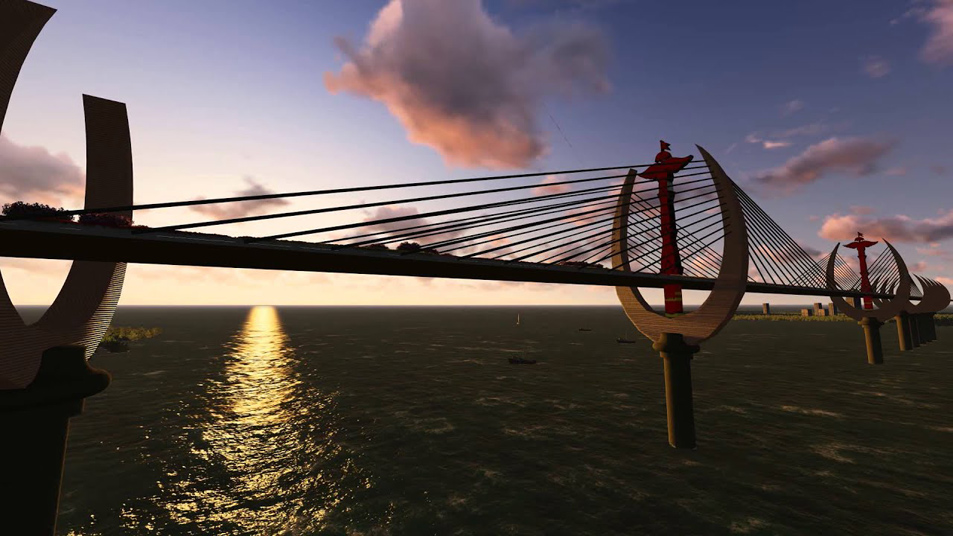
Work on a major section of Brunei's US$1.7 billion Belt and Road Initiative (BRI)-backed Temburong Bridge was completed late last month. Once fully constructed, the bridge will link Bandar Seri Begawan, the national capital, with Temburong, an enclave separated from the rest of Brunei by Malaysia and Brunei Bay.
The largest infrastructure project in Brunei's history, the 30km-long structure is set to become Southeast Asia's longest ocean-span bridge, easily outreaching the current record-holder – Malaysia's 24km Second Penang Bridge. Work on the project began in 2014, with construction said to be 97% complete. If all goes to plan, the bridge should open to road traffic later this year.
Brunei has high hopes that the project will deliver long-term economic benefits. Essentially, it represents the fulfilment of a long-term commitment to create a customs-free road link between the capital and Temburong, an increasingly popular tourism destination.
With a land area of just 5,765 sq km, Brunei comprises two territories – Brunei-Muara and Temburong – separated by the Malaysian state of Sarawak. Until the bridge opens, commuters travelling between the two must negotiate their way through four frequently congested Malaysia-Brunei immigration checkpoints.
Commissioned in 2014 by Brunei's Ministry of Development as part of efforts to stimulate the country's economic development, the bridge was always visualised as two distinct construction projects – a 11.6km land viaduct crossing the Labu Forest Reserve and the 18km bridge proper extending out across Brunei Bay. China State Construction Engineering Corporation (CSCEC) was appointed to oversee the viaduct, while Seoul-headquartered Daelim – South Korea's longest-established construction company – won the contract to build the bridge.
When CSCEC first began work on the project in October 2015, oppressive heat and humidity, combined with intermittent access to power and fresh water, hampered construction. An added challenge came from the statutory requirement to protect the region's rare mangrove vegetation and wildlife. To overcome this particular difficulty, CSCEC installed major sections of the viaduct using "fishing technology," an innovative construction process that keeps heavyweight equipment from impacting the ground and potentially harming local flora and fauna.
Once the bridge is open, the key beneficiary is expected to be the country's nascent tourism industry. The focus of this will be Temburong's prized, yet relatively unknown, Ulu Temburong National Park. A 50,000-hectare tract of tropical rainforest, it has been described by the Brunei Tourism Bureau as "without a doubt, the crown jewel of Brunei's green landscapes".
An engaging blend of lowland and mountain forests, the park's diverse ecosystem is home to a huge variety of unique species, as well as many of the country's traditional longhouse communities. Once officially opened, the bridge is expected to spur investment across the whole of the region's hospitality sector.
In line with this, work is already underway on Temburong's first luxury eco-resort – 30 riverside villas in the Kampung Perdayan district – which is due for completion later this year. In addition, a new river centre is being developed to service cruise boats heading into the Ulu Temburong National Park.
In preparation for this, Brunei is already actively engaged in moves to attract a higher number of Chinese tourists. In order to facilitate this, Royal Brunei Airlines, the national carrier, is launching direct flights to the new Beijing Daxing International Airport.
Chinese visitors accounted for 23.6% of Brunei's 278,000 inbound air passengers in 2018, a figure it is now hoping to boost to 450,000 in the near term. In a further move, 2020 has been officially announced as Brunei-China Year of Tourism by representatives of the two countries' governments.
Geoff de Freitas, Special Correspondent, Bandar Seri Begawan
Editor's picks
Trending articles
China-financed Jawa 7 coal-fired facility set for key role in connecting whole country to National Grid by year-end.
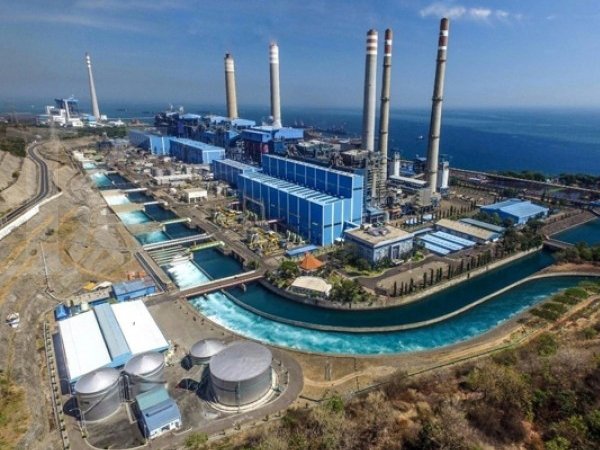
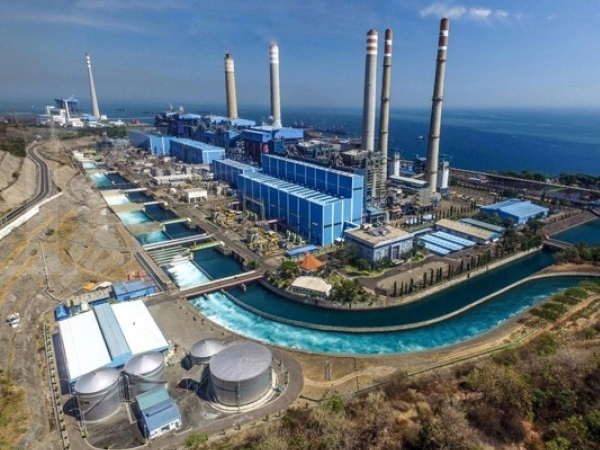
Late last year, the first phase of Indonesia's Belt and Road Initiative (BRI)-backed Jawa 7 thermal electricity plant came online. A US$1.8 billion coal-fired facility, it is being developed by the PT Shenhua Guohua Pembangkitan Jawa Bali consortium – which is 30% owned by PT Pembangkitan Jawa-Bali, a subsidiary of Indonesia's state-owned electricity company Perusahaan Listrik Negara (PLN), and 70% by China Shenhua Energy, the Beijing-headquartered, state-owned coal-mining giant.
Located in Banten, the westernmost province of the island of Java, the 172-hectare Jawa 7 plant is considered to be one of the most vital electricity-generation projects for Indonesia's fourth-largest landmass and the home of more than half the nation's 264 million population. Once work on the whole project is completed – with the second phase scheduled to come online later this year – Jawa 7 will comprise two 1,000MW generators and provide power throughout the densely populated Java-Bali region.
Jawa 7 is not only Indonesia's largest coal-fired thermal-electricity plant but is also the first such installation in the country to make use of Ultra Super Critical (USC) turbine technology. Essentially, this is an innovative new system that improves power supply efficiency by up to 15% compared with facilities utilising more conventional technology, thus significantly cutting ongoing electricity-generation costs.
Equally importantly, the technology utilised at the Jawa 7 site is seen as representing an environmentally focused template that future coal power projects could adopt as a means of restricting their own level of greenhouse-gas emissions. By incorporating Seawater Desulphurisation – a proprietary process developed by China Shenhua Energy – coal usage is optimised, while emissions of particulate matter, sulphur dioxide and nitrogen oxide are reduced. It is believed this will help cut the nation's carbon footprint, while also improving overall air quality. Its adoption has been seen as particularly timely given that Indonesia currently ranks among the world's 10 largest emitters of greenhouse gases.
The Jawa 7 project was first mooted in 2014, when the Indonesian government invited bids for an ambitious programme intended to increase the country's power capacity by 35,000MW in the run-up to 2020. Some 12 months later, in December 2015, China Shenhua Energy – a specialist in coal mining, production and electricity power projects listed on the Hong Kong and Shanghai stock exchanges – was awarded the build-own-operate contract. Construction work on the plant then began in April 2016, with a financing agreement between the PT Shenhua Guohua Pembangkitan Jawa Bali consortium and the China Development Bank signed the following October.
Ultimately, the Jawa 7 plant represents a key element in Indonesia's drive to step-up its domestic energy-generating capacity as demand for electricity continues to soar from businesses and consumers across the world's largest archipelago. In line with this, the country's government is committed to delivering nationwide electrification by the end of the current year. With this programme set to connect many rural areas to the national grid for the first time, it is anticipated that demand for electricity will again soar.
With a view to meeting any future demand growth, the government published its 2019-2028 Electricity Procurement Plan in February last year. A blueprint for expanding the country's energy supply resources, it proposes developing 33,666MW of new electricity projects via independent power producers (IPPs) over the next eight years. In order to facilitate this, PLN, the state-owned electricity company, will permit subsidiaries to take shares in selected IPP projects in accordance with the build-operate-transfer model. Ownership of the plants built and owned by IPPs will then be transferred to PLN once each power-purchase agreement matures.
Marilyn Balcita, Special Correspondent, Jakarta
Editor's picks
Trending articles
Deming ProDevelop Consultant Agency (China) Limited, the sister company of LONG Engineering Ltd on the mainland, provides one-stop services ranging from professional qualification accreditation to skills enhancement for professional engineers, engineering college students and people with professional skills. As well as its bases in Hong Kong and Macao, Deming ProDevelop has mainland offices in Shenzhen, Guangzhou, Maoming and Zhuhai. The company also plans to open a new branch in Huizhou this year. Chan Chi-man, engineer and executive director with Deming ProDevelop, told HKTDC Research about his experience of setting up and operating businesses in the Greater Bay Area (GBA), providing valuable information for industry players looking to access the GBA market.
Identifying Opportunities
Chan Chi-man has long been keen to identify opportunities for doing business in the mainland market. In 2010, Shenzhen Qianhai was designated a key development planning zone, which was to be part of the Shenzhen-Hong Kong Modern Service Industry Co-operation Zone and would draw on Hong Kong’s experience and international connections. At the time, Chan originally hoped that, with his experience in undertaking engineering projects in Hong Kong, he could participate in the initial project planning for Qianhai. However, most of the civil engineering plans involved massive infrastructure projects, and Chan decided that Hong Kong companies’ advantages in engineering and project management services would not be sufficient for them to compete with their mainland counterparts which had greater experience of handling large-scale projects.
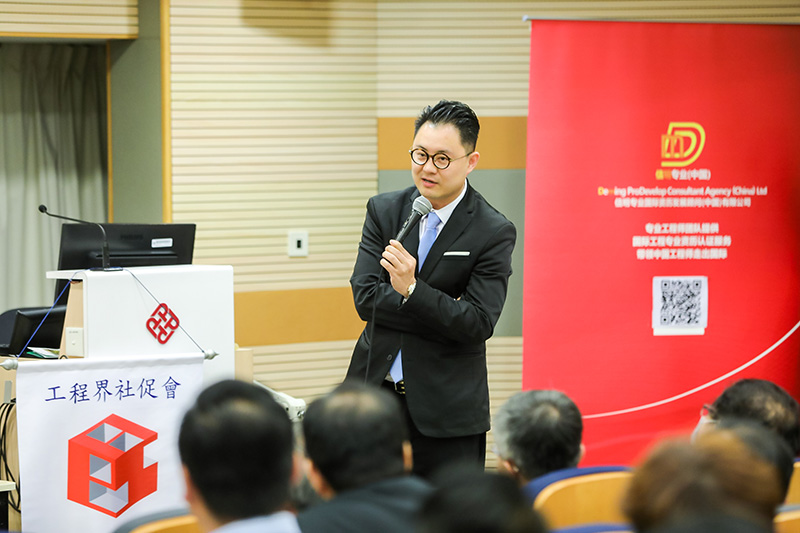
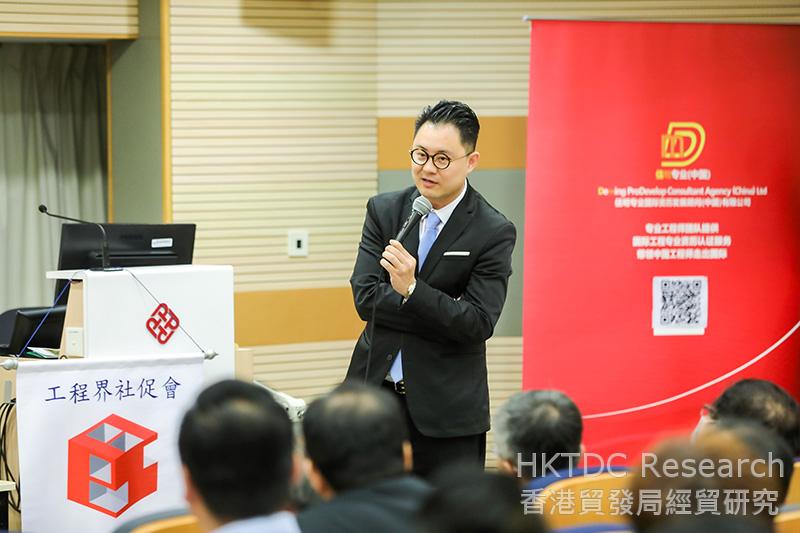
Despite that setback, Chan remained optimistic about the possibilities of accessing mainland markets and continued to draw up strategies of how to do so. Explaining what he believes is required for such a move, Chan said: “As the economy has expanded, the mainland market has developed its own unique culture and demands. Hong Kong companies wanting to tap the mainland market have to know what they are good at, and understand what the market needs, before they can identify business opportunities. Developing the mainland market is no longer a process of simply replicating the success stories of the older generation. Now it is a process that requires fresh learning and understanding.
“The mainland market is also unique in that the planning for each and every region is different. Take industrial parks for example. Normally each park has its own requirements for industry players looking to establish a presence there. An IT industry park, for instance, usually only accommodates companies in the IT sector and related industries. So when a company is looking to select a location to base itself, it must first know whether the planning strategies of the various cities and regions it is looking at are compatible with the company’s development.”
International Qualifications
In recent years, the mainland has staged a large number of innovation and entrepreneurship competitions for young people. The aim is to get young people to participate, enhance the reputation of their companies and increase their exposure to potential clients. The presence of venture capital companies at these competitions can also help participants expand their interpersonal networks in the GBA and lay a foundation for developing their business. In the course of his exchanges with mainland enterprises and government departments, Chan came to understand the kinds of challenges faced by mainland engineering teams and engineers when they try to gain access to the international market.
Chan came to realise that one of the thorniest of these challenges is the accreditation of professional qualifications. Explaining the problem, Chan said: “On the mainland, the Human Resources and Social Security Bureau is responsible for the accreditation of engineers. As the qualification accreditation mechanism on the mainland is different from that in the international market, the accreditation of mainland engineers is often not recognised internationally.
“Following the implementation of the Belt and Road initiative in recent years, an increasing number of mainland enterprises and engineers are participating in international projects. To undertake projects in Belt and Road countries, one must observe international engineering codes and standards. Although mainland companies have a large pool of engineering personnel, the absence of internationally recognised qualification accreditation has made it necessary for them to employ a great number of foreign qualified engineers in order to meet international standards.”
Most mainland engineering enterprises are not familiar with international accreditation. This is an area which Chan excels in, and once he had identified this market demand, Chan focused his mainland business development on qualification accreditation. He helps mainland engineers obtain their international qualification accreditation and thus makes it easier for them to enter the international market.
Business Model
After setting his business development goal, Chan mapped out a new vision for his company, which was to take outstanding mainland engineers to the international arena and help them upgrade their professional skills by offering various kinds of training courses. He explained that the philosophy and mission of the company - helping clients obtain international professional qualifications and capture better career development opportunities - are very important, saying: “Engineers with international qualifications will have a broader scope for career development, and their income will rise significantly. For instance, the annual salary of a supervisory engineer on the mainland ranges between RMB200,000 and RMB300,000. But if he or she has international accreditation which qualifies them to take part in international infrastructure projects, their salary for three months could easily match the annual salary of a supervisory engineer on the mainland.”
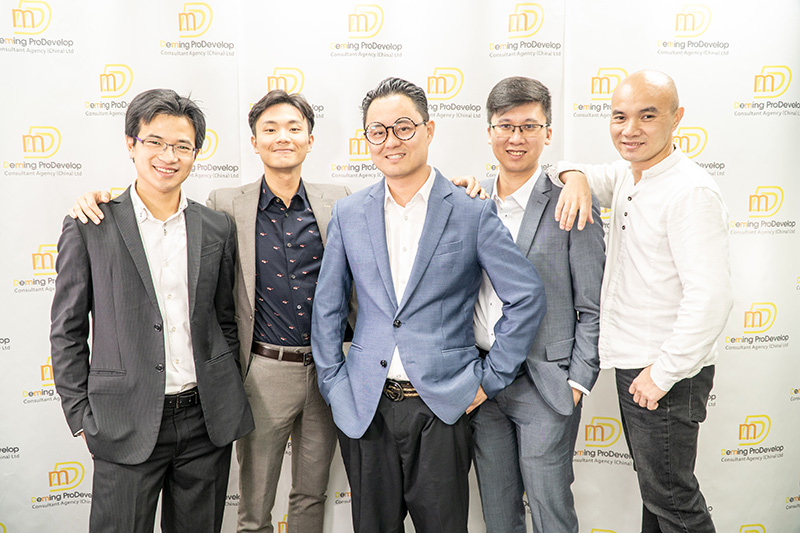
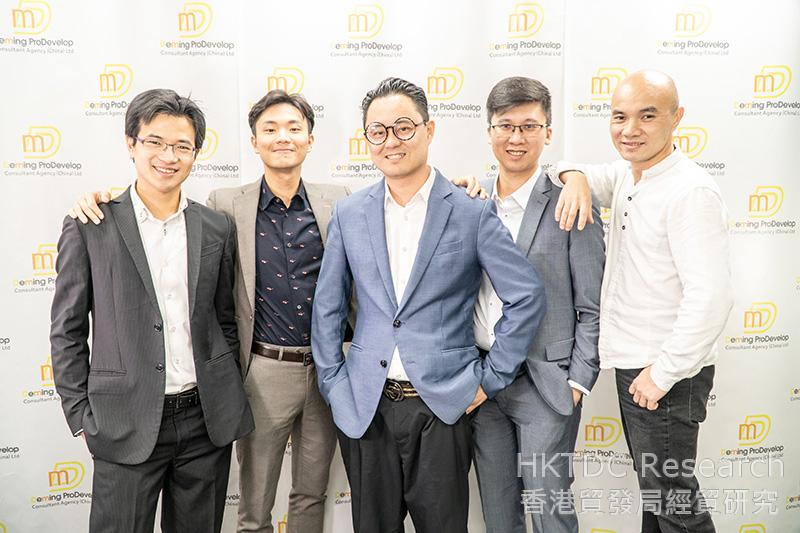
Chan admits that other companies would find it difficult to copy Deming ProDevelop’s business model, saying: “I have accumulated years of engineering management experience in Hong Kong and have established good interpersonal networks with the majority of international engineering societies and associations which have set up branches and organisations in Hong Kong. At the same time, I have also spent many years in the mainland market, building up my interpersonal networks and laying down a solid foundation for co-operation with governments and enterprises in areas related to engineering. All this would be difficult for others to replicate within a short time.”
Professional Training
The training programmes offered by Deming ProDevelop on the mainland primarily target three types of clients:
1. Enterprise-led engineers: Businesses select engineers at middle level and above and ask Deming ProDevelop to act as their personal consultant. The engineers sign a contract with Deming ProDevelop and decide for themselves whether or not to join the training programmes.
2. Enterprise-chosen engineers: Businesses handpick engineers wanting to receive training and directly sign a contract with Deming ProDevelop to provide targeted training for these staff.
3. Individual engineers: Engineers sign a contract with Deming ProDevelop on a personal basis to receive international qualification training.
When Deming ProDevelop first started this business, its clients were mostly enterprise-led engineers who were just looking to obtain qualification licences. However, with increasing numbers of engineers wanting to develop enhanced professional skills, Deming ProDevelop has transformed into a business that now provides diverse vocational planning. Noting that this does not come cheap, Chan remarked: “Our fees are by no means low, that’s why we don’t simply help our clients apply for a licence, we help them obtain international professional accreditation, and pave the way for them to enter the international market. I believe that in the near future, the GBA’s demand for professionals with international qualifications will become even stronger.”
Deming ProDevelop serves government agencies, state-owned enterprises and large companies. The company co-operates, for example, with Guangdong Association for Science and Technology in promoting the mutual recognition of international qualifications for engineers. It also provides professional services for the international accreditation of engineers for China Railway First Group, CLP Group and China Merchants Group.
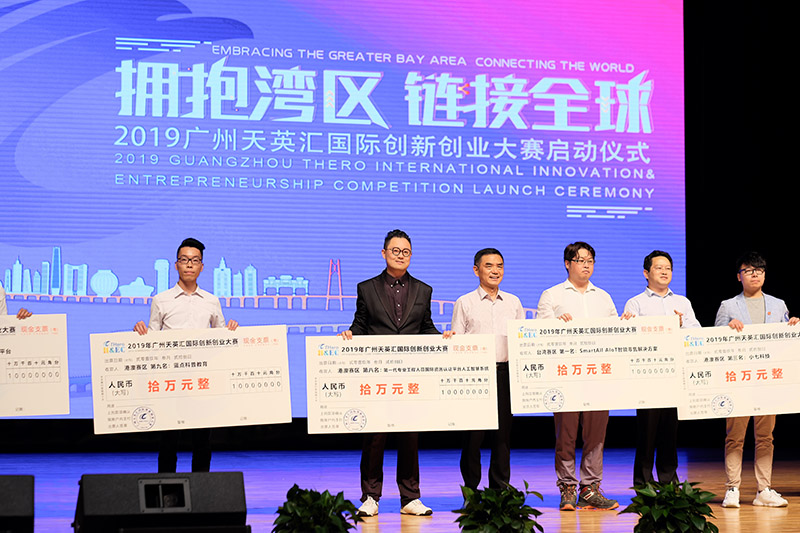
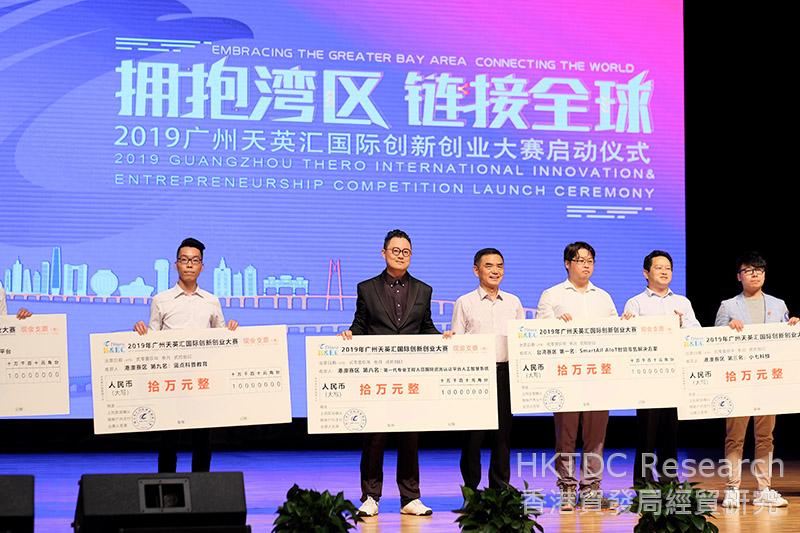
Differing Demands for Accreditation
Although there are excellent transport connections between Hong Kong and most of the cities in the GBA, Deming ProDevelop has opened branch offices in Guangzhou, Shenzhen, Maoming and Zhuhai. The company also plans to open a new branch office in Huizhou in 2019.
Explaining the need for this by pointing to the differences between the various parts of the GBA, Chan said: “Each city in the GBA has its own unique city planning. The positioning of different cities determines the focus of our local business. Shenzhen and Guangzhou, as first-tier cities in the GBA, are places where engineering enterprises cluster and there are also more businesses and engineers there willing to pay for international training and accreditation. That is why we chose these two cities as our first stop.
“Because of the opportunities for co-operation in Maoming, Huizhou and Zhuhai, our business has also expanded to these cities. Other GBA cities such as Dongguan mainly place their emphasis on light industries and high-tech manufacturing, so their demand for engineering qualification accreditation is lower. Unless actual projects and co-operation opportunities arise there, we are unlikely to enter these cities.”
Chan added that the development of the GBA brings about new opportunities. At present, Deming ProDevelop’s mainland branches are mainly responsible for client recruitment, promotion, hosting talks and strengthening co-operation with different enterprises and organisations. The Hong Kong company, meanwhile, is primarily in charge of logistic support, including accreditation of academic and professional qualifications, engineering report and consultancy services, and making arrangements for clients to take exams and providing examination venues. Since most engineering societies are based in Hong Kong, written exams and interviews are held in Hong Kong.
Hong Kong as an Investment Platform
Chan pointed out many of the advantages of being in Hong Kong while looking to access the mainland market. These include its sound, mature financial system and a legal system aligned with the rest of the world. The availability of free capital flow in Hong Kong means that international corporations can move their capital to Hong Kong before investing it in the GBA and mainland China. Likewise, mainland enterprises can invest and expand overseas through Hong Kong. For instance, as Belt and Road projects continue to roll out, more and more mainland enterprises have come to Hong Kong to set up companies and invest in foreign countries through Hong Kong. Moreover, Hong Kong has a good business environment in which the processes of setting up companies, recruiting talents and handling tax matters are clear and simple, and a large pool of companies offering support services is also available. Because of these factors, many foreign and mainland businesses choose to establish a foothold in Hong Kong.