









Finance
Western China: Access Belt and Road Markets via Hong Kong
Western China’s thriving economy not only encourages the inflow of foreign investment aiming to tap the local market, but also spurs companies in the region to step up their efforts in “going out” to look for resources to boost their competitiveness and further develop overseas markets.
A survey conducted recently by HKTDC Research shows that as a service platform, Hong Kong is the first choice for these companies “going out” to tap business opportunities in markets along the Belt and Road routes. In fact, companies in western China are very keen to seek professional services support from Hong Kong in brand design and marketing strategy, sales, product development and design, financial and legal matters in order to control the risk of investing overseas, and to establish effective sales channels there. With enterprises stepping up their efforts in “going out” – especially those in economically more developed cities such as Chengdu and Chongqing – to actively expand their overseas operations, an endless supply of market opportunities are being created for service providers in Hong Kong.
(Note: For more information on the service needs of enterprises in western China to invest overseas, please see: China’s “Going Out” Initiative: Service Demand of Western China to Tap Belt and Road Opportunities)
Chengdu Sets Sights on Overseas Project Contracting
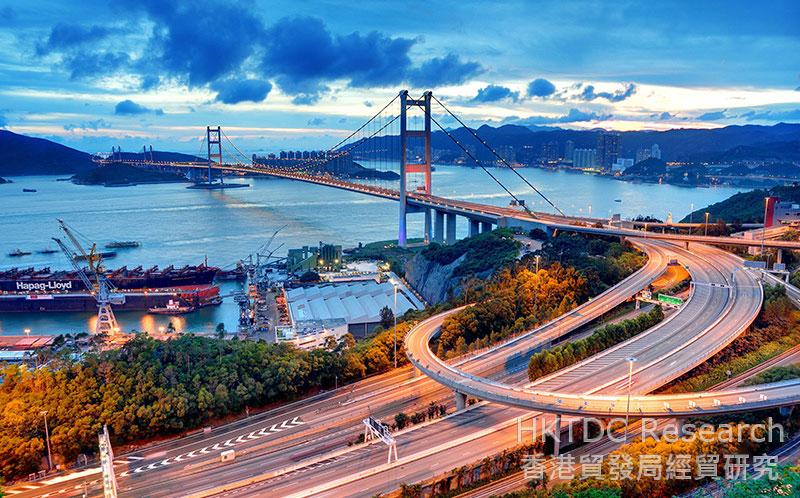
For example, Chengdu-based Sichuan Huaxi Group Co Ltd, after 60 years of development, is now one of biggest construction groups in western China, indeed the whole country. Engaged in project contracting on the mainland and overseas, real-estate development, building materials, financing and leasing, it has operations in more than 30 administrative regions throughout China, and more than 20 other countries and territories, including parts of Africa, South Asia and Southeast Asia. Huaxi Group has participated in offshore projects including hospitals and resorts in Kenya, hotels in Egypt, a sports stadium in Fiji, airport facilities in Zambia and Laos, urban facilities in Angola, as well as some of Hong Kong’s infrastructural development projects, such as the Tsing Ma Bridge.


As for overseas development, Huaxi Group told HKTDC Research that it had a market research team that collected information on overseas markets, which it also monitors through its Hong Kong network, particularly to collect information on laws and regulations as well as the business culture of the less developed countries along Belt and Road routes. This could help the group to effectively manage and control investment risk and reduce barriers to overseas markets.
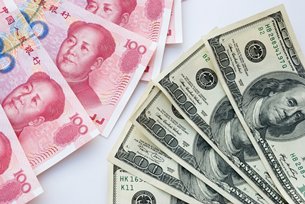
It is understood that Huaxi Group’s overseas business is largely settled in foreign currencies, which require it to reduce exchange-rate risk using financial instruments. Also, given the many overseas investment opportunities, the group is keen to find cost-effective ways to raise funds through financing in Hong Kong, in addition to mainland financing, in order to promote overseas business development. The group has extensive experience in project contracting, and is very competitive in terms of cost control. In some technical areas, such as water treatment, it also recognises the strength of Hong Kong’s engineering service providers. The group aims to strengthen co-operation with Hong Kong companies in the areas of finance and technology to develop overseas-market opportunities in joint efforts by “going out”.
Chongqing Group “Going Out” to Foster Business Development
Besides, Chongqing Foreign Trade Group Co Ltd is now one of Chongqing’s key enterprises engaging in “going out" business. In recent years, the company has vigorously implemented the so-called “Boat Outward” strategy (i.e., strengthening its international business). It has made great efforts to optimise its business structure and speed up its transformation and upgrading. As a result, it has formed a business structure integrating the development of four business segments – namely, international trade, international engineering, modern finance, and cross-country investment.
Today, Chongqing Foreign Trade Group is a top-100 Chinese multinational company and a top-500 service company, having 16 subsidiaries and employing more than 30,000 people worldwide. It has four regional headquarters in Central and South America, Central and Eastern Europe, Southeast Asia, and Africa, and has set up offices in 39 countries and territories.

During the 13th Five-year Plan period (2016-2020), the company will focus on creating a modern service and cross-country investment platform in order to foster the further development of its four business segments. It aims to strengthen its “business platform”, “business channel” and “business integration" capabilities.
In making overseas investments and management of international operations, the company pays special attention to the use of various financial instruments in Hong Kong for project financing and reducing the cost of capital. In view of Hong Kong’s rich international information resources, the company has set up a branch office in the city to help manage its international business operations, especially the collection of market information in order to facilitate overseas mergers and acquisitions, and international trade business.
Looking ahead, Chongqing Foreign Trade Group will further strengthen overseas investment, including in countries along the Belt and Road routes like Southeast Asia and Africa. The company is keen to seek more of Hong Kong’s professional services, such as taxation, investment and financing consulting, in order to effectively reduce investment costs and managing overseas investment risk.
| Content provided by |

|
Editor's picks
Trending articles
China Takes Global Number Two Outward FDI Slot: Hong Kong Remains the Preferred Service Platform
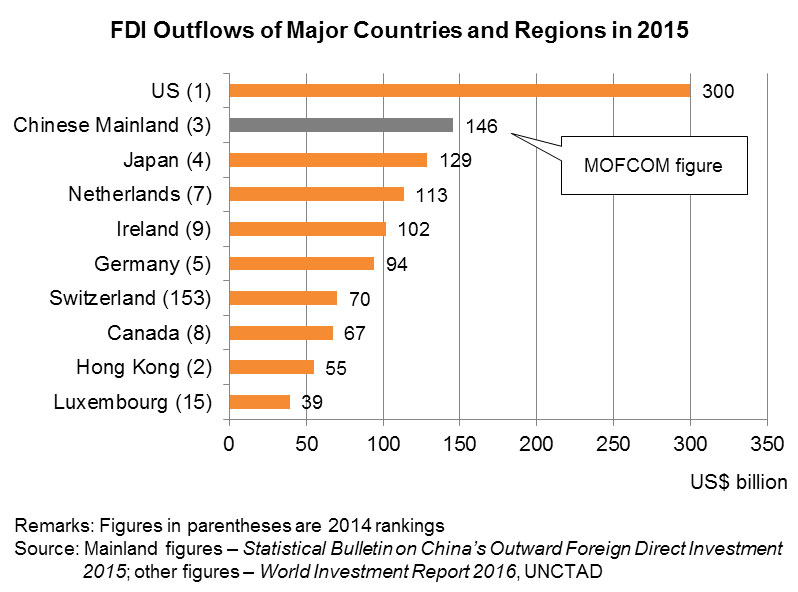
While the pace of global economic growth is slackening, Chinese enterprises are actively making outward foreign direct investments (FDI) and expanding their businesses overseas. Together with the country’s efforts in advancing the Belt and Road Initiative, and strengthening various forms of economic co-operation with business partners in countries along the Belt and Road routes, this has contributed to the continued growth of China’s outbound FDI. China is now one of the world’s leading sources of FDI, its outflows in 2015 ranking second globally only to the US. During the same period, China’s outward FDI exceeded its inbound FDI, making the country one of the world’s net capital exporters.
In recent years, the Chinese government has substantially relaxed the relevant administrative measures for overseas investments, whereby enterprises may now make outward FDI according to their own development plans. Currently, about 60% of the mainland’s outbound investment flows to Hong Kong, and it is believed that most of this is subsequently channelled overseas through Hong Kong’s service platform for different kinds of investment activities.


Hong Kong has always been the preferred service platform for mainland enterprises looking to invest abroad, helping industry players in the coastal areas and inland regions to handle matters involving investment and trade in foreign markets. Hong Kong is also the preferred location for mainland enterprises seeking professional services to capture opportunities arising from the Belt and Road Initiative. Its full range of professional services covers such areas as finance, legal service, tax, risk assessment of sustainable operations, and international testing and certification. As the mainland accelerates its pace of “going out” and advances the Belt and Road development strategy, its outward FDI activities will continue to expand, providing more business opportunities for professional service suppliers in Hong Kong.
World’s Second-Largest FDI Source
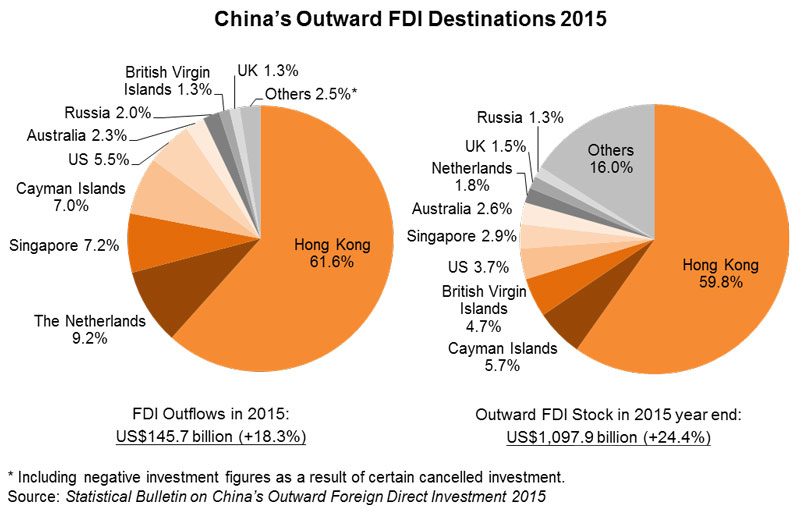
According to figures released in September 2016 by the Ministry of Commerce, China’s outward FDI flows in 2015 reached US$145.7 billion (up 18.3% year on year), for the first time ranking as the world’s second-largest source of FDI. Its investment amount, second only to the US (US$300 billion) but higher than third placed Japan (US$128.7 billion), accounted for 9.9% of the global total of FDI outflows in the same period.
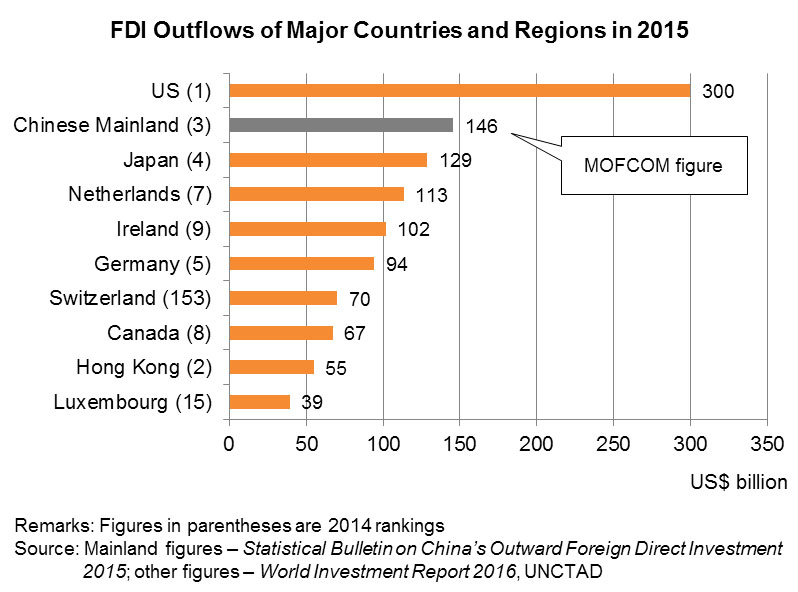
Meanwhile, in 2015, China’s outward FDI also exceeded the amount of its utilised foreign direct investment (US$135.6 billion), making the country a net capital exporter. It is worth noting that in this two-way capital flow involving the inflow of foreign investment into the mainland and outflow of Chinese investment abroad, Hong Kong serves as an important platform.
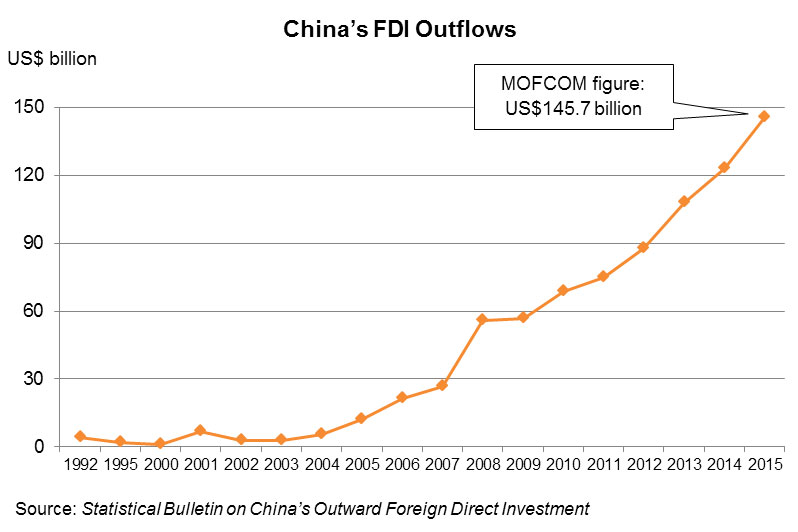
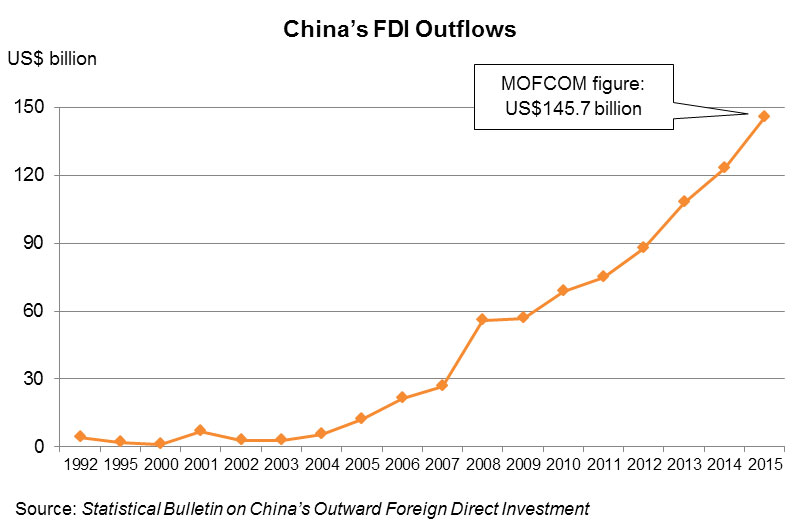
In particular, where outbound investment is concerned, China has substantially relaxed the relevant administrative measures for offshore investments in recent years, including, since May 2014, the introduction of the record-filing system for general outward FDI projects valued at less than US$1 billion. The National Development and Reform Commission (NDRC) further announced at the end of 2014 that the authority of approving[1] general outward FDI projects valued at and more than US$1 billion (not involving sensitive countries, regions or industries) was to be revoked. Since then, apart from outward FDI projects involving sensitive countries, regions or industries, all general outward FDI projects in China no longer require approval and are only subject to record-filing management.
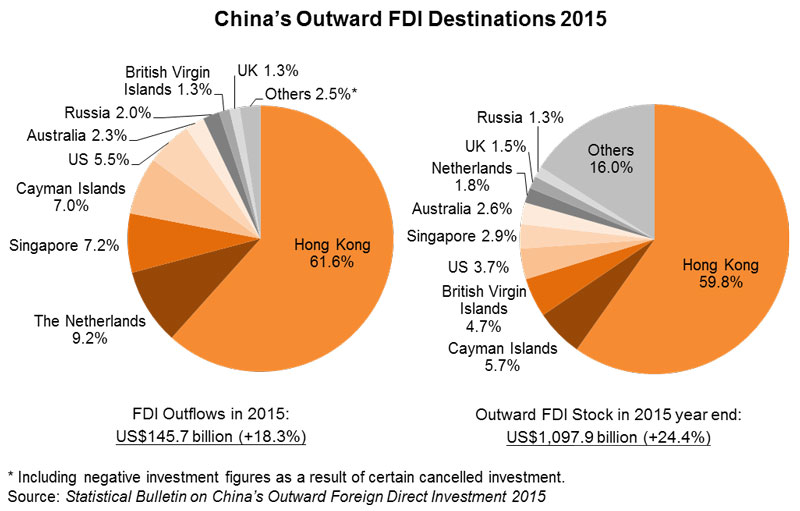
Consequently, Chinese enterprises may now expand their businesses overseas and make outbound investments in countries of their choice according to their own development strategy. In spite of this, many enterprises still choose Hong Kong as their main conduit for outward investment. In 2015, the mainland’s FDI flows to Hong Kong reached US$89.8 billion (up 27% year on year), accounting for 62% of the country’s total outward FDI and reinforcing Hong Kong’s position as the leading destination of mainland outbound investments. In terms of cumulative outward investment as of the end of 2015, the stock of FDI outflows from the mainland to Hong Kong stood at US$656.9 billion, accounting for 60% of the total outward FDI stock at that time.

Blessed with such advantages as free flow of capital, wealth of global communications resources, world-class professional services and a sound legal system, Hong Kong has attracted large numbers of mainland enterprises to “go out” and invest overseas via its business platform.
Macro factors aside, according to four questionnaire surveys conducted by HKTDC Research in different regions of the mainland between 2013 and 2016, the majority of surveyed mainland enterprises pointed out that they were interested in making use of the “going out” strategy to “bring in” the advantages of foreign business partners, while further tapping both the mainland and overseas markets. These enterprises also indicated that they needed all kinds of professional services, including brand design and promotion, marketing strategies, product development, and design services, in order to support their ventures of “going out” to expand businesses overseas.
The majority of the surveyed enterprises remarked that they were most interested in seeking professional services support and co-operation partners in Hong Kong, with 65% of the enterprises in the Pearl River Delta (PRD), 56% in the Yangtze River Delta (YRD), 60% in the Bohai Rim and 50% in the western region saying so. In other words, no matter whether these enterprises are located in the coastal areas or the western region, Hong Kong is their preferred service platform in “going out” to make investment abroad.
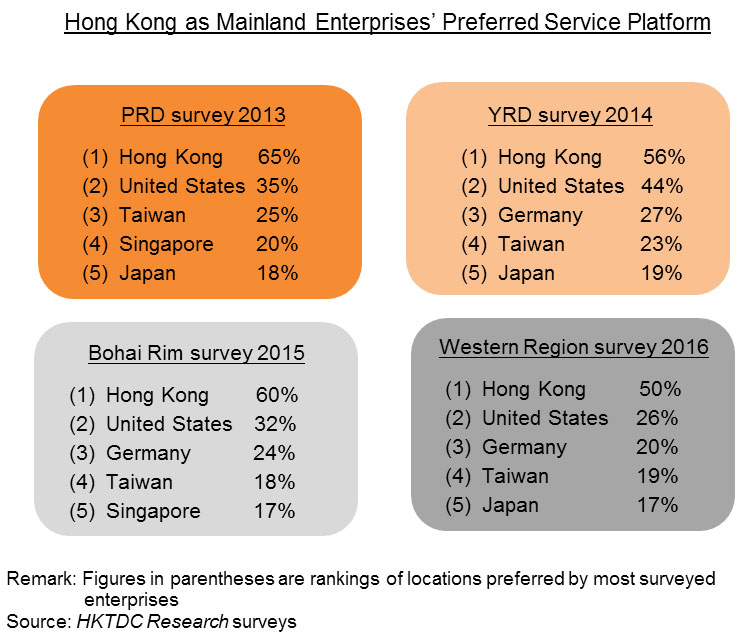
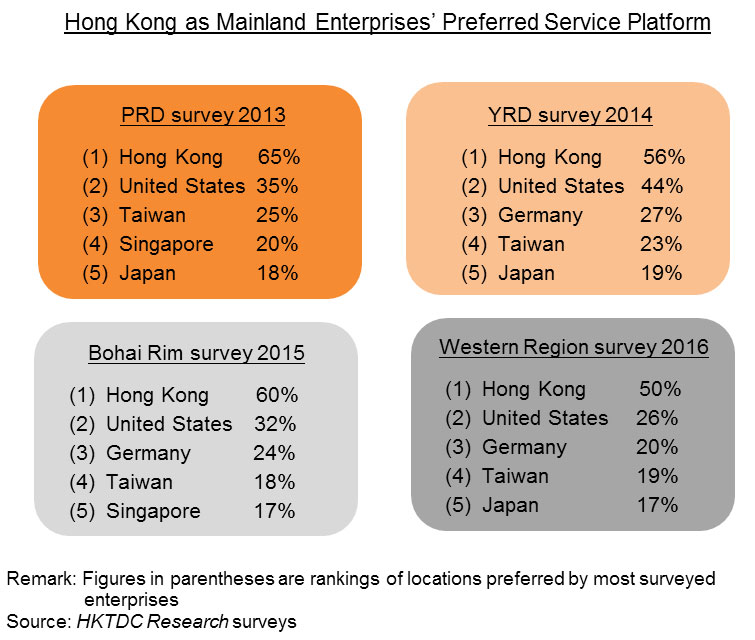
[Remarks: For findings of the surveys conducted by HKTDC Research in the PRD, YRD, Bohai Rim and western region, please see the following reports – Guangdong: Hong Kong Service Opportunities Amid China’s “Going Out” Strategy (December 2013); Jiangsu/YRD: Hong Kong Service Opportunities Amid China's "Going Out" Initiative (September 2014); China’s “Going Out” Initiatives: Professional Services Demand in Bohai (September 2015); and China's “Going Out” Initiative: Service Demand of Western China to Tap Belt and Road Opportunities (July 2016).]
Belt and Road Initiative Adds Growth Momentum to Outward Investment
Meanwhile, China’s great efforts in advancing its Belt and Road development strategy[2] and encouraging more enterprises to conduct various kinds of trade and investment activities in countries along the Belt and Road routes have also contributed to the rapid growth of China’s outward FDI.
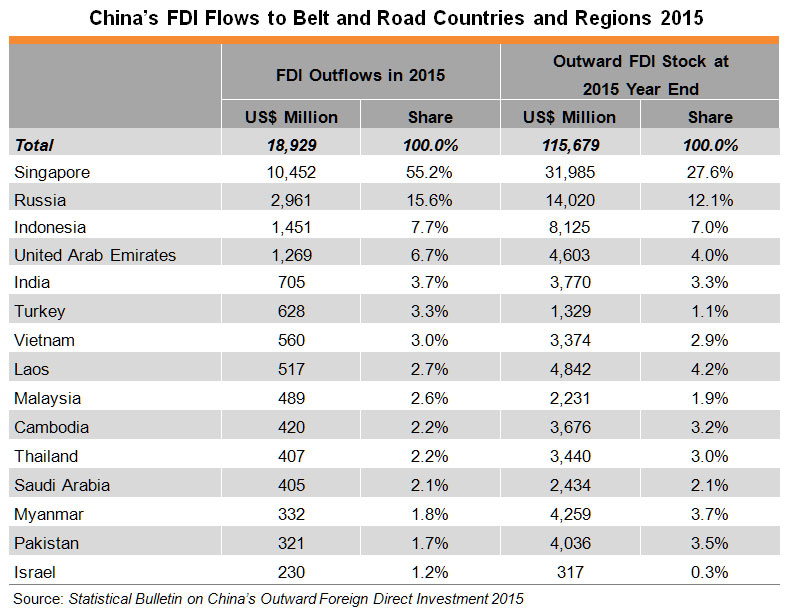
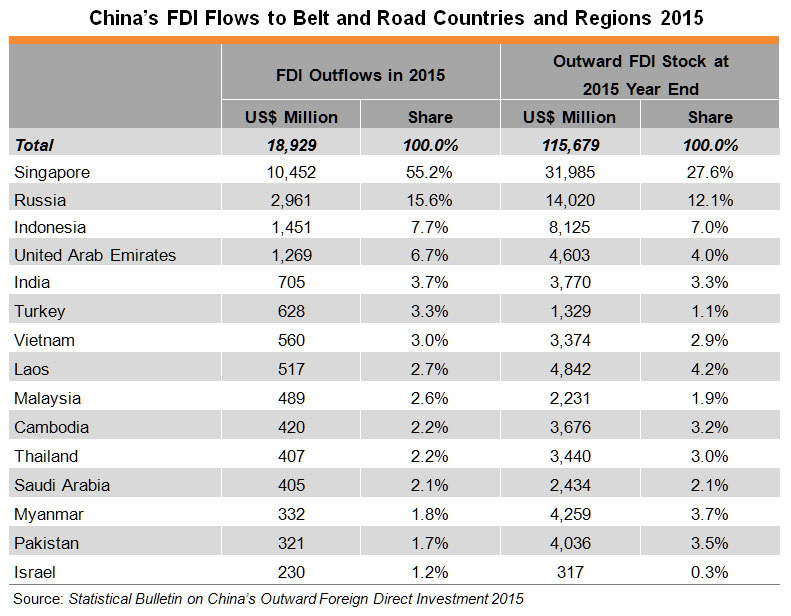
In fact, China’s FDI outflows to Belt and Road countries rocketed to US$18.9 billion in 2015 from about US$400 million in 2004, with average annual growth between 2004 and 2015 amounting to some 43%, higher than the 35% average annual growth of China’s total FDI outflows during the same period. In 2015, China’s investment in the Belt and Road countries and regions rose 38.6% year-on-year, more than twice the 18.3% annual growth rate of its total outward FDI for the same period. Moreover, the share of China’s outward FDI flows to the Belt and Road locations in its total outward FDI also climbed to 13% in 2015 from about 7% in 2004. In 2015, China’s investment in the Belt and Road Initiative mainly flowed to Singapore, Russia, Indonesia, the United Arab Emirates and India.
Strong Demand for Hong Kong Services
As mainland enterprises “go out” further to invest offshore and develop overseas business and expand foreign markets along the Belt and Road routes while seeking foreign technologies, brands, production materials and other resources to enhance their competitiveness, it can be expected that China’s outward FDI, including outflows to countries along the Belt and Road routes, will further increase in the years to come.
Hong Kong, as the preferred service platform for mainland enterprises “going out” to invest offshore, has many ways to help mainland enterprises make direct investment and expand overseas business in developed countries including the US and those in Europe. Hong Kong also serves as the ideal service platform outside the mainland for most Chinese enterprises seeking support to tap opportunities arising from the Belt and Road Initiative.
Findings of the questionnaire survey conducted by HKTDC Research in south China in 2016 show that among the many locations outside the mainland, Hong Kong is where the largest number of surveyed companies (50%) wish to seek support in developing their Belt and Road businesses. Such support includes various market-promotion services in Belt and Road markets as well as professional services related to investments in these markets, such as legal, accounting and consultancy services.
(Remarks: For findings on the questionnaire survey conducted by HKTDC Research in south China, please see: Chinese Enterprises Capturing Belt and Road Opportunities via Hong Kong: Findings of Surveys in South China)
For many years, Hong Kong service suppliers have been assisting large numbers of mainland enterprises in handling matters related to their investment and trade activities in Hong Kong and overseas markets. Hong Kong offers many advantages in supporting mainland enterprises to invest overseas, including the free flow of capital, wealth of global communications resources, and a full range of world-class professional services, covering such areas as finance, legal service, tax, risk assessment of sustainable operations, and international testing and certification. Hence, Hong Kong is the preferred service platform for mainland enterprises “going out” to make offshore investment. As the mainland further relaxes the administrative measures for outward investment, encourages enterprises to “go out” to invest overseas, and advances the Belt and Road development strategy, more business opportunities are set to emerge for service suppliers in Hong Kong.
[1] NDRC Order No.20: Decision of the National Development and Reform Commission on Amending Relevant Articles in the Administrative Measures for the Approval and Record Filing of Outward Investment Projects and Administrative Measures for the Approval and Record Filing of Foreign Investment Projects (27 December 2014)
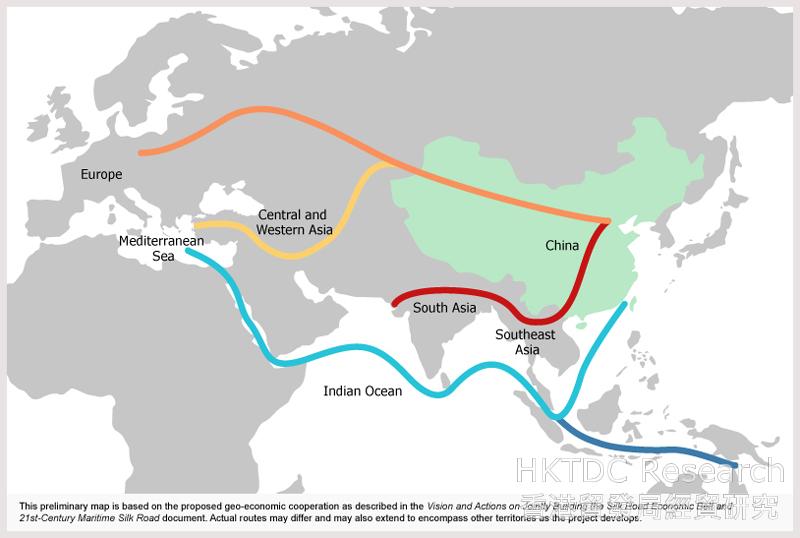
[2] China is advancing the Belt and Road (i.e., the Silk Road Economic Belt and 21st Century Maritime Silk Road) development strategy. In March 2015, China issued a document titled “Vision and Actions on Jointly Building the Silk Road Economic Belt and 21st Century Maritime Silk Road”, proposing to accelerate the building of the Belt and Road in a move to better co-ordinate economic policies of countries along the route, promote the orderly and free movement of economic factors, and advance efficient resources distribution and in-depth market integration in creating an open, inclusive, balanced and mutually-beneficial regional economic co-operation framework.
| Content provided by |
|
Editor's picks
Trending articles
24 Nov 2016
Strategic Perspectives on the One Belt, One Road and ASEAN: Achievements, Challenges, Opportunities and Future Direction
By Dr. Sok Siphana
China and ASEAN are looking to achieve a two-way investment goal of USD150 billion by 2020. Both sides are now working toward upgrading the ASEAN-China FTA in order to spur additional trade growth. They are intensifying the negotiation process of the Regional Comprehensive Economic Partnership (RCEP) in the hopes of concluding it this year, all the while working in parallel to complete the ASEAN-Hong Kong FTA.
ASEAN and China have encouraged greater participation of the private sector to increase business, tourism, and cultural exchanges. Concretely, the China-ASEAN Expo in Nanning, the China-South Asia Expo in Kunming, the ASEAN-China Centre in Beijing, the China-ASEAN Business Summits, the ASEAN Economic Ministers’ Roadshow (just to name the main ones), have drawn great interest from both business communities to promote their products and to develop commercial partnerships. Taken as a whole, these regular activities play an important role in strengthening trade and investment ties by accelerating economic exchanges between ASEAN and China.
It is interesting to note that 2016 marks the 25th Anniversary of ASEAN-China Dialogue Relations. Both sides have coordinated their efforts to boost their economic, trade and investment cooperation as well as enhancing connectivity, particularly in infrastructure development and transport.
Socio-cultural Area
In the socio-cultural area, ASEAN and China have promoted cooperation in social, cultural, education, tourism and people-to-people contacts, including exchanges between youth, academics, media organisations and non-governmental organisations, with the aim of enhancing mutual understanding and awareness among the peoples. Moreover, they have collaborated to coordinate their responses against global and regional challenges such as natural disaster management responses through the exchange of information, early warning, and experience sharing on disaster rescue and relief.
In sum, the ASEAN-China strategic partnership is most dynamic and comprehensive when it comes to the overall external relations of ASEAN with their development partners.
Please click to read full report.
Editor's picks
Trending articles
29 Nov 2016
What consequences would a post-Brexit China-UK trade deal have for the EU?
By Alicia Garcia Herrero and Jianwei Xu
Executive summary
Brexit means that the United Kingdom could be able to run its own trade policy, which opens the door for the potential negotiation of a free trade agreement between the UK and China. We ask three questions about this important issue for the UK-EU economic relationship. If a China-UK FTA was signed, could Chinese exporters break into the EU market through the UK, making a possible China-EU FTA relatively superfluous? Would a China-EU FTA help UK exporters to gain a competitive advantage in China relative to EU exporters? Will UK producers benefit by importing cheaper Chinese intermediate goods?
Our analysis indicates that a UK-China FTA will be neither easy nor clearly advantageous for the UK. First, it will be difficult for the UK to reach an agreement with China without first establishing a new post-Brexit partnership with the EU. Negotiating tariffs with other WTO members will be a pre-condition if the UK exits the EU customs union, and this process will require time and effort. Second, even if the UK reaches an agreement with China, the UK cannot serve as a back door for Chinese products to enter the EU, because the EU is very likely use rules of origin to close any such loopholes. In addition, entering the EU via the UK will entail an additional transportation cost for Chinese goods that will, at least partly, offset any tariff savings, making use of such a loophole less worthwhile. Third, the UK and the other EU economies differ in most of their exports to China, so there would be very limited substitution between them.
It therefore seems that establishing a new trade relationship with the EU would be a more urgent task for the UK in the post-Brexit world, rather than an FTA with China. Under such circumstances, the UK might need to postpone its trade negotiations with other economies outside of EU, including China. This goes beyond the current discussion of the illegality of the UK starting to negotiate trade deals before it leaves the EU. The issue is whether it makes economic sense for the UK to do so, and the answer is no. In fact, the more the UK reaches an independent favourable trade agreement with China after Brexit, the harder it will be for the UK to strike a good deal with EU. In the meantime, it is also urgent for the UK to negotiate with the main WTO members on tariffs, because outside the EU, the UK might not participate in the EU schedule of concessions. The best strategy for the UK would be to negotiate with the other WTO members with the EU-based tariffs as a starting point, to avoid negotiating over terms separately and also to maintain a close relationship with the EU.
Please click to read full report.
Editor's picks
Trending articles
6 Dec 2016
"One Belt, One Road": China's Great Leap Outward
European Council on Foreign Relations
Introduction
China has created an action plan for its Silk Road concept in the form of the “One Belt, One Road” (OBOR) initiative. It is grandiose, potentially involving an area that covers 55 percent of world GNP, 70 percent of global population, and 75 percent of known energy reserves. China’s financial commitments to the project seem huge: some multilateral and bilateral pledges may overlap, but it is still likely we are looking at up to $300 billion in infrastructure financing from China in the coming years – not counting the leveraging effect on private investors and lenders, and the impact of peer competition. Japan, for example, has just announced a $110 billion infrastructure fund for Asia, and the Asian Development Bank is hurriedly revising its disbursement rules to increase its lending capacity. This does not even include the grand bargain being discussed with Russia on overland transport, energy, and cyber-connectivity.
However, concrete details are scarce, especially at the bilateral level, where potential partners seem to supply more information than can be found in published Chinese sources. Implementation may span a very long time period – as much as 35 years, according to some of our sources, reaching completion in time for the 100th anniversary of the People’s Republic of China in 2049.
This is also a geopolitical and diplomatic offensive; Xi Jinping talked first of a “community of destiny” among Asians, and our sources offer reassurance that China is seeking to “supplement” the existing international order rather than to revise it. But money also talks, and a strategy largely based on loans and aid is building China’s financial power, in addition to the trade power it already possesses.
The world’s great expectations further increase the audience for what the Chinese sometimes describe as the country’s “second opening”, after the 1979 model which led to China’s rapid growth over three decades. For example, there is much discussion of the success beyond all expectations of the China-founded Asian Infrastructure Investment Bank (AIIB). Intense debate is being carried out about the Silk Roads in countries that have reason to worry about some of their implications.
China also risks overreaching itself, and there is much uncertainty about the process. Our Chinese sources keep returning to some caveats: this is a concept based on giving, in terms of finances and in terms of leadership. China faces the possibility of losing money or stirring up opposition. The competition among potential Chinese actors – now including everybody up to China’s maritime coast – could provoke a “blind development” very much along the lines of events in China’s past. It could also happen that the aggregated projects shift some of China’s main trends of recent decades. Emphasising the westward continental overture represents a return to the late 1950s, when Mao rebalanced growth away from the coast with massive investments inland. The project also extends abroad the western development policy of the past decade. Is this a viable strategy, considering the obvious integration of coastal China in the global economy? Can geopolitical action trump economic interdependence, or will it drag down China’s overall competitiveness?
Much of China’s logic on the project is based on geopolitics and on the export of its huge infrastructure-building capacities. But even within China, these sectors are leading loss-makers. Geographical and geopolitical conditions differ widely outside China, especially along the continental routes. There is a debate about whether it is wise to pour such huge amounts into low-return projects and high-risk countries. Will this turn out to be a repeat of old mistakes, with overreliance on public financing and state-owned enterprises? Can China leverage private firms and investment in its grandiose plans? The answers are as yet unclear.
For the time being, however, no partner can ignore China’s throwweight and its track record in building massive infrastructure. Europe itself is also setting up a €315 billion infrastructure investment plan that is contingent on market financing. How it will manage to leverage China’s capital export drive for European growth is another interesting question – and perhaps a more important issue than that of a European minority stake in the AIIB.
Please click to read full report.
Editor's picks
Trending articles
Belt and Road Investment: Views and Service Demand of Dongguan Enterprises in Guangdong
At a recent seminar held by HKTDC Research in Dongguan city, Guangdong, it emerged that many local enterprises are actively seeking opportunities arising from the Belt and Road Initiative. Though different enterprises adopt a variety of business modes when 'going out', the majority of them said that they are not familiar with the investment environment of the Belt and Road markets where direct investment is concerned. This includes matters relating to the political, cultural, and legal climates in Southeast Asia and Africa. Inevitably, this has made it difficult for businesses to assess the risk of making outward foreign direct investment in these territories. In light of this, those businesses are in dire need of support from professional services.
Dongguan investors also highlighted a number of practical matters around this issue. Amongst them were compliance with the policies of investment destinations regarding importing foreign labour; the requirements for environmental protection; and customs clearance of industrial material imports, as well as regulations governing import tariffs and export tax rebate. Some manufacturers are keen to further develop their export markets along the Belt and Road routes. However, they have major hurdles to face, such as insufficient information about the local markets and a lack of reliable distribution channels in some of the Belt and Road countries. Another key problem is the scarcity of available data relating to product standards, safety specifications and certification requirements.


As a result, many Dongguan-based companies wish to make use of the professional services in Hong Kong. By doing so, they hope to solve these practical problems, assess the feasibility of their business ventures and seek advice on investment and marketing. The Hong Kong platform would also enable them to raise funds for their offshore dealings, alleviate the pressure exerted upon their cash flow, and control the credit risks related to Belt and Road trading.
Dongguan Enterprises Expand International Business along the Belt and Road
Dubbed the 'world’s factory', the Pearl River Delta (PRD) region is one of the leading production bases of China. Dongguan city is a key production base within the PRD. It enjoyed a head start in terms of development. In 2015, the industrial value-added of Dongguan reached RMB271.1 billion, accounting for 11% of PRD’s total[1]. As an economically developed city, Dongguan can boast five pillar industries, namely electronic information, machine building, textile and garment production, food and beverage processing and papermaking. Thanks to the continuous inflow of foreign investment into its high-tech industrial sector, the city has also established a complete supply chain for the production of computers and other electronic products. Well-known foreign high-tech companies which have established production plants in Dongguan include Samsung, Hitachi, Sony and Philips.
Several Dongguan enterprises are actively exploring business opportunities which have arisen from the central government’s Belt and Road development initiative. Statistics show that from 2004 to mid-2016, the number of enterprises in Dongguan 'going out' to invest offshore totalled 376. Their cumulative investment amount reached about US$1.12 billion. Together, these enterprises have set up 46 overseas offices. The main areas in which they are investing encompasses wholesale and retail, manufacturing, leasing and commercial services, as well as real estate. Key outward investment destinations for this include Hong Kong, the US, Europe and Africa[2].


China has become the world’s second largest source of outward foreign direct investment[3]. It is making constant efforts to bolster investment in and economic co-operation with countries along the Belt and Road. As a result, foreign economic activities in the south China region have continued to rise.
In mid-2016, HKTDC Research conducted questionnaire surveys throughout selected locations in Guangdong and Guangxi. The intention was to investigate the level of interest amongst mainland enterprises in 'going out' to explore business opportunities arising from the Belt and Road initiative, as well as their demand for the relevant support services[4]. In addition, the aforementioned seminar for Dongguan enterprises was held around the same time, as a means of canvassing the opinions of local manufacturers and traders. Key points from the findings are as follows:
-
Exploring direct investment opportunities
There are over 8,000 manufacturing enterprises in Dongguan, most of which are engaged in processing activities. Only very few produce for their own brands. In the process of 'going out', many Dongguan enterprises are exploring the feasibility of making outward direct investment in the Belt and Road countries. In doing so, they hope to utilise external resources to optimise their entire production system.
A number of light industrial products manufacturers have already set up production plants in African countries such as Egypt and Ethiopia. Some of the market players engaged in creating new materials and high-tech industries plan to invest in capital-intensive production projects in ASEAN countries, including Vietnam, Thailand and Malaysia. There, these companies aim to take advantage of the labour supply, raw materials and other resources in the Belt and Road countries to expand their production activities. There's also the prospect of tapping the local consumer goods and industrial materials markets.
Different companies may adopt different business models in 'going out', but the problems faced by the majority of them remain the same. For instance, they do not have enough data about the political, cultural and legal environments of the relatively underdeveloped investment destinations which lie along the Belt and Road routes. This makes it difficult for them to assess the potential risks of their investments. Moreover, they are not staffed by personnel with the appropriate global vision and management experience to plan and manage their offshore investment projects. As such, before they venture out to make outbound investments, these businesses need to seek support from professional services in the outside world.
-
Practical issues of concern to investors
In terms of labour, although wage levels in certain Belt and Road countries remain low, investing in these countries may not be cost-effective when factors such as productivity are taken into account. Besides, when making outbound direct investment by setting up factories, investors need to be well informed of the support provided by local technicians and technical workers, the structure of the entire supply chain, and the efficiency of local transportation and logistics. They are also obliged to comply with labour and environmental protection requirements of their investment destinations, as well as industrial policies. As such, they should conduct due diligence studies to obtain reliable information for assessing the feasibility of their investment projects prior to making any commitment.
Availability of the correct technical and production management staff is a must when highly efficient production processes and quality control must be guaranteed. This is particularly true for large-scale production activities and fully automated production lines. Some manufacturers looking to invest in the Belt and Road countries indicate that, in addition to drawing from their investment destinations' own labour force, they also post mainland technical and management staff there in order to support local production activities. Hence, before making any investment decisions, they first need a good understanding of the local investment policies governing these areas. This might include the criteria and requirements regarding the import of foreign labour, other laws and regulations relating to foreign labour, the stance of local labour unions towards the import of foreign workers, and local living standards for foreigners.
-
Obtaining market intelligence
Some of the companies who wish to tap into markets in Belt and Road countries stated that they not only lack local market intelligence, such as consumers’ spending power, market size and product demand. They also have limited knowledge of the specifications stipulated by the importing countries on imported products, including technical requirements such as hygiene, electrical and safety specifications. In addition, they have only limited access to effective channels of information about obtaining the requisite product certifications.
Of those companies interested in selling industrial materials to the Belt and Road markets in support of their export processing activities there, some said that certain countries and regions still have no arrangements in place for processing bonded imported materials. As such, companies importing such materials into these countries and regions have to pay tariffs. However, when exporting the processed products, they are not eligible for tax rebates. This has discouraged investors from developing the industrial market in these countries and regions. It has also slowed the pace of their investments in setting up production factories there. As such, they are in dire need of the relevant information to help them select suitable export markets from amongst the different Belt and Road countries and regions.
-
Capitalising on the Hong Kong service platform
To tackle these problems, the majority of enterprises in Dongguan said they intend to use the appropriate support services in Hong Kong. They hope to obtain the relevant market intelligence, as well as to take advantage of Hong Kong's investment consultancy and risk assessment services. This would enable them to plan their outward investment projects and control various possible political and market risks. There are other advantages in dealing with Hong Kong, too. At present, financial and related services which deal with foreign exchange fluctuations, tax planning, and export market insurance are not readily available in the mainland. To overcome this, Dongguan enterprises prefer to handle their outward investments via Hong Kong.
Many Dongguan-based businesses also plan to take advantage of Hong Kong’s financial market in order to raise low-cost capital for their 'going out' ventures. Some of the companies interested in investing in the Belt and Road markets pointed out that, as well as raising funds for their offshore projects, they also need to make provisions for cash flow required after these investment projects have been implemented. In particular, they need to transport production materials from the mainland to countries where there is no support for effective industry chains. This will enable them to support their production activities and deliver processed products to their clients prior to payment being collected. This in turn would lengthen the time of the production process, goods delivery and funds recovery, and consequently these companies require the necessary financial services in order to bridge the gap in cash flow.
There are also exporters who expressed concerns about collecting payment. They pointed out that currently they have no access to credit information about their Belt and Road clients. As these clients may request a longer payment period, the credit risk is higher. At the same time, longer payment periods also exert greater pressure upon their cash flow. Therefore, they hope to seek services such as export credit insurance as well as trade financing via Hong Kong, in order to lower their risks.
HKTDC Research wishes to express its appreciation to the Department of Commerce of Guangdong Province, the Bureau of Commerce of Dongguan City, and World Dongguan Entrepreneurs Federation for their assistance in conducting research studies and company visits.
[1] Only industrial enterprises with an annual sales turnover of RMB20 million and above are included. Source: Guangdong Bureau of Statistics
[2] Source: Bureau of Commerce of Dongguan City
[3] 2015 figures. Source: Statistical Bulletin of China’s Outward Foreign Direct Investment 2015
[4] For details of the surveys, please see: Chinese Enterprises Capturing Belt and Road Opportunities via Hong Kong: Findings of Surveys in South China
| Content provided by |
|
Editor's picks
Trending articles
16 Dec 2016
Can the Trans-Pacific Partnership multilateralise the 'noodle bowl' of Asia-Pacific trade agreements?
By Jeffrey D. Wilson - Perth USAsia Centre
Executive Summary
- The Trans-Pacific Partnership offers more than just a set of market access opportunities for Australia. It also promises ‘systemic change’ in the Asia-Pacific trade architecture.
- The spread of bilateral FTAs in the last decade has caused fractures in the regional trade system, known as the ‘noodle bowl problem’.
- The TPP may help resolve this problem by ‘multilateralising’ existing agreements under one umbrella. Its size, ambitious reform agenda and status as a ‘living agreement’ make it especially suited to this task.
- Australia stands to gain considerably if the TPP’s high-standard and multilateral approach becomes a template for trade liberalisation in the region.
- Businesses and policymakers should be aware of these systemic implications when evaluating participation in the TPP.
Introduction
The Trans-Pacific Partnership (TPP) is one of the most significant developments on the trade and foreign policy agendas in the Asia-Pacific today. It is huge agreement, comprising twelve member states that collectively account for one-third of global economic activity. Its scope is extensive, combining a wide array of tariff reductions with commitments in 24 ‘new’ trade policy areas, such as services, intellectual property and e-commerce. In a region that has recently been dominated by proliferation of bilateral free trade agreements (FTAs), its multilateral approach to trade liberalisation is also a novel development. It has also been implicated in geopolitical rivalries in Asia, particularly the emerging rivalry between the US and China for regional leadership. …..
Please click to read full report.
Editor's picks
Trending articles
Deloitte | 19 Dec 2016
"One Belt, One Road" The Internationalization of China's SOEs
Decades have passed since China’s state-owned enterprises (SOEs) started their internationalization. Many impressive achievements have been made, yet there is still room for improvement. On September 13, 2015, the Central Committee of the CPC and State Council published a top-level government policy paper entitled ”Guidelines to Deepen Reforms of SOEs”, in fact a de-facto blue-print for the further reform of SOEs. The guidelines stated that SOE reforms aim to achieve a socialist market economy and improve the modern enterprise system. What this means, in effect, is that SOEs, especially larger SOEs, should compete in global markets, allocate resources across the world, and increase operational efficiency. Step by step, China is implementing its national strategy for a new era of economic development and opening up to the outside world, i.e. the Silk Road Economic Belt and the 21st-century Maritime Silk Road (“One Belt, One Road” or “OBOR”) Initiative. These initiatives have created more favorable external conditions for SOEs to invest abroad and thus ushered in a new age of internationalization. It is also likely that the internationalization of SOEs will change focus from mere expansion to improving operations management and enhancing global competitiveness by taking advantage of the OBOR Initiative. Through surveys of middle and senior-level SOE managers, we obtained insights into SOE participation in the OBOR Initiative as well as learning about the challenges they face. This paper presents several representative solutions to such challenges, and aims to offer some new ideas on how Chinese SOEs can successfully internationalize.
Please click to read the full report.
| Content provided by |  |
Editor's picks
Trending articles
HKTDC Research | 22 Dec 2016
Tapping Belt and Road Opportunities: Views and Service Demand of Huizhou Enterprises in Guangdong


Many enterprises from Huizhou in Guangdong Province would like to tap the opportunities afforded by China’s Belt and Road strategic development initiative, in order to further expand their export business. This fact emerged at a recent seminar held by HKTDC Research. To make an effective entry into the Belt and Road markets, though, Huizhou businesses would first need to engage with the Hong Kong hub in order to obtain useful information about those territories. This could cover a whole variety of subjects from the condition of supply chains, the sourcing activities and product standards of local buyers, to related support services such as marketing and risk management.
Some attendees indicated that they are open to making direct investments in Belt and Road countries. However, before that could happen they would require professional consulting services to help them to understand local business cultures and investment risks. This would allow them to assess the feasibility of investing and setting up factories in these countries. Other respondents noted that certain Southeast Asian and South Asian territories are currently tightening up their policies and approval procedures relating to foreign direct investments. Therefore, these companies are very keen to keep abreast of the very latest developments within these markets.
On the whole, Huizhou enterprises wish to take advantage of the Belt and Road opportunities for overseas expansion. They intend to seek professional services in Hong Kong to help them address practical issues such as marketing and foreign investment procedures, or securing cost-effective funds to finance their overseas operations.

Huizhou Enterprises to Tap Belt and Road Opportunities
Continuous growth within the Pearl River Delta (PRD) economy has led to the gradual expansion of its production and commercial activities, from the Pearl River estuary to its eastern and western flanks. Huizhou is located in the north-eastern part of the PRD adjoining Shenzhen and it has already benefited from the influx of foreign capital over the years. To date, more than 9,000 foreign-invested enterprises have set up operations in the city. TCL, Desay, Adayo and Cosun, all of which figure among China's top 500 electronic information enterprises, are amongst the many well-known mainland companies who have established their corporate headquarters in Huizhou[1]. In doing so, they have contributed directly to the rapid development of the city's economy.


With Guangdong province’s foreign trade and economic activities on the rise, over recent years Huizhou companies have been active in going abroad in search of business expansion. Simultaneously, they have been exploring the Belt and Road opportunities. Statistics show that, to date, some 83 Huizhou enterprises have invested a total of US$460 million directly overseas, mainly in Hong Kong, Taiwan, Macau and the United States. Through their foreign arms, some of these companies have even reinvested either directly or indirectly in destinations such as Vietnam, Cambodia and Ethiopia[2].
In recent times, China has leapt into position as the world's second largest source of FDI[3]. It has also been strengthening its ties with Belt and Road territories, by means of investments and economic partnerships. Throughout, the South China region has stayed at the forefront of the country's external trade and economic co-operation activities.
During mid-2016, HKTDC Research conducted surveys in selected cities throughout Guangdong and Guangxi, in order to gauge the interest of mainland enterprises in exploring Belt and Road opportunities and their demand for related support services[4]. As part of this exercise, a business seminar was held in Huizhou in the third quarter of 2016 to garner the views of local production and trade enterprises. Their views are summarised as follows:
-
Focus on Southeast Asian market
Over the years, many enterprises in Huizhou have developed into large or medium-sized companies, while engaging in the production of high-tech products such as switching power supplies, fine-pitch printed circuit boards and other precision electronics. They now have many years’ experience in international marketing and their customers include multinational companies from Europe, the United States and certain Asian countries. Some of them are listed on the mainland stock exchanges and are among the leading manufacturers in China.
As China presses ahead with its Belt and Road initiative, most companies in Huizhou seem to recognise the importance of keeping abreast of new Belt and Road information so that they don't miss out on potential business opportunities. In order to facilitate the future expansion of their export business, many enterprises intend to further explore the Belt and Road markets, especially those Southeast Asian countries neighbouring China. Some even aspire to develop brand business within the Southeast Asian market.
-
Lack of practical market information
A number of the companies questioned are now familiar with the US and European markets and the large amount of relevant macro data which the government has provided to them. Nevertheless, most conceded that they are still unable to develop a clear concept of the Belt and Road initiative, which covers a huge number of countries and regions. Many companies expressed a fundamental lack of understanding about these markets, even those ASEAN countries which are geographically close to China. Businesses appear to require more data on the socio-economic environment, laws and regulations, industry policies, business culture and commercial risks relating to these territories. Information on local supply chains, the sourcing activities of buyers and product standards is also inadequate at present.
When it comes to market access, what these companies need most urgently is practical information to help them set up sales channels in the Belt and Road countries. In particular, they lack business intelligence about the specific needs of local markets, the characteristics of potential customers and other practical information about import requirements. Some enterprises highlighted the difficulties of effectively reaching buyers from Belt and Road markets solely through traditional trade fairs. Another matter for concern for these companies is the protection of intellectual property rights such as trademarks and patents within the Belt and Road markets, as they wish to avoid substantial losses which can result from third party infringement.
In the circumstances, Huizhou enterprises are eager to locate relevant support services via Hong Kong which could help them to further explore Belt and Road opportunities. Besides, they hope to utilise Hong Kong's financial market to secure funds for their overseas business. According to representatives of these companies, they first plan to expand their export trade, followed by investment in and establishing of factories overseas, and then, in the longer term, the acquisition of foreign brands.
-
Focus on market risk management
The general paucity of market information has created difficulties for enterprises in controlling their business risks and has hindered their efforts to develop the Belt and Road markets. For example, over the past few years the dealings of some small home appliance exporters in the European market have been affected by the weakness of the Euro. Though this situation has stabilised more recently, many Huizhou firms still prefer to focus on this familiar market rather than taking risks by venturing into uncharted territories.
Some enterprises who are engaged in domestic sales, including some brand owners which distribute diving and swimming gear in the mainland, indicated that the mainland market remains buoyant. As such, it would continue to be the focus of their business development. They remarked they were largely unfamiliar with the Belt and Road markets and believed that heading into these markets would entail greater risks. In all, they would not consider developing Belt and Trade operations for the time being, unless suitable risk management solutions become available.
Meeting the specific requirements of Belt and Road buyers poses some major challenges. Some companies with experience in shipping industrial and consumer goods directly to European and US buyers observed that, due to different product standards in the importing country, commercial disputes can arise. This is even in spite of the fact that the products have already passed factory inspections and tests prior to shipping. To minimise these risks, some enterprises intend to work alongside Hong Kong companies when exploring the Belt and Road markets. They believe that their Hong Kong partners could help to avert problems relating to product specifications and compliance of foreign standards.
-
Assess investment opportunities in Southeast Asia
On the subject of direct investment in Belt and Road countries, most enterprises indicated that preference would be given to territories within Southeast Asia. In order to assess the feasibility of investing in and setting up factories in certain Southeast Asian destinations, they said that they would seek practical advice from investment consultants.
Specifically, the information they are looking for would cover investment policies, industry facts, national and regional supply chains, the availability of production materials and logistics support and so on. Enterprises interested in investing abroad intend to use consultancy services and other professional amenities in Hong Kong, so as to obtain practical information for the assessment of investment projects in Belt and Road countries. They also hope to raise funds via Hong Kong in order to finance these investment projects.
-
Concern about investment climate and policy risks
Some companies pointed out that, due to the continuous inflow of foreign capital into Asia over recent years, some Southeast Asian and South Asian countries have gradually tightened their policies and approval procedures for FDI projects. Now they tend to give priority to higher value-added investment projects. As a result, it has become increasingly difficult for enterprises engaged in lower value-added, labour-intensive operations to find suitable investment destinations within Asia. Therefore, it is crucial for them to learn about the latest developments in these countries and assess future policy risks before making any investment decisions.
Setting up factories in some low-cost regions in Asia in order to produce export-oriented goods may help ease the problem of rising production costs on the Chinese mainland. However, these facilities would still have to pass audits by overseas buyers and comply with the relevant labour, environmental protection and social responsibility standards. At this stage, some low-cost Asian territories may not be able to meet the stringent requirements of these buyers.
-
Assessing other investment factors
While the cost of labour in some Southeast Asian countries is relatively low, the lack of skilled labour and technical personnel in some areas of production, such as jewellery processing, could make it difficult for businesses to support processing activities. This problem is further compounded by the lack of supplementary materials for industrial production. In view of this, some enterprises indicated that they wouldn't consider relocating production activities to Belt and Road countries in the short term.
Another important factor which businesses must consider before relocating their production lines is human resources management. One respondent to the study was an automotive electronics company which has gone abroad to invest and set up factories in Malaysia and Poland. They confessed that, although they have established a comprehensive global sales network, they still lack the talent to manage their expanding overseas investment projects and international sales. At present, their overseas factories are managed by local employees and as a result, cultural differences have led to some administrative problems. The company therefore wish to employ Hong Kong professionals with a global vision and knowledge of foreign cultures, in order to help them manage their business and enhance their overall operational efficiency.
HKTDC Research wishes to express its appreciation to the Department of Commerce of Guangdong Province and the Bureau of Commerce of Huizhou City for their assistance in conducting the research studies and company visits, as well as the Huizhou Association of Enterprises with Foreign Investment for their help.
[1] Source: Bureau of Commerce of Huizhou City
[2] Figures as at July 2016. Source: Bureau of Commerce of Huizhou City
[3] 2015 figures. Source: Statistical Bulletin of China’s Outward Foreign Direct Investment 2015
[4] For more details of the surveys, please see: Chinese Enterprises Capturing Belt and Road Opportunities via Hong Kong: Findings of Surveys in South China
| Content provided by | |
Editor's picks
Trending articles
23 Dec 2016
How TPP Critics Muddle Facts, Fictions, and Unfounded Fears: A Point-by-Point Analysis
By Nigel Cory and Stephen Ezell
Introduction
Consideration of the Trans-Pacific Partnership (TPP) agreement during the final months of the Obama administration will initiate a new phase of legitimate debate, but also a massive campaign of misinformation and hyperbole designed to sink the agreement. The problem policymakers face is that while a small portion of the criticism is valid, the majority of it is not. Some specific technical criticism, like of the agreement’s exemption of financial services from data localization limits, is constructive. However, the lion’s share of the criticism raised by opponents represents an attempt to kill the deal by a thousand cuts, for these opponents fundamentally oppose what the TPP represents: the next step in deep global economic integration and trade liberalization. In sifting through this, policymakers must not lose sight of the bigger picture and ultimate goal: a truly integrated global economy.
Indeed, what’s fundamentally at stake in the debate over the Trans-Pacific Partnership is nothing less than the future of globalization. There are three camps when it comes to the political economy of trade in the United States. One camp—the “globalists”—broadly supports the TPP’s objective of furthering the globalist enterprise by developing a next generation trade agreement, among a large block of nations in the world’s fastest growing economic region (the Asia-Pacific), and that installs new disciplines and rules in reducing barriers and distortions to manufacturing and services trade, expands the size of global markets, and creates conditions in which the most innovative enterprises, regardless of size or nationality, can thrive. To be sure, some in this group might seek technical or pragmatic improvements to some aspects of the TPP—e.g., stronger prohibitions again localization requirements in the financial services sector, more disciplines related to currency manipulation, greater services sector liberalization, stronger protections for intellectual property rights in the life sciences—but they are fundamentally supportive of the TPP’s animating geopolitical objectives. The Information Technology and Innovation Foundation (ITIF) is firmly in this camp.
A second camp—the “liberal Keynesians”—views the TPP through its prism of focusing on privileging worker (as opposed to consumer) welfare and focusing more on equity than growth. 1 As such, many liberal Keynesians are skeptical of globalization and trade, especially trade with low-wage nations.2 This is because they believe that trade, especially with low-wage nations, reduces wage growth for some workers. As the liberal Economic Policy Institute (EPI) writes, “Trade and globalization policies have major effects on the wages and incomes of American workers.”3 In this case, they mean negative effects. In addition, by privileging worker welfare, liberal Keynesians oppose labor market disruption, even if, on net, it produces economic benefits. For them, even a trade deal that would result in net GDP growth might be undesirable if it means that some workers are hurt. In other words, a deal that has mixed employment effects on different sectors—fewer textile or apparel workers but more aerospace and e-commerce workers—would be too disruptive, even if it would move the United States in the direction of being a higher-skill, higher wage, higher value-added economy over the long run. Moreover, they resist global competition because it requires competitive business climates, which mean some limits on how much companies can pay lower-skilled workers and how much regulators can regulate. Better to return to the postwar world of strong unions and an active regulatory state before the post-1990s round of globalization.
But it’s the third group—the “anti-globalists”—that has been most vocal in its opposition to the TPP and most willing to engage in misleading negative messaging. These opponents, who are primarily on the political left (though with some common cause on the Tea Party right), view globalization and multinational corporations as the fundamental problem.4 This collection of voices, under the banner of coalitions such as “Expose the TPP,” fundamentally rejects a world in which multinational corporations are major producers and where global economies are tightly integrated. The anti-globalists view multinational companies, global supply chains, global markets operating according to harmonized rules, and the rise of a consumer-based global middle class as somehow inherently suspect and therefore undesirable. For them, the TPP is the abhorrent hallmark of this globalist enterprise. The anti-globalists believe that every corporate benefit comes at the expense of public benefit and that small and local is inherently more beautiful. They seek a return to an idealized prior world of nationalistic and even localized economies where most products and services would be produced by small businesses (ideally worker-owned co-ops) in close geographic proximity to where they are consumed. For them, the rise of localization barriers to trade—policies that seek to balkanize local production, such as local facilities for information and communications technologies (ICT) for local markets—are preferable, because they fear that they lack the ability to compete on level terms in a homogenized, “corporatized” world of large enterprises that efficiently serve global consumer markets.
In essence, what’s at stake isn’t just the TPP itself: It’s the future of globalization. On the one hand stands a vision of a globally integrated economy that is increasingly market driven, rules-based, and competitive. In such an economy, the corporations (whether large or emerging) that produce and market the most innovative products and services can compete at global scale. This global economic system can maximize innovation, productivity, and ultimately consumer and worker welfare. The other vision is more hidebound and conservative, wishing to revert to fragmented, localized production—often enabled by government policies that limit competition or balkanize production—in other words, a set of policies that will lead to less productivity, less innovation, and ultimately lower consumer and worker welfare.
The TPP is poised to play a pivotal role in the next phase of globalization. First, the TPP promotes the goal of global trade liberalization by establishing a higher-standard trade agreement that should become a model for other global trade agreements going forward. Second, the TPP creates new rules and imposes new disciplines that make substantial progress toward preventing discriminatory, anticompetitive trade policies that a growing number of nations have tried to implement in recent years. This is vital, for continued global integration must come with a strong commitment to open and non-distorted markets on the part of U.S. trading partners. Indeed, if U.S. enterprises and workers are going to be able to compete on fair and equitable terms in global markets—a competition in which they should be well positioned to succeed, especially if the United States ever gets around to putting in place a domestic national competitiveness strategy—it is imperative that we enact trade deals that go substantially beyond the relatively limited World Trade Organization (WTO) trade regimes now in place. Third, and related, is the notion that the TPP can become a “docking station” that enrolls additional nations—and, notably, possibly China in the future—in a high-standard trade agreement that perpetuates the world’s most robust set of trade rules in a more enforceable manner.
Given the importance of the TPP, this report responds to and rebuts many, if not most, criticisms of the agreement, pushing back on the distorted fear campaign being used by opponents. The first section rebuts the strategic claim made against the TPP—that it is bad for the American economy and American workers. For example, opponents claim the TPP will harm America’s consumers, but America’s consumers actually benefit from the more robust global competition that trade engenders and the fact that competition forces producers—foreign or domestic—to innovate and to develop products and services of the best quality and value at the lowest cost. Opponents further claim that the TPP will harm American workers, when in reality the agreement will create conditions in which America’s most innovative and fastest-growing industries and enterprises can thrive in global competition and thus support growing workforces. Moreover, if they carried the day, many of the critics’ objections to the intellectual property (IP) provisions of the TPP—from their complaint that the TPP is too IP friendly or that its antipiracy provisions are too robust— would actually significantly harm the interests of U.S. workers involved in the production of IP-enabled goods and services. But beyond that point, critics further miss that job creation shouldn’t be the focal point on which the merit of trade agreements is assessed. From an international economics perspective, trade neither creates nor reduces the total number of jobs; it redistributes them, ideally toward higher value-added production. Rather, the test should be whether a particular trade agreement engenders the conditions— e.g., large markets that enable economies of scale, particularly for innovation-based industries; robust and market-based competition that keeps firms on their toes; and the ability of nations to specialize in the facets of production in which they are most productive and efficient. When these conditions expand, economic growth can flourish to the maximum extent possible.
The report then examines a variety of issues—including the investor-state dispute settlement mechanism, currency manipulation, and various IP provisions. The report identifies legitimate criticisms of the TPP on some issues, while showing that, in the vast majority of cases, the criticism is simply not valid. Indeed, a substantial portion of the criticism is intentional misdirection by opponents who have an ideological bias against corporations, globalization, intellectual property, or some mix of the three. The report concludes by observing that the TPP represents a vital step in continuing the momentum for wealth-creating global economic integration and trade liberalization.
Please click to read full report.