



Slovakia

Boasting the highest per-capita car production in the world, Slovakia has become a magnet for export-oriented manufacturing industries such as automotive and electronics, and a hotspot for shared services centres (SSCs) and business process outsourcing centres (BPOs).

As a transit hub on the New Silk Road, Slovakia is actively developing and upgrading its infrastructure to prepare for the expected increase in cargo traffic between Europe and Asia. It also benefits from its favourable location between the seaports of southern and northern Europe.

The Slovakian government is also keen on adopting and promoting the use of new technology to facilitate cross-border cargo movement. And it is continuing to stretch its wings to Asia, with initiatives such as a plan to start a double tax treaty negotiation with Hong Kong. The private sector is also keen to develop its services for clients who are looking for a reliable business accelerator to tap the European market.

The Troika underlying the Slovak Economy

After its “velvet divorce” from the Czech Republic on 1 January 1993, Slovakia embarked on a number of ambitious structural reforms with a vision of becoming one of the best business locations in Europe. Joining the EU in 2004, becoming part of the Schengen area in 2007 and adopting the euro on 1 January 2009, together with fiscal reforms such as the abolition of dividend tax, profit transfer tax and real estate transfer tax, have helped the country develop into the darling of investors both from the former Soviet bloc and western Europe.

With its strong industrial base, Slovakia’s economy has become one of the fastest-growing in the Eurozone. It has an average annual GDP growth of 1.9% since its adoption of the euro in 2009, and is the best-performing Eurozone member in the 16+1 format (co-operation between 16 CEE countries and China). And thanks to its concentration on export-led development, it has become a magnet for export-oriented manufacturing, especially in the automotive and electronics industries, and a hotspot for SSCs and BPOs.

1. Automotive Industry

Slovakia prides itself on its heritage in mechanical engineering, which is closely connected to the country’s vibrant automotive industry. Since 2007, Slovakia has been the world’s biggest per-capita carmaker, producing 192 vehicles per 1,000 inhabitants in 2016 (which compares to a global average of 10 vehicles per 1,000 inhabitants).

The automotive industry accounts for more than 40% of Slovakia’s industrial production and one-third of its total exports. The country’s annual car production exceeded one million vehicles for the first time in 2015. Last year, that figure edged up to 1.04mn, and the sector is expecting an annual output of up to 1.35mn vehicles by 2020.

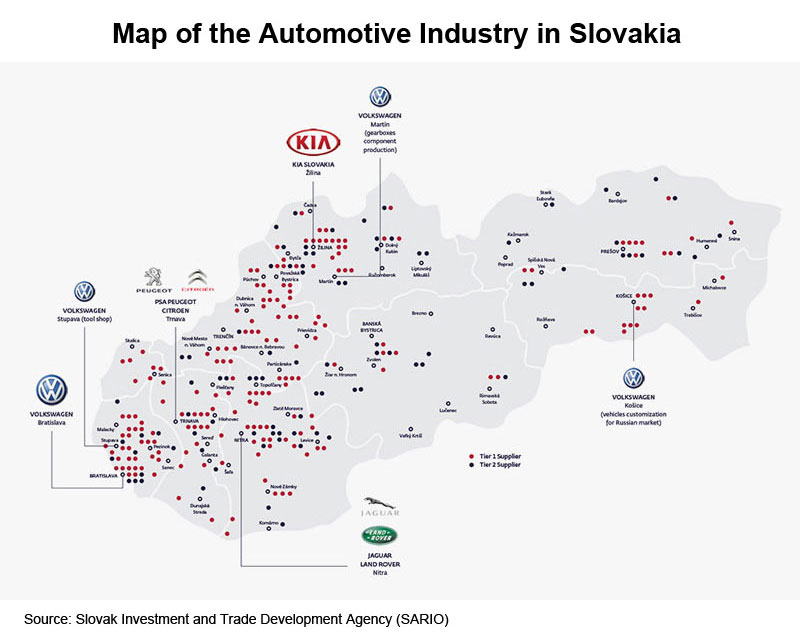
The driving force behind this impressive growth are three established carmakers – Volkswagen (VW), Peugeot Citroën (PSA) and Kia, which have been manufacturing cars in Slovakia since 1991, 2003 and 2004 respectively – and their tier 1 and tier 2 suppliers which have been constantly expanding their manufacturing plants across the country.

Jaguar Land Rover (JLR), a relative newcomer to Slovakia, has invested in a new 300,000 sq m manufacturing facility which is set to provide further impetus to the industry. Aimed at a yearly capacity of 300,000 vehicles and an initial annual production of 150,000 vehicles planned for 2019, the upcoming JLR plant is forecast to boost the country’s car production by 15% to 30% upon completion in October 2018.

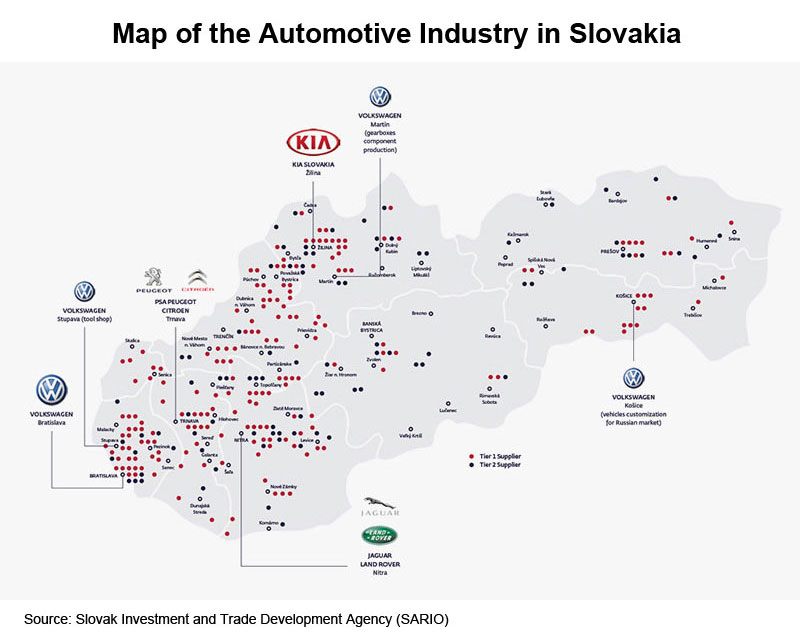
Picture: Map of the Automotive Industry in Slovakia

Automotive R&D in Slovakia has flourished hand in hand with the rise in car production, especially for e-mobility products and initiatives such as wireless chargers for e-cars, electrical race cars and testing for driverless cars. Other early fruits of successful auto-related R&D projects include seat systems by American company Johnson Controls, lighting systems by Austria’s ZKW, brake calipers by Continental Automotive of Germany, transport automation by their compatriots Siemens, and twinspin gearboxes and automatic logistics systems created by two domestic businesses, Spinea and CEIT.

2. Electronics

With electronics and electrical systems now accounting for some 30% of a passenger car’s overall production cost, it’s clear that the electronic industry is actually shaping the future of the automobile industry.

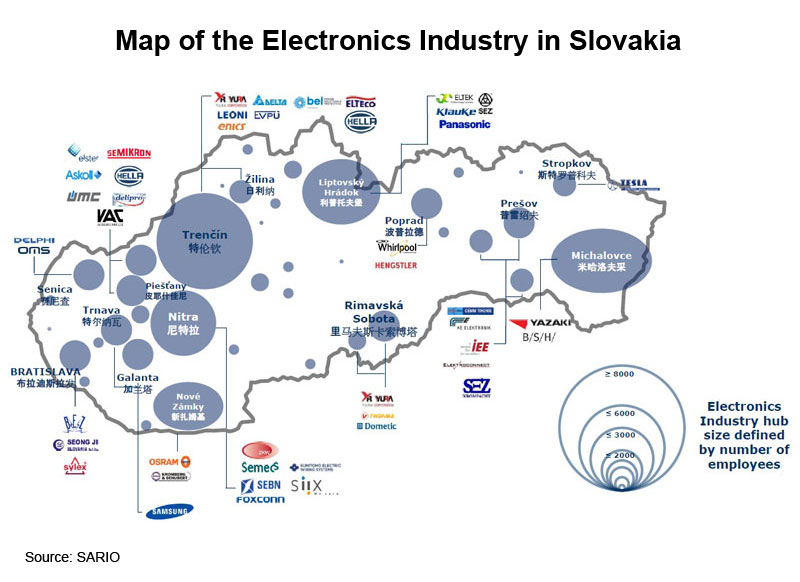
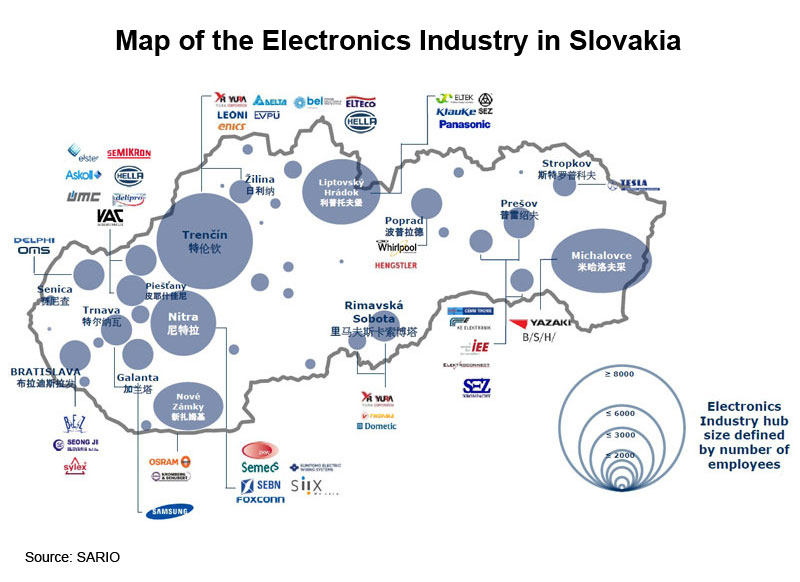
Against this backdrop, Slovakia has developed the electronics industry into its second largest pillar industry, accounting for about 11% of the country’s total industrial production. The production plants of such global electronics giants as Foxconn, Samsung, Panasonic and Whirlpool, have made Slovakia the biggest LCD TVs supplier for the European market and a major manufacturing base of home appliances in CEE.

Picture: Map of the Electronics Industry in Slovakia

Even though Slovakia does not have its own automotive or many homegrown electronics brands and mainly produces products on an OEM (Original Equipment Manufacturer) basis for international names, the success of the automotive and electronics industries in Slovakia has played an important part in kick-starting a handful of homegrown innovations. These include the creation of the world’s most advanced flying car by AeroMobil; popular antivirus software developed by ESET to counter the notorious computer virus “Vienna”; and the production by Sygic of one of the most installed offline navigation applications worldwide.

3. SSCs and BPOs

Slovakia has developed a leading reputation for quality and high-value services over the past decade. The country’s combination of highly-qualified, multilingual personnel, reasonable wage levels, competitive prices for office space and investment incentives of up to 35% of total investment costs, have attracted more than 60 SSCs and BPOs to the country.

They provide a multi-functional scope of operations, including accounting and finance, IT, customer service, HR, procurement, purchasing and order processing, and sales and marketing, or execute specific outsourced business processes for companies from abroad.

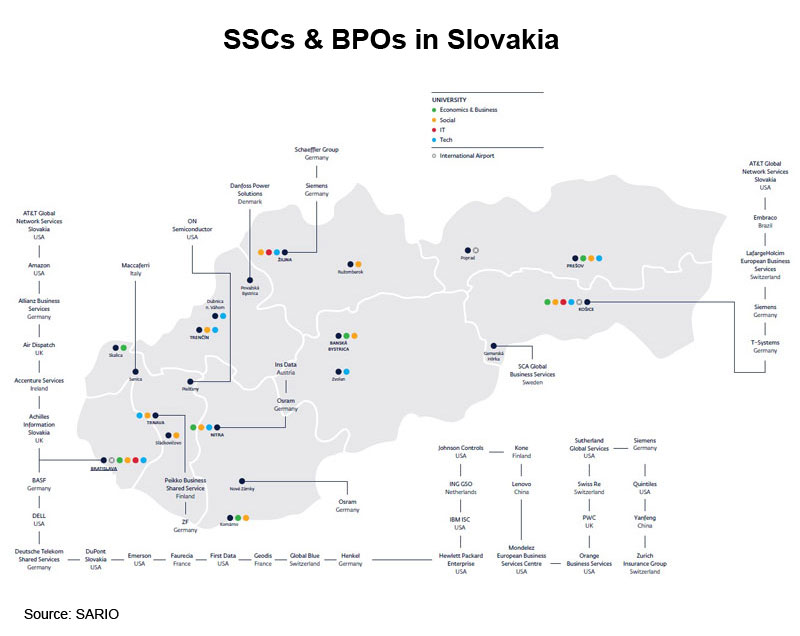
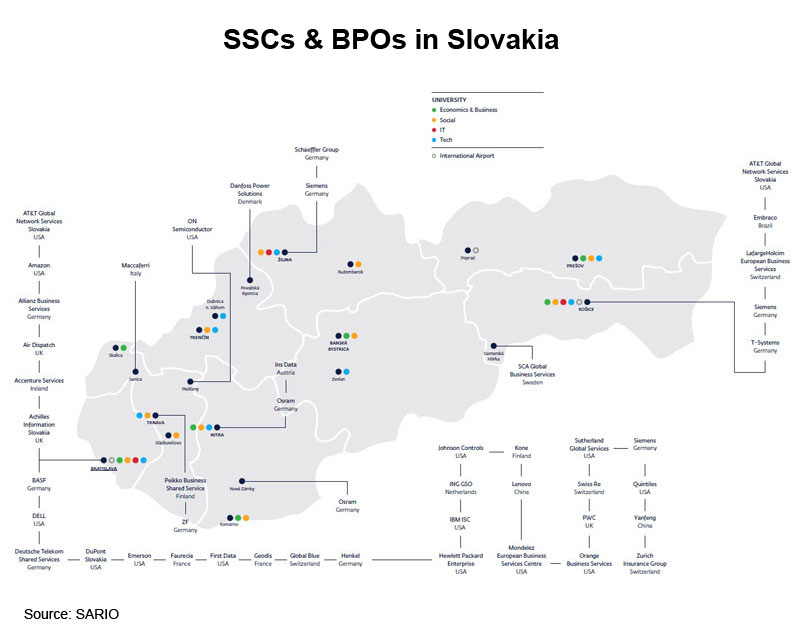
Most of the SSCs & BPOs in Slovakia are from the US and Western Europe, with only about 3% coming from Asia. Chinese companies active in Slovakia include Lenovo and Yanfeng Automotive Interiors (YFAI).

Foreign companies in Slovakia tend to be drawn to the capital Bratislava and the country’s second largest city Košice, thanks to their more modern infrastructure and favourable location to and connections with other major CEE cities. But new hubs such as Banská Bystrica, Nitra, Prešov, Trenčín, Trnava and Žilina are gradually developing by offering a more flexible combination of business conditions.

Picture: SSCs & BPOs in Slovakia

Lenovo has based its EMEA Support Centre in Bratislava since 2006, serving clients and customers from Europe, the Middle East and Africa following its acquisition of IBM’s PC business in 2005. YFAI has located its Automotive Business Center in Bratislava since 2007, delivering core business process capabilities in purchasing, finance, quality, customer business unit management, and human resources for the European and South African markets, and working complementarily with its Slovakian-based production plant and engineering centre.

Jockeying for a Position as a Transit Hub on the New Silk Road

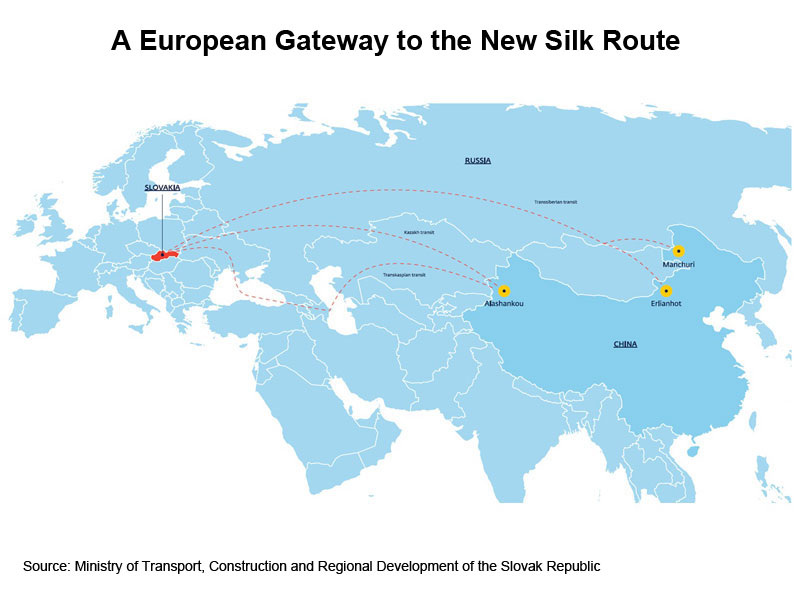
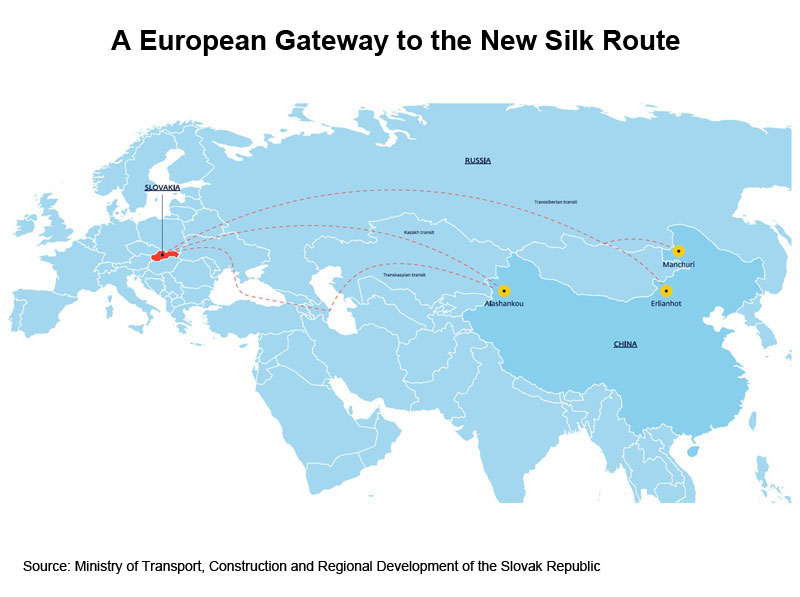
The choice of Slovakia by the Chinese companies goes beyond production cost considerations. The country’s strategic location as an inland hub connecting Europe with China over three transit corridors – the Tran-Siberian transit (Slovakia-Manchuria), the Kazakh transit (Slovakia-Alashankou) and the Trans-Caspian transit (Slovakia-Alashankou via Azerbaijan and Georgia) – has enabled Chinese manufacturers to ship parts and components directly by rail in about 12 days to factories in Slovakia for processing near to their final European market. This allows the companies to enjoy both the more agile supply chain response capabilities and the tariff-free status of being made in the EU.

Picture: A European Gateway to the New Silk Route

As a case in point, the ongoing acquisition of the country’s largest steel mill US Steel Košice (USSK) by He-Steel Group of China not only helps the Chinese steelmaker gain a foothold in the European industry and avoid prohibitive EU anti-dumping duties on steel imports, it also highlights Slovakia’s strategic location close to non-EU European suppliers of raw materials for its automotive and electronics industries, such as Ukraine.

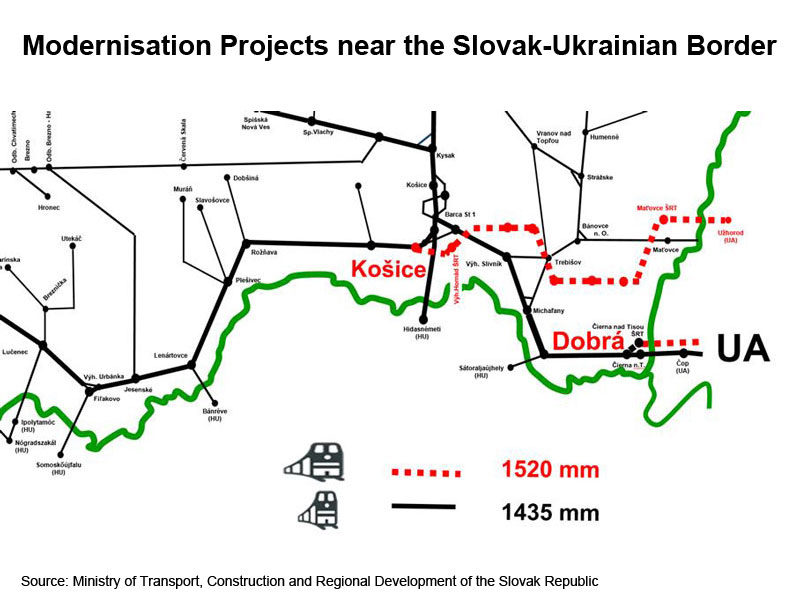
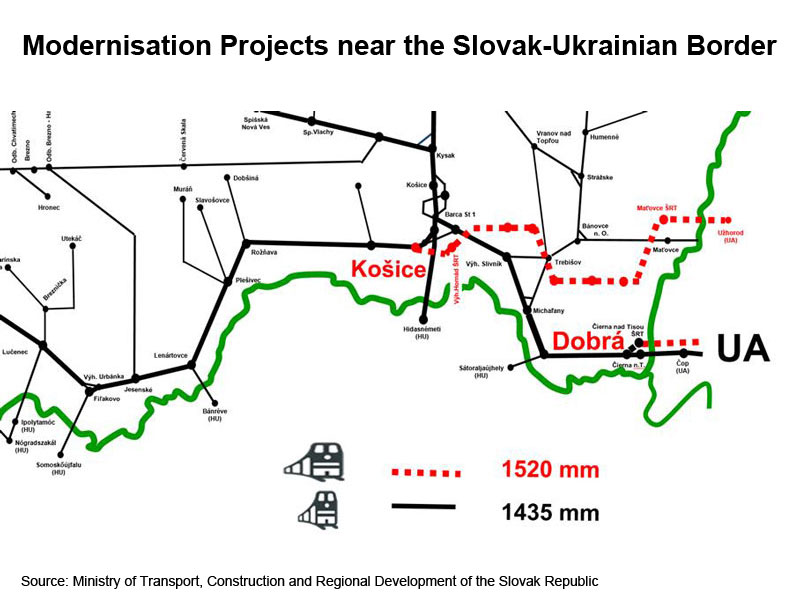
While bulk cargos and non-containerised goods such as raw materials for steel production remain the major products carried by the railways, the Slovak government is actively investing on railway infrastructure to make it more competitive for higher-value container traffic. It is enhancing the trans-loading capacity for the movement of containers between the broad-gauge (1,520mm) trains used in former Soviet countries, such as Russia, Kazakhstan and Belarus, and the standard-gauge (1,435mm) trains used in China and the EU.

Picture: Modernisation Projects near the Slovak-Ukrainian Border

Priority projects include the modernisation of the broad-gauge railway between Maťovce and Košice along the Uzhhorod-Košice line (used mainly for transporting iron ore from Ukraine to the steel industry near Košice) and the expansion of the intermodal terminal at Dobrá, the European end of the rail link with Yingkou (the port city of China's north-east Liaoning province).

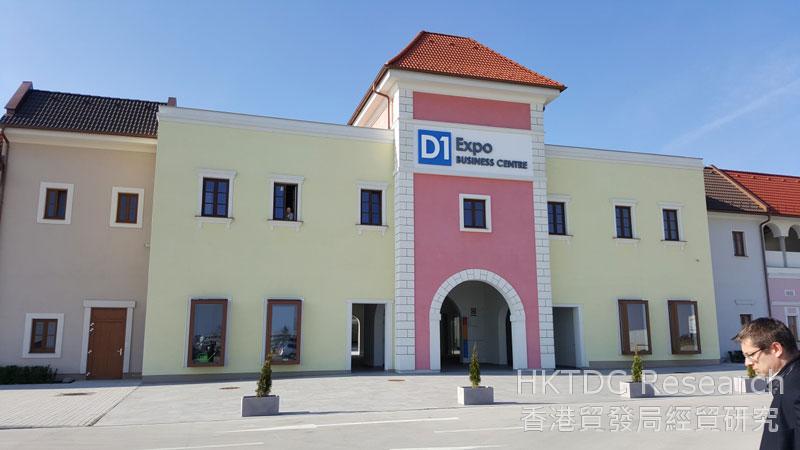
Photo: D1 Expo Business Centre.
D1 Expo Business Centre offers not only office space but also a permanent product exposition for its clients.
Photo: D1 Expo Business Centre.
D1 Expo Business Centre offers not only office space but also a permanent product exposition for its clients.

In order to prepare for the expected increase in Eurasia rail cargo traffic and make itself more attractive to international manufacturing and logistics companies, Slovakia has also been developing and upgrading its intermodal logistics infrastructure. By doing this, it also hopes to maximize the benefit of its advantageous location between seaports in southern Europe, such as Koper in Slovenia and Trieste in Italy, and those in northern Europe, like Hamburg in Germany.

Key projects include an intermodal terminal and a global logistics and industrial park (GLIP) at Košice, a tri-modal (rail, road and river) terminal close to the international airport at Bratislava and new intermodal terminals at Žilina and Leopoldov.

The Slovakian government, especially the Ministry of Finance and Ministry of Transport, is also keen on adopting and promoting the use of new technology such as electronic locks and electronic customs clearance systems to make tracking or tracing cross-border cargo movement more effective. To achieve this, the Slovakian government is working closely with Russia, Ukraine and Kazakhstan.

An early sign of the likely success of these joint negotiations has been the resumption of Eurasian freight rail services from Changsha, the capital of central China’s Hunan province, to Budapest, the Hungarian capital. The service, which runs through Slovakia and trans-loads at the Dobrá terminal near the Slovak-Ukrainian border, returned into service on 14 June 2017.

Following the Memorandum of Understanding between Slovakia and China for Common Support of the Silk Road Economic Belt and 21st Century Maritime Silk Road Initiatives in the field of transport and logistics, which was signed on 26 November 2015 in Beijing, Slovakia is also looking to expand its activities to Asia.  One example of this includes the possibility to start negotiations on a double tax treaty with Hong Kong.

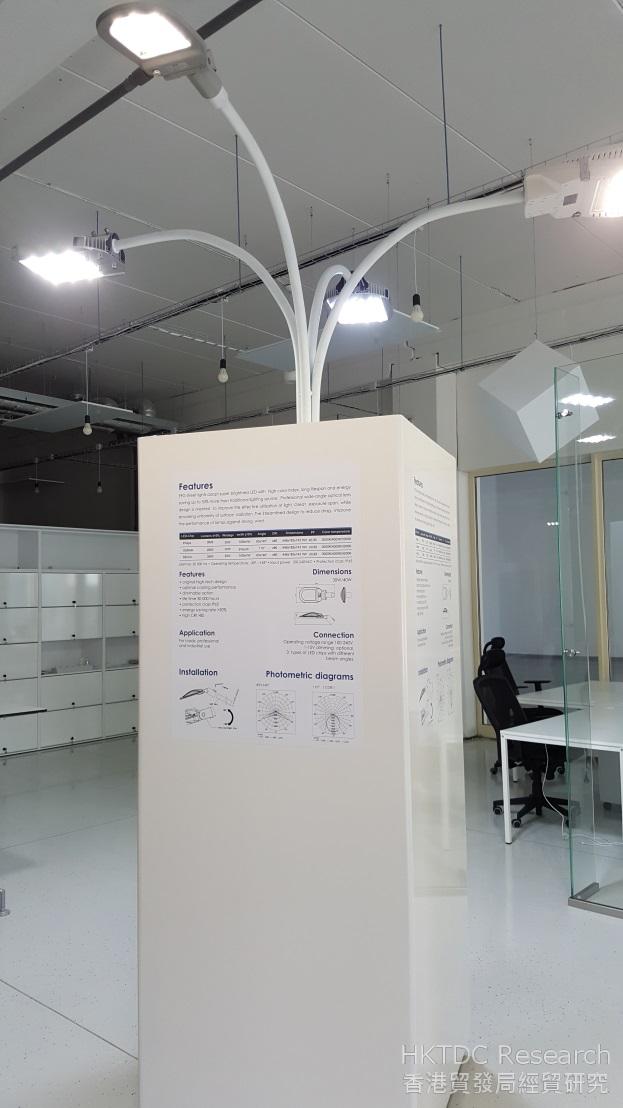
Photo: An exposition of EFG street lamps at D1 Expo Business Centre.
An exposition of EFG’s street lamps at D1 Expo Business Centre.
Photo: An exposition of EFG street lamps at D1 Expo Business Centre.
An exposition of EFG’s street lamps at D1 Expo Business Centre.

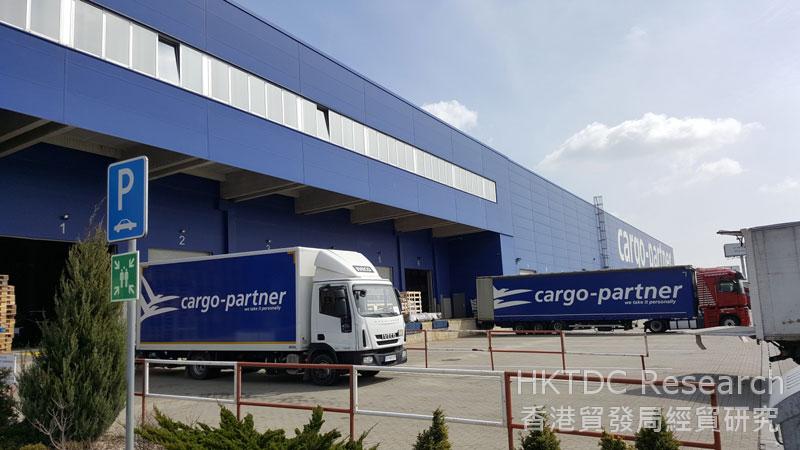
Aside from projects initiated by the public sector, private enterprises, such as the Bratislava-based business consultant D1 Solution and the Austrian-based integrated logistics partner Cargo-Partner, have been investing extensively to try to attract clients who are looking for a reliable CEE business accelerator.

By offering tailor-made services from end-to-end supply chain set-up to sales and account management, D1 Solution has positioned itself as a business enabler for local and overseas companies looking to make inroads into the EU market. Its Expo Business Centre, strategically located at the intersection of the country’s main thoroughfare, the D1 highway, and the busy state road 503, has already attracted a handful of Chinese producers of lighting technologies, including the Weledu Group and members/partners such as BestLumi, CEC/SED, EFG and MCOB, since opening in June 2016.

Cargo-Partner, riding on its strong market position in the CEE region and its logistics centres in Bratislava and Dunajská Streda (next to the Slovakia’s largest rail terminal), is also expanding its trans-loading and warehousing capacity in Slovakia to further enhance the country’s inter-modality across the CEE hinterland.

Cargo-Partner already has a substantial presence in the Asia-Pacific region, with offices in the Chinese mainland, Hong Kong, Taiwan, South Korea and five of the ASEAN countries (Malaysia, Myanmar, Singapore, Thailand and Vietnam). It increased its turnover in the Asia-Pacific region from €23mn to €180mn in the decade ending 2016, and hopes to raise that figure to €300mn by 2020.

In order to achieve this, the company opened a new bonded customs warehouse in Shanghai in October 2016 and has made plans for the continual development of its services, especially in information technology, e-commerce solutions and vertical market expertise in food and beverage, healthcare, textiles and fashion products.

Photo: The head office of Cargo-Partner in Bratislava, Slovakia.
The head office of Cargo-Partner in Bratislava, Slovakia.
Photo: The head office of Cargo-Partner in Bratislava, Slovakia.
The head office of Cargo-Partner in Bratislava, Slovakia.

The company’s managing director in Slovakia, Tibor Majzún, says Slovakia’s competitive cost-effectiveness, together with its ready inter-modal connectivity, is increasingly welcomed by Asian companies looking for a regional distribution base in Europe.

He also believes the successful implementation of the BRI, especially the strengthened Eurasian connectivity, would help to benefit enterprises beyond industry heavyweights like Foxconn, IKEA, Samsung and the four carmakers. He says Cargo-Partner, with its Asia-Pacific Head Office in Hong Kong, can serve as a conduit for sea-land cargo moving between Europe and Asia.


Editor's picks

The Visegrad Four (V4) nations, consisting of the Czech Republic, Hungary, Poland and Slovakia, have had remarkable success in aligning and strengthening their economies to compete and play a dominant role in the regional economy of Central and Eastern Europe (CEE). They are poised to benefit most from the multifaceted alignment of the “16+1” format co-operation between Central and Eastern European countries and China) and Belt and Road Initiative (BRI).

The V4 countries, located in the heart of Europe, have seen rising trade and investment flows on the back of strengthened Sino-CEE co-operation and connectivity. Meanwhile, more and more V4 businesses have taken on a more global perspective in searching for new markets.

Hong Kong, given its unique combination of a vibrant capital market and a large professional services cluster with extensive global networks and affiliations, can be a crucial link in providing the important capital flows and the highly sought-after assurance to new-to-the-market V4 enterprises and investors.

Enhanced connectivity and increasingly vibrant investment flows have not only made it possible for each of the V4 countries to reinvent and reposition itself in the bigger picture of Sino-CEE co-operation, they have also provided traders and manufacturers with more possibilities in terms of regional distribution and supply chain management.

V4 Countries as Core BRI Partners in CEE

Central and Eastern European Countries (CEECs) have played an increasingly pivotal role in China’s foreign policy, and are key partners in the BRI. The “16+1” format and the BRI  have multifaceted alignment as both development initiatives led by China are aiming at intensifying and expanding co-operation with the 16 CEECs, including investment in infrastructure and cooperation in industry and technology development.

Different CEECs may benefit differently from the strengthening Sino-CEEC co-operation and connectivity subject to their own development plans and national strategies. The V4, which play a leading role in the regional economy and have had remarkable success aligning and strengthening their economies to compete effectively regionally and internationally, are poised to benefit most in drawing trade and investment interest.

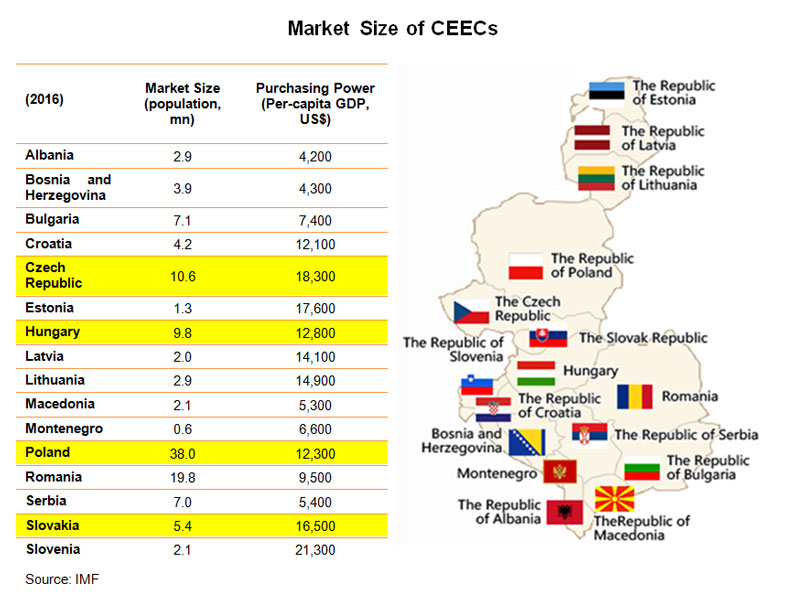
Representing more than half of the population and nearly two-thirds of the economic output of the 16 CEE member countries under the umbrella of the “16+1” format, the V4 are naturally important and active participants in the BRI. They offer a progressively interesting logistic alternative for shippers and their forwarders moving cargo between Asia and Western Europe, which is considered a priority to the success of the BRI as it aims to enhance the connectivity between Asia, Europe and Africa.

Picture: Market Size of CEECs

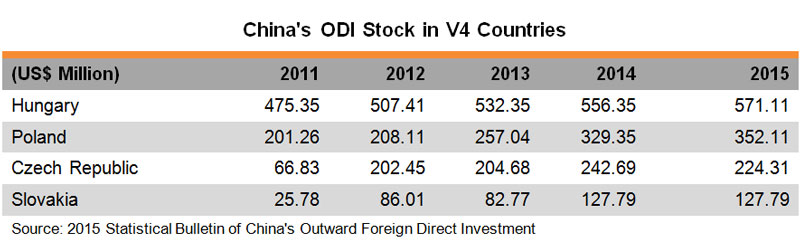
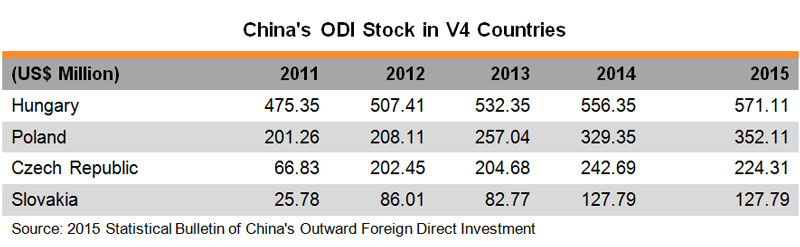
Banking on the good Sino-V4 relations and China’s continuous implementation of its “going out” strategy, China’s outbound direct investment (ODI) in the V4 countries has been flourishing, while bilateral trade blossoms. In the five years ending 2015, China’s ODI to the V4 grew by more than 65% from US$769mn to US$1.28bn, accounting for nearly two-thirds of China’s ODI in the 16 CEECs. Though China’s investment in V4 countries and the other CEECs is far from significant in the light of China’ total ODI, Hong Kong’s professional services providers and Chinese-funded corporate structures have quite often been involved in Sino-V4 investment deals such as M&As and takeovers.

Table: China ODI Stock in V4 Countries

While cash-rich Chinese investors have already made successful inroads into V4 countries by acquiring promising businesses over the past decade, more brownfield and greenfield projects, both private and public, are expected to materialise in the bloc in the coming years. Such a sustained wave of Chinese investment, plus generous funding from European Structural and Investment Funds (ESIF) supporting mega infrastructure projects, research and innovation and small businesses (including start-ups), will certainly give a big shot in the arm for the V4 economy to rejuvenate its industrial and commercial prowess.

Amount budgeted for period 2014-2020

Czech Republic

Czech Republic, through 11 national and regional programmes, benefits from ESIF funding of €24 billion representing an average of €2,281 per person over the period 2014-2020

Hungary

Hungary, through 9 national and regional programmes, benefits from ESIF funding of €25 billion representing an average of €2,532 per person over the period 2014-2020

Poland

Poland, through 24 national and regional programmes, benefits from ESIF funding of €86 billion representing an average of €2,265 per person over the period 2014-2020

Slovakia

Slovakia, through 9 national programmes, benefits from ESIF funding of €15.3 billion representing an average of €2,833 per person over the period 2014-2020


Source: European Commission

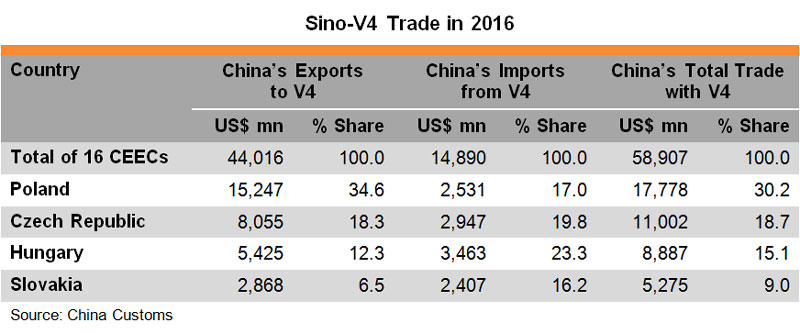
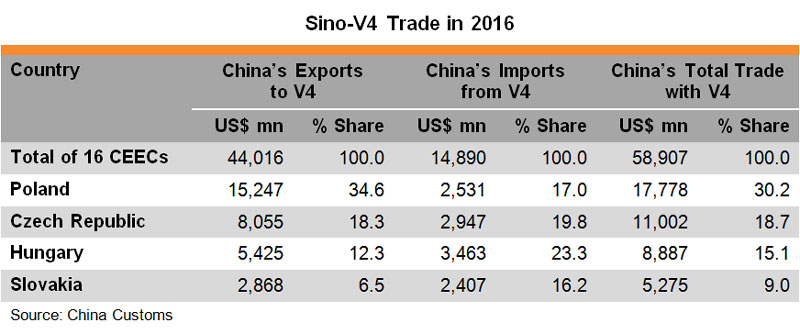
Just as they are the leading recipients of Chinese ODI in CEE, the V4 countries are also the leading trading partners of China among the 16 CEECs, accounting for 73% of the total Sino-CEEC trade in 2016. Trade between China and CEECs has remained unbalanced, however. This unbalanced trade pattern – China exported nearly twice as much as it imported from the V4 countries in 2016 – has become a raison d’etre for deeper and wider Sino-V4 cooperation from mergers and acquisitions (M&As) and takeovers to higher value-added manufacturing, technology exchanges and infrastructure and real estate (IRES) projects.

Table Sino V4 Trade in 2016

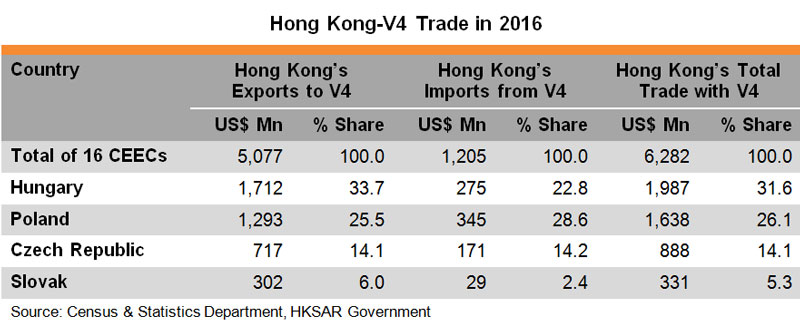
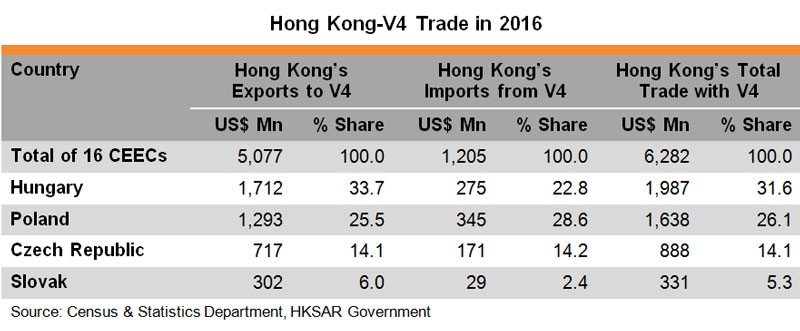
The pattern of Hong Kong’s trade with V4 countries coincides with that of Sino-V4 trade – with the four countries accounting for more than 75% of Hong Kong’s total trade with the 16 CEECs in 2016. Boasting a year-on-year growth in trade of between 9% and 22%, (compared to the regional average of less than 7%) Hungary, Poland and Slovakia were not only Hong Kong’s key trading partners in the CEE, but the city’s fast-growing export destinations in the region last year.

Table: Hong Kong V4 Trade in 2016

As the vibrant Sino-V4 investment flows are playing an increasingly important and active role in nurturing V4 businesses to take on a more global perspective, more and more V4 enterprises are looking further afield in their search for new markets. This is also partly due to the dire need to compensate for the loss of the Russian market due to the ongoing economic sanctions between the EU and Russia. In this regard, Hong Kong, widely considered a safe and clear-cut gateway for V4 companies to explore the Chinese mainland market, is seeing an encouraging inflow and expansion of well-known V4 enterprises, products and brands.

The unique combination of a vibrant capital market with diverse financing channels and a large professional and financial advisory services cluster with extensive global networks and affiliations has thus made Hong Kong an irreplaceable partner for V4 investors, intermediaries and project owners hoping to take advantage of BRI and “16+1” opportunities. As a regional hub for legal services and dispute resolution underpinned by a trusted common law system and an independent judiciary, Hong Kong can be a crucial link in providing highly sought-after assurances to new-to-the-market V4 enterprises and investors.

New Positions of V4 Nations in Sino-CEE Co-operation

Strengthening Sino-V4 trade and investment flows are certainly good signs of the successful implementation of the 16+1 format and BRI in CEE. They have empowered the V4 countries to reinvent and reposition themselves in the bigger picture of Sino-CEE co-operation, while providing traders and manufacturers with far more possibilities in terms of regional distribution and supply chain management.

Poland: Profiting from Increasing Asia-Europe Rail Traffic

Poland, as the region’s largest economy, has successfully captured the lion’s share of the increasing Eurasian rail traffic and developed itself into a rail logistics hub for Asia-Europe cargo trains, thanks partly to the ongoing Russian-Ukrainian conflicts that have compromised the Eurasian rail traffic passing through Russia and Ukraine to Hungary or Slovakia. This, together with the nation’s unrivalled advantage of being the only one among the V4 countries to have access to open sea, has made Poland a natural choice with respect to regional distribution in CEE.

New projects, such as the Pomeranian Special Economic Zone (PSEZ) in Biala Podlaska near the Polish-Belarusian border, will also further empower the country to better accommodate the increasing demand for railway track gauge change  (due to the differences of the Russian broad-gauge system and the European standard gauge system), transshipment and even manufacturing processing facilities.

Riding on the better Asia-Europe rail connection, and the cheaper rail freight due to Asia-bound trains not usually being as fully loaded as Europe-bound trains, Polish companies such as vegetables and fruit growers have started to send apples and other processed food to the Chinese market by rail. This trend has also led to Hong Kong traders and service providers becoming a lifestyle showcase for Polish food and beverages including wine, beer, spirits, fruit and derivatives such as jam, juices and cosmetics.

Hungary: Leading the Way in BRI Co-operation

Hungary is the first European country to sign a memorandum of understanding (MoU) on BRI cooperation with the Chinese mainland. The country’s “Opening to the East” policy is very much in line with the BRI and has been well received by investors such as China’s leading electric automaker BYD, which opened its first fully-owned bus plant in Europe in the northern Hungarian town of Komarom in April this year. Meanwhile, several well-known Hungarian companies, including the world-leading Building Information Modeling (BIM) software developer and a significant player in the field of global female healthcare, have continued to grow their Asian businesses through either their regional headquarters or partners in Hong Kong. 

Being the No.1 destination of Chinese outbound FDI in CEE, Hungary is also an important partner to RMB internationalisation in Europe. Home to the regional headquarters of the Bank of China (BOC), which has operated a subsidiary in the country since 2003 and maintained a full-fledged branch since 2014, Hungary was selected by the Bank to launch its first RMB clearing centre in CEE in October 2015 and its first Chinese RMB and Hungarian forint debit card in Europe in January 2017.

As regards logistics, the thrice-weekly direct cargo flights from Hong Kong to Budapest, the capital of Hungary, have made the country a possible air hub for cargo distribution in CEE, while the ongoing project of the high-speed Budapest-Belgrade rail line (which is expected to achieve substantial progress this year) and its further extension to Skopje, the capital of Macedonia, and the Greek capital Athens, will afford the landlocked country a better connection with seaports in the Adriatic and Mediterranean Seas. There is also the already serviceable China-Europe land-sea fast intermodal transport route connecting Hungary with the Greek Port of Piraeus operated by China COSCO Shipping.

The Czech Republic: Boom Time for China-Led M&As

Having one of, if not the best flight passenger connections with the Chinese mainland among CEECs, the Czech Republic welcomes more Chinese tourists (more than 300,000 in 2016) than any other country in the region. The increased belly cargo capacities plus the new cargo flights routing from Hong Kong to Prague have also enabled Chinese express delivery companies to better fulfill the cross-border e-commerce bonanza.

Boosting one of the densest rail networks in Europe (after Luxembourg and Belgium), the Czech Republic has also attracted many multinationals such as Foxconn and Amazon to set up regional logistics centres. As a leading global producer of wheelsets, wheels, axles and other wheelset components for rolling stock, Czech companies are also heavily involved in the expanding Eurasian rail development. One such company, which won the MTRC contract to supply wheels for MTR passenger trains in 2015, opened its first Asia office in Hong Kong in September 2016.

Aside from tourism and logistics, Czech Republic sees a wide array of Chinese-led M&A deals spanning sport, real estate, airlines, travel agencies, hotels, breweries and most recently a DIY and gardening chain. Ongoing deals, including the takeover of the Group Skoda Transportation, the biggest producer of railway vehicles in CEE, by China Railway Rolling Stock Corporation (CRRC), are expected to open the door for Chinese manufacturers to march into the European market, source of technology and pool of talents. Some of the M&A deals have been done through the corporate structures of Chinese enterprises in Hong Kong, while at least one famous Czech glass and lighting company has set up a holding company in Hong Kong to stay close to both the production base in the Chinese mainland and the rosy residential and commercial property market in Asia.

Slovakia: BRI Investment and the Route to Modernisation

Slovakia, with the highest per-capita car production in the world, has been a magnet for auto-related investment in CEECs. All three established car producers – Volkswagen, Peugeot Citroën and Kia – and their tier 1 and tier 2 suppliers are constantly expanding their manufacturing plants in the country, while the investment project Jaguar Land Rover (starting production in 2018) has become the largest business case in Europe during the last seven years.

The recent acquisition of the country’s largest steel mill in Košice by He-Steel Group of China, the world’s second largest steel maker, has not only helped the Chinese steel maker to gain a foothold in the European steelmaking industry to avoid prohibitive EU anti-dumping duties on steel imports, but also highlighted Slovakia’s strategic location to facilitate manufacturing industries such as automotive and electronics that utilise raw materials coming from non-EU European suppliers such as Ukraine.

To prepare for the expected increase in rail cargo traffic between Europe and Asia and strengthen its attractiveness for international manufacturing and logistics companies, Slovakia, riding on its favourable catchment zone in between seaports in southern Europe (e.g., the Slovenian Port of Koper and the Italian Port of Trieste) and northern Europe (e.g., the Port of Hamburg), is active in developing and upgrading its infrastructure. This includes the modern transshipment facilities of Slovakian cities such as Bratislava, the country’s capital, and Košice in eastern Slovakia, close to Ukraine, Hungary and Poland.

Hardware aside, the Slovakian government is keen on adopting and promoting the use of new technology such as electronic locks and electronic customs clearance systems to allow cargo owners and forwarders to facilitate a more effective means to track or trace cross-border cargo movement. Meanwhile, the country is stretching its wings wide to Asia, including, but not confined to, a plan to start a double tax treaty negotiation with Hong Kong soon.

Editor's picks

GDP (US$ Billion)

95.94 (2017)

World Ranking 65/192

GDP Per Capita (US$)

17,664 (2017)

World Ranking 46/192

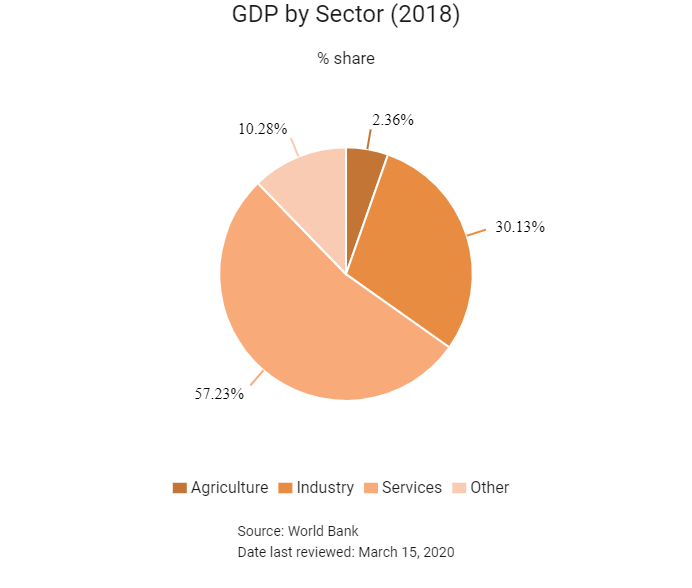
Economic Structure

(in terms of GDP composition, 2018)

Services
(55.50%)
Industry
(31.33%)
Agriculture
(3.01%)

External Trade (% of GDP)

185.7 (2016)

Currency (Period Average)

Euro

0.89per US$ (2017)

Political System

Unitary multiparty republic

Sources: CIA World Factbook, Encyclopædia Britannica, IMF, Pew Research Center, United Nations, World Bank

Overview

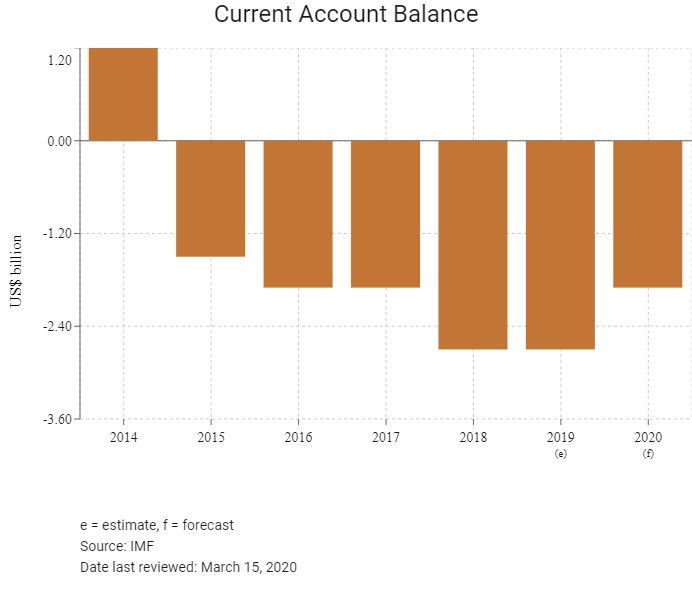
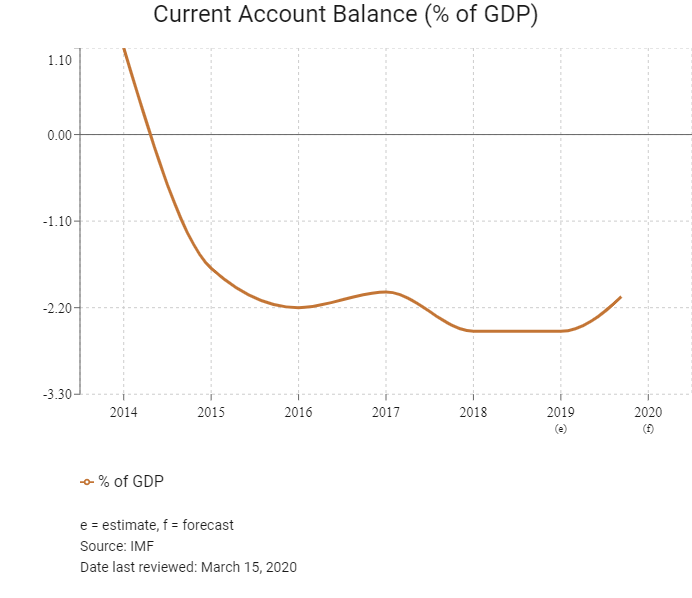
Slovakia's open economy has benefitted from access to the European Union (EU)'s Customs Union, with exports estimated to account for nearly 100% of Slovakia's GDP in 2018. Although this has enabled the country's export-led growth over the past six years, it also poses challenges in the future, such as economic volatility. Slovakia's automotive industry will remain a major source of export growth and deficit financing through foreign direct investment inflows. Slovakia is a transit hub for the Belt and Road Initiative, which will influence the development and upgrading of transport infrastructure to facilitate anticipated increases in cargo traffic between Europe and Asia. Economic growth in Slovakia is to remain solid and broad-based over the coming quarters, outperforming its regional and eurozone peers. Slovakia is well positioned to transition towards a more value-added economic model, which would raise its long-term economic growth potential, especially in light of Parliament's approval to cap the retirement age at 64.

Sources: national sources, Fitch Solutions

Major Economic/Political Events and Upcoming Elections

March 2016
Robert Fico's Smer party lost its majority after parliamentary elections in which the far-right People's Party Our Slovakia, led by Marian Kotleba, entered parliament for the first time.

July 2016
Slovakia assumed the EU's rotating presidency.

March 2018
After Slovakia's then-president Andrej Kiska called for either substantial changes in the government or snap elections, Prime Minister Robert Fico resigned on March 15. Peter Pellegrini replaced him a week later.

July 2018
At a bilateral meeting with Mainland China's Prime Minister Li Keqiang in Sofia, Bulgaria, Pellegrini expressed Slovakia's ambition to become the gateway for Chinese investment in Europe. He also said that Slovakia wanted to play a strategic role in the East-West transportation of oil and natural gas and that he hoped that Mainland China would be interested in investing in a Slovakian terminal planned as part of that transport infrastructure.

January 2019
During the New Year's address, then-president Andrej Kiska, a political outsider until 2014, confirmed his earlier decision not to run for a second term in office.

March 2019
Zuzana Caputova became Slovakia's first female president.

April 2019
Jaguar Land Rover (JLR) announced that it would build its next-generation Land Rover Defender model in Slovakia.

September 2019
GAZ-SYSTEM started construction of the Polish section of the Poland-Slovakia gas interconnector, which would link the gas node in Strachocina (Podkarpackie Voivodeship) with the Slovak compressor station in Vel'ké Kapusany. GAZ-SYSTEM and Slovakia-based Eustream were jointly carrying out the 165km pipeline project. Towards Poland, the capacity would be 5.7 billion cubic metres (cu m) a year, and it would be 4.7 billion cu m per year towards Slovakia. The project was financed by EU funds under the Trans-European Energy Networks and Connecting Europe Facility.

October 2019
South Africa and Slovakia signed a joint protocol agreement during the fifth session of the joint council on economic cooperation (JCEC) between the countries.

March 2020
Slovakia’s anti-corruption Ordinary People (OLANO) party, the winner of the February 2020 election, agreed to a four-party governing coalition after the parties struck a deal on cabinet seats. OLANO’s coalition would dislodge the long-ruling centre-left Smer party that had led the government since 2012.

Sources: BBC Country Profile – Timeline, Slovak Spectator, Fitch Solutions
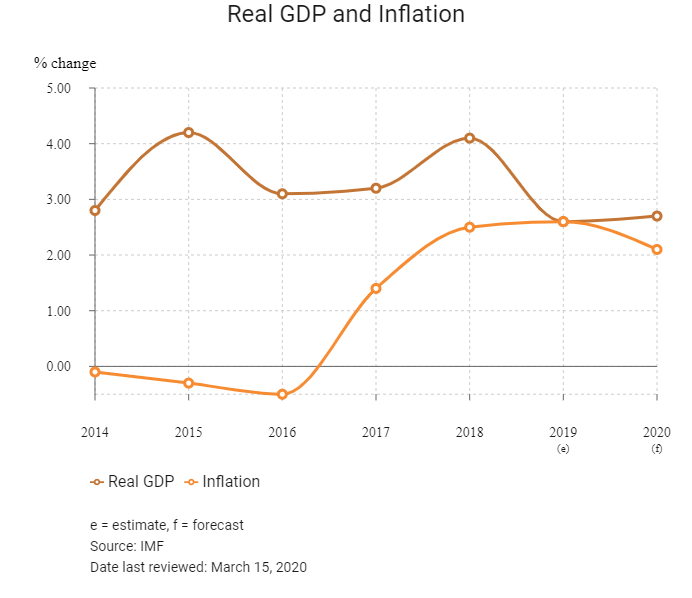
Major Economic Indicators
External Trade

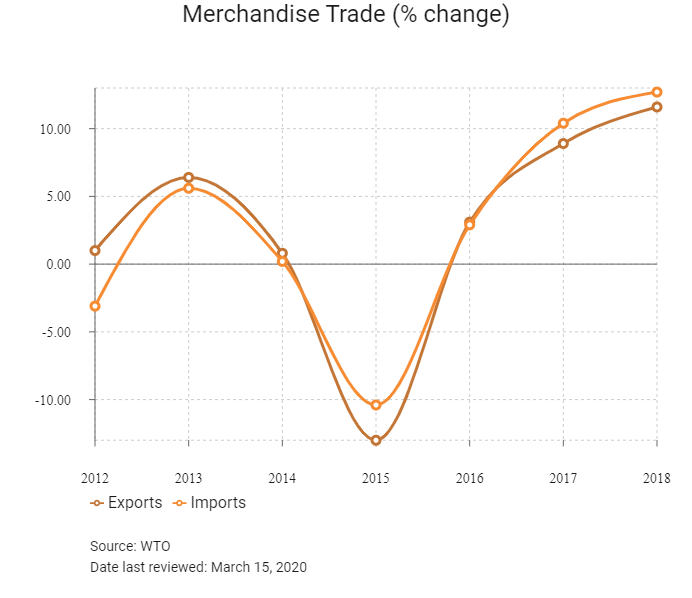
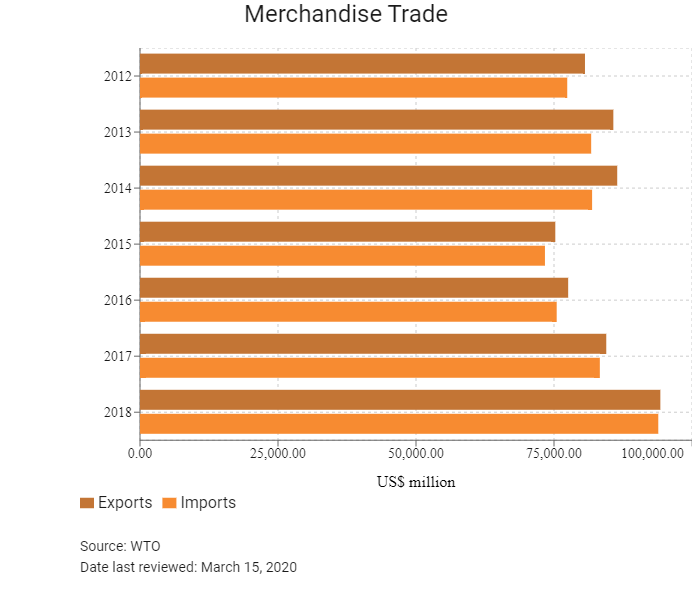
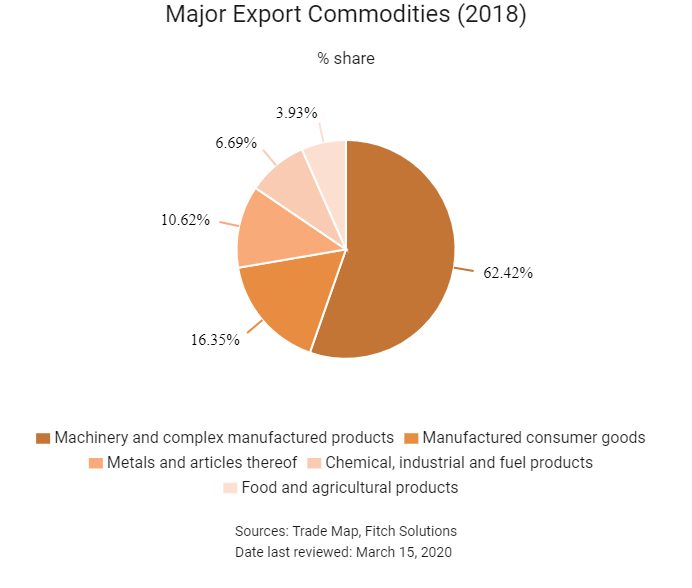
Merchandise Trade

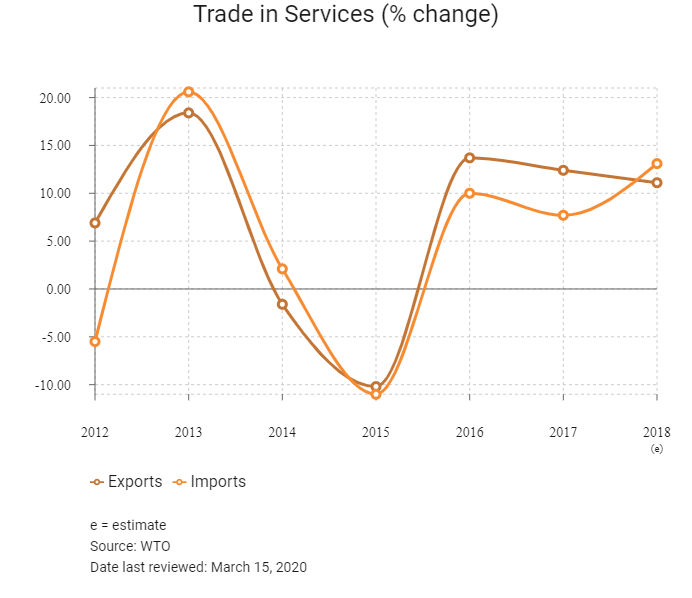
Trade in Services
Trade Policies
  • Slovakia became a member of the World Trade Organization in January 1995.

  • As a member of the EU since 2009, Slovakia is part of a customs union and single market that allows it to benefit from tariff-free trade with its EU counterparts. Intra-EU trade accounts for about 85% of Slovakia’s exports.

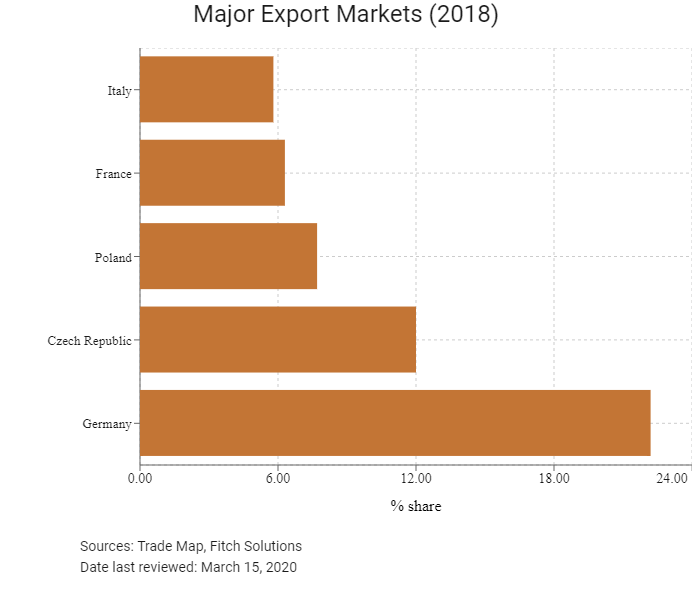
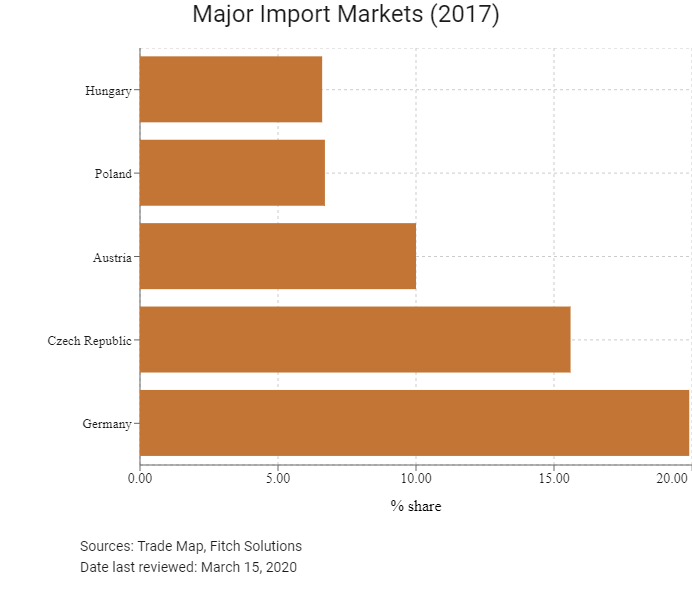
  • Slovakia has one of the lowest average tariff rates (along with its fellow EU members) in the Central and Eastern Europe region at 1.5%, thereby putting it ahead – from a trading-cost perspective – of many of its non-EU regional counterparts. Slovakia is very eurocentric, as its top five exporting partners are all EU members (Germany, Czech Republic, Poland, France and Italy).

  • Bilateral investment treaties exist between Slovakia and the following countries: Austria, Belarus, the Belgium-Luxembourg Economic Union, Bosnia and Herzegovina, Bulgaria, Canada, China, Croatia, Cuba, Denmark, Egypt, Finland, France, Germany, Greece, Hungary, Iran, Israel, Jordan, Kazakhstan, North Korea, South Korea, Kuwait, Latvia, Lebanon, North Macedonia, Malaysia, Malta, Mexico, Moldova, Montenegro, Morocco, the Netherlands, Norway, Poland, Portugal, Romania, Russia, Serbia, Singapore, Slovenia, Spain, Sweden, Switzerland, Syria, Tajikistan, Turkey, Turkmenistan, Ukraine, the United Arab Emirates, the United Kingdom, the United States, Uzbekistan and Vietnam.

Sources: WTO – Trade Policy Review, Fitch Solutions

Trade Agreement

Multinational Trade Agreements

Active

  1. The EU Common Market: There is free movement in the transfer of capital, goods, services and labour between member nations. The common market extends to the 28 member nations of the EU, namely Austria, Belgium, Bulgaria, Croatia, Cyprus, Czech Republic, Denmark, Estonia, Finland, France, Germany, Greece, Hungary, Ireland, Italy, Latvia, Lithuania, Luxembourg, Malta, Netherlands, Poland, Portugal, Romania, Slovakia, Slovenia, Spain, Sweden and the United Kingdom.

  2. European Economic Area (EEA)-European Free Trade Association (EFTA) (Iceland, Liechtenstein, Norway and Switzerland): While it enhances trade flows between these countries and the EU, only Switzerland is a fairly major trading partner.

  3. EU-Turkey: The customs union within the EU provides tariff-free access to the European market for Turkey, benefitting exporters and importers.

  4. EU-Japan Economic Partnership Agreement (EPA): In July 2018, the EU and Japan signed a trade deal that promises to eliminate 99% of tariffs that cost businesses in both sides nearly EUR1 billion annually. According to the European Commission (EC), the agreement will create a trade zone covering 600 million people and nearly a third of global GDP. The result of four years of negotiation, the EPA was finalised in late 2017 and came into force on February 1, 2019, after the EU Parliament ratified the agreement in December 2018. The total trade volume of goods and services between the EU and Japan is an estimated EUR86.0 billion. The key parts of the agreement will cut duties on a wide range of agricultural products and it seeks to open up services markets, particularly financial services, e-commerce, telecommunications and transport. Japan is the EU's second biggest trading partner in Asia after Mainland China. EU exports to Japan are dominated by motor vehicles, machinery, pharmaceuticals, optical and medical instruments, and electrical machinery.

  5. EU-Southern African Development Community (SADC) EPA (Botswana, Lesotho, Mozambique, Namibia, South Africa and eSwatini): An agreement between the EU and SADC delegations was reached in 2016 and is fully operational for SADC members following the ratification of the agreement by Mozambique. The remaining six members of the SADC that are not included in the deal (the Democratic Republic of the Congo, Madagascar, Malawi, Mauritius, Zambia and Zimbabwe) are seeking EPAs with the EU as part of other trading blocs such as the East African Community and the Economic Community of Central African States.

Provisionally Active

The Comprehensive Economic and Trade Agreement (CETA): The CETA is an agreement between the EU and Canada. CETA was signed in October 2016 and ratified by the Canadian House of Commons and EU Parliament in February 2017. However, the agreement has not been ratified by every European state and has only provisionally entered into force. CETA is expected to strengthen trade ties between the two regions, having come into effect in 2016. Some 98% of trade between Canada and the EU will be duty free under CETA. The agreement is expected to boost trade between partners by more than 20%; it also opens up government procurement. Canadian companies will be able to bid on opportunities at all levels of the EU government procurement market and vice versa. CETA means that Canadian provinces, territories and municipalities are opening their procurement to foreign entities for the first time, albeit with some limitations regarding energy utilities and public transport.

Ratification Pending

  1. EU-Central America Association Agreement (Guatemala, El Salvador, Honduras, Nicaragua, Costa Rica, Panama, Belize and the Dominican Republic): An agreement between the parties was reached in 2012 and is awaiting ratification (29 of the 34 parties have ratified the agreement as of October 2018). The agreement has been provisionally applied since 2013.

  2. EU-Singapore Free Trade Agreement (FTA) and Investment Protection Agreement: The parties signed the agreement in October 2019 and the European Parliament consented to the agreement in February 2019. The EC states that the ratification process is ongoing. On November 8, EU member states endorsed the trade agreement between the EU and Singapore. This means the agreement will enter into force as soon as November 21, 2019.

  3. EU-Vietnam FTA: In July 2018, the EU and Vietnam agreed on final texts for the EU-Vietnam FTA and the EU-Vietnam Investment Protection Agreement (IPA). In June 2019, the final text of the agreement was signed by both parties in Hanoi, Vietnam. It is now awaiting consent from the Vietnamese National Assembly and the European Parliament.

Under Negotiation

  1. EU-Australia: The EU, Australia's second largest trade partner, has launched negotiations for a comprehensive trade agreement with Australia. Bilateral trade in goods between the two partners has risen steadily in recent years, reaching almost EUR48 billion in 2017, and bilateral trade in services added EUR27 billion. The negotiations aim to remove trade barriers, streamline standards and put European companies exporting to or doing business in Australia on equal footing with those from countries that have signed up for the Trans-Pacific Partnership or other trade agreements with Australia. The Council of the EU authorised opening negotiations for a trade agreement between the EU and Australia on May 22, 2018.

  2. EU-United States (Trans-Atlantic Trade and Investment Partnership): This agreement was expected to increase trade and services, but will require consent from the European Council's 28 members, a majority within the European Parliament, as well as both Houses of Congress and President Donald Trump, to be passed.

  3. EU-New Zealand: In June 2018, the EU and New Zealand launched trade negotiations to remove trade barriers for goods and services, and the development of trade rules to facilitate easier and sustainable trade between both parties.

Sources: WTO Regional Trade Agreements database, Fitch Solutions

Investment Policy

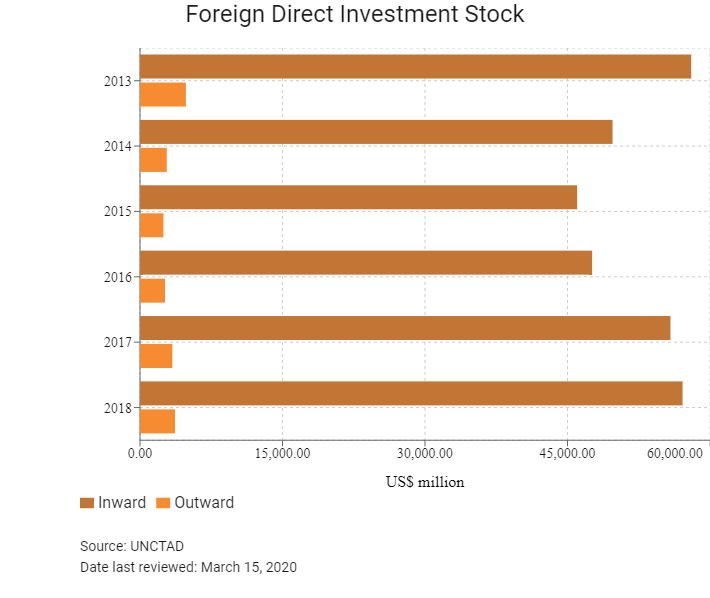
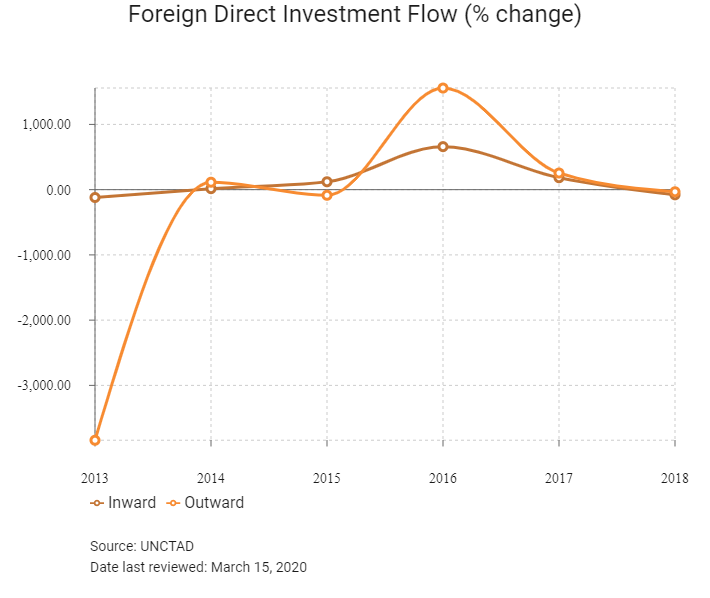
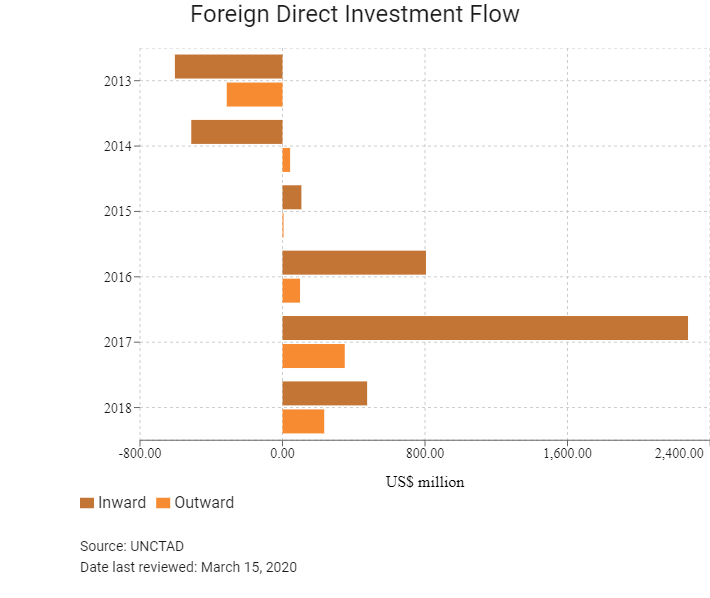
Foreign Direct Investment

Foreign Direct Investment Policy

  1. The government has established the Slovak Investment and Trade Development Agency (SARIO) in order to provide new investors with information on the Slovakian economy and investment opportunities. The SARIO also aims to encourage foreign direct investment inflows to targeted development sectors, including heavy industry and manufacturing, technology centres, business services and outsourcing, and tourism.

  2. There are no domestic ownership requirements for Slovak business entities and foreign investors, and businesses generally have the right to engage in any business activity in the country. However, there are some obligations regarding liquidated companies when transferring out of Slovakia.

  3. Foreign investors can freely participate in the privatisation programmes of state-owned enterprises (SOEs), with the exception of sectors considered ‘strategic’ by the government (for example, energy). This programme has resulted in a scaled-back role for the government in the economy, which means that private businesses face fewer unfair disadvantages due to the presence of SOEs.

Sources: WTO – Trade Policy Review, ITA, US Department of Commerce, Fitch Solutions

Free Trade Zones and Investment Incentives

Free Trade Zone/Incentive Programme

Main Incentives Available

Nitra Industrial Park

- The basic legal framework for the Slovak authorities' provision of investment aid is fully harmonised with EU legislation.

- Various tax and fiscal incentives are available. The three categories of projects that can be supported by the investment incentives are industrial production, technological centres and business service centres.

- Each category has specifically defined conditions, which have to be met in order to apply for the investment incentives. The incentives are provided in the form of a cash grant (a subsidy for the acquisition of material assets and immaterial assets), income tax relief, contribution for new jobs created and the ability to transfer immovable property or rent of immovable property at a price lower than a general asset value.

Sources: US Department of Commerce, Fitch Solutions

Taxation – 2020
  • Value Added Tax: 20%
  • Corporate Income Tax: 21%

Source: Ministry of Finance for the Slovak Republick

Important Updates to Taxation Information

  • While the country's high corporate taxation rate has been reduced from 22% to 21%, a witholding tax of 7.0% (35% for dividends received from non-treaty jurisdictions) has been re-introduced that may apply to certain dividend payments.

  • As of January 2019, the corporate income tax base of controlled foreign companies will be included in the corporate income tax base of its Slovak controlling company and taxed in accordance with the Slovak tax legislation.

  • The government is currently discussing the introduction of a patent box regime which would support industrial research and development by partially exempting from tax any income for the use of granted and registered patents, utility models and software created by the taxpayer.

  • In December 2018, Slovakia’s parliament approved legislation to tax retail chains 2.5% of their reveunues in order to raise money to support the marketing of local food production. The tax will be applicable to retailers where foodstuffs account for more than 25.0% of their revenues and are present in more than two regions in the country.

  • In November 2019, Slovakia’s government approved doubling a special banking sector tax to 0.4% of adjusted balance sheet in 2020. The tax, imposed on banks’ liabilities after subtracting basic capital, was introduced in 2012 to help build a buffer for potential crises and was scheduled to expire at the end of 2020.

  • In October 2019, the president of Slovakia signed the Law of September 18, 2019, on amendments to the Income Tax Act that provide for the introduction of a reduced income tax rate for companies and individual entrepreneurs with business income not exceeding EUR100,000 per year. The reduced rate is 15%, which is down from the standard 21% rate for companies and the standard 19% or 25% rates for individuals. For companies, advance tax will still need to be paid based on the standard 21% rate with the 15% rate applied after the final income amount is determined, if eligible.
     
  • The term microtaxpayer will be introduced into law with effect from 2021 – an individual or a corporation with an annual business income of up to EUR49,790 (VAT registration threshold). This cannot be applied in the case of a taxpayer who is considered to be related for income tax purposes. The microtaxpayer will be entitled to apply the tax deduction of  assets freely during the depreciation period. There will be no limits regarding the tax loss utilisation and creation of tax deductible provisions on receivables.
     
  • A tax rate for individuals – entrepreneurs with a turnover below EUR100,000 – will be decreased from 21% to 15% for 2020.

Business Taxes

Type of Tax

Tax Rate and Base

Corporate Income Tax (CIT)

21%

Capital Gains Tax

Capital gains from the disposal of assets are included in the CIT base. The tax treatment of capital losses depends on the type of asset on which they arose.

VAT

20%, with exceptions for certain medical products, printed materials and 'basic goods' (such as bread, meat, milk and butter), which have a rate of 10%.

Special Tax on regulated industries

There is a special tax that becomes liable when the accounting profit exceeds EUR3 million from the activities of entities in regulated industries, which includes energy, electronic communications, pharmaceuticals, railway transport, public water distribution and air transport, among others. The tax is calculated as a multiple of the tax base, coefficient and the tax rate. Currently, the annual rate of the special tax can be up to 8.71%. This will decrease to a maximum of 6.54% per annum in 2019 and 2020, and to a maximum of 4.35% per annum in 2021.

Social security contributions payable by employers

Employer’s health insurance and social security contributions total 34.4% of employee remuneration. Employers also pay injury insurance contributions of 0.8% of employees’ total salary costs per month, which are not capped.

Withholding Taxes (rate for foreign parties where no double taxation agreement exists)

- 35% on dividend income
- 35% on royalties
- 35% on interest

Sources: Ministry of Finance for the Slovak RepublickReuters
Date last reviewed: March 15, 2020

Foreign Worker Requirements

Foreign Worker Permits

There are few restrictions for visas and work permits, allowing businesses to import workers efficiently and at a low cost. Slovakia has visa-free arrangements with 141 countries, which is one of the highest in the region. EU citizens, EEA citizens, Swiss citizens (and members of their family) do not require a work permit to be employed in Slovakia, which is a major advantage for businesses operating in the country. Non-EU/EEA/Swiss citizens must get a work permit from the National Employment Agency and the permit must be requested by an employer for those with a specific skill or specialised knowledge. It is issued for one year and can be renewed for a further three years.

Localisation Requirements

Membership of the EU means that Slovakia has minimal restrictions for foreigners. Slovakia is considering implementing a range of immigration-supporting economic policies; however, the country is struggling to attract significant levels of migrant workers, which is partly attributable to inadequate compensation levels compared with competing emerging Europe states.

Visa/Travel Restrictions

Most citizens outside the Schengen Area require a visa to travel to Slovakia. Citizens from Hong Kong do not need a visa to travel to Slovakia (valid for a stay of 90 days).

Sources: Government websites, Fitch Solutions

Risks

Sovereign Credit Ratings


Rating (Outlook)

Rating Date

Moody's

A2 (Positive)

27/09/2019

Standard & Poor's

A+ (Stable)

31/07/2015

Fitch Ratings

A+ (Stable)

08/11/2019

Sources: Moody's, Standard & Poor's, Fitch Ratings

Competitiveness and Efficiency Indicators


World Ranking

2018

2019

2020

Ease of Doing Business Index

39/190

42/190

45/190

Ease of Paying Taxes Index

49/190

48/190

55/190

Logistics Performance Index

53/160

N/A

N/A

Corruption Perception Index

57/180

59/180

N/A

IMD World Competitiveness

55/63

53/63

N/A

Sources: World Bank, IMD, Transparency International

Fitch Solutions Risk Indices


World Ranking

2018

2019

2020

Economic Risk Index Rank

26/202

30/201

28/201

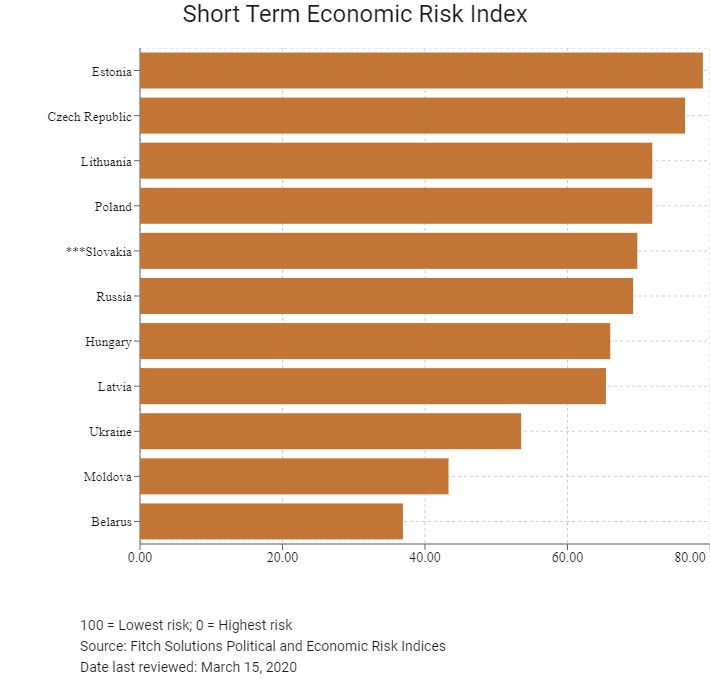
Short-Term Economic Risk Score

79.8

68.1

69.8

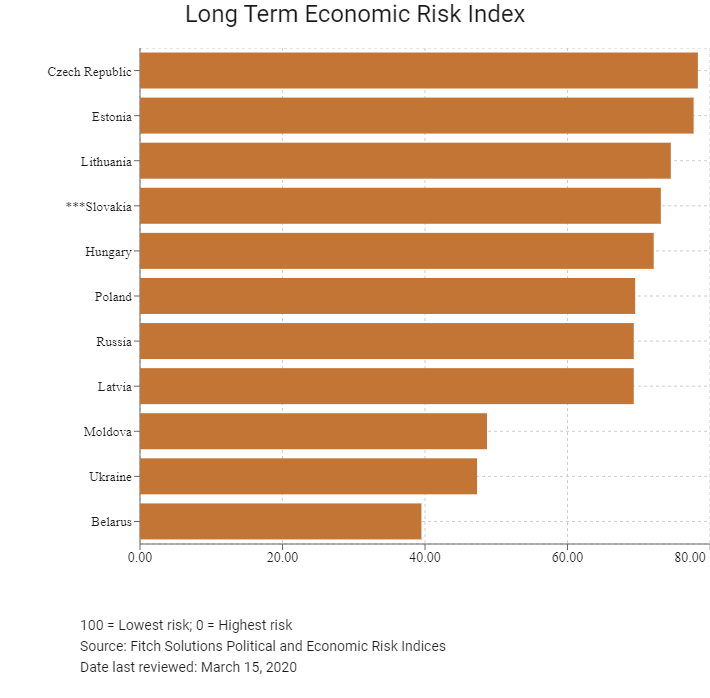
Long-Term Economic Risk Score

73.5

72.6

73.1

Political Risk Index Rank

31/202

31/201

30/201

Short-Term Political Risk Score

71.9

71.9

71.9

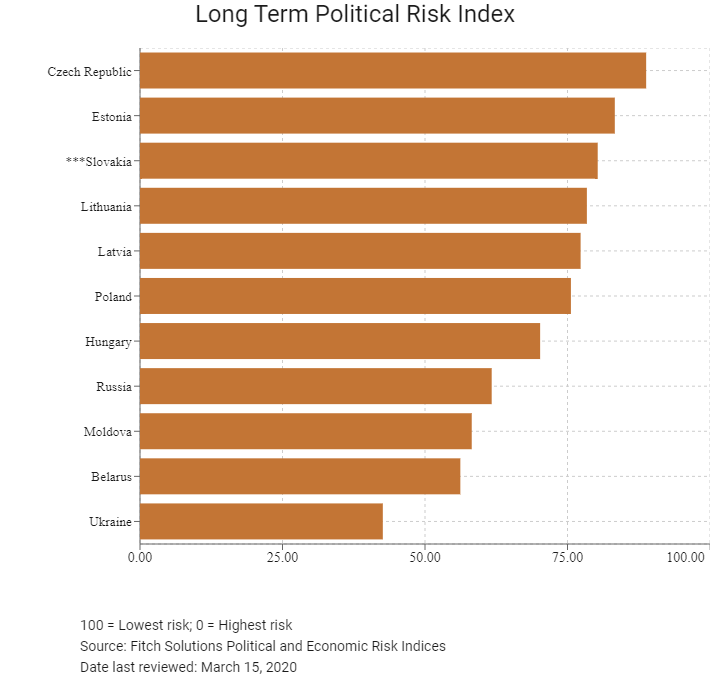
Long-Term Political Risk Score

80.3

80.3

80.3

Operational Risk Index Rank

44/201

43/201

44/201

Operational Risk Score

63.6

63.7

63.8

Source: Fitch Solutions
Date last reviewed: March 15, 2020

Fitch Solutions Risk Summary

ECONOMIC RISK
Slovakia's open economy remains broadly stable and has benefitted from access to the EU Customs Union. Although this has facilitated the country's export-led growth over the past six years, it will also pose challenges in the future. Eurozone growth is expected to remain below pre-crisis levels; however, domestic demand will remain robust, aided by a strong consumer outlook. Economic growth should remain broadly stable in 2020, despite the challenging external backdrop. Strong household spending, underpinned by a tight labour market, should support the economy, while investment growth is seen picking up amid increased EU funds inflows and growing car production capacity. However, Brexit and prolonged weakness in Germany pose risks to the outlook.

OPERATIONAL RISK
Slovakia has an attractive investment profile supported by its welcoming attitude to foreign direct investment, few restrictions on foreign ownership and openness to trade. The country boasts an extensive road network which forms part of several major trans-European corridors and offers good connectivity to its major trading partners and regional peers. This is boosted by the fact that Slovakia's key trading partners (Czech Republic, Germany, Hungary and Austria) are also members of the EU, which is highly beneficial to the country's ​​export-orientated manufacturing sector as businesses face minimal trade barriers. Slovakia gives businesses easy access to credit via a well-developed banking sector, boasts a good quality power infrastructure network, and carries a low security risk. This reduces the need for costly security expenditure to protect foreign employees and company premises. The country's competitiveness is somewhat undermined by rising labour costs and higher levels of corruption compared with its peers in the EU.

Sources: US Department of Commerce, Fitch Solutions
Date last reviewed: March 17, 2020

Fitch Solutions Political and Economic Risk Indices
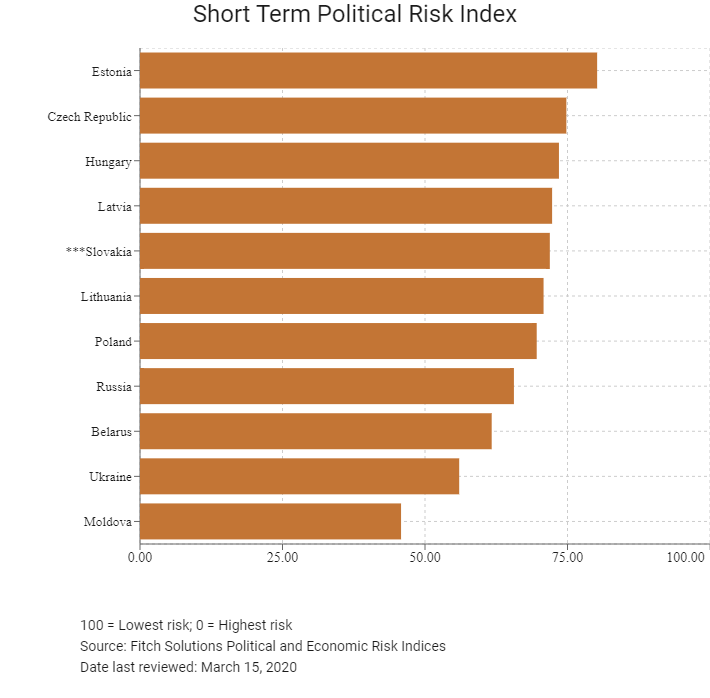
Fitch Solutions Operational Risk Index
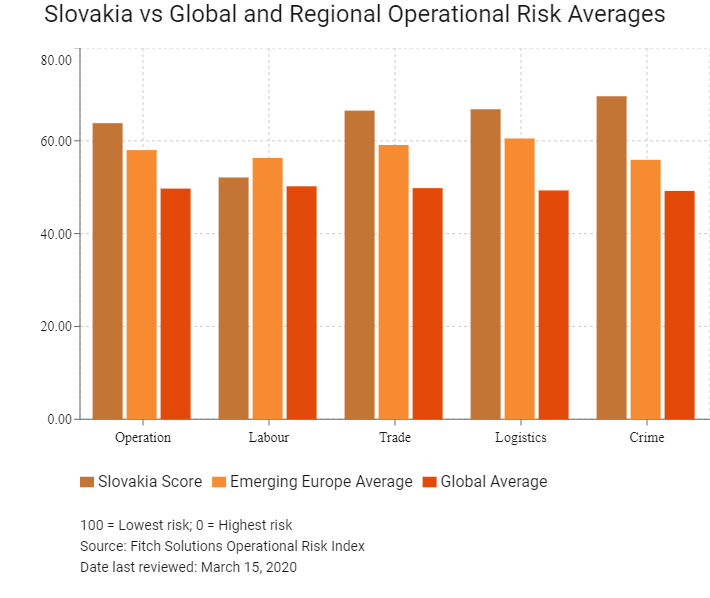
 

Operational Risk

Labour Market Risk

Trade and Investment Risk

Logistics Risk

Crime and Security Risk

Slovakia score

63.8

52.1

66.5

66.8

69.6

Central and Eastern Europe Average

62.7

58.5

63.5

67.4

61.2

Central and Eastern Europe Position (out of 11)

6

10.0

6.0

8.0

5.0


Emerging Europe Average

58.0

56.3

59.1

60.5

55.9

Emerging Europe Position (out of 31)

8

25

7

10

6

Global Average

49.7

50.2

49.8

49.3

49.2

Global Position (out of 201)

44

86

39

45

35

100 = Lowest risk; 0 = Highest risk
Source: Fitch Solutions Operational Risk Index

Country

Operational Risk Index

Labour Market Risk Index

Trade and Investment Risk Index

Logistics Risk Index

Crime and Security Risk Index

Estonia

71.2

63.1

76.3

71.0

74.3

Czech Republic

69.6

60.6

67.8

73.6

76.5

Lithuania

69.5

61.2

71.4

74.3

71.0

Poland

69.2

59.2

69.3

75.5

72.8

Latvia

66.8

63.4

67.1

69.4

67.4

Slovakia

63.8

52.1

66.5

66.8

69.6

Hungary

63.5

55.7

62.0

70.1

66.3

Belarus

59.1

60.1

58.6

66.6

51.3

Russia

58.3

65.9

58.6

67.9

40.6

Moldova

49.8

44.7

51.7

53.4

49.3

Ukraine

48.7

57.9

49.0

54.4

33.6

Regional Averages

71.2

63.1

76.3

71.0

74.3

Emerging Markets Averages

69.6

60.6

67.8

73.6

76.5

Global Markets Averages

69.5

61.2

71.4

74.3

71.0

100 = Lowest risk; 0 = Highest risk
Source: Fitch Solutions Operational Risk Index
Date last reviewed: March 15, 2020

Hong Kong Connection

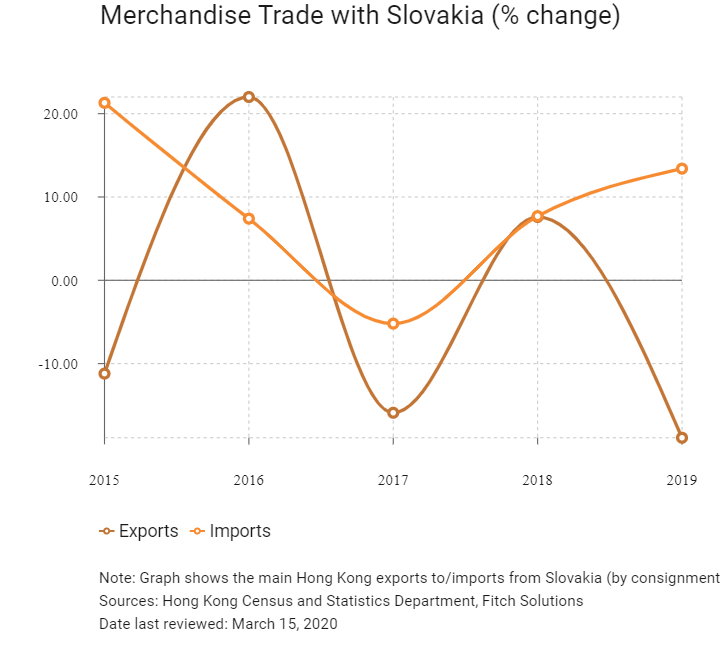
Hong Kong’s Trade with Slovakia

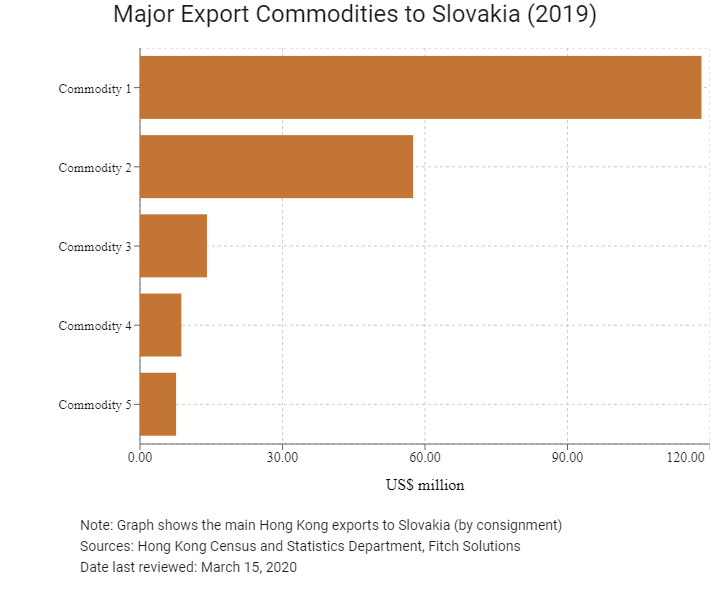
Export Commodity Commodity Detail Value (US$ million)
Commodity 1 Telecommunications and sound recording and reproducing apparatus and equipment 118.2
Commodity 2 Electrical machinery, apparatus and appliances; and electrical parts thereof 57.5
Commodity 3 Professional, scientific and controlling instruments and apparatus 14.1
Commodity 4 Office machines and automatic data processing machines 8.7
Commodity 5 Manufactures of metals 7.6
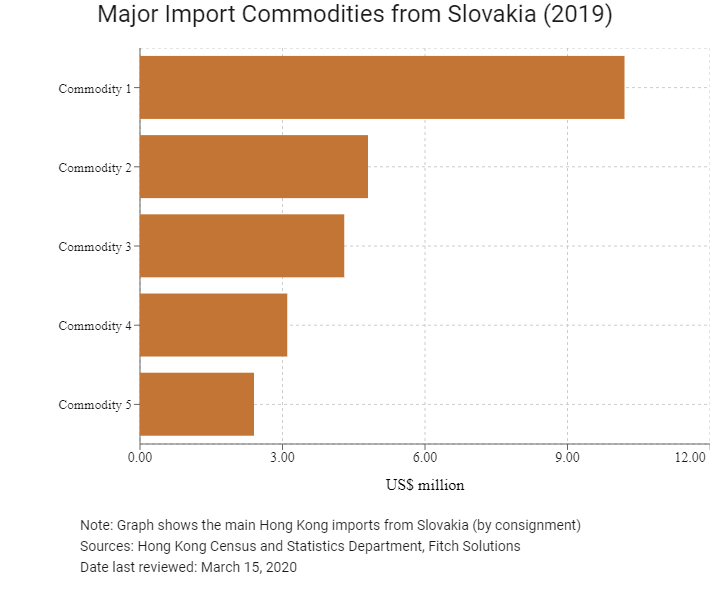
Import Commodity Commodity Detail Value (US$ million)
Commodity 1 Electrical machinery, apparatus and appliances; and electrical parts thereof 10.2
Commodity 2 Photographic apparatus, equipment and supplies; optical goods; and watches and clocks 4.8
Commodity 3 Office machines and automatic data processing machines 4.3
Commodity 4 Road vehicles (including air cushion vehicles) 3.1
Commodity 5 Professional, scientific and controlling instruments and apparatus 2.4

Exchange Rate HK$/US$, average
7.75 (2015)
7.76 (2016)
7.79 (2017)
7.83 (2018)
7.77 (2019)


2019

Growth rate (%)

Number of Slovakian residents visiting Hong Kong

5,154

-15.1

Number of European residents visiting Hong Kong

1,747,763

-10.9

Sources: Hong Kong Tourism Board
Date last reviewed: March 15, 2020

Commercial Presence in Hong Kong


2019

Growth rate (%)

Number of EU companies in Hong Kong

2,316

-0.5

- Regional headquarters

507

1.8

- Regional offices

746

6.0

- Local offices

1063

13.3

Source: Hong Kong Census and Statistics Department

Treaties and agreements between Hong Kong and Slovakia

  • Slovakia and Mainland China have a bilateral investment treaty that came into force in December 1992, but it does not apply to Hong Kong.
  • Slovakia's double taxation treaty with Mainland China came into force in December 1987, but it applies only to the Mainland China and excludes Hong Kong.

Source: Investment Policy Hub

Chamber of Commerce (or Related Organisations) in Hong Kong

Slovakian Consulate in Hong Kong
Address: 11/F, Milo's Industrial Building, 2-10 Tai Yuen Street, Kwai Chung, New Territories, Hong Kong
Email: slovakconsulatehk@milos.com.hk
Tel: (852) 2484 4568
Fax: (852) 2194 0722

Source: Protocol Division Government Secretariat

Visa Requirements for Hong Kong Residents

HKSAR passport holders do not require a visa if the maximum duration of stay is less than 90 days in any 180-day period.

Source: Hong Kong Immigration Department
Date last reviewed: March 15, 2020

Image name View
Help us to improve