









Philippines
Country Region
Starr International INsurance (Asia) Limited
Financial Services
 910 Views
Company Profile

Project Experience
Company Profile
Starr International Insurance (Asia) Limited, a member of Starr Insurance Companies, is licensed by the Hong Kong Insurance Authority, with a branch in the Philippines licensed by the Insurance Commission, to provide general insurance products and services.
Starr Insurance Companies is a leading insurance and investment organization, providing commercial property and casualty insurance, including travel and accident coverage, to almost every imaginable business and industry in virtually every part of the world.
Cornelius Vander Starr established his first insurance company in Shanghai, China in 1919.
Today, Starr is one of the world’s fastest growing insurance organizations. Our experienced associates are capable of writing in 124 countries on 6 continents.
Key insurance product lines: Accident & Health, Aviation & Aerospace, Commercial General Casualty, Construction – Property/Casualty, Energy – Property/Casualty, Financial Lines, Marine, Professional Liability, Property.
A.M. Best Rated “A” (Excellent) held by key insurance companies of the group, including Starr International Insurance (Asia) Limited.
Starr has experience in BRI projects including providing insurance cover for construction and operation of power plants in BRI countries, and business travel insurance to companies conducting business in BRI countries.
Project Experience
Africa
Power and Energy, Manufacturing (industrial parks, logistics parks, machinery), Natural Resources (including oil and gas), Telecommunications, Transport and Logistics Infrastructure, Urban Development
Australasia
Power and Energy, Manufacturing (industrial parks, logistics parks, machinery), Natural Resources (including oil and gas), Telecommunications, Transport and Logistics Infrastructure, Urban Development
Western Europe
Power and Energy, Manufacturing (industrial parks, logistics parks, machinery), Natural Resources (including oil and gas), Telecommunications, Transport and Logistics Infrastructure, Urban Development
Central and Eastern Europe
Power and Energy, Manufacturing (industrial parks, logistics parks, machinery), Natural Resources (including oil and gas), Telecommunications, Transport and Logistics Infrastructure, Urban Development
North America
Power and Energy, Manufacturing (industrial parks, logistics parks, machinery), Natural Resources (including oil and gas), Telecommunications, Transport and Logistics Infrastructure, Urban Development
North America
Power and Energy, Manufacturing (industrial parks, logistics parks, machinery), Natural Resources (including oil and gas), Telecommunications, Transport and Logistics Infrastructure, Urban Development
Latin America
Power and Energy, Manufacturing (industrial parks, logistics parks, machinery), Natural Resources (including oil and gas), Telecommunications, Transport and Logistics Infrastructure, Urban Development
South Asia
Power and Energy, Manufacturing (industrial parks, logistics parks, machinery), Natural Resources (including oil and gas), Telecommunications, Transport and Logistics Infrastructure, Urban Development
Central Asia
Power and Energy, Manufacturing (industrial parks, logistics parks, machinery), Natural Resources (including oil and gas), Telecommunications, Transport and Logistics Infrastructure, Urban Development
Southeast Asia
Power and Energy, Manufacturing (industrial parks, logistics parks, machinery), Natural Resources (including oil and gas), Telecommunications, Transport and Logistics Infrastructure, Urban Development
Northeast Asia
Power and Energy, Manufacturing (industrial parks, logistics parks, machinery), Natural Resources (including oil and gas), Telecommunications, Transport and Logistics Infrastructure, Urban Development
Chinese Mainland
Power and Energy, Manufacturing (industrial parks, logistics parks, machinery), Natural Resources (including oil and gas), Telecommunications, Transport and Logistics Infrastructure, Urban Development
Middle East
Power and Energy, Manufacturing (industrial parks, logistics parks, machinery), Natural Resources (including oil and gas), Telecommunications, Transport and Logistics Infrastructure, Urban Development
Fujitsu Business Technologies Asia Pacific Limited
Telecommunications and ICT Services
360 Views
Company Profile
Fujitsu is the leading Japanese information and communication technology (ICT) company, offering a full range of technology products, solutions and services. Approximately 140,000 Fujitsu people support customers in more than 100 countries. We use our experience and the power of ICT to shape the future of society with our customers.
Fujitsu Business Technologies Asia Pacific Limited is the Asia Pacific Regional Headquarters for business technologies of Fujitsu Limited, Japan. Its responsibilities include marketing and sales of a wide range of personal computers and business solutions for corporate and end-user markets in the Asia Pacific, offering Smart Workplace solutions to support new working style in smart cities and offices, which is a strategic response to a number of trend s that impacts social economic and technological development that affects the way people live and work.
Alibaba Cloud
Telecommunications and ICT Services
393 Views
Company Profile
Established in 2009, Alibaba Cloud (www.alibabacloud.com), the data intelligence backbone of Alibaba Group, is among the world's top three IaaS providers, according to Gartner. It is also the largest provider of public cloud services in China, according to IDC. Alibaba Cloud provides a comprehensive suite of cloud computing services to businesses worldwide, including merchants doing business on Alibaba Group marketplaces, start-ups, corporations and public services. Alibaba Cloud is the official Cloud Services Partner of the International Olympic Committee.
Work expected to commence imminently on key element of national infrastructure redevelopment programme.
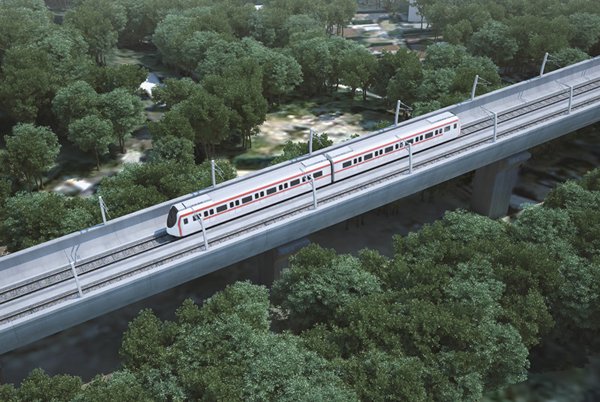

Late last year, the Philippines' National Economic and Development Authority (NEDA) finally gave the go-ahead for phase one of the Mindanao Railway Project (MRP), one of the country's key Belt and Road Initiative (BRI) backed mass transit infrastructure programmes. With this formal endorsement now in place, work is expected to begin imminently on the project – a 102km train line connecting the cities of Digos, Davao and Tagum on the Philippine island of Mindanao. Construction of the Tagum-Davao-Digos segment of the MRP will be carried out by an as-yet-unannounced Chinese contractor in line with the wider objectives of the BRI, China's ambitious global infrastructure development and trade facilitation programme.
Essentially, the Tagum-Davao-Digos line forms the first stage of a proposed 830km project, which has been conceived as ultimately looping around Mindanao, the second-largest island in the Philippine archipelago. It is also the first railway project in the Philippines to be sited outside of Luzon, the country's largest island and home to Manila, the national capital.
Scheduled for completion in 2022, the Tagum-Davao-Digos line is initially projected to handle up to 130,000 passengers a day, with trains travelling at a top speed of 160kph and stopping at six intermediate stations – Carmen, Panabo, Mudiang, Davao, Toril and Santa Cruz. Once fully operational, the service will cut journey times from Tagum to Digos to just 1.3 hours from about 3.5 hours at present, with the Department of Transport predicting that the daily passenger volume will steadily increase, rising to 237,000 by 2032 and to 375,000 by 2042.
Mindanao accounts for two-fifths of the land mass of the Philippines and is seen as badly in need of the economic boost the new rail line is expected to deliver. While the region is the country's primary source of agricultural products, poor transport connections have restricted economic development and deterred investment. It is a problem that has only been exacerbated by years of armed conflict and a series of natural disasters, notably typhoons and earthquakes. As a consequence, although Mindanao is home to just 25% of the Philippines' population, it accounts for 37% of all those living in extreme poverty.
Initially conceived as a twin-track, electrified line, political pressure to complete the Tagum-Davao-Digos railway during the tenure of President Rodrigo Duterte has seen it redesignated as a non-electrified diesel line. As it is located in the south of the country, where Duterte has his political base, it is seen as a particularly sensitive initiative, especially as it has taken so long to reach even this preliminary stage.
In fact, the development of an island-wide Mindanao railway has long been advocated but never before come close to being realised. For his part, Duterte promised to press ahead with the project if elected back in 2015, with NEDA subsequently rubber-stamping the original plans for the Tagum-Davao-Digos section of the line in 2017. Originally intended to be locally financed and to commence construction in 2018, phase one was delayed by a strategic rethink, which also saw the cost dramatically revised upwards. The estimated cost of phase one has more than doubled from the initially proposed PHP35.26 billion (US$695.5 million) to PHP81.69 billion.
This latest figure is expected to be covered by a loan from the China Export-Import Bank (Exim Bank) – due to be signed in April this year – with China now thought to be funding up to 86% of the entire project. With NEDA approval now in place, the next phase will see China submit a shortlist of three companies to bid for the various design-and-build and project contracts. According to local media speculation, the likely contenders are believed to include the China State Construction Engineering Corp, the China Communications Construction Company, the China Railway International Group and the China Civil Engineering Construction Corporation.
Marilyn Balcita, Special Correspondent, Manila
Editor's picks
Trending articles
Colliers International (Hong Kong) Limited
Infrastructure and Real Estate-Related Services
|
Environmental Services
|
Professional Services
|
Financial Services
4178 Views
Company Profile
Project Experience
Company Profile
Colliers International (Hong Kong) Limited is a member of Colliers International Group Inc.
Colliers International Group Inc. (NASDAQ: CIGI) (TSX: CIGI) is a top tier global real estate services provider operating in 68 countries with a workforce of more than 14,000 professionals, including 2 offices in Hong Kong and 11 offices in mainland China. Through cooperation among members within Colliers International Group Inc., we provide service covering the Belt and Road countries.
We deliver a full range of services to real estate occupiers, owners and investors across all sectors worldwide. From property search and selection, to project management, to valuation and appraisal, we provide creative solutions to our clients’ most complex requirements. We also provide business enterprise valuation and advisory services for our clients for different purposes including IPO, Merge & Acquisition, investment, financial reporting, etc.