









Hong Kong
Country Region
Hong Kong connector for global port network
 672 Views
Hutchison Ports regards its Hong Kong headquarters as the right place to run its global network – including connecting people, cultures and systems across the Belt and Road, according to Group Managing Director Eric Ip. Particularly relevant is Hutchison Ports’ award-winning nGen high technology operations system, which was developed in Hong Kong.
Speaker:
Eric Ip, Group Managing Director, Hutchison Ports
Related Links:
Hong Kong Trade Development Council
https://www.hktdc.com/
HKTDC Belt and Road Portal
https://beltandroad.hktdc.com/en/

Market(s)

Sector(s)

Country(ies) / Region(s)

The Hongkong and Shanghai Banking Corporation Limited
Financial Services
03 Aug 2020
The Hongkong and Shanghai Banking Corporation Limited
By Mukhtar Hussain, Head of Belt and Road Initiative and Business Corridors, Asia-Pacific, HSBC
Belt and Road Initiative offers solid framework for countries big and small to overcome the economic damage caused by pandemic
The Covid-19 pandemic has caused a crisis for every economy. At the same time, it has also created an opportunity for the Belt and Road Initiative to prove its value as an international partnership that serves the international good.
Amid a fragmented global response to the virus, this network of 138 countries is uniquely positioned to channel trade and investment to developing countries that lack the resources to revive their own economies.
China cannot do this by itself, though: no country can. If the initiative is to deliver on its potential to support global recovery, it must be a collective effort. It must also live up to the high standards it has set itself for transparency and sustainability.
The International Monetary Fund estimates that some U
09 Jul 2019
The Hongkong and Shanghai Banking Corporation Limited
Peter Wong, Deputy Chairman and Chief Executive, The Hongkong and Shanghai Banking Corporation Limited
Friction over trade between the world’s two largest economies naturally captures the attention of the business and investment community. The fact that cross-border trade within Asia is already much bigger than Asia’s exchange of goods and services with the U.S. or Europe makes fewer headlines, but is no less important.
It begs the question of what kind of networks, relationships and institutions will shape the future of international trade – and the answer to this question is beginning to emerge.
In partnership with China, which we expect to become the world’s biggest economy by 2030, a growing number of countries are rejecting economic isolation and beginning to work together to develop a new kind multilateralism.
While this process is in its infancy, I believe that a more collaborative approach to connecting economies tha
24 May 2019
The Hongkong and Shanghai Banking Corporation Limited
15 May 2019
Policies targeting key priority areas have been instrumental in China’s economic transformation over the past 40 years, according to HSBC Group Chairman Mark Tucker.
Mr Tucker was speaking at the sixth annual HSBC China conference in Shenzhen – a city that embodies the impact of targeted policies. Shenzhen’s Special Economic Zone was first established in the 1980s to stimulate private-sector businesses. It has helped the city grow from a small fishing village into “a bustling metropolis…and the birthplace and home of China’s leading tech companies,” Mr Tucker said.
Other policies supporting the country’s continued development include opening up China’s capital markets, the Greater Bay Area and the Belt and Road Initiative, according to Mr Tucker.
The Greater Bay Area is designed to foster closer economic ties between Hong Kong, Macau and cities in mainland China including Guangzhou and Shenzhen. The Belt and Road Initiative supports
01 Sep 2017
The Hongkong and Shanghai Banking Corporation Limited
Peter Wong, Deputy Chairman and Chief Executive, The Hongkong and Shanghai Banking Corporation Limited
In the wake of more isolationist political thinking in the West, with many developed economies turning inward, China is reaching out, seeking stronger trade and investment links with its economic partners.
China’s Belt and Road initiative (BRI) is a prime example of this reaching out policy. Under the initiative, China aims to trigger demand for materials and goods at home by investing in strategic infrastructure projects abroad, growing economic ties along its old Silk Road to Europe and along newer maritime links in and around Asia and as far away as Africa, covering all potential points in-between.
At its heart, the plan is to enhance global supply chains primarily through debt-financed infrastructure projects, across more than 60 countries. China expects annual trade with these countries to be worth US$ 2.5 trillion within a decade [1] – up from US$ 1 trillion in 2015
21 Jul 2017
The Hongkong and Shanghai Banking Corporation Limited
By Gordon French, Head of Global Banking and Markets, Asia Pacific, HSBC
Perhaps it’s inevitable that interest in China’s Belt and Road Initiative tends to revolve around the railway lines, ports and highways that will be constructed in its name. These are the most visible manifestations of the “Belt and Road,” and they evoke beguiling images of the ancient land and sea routes along which silk was once transported from Xi’An to St Petersburg, or tea from Guangzhou to Rotterdam.
But sometimes it is the financial dimension of infrastructure in Asia that stands out – because of the sheer scale of what is required.
The Asian Development Bank expects emerging Asia to need about US$26 trillion of infrastructure investment between 2016 and 2030. That amounts to US$1.7 trillion a year – and that’s just in Asia, while the Belt and Road encompass Africa and Europe as well. [1]
Financing this colossal need for transport, telecoms and energy infrastructure across more t
27 Jun 2017
The Hongkong and Shanghai Banking Corporation Limited
By Stuart Tait, Group General Manager and Regional Head of Commercial Banking, Asia Pacific
With protectionism threatening to dim Europe’s economic lights, Southeast Asia – fuelled by its nation-building infrastructure activity - could be the commercial catalyst that European corporates need.
---------
If a spending deficit of US$1.2 trillion in six key Asian economies and a rising tide of protectionist rhetoric in Europe don’t seem the most promising combination of business prospects, think again.
Add in China’s ambitious Belt and Road Initiative, and together they make a compelling case of the potential for a multi-year boom in investment and construction that will create entirely new economic ecosystems.
Belt and Road at its most basic is a strategy to build the transport links and logistics capacity to boost the flow of trade between China and more than 65 countries in Asia, the Middle East, Africa and Europe to an estimated US$2.5 trillion annually in the co
15 May 2017
The Hongkong and Shanghai Banking Corporation Limited
Peter Wong
Deputy Chairman and Chief Executive, The Hongkong and Shanghai Banking Corporation Limited
To really understand what the “Belt and Road” initiative is all about, it’s best to stop thinking of it as being purely about “roads” and infrastructure “belts.”
True, “Belt and Road” will involve building a lot of highways, railways, bridges and other infrastructure – the physical building blocks that will facilitate greater trade flows not just with China’s immediate neighbours, but also with countries as far afield as Europe, Africa and the Middle East.
The overall goal is to facilitate regional trade and cooperation by smoothing the passage of goods and services across borders. China expects its annual trade with the more than 65 countries along the “Belt” and “Road” routes to surpass USD2.5 trillion in the next decade, up from about USD1 trillion in 2015.[1] This will bring a welcome boost at a time of anaemic global trade growth
15 May 2017
The Hongkong and Shanghai Banking Corporation Limited
Peter Wong
Deputy Chairman and Chief Executive, The Hongkong and Shanghai Banking Corporation Limited
To really understand what the “Belt and Road” initiative is all about, it’s best to stop thinking of it as being purely about “roads” and infrastructure “belts.”
True, “Belt and Road” will involve building a lot of highways, railways, bridges and other infrastructure – the physical building blocks that will facilitate greater trade flows not just with China’s immediate neighbours, but also with countries as far afield as Europe, Africa and the Middle East.
The overall goal is to facilitate regional trade and cooperation by smoothing the passage of goods and services across borders. China expects its annual trade with the more than 65 countries along the “Belt” and “Road” routes to surpass USD2.5 trillion in the next decade, up from about USD1 trillion in 2015.[1] This will bring a welcome boost at a time of anaemic global trade growth
27 Jun 2017
The Hongkong and Shanghai Banking Corporation Limited
By Stuart Tait, Group General Manager and Regional Head of Commercial Banking, Asia Pacific
With protectionism threatening to dim Europe’s economic lights, Southeast Asia – fuelled by its nation-building infrastructure activity - could be the commercial catalyst that European corporates need.
---------
If a spending deficit of US$1.2 trillion in six key Asian economies and a rising tide of protectionist rhetoric in Europe don’t seem the most promising combination of business prospects, think again.
Add in China’s ambitious Belt and Road Initiative, and together they make a compelling case of the potential for a multi-year boom in investment and construction that will create entirely new economic ecosystems.
Belt and Road at its most basic is a strategy to build the transport links and logistics capacity to boost the flow of trade between China and more than 65 countries in Asia, the Middle East, Africa and Europe to an estimated US$2.5 trillion annually in the co
21 Jul 2017
The Hongkong and Shanghai Banking Corporation Limited
By Gordon French, Head of Global Banking and Markets, Asia Pacific, HSBC
Perhaps it’s inevitable that interest in China’s Belt and Road Initiative tends to revolve around the railway lines, ports and highways that will be constructed in its name. These are the most visible manifestations of the “Belt and Road,” and they evoke beguiling images of the ancient land and sea routes along which silk was once transported from Xi’An to St Petersburg, or tea from Guangzhou to Rotterdam.
But sometimes it is the financial dimension of infrastructure in Asia that stands out – because of the sheer scale of what is required.
The Asian Development Bank expects emerging Asia to need about US$26 trillion of infrastructure investment between 2016 and 2030. That amounts to US$1.7 trillion a year – and that’s just in Asia, while the Belt and Road encompass Africa and Europe as well. [1]
Financing this colossal need for transport, telecoms and energy infrastructure across more t
01 Sep 2017
The Hongkong and Shanghai Banking Corporation Limited
Peter Wong, Deputy Chairman and Chief Executive, The Hongkong and Shanghai Banking Corporation Limited
In the wake of more isolationist political thinking in the West, with many developed economies turning inward, China is reaching out, seeking stronger trade and investment links with its economic partners.
China’s Belt and Road initiative (BRI) is a prime example of this reaching out policy. Under the initiative, China aims to trigger demand for materials and goods at home by investing in strategic infrastructure projects abroad, growing economic ties along its old Silk Road to Europe and along newer maritime links in and around Asia and as far away as Africa, covering all potential points in-between.
At its heart, the plan is to enhance global supply chains primarily through debt-financed infrastructure projects, across more than 60 countries. China expects annual trade with these countries to be worth US$ 2.5 trillion within a decade [1] – up from US$ 1 trillion in 2015
24 May 2019
The Hongkong and Shanghai Banking Corporation Limited
15 May 2019
Policies targeting key priority areas have been instrumental in China’s economic transformation over the past 40 years, according to HSBC Group Chairman Mark Tucker.
Mr Tucker was speaking at the sixth annual HSBC China conference in Shenzhen – a city that embodies the impact of targeted policies. Shenzhen’s Special Economic Zone was first established in the 1980s to stimulate private-sector businesses. It has helped the city grow from a small fishing village into “a bustling metropolis…and the birthplace and home of China’s leading tech companies,” Mr Tucker said.
Other policies supporting the country’s continued development include opening up China’s capital markets, the Greater Bay Area and the Belt and Road Initiative, according to Mr Tucker.
The Greater Bay Area is designed to foster closer economic ties between Hong Kong, Macau and cities in mainland China including Guangzhou and Shenzhen. The Belt and Road Initiative supports
09 Jul 2019
The Hongkong and Shanghai Banking Corporation Limited
Peter Wong, Deputy Chairman and Chief Executive, The Hongkong and Shanghai Banking Corporation Limited
Friction over trade between the world’s two largest economies naturally captures the attention of the business and investment community. The fact that cross-border trade within Asia is already much bigger than Asia’s exchange of goods and services with the U.S. or Europe makes fewer headlines, but is no less important.
It begs the question of what kind of networks, relationships and institutions will shape the future of international trade – and the answer to this question is beginning to emerge.
In partnership with China, which we expect to become the world’s biggest economy by 2030, a growing number of countries are rejecting economic isolation and beginning to work together to develop a new kind multilateralism.
While this process is in its infancy, I believe that a more collaborative approach to connecting economies tha
03 Aug 2020
The Hongkong and Shanghai Banking Corporation Limited
By Mukhtar Hussain, Head of Belt and Road Initiative and Business Corridors, Asia-Pacific, HSBC
Belt and Road Initiative offers solid framework for countries big and small to overcome the economic damage caused by pandemic
The Covid-19 pandemic has caused a crisis for every economy. At the same time, it has also created an opportunity for the Belt and Road Initiative to prove its value as an international partnership that serves the international good.
Amid a fragmented global response to the virus, this network of 138 countries is uniquely positioned to channel trade and investment to developing countries that lack the resources to revive their own economies.
China cannot do this by itself, though: no country can. If the initiative is to deliver on its potential to support global recovery, it must be a collective effort. It must also live up to the high standards it has set itself for transparency and sustainability.
The International Monetary Fund estimates that some U

Marsh
Professional Services
03 Nov 2017
Marsh
The Belt & Road (B&R) Initiative, a development strategy proposed by Chinese President Xi Jinping that focuses on connectivity and cooperation – with an investment of many billions in railway lines, pipelines, and ports, could provide a boost for international trade – and also for insurance.
However, the opportunities that the B&R initiative brings also result in some risks and challenges. B&R will pass through diverse countries spanning Africa, Asia, and Europe, exposing participating companies to political, credit, and security risks. Numerous countries receiving Chinese financing already bear elevated debt levels and B&R will weaken their sovereign credit position further. The Fitch ratings agency warns that the creditworthiness of many countries along the B&R are rated as extremely low. This significantly raises the risks for Chinese banks that are financing parts of the project. Moreover, China’s growing regional influence will elevate geopolitical
28 Aug 2017
Marsh
Despite being 80 percent more likely to be targeted by hackers than the rest of the world, cyber risk mitigation efforts in the Asia-Pacific region are generally weak. This can be seen in the low levels of awareness and insufficient cybersecurity investments. It is also reflected in the lower than necessary cyber insurance adoption rates in Asia.
In this paper we begin by realigning the common misconceptions businesses have regarding cyber risk insurance. Then, we recommend a three-pronged approach, which details an action plan to demonstrate to organizations key considerations in moving towards a greater focus on cyber resilience:
Effective endpoint security management. First putting in place best practices in cyber-defense, including effective endpoint security and IT infrastructure. As the first line of defense, it is important to continuously upgrade to smarter endpoint security. This can be achieved via threat intelligence to scale up the capabilities of
09 Jun 2017
Marsh
Cybercrime is becoming a greater risk in doing businesses in Asia-Pacific (APAC) as compared to the West. Rapidly growing connectivity and the accelerating pace of digital transformation expose the APAC region, and make it particularly vulnerable to cyber exploitation. Evidently, according to the 2017 edition of the Global Risks Report, cyber concern around the likelihood and impact of technological threats has sharpened among business executives in APAC, and cyberattacks are ranked among the top 5 risks of doing business in the region.
To complicate matters further, the lack of transparency in the region renders weak cyber regulations and enforcements by authorities, as well as low cyber awareness and security investments among corporations.
Historically, data breach notification laws have been lacking across the region, bringing forth one key insight – governments and policy-makers have yet to recognize the importance of transparency in the battle against cyberattacks. Moreov
15 May 2017
Marsh
Global Risks Report Highlights Geopolitical and Technological Risks
Today’s business leaders face new threats but can find new opportunities in a changing global risk landscape.
The just-released 12th edition of the Global Risks Report, prepared by the World Economic Forum with the support of Marsh & McLennan Companies and others, points to the need for businesses to understand and plan for an array of risks that are emerging in a context of rising geopolitical tensions, deepening societal polarization, and rapid technological change. The report also explores interconnections among risks. Social instability was at the center of the risk web:
Social and Political Challenges
Across the globe, people are sending a clear message to political leaders: They feel let down and they want change. Voters in advanced economies have rejected the political establishment and the status quo — most notably in the UK Brexit vote and the US presidential election. Anti-establishment se
15 May 2017
Marsh
Global Risks Report Highlights Geopolitical and Technological Risks
Today’s business leaders face new threats but can find new opportunities in a changing global risk landscape.
The just-released 12th edition of the Global Risks Report, prepared by the World Economic Forum with the support of Marsh & McLennan Companies and others, points to the need for businesses to understand and plan for an array of risks that are emerging in a context of rising geopolitical tensions, deepening societal polarization, and rapid technological change. The report also explores interconnections among risks. Social instability was at the center of the risk web:
Social and Political Challenges
Across the globe, people are sending a clear message to political leaders: They feel let down and they want change. Voters in advanced economies have rejected the political establishment and the status quo — most notably in the UK Brexit vote and the US presidential election. Anti-establishment se
09 Jun 2017
Marsh
Cybercrime is becoming a greater risk in doing businesses in Asia-Pacific (APAC) as compared to the West. Rapidly growing connectivity and the accelerating pace of digital transformation expose the APAC region, and make it particularly vulnerable to cyber exploitation. Evidently, according to the 2017 edition of the Global Risks Report, cyber concern around the likelihood and impact of technological threats has sharpened among business executives in APAC, and cyberattacks are ranked among the top 5 risks of doing business in the region.
To complicate matters further, the lack of transparency in the region renders weak cyber regulations and enforcements by authorities, as well as low cyber awareness and security investments among corporations.
Historically, data breach notification laws have been lacking across the region, bringing forth one key insight – governments and policy-makers have yet to recognize the importance of transparency in the battle against cyberattacks. Moreov
28 Aug 2017
Marsh
Despite being 80 percent more likely to be targeted by hackers than the rest of the world, cyber risk mitigation efforts in the Asia-Pacific region are generally weak. This can be seen in the low levels of awareness and insufficient cybersecurity investments. It is also reflected in the lower than necessary cyber insurance adoption rates in Asia.
In this paper we begin by realigning the common misconceptions businesses have regarding cyber risk insurance. Then, we recommend a three-pronged approach, which details an action plan to demonstrate to organizations key considerations in moving towards a greater focus on cyber resilience:
Effective endpoint security management. First putting in place best practices in cyber-defense, including effective endpoint security and IT infrastructure. As the first line of defense, it is important to continuously upgrade to smarter endpoint security. This can be achieved via threat intelligence to scale up the capabilities of
03 Nov 2017
Marsh
The Belt & Road (B&R) Initiative, a development strategy proposed by Chinese President Xi Jinping that focuses on connectivity and cooperation – with an investment of many billions in railway lines, pipelines, and ports, could provide a boost for international trade – and also for insurance.
However, the opportunities that the B&R initiative brings also result in some risks and challenges. B&R will pass through diverse countries spanning Africa, Asia, and Europe, exposing participating companies to political, credit, and security risks. Numerous countries receiving Chinese financing already bear elevated debt levels and B&R will weaken their sovereign credit position further. The Fitch ratings agency warns that the creditworthiness of many countries along the B&R are rated as extremely low. This significantly raises the risks for Chinese banks that are financing parts of the project. Moreover, China’s growing regional influence will elevate geopolitical

AECOM
Infrastructure and Real Estate-Related Services
05 Jul 2017
AECOM
The challenge of building a safe and efficient high-speed rail route involves looking beyond just the new high-speed section, say rail specialists Edwin Marks and Mat Brough.
As the new generation of high-speed rail starts to be designed and built, some routes will be run solely on dedicated high-speed rail track, but others will use a combination of high-speed and existing main line. For high-speed train drivers the transition from high-speed to main line can be an exaggerated version of what car drivers experience when they come off the motorway onto a winding country road. These transitions are among the key considerations where safety requires special attention.
Towards a safer high-speed rail
The first step towards a safer new railway is quantifying the change in velocity between high-speed rail and conventional main line to understand the need to focus on the transitions. As an example, Britain’s new HS2 trains will travel on dedicated track at speeds of up to 400k
15 May 2017
AECOM
A holistic and integrated approach to urban development and growth is pointing the way to the future for cities in the Middle East writes IQ reporter Hilary Hastings.
Iconic buildings and mega developments have long been a feature of sky-lines and development in many Middle Eastern cities; their silhouettes instantly recognizable and standing as powerful symbols of success. However, with growing populations and fluctuating oil prices there is a changing emphasis in the approach to urban development which is less about landmarks and more about the future and long-term sustainability.
“In many cities we are seeing a shift from the construction of one-off buildings and developments to a more holistic and strategic view of urban development and attracting investment,” says Dr. Erin Brady, AECOM’s Principal of Design, Planning and Economics, Middle East, based in Abu Dhabi. “Cities compete for trade, tourism and investment and the changing oil market has strengthened
15 May 2017
AECOM
A holistic and integrated approach to urban development and growth is pointing the way to the future for cities in the Middle East writes IQ reporter Hilary Hastings.
Iconic buildings and mega developments have long been a feature of sky-lines and development in many Middle Eastern cities; their silhouettes instantly recognizable and standing as powerful symbols of success. However, with growing populations and fluctuating oil prices there is a changing emphasis in the approach to urban development which is less about landmarks and more about the future and long-term sustainability.
“In many cities we are seeing a shift from the construction of one-off buildings and developments to a more holistic and strategic view of urban development and attracting investment,” says Dr. Erin Brady, AECOM’s Principal of Design, Planning and Economics, Middle East, based in Abu Dhabi. “Cities compete for trade, tourism and investment and the changing oil market has strengthened
05 Jul 2017
AECOM
The challenge of building a safe and efficient high-speed rail route involves looking beyond just the new high-speed section, say rail specialists Edwin Marks and Mat Brough.
As the new generation of high-speed rail starts to be designed and built, some routes will be run solely on dedicated high-speed rail track, but others will use a combination of high-speed and existing main line. For high-speed train drivers the transition from high-speed to main line can be an exaggerated version of what car drivers experience when they come off the motorway onto a winding country road. These transitions are among the key considerations where safety requires special attention.
Towards a safer high-speed rail
The first step towards a safer new railway is quantifying the change in velocity between high-speed rail and conventional main line to understand the need to focus on the transitions. As an example, Britain’s new HS2 trains will travel on dedicated track at speeds of up to 400k
Standard Chartered Bank
Financial Services
12 Apr 2019
Standard Chartered Bank
By Mohamed Salama, Country Head of Global Banking, UAE, Standard Chartered
SUMMARY
The UAE features prominently as a key component of China’s trade strategy in the AME region, as 60% of China-UAE trade is re-exported to Africa or Europe, thus supporting the Belt & Road Initiative’s mandate.
Please click HERE to read more.
06 Mar 2019
Standard Chartered Bank
SUMMARY
There are at least 65 countries involved in the Belt and Road Initiative, but which of them stand to benefit the most, and where has the money gone so far?
Please click HERE to read more.
27 Nov 2018
Standard Chartered Bank
By Kelvin Lau, Senior Economist, Greater China, Standard Chartered
SUMMARY
Launched just five years ago, the Belt and Road Initiative has come a long way in a short time. While the rising risk of prolonged US-China trade dispute looks set to reshape the global trade and investment landscape, we believe that it could fuel B&R’s growth and make it even more important for the long-term development of China and its partner countries.
Please click HERE to read more.
17 Jul 2018
Standard Chartered Bank
By Philip Panaino, Regional Head, Transaction Banking, Africa & Middle East, Standard Chartered
SUMMARY
With the Belt and Road initiative fostering financial cooperation and trade in Africa, it makes economic sense for countries along the modern “Silk Road” to use the Chinese currency. The deepening trade relationship between China and Africa clearly points to a long-term story in which the RMB will play a more strategic role in facilitating cross-border trade.
Please click HERE to read more.
12 Mar 2018
Standard Chartered Bank
By Kelvin Lau, Becky Liu, Chidu Narayanan
SUMMARY
Things are looking up for Renminbi internationalisation in 2018. The CNY has been off to a strong start to 2018, and barring a full-fledged trade war, it is expected that the Chinese authorities will allow further CNY appreciation against a weak USD backdrop while keeping the CNY basket value steady. The Dim Sum bond market is expected to have a revival as gross issuance picked up evidently in January.
Please click HERE to read more.
14 Feb 2018
Standard Chartered Bank
SUMMARY
For international investors looking for the next big opportunity, China’s ‘new economy’ companies offer plenty. China’s Belt and Road (B&R) initiative – which involves large-scale infrastructure development along China’s centuries-old trade routes across Asia, Africa, the Middle East and Europe – is part of the solution to ensure Chinese companies continue growing.There is also opportunity for global investors.
Please click here to read the full article.
By Clive McDonnell
17 Jan 2018
Standard Chartered Bank
SUMMARY
At a time when the US and other global economies appear to have turned their back on globalisation, China is pursuing an ambitious global agenda. And one initiative central to China’s plans is Belt and Road.
Please click here to read the full article.
By Shuang Ding
11 Dec 2017
Standard Chartered Bank
By Lan Shen
SUMMARY
China’s Belt and Road (B&R) initiative – the ambitious project to build infrastructure and expand trading relationships along a new Silk road – has made significant headway in the past four years, and is now well into the implementation stage. So far, 20 per cent of investment in B&R has been in power and 19 per cent in railways, followed by roads, pipelines and other transport. With China’s government prioritising B&R as a key initiative to help open up its economy, there are five trends that show B&R is taking off in a big way.
Please click here to read the full article.
27 Nov 2017
Standard Chartered Bank
By Henrik Raber
SUMMARY
Asia’s bond markets in general have had a buyout year so far. Asia ex Japan (AEJ) issuance is up 61 per cent compared to this time last year. While markets in the West slowed during the summer, Asia’s markets continue to buzz.
Project bonds are a significant opportunity in Asia, given the region’s massive infrastructure funding needs in the next decade, and with China’s Belt and Road initiative fuelling more opportunities.
Please click here to read the full article.
13 Oct 2017
Standard Chartered Bank
By Mohamed Salama
SUMMARY
China’s global economic ambitions rest, at least in part, on the success of its Belt and Road (B&R) initiative, which aims to elevate the country’s role in global trade by, among other things, establishing new trade links and investing heavily in other countries’ infrastructure networks.
Among those 60 nations, China needs partnerships with established financial, logistics and commerce-friendly hubs that can facilitate trade. Various metrics suggest the UAE could be become a major hub within the broader B&R and RMB framework.
Please click here to read the full article.
15 May 2017
Standard Chartered Bank
By Lan Shen
Substantial headway has been made in the China-led Belt and Road (B&R) Initiative since its implementation in 2013. China has reached cooperation agreements with dozens of countries along the B&R, some construction projects have started, and related financial and trade services have improved.
Progress has been made in several focus areas, including infrastructure connectivity, investment and trade facilitation, and financial cooperation. A series of cross-border projects, including railway networks, highways and ports, have started construction in 2015-16. The B&R initiative has effectively boosted trade and investment growth.
Despite progress in the past three years, B&R continues to face risks and challenges at both the country and corporate levels. Some projects in foreign countries have been suspended or postponed. To remove these obstacles, we think China needs to better align its strategy with other countries’, and dispel their concerns whil
16 Jun 2017
Standard Chartered Bank
By Henrik Raber, Global Head, Capital Markets, Standard Chartered
On climate change, China is now the strongest proponent of the Paris agreement. On trade, it has over 25 free trade agreements in place or being negotiated.
China is also leading the dialogue on development in emerging countries underpinned by the “One Belt One Road” (OBOR) initiative.
The development strategy covers China’s geographic links to a “belt” of six overland economic corridors and a complementary maritime “road” of sea-routes linking the country to Europe, continental and maritime Eurasia and East Africa. Theoretically, OBOR covers 65 countries, 60% of humanity and over 25% of world GDP but its sphere continues to grow. Already, over 30 countries have OBOR-related partnerships with China and there is also big institutional muscle backing OBOR: the China-initiated USD100 billion Asian Infrastructure Investment Bank – with 77 members, the USD40 billion Silk Road Fund, China Development B
17 Jul 2017
Standard Chartered Bank
By Sam Xu
SUMMARY
As one of the world’s biggest renminbi hubs outside of China, the UK stands to play a pivotal role in the ‘One Belt, One Road’ (OBOR) initiative.
Chinese investors, according to our conversations with clients, are not that concerned about Brexit and are eager to reinforce trade ties with the UK.
Since its launch in 2013, OBOR – also known as ‘belt and road’ – has achieved steady progress and global influence, amassing project contracts worth USD926 billion in over 60 countries, with the UK serving as a key financial hub. Most banks in the West, including Standard Chartered, now use London as their renminbi centre.
Please click here to read the full article.
21 Aug 2017
Standard Chartered Bank
The Belt-and-Road initiative provides a visionary blueprint for global economic development in the new world order. New project opportunities for businesses will require comprehensive treasury services and trade financing support spanning multiple regions and currencies, including the Renminbi (RMB).
Newer, Bigger and Better?
The Belt-and-Road initiative has been steadily gaining momentum since first announced by the Chinese President Xi Jinping in 2013. Against the backdrop of rising protectionist and disintegration trends in the US and Europe, the grand plan presents a global bright spot for overcoming trade barriers and enhancing economic, cultural and policy cooperation.
‘One Belt, One Road’ refers to the Silk Road Economic Belt and the 21st Century Maritime Silk Road development strategy, an initiative to link some 60 countries across Asia, Africa, Europe and the Middle East by road, train and maritime routes. The Belt-and-Road region currently accounts for some 70 pe
14 Sep 2017
Standard Chartered Bank
By José Viñals, Chairman of Standard Chartered
Ever since the global financial crisis, international banks have been operating in a challenging environment. We have experienced a decade of lower economic growth, subdued world trade, low interest rates, stricter regulation and increasing competition including from the new fintech sector. Recent political controversies about globalisation and a rise in protectionist rhetoric – especially in the West - have further complicated the situation.
Yet we should not let the existence of such challenges obscure when things are changing in a more positive direction. Now could be just such a moment. Economic forecasts have been upgraded for the first time since the financial crisis, with global growth projected to improve this year and next and world trade accelerating to advance faster than global output. Although the United States has withdrawn from the proposed Trans-Pacific Partnership (TPP), protectionist rhetoric has not, so far, tr
13 Oct 2017
Standard Chartered Bank
By Mohamed Salama
SUMMARY
China’s global economic ambitions rest, at least in part, on the success of its Belt and Road (B&R) initiative, which aims to elevate the country’s role in global trade by, among other things, establishing new trade links and investing heavily in other countries’ infrastructure networks.
Among those 60 nations, China needs partnerships with established financial, logistics and commerce-friendly hubs that can facilitate trade. Various metrics suggest the UAE could be become a major hub within the broader B&R and RMB framework.
Please click here to read the full article.
27 Nov 2017
Standard Chartered Bank
By Henrik Raber
SUMMARY
Asia’s bond markets in general have had a buyout year so far. Asia ex Japan (AEJ) issuance is up 61 per cent compared to this time last year. While markets in the West slowed during the summer, Asia’s markets continue to buzz.
Project bonds are a significant opportunity in Asia, given the region’s massive infrastructure funding needs in the next decade, and with China’s Belt and Road initiative fuelling more opportunities.
Please click here to read the full article.
11 Dec 2017
Standard Chartered Bank
By Lan Shen
SUMMARY
China’s Belt and Road (B&R) initiative – the ambitious project to build infrastructure and expand trading relationships along a new Silk road – has made significant headway in the past four years, and is now well into the implementation stage. So far, 20 per cent of investment in B&R has been in power and 19 per cent in railways, followed by roads, pipelines and other transport. With China’s government prioritising B&R as a key initiative to help open up its economy, there are five trends that show B&R is taking off in a big way.
Please click here to read the full article.
17 Jan 2018
Standard Chartered Bank
SUMMARY
At a time when the US and other global economies appear to have turned their back on globalisation, China is pursuing an ambitious global agenda. And one initiative central to China’s plans is Belt and Road.
Please click here to read the full article.
By Shuang Ding
14 Feb 2018
Standard Chartered Bank
SUMMARY
For international investors looking for the next big opportunity, China’s ‘new economy’ companies offer plenty. China’s Belt and Road (B&R) initiative – which involves large-scale infrastructure development along China’s centuries-old trade routes across Asia, Africa, the Middle East and Europe – is part of the solution to ensure Chinese companies continue growing.There is also opportunity for global investors.
Please click here to read the full article.
By Clive McDonnell
Eastspring Investments
Financial Services
01 Aug 2017
Eastspring Investments
By Donald Kanak, Chairman of Eastspring Investments
The ten member-states of the Association of South-East Asian Nations (ASEAN) have enjoyed a remarkable decade of economic success. The
region has doubled its gross domestic product (GDP) and raised its share of global merchandise exports by 50%. But, during the past few years, ASEAN’s
share of global trade has levelled off, with total merchandise export value peaking in 2014 and the inflow of foreign direct investment peaking in 2013.
To remain a growth powerhouse, ASEAN must continue to boost its competitiveness, particularly as China, India and other developing nations raise their games. ASEAN’s own research identifies infrastructure as key to raising competitiveness. Telecommunications, power, roads, rail and ports
provide the backbone of modern competitive supply chains, and more efficient supply chains will increase ASEAN’s appeal to global manufacturers.
ASEAN also needs to step up its
15 May 2017
Eastspring Investments
KEY TO GLOBAL GROWTH AND REDUCING LONG-TERM RISKS
The Belt & Road Initiative, announced by President Xi Jinping in 2013, is a drive to build infrastructure connecting China and the other 64 Silk Road countries of ASEAN, South and Central Asia and the Middle East. The initiative is well recognised as a welcome stimulus to global growth, and helping countries face the challenges of poor physical and social infrastructure. What is less discussed but equally important is Belt and Road’s potential to address the massive and urgent need to create hundreds of millions of jobs across the region to absorb a dramatic surge in working population, especially the young adult population. Unaddressed, a growing jobs gap could lead to political fragility, the rise of new fanatical movements and new economic and conflict-driven refugee crises that would dwarf what the world, especially Europe, has faced recently.
The low level of physical and social infrastructure in emerging economies is w
15 May 2017
Eastspring Investments
KEY TO GLOBAL GROWTH AND REDUCING LONG-TERM RISKS
The Belt & Road Initiative, announced by President Xi Jinping in 2013, is a drive to build infrastructure connecting China and the other 64 Silk Road countries of ASEAN, South and Central Asia and the Middle East. The initiative is well recognised as a welcome stimulus to global growth, and helping countries face the challenges of poor physical and social infrastructure. What is less discussed but equally important is Belt and Road’s potential to address the massive and urgent need to create hundreds of millions of jobs across the region to absorb a dramatic surge in working population, especially the young adult population. Unaddressed, a growing jobs gap could lead to political fragility, the rise of new fanatical movements and new economic and conflict-driven refugee crises that would dwarf what the world, especially Europe, has faced recently.
The low level of physical and social infrastructure in emerging economies is w
01 Aug 2017
Eastspring Investments
By Donald Kanak, Chairman of Eastspring Investments
The ten member-states of the Association of South-East Asian Nations (ASEAN) have enjoyed a remarkable decade of economic success. The
region has doubled its gross domestic product (GDP) and raised its share of global merchandise exports by 50%. But, during the past few years, ASEAN’s
share of global trade has levelled off, with total merchandise export value peaking in 2014 and the inflow of foreign direct investment peaking in 2013.
To remain a growth powerhouse, ASEAN must continue to boost its competitiveness, particularly as China, India and other developing nations raise their games. ASEAN’s own research identifies infrastructure as key to raising competitiveness. Telecommunications, power, roads, rail and ports
provide the backbone of modern competitive supply chains, and more efficient supply chains will increase ASEAN’s appeal to global manufacturers.
ASEAN also needs to step up its

Aon
Professional Services
22 May 2017
Aon
Thousands of years ago, the Silk Road carried goods and spices from trading cities in China and central Asia through to cities like Baghdad and Venice. It was one of the world’s earliest examples of transcontinental infrastructure.
Right now the world’s infrastructure is getting ready for a 21st century upgrade. China’s “One Belt, One Road” policy initiative is looking to echo the past glories of the Silk Road, connecting Asia to Europe by land and sea. The project is piecemeal, and there’s little idea of its total cost, but some estimate it to be at least $1 trillion.
Meanwhile, on the other side of the world, U.S. President Donald Trump has pledged his own $1 trillion infrastructure plan, designed to renovate the country’s crumbling infrastructure, stimulate the economy and grow jobs. It’s expected that, despite the current political climate, a proposed infrastructure bill could garner warm bipartisan support. That could be good news – any functioning econ
15 May 2017
Aon
The Aon Risk Maps 2017 addresses Political Risk and Terrorism and Political Violence Risk in a combined launch. The Maps aim to highlight those risks facing our clients globally, helping them to manage these unique exposures.
Key findings this year include:
Uncertainty surrounding increasingly protectionist trade policies raises concerns over their potential impact on exports from Asia as well as intra-Asian trade in 2017
Singapore’s terrorism and political violence risk level has been raised from ‘negligible’ to 'low’ in light of recent arrests of purported extremists in the country, and the Indonesian authorities reported disruption of a terrorist plot to attack the island in 2016
The terrorism and political violence risk level is likely to remain ‘high’ in the Philippines during 2017, with the Islamic State promoting the country as a regional hub for militants not able to travel to Syria or Iraq. Malaysia’s overall score has been raised to ‘m
15 May 2017
Aon
The Aon Risk Maps 2017 addresses Political Risk and Terrorism and Political Violence Risk in a combined launch. The Maps aim to highlight those risks facing our clients globally, helping them to manage these unique exposures.
Key findings this year include:
Uncertainty surrounding increasingly protectionist trade policies raises concerns over their potential impact on exports from Asia as well as intra-Asian trade in 2017
Singapore’s terrorism and political violence risk level has been raised from ‘negligible’ to 'low’ in light of recent arrests of purported extremists in the country, and the Indonesian authorities reported disruption of a terrorist plot to attack the island in 2016
The terrorism and political violence risk level is likely to remain ‘high’ in the Philippines during 2017, with the Islamic State promoting the country as a regional hub for militants not able to travel to Syria or Iraq. Malaysia’s overall score has been raised to ‘m
22 May 2017
Aon
Thousands of years ago, the Silk Road carried goods and spices from trading cities in China and central Asia through to cities like Baghdad and Venice. It was one of the world’s earliest examples of transcontinental infrastructure.
Right now the world’s infrastructure is getting ready for a 21st century upgrade. China’s “One Belt, One Road” policy initiative is looking to echo the past glories of the Silk Road, connecting Asia to Europe by land and sea. The project is piecemeal, and there’s little idea of its total cost, but some estimate it to be at least $1 trillion.
Meanwhile, on the other side of the world, U.S. President Donald Trump has pledged his own $1 trillion infrastructure plan, designed to renovate the country’s crumbling infrastructure, stimulate the economy and grow jobs. It’s expected that, despite the current political climate, a proposed infrastructure bill could garner warm bipartisan support. That could be good news – any functioning econ
Under the terms of the Belt and Road Initiative (BRI), the 60 or so countries that fall within its geographical remit are expected to benefit from both an enhanced investment environment and streamlined trade arrangements. In practical terms, this will manifest itself in a number of jointly-developed Free Trade Zones, an expansion of existing trade activities and moves to nurture both the trade in services and cross-border e-commerce. Overall, the BRI programme is expected to set a new high water mark in terms of cross-border business activities, with an accompanying rise in the number of international commercial disputes.
Typically, these cross-border trade disputes revolve around such issues as breach of contract, quality control problems, deferrals and difficulties related to customs procedures. Under established practices, such disputes are settled via expensive and time-consuming litigation, often across a number of different jurisdictions.
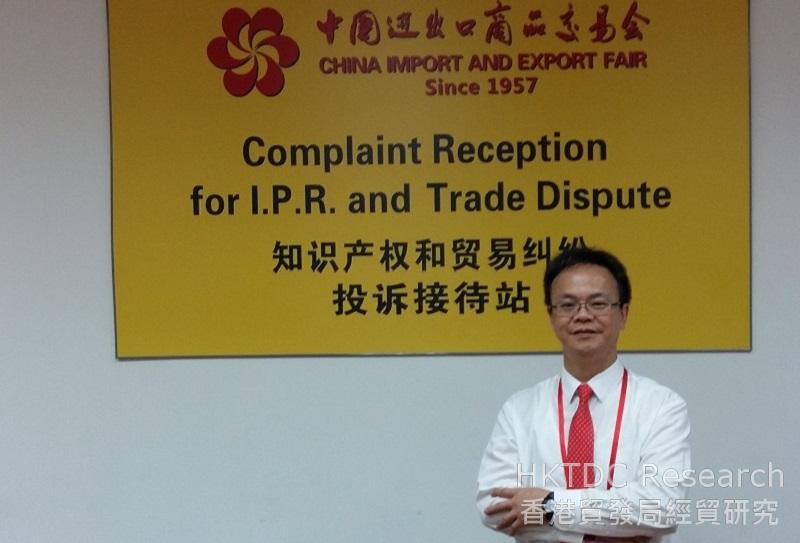
Ying Chi Lit Daniel [1] is a General Mediator who has spent the last two years offering on site arbitration services at the Canton Fair, China’s largest trade event. Two years ago, the fair – more formerly known as the China Import and Export Fair – was chosen as the pilot zone for the trial of a new initiative, one designed to settle cross-border trade conflicts between Chinese companies and their overseas counterparts through an internationally-accepted mediation framework.
Under the terms of this initiative, mediation is the first step for all of the parties concerned. Should this prove successful, the two sides then sign a settlement agreement before applying to a mainland arbitration court to endorse the arrangement. Once this step has been completed, the agreement is considered binding on all the relevant parties under the terms of the New York Convention, an agreement covering the recognition and enforcement of foreign arbitral awards recognised by some 65 countries. Combining aspects of both mediation and arbitration, this legally-binding model has proved highly effective in terms of resolving trade disputes. As such, it is seen as a fast, effective and low-cost platform for resolving cross-border disputes between the mainland and its overseas trading partners.
According to Ying, this globally-accepted model of facilitative mediation is very different to the form of advisory mediation favoured on the mainland. The international model focuses more on enabling all parties concerned to make their own decisions and evaluate their own situations, constantly facilitating communication between the various sides, while promoting an understanding of each other’s needs and perspectives. The mediator then guides the parties with regard to discussing, creating and expanding upon feasible solutions, while gradually addressing any difficulties.
Once a settlement has been reached, the mediator then assists in drafting and formalising the final agreement. Overall, the mediation process is based on the principles of voluntariness, neutrality and confidentiality and looks to both resolve the immediate conflict while fostering a long-term relationship between the parties.
According to Ying, many of the overseas businessmen who engaged the services of the Canton Fair arbitration centre were delighted to learn they were dealing with a Hong Kong-based mediator, believing this offered a very trustworthy route for the resolution of any trade-related issues. Overall, Hong Kong service providers are seen as having had greater exposure to the international business environment, a clear asset when dealing with such situations.
As the BRI programme and the mainland’s going-out initiatives continue to roll out, the demand for cross-border dispute resolutions will inevitably rise. Addressing this issue, Rimsky Yuen, Hong Kong’s Secretary for Justice, reassured the Legislative Council’s Panel on the Administration of Justice and Legal Services back in 2016 that every effort will be made to actively promote Hong Kong’s legal and dispute resolution services. It is hoped that this will encourage mainland businesses and those based in countries within the scope of the BRI to use the services of the relevant Hong Kong professionals whenever the need arises.
Yuen also committed Hong Kong’s mediation bodies to establishing a wide-ranging dialogue with their mainland counterparts in order to enhance the effectiveness of all concerned.
Overall, Ying believes the extensive experience of Hong Kong’s international facilitative mediation service providers is the perfect complement to China's arbitration-based cross-border commercial dispute resolution services and mechanisms. He also hoped that an increasing number of companies operating in markets along the proposed BRI routes would opt to use the mediation plus arbitration model when it came to resolving commercial disputes, believing this will help China and Chinese companies as they participate more fully in the global business arena.
[1] Daniel Ying is a Director of the Hong Kong Mediation Centre, Chairman of its Disciplinary Committee, a mediation expert in Hong Kong and Chinese commercial matters, a cross-border mediation instructor and an examiner. He has dealt with a variety of conflicts, including: a number of business disputes in both China and Hong Kong, corporate mergers, acquisitions, reform programmes, investment and financial disputes, partner conflict, debt collection and account handling problems.