









Chinese Mainland
By Nadège Rolland, National Bureau of Asian Research (NBR)
China’s Grand Strategy - The BRI is now one of the main instruments of China’s grand strategy.
In sum, the Belt and Road Initiative (BRI) is an essential component in China’s larger effort to solve the fundamental geopolitical challenge that it faces, something its strategic thinkers have been considering since at least the turn of the 21st Century: how can China “rise”—assert its influence and reshape at least its own neighborhood — in ways that reduce the risk of a countervailing response? The Belt and Road Initiative attempts to combine all of the elements of Chinese power and to use all the nation’s strengths and advantages in order to achieve these ends. China’s banks, SOEs, diplomats, security specialists, intellectuals, and media have all been summoned to join in this effort. In other words, the BRI is now one of the main instruments of China’s grand strategy, coordinating and giving direction to an extensive array of national resources in pursuit of an overarching political objective. Focusing only on specific components or dimensions of the BRI, as most Western studies currently do, risks missing the point that all of these aspects are part of a comprehensive vision with a potentially global reach. To those who feel “underwhelmed” by its concrete achievements to date, it is important to keep in mind that the BRI goes well beyond the simple pursuit of economic gain through a series of ambitious engineering projects. It is intended to take a large step toward the realization of the “China Dream,” restoring the nation to its rightful place as the paramount power in Asia in time for the PRC’s 100th anniversary in 2049.
It remains to be seen how far the Belt and Road can go. If it unfolds as Beijing envisions, the implications would certainly be far reaching: an integrated and interconnected Eurasian continent with enduring authoritarian political systems, where China’s influence has grown to the point it has muted any opposition and gained acquiescence and deference; a new regional order with its own political and economic institutions, whose rules and norms reflect China’s values and serve its interests; and a continental stronghold insulated to some degree from American sea power.
Of course there are many obstacles along the way, as China’s leaders are well aware. Some of these can no doubt be overcome, but the BRI will also produce effects that are unexpected and unintended. The tremendous effort and massive resources China has committed to the Belt and Road should at a minimum generate greater international Western attention to its development, underlying motives, and possible strategic implications. This is an endeavor that the Chinese leadership takes very seriously. Others should do the same.
Please click to read the full report.
Editor's picks
Trending articles
By Amitai Etzioni, International Relations at the George Washington University
The Silk Road is again in the headlines. Some thirty world leaders recently participated in the inaugural Belt and Road Forum (BRF) in Beijing, to consider Chinese President Xi Jinping’s signature foreign policy initiative. Sixty-eight countries have already signed agreements with China to participate in the initiative, in which China is said to invest nearly one trillion dollars. The Belt and Road Initiative (BRI) has been dubbed “the project of the century.”
The recurrent publicity about the project raises the hackles of American officials who see it as geopolitics by others means. Trump’s Director of National Intelligence, Dan Coats, said in a recent testimony before the U.S. Senate that the Belt and Road Initiative fits within a pattern of “aggressive” Chinese investments. Coats added that the purpose behind the initiative is for China to “expand their strategic influence and economic role across Asia through infrastructure projects.” Franklin Allen, a professor of finance and economics at Imperial College in London believes that “it is an economic initiative, but along the way China will expand its military bases and so forth.” The Economist sees the Belt and Road Initiative as an attempt by China to replace the U.S. as the leader of global trade.
A less alarmed view finds first of all that the whole project is much overhyped. Figures about investments include projects that had been previously launched. Several projects, including some in Myanmar and Pakistan, have already gone belly up, causing Chinese investors to lose major parts of their investment. Moreover, as the U.S. discovered when it provided aid or invested in other nations, such measures often buy resentment rather than influence. And if China does contribute to the development of infrastructure in Central Asia, and thus to the development of this part of the world, this may well benefit the people of the region and help the nations involved achieve some stability.
In determining how to react to the Silk Road initiative, the West should draw on a major strategic consideration: Do the U.S. and its allies plan to block any and all increases in Chinese influence—or merely contain those moves that entails China’s use of force to dominate other countries?
The important underlying assumption is that a rising China is akin to a rising wave of energy; a strategy that allows that energy to be expended in ways that will not harm the international order and may indeed benefit it is more likely to succeed than one that seeks to bottle up that energy by seeking to block it everywhere. Implementing this strategy thus entails accommodating China’s desire to have more influence, but preventing coercion.
It is important to also distinguish between influence and coercion. Although China is likely to increase its influence in the region, its growing influence should not be equated with aggression. Influence leaves the final decision on how to act in a given scenario to the actor being subjected to the influence. Coercion, on the other hand, preempts such choices and forces those subject to it to abide by the preferences of the actor wielding force. For example, Germany has a disproportionate measure of influence over most European affairs relative to other EU member states, but this does not make it an aggressor, much less a regional hegemon. While in the past, the U.S. was a hegemon within the Western Hemisphere that coerced states that did not abide by its directives, and although it still has more influence in most of the region than any other power, it is no longer aggressive nor a hegemon. So according to the only aggression denying strategy, the U.S. and its allies should not tolerate the coercive use of force in the region (which would violate the long-standing Westphalian principal of sovereignty). However, when China’s moves are limited to seeking to increase its regional influence—say through public diplomacy, trade, investment or cultural exchanges and by investing heavily in the Silk Road—the U.S. should counter such influence with the same kind of means but not by military buildup and implicit threats to use it. This strategy seems preferable to both seeking to maintain the status quo (which leaves little, if any, room for a rising China to expend its rising energies) and retrenchment (in which the U.S. withdraws from Asia under some kind of America First strategy).
The preceding analysis assumes a clear distinction between being a hegemon and an influential power. Dictionary definitions of hegemony conflate influence with dominance. Hegemony might be best defined as the ability of a nation to preempt another nation (within whatever sphere it exerts hegemony) making decisions opposed by the hegemon. In contrast, an influential nation is merely able to get the other nation or nations to grant extra weight to its preferences compared to its own preferences or those of other nations. Distinguishing between these terms highlights important differences between strategies that seek to prevent China from becoming a dominant power and those that also seek to deny it increased influence.
All this means that the U.S. has no reason to oppose China’s major investments in infrastructure drive, one that will help finance the building of roads, railways, ports, bridges and pipelines. And if as a byproduct China will gain some additional influence in Asia (which does not necessarily follow) there is no cause for alarm. For instance, since the U.S. tilted toward India under the Bush administration, China gained somewhat more influence in Pakistan, but this increase did little to change the basic geopolitics of the region.
True, in a case of war, a developed Silk Road may make blocking China—which various U.S. military planners call for, as a less aggressive approach than invading the mainland—more difficult. However, allowing China to gain economic influence but not military dominance, and securing a much needed pathway for its much needed resources, will make war less likely.
Please click to read the full report.
Editor's picks
Trending articles
The industrial landscape in Asia is undergoing a fresh round of changes. Following the earlier large-scale relocation of production activities from many of the developed countries to lower cost regions in the late 1990s, industrial production activities soared across Asia, particularly in China, which emerged as a manufacturing power house. In recent years, however, the investment environment in China has begun to change. Rising labour and production costs across the mainland have prompted a number of foreign-invested and domestic enterprises to adjust their business strategies, frequently resulting in the relocation of part of their production activities to other locations within Asia, while their mainland business operations have been upgraded in a bid to enhance their competitiveness.
The Changing Business Strategies of Guangdong and Hong Kong Enterprises
Many of the local and Hong Kong enterprises engaged in production and trade in Guangdong actually began to adjust their strategies several years ago in order to cope with the changing investment environment of the Pearl River Delta (PRD) region. Among the steps taken was the relocation of a number of production and sourcing activities to lower-cost regions on the mainland.

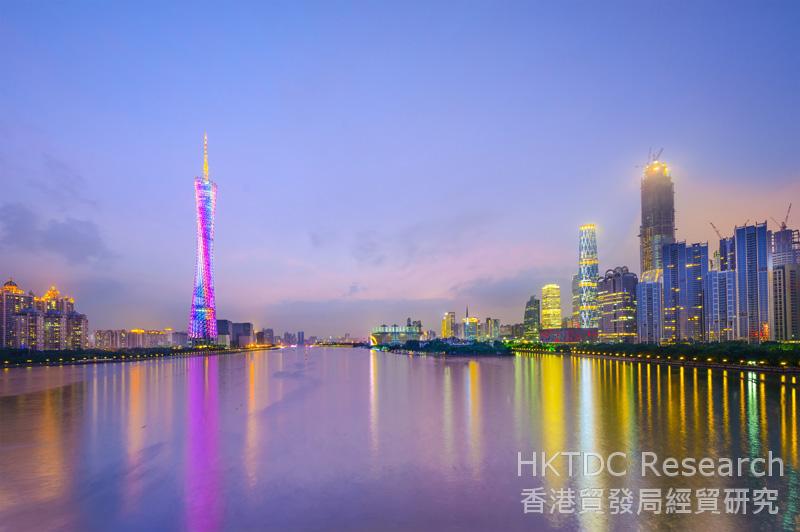

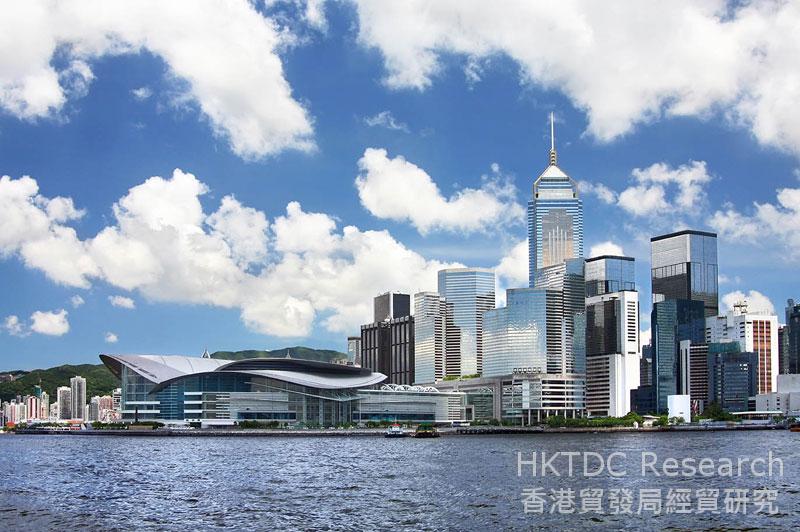
Quite a number of these businesses also opted to set up production facilities in one of the Southeast Asian and other countries set along the Belt and Road routes or to source various products and raw materials from such locations in the hope of reducing costs through the utilisation of external resources. As the growth of both the global and mainland markets has slackened over recent years, amid intensified competition from other low-cost regions, as well as controlling costs, many Guangdong and Hong Kong enterprises have had to take further action with regard to their transformation and upgrading. This has seen many of them aim to switch from labour-intensive production to high value-added business in order to secure sustainable development in the medium to long term.
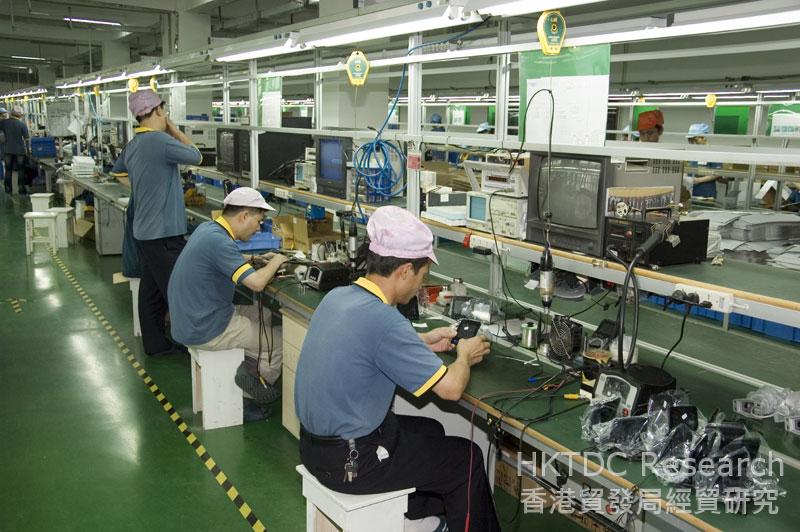
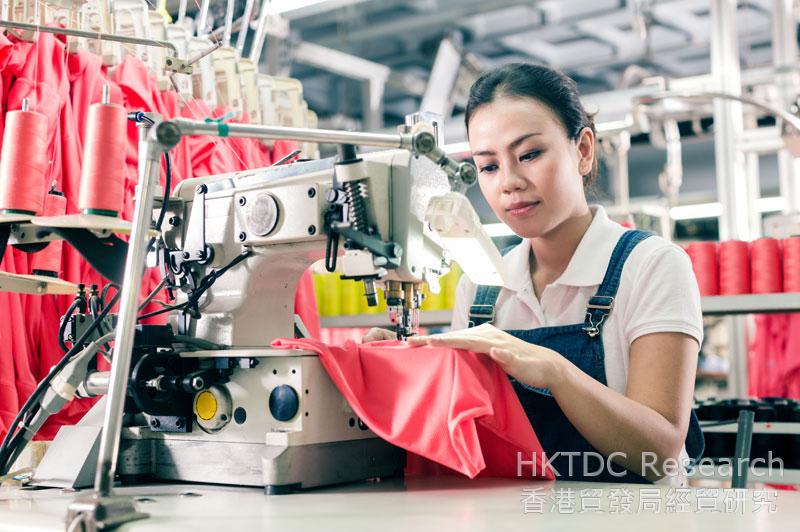
Many such enterprises have invested heavily in automation in order to alleviate the problem of labour shortages. By using automated production lines, they also hope to produce items of a higher quality with a greater degree of precision in order to meet the increasingly stringent requirements of the international market and to compete more effectively. While some enterprises have increased investment in technological research and development in an effort to develop into a more high-tech business, others have chosen to build their own brands to raise the perceived value of their products. As the pace of globalisation has quickened, the division of labour between different industrial sectors has become increasingly well-defined, a development that has, in turn, made the management of the global supply chain ever more complicated. In this regard, many enterprises in Guangdong and Hong Kong have had to adjust their strategies in light of the changing external environment in order to achieve a more comprehensive transformation and upgrade.
The Developing China/Asia Supply Chain
The advanced supply chain system and range of production support services enjoyed by the PRD is, arguably, unmatched anywhere else in world. In view of this, when mapping out future business plans, the majority of Guangdong and Hong Kong enterprises have opted to retain and even expand their production activities in the PRD, Guangdong its neighbouring regions, often prioritising higher value-added and higher technology content. At the same time, as industrial activities in other low-cost regions across Asia have continued to thrive, the supply chain relationship between China and Asia (including the ASEAN countries) has become increasingly close, a development that, in turn, offers an expanded market and wider sourcing options for Guangdong and Hong Kong enterprises.
At present, many enterprises ship large quantities of industrial materials from the PRD and other mainland regions to Asia and to other countries along the routes of the Belt and Road in order to support local industrial production activities. A number of such enterprises have also relocated to one of these low-cost regions in a bid to enhance their sourcing activities. Typically, the end-products produced/sourced in these regions are then sold on to the more developed countries, while the industrial materials, parts and components sourced there are shipped back to the PRD and other mainland regions in order to support higher-end production activities. Across Asia, the division of labour has become more and more well-defined, while the trading relationships between upstream/downstream suppliers and manufacturers in China and in a number of different Asian regions has become closer and closer. This has, in turn, fuelled the rapid expansion of intra-Asia trade.
Optimising Regional Business Plans
Generally speaking, in many of Asia’s lower cost regions, production conditions are somewhat basic, while the logistics and support services still have much room for improvement and technical personnel remain in short supply. As such, the enterprises that have relocated their production lines to these regions tend to be mainly confined to low-end, labour-intensive processes, producing light industrial goods as well as parts and components with a longer life cycle. Apart from labour costs, enterprises shifting their production offshore must also take into account their overall costs, including transportation, logistics, materials supply and management.
Coupled with the longer turnaround time required for such cross-regional arrangements, this requires the establishment of a highly efficient supply chain management system if industry players are to capitalise on the opportunities arising from changes to the international market. In light of this, when any such enterprise seeks to map out its offshore production plans, it is advised to take into consideration a number of factors, most notably whether the proposed production activity is compatible with the resources of the local market. As additional considerations, the trade barriers and preferential tariff policies implemented by the EU, US and other export markets may also impact on the regional production and sourcing plans of many enterprises.
Overall, as competition in the international market intensifies and the global supply chain continues to evolve, Guangdong and Hong Kong enterprises can no longer solely rely on their facility to lower direct production costs as a way of remaining competitive. Instead, they will have to proactively adopt a number of alternative strategies, including transformation, upgrading and enhancing business value. They will also need to take into consideration such concerns as overall market demand and cost benefits, while looking to optimise their regional business plans in order to increase their competitive edge.
Against this backdrop, Guangdong and Hong Kong should strengthen co-operation when it comes to formulating the necessary policies for promoting the further development of commercial entities in both locations. In particular, every effort will need to be made with regard to the application of smart manufacturing technology as a means of pursuing industrial upgrading, while action should also be taken to promote technological co-operation between enterprises in both locales and to accelerate the pace at which technological achievements are commercialised. Furthermore, both Guangdong and Hong Kong should look to improve the transport and logistics networks that connect them in order to ensure their respective enterprises can effectively plan for business development across the region. Steps should also be taken to encourage all such enterprises to work together when “going out” to capitalise on any emerging Belt and Road opportunities. They should also look to make best use of Hong Kong’s professional services sector in order to formulate long-term developmental strategies and to effectively manage risk. All the while, they need to strengthen their connections with Asia’s growing regional supply chain and make better use of the various regional resources available in order to expand both the mainland market and the wider export opportunities.
Please click here to purchase the full research report.
Editor's picks
Trending articles
By David Dollar, John L. Thornton China Center, Brookings Institution
For the five-year period between 2015 and 2019, China’s President Xi Jinping set an ambitious goal of $500 billion in trade with the Latin American and Caribbean region (LAC) and $250 billion of direct investment. The pledge was made at the first ministerial meeting of the Forum of China and the Community of Latin American and Caribbean States, held in Beijing in January 2015. China has set some large investment targets in Southeast Asia and Africa that it has not always met, so it remains to be seen if this degree of integration can be achieved. But the investment numbers are certainly plausible, as China is likely to emerge in the next few years as the world’s largest supplier of capital.
The outflow of capital from China takes two main forms. These are direct investment, which consists of greenfield investments plus mergers and acquisitions, and lending by China’s policy banks, which are the Export-Import Bank of China (China EXIM Bank) and China Development Bank (CDB). China’s Ministry of Commerce (MOFCOM) reports the allocation of China’s overseas direct investment (ODI) among recipient countries. Specifically, MOFCOM reports the annual flow of ODI and the accumulating stock of China’s outward investment. In recent years, China’s ODI has amounted to somewhat more than $100 billion per year, accelerating to above $200 billion in 2014. The cumulative stock tripled between 2010 and the end of 2014, reaching nearly $900 billion. Of this total, $106 billion was direct investment to Latin American and Caribbean countries.
One problem with China’s reporting of the ODI to individual economies is that about half of China’s global ODI goes to Hong Kong. And within Latin America and the Caribbean, large amounts of China’s ODI go to the Virgin Islands and the Cayman Islands. These money centers are certainly not the ultimate destination for all of this investment. China should work to improve its statistics to reflect the ultimate destination of its overseas investments so that publics everywhere have more-accurate information. In general, direct investment is welcome, so it would be in China’s interest to produce better data that more accurately reflects its growing role in global investment.
How is Chinese investment likely to evolve?
To the extent that Chinese investment differs from global norms and practices, there are three possible paths forward: (1) Chinese investment could become more typical; (2) global practices could shift in the direction of China; or (3) China could remain at odds. This section speculates that in Latin America we are likely to see some combination of all three possible outcomes.
First, when it comes to investment in poor-governance environments, China is likely to evolve in the direction of current investment norms—that is, to favor better governance environments. Part of China’s motivation for investing in countries such as Venezuela and Ecuador was to gain access to natural resources. In the 2000s, China’s growth model was highly resource-intensive and global prices for most commodities were rising. That made it tempting to look for resources even in risky environments. That has all changed this decade, however. A lot of new supply has come online in sectors such as oil and gas, iron, and copper. Meanwhile, China’s growth model is shifting away from resource-intensive investment towards more reliance on consumption.20 Consumption primarily consists of services, which are less resource-intensive. As a result of these shifts in supply and demand, commodity prices have come down, and China’s import needs have diminished.
Also, as noted earlier, the investments in poor governance countries are not working out well. A study concludes that the relatively strong Chinese involvement in poor-governance states such as Venezuela represents “Beijing filling the ‘void’ left by a declining American presence in Washington’s own ‘backyard.’” The fact that China has stopped funding Venezuela suggests, instead, that it has a more practical and economic attitude to these countries. As Chinese people demand a better return on state-backed investments abroad, it is likely that China will pull back on the resource investments in countries with poor governance. At the same time, many Chinese private firms are looking to invest abroad in a wide range of sectors, and those investments are heading to the United States, other advanced economies, and emerging markets with relatively good governance, as is the case with global investment in general. How much of a concern should this be for the United States? In a companion paper to this one, Harold Trinkunas finds that “the scope for Chinese leverage on Latin American governments is limited to a small set of countries.” Ted Piccone analogously concludes that “for now… China’s rise has generally not impinged on core U.S. national security interests but requires careful monitoring.” My finding of rather indiscriminate investment by China across the continent is consistent with these more benign assessments of China’s activity in Latin America and its potential to generate U.S.-China conflict.
Concerning environmental and social safeguards for infrastructure projects, China has identified an issue that resonates with other developing countries. The World Bank and other multilateral development banks have been imposing environmental and social standards that reflect the preferences of rich-country electorates. Developing countries have been voting with their feet and have turned away from those banks as important sources of infrastructure financing. In general, they welcome Chinese financing of infrastructure. The response among developing countries to China’s proposal for a new infrastructure bank, AIIB, was especially strong. Asian countries that are not particular friends of China, such as India, Indonesia, and Vietnam, were quick to sign up for the effort. AIIB’s attempt to develop workable safeguards to address environmental and social risks without the long delays and high costs of practices at existing multilateral development banks is an important innovation. Latin American countries have indicated their preference by borrowing more from Chinese banks for infrastructure than from the World Bank and IADB. The Chinese-financed projects, however, do carry significant environmental and social risks and it will take strong oversight from Latin American governments and civil society to ensure that benefits exceed costs. Environmental and social safeguards are examples of areas where China may end up modifying global norms to make them align better with developing country preferences.
The third issue identified in this essay, reciprocity, should be an easy one for China to address. There is ample evidence that big state enterprises are less productive than private firms in China. Many of the sectors that remain closed in China are service sectors such as finance, telecommunications, transportation, and media—all of which are dominated by large state enterprises. With the shift in China’s growth model, these service sectors have now become the fast-growing part of the economy, while industry is in relative decline. It will be easier for China to maintain a healthy growth rate if it opens these sectors to international competition, in the same way that it opened manufacturing in an earlier era. And talk of opening these sectors can be found throughout party documents, such as the recent Third Plenum resolution. However, actual progress with opening up under the new leadership has been slow. It may be difficult for China to commit to any bold opening up in the next few years as it grapples with adjustment of its growth model and as it prepares for a political transition in 2017. It is likely that China will remain more closed to inward investment than its partners, which creates a dilemma for them. However, Latin American governments will probably continue to welcome Chinese investment despite the lack of reciprocity.
Please click to read the full report.
Editor's picks
Trending articles
By Vice-Admiral Patrick HÉBRARD, Associate researcher, Fondation pour la recherche stratégique, FRS, Paris
(This study was commissioned by the European Parliament's Sub-Committee on Security and Defence)
Abstract
China’s New Maritime Silk Road policy poses geostrategic challenges and offers some opportunities for the US and its allies in Asia-Pacific. To offset China’s westward focus, the US seeks to create a global alliance strategy with the aim to maintain a balance of power in Eurasia, to avoid a strong Russia-China or China-EU partnership fostered on economic cooperation. For the EU, the ‘One Belt, One Road’ (OBOR) initiative by improving infrastructure may contribute to economic development in neighbouring countries and in Africa but present also risks in terms of unfair economic competition and increased Chinese domination. Furthermore, China’s behaviour in the South China Sea and rebuff of the ruling of the Permanent Court of Arbitration, in July 2016, put the United Nations Convention on the Law of the Sea (UNCLOS) at risk with possible consequences to freedom of the seas. Increasing relations with China could also affect EU-US relations at a time of China-US tension. To face these challenges, a stronger EU, taking more responsibility in Defence and Security, including inside NATO, is needed.
Introduction
On 7 September 2013, President Xi Jinping proposed the building of the ‘Silk Road Economic Belt’ during his visit to Kazakhstan. The same year, on 3 October, addressing the Indonesian parliament, he proposed the building of a ‘New Maritime Silk Road’. Both are now collectively called ‘One Belt One Road’ (OBOR) initiative. At the Boao Forum on 28 March 2015, China released the ‘Vision and Action on Jointly Building Silk Road Economic Belt and 21st Century Maritime Silk Road’ indicating that the OBOR initiative has officially become one of China’s national strategies. According to the Chinese authorities, One Belt refers to the land-based Silk Road, whereas One Road refers to the 21st Century Maritime Silk Road.
At the end of 2014, China set up the Asia Infrastructure Investment Bank (AIIB) in October and the Silk Road Fund (SRF) in November to sponsor Asian connectivity and development programmes. They function together as complementary wings of Asian development.
China’s OBOR initiative has provoked both positive and negative comments and interpretations internationally. Some observers view it as a grand strategy for extending China’s economic and geopolitical influence into ASEAN, Eurasia and beyond, while others are concerned that OBOR might reshape global economic governance and lead to the rebirth of China’s domination in Asia.
Furthermore, Chinese and foreign media quickly described OBOR as the ‘Chinese version of the Marshall Plan’, and the BRICS Bank, the AIIB, and the Silk Road Fund as key components of that plan. The Belt and Road project is undoubtedly the most important international project that China has embarked on in the last few decades. It aims to stimulate economic development over a vast area covering sub-regions in Asia, Europe and Africa.
Although there has been no official announcement about what countries are covered by the Belt and Road initiative, some official sources point to the involvement of at least 63 countries, including 18 European countries. Particularly relevant for Europe is that the Silk Road ends where the European Union (EU) starts. This massive bloc between the EU and China accounts for 64% of the world’s population and 30% of global Gross Domestic Product (GDP).
This study will focus on the 21st Century Maritime Silk Road. In a first part, it analyses the challenges to the freedom of the seas in Asia, giving particular attention to China’s maritime interest sphere. The second part analyses the role of the ‘Maritime Silk Road’, in this context, while the third part is devoted to the United States and its allies’ role in the security policies in the region. From the above, the fourth part describes the effects of the strategic choices made by regional powers and the United States on European Union cooperation, foreign and security policy deployment in the region, noting possible implications on Euro-Atlantic cooperation. The fifth part describes and analyses the legal dimension of disputes in the context of UNCLOS and of the ruling of the Permanent Court of Arbitration in the case of the South China Sea. In the last part, the study proposes some policy options for the EU.
- Current challenges to the freedom of the seas in Asia
- The role of the ‘One Belt One Road’ initiative
- The role of the USA and its allies in the security policies in the region
- Effects on the European Union’s policy in Asia Pacific and on Euro-Atlantic cooperation
- Consequences of the ruling of the Permanent Court of Arbitration in the case of the South China Sea
Policy options for the EU
China’s OBOR initiative affords both opportunities and risks due to China’s behaviour in the China’s Seas and hidden strategic policy. For the United States, China’s increasing grip on the South and Central Asia is certainly unacceptable, and US President elect Trump’s telephone call to the Taiwanese President seems to show the future way of the US strategy in the area.
The magnitude of OBOR’s impact on the EU's long-term geopolitical, economic and geostrategic interests will also depend on whether the EU responds to OBOR with one voice and coordinated policies.
Relying on a soft power approach with a focus on international law, the EU is not seen as a strong security player, which leaves it with some possibilities to initiate a maritime security governance mechanism and framework that can mitigate the risk of the Asia-Pacific area being affected by Great Power tensions. This should be done, obviously, in close cooperation and coordination with regional countries.
In accordance with the above the policy options for the EU could be the following:
- In her foreword to the European Union Global Strategy, the High Representative of the Union for Foreign Affairs and Security Policy, Vice-President of the European Commission states rightly: The purpose, even existence, of our Union is being questioned. Yet, our citizens and the world need a strong European Union like never before… None of our countries has the strength nor the resources to address these threats and seize the opportunities of our time alone. But as a Union of almost half a billion citizens, our potential is unparalleled… We will deliver on our citizens’ needs and make our partnerships work only if we act together, united… Yes, our interests are indeed common European interests: the only way to serve them is by common means. This is why we have a collective responsibility to make our Union a stronger Union. A fragile world calls for a more confident and responsible European Union, it calls for an outward-and forward-looking European foreign and security policy.’65 Consequently, the first action will be to build a ‘credible Union’, anchored on its shared values if the EU wants to be able to discuss as equals with the Great powers.
- EU policy has always promoted international law (UNCLOS) as the basis for maritime governance and cannot accept China’s rebuff of the ruling of the Permanent Court of Arbitration. That said, the EU must act to avoid a confrontation between China and the USA in the South China Sea, which would have an immediate impact on maritime traffic and world trade. The development of a code of conduct in the South China Sea should be actively pursued and bilateral and multilateral discussions must be encouraged to find an agreement on EEZ delimitations, on fishing and environmental rules and on freedom of navigation in the area, in accordance with the UNCLOS and taking into account the security of China’s strategic nuclear deterrence. Proposing the EU Integrated Maritime Policy (IMP) as a basis for discussion could be helpful.
- The EU policy towards ASEAN is competing with China’s OBOR project. For ASEAN these increasing ties with other countries are welcomed as they contribute to economic growth in the region and offer the possibility not to be excessively dependent on its main partner, China, in coherence with ASEAN concept of centrality. As analysed by the High Representative, the EU should intensify its relations with ASEAN, increasing its presence and facilitating progress in ASEAN confidence-building measures.
- The evolution of China’s strategy and the situation in the East and South China Sea require constant monitoring. This calls for intelligence gathering by European intelligence agencies for improved awareness and decision-making.
- The EU’s interests do not always coincide with those of the United States, and the EU benefits from taking a more independent position on security issues related to Asia. The EU member states must also consider that relations with the US have changed and will continue to evolve. For the USA, the EU is an economic power and a competitor on the world markets. The euro is seen as challenging the dollar’s supremacy and the US strategic priorities have shifted to Asia and the Middle East, as shown by the rebalance of the US military forces66 to these areas. President elect Trump has announced he will give less support and take some distance from its European allies. The EU must strengthen defence and security ties among member states, increase defence efforts and assume a greater role within an ‘obsolete’ NATO.
- The US rebalance towards Asia requires Europe to take a greater responsibility for stability in its immediate surroundings, especially in the Mediterranean, in the western Indian Ocean and in Africa. All observers agree to say that operation ATALANTA in the Horn of Africa, is a success. In spite of the difficulty of its mission, operation SOPHIA is saving migrant lives and helps Libya to rebuild its Navy and Coast Guard. A permanent activation of EUROMARFOR, with a European Maritime Force, sailing in the Mediterranean or alongside the West African coasts would offer the necessary means for presence and surveillance at sea, training with foreign navies and crisis prevention, in relation with NATO.
- Maritime domain awareness is a prerequisite to maritime security. While the US is developing the MISE (Maritime Information Sharing Environment) and the EU, the CISE, (Common Information Sharing Environment), the South East Asian countries have established the IFC (Information Fusion Centre) in Singapore and India is developing its own system. Connection between the different networks will improve considerably the maritime surveillance and awareness. Furthermore, the EU’s PMAR-MASE67 programme for Eastern and Southern Africa and Indian Ocean is financing a maritime regional IFC in Madagascar with the aim to connect it to Singapore’s IFC.
- OBOR opens opportunities for the EU to pursue its geostrategic ambitions68 in Central Asia by deepening the EU-China strategic partnership through cooperation in non-traditional security fields, as decided in 2007 and confirmed in 2015. This could possibly pave the way to EU-Russia reconciliation. It may be advantageous for the EU to consider how its existing policy tools and strategies, such as the European Neighbourhood Policy (ENP) and the EU Maritime Security Strategy, could be linked with OBOR and how this strategic alignment could feed into the EU's Global Strategy for Foreign and Security Policy.
- China’s new initiatives will accelerate the growth of its influence in the maritime domain as well as in Asia, Africa and Europe more broadly. An EU proactive approach to closely working with local actors and coordinating actions or programs with China when it is of added value, seems to be the best way to preserve European interests and role. For example, the EU has a real interest in supporting the 2050 Africa’s Integrated Maritime Strategy (2050 AIMS) to improve security, tackle IUU and piracy and develop Africa’s economies, and coordinating with Chinese investments in ports and infrastructures.
Please click to read full report.
Editor's picks
Trending articles
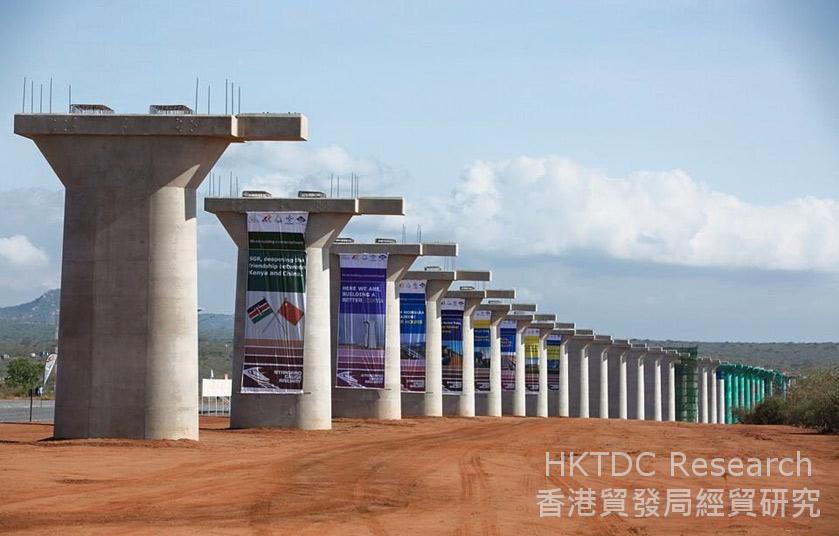
The Addis Ababa-Djibouti Railway is the latest beneficiary of China's African investment programme, with the BRI set to ensure that the number of such projects is set to increase, but are China and Africa's agendas truly compatible?
Djibouti is among the tiniest of all of the African nations, while Ethiopia has long been considered the economic powerhouse of the Horn region of East Africa. Both, however, are clear beneficiaries of the Belt and Road Initiative (BRI), China's massive international infrastructure and trade development programme.
While Djibouti may be diminutive, its port packs a punch, occupying, as it does, a strategic position straddling the entrance to the Red Sea. The country also has a substantial military presence, including the largest American military base in Africa. By contrast, Ethiopia, a nation with the second-largest population on the continent, is a true regional economic bright spot.
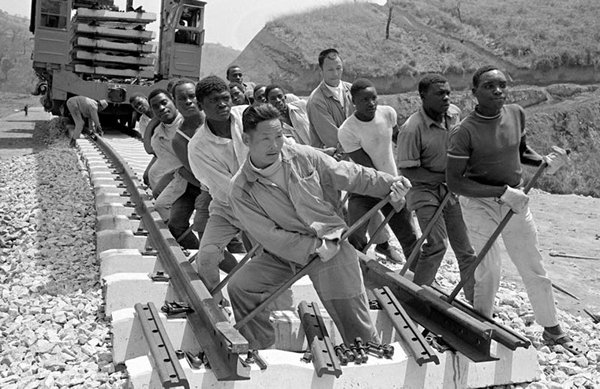
These two countries, although markedly different, have now been linked by the Addis Ababa-Djibouti Railway, a project largely realised through Chinese engineering and investment. Officially opened in October 2016, Africa's first cross-border electric railway was built by the China Railway Group and the China Civil Engineering Construction Corporation, while most of the US$4 billion financing came from the Exim Bank of China.
The new 750km railway provides a much improved import-export corridor for landlocked Ethiopia. Most significantly, it slashes the seven-day road-freight journey from Addis Ababa to the port of Djibouti to just 10 hours. The outcome of a strategic partnership between China and Africa, the rail link is viewed as an integral part of the BRI.
More recently, in June this year, another China-funded/managed project, the Mombasa-Nairobi Line, went into operation. The 485km line is actually phase I of a much bigger project – a $14 billion standard-gauge railway network that will eventually extend from Kenya on to Uganda then to Rwanda.
Once completed, it is hoped that this network will open up many of the landlocked East African markets to Chinese manufactured goods via the port of Mombasa. It is also anticipated that it will improve the supply chain for African mineral commodity exports, resources that China increasingly relies upon.
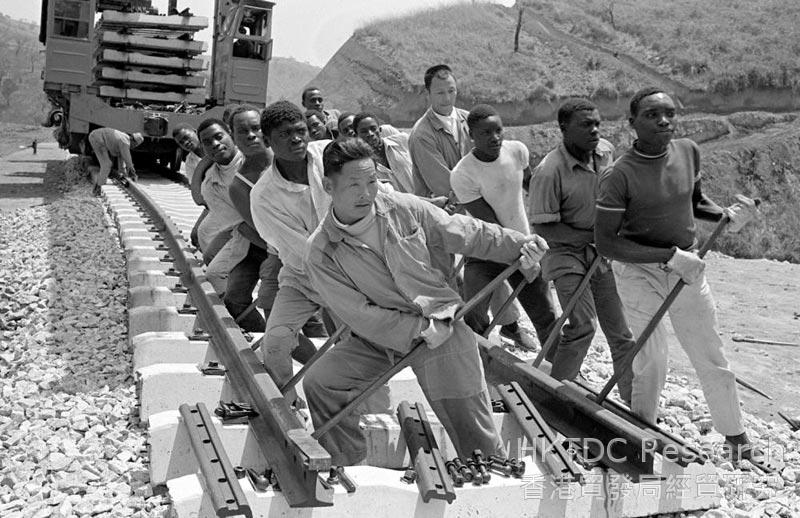
The two rail projects are just the latest in a long line of engineering initiatives that have seen China establish a substantial presence in Africa. Back in the 1970s, China built the Tazara Railway, which connected landlocked Zambia and its copperbelt with the Tanzanian port of Dar es Salaam. At the time, this was China's largest aid project in Africa.
More recently, China's commitment to major infrastructure projects across Africa has formed a key element of its BRI agenda. It is also clear that China is keen to play a major role in Africa's economic development, a policy that will only enhance its commercial presence on the continent.
Acknowledging this, during the 2015 Forum on China-Africa Cooperation Xi Jinping, China's President, committed to a generous US$60 billion package of development assistance for Africa. Much of this was earmarked for investment in several major infrastructure projects, including the new Ethiopia-Djibouti Railway and a series of port upgrades along the East African coast.
Assessing China's game plan, David Monyae, a political analyst at Johannesburg University's Confucius Institute, said: "China has enhanced its role on the continent with a no-strings-attached approach to investment and commercial engagement. This has created the impression that Beijing is ready and willing to support Africa's development efforts."
Other analysts, however, have been more cynical, asserting that the BRI is a means for China to create not only a global trading bloc, but also to establish a "zone of influence". One such commentator, Peter Fabricius, a consultant for South Africa's Institute for Security Studies, said: "Xi may be taking advantage of a fortuitous opportunity to extend China's economic and political influence as a world leader. This could see it capitalising on a moment of American global capitulation under Donald Trump, the notoriously isolationist US President."
Fabricius is not alone in seeing a clear indication that a new international economic order may be emerging. As a sign of this, China recently established a military base in Djibouti, alongside those already leased to several other countries, including the US and France.
Others, however, refute that the BRI projects underway across the continent form part of a clandestine power grab. Instead, they maintain that China's investments in East Africa are purely part of a wider trade network, one intended to improve access to Africa's one-billion strong consumer market. As such, it is thought, they should be seen as a development drive that is looking to nurture joint progress through enhanced trading pathways.
Whether the two – geopolitical assertiveness and an increased global trading network – can be genuinely separated out is something of contentious issue. Either way, as one writer – Peter Bruce, one of South Africa's leading business journalists – said: "Chinese influence in Africa is immense, visible and spreading fast."
For many, the key question is whether what works for China will also work for Africa. The African Union, a body that represents all 55 countries across the continent, is optimistic that it will. It has long made it clear that it is keen for China to partner with many of Africa's infrastructure and technology programmes.
Perhaps going some way to explain the Union's enthusiasm, Greg Mills, a South African economist, said: "Chinese contractors and businesses are willing to go to places and work in conditions that few in the West would contemplate."
Made in ChinAfrica
It's not just infrastructure deals, however, that are attracting Chinese investors to Africa. According to the World Bank, an estimated 86 million low-skilled manufacturing jobs are set to be outsourced from China, a consequence of the rising cost pressures caused by higher wage expectations. Ultimately, it is expected that Africa will be the primary beneficiary of this shift in labour demand.
Assessing this likely change, Mills said: "Low-tech, high-labour manufacturing cannot be done virtually and, as China moves up the development scale, Africa can realistically hope to meet this demand."
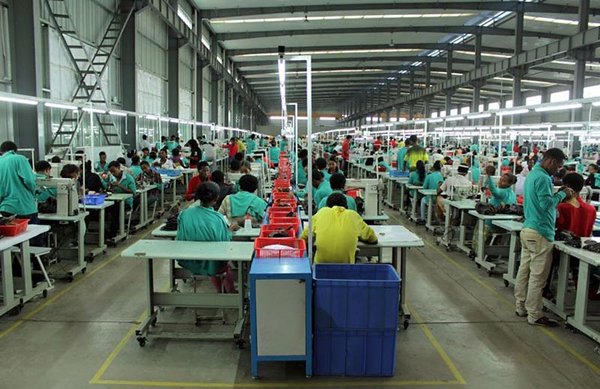
One sector where such a process is underway is the textile industry, with China having relocated some production facilities to Africa. In particular, China has invested heavily in several large manufacturing projects in Ethiopia, with the East African country set to become the continent's garment manufacturing hub.
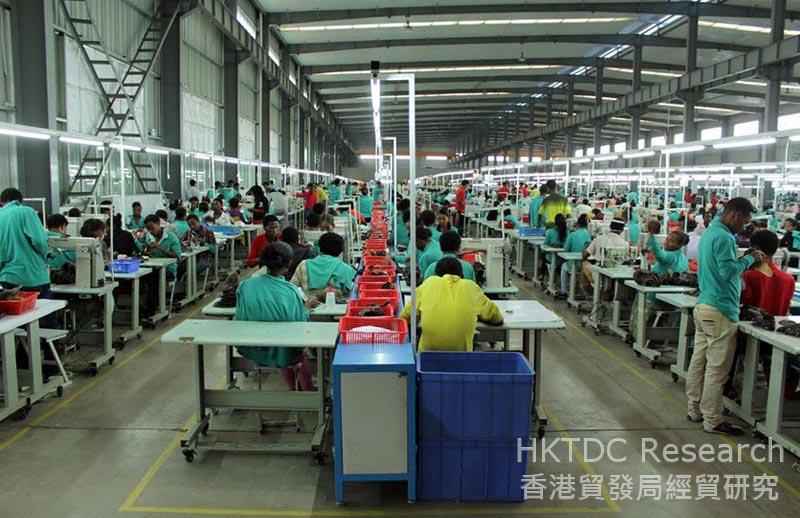
Ethiopia is already one of Africa's fastest-growing economies, with the country having pursued a policy of deliberately keeping labour costs low in order to create a competitive advantage. One industrial park, near Addis Ababa, the nation's capital, now houses some 80 Chinese textile firms, all attracted by low or zero tariffs and cheaper labour – comparative industry wages are 15 times lower in Ethiopia than in China. The Huajian Group, a Zhejiang-based footwear manufacturer, has also invested heavily in a large plant in the park, which currently has more than 3,000 employees.
Overall, improved transport infrastructure – much of it funded by China – has led to manufacturing efficiency improving across Africa. Once landlocked Ethiopia, for example, now has direct access to a port following the opening of the Addis-Djibouti Line.
It should be no surprise then that several other African countries, notably Morocco, South Africa, Cameroon and Togo, are now said to be angling for Beijing's attention. Given that Chinese companies have already created some 600,000 jobs across Africa, it is pretty much inevitable that every country on the continent would look to capitalise on the possible spoils of the BRI.
For its part, China clearly believes that outsourcing some of its manufacturing requirements will help make certain African countries more self-sufficient. The naysayers argue, however, that China is taking advantage of cheap labour, demonstrating that it's indifferent to the repressive regimes and poor governance that characterise many of its partner countries across Africa.
Despite these concerns, it's indisputable that Africa needs to create a larger manufacturing sector if its economies are to achieve sustainable growth in a global environment where falling commodity revenues seem a long-term reality. It is also clear that China is looking to capitalise on this need.
Ultimately, as with all other investors, China wants to ensure it is getting a good return on its capital, a policy that is more than apparent in its approach to its African infrastructure projects. Highlighting this, Bruce said: "China does almost no work in Africa from which it does not derive some form of benefit, either political or economic."
As was the case with China several years ago, Africa is now keen to participate more fully in the globalised economy. For many, if the BRI can help boost development across Africa and drive economic activity, then that can only be a positive for the continent.
Mark Ronan, Special Correspondent, Cape Town
Editor's picks
Trending articles
Fung Business Intelligence
With a joint communique signed by the attending government heads and an extensive list of 270 deliverables, the first Belt and Road Forum (BRF) concluded fruitfully in Beijing on 15 May. Featuring the theme ‘Cooperation for Common Prosperity’, the two-day forum drew around 1,500 delegates from more than 130 countries and 70 international organizations, including 29 foreign heads of state and government.
The BRF is touted as China’s highest-profile diplomatic event of the year, and a first-of-its-kind international conference promoting the Belt and Road Initiative, which was proposed by Chinese President Xi Jinping in 2013 and has involved over 100 countries and international organizations so far. The second BRF will be held in China in 2019, Xi announced at the close of the forum.
Inspired by the ancient silk routes and previously known as ‘One Belt, One Road’, the Belt and Road Initiative is an ambitious plan spearheaded by the Chinese government to promote trade and economic integration across Asia, Europe, Africa and possibly beyond. The Initiative, which includes the Silk Road Economic Belt and the 21st Century Maritime Silk Road, aims at creating an open platform among the participating countries and international organizations to improve policy coordination, infrastructure connectivity, trade and finance collaboration, and people-to-people bonds.
I. Highlights of President Xi’s Keynote Speech
In his keynote speech delivered at the opening ceremony, President Xi repeated his call for an open world economy and reiterated China’s objective of pursuing the Initiative is to create ‘a new model of win-win cooperation’ but not ‘geopolitical maneuvering’. Besides, he pledged more financial support from China to the Initiative through loans and assistance.
Below are key highlights of President Xi’s keynote speech [1]:
- Renewing the Silk Road spirit
- President Xi called for renewing the ancient Silk Road spirit of ‘peace and cooperation, openness and inclusiveness, mutual learning and mutual benefit’.
- Reviewing progress made during the past four years
- Fruitful results have been achieved in the areas of policy coordination, infrastructure, trade, finance and people-to-people exchange.
- For example, China has signed cooperation agreements with over 40 countries and international organizations; total trade between China and other Belt and Road countries in 2014-2016 has exceeded US$3 trillion, and China’s investment in these countries has surpassed US$50 billion; the Asian Infrastructure Investment Bank has provided US$1.7 billion of loans for 9 projects in Belt and Road countries.
- Reiterating China’s objectives
- ‘We are ready to share practices of development with other countries, but we have no intention to interfere in other countries’ internal affairs, export our own social system and model of development, or impose our own will on others.’
- ‘We will not resort to outdated geopolitical maneuvering. What we hope to achieve is a new model of win-win cooperation. We have no intention to form a small group detrimental to stability, what we hope to create is a big family of harmonious co-existence.’
- Reaffirming the aim and focus of the Initiative
- ‘The pursuit of the Initiative is not meant to reinvent the wheel’, but ‘to complement the development strategies of countries involved by leveraging their comparative strengths’.
- The Initiative should ‘focus on the fundamental issue of development, release the growth potential of various countries and achieve economic integration and interconnected development and deliver benefits to all’.
- ‘We should build an open platform of cooperation and uphold and grow an open world economy.’
- Pledging more funds for the Initiative
- China’s Silk Road Fund will increase funding by 100 billion yuan; Chinese financial institutions will set up overseas RMB fund business with an estimated scale of around 300 billion yuan; the China Development Bank and the Export-Import Bank of China will make special loans worth 250 billion yuan and 130 billion yuan, respectively, to support cooperation in infrastructure, industrial capacity and financing.
- China also promised assistance worth 60 billion yuan to developing countries and international organizations over the next three years. Some other financial assistance will be provided to improve the well-being of people in the Belt and Road countries.
- Enhancing trade and cooperation
- China will host the China International Import Expo starting from 2018.
II. Major deliverables of the Belt and Road Forum
President Xi and 29 other heads of state and government signed a joint communique [2] at the close of the Leaders Roundtable held on the second day of the forum, reaffirming their commitment to building an open economy, ensuring free and inclusive trade, and promoting a universal, rules-based, open, non-discriminatory and equitable multilateral trading system with WTO at its core.
The two-day forum yielded fruitful results with 270 deliverables in five key areas, namely policy coordination, infrastructure, trade, finance as well as people-to-people exchange, according to a list of deliverables released by the Xinhua News Agency. During the forum, China signed cooperation agreements with 68 national governments and international organizations. Below are some of the major outcomes/deals achieved during the BRF [3]:
- Policy coordination
- The Chinese government signed bilateral cooperation agreements with 16 other national governments/relevant ministries and several international organizations.
- The Guiding Principles on Financing the Development of the Belt and Road was endorsed by the ministries of finance of relevant countries.
- An advisory council, a liaison office, and the Facilitating Centre for Building the Belt and Road will be set up. The official Belt and Road web portal and the Marine Silk Road Trade Index have been launched.
- Infrastructure connectivity
- Bilateral cooperation agreements in various fields such as energy, water, ports, railways and information technology, were reached between relevant government departments.
- Agreement for Further Cooperation on China-Europe Container Block Trains among Railways of China, Belarus, Germany, Kazakhstan, Mongolia, Poland and Russia was endorsed by railway companies of relevant countries.
- The China Development Bank and the Export-Import Bank of China signed financing agreements on various infrastructure projects with parties of relevant countries participating in the Initiative.
- Trade connectivity
- The Chinese government signed economic and trade cooperation agreements with the governments of 30 countries.
- The Ministry of Commerce of China and the relevant agencies of more than 60 countries and international organizations jointly issued the Initiative on Promoting Unimpeded Trade Cooperation along the Belt and Road.
- The China-Georgia Free Trade Agreement was endorsed.
- Bilateral cooperation agreements in the fields of promoting SME development, agriculture trade, e-commerce, inspection and quarantine, cross-border economic cooperation zone, etc. were signed between China and government departments of relevant countries.
- The China International Import Expo will be held from 2018.
- Finance connectivity
- In addition to the funding pledges made by President Xi in his speech, China will set up the China-Russia Regional Cooperation Development Investment Fund, with a total scale of 100 billion yuan and the initial scale of 10 billion yuan.
- The Ministry of Finance of China signed memoranda of understanding on collaboration under the Initiative with six international development organizations.
- The China-Kazakhstan Production Capacity Cooperation Fund came into operation.
- The China Development Bank, the Export-Import Bank of China, and China Export and Credit Insurance Corporation signed cooperation agreements with relevant parties of countries participating in the Initiative.
- People-to-people exchange
- On top of the 60 billion-yuan financial assistance announced in President Xi’s speech, China will provide 2 billion-yuan emergency food aid to the Belt and Road countries, US$1 billion to the South-South Cooperation Assistance Fund, and US$1 billion to relevant international organizations to implement projects benefiting countries along the Belt and Road.
- Bilateral cooperation agreements on various fields such as cultural exchange, tourism, education, science and technology, health, media exchange and think tank exchange were signed between Chinese government departments and relevant parties of other countries along the Belt and Road.
- The Chinese government endorsed assistance agreements with multiple international organizations.
III. Shaping inclusive globalization with worldwide participation
Over the past four years, the Belt and Road Initiative has won warm response and made practical achievements, while challenges and misgivings such as financing gap, transparency, and economic viability of projects largely remain. The launch of the BRF has provided a great occasion for all participating parties to review progress, gather consensus, develop mechanisms, and cultivate deeper and broader cooperation. The concrete and extensive deliverables produced, especially China’s promise of more funding, have boosted the optimism about the Initiative’s prospects.
Amid mounting concerns over rising protectionism and isolationism, the BRF is an important political event for promoting the Belt and Road Initiative as a new platform for mutually beneficial collaboration and inclusive globalization. The joint communique, which was signed by 30 heads of government led by China, signals that developing countries have become a driving force of free trade and open economy.
Notably, the presence of delegations from the US and Japan, who were previously indifferent to the forum, turned out to be a last-minute surprise. In fact, many developed economies, including Germany, France, Canada and the post-Brexit vote UK, sent delegations to the forum, even as diplomats confessed they knew little about the massive integration strategy. The unprecedented attendance by both developing and developed countries has not only transformed the China-led Initiative into a truly open platform with global recognition, but also marked a significant milestone in China’s rise as a diplomatic superpower at the world stage.
Please click to read the full report.
[1] For the full text of the speech, please see http://news.xinhuanet.com/english/2017-05/14/c_136282982.htm
[2] Joint Communique of Leaders Roundtable of Belt and Road Forum, https://eng.yidaiyilu.gov.cn/zchj/qwfb/13694.htm
[3] For the full list of deliverables, please see https://eng.yidaiyilu.gov.cn/qwyw/rdxw/13698.htm
Editor's picks
Trending articles
By Fraser Cameron and Rui Yan, EU-Asia Centre
Introduction
Why OBOR? There are different motives to explain the OBOR initiative. Some view it as a means for China to deal with its over-production capacities, to reduce regional imbalances by promoting economic development in the Western part of the country, and to utilize its vast, albeit declining, foreign exchange reserves to secure access to new sources of raw materials and promote new markets for Chinese goods. Some consider it will improve China’s energy security while others see it as a master-plan to increase Chinese influence at a time when American leadership in Asia is questioned. China should also gain more influence in Central Asia, often viewed as Russia’s backyard. Some see it as a clever attempt to divert attention from Chinese activities in the disputed South China Sea. Others take a more altruistic view comparing it to the Marshall Plan launched by the US after the Second World War to help restore the battered economies of Europe.
To date there has been very little detail about OBOR from the Chinese side and Chinese officials and experts have been struggling to define the concept and to come up with concrete projects. There is no deadline and there seems to be no exact geographical confines with projects in Africa, Australia and even Latin America all being placed under the OBOR umbrella. There is also an attempt to include free trade agreements that were started long before the OBOR initiative. On the European side there has been a cautious welcome for OBOR but political and business leaders have been waiting for evidence of concrete projects, which they could support. What is clear is the huge interest in OBOR with close to 100,000 articles about OBOR appearing in the past four years. This article reviews how OBOR has been presented and received in China and Europe and assesses its potential to strengthen EU-China relations.
Conclusion
OBOR has a strong domestic context helping the CCP to buy time in order to reform the unsustainable social and economic model. Although OBOR has never been defined, which is perhaps a plus, it continues to enjoy strong support at the highest levels in China although there are some experts who doubt that it will continue to receive the same priority after President Xi leaves office. European opinion is more cautious and waiting to see whether concrete projects materialize. For countries along the route OBOR is generally viewed with positive eyes. AIIB president Jin Liqun estimates that Asian countries need around $8 trillion in expenditure by 2020 just to reach the world average. The AIIB has already issued loans of $1.73bn to nine infrastructure and energy projects in seven OBOR countries. OBOR also ties in with the connectivity aims of the Asia-Europe Meeting (ASEM) and it would be useful to explore possible synergies. Equally there are several EU projects in central Asia (Inogate, Traceca, Bomca) that could be linked to OBOR.
OBOR is a grandiose initiative but there are many potential pitfalls and it is clear that far greater attention should be paid to political risk analysis for the successful implementation of OBOR. Some 70 countries have already joined the initiative and many have enjoyed a boost in trade with China. But many are under-developed countries and often demand Chinese commitment to bring in advanced technology regardless of their development stage. China’s shrinking foreign exchange reserves and the falling value of its currency may also affect the initiative. The Chinese should be wary of over-selling OBOR. Some official commentaries have tended to exaggerate the achievements to date.
Shared interests have led to China-Europe cooperation on OBOR. The popularity and success of OBOR initiative will depend not only on the economic gains and benefits, but also on successful cooperation on issues linked culture, tourism and people to people exchanges. The vision for OBOR is ambitious, but if well implemented, it has the potential to benefit the various countries and societies along the road, not least in promoting sustainable development. It could also have a major impact on EU-China relations.
OBOR is thus an ambiguous tool of Chinese domestic and foreign policy. It is powerful example of Chinese soft power. How China develops OBOR will help define the very nature of China as an actor in the 21st century OBOR will certainly be watched closely by the EU both for synergies to participate and to guard against threats to European interests. It has considerable implications on the political, security, trade, financial and environmental fronts. The EU will have to consider the best approach to engage with China in order to maximise synergies but one thing is clear – OBOR will figure as a major item in EU-China relations for the foreseeable future.
Please click to read the full report.
Editor's picks
Trending articles
By Wu Shang-su & Alan Chong – S. Rajaratnam School of International Studies (RSIS), Nanyang Technological University, Singapore
Synopsis
The fanfare surrounding the pioneering China-Europe container express train that completed a one-way journey between 1-18 January 2017 is only partially warranted. Frictions abound over issues of inter-operability of railway gauges and the diplomacy of connectivity as China pushes ahead with its massive One Belt, One Road (OBOR) initiative.
Commentary
THE FIRST transcontinental railway between China and Europe arrived in London on 18 January 2017, exactly 18 days after it began its journey of 12,000 kilometres from Yiwu in eastern Zhejiang province, with its cargo of garments, bags and other consumer goods. The train carrying 24 containers pulled by a German Deutsche-Bahn locomotive for its final leg, transited Kazakhstan, Russia, Belarus, Poland, Germany, Belgium and France before arriving in Britain. A comparable journey by sea would take 30 days or more though carrying a staggering 20,000 containers.
The steel railroad across the Eurasian heartland symbolising the new overland Silk Road – officially known as the Silk Road Economic Belt – partly realises the “One Belt, One Road” (OBOR) vision of China, and includes the many high speed rail projects embraced by much of Asia in the past decade. While the pioneer freight train service was welcomed with much fanfare in Britain and China, in reality, a number of obstacles lie on the less than smooth Silk Road.
Different Gauges and Operators
Several factors currently limit the effectiveness of the railway’s potential in achieving Beijing’s goals. The dozens of existing rail links are not actually inter-connected at the moment. The rail systems in Kazakhstan, Russia, and Belarus use a wide gauge of 1.52 metres, a Soviet legacy, while the Chinese and European systems use a standard gauge of 1.435 metres.
This means that the cargo has to be physically transferred between trains whenever crossing between the two regions of gauges, which occurs at least twice during the journey. Despite the effort of China or its Swiss contractor in managing travel time, additional costs would be unavoidable, and those Chinese products transported through rail would be in an inferior position in the market, in contrast to the volume conveyed through shipping.
Transferring cargo inevitably increases travel time and encourages the use of freight in standard containers, while discouraging transportation of bulky cargo such as agricultural crops and some types of heavy machinery. Those kinds of bulk cargo may be more competitive for landlocked countries to trade rather than manufactured or processed merchandise in containers. Intercontinental freight services have therefore not significantly improved the geo-economic position of those landlocked countries in the global market.
Currently, rolling stocks of variable gauge axles (VGA) for trains running on different gauges, especially transferring between the standard and wide gauges, are available in several European countries, including freight services. However, such expensive and complicated designs, mainly reserved for passenger trains, remain impractical for numerous freight trains and do not present an economic solution for China.
Although China may introduce VGA technology for local manufacture to lower costs, the deployment of VGA would logically multiply refurbishment and transportation costs on the entire overland Silk Road.
Stumbling Over Soviet Era Gauge System
Technically, the rail lines in the former Soviet republics could be transformed into a dual gauge system but that would mean higher costs both in the initial modifications and in the ensuing maintenance. Apart from tracks, different technical criteria, such as signal and electrical systems as well as standards of curves and slopes, make dual-gauge construction more difficult than adding one rail.
Beijing may not be willing to shoulder the expense. Furthermore, the wide gauge system was designed by Tsarist Russia to deny any potential foreign invader any logistical convenience. This fact remains a significant strategic concern.
Therefore, the governments which use the wide gauge may not want to abandon this arrangement, as the standard gauge tracks connect not only to China but also to Western Europe.
Diplomacy of Connectivity
The dependence upon transferability between different rail systems also means that ‘diplomatic grease’ must be applied all along the new Silk Road. Sovereign railroad authorities must cooperate in approving licences, coordinating timetables, arranging adequate engines and other operational matters for the transfer of cargo and rolling stock. National and privatised rail companies ought to establish reliable and open protocols for communication regarding not only cargo transfer but also safety regulations.
Finally, the political assurance of uninterrupted rail transit must be guaranteed as far as possible if business interest is to be sustained. This may be a great deal to ask for considering that Central Asian states still have to consolidate their governance in regard to containing separatist movements, insurgencies and the rule of law. If the new Silk Road is to live up to its promise, diplomatic grease is the final necessary and sufficient ingredient.
For now, it looks like the other half of OBOR – the Maritime Silk Road – could have a relatively smoother sail. It will have to admit transit by ships of all registrations and ownerships, and on internationally recognised waters through the South China Sea, the Straits of Malacca through the Indian Ocean and Mediterranean Sea. It also has to retain a more democratic, flexible and politically accommodating edge over rail transport through the Eurasian heartland.
For politicians, citizens, businessmen and rail companies alike, the new Silk Road requires much more work to establish its credentials as a credible alternative to the time honoured efficacy of maritime trade transit. On a slightly more positive note, the new services would suggest tighter and shorter direct rail links between China and its trading partners in the Shanghai Cooperation Organisation (SCO), which may prove more crucial for the ultimate feasibility of the One Belt, One Road vision.
Please click to read the full report.
Editor's picks
Trending articles
By Richard Ghiasy and Jiayi Zhou – Stockholm International Peace Research Institute (sipri)
China has long posited that common security can be propelled and buttressed through economic development and cooperation. Infrastructure, in turn, is one of the essential foundations of economic development and cooperation – no economically prosperous state has been able to progress without it. As the Chinese put it ‘要想富, 先修路’ (‘if you want to be rich, first build a road’).
Large parts of Asia have a critical lack of basic infrastructure such as roads, rail tracks, bridges, airports and power grids, which current national and multilateral developmental institutions are unable to address. This infrastructure deficit is an estimated $4 trillion (pdf) for the period 2017-20 alone. China intends to reduce this deficit in Asia, and in parts of Europe, through the Silk Road Economic Belt (the ‘Belt’) component of its Belt and Road Initiative (BRI).
The Belt has, therefore, quite deservedly been received with enthusiasm among many states of the Eurasian continent since its proposal in 2013. It is an ambitious multi-decade vision to physically, digitally and culturally connect Eurasia, pursue closer Eurasian economic cooperation and mitigate poverty. This grand vision has become a pillar of the President Xi Jinping administration’s foreign policy.
Opportunities and challenges
Foreign policy is always an extension of domestic interests and the Belt intends to serve a wide range of Chinese interests. These include enhancing China’s economic security by increasing its global economic and financial clout, and mitigating current and possible future security threats emanating from its neighbours by promoting their economic growth and subsequent closer economic ties with China. Simultaneously, the Belt is a useful platform to channel China’s surplus production capacity and surplus capital outwards.
As the Belt is a major public goods provider, it could indeed become one of the cornerstones of Asian economic growth and integration. Concurrently, it could lead to closer political and even security cooperation between China and the participating states and among the participating states themselves. Yet, the pathway towards this future is still fraught with obstacles. These include political and popular suspicion of China’s intentions behind the Belt, geopolitical competition, Chinese financial overextension, and lack of local governmental interest and capacity to tap Belt projects for the benefit of the broader population.
Tied to this latter obstacle is the question of to what extent the Belt actually fits into the on-the-ground political and socio-economic realities of participating states. Improved infrastructure can certainly serve as a catalyst for employment and economic activity, but tapping its developmental potential also requires local states’ investment in human and institutional capital, augmented by smart economic policies.
The Belt is an innately political process: many participating states have low levels of political accountability and high levels of corruption, and Chinese investments do not come with corresponding governance reforms to transform these systems. In addition, there may be physical security threats to implementation of the Belt in the form of general political violence or even more targeted attacks against Chinese projects. The Belt will inevitably be impacted by but also interact mutually with these dynamics.
Interaction with security dynamics in Central and South Asia
The Belt fits well into China’s own security concepts, which stress common security through economic cooperation. The Belt will certainly expand China’s overseas interests and will require China to take a robust position on regional security affairs, not least to protect its investments. Thus, China’s non-interference stance, which has already been evolving over the past few years, will likely become much more ‘creative’ as a result of the Belt.
Indeed, China’s evolving stance can already be witnessed in Central and South Asia, where notable examples include the Quadrilateral Cooperation and Coordination Mechanism to combat terrorism established between the armed forces of China, Pakistan, Afghanistan and Tajikistan in August 2016; the stepping-up by China of military cooperation and security assistance to states participating in the Belt; and the ‘outsourcing’ of military protection of the China-Pakistan Economic Corridor (CPEC) – the main Belt corridor in South Asia – to Pakistan.
More broadly, the Belt will interact with Central and South Asian security dynamics in a mutually constitutive way. In Central Asia, it is perceived by the landlocked Central Asian regimes as a means of boosting economic growth, which will have positive spillover effects on security. At the regional level, the financial prospects the Belt offers could also serve to stimulate greater regional cooperation on the range of issues these states face.
However, in South Asia, where the Belt currently only really runs through Pakistan, it has raised regional political temperatures. India has objected to CPEC in the strongest terms (pdf), in part because it traverses territory that is disputed between India and Pakistan. CPEC has exacerbated the pre-existing India-Pakistan rivalry, as well as China-Pakistan competition with India over regional influence and security.
India is concerned about the long-term geopolitical implications of CPEC, particularly that China will gain more regional influence at the expense of India. India fears that investment protection and protection of future transit through Pakistan will increase China’s security role in South Asia, and has concerns about a possible naval base in the port city of Gwadar in Pakistan, one of the BRI’s key strategic investments.
Afghanistan, in contrast to India, welcomes the Belt, but the country’s instability and difficult ties with Pakistan will deter it from becoming an established Belt participating state – at least for the foreseeable future.
A stabilizing or destabilizing influence?
In both Central and South Asia greater economic growth brought by Chinese investment could provide the conditions for increased development and stability. A case in point is that the majority of current CPEC projects focus on improving Pakistan’s electricity grid, important for a country that is plagued by structural power cuts. China hopes that CPEC might instil a ‘change of mindset’ in Pakistan: one that is increasingly oriented towards utilitarian economic development.
However, there are also concerns that Chinese capital could exacerbate some of the structural governance problems in Central Asia and Pakistan, particularly those pertaining to corruption and lack of accountability. In this regard, it could also further entrench a political elite that have proven inept at providing human security and welfare.
It is yet to be seen how these dynamics unfold but it is certain that investment alone will not be sufficient to bring about transformative development to Central Asia or Pakistan. Inclusive and long-term sustainable growth will require institutional reform to address patrimonial practices and state corruption. Central Asian governments and Pakistan will need to prioritize good governance and long-term, inclusive economic growth in addition to short-term economic gains.
Much of the asserted positive spillovers of the Belt therefore still strongly depend on the practical implementation of the Belt, the distribution of the spoils, and how human security in addition to regime- and state-centric security is emphasized and addressed.
This said, it is important to note that most local sources of insecurity in Central and South Asia exist with or without the presence of the Belt. They are not easily resolved of their own accord, and the Belt does at least address a vast Eurasian deficit in infrastructure and economic integration that has few or no large-scale financial alternatives.
The Belt is, at the very least, an opportunity to begin to think about and address these common challenges in pursuit of sustainable development.
This topical backgrounder is based on the report ‘The Silk Road Economic Belt: Considering Security Implications and EU-China Cooperation Prospects’ published by SIPRI and Friedrich-Ebert-Stiftung (FES). The report concludes a year-long project that analysed Chinese, Russian and English sources and interviewed 156 experts, including academics, journalists, policy advisors and policymakers in 7 countries throughout Eurasia.
Please click to read the full report.