









Chinese Mainland
Country Region
China is now the world’s third largest source of foreign direct investment (FDI). In recent years, the Chinese government has substantially relaxed the relevant administrative measures for dealing with overseas investments and introduced the Belt and Road development strategy in order to strengthen economic co-operation with the regions concerned. In light of this, China's level of outward investment will further expand, while its investment in countries along the Belt and Road is expected to show sustained growth.
Hong Kong is the preferred services platform for China’s outward investment activities and has provided a full range of professional services for mainland enterprises looking to invest abroad. In particular, it has specialised in providing assistance in the areas of finance, law, tax, the risk assessment of sustainable operations, and international testing and certification, among others. As the mainland accelerates the pace of its “going out” activities and advances the Belt and Road initiative, more business opportunities will inevitably become available to services practitioners in Hong Kong.


Outward Investment on a Steady Rise
China’s overseas investment activities have continued to grow in recent years, making the country one of the leading sources of global FDI. According to the latest figures from the United Nations Conference on Trade and Development (UNCTAD), China’s total outward FDI rose from about US$101 billion (US$107.8 billion, according to China) in 2013 to an estimated US$116 billion [1] in 2014 (US$123.1 billion, according to China), placing it behind only the US and Hong Kong [2]. This has made China the world’s third-largest source of FDI for three consecutive years, starting from 2012.


In recent years, China has substantially relaxed its outbound investment management procedures and actively built platforms to help more businesses in order to “go out” and co-operate with foreign partners to transform and upgrade themselves. In particular, the resolution adopted by the Third Plenary Session of the 18th CPC Central Committee at the end of 2013 proposed that, in order to meet the needs of economic globalisation, China should continue opening up both internally and externally and combine the strategies of “going out” to invest overseas with “bringing in” the advantages of foreign partners to achieve the most effective allocation of international and domestic resources.
The National Development and Reform Commission (NDRC) subsequently issued the Administrative Measures for the Approval and Record Filing of Outbound Investment Projects. This greatly narrows the scope of investment requiring the approval of the departments concerned. As of May 2014, general outbound investment projects with an investment level of less than US$1 billion only require filing in terms of a record being kept. At the end of 2014, the NDRC announced the scrapping of approval for general outbound investment projects with an investment of more than US$1 billion (except for projects involving sensitive countries, regions and sectors) [4]. Since then, record filing has replaced approval for all general outbound investment projects, unless those involve sensitive countries, regions or sectors.
Belt and Road: A Long-term strategy and a Boost to Investments
China is now promoting the Belt and Road initiative, an external development strategy centring on the Silk Road Economic Belt and the 21st Century Maritime Silk Road. In March 2015, China issued Vision and Actions on Jointly Building the Silk Road Economic Belt and the 21st Century Maritime Silk Road (Vision and Actions). This proposed the acceleration of the Belt and Road Initiative in order to encourage countries along the routes to achieve economic policy coordination, promote the orderly and free flow of economic factors and undertake a more efficient allocation of resources and a deeper integration of the relevant markets. The ultimate aim is to create an open, inclusive and balanced regional economic co-operation architecture that is of benefit to all parties concerned.
The Vision and Actions document stresses that investment and trade co-operation are the key requirements for building the Belt and Road. In line with this, China hopes to work with the countries along the Belt and Road to improve bilateral investment and trade facilitation, and to remove any investment and trade barriers. The purpose is to create a sound business environment within the region and in all of the relevant countries. Hence, considerable emphasis will be placed on pushing forward negotiations with regard to bilateral investment protection and double taxation avoidance agreements in order to protect the lawful rights and interests of investors, while expanding mutual investment areas.
Notably, China’s FDI outflow to countries along the Belt and Road has increased rapidly in recent years. Such outflows rise from about US$400 million in 2004 to US$13.66 billion in 2014, growing at an average annual rate of approximately 43% in the period. This pace of growth is far higher than the average annual growth rate of 36% enjoyed by China’s overall outward FDI flows during the same period. The share received by the Belt and Road countries as part of China's total outward FDI flows also increased from about 7% in 2004 to 11.1% in 2014.
According to the figures published by the Ministry of Commerce (MOFCOM), Chinese enterprises made direct investments totalling US$12.03 billion in 48 countries along the Belt and Road between January and September 2015, up 66.2% from the same period last year. The key destinations for China’s FDI outflows were Singapore, Kazakhstan, Laos, Indonesia and Russia.


China’s implementation of the Belt and Road strategy is expected to further boost outbound investment by many mainland enterprises in the countries along the Belt and Road. China has also indicated that it will adopt a more proactive opening up strategy, giving full scope to the comparative advantages of different regions, including the Pearl River Delta (PRD), the Yangtze River Delta (YRD) and the Bohai Rim area. All such regions will be granted a greater degree of economic openness as well as enhanced economic strength in order to promote the building of the Belt and Road and comprehensively raise the level of China’s open economy. China's outbound investment, including that destined for countries along the Belt and Road, is expected to further expand in the future in line with this scenario. In line with the Vision and Actions agenda, the major investment projects in the countries along the Belt and Road are likely to focus on the following areas:
Infrastructure construction, including facilities relating to roads, shipping, aviation, energy and communications.
Agriculture, forestry, animal husbandry and fisheries, including the production and processing of related products.
Oil, gas, energy and metal ores, including co-operation in exploring and developing traditional and new energy resources.
Emerging industries, such as new-generation information technology, biotechnology and new materials.
Co-operation in science and technology, including establishing joint laboratories and carrying out technology transfers and maritime co-operation.


Opportunities for Hong Kong Companies
Over the years, service practitioners in Hong Kong have helped countless mainland enterprises handle their trading and investment businesses both in Hong Kong and in many overseas markets. With its inherent advantages when it comes to supporting mainland enterprises in their overseas investments, such as its free flow of capital, abundant international information resources and world-class professional services, Hong Kong is the preferred services platform for many mainland enterprises when they look to undertaking overseas ventures. Its professional services cover all aspects of such endeavours, including finance, law, tax, the risk assessment of sustainable operations, and international testing and certification.
Hong Kong is the main channel for China’s FDI outflows. In 2014, the amount of China's outward FDI carried through Hong Kong amounted to US$70.9 billion - or 57.6% of the mainland's total outward FDI flow. In terms of cumulative investment up until the end of 2014, the total amount of outward FDI from the mainland carried via Hong Kong was US$509.9 billion, accounting for 57.8% of the total cumulative investment as at end-2014.
According to surveys undertaken by HKTDC Research in the PRD, the YRD and the Bohai Rim between 2013 and 2015, most local enterprises intend to adopt the "going out" development strategy, as well as "bringing in" the advantages of foreign partners in order to develop both their domestic and overseas markets. In order to facilitate this, mainland enterprises need the support of wide-ranging professional services.
It is worth noting that more than half of the enterprises surveyed express a keen interest in using Hong Kong to find the services they need or to help identify suitable overseas partners. Indeed, some 65% of the surveyed enterprises in the PRD, 56% in the YRD and 60% in the Bohai Rim rate Hong Kong as the preferred service platform for “going out”. As the mainland accelerates its pace of “going out” and “bringing in” and advances its Belt and Road initiative, more business opportunities will inevitably become available to service practitioners in Hong Kong.
[Remarks: For more information on China’s outward FDI and the details of the HKTDC research findings, please see the HKTDC research report: Outbound Investment of Chinese Enterprises: Hong Kong the First Port of Call for Professional Services]
[1] Source: World Investment Report 2015, UNCTAD
[2] Hong Kong is the leading destination for the mainland’s FDI outflow, as well as the largest source of FDI for the mainland.
[3] The 18th CPC Central Committee adopted at its Third Plenary Session on 12 November 2013 the "Decision of the CPC Central Committee on Major Issues Concerning Comprehensively Deepening Reforms".
[4] NDRC Decree No. 20: "Decision of NDRC on Amending the Relevant Clauses of the Administrative Measures for the Approval and Record-Filing of Outbound Investment Projects and Administrative Measures for the Approval and Record-Filing of Foreign Investment Projects". (27 December 2014)
Editor's picks
Trending articles
If the “reform and opening up” in the past 30-plus years have transformed China from a semi-industrialised, closed and centrally planned economy to the world’s top trading country and processing factory, the role of the Belt and Road initiative is perhaps to further elevate this “world processing factory” into a “world economic nexus” of the 21st century.
If the “reform and opening up” of the past 30-plus years have been China’s uni-directional opening up focusing on its coastal regions, then the Belt and Road initiative is a new phase of comprehensive opening up and development of the Chinese economy that gives equal emphasis to the coastal and inland regions.
If the “reform and opening up” of the past 30-plus years have been a development course of China relying on the capital, technology and markets of advanced economies, then the Belt and Road initiative can be considered a new Chinese development strategy making use of the resources and markets of both the industrial and developing world.
The Belt and Road initiative not only could lead to a change in China’s economic position in the world, it is also instrumental to the transformation and upgrading of China’s own economy, especially in its escape from the “middle-income trap” and its sustainable development.
Silk Roads Past and Present
Ever since Zhang Qian, an official in the Han Dynasty (202 BCE-220 CE), led an envoy to explore the western regions of China (Central Asia) in the second century BCE, for over a thousand years the “Silk Road” was China’s thoroughfare for opening to the outside world as well as the main artery for economic and cultural exchanges between the East and the West. From the Song Dynasty (960-1279 CE) onwards, the Maritime Silk Road has offered a major channel for opening up to the outside world. Due to the limitations set by an agrarian society and by technology, impacts of both the land and maritime silk roads on China’s economy had been limited. It was not until the “reform and opening up” started more than 30 years ago that fundamental changes were brought about to the Chinese economy.
But then time and situations have changed. In particular, after the financial crisis, protectionism has been rising, recovery of European and American economies has been anaemic and emerging markets are on the rise, so China’s development strategy of relying on exports to the industrial economies is now under constraints. No matter in the search for markets, access to resources or technologies, there is a need for new and more comprehensive breakthroughs in China’s “opening up” strategy.
Geographically, the gateways in China created by the Belt and Road initiative constitute an “all-round” pattern of opening up: extending from the coastal regions to the inland; expanding from the east to the west and the south; and evolving from using predominantly sea routes to using both sea and land channels. It also involves the connection of domestic and overseas resources to various markets and a more balanced development of the economies in China’s eastern and western regions.
From a development perspective, the Belt and Road initiative broadens the targets of China’s opening up from developed countries in Europe and America to developing countries in its neighbourhood and along the silk roads. This fittingly reflects the shift of China’s economy from one of being export oriented to catering to domestic and overseas demands and to imports as well as exports; from focusing on processing and manufacturing to paying equal attention to downstream as well as upstream industries, and to a more balanced development of manufacturing and services sectors. This is related to whether or not China’s economy can break up regional, industrial, hierarchical and urban-rural boundaries so that it can raise productivity more comprehensively, escape from the “middle-income trap” and develop in a sustainable manner.
Limitations and Challenges
Nevertheless, the Belt and Road initiative is not without its limitations and challenges. Foremost is that geographic misunderstandings may arise. The land and maritime silk roads were routes for East-West dealings in ancient times and are very different to the extent of coverage of the main transportation and communication networks of today. Furthermore, the centre of world economic gravity in the pre-industrial revolution days is very different to the world economic landscape in the Internet era of today. If we limit China’s opening up to territories along the ancient land and maritime silk roads, we would overlook a lot of vital regions such as North and South America and the African continent.
For sure, in the official elaboration of the Belt and Road concept, it has also been mentioned that the initiative “covers, but is not limited to, the area of the ancient Silk Road. It is open to all countries, and international and regional organisations for engagement...” [1] But objectively misunderstandings can occur regarding the regions covered by the Belt and Road, particularly when shown and mentioned in highly generalised maps and briefings (for example, in the media, we often come across the mentioning of how many countries and how many people are covered by the Belt and Road, as well as other such details). Admittedly the Belt and Road initiative will mainly start with countries on the periphery of China and along the ancient silk roads, but as long as this initiative cannot surpass the scope of the ancient silk roads, it will not be able to achieve its task of guiding the comprehensive opening up of China.
Another Belt and Road challenge is how to draw the line between the roles of governments and markets. Though the Chinese government stresses that the initiative has to “follow market operations” and that “it will abide by market rules and international norms, give play to the decisive role of the market in resource allocation and the primary role of enterprises”, in actual practice it is not easy. This is mainly because many of the countries along the silk roads are still developing and their market economies are relatively under-developed. Considering also that they have insufficient infrastructure and their land transportation connections with China are poor, there is a need for massive long-term developmental investments which are not easily undertaken by ordinary private enterprises. This is also the reason why the initiative emphasises policy coordination and promotes intergovernmental cooperation and mutual political trust.
Though the Chinese government and state enterprises have accumulated a lot of experience, and have developed capabilities in domestic infrastructure construction during the past few decades, they are still relatively inexperienced in the area of cross-border investments. It will therefore be a big challenge to strike a good balance between the roles of governments and markets, while abiding by market rules and international norms in places where markets are not well developed and rules are not internationally applicable.
This article originally appeared in Hong Kong Economic Times (20 July, 2015)
[1] Vision and Actions on Jointly Building Silk Road Economic Belt and 21st-Century Maritime Silk Road, jointly issued by the National Development and Reform Commission, the Ministry of Foreign Affairs and the Ministry of Commerce, March 2015.
Editor's picks
Trending articles

China International Contractors Association
Infrastructure and Real Estate-Related Services
17 Jul 2018
China International Contractors Association
2017年,在國際工程市場需求總體萎縮、國際貿易主義抬頭的嚴峻形勢下,對外承包工程企業圍繞「一帶一路」倡議加大市場投入,增強開拓力度,整體業務規模穩步攀升,實現完成營業額1686億美元,同比增長5.8%,新簽合同額2653億美元,同比增長8.7%。行業企業「走出去」積極性不斷提升,隊伍逐步擴大,不少企業將促進海外業務發展上升到公司戰略層面,積極進行業務轉型升級,有效實現了業務發展,國際影響力得到了不斷提升。
2017年行業發展特點
一、從市場分佈來看,業務加速向「一帶一路」沿線國家集中
2017年,行業企業在「一帶一路」沿線國家市場新簽合同額1443億美元,占同期新簽合同額的54.4%,完成營業額855億美元,占同期總額的50.7%,主要合作領域涉及互聯互通和基礎設施建設、產能合作、能源、產業園區等。
亞�
04 Jun 2019
China International Contractors Association
信用保险项下项目融资业务是指我公司中长期保险和投资保险项下融资,针对的是出口买方信贷项目和出口卖方信贷项目以及海外投资项目,它适用于大型工程承包、机电成套设备出口及海外投资企业的融资。我公司通过对银行贷款提供风险保障支持银行满足相关企业项目融资需求或通过赔款转让协议将银行对相关企业的融资风险提供保障。
一、出口卖方信贷保险项下融资
是我公司提供的一类政策性保险产品,它以扩大我国出口、保障企业收汇为目的,对因政治风险或商业风险引起的出口方在商务合同项下应收的延付款损失承担赔偿责任。经我公司同意,出口方在将保单项下的赔偿权益转让给贷款银行,可以向银行申请融资。如进口方未按商务合同规定偿还到期款项致使出口方无法获得货款归还银行贷款时,我公司根据《赔款权益转�
24 May 2019
China International Contractors Association
黨的十九大報告指出,我國經濟已由高速增長階段轉向高品質發展階段,正處在轉變發展方式、優化經濟結構、轉換增長動力的攻關期。這是我國根據國際國內環境變化,特別是我國發展條件和發展階段變化做出的重大判斷。
對外承包工程行業的高品質發展,離不開企業的高品質發展,而企業的高品質發展離不開高品質的基礎設施項目。在「一帶一路」倡議的指引下,越來越多的中資企業投身沿線重大項目建設,推動對外承包工程行業發展取得長足進步。同時,在行業快速發展的過程中,各種挑戰、矛盾、風險開始逐漸顯現。
近年來,中國鐵建堅持「共商、共建、共用」基本原則,牢固樹立新發展理念,以打造高品質的基礎設施為目標,深入推動理念創新、模式創新、管理創新,在參與「一帶一路」重大項目建設上取得了歷史性突破,在推�
29 Dec 2017
China International Contractors Association
本文以商務部對外勞務合作業務統計數據為依據,從國家(地區)、行業、企業三個維度對2017年1-11月中國勞務合作業務情況進行分析,供會員企業了解行業情況,未經授權不得轉載或鏡像。
請按此閱覽原文。
04 Jun 2019
China International Contractors Association
信用保险项下项目融资业务是指我公司中长期保险和投资保险项下融资,针对的是出口买方信贷项目和出口卖方信贷项目以及海外投资项目,它适用于大型工程承包、机电成套设备出口及海外投资企业的融资。我公司通过对银行贷款提供风险保障支持银行满足相关企业项目融资需求或通过赔款转让协议将银行对相关企业的融资风险提供保障。
一、出口卖方信贷保险项下融资
是我公司提供的一类政策性保险产品,它以扩大我国出口、保障企业收汇为目的,对因政治风险或商业风险引起的出口方在商务合同项下应收的延付款损失承担赔偿责任。经我公司同意,出口方在将保单项下的赔偿权益转让给贷款银行,可以向银行申请融资。如进口方未按商务合同规定偿还到期款项致使出口方无法获得货款归还银行贷款时,我公司根据《赔款权益转�
29 Dec 2017
China International Contractors Association
本文以商務部對外勞務合作業務統計數據為依據,從國家(地區)、行業、企業三個維度對2017年1-11月中國勞務合作業務情況進行分析,供會員企業了解行業情況,未經授權不得轉載或鏡像。
請按此閱覽原文。
17 Jul 2018
China International Contractors Association
2017年,在國際工程市場需求總體萎縮、國際貿易主義抬頭的嚴峻形勢下,對外承包工程企業圍繞「一帶一路」倡議加大市場投入,增強開拓力度,整體業務規模穩步攀升,實現完成營業額1686億美元,同比增長5.8%,新簽合同額2653億美元,同比增長8.7%。行業企業「走出去」積極性不斷提升,隊伍逐步擴大,不少企業將促進海外業務發展上升到公司戰略層面,積極進行業務轉型升級,有效實現了業務發展,國際影響力得到了不斷提升。
2017年行業發展特點
一、從市場分佈來看,業務加速向「一帶一路」沿線國家集中
2017年,行業企業在「一帶一路」沿線國家市場新簽合同額1443億美元,占同期新簽合同額的54.4%,完成營業額855億美元,占同期總額的50.7%,主要合作領域涉及互聯互通和基礎設施建設、產能合作、能源、產業園區等。
亞�
24 May 2019
China International Contractors Association
黨的十九大報告指出,我國經濟已由高速增長階段轉向高品質發展階段,正處在轉變發展方式、優化經濟結構、轉換增長動力的攻關期。這是我國根據國際國內環境變化,特別是我國發展條件和發展階段變化做出的重大判斷。
對外承包工程行業的高品質發展,離不開企業的高品質發展,而企業的高品質發展離不開高品質的基礎設施項目。在「一帶一路」倡議的指引下,越來越多的中資企業投身沿線重大項目建設,推動對外承包工程行業發展取得長足進步。同時,在行業快速發展的過程中,各種挑戰、矛盾、風險開始逐漸顯現。
近年來,中國鐵建堅持「共商、共建、共用」基本原則,牢固樹立新發展理念,以打造高品質的基礎設施為目標,深入推動理念創新、模式創新、管理創新,在參與「一帶一路」重大項目建設上取得了歷史性突破,在推�
Artistic challenges for the Belt and Road
 318 Views
The Belt and Road Initiative will open a new window for performing arts at Hong Kong’s West Kowloon Cultural District, says Executive Director Louis Yu. M+ museum Executive Director Suhanya Raffel sees the new centre for visual culture as reflecting Hong Kong’s “voice” for the future while CEO Duncan Pescod says the Cultural District will provide new, creative and original artistic offerings encompassing Belt and Road countries.
Speakers:
Duncan Pescod, Chief Executive Officer, West Kowloon Cultural District Authority
Louis Yu, Executive Director, Performing Arts, WKCDA
Suhanya Raffel, Executive Director, M+, WKCDA
Related Links:
Hong Kong Trade Development Council
http://www.hktdc.com
HKTDC Belt and Road Portal
http://beltandroad.hktdc.com/en/

Market(s)

Sector(s)

Country(ies) / Region(s)
By Pierre Noël, Senior Fellow for Economic and Energy Security, International Institute for Strategic Studies (IISS)
[Editors’ note: This post is an extract from an article that will appear in the upcoming issue of Survival. See Samuel Charap, John Drennan and Pierre Noël, ‘Russia and China: A New Model of Great-Power Relations’, Survival, vol. 59, no. 1, February–March 2017]
During a presidential summit in Shanghai in May 2014, Russia and China signed a 30-year gas purchase and sale agreement reportedly worth $400bn. CNPC (China National Petroleum Corporation) committed to buy 38 billion cubic metres (bcm) of gas annually from Gazprom. This volume amounts to 20% of China’s 2014 consumption and 60% of its 2014 gas imports. The 38-bcm annual volume should be attained around 2025 after a ramp-up period of several years. The first exports could happen in 2019 or 2020. On the Russian side, the project involves some $70bn of investment, including $20bn for field development, $35bn for the pipeline itself and $15bn for a gas-treatment plant at the Chinese–Russian border, in partnership with Russian chemical company Sibur. Field-development and pipeline-construction work are now proceeding apace. In September 2016, Gazprom and CNPC finalised an agreement to build the cross-border section of the pipeline under the Amur River.
The official view in Russia is that Power of Siberia, as the project is known, is only the first step toward building a strategic gas relationship with China, akin to the one it has with Western Europe. Russian reserves would certainly support a long-term gas trade of 100bcm per year. Power of Siberia will create a physical link between the two countries, worth tens of billions of dollars, supporting a flow of energy worth many times that over three decades.
While this gas relationship between Russia and China necessarily has strategic implications, its significance to the two sides is fundamentally different. The Russian government would like it to be understood as a key strategic bond between the two countries. Energy has been the defining factor of Russia’s post-Soviet international economic policy and diplomatic influence. Establishing a gas relationship with China in the aftermath of the Ukraine crisis is perceived as a major success by Moscow. According to the narrative presented by Russia’s authorities, Power of Siberia signals the natural complementarity between the two countries and demonstrates Russia’s ability to develop new export markets outside of Europe.
For China, the gas relationship with Russia is much more mundane. China does not ‘need’ Russian gas (though some Chinese analysts see the energy relationship with Russia as an opportunity to reduce, in relative terms, the country’s dependence on imports by sea) and is under no pressure to compromise on its interests, economic or political, in order to get it. Some Chinese economic and environmental objectives will be easier to achieve with ample gas supply, but none are dependent on the gas relationship with Russia specifically. Chinese state-owned energy companies have demonstrated their ability to bring energy to China, including natural gas, from a fast-growing number of countries and regions, at prices consistent with (or lower than) international market conditions. Resource holders all over the world are competing to access the Chinese market; Russia is just one of them.
Therefore, the gas relationship does not provide balance to an otherwise asymmetrical relationship; it is an element of the broader asymmetry. Russia needs to export the gas much more than China needs to import it. For Beijing, this asymmetry is a factor to be carefully managed. One key aspect of this management effort was to agree to Power of Siberia in the first place.
Negotiations on the pipeline had lasted for more than ten years amidst a changing geopolitical and international-energy landscape. The Ukraine crisis made the deal a strategic priority for Moscow, which wanted to signal to the US and EU countries that its energy complementarity with China offered it a real alternative to European export markets and could be a building block for a broader strategic economic partnership with Beijing. However, just as the deal became a top priority for Russia, its importance for China was diminishing. The rate of gas-demand growth in China had declined sharply; prospects for Chinese shale-gas production had improved; Turkmenistan was eager to increase its exports to the east; a gas-supply deal with Myanmar had come on line; and, finally, US LNG exports were just over the horizon, contributing to a much brighter outlook for the global LNG market, at least from a consumer’s perspective.
The terms offered by CNPC, the Chinese contracting party, were not acceptable to Gazprom. The project is simply too costly to make Russian gas competitive in China in the current energy market. Eventually, both governments twisted the arms of their national energy companies to sign a deal that makes little commercial sense but is a powerful symbol of the countries’ structural complementarity. Gazprom was forced by the Kremlin into a project with extremely low return on capital, if any. The Chinese government, for its part, decided that the cost of offering Moscow such a symbolic achievement was less than the potential blowback from rebuffing Russia. So it forced CNPC to accept a less-than-optimal gas-import contract.
Two months later, the price of oil began to fall from its highs of $110 per barrel and stabilised at less than half that level. For Gazprom, such a fall, if it lasts after 2020, will transform Power of Siberia from a project providing a small but positive net present value (NPV) into one incurring a loss of up to $17bn (Figure 1). However, such heavy losses could be significantly mitigated if the Russian government were to waive all or part of the 30% natural-gas export duty and, crucially, if Gazprom lowered its discount rate. (The discount rate is a key financial variable that determines the relative value of a dollar today, compared to a dollar in the future. The higher the discount rate, the greater the preference for the present. A low discount rate makes a capital-intensive, long-lived project such as Power of Siberia look better financially, but minority investors in Gazprom would object that there are much better uses for their capital, at comparable risk levels, elsewhere in the market. Typically, governments use lower discount rates for infrastructure investment than for-profit corporations because they can borrow at cheaper rates, reflecting lower risks, and take into account the social benefits that accrue to the wider economy.)
If the discount rate were brought down from 10% – typical of commercial energy projects – to 3.5%, Power of Siberia would break even with an oil price of between $40 to $60 dollars per barrel, depending on the level of the export duty (Figure 2). This compares to $110 per barrel required to break even at a 10% discount rate and the current 30% export duty levied on pipeline gas exports.
For the purpose of cementing its relationship with China, the Russian government is essentially using Gazprom as a non-commercial entity, akin to its Soviet-era incarnation: the Ministry of the Natural Gas Industry. At a recent event with foreign investors, Russian President Vladimir Putin, while acknowledging that government-controlled joint-stock companies such as Gazprom had ‘a significant share of private capital, including foreign capital’, admitted that projects such as Power of Siberia are long-term bets that do not reflect short-term market realities. A more accurate description is that the government is directing Gazprom to undertake a project with a very low expected rate of return on capital, which only makes sense because Moscow values its expected geopolitical benefits.
While this de-commercialisation of Gazprom may have created the conditions for the Power of Siberia deal to be signed, it does not provide a guarantee that the long-term gas relationship will be stable. CNPC will be operating in an ever more competitive domestic market, in which the price of gas could be lower than the price it pays under the Russian contract. It would then incur huge losses that the Chinese government would have to absorb, or else the contract with Gazprom would come under severe pressure. Therefore, Beijing’s political decision to accommodate Moscow on Power of Siberia might not be just a one-off concession; it might have to be sustained for years and potentially decades, depending on the evolution of natural-gas markets in Asia.
Please click to read the full report.
Editor's picks
Trending articles
By Ian Bond, Centre for European Reform
Summary
- There are three main integration projects in the Eurasian landmass: the European Union, the Eurasian Economic Union (EAEU) and China’s ‘One Belt, One Road’ (OBOR) initiative. The EU is the largest economic bloc; the EAEU covers the largest area; OBOR covers the largest population.
- These three projects spring from very different motives. The European Union is an institution which uses economic interdependence to preserve the peace in a part of the world where major wars have been the norm in history, and to make Europeans richer and freer (albeit with mixed results). The Eurasian Economic Union is Russia’s latest attempt to reassemble as many as possible of the former Soviet states around itself, using economic leverage rather than military force. ‘One Belt, One Road’ serves a variety of purposes for China, including encouraging economic development in the west of the country and linking China to Europe by land as well as sea.
- Geographically, the three projects overlap, with OBOR having the largest coverage but the lightest institutional architecture. Historically, if great powers had overlapping spheres of influence there would almost certainly be conflict between them. There are risks in the current situation.
- But there is also an opportunity for the EU, EAEU and China to work together to avoid conflict and to look for synergies between their objectives. The EAEU and China have agreed to pursue convergence between OBOR and the EAEU; and the EU and China are major economic partners, and are looking for opportunities to work together in the countries involved in OBOR. The missing link is a relationship between the EAEU and the EU. The EU is rightly suspicious that the EAEU is more of a Russian geopolitical project than a genuine economic union between its members; but it should not dismiss it out of hand.
- Relationships within and between these initiatives could easily go wrong. There are tensions between the EU and Russia, including over Russia’s invasion of Ukraine and annexation of Crimea in 2014. There are tensions between countries along the ‘Silk Road’ from China to Europe. Russia is pursuing a strategic partnership with China at present, but their interests are not identical and nationalists on both sides occasionally voice suspicion or hostility to the other.
- But there may be scope for an innovative approach to diplomacy and economic co-operation across a huge expanse and for the benefit of an enormous population. The approach would have to be incremental, starting with modest objectives and aiming to build confidence among the parties gradually, given the differences among them.
- There are considerable obstacles in the way of working together. The EU is overwhelmed by internal and external challenges: the continuing problems of the eurozone; failure to control irregular migration from the Middle East and North Africa; tensions in the transatlantic relationship in the era of Donald Trump; and Russian mischief-making in EU countries as well as in Eastern Europe. Russia is economically weak (and will remain so as long as oil prices are relatively low), but compensating by being disruptive internationally, so that other powers are obliged to pay attention to it. China has proclaimed itself a champion of globalisation, but the playing field for foreign businesses in China is still far from level. The differences in values and political systems between the main powers in the region are enormous.
- Nonetheless, Europe can no longer be certain that the US will protect the multilateral order, or that the Trump administration will see America’s interests in Europe and Asia as similar to those of the EU and its member-states. There are shared economic and security interests in Europe and Eurasia that the parties could pursue, albeit with no guarantee of finding common approaches. But it is better for Europeans to try to find some common ground with the former Soviet states and China than to watch passively as the existing order is replaced by something much more hostile to the EU’s values and interests.
“It is worth the EU making the effort to reach out to the members of the EAEU and to China.”
For all the foreseeable difficulties, however, it is worth the EU making the effort to reach out to the members of the EAEU and to China. The EU should certainly see whether China, which has an interest in the smooth flow of goods to and from Europe via Russia, can help to overcome Russia’s suspicion of Western institutions and their intentions; and whether Beijing accepts that it has an interest in the survival of the liberal international order (even if it wants to modify it and ensure that China has more influence in it).
The EU needs to see whether it can make common cause with China because it can no longer be certain that it is on the same side as America when it comes to globalisation and free trade. Europe has been able to rely on the US for the last 70 years, first to create and then to protect international institutions and international order, both economic and political. The Trump administration may undermine the multilateral organisations and ways of doing business on which international order has rested, if it turns the president’s rhetoric into policies. Trump has shown over many years that he does not understand modern international trade; that he categorically believes that deficits are bad and surpluses are good; and that he does not like bodies such as the World Trade Organisation that can punish America for distorting trade.
Hopefully, the US administration will settle down and become more ‘normal’ in its trade policy; but there is no immediate evidence that it will; and Trump’s inaugural address on January 20th 2017 and speech to Congress on February 28th were both protectionist in tone. The EU and its member-states should certainly try to persuade Trump to take a more traditional American stance. But they should also be prepared, in case he continues to behave in untraditional ways. They need to try to find common ground with other major trading partners, difficult though that may be, in order to maintain as much of the global trading system as they can. After the era of the Trans-Pacific Partnership and the Transatlantic Trade and Investment Partnership, when it seemed that the West would be able to set standards for international commerce for many years, the EU may find itself trying to negotiate common standards with China and the EAEU instead. It may well not succeed. The greater risk, however, is that the EU does not try, but leaves it to others to shape the future order, and ends up with something much more hostile to European values and interests.
Please click to read the full report.
Editor's picks
Trending articles
By Raya Muttarak, Wittgenstein Centre For Demography And Global Human Capital (Iiasa, Vid/Öaw, Wu), International Institute For Applied Systems Analysis, Laxenburg, Austria
Abstract
Along with the flows of China’s foreign direct investment following the newly implemented ‘One Belt, One Road’ strategy by the Chinese government will likely generate movements of state employees, entrepreneurs, workers and accompanying family members to respective countries along the Belt and Road. It is not clear how large Chinese migration flows into these countries will be, who they are, how the public reception of the host society will be and how well the migrants will be integrated in the destination country. Based on extant data and literature on current Chinese migration, this paper describes trends and patterns of recent Chinese migration in Africa and Asia, analyses host country public perceptions on China and investigates integration patterns of Chinese migrants. Given that the ‘One Belt, One Road’ strategy has only been officially endorsed in 2015, it is still early to analyse its impacts on Chinese migration in the respective countries. Considering earlier Chinese overseas migration in the past decades, this paper presents potential migration and integration patterns one may expect following the Belt and Road initiative.
Conclusion
No doubt, it is too early to draw any conclusions on the implications of ‘One Belt, One Road’ strategies on Chinese migration. Drawing upon the experience of the ‘Going Out’ strategy which results in increases in China’s foreign direct investment and trade overseas, one may expect a subsequent rise in international migration of Chinese laborers and entrepreneurs in the OBOR countries. How these migrants will be integrated in the OBOR countries are likely to depend upon many factors both individual characteristics of the migrants themselves and contextual characteristics of the host society. In order to pinpoint the consequences of the OBOR strategy on Chinese migration requires improvement of current research on Chinese migration and Chinese overseas. Identifying the research gaps such as the lack of accurate data on the distribution and composition of Chinese emigrants and scarce empirical studies on Chinese migrants integration thus can help develop relevant research questions and improve research design for the new research on Chinese migration in the Belt and Road countries.
In particular, to understand the trends and patterns of Chinese migration as well as how migrants in the OBOR countries fare require better official migration data and more precise estimates of migration flows which also account for undocumented workers. Digital records, social media data or mobile network data can potentially be an alternative source to capture mobility patterns and social networks of migrants. It is equally important to know the composition and distribution of the migrants. This information is fundamental for studying how the members of the Belt and Road countries perceive Chinese migrants and how integrated the migrants are in the destination country. Given that economic activities associated with the OBOR strategy will involve not only the large-scale publicly-fund projects but also private and small-scale enterprises as well as individual economic migrants, this diversity needs to be taken into account when studying the implications of Chinese migration in the Belt and Road countries.
Please click to read full report.
Editor's picks
Trending articles
China's stake in Laos' sustainable-energy sector paves way for closer long-term Belt and Road collaboration.
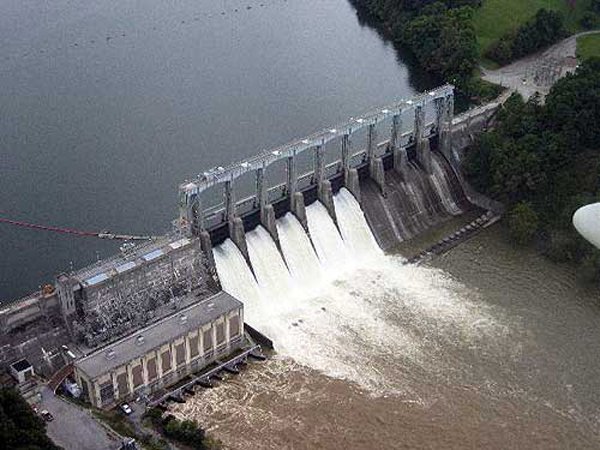
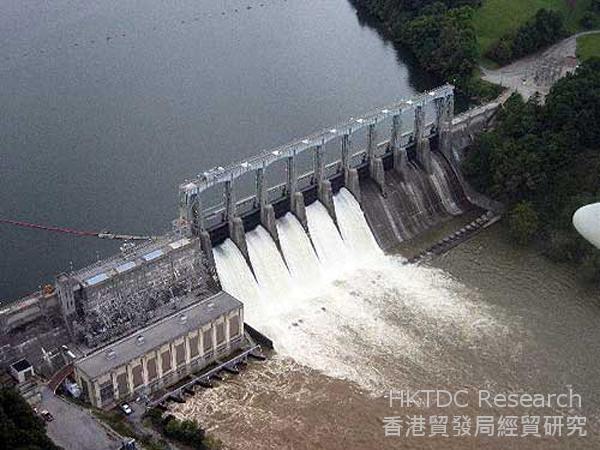
China and Laos jointly initiated work on the second phase of the 1,156 MW Nam Ou Cascade Hydropower Project earlier this year. The project, set on Laos' principal river, is seen as one of the country's key contributions to China's Belt and Road Initiative (BRI).
With Laos' GDP for 2016 recorded at just US$15.9 billion, China has shouldered the bulk of the cost of the $2.8 billion initiative in exchange for the concession to operate the hydropower installation for the next 29 years. Once completed, it will comprise seven dams and hydropower stations and have a projected capacity of 1,156 MW, together with an annual energy output of 5,017 GWh.
The lead on the Chinese side has been taken by Sinohydro, a Beijing-headquartered state-owned hydropower engineering and construction company, which entered into an agreement to develop the project on a joint-venture basis with Electricite Du Laos (EDL), the Laos state electricity corporation, which holds a 15% stake in the site. Under the terms of the project, all electricity generated will be sold to EDL. Significantly, Nam Ou is the first project for which a Chinese enterprise has secured the whole basin rights for planning and development.
With work on Phase One completed more than two years ago – comprising construction of the Nam Ou 2, Nam Ou 5 and Nam Ou 6 plants – the site generated its first electricity on 29 November 2015. In total, the capacity of Phase One is estimated at about 540 MW, almost half the total envisaged for the completed project. The groundbreaking ceremony for the second phase was held some five months later and marked the beginning of the work on the remaining plants – Nam Ou 1, Nam Ou 3, Nam Ou 4 and Nam Ou 7. This second phase is scheduled for completion in 2020.
Emphasising the importance of the initiative, Dr Khammany Inthilath, the Lao Minister of Energy and Mines, said: "Once completed, the Nam Ou Cascade Hydropower Project will have a major role to play in the reduction of poverty across Laos. In particular, it will boost the socio-economic development of Luang Prabang and Phongsaly provinces, immeasurably improving the living standards of local residents.
"It will also play an important role in regulating the seasonal drought problems in the Nam Ou river basin. Ultimately, we hope it will ensure downstream irrigation for the region's plantations on a long-term basis, while also reducing soil erosion."
Despite Inthilath's optimism, the project has attracted criticism on a number of fronts. Firstly, there have been concerns over the possible adverse environmental impact of such large-scale hydropower projects, particularly given the scale and number of hydropower developments currently under way along the Mekong River and its tributaries. In addition to the Nam Ou project, China is also involved with several other hydropower installations, including Don Sahong, Pak Beng and Xayaburi.
A second wave of criticism has come from outside Laos, with a number of neighbouring countries expressing concerns that the cumulative effect of the hydropower projects already under way may adversely impact on the flow of the river. To this end, the governments of Thailand, Vietnam and Cambodia have all gone on record as objecting to the expansion of Laos' hydropower programme.
It is the sheer scale of Chinese investment in Laos, together with the country's resultant indebtedness, that has triggered a third wave of criticism. By the end of 2016, with $5.4 billion worth of funding already in place, China was by far the largest overseas investor in Laos.
According the Lao government's own figures, by the end of 2016 Chinese companies had signed up for $6.7 billion worth of construction projects in the country – some 30.1% of the total earmarked for Laos' infrastructure upgrade. The overall scale of the deals already in place makes Laos the third-largest market for China in the ASEAN bloc.
Overall, though, taking an active role in China's Belt and Road Initiative has been seen as a good fit with Laos' long-held ambition to shift from being a land-locked nation to becoming more of a land-linked economy. Furthermore, Laos' ongoing co-operation with China on a series of energy projects has underlined the positive relationship between the two countries.
Highlighting this, while speaking at the launch ceremony for Phase Two of the Nam Ou Cascade Hydropower Project, Li Baoguang, the Chinese Consul-General in Luang Prabang, Laos' ancient capital, said: "This year marks the 55th anniversary of the establishment of diplomatic ties between China and Laos and there could be no better way of commemorating that than with the commencement of work on this joint venture."
Geoff de Freitas, Special Correspondent, Vientiane
Editor's picks
Trending articles
Major hydropower and roadway investments chime well with the overall objectives of the Belt and Road Initiative.
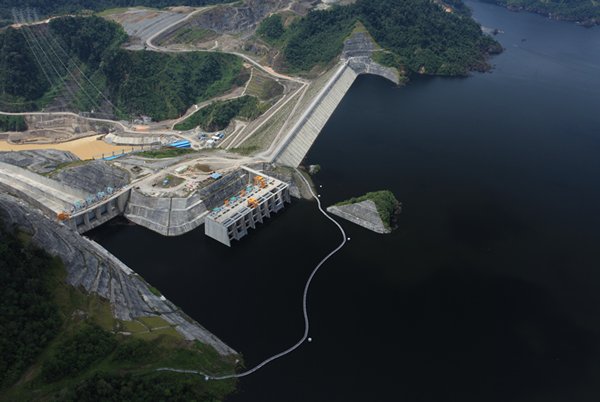
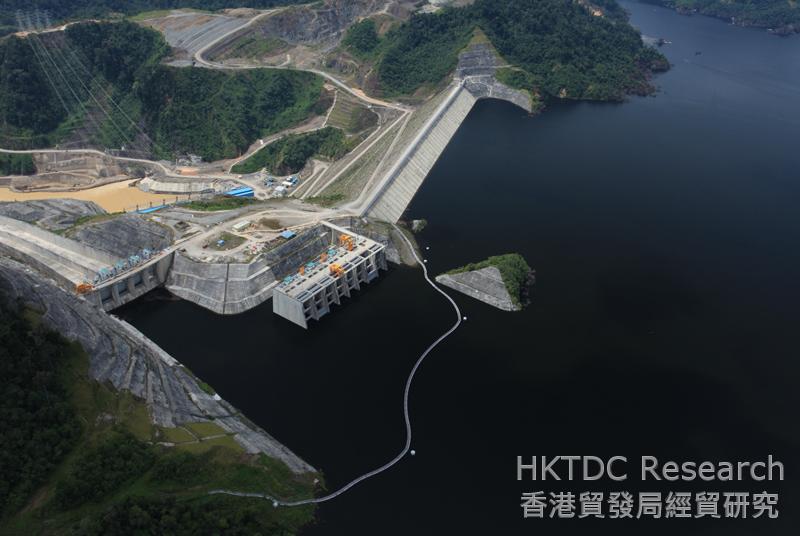
Speculation as to Malaysia's future economic priorities have frequently focused on the country's oil and gas reserves, palm oil production, high-tech manufacturing, real estate and, of course, tourism. While its potential strengths in the hydropower sector have remained largely overlooked, two high-profile dam projects may be about to change all that, with Sarawak's long-mooted Corridor of Renewable Energy now set to become a reality.
Last month, Sarawak Energy Berhad, the power generation company owned and operated by the state government of Sarawak, completed its purchase of the 2,400 mW Bakun Dam from Malaysia's Ministry of Finance. The company paid RM2.5 billion in cash, with a further RM6 billion in loan facilities, to take possession of one of Southeast Asia's most significant – and controversial – power projects. Work on the dam was originally completed in 2010, but the site didn't come fully online until July 2014.
In a further development, in October 2018, work is expected to begin on the construction of the 1,285 mW Baleh Hydroelectric Facility. The project is being jointly undertaken by the China Gezhouba Group, the Wuhan-based construction and engineering giant, and Untang Jaya, a Sarawak-based construction company.
Once completed, Baleh will be the fourth hydroelectric installation to have been co-opted into Sarawak's Corridor of Renewable Energy, an initiative launched in 2008 on Borneo, an island jointly administered by Malaysia, Indonesia and Brunei. This will see it line up alongside the Bakun Dam, the 944 mW Murum Dam and the 100 mW Batang Ai Dam.
Following the completion of the Bakun deal, the Sarawak government, together with its Sarawak Energy subsidiary, now owns all of the state's electricity generation facilities, granting it considerable leverage over the future direction of other local infrastructure projects. This will include the proposed redevelopment of the Bakun Lake region into a prime tourism destination, complete with a range of new hotels and resorts.
Another project with clear links to the Sarawak Corridor of Renewable Energy is a proposed coastal highway. At present, it is anticipated that up to 80% of its construction costs could be covered by Chinese investment in line with the overall objectives of the Belt and Road Initiative. Considered something of a huge undertaking, the project would entail the construction of several bridges, as well as substantial upgrades to roadways in the more rural and forested areas.
Should it get the go-ahead, the coastal highway would only be the latest of the country's array of ambitious transport infrastructure projects. Indeed, work is already under way on the RM16.5 billion, 1,073km Pan-Borneo Highway, a Malaysian government-backed initiative intended to link the country's two Borneo-based states, Sarawak and Sabah. It could also, ultimately, connect to Brunei via the 30km Temburong Bridge. Currently under construction by the China State Construction Engineering Corp, the bridge is scheduled for completion in late 2019.
The first 786km-long phase of the Pan-Borneo Highway is due to be finished a little later – in 2022. Once completed, though, it is hoped that the road will stimulate further investment in infrastructure, public transport, telecoms networks and public-health facilities across the vast tranches of Malaysia's rugged, underdeveloped terrain that the highway extends across.
For its part, the Sarawak government has claimed its bid to take overall control of the state's renewable-energy resources is in line with its long-term ambition to transform the region into a digital-communications hub. To this end, it has already pledged to invest RM2 billion over the next five years in installing fibre-optic cables and satellite connectivity across the state in order to jump-start the local digital economy. The move is part of a wider agenda intended to rebalance the economy and see it shift away from its traditional reliance on the oil and gas, mining, agriculture and forestry sectors.
Outlining the policy, Datuk Amar Abang Johari Tun Openg, Sarawak's Chief Minister, said: "Bakun and the other hydroelectric projects will play a strategic role in powering the digital economy. We believe that the integrated management of the local hydropower facilities will help attract many of the global digital giants to Sarawak."
Geoff de Freitas, Special Correspondent, Kuala Lumpur