









Chinese Mainland
By United Nations ESCAP – Economic and Social Commission for Asia and the Pacific
Key Messages:
Economic conditions stabilized in the Asia-Pacific region in the second half of 2016. Resilient domestic demand and policy support have resulted in the region’s developing economies growing at a steady pace of just below 5 per cent annually despite a sluggish global economy and weak trade growth. Indeed, with developed economies losing some of their recovery momentum, the region’s high and steady growth rate, led by China and India, has arguably been an anchor of stability for the struggling global economy. The outlook for 2017 is broadly positive based on China’s rebalancing-led moderation being offset by an expected return to positive economic growth in the Russian Federation, sustained high economic growth in South Asia supported by moderate inflation, and increased public investment in South-East Asia and the Pacific.
Stable economic conditions provide an opportunity to make progress on the productivity and inclusiveness fronts, particularly in the context of implementing the 2030 Agenda for Sustainable Development. While the region continues to lead global economic growth, output expansion from globalization and technology has not been translated into commensurate increases in decent jobs in a number of countries. Relatively slow employment growth and a persistently high share of vulnerable employment have contributed to rising income inequality. As the region undergoes further structural transformation, efforts to lift productivity and innovation should be matched by measures to enhance worker skills and social protection. Moreover, appropriate policies should ensure that productivity gains derived from technological progress are passed on to workers through higher real wages.
Despite recent stability, the likely impact of some risks for the near-term economic outlook should not be underestimated. Bouts of financial volatility can re-emerge given the uncertain external environment, including policy uncertainties in major economies in the wake of the forthcoming installation of a new administration in the United States of America on 20 January 2017 and the negotiations in Europe related to the planned exit of the United Kingdom of Great Britain and Northern Ireland from the European Union (referred to as Brexit), and vulnerabilities on the domestic front, such as in corporate and bank balance sheets. External demand is likely to remain weak, and there is concern that prolonged weakness in global trade could be a drag on productivity growth and the integration of developing countries into global and regional value chains. Trade protectionist measures and sentiments, which are already on the rise, may increase further, harming export-oriented Asian economies and negatively affecting private investment.
While low inflation and an easing in financial market conditions have allowed monetary authorities to lower policy rates, a prudent stance is needed given the partial recovery in global oil prices and high private debt and currency exposure in some economies. To propel investment, improve efficiency in the allocation of investment resources and ensure financial stability, banking supervision and regulation along with macroprudential frameworks should be strengthened. In this vein, deleveraging and restructuring efforts in countries such as China and India should contribute to enhanced financial stability and higher productivity.
Fiscal policy can and should play a proactive role in supporting domestic demand and in meeting long-term development priorities. While ensuring long-term fiscal sustainability, there has to be greater emphasis on the quality and composition of public expenditures, rather than simply on aggregate budget deficits and public debt levels. Public infrastructure outlays are deemed particularly effective in supporting domestic demand and addressing structural bottlenecks in the current environment of weak external demand, weak private investment, low borrowing costs and benign inflationary pressures. Improving public financial management, reforming State-owned enterprises and enhancing tax revenues could considerably strengthen fiscal positions on a sustainable basis.
Tax policy can also be particularly effective in nurturing a more balanced society with less extreme inequalities. The population-weighted Gini coefficient, based on household income estimates, has increased by almost 30 per cent in the region between 1990 and 2014. Rising inequality has triggered broad concern and social debate, and promoting inclusive development has become a key priority of countries’ national development strategies. Taxes, and in particular progressive personal income tax, can be a main policy tool for direct redistribution of income and wealth in a society. Taxes can also provide critical public revenues for financing public investments in health care and education, as well as for funding social protection and welfare schemes.
Better economic governance, as reflected, among other things, in the effectiveness and integrity of public institutions is a fundamental element in managing structural transformations, undertaking progressive tax reforms and moving towards a sustainable development path. Effective economic governance can go a long way in enhancing investment that is currently weak; in promoting productivity and innovation that underpins sustained economic growth; and in accelerating poverty reduction and mitigating inequalities, including through progressive tax reforms, that needs consistent policy attention. The role of better and more effective governance in improving development outcomes, especially through public resource management and financial markets, will be explored in detail in the forthcoming issue of the Economic and Social Survey for Asia and the Pacific for 2017.
Please click to read the full report.
Editor's picks
Trending articles
By Junhua Zhang, Shanghai Jiao Tong University
Since 2013, the 'One Belt, One Road' (OBOR) initiative has become the centrepiece of China's economic diplomacy. The essence of OBOR is to promote regional and cross-continental connectivity between China and Eurasia. The 'One Belt' and 'One Road' refer to China's proposed ‘Silk Road Economic Belt’ and ‘Maritime Silk Road’. Connectivity covers five major areas of interest: policy coordination, infrastructure construction (including railways and highways), unimpeded trade, financial integration and people-to-people ties. Among these, infrastructure construction is the dominant feature of the New Silk Road.
While the historical Silk Road was an upshot of bottom-up trade activities, driven mainly by nations outside China, the OBOR initiative is designed by China's ruling elites. It represents the first major attempt by China to design and implement a cross-continental mercantile strategy and will surely have significant global and geopolitical consequences.
OBOR is a product of Chinese neomercantilist thinking. Today's neomercantilism differs from the mercantilism of the 17th to early 20th century, when merchants were often complicit in the imperialism of the great powers in pursuit of increased political power and private wealth. Neomercantilism today is much more constrained, thanks to national and international legal frameworks, reluctance to engage in armed conflicts, as well as a greater widespread appreciation of human rights.
Chinese neomercantilism endorses global trade and its institutions while also pursuing a government-led globalisation strategy to accumulate capital and wealth for the nation. China's strategy clearly preferences state-owned enterprises (SOEs) and is focused on establishing free trade areas — similar to the China-ASEAN Free Trade Area which came into effect in 2010 — with Central Asia and South Asia.
So what is driving China's OBOR initiative?
Many of China's production sectors have been facing overcapacity since 2006. The Chinese leadership hopes to solve the problem of overproduction by exploring new markets in neighbouring countries through OBOR. The OBOR initiative will provide more opportunities for the development of China's less developed border regions. China also intends to explore new investment options that preserve and increase the value of the capital accumulated in the last few decades. OBOR has the potential to grow into a model for an alternative rule-maker of international politics and could serve as a vehicle for creating a new global economic and political order.
But there are significant risks associated with China's OBOR strategy. China's neomercantilism lacks sensitivity when addressing some issues in host countries, particularly regarding culture, environment and ethnicity. Beijing's authoritarian approach may also impede effective cooperation with democratic countries.
The China-Pakistan Economic Corridor (CPEC) project is a prime example of the risks and challenges facing China. CPEC is a combination of transport and energy projects and includes the development of a major deep-sea port offering direct access to the Indian Ocean and beyond. Plans for CPEC were officially formalised in April 2015. According to the agreements of both sides, total costs for the projects currently under construction amount to US$46 billion. Should all the planned projects be implemented, the combined value of the projects would be equal to all foreign direct investment in Pakistan since 1970, and would be equivalent to 17 per cent of its 2015 GDP.
The Chinese leadership sees Pakistan as one of its most longstanding and committed allies. This is why CPEC is being treated as a poster child for the OBOR initiative. Still, many uncertainties exist which could topple the project. CPEC faces domestic political opposition in Pakistan, with infighting between provinces and the central government over the allocation of investment. A more serious issue is that of security. On the Chinese side, the East Turkestan Islamic Movement (ETIM) is hindering Chinese efforts, while on the Pakistani side the Pakistani Taliban and other anti-state militant groups pose an immense threat to construction crews and could disrupt the flow of goods.
With this in mind, in the short term, China's OBOR initiative will likely only deliver very modest results despite immense investments. It is still hard to predict whether China's OBOR projects will be effective over the medium-to-long term as this depends on the responsiveness of both governments to challenges, as well as the external environment.
Still, OBOR marks the beginning of a new economic diplomacy for China as it shifts towards being an active driver of the regional and global economy. Whether China's neomercantilist expansion policy will meet expectations, remains to be seen.
This article was firstly published on East Asia Forum based out of the Crawford School of Public Policy at the Australian National University. Please click to read the full article.
Editor's picks
Trending articles
Edited by: Frans-Paul van der Putten, John Seaman, Mikko Huotari, Alice Ekman, Miguel Otero-Iglesias
The European Think-tank Network on China (ETNC) is a gathering of China experts from a selection of European policy research institutes. It is devoted to the study of Chinese foreign policy and European Union (EU)-China relations and facilitates regular exchanges among participating researchers. ETNC strives to deepen the understanding of how Europe, as a complex set of actors, relates with China and how China's development and evolving global role will impact the future of Europe. When examining the EU-China relationship, the network's discussions, analyses and recommendations take a decidedly 'bottom-up' approach, examining the bilateral relationships between individual EU member states and China in order to generate a more complex perspective on the broader EU-China relationship.
This report contains the following articles regarding the Europe-China relations on the back of China's One Belt One Road (OBOR) initiative, which are contributed by various academics and/or analysts.
- The Role of OBOR in Europe-China Relations
- The Czech Republic: New Strategic Partnership with China, yet Little Real OBOR Touch
- OBOR from a Danish Perspective: Still Mainly Limited to the AIIB
- France: On the Periphery of China's New Silk Roads
- Germany and the 'Belt and Road' Initiative: Tackling Geopolitical Implications through Multilateral Frameworks
- 'One Belt, One Road' Projects in Greece: A Key Driver of Sino-Greek Relations
- Hungary: Along the New Silk Road across Central Europe
- OBOR and Italy: Strengthening the Southern Route of the Maritime Silk Road
- The Netherlands and the New Silk Road: Threats and Opportunities resulting from Changing Trade Routes
- Poland on the Silk Road in Central Europe: To Become a Hub of Hubs?
- Portugal and OBOR: Welcoming, but Lacking a Strategy
- Slovakia: Disconnected from China's New Silk Road
- Spain: Looking for Opportunities in OBOR
- 'One Belt, One Road' in the Swedish Context
- The United Kingdom: A Platform for Commercial Cooperation
- The EU Level: 'Belt and Road' Initiative Slowly Coming to Terms with the EU Rules-based Approach
Please click to read full report.
Editor's picks
Trending articles
By CGCC Vision
As a major node of the "Belt and Road" initiative, Hong Kong can leverage on its advantageous geographical location, open economic system, wide- reaching people network and professional services, as well as its alignment with the global community to exert its important functions and complement the development of the "Belt and Road".
In response to the national "Belt and Road" strategy, the 15th "Going Out" Strategy Forum for Chinese Enterprises was earlier held at the Great Hall of the People in Beijing. The Chamber’s Chairman Jonathan Choi was invited to present at the forum as a keynote speaker. He gave an in-depth analysis of the unique advantages and functions of Hong Kong under the "Belt and Road" initiative, and shared his insights on how Hong Kong and mainland enterprises can join up in "going out".
An irreplaceable connector
Since the "Belt and Road" initiative was proposed, the State has signed a number of cooperative agreements on infrastructure with economies along the Belt. Choi reckons that Hong Kong could capitalize on its role as an international financial center and help make financing arrangements for infrastructure projects along the Belt. He believes that as the "Belt and Road" initiative continues to grow, there will be more transactions and investments using RMB. As the biggest offshore RMB hub, Hong Kong can provide more diversified RMB- denominated financing and complementing monetary services for investment and financial projects along the Belt.
Choi also pointed out that Hong Kong could offer much more than financial support. Hong Kong's expertise in the professional services of accounting, legal, construction and project management, for example, is also widely recognized at the international level. Professional support can, therefore, be provided to the "Belt and Road" initiative and help with the Mainland enterprises to "go out". It can also help project the production capacity of the Mainland to the international markets along the Belt.
He cited Hong Kong's highly developed railroad system as an example. In addition to providing Hong Kong with railway services, our rail operator has also been taking part in the running or management of railways in the Mainland and overseas. The advanced experience of Hong Kong on transport management does not only drive regional interactions in passenger flow and logistics, but also effectively connects the infrastructure industries of the Mainland and those of the countries along the Belt.
Joining up companies in "Going Out"
According to Choi, Hong Kong has much more to offer in "the B&R Initiative" on top of exerting its financial and professional service functions. It can also be an investor and an operator, in particular in the ASEAN region. Hong Kong merchants have been investing heavily on ASEAN countries over the years. Choi pointed out that as Hong Kong is a major hub along the 21st Century Maritime Silk Road, trade and investment between ASEAN countries and Hong Kong and the Mainland would become more and more frequent. The role of Hong Kong merchants in the ASEAN will become more evident.
The ASEAN Economic Community established at the end of 2015 would further drive the unified growth of its 10 member countries. The new variable in the Trans-Pacific Partnership (TPP) created by the newly elected US president, for instance, might bring positive impact to the Regional Comprehensive Economic Partnership (RCEP) and the Free Trade Area of the Asia-Pacific (FTAAP) headed by China. These frameworks that promote liberalization in trade investment will provide ample opportunities for deepened cooperation amongst Hong Kong, Mainland and ASEAN companies.
Choi also pointed out that while Hong Kong companies have a superb network in the ASEAN region, they are mainly SMEs. By contrast, Mainland enterprises are more sizeable with higher production capacities. If they could be supported by the strengths of Hong Kong companies in areas such as product R&D, marketing, and distribution channel development, the joint efforts will be able to realize the "going out" together, seeking bigger business opportunities in the ASEAN.
Building a "cross-border e-commerce hub"
Choi anticipates that as countries along the "Belt and Road" will experience more frequent trade and commercial interactions, the middle class in the region will also grow stronger and online consumption will gain bigger popularity. He hopes that Hong Kong, Mainland and Southeast Asian enterprises can strengthen their cooperation in e-commerce and team up to expand the Southeast Asian e-commerce market.
Choi had proposed to the Central Government, that by incorporating the goal of supporting the establishment of a "cross-border e-commerce hub" in Hong Kong in the State's plan, an upgrade in the logistics industries in the Mainland and Hong Kong would become possible. This would further promote closer collaboration in the industrial development in countries along the "Belt and Road".
Constructing the Guangdong- Hong Kong-Macau Big Bay Area
As China's "southern gateway" to the world, Hong Kong is a major node along the maritime Silk Road. Choi stressed that to put Hong Kong's function and geographical advantage into full play, strengthening our collaboration with nearby Guangdong and Macau is particularly important. As such, he is an advocate for the establishment of the Guangdong-Hong Kong-Macau Big Bay Area.
Choi said that he has been supporting strengthened collaboration amongst Guangdong, Hong Kong and Macau as this is the only way to bring out the best of the three locations in the growth of the "Belt and Road" initiative. In the CPPCC proposal he put forward in last year, he suggested accelerating the construction of the Guangdong-Hong Kong-Macau Big Bay Area by defining and allocating the functions and positions of the three locations. For example, Guangdong will be responsible for developing high-end industries; Hong Kong will be providing professional services; and Macau will focus on developing specialty business tourism. The whole bay area would unite Guangzhou, Qianhai, Nansha, Hengqin, Hong Kong and Macau. Through the setup of the "Belt and Road" initiative, the big bay area could more effectively work with Mainland enterprises in "going out".
Choi reckoned that the economic and trade potential of the Guangdong-Hong Kong- Macau Big Bay Area would compare to that of Tokyo Bay in Japan, the New York Metropolitan Area and the San Francisco Bay Area in the US. It would also consolidate cooperation amongst enterprises in the three locations through the construction of the Guangdong Free Trade Zone and lift the level of participation of various industries in the "Belt and Road" initiative. In the long run, the big bay area would be further aligned with the ASEAN region.
Choi reiterated that Hong Kong shall leverage on its advantages with China as our hinterland and our strengths made possible by "One Country, Two Systems". Supplemented by the solid strength of the State in the scopes of infrastructure and tangible industries, as well as Hong Kong's soft power in finance and professional service, Hong Kong can surely put its function in full play of "coming in, going out" during the expansion of the "Belt and Road" initiative. It will be joining up with Mainland enterprises in exploring once-in- a-lifetime business opportunities.
This article was firstly published in the magazine CGCC Vision January 2017 issue. Please click to read the full article.
Editor's picks
Trending articles
By Dr. Tony Liu, Center for Comprehensive Japan and Korea Studies, National Chung Hsing University
With China's promotion of the One Belt One Road initiative, consisting of the Silk Road Economic Belt and Maritime Silk Road, at the APEC summit in 2014, where the international community once again focused its attention on Central Asia. Despite similar emphasis on the strategic importance of land and sea, much attention has been centered on the continental economic belt that seeks to cross the Eurasia continent by extending westward from China's historical city Xi'an, through Central Asia and into Europe. As a connecting point in the One Belt One Road, Central Asia is critical to China's Go Out strategy. Along with the Shanghai Cooperation Organization, China clearly demonstrates an aspiration to establish its political and economic influence in Central Asia.
In terms of geopolitics, while China's activities in Central Asia remain distant for Japan, its expansion into the region entails strategic consequences that may severely challenge Japanese foreign policy and security. Although Japan and China have yet to clash directly in Central Asia, incongruent interests between the two powers already hint at the potential for friction in the region. This article is an attempt to understand the impending possibilities for conflict between Japan and China in Central Asia. By identifying and contrasting Tokyo and Beijing's respective interests and foreign policies in Central Asia, this author suggests the formation of a new battlefield for Sino-Japanese competition based around institutional leadership, regional influence and foreign assistance. Three scenarios for conflict are proposed as developments that may destabilize regional order and reinforce tensions between Japan and China in the near future.
Introduction
Since the turn of the century, Central Asia has played an increasingly important role in global geopolitics. While part of the region's significance stems from Harold Mackinder's Heartland Theory, Central Asia's strategic location and rich energy and market potential make the region a fitting arena for great power politics. In 2001, international attention was drawn to Central Asia with the establishment of the Shanghai Cooperation Organization (SCO). As an initial mark of China's expanding influence in the new century, the SCO sounded an alarm for Japan. In response, in 2004, Japan established the Central Asia plus Japan Dialogue in an effort to balance China's growing influence in Central Asia.
In light of the Shinzo Abe administration's re-initiation of the Central Asia plus Japan Dialogue in 2014, this paper seeks to address growing strategic tensions in Central Asia between Japan and China. The analysis will be carried out in four parts: Part one reviews the significant role of Central Asia in contemporary geopolitics; part two and part three turn to China and Japan's strategic interests and foreign policies in Central Asia respectively; and part four proposes three scenarios for strategic competition between Japan and China in Central Asia in light of recent developments. This paper concludes with some insights into the development of Sino-Japanese relations in the near future.
Please click to read full report.
Editor's picks
Trending articles
By Alicia Garcia-Herrero, Chief Economist for Asia Pacific at NATIXIS; Adjunct Professor, Department of Economics, The Hong Kong University of Science and Technology
Jianwei Xu, Beijing Normal University
1. Introduction
It has been three years since China launched its grand plan of the Belt and Road Initiative (BRI). Although Chinese government has put great efforts to push for the plan, not only inserting related topics in most of its diplomatic events, but also promoting more funded projects in the area, domestic and international concerns regarding the feasibility of the plan have never diminished. Against the back drop, an economic overview of the BRI becomes very important to understand the feasibility of the plan.
To this end, we will discuss the economic progress of the BRI from the trade, investment and financial perspectives, respectively. Trade is most accessible field for China to breakthrough as it can be instantly affected by short-term policies such as removing tariff or non-tariff barriers. If China has established a closer relationship with the BRI area, trade between the two should move upward in a short period. Our findings also confirm the rapid progress in trade, though the development was not equally distributed in the area, with the ASEAN, Middle East, South Asia and Russia constitute the largest trade share with China. Our analysis on the BRI’s spillover effect on the US and the EU reveals that the BRI plan poses actually very little substitution effect but under some scenarios even positive impact on the EU-China trade. We especially assess the impacts on the EU, which sits at the other end of the BRI area, and find that better connectedness within the BRI area will bring higher economic benefits to the EU than free trade agreements.
Compared with trade, investment needs longer time spans to deliver fruits, especially when most of the BRI area is still classified as risky destination and long-term investment takes time to push forward. Needless to say, the BRI area is attractive for nearly every international participant. Our analysis indicates that the progress in investment has been so far discouraging. Although the overall level of China’s oversea investment in the area has been picking up in recent years, the relative share compared with the other destinations actually declined. Chinese oversea investment focuses on the developed world, especially Europe. This can partly be explained by the higher risk associated with many countries in the BRI area. But it is too early to be pessimistic about the plan. It is possible for the trend to reverse in the future. With the rising protectionist atmosphere in the EU and the US, as well as pressure from Chinese regulators to discourage investing in non-productive fields in the developed economies, China is likely to divert more investment to the BRI area, which needs close watch.
Finance is the most difficult part. Although China has set up the Asian Infrastructure Investment Bank (AIIB), the Silk Road Funds, etc., to support the plan, it is far from enough. Various estimates indicate that there is still a big gap to fully fulfil the needs for finance in the BRI area. In fact, the EU has long been an important credit supplier in the BRI area. To better facilitate the grand plan, China must seek international cooperation, especially with the EU.
Admittedly, it is also too hasty to extend our assessment as the final one because it is only three years since the start of the plan, while most of these projects may take a long time to realize their benefits. But our mid-term assessments at least show that it is not easy for China to deal with such a broad area with countries of very different development structures, cultural and political systems. To enhance the efficiency of the BRI, China may consider taking a strategic attitude to implement the plan: first focus on certain low-risk countries, such as the ASEAN countries and Russia, and then extend it to more if their economic conditions have improved.
Last but not the least, the prospect of the BRI hinges not only on the BRI area itself, but how China’s relationships with the US and the EU evolve. If the US started to befriend China and two territories can agree to put aside their conflicts, China may have more incentive to push stronger for the BRI in the area. Otherwise, the development of the BRI will less likely to be a priority for china. The EU also plays a pivotal role in the plan, as some of its members are directly included as BRI countries and the others stay at the other end of the area. If China could gain more confidence from its cooperation with the EU, and the EU is willing to join efforts in finance and investment, the development of the BRI will undoubtedly accelerate…
3. Unbalanced improvement in China’s trade with the BRI area
The Belt and Road countries, despite their dispersion in terms of politics and culture, have become an increasingly important trading partners for China, especially destinations for Chinese exports. Back to 2000, the OBOR countries only constitutes 13% of China’s exports and 19% of China’s imports, but both shares have reached up to 27% and 23% by 2015, with an apparent bigger winner being exports.
Undoubtedly, given the broad dispersion in the stage of development as well as politics and culture, China’s trade with the Belt and Road area also varies across the region. ASEAN, Middle East, South Asia and Russia are China’s largest four trading partners in the region. The other countries are small in terms of economic magnitude, accounting for only three percent of China’s total trade…
4. Investment
One important aspect of China’s ambitious BRI plan is to invest more projects in this developing area to gain capital benefits as its domestic capital return has declined dramatically. Since the announcement of the BRI in 2014, China has accelerated its project negotiation with the BRI area relative to the other countries. China’s signed contract value was only 43780 USD million on April 2014, accounting for 38 percent of China’s total oversea signed contracts, but the accumulated contract value since then has climbed up to 781110 USD million in July 2017, which constitute nearly 50% of the total accumulated signed contract value.
However, it is too early to say that real progress has been made for investment in the OBOR area. Although signed contract value increased dramatically, the accumulated completed contract in the region increased at a relatively slower pace, with its share over the total completed contract only slightly increased from 45% to 46%. This may reflect the fact that most of the existing signed contracts are either ongoing or not started yet. Chart X further shows that the proportion of the accumulated oversea nonfinancial direct investment in the BRI area has actually decreased since 2014 from 15% to 11%. As such, the implementation of the BRI projects seems still lack efficiency…
5. How to finance BRI? Headwinds ahead
The implementation of the BRI includes a number of grand infrastructure plans. But this is easier said than done. The Asian Development Bank (ADB) recently increased its already very high estimates of the amount of infrastructure needed in the region to 26 USD trillion in the next 15 years, or 1.7 USD trillion per annum. The great thing about the China driven Belt and Road initiative is that it aims to address that pressing need, especially in transport and energy infrastructure. The a-priori is that the financing will be there thanks to China’s massive financial resources.
Such a-priori was probably well taken when China was flooded with capital inflows and reserves had nearly reached USD 4 trillion and needed to be diversified. In the same vein, Chinese banks were then improving their asset quality, because the economy was booming and bank credit was growing at double digits. However, the situation today is very different. China’s economy has slowed down and banks’ balance sheets are saddled with doubtful loans, which keeps on being refinanced and does not leave much room for the massive lendings needed to finance the Belt and Road initiative. This is particularly important as Chinese banks have been the main lenders so far (China Development Bank in particular with estimated figures hovering around USD 100 billion and Bank of China has already announced its commitment to lend USD 20 billion). Multilateral organizations geared towards this objective certainly do not have such a financial muscle. Even the Asian Infrastructure Investment Bank (AIIB), born for this purpose, has so far only invested USD 1.7 billion on Belt and Road projects. As if this were not enough, China has lost nearly USD 1 trillion in foreign reserves due to massive capital outflows. Although USD 3 trillion of reserves could still look ample, the Chinese authorities seem to have set that level as a floor below which reserves should not fall so that confidence is restored. This obviously reduces the leeway for Belt and Road projects to be financed by China, at least in hard currency.
Against this background, we review different financing options for Xi’s Grand Plan and their implications. The first and least likely one, is for China to continue such huge projects unilaterally. This is particularly difficult if hard-currency financing is needed, for the reasons mentioned above. China could still opt for lending in RMB, at least partially, with the side-benefit of pushing RMB internationalization. However, even this is becoming more difficult…
6. Conclusion
This paper makes a mid-term assessment for China’s BRI from the perspective of trade, investment and finance, respectively. We find that trade has made significant progress in the BRI area in the past three years, but the development was not equally distributed in the area. The progress in investment has been so far more discouraging. Although the absolute level of China’s oversea investment in the area has been picking up in recent years, the relative share compared with the other regions actually declined. The financial aspect of the BRI is also uncertain. China has injected its own funds through various institutions, but various estimates indicate that there is still a big gap to fully fulfil the needs for finance in the BRI area, which requires more international cooperation.
All in all, China’s progress in the BRI is still on the way. The future of the BRI may continue to go in a very unbalanced direction, especially towards ASEAN and Russia. The actual investment in this area is also expected to increase and upgrade with more technology, but this hinges not only on the BRI area itself, but how China’s relationships with the US and the EU evolve. More importantly, China cannot finance the BRI by itself and needs to cooperate with the EU and US for the development of the BRI.
This article was first published by HKUST Institute for Emerging Market Studies. Please click to read the full article.
Editor's picks
Trending articles
With China and Thailand identifying joint economic objectives, Beijing has loosened its purse strings still further.
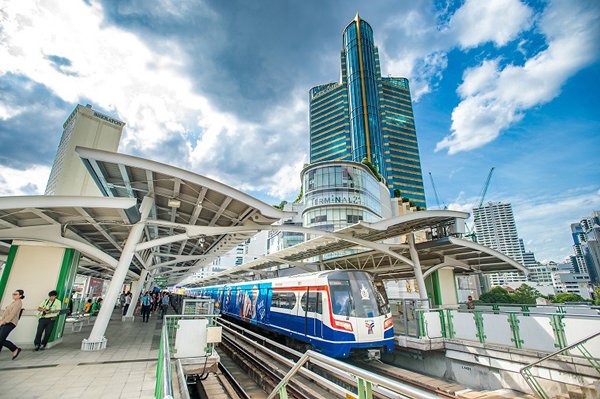
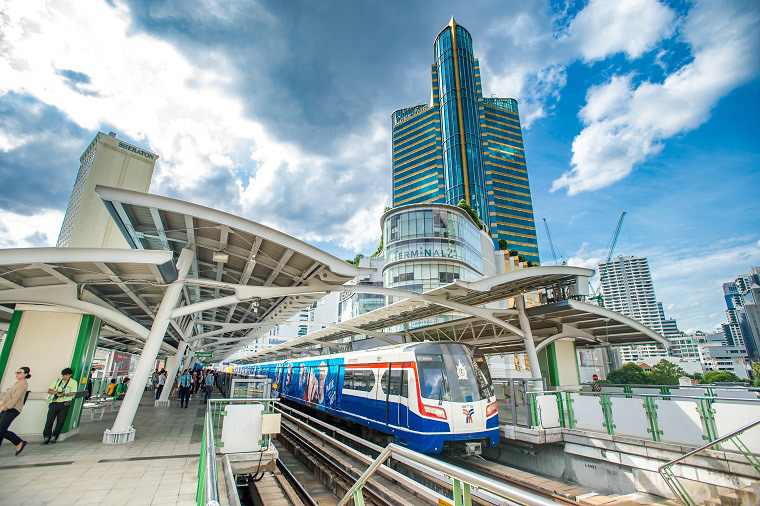
Following the Thai Government's recent formal adoption of the EEC (Eastern Economic Corridor) Act, it's now all systems go for the country's Thailand 4.0 development strategy, a programme expected to neatly dovetail into the objectives of China's Belt and Road Initiative (BRI). Moves to more closely align the Thai economic strategy with China's own international infrastructure development and trade facilitation programme began back in 2017, with the growing trade between the two countries now helping to oil the requisite bureaucratic wheels.
In a formal address last month, Prayut Chan-o-cha, the Thai Prime Minister, highlighted the existing synergy between the two developmental blueprints, saying: "It's natural, logical, and mutually-beneficial that the EEC should link-up with the BRI, as well as with other regional initiatives, such as the Regional Comprehensive Economic Partnership (RCEP) or even the Trans-Pacific Partnership (TPP)."
In order to fully capitalise on these emerging synergies, the two countries have already agreed to establish a joint economic development board. Billed as the Sino-Thai Joint Think Tank Forum, the body held its first meeting in Beijing earlier this month in association with the Chinese Academy of Social Sciences (CASS), with 80 senior academic and government officials from both countries jointly considering how best to capitalise on those economic initiatives deemed to be of mutual benefit.
Speaking after the conclusion of this inaugural session, Gao Peiyong, CASS' Vice-president, said: "Thailand's innovation-driven development program is hugely compatible with the goals of the BRI. Both countries have a genuine need to boost their international connectivity, while also promoting industrial upgrading.
"I see infrastructure, telecommunications, the digital economy, energy and internet technology as the five key areas for bilateral cooperation. I believe these should be the two countries' cooperative priorities for the next five years at least."
In terms of the actual EEC programme, at its core is the development of five economic clusters spread across three of the country's eastern provinces – Chaochoengsao, Chonburi and Rayong. Of the three, the Eastern Airport City Zone is one of the initial priorities. Centered around an upgraded U-Tapao International Airport, the focus will be on developing the facilities required to boost the throughput of tourists, with mainland-originated visitors now the single largest segment of Thailand's tourism sector.
A clear second priority is the Eastern Economic Corridor of Innovation (EECi), a large research and development park set to be sited in Rayon's Wangchan Valley. This will be followed by the development of the Digital Park Thailand (EECd), the Smart Park and the Hemaraj Eastern Seaboard Four Industrial Estate. In order to sustain and service these initiatives, a number of rail transportation projects, air terminal extensions and port enhancements will be initiated simultaneously.
China is already set to play a huge role in bringing many of those initiatives to fruition. In particular, it has taken a lead in the implementation of the BRI-backed Bangkok to Southern China via Laos high speed rail link. On top of that, to date more than 80 Chinese companies that have established manufacturing facilities, research centres or operational hubs in the specially-designated Thai-Chinese Industrial Zone.
As of the end of 2016, China's investment in the EEC had already exceeded US$30 billion. Now, with the more formal alignment of the two nation's development schemes, this figure is expected to soar over the coming months.
Geoff de Freitas, Special Correspondent, Bangkok
Editor's picks
Trending articles
中國社會科學院世界經濟與政治研究所宋爽
隨著11月29日李克強總理結束對匈牙利正式訪問,中國與中東歐國家合作又上層樓。中國─中東歐"16+1合作"機制已建立五年有餘,合作力度不斷加大,已成為具有重要影響的跨區域合作機制。五年來,中國企業對中東歐16國的累計投資從30億美元增長到90多億美元,中國從中東歐國家進口農產品的年均增長率超過10%,貝爾格萊德跨多瑙河大橋、匈塞鐵路、波羅的海高鐵等一批標誌性的基礎設施項目相繼啟動。作為投資、貿易、基礎設施建設的重要支撐,金融合作在"16+1合作"平台下也穩步推進,並取得豐碩成果。
一、五年來金融合作碩果累累
金融合作一直是"16+1合作"的重要方面,在首次中國─中東歐國家領導人會晤上就確定了設立總額100億美元專項貸款、發起設立"中國─中東歐投資合作基金"和探討貨幣互換、跨境貿易本幣結算等三項重要的金融合作舉措。此後,每年中國與中東歐國家領導人會晤時都會繼續強化金融合作,使雙方的金融合作進一步拓展至互相投資對方銀行間債券市場、在中東歐國家建立人民幣清算安排、成立中國─中東歐國家銀聯體等多樣領域。如今,"16+1合作"機制下的金融合作已經在金融機構、金融市場、投資基金、貨幣互換與本幣結算、多邊開發性金融和金融監管等方面取得顯著進展。
在金融機構互設與合作方面,中國銀行已先後在波蘭華沙、匈牙利布達佩斯和捷克布拉格等地設立分行,在塞爾維亞設立分支機搆;中國工商銀行在華沙和布拉格設立分行,並於2016年11月成立中國-中東歐金融控股公司;中國建設銀行也在華沙設立分行。此外,中國銀聯與中國銀行匈牙利分行於2017年1月合作發行了匈牙利福林、人民幣雙幣芯片借記卡。與此同時,中東歐國家金融機構也開始進入我國市場,匈牙利儲蓄商業銀行就於2017年10月在北京設立了代表處。
在投資基金方面,中國─中東歐投資合作基金一期順利展開,並啟動二期基金募集。中國─中東歐投資合作基金由中國進出口銀行作為主發起人,有限合夥人還包括匈牙利進出口銀行等中東歐國家金融機構,重點支持中東歐16國基礎設施、電信、能源、製造、教育及醫療等領域的發展。一期基金於2014年年初正式運營,封閉金額為4.35億美元,已在波蘭、捷克、匈牙利、保加利亞等國展開投資。在本屆中國─中東歐國家經貿論壇上,李克強總理宣佈二期基金已完成設立,募集資金10億美元。
貨幣互換與本幣結算也是中國與中東歐國家金融合作的重點方向。在貨幣互換方面,中國人民銀行在2013年9月分別與匈牙利央行、阿爾巴尼亞央行簽署雙邊本幣互換協議,此後又於2016年6月與塞爾維亞央行簽署中塞雙邊本幣互換協議,2016年9月與匈牙利央行續簽中匈雙邊本幣互換協議。在本幣使用方面,中國銀行匈牙利分行於2015年6月獲准擔任匈牙利人民幣清算行,成為中東歐地區首家人民幣指定清算行。
在多邊開發性金融合作方面,亞洲基礎設施投資銀行(亞投行)一直是中國與中東歐合作的重要平台。繼2016年6月波蘭成為亞投行正式成員後,羅馬尼亞於2017年5月成為意向新成員,匈牙利則于6月成為正式成員。此外,國家開發銀行(國開行)倡議設立的"中國-中東歐銀聯體"也於2017年11月正式成立,國開行將提供20億等值歐元開發性金融合作貸款。在此次中國─中東歐國家領導人會晤期間,14家中東歐國家金融機構與國開行簽署合作協議,加入中國─中東歐銀聯體。
在金融監管合作方面,我國各級監管部門與中東歐多國相關部門達成了監管合作協議。中國人民銀行已經與捷克國家銀行簽署合作諒解備忘錄,中國銀監會與捷克中央銀行、立陶宛中央銀行、匈牙利中央銀行、波蘭銀行監管委員會等主要中東歐國家金融監管部門簽署了監管合作諒解備忘錄和監管合作協議,中國證監會與羅馬尼亞國家證券委員會、立陶宛銀行、波蘭金融監督管理局等簽署了證券期貨監管合作諒解備忘錄。此外,2015年5月在上海舉行了中亞、黑海及巴爾幹地區央行行長會議組織第33屆行長會,2018年還將在布達佩斯舉辦中國-中東歐國家央行行長會議。
二、與"一帶一路"倡議相輔相成
雖然中國-中東歐"16+1合作"機制的建立早於"一帶一路"倡議,但是如今二者已經有機結合,相輔相成。正如習近平主席多次指出的,要將"16+1合作"打造成"一帶一路"倡議融入歐洲經濟圈的重要承接地,推動“一帶一路”國際合作高峰論壇成果率先在中東歐落地。在此次中國-中東歐國家領導人會晤的講話中,李克強總理強調了做大經貿規模、做好互聯互通、做強創新合作、做實金融支撐和做深人文交流五個重要合作方面,與"一帶一路"倡議的"五通"內容一脈相承,異曲同工。
一方面,"16+1合作"逐漸成為"一帶一路"倡議的"標杆",對"一帶一路"建設具有推動和示範作用。由於地處"一帶一路"北線遠端,中東歐國家雖然經濟制度穩定、營商環境良好,在"一帶一路"建設推進過程中卻常常面臨著鞭長莫及的窘境。"16+1合作"為中國與中東歐國家建立了重要的跨區域機合作機制,不僅有助於推動“一帶一路”建設在中東歐次區域展開,還能夠對"一帶一路"倡議的實施產生示範效應。就貸款和投資基金而言,在“16+1合作”平台上提出的專門面向中東歐國家的100億美元專項貸款和中國-中東歐投資合作基金,就很大程度上彌補了中國向中東歐國家金融支持機制不足的問題,推動了一批基礎設施建設、高新技術、綠色經濟項目的開展,成為"一帶一路"建設的標杆項目。就債券市場而言,波蘭和匈牙利先後在我國銀行間債券市場發行熊貓債,佔據目前在中國發行熊貓債的三個"一帶一路"沿線主權國家的兩席,對沿線國家進入我國債券市場融資支持"一帶一路"建設起到示範作用。此外,"16+1合作"機制下推動的貨幣互換、開發性金融和金融監管合作,都對中國在"一帶一路"沿線國家推進資金融通具有重要的示範意義。
另一方面,"一帶一路"倡議已經逐漸成為"16+1合作"的戰略支撐,對"16+1合作"機制深化帶來機遇、提供支持。"16+1合作"作為中國開展的眾多跨區域合作機制之一,在"一帶一路"倡議提出後迎來新機遇,金融合作的理念和形式不斷創新。例如,2016年11月工商銀行設立中國─中東歐金融控股有限公司,並將發起設立100億歐元的中國─中東歐基金,以彌補雙方產能合作的融資短板。2017年11月,國開行牽頭發起設立中國─中東歐國家銀聯體,成為"16+1合作"框架下重要的多邊金融合作平台,國開行將提供20億等值歐元開發性金融合作貸款。同時,"一帶一路"倡議下的部分金融資源也被用於支持"16+1合作"機制。2016年的《中國─中東歐國家合作裡加綱要》中就指出,鼓勵包括絲路基金在內的中方金融機構積極拓展在中東歐地區的投資與合作,為中國-中東歐國家合作提供金融支持。2017年的《中國─中東歐國家合作布達佩斯綱要》則進一步提出,歡迎中國國家開發銀行、進出口銀行設立"一帶一路"專項貸款、絲路基金與歐洲投資基金推動設立中歐共同投資基金,將相關資金用於中國─中東歐國家有關項目。
三、繼續深化“16+1合作”金融機制
中國與中東歐國家"16+1合作"機制已經搭建起良好基礎,取得了豐富成果。展望未來,雙方應基於各自的優勢和需求,繼續推進互利共贏的新型多雙邊合作關係。在金融層面,中國應與中東歐國家一起繼續創新合作方式,整合各類金融工具,建立更加全面、深入的金融合作機制。
首先,加強對中國─中東歐國家經貿合作的金融支持。"深化經貿金融合作"是此次中國─中東歐國家領導人會晤的主題之一,足見經貿合作的重要意義。長期以來,中國在與中東歐國家貿易中都處於絕對順差優勢,未來“平衡發展”必將成為雙方貿易合作的主題。隨著中國加大對中東歐國家在農業、食品、飲料等優勢產品的進口,我國金融機構可積極憑藉多年來在供應鏈金融、互聯網金融等方面積累的服務經驗,促進中東歐企業對中國的貿易便利化。同時,根據雙方國家貿易拓展進程,適時擴大中國與中東歐國家的貨幣互換和人民幣貿易結算,鼓勵中資銀行在中東歐國家設立更多跨境貿易人民幣結算中心,以降低匯率風險。此外,為服務中國與中東歐國家企業開展跨境貿易和投資活動,應鼓勵雙方金融機構互相進入開拓業務,並加強相關金融基礎設施的建立。
其次,擴展對中國─中東歐國家互聯互通的金融支持。李克強總理在此次中國─中東歐國家領導人會晤上指出,加快基礎設施建設是中東歐國家重要發展議程,也是"16+1合作"的優先方向。目前我國對中東歐國家基礎設施項目的資金主要通過銀行貸款和投資基金予以支持,下一階段可進一步拓展資本市場對中東歐國家基礎設施項目的融資支持,以引入更加多元化的資金,分散風險。一是繼續支持中東歐國家和企業到中國發行熊貓債,鼓勵融資主體將資金用於基礎設施建設。二是歡迎中東歐國家和企業利用國際債券市場發行絲路債券,特別是開展以人民幣計價的國際債券融資,推動"一帶一路"倡議國際債券市場融資機制的完善。三是發展中東歐國家債券市場的項目債融資機制,推動"16+1合作"下債券市場聯通,鼓勵在中東歐國家開展基礎設施建設的中資企業發行項目債。
最後,強化雙方在多邊開發性金融領域的合作。開發性金融應在跨區域合作中發揮先導作用,因此下一階段可繼續推進中國與中東歐國家的多雙邊開發性金融合作以及區域開發性金融機構之間的合作。第一,落實中國-中東歐銀行聯合體的作用,加強國家開發銀行與匈牙利開發銀行、立陶宛公共投資發展署等中東歐國家政策性銀行、開發性金融機構之間的多雙邊開發性金融合作。第二,加強亞投行與中東歐國家及相關區域多邊開發銀行的合作,歡迎更多中東歐國家加入亞投行,推動亞投行與歐洲復興開發銀行、歐洲投資銀行等區域開發性金融機構展開合作。第三,促進絲路基金和歐洲投資基金的合作,儘快落實雙方在促進共同投資框架備忘錄中提到的“中歐共同投資基金”,以支持歐洲及“一帶一路”沿線國家的中小企業與中國對接合作。
原文刊載於《財經國家週刊》2018年第3期,請按此閱覽原文。
Editor's picks
Trending articles
By Edward Liu, Reed Smith Richards Butler, Senior Registered Foreign Lawyer
On 14 December 2017, the HKSAR government and the National Development and Reform Commission signed “Advancing Hong Kong’s Full Participation in and Contribution to the Belt and Road Initiative” (the ’Arrangement’). The Arrangement serves as a blueprint for Hong Kong’s further participation in the “Belt and Road Initiative” (the ’Initiative’).
The Arrangement has explicitly given its support to establish Hong Kong as an international legal and dispute resolution service hub for the Asia-Pacific region, hence to provide international legal and dispute resolution services for the Initiative. In order to practically implement the policies under the Arrangement and effectively realize a series of preferential policies towards Hong Kong, there is an imperative need for the negotiation between HKSAR government and legal industries to formulate specific proposals with detailed measures. Hence, the following foremost question for Hong Kong is, how to utilize the preferential policies under the Central Government’s overall jurisdiction and make full use of Hong Kong’s advantages under its high degree of autonomy in order to attract more mainland and overseas enterprises to use Hong Kong’s legal and dispute resolution service for disputes arising from commercial transactions related to the Initiative.
Encourage Chinese enterprises to choose Hong Kong as the dispute resolution venue
With the continuous growth of trade globalization and the Initiative, cross-border transactions become even more active. Hence, the number of disputes related to cross-border investments and international trade will increase accordingly. Imagine, in a transaction where one party is a Chinese enterprise and the other is an overseas enterprise, the overseas enterprise would always seek overseas arbitration institutions for settlement of any potential contract dispute. This is out of the concerns that overseas enterprises are generally incomprehensive of and are also lack of trust for mainland legal system and arbitration institutions. Nevertheless, for Chinese enterprises, equally, they will be uncertain about going overseas to settle disputes and also will have concern on the expensive legal costs. Under such circumstance, as the only common law jurisdiction in China and also under the protection of the Basic Law, as well as having the unique geographical location which allows for Western-Chinese cultural fusion, Hong Kong will undoubtedly be the ideal arbitration venue where both parties can accept.
As the bargaining power of Chinese enterprises in international trade and investments gradually increase, it becomes obvious to “stay at home” for dispute resolution regarding disputes in cross-border investments and transactions. Therefore, HKSAR government should establish a cross-department group, and actively seek to set up a cooperation mechanism with the relevant national authorities and organisations, which are respectively responsible for communications with the stated-owned enterprises and private enterprises. This group should aim to promote Hong Kong’s legal and dispute resolution services to all kinds of Chinese enterprises, and also encourage these enterprises to choose Hong Kong as the seat of arbitration for commercial disputes.
Provide more accommodation for the recognition and enforcement of Hong Kong arbitration awards in mainland
With the progression of the Initiative, it is envisaged that there will be more foreign-invested enterprises as well as wholly foreign-owned enterprises incorporated in Mainland China and especially in free trade zone (FTA). If both such companies agree to arbitrate overseas (including Hong Kong), according to the current Chinese legislation, the relevant arbitration awards are very likely not to be recognized and enforced by the Chinese courts because such awards do not have foreign affairs.
In 2015, the Supreme People’s Court (the ’SPC’) introduced a document with a view to providing judicial assistance and protection to the Initiative. In particular, the SPC indicated to support the parties to resolve the disputes in relation to the Initiative. Thus, HKSAR government should negotiate with the SPC and other mainland authorities to introduce relevant judicial interpretations to affirm that the enforcement of arbitration awards made in Hong Kong will not be affected due to its absence of foreign affairs under the abovementioned circumstances. If this result can be successfully realized, it will inevitably attract more commercial contracts to choose their arbitral seat in Hong Kong. Hence it will in no doubt enhance the status of Hong Kong as the international arbitration hub and help to improve the general business environment in Mainland China.
Please click to read the full report.
Editor's picks
Trending articles
By KPMG
The Hong Kong advantage
Hong Kong has a significant role to play in the development and success of the BRI. The city is regarded as one of the world’s freest economies, with a vibrant capital market, an extensive network of financial institutions, a robust legal system and an experienced pool of human capital. As an international finance centre and shipping hub, Hong Kong is well-positioned as a super-connector to the fast-growing BRI economies, and is set to play a prominent role in facilitating trade and investment, and encouraging cooperation in value-added sectors along the Belt and Road.
A policy agreement signed in December 2017 between Hong Kong and the National Development Reform Commission (NDRC) (referred to herein as the HK-NDRC Arrangement) is also set to expand Hong Kong’s role in the BRI.
Hong Kong’s key competitive advantages
1. Established international financial centre
The provision of financing and capital markets solutions represents a key driver of initial success for the BRI. At the outset, access to finance is a necessary element for the successful development of new infrastructure. If successful, this investment can stimulate further positive knock-on effects to sectors such as real estate, healthcare and industrial markets, leading to job creation, greater economic outcomes for BRI economies and a larger volume of global consumers.
One of the largest financial services centres worldwide, Hong Kong is well-placed to position itself as the long term partner of mainland Chinese and international groups seeking financial, banking, insurance and risk management solutions for BRI investment.
2. Connectivity with ASEAN
The ASEAN region comprises 10 Southeast Asian countries with a total population of more than 635 million,2 all of which are Belt and Road economies. With a young workforce, a strong growth track record, and a middle class population that is projected to reach 400 million by 2020,3 ASEAN represents an attractive investment jurisdiction for groups seeking to invest and conduct business along the Belt and Road.
For Hong Kong, its geographic proximity and cultural connections with the ASEAN countries make it an attractive investment platform for entry into these markets. In addition, many Hong Kong companies possess a deep, lengthy and well-respected track record of investment and business operations in ASEAN.
In November 2017, Hong Kong and ASEAN signed a Free Trade Agreement and a related Investment Agreement. The agreements will enhance legal certainty, investment protection and market access for the trade of goods and services, which will create new business opportunities and boost trade and investment between Hong Kong and ASEAN.
3. Integration with the Greater Bay Area
Hong Kong’s positioning within the Greater Bay Area (GBA) strengthens its status as a platform for BRI investment. Key elements include:
- SOE concentration: Chinese state-owned enterprises (SOEs) are expected to play a highly active role in the BRI, with many using the GBA as their national and international headquarters.
- Transport and logistics: The GBA is home to a world-class transport and logistics network that is continually expanding and will provide significant support to BRI investors with their trade requirements.
- Innovation and technology: There are plans to expand the GBA’s positioning as a regional technology hub. An example of this is the agreement between Hong Kong and Shenzhen to develop the Lok Ma Chau Loop into one of the world’s largest innovation and technology parks on the border of the two cities. For countries and companies participating in the BRI, leveraging innovation and technology in the GBA will support the acceleration of their economic growth and development.
4. Professional services community
Hong Kong has more than 250,000 professionals working in the financial services sector. In addition, its professional services workforce numbers more than 217,000 in areas such as legal, accounting and auditing, architecture and engineering, information technology, advertising and specialised design.
Hong Kong’s professional services community has in-depth experience working with international investors, lenders and public sector entities on their inbound and outbound work, underscoring the city’s leading role in facilitating trade and investment both locally and along the Belt and Road.
5. Cultural diversity and human capital
The Hong Kong workforce represents a deep and diverse talent pool of resources with skills, multilingual capabilities and international experience suitable for companies seeking to be active in the BRI.
Female labour force participation in Hong Kong also continues to increase significantly, while there is a growing working population from diverse backgrounds and nationalities spanning Europe, North America and other parts of Asia Pacific.
The Government of the Hong Kong Special Administrative Region (Hong Kong Government), through enhancement measures to its immigration policy, continues to look at ways to recruit top talent from outside Hong Kong. It also continues to offer financial incentives to individuals who pursue continuing education and training courses in order to broaden the knowledge and capabilities of the city’s workforce and wider community.
Please click to read full report.