










Chinese Mainland

Country Region

HKTDC Research | 22 Dec 2016

Tapping Belt and Road Opportunities: Views and Service Demand of Huizhou Enterprises in Guangdong

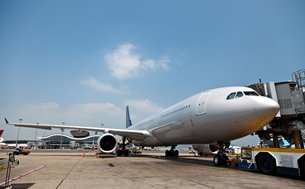
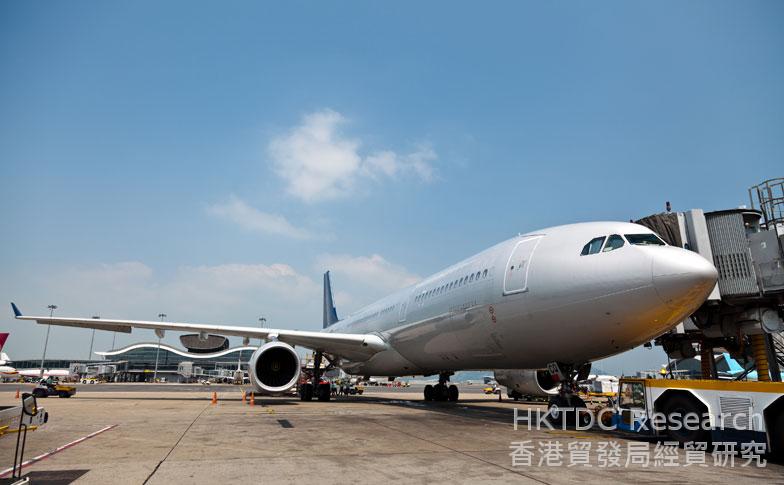
Photo: Some Huizhou enterprises are open to making direct investments in Belt and Road countries
Some Huizhou enterprises are open to making direct investments in Belt and Road countries.
Photo: Some Huizhou enterprises are open to making direct investments in Belt and Road countries
Some Huizhou enterprises are open to making direct investments in Belt and Road countries.

Many enterprises from Huizhou in Guangdong Province would like to tap the opportunities afforded by China’s Belt and Road strategic development initiative, in order to further expand their export business. This fact emerged at a recent seminar held by HKTDC Research. To make an effective entry into the Belt and Road markets, though, Huizhou businesses would first need to engage with the Hong Kong hub in order to obtain useful information about those territories. This could cover a whole variety of subjects from the condition of supply chains, the sourcing activities and product standards of local buyers, to related support services such as marketing and risk management.

Some attendees indicated that they are open to making direct investments in Belt and Road countries. However, before that could happen they would require professional consulting services to help them to understand local business cultures and investment risks. This would allow them to assess the feasibility of investing and setting up factories in these countries. Other respondents noted that certain Southeast Asian and South Asian territories are currently tightening up their policies and approval procedures relating to foreign direct investments. Therefore, these companies are very keen to keep abreast of the very latest developments within these markets.

On the whole, Huizhou enterprises wish to take advantage of the Belt and Road opportunities for overseas expansion. They intend to seek professional services in Hong Kong to help them address practical issues such as marketing and foreign investment procedures, or securing cost-effective funds to finance their overseas operations.

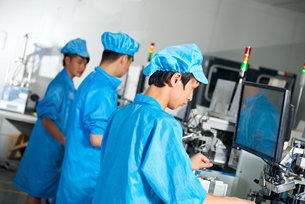
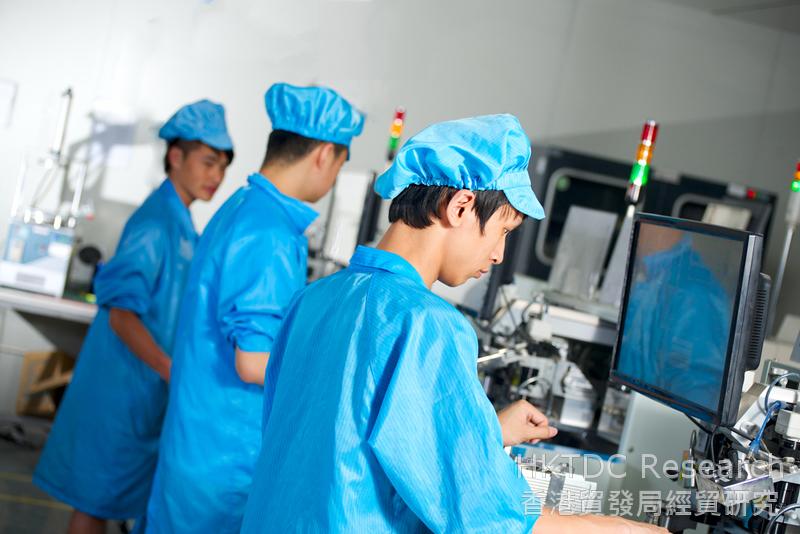
Photo: Huizhou enterprises wish to secure cost-effective funds from Hong Kong
Huizhou enterprises wish to secure cost-effective funds from Hong Kong to finance their overseas operations.
Photo: Huizhou enterprises wish to secure cost-effective funds from Hong Kong
Huizhou enterprises wish to secure cost-effective funds from Hong Kong to finance their overseas operations.
Photo: Huizhou has benefited from the influx of foreign capital over the years
Huizhou has benefited from the influx of foreign capital over the years.
Photo: Huizhou has benefited from the influx of foreign capital over the years
Huizhou has benefited from the influx of foreign capital over the years.

Huizhou Enterprises to Tap Belt and Road Opportunities

Continuous growth within the Pearl River Delta (PRD) economy has led to the gradual expansion of its production and commercial activities, from the Pearl River estuary to its eastern and western flanks. Huizhou is located in the north-eastern part of the PRD adjoining Shenzhen and it has already benefited from the influx of foreign capital over the years. To date, more than 9,000 foreign-invested enterprises have set up operations in the city. TCL, Desay, Adayo and Cosun, all of which figure among China's top 500 electronic information enterprises, are amongst the many well-known mainland companies who have established their corporate headquarters in Huizhou[1]. In doing so, they have contributed directly to the rapid development of the city's economy.

Photo: Huizhou enterprises are concerned about risk management
Huizhou enterprises are concerned about risk management when conducting Belt and Road business.
Photo: Huizhou enterprises are concerned about risk management
Huizhou enterprises are concerned about risk management when conducting Belt and Road business.

With Guangdong province’s foreign trade and economic activities on the rise, over recent years Huizhou companies have been active in going abroad in search of business expansion. Simultaneously, they have been exploring the Belt and Road opportunities. Statistics show that, to date, some 83 Huizhou enterprises have invested a total of US$460 million directly overseas, mainly in Hong Kong, Taiwan, Macau and the United States. Through their foreign arms, some of these companies have even reinvested either directly or indirectly in destinations such as Vietnam, Cambodia and Ethiopia[2].

In recent times, China has leapt into position as the world's second largest source of FDI[3]. It has also been strengthening its ties with Belt and Road territories, by means of investments and economic partnerships. Throughout, the South China region has stayed at the forefront of the country's external trade and economic co-operation activities.

During mid-2016, HKTDC Research conducted surveys in selected cities throughout Guangdong and Guangxi, in order to gauge the interest of mainland enterprises in exploring Belt and Road opportunities and their demand for related support services[4]. As part of this exercise, a business seminar was held in Huizhou in the third quarter of 2016 to garner the views of local production and trade enterprises. Their views are summarised as follows:

  • Focus on Southeast Asian market

    Over the years, many enterprises in Huizhou have developed into large or medium-sized companies, while engaging in the production of high-tech products such as switching power supplies, fine-pitch printed circuit boards and other precision electronics. They now have many years’ experience in international marketing and their customers include multinational companies from Europe, the United States and certain Asian countries. Some of them are listed on the mainland stock exchanges and are among the leading manufacturers in China.

    As China presses ahead with its Belt and Road initiative, most companies in Huizhou seem to recognise the importance of keeping abreast of new Belt and Road information so that they don't miss out on potential business opportunities. In order to facilitate the future expansion of their export business, many enterprises intend to further explore the Belt and Road markets, especially those Southeast Asian countries neighbouring China. Some even aspire to develop brand business within the Southeast Asian market.

  • Lack of practical market information

    A number of the companies questioned are now familiar with the US and European markets and the large amount of relevant macro data which the government has provided to them. Nevertheless, most conceded that they are still unable to develop a clear concept of the Belt and Road initiative, which covers a huge number of countries and regions. Many companies expressed a fundamental lack of understanding about these markets, even those ASEAN countries which are geographically close to China. Businesses appear to require more data on the socio-economic environment, laws and regulations, industry policies, business culture and commercial risks relating to these territories. Information on local supply chains, the sourcing activities of buyers and product standards is also inadequate at present.

    When it comes to market access, what these companies need most urgently is practical information to help them set up sales channels in the Belt and Road countries. In particular, they lack business intelligence about the specific needs of local markets, the characteristics of potential customers and other practical information about import requirements. Some enterprises highlighted the difficulties of effectively reaching buyers from Belt and Road markets solely through traditional trade fairs. Another matter for concern for these companies is the protection of intellectual property rights such as trademarks and patents within the Belt and Road markets, as they wish to avoid substantial losses which can result from third party infringement.

    In the circumstances, Huizhou enterprises are eager to locate relevant support services via Hong Kong which could help them to further explore Belt and Road opportunities. Besides, they hope to utilise Hong Kong's financial market to secure funds for their overseas business. According to representatives of these companies, they first plan to expand their export trade, followed by investment in and establishing of factories overseas, and then, in the longer term, the acquisition of foreign brands.

  • Focus on market risk management

    The general paucity of market information has created difficulties for enterprises in controlling their business risks and has hindered their efforts to develop the Belt and Road markets. For example, over the past few years the dealings of some small home appliance exporters in the European market have been affected by the weakness of the Euro. Though this situation has stabilised more recently, many Huizhou firms still prefer to focus on this familiar market rather than taking risks by venturing into uncharted territories.

    Some enterprises who are engaged in domestic sales, including some brand owners which distribute diving and swimming gear in the mainland, indicated that the mainland market remains buoyant. As such, it would continue to be the focus of their business development. They remarked they were largely unfamiliar with the Belt and Road markets and believed that heading into these markets would entail greater risks. In all, they would not consider developing Belt and Trade operations for the time being, unless suitable risk management solutions become available.

    Meeting the specific requirements of Belt and Road buyers poses some major challenges. Some companies with experience in shipping industrial and consumer goods directly to European and US buyers observed that, due to different product standards in the importing country, commercial disputes can arise. This is even in spite of the fact that the products have already passed factory inspections and tests prior to shipping. To minimise these risks, some enterprises intend to work alongside Hong Kong companies when exploring the Belt and Road markets. They believe that their Hong Kong partners could help to avert problems relating to product specifications and compliance of foreign standards.

  • Assess investment opportunities in Southeast Asia

    On the subject of direct investment in Belt and Road countries, most enterprises indicated that preference would be given to territories within Southeast Asia. In order to assess the feasibility of investing in and setting up factories in certain Southeast Asian destinations, they said that they would seek practical advice from investment consultants.

    Specifically, the information they are looking for would cover investment policies, industry facts, national and regional supply chains, the availability of production materials and logistics support and so on. Enterprises interested in investing abroad intend to use consultancy services and other professional amenities in Hong Kong, so as to obtain practical information for the assessment of investment projects in Belt and Road countries. They also hope to raise funds via Hong Kong in order to finance these investment projects.

  • Concern about investment climate and policy risks

    Some companies pointed out that, due to the continuous inflow of foreign capital into Asia over recent years, some Southeast Asian and South Asian countries have gradually tightened their policies and approval procedures for FDI projects. Now they tend to give priority to higher value-added investment projects. As a result, it has become increasingly difficult for enterprises engaged in lower value-added, labour-intensive operations to find suitable investment destinations within Asia. Therefore, it is crucial for them to learn about the latest developments in these countries and assess future policy risks before making any investment decisions.

    Setting up factories in some low-cost regions in Asia in order to produce export-oriented goods may help ease the problem of rising production costs on the Chinese mainland. However, these facilities would still have to pass audits by overseas buyers and comply with the relevant labour, environmental protection and social responsibility standards. At this stage, some low-cost Asian territories may not be able to meet the stringent requirements of these buyers.

  • Assessing other investment factors

    While the cost of labour in some Southeast Asian countries is relatively low, the lack of skilled labour and technical personnel in some areas of production, such as jewellery processing, could make it difficult for businesses to support processing activities. This problem is further compounded by the lack of supplementary materials for industrial production. In view of this, some enterprises indicated that they wouldn't consider relocating production activities to Belt and Road countries in the short term.

    Another important factor which businesses must consider before relocating their production lines is human resources management. One respondent to the study was an automotive electronics company which has gone abroad to invest and set up factories in Malaysia and Poland. They confessed that, although they have established a comprehensive global sales network, they still lack the talent to manage their expanding overseas investment projects and international sales. At present, their overseas factories are managed by local employees and as a result, cultural differences have led to some administrative problems. The company therefore wish to employ Hong Kong professionals with a global vision and knowledge of foreign cultures, in order to help them manage their business and enhance their overall operational efficiency.


HKTDC Research wishes to express its appreciation to the Department of Commerce of Guangdong Province and the Bureau of Commerce of Huizhou City for their assistance in conducting the research studies and company visits, as well as the Huizhou Association of Enterprises with Foreign Investment for their help.


[1]  Source: Bureau of Commerce of Huizhou City

[2]  Figures as at July 2016.  Source:  Bureau of Commerce of Huizhou City

[3]  2015 figures. Source: Statistical Bulletin of China’s Outward Foreign Direct Investment 2015

[4]  For more details of the surveys, please see: Chinese Enterprises Capturing Belt and Road Opportunities via Hong Kong: Findings of Surveys in South China

Content provided by HKTDC Research


Editor's picks

23 Dec 2016

How TPP Critics Muddle Facts, Fictions, and Unfounded Fears: A Point-by-Point Analysis

By Nigel Cory and Stephen Ezell

Introduction

Consideration of the Trans-Pacific Partnership (TPP) agreement during the final months of the Obama administration will initiate a new phase of legitimate debate, but also a massive campaign of misinformation and hyperbole designed to sink the agreement. The problem policymakers face is that while a small portion of the criticism is valid, the majority of it is not. Some specific technical criticism, like of the agreement’s exemption of financial services from data localization limits, is constructive. However, the lion’s share of the criticism raised by opponents represents an attempt to kill the deal by a thousand cuts, for these opponents fundamentally oppose what the TPP represents: the next step in deep global economic integration and trade liberalization. In sifting through this, policymakers must not lose sight of the bigger picture and ultimate goal: a truly integrated global economy.

Indeed, what’s fundamentally at stake in the debate over the Trans-Pacific Partnership is nothing less than the future of globalization. There are three camps when it comes to the political economy of trade in the United States. One camp—the “globalists”—broadly supports the TPP’s objective of furthering the globalist enterprise by developing a next generation trade agreement, among a large block of nations in the world’s fastest growing economic region (the Asia-Pacific), and that installs new disciplines and rules in reducing barriers and distortions to manufacturing and services trade, expands the size of global markets, and creates conditions in which the most innovative enterprises, regardless of size or nationality, can thrive. To be sure, some in this group might seek technical or pragmatic improvements to some aspects of the TPP—e.g., stronger prohibitions again localization requirements in the financial services sector, more disciplines related to currency manipulation, greater services sector liberalization, stronger protections for intellectual property rights in the life sciences—but they are fundamentally supportive of the TPP’s animating geopolitical objectives. The Information Technology and Innovation Foundation (ITIF) is firmly in this camp.

A second camp—the “liberal Keynesians”—views the TPP through its prism of focusing on privileging worker (as opposed to consumer) welfare and focusing more on equity than growth. 1 As such, many liberal Keynesians are skeptical of globalization and trade, especially trade with low-wage nations.2 This is because they believe that trade, especially with low-wage nations, reduces wage growth for some workers. As the liberal Economic Policy Institute (EPI) writes, “Trade and globalization policies have major effects on the wages and incomes of American workers.”3 In this case, they mean negative effects. In addition, by privileging worker welfare, liberal Keynesians oppose labor market disruption, even if, on net, it produces economic benefits. For them, even a trade deal that would result in net GDP growth might be undesirable if it means that some workers are hurt. In other words, a deal that has mixed employment effects on different sectors—fewer textile or apparel workers but more aerospace and e-commerce workers—would be too disruptive, even if it would move the United States in the direction of being a higher-skill, higher wage, higher value-added economy over the long run. Moreover, they resist global competition because it requires competitive business climates, which mean some limits on how much companies can pay lower-skilled workers and how much regulators can regulate. Better to return to the postwar world of strong unions and an active regulatory state before the post-1990s round of globalization.

But it’s the third group—the “anti-globalists”—that has been most vocal in its opposition to the TPP and most willing to engage in misleading negative messaging. These opponents, who are primarily on the political left (though with some common cause on the Tea Party right), view globalization and multinational corporations as the fundamental problem.4 This collection of voices, under the banner of coalitions such as “Expose the TPP,” fundamentally rejects a world in which multinational corporations are major producers and where global economies are tightly integrated. The anti-globalists view multinational companies, global supply chains, global markets operating according to harmonized rules, and the rise of a consumer-based global middle class as somehow inherently suspect and therefore undesirable. For them, the TPP is the abhorrent hallmark of this globalist enterprise. The anti-globalists believe that every corporate benefit comes at the expense of public benefit and that small and local is inherently more beautiful. They seek a return to an idealized prior world of nationalistic and even localized economies where most products and services would be produced by small businesses (ideally worker-owned co-ops) in close geographic proximity to where they are consumed. For them, the rise of localization barriers to trade—policies that seek to balkanize local production, such as local facilities for information and communications technologies (ICT) for local markets—are preferable, because they fear that they lack the ability to compete on level terms in a homogenized, “corporatized” world of large enterprises that efficiently serve global consumer markets.

In essence, what’s at stake isn’t just the TPP itself: It’s the future of globalization. On the one hand stands a vision of a globally integrated economy that is increasingly market driven, rules-based, and competitive. In such an economy, the corporations (whether large or emerging) that produce and market the most innovative products and services can compete at global scale. This global economic system can maximize innovation, productivity, and ultimately consumer and worker welfare. The other vision is more hidebound and conservative, wishing to revert to fragmented, localized production—often enabled by government policies that limit competition or balkanize production—in other words, a set of policies that will lead to less productivity, less innovation, and ultimately lower consumer and worker welfare.

The TPP is poised to play a pivotal role in the next phase of globalization. First, the TPP promotes the goal of global trade liberalization by establishing a higher-standard trade agreement that should become a model for other global trade agreements going forward. Second, the TPP creates new rules and imposes new disciplines that make substantial progress toward preventing discriminatory, anticompetitive trade policies that a growing number of nations have tried to implement in recent years. This is vital, for continued global integration must come with a strong commitment to open and non-distorted markets on the part of U.S. trading partners. Indeed, if U.S. enterprises and workers are going to be able to compete on fair and equitable terms in global markets—a competition in which they should be well positioned to succeed, especially if the United States ever gets around to putting in place a domestic national competitiveness strategy—it is imperative that we enact trade deals that go substantially beyond the relatively limited World Trade Organization (WTO) trade regimes now in place. Third, and related, is the notion that the TPP can become a “docking station” that enrolls additional nations—and, notably, possibly China in the future—in a high-standard trade agreement that perpetuates the world’s most robust set of trade rules in a more enforceable manner.

Given the importance of the TPP, this report responds to and rebuts many, if not most, criticisms of the agreement, pushing back on the distorted fear campaign being used by opponents. The first section rebuts the strategic claim made against the TPP—that it is bad for the American economy and American workers. For example, opponents claim the TPP will harm America’s consumers, but America’s consumers actually benefit from the more robust global competition that trade engenders and the fact that competition forces producers—foreign or domestic—to innovate and to develop products and services of the best quality and value at the lowest cost. Opponents further claim that the TPP will harm American workers, when in reality the agreement will create conditions in which America’s most innovative and fastest-growing industries and enterprises can thrive in global competition and thus support growing workforces. Moreover, if they carried the day, many of the critics’ objections to the intellectual property (IP) provisions of the TPP—from their complaint that the TPP is too IP friendly or that its antipiracy provisions are too robust— would actually significantly harm the interests of U.S. workers involved in the production of IP-enabled goods and services. But beyond that point, critics further miss that job creation shouldn’t be the focal point on which the merit of trade agreements is assessed. From an international economics perspective, trade neither creates nor reduces the total number of jobs; it redistributes them, ideally toward higher value-added production. Rather, the test should be whether a particular trade agreement engenders the conditions— e.g., large markets that enable economies of scale, particularly for innovation-based industries; robust and market-based competition that keeps firms on their toes; and the ability of nations to specialize in the facets of production in which they are most productive and efficient. When these conditions expand, economic growth can flourish to the maximum extent possible.

The report then examines a variety of issues—including the investor-state dispute settlement mechanism, currency manipulation, and various IP provisions. The report identifies legitimate criticisms of the TPP on some issues, while showing that, in the vast majority of cases, the criticism is simply not valid. Indeed, a substantial portion of the criticism is intentional misdirection by opponents who have an ideological bias against corporations, globalization, intellectual property, or some mix of the three. The report concludes by observing that the TPP represents a vital step in continuing the momentum for wealth-creating global economic integration and trade liberalization.

Please click to read full report.


Editor's picks

HKTDC Research | 29 Dec 2016

Guangdong Enterprises Tapping Belt and Road Opportunities: Huizhou Welon Ventures into Sporting Goods Market in Southeast Asia

At present, Huizhou-based Welon (China) Ltd is looking to expand its own-brand business in Southeast Asia. The company hopes to use its mainland and overseas designing and technological resources to develop high-end indoor and outdoor sporting goods. Welon provides ODM services to famous mainland and international brands. It also uses the brand advantage of foreign partners to open up both domestic and overseas markets.

Expand Own-brand Business in Overseas Markets

Founded in 2001, Welon mainly engages in the design, production and marketing of indoor and outdoor sporting goods such as darts, billiards, skateboards and various types of balls. In addition, it handles diving, beach and underwater sports equipment and sports fashion items such as swimming costumes, beach wear and caps. The company has clients in developed markets within Europe and North America as well as on the Chinese mainland. Others clients include some of the countries along the Belt and Road, including Southeast Asia, Russia and Africa.

Welon provides OEM services to famous mainland and overseas sporting goods brands. In order to provide ODM service to clients, the company maintains a design team at its Guangzhou office and works with designers from Germany, Australia and other countries to produce designer products. It also develops own-brand business in suitable markets, such as selling goods under its own WINMAX label. The company began 'going out' to bring foreign brands into the country many years ago. For example, it imported a US brand of extreme sports goods into the mainland and made direct investment in Germany through acquisition. This was in a bid to break into the German and European darts market with German brand goods.


Photo: Welon is looking to expand its own-brand business in Southeast Asia.
Welon is looking to expand its own-brand business in Southeast Asia.
Photo: Welon is looking to expand its own-brand business in Southeast Asia.
Welon is looking to expand its own-brand business in Southeast Asia.
Photo: Welon is set to further explore the Belt and Road market opportunities.
Welon is set to further explore the Belt and Road market opportunities.
Photo: Welon is set to further explore the Belt and Road market opportunities.
Welon is set to further explore the Belt and Road market opportunities.


Develop Belt and Road Markets via Hong Kong

When branching out in overseas markets, Welon has to address many practical issues, particularly in countries along the Belt and Road. The company told HKTDC Research that it tried to sell own label products to Southeast Asia several years ago, only to find that its attempts to enter these markets were blocked by the pre-emptive trademark registration of some of its brands there. Another hurdle which emerges when tapping into these markets is the lack of market information, such as sales channels and consumer preferences in Asian countries and other markets along the Belt and Road.

Welon has set up an office in Hong Kong to facilitate financing for its offshore business and the handling of its financial and tax affairs. Information obtained through Hong Kong should help to improve its understanding of overseas markets. To further tap market opportunities along the Belt and Road, the company plans to make use of Hong Kong’s marketing and brand management services. This would help with issues including the formulation of marketing strategies, brand management and intellectual property rights protection (such as application for trademark and design patent registration).


HKTDC Research wishes to express its appreciation to the Department of Commerce of Guangdong Province and the Bureau of Commerce of Huizhou City for their assistance in conducting research studies and company visits.

Content provided by HKTDC Research


Editor's picks

HKTDC Research | 5 Jan 2017

Exploring the Belt and Road Markets: An Opportunity for Guangdong’s Jiangmen Enterprises

HKTDC Research recently held a seminar in Guangdong’s Jiangmen city in order to canvas the views of local businesses about the host of opportunities arising from the current Belt and Road Initiative. Many enterprises in Jiangmen are looking to sell more consumer goods and industrial products to markets along the Belt and Road. In particular, they are interested in certain developing countries where demand for value-for-money products is strong. These countries offer good opportunities for Jiangmen motorcycle and furniture manufacturers with a competitive edge, enabling them to make an entry into this market and develop their brands there.

Belt and Road markets in which Jiangmen enterprises are most interested include countries in Southeast Asia, South Asia and West Asia like Iran. Industry players in the city also wish to use Hong Kong as a source of information on the demands, sales channels, and trade and commercial practices of markets along the Belt and Road. Hong Kong also offers them a wellspring of support in financial affairs and other business matters.

Some enterprises in Jiangmen plan to import quality raw materials from the Belt and Road countries for production, but only a small number of them suggest they would invest in setting up manufacturing facilities there. Actually, when enterprises set out to invest in establishing factories in overseas countries, they are careful to consider the entire supply chain and the pace of investment of their downstream clients in the target region. As such, they would not hastily relocate their production activities abroad merely for the sake of labour supply or lower production costs.


Photo: Jiangmen enterprises hope to raise the sales of consumer and industrial products
Jiangmen enterprises hope to raise the sales of consumer and industrial products to Belt and Road markets (1).
Photo: Jiangmen enterprises hope to raise the sales of consumer and industrial products
Jiangmen enterprises hope to raise the sales of consumer and industrial products to Belt and Road markets (1).
Photo: Jiangmen enterprises hope to raise the sales of consumer and industrial products
Jiangmen enterprises hope to raise the sales of consumer and industrial products to Belt and Road markets (2).
Photo: Jiangmen enterprises hope to raise the sales of consumer and industrial products
Jiangmen enterprises hope to raise the sales of consumer and industrial products to Belt and Road markets (2).


Jiangmen Enterprises “Going Out” to Expand Overseas Business

Today China is not only the world's second largest source of outbound direct investment (ODI)[1]. Under its Belt and Road development strategy, it has also made concerted efforts to strengthen investment in and economic co-operation with countries along these routes. The Pearl River Delta (PRD) region is one of China’s key production bases as well as a leading gateway to the outside world. Thanks to the inflow of foreign investment, Jiangmen city, situated in the western part of the PRD, has been growing in leaps and bounds economically in recent years. At present, apart from engaging in processing activities, many of the enterprises in Jiangmen are also hoping to expand their business abroad and further develop their sales channels in overseas markets.

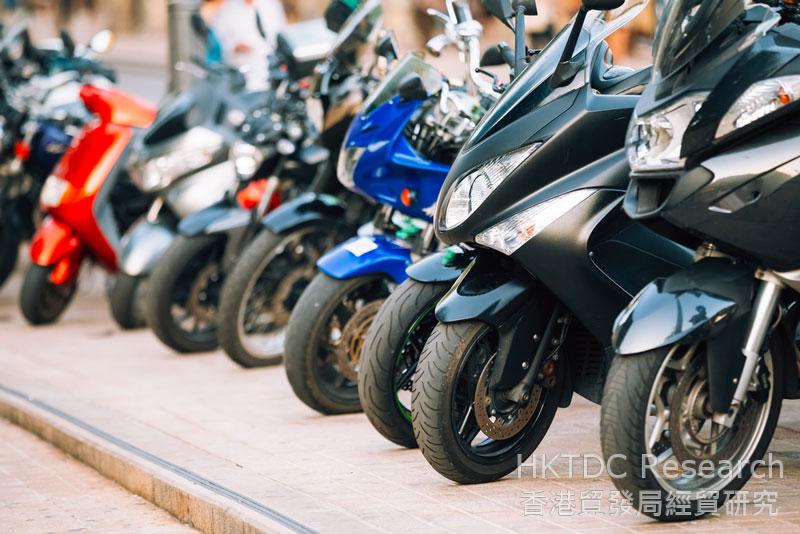
It's worth noting that Jiangmen has developed into one of the leading production bases of motorcycles in China. The city not only has a comprehensive motorcycle industry chain. It also produces motorcycle parts, components and accessories supplying to factories locally and in other provinces, as well as exporting them to foreign markets. According to statistics, the annual output of motorcycles in Jiangmen exceeds 3 million units, accounting for over 40% of Guangdong's provincial total and about 14% of the national total[2].

To further promote business, in recent years Jiangmen businesses have been actively 'going out' to seek various opportunities, including those for selling to Belt and Road markets, as well as exploring the feasibility of sourcing and investing in them. Current statistics show that 64 enterprises in Jiangmen have filed for 'going out' to make offshore investments, with a cumulative total investment amounting to US$710 million. Of this, 87% has first flowed into Hong Kong, before later reaching its final investment destinations overseas[3].


Picture: Jiangmen enterprises develop Belt and Road markets via Hong Kong.
Jiangmen enterprises develop Belt and Road markets via Hong Kong.
Picture: Jiangmen enterprises develop Belt and Road markets via Hong Kong.
Jiangmen enterprises develop Belt and Road markets via Hong Kong.
Photo: Jiangmen has developed into one of the leading production bases of motorcycles in China.
Jiangmen has developed into one of the leading production bases of motorcycles in China.
Photo: Jiangmen has developed into one of the leading production bases of motorcycles in China.
Jiangmen has developed into one of the leading production bases of motorcycles in China.


In mid-2016, HKTDC Research conducted a survey in selected locations in Guangdong and Guangxi. The aim of this was to investigate the intentions of those mainland enterprises who are 'going out' to explore business opportunities created by Belt and Road Iinitiative, as well as their demand for the necessary professional services[4]. The findings summarised in this article also include views expressed by Jiangmen businesses, both manufacturers and traders, which attended the above-mentioned seminar in the third quarter of 2016. Key points of the findings are as follows:

  • Deepening penetration into Belt and Road markets

    In particular to Jiangmen's motorcycle industry, local manufacturers of parts and components supply to domestic and Sino-foreign joint-venture motorcycle assembly plants in the mainland. Additionally, though, some of them sell parts and components to foreign markets (including Pakistan), through the global sourcing system of their Japanese automotive clients.

    In a move to further tap into overseas markets, parts and components enterprises are actively negotiating with their motorcycle clients in the hope of providing more support to these clients' production activities in other countries. A number of enterprises have plans to develop direct contact with other motorcycle assembly plants and components distributors in India and Indonesia. By so doing, they wish to conduct more direct selling to clients in overseas markets. This is in a bid to develop their brands, as well as to sell their own brand components in Belt and Road markets.

    Some developing countries along the Belt and Road have a marked demand for value-for-money motorcycles with lower fuel consumption and power output. Hence motorcycle assembly plants in Jiangmen, currently producing on an OEM basis for Japanese brands for sale in the mainland, have now turned their attention to Belt and Road markets like India, Pakistan and West Asia such as Iran.

    Other Jiangmen-based producers of consumer goods indicate that they wish to export to Belt and Road markets in Southeast Asia. They are currently faced with challenges such as the lacklustre market on the mainland and currency depreciations in certain developing countries (such as the Russian rouble and currencies in some African countries). To combat this, many enterprises are eager to develop markets along the Belt and Road in order to expand their brand business and diversify market risks.

  • Obtaining market intelligence

    In the past, Jiangmen enterprises mainly focused their business on the mainland market and carried out OEM processing activities for clients overseas. As such, they have little knowledge of what's required in exporting directly to overseas markets. Nor do they have access to effective sales channels in foreign countries. The number of countries along the Belt and Road is large, with each of them having different market environments, cultures, languages and sales conditions. Therefore it's particularly difficult for small and medium-sized enterprises to stay well informed when trying to develop such markets.

    Despite this hurdle, most enterprises in Jiangmen hope to seek trading partners via Hong Kong as well as to take advantage of Hong Kong's international market resources to acquire detailed market information on Belt and Road countries. This would include details on market demand, import and sales channels, as well as trade and commercial practices of individual countries, so as to develop these markets in depth. Some enterprises also revealed that they wish to obtain trade financing through Hong Kong to support the expansion of their business overseas.

  • Following in the footsteps of clients

    There are also those enterprises which follow in the footsteps of their clients in exploring the Belt and Road markets. In particular, Jiangmen enterprises involved in motorcycle production are actively looking to establish logistics facilities abroad, in order to meet the stringent requirements of their clients with motorcycle assembly plants based overseas. These clients mostly operate under the just-in-time model. They have stringent requirements for product quality and reliability, as well as the logistics and distribution of parts and components supply.

    At present, high-tech production activities overseas are increasing. In addition, factories are being established along the Belt and Road by downstream clients to produce a wide range of products such as auto parts and components, electronic products and different kinds of higher-value furniture, In light of this, some upstream production materials suppliers who are currently supplying primarily to mainland clients, for instance those engaged in new materials, nano materials and other new and high-tech materials, are also expected to follow in the footsteps of their clients by setting up sales channels along the Belt and Road routes. With this they aim to support the offshore production activities of their clients while exploring the industrial market along the Belt and Road.

  • Yet to consider setting up factories

    Despite the previous development, the majority of enterprises in Jiangmen currently have no concrete plans for relocating production activities away from the mainland. As a matter of fact, the development strategy of most enterprises is to conduct trade with countries and territories along the Belt and Road first before considering investment projects such as backing the establishment of industry parks. Even for larger enterprises, such as certain former state-owned enterprises, their current objective is to pursue transformation and upgrading in a move to enhance their technology and value-added content of their business in order to meet an array of challenges.

    In general, enterprises in Jiangmen view the central government’s Belt and Road initiative as a clear opportunity for business development. As such, apart from developing export business, some enterprises also plan to partner with their industry peers in Belt and Road countries by way of business matching. This would enable them to look into industrial upgrading, such as developing higher technology business like bio-technology, LED and optoelectronics, as well as implementing more high-tech co-operation projects with their business partners.

    There are those Jiangmen enterprises who are looking to make direct investment in or else to engage in mergers and acquisitions with Belt and Road markets at a later stage. Most of them said that they would take further advantage of Hong Kong in order to raise funds for their offshore projects, manage their overseas staff and handle international tax matters.

  • Importing from Belt and Road

    As well as achieving sales, certain Jiangmen enterprises also wish to import quality raw materials from the Belt and Road region as inputs for production on the mainland. For instance, enterprises manufacturing chemical fibres and other high-tech products in Jiangmen are not only actively raising the level of R&D and production. They are also seeking more quality raw materials, including various kinds of chemical raw materials, to support further business expansion. These enterprises are most interested in sourcing these raw materials from petroleum products-producing countries in the Middle East and Southeast Asia. Some Jiangmen enterprises indicated that they are actively searching for relevant information from Hong Kong and other channels in the hope of importing the right raw materials from the Belt and Road markets to support their production activities locally in the city.


HKTDC Research wishes to express its appreciation to the Department of Commerce of Guangdong Province and the Bureau of Commerce of Jiangmen City for their assistance in conducting research studies and company visits.


[1]  2015 figures. Source: Statistical Bulletin of China’s Outward Foreign Direct Investment 2015

[2]  Source: Jiangmen Association of Enterprises with Foreign Investment

[3]  Source: Bureau of Commerce of Jiangmen City

[4]  For details on the surveys, please see Chinese Enterprises Capturing Belt and Road Opportunities via Hong Kong: Findings of Surveys in South China

Content provided by HKTDC Research


Editor's picks

10 Jan 2017

“One Belt, One Road” - Mapping China’s main outbound route

By Pinsent Masons

Pinsent Masons has supported The Economist Corporate Network to create,'One Belt, One Road: an economic roadmap', a series of guides to areas including Africa, Asia, the Middle East and Eastern Europe.

The publication provides informed consideration about the opportunities and implications of OBOR. Along with mapping investment routes and opportunities, the reports feature insight on:

  • Infrastructure projects and plans
  • The likely impact of local political conditions on investment
  • Key economic indicators
  • A transparency and stability index.


The regional sections list infrastructure project pipelines with analysis of the infrastructure need in the constituent countries. The analysis examines the progress of prominent OBOR projects and conclude with a series country profiles that offer brief but detailed political-economic portraits.

The country profiles include an “infrastructure risk radar” that succinctly relates the state of core elements in a nation’s infrastructure base: port facilities, air transport facilities, retail and distribution network, telephone network, road network, power network, rail network and IT infrastructure.

The profiles list population and key economic indicators and contain a table on operating risk measures. The operating risk measures look at risk levels for security, political stability, government effectiveness, legal and regulatory conditions, the macroeconomy, foreign trade and payment, finance, tax policy, the labour market and infrastructure.

The Economist Intelligence Unit Democracy Index 2015 and its previous annual editions provide further context for describing a country’s system of government, governance quality and environment for transparency.

Please click to view the profiles of over 44 countries, ranging from Albania to Zimbabwe.


Editor's picks

HKTDC Research | 12 Jan 2017

Guangdong Enterprises Tapping Belt and Road Opportunities: Kennede Electronics Steps Up Exports

Kennede Electronics Co Ltd is one of the many businesses looking to capitalise on China’s Belt and Road Initiative as a way of tapping the rapidly growing Asian markets. The company has hopes of exploring investment opportunities in a number of areas, including Africa, in a bid to reduce its production costs, while strengthening its market coverage in Asia and Europe. Additionally, in order to advance its production and global sales, Kennede Electronics is in the process to set up a company based in Hong Kong to take advantage of the city’s professional services and trade facilities.

Belt and Road Markets Look Promising

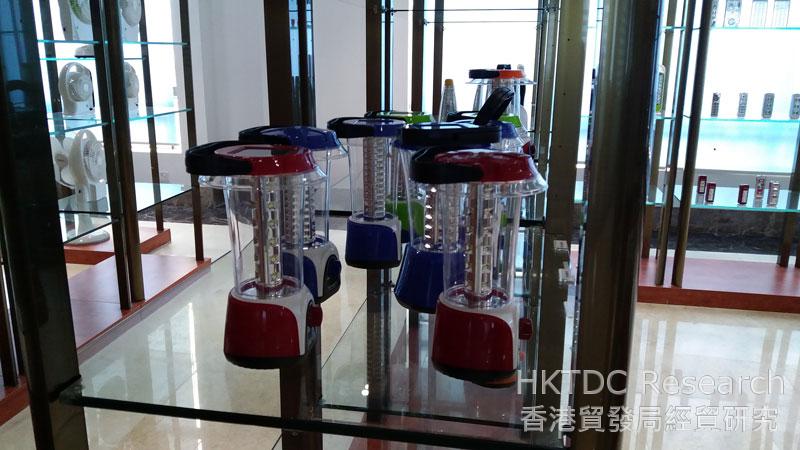
Photo: Kennede Electronics’ lighting products.
Kennede Electronics’ lighting products.
Photo: Kennede Electronics’ lighting products.
Kennede Electronics’ lighting products.

Headquartered in Guangdong’s Jiangmen city, Kennede Electronics is a specialist maker of backup lighting and electrical products. At present, the company is optimistic about the market potential of the Asian countries along the Belt and Road. It has plans to further develop its dealings with the major South Asian markets, notably India and Pakistan, as well as the Southeast Asian markets in Malaysia and Thailand.

A representative of the company told HKTDC Research that demand within the global lighting market is mostly stable at present. However, growth in the developed markets, such as Europe and the United States is relatively slow. Somewhat against the odds, then, over recent years the company has achieved impressive sales figures by developing new products, building new sales channels and opening new markets.

Since its inception in 2000, Kennede Electronics has focussed on production and overseas trade for its main exports. These exports cover major lighting series - rechargeable indoor and outdoor backup lighting; rechargeable flashlights; and fire emergency lights. They also include rechargeable desktop and floor fans. Kennede currently owns more than 600 series of products, marketing them to more than 100 countries and regions. In January 2014, the company was listed on the Small and Medium-sized Enterprise Board in the Shenzhen Stock Exchange.

Exploring Overseas Investment Opportunities

Kennede Electronics has comprehensive plans in place to expand its production capacity to match future business developments. These plans cover the increased application of standard modules, as well as altering product design to better suit its Jiangmen plant’s automated production capacity.

Photo: Kennede Electronics is in the process to set up a company in Hong Kong.
Kennede Electronics is in the process to set up a company in Hong Kong.
Photo: Kennede Electronics is in the process to set up a company in Hong Kong.
Kennede Electronics is in the process to set up a company in Hong Kong.

The company also intends to explore investment in manufacturing plants within the central region of China. It is also studying the feasibility of setting up production lines in Africa.  It plans to combine foreign labour and production resources in order to better control its overall production costs, and break into the African markets via local strongholds. In all, using Africa as an overseas production base could enable the company to service the European market more effectively.

When evaluating potential investment in production projects, the company believes that a number of major factors - other than labour supply and production costs - must be considered. The environmental protection requirements of investment locations, as well as other matters such as supply chain and production materials support, also need to be taken into account. Consequently, the company is looking to build its local knowledge prior to any potential investment in Africa.

Although Southeast Asia is geographically closer to China, the company reckons that the continuous inflow of foreign capital has prompted a surge in local production costs. As the labour supply is no longer abundant, some Southeast Asian countries have begun to tighten their requirements for foreign investment in production projects. As a result of this, the company is currently focused on African investment projects, and has reduced its focus on investment opportunities within Southeast Asia.

At present Kennede Electronics is in the process of setting up a company in Hong Kong. As an international financial centre, Hong Kong offers facilities for dealing with foreign exchange, collecting international payments and securing cost-effective capital to finance growing international business. The company also hopes to take advantage of Hong Kong's professional consulting services, amongst others, to undertake feasibility studies in overseas investment projects and early due diligence. This would enable it to control its investment risks and carry out appropriate tax planning to avoid the unnecessary burden of double taxation.


HKTDC Research would like to acknowledge the help extended by the Department of Commerce of Guangdong Province and the Bureau of Commerce of Jiangmen City in conducting surveys and company visits.

Content provided by HKTDC Research


Editor's picks

17 Jan 2017

Making Inroads: Chinese Infrastructure Investment in ASEAN and Beyond

By Inclusive Development International

Introduction

Little more than a decade ago, China was a relatively minor actor in global investment and finance. By 2014 China had become the second largest global investor, second only to the United States. Outbound investment has been made possible due to strong backing from the Chinese state and financing from its policy and commercial banks. China has become a more influential player within international financial institutions such as the World Bank and the Asian Development Bank. However, it has also grown increasingly frustrated with the dominance of developed nations and the limited role of emerging economies within the management and direction of these institutions. In response, China has promoted the establishment of new institutions and initiatives, including the multilateral Asian Infrastructure Investment Bank (AIIB). China has also established investment funds such as the Silk Road Fund to provide further capital to outbound investment. These new institutions and initiatives focus for the most part on infrastructure development.

Across the world, many developing nations face an infrastructure deficit. Inadequate infrastructure has both social and economic impacts. For example, weak transport links, limited power supply, and lack of access to irrigation all impact on the daily lives of some of the world’s poorest people. According to the World Bank, 1.2 billion people live without electricity; 1 billion people live over two kilometres away from an all-weather road; and at least 748 million people lack access to safe drinking water. While infrastructure is lacking in many countries, population growth means that demand continues to increase. Limited infrastructure can also create barriers to the development of industry, which can help catalyse economic development and contribute to lifting people out of poverty. China’s remarkable domestic growth was fuelled by infrastructure investment, and as its role in overseas investment and finance has developed, China has also become a key actor in global infrastructure development.

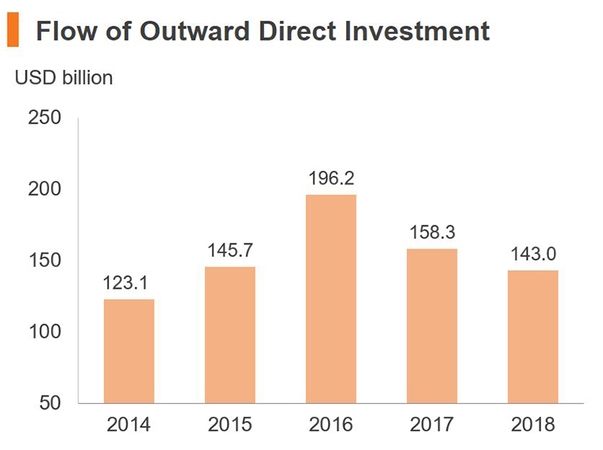
China’s overseas investment has increased rapidly over the last ten years. According to statistics from China’s Ministry of Commerce, mainland China’s outbound investment flows reached a record high of over US$123 billion in 2014. This is over 45 times higher than in 2002, when overseas investment was just US$2.7 billion. This investment flows to various sectors, including infrastructure development, and China plays a major role in the development of transport, energy and telecommunications infrastructure in Southeast Asia. Cambodia, Laos and Myanmar have all gone to great lengths to attract foreign investment, and China is now the top investor in all three countries. Chinese investment in Vietnam, Thailand, Indonesia and Malaysia is also significant and increasing.

All Association of Southeast Asian Nations (ASEAN) countries are members of the newly established AIIB, and the region also lies within the route of China’s One Belt One Road, an initiative announced by Xi Jinping in 2013 that seeks to promote and enhance interconnectivity and cooperation between China and over 60 countries en route to Europe. Following the announcement of this initiative, the Chinese state has made a revitalized push to promote outbound investment, focusing especially on infrastructure and connectivity. In addition, China has launched several multibillion dollar investment funds targeting overseas investments.

This renewed push from China is likely to have a significant impact on the availability of financing for large-scale infrastructure projects in Asia. At the same time, the emergence of new multilateral banks, and in particular the AIIB, creates an environment in which, for the first time, emerging economies have a leading voice regarding governance and management decisions in a major international financial institution. As a result, the landscape of both regional and global development finance and investment is likely to change significantly in the coming years. There has been much discussion and speculation about the potential impact of the new institutions and initiatives, especially regarding the social and environmental standards that will apply to their operations.

This study examines this rapidly evolving landscape and its potential implications. It focuses on the ASEAN region, and draws examples particularly from the lower Mekong countries. However, it will also be of value to individuals and groups elsewhere in Asia and internationally who are monitoring these developments. The main focus is on the formation of the AIIB and the implementation of the One Belt One Road initiative. The paper also looks at other Chinese financial institutions, including policy banks and investment funds, assessing the potential impact they are likely to have in the region and beyond as Chinese outbound investment continues to grow.

The aim of this study is to increase civil society awareness of these institutions and initiatives, how they will potentially impact on local communities and the environment in the areas where they work, and what environmental and social standards and governance systems that they have adopted. The paper concludes by exploring strategies that civil society could deploy to respond to these developments and influence the policies, projects and operations of Chinese-led finance institutions.

Please click to read full report.


Editor's picks

GDP (US$ Billion)

18,737.28 (2018)

World Ranking 2/194

GDP Per Capita (US$)

13,305 (2018)

World Ranking 72/193

Economic Structure

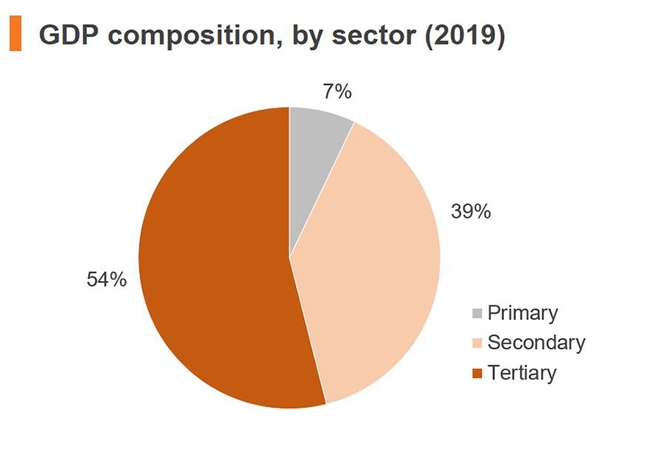
(in terms of GDP composition, 2017)

Services
(51.6%)
Industry
(40.5%)
Agriculture
(7.9%)

External Trade (% of GDP)

37.8 (2017)

Currency (Period Average)

Renminbi

6.6174per US$ (2018)

Political System

Single-party people's republic

Sources: CIA World Factbook, Encyclopædia Britannica, IMF, Pew Research Center, United Nations, World Bank

Latest development

  • China’s GDP declined by 6.8% in the first quarter of 2020 and grew by 3.2% in the second quarter of 2020.
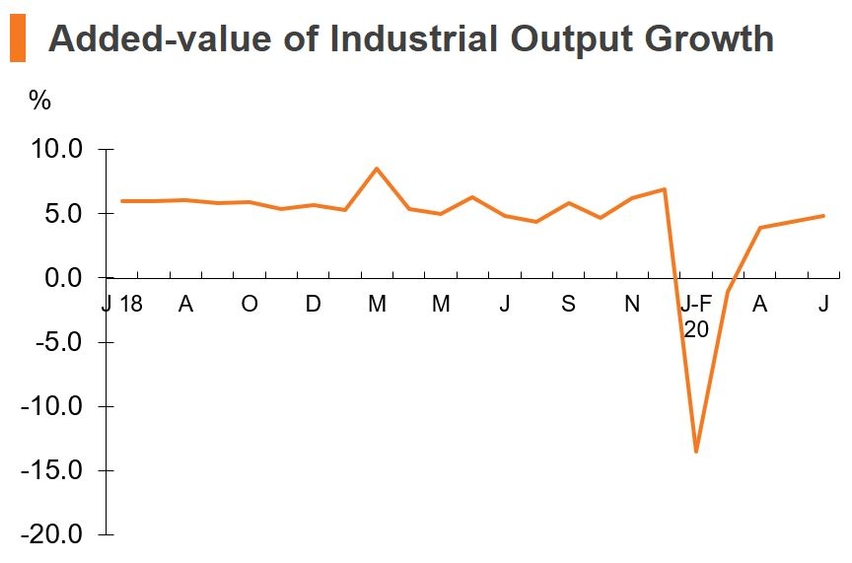
  • Added-value industrial output grew by 4.8% in June 2020 up from 4.4% in May 2020.
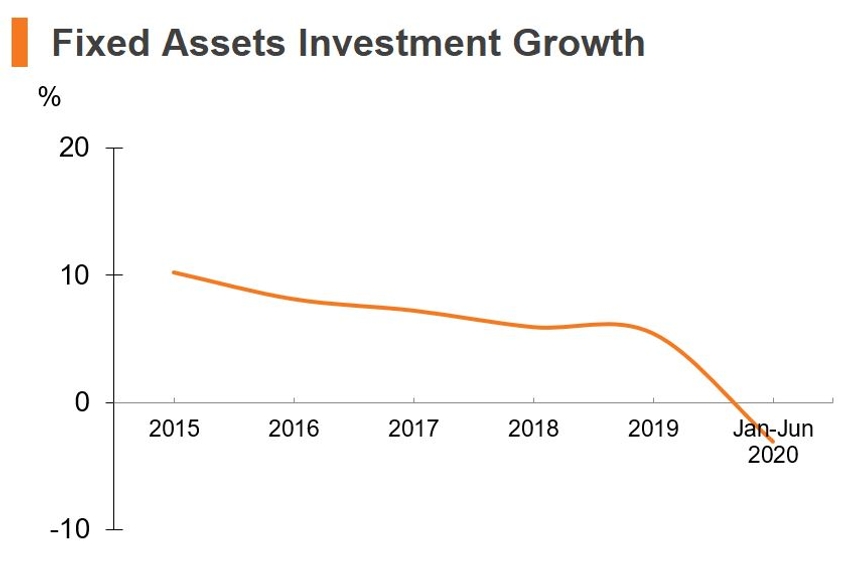
  • Fixed assets investment declined by 3.1% in Jan-Jun 2020, which was narrowed by 3.2 percentage points compared with that in Jan-May 2020.
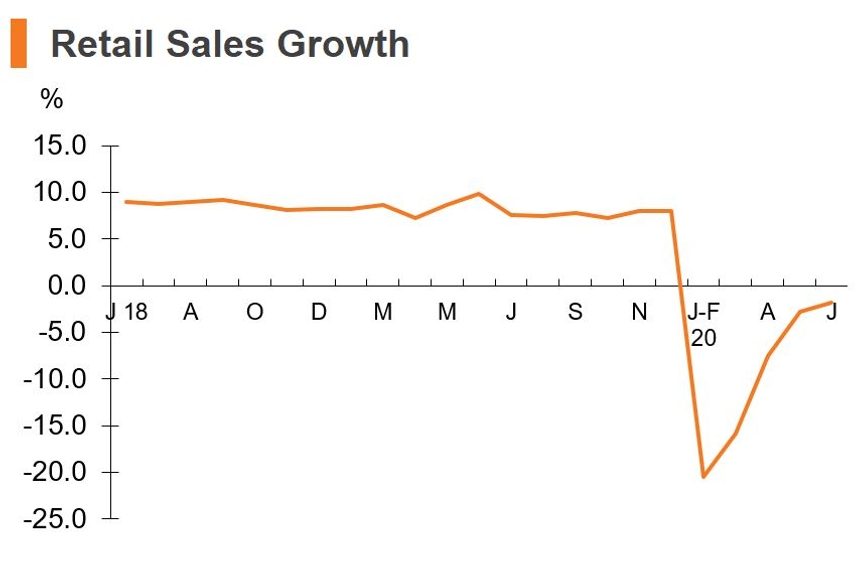
  • Retail sales decreased by 1.8% in June 2020, registering a decline narrowed by 1.0 percentage points compared with May 2020.
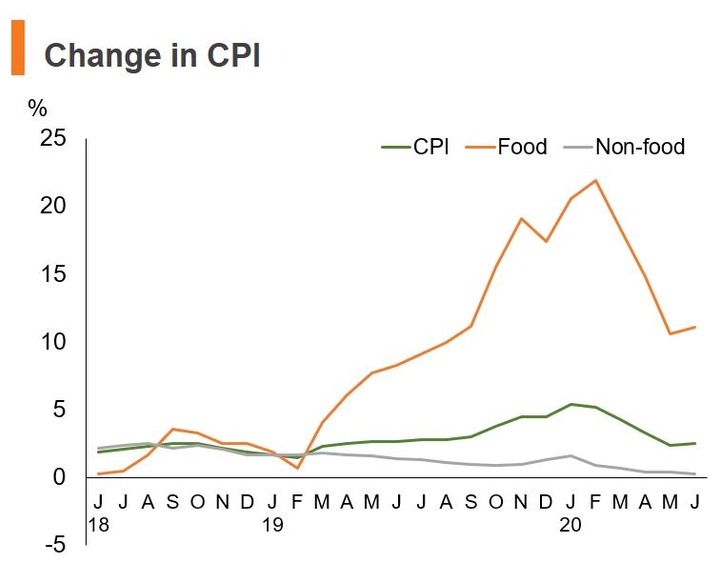
  • Inflation stood at 2.5% in June 2020, with food prices increased by 11.1% and non-food prices increased by 0.3%.
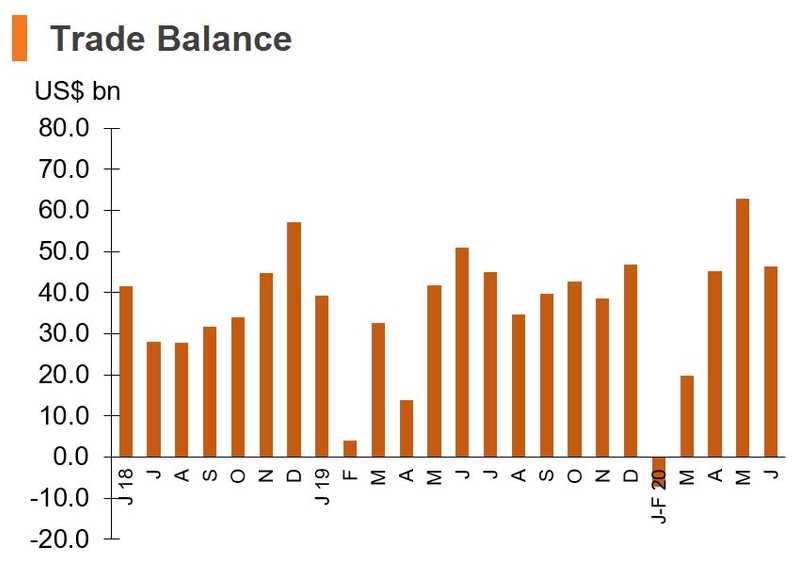
  • In June 2020, exports (in terms of US$) increased by 0.5%, while imports (in terms of US$) increased by 2.7%, resulting in a trade surplus of US$46.4 billion.
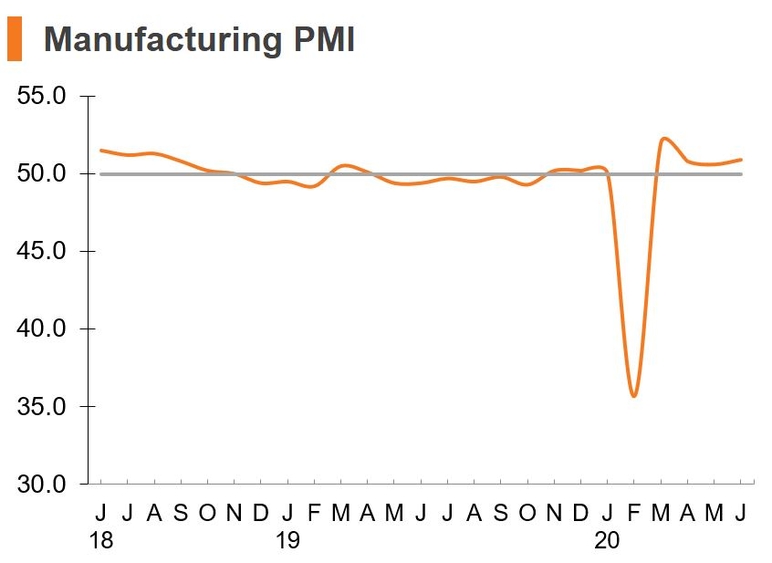
  • The Manufacturing Purchasing Managers’ Index up from 50.6 in May 2020 to 50.9 in June 2020.

Major Economic Indicators

2019

Jan-Jun 2020

Value

Growth (%)

Value

Growth (%)

Population (mn)

1,400.0

-

1,400.0

-

Gross Domestic Product (RMB bn)

99,086.5

6.11

45,661.4

-1.61

GDP Per Capita (RMB)

70,892

5.7

-

-

Fixed Assets Investment 2 (RMB bn)

55,147.8

5.4

28,160.3

-3.1

Added-Value of Industrial Output 3

-

5.71

-

-1.31

Consumer Goods Retail Sales (RMB bn)

41,164.9

8.0

17,225.6

-11.4

Consumer Price Index

-

2.9

-

3.8

Exports (US$ bn)

2,498.4

0.5

1,098.8

-6.2

Imports (US$ bn)

2,076.9

-2.8

931.0

-7.1

Trade Surplus (US$ bn)

421.5

-

167.8

-

Utilised Foreign Direct Investment (US$ bn)

138.1

2.4

-

-

Foreign Currency Reserves (US$ bn)

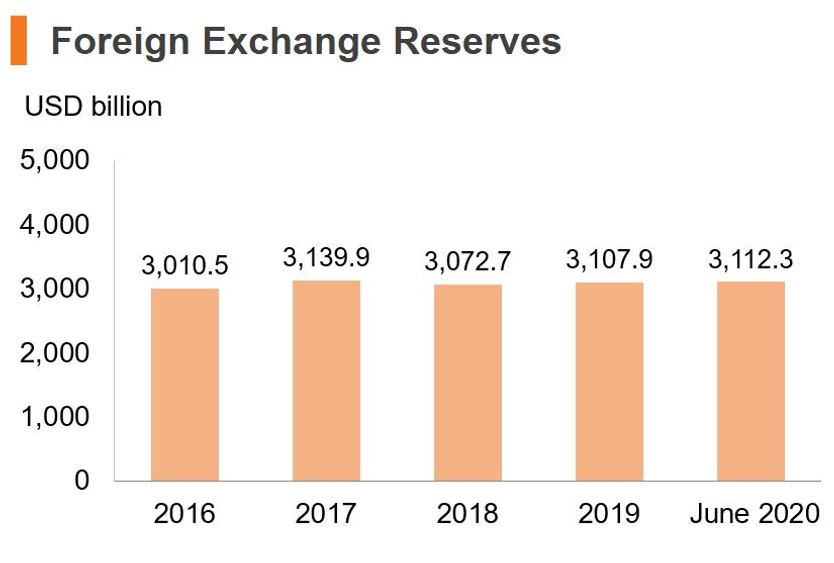
3,107.9

1.1

3,112.34

-0.2

Note: 1 Real growth
2 Urban investments in fixed assets
3 All state-owned and other types of enterprises with annual sales over RMB 20 million
4 June 2020

Sources: The National Bureau of Statistics, Ministry of Commerce, and General Administration of Customs.


Major International Ranking

  • According to the World Bank, China is the second-largest economy in the world, behind the United States, ahead of Japan.
  • According to UNCTAD World Investment Report, China was the second-largest recipients of FDI inflows (USD 141 billion) in the world in 2019 (China ranked 2nd in 2008), behind the United States (USD 246 billion).
  • According to UNCTAD World Investment Report, China was the fourth-largest source of outward FDI flows (USD 117 billion) in the world in 2019 (up from the 11th in 2008), behind Japan (USD 227 billion), the United States (USD 125 billion) and the Netherlands (USD 125 billion).
  • According to the World Trade Organisation (WTO), China was the world’s largest exporter of merchandise trade in 2019 (up from the 11th in 1995), reaching USD 2,499 billion.
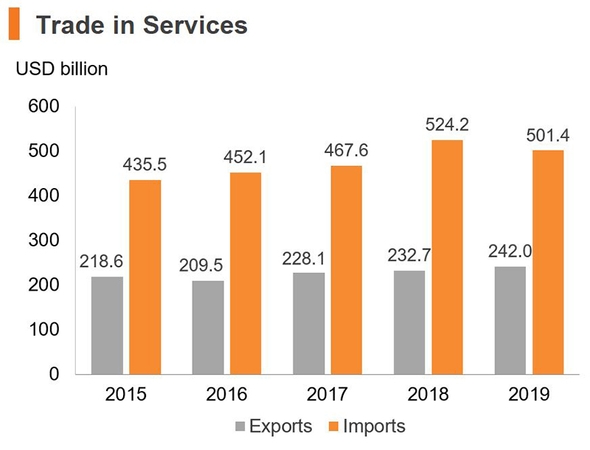
  • According to WTO, China was the world’s 4th largest exporter of commercial services in 2019 (up from the 16th in 1995), reaching USD282 billion.
  • According to International Monetary Fund, China has the largest foreign currency reserves as of December 2019, reaching USD 3,108 billion.
  • According to HKSAR Marine Department, Shanghai’s container throughput surpassed Singapore and ranked the first in the world since 2010.
  • According to World Tourism Organisation (UNWTO), China ranked the world’s top tourism spending in 2018 (USD 277 billion), followed by the United States (USD 144 billion) and Germany (USD 94 billion).
  • According to Hong Kong Securities and Futures Commission, as at end December 2019, the market capitalisation of Shanghai Stock Exchange is the second-largest in Asia (after Japan) and the fourth largest in the world.

Recent Government Initiatives

  • In March 2016, the National People’s Congress (NPC) adopted the 13th Five-Year Plan. It also announces the launch of six key scientific and technological (S&T) projects and nine major projects under the “Scientific Innovation 2030” initiative, as well as the implementation of the “Made in China 2025” strategy for building a strong manufacturing country.
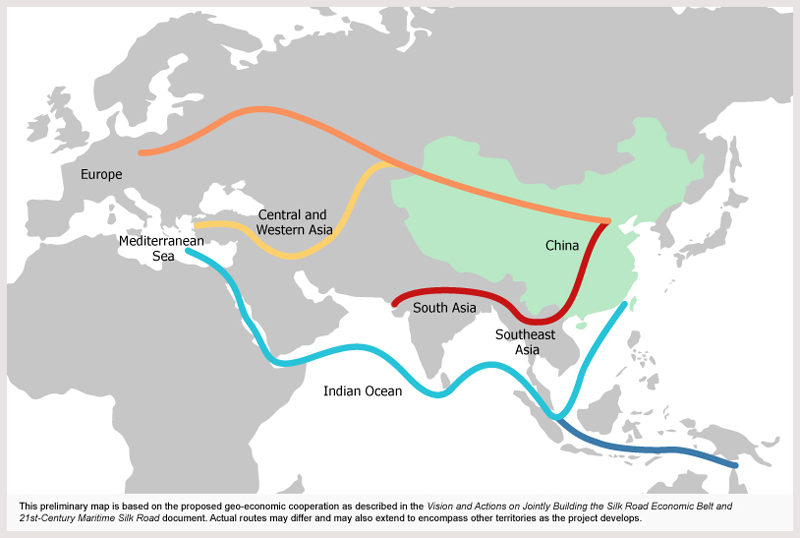
  • The Belt and Road Initiative (BRI) is a significant development strategy launched by the Chinese government in March 2015. The Chinese government also issued its Vision and Actions of Jointly Building the Silk Road Economic Belt and 21st Century Maritime Silk Road which outlined the framework, key areas of cooperation and cooperation mechanisms regarding the BRI.
  • The State Council promulgated the Outline Development Plan for the Guangdong-Hong Kong-Macao Greater Bay Area on 18 February 2019, mapping out the development plan for the Greater Bay Area (GBA). The Greater Bay Area is strategically positioned to be (i) a vibrant world-class city cluster; (ii) a globally influential international innovation and technology hub; (iii) an important support pillar for the Belt and Road Initiative; (iv) a showcase for in-depth cooperation between the Mainland and Hong Kong and Macao; and (v) a quality living circle for living, working and travelling.
  • On 5 July 2019, Guangdong has issued two key strategy documents relating to the Greater Bay Area – the Implementation Plan for the Outline Development Plan for the Guangdong-Hong Kong-Macao Greater Bay Area and a Three-Year Action Plan for Building the Guangdong-Hong Kong-Macao Greater Bay Area (2018-2020). The Action Plan proposes the implementation of 100 key measures across nine areas, including optimising and upgrading the environment of the GBA’s four core cities, establishing an international science and technology innovation centre and maintaining a state-of-the-art infrastructure base.
  • On 9 August 2019, China’s State Council has endorsed plans to establish Shenzhen as a model for the country’s wider urban development and, ultimately, one of the foremost cities in the world in terms of economic resource and sustained, high-quality development. The five priorities for its future development include: establishing a national model for high-quality development, delivering exemplary law-based governance, proving a model of optimum urban living, prioritising the prosperity and wellbeing of residents and pioneering sustainable development in an urban environment.
  • During the Boao Forum in April 2018, President Xi Jinping announced that China decides to adopt a series of new significant measures in expanding its opening-up. These measures include broadening market access, enhancing alignment with international economic and trade rules, strengthening protection of intellectual property rights and lowering imports tariffs.
  • China is shifting towards a consumption-driven economy by lowering its import tariffs. In November 2017, China cut import tariff on 187 consumer goods, the tariffs drop from an average 17.3% to 7.7% on products including pharmaceuticals, food, health supplements and clothing. From 1 July 2018, China has further reduced tariffs on 1,449 items, from an average tariff rate of 15.7% to 6.9%; and lower import tariffs on vehicles (from average 21.5% to 13.8%) and auto parts (from average 10.2% to 6.0%).
  • China reduced the Most-Favoured-Nation (MFN) tariff on 1,585 taxable items as of 1 November 2018. This coincided with the provisional MFN tariff rates being abolished for 39 import items, while the existing MFN provisional tariff rates remained in force for all goods unaffected by this latest round of cut. In total, the tariff reductions apply to 19% of all taxable import items, with the average tariff rate having fallen from 10.5% to 7.8%.
  • The provisional import and export tariffs on a range of goods were revised as of 1 January 2019 in line with a prior announcement by the State Council Customs Tariff Commission. This has seen new provisional tax rates applied to such items as food stuffs and various categories of industrial equipment, while duty on several information technology products will be removed and the rates for a raft of other IT products reduced as of 1 July 2019.
  • From 1 April 2019, China implemented a value-added tax (VAT) cut for manufacturing sector from 16% to 13% and VAT cut for construction and transportation sectors from 10% to 9%. From 1 May 2019, China reduced social security fees from 20% to 16%.
  • The Foreign Investment Law of the People’s Republic of China took effect from 1 January 2020. This law assures non-mainland investors of national level protection for all their committed funds, income and other interests, provided their projects so not fall within the remit of the statutory Negative list.
Major Economic Indicators
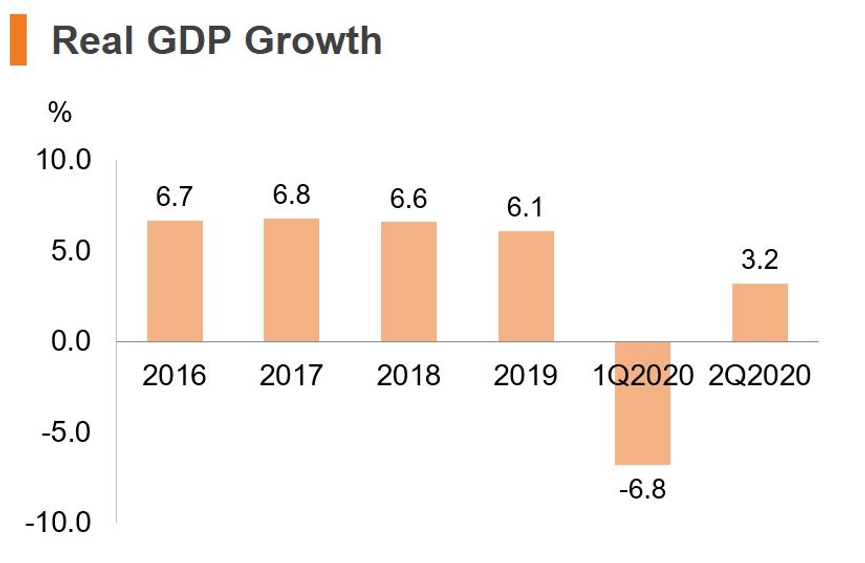
Major Economic Indicators

Chart: Real GDP Growth (China)


Chart: GDP composition, by sector (2019) (China)


Chart: Fixed Assets Investment Growth (China)


Chart: Added-value of Industrial Output Growth (China)


Chart: Retail Sales Growth (China)


Graph: Change in CPI (China)


Chart: Manufacturing PMI (China)


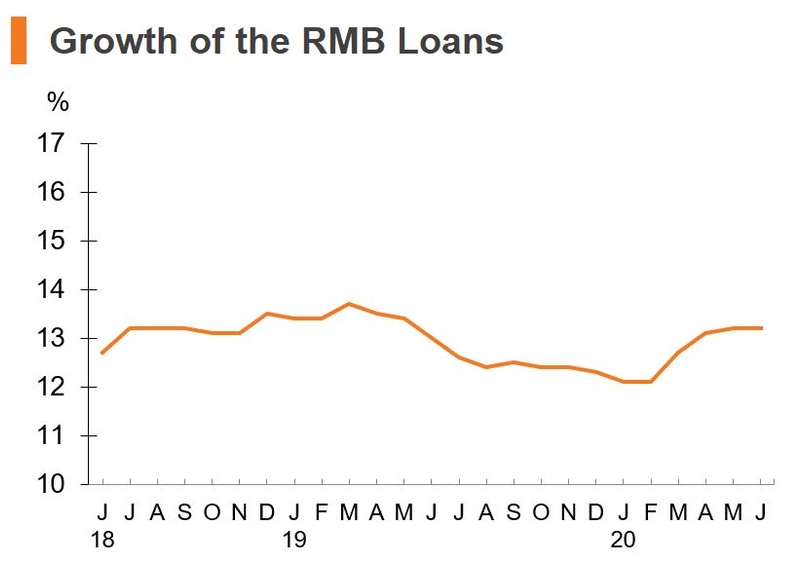
Chart: Growth of the RMB Loans (China)


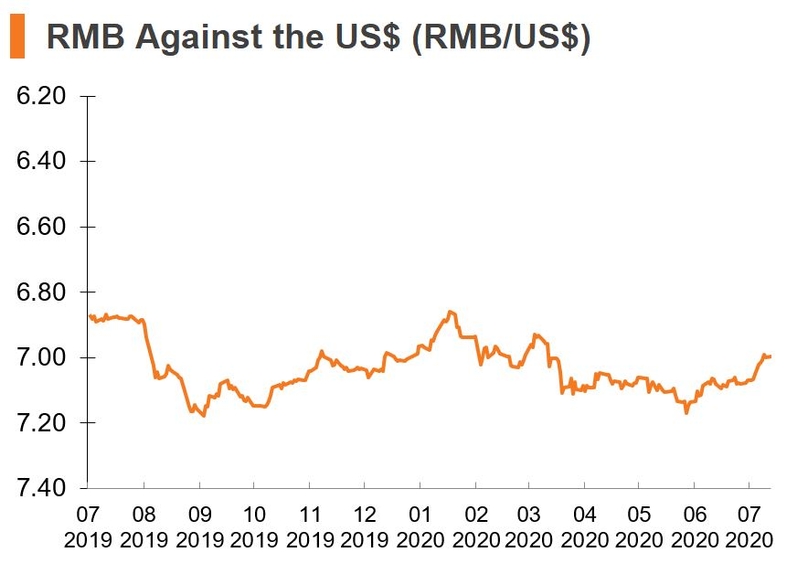
Chart: RMB Against the US dollars (China)


Chart: Foreign Exchange Reserves (China)


Sources: The National Bureau of Statistics, Pacific Exchange Rate Service; State Administration of Foreign Exchang

External Trade
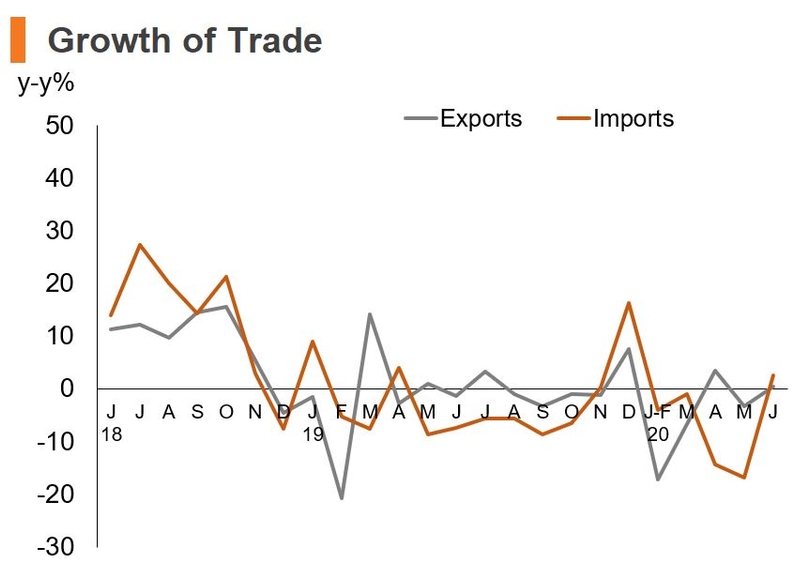
External Trade

Chart: Growth of Trade (China)


Chart: Trade Balance (China)


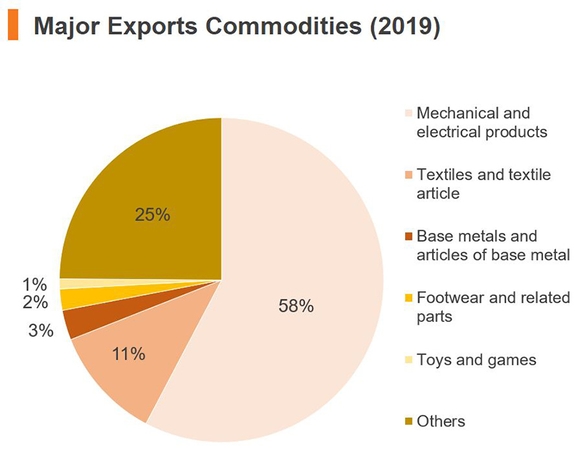
Chart: Major Export Commodities (2019) (China)


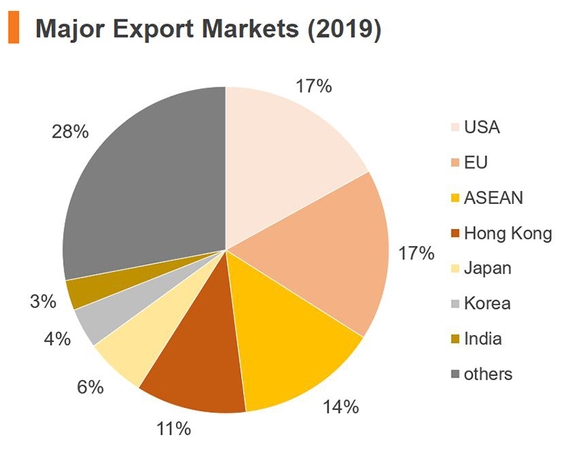
Chart: Major Export Markets (2019) (China)


Chart: Trade in Services (China)


Sources: Ministry of Commerce, General Administration of Customs

Investment Flows
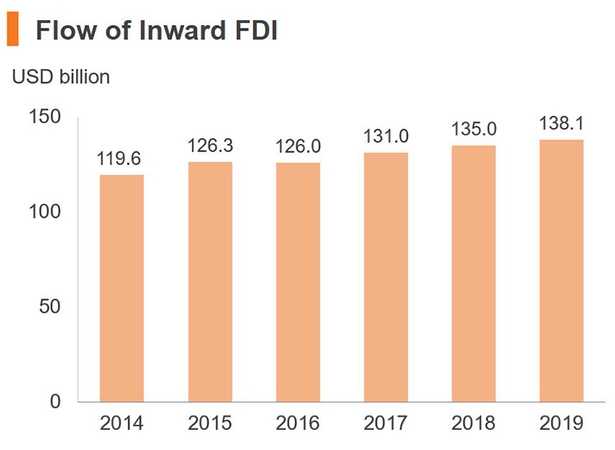
Investment Flows

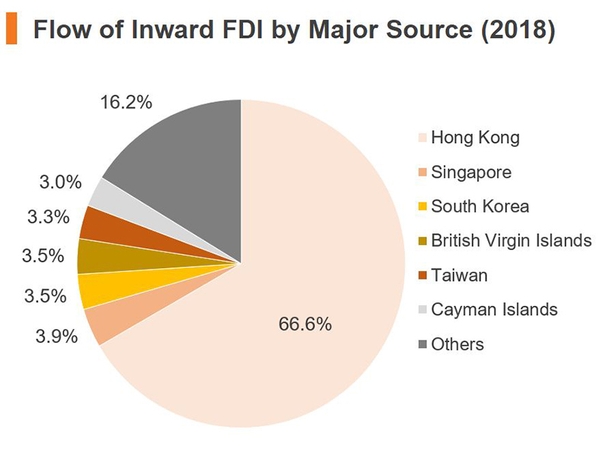
Chart: Flows of Inward FDI (China)


Chart: Flows of Inward FDI by Major Source (2018) (China)


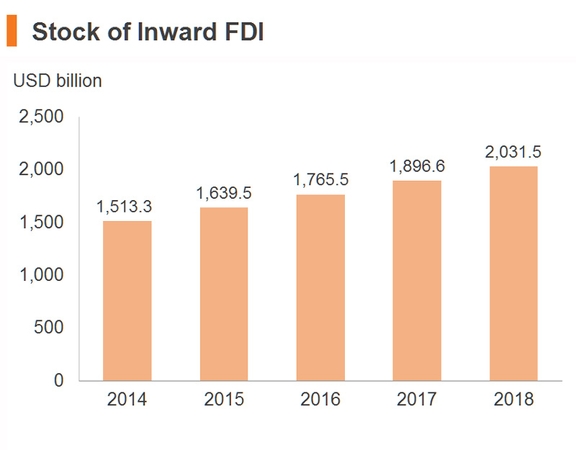
Chart: Stock of Inward FDI (China)


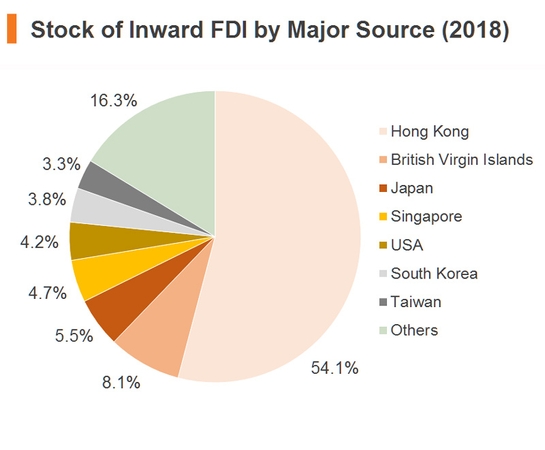
Chart: Stock of Inward FDI by Major Source (2018) (China)


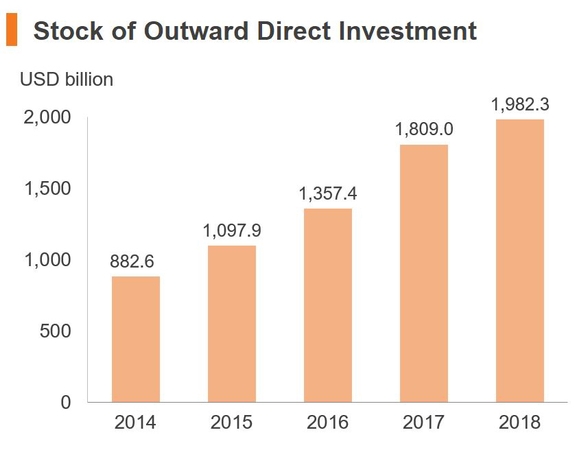
Chart: Flow of Outward Direct Investment (China)


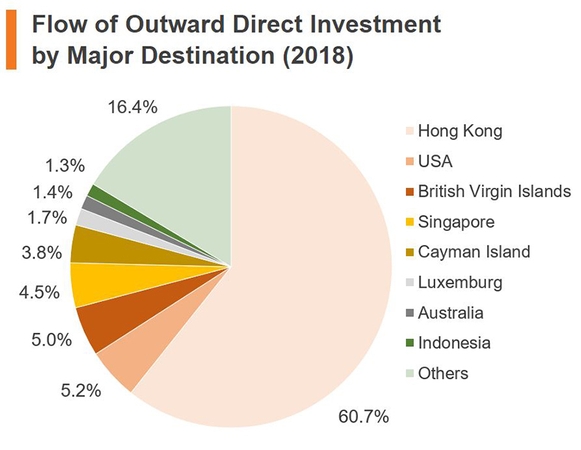
Chart: Flow of Outward Direct Investment by Major Destination (2018) (China)


Chart: Stock of Outward Direct Investment (China)


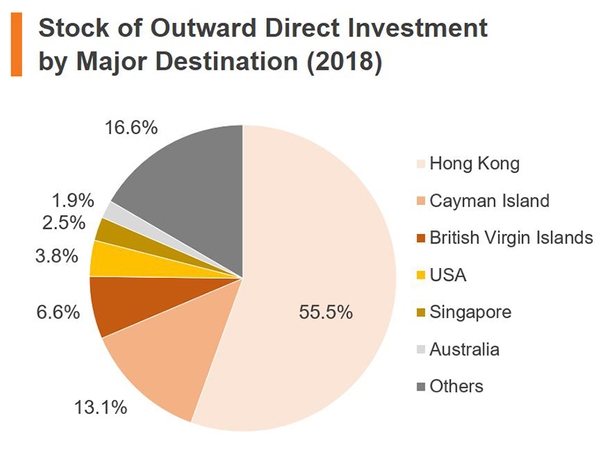
Chart: Stock of Outward Direct Investment by Major Destination (2018) (China)


Trade Relations, Trade Policies and Tax Treaties

Trade Relations, Trade Policies and Tax Treaties

Trade Relations

  • Founding member of the Asian Infrastructure Investment Bank (AIIB)
  • Member of the World Trade Organization (WTO)
  • Member of the Asia-Pacific Economic Cooperation (APEC)
  • Member of the Pacific Economic Cooperation Council (PECC)
  • Member of the Asian Development Bank (ADB)
  • Member of the United Nations Economic and Social Commission for Asia and the Pacific (ESCAP)
  • Observer of the Trade Committee of the Organization for Economic Cooperation and Development (OECD)

Trade Policies

  • According to WTO, China’s average applied most favoured nation (MFN) tariff rate was 9.8% in 2018, progressively down from 15.3% in 2001. The average tariff was higher for agricultural products at 15.6% while the average tariff for non-agricultural products was 8.8%.
  • Since expanding domestic consumer demand is an important move in achieving stable economic growth and economic restructuring, the State Council further reduced the import tariffs on 187 foreign daily consumer goods items in December 2017. The average import tariff has been lowered down from 17.3% to 7.7%. On 1 July 2018, China will further lower import tariff on 1,449 items, from an average tariff rate of 15.7% to 6.9%.
  • China adopted the practice of “quarantine inspection before customs declaration” in customs clearance. Import Goods Clearance Slips and Export Goods Clearance Slips stamped with the special seal of inspection and quarantine authorities are issued to goods subject to entry-exit inspection and quarantine. The Customs will examine and release the goods against the Import Goods Clearance Slip or Export Goods Clearance Slip issued by the entry-exit inspection and quarantine authorities at the place of customs declaration.
  • Inspection is required for all import and export goods listed in the Catalogue of Import and Export Commodities Subject to Inspection and Quarantine by Entry-Exit Inspection and Quarantine Authorities, or subject to inspection pursuant to other laws and regulations.
  • Safety licence and other regulatory requirements apply to imports of medicines, foodstuffs, animal and plant products, and mechanical and electronic products. For details, please refer to State Administration for Market Regulation website.

For details, please refer to Guide to Doing Business in China.

Free Trade Agreements (FTAs)

Currently, China has signed and implemented 20 free trade agreements (FTAs), 13 FTAs are under negotiation and another 8 FTAs are under considerations. China has also signed and implemented 1 preferential trade agreement.

China’s FTAs (signed and implemented)

  • China-Mauritius FTA
  • China-Maldives FTA
  • China-Georgia FTA
  • China-Australia FTA
  • China-Korea FTA
  • China-Switzerland FTA
  • China-Iceland FTA
  • China-Costa Rica FTA
  • China-Peru FTA
  • China-Singapore FTA
  • China-New Zealand FTA
  • China-Chile FTA
  • China-Pakistan FTA
  • China-ASEAN FTA
  • Mainland and Hong Kong Closer Economic and Partnership Agreement (CEPA)
  • Mainland and Macau Closer Economic and Partnership Agreement
  • China-ASEAN FTA Upgrade
  • China-Chile FTA Upgrade
  • China-Singapore FTA Upgrade
  • China-Pakistan FTA second phase

China’s FTAs Under Negotiation

  • Regional Comprehensive Economic Partnership (RCEP)
  • China-GCC (Gulf Cooperation Council) FTA
  • China- Japan-Korea FTA
  • China-Sir Lanka FTA
  • China-Israel FTA
  • China-Norway FTA
  • China-New Zealand Upgrade FTA
  • China-Moldova FTA
  • China-Panama FTA
  • China-Korea FTA second phrase
  • China-Palestine FTA
  • China-Peru FTA Upgrade
  • China-Cambodia FTA

China’s FTAs Under Consideration

  • China-Columbia FTA Joint Feasibility Study
  • China-Fiji FTA Joint Feasibility Study
  • China-NePal FTA Joint Feasibility Study
  • China-Papua New Guinea FTA Joint Feasibility Study
  • China-Canada FTA Joint Feasibility Study
  • China-Bangladesh FTA Joint Feasibility Study
  • China-Mongolia FTA Joint Feasibility Study
  • China-Switzerland FTA Upgrade Joint Feasibility Study

Preferential Trade Agreement

  • Asia-Pacific Trade Agreement (APTA)

For details, please refer to China FTA Network.

Economic Relations with Hong Kong

Economic Relations with Hong Kong

  • Hong Kong is the largest source of overseas direct investment in the Chinese Mainland. By the end of 2018, among all the overseas-funded projects approved in the Chinese Mainland, 46.3% were tied to Hong Kong interests. Cumulative utilised capital inflow from Hong Kong amounted to US$1,098.1 billion, accounting for 54.1% of the national total.
  • Hong Kong is also the leading destination for China’s FDI outflow. According to Chinese statistics, by 2018, the stock of FDI going to Hong Kong accumulated to US$1,100.4billion, or 55.5% of the total outflow of FDI.
  • Chinese Mainland is one of the leading sources of inward investment in Hong Kong. According to Hong Kong statistics, the stock of Hong Kong's inward investment from the Chinese mainland amounted to US$526.1 billion at market value or 26.8% of the total at the end of 2018.
  • As of December 2019, 1,241 mainland companies were listed in Hong Kong, comprising H-share, red-chip and private companies with total market capitalisation of around US$3.58 trillion, or 73% of the market total. 

Hong Kong's Direct Investment in the Chinese Mainland

Projects, contracted and

utilised direct investment

2018

1979-2018

No./

Value

Share of the

national total (%)

No./

Value

Share of the

national total (%)

Number of approved projects

39,868

65.9

444,398

46.3

Utilised direct investment (US$ bn)

89.9

66.6

1,098.1

54.1

Sources: China Monthly Economic Indicators

  • Hong Kong was the Mainland's third largest trading partner (after the US and Japan) in 2019. According to China's Customs Statistics, bilateral trade between the Mainland and Hong Kong amounted to US$288.0 billion (6.3% of the Mainland's total external trade) in 2019. Of which exports from the Chinese Mainland to Hong Kong stood at US$278.9 billion, making Hong Kong the second largest export market, after the US.
  • The Mainland has been Hong Kong's largest trading partner since 1985. Share of the Mainland in Hong Kong's global trade jumped from 9.3% in 1978 to 50.8% in 2019. The Chinese Mainland was Hong Kong’s largest import source accounting for 46.6% of Hong Kong’s total imports, and the largest export market accounting for 55.4% of Hong Kong’s total exports in 2019.
  • Hong Kong's trade with the Chinese Mainland is to a large extent related to outward processing activities. In 2019, 25.3% of Hong Kong's total exports to the Chinese Mainland were related to outward processing activities. Meanwhile, 38.6% of Hong Kong’s imports from the Mainland and 68.7% of Hong Kong's re-exports of the Mainland origin to all countries were related to outward processing.

Hong Kong's Trade with the Chinese Mainland [1]

Unit
(US$ million)

2019

Jan-May 2020

Value

Growth
(+/-,%)

Ranking

Value

Growth
(+/-,%)

Ranking

Total exports

283,443

-3.3

1

109,330

1.0

1

Domestic exports

2,649

0.9

1

959

0.5

1

Re-exports

280,794

-3.4

1

108,371

1.0

1

Imports

263,858

-5.9

1

89,069

-15.1

1

Total Trade

547,301

-4.6

1

198,398

-6.9

1

Trade Balance

19,585


20,261


Sources: Census & Statistics Department of Hong Kong

[1] Since offshore trade has not been captured by ordinary trade figures, these numbers do not necessarily reflect the total business managed by Hong Kong companies.

Image name View

China’s halal food trade shows promise, thanks to the country’s plan to expand links with countries along the Belt and Road.

Much of the attention on China’s Belt and Road Initiative, which envisions linking 65 nations from Southeast Asia, Africa and Europe, has focused on infrastructure opportunities. But business prospects arising from China’s economic development plan extend beyond infrastructure and finance.

At an August seminar organised by the Hong Kong Trade Development Council (HKTDC), the focus centred on developing the nascent but lucrative halal food industry to cater to the large Muslim population along the Belt and Road regions.

The global halal food market was worth US$500 billion in 2014, according to seminar speaker, Wang Guoliang, Deputy Secretary General of the China Islamic Association. He said companies should consider not just the Western European market, but also the emerging Southeast Asia market, where the majority of Muslims live.

“Eighty per cent of halal foods consumed are imported,” said Mr Wong. “The halal sector is expected to double to US$6.4 trillion in 2018, from US$3.2 trillion in 2014.” He said the three largest halal consumer markets are in the Middle East, Southeast Asia and Europe.


Strong European Following

An Arabic word meaning “lawful” or “permitted”, halal is used to describe goods or actions that are in keeping with Sharia law and Islamic principles. While many traders are aware that pork and alcohol are diet restrictions, halal calls for animals to be killed just before processing and using special slaughtering conditions. Blood by-products are also forbidden.

Such strict quality control has given halal foods a wide following in Europe. Mr Wang, noted that about 500 million non-Muslims consume halal foods, representing a large untapped market for Chinese food suppliers.


Halal Certification

Chinese companies currently export less than one per cent of halal food supplies annually. Among the new entrants is Hong Kong-based financial group, Mega Capital International Holdings Ltd, which established a halal food division in June 2014 to connect Chinese manufacturers with Jakim, Malaysia’s Department of Islamic Development responsible for issuing halal certifications.

“Jakim has two main criteria,” said Carson Kwong, President of the company’s halal food subsidiary, MCH Halal International Holdings Ltd. “First, it’s to make sure production flows smoothly and is hygienic. Then, it’s the religious component – that the food is properly prepared according to Islamic principles.”


Standards Pioneer

Recognised by the United Nations and in 57 countries, the Jakim certification can help operators build an extensive distribution network across Asia, the Middle East and North Africa, according to Rusli Mohd Nor, Chief Advisor of Jabatan Kemajuan Islam Malaysia.

“Malaysia is the first in the world to introduce halal food standards,” said Mr Nor. “We are keen to serve as a stepping stone for Chinese halal exports targeting the Belt and Road region.” Mr Nor noted that halal logistics involves managing the supply chain, from transportation to storage and handling, to ensure adherence to Islamic principles, with the goal of safeguarding the integrity and purity of halal products.

While Jakim officials periodically conduct on-site inspections, Mr Kwong said his company pays close attention to factories without ISO9000 certification. The company’s halal food division has already received about 100 applications since starting operations in June 2014.

“Many Chinese SMEs are waking up to the lucrative opportunities in Southeast Asia,” said Mr Kwong. “Events such as the HKTDC seminar encourage them to think out of the box by targeting untapped markets.” He said the seminar generated plenty of discussion, which he welcomed as the halal food business remains an untapped niche in Hong Kong. Eligible applicants, he said, can become halal-certified in about two months, with two years’ validity.

Mr Kwong underscored Hong Kong’s position in helping mainland companies go global. “Free access to information is our biggest advantage,” he said. “We can access Jakim’s big data on halal trade, which is important for our upcoming online trading platform. It provides an alternative channel for Chinese manufacturers to connect with international buyers.”

The company will set up customer services centres in Shenzhen and Guangzhou, and seek funding support from mainland provincial governments to market Chinese-made halal products to the world.

Market(s)
Sector(s)
Country(ies) / Region(s)
Has been added to favorites Has been removed from favorites
Help us to improve