









Chinese Mainland
Chinese Enterprises Capturing Belt and Road Opportunities via Hong Kong: Findings of Surveys in South China
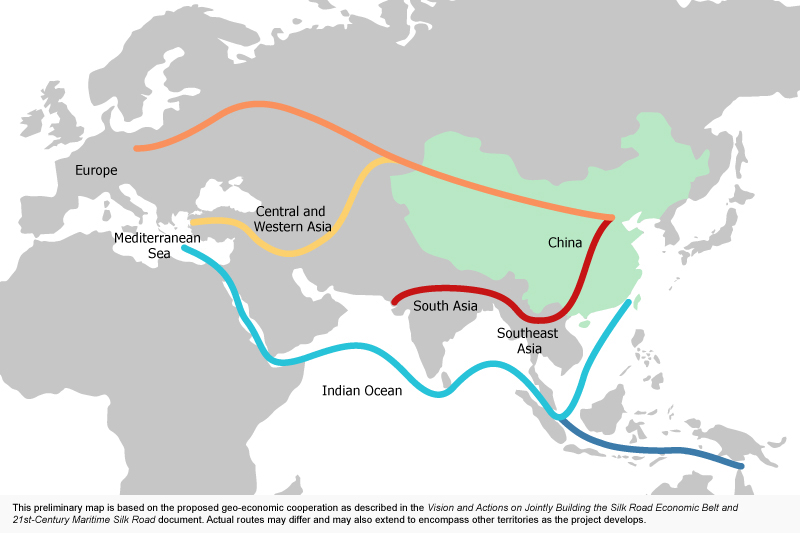
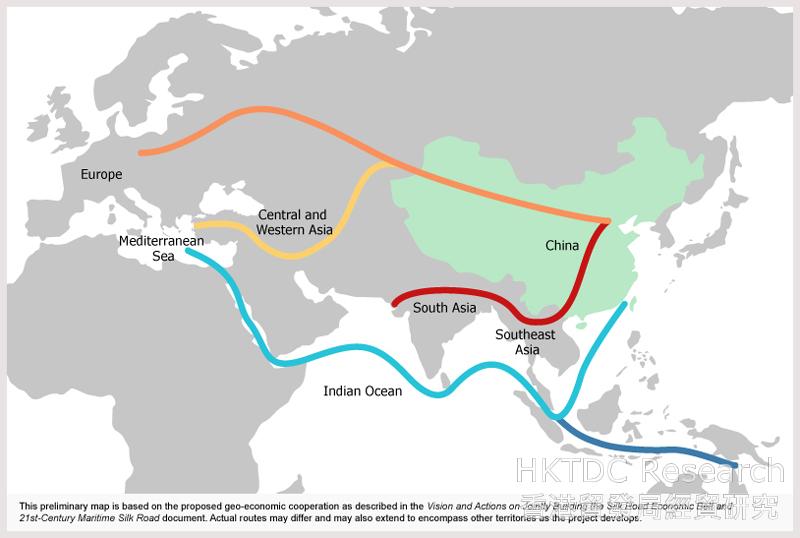
China has now risen to become the world’s second largest source of outward foreign direct investment (FDI). Further, its investment outflow has already exceeded foreign capital inflow, making it a net capital exporter[1]. This rapid growth in outbound direct investment could be attributed to the country’s current drive to implement the Belt and Road Initiative. This encourages increasing numbers of enterprises to engage in trade and investment activities with countries along the Belt and Road routes.
Right at the forefront of China’s trade and economic co-operation relations with foreign countries is the South China region comprising Guangdong, Guangxi and several other provinces. This region also adjoins several ASEAN countries that lie along the Belt and Road routes.
In mid-2016, HKTDC Research conducted a questionnaire survey in the South China region to gauge the enthusiasm of mainland enterprises for 'going out' to explore Belt and Road opportunities and to assess their need for professional services.
The survey results indicate that, for many mainland enterprises (50%), Hong Kong is the preferred location for seeking professional services outside of the mainland in making use of Belt and Road business opportunities. Most of the enterprises surveyed said they would like to sell more products to Belt and Road markets (88%). Some expressed an interest in going to Belt and Road countries to set up manufacturing facilities (36%) or to source various types of consumer goods / foodstuff or raw materials (35%). In addition, the majority of respondents (83%) expressed a desire to explore related business opportunities in Southeast Asia, including ASEAN countries.
Hong Kong is not only the preferred platform for mainland enterprises in 'going out' to invest overseas, but it is also the main site for them to seek professional services to support their efforts in capturing these new trade opportunities. As China continues to promote the Belt and Road initiative, it is expected that mainland enterprises’ demand for related services will increase further. This will therefore attract a continuous stream of business opportunities to Hong Kong’s services suppliers.
[For more information on China’s outbound investment and on Hong Kong as the preferred platform for mainland enterprises in 'going out' to invest overseas, please see: China Takes Global Number Two Outward FDI Slot: Hong Kong Remains the Preferred Service Platform].


Rapid Growth of China’s Direct Investment in Belt and Road Countries
Figures released by the Ministry of Commerce in September 2016 reveal that China’s direct investment in Belt and Road related countries has been growing rapidly over recent years. It reached a total of US$18.9 billion in 2015, equivalent to a year-on-year growth of 38.6%. That was double the rate of growth of China’s total FDI (18.3%) during the same period. To put this into perspective, China’s investments in Belt and Road related countries were worth around US$400 million in 2004. However, during 2004-2015 China's direct investments in these countries rose by more than 45 times, averaging a growth of approximately 43% annually. Over the same period, the share of these investments in China’s total FDI also climbed from 7% in 2004 to 13% in 2015.
At present, China is advancing its Belt and Road development strategy vigorously, encouraging its enterprises to carry out trade and investment activities in related countries and regions. As such, the initiative has become an important factor in driving the 'going out' of Chinese enterprises to invest overseas.
Hong Kong has consistently remained the preferred services platform for the 'going out' of mainland enterprises[2]. It can therefore be expected that the development of the Belt and Road initiative will further spur on demand for various Hong Kong support services from mainland enterprises.
HKTDC Research held a questionnaire survey on related Guangdong enterprises in the second and third quarters of 2016. This was conducted with the assistance of the Department of Commerce of Guangdong Province, the Bureau of Commerce of Dongguan City, the World Dongguan Entrepreneurs Federation, the Bureau of Commerce of Huizhou City, the Huizhou Association of Enterprises with Foreign Investment and the Bureau of Commerce of Jiangmen City. The same questionnaire survey was carried out on mainland enterprises on site attending the 13th China-ASEAN Expo, held in Nanning, Guangxi in September 2016.
A total of 296 completed questionnaires were collected across the Guangdong and Guangxi surveys. Of these, 241 of the respondents were mainland enterprises, comprising traders, manufacturers and services suppliers. More than 80% of these enterprises were based in Guangdong and Guangxi. The rest were mainly industry representatives from coastal regions. What follows is a summary of the views expressed by these 241 enterprises about 'going out' to develop Belt and Road opportunities.
Challenges in Business Operation
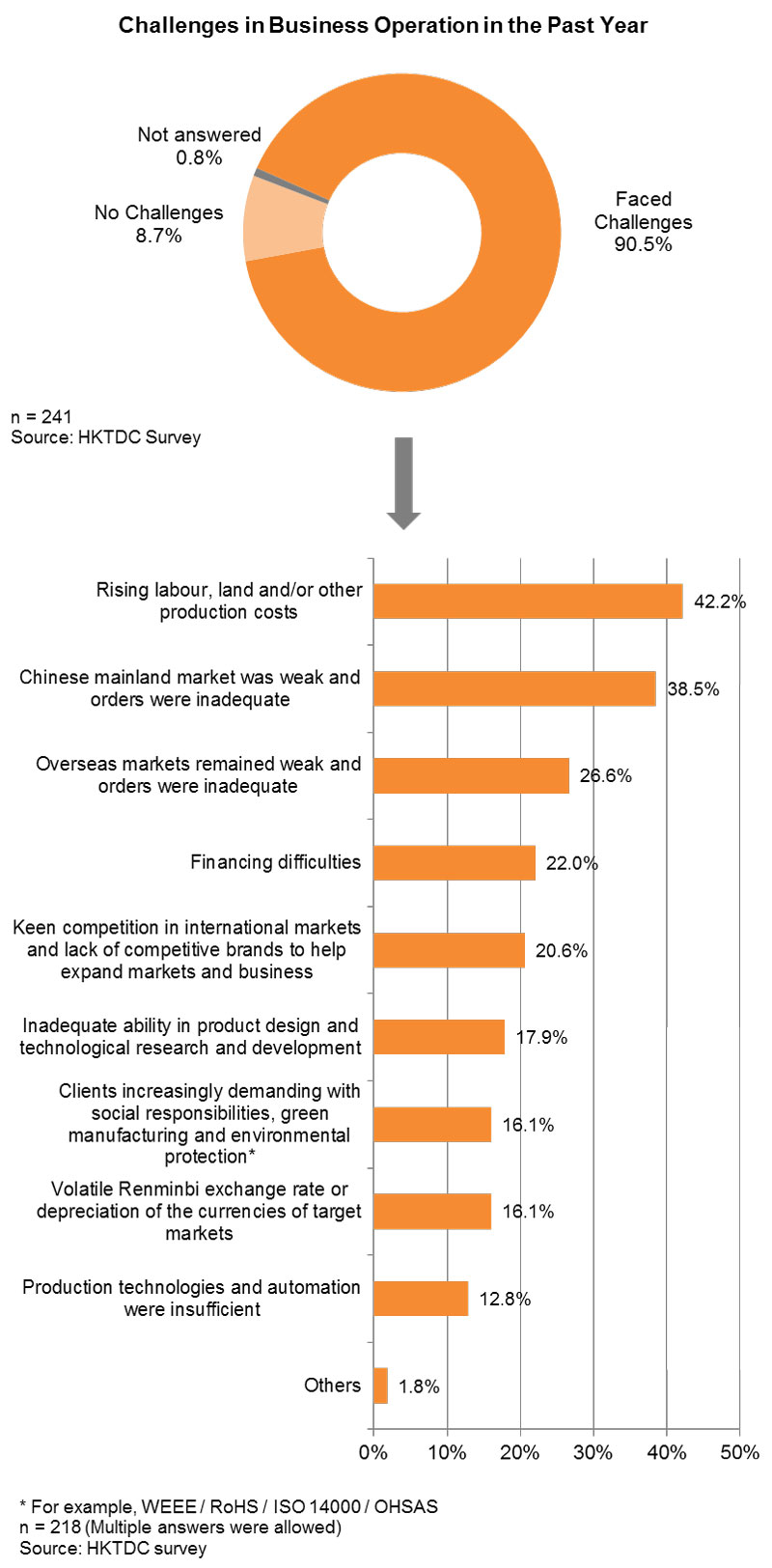
More than 90% of the respondents said that their business operations had faced a variety of challenges over the past year. A number of them said that their foremost concern was rising labour, land and/or other production costs (42%). Others were affected by the weak mainland market and inadequate orders (39%), weak overseas markets and inadequate orders (27%), or difficulties in financing (22%).
Intensify Efforts to Expand into Overseas Markets
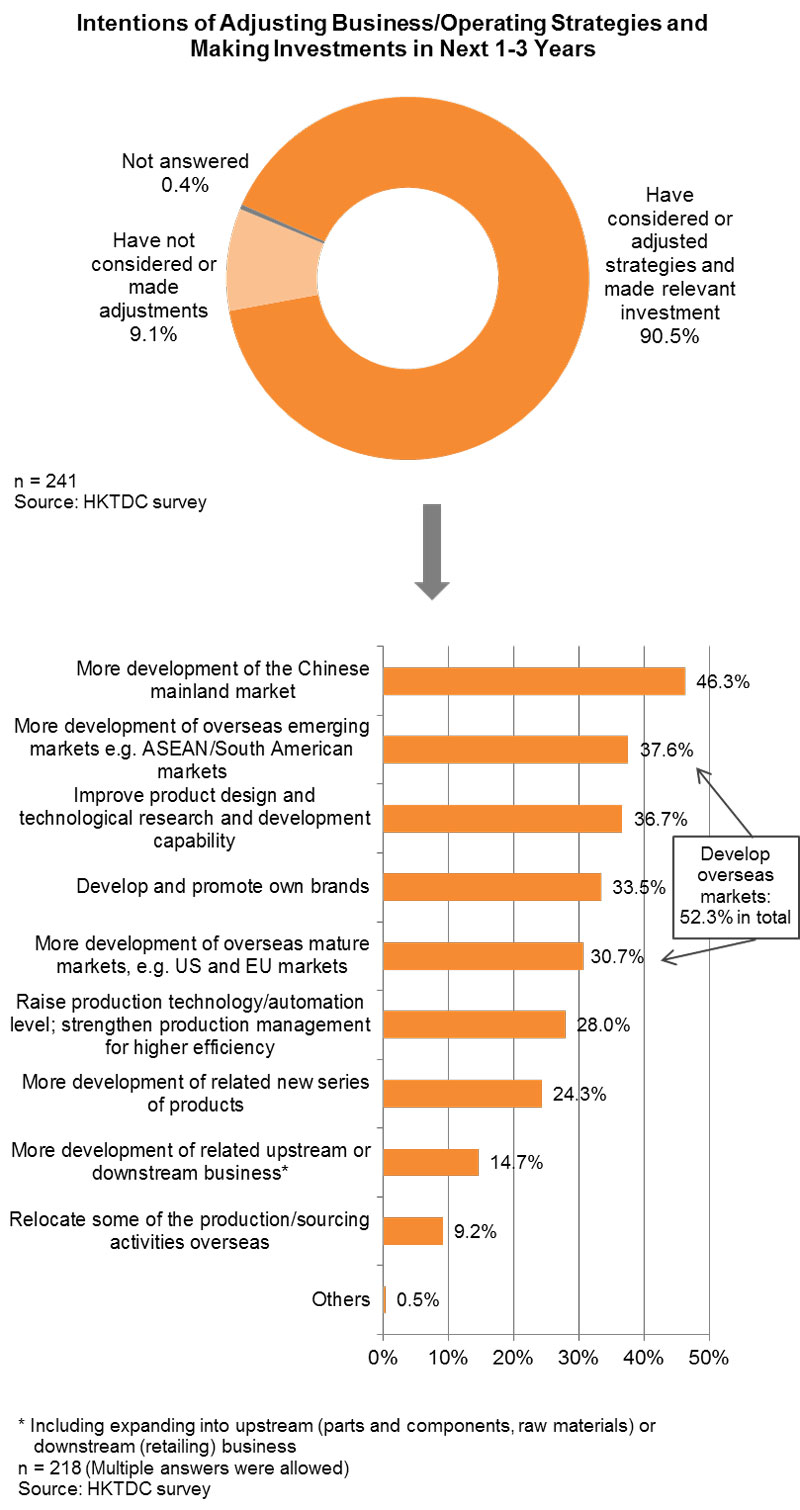
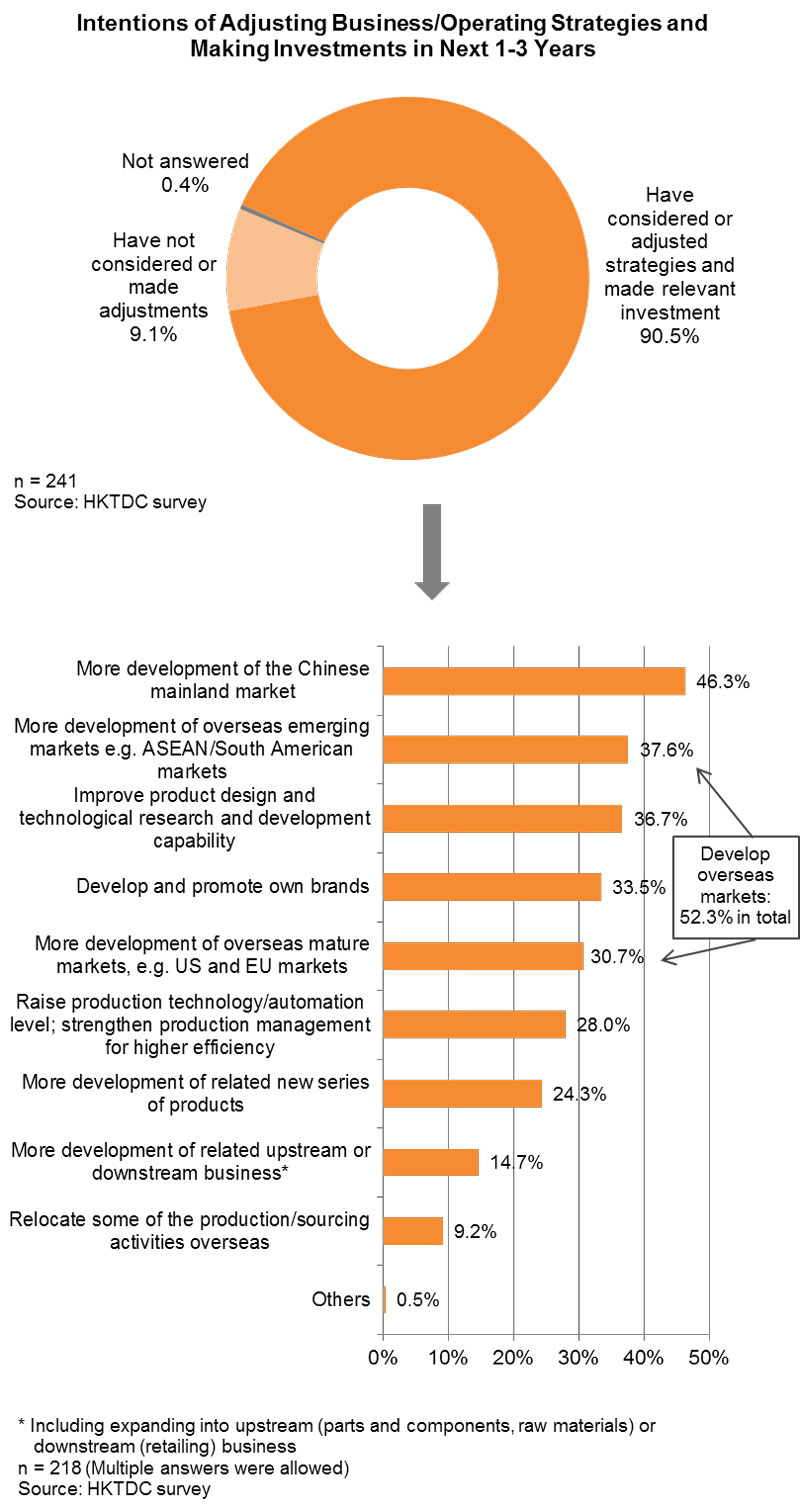
In a period of fierce market competition when challenges were many and varied, more than 90% of the enterprises polled said that they had already begun adjusting their business and operating strategies and made relevant investments, or else that they would consider doing so over the next 1-3 years. A total of 46% of the respondents said that they would like to further develop the domestic market. 52% said that they would intensify efforts in developing overseas markets. Of these, 38% and 31% respectively said that they would focus on developing emerging markets and mature markets overseas.
37% of respondents declared that they would strengthen their product design and technological R&D capability, while 33% said they would develop or strengthen their own-brand business.
Belt and Road Opportunities: Focusing on Southeast Asian Markets
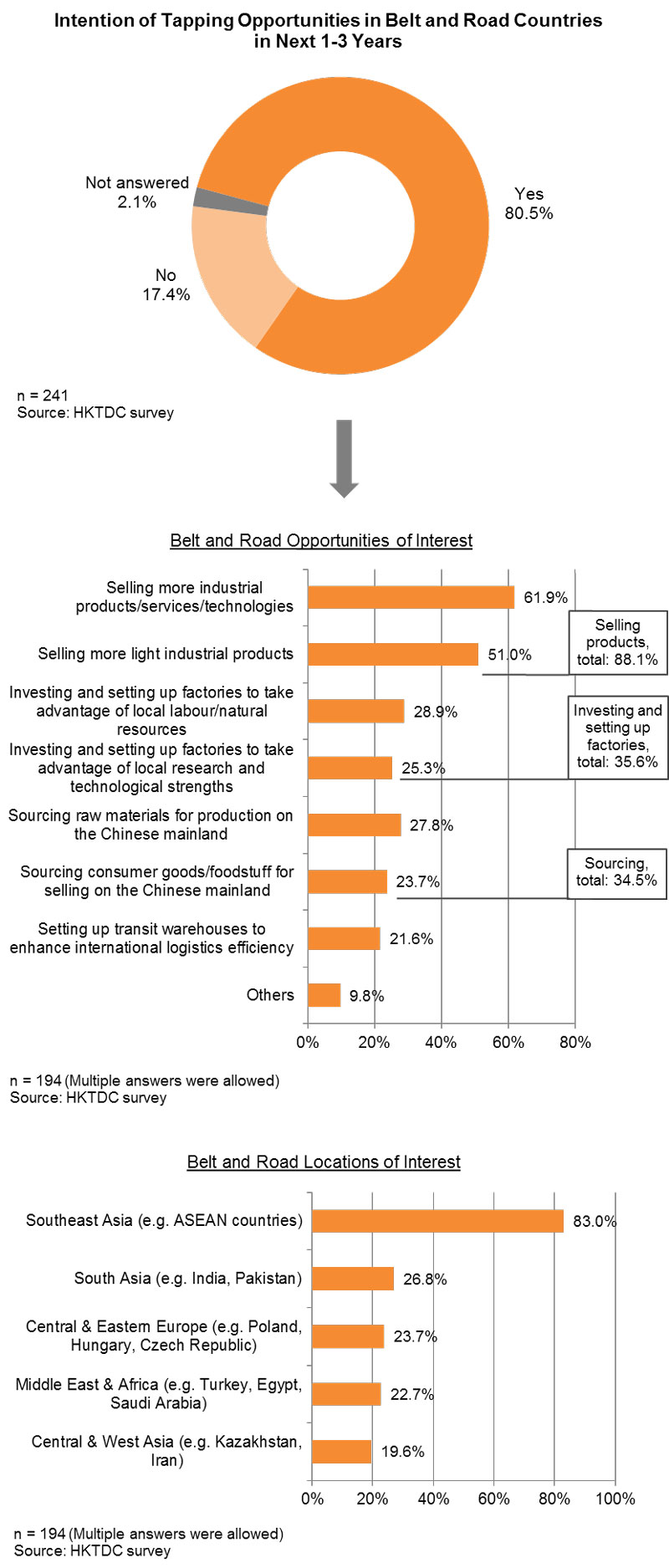
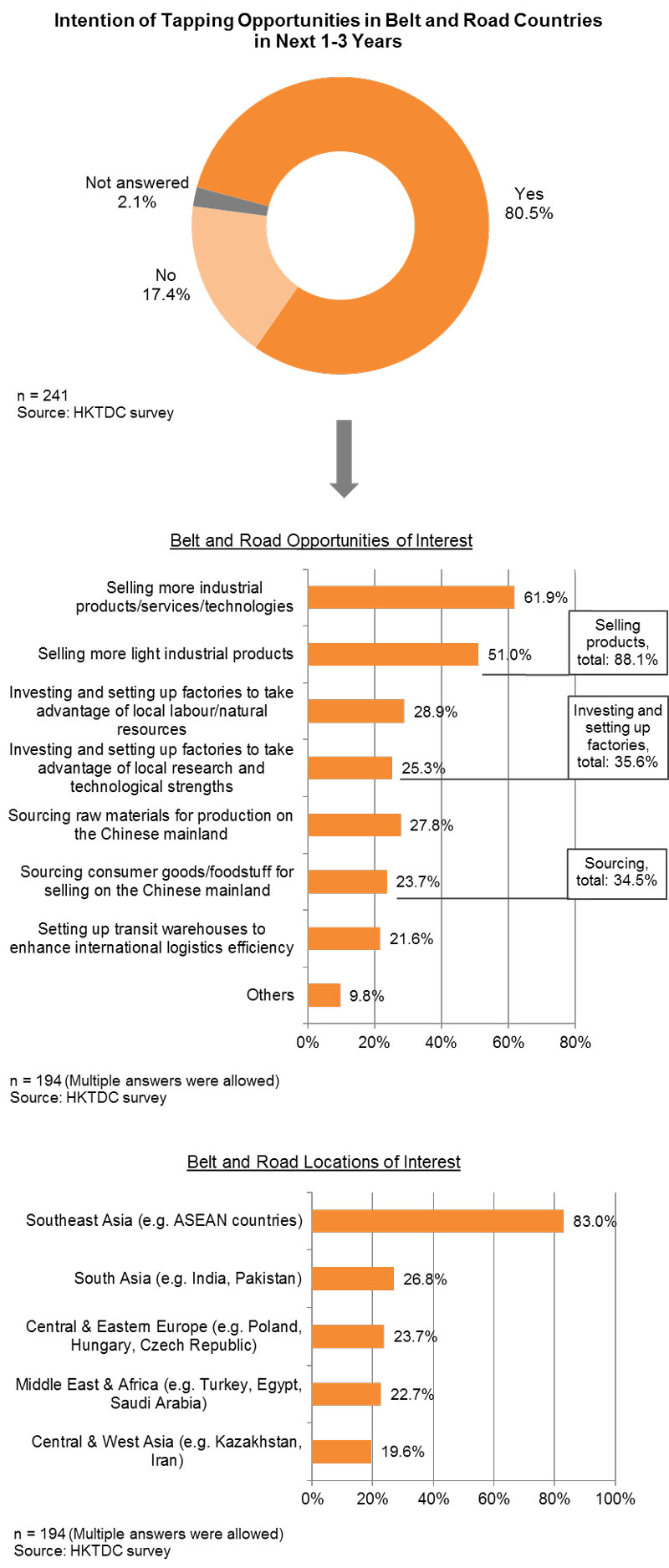
As China continues to promote the Belt and Road development strategy, 80% of the enterprises suggested they would consider tapping business opportunities in Belt and Road countries within the next 1-3 years. Conversely, 17% of the enterprises questioned said they wouldn't consider such a development.
Among those enterprises that would consider tapping Belt and Road opportunities, most said they wanted to sell more industrial products (62%) and / or light industrial products (51%) to these markets. Together, these enterprises accounted for 88% of the enterprises surveyed. Fewer respondents said they would consider investing and setting up factories in Belt and Road countries (36%). Fewer still are considering going there to source various consumer goods / foodstuffs for sale in the mainland or raw materials for use in production in the mainland (35%). Just 22% of the enterprises indicated that they intend to establish transit warehouses in Belt and Road countries as a means of boosting international logistics efficiency.
Among enterprises that would consider tapping Belt and Road opportunities, a great majority (83%) would focus on Southeast Asian countries, including those in the ASEAN. By way of comparison, far fewer enterprises selected regions such as South Asia (27%), Central and Eastern Europe (24%), the Middle East and Africa (23%), and Central and West Asia (20%).
Need to Seek Services Support
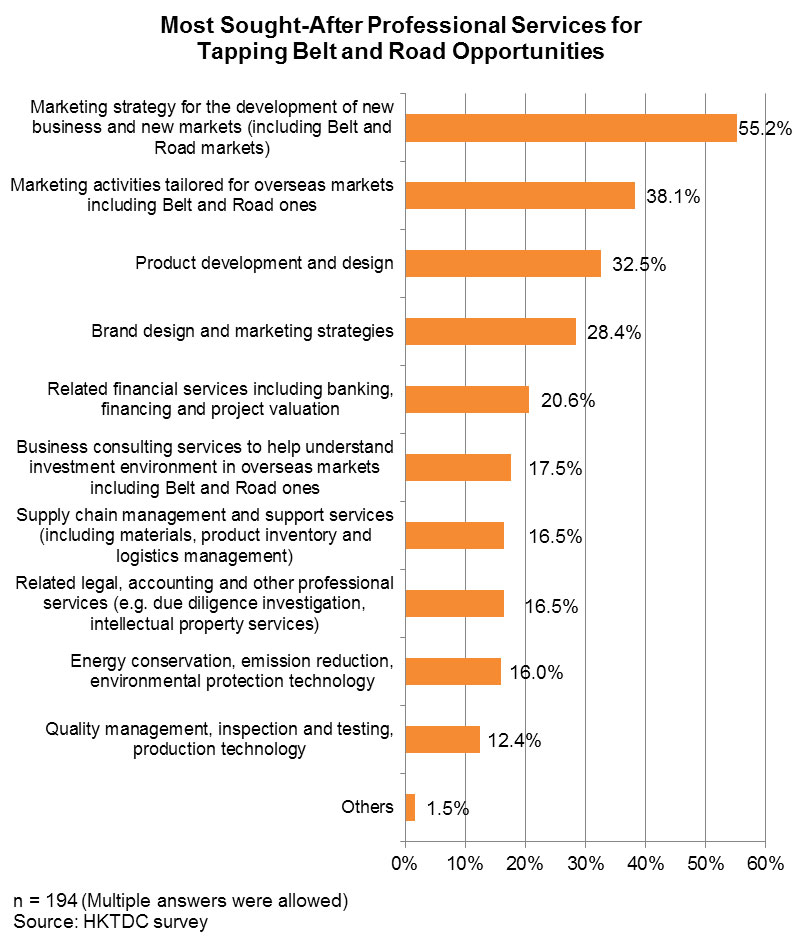
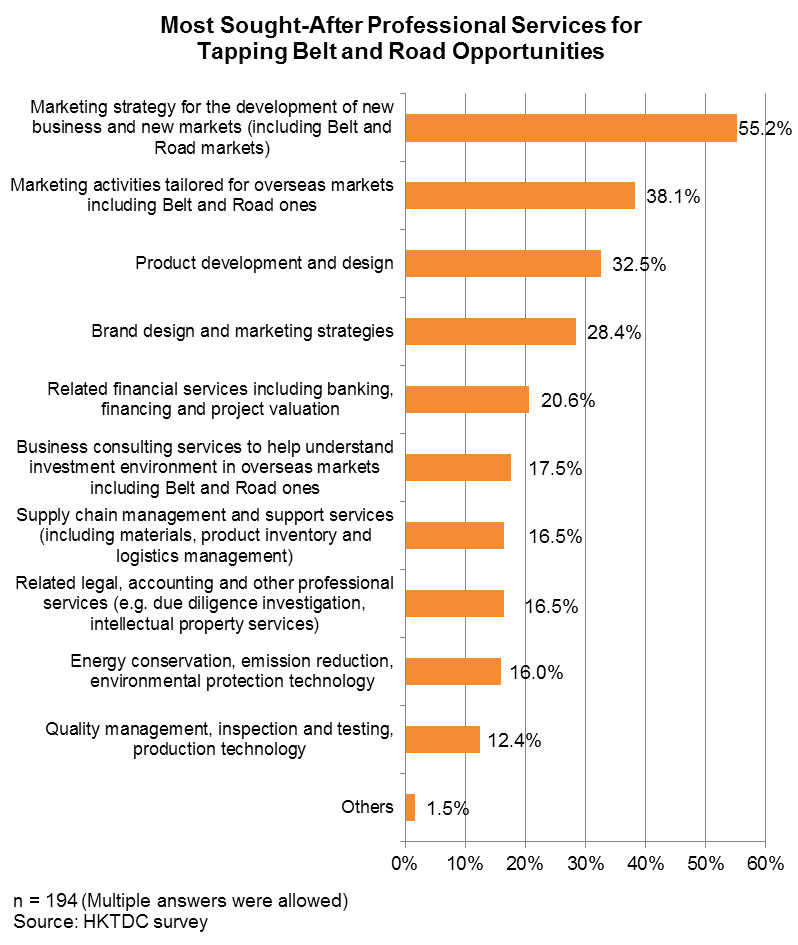
Of those enterprises looking to tap into Belt and Road opportunities, 55% said they would require services in sales and marketing strategies to help them develop new businesses and new markets. 38% said they would like to become involved in marketing activities tailored for Belt and Road and other overseas markets. 32% of the enterprises replied that they would like to seek services in product development and design. Another 28% aim to engage services in brand design and marketing strategies to help them reach out to these new markets.
Hong Kong as Preferred Destination for Seeking Services Outside of the Mainland
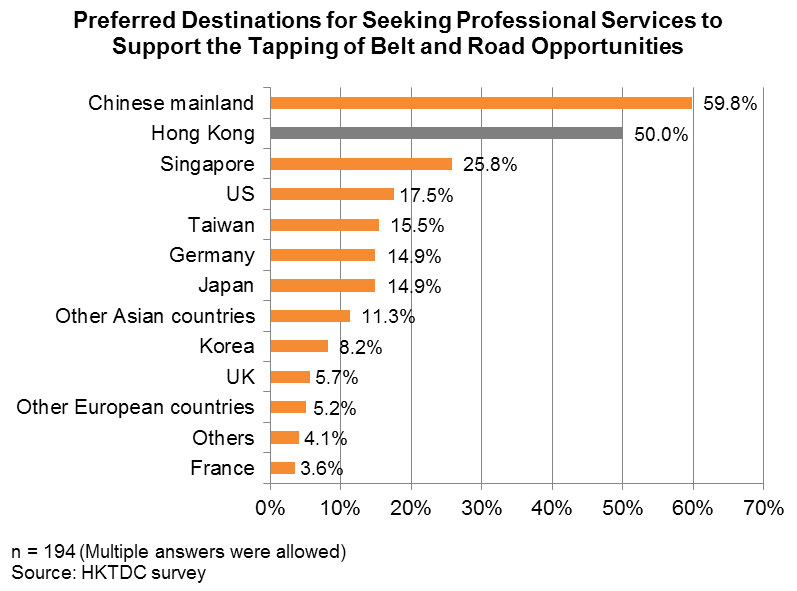
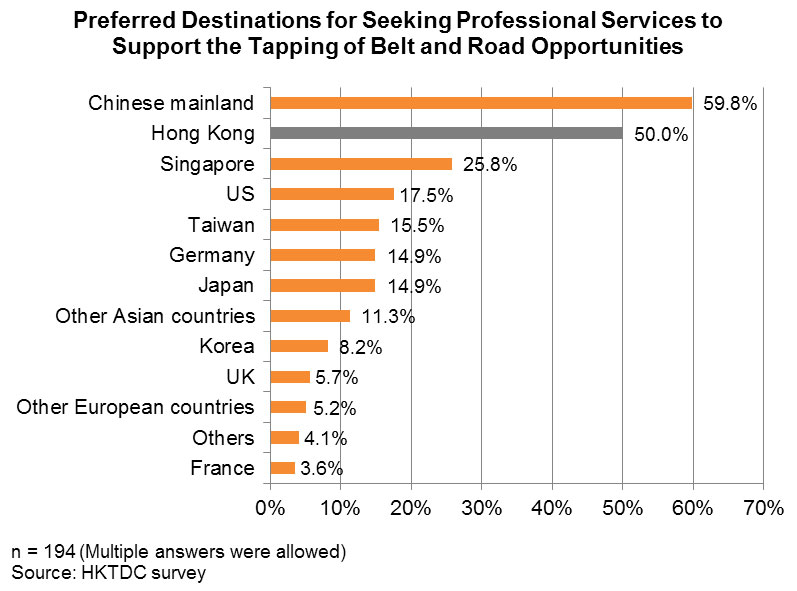
In order to locate these aforementioned professional services, 60% of respondents looking to tap Belt and Road trade opportunities said they would first source these support services locally. However, a significant number said they would seek various professional services outside of the mainland. Hong Kong was the most preferred destination for most enterprises, accounting for half (50%) of all respondents who would like to tap into the Belt and Road markets. Other destinations highlighted as of interest here included Singapore (26%), the US (18%), Taiwan (16%) and Germany (15%).
HKTDC Research would like to acknowledge the help extended by the Department of Commerce of Guangdong Province, the Bureau of Commerce of Dongguan City, the World Dongguan Entrepreneurs Federation, the Bureau of Commerce of Huizhou City, the Huizhou Association of Enterprises with Foreign Investment and the Bureau of Commerce of Jiangmen City in conducting the surveys and company visits.
[1] 2015 figures. Source: Statistical Bulletin of China’s Outward Foreign Direct Investment 2015.
[2] For more on Hong Kong’s status as a preferred services platform for the “going out” of mainland enterprises, please see: Guangdong: Hong Kong Service Opportunities Amid China’s “Going Out” Strategy, Jiangsu/YRD: Hong Kong Service Opportunities Amid China's "Going Out" Initiative, China’s “Going Out” Initiatives: Professional Services Demand in Bohai and China’s “Going Out” Initiative: Service Demand of Western China to Tap Belt and Road Opportunities.
| Content provided by |

|
Editor's picks
Trending articles
6 Dec 2016
"One Belt, One Road": China's Great Leap Outward
European Council on Foreign Relations
Introduction
China has created an action plan for its Silk Road concept in the form of the “One Belt, One Road” (OBOR) initiative. It is grandiose, potentially involving an area that covers 55 percent of world GNP, 70 percent of global population, and 75 percent of known energy reserves. China’s financial commitments to the project seem huge: some multilateral and bilateral pledges may overlap, but it is still likely we are looking at up to $300 billion in infrastructure financing from China in the coming years – not counting the leveraging effect on private investors and lenders, and the impact of peer competition. Japan, for example, has just announced a $110 billion infrastructure fund for Asia, and the Asian Development Bank is hurriedly revising its disbursement rules to increase its lending capacity. This does not even include the grand bargain being discussed with Russia on overland transport, energy, and cyber-connectivity.
However, concrete details are scarce, especially at the bilateral level, where potential partners seem to supply more information than can be found in published Chinese sources. Implementation may span a very long time period – as much as 35 years, according to some of our sources, reaching completion in time for the 100th anniversary of the People’s Republic of China in 2049.
This is also a geopolitical and diplomatic offensive; Xi Jinping talked first of a “community of destiny” among Asians, and our sources offer reassurance that China is seeking to “supplement” the existing international order rather than to revise it. But money also talks, and a strategy largely based on loans and aid is building China’s financial power, in addition to the trade power it already possesses.
The world’s great expectations further increase the audience for what the Chinese sometimes describe as the country’s “second opening”, after the 1979 model which led to China’s rapid growth over three decades. For example, there is much discussion of the success beyond all expectations of the China-founded Asian Infrastructure Investment Bank (AIIB). Intense debate is being carried out about the Silk Roads in countries that have reason to worry about some of their implications.
China also risks overreaching itself, and there is much uncertainty about the process. Our Chinese sources keep returning to some caveats: this is a concept based on giving, in terms of finances and in terms of leadership. China faces the possibility of losing money or stirring up opposition. The competition among potential Chinese actors – now including everybody up to China’s maritime coast – could provoke a “blind development” very much along the lines of events in China’s past. It could also happen that the aggregated projects shift some of China’s main trends of recent decades. Emphasising the westward continental overture represents a return to the late 1950s, when Mao rebalanced growth away from the coast with massive investments inland. The project also extends abroad the western development policy of the past decade. Is this a viable strategy, considering the obvious integration of coastal China in the global economy? Can geopolitical action trump economic interdependence, or will it drag down China’s overall competitiveness?
Much of China’s logic on the project is based on geopolitics and on the export of its huge infrastructure-building capacities. But even within China, these sectors are leading loss-makers. Geographical and geopolitical conditions differ widely outside China, especially along the continental routes. There is a debate about whether it is wise to pour such huge amounts into low-return projects and high-risk countries. Will this turn out to be a repeat of old mistakes, with overreliance on public financing and state-owned enterprises? Can China leverage private firms and investment in its grandiose plans? The answers are as yet unclear.
For the time being, however, no partner can ignore China’s throwweight and its track record in building massive infrastructure. Europe itself is also setting up a €315 billion infrastructure investment plan that is contingent on market financing. How it will manage to leverage China’s capital export drive for European growth is another interesting question – and perhaps a more important issue than that of a European minority stake in the AIIB.
Please click to read full report.
Editor's picks
Trending articles
Belt and Road Investment: Views and Service Demand of Dongguan Enterprises in Guangdong
At a recent seminar held by HKTDC Research in Dongguan city, Guangdong, it emerged that many local enterprises are actively seeking opportunities arising from the Belt and Road Initiative. Though different enterprises adopt a variety of business modes when 'going out', the majority of them said that they are not familiar with the investment environment of the Belt and Road markets where direct investment is concerned. This includes matters relating to the political, cultural, and legal climates in Southeast Asia and Africa. Inevitably, this has made it difficult for businesses to assess the risk of making outward foreign direct investment in these territories. In light of this, those businesses are in dire need of support from professional services.
Dongguan investors also highlighted a number of practical matters around this issue. Amongst them were compliance with the policies of investment destinations regarding importing foreign labour; the requirements for environmental protection; and customs clearance of industrial material imports, as well as regulations governing import tariffs and export tax rebate. Some manufacturers are keen to further develop their export markets along the Belt and Road routes. However, they have major hurdles to face, such as insufficient information about the local markets and a lack of reliable distribution channels in some of the Belt and Road countries. Another key problem is the scarcity of available data relating to product standards, safety specifications and certification requirements.

As a result, many Dongguan-based companies wish to make use of the professional services in Hong Kong. By doing so, they hope to solve these practical problems, assess the feasibility of their business ventures and seek advice on investment and marketing. The Hong Kong platform would also enable them to raise funds for their offshore dealings, alleviate the pressure exerted upon their cash flow, and control the credit risks related to Belt and Road trading.
Dongguan Enterprises Expand International Business along the Belt and Road
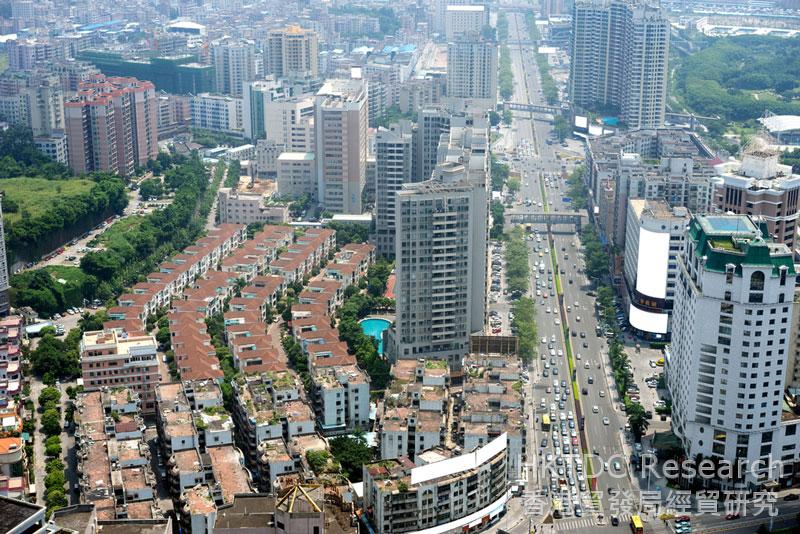
Dubbed the 'world’s factory', the Pearl River Delta (PRD) region is one of the leading production bases of China. Dongguan city is a key production base within the PRD. It enjoyed a head start in terms of development. In 2015, the industrial value-added of Dongguan reached RMB271.1 billion, accounting for 11% of PRD’s total[1]. As an economically developed city, Dongguan can boast five pillar industries, namely electronic information, machine building, textile and garment production, food and beverage processing and papermaking. Thanks to the continuous inflow of foreign investment into its high-tech industrial sector, the city has also established a complete supply chain for the production of computers and other electronic products. Well-known foreign high-tech companies which have established production plants in Dongguan include Samsung, Hitachi, Sony and Philips.
Several Dongguan enterprises are actively exploring business opportunities which have arisen from the central government’s Belt and Road development initiative. Statistics show that from 2004 to mid-2016, the number of enterprises in Dongguan 'going out' to invest offshore totalled 376. Their cumulative investment amount reached about US$1.12 billion. Together, these enterprises have set up 46 overseas offices. The main areas in which they are investing encompasses wholesale and retail, manufacturing, leasing and commercial services, as well as real estate. Key outward investment destinations for this include Hong Kong, the US, Europe and Africa[2].


China has become the world’s second largest source of outward foreign direct investment[3]. It is making constant efforts to bolster investment in and economic co-operation with countries along the Belt and Road. As a result, foreign economic activities in the south China region have continued to rise.
In mid-2016, HKTDC Research conducted questionnaire surveys throughout selected locations in Guangdong and Guangxi. The intention was to investigate the level of interest amongst mainland enterprises in 'going out' to explore business opportunities arising from the Belt and Road initiative, as well as their demand for the relevant support services[4]. In addition, the aforementioned seminar for Dongguan enterprises was held around the same time, as a means of canvassing the opinions of local manufacturers and traders. Key points from the findings are as follows:
-
Exploring direct investment opportunities
There are over 8,000 manufacturing enterprises in Dongguan, most of which are engaged in processing activities. Only very few produce for their own brands. In the process of 'going out', many Dongguan enterprises are exploring the feasibility of making outward direct investment in the Belt and Road countries. In doing so, they hope to utilise external resources to optimise their entire production system.
A number of light industrial products manufacturers have already set up production plants in African countries such as Egypt and Ethiopia. Some of the market players engaged in creating new materials and high-tech industries plan to invest in capital-intensive production projects in ASEAN countries, including Vietnam, Thailand and Malaysia. There, these companies aim to take advantage of the labour supply, raw materials and other resources in the Belt and Road countries to expand their production activities. There's also the prospect of tapping the local consumer goods and industrial materials markets.
Different companies may adopt different business models in 'going out', but the problems faced by the majority of them remain the same. For instance, they do not have enough data about the political, cultural and legal environments of the relatively underdeveloped investment destinations which lie along the Belt and Road routes. This makes it difficult for them to assess the potential risks of their investments. Moreover, they are not staffed by personnel with the appropriate global vision and management experience to plan and manage their offshore investment projects. As such, before they venture out to make outbound investments, these businesses need to seek support from professional services in the outside world.
-
Practical issues of concern to investors
In terms of labour, although wage levels in certain Belt and Road countries remain low, investing in these countries may not be cost-effective when factors such as productivity are taken into account. Besides, when making outbound direct investment by setting up factories, investors need to be well informed of the support provided by local technicians and technical workers, the structure of the entire supply chain, and the efficiency of local transportation and logistics. They are also obliged to comply with labour and environmental protection requirements of their investment destinations, as well as industrial policies. As such, they should conduct due diligence studies to obtain reliable information for assessing the feasibility of their investment projects prior to making any commitment.
Availability of the correct technical and production management staff is a must when highly efficient production processes and quality control must be guaranteed. This is particularly true for large-scale production activities and fully automated production lines. Some manufacturers looking to invest in the Belt and Road countries indicate that, in addition to drawing from their investment destinations' own labour force, they also post mainland technical and management staff there in order to support local production activities. Hence, before making any investment decisions, they first need a good understanding of the local investment policies governing these areas. This might include the criteria and requirements regarding the import of foreign labour, other laws and regulations relating to foreign labour, the stance of local labour unions towards the import of foreign workers, and local living standards for foreigners.
-
Obtaining market intelligence
Some of the companies who wish to tap into markets in Belt and Road countries stated that they not only lack local market intelligence, such as consumers’ spending power, market size and product demand. They also have limited knowledge of the specifications stipulated by the importing countries on imported products, including technical requirements such as hygiene, electrical and safety specifications. In addition, they have only limited access to effective channels of information about obtaining the requisite product certifications.
Of those companies interested in selling industrial materials to the Belt and Road markets in support of their export processing activities there, some said that certain countries and regions still have no arrangements in place for processing bonded imported materials. As such, companies importing such materials into these countries and regions have to pay tariffs. However, when exporting the processed products, they are not eligible for tax rebates. This has discouraged investors from developing the industrial market in these countries and regions. It has also slowed the pace of their investments in setting up production factories there. As such, they are in dire need of the relevant information to help them select suitable export markets from amongst the different Belt and Road countries and regions.
-
Capitalising on the Hong Kong service platform
To tackle these problems, the majority of enterprises in Dongguan said they intend to use the appropriate support services in Hong Kong. They hope to obtain the relevant market intelligence, as well as to take advantage of Hong Kong's investment consultancy and risk assessment services. This would enable them to plan their outward investment projects and control various possible political and market risks. There are other advantages in dealing with Hong Kong, too. At present, financial and related services which deal with foreign exchange fluctuations, tax planning, and export market insurance are not readily available in the mainland. To overcome this, Dongguan enterprises prefer to handle their outward investments via Hong Kong.
Many Dongguan-based businesses also plan to take advantage of Hong Kong’s financial market in order to raise low-cost capital for their 'going out' ventures. Some of the companies interested in investing in the Belt and Road markets pointed out that, as well as raising funds for their offshore projects, they also need to make provisions for cash flow required after these investment projects have been implemented. In particular, they need to transport production materials from the mainland to countries where there is no support for effective industry chains. This will enable them to support their production activities and deliver processed products to their clients prior to payment being collected. This in turn would lengthen the time of the production process, goods delivery and funds recovery, and consequently these companies require the necessary financial services in order to bridge the gap in cash flow.
There are also exporters who expressed concerns about collecting payment. They pointed out that currently they have no access to credit information about their Belt and Road clients. As these clients may request a longer payment period, the credit risk is higher. At the same time, longer payment periods also exert greater pressure upon their cash flow. Therefore, they hope to seek services such as export credit insurance as well as trade financing via Hong Kong, in order to lower their risks.
HKTDC Research wishes to express its appreciation to the Department of Commerce of Guangdong Province, the Bureau of Commerce of Dongguan City, and World Dongguan Entrepreneurs Federation for their assistance in conducting research studies and company visits.
[1] Only industrial enterprises with an annual sales turnover of RMB20 million and above are included. Source: Guangdong Bureau of Statistics
[2] Source: Bureau of Commerce of Dongguan City
[3] 2015 figures. Source: Statistical Bulletin of China’s Outward Foreign Direct Investment 2015
[4] For details of the surveys, please see: Chinese Enterprises Capturing Belt and Road Opportunities via Hong Kong: Findings of Surveys in South China
| Content provided by |
|
Editor's picks
Trending articles
13 Dec 2016
Bridging global infrastructure gaps
By Jonathan Woetzel, Nicklas Garemo, Jan Mischke, Martin Hjerpe, and Robert Palter - McKinsey
In Brief
Briding Global Infrastructure Gaps
Today the world invests some $2.5 trillion a year in the transportation, power, water, and telecom systems on which businesses and populations depend. Yet this amount continues to fall short of the world’s everexpanding needs, which results in lower economic growth and deprives citizens of essential services. Building on MGI’s 2013 report Infrastructure productivity: How to save $1 trillion a year, this research updates our estimates of the world’s infrastructure needs and projected investment shortfalls. It also offers refined recommendations for bridging those gaps. Among our findings:
- From 2016 through 2030, the world needs to invest about 3.8 percent of GDP, or an average of $3.3 trillion a year, in economic infrastructure just to support expected rates of growth. Emerging economies account for some 60 percent of that need. But if the current trajectory of underinvestment continues, the world will fall short by roughly 11 percent, or $350 billion a year. The size of the gap triples if we consider the additional investment required to meet the new UN Sustainable Development Goals.
- Infrastructure investment has actually declined as a share of GDP in 11 of the G20 economies since the global financial crisis, despite glaring gaps and years of debate about the importance of shoring up foundational systems. Cutbacks have occurred in the European Union, the United States, Russia, and Mexico. By contrast, Canada, Turkey, and South Africa increased investment.
- There is substantial scope to increase public infrastructure investment. Governments can increase funding streams by raising user charges, capturing property value, or selling existing assets and recycling the proceeds for new infrastructure. In addition, public accounting standards could be brought in line with corporate accounting so infrastructure assets are depreciated over their life cycle rather than adding to deficits during construction. This change could reduce pro-cyclical public investment behavior.
- Corporate finance makes up about three-quarters of private finance. Unleashing investment in privatized sectors requires regulatory certainty and the ability to charge prices that produce an acceptable riskadjusted return as well as enablers such as spectrum or land access, permits, and approvals.
- Public-private partnerships have assumed a greater role in infrastructure, although there is continued controversy about whether they deliver higher efficiency and lower costs. Either way, they will continue to be an important source of financing in the future. But since they account for only about 5 to 10 percent of total investment, they are unlikely to provide the silver bullet that will solve the funding gap. Public and corporate investment remain much larger issues.
- Institutional investors and banks have $120 trillion in assets that could partially support infrastructure projects. Some 87 percent of these funds originate from advanced economies, while the largest needs are in middle-income economies. Matching these investors with projects requires solid crossborder investment principles. Impediments that restrict the flow of financing, from regulatory rulings on investment in infrastructure assets to the absence of an efficient market, have to be addressed. The most important step, however, is improving the pipeline of bankable projects.
- Beyond ramping up finance, there is even bigger potential in making infrastructure spending more effective. Accelerating productivity growth in the construction industry, which has flatlined for decades, can play a large role in this effort. Additionally, as our 2013 research showed, improving project selection, delivery, and management of existing assets could translate into 40 percent savings. Since our original report was published, we have completed a detailed diagnostic measuring the efficiency of infrastructure systems in 12 countries. Even the most advanced economies have significant room to learn from each other and to build stronger capabilities and learning institutions with strong oversight. A rigorous assessment that benchmarks each aspect of infrastructure development against global best practices can identify the areas where a well-targeted transformation could yield substantial results.
Please click to read full report.
Editor's picks
Trending articles
Guangdong Enterprises Tapping Belt and Road Opportunities: Yulan Wall-coverings Uses Hong Kong Services to Meet International Standards
In order to ensure that its products meet the requisite quality and fire safety standards of overseas clients, the popular mainland wallpaper brand Yulan relies on inspection and testing services in Hong Kong. Now, by employing Hong Kong’s professional services which deal with matters such as market and financial information, Yulan is actively expanding its markets in Southeast Asia, Eastern Europe and other countries along the Belt and Road. In doing so, the company is also promoting the long-term development of its international business operations.
Famous Brand Expands Global Business



Yulan Decorative Materials Co Ltd (Yulan Wallcoverings) is based in Dongguan, Guangdong province. It plans to take advantage of China’s Belt and Road Initiative and venture out into selected countries along those routes. The company is mainly engaged in the research, development, design, production and marketing of wallpaper, wallcoverings, fabrics and household goods. It has won much industry acclaim, including being named in 'Top 100 Chinese Home Furnishings Companies' and 'Famous Chinese Trademarks'. It has also been granted over 50 national patents for design and production.
At present, around 70% of Yulan’s business comes through domestic sales. Its main export markets include Southeast Asia, South America, Eastern Europe and Iran. Competition within the domestic market has intensifying in recent years as the number of mainland wallpaper producers has increased. Advanced countries in Europe and North America still have many competitive wallpaper production lines in operation. This poses pressures for Yulan in terms of sales of higher-end products. For this reason, the company hopes to open up further export markets to enable its long-term development.
Wallpaper production is not considered to be a labour-intensive industry. It relies mainly on machinery. Yulan mainly uses imported materials in its production processes, including backing, plastics, matt vinyl and moulds brought in from Europe, the US, South Korea and other countries. As far as the production of higher-end products is concerned, the company only has a limited overall cost advantage over its European and North American equivalents. Therefore it has to keep improving its R&D capability and quality management in an attempt to improve the competitiveness of its products. Yulan also plans to boost its production capacity on the mainland in order to expand domestic sales and exports.
Meeting Demands of 'Belt and Road' Buyers through Hong Kong


In practice, wallpaper export trade faces many restrictions. For example, wallpaper may not be appropriate in territories such as Australia where humidity is particularly high. Equally, some countries with lower purchasing power may prefer cheaper products, even reproduction wallpapers, but this is not conducive to the marketing of name-brand products.
Yulan told HKTDC Research that some East European consumers are acquiring the habit of buying wallpapers for DIY home decoration, just like their counterparts in Western Europe. Moreover, Muslim consumers in countries along the Belt and Road prefer products featuring Islamic patterns and design. Hence, there is tremendous potential out there waiting to be tapped. Yulan intends to quicken its pace in opening up the Belt and Road markets and developing its brand in these countries.
On the other hand, building construction is on the upswing in many Asian countries and major contractors often call for subcontractor bids from Hong Kong. Besides seeking competitive subcontractors, they also want to make use of Hong Kong's inspection and testing services. This enables them to ensure that the subcontractor projects measure up to the required quality and fire safety standards. Yulan already has experience of taking on indoor wallcovering and decoration contracts for Macau and some Southeast Asian countries, such as Malaysia. In the future, it plans to bid for more subcontracts of this kind via Hong Kong.
Yulan’s Hong Kong office manages the import of materials and the export of products. It also gathers information on overseas markets and keeps abreast of the requirements of overseas buyers and contractors for product technology and specifications. When necessary, it makes use of relevant services provided by Hong Kong companies in order to ensure that its products meet the standards of its overseas clients.
HKTDC Research wishes to express its appreciation to the Department of Commerce of Guangdong Province and the Bureau of Commerce of Dongguan City for their assistance in conducting research studies and company visits.
| Content provided by |
|
Editor's picks
Trending articles
16 Dec 2016
Can the Trans-Pacific Partnership multilateralise the 'noodle bowl' of Asia-Pacific trade agreements?
By Jeffrey D. Wilson - Perth USAsia Centre
Executive Summary
- The Trans-Pacific Partnership offers more than just a set of market access opportunities for Australia. It also promises ‘systemic change’ in the Asia-Pacific trade architecture.
- The spread of bilateral FTAs in the last decade has caused fractures in the regional trade system, known as the ‘noodle bowl problem’.
- The TPP may help resolve this problem by ‘multilateralising’ existing agreements under one umbrella. Its size, ambitious reform agenda and status as a ‘living agreement’ make it especially suited to this task.
- Australia stands to gain considerably if the TPP’s high-standard and multilateral approach becomes a template for trade liberalisation in the region.
- Businesses and policymakers should be aware of these systemic implications when evaluating participation in the TPP.
Introduction
The Trans-Pacific Partnership (TPP) is one of the most significant developments on the trade and foreign policy agendas in the Asia-Pacific today. It is huge agreement, comprising twelve member states that collectively account for one-third of global economic activity. Its scope is extensive, combining a wide array of tariff reductions with commitments in 24 ‘new’ trade policy areas, such as services, intellectual property and e-commerce. In a region that has recently been dominated by proliferation of bilateral free trade agreements (FTAs), its multilateral approach to trade liberalisation is also a novel development. It has also been implicated in geopolitical rivalries in Asia, particularly the emerging rivalry between the US and China for regional leadership. …..
Please click to read full report.
Editor's picks
Trending articles
Deloitte | 19 Dec 2016
"One Belt, One Road" The Internationalization of China's SOEs
Decades have passed since China’s state-owned enterprises (SOEs) started their internationalization. Many impressive achievements have been made, yet there is still room for improvement. On September 13, 2015, the Central Committee of the CPC and State Council published a top-level government policy paper entitled ”Guidelines to Deepen Reforms of SOEs”, in fact a de-facto blue-print for the further reform of SOEs. The guidelines stated that SOE reforms aim to achieve a socialist market economy and improve the modern enterprise system. What this means, in effect, is that SOEs, especially larger SOEs, should compete in global markets, allocate resources across the world, and increase operational efficiency. Step by step, China is implementing its national strategy for a new era of economic development and opening up to the outside world, i.e. the Silk Road Economic Belt and the 21st-century Maritime Silk Road (“One Belt, One Road” or “OBOR”) Initiative. These initiatives have created more favorable external conditions for SOEs to invest abroad and thus ushered in a new age of internationalization. It is also likely that the internationalization of SOEs will change focus from mere expansion to improving operations management and enhancing global competitiveness by taking advantage of the OBOR Initiative. Through surveys of middle and senior-level SOE managers, we obtained insights into SOE participation in the OBOR Initiative as well as learning about the challenges they face. This paper presents several representative solutions to such challenges, and aims to offer some new ideas on how Chinese SOEs can successfully internationalize.
Please click to read the full report.
| Content provided by |  |
Editor's picks
Trending articles
20 Dec 2016
Review of Maritime Transport 2016
UNCTAD
Executive Summary
The present edition of the Review of Maritime Transport takes the view that the long-term growth prospects for seaborne trade and maritime businesses are positive. There are ample opportunities for developing countries to generate income and employment and help promote foreign trade.
Seaborne trade
In 2015, world gross domestic product expanded by 2.5 per cent, the same rate as in 2014. Diverging individual country performances unfolded against the background of lower oil and commodity price levels, weak global demand and a slowdown in China. In tandem, global merchandise trade by volume weakened, increasing by only 1.4 per cent, down from 2.3 per cent in 2014.
In addition in 2015, estimated world seaborne trade volumes surpassed 10 billion tons – the first time in the records of UNCTAD. Shipments expanded by 2.1 per cent, a pace notably slower than the historical average. The tanker trade segment recorded its best performance since 2008, while growth in the dry cargo sector, including bulk commodities and containerized trade in commodities, fell short of expectations.
UNCTAD expects world gross domestic product to further decelerate to 2.3 per cent in 2016, while, according to estimates by the World Trade Organization, merchandise trade volumes are expected to remain steady and grow at the same rate as in 2015. Growth in world seaborne trade shipments is expected to pick up marginally in 2016, with the estimated pace remaining relatively slow on a historical basis.
While a slowdown in China is bad news for shipping, other countries have the potential to drive further growth. South–South trade is gaining momentum, and planned initiatives such as the One Belt, One Road Initiative and the Partnership for Quality Infrastructure, as well as the expanded Panama Canal and Suez Canal, all have the potential to affect seaborne trade, reshape world shipping networks and generate business opportunities. In parallel, trends such as the fourth industrial revolution, big data and electronic commerce are unfolding, and entail both challenges and opportunities for countries and maritime transport.
Maritime businesses
The world fleet grew by 3.5 per cent in the 12 months to 1 January 2016 (in terms of dead-weight tons (dwt)). This is the lowest growth rate since 2003, yet still higher than the 2.1 per cent growth in demand, leading to a continued situation of global overcapacity.
The position of countries within global container shipping networks is reflected in the UNCTAD liner shipping connectivity index. In May 2016, the bestconnected countries were Morocco, Egypt and South Africa in Africa; China and the Republic of Korea in Eastern Asia; Panama and Colombia in Latin America and the Caribbean; Sri Lanka and India in South Asia; and Singapore and Malaysia in South-East Asia.
Different countries participate in different sectors of the shipping business, seizing opportunities to generate income and employment. As at January 2016, the top five shipowning economies (in terms of dwt) were Greece, Japan, China, Germany and Singapore, while the top five economies by flag of registration were Panama, Liberia, the Marshall Islands, Hong Kong (China) and Singapore. The largest shipbuilding countries are China, Japan and the Republic of Korea, accounting for 91.4 per cent of gross tonnage constructed in 2015. Most demolitions take place in Asia; four countries – Bangladesh, India, Pakistan and China – accounted for 95 per cent of ship scrapping gross tonnage in 2015. The largest suppliers of seafarers are China, Indonesia and the Philippines. As countries specialize in different maritime subsectors, a process of concentration of the industry occurs. As each maritime business locates in a smaller number of countries, most countries host a decreasing number of maritime businesses, albeit with growing market shares in the subsectors.
Policymakers are advised to identify and invest in maritime sectors in which their countries may have a comparative advantage. Supporting the maritime sector is no longer a policy choice. Rather, the challenge is to identify and support selected maritime businesses. Policymakers need to carefully assess the competitive environment for each maritime subsector they wish to develop, and to consider the value added of a sector for the State economy, including possible synergies and spillover effects into other sectors – maritime and beyond. Policymakers should also take into account the fact that the port and shipping business is a key enabler of a country’s foreign trade. Apart from possibly generating income and employment in the maritime sector, it is generally even more important to ensure that a country’s traders have access to fast, reliable and cost-effective port and shipping services, no matter who is the provider.
Freight rates and maritime transport costs
In 2015, most shipping segments, except for tankers, suffered historic low levels of freight rates and weak earnings, triggered by weak demand and oversupply of new tonnage. The tanker market remained strong, mainly because of the continuing and exceptional fall in oil prices.
In the container segment, freight rates declined steadily, reaching record low prices as the market continued to struggle with weakening demand and the presence of ever-larger container vessels that had entered the market throughout the year. In an effort to deal with low freight rate levels and reduce losses, carriers continued to consider measures to improve efficiency and optimize operations, as in previous years. Key measures included cascading, idling, slow steaming, and wider consolidation and integration, as well as the restructuring of new alliances.
The same was true of the dry bulk freight market, which was affected by the substantial slowdown in seaborne dry bulk trade and the influx of excess tonnage. Rates fluctuated around or below vessels’ operating costs across all segments. As in container shipping, measures were taken to mitigate losses and alliances were reinforced, as illustrated by the formation in February 2015 of the largest alliance of dry bulk carriers, Capesize Chartering.
Market conditions in the tanker market, however, were favourable. The crude oil and oil product tanker markets enjoyed strong freight rates throughout 2015, mainly triggered by a surge in seaborne oil trade and supported by a low supply of crude tanker fleet capacity.
Ports
The report describes the work of UNCTAD in helping developing countries improve port performance, with a view towards lowering transport costs and achieving better integration into global trade. It explores new datasets in port statistics and presents an overview of what these reveal about the port industry in 2015.
The overall port industry, including the container sector, experienced significant declines in growth, with growth rates for the largest ports only just remaining positive. The 20 leading ports by volume experienced an 85 per cent decline in growth, from 6.3 per cent in 2014 to 0.9 per cent in 2015. Of the seven largest ports to have recorded declines in throughput, Singapore was the only one not located in China. Nonetheless, with 14 of the top 20 ports located in China, some ports posted impressive growth, and one (Suzhou) even grew by double digits. The top 20 container ports, which usually account for about half of the world’s container port throughput and provide a straightforward overview of the industry in any year, showed a 95 per cent decline in growth, from 5.6 per cent in 2014 to 0.5 per cent in 2015.
Legal issues and regulatory developments
During the period under review, important developments included the adoption of the 2030 Agenda for Sustainable Development in September 2015 and the Paris Agreement under the United Nations Framework Convention on Climate Change in December 2015. Their implementation, along with that of the Addis Ababa Action Agenda, adopted in July 2015, which provides a global framework for financing development post-2015, is expected to bring increased opportunities for developing countries.
Among regulatory initiatives, it is worth noting the entry into force on 1 July 2016 of the International Convention for the Safety of Life at Sea amendments related to the mandatory verification of the gross mass of containers, which will contribute to improving the stability and safety of ships and avoiding maritime accidents. At the International Maritime Organization, discussions continued on the reduction of greenhouse gas emissions from international shipping and on technical cooperation and transfer of technology particularly to developing countries. Also, progress was made in other areas clearly related to sustainable development. These included work on technical matters related to the imminent entry into force and implementation of the International Convention for the Control and Management of Ships’ Ballast Water and Sediments (2004) and on developing an international legally binding instrument under the United Nations Convention on the Law of the Sea on the conservation and sustainable use of marine biological diversity of areas beyond national jurisdiction.
Continued enhancements were made to regulatory measures in the field of maritime and supply chain security and their implementation. Areas of progress included the implementation of authorized economic operator programmes and an increasing number of bilateral mutual recognition agreements that will, in due course, form the basis for the recognition of authorized economic operators at a multilateral level. As regards suppression of maritime piracy and armed robbery, in 2015, only a modest increase of 4.1 per cent was observed in the number of incidents reported to the International Maritime Organization, compared with 2014. The number of crew members taken hostage or kidnapped and those assaulted, and the number of ships hijacked, decreased significantly compared with 2014. In this respect, a circular on combating unsafe practices associated with mixed migration by sea and interim guidelines on maritime cyber risk management were approved at the International Maritime Organization. In the context of International Labour Organization conventions, progress was also made on the issue of recognition of seafarers’ identity documents and on improving their living and working conditions.
Please click to read full report.
Editor's picks
Trending articles
HKTDC Research | 21 Dec 2016
Russia Looks to Boost Coffers Through Belt and Road Co-operation
Faced with natural resources export uncertainties, Russia hopes to capitalise on its strategic geographic advantages.


Russia is looking to capitalise on its geographical advantages as a primary trade corridor between East and West. To this end, it is counting on its participation in a number of international infrastructure projects – most notably China's Belt and Road Initiative (BRI) – to have a knock-on effect to its wider economy, reducing its reliance on revenue from the sale of natural resources, a sector vastly exposed to fluctuations in price.
According to recent research by the Russian Ministry for Economic Development, less than 7% of the country's potential as a trade route is currently being exploited. The same research also highlighted the importance of further developing Russia's two principal transit corridors – East-West (including the Trans-Siberian route) and North-South (the Baltics to the Persian Gulf, as well as the Arctic Route).
This future development is seen as hinging on successfully marrying Russia's own infrastructure projects with developments prioritised under the BRI initiative. Working with fellow members of the Eurasian Economic and Customs Union (EECU) – Armenia, Belarus, Kazakhstan and Kyrgyzstan – on a number of projects of mutual interest has also been identified as a priority.
To date, the Sino-Russian joint working group charged with exploring potential areas of co-operation has identified 20 projects as worthy of further development. As well as infrastructure initiatives, projects relating to power generation, agriculture and machinery have also been green lit.
A number of these projects are now under way, including work on the Europe-Western China International Transport Route, the Taman Seaport Bulk and Container Cargo Terminal and the Yamal-SPG Natural Gas Pipeline. A number of other projects, however, remain at the planning stage, most notably the Western China-Kazakhstan-Russia-Belarus Highway, the Moscow-Beijing Highway, the Siberia Strength 2 Pipeline and the hydro-power generation stations earmarked for Heilongjiang.
At present, the current level of sea-freight rates versus railway tariffs makes it uneconomical to deliver most China-Europe cargoes via Russian territory. In order to make the land routes viable, deliveries would have to take half the time required for marine freighting, with the reduction in associated costs mitigating the higher rail fees.
As an alternative – and one favoured by the Eurasian Economic Integration Think-tank – land delivery costs should be cut by up to 40%, making the service highly competitive with its marine counterpart. The Think-tank also emphasised its belief that the aims of the BRI could only be delivered by nurturing the Central Asian markets and by developing new logistics chains along the China-Europe-China transit corridors.
Despite these reservations, Russia is set to be one of the key beneficiaries of the BRI, with many of the proposed trade routes crossing its territory. Similarly, the country will also benefit from other members of the EECU becoming more actively involved in the global logistics sector.
This year, some 74% of the cross-Russia trade flow originated in China, up from just 41% in 2015. Although the majority of such cargo is ferried by China's rolling stock, the Russian Railways Corporation also saw its volume of China-Europe cargo grow by 7% this year.
In addition to rail freight, it is now widely expected that China will increasingly look to road haulage as a means of increasing its trade flow into Europe. To this end, it is expected to become a signatory to the TIR Convention, an international treaty governing the transportation of freight by road across all of its 70 member countries. Any such move would inevitably boost the level of deliveries by truck in Northeastern China, Russia's Far East and Eastern Siberia.
Any improvements in road or rail freight connectivity and competitiveness, however, will need to be matched by increased efficiency and reduced processing time when it comes to customs procedures. To this end, the Eurasian Economic Commission has announced plans for a unified transit document, ultimately removing the need for national customs declarations. The proposed documentation is currently being trialled on a number of China-Europe cargo routes.
Leonid Orlov, Moscow Consultant
| Content provided by |  |
Editor's picks
Trending articles
HKTDC Research | 22 Dec 2016
Tapping Belt and Road Opportunities: Views and Service Demand of Huizhou Enterprises in Guangdong


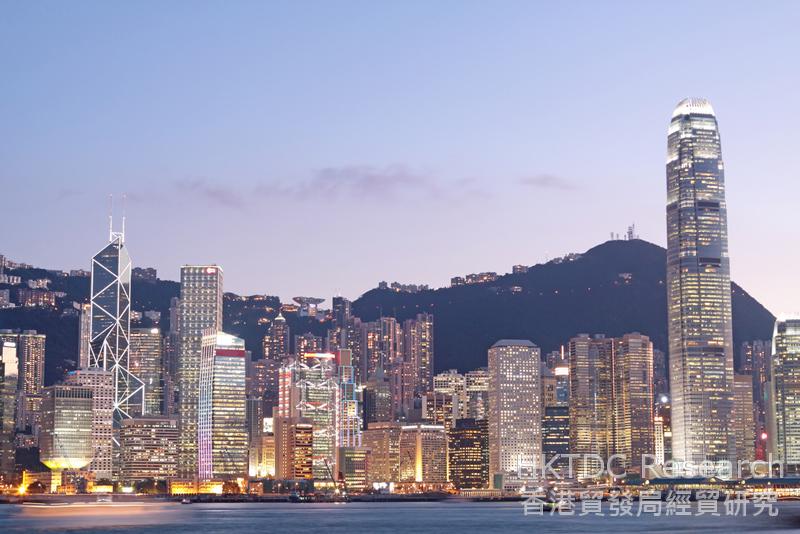
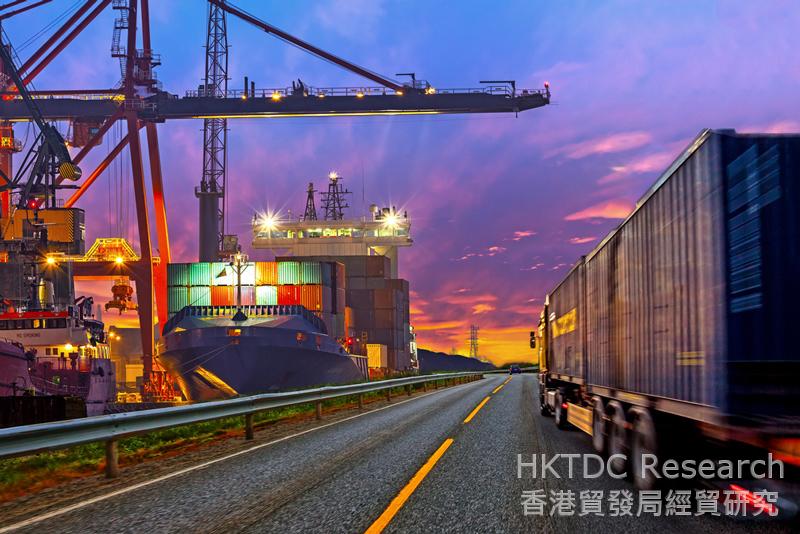
Many enterprises from Huizhou in Guangdong Province would like to tap the opportunities afforded by China’s Belt and Road strategic development initiative, in order to further expand their export business. This fact emerged at a recent seminar held by HKTDC Research. To make an effective entry into the Belt and Road markets, though, Huizhou businesses would first need to engage with the Hong Kong hub in order to obtain useful information about those territories. This could cover a whole variety of subjects from the condition of supply chains, the sourcing activities and product standards of local buyers, to related support services such as marketing and risk management.
Some attendees indicated that they are open to making direct investments in Belt and Road countries. However, before that could happen they would require professional consulting services to help them to understand local business cultures and investment risks. This would allow them to assess the feasibility of investing and setting up factories in these countries. Other respondents noted that certain Southeast Asian and South Asian territories are currently tightening up their policies and approval procedures relating to foreign direct investments. Therefore, these companies are very keen to keep abreast of the very latest developments within these markets.
On the whole, Huizhou enterprises wish to take advantage of the Belt and Road opportunities for overseas expansion. They intend to seek professional services in Hong Kong to help them address practical issues such as marketing and foreign investment procedures, or securing cost-effective funds to finance their overseas operations.

Huizhou Enterprises to Tap Belt and Road Opportunities
Continuous growth within the Pearl River Delta (PRD) economy has led to the gradual expansion of its production and commercial activities, from the Pearl River estuary to its eastern and western flanks. Huizhou is located in the north-eastern part of the PRD adjoining Shenzhen and it has already benefited from the influx of foreign capital over the years. To date, more than 9,000 foreign-invested enterprises have set up operations in the city. TCL, Desay, Adayo and Cosun, all of which figure among China's top 500 electronic information enterprises, are amongst the many well-known mainland companies who have established their corporate headquarters in Huizhou[1]. In doing so, they have contributed directly to the rapid development of the city's economy.


With Guangdong province’s foreign trade and economic activities on the rise, over recent years Huizhou companies have been active in going abroad in search of business expansion. Simultaneously, they have been exploring the Belt and Road opportunities. Statistics show that, to date, some 83 Huizhou enterprises have invested a total of US$460 million directly overseas, mainly in Hong Kong, Taiwan, Macau and the United States. Through their foreign arms, some of these companies have even reinvested either directly or indirectly in destinations such as Vietnam, Cambodia and Ethiopia[2].
In recent times, China has leapt into position as the world's second largest source of FDI[3]. It has also been strengthening its ties with Belt and Road territories, by means of investments and economic partnerships. Throughout, the South China region has stayed at the forefront of the country's external trade and economic co-operation activities.
During mid-2016, HKTDC Research conducted surveys in selected cities throughout Guangdong and Guangxi, in order to gauge the interest of mainland enterprises in exploring Belt and Road opportunities and their demand for related support services[4]. As part of this exercise, a business seminar was held in Huizhou in the third quarter of 2016 to garner the views of local production and trade enterprises. Their views are summarised as follows:
-
Focus on Southeast Asian market
Over the years, many enterprises in Huizhou have developed into large or medium-sized companies, while engaging in the production of high-tech products such as switching power supplies, fine-pitch printed circuit boards and other precision electronics. They now have many years’ experience in international marketing and their customers include multinational companies from Europe, the United States and certain Asian countries. Some of them are listed on the mainland stock exchanges and are among the leading manufacturers in China.
As China presses ahead with its Belt and Road initiative, most companies in Huizhou seem to recognise the importance of keeping abreast of new Belt and Road information so that they don't miss out on potential business opportunities. In order to facilitate the future expansion of their export business, many enterprises intend to further explore the Belt and Road markets, especially those Southeast Asian countries neighbouring China. Some even aspire to develop brand business within the Southeast Asian market.
-
Lack of practical market information
A number of the companies questioned are now familiar with the US and European markets and the large amount of relevant macro data which the government has provided to them. Nevertheless, most conceded that they are still unable to develop a clear concept of the Belt and Road initiative, which covers a huge number of countries and regions. Many companies expressed a fundamental lack of understanding about these markets, even those ASEAN countries which are geographically close to China. Businesses appear to require more data on the socio-economic environment, laws and regulations, industry policies, business culture and commercial risks relating to these territories. Information on local supply chains, the sourcing activities of buyers and product standards is also inadequate at present.
When it comes to market access, what these companies need most urgently is practical information to help them set up sales channels in the Belt and Road countries. In particular, they lack business intelligence about the specific needs of local markets, the characteristics of potential customers and other practical information about import requirements. Some enterprises highlighted the difficulties of effectively reaching buyers from Belt and Road markets solely through traditional trade fairs. Another matter for concern for these companies is the protection of intellectual property rights such as trademarks and patents within the Belt and Road markets, as they wish to avoid substantial losses which can result from third party infringement.
In the circumstances, Huizhou enterprises are eager to locate relevant support services via Hong Kong which could help them to further explore Belt and Road opportunities. Besides, they hope to utilise Hong Kong's financial market to secure funds for their overseas business. According to representatives of these companies, they first plan to expand their export trade, followed by investment in and establishing of factories overseas, and then, in the longer term, the acquisition of foreign brands.
-
Focus on market risk management
The general paucity of market information has created difficulties for enterprises in controlling their business risks and has hindered their efforts to develop the Belt and Road markets. For example, over the past few years the dealings of some small home appliance exporters in the European market have been affected by the weakness of the Euro. Though this situation has stabilised more recently, many Huizhou firms still prefer to focus on this familiar market rather than taking risks by venturing into uncharted territories.
Some enterprises who are engaged in domestic sales, including some brand owners which distribute diving and swimming gear in the mainland, indicated that the mainland market remains buoyant. As such, it would continue to be the focus of their business development. They remarked they were largely unfamiliar with the Belt and Road markets and believed that heading into these markets would entail greater risks. In all, they would not consider developing Belt and Trade operations for the time being, unless suitable risk management solutions become available.
Meeting the specific requirements of Belt and Road buyers poses some major challenges. Some companies with experience in shipping industrial and consumer goods directly to European and US buyers observed that, due to different product standards in the importing country, commercial disputes can arise. This is even in spite of the fact that the products have already passed factory inspections and tests prior to shipping. To minimise these risks, some enterprises intend to work alongside Hong Kong companies when exploring the Belt and Road markets. They believe that their Hong Kong partners could help to avert problems relating to product specifications and compliance of foreign standards.
-
Assess investment opportunities in Southeast Asia
On the subject of direct investment in Belt and Road countries, most enterprises indicated that preference would be given to territories within Southeast Asia. In order to assess the feasibility of investing in and setting up factories in certain Southeast Asian destinations, they said that they would seek practical advice from investment consultants.
Specifically, the information they are looking for would cover investment policies, industry facts, national and regional supply chains, the availability of production materials and logistics support and so on. Enterprises interested in investing abroad intend to use consultancy services and other professional amenities in Hong Kong, so as to obtain practical information for the assessment of investment projects in Belt and Road countries. They also hope to raise funds via Hong Kong in order to finance these investment projects.
-
Concern about investment climate and policy risks
Some companies pointed out that, due to the continuous inflow of foreign capital into Asia over recent years, some Southeast Asian and South Asian countries have gradually tightened their policies and approval procedures for FDI projects. Now they tend to give priority to higher value-added investment projects. As a result, it has become increasingly difficult for enterprises engaged in lower value-added, labour-intensive operations to find suitable investment destinations within Asia. Therefore, it is crucial for them to learn about the latest developments in these countries and assess future policy risks before making any investment decisions.
Setting up factories in some low-cost regions in Asia in order to produce export-oriented goods may help ease the problem of rising production costs on the Chinese mainland. However, these facilities would still have to pass audits by overseas buyers and comply with the relevant labour, environmental protection and social responsibility standards. At this stage, some low-cost Asian territories may not be able to meet the stringent requirements of these buyers.
-
Assessing other investment factors
While the cost of labour in some Southeast Asian countries is relatively low, the lack of skilled labour and technical personnel in some areas of production, such as jewellery processing, could make it difficult for businesses to support processing activities. This problem is further compounded by the lack of supplementary materials for industrial production. In view of this, some enterprises indicated that they wouldn't consider relocating production activities to Belt and Road countries in the short term.
Another important factor which businesses must consider before relocating their production lines is human resources management. One respondent to the study was an automotive electronics company which has gone abroad to invest and set up factories in Malaysia and Poland. They confessed that, although they have established a comprehensive global sales network, they still lack the talent to manage their expanding overseas investment projects and international sales. At present, their overseas factories are managed by local employees and as a result, cultural differences have led to some administrative problems. The company therefore wish to employ Hong Kong professionals with a global vision and knowledge of foreign cultures, in order to help them manage their business and enhance their overall operational efficiency.
HKTDC Research wishes to express its appreciation to the Department of Commerce of Guangdong Province and the Bureau of Commerce of Huizhou City for their assistance in conducting the research studies and company visits, as well as the Huizhou Association of Enterprises with Foreign Investment for their help.
[1] Source: Bureau of Commerce of Huizhou City
[2] Figures as at July 2016. Source: Bureau of Commerce of Huizhou City
[3] 2015 figures. Source: Statistical Bulletin of China’s Outward Foreign Direct Investment 2015
[4] For more details of the surveys, please see: Chinese Enterprises Capturing Belt and Road Opportunities via Hong Kong: Findings of Surveys in South China
| Content provided by | |