









Chinese Mainland
20 Jul 2016
Hong Kong Expertise ‘Can Put OBOR on Road to Success’
Source: SCMP Education Post
There is little doubt that China’s “One belt, one road” (OBOR) initiative to boost economic ties with countries along the old trading routes between Asia and Europe will have a significant impact in the years ahead.
But with ideas still forming, and concrete plans yet to materialise, what may in fact happen remains largely a matter of speculation, interpretation and educated guesswork.
“At this point, it is still a conceptual framework,” says professor Kalok Chan, dean of the Chinese University of Hong Kong (CUHK) Business School. “But the intention behind it is clear: to promote collaboration among countries in Asia. That means we will see a lot of infrastructure built, more trade-related and logistics services, and there will also be the funding side to think of, in order to support these other developments.”
Just within the 10-nation ASEAN grouping, there is a clear need for investment to upgrade transportation and port infrastructure. And if that gets the green light, it should almost automatically create wider opportunities for cities like Hong Kong with their expertise in fundraising, engineering and other professional services.
“Any such direct stimulus can boost economic co-operation, with the chance for both public and private sectors to get involved,” Chan says. “Hong Kong in particular, can act as a hub providing legal, financial, consulting and technical support for projects in Asia and beyond.”
For example, even though the Beijing-led AIIB (Asian Infrastructure Investment Bank) is likely to take the lead in raising funds, there is every reason to think Hong Kong can also make a substantial contribution. As a recognised offshore centre for trading renminbi (RMB) and issuing RMB-denominated bonds, the city has a head start in putting together certain types of syndicated loan, and should look to stretch that advantage.
With that in mind, CUHK Business School is already taking steps to tweak the content of MBA and EMBA programmes to increase general student awareness of OBOR and its longer-term implications.
“We are not only confining ourselves to what is delivered in the classroom,” Chan says. “A lot of the time now, we have to take students out of the classroom, and of Hong Kong, so they can really see the developments elsewhere.”
The template has been set with trips for MBA and EMBA students to Silicon Valley and cities in Britain, Sweden and Germany.
Now, besides Singapore and South Korea, future visits to less economically developed countries in south and west Asia are also very much on the agenda.
“In terms of course content and programme delivery, we have to consider student demand and what we think is really needed,” Chan says. “That means paying due attention to topics like big data, CSR [corporate social responsibility], innovation and entrepreneurship. Higher education has to be in touch with the latest trends, and do what’s necessary to give students the right kind of exposure, especially when forces like globalisation and technology are continuing to change so much, so quickly.”
In one specific example, the growth of online education has made it possible to disseminate knowledge over an internet platform. This is proving its worth as a way to supplement the more traditional style of face-to-face classroom teaching, and to reach more people, who do not necessarily have to be CUHK students.
“This is an important trend, but it is just one aspect of improving our business programmes and course delivery,” Chan says. “We are also continuing our efforts to recruit top scholars in terms of research and teaching, to help us create knowledge and disseminate it effectively.”
As part of the plan to encourage greater diversity and internationalisation, there are going to be more student exchanges and opportunities to work overseas. And there is also an ongoing scheme to increase collaboration with other universities, as well as with other schools within CUHK, notably those specialising in medicine, engineering, law and social sciences.
“These days, even if they are in the business world, students really need to have much a broader interdisciplinary knowledge,” Chan says. “That is something we hope to build through more collaboration, and which we want to reflect in our curriculum, both for undergraduates and for our MBA and EMBA students.”
Please click here for the full article.
Editor's picks
Trending articles
“Going Out” to Capture Belt and Road Opportunities (Expert Opinion 3): Hong Kong as a Fashion Capital
Chinese enterprises are attaching increasing importance to enhancing their product design capability in order to further expand in both the mainland and foreign markets. Recent HKTDC surveys show that mainland enterprises have strong demand for Hong Kong’s design services through which they hope to strengthen competitiveness and achieve transformation and upgrading.
According to Tony Lau of the Hong Kong Designers Association, the consumers demand for various consumer products and services is on the rise, both in the mainland as well as emerging markets. While their purchasing power still lags behind that of consumers in developed countries, they have their own requirements where product design and service quality are concerned. This is an important point not to be overlooked by industry players wishing to develop these markets.
Requirements of Belt and Road Consumers
At an interview with the HKTDC Research, Tony Lau[1] said: “Many mainland enterprises hope to make use of excess production capacity to develop emerging markets in order to make up for the flat domestic sales and exports to mature markets brought about by global economic downturn. However, while the product grade demanded by some emerging markets may not be on a par with mature markets, the majority of consumers still wish to buy value-for-money quality products in order to raise their living standard.
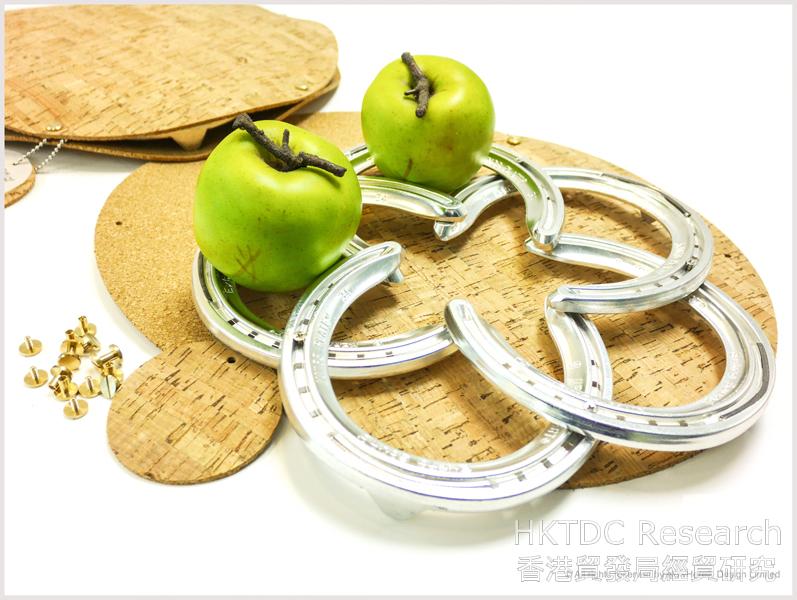
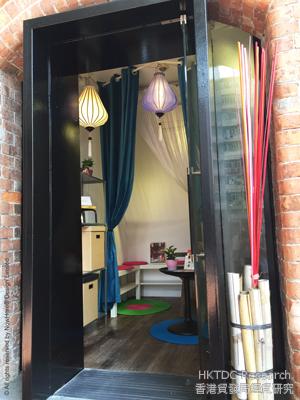
(Photograph provided by NowHere® Design Ltd.)

(Photograph provided by NowHere® Design Ltd.)
“In view of this, when mainland enterprises develop Belt and Road markets, they must take into consideration whether the product design and quality are reasonable and should also provide the appropriate sales service locally. If they only want to sell excess inventory, it would be difficult for them to truly tap the local markets.”
Lau pointed out that in both mature and emerging markets, consumers not only seek quality and functions, but also hope to buy trendy, fashionable products. He said: “Unlike mature consumers in developed countries, consumers in the mainland and certain Belt and Road markets may not be able to completely master product trends. For this reason, products with hardly any design elements may still sell well due to price or other factors.
“But when new competitors join the fray and try to suit the purchasing power of consumers, cut-throat competition will ensue and industry players selling poorly designed products may find it hard to sustain business development. Hence, mainland enterprises must enhance their product design and quality before they can effectively maintain consumer support for the product and the company.”
Feeling the Pulse of Fashionable Lifestyle Trends
“There are quite a lot of designers with fashion sense in the mainland and Asian countries, yet they lack the soil for growing trendy lifestyles. Actually, Hong Kong is not only an international city where Eastern and Western cultures meet, it is also a fashion capital of Asia. Middle-class consumers in the mainland and Southeast Asia in particular view Hong Kong as Asia’s lifestyle trendsetter.
“When well-known foreign brands enter the mainland market, most of them would use Hong Kong as a springboard. Consumers in the region and other Belt and Road markets would frequently refer to Hong Kong’s lifestyle trends and practices in order to master the fashion trends in Asian and Western countries.”
According to Lau, Hong Kong can provide mainland enterprises with professional designer services in such areas as product design, style, sales and marketing. This not only helps mainland products to catch up with international fashion trends, but also to meet international market standards, such as environmental requirements, recyclability of materials, minimising material waste and pollution in production process, as well as causing no harm to human health.
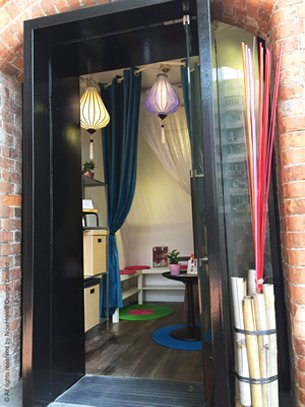
(Photograph provided by NowHere® Design Ltd.)
(Photograph provided by NowHere® Design Ltd.)
Hong Kong can also assist mainland enterprises in conveying the message that they meet the internationally recognised code of Corporate Social Responsibility (CSR), and build a positive image for their product and company in the local market.
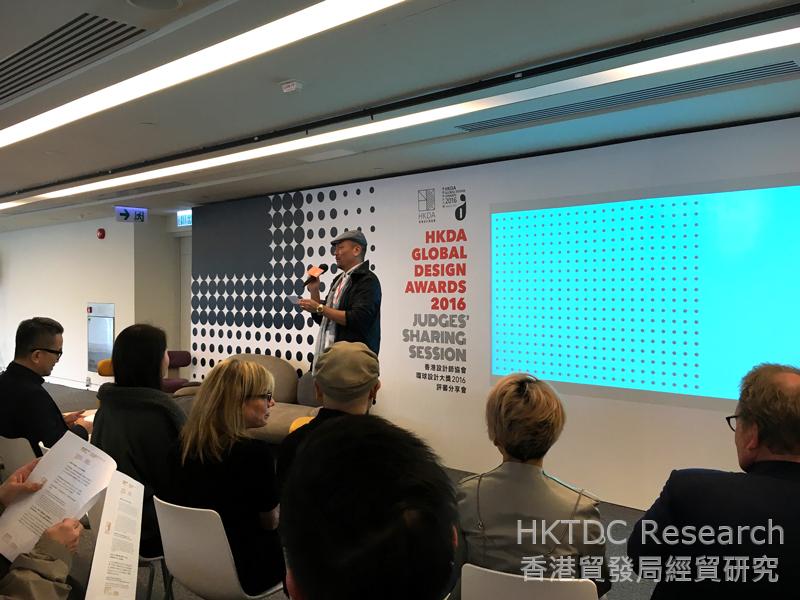
Tony Lau is chairman of the Hong Kong Designers Association Global Design Awards (GDA) (2015-2016) Judging Panel. The Hong Kong Designers Association, with over 700 designer members, first organised the GDA in 1975. For many years, the GDA has not only honoured global design excellence, but has also become one of the most established multi-disciplinary design competitions in the Asia-Pacific region and helps to enhance Hong Kong’s status as a key creative centre.
[1] Tony Lau is founder and creative director of NowHere® Design Ltd, which is a Hong Kong design company mainly engaged in architectural and interior design and branding design.
| Content provided by |

|
Editor's picks
Trending articles
28 Jul 2016
Trends in Global Trade Pacts: “Belt and Road” and “Trans-Pacific Partnership”
By Dr Tse Kwok Leung, Head of Economics & Policy Research, Bank of China (Hong Kong) Limited
To promote its “Belt and Road” strategy, China is currently conducting four major tasks. The first is the planning of infrastructures, and priority projects include the construction of three high-speed rail networks traversing Europe and Asia. These include the Eurasian High-Speed Railway, the Central Asia High-Speed Railway and the Trans-Asian Railway. Commencement of the Eurasian High-Speed Railway is expected to take place this year. The rail link begins in Beijing and enters Russia, heading through Moscow and on towards Warsaw, Berlin and Paris, with London as a possible terminus. The Central Asia High-Speed Railway begins in Urumqi and heads through Uzbekistan, Turkmenistan, Iran, Turkey and Germany. The Trans-Asian Railway, on the other hand, will span more than 3,000 km. It begins in Kunming and heads to Singapore, going through Southeast Asian countries such as Laos and Malaysia. Based on its current progress, the rail project is expected to be completed by 2020.
The second task involves port infrastructure projects. Gwadar Port in Pakistan is one of the highlights. Gwadar Port is not only a pier where goods both enter and leave, it is also expected to develop into a modern industrial park where an array of high value-added activities will take place. Eventually, it is expected to grow into a logistics hub.
The third task is to establish overseas trade and economic cooperation zones. According to the Ministry of Commerce, China has established 118 trade and economic cooperation zones in 50 countries across the globe. Of these, 77 are located in 23 countries along the route of the “Belt and Road” initiative. At present, most companies operating in these zones are privately-owned enterprises of Mainland China. Hong Kong companies are also welcome to take up tenancy in these zones. They are important fulcrums of the “Belt and Road” initiative.
The fourth task is to set up or take part in multilateral financial institutes, including the Asian Infrastructure Investment Bank (AIIB), the BRICS New Development Bank, the Silk Road Fund and the European Bank for Reconstruction and Development. The AIIB officially commenced operation on 16 January 2016. Headquartered in Beijing, the AIIB has 57 Prospective Founding Members, and an initial registered capital of USD 100 billion.
This article is reproduced with the permission of ECIC. Please click here for the full article.
Editor's picks
Trending articles
Iran Unbound: A Land of Business Opportunity
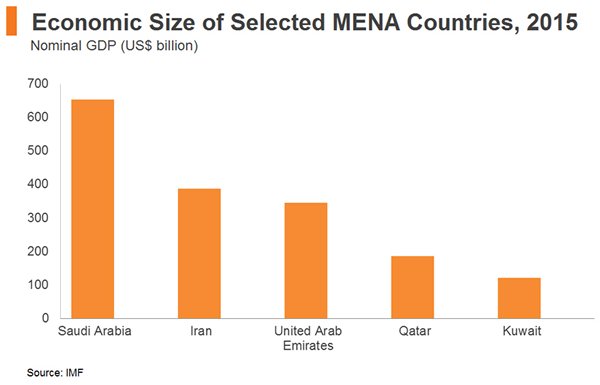
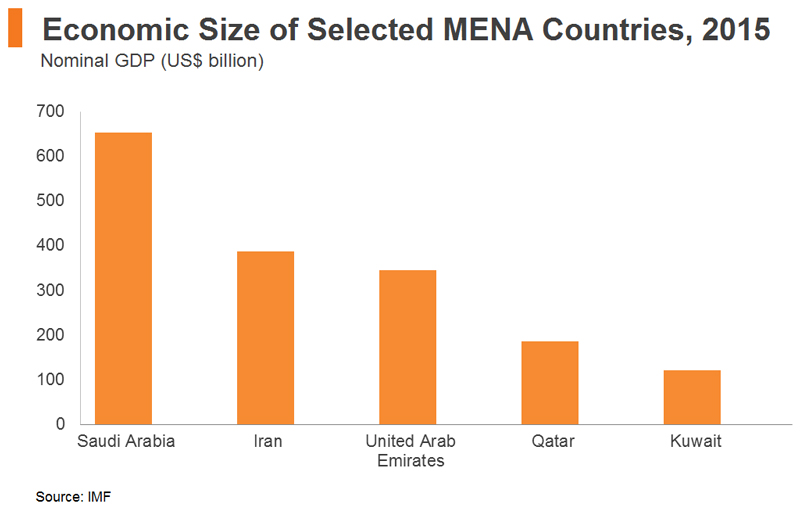
After Saudi Arabia, Iran is the second-largest economy in the Middle East and North Africa (MENA) region, with an estimated nominal GDP of US$387.6 billion in 2015. Following the removal of major international sanctions in January 2016, Iran has been the subject of considerable interest from foreign investors seeking business opportunities in this upper-middle-income[1] country. Overall, the country is characterised by a young and well-educated population, the majority of whom were born after the establishment of the Islamic Republic of Iran in 1979.
In light of the above, HKTDC Research recently undertook a field trip to Iran, setting out to assess the suitability of the country as an export destination for Hong Kong consumer products, such as electronics, garments and household goods, and to explore opportunities in Iran’s services market for Hong Kong services providers (HKSS) in a number of areas, including construction, project management, logistics, design and finance.
While the gradual restoration of access to the global financial and trading system is expected to enhance the investment climate in Iran, following the removal of nuclear-related UN or “secondary” sanctions in January 2016, HKTDC Research took into account lingering concerns over the so-called “primary” sanctions, which relate to trade with US individuals or companies. In addition, we also undertook a review of the country’s macroeconomic environment and local business practices in order to present an informed understanding of the local market conditions.
This report includes an overview of the business opportunities on offer, with the possible downside pertaining to any early market entry to Iran discussed in another article - Iran Unbound: Balancing Opportunities with Practical Business Risks.
The JCPOA Agreement: a Game Changer
From the time Iranian President Hassan Rouhani took office in August 2013, the government has made great strides towards reducing tensions between Iran and the West. Such tensions had led to a series of US, UN and EU sanctions, including a trade embargo, the freezing of overseas Iranian assets, and the prohibition of financial and bank dealings with Iran.
After some two years of negotiations, the Joint Comprehensive Plan of Action (JCPOA), a historical agreement between Iran and the P5+1 (the UN Security Council’s five permanent members plus Germany), was concluded in July 2015.
Under the terms of the JCPOA, major economic sanctions against Iran have been removed in exchange for Iran accepting international scrutiny of its nuclear programme. The JCPOA was implemented on 16 January 2016 (“Implementation Day”), heralding the removal of secondary sanctions, including the bulk of EU sanctions against Iran, along with the release of frozen overseas Iranian assets. While the US’s primary sanctions against Iran remain in place, the deal paves the way for a number of companies – primarily European - to re-enter Iran and invest in many of the country’s major economic sectors, such as transport, oil and gas, banking and finance.
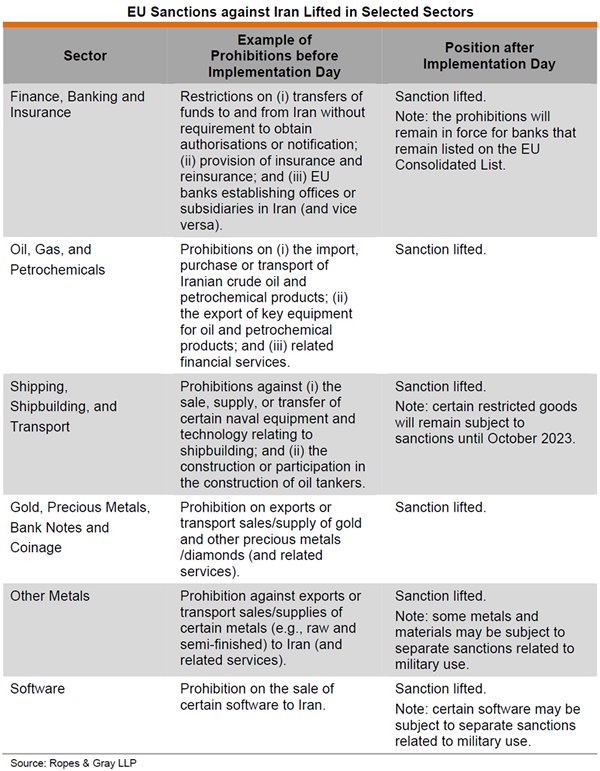
In addition, an estimated US$100 billion in frozen assets, relating mostly to oil sales to Asian countries and held in escrow accounts during the sanction period, has been gradually released to Iran, providing the necessary capital for the country to fund its domestic development. Iran has been able to conclude many large procurement deals in the months following Implementation Day.
SWIFT Reconnection Lowers Transaction Costs
Iran’s international banking activity has severely curtailed since 2012, when almost all of the country’s banks were prohibited from using the Society for the Worldwide Interbank Financial Telecommunications (SWIFT) system, a global financial transaction protocol.
Following the implementation of the JCPOA, Iran access to the SWIFT system was restored in February 2016, allowing many Iranian banks to resume cross-border transactions. This has inevitably lowered transaction costs for Iranian companies in light of the intermediary costs that would otherwise be paid to Dubai middle-men. It also eases the country’s general trading environment.
So far, some 30 Iranian banks, including Bank Melli and Bank Mellat, have re-joined SWIFT. As a sign of the further normalisation of banking ties, the Industrial and Commercial Bank of China (ICBC) has applied to open branches in Iran. Italy’s Monte Paschi Di Siena Bank is also reported to have provided bank guarantees and letters of credit services to several Iranian banks following the lifting of sanctions. Nonetheless, many major international banks have been hesitant about resuming business ties with Iran, particularly in view of the outstanding primary sanctions.
Restored Macroeconomic Stability Helps Economic Prospects
In light of the impact of international sanctions on Iran’s economy – including heavy borrowing from the Central Bank of Iran (CBI) to fund widening government deficits – the Rouhani government, which took power in 2013, has taken major measures aimed at tackling soaring inflation and unemployment.
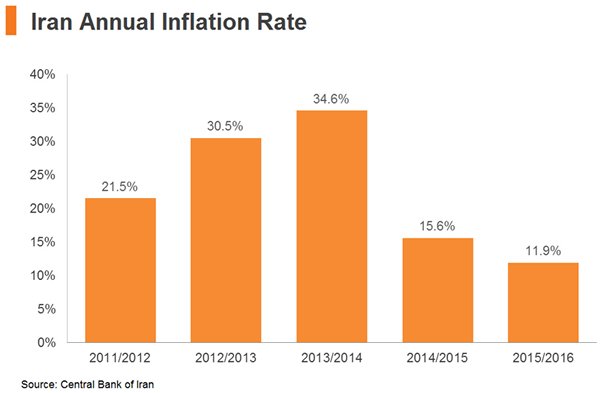
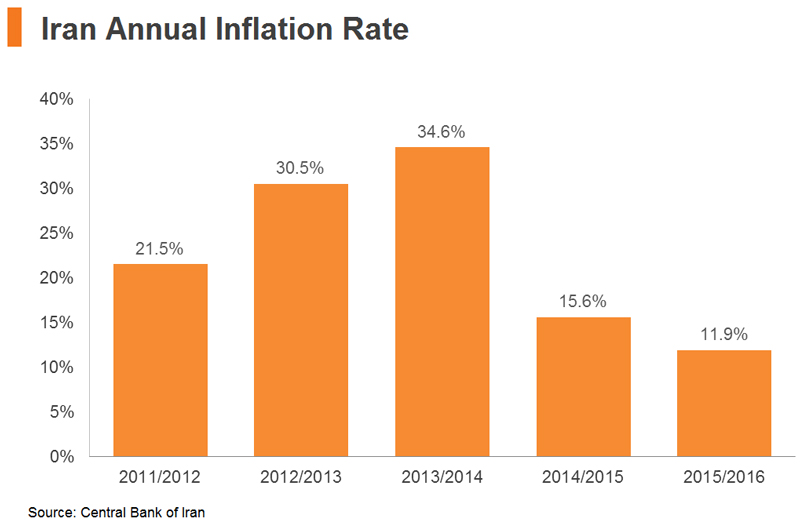
In 2013, following the expansion of sanctions imposed by the US and the EU against the country’s energy and banking sectors, the country’s level of inflation hit a peak of 40%. In order to stabilise this, the Rouhani government introduced a number of measures, including major subsidy reforms and the replacement of cash hand-outs with non-cash benefits. As a result, consumer price inflation over the past Iranian calendar year[2] eased to 11.9% from 15.6% year-on-year. According to the CBI, this declining trend is anticipated to continue, with inflation expected to edge down to single digits by March 2017.
In order to tackle the country’s high unemployment rate, which stood at 11.8% in the first quarter of 2016, the Rouhani administration has proposed ambitious economic reforms through a process of privatisation.
Iran has a large public sector. This exerts substantial control over the economy through state-owned enterprises (SOEs) or semi-private entities, such as foundations, pension funds and companies linked to the Islamic Revolutionary Guard Corps (IRGC). In 2016, it was announced that Iran Air, the government-owned Iranian flag carrier, and the country’s car industry, were to be privatised, along with 201 companies on the 2016 Divesting Lists published by the Iranian Privatisation Organisation. It is believed that this will help improve efficiency by releasing resources tied up in inactive projects and used to fund budgetary shortfalls, ultimately giving an extra push to the privatisation agenda.
Post-Sanctions Development Calls For Foreign Investment
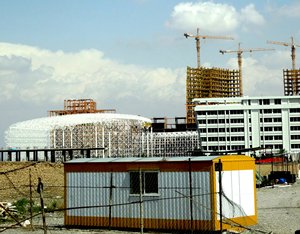
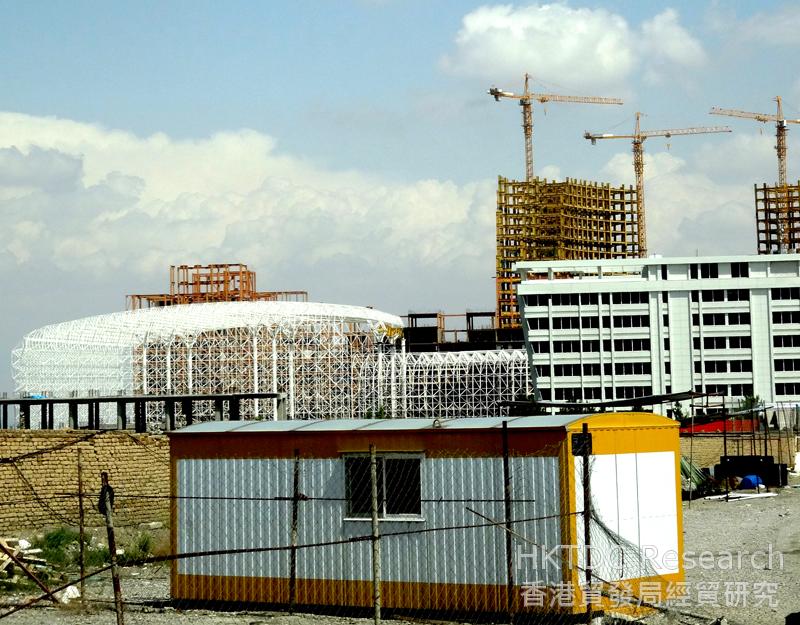
Following years of limited access to external capital, the Iranian government is now keen to attract foreign direct investment (FDI) across a number of sectors, particularly those where new equipment and technology are in high demand.
In the short-to-medium term, the focus of the Iranian economy is expected to be on bridging the funding gap related to major investment projects. In particular, the Iranian government aims to attract up to US$50 billion annually in order to meet an ambitious 8% GDP growth target, as set out in in the sixth Five-year Development Plan for the 2016-2021 period.
Over the longer term, it is estimated that Iran will create investment opportunities of US$1.5 trillion between 2016 and 2025 for local and international investors.
In line with Vision 2025, the Iranian government identifies a number of core industries that the country will focus on developing. These include petrochemical products, metals and minerals, energy, food, pharmaceuticals, industrial machinery and equipment, home appliances, textiles and apparel, and transport.
More specifically, several strategic growth objectives have been outlined in relation to this long-term development plan. These include productivity enhancement through the adoption of advanced technologies; a focus on innovation-driven manufacturing; economic diversification from oil and gas to high value-adding downstream segments; and the establishment of joint-venture manufacturing plants to lower export costs.
It has also been reported that the Iranian government plans to incrementally increase its net investment in manufacturing. This emphasis on manufacturing growth presents ample opportunities for foreign companies to participate in Iran’s ongoing transformation, whether through investing in the manufacturing of petrochemical products, steel, automobiles and consumer goods, or by providing services related to technology, manufacturing process enhancement and the financial sectors.
Opportunities Not Confined to Capital-Intensive Sectors
Home to the world’s second- and fourth-largest reserves of natural gas and crude oil respectively, Iran’s economy is more diversified than most other oil-rich countries in the region, with oil export revenues accounting for only about 30% of the government budget. In the 2014/15 fiscal year, which ended 20 March 2015, the oil sector contributed 15.3% of Iran’s gross national product, followed by the restaurant and hotel trade (15.0%), real estate, specialised and professional services (15.0%), manufacturing (11.8%) and agriculture (9.3%).
Although the oil and gas and other large-scale, capital-intensive sectors such as transport and infrastructure are expected to be the most immediate beneficiaries following the lifting of sanctions, the country is also fast attracting the attention of companies across a number of non-oil industries.
It is worth noting that Iran has maintained a reasonably large domestic manufacturing industry despite the many years of sanctions. This means Iran is quite different to many other emerging markets, where the installation of entirely new production plants is often required, entailing large sums of initial capital. FDI investors in Iran instead have the option of upgrading existing facilities, thus diminishing initial capital requirements. Furthermore, the government is committed to providing a host of incentives to FDI investors, many of which are sector-specific.
Consumer Goods Opportunities
With a population of nearly 80 million and more than 60% of its citizens aged 30 or under, Iran is also one of the largest retail markets in MENA with strong growth potential for imported goods. Throughout the sanctions period, Iran’s large middle class maintained a strong preference for foreign products, with this strong demand met by imports through Dubai and Turkey. This preference is expected to further strengthen in the post-UN sanctions era, as trade and banking normalisation eases related business activity.
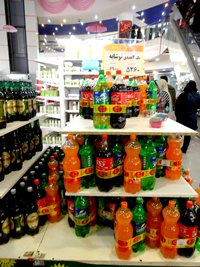
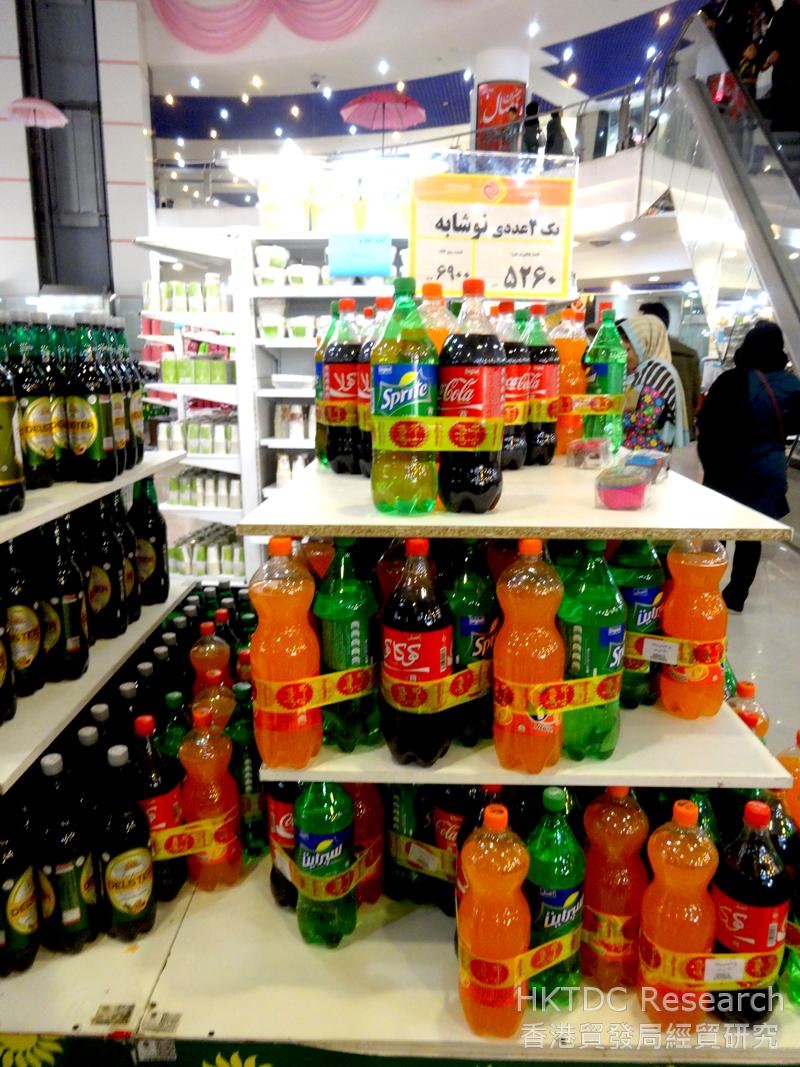
During its recent field trip to Iran, HKTDC Research was informed that western companies – including several soft drinks companies – had already entered into domestic licensing deals, under which their products could be manufactured within Iran. At present, Iranian traders and middlemen source products from many international brands via Dubai and Turkey, before re-exporting them to Iran. It was also reported that cargo carriers regularly ship goods to Iran from the free trade zones in Dubai, such as the Jebel Ali Port. Iranian free trade zones, such as Kish Island and Qeshm Island, are locations where international products, many of which are fast-moving consumer goods destined for mass markets, are shipped back to the mainland of Iran.
Prior to the lifting of UN sanctions, most Iranian customers had to make do with “international products” that were of an inferior quality, many of them counterfeit. With sanctions now lifted, Iran’s retail landscape is likely to experience rapid changes in response to the pent-up demand for authentic, high-quality imported goods, including electronics, telecom products and parts, watches and clocks, jewellery, clothing and other consumer products.
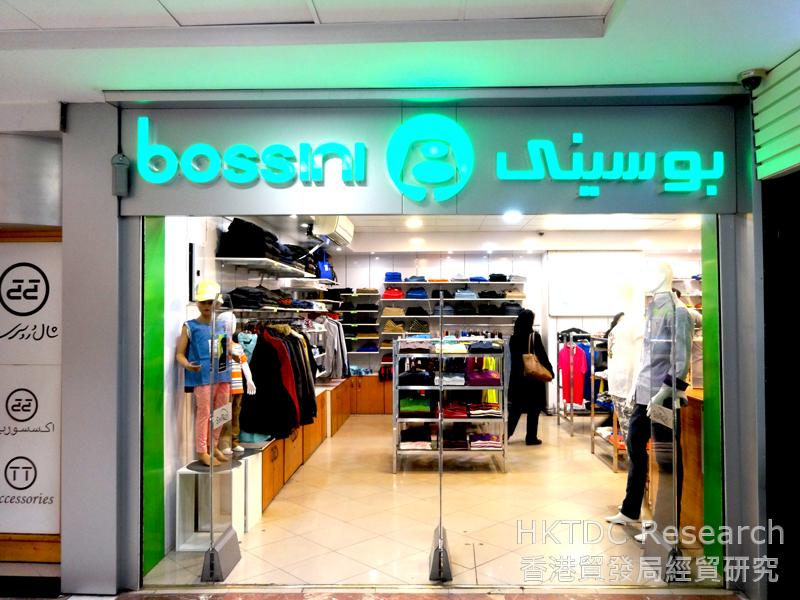
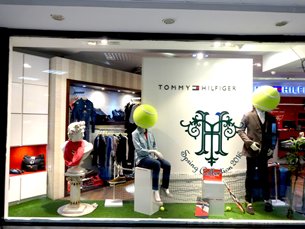
As the US has retained its primary sanctions, banning US citizens, companies and financial institutions from doing business with Iran, all transactions made between Iran and the rest of the world are primarily conducted in currencies other than US dollars, notably Euros or RMB. As such, Hong Kong companies which can settle payments in RMB have a distinct advantage.
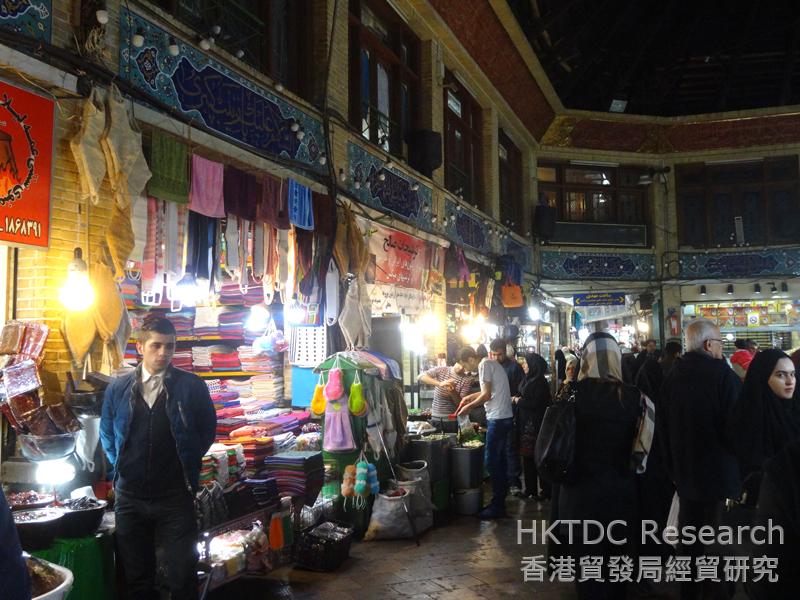
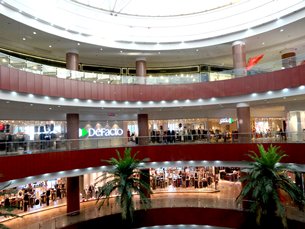
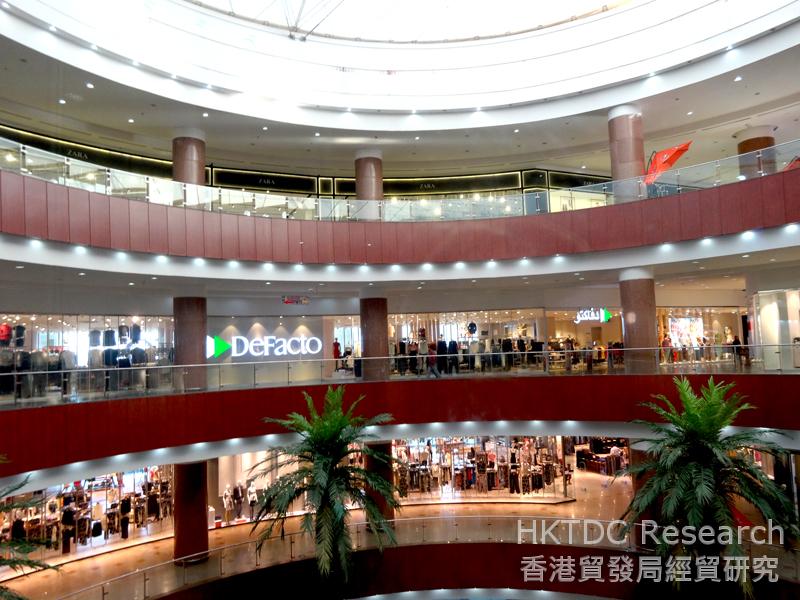
In addition, as the consumer market further opens up to international companies, there will be an increasing demand for modern retail outlets in order to serve the needs of a young, tech-savvy population, many of whom increasingly prefer large shopping complexes to the traditional bazaars. This may fuel the further development of the construction sector, with new shopping facilities now being built to meet this surging demand.
An Emerging Trade Hub along the Belt and Road
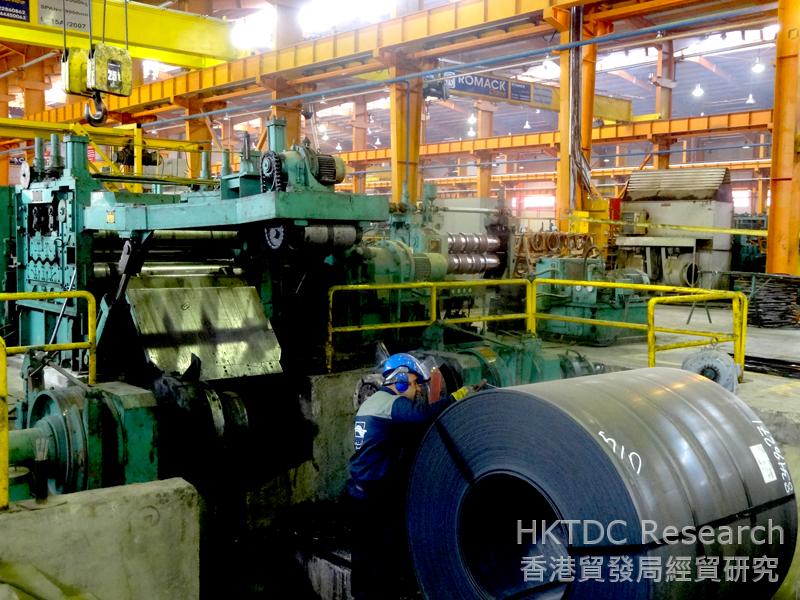
Throughout the sanctions period, China maintained a business relationship with Iran. China has been Iran’s largest trading partner for six consecutive years and there is already a strong foundation in place for both sides to strengthen their economic relationship in the post-sanctions era.
Following the removal of sanctions, China’s President Xi Jinping visited Iran in January 2016. During the visit, the two countries entered into an agreement on a 25-year comprehensive strategic partnership that will deepen co-operation in a number of areas, including communication, railways, ports, energy, trade and services. This will entail a tenfold boost in bilateral trade, taking it to more than US$600 billion over the next decade.
One of the major countries along the China-Central Asia-West Asia (CCAWA) Economic Corridor, as mapped out under China’s Belt and Road Initiative (BRI), Iran is expected to benefit from the BRI’s focus on infrastructure development and technology collaboration. This should stimulate demand across a number of sectors, including rail and road transport, energy, telecommunications and real estate.
At the time of writing, the China National Transport Equipment & Engineering Co Ltd is reportedly close to finalising an agreement on a US$3 billion high-speed rail project connecting Tehran with Mashhad. There are also plans for China and Iran to establish a 3,000-4,000 hectares joint industrial estate in Jask Port in southern Iran. This will focus on petrochemical projects, refinery, and steel and aluminum production.
A Potential Gateway to Regional Markets
Located in Southern Asia and bordering the Persian Gulf, the Caspian Sea and the Gulf of Oman, Iran prides itself on being a gateway to a regional market of more than 400 million people, spanning Afghanistan, Iraq, Turkey, Russia and the Central Asia countries. Following the lifting of sanctions, the subsequent easier movement of goods will result in significant trade opportunities, helping Iran to emerge as a trade and logistics hub in the region.
As indicated above, Iran is also a major country along the CCAWA Economic Corridor, an important element in China’s BRI. While the BRI is intended to enhance land and sea connectivity with countries along its key routes, the International North-South Transport Corridor (INSTC), established in 2000, aims to connect the Indian Ocean and Persian Gulf to the Caspian Sea via Iran, and onward to northern Europe via St. Petersburg in Russia. As a multi-modal transport corridor, INSTC will make Iran a key link in connecting the 14 member states, including India and Russia[3].
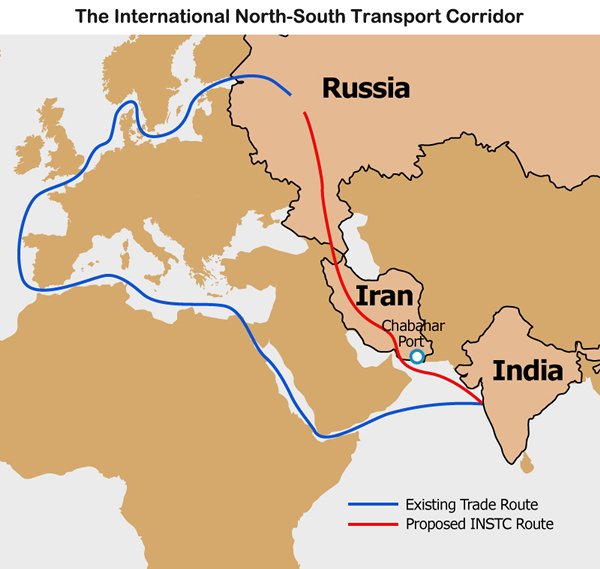
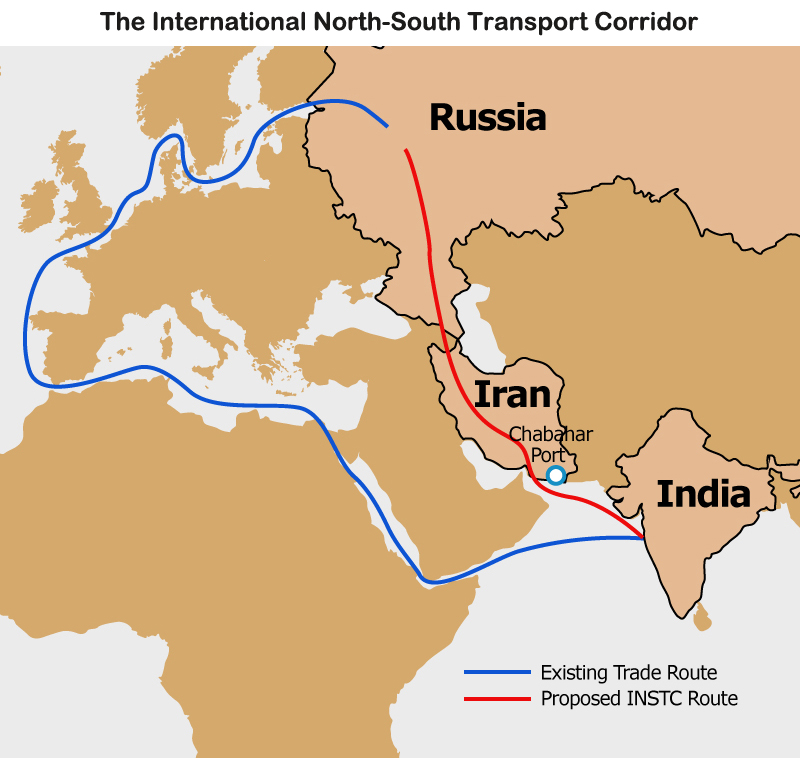
Moreover, in May 2016 India announced plans to invest US$200 million in developing two terminals and five berths at the Iranian port of Chabahar, with an additional US$300 million available for related infrastructure development. The Iranian government is reportedly now seeking investment from other countries to help fully develop the area.
In addition to construction projects, Asian manufacturers seeking to export to Europe might also benefit from Iran’s geographic proximity to the region, should they choose to establish a production base in the country. Iran boasts dozens of free zones and special economic zones where foreign investors can build new production plants while benefiting from a range of investment incentives.
[1] According to the World Bank, Iran is classified as an upper-middle-income economy, with a GNI per capita between US$4,126 and US$12,735.
[2] The Iranian calendar year of 1394 ended on 19 March 2016.
[3] The member states in the International North-South Transport Corridor include: Iran, India, Russia, Belarus, Kazakhstan, Tajikistan, Oman, Armenia, Azerbaijan, Syria, Ukraine, Turkey, Kyrgyzstan and Bulgaria (observer).
| Content provided by |

|
Editor's picks
Trending articles
China's “Going Out” Initiative: Service Demand of Western China to Tap Belt and Road Opportunities
Thanks to the active overseas investment of Chinese enterprises in recent years and the Chinese government’s advancement of the Belt and Road Initiative, China was the world’s third-largest source of foreign investment for the fourth consecutive year in 2015. In fact, many mainland enterprises are stepping up their efforts in “going out” to look for brands, technologies and other resources to boost their competitiveness, while bringing in the advantages of foreign partners as a way to further develop Chinese and overseas markets.
HKTDC Research recently conducted a questionnaire survey with enterprises in western China. The results reveal that in order to deal with such challenges as securing financing, escalating production costs and market slowdowns, mainland enterprises are keen to seek outside professional services to help them achieve transformation and upgrading. These range from brand design and promotion strategies, to marketing and product research and development (R&D), to financial and legal services.
Moreover, the majority of enterprises surveyed said they would consider “going out” further to tap business opportunities in countries along the Belt and Road routes, particularly in ASEAN countries and other Southeast Asian markets. As well as aiming to sell more industrial/light consumer products to Belt and Road markets, they also wish to carry out sourcing and investment activities such as setting up factories.
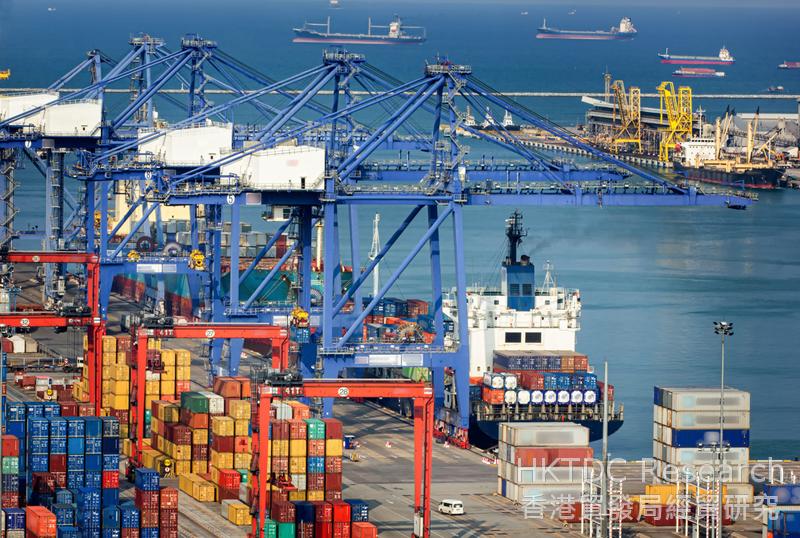
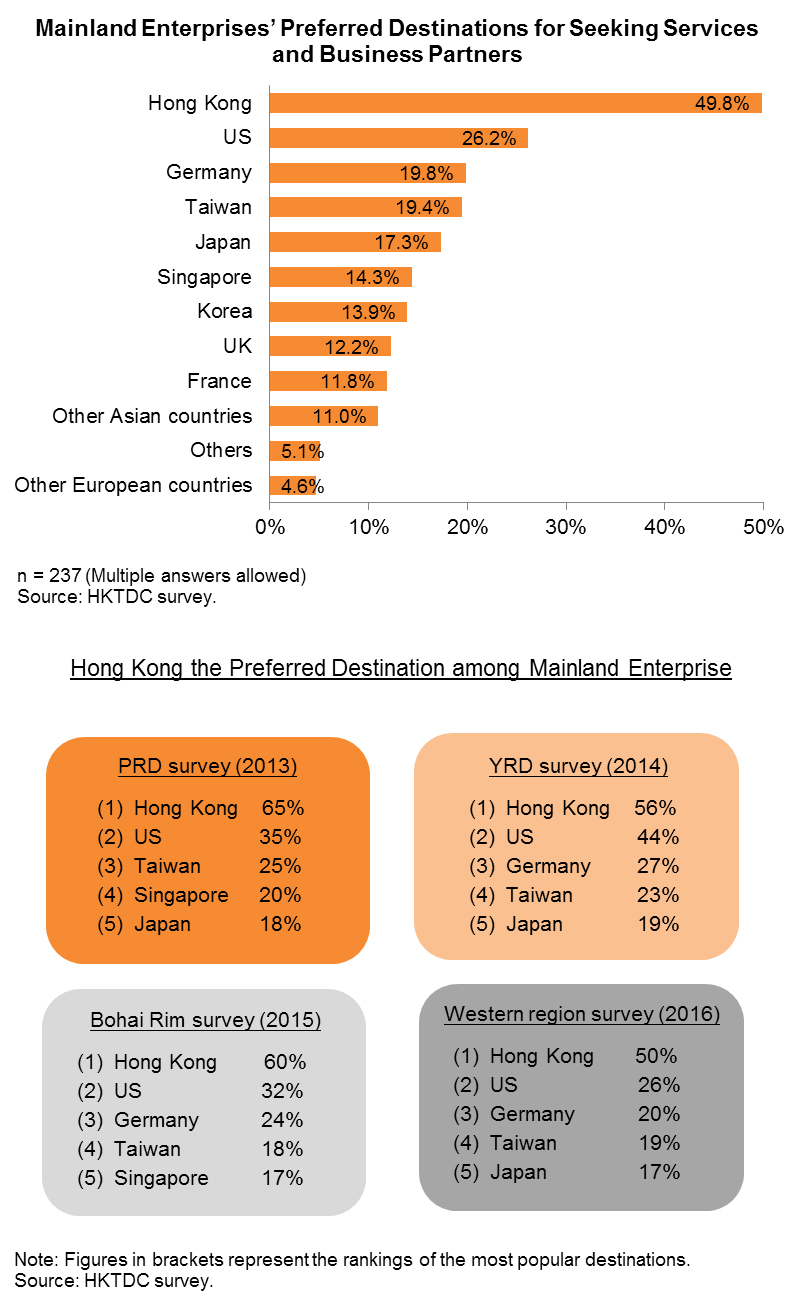
The largest proportion of the surveyed enterprises (50%) said that, in the course of “going out”, they would be most interested in going to Hong Kong to seek professional supporting services and business partners. This is in line with the results of similar surveys carried out by HKTDC Research in the past three years, namely in the Pearl River Delta (PRD) in 2013, the Yangtze River Delta (YRD) in 2014 and the Bohai Rim in 2015. Therefore, whether in the coastal regions or in western China, it is apparent that Hong Kong is the preferred services platform for mainland enterprises intent on “going out”.
New Pattern of Opening Up Under the 13th Five-Year Plan
China is not only a leading destination for foreign direct investment (FDI), but it also ranks among the world’s top sources of FDI. Indeed, China has in recent years significantly relaxed its administrative measures on outbound investment in order to facilitate the “going out” of enterprises to invest overseas. Furthermore, the Belt and Road Initiative strengthens mutually beneficial co-operation with countries along its economic corridors.
Adopted in March 2016, China’s 13th Five-Year Plan[1] stresses the need to establish a new pattern of all-round opening up in the next five years (2016-2020). It encourages enterprises to “go out” to establish sales networks in foreign markets and to bring in the advantages of foreign partners to enhance competitiveness. Meanwhile, bilateral and multilateral co-operation mechanisms will be improved to encourage co-operation and investment in countries along the Belt and Road routes, infrastructure connectivity and trade facilitation advanced, and co-operation in energy and industry chains strengthened. It can therefore be expected that China’s outbound investment activities will see further expansion.
(For further details, please see Opportunities Arising from China’s 13th Five-Year Plan: An Overview.)
The World’s Third-Largest FDI Source
According to the latest United Nations Conference on Trade and Development (UNCTAD) figures[2], for four straight years since 2012 China has been the world’s third-largest source of FDI. China’s total outward FDI flows have increased from US$123.1 billion in 2014 to about US$127.6 billion in 2015, trailing only the United States (US$300 billion) and Japan (US$128.7 billion).
Although China has entered into a “new normal” of slower economic growth in the past few years, it has gradually become a main investor in certain developed countries. In particular, investment through cross-border mergers and acquisitions has been increasing, and has moved away from the previous pattern of focusing on energy and natural resources to a diversified pattern covering wholesale and retail, transportation and shipping/warehousing, and real property development. Furthermore, many Chinese enterprises have engaged with their foreign partners in co-operation projects involving technology, or are carrying out various types of commercial co-operation activities with foreign brands, as a way to further develop Chinese and overseas markets.
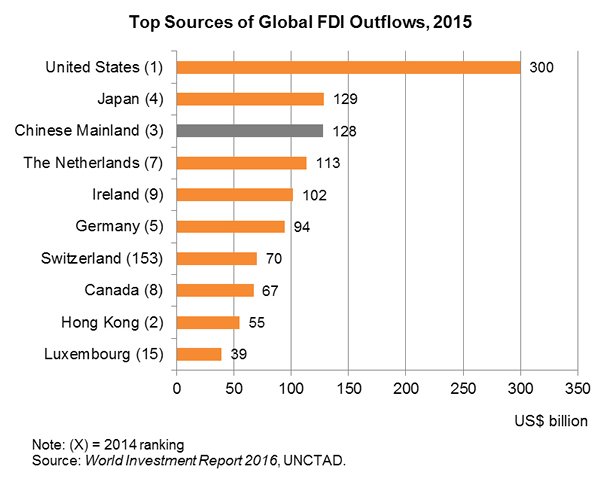
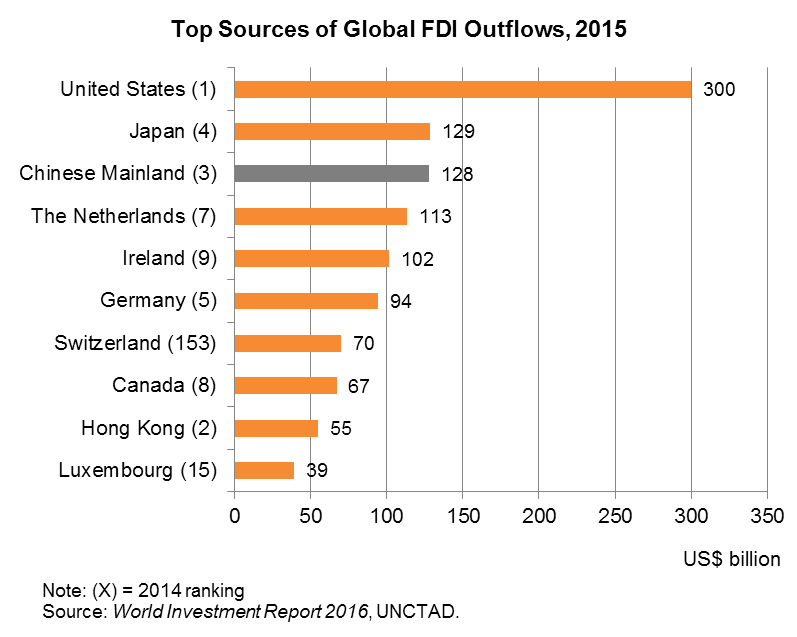
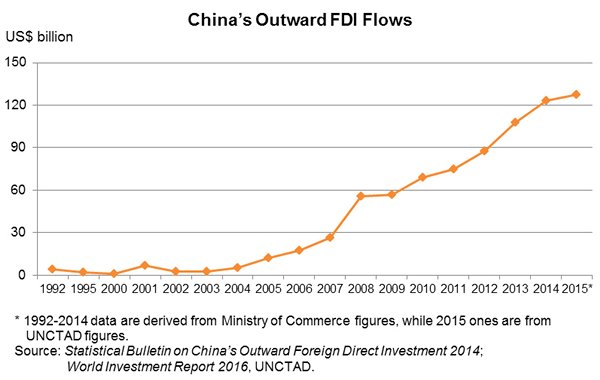
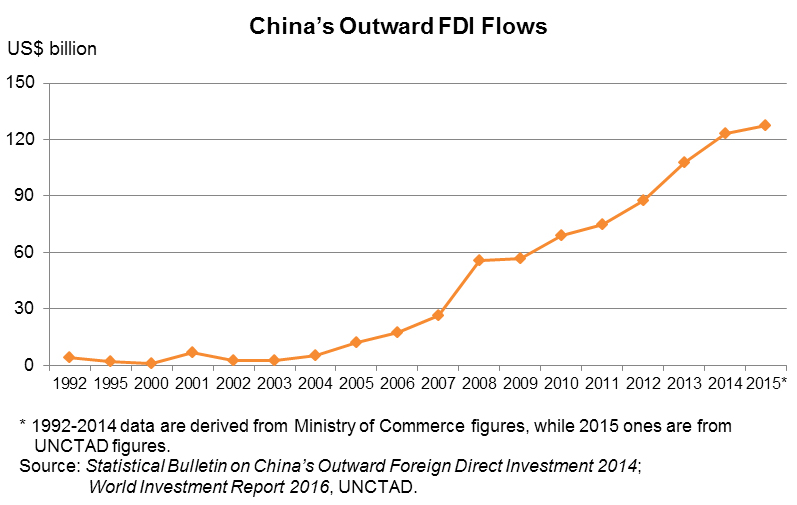
Meanwhile, China’s direct investment in Belt and Road countries is continually increasing, rising substantially from about US$400 million in 2004 to US$13.66 billion in 2014, an average annual increase of about 43%. Ministry of Commerce figures show that in 2015 Chinese enterprises made non-financial sector direct investment totalling US$14.8 billion (+18.2%) to 49 Belt and Road countries, accounting for 12.6% of China’s total non-financial sector direct investment that year. The investment flows were mainly directed towards Singapore, Kazakhstan, Laos, Indonesia and Russia.
It is worth noting that a considerable number of Chinese enterprises choose Hong Kong as their main channel for carrying out outbound investment – not only because Hong Kong is an international financial centre in the region with such advantages as free flow of capital. Abundant global communications and market network resources, as well as the availability of a complete range of professional services, are also key factors attracting mainland enterprises to use the Hong Kong platform in “going out”.
According to Ministry of Commerce figures, in 2014 the Chinese mainland routed US$70.9 billion in outward FDI through Hong Kong, accounting for 57.6% of the mainland’s total FDI outflows that year. Based on cumulative investment stock as at the end of 2014, the mainland has made US$509.9 billion in outward FDI through Hong Kong, accounting for 57.8% of the mainland’s outward FDI stock.[3]
Hong Kong: a Preferred Platform
Many cities and economic regions along China’s coast have been open to the outside world for many years. As China’s economy and investment outflows expand, coastal regions, provinces and cities, such as the PRD, YRD and Bohai Rim, have become main sources of outbound investment. On the other hand, with the western region including Sichuan province and Chongqing municipal benefiting from the Western Development strategy and other preferential policies, and with the efforts of provinces and cities concerned in attracting outside businesses and capital, the economy in the western region has been developing rapidly. Western China has always been an important gateway, a trading and logistics hub and an industry exchange ground connecting to Central Asia, South Asia and West Asia, and now enterprises in the region are also developing related investment and trading opportunities under the country’s “going out” and Belt and Road initiatives.
In May 2016, HKTDC Research conducted a questionnaire survey at the SmartHK fair held in Chengdu, the capital city of Sichuan province. As well as seeking to understand what challenges enterprises in western China are facing in their operations, the survey also aimed to find out about their intentions concerning transformation and upgrading, in “going out” to tap Belt and Road business opportunities, and their demand for professional services.
The survey followed similar studies carried out by HKTDC Research in the past three years in the PRD (2013), the YRD (2014) and Bohai Rim (2015) regions.[4] In the current survey, 237 effective questionnaires were completed by mainland enterprises (comprising trading companies, manufacturers and service suppliers) mainly from Sichuan, Chongqing and elsewhere in the western region.[5] The opinions of these 237 mainland enterprises on “going out” to tap Belt and Road business opportunities are outlined below.[6]



-
Challenges in Business Operations
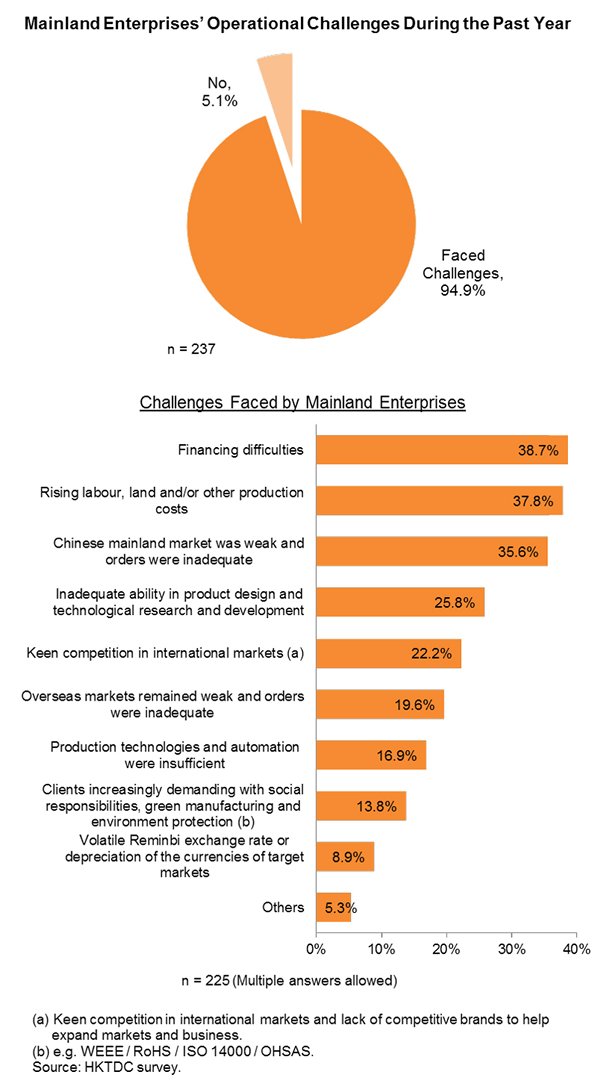
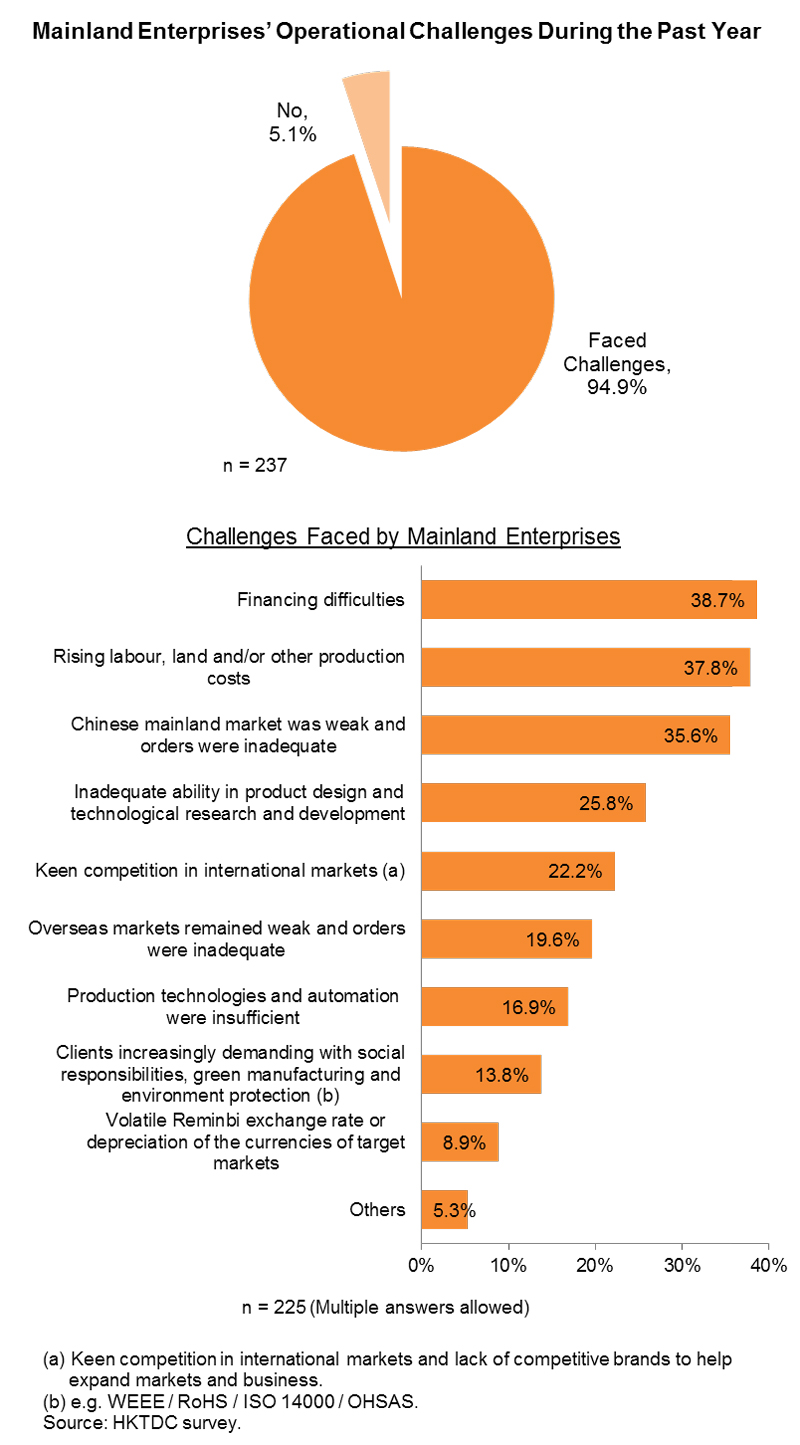
Of the enterprises surveyed, 96% said they had come across different types of challenges in their operations in the past year. The three main problems they faced were (1) difficulties in financing; (2) rising labour, land and/or other production costs; and (3) a weak mainland market and inadequate orders. These accounted for 39%, 38% and 36%, respectively, of the enterprises surveyed.
In addition, 26% of the enterprises indicated they were worried about their lack of capability in product design and technological R&D; 22% pointed out that, in the face of keen competition in the international markets, they lacked competitive brands to help develop international markets and business; and 20% said they were affected by weak international markets and inadequate orders. By comparison, relatively few enterprises (only 9% of those surveyed) said the volatile renminbi exchange rate, including depreciation of the currencies in their target markets, was a hindrance.
-
Adjusting Operating Strategy
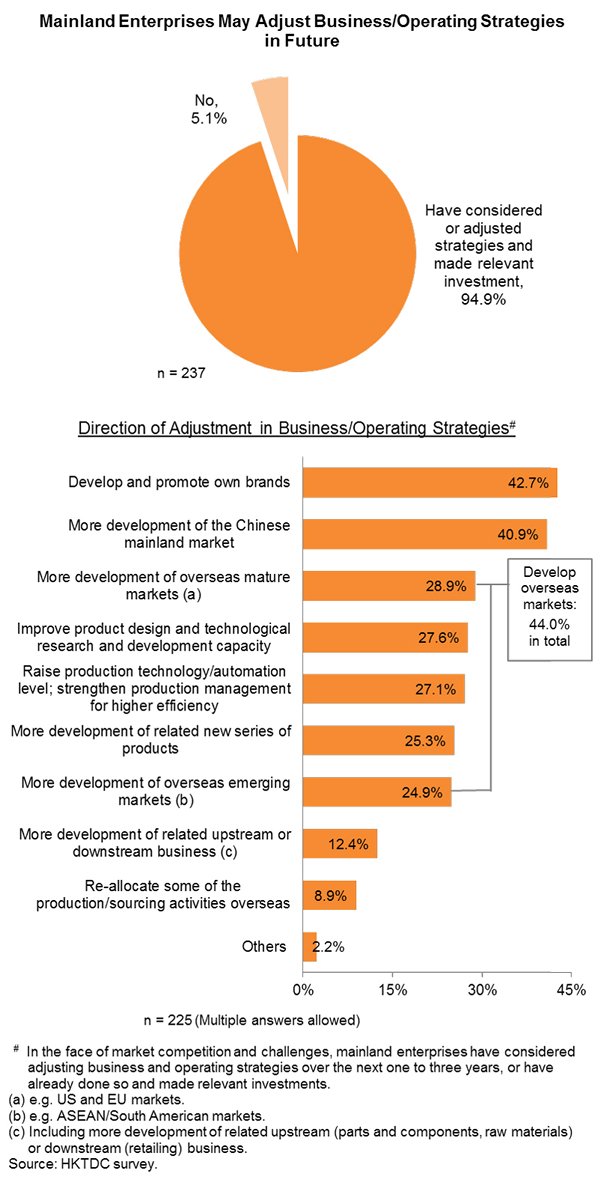
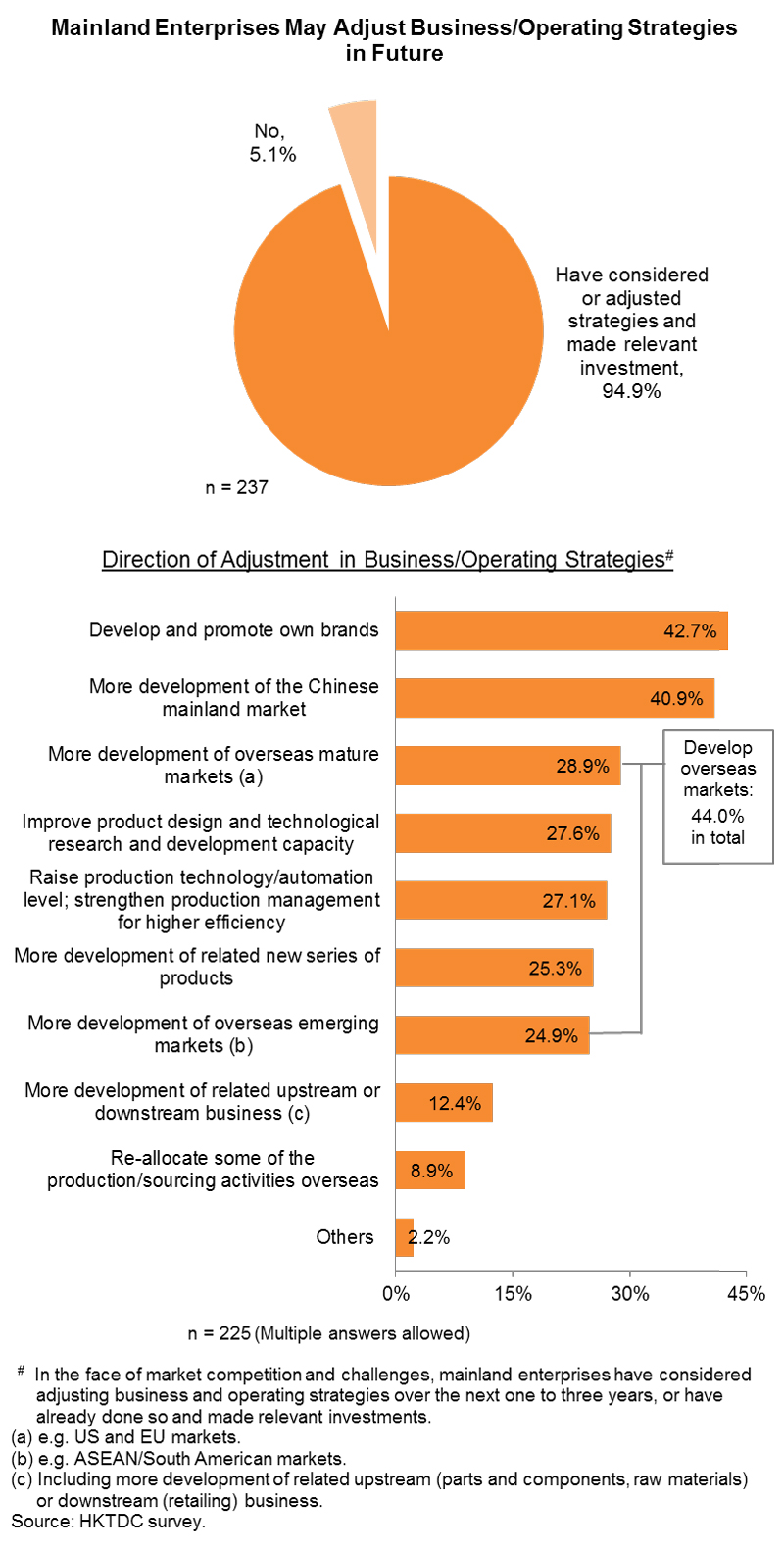
Confronted with market competition and other challenges, 95% of the enterprises surveyed said they had already adjusted their business and operating strategies and made relevant investment, or would consider doing so in the next one to three years. As to the direction of adjustments in business and operating strategies, most enterprises indicated they would do more to develop overseas markets, accounting for 44% of all enterprises surveyed (including 29% saying they would do more to develop overseas mature markets and 25% saying they would do more to develop overseas emerging markets). In addition, 43% said they would develop/strengthen their own-brand business, while 41% said they would like to do more to develop the Chinese mainland market.
Compared with the results of previous surveys, enterprises in western China appeared to be as keen as their PRD counterparts in wanting to develop both overseas markets and the Chinese mainland market. In comparison, enterprises in the YRD and Bohai Rim regions were more concerned with bringing in foreign advantages to develop the mainland market, showing that the development strategies of enterprises in different regions were not all the same.
-
Intention of Tapping Belt and Road Opportunities
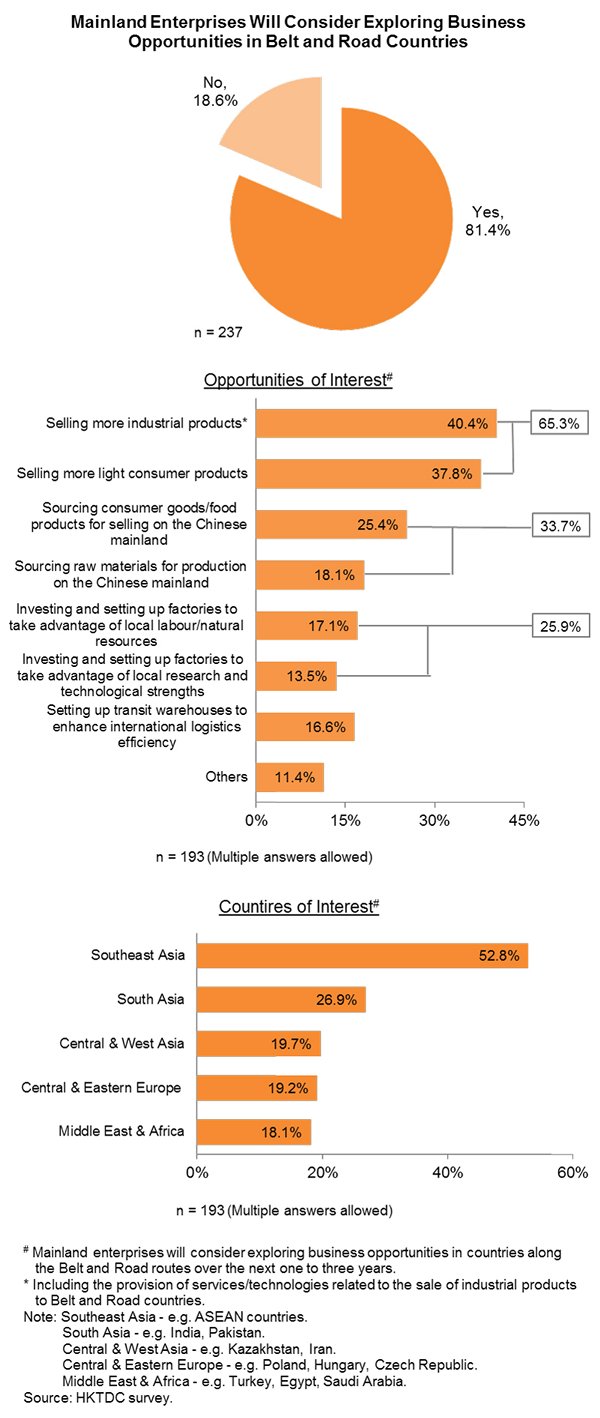
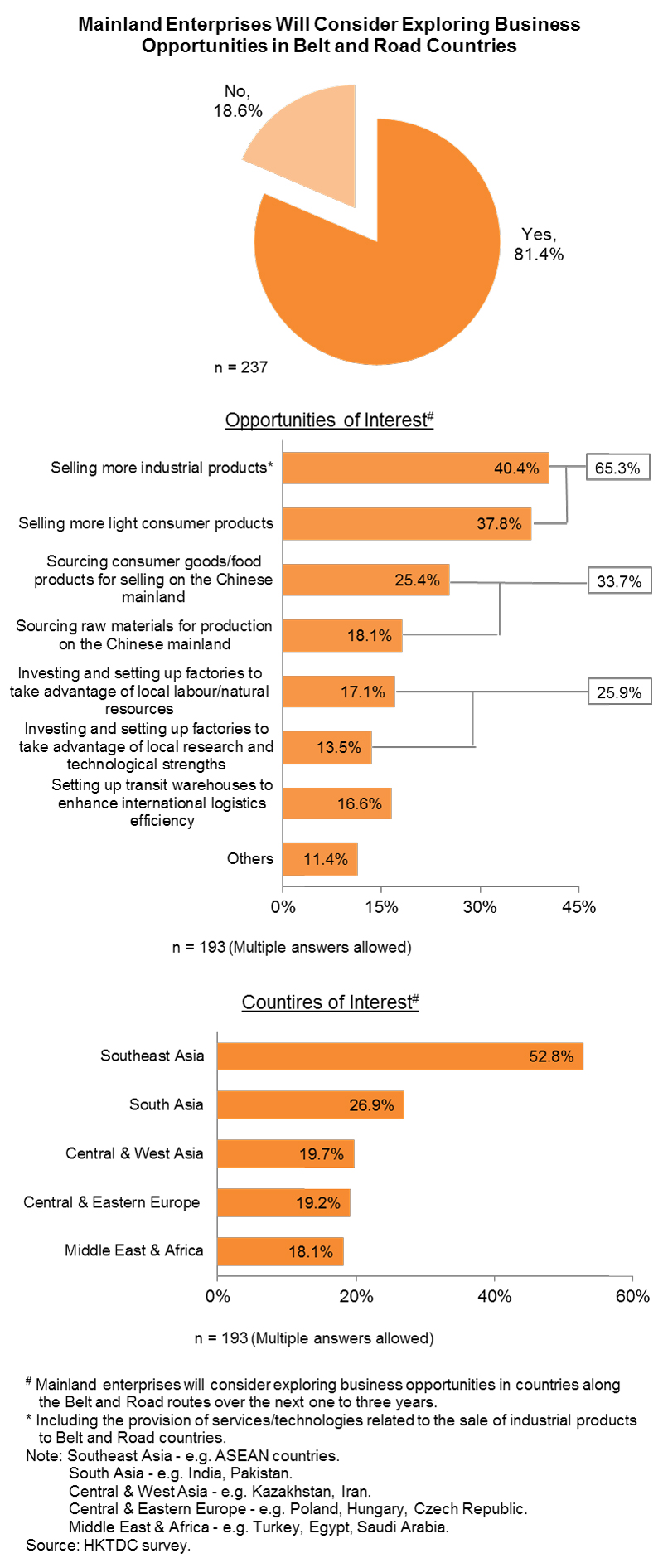
In the current survey, enterprises were also asked about their opinion on Belt and Road opportunities. Among all the enterprises surveyed, 81% said they would consider tapping opportunities in countries along Belt and Road routes in the next one to three years. Among these enterprises, most (65%) said they would like to sell more industrial products and light consumer goods to Belt and Road markets. A smaller proportion of the enterprises (34%) would like to go to Belt and Road countries to carry out sourcing activities, including the sourcing of consumer goods/food products to sell in the mainland market or the sourcing of raw materials for production on the mainland. Some enterprises (26%) would like to invest and set up factories in Belt and Road countries. In addition, 17% would like to set up transit warehouses in overseas locations including Belt and Road countries to enhance international logistics efficiency.
On the other hand, more than half of the enterprises (53%) said they would be most interested in going to Southeast Asia, such as ASEAN countries, to tap Belt and Road opportunities. Other locations of interest included South Asia (27%), Central and West Asia (20%), Central and Eastern Europe (19%) and the Middle East and Africa (18%).
-
Keen Demand for Hong Kong and Overseas Services
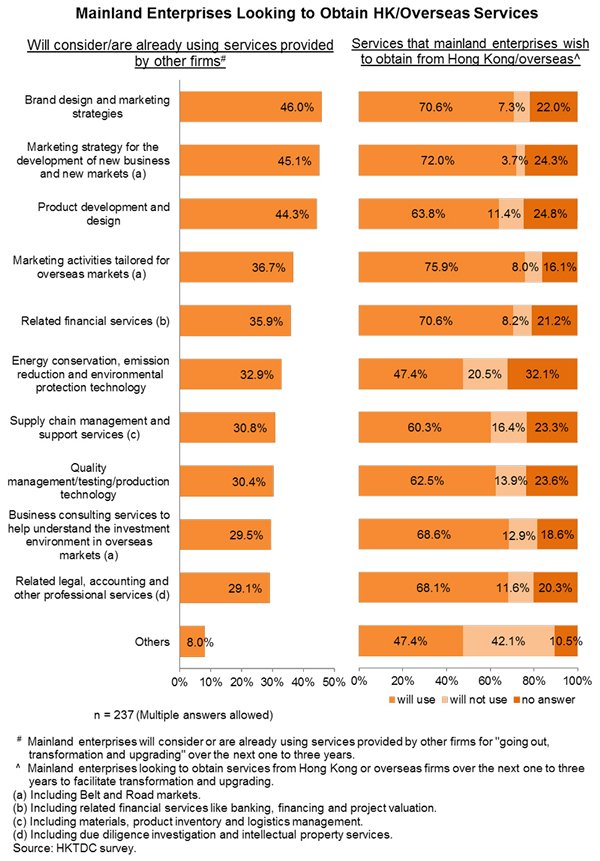
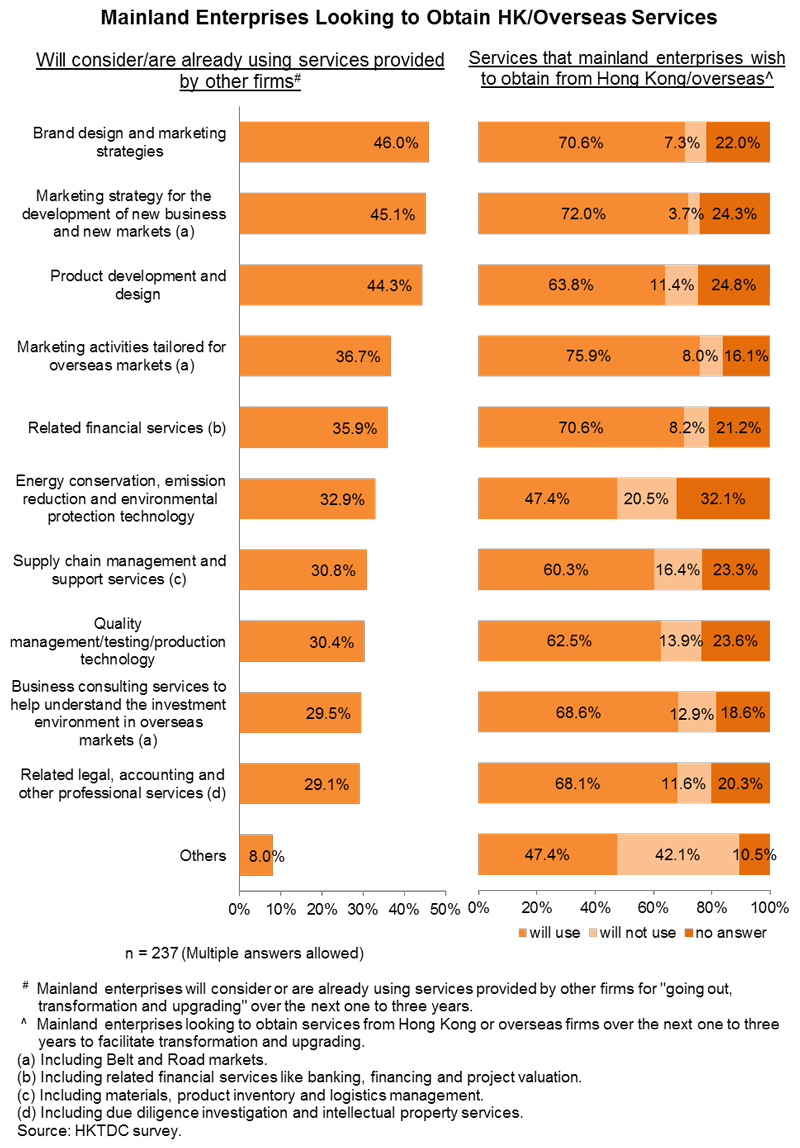
Facing all types of business and operating challenges and aiming to advance transformation and upgrading, the enterprises surveyed were keen for various types of professional services. In line with the results of HKTDC’s surveys conducted previously in the PRD, YRD and Bohai Rim regions, the three main types of services most sought by western China enterprises were: (1) brand design and promotion strategy; (2) marketing strategy for the development of new business and new markets (including the development of Belt and Road markets); and (3) product development and design. These accounted for 46%, 45% and 44%, respectively, of the enterprises surveyed. This shows that, irrespective of the direction of transformation and upgrading of mainland enterprises or the focus of their operating strategies, the professional services needs of enterprises from different regions are more or less the same.
Other services western China enterprises need to seek from the outside included: marketing activities tailored to overseas markets, including Belt and Road markets (37%); financial services such as banking, financing and project valuation (36%); services in energy conservation, emission reduction and environmental protection technology (33%); and supply chain management and support services, such as materials and product inventory and logistics management (31%). Of those enterprises surveyed requiring these services, more than 60% indicated they would use the services provided by Hong Kong or overseas suppliers, with the exception of energy conservation and environmental protection technology.
-
“Going out” To Seek Business Partners
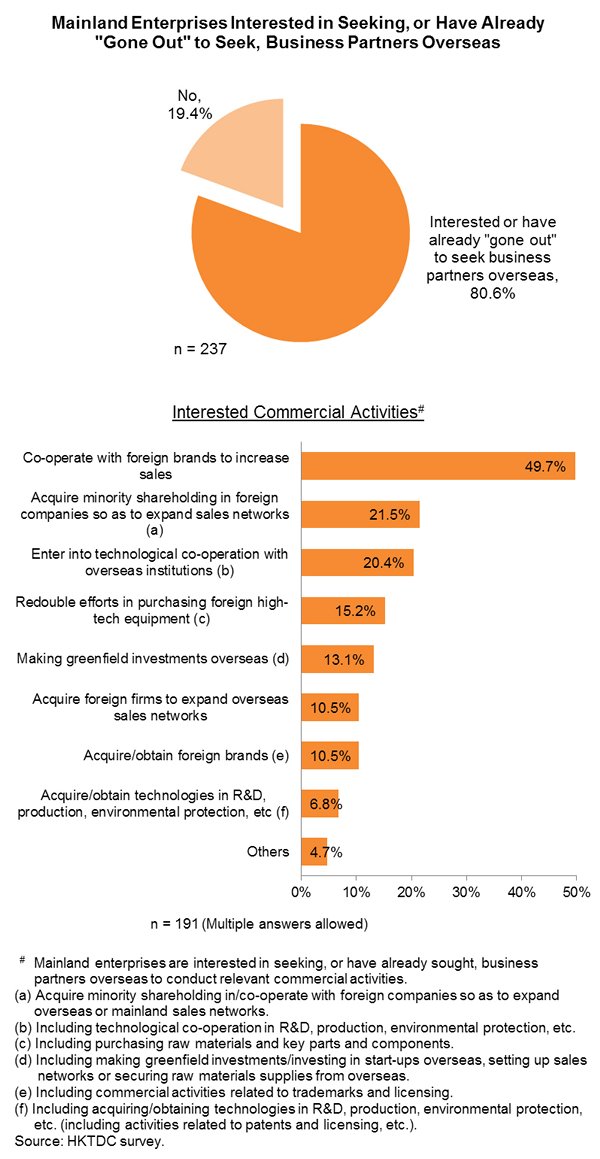
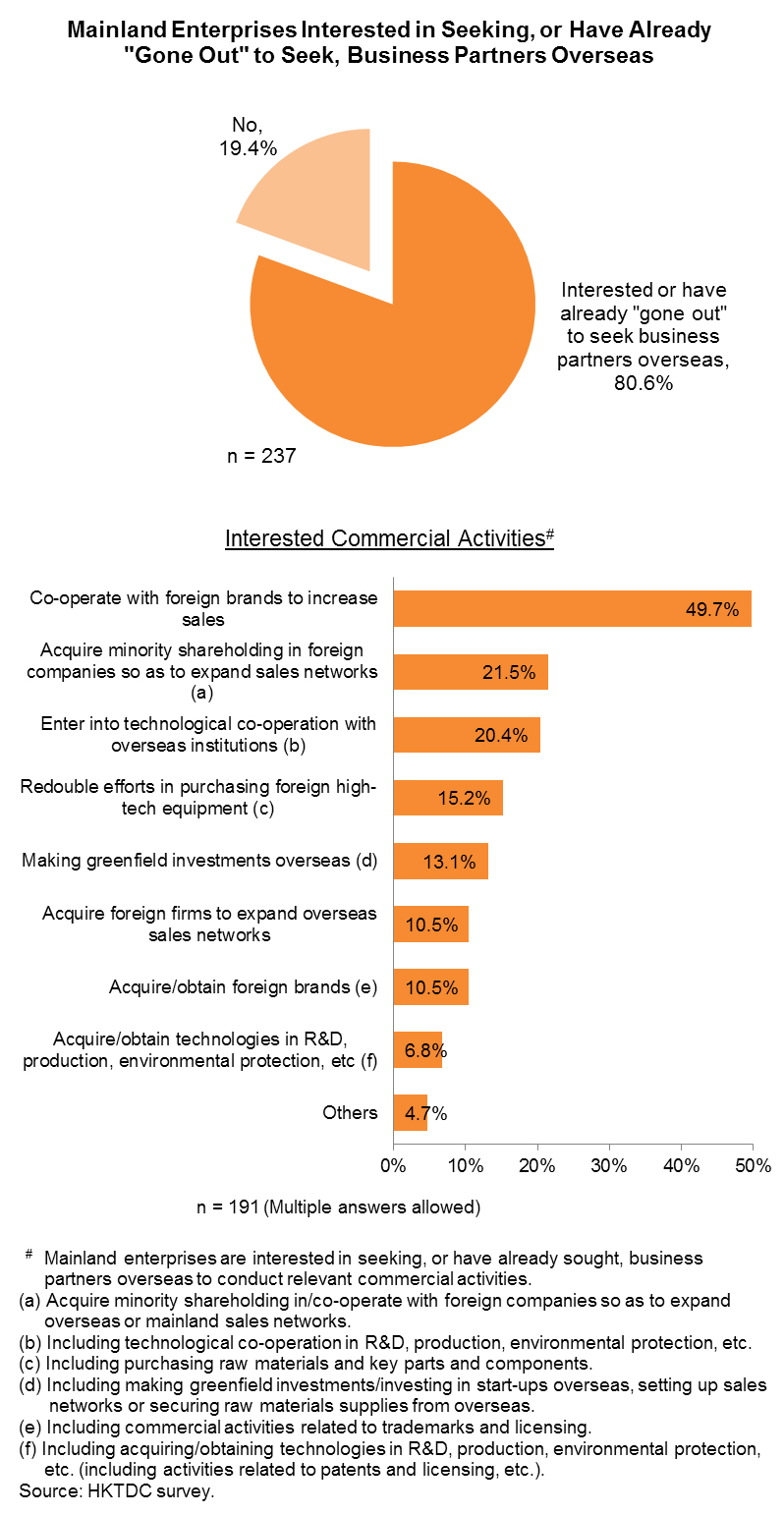
Meanwhile, 81% of the enterprises surveyed expressed an interest in seeking, or had already “gone out” to seek, business partners overseas. The majority of the enterprises (about 50%) said they were interested in co-operating with foreign brands to increase sales. This is similar to the results from the surveys previously conducted in the PRD, YRD and Bohai Rim regions. (Coincidentally, enterprises from different regions considered brand co-operation as their top reason for seeking foreign partners.)
In addition, 22% of the western China enterprises surveyed said they would like to acquire minority equity stakes in foreign companies to expand their overseas/mainland sales networks, 20% would like to enter into technological co-operation with overseas institutions, while 15% would like to redouble their efforts in purchasing high-tech equipment, raw materials and key parts and components from overseas.
-
Hong Kong as the Preferred Services Platform for the Mainland’s “Going Out”
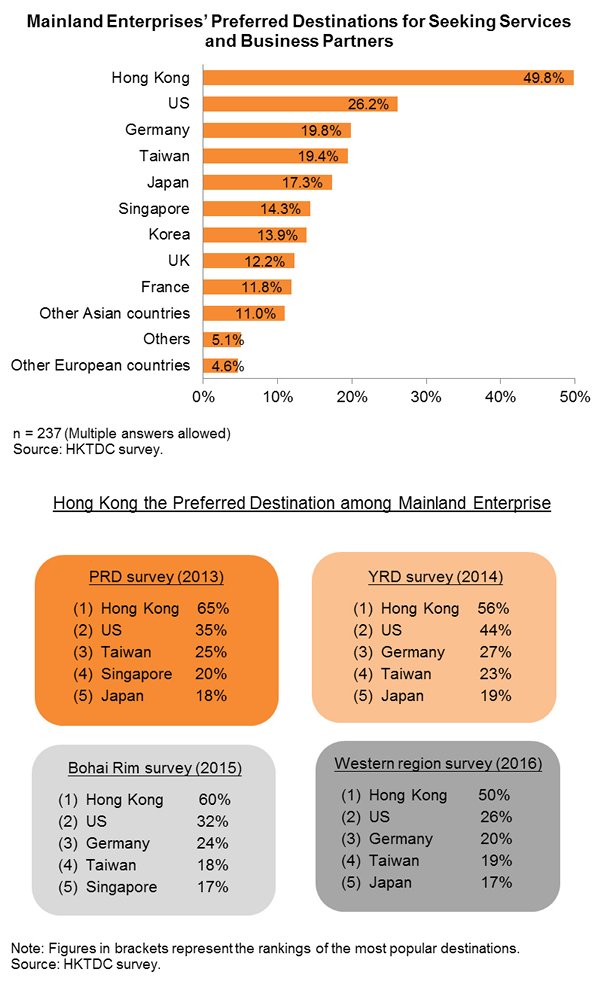
About half (50%) of the enterprises surveyed indicated they would like to go to Hong Kong to seek the professional services mentioned above and/or to look for foreign business partners. Although this proportion is slightly lower than in the previous three surveys, Hong Kong remains the “going out” platform preferred by most western China enterprises, and attracts the preference of a much higher proportion of enterprises surveyed than other locations such as the US, Germany, Taiwan, Japan and Singapore, which account for 26%, 20%, 19%, 17% and 14%, respectively, of the enterprises surveyed. It is therefore apparent that, irrespective of the location of a mainland enterprise or whether it is from the PRD, YRD, Bohai Rim or China’s western region, Hong Kong is the preferred services platform for “going out” from the mainland.
[1] The 13th Five-Year Plan refers to the Outline of the 13th Five-Year Plan for National Economic and Social Development of the People’s Republic of China adopted at the fourth session of the 12th National People’s Congress in March 2016.
[2] World Investment Report 2016, UNCTAD.
[3] Source: 2014 Statistical Bulletin of China’s Outward Foreign Direct Investment.
[4] For the research topics and results of the surveys conducted respectively in the PRD, YRD and Bohai Rim, please see Guangdong: Hong Kong Service Opportunities Amid China’s “Going Out” Strategy published in December 2013; China’s “Going Out” Initiative: Jiangsu/YRD Demand for Professional Services published in September 2014; and China’s “Going Out” Initiatives: Professional Services Demand in Bohai published in September 2015.
[5] The HKTDC held a SmartHK Expo fair at Chengdu Century City New International Exhibition & Convention Centre on 12-13 May 2016. During the CEO Forum and four thematic seminar sessions related to “going out” to tap Belt and Road opportunities, HKTDC Research conducted a questionnaire survey on the attendees. Of the 469 questionnaires collected afterwards, 237 were deemed to be effective ones filled out by mainland enterprises (including trading companies, manufacturers and service suppliers).
[6] The options in the current survey are slightly different from those in the three previous surveys, so only some of the results can be compared.
| Content provided by |
|
Editor's picks
Trending articles
2 Aug 2016
‘One Belt and One Road’: Connecting China and the world
By Tian Jinchen (Director of the Western Development Department of China’s National Development and Reform Commission)
China is leading the effort to create the world’s largest economic platform. More than 2,000 years ago, China’s imperial envoy Zhang Qian helped to establish the Silk Road, a network of trade routes that linked China to Central Asia and the Arab world. The name came from one of China’s most important exports—silk. And the road itself influenced the development of the entire region for hundreds of years.
In 2013, China’s president, Xi Jinping, proposed establishing a modern equivalent, creating a network of railways, roads, pipelines, and utility grids that would link China and Central Asia, West Asia, and parts of South Asia. This initiative, One Belt and One Road (OBOR), comprises more than physical connections. It aims to create the world’s largest platform for economic cooperation, including policy coordination, trade and financing collaboration, and social and cultural cooperation. Through open discussion, OBOR can create benefits for everyone.
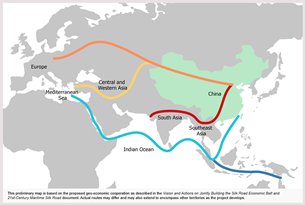
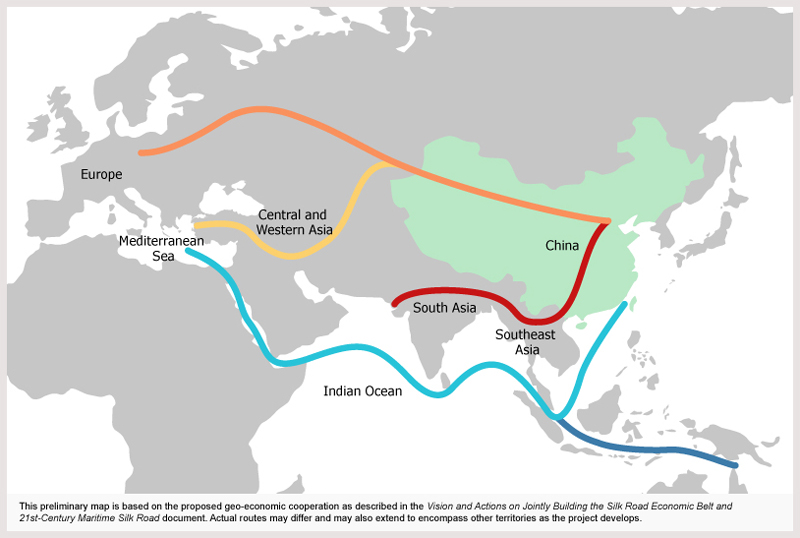
The State Council authorized an OBOR action plan in 2015 with two main components: the Silk Road Economic Belt and the 21st Century Maritime Silk Road (exhibit included in original). The Silk Road Economic Belt is envisioned as three routes connecting China to Europe (via Central Asia), the Persian Gulf, the Mediterranean (through West Asia), and the Indian Ocean (via South Asia). The 21st Century Maritime Silk Road is planned to create connections among regional waterways. More than 60 countries, with a combined GDP of $21 trillion, have expressed interest in participating in the OBOR action plan.
The effort has already made some practical achievements. China has signed bilateral cooperation agreements related to the project with Hungary, Mongolia, Russia, Tajikistan, and Turkey. A number of projects are under way, including a train connection between eastern China and Iran that may be expanded to Europe. There are also new rail links with Laos and Thailand and high-speed-rail projects in Indonesia. China’s Ningbo Shipping Exchange is collaborating with the Baltic Exchange on a container index of rates between China and the Middle East, the Mediterranean, and Europe. More than 200 enterprises have signed cooperation agreements for projects along OBOR’s routes. In 2014, China established the $40 billion Silk Road Fund to finance these initiatives, and it has made investments in several key projects. These projects are just the start as OBOR enters a new stage of more detailed and comprehensive development. This work will see the development of six major economic corridors, including the New Eurasian Land Bridge, China–Mongolia–Russia, China–Central Asia–Western Asia, Indo-China Peninsula, China–Pakistan, and Bangladesh–China–India–Myanmar. These corridors will be the sites of energy and industrial clusters and will be created through the use of rail, roads, waterways, air, pipelines, and information highways. By both connecting and enhancing the productivity of countries along the new Silk Road, China hopes the benefits of cooperation can be shared and that the circle of friendship will be strengthened and expanded.
China seeks to take the interests of all parties into account so as to generate mutual benefits, including environmental management and closer cultural exchanges. We wish to give full play to the comparative advantages of each country and promote all-around practical cooperation.
This article was originally published by McKinsey & Company’s Global Infrastructure Initiative, www.globalinfrastructureinitiative.com.
©McKinsey & Company 2016 All rights reserved. Reprinted by permission.
Please click here for the full article.
Editor's picks
Trending articles
4 Aug 2016
Navigating the New Silk Road - Executive Summary from the inaugural Belt and Road Summit
This Executive Summary is jointly produced by the Hong Kong Trade Development Council and McKinsey & Company.
In 2013, China’s President Xi Jinping outlined sweeping proposals aimed at reviving ancient trading routes between Asia, Europe and beyond, through the creation of an overland “Silk Road economic belt” and a “21st century maritime Silk Road.” President Xi’s “Belt and Road Initiative,” perhaps the most ambitious development programme put forward by China, would encompass some 65 countries in Asia, Europe and Africa, which collectively include 4.4 billion people and claim a gross domestic product of US$21 trillion.
As a key driver of this plan, the Chinese government has agreed to underwrite the development of infrastructure in Belt and Road countries through multilateral institutions and policy banks as well as China’s state-owned firms. In 2014, China established three new financial entities, two with international support: the Asian Infrastructure Investment Bank (AIIB), which includes 57 founding members and has a registered capital of US$100 billion; the New Development Bank, also known as the BRICS bank, and which includes Brazil, Russia, India, China and South Africa, with an initial capital of US$50 billion; and the Silk Road Fund, financed primarily from China’s foreign reserves, with an initial capital of US$40 billion. Furthermore, China’s two policy banks, the China Development Bank and the China Export-Import Bank, are expected to provide substantial funding for Belt and Road-related projects, as are large state-owned lenders such as the Bank of China.
In spite of these resources however, the vast scope of the Belt and Road Initiative leaves ample opportunity for participation by other governments and the private sector. To explore these opportunities, the first ever “Belt and Road Summit” was held in Hong Kong on 18 May 2016, organised by the Government of the Hong Kong Special Administrative Region and supported by China’s Ministry of Foreign Affairs, the National Development and Reform Commission, the Ministry of Commerce and the People’s Bank of China, in association with the Hong Kong Trade Development Council. The honourable presence of Mr Zhang Dejiang, Chairman of the Standing Committee of the National People’s Congress of China, together with the support of the four Chinese ministries, is the first official endorsement of Hong Kong’s position and roles in the Belt and Road Initiative.
This definitive event brought together more than 2,400 government officials, business leaders and experts from around and beyond the Belt and Road economies for a day of discussion, debate and business-matching. It demonstrated Hong Kong’s ability to host a truly international business forum to facilitate the Initiative.
Why Hong Kong? We believe that Hong Kong is the ideal springboard to begin your exploration of Belt and Road business opportunities. As Asia’s financial and logistics hub, Hong Kong has a history in international trade, a stable legal system
and free flow of capital, information and people – all of which make our city the ideal place to commercialise opportunities from the Initiative.
To help you navigate the Belt and Road, we are pleased to bring you this report, which highlights some of the Summit’s proceedings and identifies major themes and areas for further consideration. Beyond the event, you can also visit our resource portal www.beltandroad.hk for further information on the Belt and Road, insights from business leaders and policymakers and a database of relevant advisors who can help.
In ancient times, the Silk Road connected people, created new opportunities and advanced development of nations through trade, commerce and cultural exchange. Likewise, we hope the Belt and Road Initiative will do all these and more. Beginning with the Belt and Road Summit, we invite you to join us on this momentous journey together for many decades to come.
Vincent H S Lo, GBS, JP
Chairman
Hong Kong Trade Development Council
Please click to read full report.
Editor's picks
Trending articles
5 Aug 2016
China's One Belt One Road Opportunities for Australian Industry
By Australia-China One Belt One Road Initiative (ACOBORI)
This report presents a practical outline of China’s new Belt and Road Initiative (otherwise known as One Belt One Road) and the complementary role government and business can play in its implementation. The messages contained within this report are intended to provide representatives of Australia’s industries and professional services with a better understanding of current Belt and Road projects. As well as provoke a level of enquiry and consideration about the breadth and depth of capability that Australia could contribute to the implementation of the Belt and Road Initiative.
The Belt and Road Initiative aspires to increase regional cooperation and economic development with countries along the identified Silk Road routes. Beyond this geographical area, China views the Initiative as an inclusive framework, where participation will not be limited to a particular country or region, but rather offer a global model for international engagement.
Therefore, if appropriately curated and understood by both Australia and China, there will be avenues for Australian businesses to take part and benefit from the implementation of the Initiative – specifically:
1. Australian businesses could use the framework of the Initiative to attract Chinese partners in major Australian based projects (which may also involve commonwealth and state government interaction/regulatory compliance);
2. Australian businesses could use the framework of the Initiative to partner with Chinese enterprises in projects beyond Australia – both in China and in Belt and Road countries.
To participate however Australian industries and professions need to further capitalise on a strong trading relationship with China. This requires not only to reinforce the strengths of traditional trading sectors, but also to use the scope of the Initiative to identify other industry sectors where Australian businesses can bring comparative or competitive advantage…
With the link to download this report, you can use www.australiachinaobor.org.au. The current copy you have is a partial report, people can follow the link to our website to request full copy or even hard copy of this report to be posted to them.
Please click here for the full report.
Editor's picks
Trending articles
"Going Out" to Capture "Belt and Road" Opportunities (Expert Opinion 4): Cross-Border Financing Serving Outbound Investment
As an important business platform of the Asia-Pacific region, Hong Kong boasts many advantages, including a sound legal system, free movement of funds and information, and all kinds of legal/accounting and other professional services. Conrad Tsang, Chairman of the PRC Committee of the Hong Kong Venture Capital and Private Equity Association (HKVCA), pointed out that mainland companies may absorb external capital through Hong Kong for their overseas projects and other operations when investing in countries along the Belt and Road. Leveraging Hong Kong's strengths as regional headquarters, they may also make use of the territory's efficient business environment to coordinate investments in the mainland, Asia and other Belt and Road markets and boost the efficiency of "going out" as a whole.
Financing Overseas Investment Projects
In an interview with the HKTDC Research, Conrad Tsang said: "Unlike startups that need the support of seed or angel funds, mainland companies planning to 'go out' and invest abroad have grown to a considerable scale and have good assets and cash flow. This notwithstanding, most of them still need financing for their overseas projects and need to seek sufficient funds to support the development of these projects.
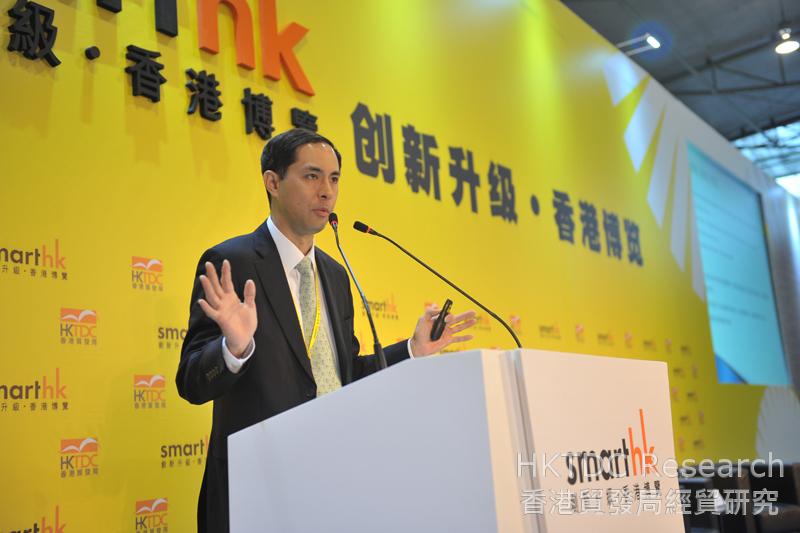
"Hong Kong's low tax rate and relatively simple tax system, well-developed financial infrastructure and efficient communications networks have attracted many venture capital and private equity funds to set up offices in the territory. Many of these are managing the funds of local investors, but a good part of them have funds from all over the world.
“On the one hand, they make use of Hong Kong networks to develop mainland-related investment projects, on the other hand, they also take advantage of Hong Kong's position as their regional headquarters to seek investment opportunities and manage investment projects in the Asia-Pacific region. Their business covers Southeast Asian countries like Vietnam, Malaysia and Thailand, Central Asia and even Russia and other countries along the Belt and Road. With China 'going out' to expand business with countries along the Belt and Road, there is plenty of room for cooperation between Hong Kong's venture capital and private equity firms and China's 'going out' enterprises."
Hong Kong is an international financial centre, with a low tax rate, convenient business environment and other advantages. Geographically it lies next to the rapidly developing Asian region as well as mainland China, which has already become a major world economy.
As such, it is attracting international venture capital and private equity firms eyeing opportunities in the Asia-Pacific markets to shift their regional headquarters to the territory. They make use of Hong Kong's information resources and networks to find investment opportunities in the mainland, Asia and even countries along the Belt and Road and engage in fund raising and other financing activities. They also make use of Hong Kong's professional services to handle accounting, contract, legal and other matters, manage their business presence in the mainland and other regions, and secure and conclude investment deals locally.
Injecting International Elements in Going Out Enterprises
Tsang believes that Hong Kong is attractive in part due to its freedom from some of the business obstacles encountered elsewhere. He said: "Mainland companies often need foreign currency capital to finance their operations when developing business abroad, including establishing sales networks, carrying out direct investment, and engaging in purchases and all kinds of acquisitions. At present, they are still subject to many restrictions in trying to raise capital for overseas projects through domestic channels.
“Through Hong Kong's business platform and its advantage in the movement of capital, mainland companies can effectively overcome investment and financing hurdles in their overseas ventures. In fact, Hong Kong's venture capital and private equity investors can not only help in equity funding but can also inject international elements into mainland companies. Through their international corporate structure in Hong Kong, they can carry out cost-effective equity and debt financing for outbound investment projects and support the development and operation of these projects.
“Investors from all over the world converge in Hong Kong and venture capital and private equity firms with footholds in Hong Kong have become important clusters of investors in the Asia-Pacific region. They can effectively assist ‘going out’ mainland companies investing in projects along the Belt and Road.”
HKVCA currently has over 340 corporate members, including 190 private equity firms, and manages a total of US$1 trillion in assets. These firms are engaged in venture, growth, buyout and other funds in the Asia-Pacific region.[1] A total of US$67 billion in private equity funds were raised in Asia last year, about 18% of which were gathered in Hong Kong. There were 354 private equity entities with headquarters in Hong Kong as of the end of 2015.[2]
[For examples of how Hong Kong investors can help mainland companies in "going out", please see: “Going Out” to Capture “Belt and Road” Opportunities (Expert Opinion 5): A Co-investment Example of Going Global]
[1] Source: HKVCA.
[2] Source: Asian Venture Capital Journal/data quoted by the Hong Kong SAR government.
| Content provided by |
|
Editor's picks
Trending articles
9 Aug 2016
Infrastructure Financing Trends
By International Finance Corporation, World Bank Group
What are the Current Trends in Emerging Market Infrastructure Spending?
Emerging markets need twice the infrastructure investment they now receive. East Asia has the greatest needs, while Africa’s requirements are large in comparison to its economic size; power generation accounts for more than half of needed investment. There is great potential for increasing participation by institutional investors in developing-country infrastructure: Insurance companies, asset managers, pension funds and sovereign wealth funds are increasingly aware of the manifold benefits that infrastructure investments offer.
Emerging markets can absorb an estimated $2 trillion per year in infrastructure spending, about half of which currently goes unmet. And the gap will only grow, as infrastructure investment needs in emerging economies are expected to double annually over the next decade.
Government budgets are the biggest source of funds, accounting for about three of every four infrastructure dollars, while the private sector provides the rest. Yet in the aftermath of the financial crisis, governments have seen their fiscal deficits grow and their budgets shrink, increasing the need for private funding. However, most private funding flows to upper middle-income countries.
Going forward, East Asia including China will require the majority of infrastructure investment; Sub-Saharan Africa’s needs are substantial relative to the size of the region’s economies. In terms of sectors [1], electricity will require over half of all infrastructure spending. That includes power generation, capacity, and transmission and distribution networks. And preparation costs, including design and arranging financial support, are not insignificant—they can constitute up to 10 percent of overall project costs.
Debt represents about three-quarters of total private financing for infrastructure, with loans about 1.5 times the size of bonds. Before 2008, international loans had been the main infrastructure funding source. Since then international lending has slowed and local loans and bonds have filled the gap. International instruments rebounded in 2013, though primarily due to a few large transactions in limited sectors in Mexico, China, and Brazil.
Private Participation
Private participation in emerging-market infrastructure hit a high in 2012. The Latin America/Caribbean region was the largest recipient, while South Asia and East and Central Asia have tended to be high volume destinations as well. At a country level there is a concentration in the BRICs—Brazil, Russia, India, and China—plus Turkey and Mexico. Between 2000 and 2013 some 38 percent of private flows went to Brazil and India. Still, despite the increase in private investment in infrastructure since 2008, most of the gains flowed to upper-middle income countries, while flows to lower-middle and low income countries fell by 37 percent and 68 percent, respectively, between 2007 and 2013. At a sector level, private investment is concentrated in the energy and information technology sectors.
Insitutional Investors
Insurance companies, asset managers, pension funds, and sovereign wealth funds are all attracted to infrastructure because it offers diversification potential and inflation and interest rate protection—and it contributes to public goals. As a result, and despite the current small allocation to infrastructure by these market participants, private infrastructure investments are increasingly attracting interest from institutional investors. In addition, more investors are entering the space via debt, co-investments and secondaries, and less through direct investment.
Please click here for the full report.
[1] Infrastructure sectors covered: energy, water and sanitation, transport, and telecom. Estimates were conducted using various sources, including PPIAF, Dealogic, and Project Finance Review. Source for spending data: Bhattacharya and Romani, “Meeting the Infrastructure Challenge, 2013.