









Chinese Mainland
By Vivienne Bath, The University of Sydney Law School
China’s changes to its inbound and outbound investment system, in addition to its programme of BIT (bilateral investment treaties) and FTA (free trade agreements) negotiations, are relevant to investments in and from OBOR countries, but are part of an on-going reform process that is not driven by the OBOR vision. The SPC and Chinese commentators recognise that investment in the OBOR will raise a number of legal issues for investors, but appear to be focused on improving China’s own legal system and its network of current and potential international treaties, primarily BITs and FTAs, as the primary method of dealing with disputes. However, it is clear that protection under China’s current network of BITs along the OBOR is by no means assured, due to the limited content of most of the treaties and potential issues in individual countries with a poor record in terms of rule of law.
Does China have – or should it have – a specific strategy in relation to investment protection agreements focused on the states along the OBOR, and if so what form should it take? In general, the individual countries with which China has negotiated and is currently negotiating FTAs are not states along the OBOR, although regional agreements and negotiations with ASEAN, the European Union and potentially a new Central Eurasian agreement may provide opportunities for strengthened investment agreement protections in some of those states. China’s current emphasis in negotiating agreements with countries along the OBOR seems to be on joint declarations for expanding cooperation and entering into comprehensive strategic partnerships rather than new BITs or investment agreements, although these may be the precursors to more formal state-to-state arrangements.
It is questionable whether China’s long-term interests and aims under the OBOR vision would be well-served by an aggressive programme of negotiating more rigorous investment agreements and attempting to enforce the rights of investors through investor-state arbitration. Indeed, despite an increase in ISDS cases, Chinese investors have been very cautious in relation to attempts to enforce their rights through these means.
This raises the question of the role of the Chinese government in both deal making and protecting the rights and interests of Chinese investors. The Vision Document and other policy documents relating to the OBOR certainly suggest that the Chinese government sees itself as playing an active role in planning and putting its weight behind the expansion outwards as contemplated in the OBOR vision. The provision of funding by Chinese owned and backed institutions,94 when combined with the on-going requirement that Chinese government approval be obtained for major acquisitions and investments and for investments in sensitive countries and investments, also indicate that the Chinese government will play an on-going regulatory role in OBOR investment. These investors may well assume that the Chinese government will continue to be closely involved in their operations and in the behind-the-scenes settlement of disputes relating to investments, particularly in states with a weak legal regime and a poor record in terms of investment disputes.
In summary, reforms to China’s current regulatory and funding regime both encourage outbound investment and support continued government involvement in both the establishment and operation of overseas investments. Due to China’s assertive policy of negotiating BITs and, more recently, FTAs, there is a network of treaties with states along the OBOR designed to promote and protect investment. However, investment protection for Chinese investors still presents challenges, due both to the restricted protections offered by the earlier treaties and the risk associated with a significant number of the host countries along the OBOR. It can therefore be anticipated that the Chinese government will play a continuing role both in encouraging and funding investment along the OBOR and in assisting with disputes.
(Lutz-Christian Wolff and Xi Chao (eds), Legal Dimensions of China’s Belt and Road Initiative, Wolters Kluwer Hong Kong Ltd, 2016, pp165-218.)
Please click to read the full report.
Editor's picks
Trending articles
Belt and Road investment priorities and need to boost northern states fuels expansion of Special Economic Zones.
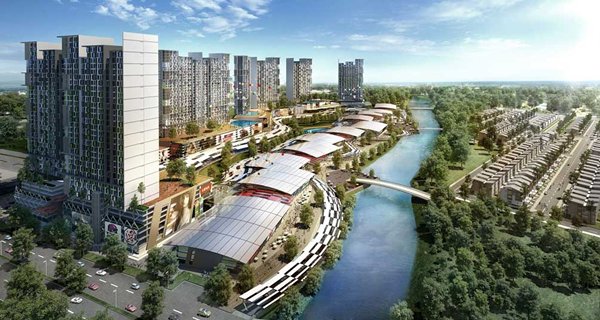
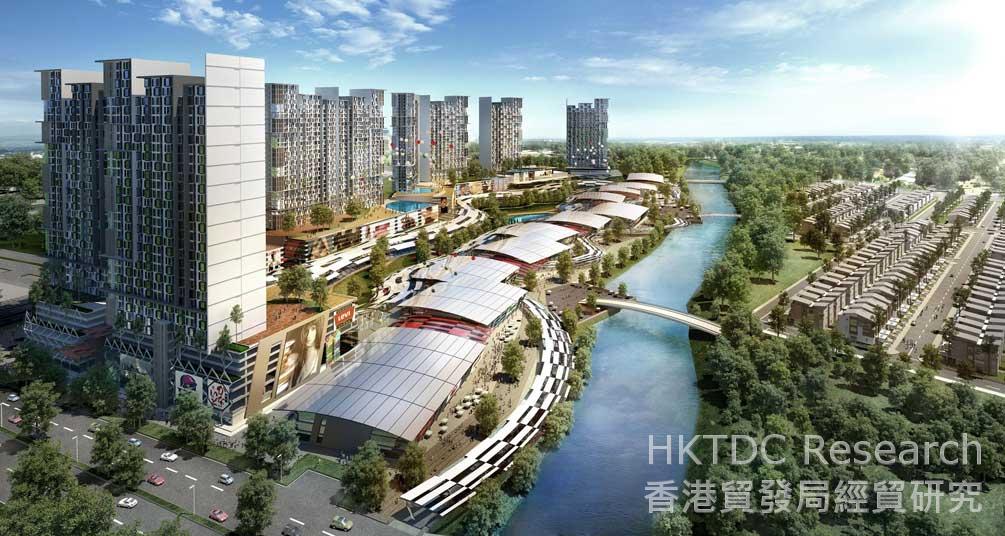
The development of Malaysia's growing number of Special Economic Zones (SEZs) is being shaped by several investment requirements related to the Belt and Road Initiative, as well as by a change in priorities on the part of the country's government.
As the Malaysian government looks to diversify the country's economy, it faces three key challenges, all of which have implications for the SEZ sector. Firstly, it is keen to rebalance economic growth across the country while looking to nurture innovation in the digital-technology sector. On top of that, it is determined to capitalise on the new opportunities emerging from the ASEAN integration programme.
With inward investment focussed almost exclusively on Kuala Lumpur and the southern states of Selangor and Johor, promoting interest in the country's northern regions is seen as a vital part of any move to rebalance the economic map. The key project here is the development of the East Coast Economic Region (ECER), an initiative that was initially green-lit in 2008.
As envisaged, the ECER spans the northern states of Kelantan and Terengganu, as well as Pahang in the east and Mersing in southeastern Johor. It extends across 51% of Peninsular Malaysia, and focuses primarily on the country's traditional strengths in manufacturing, agribusiness, oil, gas, petrochemicals and tourism.
As of May 2016, some 38.5% (US$3.1 billion) of all inbound investment in the ECER had been sourced from Chinese investors. The majority of this funding has been channelled into the Malaysia-China Kuantan Industrial Park. Set in the eastern coastal state of Pahang, this was the first industrial park in the country to be jointly developed by Malaysia and China. Among the more recent investments has been the funding of a $133 million aluminium component manufacturing facility by the Guangxi Investment Group.
In order to create much-needed jobs, however, the northern states require considerably more investment. In line with this, back in 2016, the Terengganu state government lobbied to launch a new SEZ extending across Besut, Setiu, Kuala Nerus, Kuala Terengganu and Marang. The proposed 729,400-hectare development is said to have been modelled on the Shenzhen SEZ in southern China. At present, it is planned that the initial phase will utilise some 221,000 hectares, with the second phase requiring an additional 508,400 hectares.
With improving the country's digital infrastructure one of the key elements in the government's plan to encourage multinationals and SMEs to create new jobs, Malaysia launched the world's first Digital Free Trade Zone (DFTZ) in March this year. The ceremony to mark the formal adoption of the scheme was attended by Najib Razak, the Malaysian Prime Minister, and Jack Ma, the Executive Chairman of Alibaba Group and an adviser on the development of Malaysia's digital economy.
Once completed, the DFTZ will boast an e-fulfilment hub at the Kuala Lumpur International Airport (KLIA) Aeropolis, a 405-hectare development zone focussed on air cargo and logistics as well as the development of an aerospace/aviation cluster. The initial phase will roll out later this year, with Alibaba, Cainiao, Lazada and POS Malaysia already signed up as tenants. The facility will also be the launch site in 2019 for Alibaba's Electronic World Trade Platform – part of the company's bid to streamline global trade arrangements for SMEs.
The second phase of the DFTZ will see the establishment of the Kuala Lumpur Internet City (KLIC). Developed by Catcha Group, the Malaysian/Singaporean internet giant, it is hoped that KLIC will emerge as the key digital hub for global or local internet-related companies looking to target Southeast Asia.
The project will be housed within Bandar Malaysia, a commercial and residential zone located on the site of a former air-force base. The site is being developed by a consortium led by the China Railway Engineering Corp.
In other developments, Bandar Utama, on the outskirts of the capital, will be the terminal for the Kuala Lumpur-Singapore high-speed rail link, scheduled to begin operation in 2026. With a journey time of just 90 minutes, the link is expected to boost business and tourism traffic.
At present, stops are planned at Putrajaya, Seramban, Alor Gajah, Muar, Batu Pahat and Iskandar Puteri in Johor Bahru. All of these locations are intended to be promoted as investment hubs in the coming years, with Iskandar Puteri having something of a head start over the other designated sites.
Forming part of Iskandar Malaysia – the main southern development corridor in the state of Johor – Iskandar Puteri is a 2,217-square-metre SEZ. Established in 2006, it was envisaged as a world-class business, residential and entertainment hub, with its management keen to capitalise on its proximity to Singapore.
Among the businesses already operating within its precincts are Legoland Malaysia, Gleneagles Medini Hospital and Pinewood Iskandar Malaysia Studios. It is also the site of the Medini 'smart city', one of Malaysia's largest urban developments.
Within Medini, investors in six designated sectors – health and wellness, education, financial services, leisure and tourism, the creative industries, and logistics – can take advantage of a number of tax breaks and several other incentive packages. The site is expected to get a further boost in 2019 following the completion of a high-speed rail link to Singapore's Mass Rapid Transit rail system.
In addition to developing domestic SEZs, the country's Ministry of International Trade and Industry has announced that a number of Malaysian companies will be playing key roles in developing several SEZs in neighbouring Laos. These include Savan Park, a commercial and industrial hub jointly funded by the Laos government, and Savan Pacifica Development, a Malaysian consortium.
Among the other projects is the Dongphosy SEZ, a 70-hectare duty-free retail and residential zone intended to promote tourism, which is being jointly developed by Malaysia's UPL Lao and the Laos government. Malaysian companies are also involved in the development of an SEZ in Thakek, southern Laos.
Geoff de Freitas, Special Correspondent, Kuala Lumpur
Editor's picks
Trending articles
By Michael M. Du, School of Law, University of Surrey, UK
Abstract
With the launch of “One Belt, One Road” Initiative, China is injecting vitality into the ancient Silk Road. While China is seen to embrace it as the centrepiece of its economic strategy, the new Silk Road Initiative, if well implemented, is expected to bring forth the opportunity of economic prosperity for both China and the countries in the region. Against the backdrop of the complicated and volatile geopolitics in the mega-regions and the voracious needs for gigantic inputs of resources, etc., however, the operationality of the Initiative is in contrast with the grandiose discourse by the Chinese authorities. In particular, where China’s ultimate target is set to shape a new structure for global economic governance, its ability to lead vis-a-vis its targeted partners’ readiness to cooperate, among others, remain to be tested.
Implications for China
The SREB (Silk Road Economic Belt) / MSR (Maritime Silk Road) strategy is expected to feature prominently in China’s 13th Five-Year Plan, which will run from 2016 to 2020 and guide national economic and social development strategy throughout that period. Its immediate implications are as follows:
The strategy will secure the transport of oil and gas and other essential goods, and particularly access to the Central Asian energy resources needed to sustain China’s economy. The property and investment boom at home has now ended, leaving China with significant overcapacity in industry and construction, deflation and rising debt management problems. The implementation of the strategy can ease the entry of Chinese goods into regional markets, help make use of China’s enormous industrial overcapacity, thus offsetting the effects of a falling investment rate and rising overcapacity at home.
China has been tired of accumulating endless volumes of US Treasury and other government bonds, and now prefers more direct investment overseas to make a better use of its more than $4 trillion foreign exchange. Equally important, the SREB/MSR can improve internal economic integration between the country’s advanced coastal and the more backward western provinces. These are the strategy’s intermediary implications.
With respect to the long-term implications, by linking the economies of Central Asia with western China, China is expected to bring further development and stability to restive and relatively underdeveloped Xinjiang and Tibet regions and cuts off any potential support that Uygur dissident groups may seek from fellow Muslims in Central Asia. With the unfolding of the SREB/MSR strategy, China will be in a position to promote the global use of RMB which is likely to lead to the internationalization of RMB.
Implications for Partners
Needless to say, the SREB/MSR strategy will have its implications for the participating countries along the Belt and Road. Properly implemented, the SREB/MSR strategy will likely have an important effect on the region’s economic architecture—infrastructure development, patterns of regional trade and investment. However, this rests on their own perception of interests therein and the extent of cooperation they offered. It is not surprising if they argue SREB/MSR is too China-centric and that other participating states will reap only marginal benefits.
Implication for Global Governance
China has long expressed opposition to the dominance of the US and the dollar in the global financial institutions, most notably the International Monetary Fund and the World Bank. The SREB/MSR strategy is the upgraded version of China’s grand strategy of opening-up, as well as China’s strategy for globalization. Globalization has been so far mainly driven by the West. With the unfolding of the SREB/MSR strategy, non-Western countries are going to inject vitality.
The Chinese version of globalization needs to nurture shared interests, shared system and effective dispute settlement mechanism.
Another concern is that some Western officials also fear that a flood of Chinese development money will undermine governance standards at existing lending institutions like the World Bank, especially if China channels funds to its own companies, to politically motivated projects or to environmentally damaging ones.
An even deep concern beneath, which results from the distaste for the Chinese governance structure and state-led economic structure, is whether China will extend and deepen its global footprint without fundamental changes in political and economic philosophy.
Please click to read the full report.
Editor's picks
Trending articles
Guangxi has a strategic role to play in both the Belt and the Road. The autonomous region’s “four-dimensional support” development strategy includes further opening up to the east with emphasis on strengthening co-operation with Guangdong and Hong Kong, such as forging closer collaboration with Hong Kong’s professional services under the Closer Economic Partnership Arrangement’s (CEPA) early and pilot measures, and encouraging Hong Kong and foreign enterprises to participate in Guangxi’s construction projects in relation to the Belt and Road Initiative, including the China-ASEAN information port as well as transport and logistics facilities serving ASEAN countries. Meanwhile, Guangxi also hopes to co-operate with Hong Kong companies in advancing the two-way development of its enterprises in “going out” and “bringing in”.
Guangxi Spreads Across Both Belt and Road
The Belt and Road Initiative aims to achieve economic policy co-ordination of countries along its routes, and promote the orderly free flow of economic factors, the highly effective distribution of resources, and in-depth market integration. In addition to the large number of countries along the routes that will participate in building the Belt and Road, different provinces, regions and cities in China are also proactively involved in contributing to the initiative.
According to the Vision and Actions on Jointly Building the Silk Road Economic Belt and 21st Century Maritime Silk Road issued by the National Development and Reform Commission (NDRC) in March 2015, in advancing the Belt and Road Initiative, China is to give full play to the comparative advantages of various regions in the country. Vision and Actions pointed out that efforts would be made to “give full play to the unique advantages of Guangxi in regard to its geographical connection with ASEAN countries by land and by sea, expedite the pace of opening up and developing the Beibu Bay Economic Zone and Pearl River-Xijiang Economic Belt, build international passages serving the ASEAN region, create a new strategic stronghold for the opening-up and development of the southwest and central south regions, and develop an important gateway for the organic integration of the 21st Century Maritime Silk Road and the Silk Road Economic Belt”.
Vision and Actions set out three key directions for co-operation in building the Silk Road Economic Belt over land, namely China with Southeast Asia, South Asia, and the Indian Ocean. Meanwhile, the key direction for co-operation in developing the 21st Century Maritime Silk Road by sea is from China’s coastal ports to the Indian Ocean via the South Sea on to Europe, as well as from China’s coastal ports to the South Pacific Ocean via the South Sea.
In terms of geography, Guangxi shares land borders with Vietnam and is situated in a key geographical position in terms of China’s land connections with Southeast Asia. At the same time, the many ports in Guangxi’s Beibu Bay Economic Zone offer much room for the development of sea connections. As such, Guangxi plays a strategic role in both the Belt and the Road.[1]
Strengthening Transport Links Between Inland China and Southeast Asia
Under the development directions of the Belt and Road, Guangxi is expediting its pace of implementing the “four-dimensional support and four-alongs interaction” strategy aimed at strengthening opening up and co-operation internally and externally. The focus of “four-dimensional support” is giving emphasis to the key direction of opening up to the outside world.
First of all, efforts are to be made to further open up to and enhance co-operation with the south, positioning Guangxi as one of the mainland’s contact points in connecting to the Indochina Peninsula. Such efforts also aim to deepen co-operation with ASEAN countries along the Belt and Road, such as building an international co-operation platform and seeking international co-operation in production capacity. With regard to land passages, actions are to be taken to expedite construction of the East Line of the Pan-Asia Railway and highways running from Nanning through Hanoi and Phnom Penh to Bangkok.
Secondly, steps are to be taken to further open up to the east, with emphasis on enhancing collaboration with Guangdong, Hong Kong and Macau, including strengthening co-operation with Hong Kong’s professional services under the CEPA early and pilot measures. Thirdly, efforts are to be made to forge co-operation with important hinterland regions in the southwest and central south (including Yunnan, Guizhou, Sichuan, Chongqing, Hunan and Hubei), and to build passages and establish platforms for these two regions. And fourthly, steps are to be taken to further open up to and strengthen co-operation with developed countries, align with the advanced level of productivity of such developed countries and regions as the EU, Japan and Korea, as well as to further raise the level of internationalisation of Guangxi.
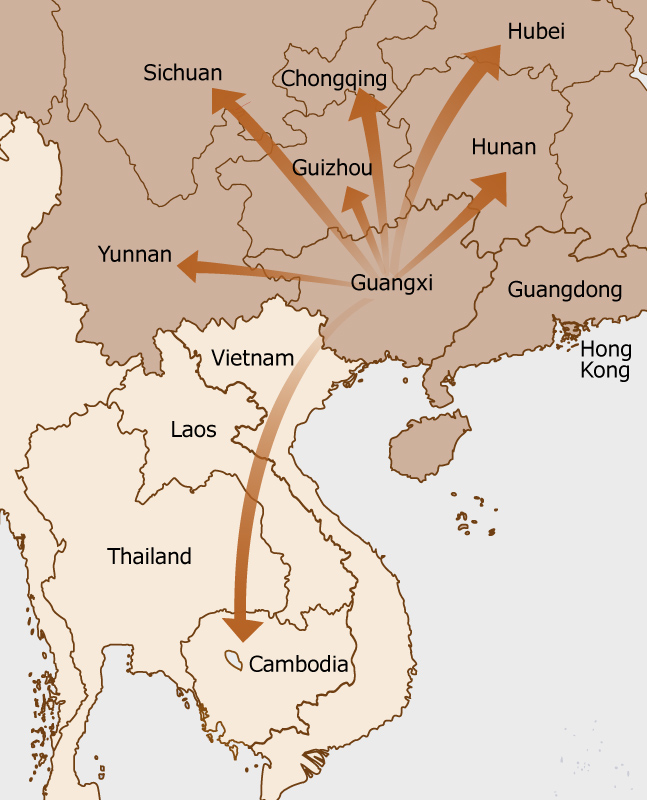
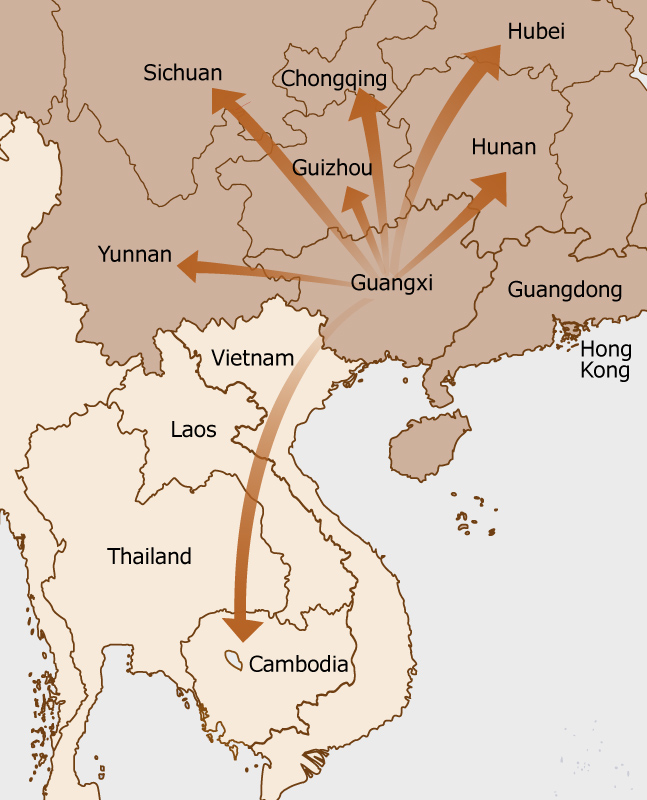
“Four-alongs interaction” refers to the opening up of areas along the sea coast, along the river, along the border, and along the Belt and Road.
Along the sea coast: Guangxi seeks to open up further and expand co-operation along its sea coast, increase the capacity of its ports and their ties with the hinterland, and develop Nanning into an integrated transport hub.
Along the river: Development and co-operation along the river means using the Xijiang golden waterway as the base to expand co-operation between Guangdong and Guangxi, while deepening unified Pan-PRD co-operation.
Along the border: Border trade in Guangxi, with a border of 1,020km, plays an important role in the autonomous region. Efforts will be made to promote collaboration between cross-border economic co-operation zones and advance new development in border areas.
Along the Belt and Road: This refers to the building of expressways and high-speed railways from Guangxi to neighbouring countries along the Belt and Road routes. Capitalising on these transport links, passages for opening up, industrial development and complementariness are to be built. Guangxi has already constructed 13 expressway passages, 11 railway passages and a 2,000-tonne class waterway passage leading to neighbouring provinces and countries.
According to the Guangxi Transport Department, four expressways linking Guangxi with Vietnam have been planned. Indeed, two have already been completed: Nanning to Friendship Gate, and Nanning to Fangchenggang/Dongxing. Meanwhile, construction of the expressways from Baise to Longbang and from Nanning via Chongzuo to Shuikou is under way and both are scheduled for completion by 2019. It is hoped that Vietnam can also accelerate its construction of highways linking to Guangxi.
Drawing on the optimised transport links, Guangxi is actively strengthening its role as the gateway to ASEAN. Since 2016, cargo flows between Guangxi and Thailand have been on the rise. According to the local commerce department, total trade between Guangxi and Thailand grew 32.9% from January to November 2016. Most of the goods were electronic products exported from Thailand to Guangxi by land through Pingxiang for distribution to Yangtze River Delta cities such as Suzhou. In the past, it took about 14 days for goods to be transported from Bangkok to Suzhou by sea, but today it only takes about six days via Guangxi by land. Improvement in trading infrastructure is set to enhance the position of Guangxi as the gateway to ASEAN.
Directions For Co-operation With ASEAN
As an international passage serving ASEAN countries and an important gateway for organic integration, Guangxi plans to forge co-operation with ASEAN in a number of major directions. The potential opportunities provided by the long-term development directions and individual projects for related industries are worth noting.
According to the Guangxi Development and Reform Commission, Nanning, as a regional integrated transport hub, is designated by Guangxi as the core for land connectivity, linking with the Indochina Peninsula to the south and connecting with the Eurasian Land Bridge to the north. With regard to sea connectivity, emphasis is being placed on developing Beibu Bay into a regional shipping centre, as well as building the China-ASEAN port cities co-op network. It is understood that since the China-ASEAN port cities co-op network was built in 2013, 10 new shipping routes have been opened. At the same time, great efforts are being made to advance collaboration in such areas as ports, industry, monitoring, rescue and the judiciary. This has in turn facilitated the flow of people and cargo between China and ASEAN.
In the days to come, the focus of co-operation will be on establishing a shipping and logistics service system, including setting up a regional port logistics technology standardisation system, promoting co-operation in port investment and operation, and deepening collaboration between port industries. At present, Guangxi is quickening its pace in building a network of shipping routes covering 47 port cities in ASEAN countries. Some 35 regular container liners currently sail from Guangxi’s Beibu Bay, establishing marine transport links with ASEAN countries such as Brunei, Indonesia and Malaysia. Where forging closer co-operation in commerce and logistics is concerned, Guangxi attaches importance to promoting the China-ASEAN bulk commodities trading centre, improving the functions of the bonded logistics platform, and developing cross-border e-commerce.
Under the Belt and Road Initiative, strengthening industrial co-operation with regions along the routes is one of the important development directions. In this connection, Guangxi places emphasis on building cross-border industry chains, with priority given to promoting the China-Malaysia Qinzhou Industrial Park in Qinzhou, Guangxi, and the Malaysia-China Kuantan Industrial Park in Kuantan, Malaysia; the China-Indonesia Economic and Trade Co-operation Zone; and the Brunei-Guangxi Economic Corridor; as well as building the China-ASEAN agricultural co-operation base.
Furthermore, actions have been taken to accelerate the pace of building the Guangxi border comprehensive financial reform pilot zone and promoting innovative cross-border renminbi business. There are plans to build the China-ASEAN environmental co-operation demonstration platform and the China-ASEAN environmental technology exchange co-operation base.
Efforts are also being made to further advance construction of the China-Indochina Peninsula Economic Corridor by leveraging such leading co-operation platforms as the China-ASEAN Expo and Pan-Beibu Bay Economic Co-operation Forum. For instance, when the Pan-Beibu Bay Economic Co-operation Forum was held in 2016, the China-Indochina Peninsula Economic Corridor Development Forum and the China-ASEAN Port Cities Co-op Network Work Conference were convened coincidentally. These platforms for co-operation have now become major avenues for political and commercial exchanges with ASEAN.
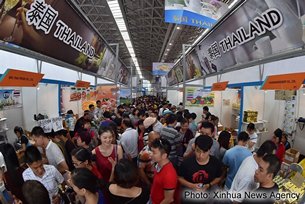
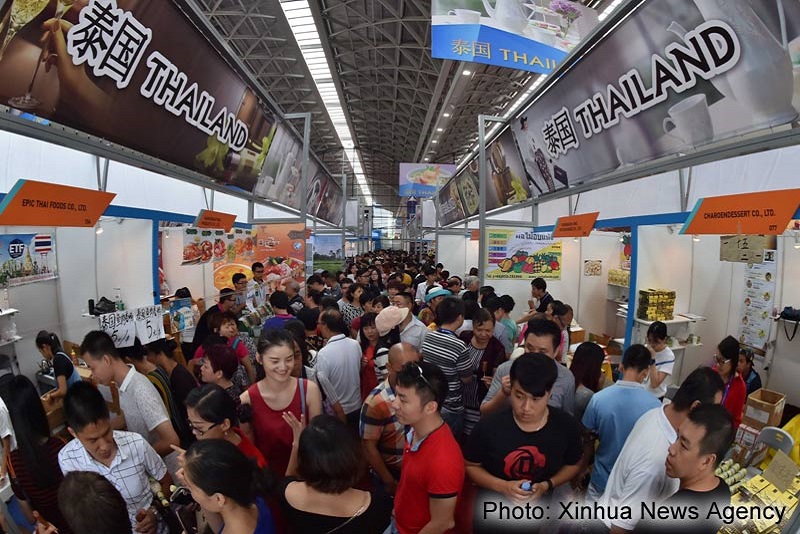
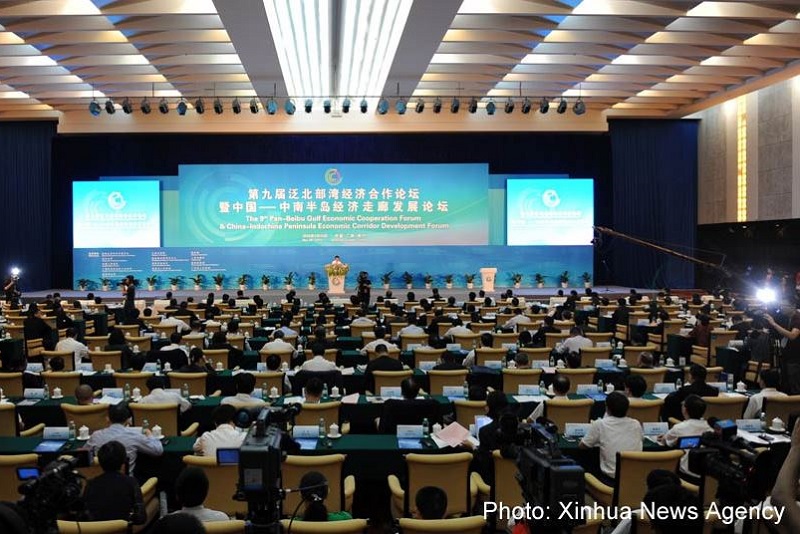
It is worth noting that in 2015, China proposed at the 12th China-ASEAN Expo that a China-ASEAN information port be built. Its aim is to deepen network connectivity and information interflow with a view to creating a China-ASEAN information hub with Guangxi as the fulcrum, as well as promoting online economic and trade services and technological co-operation. Construction work will be carried out in two stages.
First, actions will be taken to build a number of basic projects and plan a number of industrial bases serving ASEAN to form a preliminary framework for the China-ASEAN information port. Then from 2018 to 2020, the China-ASEAN national information communication network system will be built to create a big service platform for infrastructural facilities, technological co-operation, economic and trade services, information sharing, and cultural exchanges. The Guangxi Development and Reform Commission pointed out that the China-ASEAN information port involves more than 100 projects, embracing Asia Pacific international direct dial submarine optical cables, China-Vietnam and China-Myanmar cross-border optical cable system capacity expansion, a cloud computation centre, and a big-data centre. Upon completion, it will form a basic network of information integrating with ASEAN.
Enhancing ASEAN Trade Facilitation
In its efforts to strengthen ties with ASEAN, Guangxi not only gives weight to developing infrastructure such as transport and information networks, but also enhances trade facilitation arrangements, in particular customs clearance facilitation. In order to bring mutual benefits to Guangxi and ASEAN in trade and investment, the autonomous region takes the lead in studying and implementing the “two countries, one inspection” system for customs clearance facilitation with ASEAN countries.
Leveraging its geographical advantage of sharing land borders with Vietnam and the establishment of the China-Malaysia and Malaysia-China industrial parks, and with the support of China’s customs, and inspection and quarantine departments, Guangxi plans to implement the “two countries, one inspection” customs clearance system jointly with Vietnam and Malaysia first. Steps are being taken to introduce the new customs clearance facilitation measure at the China-Vietnam Friendship Gate in Vietnam on a pilot basis.
According to the Guangxi Commerce Department, the autonomous region possesses the right conditions to implement the “two countries, one inspection” customs clearance system on a trial basis in view of the busy flow of people and goods in its border areas. However, implementation of the “two countries, one inspection” system would be easy at first but become more difficult. For land-based trade, in the first stage, plans have been made with Vietnam to conduct concurrent inspection by both countries at the Pingxiang cargo freight passage in 2017. In other words, the two countries are to carry out inspection separately but at the same time and at the same location in the importing country.
In the next stage, the customs offices of the two countries will be located in the same building and all documents required will be unified. As for mutual recognition of standards between the two countries, further study will be conducted. For sea-based trade, the Malaysia-China Kuantan Industrial Park will serve as the pilot and it is planned that whole-journey monitoring of containers of designated products of designated enterprises from designated ports will be carried out and that unilateral inspection at the importing country will be conducted. Since the degree of complexity of this stage is higher, it is likely to be introduced at a later stage.
Prospects of Co-operation with Hong Kong under Belt and Road
Guangxi’s “four-dimensional support” development strategy includes further opening up to the east with emphasis on strengthening co-operation with Guangdong, Hong Kong and Macau. This includes forging closer collaboration with Hong Kong’s professional services under CEPA’s early and pilot measures, and taking advantage of the city’s role as a super middleman to encourage Hong Kong and foreign enterprises to participate in Guangxi’s construction projects in relation to the Belt and Road Initiative, including the China-ASEAN information port and transport and logistics facilities serving ASEAN countries. Guangxi also hopes to co-operate with Hong Kong companies in advancing the two-way development of its enterprises in “going out” and “bringing in” by conducting such activities as joint study missions and exhibitions.
Information released by the Guangxi Development and Reform Commission reveals that from among construction projects related to the Belt and Road Initiative, Guangxi has chosen more than 200 projects calling for close co-operation with foreign parties and has formed a project data bank. It is estimated that total investments involved exceed RMB1.2 trillion. These projects are distributed all over Guangxi and ASEAN countries covering extensive sectors.
Apart from infrastructure, Hong Kong’s industrial sector should pay attention to the development of Guangxi’s co-operation with ASEAN in international production capacity and make use of the room for growth to effectively integrate regional supply chains. In recent years, Guangxi’s electronics industry has been growing in leaps and bounds, and a modern electro-plating industrial park is being planned at Beihai Tieshan Port in a move to support development of the industry.
However, Guangxi’s manufacturing industries are in dire need of professional services – such as R&D, brand promotion and testing – at a higher level to support their growth. Also, Guangxi-ASEAN co-operation in outward investment is looking to international professional enterprises and institutions to provide the necessary legal, accounting and consultancy services, and Hong Kong’s professional service suppliers can provide such services to Guangxi enterprises. As Hong Kong is an international trade platform, Guangxi’s efforts to further strengthen ties with the Indochina Peninsula in commerce and logistics is bound to offer new opportunities to the city’s service providers and traders.
Cross-border financial co-operation also plays a part in Guangxi’s participation in building the Belt and Road. The autonomous region mainly serves as a border comprehensive financial reform pilot zone with a view to advancing co-operation with ASEAN in such areas as cross-border renminbi settlement and exchange, two-way investment, and financial regulation.
As far as building big international passages is concerned, apart from the construction of such hardware as ports and transport infrastructure, the demand for enhancing the necessary international logistics services and management systems is also huge, with cold-chain logistics offering the greatest growth potential. Hong Kong companies should take note of the development opportunities generated by Guangxi in its participation in building the Belt and Road. Furthermore, Guangxi should strengthen information dissemination so that the market can have easy access to the latest information on its development.
[1] In order to find out about the positioning and latest development of Guangxi in the Belt and Road, HKTDC Research visited Nanning, Qinzhou, Beihai, Fangcheng Port and Dongxing in early 2017 with the help of the Guangxi Commerce Department.
Editor's picks
Trending articles
Industrial Co-operation under the Belt and Road Initiative
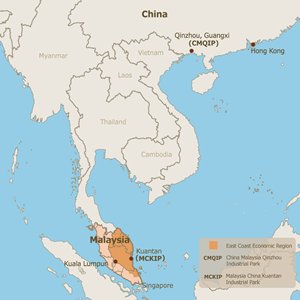
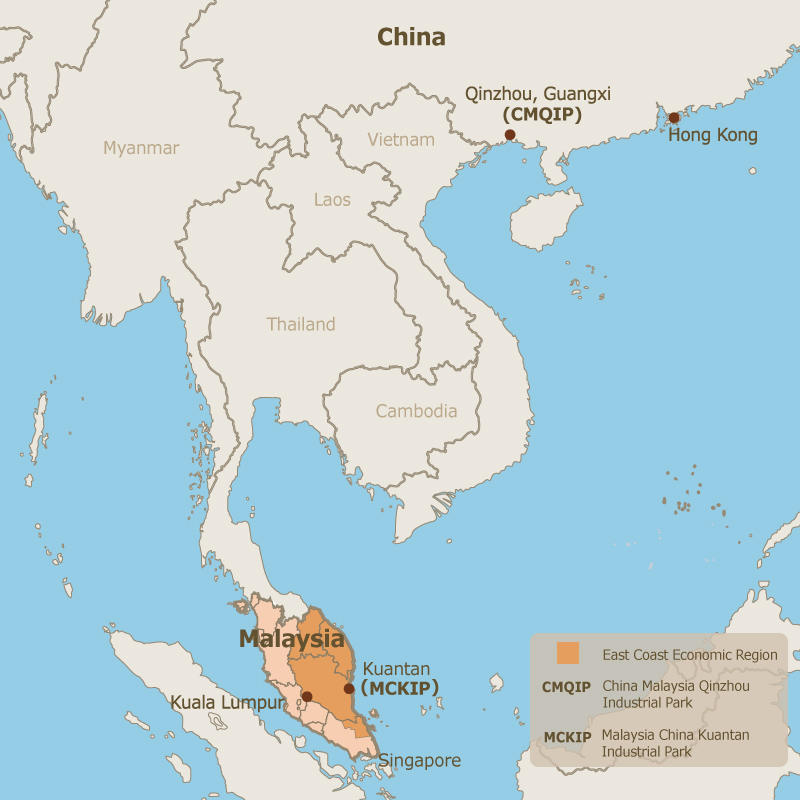
In line with the Belt and Road Initiative (BRI), trade co-operation between Malaysia and China has been strengthened by the countries jointly establishing two industrial parks – one in Kuantan in Malaysia, the other in Qinzhou in the Chinese region of Guangxi. Under the context of ‘Two Countries, Twin Parks’ [1], these industrial parks are intended to enhance the regional supply chain management and optimise the flow of trade and investment which runs between Malaysia and China.
One of the chief aims of the BRI is to encourage countries along the BRI to improve investment and the ease of trade facilitation. To this end, the BRI attempts to improve the capability of customs clearances and the coordination of cross-border supervision.
Malaysia is an important gateway for trade along the 21st Century Maritime Silk Road. At present, China and Malaysia are in the process of forming a cooperative ‘port alliance’, which seeks to fast-track trade flows by raising customs efficiency. It has been reported that, in addition to their contribution to trade cooperation, the new industrial parks could also serve as a testing ground for joint customs clearances between the two countries. Such a development might contribute to the advancement of the strategic direction of regional trade facilitation under the BRI.
The Malaysia-China Kuantan Industrial Park (MCKIP) is the first industrial park in Malaysia jointly developed by Malaysia and China, as well as the first to be accorded ‘National Park’ status. Its sister park in Guangxi, China is the Malaysia Qinzhou Industrial Park (CMQIP). Together, the two parks have been identified by both governments as an ‘Iconic Project for Bilateral Investment Co-operation’, which will drive the development of industrial clusters in both countries.
Kuantan Port will be an important gateway for logistics services for MCKIP, which is located just 10 kilometres away. At present, Kuantan Port mainly handles bulk cargoes for nearby industrial areas. In order to meet increased demand in the future, Kuantan Port is currently expanding its bulk cargo terminal. It is developing a new deep-water terminal (NDWT) which aims to become a container port for trans-shipment cargoes.
In June 2016, Kuantan Port received approval from The Ministry of Finance in Malaysia to establish a Free Zone port, so that it can provide value-added services for trans-shipment cargoes. Kuantan Port will act as the catalyst for MCKIP, with the synergy between the port and the industrial park forming a dynamic platform for investors expanding their business in the ASEAN region.
MCKIP: A Government-to-government Collaboration
Source: Kuantan Port Consortium
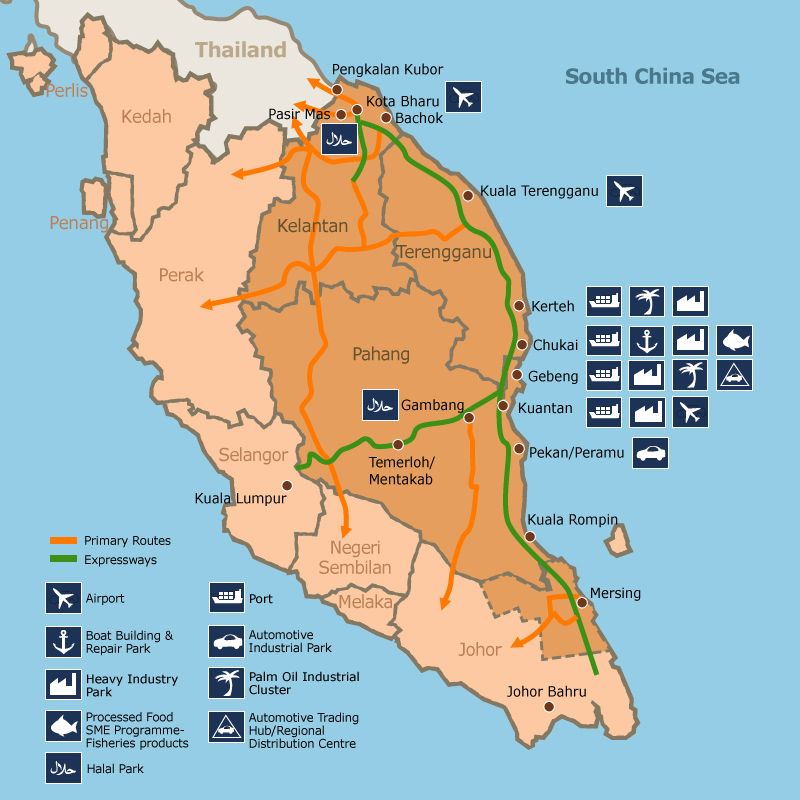
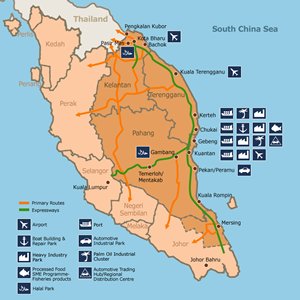
In 2008, the Malaysian government established the East Coast Economic Region Development Council (ECERDC) in order to develop and stimulate growth on the east coast of Peninsular Malaysia. It is a statutory body designed to spearhead the socio-economic development of the East Coast Economic Region (ECER) [2]. The five key economic sectors here are manufacturing, oil, gas and petrochemicals, tourism, agriculture and human capital development. The launch of MCKIP in 2013 has been one of the key milestones for the ECER.
By collaborating with Malaysia on the development of MCKIP, China can further enhance the flow of its trade and investment with Malaysia. At the same time, MCKIP provides a ‘going out’ platform where Chinese companies can expand their production capacities along the Belt and Road countries, in order to get closer to their final markets, in particular within the ASEAN.
MCKIP is a bilateral Malaysia-China government-to-government collaboration. MCKIP Sdn. Bhd. (MCKIPSB) is a 51:49 joint venture between a Malaysian consortium and a Chinese consortium. IJM Land holds a 40% equity interest in the Malaysian consortium; together, Kuantan Pahang Holding Sdn. Bhd. and Sime Darby Property hold 30% and the Pahang State Government holds the remaining 30%. The 49% stake of the Chinese consortium is held between the state-owned conglomerate Guangxi Beibu Gulf International Port Group (with a 95% equity interest) and Qinzhou Investment Company (the remaining 5% interest).
Positioning of MCKIP
MCKIP targets heavy industry and high-end/high technology industry. These include energy saving and environment friendly technologies, alternative and renewable energy, high-end equipment manufacturing and the manufacture of advanced materials. There are three distinct phases within the industrial park, namely MCKIP 1 (which consists of 1,200 acres of land), MCKIP 2 (1,000 acres) and MCKIP 3 (800 acres).
The construction of MCKIP 2 and MCKIP 3 should take place concurrently. While MCKIP 2 is designated for high-end and high technology industry development, MCKIP 3 is designated for multi-purpose development (including light industry, commercial property, residential areas and tourism parks). The entire MCKIP building project is expected to be completed in 2020. Since MCKIP 3 is intended for an assortment of different business opportunities, it is believed that it will attract foreign investment from a wide variety of countries for various purposes.
MCKIP 1 is designated for high technology industries and heavy industries. The first investor to be established there is Alliance Steel (M) Sdn. Bhd. [3] (Alliance Steel), which has been granted approval to invest RM5.6 billion in its facility in 2016. Its production site, which will cover 710 acres of land, is currently under construction. The steel mill is expected to be operation by the end of 2017. Once it is in full service, Alliance Steel expects to generate more than 3,500 job opportunities.
|
Alliance Steel (M) Sdn. Bhd. It’s estimated that the annual local demand for steel in Malaysia is over 10 million tonnes. However, the existing production facilities of some local steel mills are lagging behind in terms of productivity and technology innovation. Bringing in a new investor in the form of MCKIP will enhance the productivity and quality of steel production in Malaysia. Inspired by the Belt and Road Initiative, there are many infrastructure and construction developments now in progress along the 21st Century Maritime Silk Road. With its current production facilities in Guangxi, Alliance Steel is expanding its production facilities in MCKIP in order to meet the rising demand for steel in the ASEAN and international markets. Alliance Steel aims to upgrade levels of production technology and increase the degree of production automation in Malaysia’s new production sites. Its integrated modern steel mill will apply China’s most technologically advanced manufacturing process to produce the best quality high carbon steel rods, wires and H-shaped steel. Within its enclosed integrated steel mill, conveyor belts will be used to ensure the smooth flow of material and thereby streamline the operation. All waste water will be recycled and reused in the production process in order to minimise the impact on the environment. According to Alliance Steel, it will source raw materials from Malaysia as much as possible. Yet, some raw materials may still need to be imported. Maritime transport from China’s Qinzhou Port (in Guangxi) to Malaysia’s Kuantan Port takes just three days. In the early stages of its new operation, Alliance Steel may recruit some technicians from China before training up local talent in Malaysia. Alliance Steel is also co-operating with Malaysia’s institutions to establish a training programmes for local people, in order to enhance their metallurgy operation techniques. In this way, it will further strengthen the social and economic ties between two countries. |
Besides Alliance Steel, many China-based companies are planning to expand their production bases to MCKIP in order to extend their supply chain coverage within the region. For example, Guangxi Zhongli Enterprise Group Co. Ltd. will invest RM2 billion for the development of manufacturing of clay porcelain and ceramic in MCKIP 1. Meanwhile, ZKenergy (Yiyang) New Resources Science and Technology Co. Ltd. will invest RM200 million for the development of an engineering and production-based centre that will produce renewable energy for MCKIP’s own consumption. This will help MCKIP to position itself as a leading ‘green’ environmental-friendly industrial park.
In addition to the aforementioned projects in MCKIP, other investment projects led by China and Malaysia companies are already in the pipeline. The new investors include China’s Guangxi Investment Group Co. Ltd., which will invest RM580 million on an aluminum component manufacturing facility. Another is Malaysia’s LJ Hightech Material Sdn. Bhd., which will invest RM1 billion in a high-technology production-based plant to produce concrete panels and activated rubber powder for the construction industry. The construction works for these projects in MCKIP are expected to begin in the first quarter of 2017. Once completed, they will create more than 3,000 job opportunities.
Investment Environment in MCKIP
MCKIP not only welcomes investors from China and Malaysia, but also from ASEAN region and beyond. In addition to the current ECER incentives package [4], the Ministry of International Trade and Industry (MITI), together with the ECERDC, has offered special incentives packages for investors in MCKIP (subject to Terms and Conditions). Below are some highlights of the fiscal incentives in MCKIP:
-
Fifteen years of 100% corporate tax exemption from the year of statutory incomes derived, or 100% Investment Tax Allowance on qualifying capital expenditure incurred for five years.
-
15% of income tax rate for qualified knowledge workers [5] in MCKIP until 31 December 2020.
-
Import duty and sales tax exemption for raw materials, parts and components, plants and machinery and equipment.
-
Stamp duty exemption on transfer or lease of land or building used for development.
-
Investors can apply for Unit Kerjasama Awam-Swasta (UKAS) facilitation fund up to 10% of project cost or RM 200 million (whichever is lower), to finance the development of basic infrastructure.
Apart from fiscal incentives, MCKIP also offers other competitive incentives [6] and support in order to encourage both local and overseas investment. These include competitive land prices, flexibility in the employment of expatriates and the facilitation of human capital development. At present, MCKIP is still at the early stages of development. By implementing incentives and measures such as these, MCKIP aims to attract a range of investors from various industry sectors.
Synergistic Development of Kuantan Port
Located just 10 kilometres away from MCKIP, Kuantan Port currently handles mainly break bulk cargoes (such as steel pipes, sawn timber and plywood), dry bulk cargoes (such as iron ore, coal and fertilisers), liquid bulk cargoes (such as palm oil, vegetable oil, mineral oil and petrochemical products) and container cargoes. Kuantan Port is an all-weather port with 11.2 meter draft and the capacity to handle vessels up to 40,000 DWT (Dead Weight Tonnage). There are 22 berths at Kuantan Port with bulk cargoes accounting for 95% of throughput. At present, container business is relatively small and mainly handles automotive components for Pekan Automotive Industrial Park.
Kuantan Port is operated by Kuantan Port Consortium Sdn. Bhd. (KPC) [7]. It can offer well-developed port facilities and services, and a strong network of global shipping connections. As such, the port is set to be a catalyst for the development of the industrial and manufacturing activities in MCKIP, as well as those in Kuantan Port Industrial Area [8] and Gebeng Industrial Estate [9].
At present, major shipping lines which operate at Kuantan Port include Evergreen Marine Corporation Ltd, Jardine Shipping Services, Malaysia International Shipping Corporation Bhd. and Pacific International Lines.
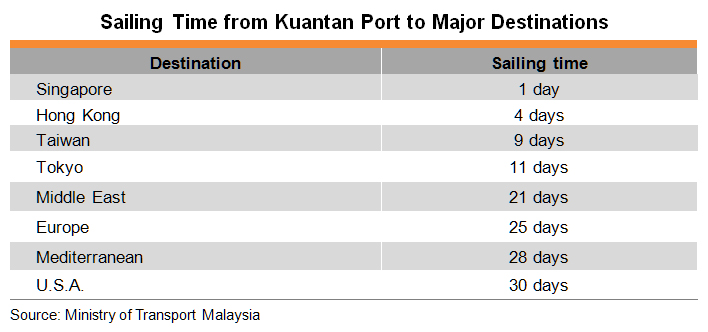
Source: Kuantan Port Consortium
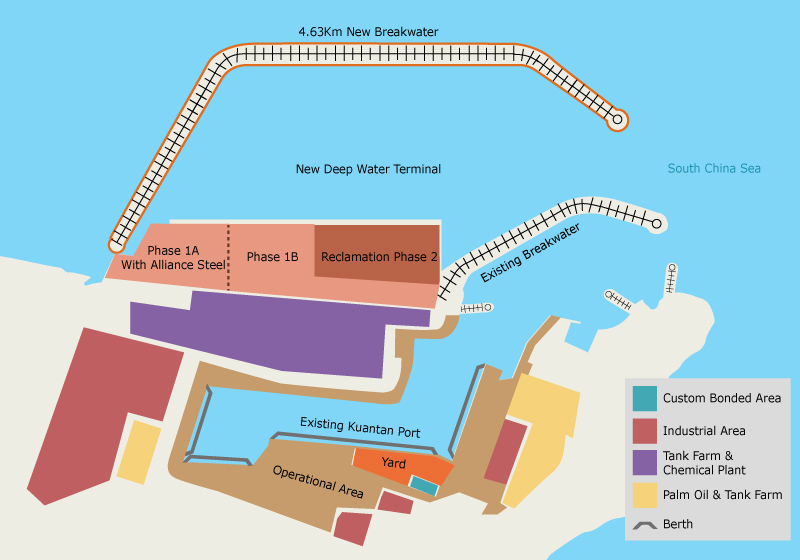
As it stands, Kuantan Port provides port services for the nearby high-end and high technology industries and heavy industries, such as those based at the Kuantan Port Industrial Area, Gebeng Industrial Estate and Pekan Automotive Industrial Park. In order to meet the extra port service demand now being created by MCKIP, Kuantan Port is currently under expansion. There will be three phases in the port expansion. Phases 1A and 1B will cover the import and export of bulk cargoes. In Phase 2, a new deep water terminal will be developed, which will be able to handle up to 200,000 DWT or 18,000 TEUs container vessels.
Construction of Phase A1 is now underway and is expected to be completed by the end of 2017. Phase 1A will be able to handle ships up to 150,000 DWT. The expected completion time of Phase 1A is in line with the completion time of Alliance Steel production sites at MCKIP 1. This will enable Alliance Steel to import raw materials from overseas markets and then export its final products to the international markets via Kuantan Port. The construction of Phase 1B is also underway and it should commence operation in late 2018. Both Phase 1A and Phase 1B will target the handling of bulk cargoes. Presently, a new 4.7 kilometres breakwater is under construction, which will create a sheltered harbor. This sheltered basin will allow for berths to operate safely and efficiently throughout the year, even during the monsoon season.
Strategic Partnerships along the New Silk Road
In terms of their potential growth, Kuantan Port and MCKIP go hand in hand. Although Kuantan Port currently handles mainly bulk cargoes, the Phase 2 development is intended to be a container port, in order to handle the import and export of light industry cargoes for MCKIP 3. The new deep-water terminal will become a major trans-shipment hub on the east coast of Malaysia. By the time of completion, it is estimated that Kuantan Port will be able to handle 52 million freight weight tonnes of bulk and container cargoes.
In light of China’s 21st Century Maritime Silk Road development, Kuantan Port will become a key trading gateway. China and Malaysia are forming a ‘port alliance’ to fast-track trade by reducing customs bottlenecks at both ends. Under the port alliance, 10 Chinese ports (including Dalian, Shanghai, Ningbo, Qinzhou, Guangzhou, Fuzhou, Xiamen, Shenzhen, Hainan and Taicang) will collaborate with six Malaysian ports (including Port Klang, Malacca, Penang, Johor, Kuantan and Bintulu). The final details are still being worked out, but the development is geared towards improved trade facilitation and integration within the region. It has been reported that the strategic imperative is to set up joint customs clearance facilities between ports of China and Malaysia, in order to reduce the overall time and cost of moving goods across the borders.
Kuantan Port to Perform Re-distribution Function
In June 2016, Kuantan Port received approval from The Ministry of Finance in Malaysia to establish a free zone port [10]. This will strengthen Kuantan Port’s plans to develop into a trans-shipment hub. A Free Zone is defined as a place outside Malaysia where there is no required payment of customs duty, excise duty, sales tax or service tax. According to KPC, the Free Zone in Kuantan Port may cater for commercial activities including trans-shipment, trading, regional distribution, inspection/sampling and related value-added services (such as repackaging, relabelling and break bulking).
By way of example, international distributors who have established their own sales network in the region can consolidate their products destined for Malaysia and other ASEAN and south Asian countries. They can then save costs by shipping them, in the first instance, to Kuantan Port free zone warehouse in the form of FCL (full container load). There, the importer may arrange re-packing or re-labeling for their products before redistributing the products in LCL (less than a container load) to their final market destinations in the region.
Evolving Business Potentials
Most of the current investments in MCKIP come from China-based companies, mainly involving heavy industry and high-end/high technology industry. In fact, MCKIP not only targets investors from China and Malaysia, but also other ASEAN countries and beyond. In particular, with the upcoming development in MCKIP 3 as a multi-purpose zone, new business opportunities may arise in areas such as commercial property development, residential management and hotel management.
MCKIP is the engine for new growth at Kuantan Port. Expecting a sharp increase in demand for bulk cargo services driven by the high-end/high technology industries and heavy industries establishing themselves in MCKIP 1 and MCKIP 2, Kuantan Port’s expansion plans are under way. With the port set to evolve into a trans-shipment hub for the ASEAN, it will become a free zone in order to provide value-added services for the container cargoes. Many investment opportunities exist in the construction of port facilities and other value-added logistics services.
Together, MCKIP and Kuantan Port are being developed into an industrial hub and an integrated logistics centre in Malaysia. These developments have created a new trade platform for companies which are interested in exploring the range of business opportunities in the ASEAN along the 21st Century Maritime Silk Road.
[1] In ‘Two Countries, Twin Parks’, ‘Two Countries’ represents Malaysia and China; ‘Twin Parks’ represents Malaysia-China Kuantan Industrial Park (MCKIP) and China-Malaysia Qinzhou Industrial Park (CMQIP).
[2] The ECER covers Kelantan, Terengganu, Pahang and the district of Mersing in Johor. It occupies an area of 66,000 square kilometres or 51% of the total area of Peninsular Malaysia.
[3] Alliance Steel (M) Sdn. Bhd. is a state owned joint-stock enterprise by Guangxi Beibu Gulf Port International Group Co. Ltd. and Guangxi Sheng Long Metallurgical Co. Ltd.
[4] For details, please refer to ECER investment opportunities.
[5] A non-resident is subject to income tax in Malaysia for his income which only comes from Malaysian sources, at a uniform rate of 28% unless he works less than 61 days in the year or his country of residence has concluded a double taxation agreement with Malaysia.
[6] For details, please refer to Malaysia-China Kuantan Industrial Park.
[7] Kuantan Port Consortium Sdn. Bhd. (KPC) is jointly owned by IJM Corporation Berhad and Beibu Gulf Holding (Hong Kong) Co. Ltd. on a 60:40 equity holdings with the Government of Malaysia having a special rights share.
[8] Kuantan Port Industrial Area is located within the vicinity of the port.
[9] Gebeng Industrial Estate is a world-class petrochemical zone covering 8,600 hectares.
[10] Source: Kuantan Port Consortium Sdn. Bhd.
Editor's picks
Trending articles
By Dr. Christine R. Guluzian, Visiting Research Fellow in Defense and Foreign Policy Studies, Cato Institute
Beijing is espousing a new “economic diplomacy” model to assist in spurring long-term, sustainable domestic economic growth. In addition, China’s New Silk Road initiative is offering its partners job creation opportunities, FDI, infrastructure building, and bolstered commercial exchange. The end goal, according to China, is to establish a “win-win” scenario for all partners involved.
Yet, this ambitious multinational project comes with serious obstacles: unstable political regimes within host countries; subpar international business practice standards, including non-transparency and corruption; and the potential for Chinese state involvement to politicize commercial relations via SOEs. These could all thwart positive trade relations and investment environments. Such challenges could be mitigated if private- and public-sector participants take precautionary steps, such as exercising due diligence on projects and partners, establishing clear contractual or treaty terms on dispute and arbitration mechanisms, and insisting on the application of international best-practice standards. As for host countries, the New Silk Road initiative could incentivize governments to implement free market principles within their own economies in order to better attract FDI. This must include removing or reducing tariffs, simplifying tax codes, limiting bureaucracy, providing for the protection of private property, and strengthening the rule of law.
The New Silk Road is an imperfect project in its formative stages. It is a large-scale initiative projected to span several countries and continents and is backed by the world’s second largest economy: if proven successful, it would be too large a project to ignore or to “contain.” The United States should approach the New Silk Road initiative cautiously yet constructively and as a potentially positive opportunity for cultivating mutually beneficial trade and relationship-building ties with China and New Silk Road participant states.
Please click to read the full report.
Editor's picks
Trending articles
First Chinese state visit to New Zealand for 11 years sees MoU signed on mutual BRI development, while imminent upgrade to existing Free Trade Agreement and streamlined customs and visa arrangements announced as priorities.

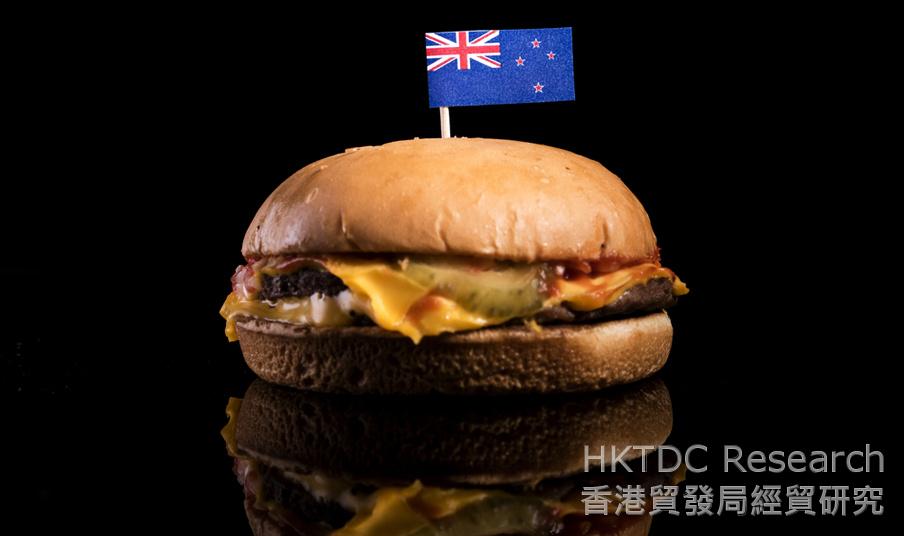
New Zealand is now the first developed western nation to sign up as a partner in China's ambitious Belt and Road Initiative (BRI). The joint commitment of the two countries to support the project was marked by a Memorandum of Understanding (MoU) signed by Bill English, the New Zealand Prime Minister, and Li Keqiang, the Chinese Premier.
The MoU was one of 13 agreements signed between the two countries during Li's state visit to New Zealand at the end of March. Among the other areas targetted for discussion were the streamlining of customs clearance procedures, educational exchanges, fishery quotas and food exports.
Speaking after the signing of the MoU, Li pledged his commitment to exploring the possibility of greater co-operation between the two countries in terms of both infrastructure development and increased trade. One of the first signs of this enhanced relationship will be an increased level of imports of New Zealand beef and lamb to the mainland, while China in turn will expand its range of vegetable exports to its upgraded trading partner.
Welcoming both developments, Li said: "We are expanding our imports of New Zealand beef and lamb in order to give Chinese consumers a greater choice of high-quality produce. At the same time, we welcome the opportunity to export more onions to New Zealand."
Among the subjects discussed by the two leaders were a number of issues related to regional stability and free trade, while several other cultural and business matters were also on the agenda. In particular, the two confirmed plans for negotiations on an upgrade to the existing China-New Zealand Free Trade Agreement, which duly began at the end of April.
The current agreement has been in place for nine years and is said to have considerably boosted bilateral trade between the two parties. In particular, it has led to New Zealand supplying 50% of China's imported dairy products. In the new round of negotiations, several food-safety issues are said to be high on the agenda.
Addressing the importance of the current round of negotiations, Li said: "With protectionism and anti-trade liberalisation sentiments on the rise around the world, it is incumbent upon us to send a clear message, backed up by positive actions, when it comes to safeguarding free trade and the process of economic globalisation. In line with this, the planned upgrade of the China-New Zealand Free Trade Agreement is crucial for both countries, as well as the wider region and the international community as a whole."
In line with this enhanced co-operation between the two countries, New Zealand has also announced plans to issue five-year multi-entry visas to properly qualified Chinese applicants. These new visas will entitle holders to stay in New Zealand for up to one month at a time.
Li's visit to the country marked the first official visit to New Zealand by a Chinese Premier for 11 years.
Dianne Zou, Sydney Office
Editor's picks
Trending articles
By James Villafuerte (ADB), Erwin Corong (Purdue University) and Juzhong Zhuang (ADB)
Executive Summary *
In the aftermath of the global financial crisis, two important trends emerged. First, the growth of global trade decelerated below output growth. Second, the People’s Republic of China (PRC) growth moderated on account of cyclical and structural factors. Faced with this twin and inter-related challenges, PRC unveiled a set of domestic and external reforms. Domestically, it has identified hundreds of reforms to address wasteful investment, increase consumption and innovation, and lift productivity growth. Externally, it unveiled the Silk Road Economic Belt and the 21st Century Maritime Silk Road—referred to here as One Belt, One Road (OBOR)—which is meant to strengthen infrastructure on the westward land route through Central Asia and Europe, and the southern maritime route through Southeast Asia, on to South Asia, Africa and Europe. OBOR could help PRC: (i) foster a trade revival; (ii) address overcapacity issues; and (iii) develop the less connected provinces in PRC. For countries in the OBOR route, OBOR gives them access to PRC’s overseas direct investment, helps them invest and upgrade their infrastructure. OBOR also strengthens regional integration in the region. The OBOR initiative is a large initiative covering more than 60 countries with a combined population of about 3.2 billion (around 45% of the world’s population) and a combined gross domestic product (GDP) of $13 trillion.
The economic and infrastructure developments in countries along the OBOR route are mixed. At present, there are: (i) 9 low-income economies; (ii) 16 lower-middle-income economies; 14 upper-middle-income economies; and 7 high-income economies along OBOR. Thus, alleviating poverty remains a major challenge for countries in the OBOR route. There is also a great diversity among countries in OBOR in terms of physical measure such as land area, population density, road density, paved road, and rail density. Many countries along the OBOR route have poorly developed transport infrastructure networks, relative to their population density. The proportion of paved roads to total roads is also relatively low and there is fairly limited rail access or movement for some of these economies. These gaps in transport infrastructure hamper trade and investment flows to the OBOR region.
Using the GTAP model, its version 9A database, and comparative static simulations, this study confirms that the OBOR initiative has non-trivial effects on Asia.1 For instance, improving the transport network and trade facilitation in countries along the OBOR route could raise the GDP growth in Central, West and South Asia ranging from 0.1 to 0.7 percentage points. It could also contribute to an increase in welfare from about $6 billion to about $100 billion. The total exports of countries in the OBOR could also increase by about $5 billion to $135 billion. More importantly, the distribution of benefits arising from OBOR is not equal—with some countries benefitting more than others. Certainly, PRC would gain a lot from the OBOR initiatives, but some countries such as Mongolia or Pakistan; and sub-regions such as Central Asia and Southeast Asia stand to gain significant benefit as well. However, many factors and challenges could hamper the realization of these potential benefits including the diversity of characteristics and institutional development of countries in the OBOR route. Mismatches in policy framework, legal and regulatory rules, and credit and payment standards could hamper effective cooperation and coordination.
* This is a draft version.
Please click to read the full report.
Editor's picks
Trending articles
Under the terms of the Belt and Road Initiative (BRI), the 60 or so countries that fall within its geographical remit are expected to benefit from both an enhanced investment environment and streamlined trade arrangements. In practical terms, this will manifest itself in a number of jointly-developed Free Trade Zones, an expansion of existing trade activities and moves to nurture both the trade in services and cross-border e-commerce. Overall, the BRI programme is expected to set a new high water mark in terms of cross-border business activities, with an accompanying rise in the number of international commercial disputes.
Typically, these cross-border trade disputes revolve around such issues as breach of contract, quality control problems, deferrals and difficulties related to customs procedures. Under established practices, such disputes are settled via expensive and time-consuming litigation, often across a number of different jurisdictions.
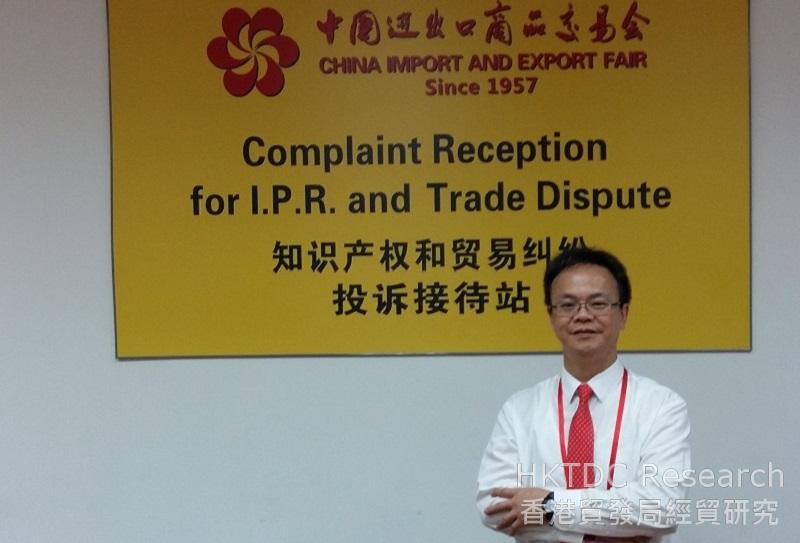
Ying Chi Lit Daniel [1] is a General Mediator who has spent the last two years offering on site arbitration services at the Canton Fair, China’s largest trade event. Two years ago, the fair – more formerly known as the China Import and Export Fair – was chosen as the pilot zone for the trial of a new initiative, one designed to settle cross-border trade conflicts between Chinese companies and their overseas counterparts through an internationally-accepted mediation framework.
Under the terms of this initiative, mediation is the first step for all of the parties concerned. Should this prove successful, the two sides then sign a settlement agreement before applying to a mainland arbitration court to endorse the arrangement. Once this step has been completed, the agreement is considered binding on all the relevant parties under the terms of the New York Convention, an agreement covering the recognition and enforcement of foreign arbitral awards recognised by some 65 countries. Combining aspects of both mediation and arbitration, this legally-binding model has proved highly effective in terms of resolving trade disputes. As such, it is seen as a fast, effective and low-cost platform for resolving cross-border disputes between the mainland and its overseas trading partners.
According to Ying, this globally-accepted model of facilitative mediation is very different to the form of advisory mediation favoured on the mainland. The international model focuses more on enabling all parties concerned to make their own decisions and evaluate their own situations, constantly facilitating communication between the various sides, while promoting an understanding of each other’s needs and perspectives. The mediator then guides the parties with regard to discussing, creating and expanding upon feasible solutions, while gradually addressing any difficulties.
Once a settlement has been reached, the mediator then assists in drafting and formalising the final agreement. Overall, the mediation process is based on the principles of voluntariness, neutrality and confidentiality and looks to both resolve the immediate conflict while fostering a long-term relationship between the parties.
According to Ying, many of the overseas businessmen who engaged the services of the Canton Fair arbitration centre were delighted to learn they were dealing with a Hong Kong-based mediator, believing this offered a very trustworthy route for the resolution of any trade-related issues. Overall, Hong Kong service providers are seen as having had greater exposure to the international business environment, a clear asset when dealing with such situations.
As the BRI programme and the mainland’s going-out initiatives continue to roll out, the demand for cross-border dispute resolutions will inevitably rise. Addressing this issue, Rimsky Yuen, Hong Kong’s Secretary for Justice, reassured the Legislative Council’s Panel on the Administration of Justice and Legal Services back in 2016 that every effort will be made to actively promote Hong Kong’s legal and dispute resolution services. It is hoped that this will encourage mainland businesses and those based in countries within the scope of the BRI to use the services of the relevant Hong Kong professionals whenever the need arises.
Yuen also committed Hong Kong’s mediation bodies to establishing a wide-ranging dialogue with their mainland counterparts in order to enhance the effectiveness of all concerned.
Overall, Ying believes the extensive experience of Hong Kong’s international facilitative mediation service providers is the perfect complement to China's arbitration-based cross-border commercial dispute resolution services and mechanisms. He also hoped that an increasing number of companies operating in markets along the proposed BRI routes would opt to use the mediation plus arbitration model when it came to resolving commercial disputes, believing this will help China and Chinese companies as they participate more fully in the global business arena.
[1] Daniel Ying is a Director of the Hong Kong Mediation Centre, Chairman of its Disciplinary Committee, a mediation expert in Hong Kong and Chinese commercial matters, a cross-border mediation instructor and an examiner. He has dealt with a variety of conflicts, including: a number of business disputes in both China and Hong Kong, corporate mergers, acquisitions, reform programmes, investment and financial disputes, partner conflict, debt collection and account handling problems.
Editor's picks
Trending articles
 469 Views
Hong Kong-based Design Icon views the SAR as a regional centre for intellectual property protection as it develops its branded photographic design solution. Director Billy Liu says the company aims to establish Hong Kong as an outstanding location on the global design map, while Director Mike Jerome sees the Belt and Road Initiative bringing a new client base to Hong Kong.
Speakers:
Billy Liu, Design Consultant and Director, Design Icon
Mike Jerome, Design Consultant and Director, Design Icon
Related Link:
Hong Kong Trade Development Council
http://www.hktdc.com/


