









Chinese Mainland
By ICBC Standard Bank and Oxford Economics
1.1 Connectivity and our index
In essence, B&R is a multi-generational project that looks beyond infrastructure and is, instead, “rooted in a shared vision for global development” While tackling the infrastructure deficit is a necessary step to unleash inclusive economic development, measuring broader economic benefits is of equal, if not more profound, importance. As a practical matter, both the implementation and longevity of B&R will depend on the realisation of broad mutual benefits across B&R participants. The China Connectivity Index (CCI) is specifically designed to capture these broader economic benefits by quantifying the dynamics of bilateral connectivity between B&R countries and China.
The CCI is a first of its kind research tool offering a unique solution to the challenge of tracking the evolution of the still nascent B&R project. The purpose of the CCI is to build out a dynamic evidence base from which investors and policy makers can assess the high level themes and challenges that emerge from the massive efforts of B&R.
As the first CCI white paper, it is natural and necessary to examine the index from a retrospective viewpoint. We take this opportunity to explore, through the lens of the CCI, what trends and insights can be distilled from the changing nature of China’s connectivity to the B&R countries over the last 10 years. Chapter 2 presents the index framework and previews the headline results of the inaugural index. In Chapter 3, we discuss the key insights from the CCI based on in-depth empirical research. Chapter 4 looks forward to identify themes critical for future B&R developments, and sets out our vision to establish B&R thought leadership…
4. B&R connectivity in the future
Working in partnership with B&R governments to tackle the infrastructure deficit is a key objective for China in the years ahead. The Chinese government is committing substantial funding to several new investment vehicles, as well as bolstering existing institutions with a new mandate to support B&R. It is important to note the bulk of this funding has yet to be deployed, so current CCI results reflect little of this investment.
To support infrastructure development outside of China itself the Asian Infrastructure Investment Bank (AIIB) has the potential to be the most powerful. The AIIB is a multilateral organisation, with 52 members, including several outside of Asia. Total capitalisation of the bank is US $100 billion, with China providing a quarter. The bank has a mandate to finance “Asia-related” infrastructure in member economies. The Bank lent approximately US $1.7 billion in 2016 to nine projects across Asia and the Middle East.
Elsewhere, the New Development Bank (NDB, previously the BRICS Development Bank) also has a mandate to lend for projects that promote infrastructure and development with a significant impact in member countries. Three of the five member economies of the NDB are part of B&R (China, Russia and India), and the bank’s Vice President said in 2016 that expansion to new members was a priority.
China is also acting through new investment funds, over which it will have more autonomy. The Silk Road Fund is a Chinese state-owned investment fund, set up in 2014 with an endowment of US $40 billion from the Chinese government. The fund’s mandate is to upgrade infrastructure along the B&R, and it has so far made three investments – most significantly in the China-Pakistan Economic Corridor, which is discussed in more depth below. In 2016, China set up the Sino-CEE Fund, with an endowment of €10 billion and the aim to leverage a further €50 billion. The fund will focus on Central and Eastern Europe but could extend its operations to other regions for projects supporting China-CEE connectivity.
China has also increasingly permitted the China Development Bank (CDB) to start invest overseas in recent years. The bank was founded in 1994, and at end-2015 had RMB 9.2 trillion (US $1.4 trillion) in loans outstanding. However, the CDB is likely to remain primarily focussed on domestic economic development―supporting transition away from heavy industry in the north-east and financing economic development in western provinces.
Chinese commercial banks are also increasing their financing to B&R projects, supported by official co-financing. For example, the China-Pakistan Economic Corridor (CPEC) is a network of connected projects boosting maritime, rail and road connectivity between the two countries, as well as upgrading utilities infrastructure in Pakistan. Total financing committed across the CPEC is expected to amount to US $62 billion over the period from 2015-2030, coming from a wide range of sources, including commercial and multilateral banks. Analysis of the “big four” Chinese state-owned commercial banks suggests they lent a total of US $90 billion into B&R economies in 2016. However, it not clear how much of this lending related to the infrastructure related objectives of the B&R initiatives, as opposed to more standard commercial activity.
Finally, the initiative has also been formally recognised by the global development financing community. At the B&R summit, a Memorandum of Understanding was signed by the Asian Infrastructure Investment Bank, the New Development Bank, the Asian Development Bank, the World Bank, the European Investment Bank, and the European Bank for Reconstruction and Development. At the summit, Jean-Christophe Laloux, Director-General of the European Investment Bank said “We appreciate the tremendous efforts of all involved and recognise the clear the leadership that China has shown to develop this key initiative”.
5. Conclusion
Much has already been achieved in boosting B&R connectivity, even prior to the formal announcement of the initiative in 2013. B&R exports are accounting for a steadily rising portion of China’s demand in some key areas, allowing B&R economies to tap into China’s rapid growth. But within B&R there have been some important shifts in relative connectivity between regions – largely driven by changing priorities for the Chinese economy.
The outlook is clearly positive for the future of B&R connectivity. Resources are being marshalled for a substantial financial stimulus to boost infrastructure spending across the B&R regions, while trade, investment and financial sector policies are also being liberalised to unlock potential economic flows.
We expect China’s domestic economic agenda to continue to be a key factor in connectivity developments looking ahead. The growing importance in recent years of services trade, supply chain connectivity, and outward investment in higher value-added economies are all set to persist. So while ASEAN economies may remain the most-connected with China, those in CEE and key tourism destinations are likely to close the gap. Connectivity with commodity-based Middle Eastern and Central Asian economies may fall further if these countries fail to diversify into sectors better-aligned with China’s own priorities.
Trends in the wider global economy should be supportive of B&R connectivity in the years ahead. After several years of very slow global trade growth, data from the first half of 2017 suggests a reinvigoration of global trade activity. With an increasingly-positive economic outlook across many developed and emerging economies, global trade flows and demand for Chinese goods and services should strengthen in the coming years.
But several key sources of risk remain, particularly with respect to an uncertain global geopolitical landscape. An increase in protectionism in key advanced economies could prevent market forces from driving global trade growth, and therefore China’s trade connectivity. In the Middle East, diplomatic tensions could undermine the freedom of movement of goods and people across a key region for China-Europe trade. And slower-than-expected growth in China would cut resources available for B&R investment – even as it makes better connectivity more crucial. Finally, from a political perspective, it will be important to ensure the consensus over economic connectivity between China and B&R being mutually beneficial is sustained, and that partner economies see plenty of direct economic gain.
The China Connectivity Index will be a crucial tool in the years ahead. CCI will remain the key resource for B&R stakeholders seeking to stay informed of connectivity enhancements in the years ahead. This report will be updated on a semi-annual basis, reviewing latest trends in China-B&R economic connectivity, as well as progress made in delivering against policy pledges. Moreover, our work on China Connectivity will be complemented by an ongoing monitoring of economic health in B&R economies. For our initial assessment of economic health in B&R, please see the complementary paper accompany this China Connectivity report.
Please click to read full report.
Editor's picks
Trending articles
Many enterprises on the Chinese mainland are actively investing in factory automation in order to mitigate labour shortages and enhance competitiveness by turning out higher quality products. In a bid to improve added value and competitiveness, some enterprises pursue high-tech business, while others adopt a brand-building strategy. But the division of roles and responsibilities among different industries is increasingly refined, with domestic and global supply chains becoming more complex. As a result, many businesses need to source service support from third parties to better connect various elements of their operations. Improved connections from research and development, to design, production, sales and after-sales service, as well as enhanced supply chain management, can help companies’ transformation and upgrade strategies.
As pointed out by Shanghai Miller Supply Chain Management Co Ltd (Miller) during a recent interview[1], the mainland traffic and transportation network has come a long way in recent years and efficient logistics has become an integral part of many industries’ operation. In the competitive mainland logistics market, some enterprises use a low-price strategy, whereas others pursue a value-add approach, providing clients with comprehensive supply chain management in addition to logistics supports.
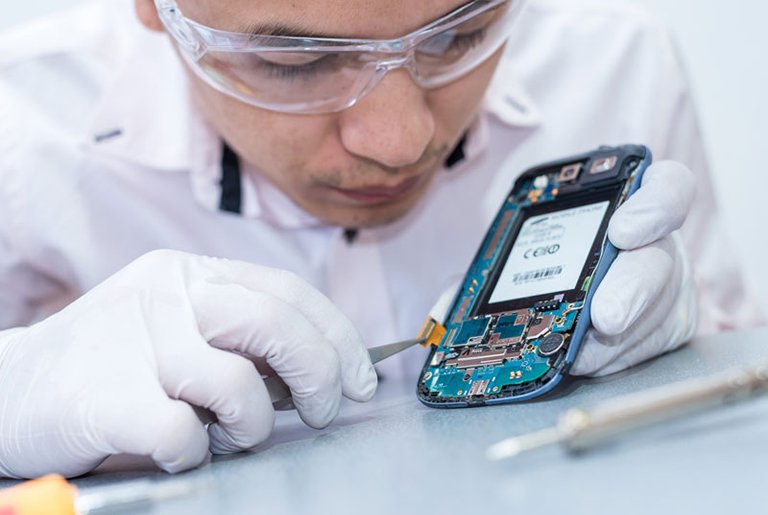
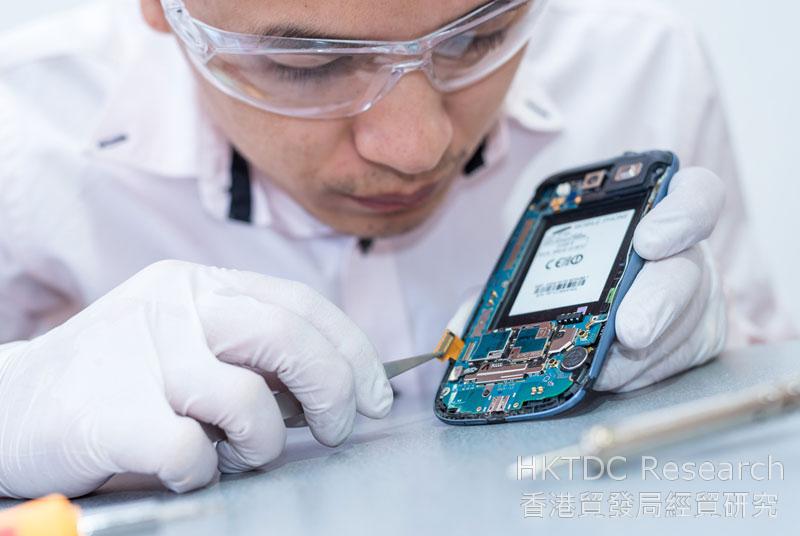
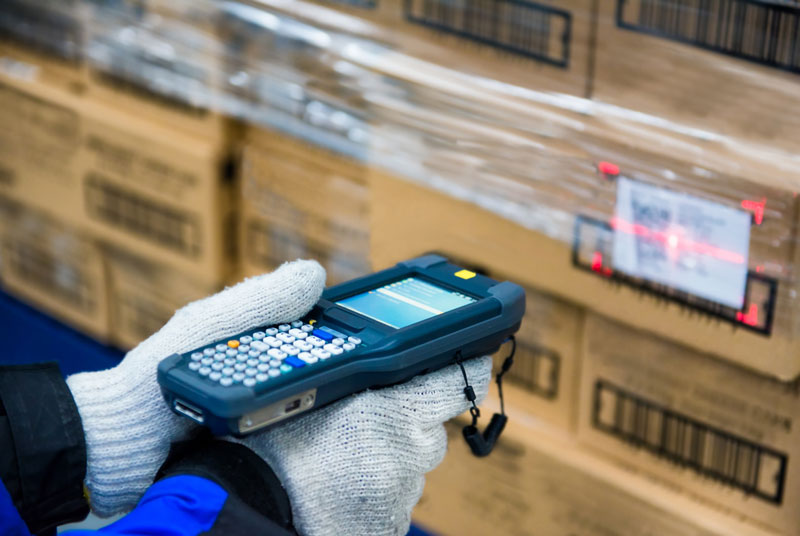
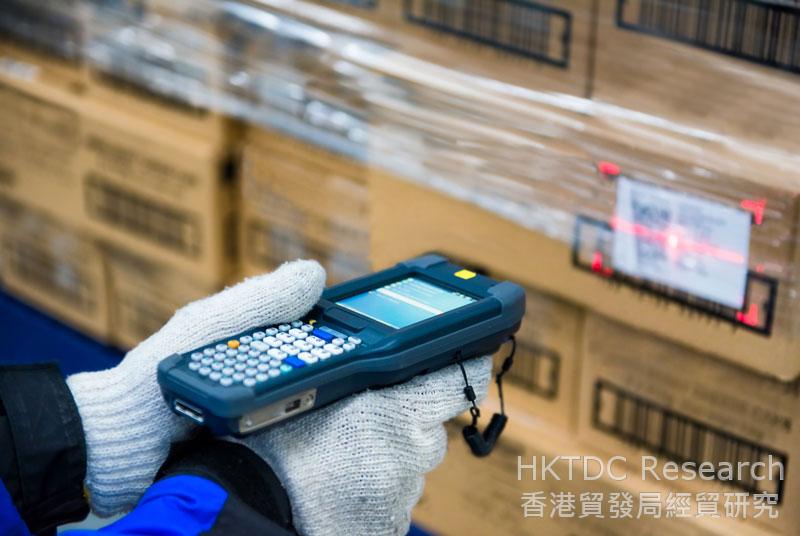
Many companies are making use of transport and procurement platforms in the Yangtze River Delta, Pearl River Delta and even Hong Kong for sourcing or transit at different locations. This enables businesses to secure a wide range of production materials, handle movement of components from different sources and distribute finished products to different destinations. This is particularly the case with the import and export of higher-value products, including high-end electronic parts, where businesses tend to make use of efficient international air transport hubs, such as Hong Kong, to send goods to the mainland or export them to overseas markets.
As Hong Kong is one of Asia’s major electronic parts and components distribution centres, many companies dealing in these items have set up offices there for procurement and transportation of various kinds of electronics through the city. Specific freight and logistics routes vary, depending on individual companies’ specific operation.
According to a Miller executive, the company not only runs logistics facilities in the Shanghai Pilot Free Trade Zone and Pudong Airport, but has also set up branch offices and transit warehouses in Shenzhen and Hong Kong. This enables Miller to support its clients with a third-party freight and logistics network, both domestically inside the mainland and internationally. In addition, it provides one-stop supply chain management through its mainland and Hong Kong network.
General Supply Chain Services Required


To assist mainland enterprises’ business upgrade strategies, Miller also helps manufacturer clients to identify appropriate technology and production materials, as well as to source key parts and components, including the referral of overseas suppliers and technology partners. It also provides related procurement management services, such as arranging international payment, transaction and export tax rebates. At present, supply chain management services provided by Miller cover the Chinese mainland, Europe, the Americas, Japan and Korea, serving businesses in food products, aircraft parts and components, medical instruments/equipment and a wide range of electronics.
Note: For details of the company interviews conducted jointly by HKTDC Research and the Shanghai Municipal Commission of Commerce, please refer to other articles in the research series on Shanghai-Hong Kong Co-operation in Capturing Belt and Road Opportunities.
[1] Miller was interviewed jointly by HKTDC Research and the Shanghai Municipal Commission of Commerce in Q1 2018.
Editor's picks
Trending articles
In view of intense market competition and the need for industrial transformation and upgrade, China is encouraging enterprises to enhance their product R&D capabilities and production technologies, while adopting innovative supply-chain management practices. In October 2017, for example, the State Council issued its Guiding Opinions on Actively Promoting Supply Chain Innovation and Application. The hope is that, by 2020, this initiative will see all of China’s major industrial sectors benefitting from new technologies and new supply chain development business models, as well as having access to smart supply-chain systems. [1]
In recent years, the slowing of China’s economic growth has not only affected small and medium-sized enterprises, but has also created challenges for large companies. According to Huayu Automotive Systems (Huayu) [2], a leading mainland automotive parts and components company, the domestic car market is tailing off, the ecology of the global car industry is changing rapidly and the requirements of car buyers are becoming increasingly stringent. As a result, the company has had to constantly improve its corporate systems and enhance its R&D capabilities. At the same time, in order to comprehensively boost its competitiveness, it has had to optimise the structure of its parts and components supply chain in line with the challenges emerging from the slowdown in the market.


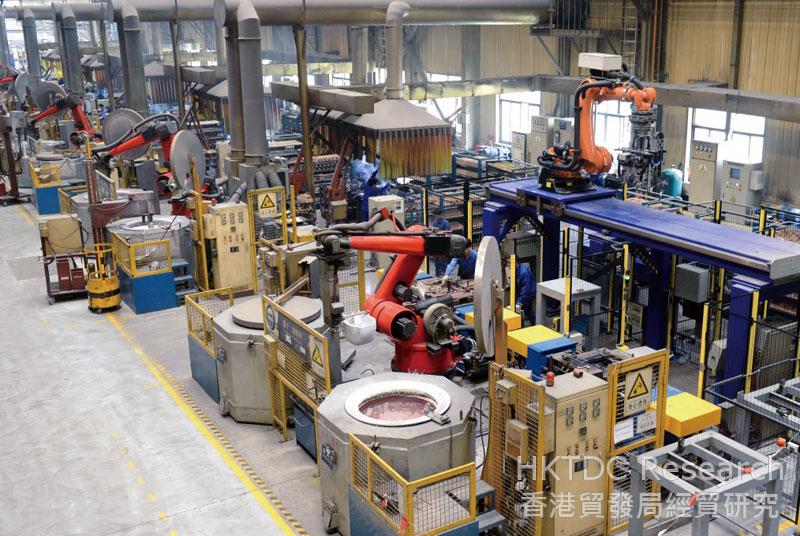
Generally, vehicle manufacturers are now adopting a global procurement strategy that requires a zero-inventory approach and a just-in-time production model. As a result, auto parts suppliers along the supply chain are constantly required to upgrade their capacity levels in line with the changing priorities of vehicle manufacturers as they expand into new geographic markets.
As competition among vehicle manufacturers intensifies amid slowing market demand, the ensuing price pressure is passed back along the supply chain to auto parts companies. At the same time, labour costs are rising continuously and raw material prices are in a state of flux. The problems of the automotive manufacturing and auto parts sectors have also been exacerbated by the pressure to develop electric cars and smart cars, whilst continuing a programme of perpetual technological upgrade. Against this backdrop, auto parts companies are also looking to enhance their internal operational efficiency, while forever on the lookout for relevant technology and supply chain resources, either through co-operation with third parties or via mergers / acquisitions.
In Huayu’s case, it is upgrading its related supply-chain deployment and upgrading its management information systems as a means of enhancing its control of its supply-chain resources. It is also establishing a subsidiary in Hong Kong. As well as handling foreign exchange revenues and international payments, this new operational centre will play a key role in sourcing partners, capital, information and technology across the international markets. It is hoped that that this will ensure that the appropriate external resources can be incorporated and that the supportive capabilities of the company’s supply chain will be enhanced. Additionally, in order to meet its future development objectives, Huayu is continually obliged to invest in new projects on a global basis. As, typically, these overseas investment and financing activities necessitate complex financial and commercial transactions and negotiations, it frequently needs to call on the expertise of Hong Kong’s professional services sector.
Huayu is the largest company in the Chinese automotive parts and support market and a tier-one supplier to Chinese and Sino-foreign vehicle manufacturers on the mainland. It is listed on the Shanghai Stock Exchange and its business scope extends across interior and exterior trim parts, metal forming and dies/moulds, electric and electronic parts and new-energy car parts. The company is now looking to advance the internationalisation of its business, which will include expansion into the international automotive electronics products market. Ultimately, its strategy is to emerge as a truly global player.
Note: For details of the company interviews conducted jointly by HKTDC Research and the Shanghai Municipal Commission of Commerce, please refer to other articles in the research series on Shanghai-Hong Kong Co-operation in Capturing Belt and Road Opportunities.
[1] For further details, see China Seeks to Establish World Class Smart Supply Chains by 2020 under Regulatory Alert-China.
[2] Huayu was interviewed jointly by HKTDC Research and the Shanghai Municipal Commission of Commerce in Q1 2018.
Editor's picks
Trending articles
By PwC
Great Plan Generates Great Opportunity
PwC has launched an analysis of the “New Opportunities for the Guangdong-Hong Kong-Macau Bay Area”. Hong Kong’s Chief Executive Carrie Lam highlighted in her first Policy Address that the Hong Kong SAR Government will actively participate in taking forward the development of the Bay Area and create favourable conditions for diversifying Hong Kong’s industries, in particular for promoting innovation and technology development. The report answers vital questions - How should the Bay Area develop in the future? What opportunities will it bring for local enterprises and residents? Will it create a globally competitive city cluster, after the world's three leading bay areas - in New York, San Francisco and Tokyo?
Here are some highlights of the report:
Total GDP of Guangdong, Hong Kong and Macau regions was equivalent to 14% of the national economic aggregate, making the region “as rich as a country” in terms of total economic size and population.
Apart from the obvious advantages in many areas of the manufacturing industry, the Bay Area has a very prosperous tourism industry characterised by big market size and large numbers of visitors.
The Bay Area also leads in insurance, finance, technology, real estate development, automobile and home appliance manufacturing, etc., and some of the industries even outpace their global counterparts.
The "三" shaped city cluster is an outstanding feature in the world, for there are no such big three cities so close to each other at home and abroad.
Compared with the rest of the country, the 9+2 cities are better developed, have greater demands and are better positioned to be developed into smart cities.
Please click to read full report.
Editor's picks
Trending articles
By Arif Rafiq, President, Vizier Consulting LLC; non-resident fellow, Middle East Institute
Nearly three years have passed since the China-Pakistan Economic Corridor (CPEC) was formally launched. Several projects have come online, and a critical mass of electric power and infrastructure projects will be operational within the next 12 to 18 months. Now, more than halfway through the first of CPEC’s three five-year phases, is an opportune moment to assess how Beijing and Islamabad have fared so far in pushing forward the massive, fifteen-year connectivity project, valued at upwards of $62 billion…
What to Watch Out for in 2018
Gwadar Momentum Grows
Over the past year, Gwadar Port has averaged about one shipment per month—mainly inbound shipments of construction material. But there are indications that economic activity may pick up. The first phase of the Gwadar Free Zone launched at the end of January. The port operator, China Overseas Ports Holding Company (COPHC), is constructing an additional berth within the year to increase handling capacity and a COPHC subsidiary signed an MOU with Pakistan State Oil to develop an “oil city.” These developments suggest that China may begin using Gwadar for transshipment within the next few years. A clear sign of this will be if COSCO adds Gwadar to one of its regional shipping lines.
Basic, but resolvable, infrastructural deficiencies continue to hold Gwadar back. Gwadar presently has a water deficit of four million gallons a day (MGD). A five-MGD desalination plant for the city has been planned since the earliest CPEC discussions, but Beijing appears disinclined to provide a grant for the project. Pakistan has built water storage dams to service the Gwadar area, but there has been little to no rainfall in recent years. COPHC established a smaller 0.25-MGD desalination plant, and a cheaper option may be to repair an older two-MGD desalination plant. But as the city develops and hundreds of millions of dollars are poured in for commercial purposes, the absence of clean drinking water sends a dispiriting message to locals.
Gwadar’s electricity is currently sourced from nearby Iran. A 300MW coal power plant could be built on a fast-track basis within the next one to two years, but given the desire to build Gwadar as a tourism and natural gas hub, a natural gas-fueled plant may be a better fit.
Impact of Macroeconomic Stress and Poor Planning
The impending surge of CPEC projects coming online will lay bare the quality of economic planning by Pakistan’s Planning Commission, the chief coordinating body on CPEC. The initial indications are not encouraging. The co-produced CPEC Long-Term Plan is a vague, aspirational document that reflects little consultation with Pakistan’s business community and falls short in explaining how CPEC will benefit business. The Planning Commission’s CPEC “Center of Excellence” has functioned mainly as a publicity department, failing to produce serious policy-relevant research. Finally, the Planning Commission’s chief economist has made astounding estimates about the toll revenue that Pakistan will earn through CPEC.
The rise in Pakistan’s current account deficit has been propelled in part by machinery imports due to CPEC. Pakistan has had to float $3.5 billion in Eurobonds over the past few months to shore up its foreign exchange reserves. An IMF bailout may be on the horizon and could put future CPEC projects, including critical railway upgrades, at risk of postponement. In the end, the present pain may be short-term before long run gains. The economy on the whole is forecast to grow around 6 percent into 2020. But Pakistan’s economic planners have failed to demonstrate how exactly they will get over the present fiscal hump. Part of the solution may require some concessions from Beijing in the latest round of the Sino-Pak FTA talks to remove hurdles for Pakistani exports to China.
Multilateralization of CPEC
A host of countries have expressed interest in “joining” CPEC, and non-Chinese foreign investment in CPEC or CPEC-related projects is likely to rise as the initial wave of electric power and infrastructure projects come online. Presently, Qatari and Saudi investors are co-sponsoring two separate CPEC electric power projects, while a British company is co-sponsoring one of the lignite mining and mine mouth power plant projects in Thar. The Saudis, who recently agreed to finance part of the Turkmenistan-Afghanistan-Pakistan-India gas pipeline and blocked a Korean steel investment in Chabahar, appear keen on using geo-economics as a means to counter Iranian influence in Central and South Asia. This could translate into a more pronounced Saudi role in CPEC, leveraging the project not just to exploit opportunities in the Pakistani and Chinese markets, but also to steer regional connectivity away from Iran.
Please click to read full report.
Editor's picks
Trending articles
Five years on from the launch of the Belt and Road Initiative, China's economic masterplan, the first of a two-part report considers how Turkey, one of the programme's key partners, is coming to terms with the developmental realities.


For centuries Turkey has been seen as a link between East and West, a vital crossroads for cultural and economic exchange. More recently, it has come to be seen as one of China's key partners as it rolls out the Belt and Road Initiative (BRI), its ambitious international infrastructure development and trade facilitation programme.
Inevitably, given the size and scope of the programme, the BRI has inspired evangelical zeal among some of its proponents across the world, while others have been more reticent and, on occasion, wholly critical. For its part, Turkey has seen both points of view widely aired as business leaders, academics and political figures seek to come to terms with the huge impact the initiative is set to have on this 80-million strong country.
Setting the scene for the debate that has divided many of his countrymen, Salih Işik Bora, an International Trade Analyst with the Ankara-based Center for Eurasian Studies, said: "Today, 16% of the European Union's $1,720 billion imports come from China, making it Europe's largest trading partner. Along this trading route – historically known as the Silk Road – are many of the world's major economies. Unlike the practice of classic times, however, 96% of these products now reach Europe by sea, largely because of the poor land infrastructure found in much of Eurasia.
"As one of its key objectives, the BRI seeks to remedy this and, indeed, has already had some success in doing so. The volume of rail freight between China and Europe, for instance, has increased from 57,000 tonnes in 2013 to 311,000 in 2016.
"At least in this regard, the BRI has been positively received across Eurasia, with many countries along the route having made large contributions to the Asian Infrastructure Investment Bank, the project's key financial conduit. On top of that, a number of European nations, including France, Germany and the United Kingdom, as well as those further afield, such as India, Russia, Iran and Saudi Arabia, have also contributed."
Turkish Support
By and large, the BRI has attracted considerable support in Turkey, with the government embracing it as hugely complementary to its own infrastructure development programme. Acknowledging this close alignment between the political leaders in both countries, Şahin Saylik, the General Manager of Kırpart, an automotive-parts company based in Bursa, one of the largest cities in Northern Turkey, said: "With firm support from both the Chinese and Turkish governments, the success of the BRI is all but assured, especially as Recep Erdoğan, our President, has publicly committed to it.
"For our part, we were previously focused on our own Middle Corridor initiative, a development that was expected to benefit from some US$8 billion of investment. In order to ensure that this can be integrated into the BRI, the Turkish government has already contributed $40 billion in development funding.
"In terms of BRI-related projects already under way, there is the Marmaray Rail Network, the Ormangazi Bridge, a third Istanbul airport and a railway link between Edirne and Baku. More recently, it has also been proposed that a third bridge be built across the Bosporus [a strategic waterway marking the boundary between Europe and Asia] as a way of optimising the trade flow."
Infrastructure Improvements
While the improvements to Turkey's transport infrastructure are clearly apparent and widely welcomed, redeveloping the country's overland transport links is still seen as something of a challenge. The sheer scale of the work that needs to be done, however, has been seen as representing a real opportunity for Turkish businesses.


Emphasising the depths of the country's own redevelopment resources, Turgut Kerem Tuncel, a Senior Analyst with the Center for Eurasian Studies, said: "Turkish companies have long been partners and project leaders within the construction sector, having completed a wide variety of projects in many of the former Soviet countries, the Gulf and North Africa. With their significant experience in large and mid-scale cross-border business projects, many Turkish businesses are keen to participate in the BRI development programme.
"To date, there has already been some co-operation, most notably with regard to the construction of the Baku-Tiflis-Kars Railroad (BTK), which went into operation in October 2017. At the time, it was claimed that it finally provided an overland link between China and London. This, however, was something of an exaggeration.
"If Turkey is ever truly to become a bridge between the Pacific and the Atlantic, its rail network and its supporting infrastructure will need a massive upgrade. At present, there is not even a mainline rail connection between the two sides of the Bosporus."
Maritime Transport
Some, however, remain sceptical that Turkey will ever be able to fully capitalise on the potential of its overland transport routes. Expressing the sentiments of many, Professor Selçuk Çolakoğlu, Director of the Ankara-based Turkish Center for Asia Pacific Studies, said: "A number of China-led initiatives, such as the BRI and the China-Pakistan Economic Corridor (CPEC), have sought to revive the overland routes as an alternative to the maritime corridors.
"At present, it's hard to be sure whether the land routes will ever provide a viable alternative to the maritime routes that already link Europe and Asia. What is clear, though, is that China wants to reduce its current over-dependence on sea freight."
While some question the practicality of rebooting the land transit facilities, some go further still, openly wondering just how closely aligned China and Turkey's long-term objectives really are. Expressing his own scepticism, Çolakoğlu says: "It is still not entirely clear how the Middle Corridor will be integrated into the BRI. Initially, China was proposing to use the Southern (Iranian) Corridor as its primary conduit to Europe, while wholly bypassing the Turkish Middle Corridor. These initial fears were allayed, however, in light of China's commitment to investing in the development of the Edirne-Kars High-speed Railway Link, a key component of the corridor.
"Perhaps more worryingly, at present, Turkey has been excluded from the BRI's proposed maritime routes. As it stands, China sees the northeast Greek port of Piraeus as its preferred hub for accessing Europe.
"Overall then, while there are reasons to be optimistic about Sino-Turkish BRI co-operation, some concrete agreements need to be in place before it can genuinely be considered a success story. Despite that, let's say I remain cautiously optimistic."
Economic Gains
Such concerns aside, many in Turkey are bullish about the economic opportunities likely to emerge from the BRI. Clearly convinced as to the benefits on offer, Bora said: "Given Turkey's central geographical positioning within this proposed trading network, it may well emerge as one of the big winners. Based on current projections, the BRI should account for per annum GDP growth of at least 0.22% in the case of the Turkish economy.
"These gains, however, may not be evenly distributed. While, at present, western Turkey accounts for the largest proportion of the country's international trade, the BRI could act to rejuvenate the currently neglected eastern region. This would see such cities as Sivas and Erzurum once again becoming significant trading hubs, bringing much needed stability and redevelopment to the wider region."
For Çolakoğlu, the benefits are somewhat more prosaic, with the Professor saying: "Fundamentally, Turkey believes that the BRI will foster closer bilateral relations with China, with new railway lines carrying significant quantities of passengers and freight in both directions."
Some, though, remain concerned that, while the BRI will open up international trade, the key beneficiary will be China, with other countries – including Turkey – likely to see their trade deficit with their mighty eastern neighbour only set to widen. Kırpart's Saylik, however, is philosophical about any such eventuality, saying: "As long as Turkey is politically astute, it has no need to worry about the BRI. The trade deficit with China is a separate issue and one that that will need to be addressed regardless of the BRI.


"In general, though, I believe the BRI will have a positive impact on Turkey's bid to close its overall trade deficit, although maybe not so much when it comes to China in particular."
George Dearsley, Special Correspondent, Ankara
For further analysis of Turkey's likely role within the BRI, see part two of this report: "Turkey Set for Eastward Pivot as Potential BRI Benefits Beckons", 4 September 2018.
Editor's picks
Trending articles
With Beijing-Manila ties at their most cordial, the Belt and Road Initiative is helping cement the countries' partnership.


As with many of the most successful Belt and Road Initiative (BRI) infrastructure-redevelopment projects, many of China's investments in the Philippines advance the programme's overall objectives while also meeting key local needs. A prime example of this is the mainland's huge contribution to tackling the water-management issues that have long confounded Manila, the Philippines' capital.
Already deemed a priority by Rodrigo Duterte, the Philippines President, and a key component of his massive Build, Build! infrastructure initiative, China agreed to underwrite the costs of two of the related projects late last year. This saw the Beijing-led Asian Infrastructure Investment Bank (AIIB) and the World Bank each sign off on loans of US$207.63 million for the Metro Manila Flood Management Project, with the balance of US$84.74 million being met by the Philippines government. At the same time, China also agreed to provide the US$234.92 million required to initiate the New Centennial Water Source-Kaliwa Dam project (NCWSP).
In terms of water management, Metro Manila suffers from two seemingly contradictory problems, having both too much and, on occasion, too little. This sees the city regularly subjected to serious flooding, often with tragic consequences for many of its residents, while it also struggles to meet the growing demand for safe drinking water occasioned by the region's ever-expanding population. It is hoped that the two China-backed projects will help to alleviate both of these problems.
In terms of the first, the Metro Manila Flood Management Project, this will entail a substantial upgrade to 36 of the region's pumping stations, while an additional 20 will be constructed from scratch. It will also involve a major overhaul of much of the supporting infrastructure along the region's primary waterways.
In total, work on the project will extend across a 29 sq km site. Once completed, it is expected to eliminate the danger of flooding for some 210,000 local households, benefitting about 970,000 people in all.
The first phase of the project, which will see five existing pumping stations substantially upgraded, is expected to get under way this year. At present, details of the required engineering work are being finalised, with procurement work set to be completed by the end of June. Construction proper will then begin in the autumn, with a scheduled end date early in 2020.
The project overall is aiming for a May 2024 completion date. From a local angle, construction will be overseen by the Manila Development Authority, with the National Housing Authority and the Social Housing Finance Corp also playing supervisory roles.
In the case of the NCWSP dam, it is hoped that this will bring an end to the capital's water shortages. To this end, the project will see the construction of a low dam with a discharge capacity of 600 million litres per day and a 27.7-kilometre raw water conveyance tunnel with a capacity of 2.4 million litres per day.
At present, the Philippine authorities are considering bids from three mainland construction companies, one of which, under the terms of the loan, will be appointed as the principal contractor on the project. The three shortlisted contenders are China Engineering, Power China and a joint bid from Guangdong Foreign Construction and Guangdong Yuantian Engineering. Once due diligence has been completed, the winning bid will be announced by the Metropolitan Waterworks and Sewerage System, the Philippine government body with oversight on the project.
Scheduled to be completed in 2023, there is considerable pressure to ensure this particular project is not subject to any delays. This is largely down to the fact that the Angat dam, the source of 93% of the capital's water supply, will be unable to meet the growing demands of the city's population within eight years. Should the NCWSP encounter any major obstacles, Manila's taps running dry could become a very real possibility.
While the benefits to the Philippines represented by these two projects are clearly apparent, the upside for China is less immediately tangible. The new partnership between the two countries, however, has helped patch up a relationship that has more than occasionally been a little fraught. It has also succeeded in reducing the long-simmering tensions over the South China Sea, with the two countries now working more towards jointly administering and exploiting this particular stretch of the Pacific Ocean, rather than competing for ownership.
The thawing of relations has also already substantially improved bilateral trade, while the boost to the Philippine economy expected to result from the many China-backed infrastructure projects will doubtless provide a ready consumer market for an increased level of mainland exports. At the same time, this new co-operation is also expected to give China access to improved maritime trade via a number of the Philippines' hub ports.
Marilyn Balcita, Special Correspondent, Manila
Editor's picks
Trending articles
By Nancy L.S. LEUNG, Visiting researcher, Asian Cultures Research Institute, TOYO University
I. Introduction
‘The Silk Road Economic Belt and the 21st-Century Maritime Silk Road’, simply named as ‘the Belt and Road’ or ‘Belt and Road Initiative’ is introduced by Chinese president Xi Jinping in September 2013. The ‘Belt and Road Initiative’ immediately attracts great attention in economic circle and political circle as the initiative is cultural, economic and political. Furthermore, it does not only influence to participating counties, but also to non-participation counties. It is believed that since 2013, scholars from different academic disciplines start to study ‘Belt and Road Initiative’. This paper aims to study how ‘Belt and Road Initiative’ is being discussed in academia, especially in Japanese, Chinese and English academic articles. In other words, it is to examine and compare the research trend of ‘Belt and Road Initiative’. The reasons why this paper focuses on Japanese, Chinese and English academic articles are first, Japanese academia has a long history in studying China, Japanese academia can give an East Asia perspective towards ‘Belt and Road Initiative’. Second, since ‘Belt and Road Initiative’ is introduced by Chinese government, it is necessary to examine how Chinese academia discusses ‘Belt and Road Initiative’. Third, English is the most frequently used languages in academic publish and authors are from all over the world, therefore, English academic articles can provide a wider and objective perspective towards ‘Belt and Road Initiative’. In sum, this paper first analyzes the characteristics of academic articles in each language, and then compares the research trend on ‘the Belt and Road’.
II. Background of ‘the Belt and Road’
On 7th September 2013, Chinese president Xi Jinping announced the idea of ‘the Silk Road Economic Belt’ during his visit in Kazakhstan. Nearly a month later, on 3rd October 2013, Xi announced the idea of ‘the 21st-Century Maritime Silk Road’ during his visit in Indonesia. The idea of ‘the Silk Road Economic Belt’ and ‘the 21st-Century Maritime Silk Road’ comes from ancient Silk Road. However, this new Silk Road is not built by merchants or traders, rather it is a strategy introduced by Chinese government. In other words, it is Chinese government orientated. According to the official homepage of ‘the Belt and Road’, the principles of ‘the Belt and Road’ are open for cooperation, harmonious and inclusive, market-oriented and mutual benefit (State Information Center of People's Republic of China). Although the idea of ‘the Belt and Road’ is introduced in 2013, the actual practice starts after the establishment of Asian Infrastructure Investment Bank (AIIB), which means after December 2015. It is because infrastructure construction in developing countries is one of the main themes of the initiative and AIIB provides funding to those developing countries and relevant projects. Beside infrastructure development, policy coordination, trade, financial integration, cultural exchanges are also the themes of the initiative. Until 2017, there are 70 countries cooperating with China under the initiative. Most of the countries are developing countries in Central Asia and East Europe.
III. Research Method
This study is a comparative literature review on Japanese, Chinese and English academic articles published between 2013 and July 2017. Academic articles are collected through search engines in various academic journals databases by entering keywords, ‘Silk Road Economic Belt’, ‘21st Century Maritime Silk Road’, ‘One Belt One Road’, ‘Belt and Road Initiative’ and ‘New Silk Road’, etc. in Japanese, Chinese and English separately. Japanese articles are collected from CiNii, a Japanese scholarly and academic information navigator. Chinese articles are collected from China National Knowledge Infrastructure (CNKI), a Chinese national academic database. English articles are collected from JSTOR, SAGE Journals, ProQuest, Elsevier, Taylor & Francis Groups, academic journals database providers. Articles which are analyzed in this study are those published by July 2017 and whole article is accessible through the library of TOYO University. However, some articles which are printed in academic journals are excluded. They are articles which are less than 5 pages in Japanese or Chinese, printed in single column and less than 3 pages in English. Within 3 languages, the Chinese academic articles vary dramatically in quality. After screening, this study selected 99 articles from 5330 found articles. For English academic articles, this study only can access 114 articles from 122 founded articles. Thus, this study is done base on 13 Japanese articles, 99 Chinese articles and 114 English articles.
IV. Characteristics and research trend in Japanese academic articles
This study has collected 13 Japanese articles from CiNii. All 13 articles are published between 2015 and July 2017. Although the initiative of ‘the Belt and Road’ is introduced in 2013, there is no Japanese academic article discuss or analyze ‘the Silk Road Economic Belt’, ‘the 21st-Century Maritime Silk Road’ or ‘Belt and Road Initiative’ in 2013 or 2014. However, there is an increasing trend in studying ‘Belt and Road Initiative’ because 3 articles are published in 2016 and 6 articles are published in 2017 within 7 months.
Although all articles are written in Japanese and are published by Japanese academic institutes, not all authors are Japanese and attach to Japanese academic institute. According to the name and title of the authors, it is possible to identify the background of the authors. Among 13 articles, 7 articles are written by Japanese and 6 are written by Chinese. Within the articles that are written by Japanese authors, 3 articles are written by the same person. And for the articles written by Chinese authors, 3 articles are submitted by authors who are not attached to Japanese institute (2 is from mainland China, and 1 is from Taiwan). This implies that studies on ‘Belt and Road Initiative’ are limited in Japan. This situation also implies that Chinese scholars have interest to publish academic articles in Japanese academic institutions or to encourage, to promote ‘the Belt and Road’ studies in Japanese academia.
Besides the background of the authors, from the publisher of the articles, it is clear that ‘Belt and Road Initiative’ is not a common research topic in Japanese academia. Among the 13 articles, 9 articles are published by private research institutes, 3 are published by research institute attaches to university and 1 is published by academic society. The articles that are published by private research institutes, 4 are published by ‘The Economic Research Institute for Northeast Asia’, another 4 are published by ‘The Japan Research Institute, Limited’, and 1 is published by ‘Institute for International Trade and Investment’. These private research institutions are economic research institutes; therefore, ‘Belt and Road Initiative’ is one of their research interests.
Based on the discipline of the academic journals and the content of the articles, 13 articles are basically from 6 disciplines. They are Area Studies (1 article), Development Economics (1 article), Regional economics (1 article), Risk and Crisis Management (1 article), International Economics (6 articles) and International Relations (2 articles). In other words, most of the articles are from the discipline of Economics.
The main characteristics of the content are first, mentioning AIIB; second, are in questioning stand. Within 13 articles, 8 articles have mentioned AIIB. AIIB is a multilateral development bank that provides loans for infrastructure building; it has an important position in turning ‘Belt and Road Initiative’ into practice. Although most articles mentioned AIIB, their objects are different. For example, discussing the trade relation between China and its neighboring countries under ‘the Belt and Road’, examining the economic influence of ‘the Belt and Road’, analyzing AIIB, questioning the effectiveness of ‘the Belt and Road’, etc.
In sum, Japanese academic articles related to ‘Belt and Road Initiative’ are limited and mainly focus on economic aspects. In November 2017, Japanese Prime Minister Shinzo Abe agreed with Chinese president Xi to develop Japan-China business during a meeting in Vietnam (The Mainchi, 2017). This action implies Japanese government has a will to encourage Japanese firms to cooperate in ‘the Belt and Road’. The involvement of Japan in China’s ‘the Belt and Road’ will increase the demand on ‘Belt and Road Initiative’ research. ‘Belt and Road Initiative’ is not just an economic or political strategy, it also includes cultural exchanges. However, cultural exchanges between Japan and China start from 1972 and have a deep foundation. Therefore, in the coming years, research related to ‘Belt and Road Initiative’ will still focus on economic aspects in Japanese academia.
V. Characteristics and research trend in Chinese academic articles
When searching ‘Yidai-yilu’ (the Belt and Road) in China National Knowledge Infrastructure (CNKI), 5330 relevant academic articles are published by July 2017. However, these 5330 articles are varying in quality. In order to analyze the characteristics and research trend in Chinese academic articles, 99 articles are well selected for this study after strict screening.
The collected 99 articles are published between 2014 and July 2017. From the distribution of the 99 articles by its published year, it seems that the number of articles has increased sharply in 2015, dropped suddenly in 2016 and increased again in 2017. However, this cannot reflect the reality as these 99 articles are well selected. In order to provide an accurate trend, all the found articles (5330 articles) are also included in figure 3. From the distribution of 5330 articles, it shows an increasing trend of academic publish from 2014. Although the collected data stops in July 2017, by the end of July 2017 there are already 1851 articles published which is 86% of those published in 2016 (2142 articles).
Based on the discipline of the academic journals and the content of the articles, 99 academic articles are from 22 disciplines. They are Policy Studies (16 articles), International Relations (16 articles), International Trade (10 articles), Economic geography (7 articles), Asian Studies (6 articles), International Economics (5 articles), International Laws (5 articles), Educational sociology (5 articles), Social Research (5 articles), Crisis Management (4 articles), Public Policies (3 articles), Monetary Economics (2 articles), Geopolitics (2 articles), Environmental Economics (2 articles), Accounting(2 articles), Architecture (2 articles), Logistics (2 articles),Civil Laws (1 article), Transportation engineering (1 article), Management (1 article), Tourism Geography (1 article), and Environmental Science (1 article). The largest share of the selected Chinese academic articles is from the discipline of Policy Studies (16%) and International Relations (16%). In other words, 32% of the selected articles are from the discipline of Political Sciences.
All the well selected articles use the term ‘Yidai-Yilu’ (the Belt and Road) in the title of the article and all are published by research institutes in University. Although this study clarifies the 99 articles into 22 disciplines, the content of the articles are in great variation. For example, analyzing how ‘Belt and Road Initiative’ can improve the development and economic situation of China and related countries, discussing how importance is ‘Belt and Road Initiative’ to China, providing suggestions to different issues faced by ‘Belt and Road Initiative’, etc. Since the practice of ‘the Belt and Road’ starts after the establishment of AIIB, most of the articles are basically explaining the idea or concept of the ‘Belt and Road Initiative’, rather than analyze or examine the subject. Almost all articles emphasize ‘Belt and Road Initiative’ is a win-win game (games without losers, it is one of the principles of the ‘Belt and Road Initiative’) and how it is beneficial to the partner countries. Additionally, most articles try to link the subject internationally, but most of them end up with China-centered conclusions. Therefore, the main characteristic of Chinese academic articles is positive attitude towards the ‘Belt and Road Initiative’.
On the whole, the selected Chinese academic articles primarily from the discipline of political sciences. This suggests that Chinese academia mainly focuses the ‘Belt and Road Initiative’ in political perspective rather than economic direction. Since selected articles generally analyze or discuss ‘Belt and Road Initiative’ in a positive way, it can conclude that the selected articles are subjective. One of the reasons is ‘the Belt and Road’ is a national strategy that Chinese scholars spontaneously support the initiative. Therefore, it is predictable that academic articles published in Chinese in relation to ‘Belt and Road Initiative’ continue to be positive. Considering ‘Belt and Road Initiative’ concurrently serves as a foreign policy (including both political and cultural factors) and an economic policy, the research trend of ‘the Belt and Road’ in Chinese academia will mainly remain in economic perspective; at the same time, the demand from cultural perspective is increasing.
VI. Characteristics and research trend in English academic articles
This study has collected 122 English academic articles related to ‘the Belt and Road’, which are published between 2014 and July 2017, unfortunately, this study only can access 114 articles. All these articles are from peer-reviewed journals. Most of these English academic articles are published in 2016. However, there is an increasing trend of publishing English academic articles related to ‘the Belt and Road’ since 2015. By July 2017, 40 academic articles are published, which is 80% of 2016. This suggests that at the end of 2017, the number of English academic articles related to ‘the Belt and Road’ will be much more.
Considering English is the most common language used in academic publishing, authors of these 114 articles are from all over the world. Although it is difficult to identity the nationality of the authors by surnames, titles or the location of their attached institutes, despite the author is a co-author or a single author, by referring to the surname 53.5% of the articles are contributed by authors who have Chinese surname. This suggests over half of the articles are contributed by authors who have Chinese background. And this also reflects scholars who have Chinese background are interested to study ‘the Belt and Road’.
Depend on the journal’s discipline and article’s content, this study has classified the collect 114 articles into 8 disciplines. They are Agricultural Science (4 articles), Area Studies (11 articles), Earth Sciences (6 articles), Economics (36 articles), Geography (7 articles), Law (1 article), Sociology (2 articles) and Political Sciences (47 articles). Among 114 articles, the largest share is Political Sciences (41%), following by Economics (32%) and Area Studies (10%). This shows most English academic articles analyze ‘Belt and Road Initiative’ from the perspective of political or economic.
If organize the articles into a more detailed disciplines, 18 sub-disciplines can be identified. They are Agricultural Economics, Asian Studies, Cultural Studies, Development Economics, Economic Geography, Energy Economics, Environmental Science, Financial Economics, Geopolitics, International Economics, International Law, International Relations, Policy Studies, Political Economy, Resource Economics, Social Geography, Transport Economics and Transportation Engineering. Within the 18 sub-disciplines, the discipline of International Relations has the largest share (22%), following by Policy Studies (15%) and Asian Studies (10%). It may related to ‘Belt and Road Initiative’ is both an economic and political strategy and the theme of the initiative is to improve cooperation between countries.
The content of the 114 articles are great in variation. Although China does not show a definite stance to exclude U.S. from ‘the Belt and Road’, 7 articles in the field of International Relations focus China-U.S. relations under the practice of ‘Belt and Road Initiative’. These articles assume ‘Belt and Road Initiative’ can empower China and affect the position of U.S. as the World political or economic leader. In other words, some International Relations scholars believe ‘Belt and Road Initiative’ could increase China’s international political power and China’s responsibility in global governance. Besides articles from International Relations, articles from Asian Studies, Policy Studies and Political Economy also analyze how ‘Belt and Road Initiative’ affect China’s position in the world. Since, ‘Belt and Road Initiative’ is not just a foreign strategy or a political strategy, there are certain articles discuss the economic effect of ‘the Belt and Road’. Yet, ‘the Belt and Road’ starts its practice after the establishment of AIIB, recognized outcomes are still limited. Therefore, it is still difficult to assess the economic effects; as a result, most arguments are remaining in prediction.
Besides the discipline and content, wording representing ‘the Belt and Road’ or ‘Belt and Road Initiative’ are rich in diversity. Although official English translations are posted in the official homepage ‘Belt and Road Portal’ (hosted by the Central government of China), most English articles present ‘the Belt and Road’ or ‘Belt and Road Initiative’ differently. For the official names, ‘the Belt and Road’ and ‘Belt and Road Initiative’ are announced in mid-2017. Before that, ‘One Belt One Road’ or ‘OBOR’ are the official names of the initiative. Additionally, ‘the Silk Road Economic Belt’ and ‘the 21th-Century Maritime Silk Road’ are the official name of the land project and maritime project respectively. Among the 114 articles published between 2013 and July 2017, ‘the belt and Road’ are mostly represented by ‘One Belt One Road’ 1 (75 times), following by ‘Silk Road Economic Belt’ (74 times) and ‘21st-Century Maritime Silk Road’(47 times). This shows although some articles only focus on analyzing ‘the Silk Road Economic Belt’ or ‘the 21st-Century Maritime Silk Road’, most authors mention the land project and maritime project together.
All in all, English academic articles mainly discuss ‘Belt and Road Initiative’ from political or economic aspects. However, cultural exchange is considered as an important part of cooperation. Therefore, it is expected to have more studies on culture exchange between China and Central Asia or Middle East countries in the near future. Especially, the Chinese government set up a study abroad or study in China policy to attract oversea students to study in China, at the same time, to send Chinese students to study in ‘the Belt and Road’ participating countries in 2106. Nonetheless, studies from economic and political perspectives will remain as the major area in studying ‘the Belt and Road’.
VII. Comparative Studies on Japanese, Chinese and English academic articles
‘The Belt and Road’ is a cultural, economic and political initiative which across Eurasia continent and its related oceans. The impact of this initiative is still unpredictable as it is not only related to 71 participating counties (by the end of 2017), but also to their neighboring countries or traditional trade partners. After comparing the characteristics and content of Japanese, Chinese and English academic articles, this study concludes as the following.
First, this study finds research trend on ‘Belt and Road Initiative’ in Japanese, Chinese and English are slightly different. Japanese and Chinese articles mainly focus in economy, but English articles focus more in politic.
Second, the quantity of academic articles published in Japanese, Chinese and English between 2013 and July 2017 is in a huge gap. Although this study has some regulations in selecting academic articles, only 13 articles can be found in Japanese. Comparing to the Chinese (5330 articles without screening) and English (122 articles, including those author cannot access), publication of Japanese academic article related to ‘the Belt and Road’ is far behind. Figure 9 shows the number of selected articles by their published languages and published period. In other words, it suggests that ‘the Belt and Road’ is still not a popular research topic in Japanese academia but a hot topic in Chinese academia and has attracted certain attention in the global.
Third, the quality of academic articles written in Japanese, Chinese and English are varied. Academic articles that are written in Japanese are mostly discussing the ‘Belt and Road Initiative’ from economic aspects. On the other hand, academic articles that are written in Chinese are mostly explaining the idea or concept of ‘Belt and Road Initiative’. More evaluations, examinations, analysis are found in English academic articles. All in all, quantitative and qualitative researches on ‘Belt and Road Initiative’ are limited in all 3 languages. This is because the initiative has just started; it is difficult to produce qualitative research in a short period.
Forth, the variety of discipline is different. Among the 3 languages, academic articles written in Chinese have the highest variety in discipline. Japanese articles are typically from Economic. Cultural, Environmental, and Transport related disciplines can only be found in Chinese and English articles. This result may relate to the attitude of Japanese government towards ‘Belt and Road Initiative’, as Japanese government does not show intention to join ‘Belt and Road Initiative’ until December 2017. Still, economic and political influences from ‘the Belt and Road’ not only occur in participating counties, Japan is affected indirectly from its trade partners who have joined ‘the Belt and Road’. This can explain why Japanese academic articles mainly focus on economic aspects.
Fifth, wide variation in wording representing ‘the Belt and Road’ is found only in English academic articles. Since Japanese language uses Chinese characters and is influenced by Chinese language during ancient period, wording representing ‘the Belt and Road’ in Japanese articles is the same as those in Chinese articles. For English articles, even Chinese government has announced official English translation of ‘the Belt and Road’ and ‘Belt and Road Initiative’, most English articles use different wordings, such as ‘One Road One Belt’, ‘Belt and Road Strategy’, ‘New Silk Road’, ‘Maritime Silk Road’ to represent the initiative. This suggests authors of English articles pay not much attention to the official wordings.
Sixth, the attitude towards ‘the Belt and Road’ in 3 languages are different. Japanese articles basically in question stance and Chinese articles typically positive and China-centered. However, English articles do not show a united attitude. This may because authors of English articles are from all around the world and the influence of ‘the Belt and Road’ to their research interests and areas are different. Therefore, it can say that English academic articles can provide a more objective perspective than Japanese and Chinese academic articles.
Seventh, the present of authors who have Chinese background in Japanese and English academic publish is conspicuous. Among 13 Japanese articles, 6 articles are written by Chinese scholars who are from mainland China and Taiwan. Within 114 English articles, 61 articles are written or co-authors with authors who have Chinese background. This shows that almost half of the Japanese and English articles are contributed by authors who have Chinese background. This implies that scholars who have Chinese background consider ‘the Belt and Road’ is an interesting topic for research or Chinese scholars are more willing to promote research on ‘the Belt and Road’ in different academia.
VIII. Conclusion
To conclude, the recent research trend on ‘Belt and Road Initiative’ by July 2017 in Japanese, Chinese and English academic articles is centered on Economic and Political perspectives. It is believes that this result is closely related to the idea of ‘the Belt and Road’ as it emphasizes on cooperation, trade and infrastructure development. The limitation of this study is the number of academic article published between 2013 and July 2017 varies largely in 3 languages, especially the number of Japanese articles is not comparable to Chinese and English. By comparing academic articles published in Japanese, Chinese and English, it is clear that ‘the Belt and Road’ is not yet a hot topic in Japanese academia and only attract certain attention in global academia by July 2017. Since cooperation, trade, infrastructure development projects related to ‘Belt and Road Initiative’ start in 2015, the influence of ‘the Belt and Road’ will appear gradually in different fields, such as environment science and area studies. This study believes that ‘Belt and Road Initiative’ will attract more attention in different disciplines and academia in the near future.
This article was first published by Asian Cultures Research Institute TOYO University.
Editor's picks
Trending articles
By Christopher Len, Senior Research Fellow in the Energy Studies Institute, National University of Singapore
Executive Summary
This essay examines how the 21st Century Maritime Silk Road under China’s Belt and Road Initiative (BRI) relates to Beijing’s quest for energy security and draws implications for Japan, India, South Korea, and the U.S.
Main Argument
A common theme for the four major Asian economies of China, Japan, India, and South Korea is their heavy reliance on maritime transport for access to natural resources, which is expected to grow in the future. China, with its traditional emphasis on self-reliance, has sought to diversify its energy import sources and transit routes and protect its own rights and interests overseas. From the perspective of energy security, China’s development of access to port facilities for the People’s Liberation Army (PLA) Navy and alternative overland transit pipelines through its littoral neighbors will be the defining features of the Maritime Silk Road. However, Chinese actions have raised concerns among U.S. and Asian stakeholders about the future balance of power in the region and the development of a Sinocentric order.
Policy Implications
- China’s traditional emphasis on self-reliance provided the imperative for its energy diversification strategy and the development of the PLA Navy’s blue water capabilities. These activities are in turn driving new cooperative and competitive dynamics in the Indian Ocean region.
- China’s narratives about the benefits of BRI and the protection of rights and interests overseas are increasingly converging into a single broader narrative about China’s preparedness to contribute to common security in the areas covered by BRI. A likely result of this converged narrative is the increase in diplomatic activities by the PLA Navy under the auspices of BRI.
- The PLA Navy requires access to friendly ports across the Indian Ocean, and China is also looking for alternative overland transit routes to connect its overseas oil and gas shipments. Achieving these goals will require China to co-opt smaller littoral states into the Maritime Silk Road agenda.
- If the U.S., India, and Japan can forge a substantive strategic partnership, their accommodation of China as a rising maritime power will be less likely. Paradoxically, efforts to counterbalance or impede China’s plans will further ingrain the country’s sense of energy insecurity and reinforce its determination to enhance its maritime capabilities and develop alternative transit routes for its energy imports.
Please click to read the full report.
Editor's picks
Trending articles
In tapping opportunities arising from the Belt and Road Initiative, Chinese enterprises are not confining themselves to investing in major infrastructure projects. In fact, quite a number of them have established distribution channels in Belt and Road markets to sell different kinds of products. Others have chosen to set up manufacturing plants or source raw materials in Belt and Road countries for the Chinese mainland market.
All told, the types of businesses involved are increasingly diversified. In order to boost overall operational performance and foster sustained development of their overseas business, many of these enterprises need a great deal of service support to link up mainland production systems with their overseas business operations. In addition to utilising networks in Shanghai, Hong Kong and elsewhere to improve international logistics efficiency, they also have to strengthen information and capital flow management.
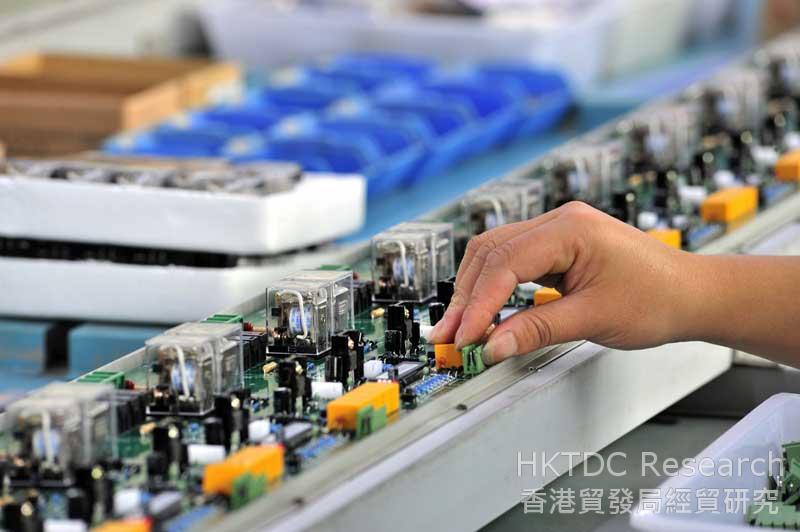
Maitrox, a supply chain service company headquartered in Shanghai, pointed out in an interview [1] that, although many mainland enterprises have high-tech production capabilities and the quality of their products is comparable to that of leading international brands, they need related service support in supply-chain management in “going out” and in developing Belt and Road markets. For example, in selling their own-label products in overseas markets, many enterprises are making considerable gross profits if reckoned only on a sales basis. But, if they want to develop their brand business and maintain brand loyalty and the support of overseas consumers, they would have to provide consumers with efficient after-sales and repair services, either through distributors or directly in the respective local markets. This may involve high fees and costs that might eat into the profits of the business concerned and, if not handled properly, might even affect the image of their brands in overseas markets.
Mainland enterprises are venturing into various overseas markets and Belt and Road related regions to set up comprehensive supply-chain management networks. The coverage spans across Asia, including Southeast Asia and India, Africa and even as far afield as Europe, and North and South America. According to Maitrox, many companies would like to use third-party services to raise the efficiency of such business processes as production, sales and after-sales services, and also to minimise the operation costs of expanding into international markets.
To be able to achieve these objectives, however, the service providers concerned need to have sophisticated IT, such as state-of-the-art big data analytics, before they can offer suitable solutions in designing and setting up networks in procurement, production, inventory, sales and after-sales services. They also need to utilise related financial services to help enterprises plan the income and expenses of each aspect of their business. In addition to improving cash flow in the entire business process and lowering funding costs, they also have to help solve problems in international payments and exchange risks.
Maitrox is currently providing comprehensive supply-chain services to mainland brands and other customers. This includes planning consultation and execution covering the entire production, sales and after-sales processes. For example, Maitrox provides its mobile phone business customers with after-sales supply-chain services to help set up overseas markets service networks. Such networks offer phone replacement, on-site repair, spare parts management, premium-grade repair and testing.
For customers with smaller overseas operations, Maitrox will help organise mail-in repair services by using logistics to send products requiring repairs back to the mainland, such as factories in Shanghai and Shenzhen bonded zones. In these factories, chip-level repairs, replacement and refurbishment will be carried out, before the mobiles are sent back to the overseas consumers expeditiously.
For this, in addition to running a number of repair centres and smart warehouses around the world, Maitrox has also set up a global repairing hub in Hong Kong. This way, with the support of advanced IT management systems, it can make use of Hong Kong’s international logistics network to transfer products, parts, components and spare parts for global distribution. Backed by its supply chains in Shanghai and elsewhere on the mainland, as well as Hong Kong’s financial services, Maitrox can provide customers with cost-effective global supply-chain management services.
Note: For details of the company interviews conducted jointly by HKTDC Research and the Shanghai Municipal Commission of Commerce, please refer to other articles in the research series on Shanghai-Hong Kong Co-operation in Capturing Belt and Road Opportunities.
[1] Maitrox Smart Supply Chain was interviewed jointly by HKTDC Research and the Shanghai Municipal Commission of Commerce in Q1 2018.