









Chinese Mainland
Bridge-building initiative helps Beijing and Manila get over the troubled waters of the South China Sea dispute.


While recent extreme weather events mean that the Philippines' massive infrastructure development programme may have to be re-designated as 'Re-build, re-build, re-build,' they certainly won't suffice to derail the key projects already commissioned in any significant way. Nor will they undermine the dramatically improved relationship between the country and China, a relationship that, in the past, was more strained than productive. Now, though, against the ever-expanding backdrop of the mighty Belt and Road Initiative (BRI), the two countries are committed to building bridges. Quite literally.
As the damage caused by recent super-typhoon Mangkhut underlines, the Philippines is more vulnerable than most when it comes to incidences of extreme weather. As an archipelagic country, made up of more than 7,600 islands, building and maintaining bridges is an essential element in its economic development. The devastation left behind by the storms and typhoons that all too frequently strike the country – particularly in the case of its fragile bridges and viaducts – is made all the worse by the fact that the country still has far fewer such structures than it really needs.
There are, for example, only 19 bridges spanning the 27km-long stretch of the Pasig River that wends its way through Manila, the national capital. By comparison, the 13km of the Seine River in Paris is spanned by 37 such structures during the course of its meanderings through the French capital.
With this infrastructural shortcoming also a feature of many of the Philippines' other major cities, weather damage aside, extreme traffic congestion is now endemic, while bottlenecks caused by the restricted number of crossing points are commonplace. To try to remedy this, during July 2016-June 2018 the government completed retrofitting / strengthening work on 642 bridges, together spanning more than 29km. Some 939 bridges, spanning about 40km in total, were also wholly refurbished, while 204 new bridges (8km in all) were constructed. This, though, is only scratching the surface.
Given the immense costs involved in wholly upgrading the country's connectivity and transport infrastructure, it was inevitable that China would emerge as the only viable source of investment. Fortunately, the country's needs seem to be very much in line with the aims of the BRI, China's ambitious international infrastructure development and trade facilitation programme.
From China's point of view, the Philippines has a clear role to play in the bigger BRI picture. Most obviously, with a population in excess of 104 million, it is a ready market for Chinese exports, with its status as one of the fastest-growing economies in the ASEAN bloc only likely to enhance its allure. Improved connections and, consequently, improved relations would only ease access to this market.
On top of that, there is the country's geographical significance. China has already earmarked the Port of Davao, some 946km to the southeast of Manila, as a key stopping-off point and consolidation hub for the planned expansion of its trade in Southeast Asia and the South Pacific. To that end, it is committed to funding the redevelopment of the port as part of its wider investment commitment to the Philippines.
To date, China has pledged to back large-scale Philippine infrastructure projects to the tune of US$7.34 billion. This, though, is only part of the broader $24 billion agreed during the 2016 state visit to Beijing by Rodrigo Duterte, the President of the Philippines. Tellingly, since Duterte took office in May 2016, there has been a massive 5,682% increase in Chinese investment in the Philippines.
In more specific terms, earlier this year, China delivered on its pledge to provide PHP4.13 billion (US$78 million) of funding for two bridges on the Pasig River, with work beginning on both in July. The first project is actually a replacement for the 506-metre Estrella-Pantaleon bridge that connects Makati City and Mandaluyong City. The second is the all-new 734-metre Binondo-Intramuros Bridge, which will connect two of Manila's most historic districts.
More recently, in late September, the Chinese government agreed to finance and construct the PHP1.5-billion Davao River Bridge-Bucana, part of the 18km Davao City Coastal Road Project. At the same time, China also signed off on a $13.4 million grant for a feasibility study on plans for the massive Panay-Guimaras-Negros bridge project.
Financing for these projects is mainly being provided via the China International Development Cooperation Agency (CIDCA), which only opened its doors in April this year. Despite its relatively recent establishment, the Philippines has already submitted 12 prospective big-ticket infrastructure projects to the agency for consideration. These are believed to include the Luzon-Samar (Matnog-Alen) Bridge; the Dinagat (Leyte)-Surigao Link Bridge; the Camarines Sur-Catanduanes Friendship Bridge; the Bohol-Leyte Link Bridge; the Cebu-Bohol Link Bridge and the Negros-Cebu Link Bridge.
With relations between China and the Philippines at a high point, despite the still-simmering South China Sea territorial disputes, it seems safe to assume that many of these projects will be greenlit. Indeed, it has been widely anticipated that Xi Jinping, the Chinese President, will give his formal assent to the proposals during his state visit to the Philippines later this year.
Marilyn Balcita, Special Correspondent, Manila
Editor's picks
Trending articles
By Joanna Konings, Senior Economist, ING
The Belt and Road Initiative (BRI) is increasing transport connections between Asia and Europe with potential consequences for international trade. Trade between the countries involved accounts for more than a quarter of world trade, so better connections and the lower trade costs that come with them could have a significant global impact. A halving in trade costs between countries involved in the BRI could increase world trade by 12%. Countries in Eastern Europe and Central Asia stand to benefit most, but the benefits will depend on where trade costs fall. There are already some opportunities to transport goods via rail between China and Europe, which may appeal to the wide range of industries with time-sensitive inputs and products. It could take many years before other impacts of the BRI are seen. Many projects are under construction, and the BRI is open-ended. Trade facilitation barriers between countries also need to be addressed……
Opportunities and growth
Rail vs air and sea transport for EU-China trade
Rail transport is only used for a small share of trade between the EU and China, and the BRI is not expected to change this. Nonetheless, interest in rail transport between Europe and China is understandable because the speed of transport is a key dimension of EU-China trade. Time-sensitive goods account for more than three-quarters of the value of China’s exports to the EU, and more than 60% of the EU’s exports to China. Speed is important where goods like the components of cars, phones and computers, are part of supply chains spanning many countries. For finished products, like seasonal clothing, fast delivery can be important where demand is very changeable. As rail transport becomes more accessible, importers and exporters can use rail transport when previously they have only had the options of air and sea transport. Faster delivery frees up working capital and reduces capital costs, and rail transport also offers a much greener alternative to air transport for the most time-sensitive trade flows.
Impacts on international trade
Trade between Asia and Europe (not including trade between EU countries) accounts for 28% of world trade, so making those trade flows easier has a large potential impact. The size of this impact depends on the sensitivity of trade to changes in relative costs, which can be estimated in gravity models of international trade. These models describe trade flows in terms of the size of countries and the relative costs of trade between them. The relationships in the gravity model also allow us to calculate approximate individual country effects when trade costs change.
The impact of the BRI will also depend on where trade costs fall as a result of BRI projects. Trade costs may fall between a very small set of countries, or much more widely across Asia and Europe. We investigate this using three scenarios. In each case, we assume that the BRI will in the long run lead to a 50% fall in trade costs between a different set of countries:
- New Eurasian Land Bridge: countries along the New Eurasian Land Bridge economic corridor (China, Kazakhstan, Russia, Belarus and Poland), which is broadly the route of most current international rail services between China and Europe. Trade costs are also assumed to halve between countries along the New Eurasian Land Bridge economic corridor and the EU15, Cyprus and Malta (costs are not assumed to fall between the EU countries).
- BRI corridors: countries along all BRI economic corridors, covering the majority of Asia and the EU (again, costs are not assumed to fall between EU countries)
- BRI corridors and partners: as in the BRI corridors scenario plus countries in Europe and Asia which have signed BRI implementation and co-operation agreements with China, including Central and Eastern European countries, Indonesia, Singapore, Saudi Arabia and Egypt.
When trade costs fall between these countries, trade between them increases. The resulting impacts on world trade range from a 4% increase in the scenario involving the New Eurasian Land Bridge countries, to 12% when trade costs fall between all countries involved in the BRI.
As mentioned above, the relationships in the gravity model allow us to calculate approximate individual country effects when trade costs change. When trade costs are halved between all countries involved in the BRI, there are estimated increases in trade of 35% to 45% for Russia, Kazakhstan, Poland, Nepal and Myanmar. Overall, countries in Central Asia and Eastern Europe see the largest increases.
Some countries involved in the BRI do most of their trade with other BRI countries (China and the EU15 countries, on the other hand, do a relatively small amount of their total trade with other BRI countries). Those countries benefit from the fall in trade costs affecting the majority of their trade. Although all countries increase their exports to Greater China, the fall in costs also benefits the bloc of EU15 countries, as the other large trade partner of most countries in the region. This is especially the case for Eastern European countries, highlighting the importance of where trade costs fall in determining which countries will benefit from the BRI. If the BRI did not produce a fall in trade costs between countries in Eastern Europe and the bloc of EU15 countries, then the overall impact of the BRI on Eastern European countries would instead be relatively small.
Within countries, different industries may feel the effects of competition in other countries having been brought a step closer through lower trade costs. This will stimulate competition and potentially also innovation, with benefits for consumers, but some industries and sectors may lose out to competitors from other BRI countries. 50% is undeniably a large fall in trade costs, but it is chosen due to the influence that the BRI will have on transport costs and trade facilitation, which are also factors that research suggests are big influences on trade costs. The WTO has calculated that improvements in trade facilitation could reduce BRI countries’ trade costs by between 12% and 23%. Transport costs are consistently found to be an important part of trade costs, though estimates vary widely (partly because of the many different measures of transport costs in empirical studies). 8 The combined effect of trade facilitation improvements estimated by the WTO (12-23%) and a halving in transport costs (33%, on the assumption that transport costs are two-thirds of trade costs) would be one way of reaching a 50% reduction in overall trade costs.
The mix of transport and trade facilitation cost reductions is likely to differ for every trade flow. For some, a significant fall in costs might come through switching from air transport to rail or rail and sea. Others might benefit from a new shorter route opening up to a destination market, or more efficient border crossings or port operations along a particular route. In practice the composition of the fall in costs is likely to make a difference: Ramasamy et al (2017) show that trade facilitation is critical to realising the trade gains from improvements in infrastructure in BRI countries. And transport infrastructure needs to increase to some extent to handle the higher trade flows (though the current practice of slow steaming in the shipping industry also provides for some spare capacity within the current infrastructure).
How far costs may fall is really a question about how long the BRI policy will exist. The BRI projects currently under construction are expected to be completed in the coming five years, and the BRI is open-ended (and ultimately aiming for “unimpeded trade”), so new projects are likely to be initiated in that time. As a result, any significant fall in trade costs due to the BRI is likely to take at least five years, and more likely ten, or even longer. If trade costs are slow to fall, effects on world trade growth will be small in any given year. Significant falls in trade costs, even over a long period, could lead to large impacts on international trade.
Please click to read full report.
Editor's picks
Trending articles
By KPMG China
The Greater Bay Area (GBA) represents a national development strategy to economically and socially integrate the nine cities in Guangdong’s Pearl River Delta, as well as Hong Kong and Macau, to create a world-class bay area.
The GBA is well-positioned to become the most diversified city cluster in the world – by leveraging its strengths in financial and professional services, high-tech manufacturing, technology and innovation, and tourism and leisure – and provides significant opportunities for companies in China. The increased connectivity and integration of the GBA will also enhance the movement of goods and services, capital, people and information within the region, and facilitate the implementation of the 13th Five-Year Plan and the Belt and Road Initiative.
This publication provides an overview of the key trends and developments in the GBA, and serves as a guide to how businesses can partner with KPMG to drive growth in the region.
The diverse range of industries and strengths across the GBA’s cities provides significant opportunities for companies that are looking to enter or build on their existing presence in China. KPMG is well-positioned to advise clients on their investments and business strategies in the GBA.
Innovation and technology to drive smart cities: The transformation of the GBA into an innovation and technology hub remains a key priority. This presents a number of opportunities for businesses, innovators and other key stakeholders to develop and test their ideas, deepen the talent pool, connect with strategic partners, and drive innovative and digitally-driven growth.
Building a solid foundation of infrastructure and real estate: Significant infrastructure development is a key pillar of the vision for the GBA. This is expected to generate high volumes of infrastructure and real estate development, creating plenty of investment opportunities for existing and new players in the region.
M&A activity set to soar: As the GBA continues to evolve, businesses operating in, or looking to enter, the market will need to review their medium and long-term strategies to assess how best to capitalise on the many opportunities.
Connected capital markets to drive growth: With a deep capital pool comprising both institutional and retail investors, the GBA remains an attractive and leading region for listing and trading securities, both for domestic and international businesses.
Financial institutions to capitalise on cross-border flows: The GBA stands as a major market for financial and high-value industries. The region’s size, as well as the different stages of development among its cities, present significant opportunities for the financial services sector.
Strategies to optimise business opportunities: The increasing connectivity within the GBA, as well as the region’s diverse range of industries across its cities, provide significant opportunities for companies that are looking to enter or build on their existing presence in China.
Navigating a new tax landscape: Enterprises participating in the GBA have to plan ahead and properly manage tax risks and utilise tax incentives to capitalise on opportunities presented by the greater movement of people and capital.
Mobilising and aligning talent: In order to achieve long-term success in the GBA, it will be important for companies to put the right people and organisational structures in place.
Please click to read full report.
Editor's picks
Trending articles
By Derek Scissors, American Enterprise Institute
Key Points
- China is investing much less in the US than it did just a year ago. It has never invested much in the Belt and Road. Yet China’s global investment spending remains healthy, with impressive diversification across countries and the reemergence of private firms.
- Construction and engineering is considerable but unlikely to expand much, as the projects drain China’s foreign reserves. Construction in the Belt and Road alone is rising because the number of countries is rising, not because China is more active.
- The US is about to change its investment review framework with new legislation. This is a step forward, but problems remain. The new framework appears complex while foreign investment thrives on certainty. The Committee on Foreign Investment in the United States must be properly resourced or reform will prove meaningless.
American headlines stress coming restrictions on Chinese activity in the US. Global headlines stress transformation wrought by the Belt and Road Initiative. Actual measurement shows China has not invested heavily in the US since early 2017 and never invested heavily in the Belt and Road (BRI).
Several large transactions have driven China’s 2018 outbound investment, featuring a $9 billion transport play in Germany, plus a series of health care acquisitions. The top five investment targets in 2018 to date sit on five different continents. China’s overseas spending habits are more diverse than many observers believe.
The China Global Investment Tracker (CGIT) from the American Enterprise Institute is the only fully public record of China’s outbound investment and construction. Rather than presenting only totals or a map, all 3,000 transactions are profiled in a public data set. The CGIT estimates the number of investments in the first half of 2018 dropped 15 percent from the first half of 2017. Based on the number of transactions and total amount spent, the first half of 2018 strongly resembles the first half of 2015, before the pace of capital exit first soared and then was curbed by Beijing.
There are encouraging signs. Transport, energy, and metals investment led in the first half but, contrary to Beijing’s insistence, entertainment and real estate are not dead. Perhaps the single best development is private Chinese firms are spending again this year. While the raw quantity is lower, the private share of investment is back to its 2016 level. If 2018 continues to follow the pattern of 2015, total investment volume will be in the $115-$130 billion range for the year. Another $1 trillion globally could be added by the end of 2024.
Investment by the People’s Republic of China (PRC) is often conflated with construction of rail lines, power plants, and so forth. Construction does not involve ownership, as investment does. Since 2005, there are more construction contracts worth $100 million or more than investments, though the average construction deal is smaller. In the first half of 2018, the PRC initiated at least one large construction contract in over 40 countries, chiefly in energy and transport.
Chinese engineering and construction is the core of the BRI. Using the latest, 76-member version of the BRI for the largest possible size, the BRI accounts for over 60 percent of Chinese overseas construction since its inauguration in the fall of 2013, with that pace holding in 2017-18. On this tally, in not quite five years, BRI construction has been worth more than $250 billion. In contrast, the current set of BRI countries accounts for less than 25 percent of the PRC’s outbound investment over the period, a bit more than $150 billion total.
BRI investment weakness is especially troubling for Beijing because the preferred location for Chinese companies is closing off. The PRC’s investment in the US exceeded $50 billion in 2016, fell by more than half in 2017, and was only $4.5 billion in the first half of 2018. Congress has been crafting legislation to tighten oversight of Chinese ventures since the 2016 surge, but there is less and less to oversee. Chinese enterprises exist at the sufferance of the Communist Party and must be treated accordingly. The American goal should be to do so yet still offer clear, stable policies to welcome investment when national security is not involved….
Please click to read full report.
Editor's picks
Trending articles
來源:新華財金社
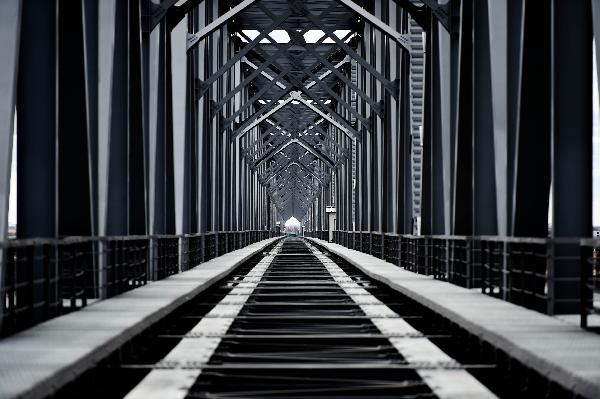
"絲綢之路經濟帶"與歐亞經濟聯盟的對接,正在使區域經濟融合駛入快車道。日前,中國社會科學院俄羅斯東歐中亞研究所研究員李建民表示,歐亞經濟聯盟所跨區域是"絲綢之路經濟帶"西出國門的必經之路,"絲綢之路經濟帶"與歐亞經濟聯盟對接實屬必要,"一帶一路"倡議與歐亞經濟聯盟互為機遇、相互支撐,對接合作已進入從理念到行動的新階段。
李建民介紹說,歐亞經濟聯盟是一個由俄羅斯主導的、在後蘇聯空間推動的一體化國際組織,成立於2015年,目標是建立類似於歐盟的經濟聯盟。目前成員國包括俄羅斯、哈薩克斯坦、白俄羅斯、吉爾吉斯斯坦和亞美尼亞,五國均是"一帶一路"建設的重要合作夥伴。
近10年來,歐盟三次東擴不斷擠壓俄羅斯經濟空間,俄羅斯主導的後蘇聯空間一體化進程不斷加快:從2010年成立的俄、白、哈關稅同盟,到2012年形成的統一經濟空間;從2015年1月1日啟動的歐亞經濟聯盟,再到2025年實現區域內商品、服務、資本和勞動力的自由流動,歐亞經濟一體化路徑業已形成。
"歐亞經濟聯盟戰略目標是利用俄羅斯在現有區域內的優勢來實現經濟一體化。"李建民表示,區域一體化包括功能性一體化和制度性一體化兩層含義,歐亞經濟聯盟是緊密的制度性一體化,成員國之間通過簽訂條約或協定逐步統一經濟政策和措施,甚至建立超國家的統一組織機構,並由該機構制定和實施統一的經濟政策和措施。從世界區域一體化的實踐來看,制度性一體化更有效,也具有更為重要的現實意義。
李建民認為,同樣是區域一體化的組織,相較歐盟和東盟,歐亞經濟聯盟僅用5年時間就完成了"三級跳",發展前景特別引人關注,影響其今後發展的重要因素來自兩方面:一方面,歐亞經濟聯盟內部現有成員國之間經濟發展存在差距,另一方面,歐亞經濟聯盟面臨協調與"絲綢之路經濟帶"的關係。
"俄羅斯一家獨大,一體化具有人為推動的特徵,是歐亞經濟聯盟的一大特點。"李建民介紹說,俄羅斯具有國土面積和經濟總量的優勢,佔歐亞經濟聯盟的市場份額約90%,成為聯盟的"推進器"和"發動機",作為主導國,該國的經濟發展對聯盟的發展具有決定性影響。歐亞經濟聯盟主要由俄羅斯推動,具有強制性和高效率的特點,但尚未實現預期效果,成員國之間的貿易依存度太低。
李建民說,隨著中俄兩國推進"絲綢之路經濟帶"建設和歐亞經濟聯盟的對接,中俄經濟合作進入縱深發展的新階段,而俄羅斯大力實施的"向東看"政策,為中俄經貿進一步發展釋放更大合作潛力。今年,中國與歐亞經濟聯盟簽署經貿合作協定,中俄已啟動歐亞經濟夥伴關係協定聯合可行性研究,並取得階段性成果。以"一帶一路"建設與歐亞經濟聯盟對接為主線的合作格局進一步鞏固。
至於對接路徑,李建民表示,可以從戰略層面、制度層面和優先領域三個方面考慮。職能部門間可以搭建一個互利共贏的合作平台,企業、行業間可以瞄準經貿、產能、互聯互通等方面,若能落實貿易便利化措施,就能擴大貿易規模,利於繁榮歐洲和亞洲的經濟。李建民建議說:"我們目前需要加強對歐亞經濟聯盟制度和運行機制的研究,並以法治化保證'一帶一盟'對接,提高有效應對的能力。"
原文鏈接
Editor's picks
Trending articles
Series of off and on again mainland-backed energy projects spur growing concerns over sustained national power outages.
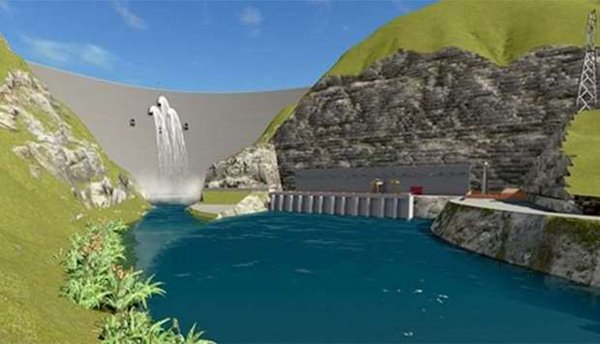
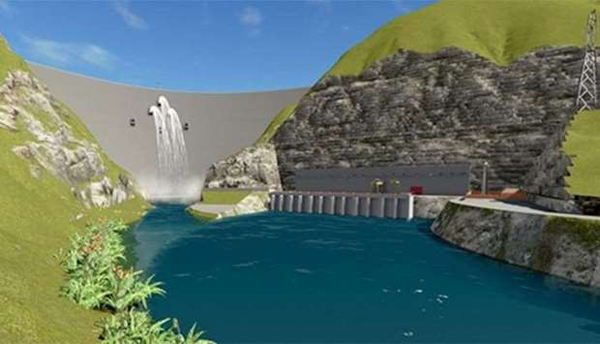
On 19 September 2018, the newly-elected Nepalese government announced it was cancelling its agreement with the China Three Georges Corporation (CTGC) to build the US$1.5 billion West Seti Hydropower Project. Set in Western Nepal, this 750 MW project was one of the country's flagship Belt and Road Initiative (BRI) developments and the second most expensive hydropower installation ever to be given the green light by Kathmandu. Within the space of a week, it was then announced that the China Gezhouba Group Corporation (CGGC) had been reappointed to oversee the 1,200 MW Budhi Gandaki project – with its US$2.5 billion price tag making it the most expensive such project in the country's history.
In total, the West Seti Project has been thirty years in the making, even though the Nepalese government only signed a Memorandum of Understanding (MoU) with CTGC with regard to the initiative as late as 2012. In recent months, however, it is understood that the state-owned mainland power company had become increasingly disillusioned as to the overall viability of the project.
The issue came to a head during a two-day meeting between CTGC and the Investment Board Nepal (IBN), the government body charged with seeing the project through. Negotiations between the two eventually faltered, despite an offer from the Nepalese side to cut the project's agreed installed capacity from 750 MW to 600 MW and to ratify a future power purchase agreement in US dollars (rather than in Nepalese rupees) as a way protecting the deal from any untoward currency fluctuations.
Overall, it is thought that CTGC's concerns over the cost of resettling the villagers likely to be displaced by the project, together with the expense of ameliorating the high level of the anticipated environmental impact, caused it to pull out. At present, the two sides are said to be at an impasse, with the future of the project far from clear.
In the case of the Budhi Gandaki Project, the reappointment of CGGC came 10 months after the company had been dismissed as the lead contractor by the previous Nepalese administration, as headed by former Prime Minister Sher Bahadur Deuba, when a decision was taken to develop the project with solely local financing.
Addressing the apparent change of heart, Gokul Baskota, the country's current Minister for Communications and Information Technology, said: "The decision to scrap the agreement with CGGC, as taken by the previous administration, lacked any proper grounding. For our part, we have decided to correct that, largely as Nepal doesn't have the capacity to build such a large project on its own, while securing the necessary funding has also proven something of a challenge."
Once completed, the now back-on-track 1,200 MW Budhi-Gandaki plant will virtually double Nepal's current hydropower capacity. In order to help balance the books until the project begins turning a profit, CGGC has agreed to work under the engineering, procurement, construction and financing (EPCF) model, an arrangement that will defer many of the costs for the Nepalese side.
The decision to bring CGGC back on board, though, has not been without controversy. This has mainly been on the grounds that the project was handed back to the Chinese company without any competitive bidding process being undertaken, a requirement that could have resulted in lower overall costs.
Widespread concern has also been caused by the level of displacement likely to be necessitated by the project. In all, more than 8,000 households will be compromised by the development, with the reservoir for the storage project set to submerge 3,560 homes, while a further 4,557 will also be adversely affected.
Such concerns, however, are seen as being more than balanced by the fact that Nepal is currently suffering a massive energy-production shortfall, one that obliges it to buy power from neighbouring India at a premium cost. It is a problem that is only being exacerbated by the fact that many of the country's planned power projects continue to run behind schedule and over budget.
As a result, hastening the completion of the Budhi Gandaki project is seen as the best way of heading off major power outages across the country. Indeed, it is a problem that was further compounded back in 2015, when an earthquake damaged 31 of the country's hydropower installations, cutting its power generation capacity by 20% overnight.
Geoff de Freitas, Special Correspondent, Kathmandu
Editor's picks
Trending articles
By Andrew Haskins and Terry Suen, Colliers International
Executive Summary
Despite capital controls, total Chinese investment in overseas property assets reached an all-time high of USD39.5 billion in 2017, up by 8% over 2016. Chinese investment in Asian property assets grew 34% to USD12.5 billion, and was focused on Hong Kong, Japan and Singapore. Chinese interest in Hong Kong will probably moderate in 2018, but we think it will stay high in Singapore where the office and residential markets have entered a multiyear upcycle. Singapore remains one of our preferred Asian investment property markets.
Looking ahead over five years, China's ambitious "One Belt, One Road" project, coupled with the firm Chinese economy and RMB strength, ought to drive Chinese investment in emerging South East and South Asian markets. Large-scale investment in central Asian markets should come later. OBOR investment will be led by big infrastructure projects usually handled by state-owned groups. Such projects should stimulate growth in wealth in cities and regions along the project’s chief corridors, enhancing existing investment opportunities.
South East Asian countries mostly look attractive for property investment, although Indonesia perhaps stands out for long-term growth potential and the Philippines for breadth of development opportunities. Shortage of quality property stock suggests that development projects with local partners will generally represent the most effective strategy for accessing the markets. We expect these projects to target industrial and residential property in particular.
While the OBOR project covers India and the country has huge long-run growth potential, Chinese capital is unlikely to be a driving force in India for political reasons. Pakistan is a big beneficiary of OBOR infrastructure investment, but it is too early to consider this country as a major investment destination.
Please click to read full report.
Editor's picks
Trending articles
Mainland and Hong Kong contractors drafted in to steer struggling coal-fired power station developments.
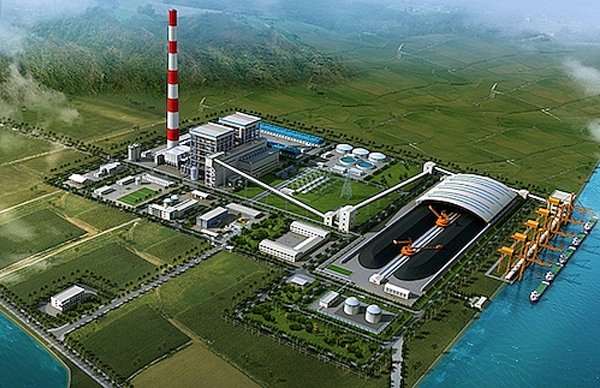
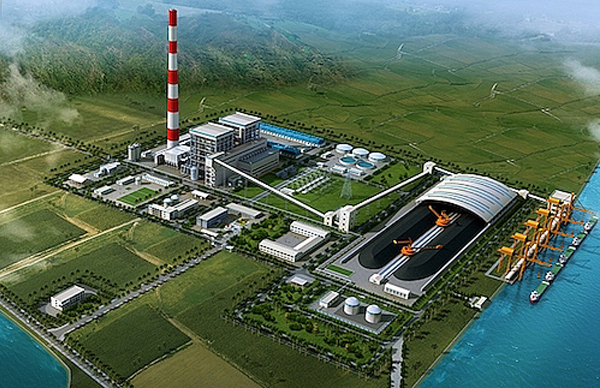
Two of Vietnam's major coal-fired thermal power station projects have been turned over to mainland / Hong Kong developers following fears that local contractors lacked the funds and know-how required to see the initiatives through. With much of the country's power-renewal programme reliant on financial backing funnelled via the Belt and Road Initiative (BRI), relinquishing control of such projects to the primary backers has been widely seen as making sound logistical and operational sense.
The first project to be handed over, in June this year, was the Quynh Lap 1 Power Plant, which was originally being developed by the Vietnam National Coal and Mineral Industries Holding Corporation (Vinacomin), a state-owned mining conglomerate. Responsibility will now fall to Geleximco-HUI, a joint venture between Geleximco, a Hanoi-based investment house, and Hong Kong United Investors (HUI). According to a statement issued by the Vietnamese government, the move follows growing concerns that Vinacomin's position was becoming increasingly untenable, given that the company had debts in excess of VND78 trillion (US$3.4 billion) and a debt-to-equity ratio of 2.5.
The following month, the transfer of the investment rights relating to the Long Phu III Thermal Power Plant was also mooted. Prior to that, the project had been handled by PetroVietnam, the Hanoi-headquartered state-owned oil and gas giant.
While a final decision has yet to be made, a shortlist of two proposed new operators has been agreed upon, both of which are largely China-backed. This sees, in one corner, a consortium of five mainland firms (including Zhejiang Energy International, a Hong Kong-headquartered utility business) and WIN Energy, a Hanoi-headquartered privately-owned power business, squaring up against the China Southern Power Grid Company (CSG), a Guangzhou-based state-owned energy supplier, in the other.
In CSG's favour, it is no stranger to the Vietnamese market. It is already the lead contractor on the $1.75 billion Vinh Tan 1 Thermal Power Project, China's biggest single investment in the country. Due to come online before the end of the year, the project will supply Vietnam's national grid with 7.2 billion KWh on an annual basis once its construction and testing period has been completed. The company already supplies Vietnam with about 33.4 billion kWh of electricity through a number of other, previously delivered projects.
The moves to reallocate responsibility for these projects come at a time when the Vietnamese government has been under increasing pressure from the country's environmental lobby to scale back on its plans for thermal-coal powered plants. Despite the obvious depth of local feeling, ministers have maintained that there is little option but to continue to pursue the current programme.
Defending the government's position, Hoang Quoc Vuong, the Deputy Minister of Industry and Trade, said: "Due to the high costs of renewable energy and the annual 10-15% rise in domestic demand for power that we are continuing to see, we have no choice but to boost the development of the coal-fired power sector.
"While we dearly want to develop renewable energies, that remains a very real challenge. This is largely down to a combination of technical difficulties and a lack of stability with regard to the country's wind and solar power generation facilities."
Of the country's coal-fired projects, China is now by far the largest financier. According to a report by the Green Innovation and Development Centre (GreenID), a Hanoi-based champion of renewable energy, as of the end of 2017, of the country's 27 coal-fired thermopower plants, 14 had been built by Chinese contractors. At the same time, some $8 billion (or 50%) of the total foreign capital flowing into Vietnam's coal-fired thermal power sector was derived from mainland China.
It is also proving harder to find non-mainland based funding for coal-fired electricity-generating projects. Indeed, the London headquartered Standard Chartered Bank is the latest of a growing number of Asia-Pacific-active banks to put a block on coal-related power projects. To date, Singapore's three leading banking groups – DBS, the Oversea-Chinese Banking Corporation and the United Overseas Bank – as well as Japan's Sumitomo Mitsui Banking Corporation, Mitsubishi UFJ Financial Group and Mizuho Financial Group, have all adopted a policy of vetoing such investments.
Marilyn Balcita, Special Correspondent, Hanoi
Editor's picks
Trending articles
By Jonathan E. Hillman, Fellow, Simon Chair in Political Economy, and Director, Reconnecting Asia Project, Center for Strategic & International Studies (CSIS)
The big numbers being floated for President Xi Jinping’s signature foreign policy effort, the Belt and Road Initiative (BRI), do not add up. Popular estimates for Chinese investment under the BRI range from $1 trillion to $8 trillion, hardly a rounding error. Without a clearer sense of the BRI’s scale, it is difficult to assess its economic and strategic implications. A closer look reveals the highest figures are inflated, scoring political points for Beijing in the short term but also creating unrealistic expectations.
Mapping the BRI is part art, part science. It is a moving target, loosely defined and ever expanding. It includes Chinese investment in roads, ports, and other hard infrastructure. It includes trade deals, transportation agreements, and other “soft” infrastructure efforts. If you traveled to China since September 2013, congratulations, you may have participated in the BRI. It includes tourism and other “people-to-people” ties such as education and cultural exchanges.
The BRI is not constrained by geography or even gravity. When announced in 2013, it had two major components: an overland “belt” across the Eurasian supercontinent and a maritime “road” across the Indian ocean and up to Europe via the Suez Canal. Since its announcement in 2013, this vision has stretched into the Arctic, cyberspace, and outer space. Countries have signed onto the BRI in places as far-flung from China as Central America.
But participation in the BRI is less meaningful than it might seem. Roughly 70 countries have joined, but their levels of Chinese investment vary widely. Pakistan has attracted some $60 billion for projects. South Korea signed up, but as of last year, it had no BRI projects. Despite being among the most vocal critics of the BRI, India has still attracted some Chinese investment. An industrial park in Gurajat, for example, would be easily branded as a BRI project elsewhere. In sum, participation in the BRI is not a prerequisite for doing related business with China, nor is participation a guarantee of more business.
There is no firm timeline for the BRI. Some projects and activities that started before the BRI was announced have been rebranded and are often counted along with more recent projects. Until recently, some experts expected the BRI would be phased out when Xi left office in 2022. But having done away with presidential term limits, Xi could stick around for longer, as could his signature foreign policy vision. Theoretically, the BRI could stretch to 2049, the 100th anniversary of the People’s Republic of China and Xi’s target date for establishing China as “fully developed, rich, and powerful.”
Different assumptions for these basic questions—what, where, who, and when—naturally lead to different estimates for the BRI’s size. Stretch any dimension, and the numbers start to rise, especially if looking into the future. But look at what has happened to date, and a more modest picture begins to emerge, including risks that could eventually deflate the BRI’s grand ambitions.
Consider the most common estimate: $1 trillion. This figure is usually tied to promised infrastructure investment. Note the two key qualifiers: infrastructure and promised. Infrastructure, which the CSIS Reconnecting Asia Project tracks, is a major component of the BRI, but as noted earlier, not the entirety of it. There is a natural lag between infrastructure pledges and actual investment, given the complexity of the project planning and construction process. But China, like other countries, also tends to promise more than it delivers.
The best available data suggest that China’s $1 trillion promise has not been met, and at current trends, will not be met for several years. The Reconnecting Asia Project is tracking roughly $90 billion of Chinese funding for transportation projects (specifically, railways, roads, ports, and dry ports) during 2014–2017. Later this year, we’ll add power plants, which along with other energy projects, play a significant part in BRI activities. For example, roughly half of the China-Pakistan Economic Corridor’s investments are energy related.
The American Enterprise Institute (AEI) and Heritage Chinese Global Investment Tracker, which tracks Chinese construction and investment across all sectors, puts the total at roughly $340 billion during 2014–2017. According to AEI’s Cecilia Joy-Perez and Derek Scissors, current trends suggest it would take six to seven years for the BRI to reach the $1 trillion mark. Given limited private-sector participation, they reason that state-driven activities could push the BRI across the $2 trillion threshold in the 2030s.
So how did BRI estimates balloon to $8 trillion? Here’s a theory: they conflate Asia’s massive infrastructure needs with comparatively modest Chinese investments.
Many references to the $8 trillion figure lead back to a 2016 commentary in the Hong Kong Economic Journal, which noted, “The financial experts at the State Council have estimated that ‘One Belt, One Road’ would cost as much as US$8 trillion if it was fully implemented following Xi’s orders.” That State Council estimate has remained elusive. But a similar number was in circulation around the same time. In 2009, the Asian Development Bank (ADB) estimated that developing Asia needed $8 trillion of infrastructure investment during 2010–2020.
If there was a State Council estimate, its author may have adopted the ADB’s figure for several reasons. The BRI has only been defined in broad strokes, making reliable estimates difficult if not impossible. And why create a new estimate from scratch, when you could borrow an existing one? Additionally, the BRI has evolved since its announcement. A vision document for maritime cooperation under the BRI was not issued until June 2017. Even the name has changed, having started as the “One Belt, One Road” (OBOR).
Misperceptions about the BRI’s size carry practical implications. For now, Chinese officials can enjoy watching the estimates rise and could even reap some political benefits. They have conjured up a massive carrot that has caught the world’s attention. Some developing countries are “linking” their development plans with the BRI. International companies have assembled teams to source BRI deals. All of these activities reflect a willingness to organize, at least in appearance, around China’s vision.
But China also faces downsides to unrealistic BRI estimates. The BRI’s size excites some observers but worries others. As the effort inflates, so do concerns about its impact on debt levels, the environment, and even regional security. For China, perhaps the biggest risk is unmet expectations. With the world watching, China now faces pressure to deliver on its promises. Even if Chinese officials did not promise trillions of dollars in investment, they have done little to correct these misperceptions.
A little modesty about the BRI’s scale could go a long way. For supporters, it could help reset expectations. For skeptics, it could temper fears about the BRI’s risks. The benefits are obvious, but they require bringing Xi’s grand vision down to earth. That is a price few of his advisers will be eager to pay.
Please click to read full report.
Editor's picks
Trending articles
Mainland money has triggered a property boom in Thailand's most sought-after locations, with corporate and individual investors increasingly keen to secure a stake in one of the most popular vacation destinations in the Asia-Pacific region.


Tourism in and between many of the countries along the route of the Belt and Road Initiative (BRI) is growing fast, with holidaymakers from China particularly prized for their big-spending ways. These aside, about 85 million trips are expected to be made to China from countries in the BRI region between 2016 and 2020, with the collective spend estimated to be about US$110 billion. After China, one of the other big beneficiaries is likely to be Thailand. In 2017, the country received more than 9.8 million tourists from China alone, representing about 28% of its total arrivals for the year.
For want of a somewhat unfortunate phrase, it has not all been plain sailing, however. In July this year, the tragic capsizing of a tour boat in Phuket, the island province that is one of Thailand's primary tourist destinations, resulted in the deaths of 47 Chinese visitors. Inevitably, this incident has deterred many mainlanders from visiting their southern neighbour.
An immediate consequence was that Chinese tourist arrivals fell 0.9% year-on-year. Although the figures are not yet in, the Thai Tourism Ministry expects the overall figures for August to show a far greater decline, with some estimating the drop to top 14%. As a result, the official target for Chinese visitors in July-December this year has been cut by 669,000 (11.5%) to 5.15 million.
Over the long term, however, the disaster is unlikely to derail the tourism sector's underlying growth. Nor is it set to deter the many overseas investors – with a significant proportion of them mainland-based – who have been only too keen to back the many property- and tourism-related developments spurred by the BRI.
As well as the many major BRI-backed infrastructure projects already under way – including new airports, rail links and road networks – a number of commercial operators have also looked to capitalise on the growing Thai-China tourism trade. Nok Air, a Bangkok-based budget airline, for instance, has opened a direct route between Pattaya and Zunyi, a prefecture-level city in China's Guizhou province, while also announcing plans to introduce flights to several other mainland cities, including Baotou, Linyi, Yichang and Nanchang. Meanwhile, Thai Smile, the budget-flight wing of Thai Airways, the national carrier, has launched a Bangkok-Datong service, linking the Thai capital with one of the most popular tourist destinations in the northerly Shanxi province.
In terms of larger-scale plans, moves are also afoot to develop U-Tapao, currently a joint civil-military airport, into a third Greater Bangkok gateway facility in line with the aims of the Eastern Economic Corridor (EEC) initiative, a key element of the BRI masterplan. The EEC initiative also extends to a planned upgrade to the tourism facilities of Pattaya and Rayong, two of Thailand's primary visitor destinations.
Both resorts have attracted substantial investment from China, a development that has triggered something of a property boom in the two locations. In fact, with 86% of Chinese property buyers first visiting the locations they ultimately invest in as tourists, this has seen Bangkok, as well as Pattaya and Phuket, enjoy a surge in real-estate purchases by mainland Chinese buyers.
Huang Xiaodan is the Founder and Chief Executive of Uoolu, a Beijing-based portal that matches would-be Chinese buyers with overseas properties. Highlighting the appeal of Thai property, he said: "Thai real estate stands out on account of its high value proposition, impressive rental yields and low thresholds. In total, Thailand represented half our total 2017 transactions, driving our turnover up by 307%."
Despite Thailand's clear success in attracting individual mainland investors into its property market, the corporate sector is proving to be a little harder to woo, at least according to Suphin Mechuchep, Managing Director of JLL Thailand, a Bangkok-headquartered commercial-real-estate agency. Assessing the current state of the market, he said: "While Chinese corporations have been actively looking for opportunities to invest in a wide range of real-estate assets in Bangkok and in the major resort markets, actual investment activity has remained limited. To date, most of the deals that have actually gone through have either been joint venture property development projects or acquisitions of stakes in Thai property development companies."
Indeed, a quick look at the projects underway clearly bears out Mechuchep's point. Among the currently active Thai-Chinese joint venture property developments is the Baba Beach Club Phang Nga, comprising 16 hotel villas, 104 residential suites and 42 villas, with the project backed by China's Junfa Real Estate and Charn Issara Development, a Bangkok-based property developer. China-based investors are also working with Thai developers on a number of other projects, including The Terminal Phuket, a mixed-use development, and Artemis Sukhumvit 77, a 30-storey residential project.
Looking to the future, the Thai cabinet recently approved plans for a Southern Economic Corridor (SEC), an infrastructure initiative comprising 28 projects at a combined cost of $6 billion. Stretching down the coastline southwest of Bangkok, it will transform the region into the Thai Riviera, a series of resorts that will form the backbone of the SEC. As part of the plan, four coastal provinces – Phetchaburi, Prachuap Khiri Khan, Chumphon, and Ranong – will be reinvented as high-end tourism hubs.
While the combined scale and scope of these tourism-oriented initiatives may seem daunting, it should be remembered that currently less than 10% of Chinese citizens – the primary target of all these developments – are passport holders, a clear indication of the vast growth potential of the mainland's outward-bound tourism sector.
Geoff de Freitas, Special Correspondent, Bangkok