









Chinese Mainland
 1638 Views
Hong Kong was created as a trading post of the British East India Company for 19th century China trade. A new China trade is flowing, much bigger than the one before, which is what the Belt and Road signifies. It is natural that Hong Kong should again be a major node for it. Hong Kong has strong links to China and the rest of Northeast Asia. For Hong Kong to be a super connector for the new China trade, it must also develop strong links to the rest of Asia, in particular, to Southeast, South and West Asia. Hong Kong's full range of capabilities can then be brought into full play.
Riding on the Initiative and taking advantage of ASEAN’s economic integration, Kerry Logistics continues to expand its ASEAN-wide cross-border road transportation network – KART which connects regional MNCs in ASEAN with the Chinese mainland and Hong Kong. One of the company’s successful showcases is a well-known toothpaste brand in which Kerry Logistics transports the raw materials in barrels packing (e.g. sodium salt, calcium salt) from the origin in Kunming to the client’s factory in Bangkok through the Kunming-Bangkok highway. Compared to the traditional land-sea solution – from Kunming to Guangdong by land and then to Bangkok by sea, the client can significantly shorten the transportation lead time from two weeks to less than four days.


By Mahamoud Islam, Senior Economist for Asia, Euler Hermes
Executive Summary
-
Born in late 2013, the Belt and Road Initiative (BRI) is a development and cooperation strategy launched by China. It includes 80+ countries mainly from Asia, Europe and Africa and spans an area accounting for nearly 36% of global GDP, 68% of world population, and 41% of global trade.
-
We expect merchandise trade flows between China and BRI partners to grow by +USD117bn in 2019 (after an estimated +USD158bn in 2018). This and boost global trade by +0.3pp, would add +0.1pp to global GDP in 2019.
-
For China, exports to BRI markets are expected to grow by +USD56bn in 2019 (after +USD76bn in 2018). BRI will support: business internationalization, overcapacity reduction, economic upgrading, RMB internationalization and the reduction of regional imbalances. Central and Western Chinese provinces will likely be the first direct winners of the project.
-
For partner countries, we see the impact being threefold: a boost in capital (already + 410bn Chinese investment to BRI over 2014-18), a boost in external demand (+USD61bn additional exports to China in 2019) and an improvement in competitiveness thanks to lower transaction costs transportation cost and time of travel, e.g.) and better infrastructure. ASEAN and the Eastern European market are best positioned to take advantage of the project.
-
However, the BRI will not be a walk in the park. Three challenges remain unaddressed:
-
Financial sustainability, given China’s limited financial resources (total non-financial debt at 253% GDP) and only partial control over the underlying risks in BRI markets (country risk, e.g.). Funding needs are considerable. We estimate that the capital need to fund infrastructure for Asia (excluding China), Europe and Africa combined would amount to USD1.7tn per year.
-
Legal and regulatory risks, given the absence of a uniform regulatory framework among countries with different law regimes (common law, continental law, Islamic law). This creates uncertainty and complexity for trade and cross-border investment.
-
Political risks, as political tensions among BRI members (Saudi-Iran, India-Pakistan), some BRI members with China (India or ASEAN vs China, e.g.), and battles for influence with other superpowers (with the US, EU) hamper partnerships.
-
Three remaining challenges: Financial Sustainability, Legal risks, Political risks
Yet the implementation of the Belt and Road Initiative will not be a walk in the park. As evidenced above, potential is important in trade and infrastructure financing but realization of this potential entails a leap of faith with the long-term Chinese view that only selected countries, private financiers and companies outside China are ready to take. Hence the toddling start. Financial sustainability, legal and regulatory risks, as well as political defiance, are to be managed for this platform to accelerate trade and growth in China and partner countries.
Challenge #1: Financing Sustainability of the Project
The first issue relates to China’s financial capabilities. China cannot finance BRI alone considering its domestic financial situation (total non-financial sector debt estimated at 253% GDP, BIS estimate) and the amounts at stake. In fact, using the Global Infrastructure Hub forecasting tool from the World Bank, we estimate that the capital needed to fund infrastructure in Asia (excluding China), Europe and Africa combined would amount to USD1.7tn per year until 2040. In that context, partnership with countries willing to finance the project and private capital will probably be needed. The Chinese government already made some moves to lure investors. In 2018, China’s regulators started to allow the issuance of “Belt and Road” bonds in Chinese stock exchanges in order to fund the initiative: the financial instrument is denominated in RMB and local currencies; foreign companies and government agencies of Belt and Road countries can participate. The second issue relates to the financial viability of BRI projects as more BRI-related borrowings could increase the financial vulnerability of already fragile (with heavy public debt) states. Markets such as Pakistan and Sri Lanka are already heavily indebted and being involved in the BRI strains their public finances. Sri Lanka, especially, had to hand over its strategic port of Hambantota to China as it was struggling to pay its debt to Chinese companies.
Challenge #2: Legal and Regulatory Risks
It is worth noting that there is no commonly shared legal regime among BRI countries. Some countries abide by common law (Singapore, Malaysia, Hong Kong), other by continental law (Central Asia) or Islamic law (Middle East). Consequently, businesses have often failed to comply with local regulatory frameworks. To address the legal disputes, China has decided to establish international courts in Beijing, Xi’an, and Shenzhen to tackle issues arising from BRI. While this solution might work for Chinese corporates, it might not fit the interest of corporates in the EU for example.
Challenge #3: Political Risks
First, the BRI spans an area with territories in conflict. This includes hard conflict (e.g. Afghanistan) but also strong political tensions (Saudi-Iran, India-Pakistan). Second, the BRI is unfolding against a backdrop of political tensions of China itself with countries targeted by BRI investments. For example, it wrestles with India on border issues while it faces backlashes in ASEAN countries. Last, China encounters competition with large economic powers such as the US and the EU. It contends with the US in fields ranging from political and economic leadership to military influences especially in Asia. BRI also overlaps with the EU’s Junker plan, rivaling for influence in Emerging Europe.
Please click to read full report.
Editor's picks
Trending articles
Once completed, US$1.74 billion project will provide electricity for more than seven million households.
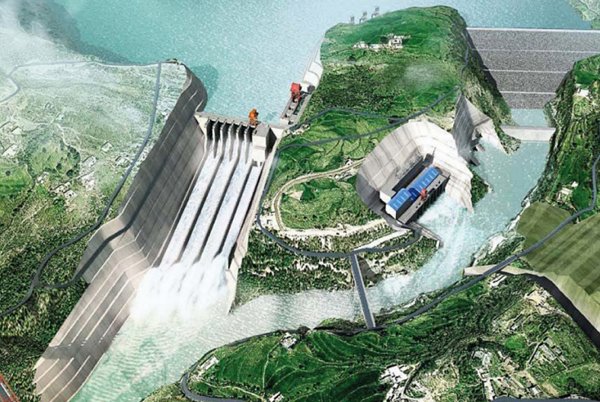
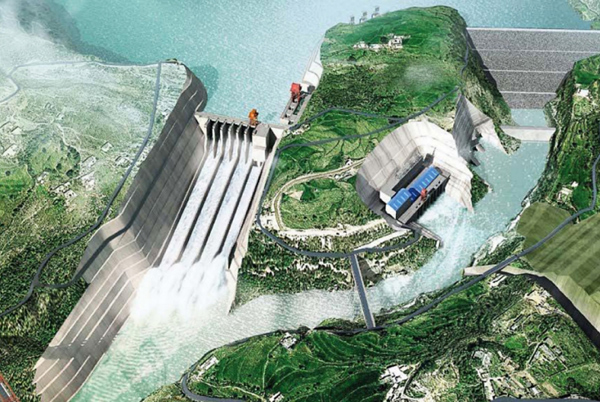
Construction of the Karot Hydropower Project in Pakistan will be completed in two years, with power generation commencing in April 2021, according to the China Three Gorges Corp (CTGC), the project's Beijing-headquartered development partner. A landmark Belt and Road Initiative (BRI) project, it is the first to be funded by the US$40 billion Silk Road Fund, a China-backed investment body established to support the country's ambitious international infrastructure development and trade facilitation programme.
The $1.74 billion Karot Hydropower Project is the fourth of five cascade hydropower stations planned for the Jhelum River. It will generate 3,174GWh (net) of energy a year, which will be sold to the National Transmission and Despatch Company under a 30-year power-purchase agreement.
The dam will be about 95m high and stretch for 460m across the river, while the reservoir created will extend 27km upstream and the surface powerhouse, consisting of four turbines, will be situated approximately 650m downstream of the dam crest. The project specifications also cover four 316m headrace tunnels, a spillway, three 447m diversion tunnels and coffer dams upstream and downstream of the main dam. Once online, it is estimated that the power generated will be sufficient to run approximately seven million households.
The project is managed by the Karot Power Company (KPCL), a special-purpose vehicle established by Pakistan-based Associated Technologies and China Three Gorges South Asia Investment (CSAIL), with the latter responsible for about 93% of the project's funding.
CSAIL is already a big player in Pakistan's energy sector. It currently has five greenfield investments in Pakistan, all of which are clean-energy projects, including hydro and wind power, with a total installed capacity exceeding 2.6 million kW. According to the company, it accounts for about 9% of the country's current installed electricity capacity.
Financing for the Karot project has been arranged on the basis of 20% equity and 80% debt. In addition to the Silk Road Fund, among the other key financing participants is the International Finance Corporation (IFC), which has provided $100 million. The Export-Import Bank of China – the lead player in the consortium – and the China Development Bank are also scheduled to extend loans to the Karot Power Company.
The participation of the IFC has added to the project's credibility and provided reassurance that it will address a number of environmental concerns. The original project environmental impact assessments were conducted and approved in 2010 and 2011. In its own evaluation of the project, the IFC conducted a further environmental and social-impact assessment report and identified a number of further provisions that needed to be put in place in order to bring the project up to the required standards.
Aftab Alam, Senior Manager of Environment for the project's Social and Safety Department, said the IFC, as a member of the World Bank Group, has done all it can to ensure the project meets all international standards relating to a safe work environment. Quarterly monitoring by third-party consultants is also being carried out in order to assess any potentially negative environmental impact.
Once completed, it is hoped that the project will help to significantly remedy Pakistan's chronic power supply shortage. Located on the Jhelum River in northeastern Pakistan and just 55km from Islamabad, the country's capital, the 720MW project will generate about 3.2 billion kWh of power annually, equivalent to about 10% of the country's total hydropower output in 2017.
In addition to the much-needed increase in power, the project is also expected to pay $23 million in taxes to the government and provide more than 2,200 jobs for local workers during the peak construction period, as well as about 3,500 regular jobs over the long-term.
Geoff de Freitas, Special Correspondent, Islamabad
Editor's picks
Trending articles
A 25-year development plan for new 250-square-kilometre city set to include world's tallest building.
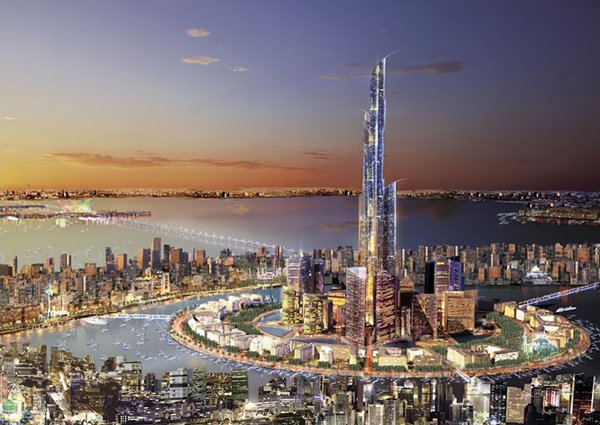
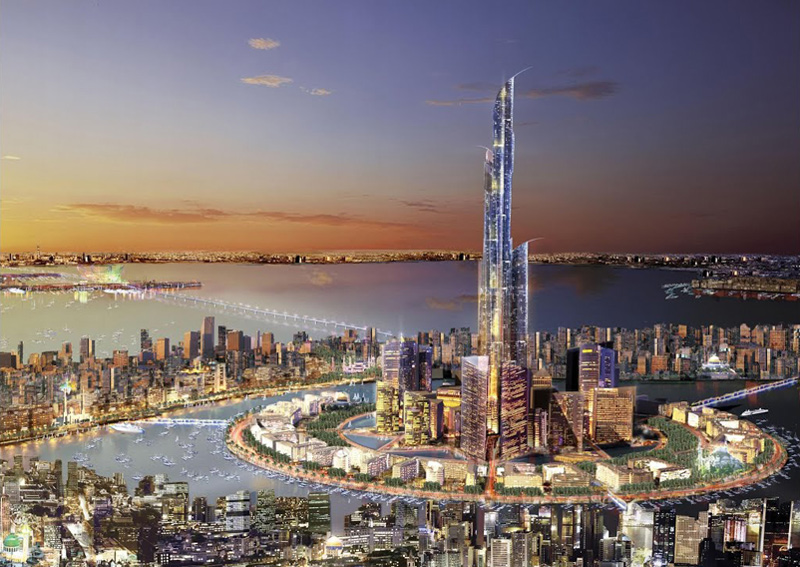
The first phase of a massive US$130 billion, 25-year Belt and Road Initiative (BRI) project has opened in Kuwait. Last month, the 36-kilometre, $3.6 billion Sheikh Jaber Al Ahmed Al Sabah Causeway began operation, connecting Kuwait's capital to its northern shores, cutting the previous three-hour car journey to just 30 minutes.
The long-term strategic importance of the new route lies in the fact that it creates a key logistics connection to Kuwait's northern area and the five nearby islands, which are collectively being reengineered into a new 250-square-kilometre city. The development, Silk City, is the cornerstone project of the New Kuwait 2035 programme, an initiative designed to help the country diversify its economy beyond its traditional reliance on oil, while creating a huge economic free zone linking the Arabian Gulf to Central Asia and Europe.
There are few illusions, however, as to just how long the development will take to complete, with China and Kuwait having originally partnered to deliver on the project in 2014. In July last year, both parties entered into a strategic partnership followed five months later by the signing of a Memorandum of Understanding in Beijing.
The grand scale of the project encompasses the strategically-sited Kuwaiti port of Mubarak Al Kabir, which is currently under construction on the nearby Al Bubiyan Island. With the $9 billion project scheduled for completion later this year, it is one of the most expensive port developments ever undertaken in the region. Located across the sea from Iraq's densely populated Al Faw peninsula, it is just a short distance from the Iraqi port of Um Qasr, from which – much to the annoyance of the local authorities – it is expected to divert substantial business.
Once complete, the project will also include an international airport, a duty-free trade zone, an Olympic-standard stadium, housing, workplaces, retail outlets and entertainment facilities for about 700,000 people – as well as Burj Mubarak al-Kabir, a one-kilometre-tall skyscraper set to succeed Dubai's Burj Khalifa as the world's tallest structure. According to Sheikh Nasser Sabah Al-Ahmad Al-Sabah, Kuwait's First Deputy Prime Minister and Defence Minister, it is hoped that the development will ultimately attract some $450 billion in overseas investment.
In February this year, Ning Jizhe, Vice Chairman of the Chinese National Development and Reform Commission, led a 35-person delegation to Kuwait. During this visit details of the development's next phase, estimated to cost $86 billion, were discussed. At present, it is envisaged that this phase will focus on construction of the airport, the rail network and the Mubarak Al-Kabeer Port trade zone. Chinese construction firms will be heavily involved in the project, with the delegation including representatives of the China Communications Construction Company and the China Development Bank.
The first stage of construction will also see a tradable goods logistics zone built within Silk City, as well as an industrial hub dedicated to supporting small- and medium-sized enterprises. Plans are also in place to develop a procurement strategy for attracting investment to the Mubarak Al-Kabeer Port under a public-private partnership model.
Jonathan Fulton, Assistant Professor at Abu Dhabi's Zayed University and a recognised expert on both China and the Gulf, sees the project as a prime example of China's ambitions in the Middle East. Expanding on this, he said: "This all fits into the maritime component of the BRI. China is already involved in the Khalifa Port in Abu Dhabi, Duqm Port in Oman, Jizan in Saudi Arabia, Djibouti and Port Said in Egypt.
"A close partnership will also be established with Gwadar Port in the China-Pakistan Economic Corridor, which will enhance the Mubarak Port's integration with greater Eurasia, while providing links to the land-based Silk Road Economic Belt."
Geoff de Freitas, Special Correspondent, Kuwait City
Editor's picks
Trending articles
By Andrew Scobell, Bonny Lin, Howard J. Shatz, Michael Johnson, Larry Hanauer, Michael S. Chase, Astrid Stuth Cevallos, Ivan W. Rasmussen, Arthur Chan, Aaron Strong, Eric Warner and Logan Ma, RAND Corporation
Since its establishment in 1949, the People's Republic of China (PRC) has viewed itself as an underdeveloped country — economically backward, physically weak, and vulnerable to exploitation by more powerful states. Even as the PRC has grown stronger economically and militarily, especially since launching the reform and opening policies of Deng Xiaoping in 1978, PRC officials continue to insist China is a developing country.
In the initial stages of reform and opening, China's relations with the developed world were shaped by its desire to expand trade and attract investment. In the 1990s, China increased its attention to the Developing World, negotiating economic agreements and creating new China-centric institutions. This accelerated in the 2000s and especially after the 2008 financial crisis, when there were worldwide doubts about the developed-world, and especially the U.S., economic model. China's attention to the Developing World has culminated in numerous institutions and in the new Belt and Road Initiative.
The authors analyze China's political and diplomatic, economic, and military engagement with the Developing World, region by region, focusing on the 21st century through the beginning of the Belt and Road Initiative, an ambitious vision that builds on China's previous activities. The authors discuss specific countries in each region — so-called pivotal states — that are most important to China. The authors show that China has oriented its security concerns and its overall engagement in concentric circles of importance. Near neighbors merit the most attention. The authors conclude with policy implications for the United States.
Key Findings
China's involvement with the Developing World encompasses political and diplomatic, economic, and military dimensions
-
The Developing World offers China economic growth and global influence.
-
Beijing has a growing challenge of protecting overseas citizens and investments.
-
Southeast Asia is China's top priority economically and politically.
China's geostrategic relationships with pivotal states focus on anticipated bilateral and regional benefits
-
China sees benefits in Malaysia (economic), Indonesia (political), Thailand (trustworthiness), and Vietnam (geostrategic risk).
-
Russia concentrates on military activities and shares China's interests in countering terrorism and Western ideas of democracy and human rights.
-
Pakistan assists China in internal security.
-
Iran offers China a friend not beholden to the United States.
-
The Republic of South Africa has a strong financial sector and rule of law.
-
Venezuela's oil deposits have been attractive.
Consequences of the Chinese strategy toward the Developing World for the United States
-
Washington and Beijing are contentious over Chinese activities in the South China Sea and China's insistence that U.S. military vessels and aircraft get permission prior to traversing disputed waters.
-
Outside Southeast Asia, the United States and China appear to be partners in parallel: two states working separately with no collaboration but in pursuit of similar ends. Their relationship varies significantly by region.
-
China is not an adversary but can harm U.S. global interests. A challenge remains as to whether and how to encourage China to act as a cooperative partner.
Recommendations
-
Despite the fact that the United States and China are competitors around the globe and in specific regions, cooperation between the two nations is possible. Washington should look to cooperate with Beijing where interests coincide but must recognize that any cooperation will almost certainly be limited.
-
Washington should appreciate that the degree of possible U.S.-China cooperation is likely to vary by region, with regions closest to China, such as Southeast Asia, more difficult. In contrast, cooperation with Beijing in regions further removed from China, such as the Middle East, is likely to be less difficult.
Please click to read full report.
Editor's picks
Trending articles
China-Egypt Suez Economic and Trade Cooperation Zone proves high water mark for bilateral development.
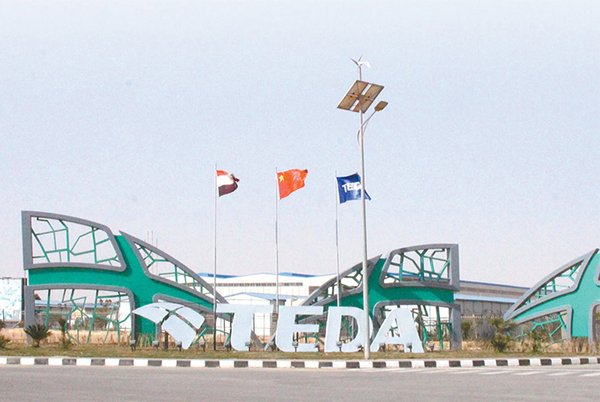
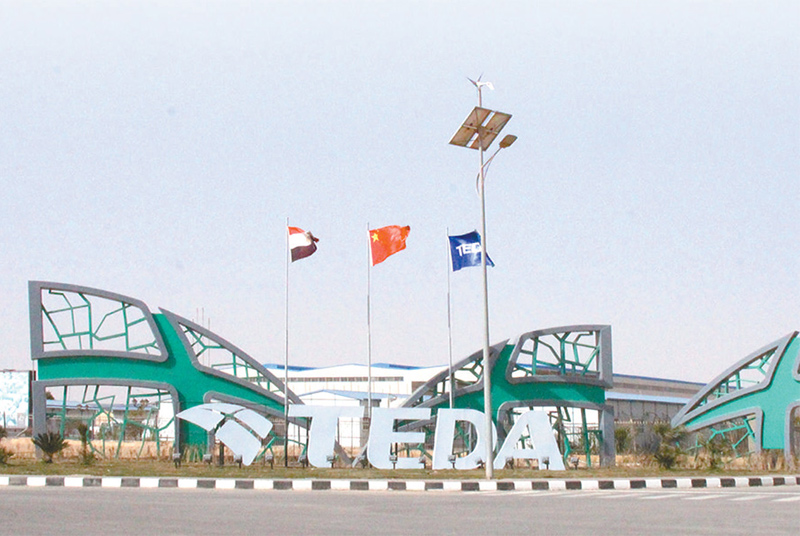
Chinese President Xi Jinping confirmed China's ongoing commitment to the continued construction of the China-Egypt Suez Economic and Trade Cooperation Zone (the Zone) at a meeting late last month with Abdel-Fattah al-Sisi, the Egyptian President. In the official Joint Communiqué of the Leaders' Roundtable of the 2nd Belt and Road Forum for International Cooperation, released following the Beijing event, the Zone was cited as an explicit example of the kind of "economic corridor" development the Belt and Road Initiative (BRI) was devised to nurture.
Indeed, the Zone, located in the Ain Sokhna district of Suez province east of Cairo, has become something of a landmark project and one seen as demonstrating the success of the Belt and Road Initiative, which ultimately co-opted the project. Construction work on the Zone officially started more than a decade ago – some four years before the BRI was officially launched – with the development headed by the China-Africa TEDA Investment, a subsidiary of the Tianjin Economic-Technological Development Area (TEDA), a highly successful mainland economic zone operator.
To date, the Zone has attracted nearly 80 enterprises, with investments totalling more than US$1 billion, while directly creating employment for more than 3,500 people and indirectly generating a further 30,000 jobs from businesses based in the Zone, the vast majority of which have gone to local workers. The Egyptian branch office of the China Hengshi Foundation Co, which specialises in manufacturing fibreglass fabrics, is one of the businesses now located in the Zone. Testifying to its success in generating local employment, the company's Vice President, Wang Shaijian, said: "We only have 25 Chinese workers, with the remaining 350 staff all Egyptian."
As of the end of 2018, the total output value of the Zone was about $1.2 billion, with some $56 million going to the Egyptian treasury in taxes, according to Liu Aimin, Chairman of China-Africa TEDA Investment Company.
The Zone is located about 120km from Cairo, close to the Suez Canal. It is serviced by the Ain Sokhna Port, which is currently being upgraded by the China Harbour Engineering Company. The construction of a new terminal is currently underway and scheduled to come into operation in the final quarter of 2019. From 2017 to 2018, container business at the port grew by 10% and its bulk business expanded from 30% to 40%.
In January 2016, work started on the second phase of the Zone, covering an additional six square kilometres. Infrastructure construction for two sq km of the second phase was finished in 2018, and according to Liu, eight industry-leading enterprises have already signed up, representing investment totalling $200 million. Chinese motorcycle giant Dayun Group is one of the investors and will officially start operations this year.
One of the early cornerstone investors operating in the Zone was China Jushi, a large producer of fibreglass, with investments totalling about $600 million. As the only fibreglass production base in Africa, the company earned $180 million through exports for Egypt in 2017, and has created trade volumes of more than $5.8 million for both local upstream and downstream industries.
Last year, Jushi's new production base, which has a capacity to manufacture 200,000 tons of fibreglass annually, went into service making Egypt the world's third-largest fibreglass producer. The company has also created more than 2,000 jobs for Egyptians and paid about $16.8 million in taxes to the country's treasury and more than double that figure in customs duties over the past four years.
Another successful project is the TEDA Fun Valley amusement park. Built at an estimated cost of $5.6 million, it opened in April 2015 with the primary purpose of entertaining the families of those working in the Suez Economic and Trade Cooperation Zone. Since then, however, it has proven to be a big hit with local and international tourists and now attracts thousands of visitors a year. With tourism comes demand for transportation, accommodation and food and beverage services, providing further opportunities for local businesses.
Marilyn Balcita, Special Correspondent, Cairo
Editor's picks
Trending articles
By Michael Baltensperger and Uri Dadush, Bruegel
Executive summary
China’s Belt and Road Initiative (BRI) is an international trade and development strategy. Launched in 2013, it is one of the ways China asserts its role in world affairs and captures the opportunities of globalisation. The BRI has the potential to enhance development prospects across the world and in China, but that potential might not be realised because the BRI’s objectives are too broad and ill-defined, and its execution is too often non-transparent, lacking in due diligence and uncoordinated.
This Policy Contribution recounts the background of the BRI and its context, what is known about the extent of the initiative and the intentions behind it. The initiative could address very large infrastructure investments gaps, which is welcome and needed. China’s goal of forging stronger links with its trading partners around the world is legitimate assuming, of course, the underlying intent remains peaceful.
Though many observers welcome the BRI, many others oppose it for good reasons, while others misunderstand it and oppose it for bad reasons. We identify and discuss concerns about the initiative that relate to its geopolitical objectives, its priorities, its geographic scope, the role of state-owned enterprises, the allocation of resources and issues of transparency and of due diligence. In particular, we show that this initiative deals with a vast number of countries that are at very different states of development, and that an apparent lack of well-defined priorities holds the initiative back. We also highlight the issue of debt overload which is distressing several BRI countries and discourages further projects.
There are improvements that China and other stakeholders in the BRI could make to get the most from their investments. The BRI, to be effective, needs to meet the basic conditions of a trade and development strategy, which are clear objectives, adequate resources, selectivity, a workable implementation plan, due diligence and clear communication. Involvement of multilateral lenders could help with this. Finally, China must improve the evaluation of the risks and costs of BRI projects and step up its approach to due diligence to demonstrate that it respects the long-term interests of those countries that are at the receiving end of its BRI projects.
Please click to read full report.
Editor's picks
Trending articles
On February 18th, 2019, the Central Government and the State Council promulgated the Outline Development Plan for the Guangdong-Hong Kong-Macao Greater Bay Area, specifying strategic positioning in five areas, including a vibrant world-class city cluster, a globally influential international innovation and technology hub, an important support pillar for the Belt and Road Initiative, a showcase for in-depth cooperation between the Mainland and Hong Kong and Macao, and a quality living circle for living, working and travelling. Based on this strategic positioning, the Greater Bay Area will assume a leading role in national economic growth and opening up, boosting the development of “one country, two systems”. In the new paradigm of Greater Bay Area development and a new era of comprehensive opening up of the country, Hong Kong will assume an indispensable and active role and attain new room for economic growth.
One. The Greater Bay Area’s city cluster will become a new engine of China’s modern economic development in the new era
The first strategic positioning specified in the Outline Development Plan for the Guangdong-Hong Kong-Macao Greater Bay Area is a vibrant world-class city cluster. The goal is to “integrate into the global market system, build a global base of emerging industries, advanced manufacturing and modern service industries”, setting an example in developing institutions and mechanisms for high-quality economic development.
In 2018, the Chinese economy grew 6.6%, and nominal GDP exceeded 90 trillion yuan, reinforcing the shift from high-speed growth to high-quality growth in the new era.
Both the size and growth of the Greater Bay Area’s GDP outperform other major domestic city clusters. In 2017, the GDP of the Greater Bay Area amounted to 10.17 trillion yuan. In 2018, the GDP of the nine Greater Bay Areas cities in Guangdong amounted to 8.1 trillion yuan. Considering the yet-to-be released GDP figures for Hong Kong and Macao, the Greater Bay Area’s GDP in 2018 could reach 10.83 trillion yuan, or about 12% of the national total. According to simple projections based on the nominal GDP growth records of the Greater Bay Area cities in the 10 years between 2008 and 2017, the GDP of the Greater Bay Area could reach 15.47 trillion yuan in 2022, achieving the goal of considerably strengthening overall competitiveness. In 2035, the GDP of the Greater Bay Area could reach 52.12 trillion yuan, a big leap in its economic prowess. Assuming a nominal growth rate of 7% for the country as a whole, in 2022, the Greater Bay Area’s GDP would account for 13.1% of the national total. In 2035, the Greater Bay Area’s GDP would account for 18.3% of the national total, genuinely becoming an important engine of China’s economic growth.
The Greater Bay Area city cluster will establish and maintain reasonable collaboration and division of roles, realizing interconnectedness in factor markets. Easy movement of various factors will efficiently improve resource allocation and the synergy of regional development, boosting the transition of the Greater Bay Area from simple addition to organic economic consolidation, improving the quality and efficiency of economic growth, and further elevating the Greater Bay Area’s importance in China’s modern economic development.
In building the Greater Bay Area, Hong Kong has the advantages of “one country, two systems” and a fully international market economy, enabling the Greater Bay Area to better capitalize on its strengths accumulated from early and pilot implementation during Mainland China’s reform and opening up, in adequate industrial systems, congregation of innovative factors, a market economy, and high degree of internationalization, providing important support for national development towards a modern and open economy in line with international standards.
Please click to read the full report.
Editor's picks
Trending articles
China steps up development funding for Iraqi oil and gas projects, while also hiking up level of anticipated fuel imports.
In recent years, Iraq's oil and gas sector has been boosted by significant investment from China within the framework of the wider Belt and Road Initiative (BRI). In a sign this trend is unlikely to abate any time soon, the China Petroleum Engineering and Construction Corporation (CPECC) signed a US$280 million contract in February with Iraq's Basra Gas Company (BGC) to construct a natural gas liquids plant in the country's southern Basra province.
CPECC is a subsidiary of the China National Petroleum Corporation (CNPC), while BGC is a $17 billion joint venture vehicle established 25 years ago to develop Iraq's gas reserves. Iraq's South Gas Company has a 51% shareholding in BGC, with the balance controlled by Royal Dutch Shell (44%) and the Mitsubishi Corp (5%).
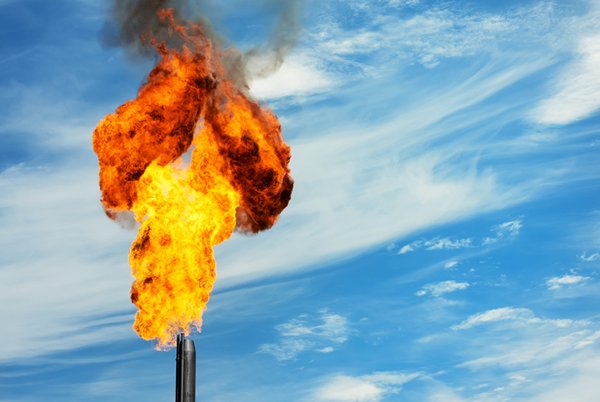
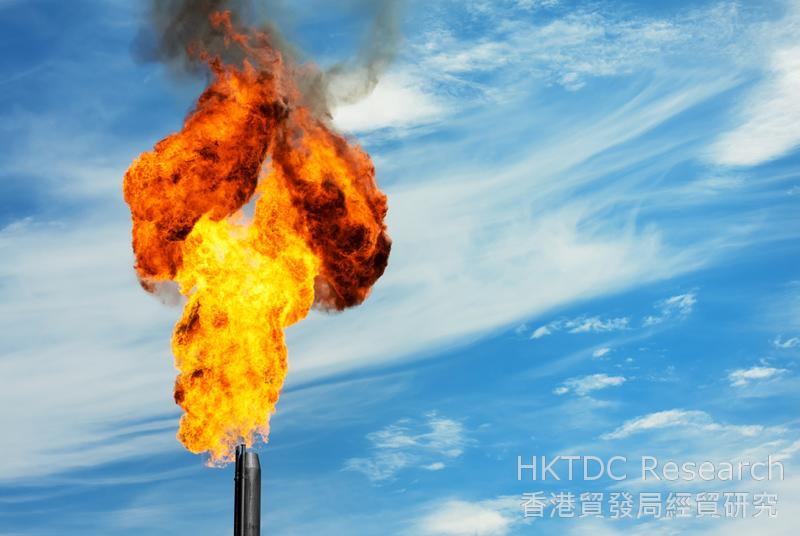
The contract awarded to CPECC follows an earlier decision by the joint-venture partners to increase BGC's capacity by 40%. The new project will focus on the capture of flared gas from three major oilfields – Rumaila, West Qurna 1 and Zubair – and its conversion to dry gas for power generation and liquids for the domestic market and export. It is anticipated that work on the plant will be completed by the end of next year.
Central to the project is the development of the Basra Natural Gas Liquids facility at Ar Ratawi. Once fully commissioned, this gas-processing plant will be served by two trains, each with a processing capacity of 200 mmscf/d (million standard cubic feet per day), enabling BGC to increase its total capacity to 1.4 bcf/d (billion cubic feet per day) by the end of 2021. BGC will also be able to produce an increased level of higher-margin refrigerated liquefied petroleum gas for export from the refurbished and expanded storage and marine terminal within Basra's Um Qasr port.
Commenting on the significance of these recent developments, Marcus Antonini, Shell Iraq's Vice-president, said: "With BGC having recently achieved a new production high of more than 1 bcf/d, we are delighted to mark this growth milestone with the commission of an industry-leading competitive project that will reduce gas-flaring from the three Basra oil fields, thus increasing our dry gas supply and NGL export capabilities.
"This will bring significant and widespread societal benefits to the Basra region in terms of jobs, the environment and the security of energy supply."
Gas-flaring, which involves excess gas from oil wells being burnt off, is seen as constituting a significant waste of Iraq's natural resources. The country's government plans to end all flaring by 2021. It is believed that the practice costs the country nearly $2.5 billion in lost revenue each year and, according to the World Bank, if the gas were trapped and utilised it would meet most of Iraq's domestic needs for gas-based power generation.
Flaring is also considered to have a hugely negative impact on the local environment, creating excessive atmospheric pollution and contributing substantially to increasing greenhouse-gas emissions. The new CPECC facility will help address such problems by preventing the transmission of the flared gases into the wider environment.
Chinese investment in Iraq's oil and gas sector has escalated over the past few years, as the Middle East country's trade options have narrowed following the re-imposition of US sanctions. To date, CNPC has secured stakes in the Ahdab, Halfaya and Rumaila oilfields – with the latter the largest in Iraq and the sixth-largest in the world, with estimated oil reserves of 17 billion barrels. Via its PetroChina subsidiary, CNPC also has an interest in the West Qurna I field.
The China National Offshore Oil Corporation (CNOOC), meanwhile, has a stake in the Maysan Oil Fields, while Sinopec, through its Addax Petroleum subsidiary, has interests in the Taq Taq oilfield in Iraqi Kurdistan. In addition, last year, state-owned China Zhenhua Oil, along with two private Chinese companies – the Geo-Jade Petroleum Corporation and the United Energy Group – secured field development deals with the Iraqi government.
Perhaps unsurprisingly, Iraqi oil exports to China are expected to ramp up considerably in the near future. According to Alaa Al-Yasiri, Director General of SOMO, Iraq's state-owned marketing company, the country aims to supply China with about 60% more crude this year than in 2018. This continues an already upward trajectory, with Iraqi crude-oil imports to China rising to 863,000 barrels per day for the first nine months of 2018, a 15% year-on-year increase.
Kicking off the expansion will be a Tianjin-based oil trading venture with Zhenhua Oil. Assessing the likely scale of this particular venture, Al-Yasiri said Iraq was anticipating annual sales of about 160,000 barrels a day, which would be via a number of smaller, independent refiners as well as through several larger petrochemical plants.
Geoff de Freitas, Special Correspondent, Baghdad
Editor's picks
Trending articles
By Hui Lu, Charlene Rohr, Marco Hafner and Anna Knack, RAND Corporation (Europe)
In 2013, Chinese President Xi Jinping announced plans to build a Silk Road Economic Belt and a 21st Century Maritime Silk Road, which have come to be known as the Belt and Road Initiative (BRI). The BRI is geared towards encouraging greater policy coordination, infrastructure connectivity, investment and trade cooperation, financial integration, cultural exchange and regional cooperation between Asia, Europe and Africa, by creating jointly-built trade routes emulating the ancient Silk Road. Using both qualitative and quantitative analysis, this study was to measure the impact of improving transportation multimodal connectivity on multilateral trade and economic growth across countries and regions along China Belt and Road Initiative. This is a proof-of-concept study which is targeted at stimulating discussion and providing empirical evidence on the impact of transport infrastructure improvements in the BRI region. The study's findings aim to be of use to policymakers and stakeholders who are interested in this infrastructure plan.
Key Findings
-
The literature review finds that multimodal transport infrastructure and connectivity can facilitate trade expansion, attract foreign direct investment, speed up the industrialisation process and enable more efficient production networks, facilitate regional integration, and accelerate the process of economic growth.
-
The literature review finds that multimodal transport infrastructure and connectivity can facilitate trade expansion, attract foreign direct investment, speed up the industrialisation process and enable more efficient production networks, facilitate regional integration, and accelerate the process of economic growth.
-
There is a positive and statistically significant relationship between transport infrastructure and connectivity and bilateral trade. Assuming that this relationship is causal, with the proposed level of investment in transport infrastructure in the BRI region, total trade volumes increase not only in the BRI region, but also in the countries outside the initiative (such as those in the EU). Therefore it appears to be a win-win scenario.
Recommendations
-
The BRI region suffers from less developed infrastructure than other regions and this can hamper trade development. Therefore, investing in infrastructure related to trade and transport, such as ports, airports, road, and rail links and connections, should remain a priority and sufficient funding should be made available for this purpose.
-
There could be substantial further benefits if countries and regions along the BRI region coordinate their development plans to achieve compatibility and complementarity between their policies and the infrastructure implementation. Countries should work together to ensure that the initiative delivers sustained economic, social and environmental benefits across generations.
Please click to read full report.