









Chinese Mainland
Relocating to Chengdu and Chongqing: The Implications for the High-tech Sector
China’s western region has an abundant supply of labour and land. With constant flows of foreign investment into Chengdu and Chongqing, the region’s industry chain is moving towards maturity while efficiency of the local logistics and transportation sectors has been enhanced. This has helped to turn the Chengdu-Chongqing region into an ideal base for industrial relocation from the coastal areas. However, as the local economy and industry continues to develop, the Chengdu-Chongqing region is becoming more cautious with land planning and is shifting from merely placing emphasis on the amount of investment projects to developing high-tech and high value-added industries.
Hong Kong companies wishing to expand and take advantage of what the western region has to offer should bear in mind the impact of higher logistics costs on their export businesses, and consider ways of connecting the supply chain in the coastal areas with the western region in the course of their production. They should also note that space for industrial relocation to the western region could diminish over time. Production activities in the Chengdu-Chongqing region, especially in light of the rapid growth of the electronics and other high-tech industries, will directly stimulate demand for a wide range of industrial materials, which could bring about considerable market opportunities for Hong Kong’s upstream materials suppliers.
Lower Production Costs Offset Logistics Charges
In recent years, the continual flow of foreign investment into Chengdu, the capital of Sichuan province, and the nearby Chongqing municipality has propelled the rapid development of the local supply chain. Technology giants such as Intel and HP have set up production plants in the region, while other foreign companies including Quanta, Inventec and Foxconn of Taiwan have established R&D and production bases there that are engaging in the production and export of information-technology products. The presence of these foreign players, together with mainland enterprises such as TCL and Lenovo, has greatly increased the spectrum of the existing local industry cluster and turned the Chengdu-Chongqing region into the largest modern manufacturing centre in China’s western region.
It is worth noting that the ongoing expansion of production activities in the Chengdu-Chongqing region has attracted many upstream materials manufacturers and supporting industries. Many have invested in the region in order to support their clients’ production activities and to help develop the industrial market in the western region. Moreover, Sichuan and Chongqing are both leading automobile production bases in China with a complete auto-parts supply system. Following the continual growth of other industries, the industry chain in Chengdu and Chongqing is becoming increasingly mature and the two cities have developed into ideal industrial relocation bases for companies from the coastal areas.
One example is Chongqing Huike Jinyang Technology Co Ltd, headquartered in Shenzhen. The company, which owns the well-known mainland computer brand HKC, relocated part of its production activities to Chongqing from Shenzhen some years ago, establishing a presence in the Chongqing Hong Kong Industrial Park. Chongqing Huike employs more than 1,000 staff in Chongqing, producing LCD display panels, computer monitors and TV sets, as well as conducting R&D and product design activities. About 70% of its products are sold in the mainland market, with the remainder exported to overseas markets like Europe, the United States and Asia.
A Chongqing Huike representative told HKTDC Research that its products made in Chongqing were mainly delivered overland to Shenzhen, where they were gathered with products manufactured in other regions and distributed to the mainland market for sale or exported via ports in the coastal city. A small portion of the products is transported from Chongqing to Shanghai for direct export to foreign clients. Chongqing Huike also acquires some of the materials from Shenzhen to support its daily production activities. As such, the company has to bear higher logistics costs.

(Photograph provided by Hong Kong Industrial Park in Chongqing.)
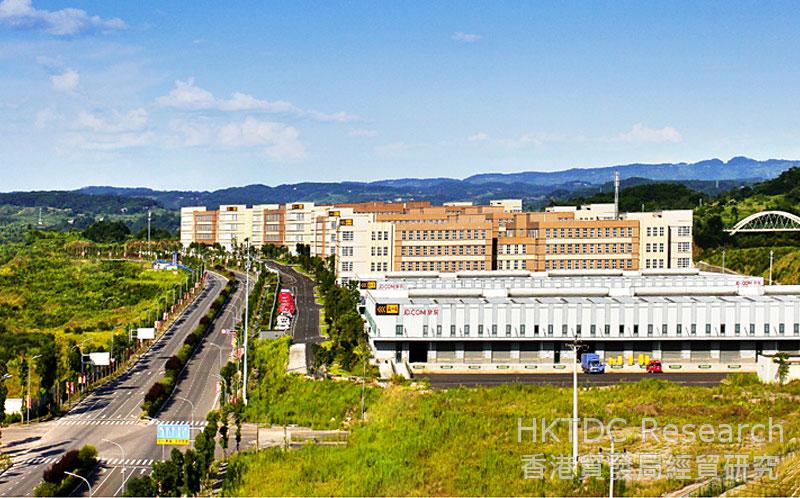
According to Chongqing Huike, local and out-of-the-city logistics service suppliers have strengthened their external logistics services in the Chengdu-Chongqing region in recent years and have opened new water and land transportation routes. Consequently, local logistics charges are dropping while transportation efficiency is improving. At the same time, bolstered by foreign investment, the supply of industrial materials in Chongqing has been increasing. In light of this, Chongqing Huike has strengthened its local purchasing activities, such as buying various kinds of metal parts, plastics and optical items from upstream enterprises in Chengdu and Chongqing. By so doing, the company manages to rely less on supplies from Shenzhen as well as save transportation and logistics costs. Yet, Chongqing Huike still has to rely on Shenzhen to supply key parts and components as well as certain precision moulds and devices in order to sustain effective production.
The abundant supply of labour and technical personnel in Chongqing, however, means lower production costs, which helps to offset higher logistics costs considerably. These advantages, coupled with government subsidies on logistics charges and tax concessions offered by the Go West strategy, have persuaded Chongqing Huike to shift part of its production activities to Chongqing from Shenzhen where costs are higher. Meanwhile, the company has also invested in advanced manufacturing and automation facilities, including building a Gen 8.5 LCD production line in the Chongqing Hong Kong Industrial Park. The aim is to pursue transformation, upgrading and development of the higher-tech business, apart from resolving problems like labour shortages and production-cost hikes encountered in coastal region.
Focusing on High-tech and High Value-added Industries
It is worth noting that as the pace of industrial development accelerates, Chongqing is also eager to attract investment projects involving higher technology. For instance, apart from offering preferential tax and land policies, the Chongqing Hong Kong Industrial Park has set up a special industrial development fund aimed at encouraging and supporting industries that adhere to the local development policies. These industries – in addition to the textile and garment trades, which have been given priority for development – mainly include new strategic industries such as laptops, communications, environmental protection equipment, pharmaceuticals, and new materials. This shows that Chongqing, as an industrial relocation base, is gradually shifting from attracting labour-intensive industries to focusing on those of higher value-added business and higher technology.
|
Hong Kong Industrial Park in Chongqing The Hong Kong Industrial Park located in Chongqing’s Ba’nan district was launched in 2013 with a planned area of 10 sq kilometres in Phase 1. The park mainly caters to the development of digital/electronic products, optical products, hardware, electrical machinery, as well as value-added processing industries like jewellery, watches and clocks, toys and garments. Currently, nine projects have entered the park with an investment amounting to RMB38.2 billion. These projects include new strategic industries such as LCD panels, smart devices, and biomedicine. In addition to Chongqing Huike, other enterprises that have established a foothold in the park include Hong Kong registered companies Blue Moon Group, Hengan Group and Bai Ya Group[1]. Furthermore, all industrial investment projects adhering to the park’s special investment policies are entitled to preferential tax and land policies[2], including:
|

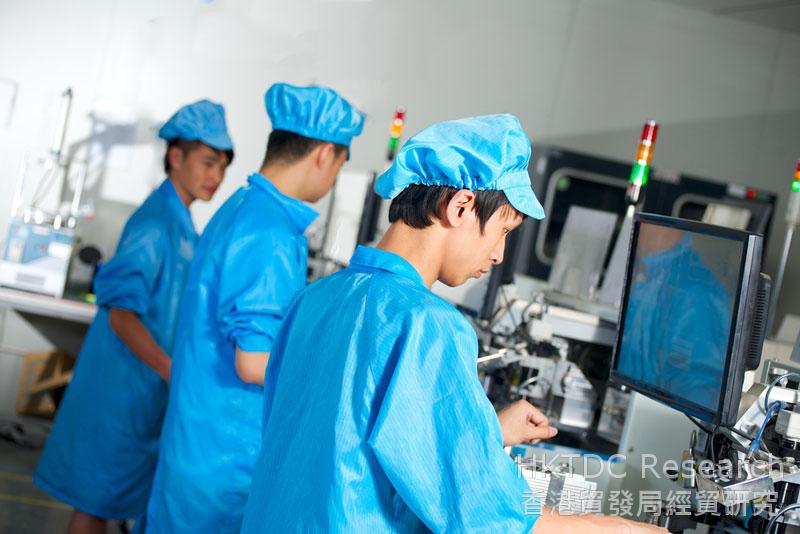
But Chongqing also has plans to serve as a base for the relocation of light industries. For example, in the Chongqing Maliu Riverside Development Zone, apart from development of the pharmaceutical and logistics industries, a light-industry functional area covering three sq kilometres has been set up primarily for the development of such industries as light textiles, garments and cosmetics. In tenant recruitment, emphasis is placed on attracting a cluster of companies engaged in design and branding in the hope of establishing a national-level textile and garment design centre in the zone for building brands. In particular, brands and large and medium-sized enterprises, as well as creative garment design enterprises, are encouraged to move in. In other words, apart from attracting the light-textile industry, the development zone also hopes to attract investment projects of higher value-added.
As for Chengdu, the local government is determined to develop the city into an advanced manufacturing industry base in the western region, with a focus on high technology and high value-added industries such as electronic information, equipment manufacturing, agricultural products processing, modern Chinese medicine, aviation and aerospace, bio-engineering, and modern services. Indeed, after years of attracting businesses and investments, Chengdu is now home to many foreign and domestic enterprises with financial clout, and has also developed into a regional commercial, trade and financial centre, a transportation and communications hub, and a technology centre of the southwestern region[3].
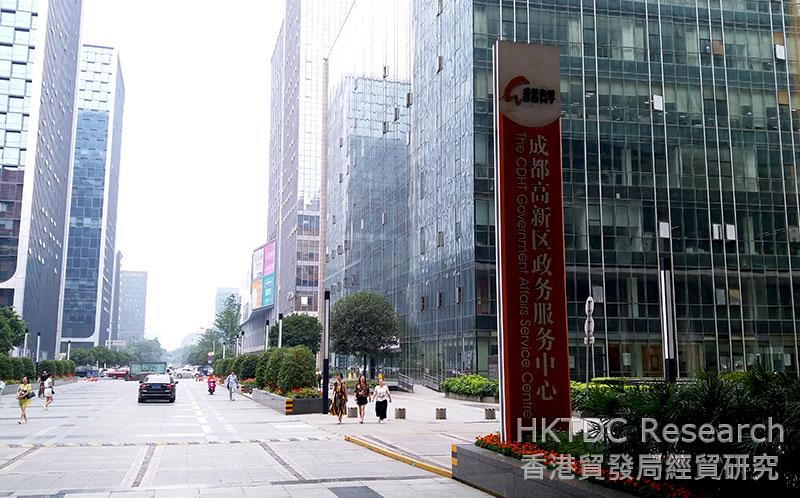
As industrial development in the city moves towards maturity, the Chengdu government has become more cautious with land planning in order to prevent land shortage. For instance, the Chengdu High-Tech Industrial Development Zone formed by the South Park and the West Park not only attaches importance to developing high-tech and new and strategic industries, but also advances the development of the financial and commercial services sectors. Such efforts aim to strengthen support for production industries and promote the development of the zone as well as Chengdu’s overall economy.
In view of the fact that the West Park, which was developed earlier, is reaching saturation, the Chengdu High-Tech Industrial Development Zone is currently shifting its focus to developing the South Park. While efforts are being made to develop the next generation information-technology industry, bio-industry and service industry, steps are also being taken to set up related facilities and platforms such as incubators and entrepreneurship centres with a view to turning South Park into an international innovative industrial development centre.
Overall, the Chengdu High-Tech Industrial Development Zone hopes to attract more investment from companies with technological and innovative capabilities. As for industries that are more traditional, have lower technology content and do not meet the development needs of the zone, even though they may wish to relocate to the zone for development, they are likely to have less room for growth.
|
Chengdu High-Tech Industrial Development Zone The Chengdu High-Tech Industrial Development Zone, one of the first batches of national-level high-tech industrial development zones established upon the approval of the State Council in 1991, ranks third out of 146 such zones across the country. It is also the first national independent innovation demonstration zone in the western region, and contains an innovation and entrepreneurship park jointly run by China and South Korea. The planned area of the entire zone, comprising the South Park and the West Park, is 130 sq kilometres. Currently, 99 of the world’s Fortune 500 companies (including Intel, Dell, IBM and Microsoft) and R&D centres of more than 60 well-known foreign and domestic companies have established a presence there. The Zone is now focusing the development of the following “7+2” industries: √ Next generation information network |
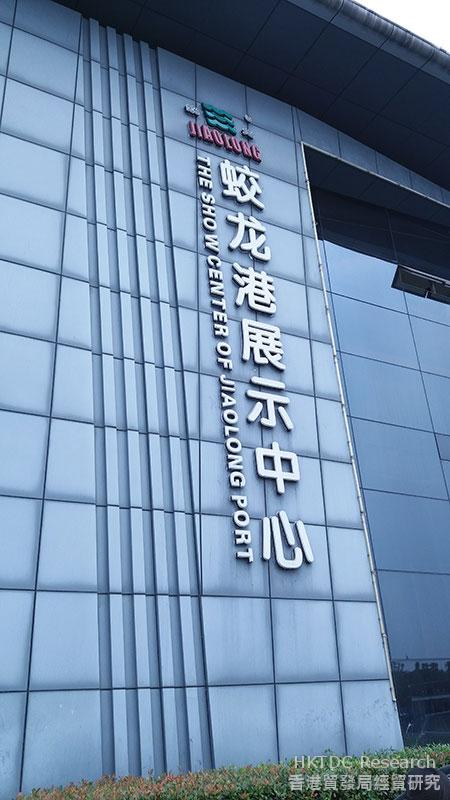
Similar cases can be found in other areas in Chengdu, such as the private-run industrial parks in Chengdu Jiaolong Port. Since their launch in 2000, the port’s two parks, Qingyang Park and Shuangliu Park, have attracted more than 1,200 companies, with annual sales revenue amounting to RMB30 billion. A modern industrial system[4] with the service industry and the advanced manufacturing industry as the mainstays has been built. A representative of the Shuangliu Park told HKTDC Research that the current main development direction of Jiaolong Port was innovative economy. The park is gradually moving towards maturity, and in its efforts to attract industry players and investments, land saving and environment-friendliness are major considerations, with emphasis placed on attracting investment projects involving modern manufacturing, logistics, innovation, R&D and design. At the same time, steps are being taken to encourage companies operating in Chengdu Jiaolong Port to pursue transformation and upgrading in a bid to enhance the value-added of economic activities in the area.
Opportunities Arising from Industrial Relocation
The western region’s lower labour, land and other production costs, together with its increasingly mature supply chain system, have gradually turned it into an ideal location for companies in coastal areas to relocate their production activities. As economic and industrial development in the western region continues, the more mature Chengdu-Chongqing region is also shifting from focusing only on the number of investment projects to developing high-tech and high value-added industries. Therefore, it can be expected that available land for industrial relocation by coastal enterprises to the western region will gradually reduce. In view of this, Hong Kong companies wishing to capitalise on the potential of the western region may consider accelerating their pace of investment and business expansion. To upstream suppliers in Hong Kong, the rapid expansion of production activities in the Chengdu-Chongqing region has created demand for a wide range of industrial materials, parts and components, which can in turn unleash considerable market opportunities.
[1] Source: Hong Kong Industrial Park in Chongqing
[2] These concessions are available provided that the projects adhere to special industrial investment policies. For details, please make enquiries with the Chongqing Hong Kong Industrial Park.
[3] For more details on Chengdu city, please see Western China: The Route to Success along the Belt and Road
[4] Source: Chengdu Jiaolong Port Management Committee
| Content provided by |

|
Editor's picks
Trending articles
28 Oct 2016
Japan, China and the Trans-Pacific Partnership (TPP) as a Strategic Tool of Choice
RCAPS Working Paper Series
By Benny TEH Cheng Guan, School of Social Sciences, Universiti Sains Malaysia, Penang, Malaysia
Abstract
This paper discusses the role of the Trans-Pacific Partnership (TPP) agreement as a strategic tool for Japan in pursuing its national and regional interests. While it is undeniable that the economic benefits to be accrued from the agreement in terms of boosting Japan’s economic growth are important and well argued, Tokyo’s motivation to engage the TPP is driven more by its geopolitical and strategic calculations. The former serves middle to long term ambition while the latter takes on short to middle term goals. Centering on the latter, the paper discusses three major motivations:
- the use of the TPP to exert innovation and drive change at home in maintaining its strategic competitiveness;
- the perceived importance of the TPP as a rule setter for regional economic cooperation; and
- the significance of the TPP in balancing Beijing’s strategic influence in the region. China’s move to fortify its relations with neighboring countries through its own initiatives in an unending tussle with the US could see the formation of two opposing trade blocs in the Asia Pacific region. Japan can play a significant role in bridging the gap and contribute to the possibility of convergence.
Please click to read full report.
Editor's picks
Trending articles
China-Europe Express Trains: On Track to Access Belt and Road Businesses
Since the launch of the China-Europe Railway Express (CR Express) linking China with Europe by fast-track cargo rail, freight volume has increased substantially, particularly in the past year. The CR Express is of increasing interest to companies wanting to transport Chinese products to Europe while tapping markets along the Belt and Road routes, including manufacturers in western China and companies in the coastal region looking for an alternative to sea freight. Some companies even take advantage of these freight trains’ speed and customs clearance facilitation to bring imports into the booming domestic market.
As the CR Express service is expected to continue to improve, Hong Kong manufacturers and traders could consider using rail as an adjunct to sea transport in order to develop inland market opportunities along the Belt and Road routes in both Asia and Europe. Logistics providers could also strengthen co-operation with railway logistics companies to connect with logistics networks in Hong Kong, so as to further strengthen their niche in international transport and logistics in sea and air transport.
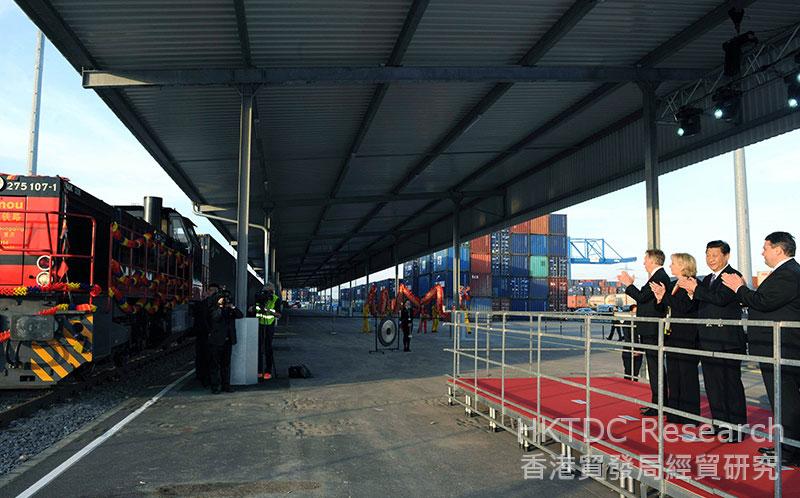
(Photograph provided by Yuxinou (Chongqing) Logistics Co Ltd.)
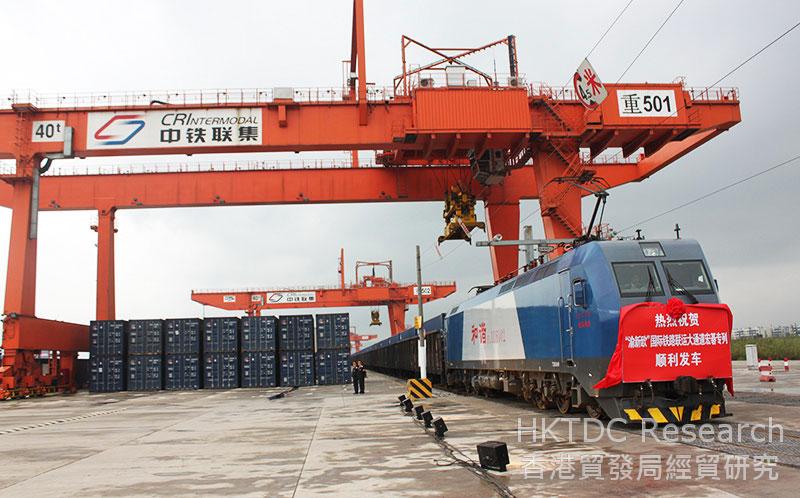
(Photograph provided by Yuxinou (Chongqing) Logistics Co Ltd.)
Fast Expansion of Services to Cover the Whole Country
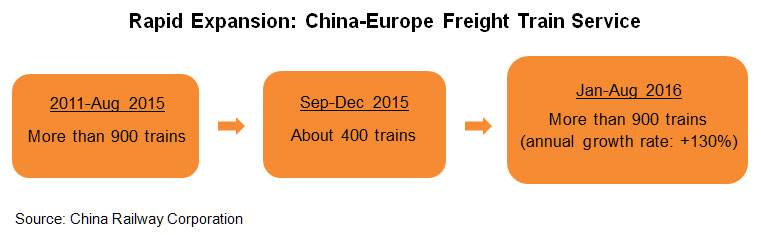
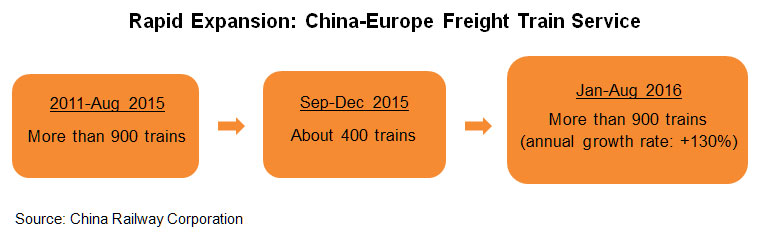
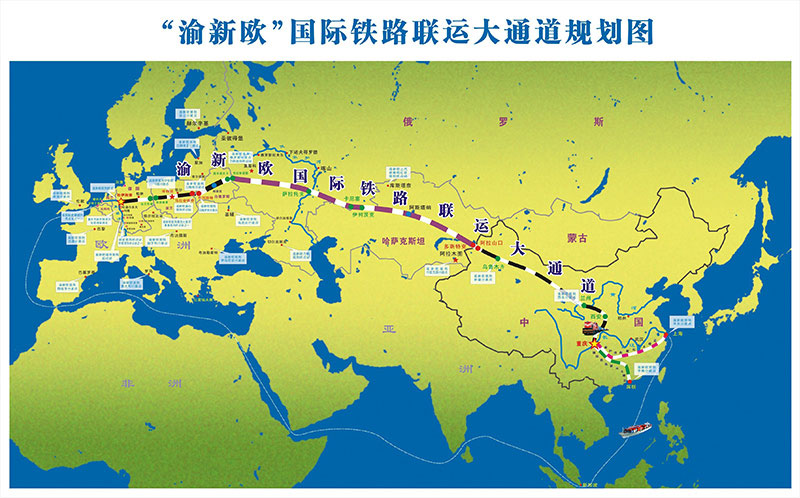
China’s Europe-bound freight-train service (now formally named the CR Express) was launched in March 2011, with the first train setting off from Chongqing to Duisburg, Germany. As of August 2016, more than 2,100 trains[1] had been dispatched via the Yuxinou (Chongqing-Xinjiang-Europe) International Railway. Currently, the CR Express provides regular rail services to at least 16 Chinese cities, including Chongqing, Chengdu, Zhengzhou, Wuhan and Suzhou, calling at more than 12 cities in eight European countries[2]. Of particular interest is the fact that CR Express services have grown rapidly in the past year, with increasing numbers of mainland companies relying on rail to transport goods to Europe.
The CR Express provides not only direct railway transport to Europe from China, but also a one-stop service in cargo inspection, quarantine and customs clearance thanks to the support of relevant government authorities. Notably, the technical specifications of the railway system and rail tracks are different between China, countries in Central Asia and Europe. Trains need to change from one rail track system to the others when crossing the China-Russia border, entering Central Asia (countries such as Kazakhstan), and arriving in Eastern Europe and Western Europe. However, such technical issues have been resolved thanks to the concerted efforts of the railway and shipping companies concerned. Today, most logistics operators are capable of monitoring the cargo during the whole process and provide the consignor with clearance on arrival at the railway terminus, warehousing and transshipment to the desired destination.
|
Yuxinou International Through Railway Transport Chongqing launched the first Europe-bound freight-train through railway service, via the Yuxinou (Chongqing-Xinjiang-Europe) International Railway, in March 2011, departing from Chongqing, passing through Alashankou in Xinjiang, crossing Kazakhstan, Russia, Belarus, Poland, and finally reaching Duisburg in Germany. Covering a distance of about 11,179km and taking about 14 days, the Yuxinou Railway now offers a weekly scheduled train service. Transportation via the Yuxinou Railway saves about 20 days compared with rail/sea intermodal transport (via Chongqing-Shenzhen Railway and then by sea to Europe) or river/sea transport (via the Yangtze River to Shanghai and then by sea to Europe). According to China Customs statistics, about 85% of the total value of goods handled by the CR Express via Alashankou in Xinjiang is carried by the Yuxinou Railway. Boosted by local and foreign investment inflow, the technology industry in Chongqing and its neighbour Chengdu provides the main exports carried by the Yuxinou Railway, with goods including notebook computers, printers, LCD monitors and other IT products. Among them are brands such as HP, Acer, Asus and Toshiba. The Yuxinou Railway also carries imported goods, including auto parts and finished vehicles. The majority of the cargo is high value-added items, and requires urgent delivery. In an interview with HKTDC Research, a representative of Yuxinou (Chongqing) Logistics Co Ltd said that currently about 40% of goods carried on Yuxinou trains were exports from local enterprises in Chongqing, 30% were from East China, and another 30% were from South and Southwest China. He noted that companies could now take advantage of the Yuxinou Railway's logistics and transportation services to deliver goods to Germany, Poland, the Czech Republic, Moscow and Cherkessia in Russia, Astana and Almaty in Kazakhstan, and then transship them to other destinations. The further expansion of related logistics services presents them with Belt and Road business opportunities in Central Asia and Eastern Europe, as well as in export markets in Western Europe. |
Currently, the CR Express mainly passes through Alashankou/Korgas in western China to Kazakhstan, Erenhot in northern China to Mongolia, and Manzhouli/Suifenhe in northeast China to Russia. Major lines in service include:
- Chongqing to Duisburg, Germany: about 11,179km; about 14 days.
- Chengdu to Łódź, Poland: about 9,826km; about 10 days.
- Zhengzhou to Hamburg, Germany: about 10,399km; about 17 days.
- Suzhou to Warsaw, Poland: about 11,200km; about 12 days.
- Wuhan to Lyon, France: about 11,300km; about 15 days.
- Changsha to Duisburg, Germany: about 11,808km; about 18 days.
- Yiwu to Madrid, Spain: about 13,052km; about 21 days.
Note: Train services are expected to continue to improve. For updates, please make enquiries with the relevant railway departments.
Source: China Railway Corporation; Chengdu Investment Promotion Commission; Yuxinou (Chongqing) Logistics Co Ltd; Henan People’s Government; Jiangsu Department of Transportation
(Photograph provided by Yuxinou (Chongqing) Logistics Co Ltd.)
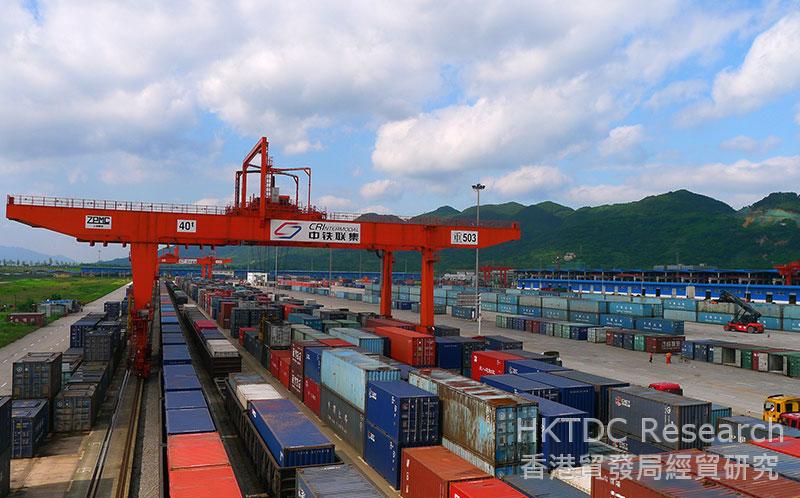
(Photograph provided by Yuxinou (Chongqing) Logistics Co Ltd.)
Supplementing Air and Sea Freight
By helping companies to export goods to Eastern Europe and Western Europe, the CR Express is playing an important role in China’s Belt and Road strategy and helping to strengthen bilateral trade and investment with countries along the route. Furthermore, some logistics operators also provide clients with transit services from the terminuses in Germany and Poland to neighbouring areas, effectively extending the coverage of the CR Express.
Of particular interest is that the CR Express was earlier used primarily for transporting Chinese exports to Europe. But Chinese companies are now increasingly using the service to import goods from Europe. In the first half of 2016, the CR Express operated 619 train services (a 150% increase year-on-year), of which 410 departed from China, and 209 returned (a 318% rise year-on-year[3]), representing 51% of the number of departures.
IT and other electronic products are now the major categories of export goods currently carried by the CR Express. Others include household appliances, machinery and equipment, auto parts, food, clothing, general goods, and e-commerce merchandise. Interestingly, although many e-commerce items are mainly transported by air, they are being carried increasingly via the CR Express. On the other hand, imports mainly include wood products, food, agricultural goods, auto parts and finished vehicles.
Generally, these China-Europe freight trains transport cargo to their destinations three times faster than shipping by sea for one-fifth of the cost of transport by air[4]. While rail freight is still more costly than sea freight, the CR Express can work as an adjunct to sea and air transport, and rail connections are likely to increase as more and more companies use rail services to expand China-Europe trade.
Europe-bound services from the Guangdong province have also been launched, such as the service from Guangzhou to Vorsino in Kaluga, Russia via Manzhouli in Inner Mongolia, which began in August 2016. This was the second Europe-bound train service from the province, following the service from Shilong, Dongguan to Duisburg, Germany, which started operating in April 2016. According to China Railway Corporation’s information, the line covers a distance of 11,500km, taking about 15 days. Clothing, footwear, computer accessories and electronic equipment produced in the Pearl River Delta (PRD) region were shipped using a standard 40-foot container. The railway company is planning to strengthen Europe-bound train services from Guangdong, and is actively working on rail connections with Kazakhstan and Uzbekistan in a bid to transport more goods manufactured in the PRD region and southern China to markets in Central Asia and Europe.
Implications for Hong Kong Companies
The recent rapid expansion and increasing frequency of Europe-bound rail services, and the significantly shorter lead time of 10-12 days for the fastest routes, means rail has gradually become a viable alternative to sea and air transport for export and import enterprises exploring European trade opportunities. Meanwhile, the related railway transport companies are actively working with countries along the CR Express route to negotiate not only transit arrangements, but also the feasibility of stopovers to collect cargoes halfway on the route. This is to align with the current China-Asia CR Express service, whose freight trains are departing from China and heading to Asian countries like Nepal, Kazakhstan and Uzbekistan.
These developments will effectively enhance the transport links between China and countries in Asia and Europe and strengthen the capabilities of related logistics providers of cargo transportation and distribution. Under such circumstances, Hong Kong companies may need to consider the feasibility of the further use of rail transport to enhance their flexibility in expanding into Eurasian markets. Furthermore, logistics operators can also strengthen partnerships and co-operation with the relevant railways, helping to connect them to logistics and transport networks in Hong Kong, and so enhance their advantage in the international transportation and logistics business.
[1] Source: Information released by China Railway Corporation on 30 August 2016.
[2] Source: Information released by China Railway Corporation on 18 July 2016.
[3] Source: China Railway Corp
[4] Source: National Development and Reform Commission
| Content provided by |
|
Editor's picks
Trending articles
2 Nov 2016
One Belt, One Road: China’s Vision of “Connectivity”
By Dr. Stephen Aris, Senior Researcher, Center for Security Studies (CSS) at ETH Zürich
President Xi Jinping has outlined plans to construct huge infrastructural links to better connect China with the rest of the world. This strategic vision of a “New Silk Road” is now more often referred to as the “One Belt, One Road” (OBOR) initiative. Beijing is allocating huge amounts of finance to the project, but China’s neighbors remain wary of OBOR’s geopolitical implications.
Since becoming China’s “paramount leader” in 2013, Xi Jinping has launched a series of both domestic and foreign policy initiatives. All of these aim to ensure political stability and continued economic growth at home and to position China as a new major player within international affairs. What is noticeable about Xi’s various policy initiatives is that they draw an increasingly overt link between domestic and foreign affairs. Arguably, the most noteworthy in this regard is the “New Silk Road” strategic vision, now more often referred to as the “One Belt, One Road” (OBOR) initiative.
Invoking the historical imagery of the ancient Silk Road, OBOR envisions the construction of a set of grandiose infrastructural links that run from China to the rest of the world. The aim is to generate greater trade and enhance connectivity between China and Africa, Eurasia, Europe, the Middle East, and South and Southeast Asia. While a few sections of the New Silk Road are already in place or under construction, currently most only exist on the drawing board. Nonetheless, this vision of connectivity is beginning to catch the attention of the international community. Governments, businesses, and citizens that may lie along the proposed routes are attracted by the huge amount of finance that Beijing has suggested will be allocated and raised to make the vision a reality. At the same time, they are also wary of the geopolitical implications of becoming a node in these Chinaorientated routes of connectivity.
Due to its free trade agreement with China and its growing role as an “offshore renminbi hub”, Switzerland is well placed to play an important role in engagement with OBOR in the European context.
Please click to read full report.
Editor's picks
Trending articles
4 Nov 2016
China Go Abroad (4th Issue) - Key connectivity improvements along the Belt and Road in telecommunications & aviation sectors
Albert Ng, Chairman, China Managing Partner, Greater China, EY:
“China’s outward FDI reached USD99 billion in the first half of 2016, an over 50% increase compared with the corresponding period of 2015. It reflected the increasing Chinese interests in internationalization due to the country’s economic transformation and the changes in global markets. However, the desire for expansion poses a critical test on the overseas investment and operating abilities of Chinese enterprises. “Going out” is not the ultimate goal, rather, the key is how far you can go and how successful you become. EY expects China’s outward FDI in 2016 is likely to exceed USD170 billion for the whole year, reaching another historical record high. In the coming years, the tide of China’s overseas investment will continue to rise and maintain a double-digit growth rate. The challenges for Chinese enterprises are to improve their strategic decision-making and operating capabilities, seize the opportunities and generate new drivers for growth in order to survive ‒ and thrive ‒ in the international markets.”
Loletta Chow, Global COIN Leader, EY:
“Stepping into 2016, Chinese enterprises are performing remarkably well in the global investment market: as a net capital exporter, China's outward investment has exceeded the inward investment. The underlying high growth is the fresh and energetic momentum released by the Chinese outbound investment. A decelerated return growth rate for domestic investment and expectation of renminbi devaluation are the key concerns for capital and funds to look for better alternative opportunities. On the other hand, Chinese enterprises need to accelerate their internationalization process to enhance their competitiveness. In addition, with the implementation of encouraging national strategies such as “One Belt, One Road”, China’s outbound investment is expected to continue to grow in the future.
“The manufacturing industry has experienced a remarkable growth in China’s outbound investments. It indicates that the policies to promote the sector’s “going out” and strengthen international capacity cooperation have been successful. Technology-rich assets are the most sought-after currently as Chinese companies move up along the value chain. Thus, European and American countries with advanced technologies, stable economies, and healthy investment environments continue to be the most popular investment destinations.
“This year, 2016, is also witnessing China’s continued implementation of the “One Belt, One Road” initiative. Spanning more than 60 countries cross Europe, Asia and Africa, the initiative is fueling this round of outbound investment. In our last China Go Abroad report6, we focused on the rising high-end manufacturing power in China - the “going out” of high-speed rail and nuclear power. In this issue, we will turn to another two important sectors which also play an important role in the “One Belt, One road” strategy - the telecommunications and aviation sectors. From the “Information Silk Road” to the “Aerial Silk Road”, both large state-owned and private enterprises are actively developing their investment blueprints. And we expect to see substantial and robust development of the related investments driven by the “One Belt, One Road” initiative in mid-to-long term. However, careful due diligence and risk assessments will become the key for enterprises in their efforts to succeed due to the unique ‒ and often high risk ‒ investment environments along the Belt and Road.
“Outbound investment requires significant funding and needs to consider many sophisticated factors. A good financing structure will increase the success rate of investment. In the regional analysis of this issue, we will focus on Hong Kong and explore its important role in developing the “One Belt, One Road”. Because of its advantages in policy, talent and international experience, Hong Kong can serve as a strong platform from which Chinese enterprises are able to “go out” more smoothly. Relating to this, the EY Overseas Investment Growth Navigator has been developed to help Chinese enterprises to understand their possible financing difficulties and solutions, and we will look at a tax planning case study showing the importance of thorough investment and financing planning.
“For those involved in this new wave of outbound investment, enterprises should not just blindly follow existing trends. Instead, they should foster their own international market perspective and undertake long-term strategic planning. We look forward to seeing Chinese enterprises embrace the world with a better market understanding and show the world a new image of the mature Chinese corporation.”
Please click to read full report.
This material has been prepared for general informational purposes only and is not intended to be relied upon as accounting, tax, or other professional advice. Please refer to your advisors for specific advice.
Editor's picks
Trending articles
Western China: Access Belt and Road Markets via Hong Kong
Western China’s thriving economy not only encourages the inflow of foreign investment aiming to tap the local market, but also spurs companies in the region to step up their efforts in “going out” to look for resources to boost their competitiveness and further develop overseas markets.
A survey conducted recently by HKTDC Research shows that as a service platform, Hong Kong is the first choice for these companies “going out” to tap business opportunities in markets along the Belt and Road routes. In fact, companies in western China are very keen to seek professional services support from Hong Kong in brand design and marketing strategy, sales, product development and design, financial and legal matters in order to control the risk of investing overseas, and to establish effective sales channels there. With enterprises stepping up their efforts in “going out” – especially those in economically more developed cities such as Chengdu and Chongqing – to actively expand their overseas operations, an endless supply of market opportunities are being created for service providers in Hong Kong.
(Note: For more information on the service needs of enterprises in western China to invest overseas, please see: China’s “Going Out” Initiative: Service Demand of Western China to Tap Belt and Road Opportunities)
Chengdu Sets Sights on Overseas Project Contracting
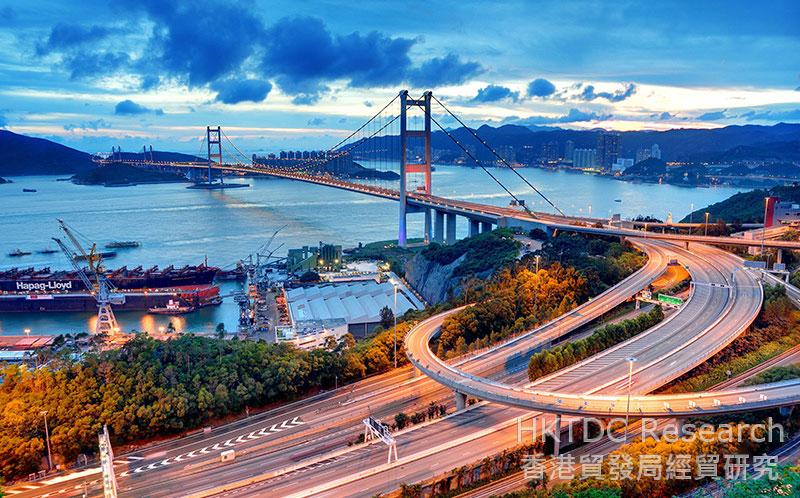
For example, Chengdu-based Sichuan Huaxi Group Co Ltd, after 60 years of development, is now one of biggest construction groups in western China, indeed the whole country. Engaged in project contracting on the mainland and overseas, real-estate development, building materials, financing and leasing, it has operations in more than 30 administrative regions throughout China, and more than 20 other countries and territories, including parts of Africa, South Asia and Southeast Asia. Huaxi Group has participated in offshore projects including hospitals and resorts in Kenya, hotels in Egypt, a sports stadium in Fiji, airport facilities in Zambia and Laos, urban facilities in Angola, as well as some of Hong Kong’s infrastructural development projects, such as the Tsing Ma Bridge.


As for overseas development, Huaxi Group told HKTDC Research that it had a market research team that collected information on overseas markets, which it also monitors through its Hong Kong network, particularly to collect information on laws and regulations as well as the business culture of the less developed countries along Belt and Road routes. This could help the group to effectively manage and control investment risk and reduce barriers to overseas markets.
It is understood that Huaxi Group’s overseas business is largely settled in foreign currencies, which require it to reduce exchange-rate risk using financial instruments. Also, given the many overseas investment opportunities, the group is keen to find cost-effective ways to raise funds through financing in Hong Kong, in addition to mainland financing, in order to promote overseas business development. The group has extensive experience in project contracting, and is very competitive in terms of cost control. In some technical areas, such as water treatment, it also recognises the strength of Hong Kong’s engineering service providers. The group aims to strengthen co-operation with Hong Kong companies in the areas of finance and technology to develop overseas-market opportunities in joint efforts by “going out”.
Chongqing Group “Going Out” to Foster Business Development
Besides, Chongqing Foreign Trade Group Co Ltd is now one of Chongqing’s key enterprises engaging in “going out" business. In recent years, the company has vigorously implemented the so-called “Boat Outward” strategy (i.e., strengthening its international business). It has made great efforts to optimise its business structure and speed up its transformation and upgrading. As a result, it has formed a business structure integrating the development of four business segments – namely, international trade, international engineering, modern finance, and cross-country investment.
Today, Chongqing Foreign Trade Group is a top-100 Chinese multinational company and a top-500 service company, having 16 subsidiaries and employing more than 30,000 people worldwide. It has four regional headquarters in Central and South America, Central and Eastern Europe, Southeast Asia, and Africa, and has set up offices in 39 countries and territories.

During the 13th Five-year Plan period (2016-2020), the company will focus on creating a modern service and cross-country investment platform in order to foster the further development of its four business segments. It aims to strengthen its “business platform”, “business channel” and “business integration" capabilities.
In making overseas investments and management of international operations, the company pays special attention to the use of various financial instruments in Hong Kong for project financing and reducing the cost of capital. In view of Hong Kong’s rich international information resources, the company has set up a branch office in the city to help manage its international business operations, especially the collection of market information in order to facilitate overseas mergers and acquisitions, and international trade business.
Looking ahead, Chongqing Foreign Trade Group will further strengthen overseas investment, including in countries along the Belt and Road routes like Southeast Asia and Africa. The company is keen to seek more of Hong Kong’s professional services, such as taxation, investment and financing consulting, in order to effectively reduce investment costs and managing overseas investment risk.
| Content provided by |
|
Editor's picks
Trending articles
China Takes Global Number Two Outward FDI Slot: Hong Kong Remains the Preferred Service Platform
While the pace of global economic growth is slackening, Chinese enterprises are actively making outward foreign direct investments (FDI) and expanding their businesses overseas. Together with the country’s efforts in advancing the Belt and Road Initiative, and strengthening various forms of economic co-operation with business partners in countries along the Belt and Road routes, this has contributed to the continued growth of China’s outbound FDI. China is now one of the world’s leading sources of FDI, its outflows in 2015 ranking second globally only to the US. During the same period, China’s outward FDI exceeded its inbound FDI, making the country one of the world’s net capital exporters.
In recent years, the Chinese government has substantially relaxed the relevant administrative measures for overseas investments, whereby enterprises may now make outward FDI according to their own development plans. Currently, about 60% of the mainland’s outbound investment flows to Hong Kong, and it is believed that most of this is subsequently channelled overseas through Hong Kong’s service platform for different kinds of investment activities.


Hong Kong has always been the preferred service platform for mainland enterprises looking to invest abroad, helping industry players in the coastal areas and inland regions to handle matters involving investment and trade in foreign markets. Hong Kong is also the preferred location for mainland enterprises seeking professional services to capture opportunities arising from the Belt and Road Initiative. Its full range of professional services covers such areas as finance, legal service, tax, risk assessment of sustainable operations, and international testing and certification. As the mainland accelerates its pace of “going out” and advances the Belt and Road development strategy, its outward FDI activities will continue to expand, providing more business opportunities for professional service suppliers in Hong Kong.
World’s Second-Largest FDI Source
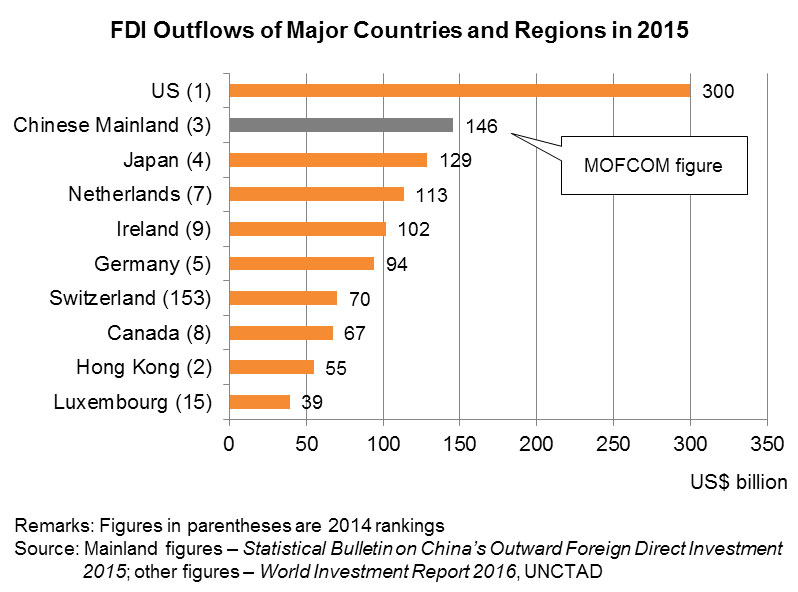
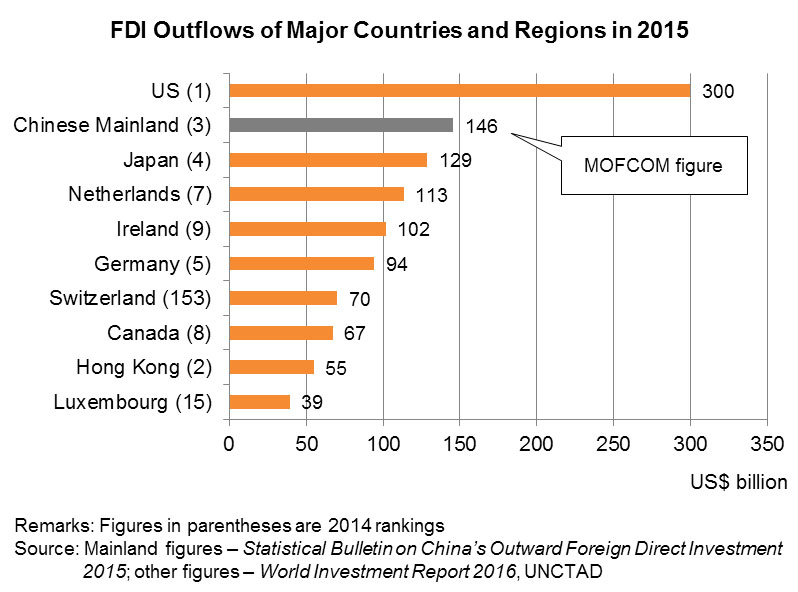
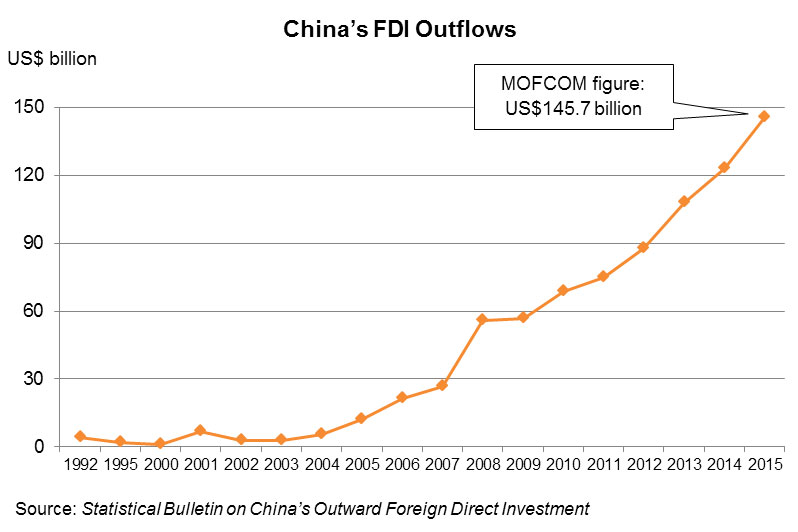
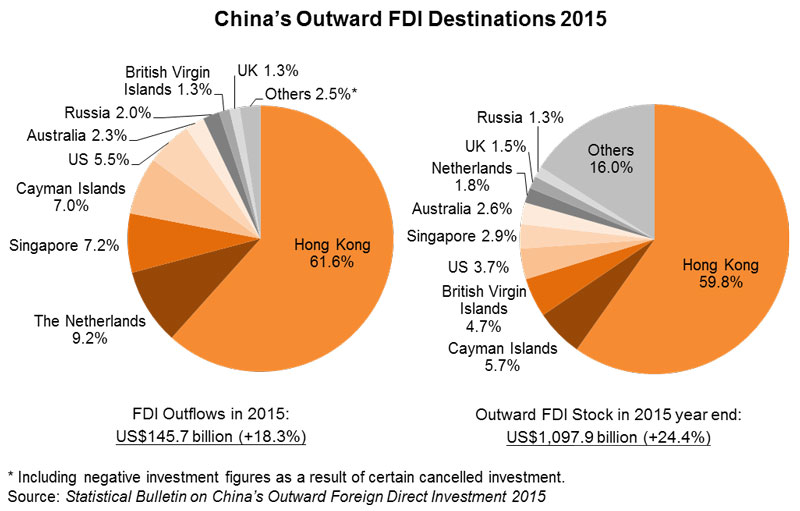
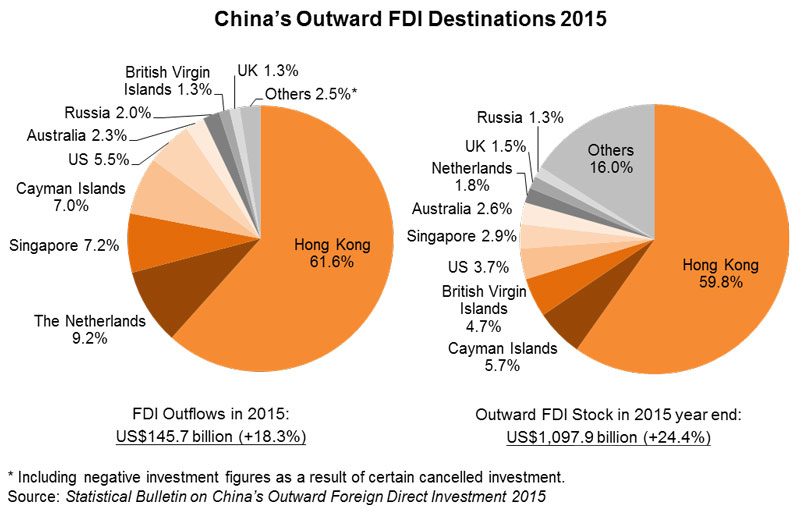
According to figures released in September 2016 by the Ministry of Commerce, China’s outward FDI flows in 2015 reached US$145.7 billion (up 18.3% year on year), for the first time ranking as the world’s second-largest source of FDI. Its investment amount, second only to the US (US$300 billion) but higher than third placed Japan (US$128.7 billion), accounted for 9.9% of the global total of FDI outflows in the same period.
Meanwhile, in 2015, China’s outward FDI also exceeded the amount of its utilised foreign direct investment (US$135.6 billion), making the country a net capital exporter. It is worth noting that in this two-way capital flow involving the inflow of foreign investment into the mainland and outflow of Chinese investment abroad, Hong Kong serves as an important platform.
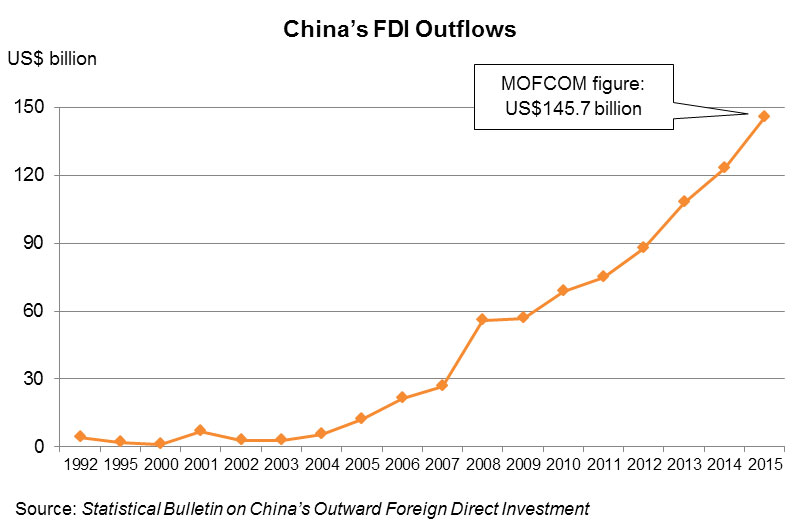
In particular, where outbound investment is concerned, China has substantially relaxed the relevant administrative measures for offshore investments in recent years, including, since May 2014, the introduction of the record-filing system for general outward FDI projects valued at less than US$1 billion. The National Development and Reform Commission (NDRC) further announced at the end of 2014 that the authority of approving[1] general outward FDI projects valued at and more than US$1 billion (not involving sensitive countries, regions or industries) was to be revoked. Since then, apart from outward FDI projects involving sensitive countries, regions or industries, all general outward FDI projects in China no longer require approval and are only subject to record-filing management.
Consequently, Chinese enterprises may now expand their businesses overseas and make outbound investments in countries of their choice according to their own development strategy. In spite of this, many enterprises still choose Hong Kong as their main conduit for outward investment. In 2015, the mainland’s FDI flows to Hong Kong reached US$89.8 billion (up 27% year on year), accounting for 62% of the country’s total outward FDI and reinforcing Hong Kong’s position as the leading destination of mainland outbound investments. In terms of cumulative outward investment as of the end of 2015, the stock of FDI outflows from the mainland to Hong Kong stood at US$656.9 billion, accounting for 60% of the total outward FDI stock at that time.

Blessed with such advantages as free flow of capital, wealth of global communications resources, world-class professional services and a sound legal system, Hong Kong has attracted large numbers of mainland enterprises to “go out” and invest overseas via its business platform.
Macro factors aside, according to four questionnaire surveys conducted by HKTDC Research in different regions of the mainland between 2013 and 2016, the majority of surveyed mainland enterprises pointed out that they were interested in making use of the “going out” strategy to “bring in” the advantages of foreign business partners, while further tapping both the mainland and overseas markets. These enterprises also indicated that they needed all kinds of professional services, including brand design and promotion, marketing strategies, product development, and design services, in order to support their ventures of “going out” to expand businesses overseas.
The majority of the surveyed enterprises remarked that they were most interested in seeking professional services support and co-operation partners in Hong Kong, with 65% of the enterprises in the Pearl River Delta (PRD), 56% in the Yangtze River Delta (YRD), 60% in the Bohai Rim and 50% in the western region saying so. In other words, no matter whether these enterprises are located in the coastal areas or the western region, Hong Kong is their preferred service platform in “going out” to make investment abroad.
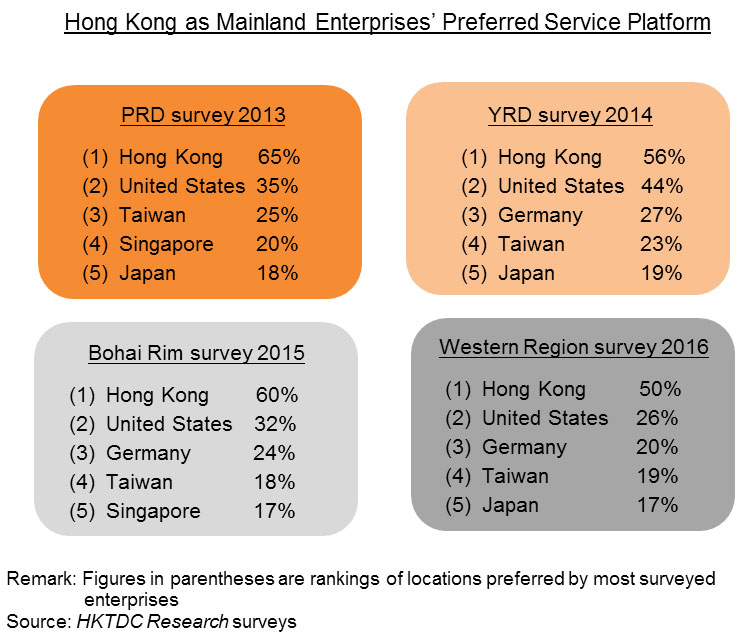
[Remarks: For findings of the surveys conducted by HKTDC Research in the PRD, YRD, Bohai Rim and western region, please see the following reports – Guangdong: Hong Kong Service Opportunities Amid China’s “Going Out” Strategy (December 2013); Jiangsu/YRD: Hong Kong Service Opportunities Amid China's "Going Out" Initiative (September 2014); China’s “Going Out” Initiatives: Professional Services Demand in Bohai (September 2015); and China's “Going Out” Initiative: Service Demand of Western China to Tap Belt and Road Opportunities (July 2016).]
Belt and Road Initiative Adds Growth Momentum to Outward Investment
Meanwhile, China’s great efforts in advancing its Belt and Road development strategy[2] and encouraging more enterprises to conduct various kinds of trade and investment activities in countries along the Belt and Road routes have also contributed to the rapid growth of China’s outward FDI.
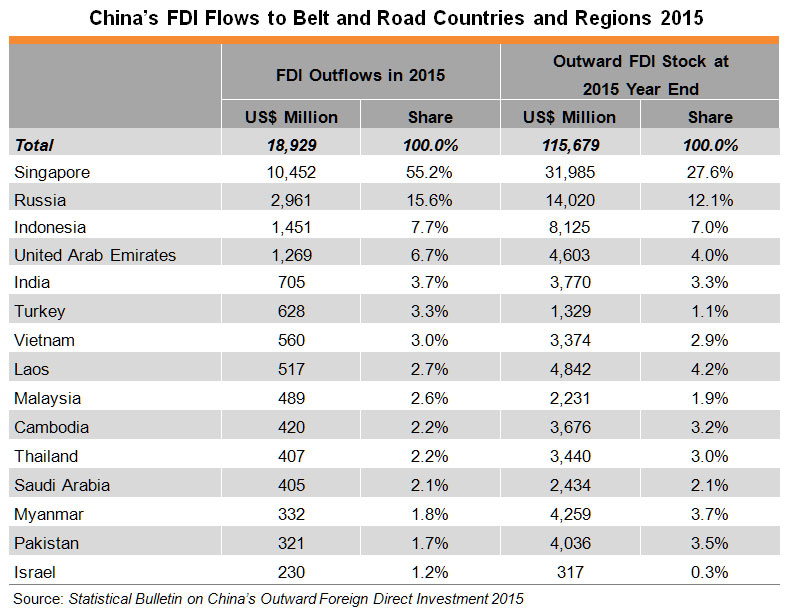
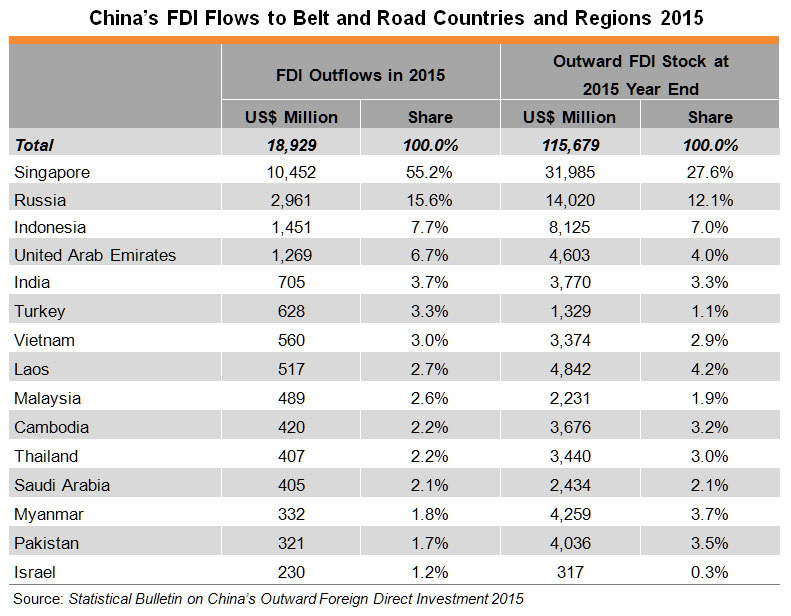
In fact, China’s FDI outflows to Belt and Road countries rocketed to US$18.9 billion in 2015 from about US$400 million in 2004, with average annual growth between 2004 and 2015 amounting to some 43%, higher than the 35% average annual growth of China’s total FDI outflows during the same period. In 2015, China’s investment in the Belt and Road countries and regions rose 38.6% year-on-year, more than twice the 18.3% annual growth rate of its total outward FDI for the same period. Moreover, the share of China’s outward FDI flows to the Belt and Road locations in its total outward FDI also climbed to 13% in 2015 from about 7% in 2004. In 2015, China’s investment in the Belt and Road Initiative mainly flowed to Singapore, Russia, Indonesia, the United Arab Emirates and India.
Strong Demand for Hong Kong Services
As mainland enterprises “go out” further to invest offshore and develop overseas business and expand foreign markets along the Belt and Road routes while seeking foreign technologies, brands, production materials and other resources to enhance their competitiveness, it can be expected that China’s outward FDI, including outflows to countries along the Belt and Road routes, will further increase in the years to come.
Hong Kong, as the preferred service platform for mainland enterprises “going out” to invest offshore, has many ways to help mainland enterprises make direct investment and expand overseas business in developed countries including the US and those in Europe. Hong Kong also serves as the ideal service platform outside the mainland for most Chinese enterprises seeking support to tap opportunities arising from the Belt and Road Initiative.
Findings of the questionnaire survey conducted by HKTDC Research in south China in 2016 show that among the many locations outside the mainland, Hong Kong is where the largest number of surveyed companies (50%) wish to seek support in developing their Belt and Road businesses. Such support includes various market-promotion services in Belt and Road markets as well as professional services related to investments in these markets, such as legal, accounting and consultancy services.
(Remarks: For findings on the questionnaire survey conducted by HKTDC Research in south China, please see: Chinese Enterprises Capturing Belt and Road Opportunities via Hong Kong: Findings of Surveys in South China)
For many years, Hong Kong service suppliers have been assisting large numbers of mainland enterprises in handling matters related to their investment and trade activities in Hong Kong and overseas markets. Hong Kong offers many advantages in supporting mainland enterprises to invest overseas, including the free flow of capital, wealth of global communications resources, and a full range of world-class professional services, covering such areas as finance, legal service, tax, risk assessment of sustainable operations, and international testing and certification. Hence, Hong Kong is the preferred service platform for mainland enterprises “going out” to make offshore investment. As the mainland further relaxes the administrative measures for outward investment, encourages enterprises to “go out” to invest overseas, and advances the Belt and Road development strategy, more business opportunities are set to emerge for service suppliers in Hong Kong.
[1] NDRC Order No.20: Decision of the National Development and Reform Commission on Amending Relevant Articles in the Administrative Measures for the Approval and Record Filing of Outward Investment Projects and Administrative Measures for the Approval and Record Filing of Foreign Investment Projects (27 December 2014)
[2] China is advancing the Belt and Road (i.e., the Silk Road Economic Belt and 21st Century Maritime Silk Road) development strategy. In March 2015, China issued a document titled “Vision and Actions on Jointly Building the Silk Road Economic Belt and 21st Century Maritime Silk Road”, proposing to accelerate the building of the Belt and Road in a move to better co-ordinate economic policies of countries along the route, promote the orderly and free movement of economic factors, and advance efficient resources distribution and in-depth market integration in creating an open, inclusive, balanced and mutually-beneficial regional economic co-operation framework.
| Content provided by |
|
Editor's picks
Trending articles
22 Nov 2016
China’s Belt and Road initiative: can Europe expect trade gains?
By Alicia Garcia Herrero and Jianwei Xu
Abstract
The Belt and Road initiative, recently embarked on by China, aims to improve cross-border infrastructure in order to reduce transportation costs across a massive geographical area between China and Europe. We estimate how much trade might be created among Belt and Road countries as a consequence of the reduction in transportation costs (both railway and maritime) and find that European Union countries, especially landlocked countries, should benefit considerably. This is also true for eastern Europe and Central Asia and, to a lesser extent, south-east Asia. In contrast, if China were to seek to establish a free trade area within the Belt and Road region, EU member states would benefit less, while Asia would benefit more. Xi Jinping’s current vision for the Belt and Road, centred on improving transport infrastructure, is very good news for Europe as far as trade creation is concerned.
Introduction
The Belt and Road project is undoubtedly the most important international project that China has embarked on in the last few decades. It aims to stimulate economic development over a vast area covering sub-regions in Asia, Europe and Africa. Although there has been no official announcement about what countries are covered by the Belt and Road initiative, some official sources point to the involvement of at least 63 countries, including 18 European countries. Particularly relevant for Europe is that the Road ends where the European Union (EU) starts. Most importantly, this massive bloc between the EU and China accounts for 64 percent of the world’s population and 30 percent of global GDP.
One of the Belt and Road’s key objectives is to ease bottlenecks for cross-border trade, in particular through transport infrastructure. This should reduce the cost of transportation, thus stimulating trade between China and these countries. The same effect should be expected for the other end of the road – the EU – because cheaper transportation should also foster its trade with other Belt and Road countries, as well as with China. This paper measures empirically whether the reduction in transportation costs – shipping or railway costs – will have a positive impact on trade flows for Belt and Road countries and, most importantly, for EU countries.
In addition to estimating the size of the trade gains stemming from a reduction in transportation costs, we explore the possibility that the Belt and Road may eventually go beyond its current objectives towards the creation of a free trade area. To that end, we establish a scenario in which China embarks on a free trade agreement (FTA) with the 63 countries of the Belt and Road initiative. This exercise is particularly relevant at the current juncture because the Trans-Pacific Partnership (TPP), a free trade agreement between a number of Pacific economies and the US, is about to be created. China has so far been excluded from the TPP. In other words, we aim to identify empirically what kind of trade gains countries could expect from a reduction of transportation costs and to compare them with potential trade gains from reductions in tariffs stemming from a potential FTA. While our analysis estimates gains/losses for a large number of countries, our focus is EU member states. Our results indicate that the reduction in transportation costs from the Belt and Road initiative should benefit the vast majority of EU countries, especially landlocked countries. In comparison, if China reached a deal for the establishment of an FTA with the countries of the Belt and Road initiative, the benefits would be concentrated among Asian and non-western European countries. EU countries’ trade, in turn, would be harmed although in a relatively limited way. The reason for this is substitution of EU trade with countries within the Belt and Road as their intra-regional trade tariffs are dismantled. In a nutshell, this paper points to the benefits for the EU of Xi Jinping’s current vision for the Belt and Road initiative, which focuses on improving transport infrastructure rather than on a establishing a free trade area within the Belt and Road region.
Please click to read full report.
Editor's picks
Trending articles
24 Nov 2016
Strategic Perspectives on the One Belt, One Road and ASEAN: Achievements, Challenges, Opportunities and Future Direction
By Dr. Sok Siphana
China and ASEAN are looking to achieve a two-way investment goal of USD150 billion by 2020. Both sides are now working toward upgrading the ASEAN-China FTA in order to spur additional trade growth. They are intensifying the negotiation process of the Regional Comprehensive Economic Partnership (RCEP) in the hopes of concluding it this year, all the while working in parallel to complete the ASEAN-Hong Kong FTA.
ASEAN and China have encouraged greater participation of the private sector to increase business, tourism, and cultural exchanges. Concretely, the China-ASEAN Expo in Nanning, the China-South Asia Expo in Kunming, the ASEAN-China Centre in Beijing, the China-ASEAN Business Summits, the ASEAN Economic Ministers’ Roadshow (just to name the main ones), have drawn great interest from both business communities to promote their products and to develop commercial partnerships. Taken as a whole, these regular activities play an important role in strengthening trade and investment ties by accelerating economic exchanges between ASEAN and China.
It is interesting to note that 2016 marks the 25th Anniversary of ASEAN-China Dialogue Relations. Both sides have coordinated their efforts to boost their economic, trade and investment cooperation as well as enhancing connectivity, particularly in infrastructure development and transport.
Socio-cultural Area
In the socio-cultural area, ASEAN and China have promoted cooperation in social, cultural, education, tourism and people-to-people contacts, including exchanges between youth, academics, media organisations and non-governmental organisations, with the aim of enhancing mutual understanding and awareness among the peoples. Moreover, they have collaborated to coordinate their responses against global and regional challenges such as natural disaster management responses through the exchange of information, early warning, and experience sharing on disaster rescue and relief.
In sum, the ASEAN-China strategic partnership is most dynamic and comprehensive when it comes to the overall external relations of ASEAN with their development partners.
Please click to read full report.
Editor's picks
Trending articles
29 Nov 2016
What consequences would a post-Brexit China-UK trade deal have for the EU?
By Alicia Garcia Herrero and Jianwei Xu
Executive summary
Brexit means that the United Kingdom could be able to run its own trade policy, which opens the door for the potential negotiation of a free trade agreement between the UK and China. We ask three questions about this important issue for the UK-EU economic relationship. If a China-UK FTA was signed, could Chinese exporters break into the EU market through the UK, making a possible China-EU FTA relatively superfluous? Would a China-EU FTA help UK exporters to gain a competitive advantage in China relative to EU exporters? Will UK producers benefit by importing cheaper Chinese intermediate goods?
Our analysis indicates that a UK-China FTA will be neither easy nor clearly advantageous for the UK. First, it will be difficult for the UK to reach an agreement with China without first establishing a new post-Brexit partnership with the EU. Negotiating tariffs with other WTO members will be a pre-condition if the UK exits the EU customs union, and this process will require time and effort. Second, even if the UK reaches an agreement with China, the UK cannot serve as a back door for Chinese products to enter the EU, because the EU is very likely use rules of origin to close any such loopholes. In addition, entering the EU via the UK will entail an additional transportation cost for Chinese goods that will, at least partly, offset any tariff savings, making use of such a loophole less worthwhile. Third, the UK and the other EU economies differ in most of their exports to China, so there would be very limited substitution between them.
It therefore seems that establishing a new trade relationship with the EU would be a more urgent task for the UK in the post-Brexit world, rather than an FTA with China. Under such circumstances, the UK might need to postpone its trade negotiations with other economies outside of EU, including China. This goes beyond the current discussion of the illegality of the UK starting to negotiate trade deals before it leaves the EU. The issue is whether it makes economic sense for the UK to do so, and the answer is no. In fact, the more the UK reaches an independent favourable trade agreement with China after Brexit, the harder it will be for the UK to strike a good deal with EU. In the meantime, it is also urgent for the UK to negotiate with the main WTO members on tariffs, because outside the EU, the UK might not participate in the EU schedule of concessions. The best strategy for the UK would be to negotiate with the other WTO members with the EU-based tariffs as a starting point, to avoid negotiating over terms separately and also to maintain a close relationship with the EU.
Please click to read full report.