









Chinese Mainland
"Going Out" to Capture "Belt and Road" Opportunities (Expert Opinion 4): Cross-Border Financing Serving Outbound Investment
As an important business platform of the Asia-Pacific region, Hong Kong boasts many advantages, including a sound legal system, free movement of funds and information, and all kinds of legal/accounting and other professional services. Conrad Tsang, Chairman of the PRC Committee of the Hong Kong Venture Capital and Private Equity Association (HKVCA), pointed out that mainland companies may absorb external capital through Hong Kong for their overseas projects and other operations when investing in countries along the Belt and Road. Leveraging Hong Kong's strengths as regional headquarters, they may also make use of the territory's efficient business environment to coordinate investments in the mainland, Asia and other Belt and Road markets and boost the efficiency of "going out" as a whole.
Financing Overseas Investment Projects
In an interview with the HKTDC Research, Conrad Tsang said: "Unlike startups that need the support of seed or angel funds, mainland companies planning to 'go out' and invest abroad have grown to a considerable scale and have good assets and cash flow. This notwithstanding, most of them still need financing for their overseas projects and need to seek sufficient funds to support the development of these projects.


"Hong Kong's low tax rate and relatively simple tax system, well-developed financial infrastructure and efficient communications networks have attracted many venture capital and private equity funds to set up offices in the territory. Many of these are managing the funds of local investors, but a good part of them have funds from all over the world.
“On the one hand, they make use of Hong Kong networks to develop mainland-related investment projects, on the other hand, they also take advantage of Hong Kong's position as their regional headquarters to seek investment opportunities and manage investment projects in the Asia-Pacific region. Their business covers Southeast Asian countries like Vietnam, Malaysia and Thailand, Central Asia and even Russia and other countries along the Belt and Road. With China 'going out' to expand business with countries along the Belt and Road, there is plenty of room for cooperation between Hong Kong's venture capital and private equity firms and China's 'going out' enterprises."
Hong Kong is an international financial centre, with a low tax rate, convenient business environment and other advantages. Geographically it lies next to the rapidly developing Asian region as well as mainland China, which has already become a major world economy.
As such, it is attracting international venture capital and private equity firms eyeing opportunities in the Asia-Pacific markets to shift their regional headquarters to the territory. They make use of Hong Kong's information resources and networks to find investment opportunities in the mainland, Asia and even countries along the Belt and Road and engage in fund raising and other financing activities. They also make use of Hong Kong's professional services to handle accounting, contract, legal and other matters, manage their business presence in the mainland and other regions, and secure and conclude investment deals locally.
Injecting International Elements in Going Out Enterprises
Tsang believes that Hong Kong is attractive in part due to its freedom from some of the business obstacles encountered elsewhere. He said: "Mainland companies often need foreign currency capital to finance their operations when developing business abroad, including establishing sales networks, carrying out direct investment, and engaging in purchases and all kinds of acquisitions. At present, they are still subject to many restrictions in trying to raise capital for overseas projects through domestic channels.


“Through Hong Kong's business platform and its advantage in the movement of capital, mainland companies can effectively overcome investment and financing hurdles in their overseas ventures. In fact, Hong Kong's venture capital and private equity investors can not only help in equity funding but can also inject international elements into mainland companies. Through their international corporate structure in Hong Kong, they can carry out cost-effective equity and debt financing for outbound investment projects and support the development and operation of these projects.
“Investors from all over the world converge in Hong Kong and venture capital and private equity firms with footholds in Hong Kong have become important clusters of investors in the Asia-Pacific region. They can effectively assist ‘going out’ mainland companies investing in projects along the Belt and Road.”
HKVCA currently has over 340 corporate members, including 190 private equity firms, and manages a total of US$1 trillion in assets. These firms are engaged in venture, growth, buyout and other funds in the Asia-Pacific region.[1] A total of US$67 billion in private equity funds were raised in Asia last year, about 18% of which were gathered in Hong Kong. There were 354 private equity entities with headquarters in Hong Kong as of the end of 2015.[2]
[For examples of how Hong Kong investors can help mainland companies in "going out", please see: “Going Out” to Capture “Belt and Road” Opportunities (Expert Opinion 5): A Co-investment Example of Going Global]
[1] Source: HKVCA.
[2] Source: Asian Venture Capital Journal/data quoted by the Hong Kong SAR government.
| Content provided by |

|
Editor's picks
Trending articles
9 Aug 2016
Infrastructure Financing Trends
By International Finance Corporation, World Bank Group
What are the Current Trends in Emerging Market Infrastructure Spending?
Emerging markets need twice the infrastructure investment they now receive. East Asia has the greatest needs, while Africa’s requirements are large in comparison to its economic size; power generation accounts for more than half of needed investment. There is great potential for increasing participation by institutional investors in developing-country infrastructure: Insurance companies, asset managers, pension funds and sovereign wealth funds are increasingly aware of the manifold benefits that infrastructure investments offer.
Emerging markets can absorb an estimated $2 trillion per year in infrastructure spending, about half of which currently goes unmet. And the gap will only grow, as infrastructure investment needs in emerging economies are expected to double annually over the next decade.
Government budgets are the biggest source of funds, accounting for about three of every four infrastructure dollars, while the private sector provides the rest. Yet in the aftermath of the financial crisis, governments have seen their fiscal deficits grow and their budgets shrink, increasing the need for private funding. However, most private funding flows to upper middle-income countries.
Going forward, East Asia including China will require the majority of infrastructure investment; Sub-Saharan Africa’s needs are substantial relative to the size of the region’s economies. In terms of sectors [1], electricity will require over half of all infrastructure spending. That includes power generation, capacity, and transmission and distribution networks. And preparation costs, including design and arranging financial support, are not insignificant—they can constitute up to 10 percent of overall project costs.
Debt represents about three-quarters of total private financing for infrastructure, with loans about 1.5 times the size of bonds. Before 2008, international loans had been the main infrastructure funding source. Since then international lending has slowed and local loans and bonds have filled the gap. International instruments rebounded in 2013, though primarily due to a few large transactions in limited sectors in Mexico, China, and Brazil.
Private Participation
Private participation in emerging-market infrastructure hit a high in 2012. The Latin America/Caribbean region was the largest recipient, while South Asia and East and Central Asia have tended to be high volume destinations as well. At a country level there is a concentration in the BRICs—Brazil, Russia, India, and China—plus Turkey and Mexico. Between 2000 and 2013 some 38 percent of private flows went to Brazil and India. Still, despite the increase in private investment in infrastructure since 2008, most of the gains flowed to upper-middle income countries, while flows to lower-middle and low income countries fell by 37 percent and 68 percent, respectively, between 2007 and 2013. At a sector level, private investment is concentrated in the energy and information technology sectors.
Insitutional Investors
Insurance companies, asset managers, pension funds, and sovereign wealth funds are all attracted to infrastructure because it offers diversification potential and inflation and interest rate protection—and it contributes to public goals. As a result, and despite the current small allocation to infrastructure by these market participants, private infrastructure investments are increasingly attracting interest from institutional investors. In addition, more investors are entering the space via debt, co-investments and secondaries, and less through direct investment.
Please click here for the full report.
[1] Infrastructure sectors covered: energy, water and sanitation, transport, and telecom. Estimates were conducted using various sources, including PPIAF, Dealogic, and Project Finance Review. Source for spending data: Bhattacharya and Romani, “Meeting the Infrastructure Challenge, 2013.
Editor's picks
Trending articles
12 Aug 2016
Six Challenges for US-Japan Cooperation in Asia
By Hitoshi Tanaka, Senior Fellow, Japan Center for International Exchange
A new year has come, but it seems clear that in 2016, the regional order in East Asia will continue to be characterized by a sense of instability. China’s behavior continues to create unease, most prominently through its unilateral construction of artificial landfill islands in the South China Sea, but also through the progress it is making on its regional economic initiatives, the Asian Infrastructure Investment Bank (AIIB) and the One Belt, One Road infrastructure connectivity plan. Meanwhile, the shadow of Crimea hangs over Russian dealings with Asia, and North Korea has yet again tested a nuclear device.
A key question as 2016 progresses will be a familiar one: How best to focus US-Japan cooperation to address both the challenges and opportunities that accompany the rise of China? The time is ripe for intensive alliance consultations regarding future cooperation with China given the relative improvement of Sino-Japan relations over the last year. At the same time, there are six thorny issues that carry the potential to undermine US-Japan cooperation and thus need to be dealt with. Close, careful US-Japan consultation and cooperation is required to ensure that these issues do not create a wedge in the alliance.
1. The Future of US Global Leadership
The world is watching the US presidential election closely for signs of the foreign policy path the next US president will take. A significant amount of the rhetoric from the primaries is concerning—most notably the xenophobic remarks of Donald Trump, which have captured the media spotlight. While it is still a long road to the White House, the kind of debate we have seen so far—which has taken a hostile tone toward certain nations and groups (such as banning Muslims from entering the United States) and has failed to recognize the vital need for international cooperation—is damaging to the long-term credibility of US global leadership. Continued US leadership is critical to maintain and strengthen liberal and free-market values as well as the stability and prosperity of East Asia. The United States, East Asia, and the world need a US president with the stomach for strong global leadership based on deep cooperation and consultation with US allies and partners, rather than one who advocates unilateralist or isolationist thinking.
2. Regional Trade Deals and Economic Governance
The Trans-Pacific Partnership (TPP) deal reached in October 2015 has rightly been hailed as a major achievement in setting common rules for regional economic governance. Now the agreement must be ratified by the 12 signatory states, including the US Congress. In light of China’s efforts to launch the AIIB, roll out the One Belt, One Road initiative, and reach a Regional Comprehensive Economic Partnership with the ASEAN+6 nations, the TPP is critical to the future credibility of US regional leadership. The TPP is not simply a vehicle to facilitate increased trade, but rather a means to shape 21st-century rules for economic governance and to promote and entrench liberal free-market principles in Asia Pacific.
Indonesia’s decision in September 2015 to choose China over Japan to build a high-speed train line between Jakarta and Bandung is illustrative of what is at stake. The US$5.5 billion Chinese proposal was attractive given that it required neither financing nor a loan guarantee from the Indonesian government; in other words, China is taking on almost all of the financial risk of the project, which most ODA providers are not able to do. Three-quarters of the funding will come from China and the remaining 25 percent from Indonesian companies. Indonesian President Joko Widodo, who campaigned on improving welfare for ordinary Indonesians, was thus able to avoid using the national budget for a project in one of the country’s most prosperous areas. But many questions remain regarding the transparency of the proposal and the ability of China to meet international standards, including on labor and environmental regulations. There is already local criticism of the project for its plans to use Chinese workers at a time when Indonesia’s unemployment rate is rising and there are concerns over China’s safety record in light of the crash of a high-speed train in Wenzhou in 2011.
It is thus critical that the United States, Japan, and the broader international community engage with Chinese-led economic initiatives, including the AIIB and One Belt, One Road project, to help steer China toward a greater embrace of international best practices. In this context, it is important to note that the TPP has an open-accession clause to create a clear and transparent process through which other countries—including China, Indonesia, and South Korea—can join in the future. The United States and Japan should actively promote the expansion of TPP membership, especially to these countries.
3. Demilitarizing the South China Sea
The construction of artificial landfill islands by China in the South China Sea in areas such as the Fiery Cross, Mischief, and Subi Reefs, which are also claimed by ASEAN nations, has set back efforts to peacefully negotiate a diplomatic resolution to these territorial disputes. Moreover, the potential for the future construction of a chain of airports, ports, and other facilities on the artificial islands, as well as high-profile attempts by the People’s Liberation Army (PLA) Navy to enforce no-fly zones, risks further militarizing the South China Sea. Such a scenario would be a serious security concern for the region and should be avoided.
One potentially complicating factor is the recent election in Taiwan, where the Democratic Progressive Party (DPP) won a comprehensive victory, with Tsai Ing-wen winning the presidency and the party gaining the majority in the Legislative Yuan. The DPP is known for its pro-independence stance vis-à-vis Beijing and has in the past suggested negotiations between Taiwan and ASEAN nations over the South China Sea. Tsai has also questioned the “1992 consensus” that there is only “One China” with Beijing and Taipei simply maintaining differing interpretations. For the time being, Tsai seems to have settled for a loosely defined continuation of the status quo. But if the DPP government were to push Taiwan toward a more assertive foreign policy stance and articulate a South China Sea policy different from that of the mainland, it could further complicate the issue.
Further military build-up in the South China Sea will undoubtedly feed regional tensions and increase the risk of accidental conflict. Until a diplomatic resolution can be peacefully negotiated between China and the ASEAN countries, it is vital that all parties be alert to China’s incremental changes. At the same time, in addition to continued US freedom of navigation operations—to ensure free passage, uphold international law, and prevent any further unilateral changes to the status quo—the United States and Japan must coordinate and cooperate to persuade China that freedom of navigation in what is a vital sea route for international commerce and the energy security of East Asia, is a shared interest not just for the United States, Japan, and ASEAN countries but also for China itself.
4. North Korea
Four years since he inherited power from his father, Kim Jong-un appears to be drawing from a diverse toolbox to consolidate his grip on power. First, Kim is continuing the country’s nuclear weapons development program. On January 6, 2016, North Korea tested a nuclear device for the fourth time—the second under Kim Jong-un’s leadership. Such tests and rocket launches are a signal to domestic audiences, especially the Korean People’s Army (KPA), that Kim is capable of continuing the country’s technological progress and bolstering military might against hostile external forces. Second, Kim has also purged a number of high-level officials from his father’s cliques (most infamously his own uncle, Jang Song-thaek), replacing them with his own younger loyalists. Notably, these purges have tended to target military men rather than economic planners. Third, Kim has also shown interest in cementing his legitimacy through economic development. Experiments with reforms have taken place quietly in the background, allowing farmers to retain a fraction of their produce to sell on the market rather than being forced to sell everything to state distributors. Kim is also gearing up for the 7th Congress of the Workers’ Party of Korea (WPK), the first time such a meeting has been held in 36 years. It has been speculated that Kim may use the party congress as a platform to launch more serious economic reform measures and to reassert the primacy of the WPK over the KPA.
The region was rocked by North Korea’s most recent nuclear test. This time, the international community must go beyond business-as-usual measures to deal with the North Korean nuclear program. In order to truly alter North Korea’s behavior, economic sanctions, including financial sanctions, will need to be strengthened. Beijing has a big role to play. Irrespective of its apparent change in attitude after the third North Korean nuclear test in 2013, China has continued to provide substantive assistance to North Korea. For any form of sanctions to be effective, though, the international community as a whole, including China and Russia, must fully back them. South Korea, Japan, and the United States must deepen cooperation and adopt a unified approach on sanctions policy as well as on joint contingency planning. From a coordinated trilateral base, the three nations also need to consult with China and Russia to form a united five-nation front to apply greater pressure on North Korea. An immediate restart of the denuclearization process under the Six-Party Talks may be difficult, but without the right measures to pressure and isolate North Korea, nothing will be achieved and North Korea will continue to develop its nuclear arsenal.
5. Russia Policy
Since Vladimir Putin and Shinzo Abe both returned to power in 2012, the two leaders have built a certain rapport and have shown a willingness to deal with the issue of the Northern Territories (referred to as the Southern Kuril Islands in Russia). Putin was even scheduled to visit Japan. But then Russia annexed Crimea in March 2014 and summit plans were put on hold.
Since then, Japan has stuck to its international obligations and imposed sanctions against Russia in concert with the other G7 nations to punish Russia for its violation of international law. However, if it appears that an acceptable agreement can be reached on the Northern Territories, an issue that has blocked the normalization of Japan-Russia relations since the end of World War II, Japan will have no choice but to seize the opportunity. At the same time, it is important that the United States and Japan maintain very close coordination and not allow Russia to utilize the Northern Territories issue to drive a wedge between them. They must also make clear to Russia that any Russo-Japanese cooperation to resolve the Northern Territories dispute will not translate into an acceptance of the annexation of Crimea or any other violation of international law.
Recently, Prime Minster Abe has reportedly expressed the possibly of making a trip to Russia in his capacity as this year’s chair of the G7. There is also talk of a possible trip by Putin to Tokyo by the end of 2016. While continuing to advocate for a peacefully negotiated resolution to the Crimea crisis, given the possibility that the isolation of Russia could push Putin toward China, it may be wise not to preclude some forms of strategic cooperation with Russia in areas of overlapping interest—including on North Korea and Syria.
6. Reducing Okinawa’s Burden
The battle between the Okinawa prefectural government and the Japanese central government regarding the relocation of the US Marine Corps Futenma Air Station continues to intensify. Each side has launched a series of tit-for-tat court battles centering on the legality of the construction of a new base in Henoko to replace Futenma. Backed by their determined governor, Takashi Onaga, local Okinawan protestors are demanding at a minimum that no new bases be built in the prefecture, with a view to reducing the concentration of bases in Okinawa in the future.
The situation has reached something of an impasse. While the United States might be happy to leave this to the Japanese government to deal with as a domestic issue, ultimately the United States will also have to suffer the consequences of Okinawa’s local opposition. Deep US-Japan consultations must continue, which should be conducted as part of regularized reviews of the US forward deployment structure and how it relates to US-Japan alliance goals. There are two important points to keep in mind here. First, while a continued US forward deployment presence in Okinawa is critical to the maintenance of the alliance’s deterrence posture, if the situation is not handled with due sensitivity for local Okinawan concerns, base protests will continue to be a thorn in the side of alliance relations over the long term. Second, the overall US forward deployment posture in East Asia should be evaluated in light of advances in new military technologies and the need to respond to regional security challenges in a dynamic way. A more evenly rotated distribution of US soldiers across the region—a trend that is underway thanks to increased cooperation with partners such as Australia, India, the Philippines, Singapore, and Vietnam—would not only help reduce the burden on Okinawa over the long term, but also be strategically desirable in responding to a range of new threats.
The choices we make now, during this time of regional flux, about how to deal with these six challenges will go a long way toward determining the future regional order. With deep and regularized consultations across all aspects of the alliance—including on security, economic, and diplomatic strategy—not only can the United States and Japan (in conjunction with other allies and partners) deepen the foundation of their cooperation, but they can also guard more effectively against unilateral changes to the status quo and work together with China to steer its rise in a mutually beneficial direction.
Hitoshi Tanaka is a senior fellow at JCIE and chairman of the Institute for International Strategy at the Japan Research Institute, Ltd. He previously served as Japan's deputy minister for foreign affairs.
Reprinted with the permission of the Japan Center for International Exchange.
Please click here for the full report.
Editor's picks
Trending articles
“Going Out” to Capture Belt and Road Opportunities (Expert Opinion 5): A Co-investment Example of Going Global
Chinese mainland enterprises are increasingly looking to make direct investment overseas in order to explore new markets or to obtain access to labour or other resources. Companies have undertaken such moves on their account as well as via mergers and acquisitions. According to one Hong Kong-based investment house, however, equity co-investment or other forms of joint-stock partnership could provide additional options for those mainland investors who are eager to expand their overseas businesses while managing the risk involved. Through cooperation with co-investors, mainland enterprises could not only enjoy the benefits of risk sharing among the investment partners, but also be furnished with additional synergy that could help them move beyond their business constraints, thereby reaching new business frontiers through capitalising on the strengths of their co-investment partners.
Alternative Mode of Investment

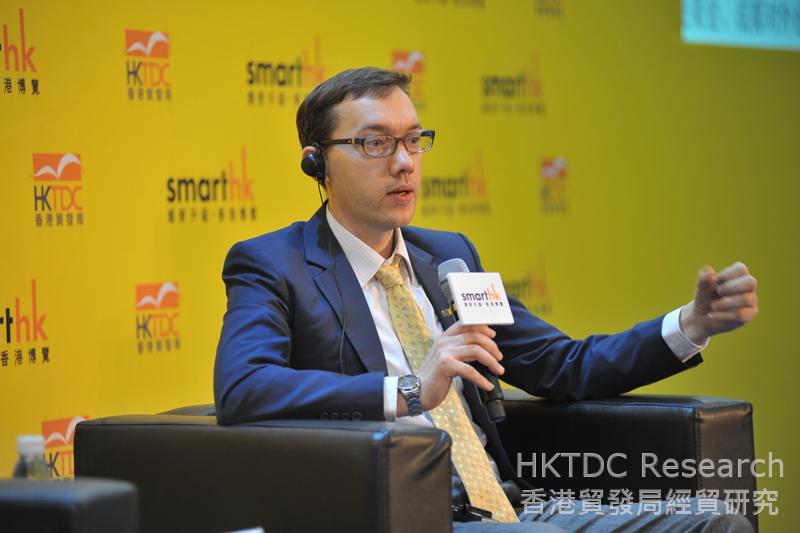
Alex Downs is the Director of Ironsides Holdings Limited, a Hong Kong-based private equity investment firm that sources funds from Hong Kong, the US and other territories. The firm invests directly into private companies and projects in a number of areas, including health-care, agriculture, logistics and technology. Its current investments cover - among others - the Southeast and Central Asian regions, which are within the remit of China’s Belt and Road Initiative.
Interviewed recently by HKTDC Research, Downs said: “Chinese enterprises seem to prefer taking a controlling stake when conducting investment in overseas projects or companies. There is, however, always the choice for them to have a much bigger presence in the overseas markets and explore new business opportunities via cooperation with their foreign counterparts, something that could result in decent profits with reduced risks.
“Chinese enterprises could reduce their overseas investment risks by cooperating with experienced equity co-investment partners. With minority equity participation, these partners could effectively undertake feasibility studies, due diligence and long-term sustainability analyses for the cooperation projects in question. In the case of investment in certain emerging economies along the Belt and Road, further engagement of local or other experienced partners would be an option for those mainland investors concerned about the risks stemming from loose local regulations and immature legal systems, less transparent local ownership requirements, imperfect or partial local business and market information, troublesome labour arrangements and other cultural issues.
More importantly, via their co-investment partners, Chinese mainland enterprises could be given the option of enhancing their businesses beyond their original operations.” In this regard, Downs cited the example of an agricultural investment made last year. In this instance, Ironsides was heavily involved in helping the company to re-brand and re-focus its core business model as part of the investment programme. This helped the mainland enterprise expand its reach into the international market.
Downs also discussed a number of the current opportunities available to support heavy industry, such as coal mining operations on the Chinese mainland. In this instance, a co-investor could become a pivot, allowing the mainland mining operation to divert its excess capacity into investment projects in Southeast Asia. This could see them fundamentally refocus their company, with the help of experienced international partners, into new and profitable business projects beyond coal mining. Such co-investments could reduce the risk associated with investments, while also solving the overcapacity problem affecting many mainland companies. Ultimately, this would enable them to continue their operations and assure them of profitable growth.
Synchronising the Interests of Different Partners
Assessing the pro and cons, Downs said: “Ultimately, Chinese enterprises may not have the controlling stakes in such co-investment models, with success resting on the participants’ contributions and the effective cooperation among the partners. On the upside, the Chinese enterprises would be given the opportunity to participate in a bigger project and have access to markets beyond that of their original business, thus generating sustainable incomes from their overseas investment. This would be a viable option for those ‘going-out’ enterprises without enough experience, exposure and/or resources. Of course, they would have to determine whether to get a majority control in a smaller-scale project by sole investment or whether to take a smaller stake in a bigger project and go global with co-investment partners, and probably with lower risks.”
Downs noted that China is on course to solve its overcapacity problem, while looking along the Belt and Road to seek for further growth impetus. In this regard, private equity firms based in Hong Kong, such as Ironsides, would be able to help Chinese mainland enterprises to relocate their excess capacity via investment in Asia and other Belt and Road countries. This is down to the fact that investment firms in Hong Kong have the advantage of vast business connections both on the Chinese mainland and internationally. As a result, they have access to a variety of different companies, all of which are looking for growth opportunities.

With free flow of information and familiarity with Chinese and foreign business environment, Hong Kong investors have a considerable understanding of the business needs of a variety of mainland and overseas companies. They are thus in the ideal position to help combine the strengths and resources of Chinese and foreign partners, and to align their interests in order to jointly enter new markets, move up the value chain, and re-allocate resources, when required, to drive businesses forward.
| Content provided by |
|
Editor's picks
Trending articles
16 Aug 2016
China’s Vision for a New Asian Economic and Political Order
By the National Bureau of Asian Research NBR
An essay for the Strategic Asia Program by Kyle Churchman
The past year has been a pivotal one for China’s proposed strategic investments in Asia. At the top of Beijing’s regional diplomatic agenda was the One Belt, One Road (OBOR) initiative, a series of land- and sea-based trade routes intended to closely link China with regions to its west and south: Central Asia, South Asia, Southeast Asia, the Middle East, East Africa, and Europe. In addition, the Asian Infrastructure Investment Bank (AIIB)—a multilateral intergovernmental bank launched by China to finance infrastructure development in Asia, including OBOR-related projects—held its signing ceremony in June with the participation of 57 nations. Together, these two investment initiatives reflect Beijing’s proactive attempt to reshape the Asian economic and political order.
The One Belt, One Road Initiative
The Silk Road Economic Belt—OBOR’s land-based component—encompasses several economic corridors around China’s western rim, creating a grid of transportation routes rather than a single linear path. The belt project envisions the construction of new rail lines, highways, pipelines for oil and gas, telecommunications infrastructure, and fiber-optic cables. Two corridors will extend across the Eurasian landmass at different latitudes and terminate in Europe, while another will connect China’s southwestern provinces with mainland Southeast Asia. The proposed China-Pakistan and Bangladesh-China-India-Myanmar economic corridors will be closely integrated with the belt and provide port access to the Indian Ocean.
As conceptualized by Beijing, the 21st Century Maritime Silk Road starts in the major port cities of southern China and passes through the South China Sea before extending across the Indian Ocean to East Africa and northward through the recently expanded Suez Canal to Europe. Infrastructure investment along the route will involve the construction of new ports and upgrades to existing facilities. Beijing’s objective is to facilitate greater Chinese commercial (and perhaps naval) activity in the Indian Ocean region.
According to an important OBOR vision document released by the Chinese government in March 2015, the initiative is intended to facilitate regional trade and investment, promote more widespread use of the renminbi in cross-border trade, and foster greater exchanges between Chinese citizens and the peoples of OBOR countries. Through dialogue with participating countries, China also aims to remove technical barriers to trade, such as conflicting customs procedures.
While the Chinese government has couched the initiative in altruistic terms, OBOR is chiefly designed to benefit China’s economy. Most importantly, China seeks to spur economic development in its poorer western and southern regions, which lag far behind the prosperous coastal provinces. Large state-owned enterprises in the infrastructure, energy, and advanced manufacturing industries, which have suffered in recent years from a glut of domestic overinvestment and the slowdown in the Chinese economy, are being encouraged to “go out” and win contracts along the routes. Whether China might eventually push for a free trade zone that covers OBOR countries in response to the recently concluded Trans-Pacific Partnership agreement is an important question.
Geostrategic motivations also drive the OBOR initiative, with the overarching one being the desire to circumvent U.S. encirclement in the Western Pacific. U.S. political and military influence in the regions west of China is considerably weaker than around China’s eastern rim, giving Beijing incentive to “go west” as Washington rebalances to the Asia-Pacific. The construction of new pipelines linking China with hydrocarbon-rich Central Asian states and the transport of Middle Eastern oil through Pakistan instead of the South China Sea will improve Chinese energy security. Currently, more than 70% of China’s oil imports from the Middle East and Africa pass through the Strait of Malacca—a chokepoint between the Malay Peninsula and Sumatra that is vulnerable to a U.S. blockade. A further geostrategic motivation is focused on soft power: China hopes to win the goodwill of OBOR nations by providing billions of dollars in financing for infrastructure projects that will likely benefit their economies.
The Asian Infrastructure Investment Bank
The AIIB seeks to address the Asia-Pacific’s enormous infrastructure needs, including financing of some OBOR-related projects. Thanks to pledges by key European countries to join the bank as well as China’s $29.78 billion contribution, the AIIB’s capitalization stood at $100 billion at the time of the June 2015 signing ceremony. China’s 26.6% voting share gives it de facto veto power in the institution, as major decisions will require 75% support from member countries. China promises to make the bank “lean, clean, and green”—that is, an institution with a small yet efficient management team, zero tolerance for corruption, and respect for the environment.
Nonetheless, the United States and Japan, both primary sponsors of the existing Asian Development Bank (ADB), have refused to join the AIIB. Both countries have expressed concerns about the AIIB’s governance and lending practices, fearing it will erode the liberal economic influence of the ADB and the Bretton Woods institutions.
Outlook
As China advances its vision for the regional economy in the form of OBOR and the AIIB, it faces the key challenge of reassuring its Asian neighbors and the United States that its intentions are genuinely benign. Some observers have equated OBOR with the Cold War–era Marshall Plan, but Chinese foreign minister Wang Yi and other senior Chinese officials have vigorously claimed that the initiative is concerned with the promotion of economic cooperation rather than strategic dominance. China’s pivot westward could also alarm India and Russia. In attempting to break free from U.S. encirclement, Beijing may in fact stoke similar fears of encirclement in India, which considers the Indian Ocean its natural backyard. For Moscow, greater Chinese presence in Central Asia—both political and economic—could produce mixed blessings for Russia’s overall strategic position. On the one hand, Chinese engagement could ease strategic and economic pressure on Russia by sharing the burden of restricting U.S. influence and suppressing radical Islam in the region. On the other hand, it could reduce Russia’s soft power and influence within a region where it has traditionally exerted dominance.
Over the next year and beyond, OBOR and the AIIB will continue to take fuller shape in China’s national investment strategy. The AIIB is set to become operational in January 2016 and OBOR is expected to feature prominently in China’s thirteenth five-year plan (2016–20) that will be unveiled during the spring 2016 meeting of the National People’s Congress. China will also likely intensify discussions with OBOR countries about possible investment projects. The implications of OBOR and AIIB have yet to be seen. It will be important, however, to watch how China incorporates the terminal points of the network in Europe within its broader strategic vision. Further integration of European markets with the Asian trading network may be as important a goal for Beijing as the strengthening of partnerships with regional neighbors.
Kyle Churchman is a Resident Junior Fellow at the Center for the National Interest in Washington, D.C. He formerly was a Political and Security Affairs Intern with the National Bureau of Asian Research (NBR). The views expressed are those of the author.
Please click to read full report.
Editor's picks
Trending articles
“Going Out” to Capture Belt and Road Opportunities (Expert Opinion 6): Setting a New Stage for the Technology Industry
Hong Kong’s burgeoning technology industry is ideally placed to take advantage of the dovetailing of China’s Belt and Road Initiative with its “going out” strategy that promotes technology co-operation and development. Hong Kong has a number of technology clusters formed by local and foreign-funded companies. Alongside factors such as an established global communications hub and market network, free flow of capital and the technology industry’s familiarity with international standards, Hong Kong’s strength in technology commercialisation means it can effectively promote co-operation between mainland enterprises and foreign partners.
China a Huge Market for Technology Services
Speaking to HKTDC Research, Andrew Young, Chief Commercial Officer of Hong Kong Science and Technology Parks Corporation (HKSTP), said that the mainland’s strong investment commitment to meeting its own growing technological demands represented real opportunities for Hong Kong’s technology-industry players. A vast amount of technology is needed to facilitate the infrastructure required for the Belt and Road Initiative.
“The mainland is actively stepping up infrastructure construction and expanding transport and logistics networks,” said Young. “For example, there is a need to strengthen the transport services between the Chengdu-Chongqing regions and a number of the Central Asian countries via Xinjiang, while also expanding the transport and logistics networks connecting Yunnan and Guizhou with Southeast Asia. In addition to related construction projects, the appropriate communications and systems-management technologies are also needed to build a transportation network that can meet modern-day requirements.”
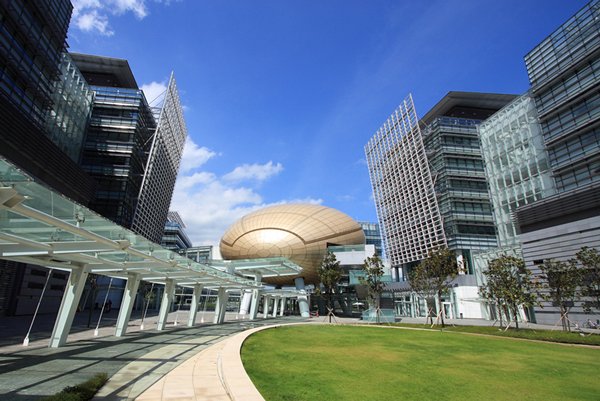
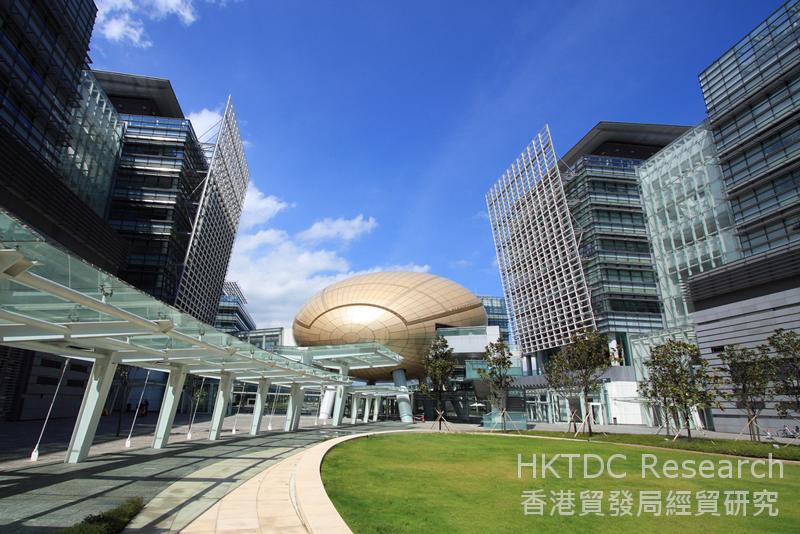
There are a wealth of technology-industry players in Hong Kong, he said. For instance, some HKSTP tenant companies offer world-class services, including fixed and wireless communications, remote Wi-Fi networks, fibre optics and sensors, all applicable to highways, railways, power transmission, energy pipelines and other transportation systems. Hong Kong also had a depth of expertise when it comes to related applications, such as data transmission, system control and remote monitoring capable of meeting the mainland’s technology needs that have arisen from the building of modern transportation networks.
Hong Kong a Technology Services Platform for Enterprises “Going out”
Young took it further, saying that Hong Kong can function as a platform in servicing mainland technology enterprises “going out”. “Thanks to a range of good research capabilities, mainland enterprises have developed a large number of technologies and products well received by the market, including information and communications technology applications and solutions, as well as mobile-device applications,” said Young. He did, however, emphasise that many mainland businesses needed help when it came to developing technology that complied with international standards. “Some advanced technology sectors on the mainland are still in their infancy, making it difficult for them to directly introduce foreign technology into local applications."
Young pointed out that Hong Kong companies are familiar with international technology trends and technical standards, and have extensive international marketing networks, which can help effectively open up overseas markets by commercialisation of technology achievements in the mainland. At the same time, Hong Kong specialises in making good use of foreign general technology for localised applications in Hong Kong and the mainland. Citing an example, he said: "In spite of the absence of smart home standard solutions in the Chinese mainland, foreign technology and user experience may not be suitable for direct application given the mainland’s relatively crowded environment. Hong Kong industry players are not only familiar with the technology and standards, but also understand the actual application and the needs for smart home in relatively densely populated areas. They can effectively introduce appropriate foreign technology to the mainland peers, while at the same time carrying out local adaptations."


Anny Wong, HKSTP’s Senior Manager of Mainland Collaboration, noted that Hong Kong was an international financial centre with extensive financing channels, which could provide a wide range of financing arrangements for the international business and technology co-operation projects being implemented by mainland enterprises under China’s “going out” strategy.
The HKSTP holds regular demonstration projects and technology exchange activities, and arranges partnership agreements with venture capital funds from Hong Kong, Europe and the United States aimed at identifying potential business and technology projects.
It also brings together technology companies and start-ups from Hong Kong, the mainland and overseas. Given Hong Kong’s advantages in professional services and intellectual property rights protection, the HKSTP has also helped to attract many investors from advanced countries as well as the mainland who are seeking to develop the Chinese and overseas markets.
The science and technology park is now home to more than 580 technology companies and about 238 technology start-ups (as at end-March 2016), about 10% of which are from the mainland. These companies are mainly engaged in technology sectors including biotechnology, electronics, green technology, information technology and telecommunications, and many are moving towards even more advanced applications in sectors such as robotic end-of-arm tooling, smart cities and health/elderly care in order to further capture opportunities arising from the mainland and overseas markets.
| Content provided by |
|
Editor's picks
Trending articles
Burgeoning Logistics Investment in Gdansk Paves Way for BRI Success
Opening of new warehouse facilities underlines Poland's pivotal role in roll-out of Belt and Road Initiative.


The opening of new warehousing facilities in Poland is being hailed as helping pave the way for China's ambitious Belt and Road Initiative (BRI). The new facility has been opened in Gdansk, Poland's fourth largest city and its principal port. It has been established to service the needs of the Suzhou-based Chunxing Group, as the aluminium components manufacturing company expands its interests across Europe.
The establishment of the new facility marks something of a shift in policy by Chinese businesses active in the region. Previously, most of their commercial activity had focussed on mergers and acquisitions. This latest venture, though, represents a major investment in the region, bringing with it a number of new jobs.
It is envisaged that this new Gdansk facility will optimise warehouse and logistics services for Chunxing's European clients, allowing the company to service their needs with considerably abbreviated lead times. At present, the initial warehousing phase of the project is approaching completion. Over the next three to four years, this will be followed by the construction of a full-scale production plant in the city.
In terms of why Gdansk was chosen as the base for Chunxing's European expansion plans, this is seen as being down to a number of factors. Most obviously, the city's location, with its close proximity to Poland's principal port, was a key factor. The port offers a direct connection to China, while the region's road infrastructure also easily facilitates distribution activities across wider Europe.
Poland is also linked to China via the China Railway Express Network, which officially began operating under its new branding in June of this year. Currently, freight trains run directly from a number of Chinese cities to Warsaw, Poland's capital city, which is just 250 miles from Gdansk. An expressway linking the two cities is scheduled for completion by 2020.
Earlier in the year, in a sign of the growing economic-political connections between the two countries, Xi Jinping, China's President, headed a trade mission to Poland. During his official visit, Xi affirmed China's commitment to building closer ties with both Poland and Eastern Europe.
He said: "Central and Eastern Europe as a sub-region boasts the greatest potential for growth in all of Europe. We see Poland as being at the very heart of that. China is also ready to commit to Poland's re-industrialisation drive, particularly through greater cooperation with regards to production capacity."
Anna Dowgiallo, Warsaw Consultant
| Content provided by |

|
Editor's picks
Trending articles
23 Aug 2016
Xi Jinping’s long road to somewhere? China’s OBOR initiative and how Europe should respond
European Centre for International Political Economy ECIPE
By Guy de Jonquières, Senior Fellow at ECIPE
Executive Summary
The true nature and purpose of China’s One Belt One Road (OBOR) initiative are subject to much speculation. The one certainty is that OBOR commands powerful high-level Chinese support and is backed by a large investment of political capital. It is no less than the personal signature initiative of President Xi, who has made clear that he regards it as central to his political legitimacy and as the tangible embodiment of his “China Dream” of rejuvenating the nation and its ruling Communist Party – which in his mind are probably the same thing.
However, the initiative faces formidable challenges. It remains unclear how much new investment OBOR has generated, how far it makes economic or geo-political sense or, indeed, how far China can afford to support it, given its current economic and financial difficulties. There has been fierce competition to win government support for OBOR projects but its political nature risks leading to serious misallocation of resources.
OBOR should not be expected to provide a financial bonanza for Europe or to re-energise the region’s flagging economic performance and loss of self-confidence. Nor does the EU need Chinese investment or other resources to achieve those objectives: the solutions to its problems lie mostly in its own hands. However, it should not turn its back on OBOR. It should, rather, view the initiative as one in a series of small steps aimed at fostering deeper mutual understanding and engagement – and possibly even greater trust between the EU and China. Though that could cause strains in its relations with the US, realistically, the EU has little option. It also has little to lose by trying to build bridges and make common cause with China in areas of mutual benefit, even though they may not pay off politically and economically in the longer term. Setting its face against China would not insulate Europe from the aftershocks if China suffered serious economic setbacks or entered a period of political and social turbulence. Whatever happens, China’s economy is simply too big and too deeply integrated with the rest of the world, and the country’s global impact too great, to be ignored.
The mention of China’s One Belt One Road initiative, also known as Belt and Road, brings to mind the Indian fable of the three blind men and the elephant. The men have never seen an elephant, so have no idea what one looks like. One grasps its trunk and insists it is a tree. Another puts his arms round its leg and declares it to be the column of a statue. And the third grabs its tail, which he says is obviously a snake. Perceptions of what OBOR is really about – and how far it is feasible – diverge equally widely.
Some observers argue that the initiative, launched with a flourish by President Xi in 2013, is primarily about economics; others that it is principally about geo-politics. For some it is driven, like most Chinese foreign policy, by priorities and pressures close to home; for others, it is a visionary strategy for expanding China’s sphere of international influence and establishing regional hegemony, while countering the US-led TransPacific Partnership. Some think it is really about promoting the development of backward inland provinces; others that it is about exporting China’s massive excess capacity in steel, cement and other industries.
Then again, some think it is aimed at preventing instability in neighbouring Islamic states spilling over into the western province of Xinjiang, with its large and restive Muslim population. Still others see it as an extension of China’s “Going Out” strategy”, intended to promote outward investment, that will also safeguard the country’s dependence on extended supply lines of imported energy and raw materials. And some observers view OBOR as little more than a slogan containing very little real substance to date.
Curiously, most or all of those different interpretations may well be true. OBOR, it seems, has achieved the rare feat of being all things to all men. At least for the moment. However, things that please everybody do not always amount to a lot. An outward appearance of coherence can fragment, as differing priorities and incompatible interests assert themselves. And that, too, may be true of OBOR.
The one certainty is that OBOR commands powerful high-level Chinese support and is backed by a large investment of political capital. It is no less than the personal signature initiative of President Xi, who has made clear that he regards it as central to his political legitimacy and as the tangible embodiment of his “China Dream” of rejuvenating the nation and its ruling Communist Party – which in his mind are probably the same thing. When Mr Xi issues orders, those further down the line of command jump to attention. And so great is his authority in China that the rest of world should pay attention, too.
Turning his dream into reality is not, however, proving easy. To generate momentum for OBOR, events, rallies and meetings have been staged across China, at both national and local level. That has doubtless raised the initiative’s profile and unleashed a wave of public enthusiasm and energy. But it has also complicated the task of co-ordination – always formidable in China - by involving a multiplicity of special interests, in addition to the plethora of different and often rival agencies and departments that habitually have a say in the country’s policy formulation processes. Some foreign diplomats say they have found it difficult to extract specifics about the initiative from Chinese officials and even to discover who, if anyone, is in overall control of it.
With so many fingers in the pie, there has inevitably been fierce competition to grab a bigger share of it and, above all of the government loans and subsidies required to fund it. It is far from clear how many viable new projects have emerged from this stampede. Indeed, there have been numerous reports of existing or shelved programmes being rebranded with the OBOR label in the hope of winning official favour or support. A lot of effort, it seems, may be going into pouring old wine into a new bottle.
One symptom is the claim earlier this year by Gao Hucheng, China’s commerce secretary, that since OBOR was launched, special economic zones along its route have created almost one million jobs in 35 countries and regions and generated more than $100bn in tax revenues. If so, that is a truly remarkable achievement.
However, it may also be the reverse: an attempt to create the illusion of progress where there has actually been very little, by, as one Beijing observer puts it, “building Potemkin villages along the OBOR”. It is not easy to identify really significant developments that unarguably owe their genesis to the initiative. That may be because it is difficult to determine exactly where it begins and ends. Or perhaps it is because bankable projects that offer worthwhile economic returns just aren’t that easy to come up with.
For instance, analysts who have studied the proposed route between the Russian border and the former capital of Xian, OBOR's Chinese hub, have concluded that it can never be economically viable because so few people live along it. Some other projects, beyond China’s borders, look even more dubious, indeed dangerous - so much so that even some of the Chinese state-owned enterprises charged with spearheading OBOR appear distinctly hesitant about getting involved. One senior executive of a leading energy group, fearing that participation in OBOR could expose it to heavy losses, refers to the plan disparagingly in private as “One Road, One Trap”.
One particularly questionable project is intended to transform Gwadar, a remote Pakistani promontory on the Indian Ocean, into a transportation hub for energy and raw materials and a humming port metropolis modelled on the thriving southern Chinese city of Shenzhen. Yet Gwadar is acutely short of fresh water and 400 miles from the nearest electricity grid or large city. It is also under threat from militant jihadists and separatists, requiring 2,000 Pakistani soldiers to guard a handful of Chinese workers. No wonder prospective Chinese investors are hardly rushing in.
Not all the links in the OBOR chain look as risky as Gwadar. Some independent economists believe the maritime section, confusingly named the Road, makes more commercial and economic sense than much of the land-based or Belt part.
Strategic Dilemmas
Nonetheless, strategic dilemmas lie at the heart of the grand plan. On the one hand, it is in- tended in part to stabilise troubled neighbours such as Pakistan and Afghanistan in the aftermath of US military withdrawal by promoting their economic and industrial development. However, similar western policies in far-flung and unstable places have repeatedly failed. If OBOR is no more successful, China could find itself drawn into political and military quagmires that it is ill-equipped to navigate, creating serious challenges to its vaunted – though inconsistently implemented - doctrine of non-intervention in other countries’ internal affairs.
If Beijing had a clearly articulated and overarching global geopolitical strategy, it might perhaps find such conundrums slightly less difficult to wrestle with. But, by the admission of its own senior policy makers, it does not. Indeed, Wang Jisi, a leading foreign policy expert who is often – though not entirely accurately - credited as OBOR’s intellectual architect, warned in 2010 that without one, OBOR could lead China into dangerous international territory. Like much of the country’s foreign policy, OBOR seems to be heavily influenced by a China-centric world view, driven chiefly by inward-looking impulses and intended first and foremost to meet pressing domestic priorities and needs.
Southeast Asia presents another challenge. For Beijing, OBOR is a way of strengthening and tightening regional relations. Yet it seems unlikely to dispel on its own the deep anxieties and ill-feeling generated across the region by China’s aggressive expansionism and land grabs in the South China Sea. Indeed, OBOR may backfire if other Asian countries come to view it less as a positive gesture of co-operation than as an attempt to promote and extend China’s supremacy in the region and to underpin other nations’ dependence on it.
Another big question is how far China can afford the substantial investments, including heavy associated spending to boost its overseas military presence, that OBOR calls for. Though no firm figures have been given for its overall cost, some estimates put it at at least $1 trillion. Most of that is expected to be financed by Chinese lenders, with the Asian Infrastructure Investment Bank and the $40bn Silk Road Fund chipping in relatively small proportions of the total. China’s policymakers expect that its investments will ultimately generate significant financial returns for the state and for corporate investors.
However, the initiative comes at a difficult and perilous moment for China’s economy. Former double-digit growth is giving way to what looks likely to be an extended slowdown, as the authorities struggle to staunch sizeable capital outflows and to contain a massive credit explosion that has raised debt to vertiginous levels. Meanwhile the far-reaching and painful structural reforms that policymakers acknowledge are essential in order to re-balance the economy and place it on a sustainable footing have ground almost to a halt.
Just as slower growth spells lower tax revenues, potential claims on fiscal resources are mounting, notably in the form of rapidly rising levels of bad debt. Some independent analysts estimate that Chinese banks’ non-performing loans are as much as 20 per cent of their total assets, far higher than the official figure of 1.67 per cent, and equivalent to around 60 per cent of Gross Domestic Product. Though all those assets might not have to be written off – some could probably be restructured or sold – the bill for cleaning up the mess could be large.
Indeed, much of the debate about China’s economy today centres on whether these problems are set to create a full-blown financial crisis, or whether it will manage somehow to muddle through, but at the cost of an extended and bumpy period of under-performance. Meanwhile, other costly burdens loom that will weigh on growth and the public finances: notably under- taking a huge environmental clean-up operation, dealing with acute water shortages and coping with a shrinking and fast-ageing population that will eliminate the “demographic dividend” that has helped power the economy’s rapid expansion since the early 1980s.
All this means that China is likely to have less scope in the future to deal with problems and promote initiatives simply by throwing money at them, as it has often done in the past. Whether OBOR will nonetheless prove to be the catalyst for a great national rejuvenation, as Mr Xi hopes, that will also help reinvigorate China’s stuttering economy – or whether it will turn out to be hubristic overstretch – remains uncertain.
Doomed TO Succeed?
In one sense, though, the initiative is doomed to succeed. Mr Xi has staked so much person- al and political capital on it that it has become a key test of his leadership: failure would inflict severe loss of face and prestige and would risk seriously diminishing his stature and authority. Whatever happens, the party’s propaganda machine will no doubt be working overtime to present it as a triumph at home, which is the one audience that China’s rulers really care about.
OBOR is at least going with the flow. Asia is the world’s economically most dynamic region - admittedly, in a world where growth remains generally weak – and it offers huge opportunities and promise for the future. To harness them, the region needs large amounts of investment – as much as $8 trillion over a decade in infrastructure alone, according to the Asian Development Bank. If it is to keep on growing, many of those investments will happen with or without OBOR. The still unanswered question is how many of them Mr Xi and OBOR can plausibly take credit for.
The ambitions of OBOR’s architects do not stop at Asia. They conceive of it as a truly global enterprise, extending to Europe and embracing Africa and Latin America as well. Indeed, the Chinese government has sought to sell the initiative to European policymakers, at both EU and national level, as a shot in the arm for the region’s economy that could revive its growth and restore its flagging dynamism by increasing levels of investment.
Though some in Europe have reacted enthusiastically, such arguments appear optimistic and their economic foundations questionable. Europe undoubtedly does need more investment. Fixed capital formation in the EU suffered a collapse after the global financial and Euro crises, from which it has yet fully to recover. However, it is far from clear that China offers the solution - even if it had unlimited funds to invest.
The last thing Europe needs, from China or anywhere else, is more capital: it already has more than it knows what to do with. High savings levels in many countries, encouraged by the austerity policies imposed, voluntarily or involuntarily, on Eurozone members, have put substantial financial resources at their disposal. However, a sizeable proportion is not utilised at home but is exported. Last year, net lending to the rest of the world exceeded net borrowing in 23 of the EU’s 28 members and the Euro area was a net international creditor to the tune of 2.9 per cent of aggregate GDP.
Nor is Europe short of the technology, knowledge, experience and engineering and management skills needed to undertake large-scale infrastructure projects and investment in a wide range of productive, wealth-creating activities. By most measures, it remains far ahead of China, which actually needs what Europe has to offer rather more than the other way round. Indeed, China’s rulers view OBOR and the “Going Out” strategy as ways to catch up by acquiring abroad knowhow and assets essential to economic and industrial development that the country lacks.
As a report by the European Investment Bank concluded in 2013, investment in Europe is being held back, not principally by financial constraints, but by weak demand, by over-capacity generated by the chronic misallocation of capital that triggered the Euro crisis and by a climate of acute political and economic uncertainty. Together, these have depressed prospective returns on investment and made owners and custodians of Europe’s abundant pool of capital acutely cautious about committing it.
Solutions to this nexus of problems may not be easily found. But the keys lie firmly in Europe’s hands, not in China’s. Hopes that Chinese money and drive will provide the missing “Ingredient X” that will somehow make up for Europe’s self-inflicted policy failures, power its economic revival and restore its flagging self-confidence and sense of purpose are not only exaggerated. They are largely misplaced.
That should temper expectations of how much OBOR can contribute. It does not, however, mean that Europe should turn its back on this or on other potentially constructive Chinese initiatives. It should, rather, remain ready to respond to them in a businesslike manner and to explore opportunities for co-operation that genuinely serve the interests of both sides, while remaining vigilant about possible pitfalls and attempts by Beijing to get its way by employing its well-practised divide-and-rule tactics among EU member states.
Europe should view OBOR, not as some giant leap forward – as it is often portrayed in China – but as one in a series of small steps aimed at fostering steadily closer engagement with China. That is the spirit of the approach so far favoured, at senior levels at least, by the European Commission.
Steps taken to date include establishing a “connectivity platform”, a Sino-EU working group charged with identifying specific opportunities for co-operation on OBOR, initially in the field of transport; a modest proposed Chinese contribution of €5bn-€10bn to the planned €315bn European Fund for Strategic Investments, the so-called Juncker fund; and EU support for Chinese membership of the European Bank for Reconstruction and Development, which is studying possible joint projects and knowhow exchanges with the AIIB, to which 14 EU member states have signed up.
None of these developments is ground-breaking and some may never bear fruit at all. However, in parallel with the continuing negotiations on a bilateral investment treaty and the possible launch at some point of talks on an EU-China free trade agreement, they offer both sides opportunities to understand each other better and, perhaps, even to establish some level of mutual trust.
Some may ask whether this is a realistic or worthwhile approach, at a time when Mr Xi is displaying what many see as dictatorial tendencies, when China’s foreign policy is increasingly coloured by nationalism and when its economy is looking decidedly shaky. Such questions particularly preoccupy Washington, whose dealings with Beijing are subject to growing tensions that are likely to rise further if Donald Trump becomes the next US president. Those tensions risk, in turn, imposing strains on transatlantic relations if US and European policies towards China diverge sharply.
Realistically, however, the EU has little choice but to try to work with China. It lacks the superpower status, the strategic stake and the political and military influence in Asia that lead many in the US to view China as a threat. It also has little to lose by trying to engage more deeply with China. Seeking to build bridges and make common cause in areas of mutual benefit may or may not pay off politically and economically in the longer term. But setting its face against China would not insulate Europe from the aftershocks if the country suffered serious economic setbacks or entered a period of political and social turbulence. Whatever happens, China’s economy is simply too big and too deeply integrated with the rest of the world, and the country’s global impact too great, to be ignored.
Please click to read full report.
Editor's picks
Trending articles
“Going Out” to Capture Belt and Road Opportunities (Expert Opinion 7): Cold-chain Logistics Enhances Value of Imports
Chinese companies actively seek foreign investments through the country’s “going out” strategy in order to further penetrate overseas markets. They are also looking for new supply sources of quality raw materials such as agricultural produce and fresh foods for processing in the mainland or for local sales in the flourishing mainland market. To this end, mainland enterprises require advanced cold-chain logistics solutions and modern management to keep up with consumers’ increasing demand for quality fresh and frozen produce, according to key industry players in Hong Kong. As Hong Kong players have extensive international management experience, they can help mainland enterprises bring in all types of fresh and frozen products from overseas and countries along the Belt and Road route to meet the increasingly stringent requirements of mainland consumers.
Huge Demand for Imported Frozen Products

As the spending power of Chinese consumers surges, their demand for quality frozen products also grows at the same time. The middle class or above, in particular, are keen to purchase high-end imported foods including frozen meat, seafood, fruits and vegetables, dairy products, wines and other fresh foods as well as all sorts of imported health foods. Furthermore, in the wake of the mainland’s accelerated pace of urbanisation, the logistics and distribution systems in many cities have been developing rapidly in recent years, so much so that enterprises can now make use of increasingly mature cold-chain logistics services to import these products to satisfy thriving market needs.
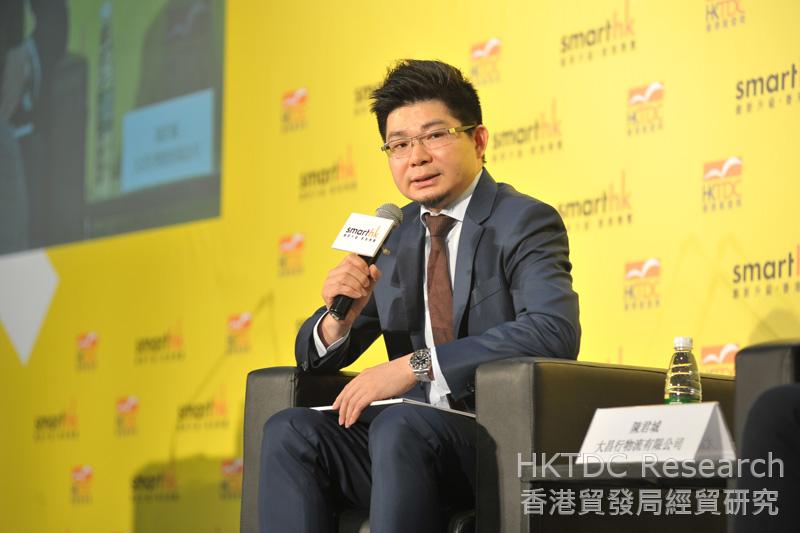
“Currently on the mainland, in the supply of quality imported foods, players ahead of the business are foreign firms and Sino-foreign joint ventures, including retail groups from Europe and America, supermarkets from Hong Kong, and other foreign convenience stores. All these businesses have cold-storage warehouse facilities that are better than those of their local counterparts. They are also using modern cold-chain logistics services to maintain the quality of local and imported frozen products and to ensure that these products can be distributed in time from the place of production to various distribution points to meet consumer needs, which in effect will enhance the value of the products concerned,” Justin Chan, General Manager of DCH Logistics Company Ltd (DCH Logistics) in Hong Kong, told HKTDC Research.
DCH Group is a publicly listed company in Hong Kong. Its core businesses include car and car related business, food and fast moving consumer goods. It has business operations in the mainland, Hong Kong, Macau, Taiwan, Singapore, Japan and Myanmar. As a member of DCH Group, DCH Logistics provides not only services to internal business units, but also third-party logistics services to customers in the mainland and Southeast Asia, including the transportation and shipping of general merchandise as well as cold-chain logistic services in the delivery of various high-end frozen foods, cosmetics and other frozen products.
Stringent Requirements of Multinationals
Chan said DCH Logistics’ cold-chain service clientele included mainly Hong Kong and multinational corporations. In addition to helping its clients store and ship high-end frozen products, the company offers such value-added services as customs clearance, goods inspection and testing, repackaging and labelling, as well as goods consolidation and distribution. To cater to the requirements of different products, DCH Logistics is equipped with physical facilities including multi-temperature warehouses and delivery trucks, and uses advanced refrigeration-monitoring technologies. Moreover, it places great importance on employing modern cold-chain logistics management systems and professional operation processes to comply with the stringent requirements of multinationals in order to ensure food hygiene and safety.
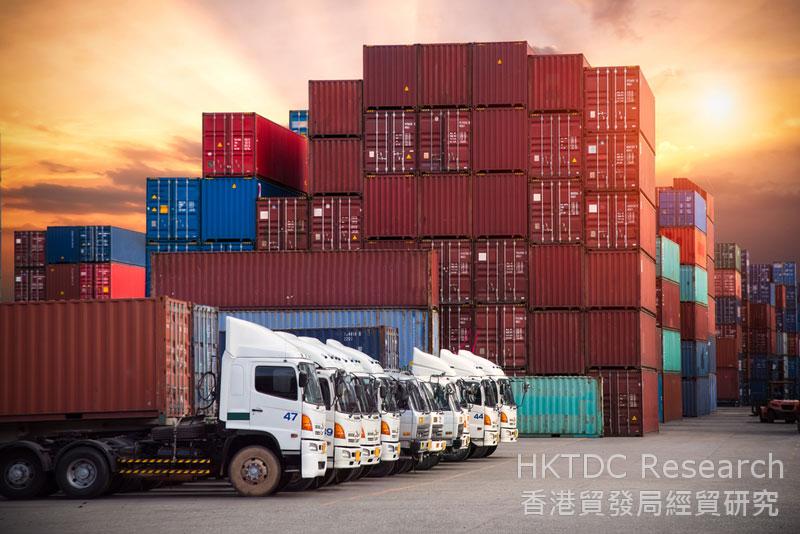
“Although physical facilities and related investments are important, the greatest challenges in cold-chain logistics are in management,” Chan emphasised. “In fact, although the mainland is now aggressively expanding different types of cold-storage facilities, and has plenty of large cold warehouses and transport equipment, irregularities in cooling operations are commonplace.
“For example, during transit, loading and unloading in making deliveries in urban areas, because of irregularities in monitoring and operations, disruptions in supply chains or supply points often occur because of failure in freezing temperature control for certain periods of time. This will directly affect the quality of goods and may even lead to the loss or deterioration of goods, eventually damaging the reputation of the brands concerned and affecting consumer confidence. The key problem here is a lack of effective modern management systems and also an absence of standardised and systemised operations.”
Chan said industry players in Hong Kong were well experienced in cold-chain logistics services, implementing modern quality and inventory management measures, in carrying out exacting monitoring of their facilities and operating processes, and were able to apply new-generation information technology to raise operation efficiency and quality.
Furthermore, Hong Kong companies were capable of complying with the stringent requirements of international corporations because of their experience in providing cold-chain logistics services to a large number of multinationals in Hong Kong, the mainland and overseas markets, said Chan. As the demand for better quality frozen products on the mainland became stronger and stronger, industry players from Hong Kong would have an edge in providing comprehensive supply-chain services for the importation of overseas fresh and frozen foods.
| Content provided by |
|
Editor's picks
Trending articles
26 Aug 2016
One Belt and One Road” and Hong Kong’s Legal Services
By CGCC Vision
Following the Chief Executive’s repeated mention of the development of “One Belt and One Road”, the related topics have been the subject of considerable public discussion. The new policy bears endless opportunities for all, and Hong Kong’s legal profession is, of course, no exception.
Elsie Leung, Deputy Director of the HKSAR Basic Law Committee, believes that as a world power, China should pay close attention to its cultural standing, political and legal systems, and the quality of its people. The “One Belt and One Road” national policy advances the democratic rule of law, deepens the cultural system reform and improves people’s livelihood, which is fully in line with the rise of a world power.
The Uniqueness of “One Belt and One Road”
Leung noted that since the “One Belt and One Road” has no preset rules, it enables China to become proactive. Moreover, the concept has a win-win approach without any threshold and is open, inclusive, mutually beneficial and non-exclusive.
Thus, the areas of cooperation between China and other countries along the “One Belt and One Road” are much diversified, while the Silk Road Fund, AIIB, TPP, international financial institutions and development-oriented financial funds can provide the capital and skills for these countries as required.
Embodiment of One Country, Two Systems
Under the principle of “One Country, Two Systems”, Hong Kong is a part of China while having different systems. It has also become an international financial centre as well as a bridge between the Chinese and Western cultures. On this basis, Leung is convinced that China’s “One Belt and One Road” development initiative and “going global” strategy present major opportunities for Hong Kong’s legal profession.
Hong Kong’s Laws have Obvious Advantages
The country’s development will inevitably involve a large number of contracts. Leung believes that by relying on its existing legal status, Hong Kong can strive to make its laws as the applicable law for the contracts and for its courts and other institutions to become the place for contract dispute resolution, thereby contributing the wisdom and efforts of its lawyers.
She added that Hong Kong’s lawyers are not only adept at the details of both Chinese and Western laws, but also gaining deeper understanding of the legal systems and financing methods of Islamic countries. Furthermore, as Hong Kong’s lawyers are bilingual, they are able to accurately analyze the different requirements of the contracting parties, and share their analyzes with Chinese customers to help them make accurate judgements.
Leung also pointed out that because Hong Kong’s lawyers are in constant contact with a large number of businesspeople from around the world and understand their needs, they are high-quality intermediaries whose participation can prevent misunderstandings and effectively contribute to the negotiations between the contracting parties.
She also commended Hong Kong’s sound and fair international legal dispute resolution mechanism, complete procedural rules, and stringent by-the-book disposal of cases, which are fully in line with international practice. Therefore, Hong Kong is well-positioned to build a legal dispute resolution centre that is generally accepted by the international community. She suggested that Hong Kong should establish a legal dispute resolution centre specialised in serving the “One Belt and One Road” initiative.
Looking Ahead to Seek Opportunities
Looking into the future, Leung looks forward to the various sectors submitting recommendations to the HKSAR Government for inclusion in the Policy Address; she also requested the Central Government to include the recommendations in the “13th Five-Year” Plan for implementation. As in the case of the CEPA, it depends on our proactivity to seek opportunities.
This article was firstly published in the magazine CGCC Vision 2016 July issue. Please click to read full report.