









Chinese Mainland
8 Jun 2016
“Two Sessions” Lifting the Curtains of “13th Five-year” Plan
By CGCC Vision
Spring is not only the best time to make a year’s planning, it is also when the “Two Sessions” were held. The development of China raises concerns worldwide. The annual sessions are now an important window for the world to get a glimpse into China. This year, they also symbolize the beginning of the “13th Five-year” Plan. Taking a good look into its contents could help Hong Kong companies gain an early advantage.
Dou Shuhua: consensus favorable to the construction of a moderately prosperous society
Deputy Secretary-General of the NPC Standing Committee Dou Shuhua praises the recently concluded sessions highly, citing that they have made good preparation for the work of 2016, which would help bring the wisdom and strength of the people together.
Outstanding accomplishments achieved
Dou pointed out two main influences that the sessions have on the country and the public. First of all, they established common objectives for the country and promote democratic ideas. Secondly, they are the window to China’s image and help foreign countries gain a comprehensive understanding about China.
First Charity Law demonstrates significance
Dou also talked about the Charity Law, which he considered an important law to drive the development of the charity sector in China. It connects the country’s charitable and poverty alleviation work, and goes deep into helping the poor through charitable efforts. Considering the actual needs of China and benchmarking global experiences, the Charity Law is the first law to govern China’s charity sector and is extremely important to its mechanism and system. Last but not least, the Law also provides reliable legal protection to the development of China’s charitable industry.
Chang Rongjun: CPPCC must actively offer strategic advice and participate in policy discussion
Deputy Secretary-General of CPPCC Chang Rongjun stressed that since the government has been valuing highly of CPPCC members’ opinions, and committee members have confidence on the government’s work, all members have shown much enthusiasm in policy discussion during the sessions.
Quality, constructive proposals
Chang thought that China’s confidence in economic development has come from a comprehensive reform and efforts from every direction have to be converged. He praised the rather high quality of proposals put forward during the current “Two Sessions”.
Resolving responsibility issues from their roots
Regarding how CPPCC should play its role in putting strategic advices forward and in policy discussion, as well as how members perform their duties actively, Chang reckoned that relevant issues must be resolved from their roots, which is why he suggested the tactic called “1420”.
Hong Kong and Macau must grasp the opportunities
Chang quoted the comments of some Hong Kong and Macau committee members, who said the “13th Five-year” Plan has offered invaluable opportunities for the future development of the two locations. Hong Kong and Macau must put their own competitive edges to full play and actively take part in the “13th Five-year” Plan and the implementation of “One Belt and One Road” initiative, playing the role of “super connector” between the Mainland and the international markets.
Lastly, he commented the sessions must act as a bridge and help achieve consensus among divergences. He also quoted Yu Zhengsheng, Chairman of CPPCC, pointing out that the community of CPPCC members should actively participate in the realization of a moderately prosperous society, doing its best to demonstrate to the public that members always put the public first and are right next to them.
Liu Shijin: reforming supply side; focusing on reducing production capacity
Many people are keen to know which direction the future of the Chinese economy would go under the “13th Five-year” Plan. Former Deputy Director of State Council Development Research Center Liu Shijin believed that China’s economy is still facing rather strong downward pressure at the moment.
The research of Liu shows that, after a long period of economic growth, when the per capita GDP reaches 11,000 international dollars, slowdown in economic growth happens without exception. As such, he deduced that China would also follow the trend and turned from high-speed growth to medium-speed growth around 2013. The deduction has now become the “new constant”.
Unsynchronized supply and demand resulted in over-capacity
So when will the pace of economic growth hit its rock bottom? Liu thought that from the demand side, the Chinese economy is basically stable, and a more accurate estimation is the second half of this year till the first half of the next. On the supply side, export and real estate are both recording negative growth, but industries such as construction materials, steel and petrochemicals are not slowing down as quickly, resulting in serious over-capacity.
Liu commented that the solution is to eliminate over-capacity, so that both the PPI and the corresponding profit can bounce back. China will only be able to align its supply and demand, allowing both to reach their lowest point, by achieving so.
Efficiency enhancement most critical
The core to the reform on the supply side is to increase efficiency. Liu pointed out that there is a lack of market-oriented adjustment mechanism in the Mainland. As such, an environment favorable for competition should be created for the market to regulate and to lower prices on its own.
He also suggested that the Mainland should speed up industrial transformation and upgrading; it should also reduce and eliminate different kinds of economic bubbles. He thought that an innovative environment should be nurtured based on a respect on the laws of innovation. The government should not interfere too much, but it must work hard to protect property rights, in particular intellectual property rights.
Growth trend to appear as “big L and small W” after all time low
Liu believed that it would be more likely for the growth trend to take the shape of an “L” after hitting the rock bottom. In other words, the pace of growth will stop going down. However, some smaller fluctuations will take place during this time, which will form a new growth platform in the shape of a big L with small Ws. He estimated that the situation would last for 10 years or longer. Liu stressed that “the reform on the supply side would be a long-term battle. Changes must be made in state-owned businesses, land, tax, finance, social security and government functions in order to obtain actual progress and to lay a strong foundation for quality, effective, undiluted and sustainable growth.”
Wang Tongsan: distinguished progress with emerging conflicts
Academician of Chinese Academy of Social Sciences Wang Tongsan analyzed this year’s Government Work Report and said that the Mainland had achieved the goals set out in the “12th Five-year” Plan in multiple aspects. Yet, there are a number of threats as the country made progress.
Development milestones of the “12th Five-year” Plan
According to Wang, China’s GDP is now twice as much as that of Japan’s and standing strong as the world’s second largest economy. He estimated that China will surpass the US and becomes the world’s number one within 10 years’ time.
Wang pointed out that the “12th Five-year” Plan made significant progress in structural adjustment. The service industry is now the biggest sector in China, while consumer spending is a major drive to support economic growth. The urbanization rate in China is now over 50%, with evident improvement in people’s standard of living.
Decelerating growth
But he pointed out directly that a number of domestic and external issues are gradually surfacing. At present, the global economy is recovering weakly. Wang estimated that the global economic growth of 2015 would not exceed 3%. Growth in international trade is just as lackluster, which poses a great impact to China. Diverging monetary policies among advanced economies have also added many external uncertainties for the country.
At home, Wang saw downward pressure for the economy. The quarter-on-quarter growth for GDP over the past four quarters has been continuously slowing down. Growth in investment was also weak during the past year. Wang was also concerned about the drop in import and export trade volume saying that “Whether it was calculated in RMB or USD, the total volume in both import and export in the Mainland dropped last year.”
Certain companies facing difficulties
Another domestic issue is the diverging trends in the regions and sectors. Wang said that there are obvious differences in the growth of regional GDP. Growth in fixed asset investment in different areas also saw evident variances. New and high-technology industries are growing stronger in the Mainland and they also yield higher profit. Resource industries such as coals and steel, etc. have shown clear profit decline.
The operational difficulties of companies are also reflected on the total profit of state-owned businesses, which fell 6.7% year-on-year in 2015. Compared to the 5.6% decline among central state-owned enterprises, regional ones recorded bigger drops. Wang explained that, economic slowdown led to decelerated growth in the salary guidelines of various locations.
Conflict in fiscal balance
He also pointed out that the National General Public Budget income of last year was 15.2217 trillion dollars, while the expenditure was 17.5768 trillion; the lever effect resulted in a contradicting fiscal balance.
Wang saw risks and threats in the Mainland’s financial industry. He said, “Fluctuations in the stock and foreign exchange market are quite obvious. Property prices are also polarized between first-tier cities and other cities, in particular, third and fourth-tier cities. Property prices of first-tier cities are increasing quickly, but third and fourth-tier ones find it rather difficult to destock.” Last year, foreign reserves dropped 13%, that is a few hundreds of billions of US dollars less. The amount shrank more than US$ 100 billion within one month in February alone and that reflects instability.
Lau Siu-kai: Hong Kong’s participation in “One Belt and One Road” an irresistible trend
Vice-President of the Chinese Association of Hong Kong & Macao Studies Lau Siu-kai analyzed the importance of “One Belt and One Road” for Hong Kong. He reckoned that “in the long run, it will be related to the pace, method and direction of Hong Kong’s development in the future; it also connects to Hong Kong’s position, role and function at the national and the international levels.”
Lau pointed out that “One Belt and One Road” is on one hand an active and positive response made by the country to address the changes in the international setting and its own development needs; and on the other, a move to change the prevalent international setting. If it turns out to be successful, significant changes will happen in the international setting and global relations. Under such circumstances, the global importance of Asia will be lifted, and China will become Asia’s most influential country. He also described “One Belt and One Road” as a “westward strategy” that China puts forward in response to the “Rebalancing toward Asia’’ strategy of the US, aiming to further expand and widen strategic space for China.
Hong Kong will rely less on Western economies
Lau analyzed that, if “One Belt and One Road” is successful, Asia will become the center of gravity of the global economy and the locomotive for economic growth. Much of Hong Kong’s progress will come from Asia, in particular, eastern Asia and Southeast Asia. As a result, Hong Kong’s reliance on Western economies will constantly reduce.
Lau added that, with the European-Asian- African free trade zone made possible by “One Belt and One Road”, Hong Kong will gain more new development opportunities, service targets, job opportunities, and more importantly, international position or role. These will help strengthen and develop “one country, two systems”, and will be favorable to tighten the relationship between Hong Kong people and Mainland Chinese.
Hong Kong people should adjust their mindsets according to changes
According to Lau, “Hong Kong people must understand that big changes are taking place in the mainland environment and international setting, and that keeping the existing status is impossible. The past attitude that put little emphasis on Asia and the tendency to over-rely on the West have to be appropriately adjusted and balanced.” He stressed that while “One Belt and One Road” would have limited influence and impact on Hong Kong in the short run, it has long-term connection to whether Hong Kong can continue to develop prosperously, its value to the country, as well as its international standing.
As for the challenges faced by Hong Kong in taking part in the “One Belt and One Road” initiative, Lau reckoned that while “opposing powers’’ and “nativists” have raised their doubts and are setting up hurdles, we must understand that shutting our doors and exclusivism do no good to Hong Kong; they also go against the greater global trend. He suggested that the SAR government and all sectors of the society should work on explaining to the people of Hong Kong about the significance of “one country, two systems” for our territory, as well as to overcome the hindrance created by opponents.
This article was firstly published in the magazine CGCC Vision 2016 May issue. Please click here to view the full article.
(Remark: This is a free translation. For the exact meaning of the article, please refer to the Chinese version.)
Editor's picks
Trending articles
10 Jun 2016
Back to the Future: China’s ‘One Belt, One Road’ Initiative
By Vassilis Ntousas, International Relations Policy Advisor at the Foundation for European Progressive Studies
Since its introduction in the fall of 2013, China’s ‘One Belt, One Road’ initiative has been the centre of a plethora of in-depth analyses and policy announcements. Heralded by many as a centrepiece of President Xi Jinping’s foreign policy and domestic economic strategy, this grandiose initiative has certainly captured the attention of many policy-makers, analysts and commentators, marking a significant milestone in the country’s trajectory of engagement in the international milieu. Whether China’s grand design for its new trade routes will ultimately become a game-changer remains to be seen, yet its ‘back-to-the-future’ approach contained in its OBOR policy presents many potential benefits for Beijing, despite the evident risks. …
China’s (potential for a) game changer
Highly ambitious in its goals and Herculean in its proportions, the OBOR initiative has been characterised as the ‘most significant and far-reaching initiative that China has ever put forward’. If played correctly by China, the initiative has the potential of being much more than its individual parts, elevating China both economically but also politically. For Beijing, OBOR’s added value could be multi-faceted, ranging from creating new markets through economic penetration, widening the trading and commercial horizons to export Chinese surpluses, improving the innovation and competitiveness of Chinese industries, whilst providing the necessary impetus, vision, and know-how for a more coherent regional policy aimed at alleviating internal inequalities amongst provinces and for a more active and better-founded foreign policy that will promote the Chinese interests in a more reliable and efficient manner.
Inherent in the project’s vision and scope, both in its continental and its maritime component, one can also trace the many obstacles that exist and that will largely decide the project’s future success. Although the initiative is still in its early stages, critics point to the its sheer size and ambition as the source of many vexing challenges: from the incredibly varied political, economic, legal and regulatory framework within which OBOR will have to function, to the political uneasiness, if not antipathy, it could create in many areas along its routes. Regardless of the levels of financial firepower that will be employed, building a network of Sino-centric trading routes along a milieu of great diversity and even greater risks will lead China to engage more actively with regional affairs. If the initiative succeeds, whether it is the intention of Beijing or not, this will create both an opening and an additional layer of risk: China’s rise, not least in the economic sphere, will embolden the country’s position internationally, yet, as the eyes of the world focus more on China, there will be a greater degree of scrutiny regarding its praxis in the region. Whether China’s Grand Design for its new trade routes will ultimately become a game-changer remains an open question, yet its ‘back-to-the-future’ approach contained in its OBOR policy presents many potential benefits for Beijing, despite the evident risks.
Please click here for the full article.
Editor's picks
Trending articles
14 Jun 2016
“One Belt, One Road”: An Economic Roadmap
By The Economist Corporate Network
The Silk Road Economic Belt and 21st Century Maritime Silk Road - better known by its popular shorthand terms of One Belt, One Road (OBOR) and the Belt-Road initiative - has become one of the most discussed topics about China’s evolving role in the global economy today. The Economist Corporate Network has produced "One Belt, One Road": an economic roadmap to add clarity to the discussion and stimulate more informed consideration about the implications of OBOR. To that end, this report explores seven key regional spheres covered by the Belt-Road initiative: Africa, Central Asia, Eastern Europe, the Middle East, Russia, South Asia and South-east Asia.
As Belt-Road projects heavily emphasise infrastructure development, the regional mapping lists out infrastructure project pipelines. These lists do not aim to provide a complete accounting of projects but rather a varied sampling to show the types of development activities that characterise a region. For the sake of transparent, readily verifiable data, the lists draw from publicly accessible sources such as the World Bank, InfraPPP and CG/LA Infrastructure’s Strategic 100: 2016 Global Infrastructure Report. The information is current as of February-March 2016. The regional analysis sections also give overviews of the infrastructure needs of a region’s constituent countries. The analysis further delves into examining the progress, results and the wider ramifications of prominent OBOR projects.
Please click here to view the full report.
Editor's picks
Trending articles
17 Jun 2016
Belt and Road Initiative Infrastructure Projects: Implementation Principles and Practices
By Joseph W. Ferrigno III, Managing Partner, AMCG Partners
Summary
A. The Belt and Road Initiative (“BnR”) is a comprehensive vision for the development of China and other countries during the 21st Century initiated by China in 2013. The Asian Development Bank has estimated that Asia needs an average US$730 billion a year in infrastructure investment until 2020, including only some of the identified BnR related projects. According to the Peterson Institute for International Economics, “…investment in the Belt and Road is expected to reach $4 trillion”.
B. Asia’s overall national infrastructure investment need is estimated to be US$8 trillion over 2010-20. BnR is attractive to governments and the private sector because of the significant potential economic and political benefits if BnR projects are successfully implemented.
C. Requirements for capital, risk absorption and management capabilities necessary to successfully implement BnR-inspired projects far exceed what governments can provide. Public/private partnerships ("PPP"), via various models, are essential to contribute ideas, capital, risk absorption and project management capabilities. The private sector, working closely with the public sector helps plan and control BnR projects resulting in projects which have the most appropriate designs, the most cost-efficient construction and the most efficient operation.
D. The implementation of PPP projects, which typically involve multiple parties of different nationalities, is highly complex and requires special expertise and experience and is more of an art than a science. The “packaging” for such projects, getting them ready for construction start, is quite difficult and requires dealing with many challenges and problems which must be solved during long project development periods.
E. In my experience with the packaging of PPP projects, in both developed and developing economies, there are effective solutions which require the relentless application of sound project implementation general principles and specific practices. Although each project is unique, and correct timing is a critical factor, such principles and practices can be applied to result in the successful implementation of PPP infrastructure projects.
F. Hong Kong is functioning effectively as a kind of “Super-connector” putting together various parties which are interested participating in BnR-inspired projects so that they have opportunities to meet and consider collaborating. In addition, Hong Kong’s well-developed project services sectors - including its expertise in infrastructure development sectors - are unique in Asia in terms of their international business orientation, depth of service, expertise and professionalism. Moreover, an essential characteristic of Hong Kong is the reliability of the enforcement of contracts. The independence of the Hong Kong Judiciary and the adherence to the Rule of Law are of high importance for international businesses, investors and creditors involved with infrastructure projects.
Please click here to view the full report.
Editor's picks
Trending articles
21 Jun 2016
How Washington Should Respond to the “Road and Belt”
By Zhao Minghao (He is a research fellow at the Charhar Institute and an adjunct fellow at the Chongyang Institute for Financial Studies at Renmin University of China. He is also a member of the China National Committee of the Council for Security Cooperation in the Asia Pacific.)
Major American think tanks are beginning to take the “Road and Belt” initiatives seriously. Recently the Center for Strategic and International Studies cosponsored a symposium on the “Road and Belt” with the Chongyang Institute for Financial Studies of Renmin University of China. The CSIS has also launched its own “Reconnecting Asia Research Initiative”. Scholars with the Brookings Institution, Center for American Progress and National Bureau of Asian Research have also started corresponding research projects.
US “overreaction” to Chinese proposals has created obstacles to development of China-US relations over the past few years. In fact, Washington could have responded in more appropriate and smarter ways. The US government took great pains to dissuade European allies from joining the Asian Infrastructure Investment Bank headquartered in Beijing, on the grounds that the institution can’t meet the “highest global standards” in management and lending. Yet Britain, Germany and France chose to become AIIB founding members despite US opposition.
Financial Times chief commentator Martin Wolf, who had worked with the World Bank, said what the US was truly worried about was that China-initiated mechanisms may undermine American influence on the global economy, and Britain’s decision to join the AIIB was a significant blow to the US. Wolf was straightforward in pointing out that rise of the Chinese economy is both desirable and unavoidable, the world needs fresh mechanisms, and will not stop its progress just because the US refuses to participate. (Martin Wolf, “A Rebuff of China’s AIIB Is Folly”, Financial Times, March 24, 2015)
On April 13, AIIB president Jin Liqun and World Bank president Jim Yong Kim signed their institutions’ first framework agreement on joint fundraising. The agreement will allow the two parties to jointly fund development programs, meaning that the two international institutions have taken an important step forward in meeting the world’s tremendous demands for infrastructure. Before that, the AIIB had agreed with the US-and-Japan-dominated Asian Development Bank, European Bank for Reconstruction and Development, and the British Department for International Development on fundraising for development projects. The AIIB is expected to approve about $1.2 billion in fundraising programs, including support for road construction in Pakistan and Central Asia.
For Beijing, the AIIB is a test rather than a so-called triumph against the US. This is the first time for the Chinese to attempt to provide public goods in the field of international development, indicating Beijing is actively embracing multilateralism in global governance. Chinese leaders have sufficient motivation to support the AIIB to develop in a manner in conformity with the principle of “lean, clean, green”. The AIIB is expected to demonstrate higher efficiency, zero tolerance to corruption, and commitment to sustainable development. In particular, the AIIB hopes its staff would be a third of the World Bank’s when its registered capital equals that of the latter.
Fundraising needs for infrastructure investments will reach $10 trillion in the next decade. There will be no competition between the AIIB and other multilateral development institutions, such as the World Bank and Asian Development Bank. Instead, there is broad room for them to cooperate. Jin has stated on multiple occasions that American companies would not be excluded from the AIIB’s scope of business. American lawyer Natalie Lichtenstein, who had worked for the World Bank for nearly 30 years, has been hired by the AIIB as an adviser. The AIIB has its eyes on talents’ qualifications and capabilities, not which country’s passport he or she holds.
Beijing has also been open to Washington regarding the “Road and Belt”. During his visit to the US in September 2015, Chinese President Xi Jinping stated in explicit terms that the US is welcome to participate in the initiative.
In order to promote Afghan economic development and economic integration in Central and South Asia, the US put forward the “New Silk Road” program in 2011. By 2014, the program had been further focused on four main fields, namely developing regional energy markets, promoting trade and transportation, upgrading customs and border control, enhancing business and personnel exchanges. This is very similar to the goals of the China-proposed “Silk Road Economic Belt”, so it should be possible to dovetail the two programs.
In fact, China and the US have already been collaborating on Afghan affairs in the past few years. Now they need to take one bolder step forward. They can jointly support construction of such infrastructure facilities as power grid, upgrade of border facilities, and negotiations on border trade agreements. China and the US can also cooperate under such frameworks as the Central Asia Regional Economic Cooperation Program. In June 2015, Richard Hoagland, a senior official with the US Department of State, talked with officials with China’s National Development and Reform Commission on how to make the “New Silk Road” and “Silk Road Economic Belt” mutually complementary.
Beijing does not expect the Obama administration to enthusiastically support the “Road and Belt”, but it does hope that the American side can be serious about the tremendous potential for the two countries to formulate a global development partnership. The “Road and Belt” has offered a window of opportunities. The US should not overreact to every Chinese proposals. They are not in a zero-sum game. As veteran China expert Harry Harding said, “a more successful and confident United States would regard the rise of China with greater equanimity”. In the realm of international development, Washington doesn’t need to panic, it should instead be confident and take a different attitude – let China succeed.
Please click here to view the full article on the website of China-United States Focus.
Editor's picks
Trending articles
Nordic Opportunities: CleanTech Models
Highly regarded as one of the greenest domains on Earth, the Nordic region is a best- practice case for how national or regional commitment to a green economy can earn a global environmental reputation. Greater environmental focus on traditional industries such as fisheries and forestry, coupled with developments in efficiency and improvements in sectors such as renewable energy, smart cities with sustainable water and waste management, smart buildings and green transportation, has made the Nordics an excellent partner in the development and deployment of fast-growing CleanTech businesses.
Nordics as a green domain
The Nordic region [1] leads Europe in the use of renewable energy. According to the latest available statistics, in 2014 renewables made up 77.1%, 69.2%, 52.6%, 38.7% and 29.2% of gross final energy consumption in Iceland, Norway, Sweden, Finland and Denmark, respectively, compared to the EU average of 16%. Major sources of renewables in the Nordic region include wind, waves, tidal, solar, geothermic, hydroelectric, biomass and biofuels.
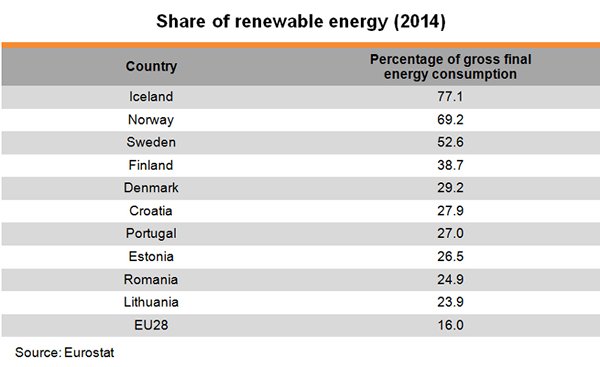
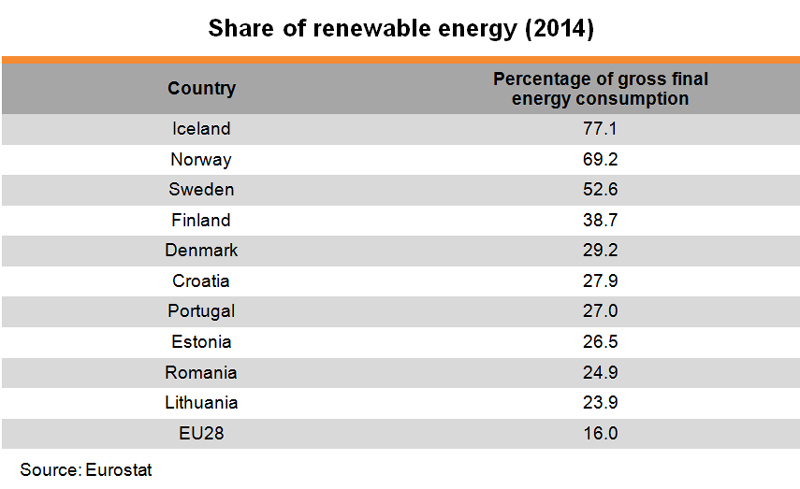
With four out of the five Nordic countries – Iceland, Norway, Sweden and Finland – meeting their 2020 renewable-energy obligations by 2014 (each country has a separate target in terms of percentage of gross final energy consumption), and committed to the belief that others can follow suit, the region is keen to promote its renewable-energy technologies and applications to the world’s major energy consumers.
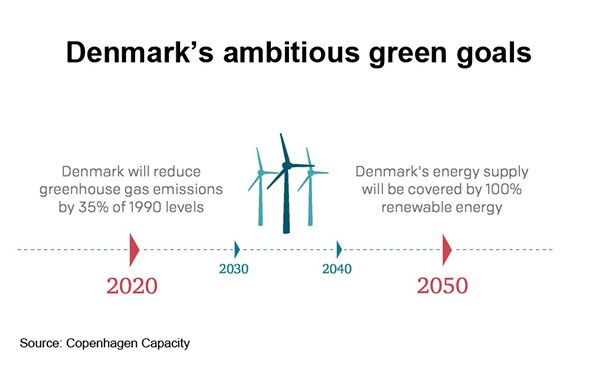
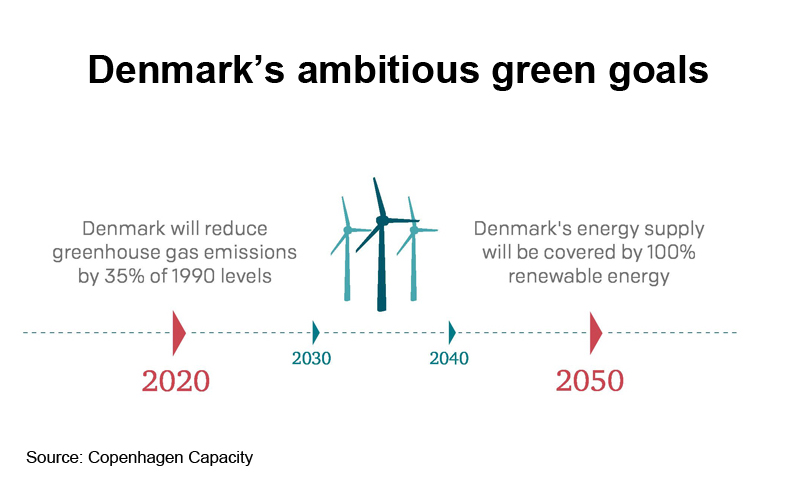
Although Denmark is still slightly behind its 2020 renewable-energy obligations (0.8% behind a target of 30%), it has committed to an ambitious goal to develop its capital and largest city, Copenhagen, into the world’s first carbon-neutral city by 2025, and to weaning the country off fossil fuels in favour of 100% renewables by 2050. Already able to meet its domestic electricity demand by wind power, Denmark exports power to its neighbours such as Germany, Norway and Sweden.
Ready to make inroads into Asia
As forerunners in green energy, many Nordic CleanTech companies have shown interest in securing partners and market opportunities to cash in on Asia’s growing demand for renewables, while Asian countries are pushing the development of renewable-energy options such as biomass, solar and wind power to reduce their reliance on fossil fuels.
While renewable-energy resources may vary from country to country, China, the world’s largest energy consumer since overtaking the US in 2010, presents a tremendous opportunity for Nordic CleanTech companies. Given China’s large agricultural sector and rich hydro resources, companies specialising in biomass power generation, hydro-power turbines and equipment, flood-control systems, and urban planning are likely to be in high demand in the country where urbanisation is seen as key to fast-tracking economic growth and improving living conditions as rural to urban migration continues.
Opportunities for FDI and research collaboration
Home to nearly 4 million inhabitants and the Nordic region’s largest recruitment base for highly-skilled employees, the Greater Copenhagen Region (GCR), a metropolitan area spanning Eastern Denmark and Skåne in Southern Sweden, offers the best foreign direct investment (FDI) strategy among Europe’s mid-sized regions (between 1.5 and 4 million inhabitants) in fDi Intelligence’s European Cities and Regions of the Future rankings 2016/17.
With close links to Continental Europe, the Nordics and the Baltics, the GCR provides not only ready access to a market of more than 100 million consumers, but also to a cluster of high-level companies with strong competencies in renewable energy, waste and water management, recycling and upcycling solutions that make the GCR a frontrunner for green investments and innovation.
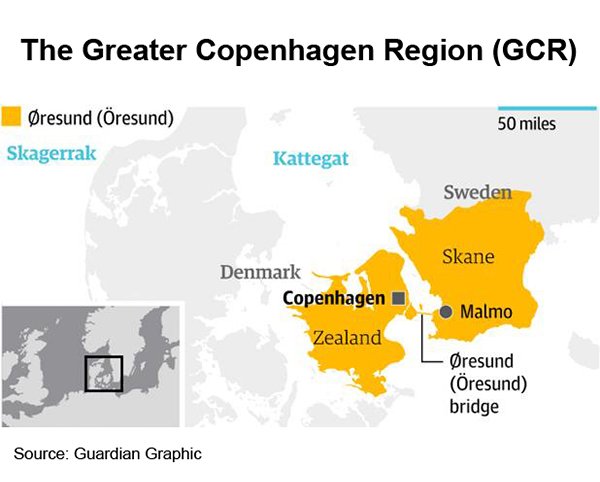
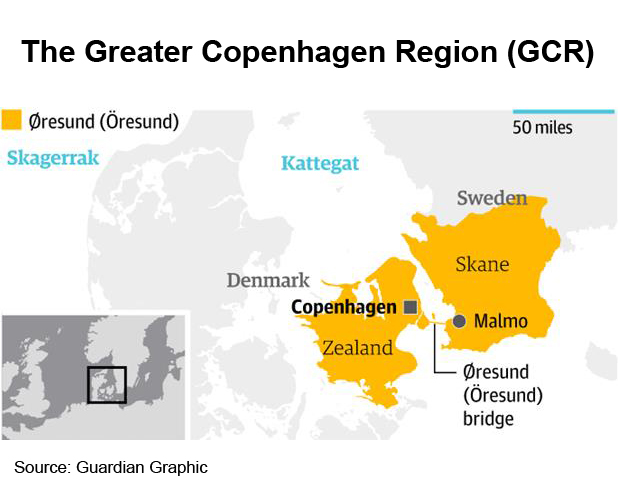
Boasting an ambitious goal to become a leading international hub for investment and knowledge capable of competing with the most successful metropolises in Europe by 2020, the GCR offers international investors world-class research facilities and a creative business environment for a number of attractive high-growth technology sectors.
For instance, through a unique collaboration between companies, universities and municipalities, Malmö Cleantech City, since 2010, has created a green network and promoted CleanTech entrepreneurship in Malmö. Aiming to become climate neutral by 2020 and 100% powered by renewables by 2030, Malmö, Sweden’s southernmost and third-largest city (after Stockholm and Gothenburg) has been successfully transformed from a polluted shipbuilding centre into a CleanTech hub boasting a high concentration of CleanTech players.
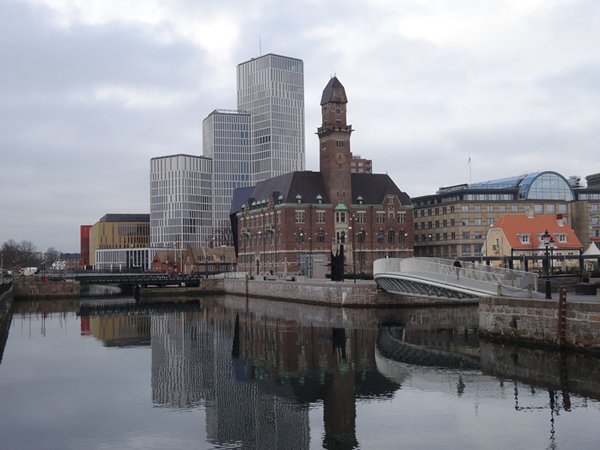
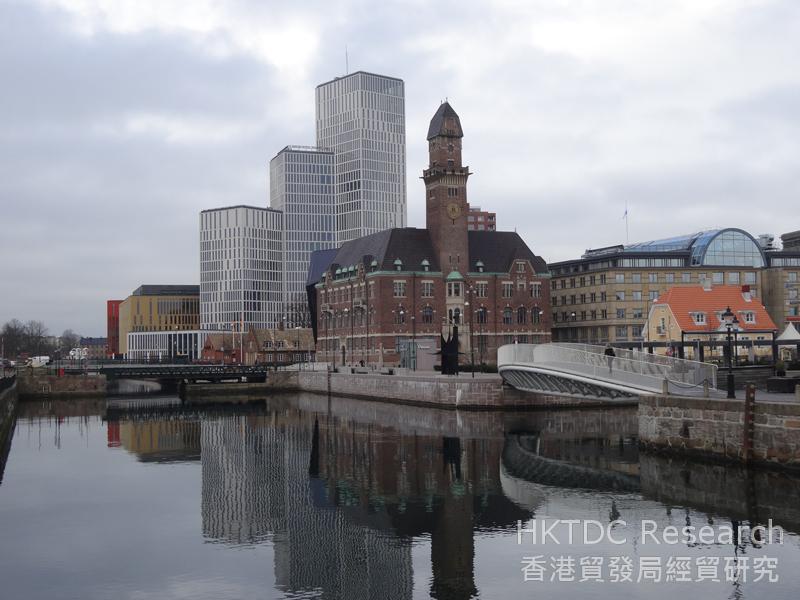
Thanks also to the city’s proximity to MAX IV, the next-generation synchrotron radiation facility, and the European Spallation Source (ESS), a state-of-the-art super-microscope generating new science and innovations for a sustainable society, Malmö is becoming a hotspot for leading life sciences and materials research. The industry cross-over between life sciences, CleanTech and smart-city solutions has already resulted in a number of projects and products including sensors on waste bins, smart grids, street lighting using LED, battery coating with nanoparticles for solar-energy generation and closed-loop recycled water showers.
Exportable experience for China’s urbanisation programme
It is estimated that about 70% of China’s population, or about one billion people, will be living in cities by 2030, as more than 100 million people migrate from the countryside. To cope with the high demand for efficient urban planning, smart-city development has become a key national policy and, in turn, a highly sought-after technology on the mainland.
To ensure a sustainable yet holistic urban-planning approach, substantial government involvement is usually a prerequisite. This is especially true when old solutions for energy, water, sewage and waste must somehow be retrofitted and new, stricter environmental requirements call for completely new solutions. This, however, could create problems for private engagement and future marketability of the various projects.
To this end, Stockholm – the first European Green Capital [2] – has a long historical track record of integrated urban management with ongoing credible green credentials and ambitious future plans. For instance, as the first eco-city district in Stockholm, Hammarby Sjöstad – as a symbol for the future of the Swedish capital – is one of the finest international role models of sustainable urban development.
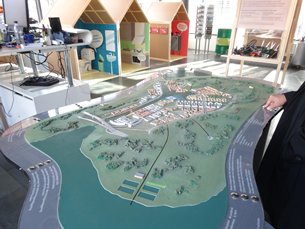
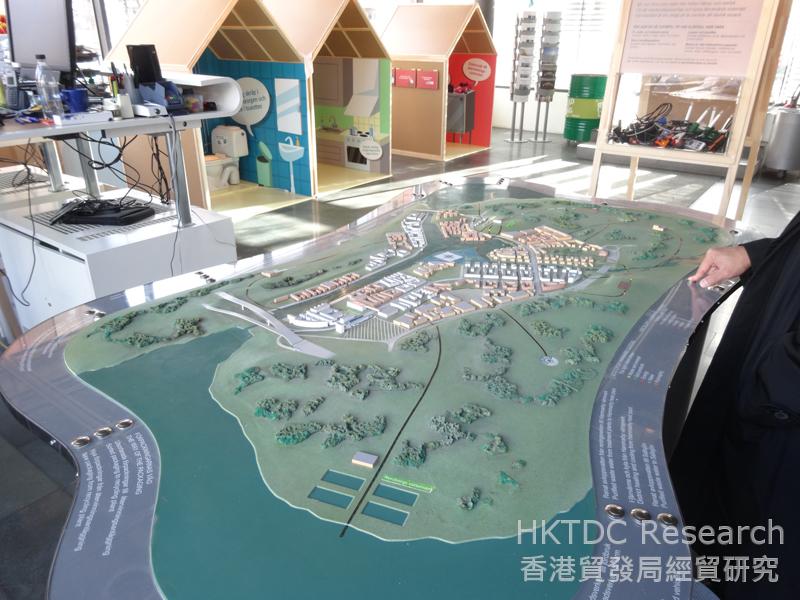
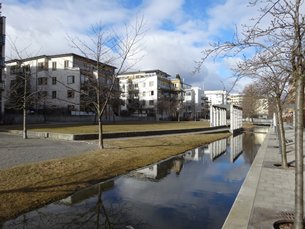
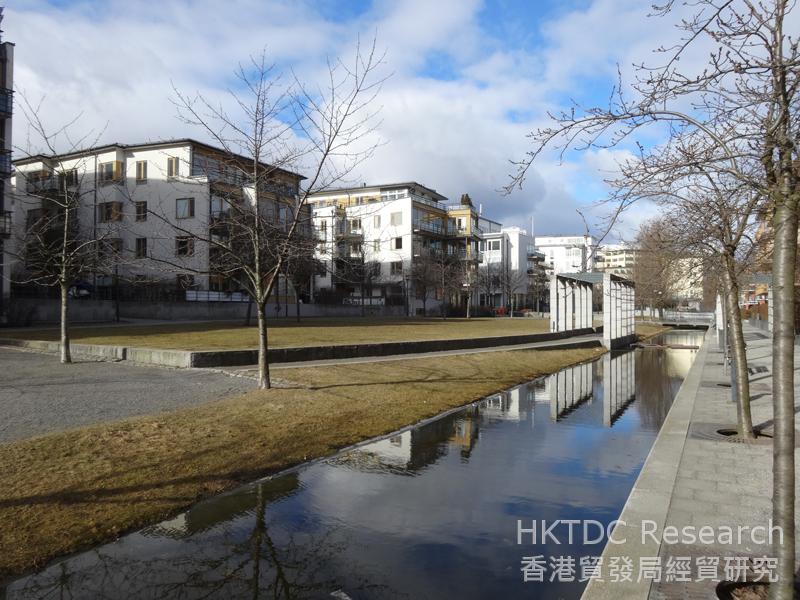
The initial idea was born in 1990 as part of Stockholm’s bid to host the 2004 Summer Olympic Games. When the bid failed, the city authorities decided to use the project as a pilot for environmentally friendly urban development in order to meet strong demand for sustainable housing.
The development, expected to be completed in 2018, involves a mixture of private and public construction partners, which are designing and building individual housing units to accommodate 25,000 people in more than 11,000 apartments. It aims to achieving a 50% reduction in the overall environmental impact (waste, water and energy consumption) compared with a typical district built in the early 1990s.
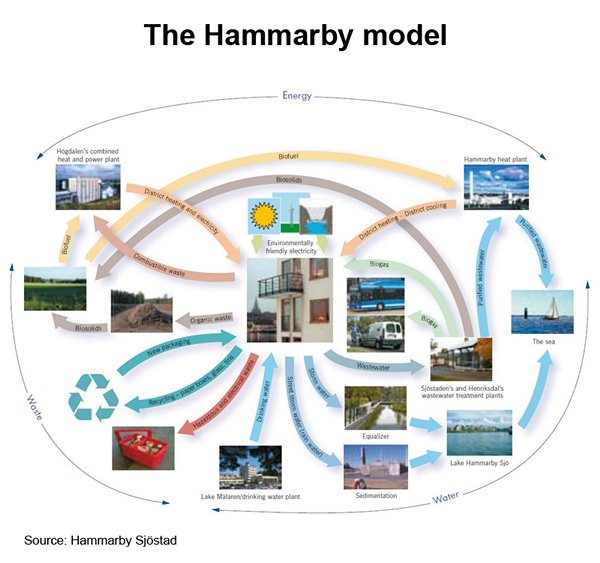
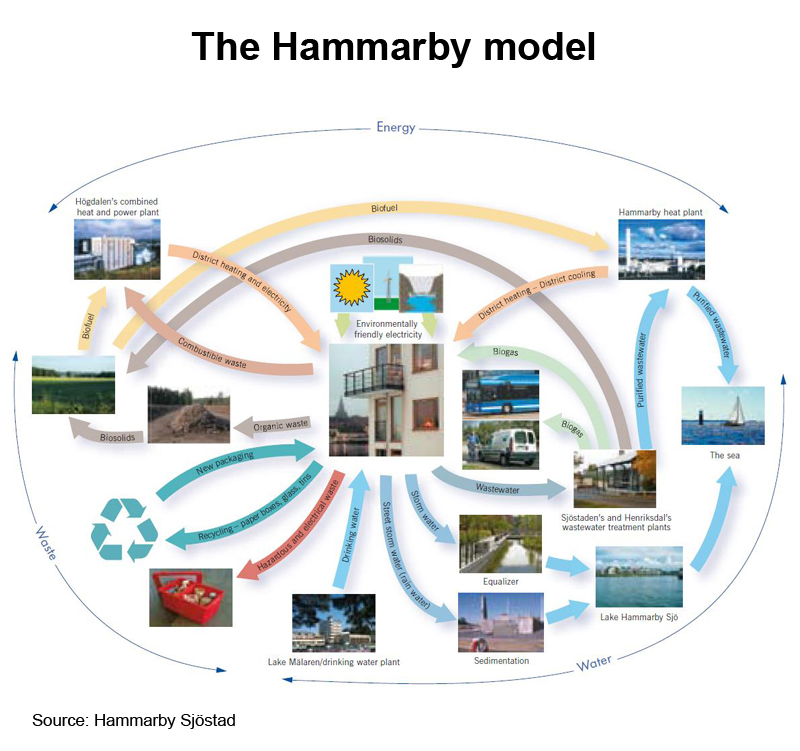
The green solutions being invented and applied in Hammarby Sjöstad are based on a closed eco-cycle, known as the Hammarby model, in which waste, water and energy consumption are minimised and recycling and upcycling are used whenever possible.
In addition to installing solar cells and solar panels on several façades and roofs, treated sewage and combustible waste produced by the residents will be used as fuels in the production of the district’s heating, cooling, electrical power and biogas. Biodegrades, such as food waste and sewage sludge, will be used in the production of biogas for city buses and about 1,000 gas stoves.
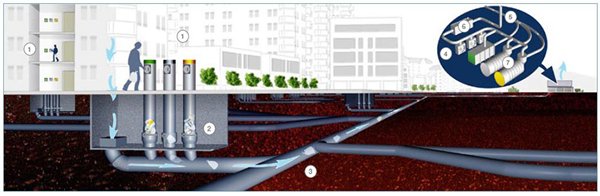
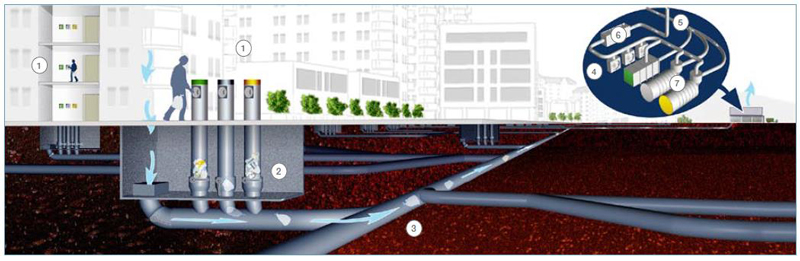
In a bid to free up space and reduce heavy traffic, Hammarby Sjöstad has adopted an automated waste-disposal system, with different refuse chutes, block-based recycling rooms and area-based waste-collection points being installed to help residents segregate and handle their waste at source.
In the district, household refuse and organic food waste are collected at special waste inlets or disposal chutes located in courtyards, entrance halls and refuse rooms. Envac’s underground pipeline system transports the waste at up to 70 kilometers per hour through vacuum pipes to designated collection stations or suction vehicles. Other recyclables including packaging materials such as glass, cardboard and metals, are collected in conventional bins placed in a separate recycling room in the building.
Source: Envac

Source: Envac

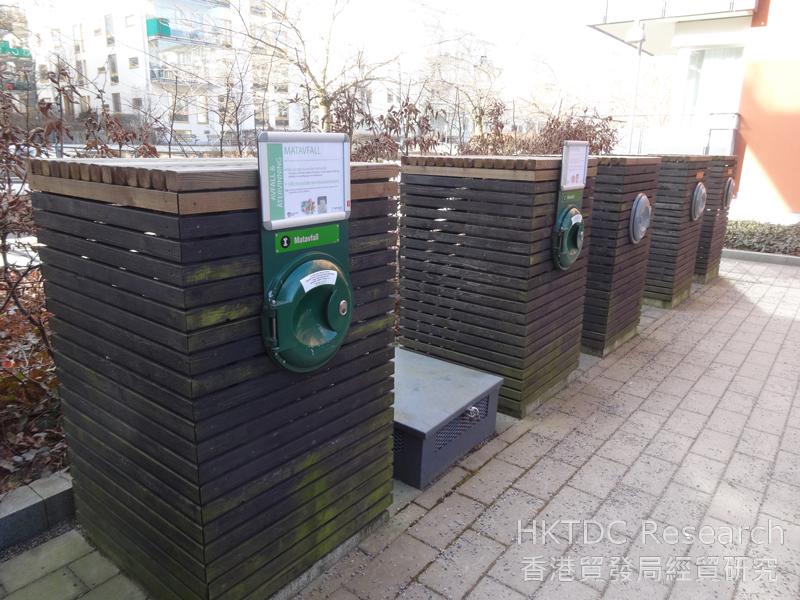
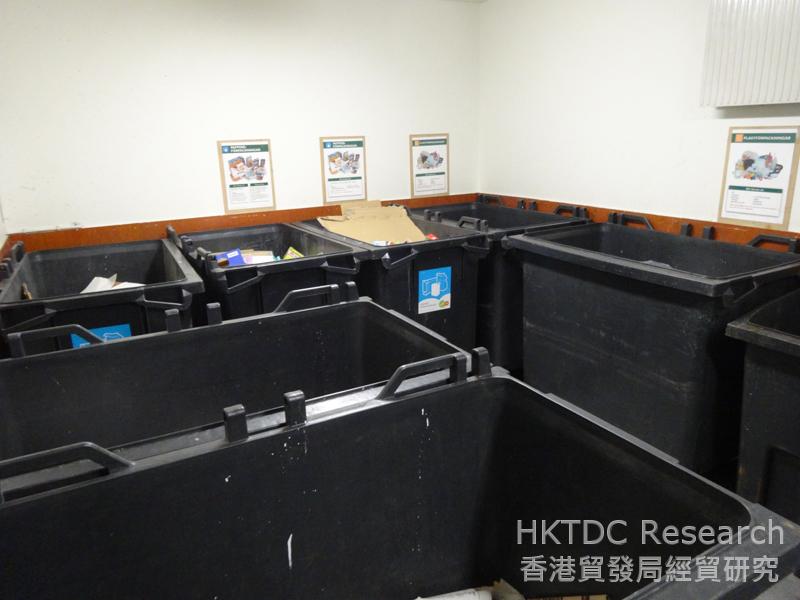
The district’s eco-friendly adaptation has resulted in substantial investments in transport. One ambitious goal is for most of the residents’ journeys to be made by cycling, walking or public transport, such as the Tvärbanan light railway that runs through the centre of the district and regular bus and ferry services that connect to the inner city of Stockholm. Other green-transport ideas such as car pools (ride-sharing services) and the use of electric vehicles are also being introduced or encouraged in the district to help minimise the environmental transport burden.
Riding on the success of the Hammarby Sjöstad, the Stockholm City Council has since 2010 embarked on another world-class eco-city project – the Stockholm Royal Seaport. Situated in a former industrial and port area close to the city centre, the new smart city, when fully developed by about 2030, will be fossil-fuel free and have even higher environmental requirements than Hammarby Sjöstad.
Both Hammarby Sjöstad and Stockholm Royal Seaport have shown not only Sweden’s determination in developing, marketing and implementing new energy and environmental solutions, but also the capability of creating sustainable and holistic city-planning systems using innovative environmental technologies and solutions that could be exported to, and applied in, many other parts of the world.
How can Hong Kong fit in?
The pressing needs to develop and adopt renewable energy and energy-saving technologies are providing numerous opportunities to further promote and strengthen tripartite cooperation between Hong Kong, the Chinese mainland and the Nordic countries.
Indeed, not only Nordic countries are marketing their CleanTech know-how to Hong Kong and the Chinese mainland. More and more Chinese companies are either cooperating with Nordic technology companies to carry out research and development (R&D) activities in CleanTech fields or are participating directly in CleanTech projects in the Nordic region, demonstrating their eagerness to explore the international market.
One recent example of such CleanTech investment includes a plan announced in February this year to invest €1 billion to build a new wood-based bio-refinery in Kemi, Finland by the Wuhan-based Sunshine Kaidi New Energy Group, which currently operates about 30 biomass plants in China and Vietnam. If its proceeds, it would be the biggest Chinese investment in Finland.
Already a conduit of China’s outbound direct investment, Hong Kong can also serve as a centre to help Nordic companies source, screen and manage CleanTech investment from China, in addition to providing relevant professional services to facilitate investment. Hong Kong companies can also represent or help Nordic CleanTech companies in finding partners in Hong Kong, the Chinese mainland and other parts of Asia, connect them with relevant authorities and investors, and facilitate commercialisation, transfer and licensing of relevant research results and innovations.
As companies from both the Chinese mainland and Nordic countries show increasing interest in sharing expertise and cooperating on R&D activities, Hong Kong companies should enhance their promotional efforts in the Nordic region to showcase the value they can add to this process.
In fact, Hong Kong is no stranger to Nordic CleanTech companies, many of which have either had experience with projects or have had business representation in the city. For instance, Envac, a leading Swedish CleanTech company and the inventor and major supplier of automated vacuum refuse-collection systems (the ones used in Hammarby Sjöstad), operates a wholly owned subsidiary in Hong Kong to provide technical support to its projects across the border. The company has also carried out various projects in the city for the Hong Kong government, the Hong Kong Housing Authority, the Science and Technology Park, HSBC, Hong Kong International Airport, and Adventist Hospital.
The success of these Nordic CleanTech companies has strengthened Hong Kong’s role in showcasing how innovative environmental technology from leading Nordic countries can be applied to a small, crowded city. Hong Kong can also become a role model to other Asian cities in terms of the integration of economic growth with environmental awareness and increasingly tough green standards.
Last but not least, as a crucial step towards activating private capital in the battle against global climate change, Nordic governments and financial institutions including Swedish corporate bank SEB – the underwriter of the world’s first green bonds issued by the World Bank in 2008 – have long been a driving force behind the global green bond market.
Green bonds were identified during the COP21 Paris conference last year as a promising source of green financing for cities, regions and governments around the world, and closer cooperation between Nordic and Hong Kong financial institutions can contribute to the goal of providing US$100 billion annually by 2020 to support climate action in developing countries.
For example, following the issuance of China’s first corporate green bond by Xinjiang-based Goldwind in Hong Kong and the publication of the world’s first official green bond guidelines – Green Bond Guidelines and the Green Bond Endorsed Project Catalogue – by the People’s Bank of China and the Green Finance Committee of the China Society of Finance and Banking on 22 December 2015, green bonds have quickly become a valuable item in the toolkit of Chinese CleanTech enterprises.
Furthermore, to lay a strong foundation for a green, robust and resilient economy over the next two decades, China would need a minimum annual investment of US$350 billion (about RMB 2.3 trillion) over the lifetime of the 13th Five-Year Plan (2016-2020) to address its environmental problems, 85% of which would have to come from the private sector, particularly the debt market.
It is widely believed that the new green bond rules will not only change the landscape of the global green bond market, which is currently dominated by players from Europe and the US, but that China’s big and growing demand for green financing will also provide a considerable advantage in developing and marketing Hong Kong’s status and strengths as an international financial centre.
[1] The Nordic region mainly consists of Demark, Finland, Iceland, Norway and Sweden. In this research report, Iceland is not covered given its small market size, while Norway is skipped due to its relatively narrow industrial base.
[2] The first European Green Capital was awarded in 2010 and seven cities – Stockholm (Sweden), Vitoria-Gasteiz (Spain), Nantes (France), Copenhagen (Denmark), Bristol (the UK), Ljubljana (Slovenia) and Essen (Germany) – have been awarded the title so far.
| Content provided by |

|
Editor's picks
Trending articles
24 Jun 2016
Anticipating the World’s Third-Largest Trade Axis
By Zhang Monan (Researcher at the China Center for International Economic Exchanges)
The Belt and Road Initiative was proposed against the background of deep global economic and trade restructuring. Regional economic integration continues to deepen, world trade and investment pattern is undergoing profound changes and countries around the world are at a crucial stage of development transition. The world needs further stimulating development potential and needs a cooperative development momentum.
The global trade system is undergoing its biggest restructuring since The Uruguay Round in 1994 and since 2008. In terms of today’s world economic and trade pattern, two trade centers with strong regional features exist in the world market: one is the Atlantic trade center and the other is the Pacific trade center. The world third-largest trade center is expected to form based on China’s One Belt One Road Initiative within the next decade.
Since the 21st century, the most prominent feature of the world economic development is that most developing countries and the emerging economies including Asia, Latin America and Africa have a strong integration on the whole. In recent years, the regional economic growth was particularly noticeable in countries along the One Belt One Road, mainly consisting of the developing countries. The One Belt One Road region covers about 4.6 billion population (exceeding the world population 60%) and its total GDP reaches $20 trillion (about one-third of the total world GDP). From 1990 to 2013, the average annual growth of the total GDP in the One Belt One Road region arrived at 5.1%, two times the world economic growth over the same period. During the slow world economic growth period from 2010 to 2013, the average annual growth of the total GDP in the One Belt One Road region was 4.7%, higher than the world average annual growth of 2.4%. During this period, the One Belt One Road region’s contribution to the world economic growth hit 41.2%.
Besides, according to the World Bank data, during the period between 2010 and 2013 after the world financial crisis, the average annual growth of the One Belt One Road region’s foreign trade and the net foreign capital inflow reached 13.9% and 6.2% respectively, 4.6% and 3.4% higher than the world average annual level. The One Belt One Road region is forming the third-largest trade center in the world stretching from Asia to Europe, after the Atlantic trade center and the Pacific trade center.
Of course, the economic development of the One Belt One Road countries also faces great challenges and growth weakness, which is precisely the driving force behind a new round of cooperation. In fact, the infrastructure of the One Belt One Road region still falls behinds its economic growth and is bellow the international standard both in quality and quantity. The backward infrastructure of both hardware and software has become the biggest barrier to the intraregional economic and trade cooperation. For example, the new Eurasian Railway runs through many countries along different railway gauges and it takes time and efforts to change the gauges. Port cooperation mechanisms among these countries have not formed yet, hampering transport and creating a high logistics cost. The port facilities of some countries are backward, increasing the difficulty of the circulation of goods and services.
There is a huge gap in infrastructure investment. Asia Development Bank predicts that within the next 10 years, Asia infrastructure investment will need $8.22 trillion, i.e. $820 billion more infrastructure capital every year. However, in 2013, only three big economies of China, Japan and South Korea had about $8 trillion total GDP in Asia, so the infrastructure investment gap was large enough. According to the World Bank statistics, the capital formation of the lower-and-middle-income countries only accounts for about one-fourth of the GDP and the capital invested in infrastructure was only about 20%, around $400 billion. So a huge gap exists in financing.
The ratio of intra-regional trade is relatively low. Compared with EU, NAFTA and ASEAN which have made substantial progress in regional integration, the intra-regional trade among the Belt and Road related countries has a lower ratio in the total foreign trade. The cooperation of the regional countries is still in the early stage. But the future cooperation prospect foretells a huge development potential. One Belt One Road cooperation framework can be seen as a new Trade Coordination Strategy. Since the rapid development of economic globalization at the beginning of this century and especially since the global financial crisis, the world economic pattern has turned from the Center-External one-way system to a two-way system and coordinative trade growth. This will surely bring new adjustments of the trade growth mode, such as integration and interaction of trade and direct investment and the industrial shift, transition from inter-industry trade to intra-industry trade, readjustment of trade structure and trade terms, promotion of the coordinative development of trade and investment through institutional arrangements.
At present, the global intermediate goods trade plays a decisive role in the global trade growth. Since 1995, the proportion of the global intermediate product export in the total global export has been increasing by more than 50%, reaching its highest proportion (69.32%) in 2013. I suggest building a “global value chain partnership” to encourage more countries to integrate into the global value chain network system.
In fact, the One Belt One Road Vision and Action Plan announced by the Chinese government points out that the facilitation degree of investment and trade has further increased and a high standard network of free trade areas has basically formed.” The action plan demands that One Belt One Road should be based on a creative trade mode, including the expansion of cross-border e-commerce and service trade. The action plan also includes aims such as “accelerate the investment facilitation, eliminate investment barrier, reinforce the bilateral investment protection agreement”, green trade and global value chain trade.
The One Belt One Road cooperative framework can speed up implementing “digital trade agreement”. Through new policies like the lowest customs threshold, intermediary responsibility, privacy, intellectual property rights, consumer protection, electronic signature and settlement of issues, the framework can promote interconnection and inter-flow in information, trade and industry so as to bring a new boom via the new round of trade globalization.
Please click to read the full article on the website of China-United States Focus.
Editor's picks
Trending articles
28 Jun 2016
China’s One Belt One Road Initiative on Tax and Customs
By Spiegeler Attorneys-at-Law
In September and October 2013, the Chinese President Xi Jinping had brought up two strategic initiatives which are jointly known as the “One Belt One Road” Initiative (OBOR), respectively the New Silk Road Economic Road (SREB) and the 21st Century Maritime Silk Road (MSR). These two projects are considered a re-establishment of the historical trade route between China and Europe across the Middle East. This is a trade and investment oriented Initiative aiming at integrity and connectivity in Eurasia.
In respect with tax and taxation, the State Administration of Taxation (SAT) announced a package of ten measures in April 2015 for serving the implementation of the OBOR Initiative. This package is also known as the “policy paper on implementing the OBOR Initiative” through enhancing taxation services and management. Thorough execution and interpretation of taxation agreements are on the top of this agenda. Eliminating mismatches between regional law enforcement and tax disputes are priorities as well.
Taxation information centers assorted by nationalities were firstly promoted in July 2015 on provincial levels for pilot functional testing. Besides, the tax information website for OBOR initiative was introduced to build a comprehensive taxation guidance database covering all the OBOR countries. A hotline for questions on taxation was set up. this is however mainly targeting Chinese enterprises planning to expand overseas via the OBOR platform...
Please click to read the full article.
Editor's picks
Trending articles
28 Jun 2016
China's New Economic Silk Road: The Great Eurasian Game & The String of Pearls
By Chris Devonshire Ellis, founding partner, Dezan Shira & Associates
An issue when composing a book such as this, covering such a large geographical area, is the definition of what Asia actually is. This becomes especially pertinent when dealing with Asian subcategories like “Eurasia” and “Central Asia”. What do these really mean? Indeed, what is “Russia”?
Asia is defined by Miriam-Webster as “A continent of the eastern hemisphere north of the equator forming a single landmass with Europe” and further revealed to possess “numerous large offshore islands including Cyprus, Sri Lanka, Malay Archipelago, Taiwan, the Japanese chain, & Sakhalin area”.
Which taken literally would mean that the southern islands of the Maldives, being south of the equator, are not part of Asia. Neither are Indonesia and Singapore. Meanwhile, Australia, a continent in its own right and almost exclusively “south of the equator”, has also declared itself part of Asia. Existing definitions, which we have grown used to, are therefore in need of some adjustment.
Central Asia is equally tricky. Most people would identify it as a collection of Muslim states, lying directly south of Russia, and previously part of the Soviet bloc. However, this doesn’t really work. Mongolia is for example Buddhist, as many of the currently Muslim territories once were, while its capital, Ulaan Baatar, is as close to Anchorage in the United States as it is to Moscow.
Even Eurasia can be difficult. The majority of people would imagine this area to extend roughly to the boundaries of the further reaches of the Mongolian Empire at its height – including all of China, and as far west to Hungary in Eastern Europe. “The Steppes” is an expression often used to describe Eurasia. Miriam-Webster again: Eurasia is “The landmass of Asia & Europe - chiefly used to refer to the two continents as one continent”.
Russia meanwhile acknowledges its unique geographic position by maintaining the Double-Headed Eagle as its national symbol. One head faces west, the other east. Although its capital city is in the European part, 75 percent of Russian territory lies in Asia. When thinking of Asia, images of steamy jungles and elephants tend to come to mind, yet the region has a long coastline above the Arctic Circle, previously home to the elephant’s distant cousin, the mammoth. As global warming increases, we may become more familiar with the concept of Arctic lands being Asian.
The reason these definitions are changing is largely due to the rise of China, a re-think of its role in the world and its revision of domestic and foreign policy. As China spreads its influence beyond its own borders, those of us from white European stock should be reminded that the term “Caucasian” typically used to describe us in terms of race includes the word “Asian”.
For the purposes of this book however, and in accordance with Miriam-Webster’s definition of “Eurasia”, this analysis views the subject as including all of Asia - meaning from Arctic Siberia, south to countries such as Sri Lanka and Indonesia, and West to India, Pakistan and Iran. It also includes Europe because, as we will see, China’s Silk Road Economic Belt will impact upon all.
Please click to read the full article.
Editor's picks
Trending articles
South Africa Seeks Hong Kong Partners for BRI Halaal Food Distribution
With South Africa looking to take a lead in the halaal food sector, Asia is a key target for its export-orientated businesses, especially as they set out to capitalise on the numerous opportunities now being opened up by the Belt and Road Initiative.

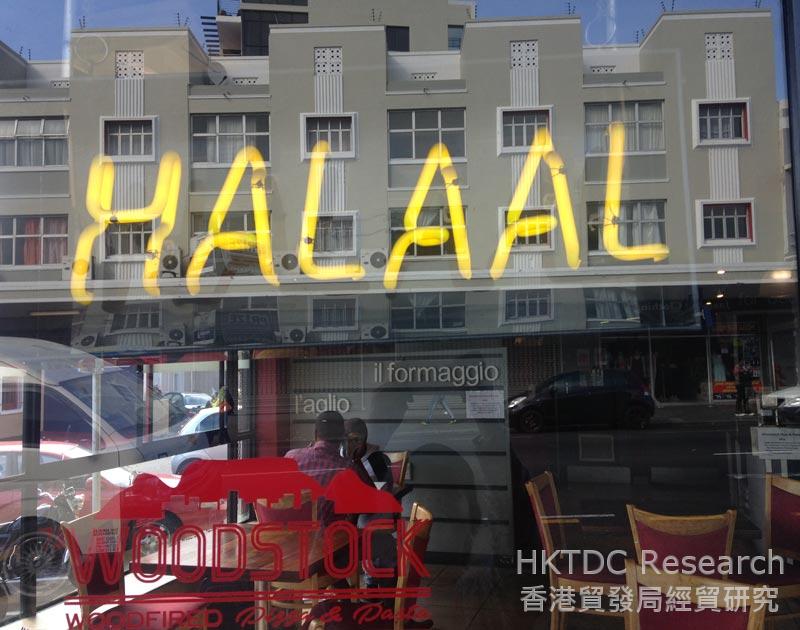
With the Belt and Road Initiative (BRI) set to transform access to markets across Asia, this is opening up new potential partnerships with African companies looking to target the continent's consumers. In particular, a number of South African halaal food producers have high hopes that Hong Kong could prove the ideal gateway for boosting their exports across the region.
By 2030, it is estimated that the global Muslim population will be some 2.2 billion in number, representing around a quarter of the world's consumers. Inevitably, this substantial demographic shift will result in an ever-increasing demand for halaal products.
Given that the global halaal food industry is estimated to be worth US$2.3 trillion, the business opportunity represented by serving the sector is clearly huge. South Africa is one of the many countries hoping to capitalise on this rapidly expanding market.
Despite its relatively small Muslim population, South Africa is one of the world leaders in producing and – importantly – certifying halaal products. The country's exporters see Asia as one of the fastest-growing markets for halaal goods – and with good reason. By 2030, it is thought that Asia will be home to 80% of the world's Muslim population.
Ebi Lockhat, a spokesman for the South African National Halaal Authority, the country's leading halaal certifying body, said: "South Africa has long had a significant number of domestic producers of halaal food. Now, though, those manufacturers are starting to become active internationally. This has seen many of them attend trade events across the Muslim world, while looking to establish a firm presence in the international markets."
South Africa's halaal production system is subject to high certification standards, ensuring its compliance with the requirements of discerning Muslim consumers. Eating solely properly-certified food is mandatory for practising Muslims, with such proof of compliance providing an assurance that all such foodstuffs have been produced in line with the requirements of Islamic law.
In line with this, plans are now in place to further enhance South Africa's position within the sector. A clear indication of this is the government-backed launch of a one billion rand (US$67 million) halaal food-processing industrial park. This new facility will ramp up South Africa's halaal food export capacity, hopefully doubling its share of the global market. At present, a feasibility study is being conducted in the Cape Town area in order to determine the optimum location for the proposed park.
When completed, the park will comprise a cluster of halaal manufacturing and service firms. South Africa's Western Cape provincial government also hopes to attract a globally recognised halaal certifying body to operate out of the site.
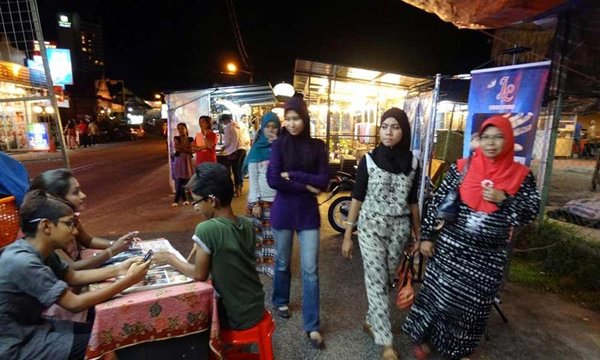
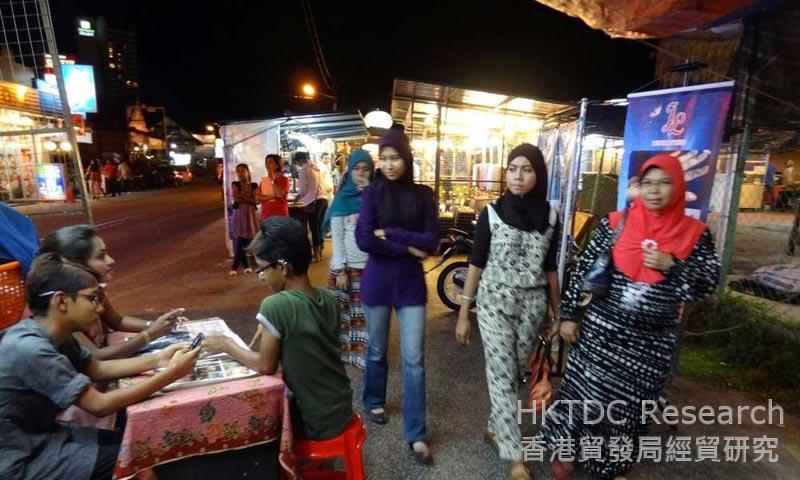
For the provincial government, growing the halaal industry is now one of its key focusses as it looks to boost growth and create new jobs in the region. Announcing the planned development of the facility, Alan Winde, the Western Cape Minister of Economic Opportunities, said: "This industry is growing at an estimated annual rate of 20%. It is one of the fastest-growing consumer segments in the world. This is why we are now looking for significant growth in the size of the province's halaal industry.
"Certification is also hugely important. In addition to developing a guide as to the current certification standards, we will work with the appropriate certification bodies in order to try and establish a single standard, one that is in line with global market demands."
The new park is being planned in collaboration with the Malaysian government, which has itself identified a shortfall in the provision of halaal food for the world's growing Muslim population. In 2015, Winde led a delegation to Malaysia in a bid to strengthen its trade links with the Western Cape region.
As a consequence, the Western Cape Fine Food Initiative, another partner in the proposed park, and the Malaysian Industry Government Group for High Technology signed a long-term co-operation agreement. It is hoped that this will foster an enduring partnership between the two countries' halaal industries.
Back in the 1970s, Malaysia was the first country to set certification standards for halaal food production. Today, these are still viewed as the global benchmark. Malaysia is also at the very heart of the Asian halaal market. It is hoped that this new agreement will see South Africa's halaal producers benefitting hugely from Malaysia's experience and reputation within the sector.
Asian/African Partnerships
China is also now looking to increase its share of the global halaal food market. This move has been partly spurred by the country's adoption of the far-reaching Belt and Road Initiative. Significantly, many of the countries along the proposed BRI routes have substantial Muslim populations.
As a consequence, China is keen to match its export offer with the needs of its Muslim neighbours along the BRI routes. In terms of halaal food, though, Chinese companies currently export less than 1% of the global total, but hope to substantially expand their share of the sector.
Despite such aspirations, though, many suppliers in China will be hampered by the poor reputation of the country's domestic food industry. This, then, leaves a clear opportunity for producers of properly-regulated and certified halaal food to work with distributors in the region.
As a key player in the BRI, Hong Kong is ideally positioned to adopt a primary role in the processing and distribution of such produce, with South Africa keen to be its supply partner. As something of an incentive, with the Rand now set to fall to an all-time low, importers can buy South African products for around 33% less than they were paying a year ago.
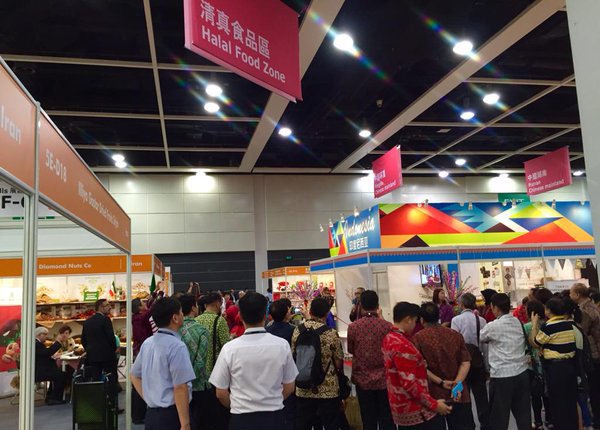
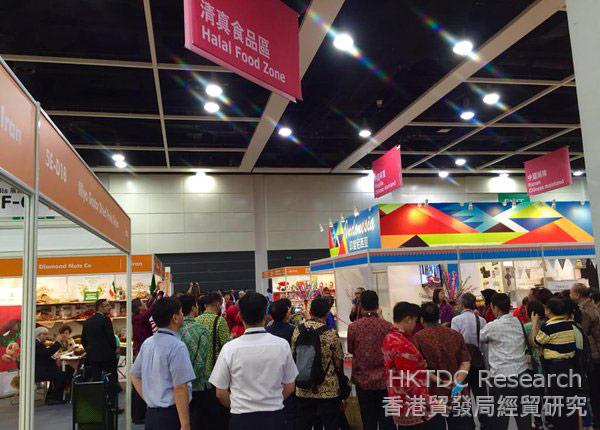
Addressing the issue of Asian/African partnerships in the sector, Nazeem Sterras, Chief Executive of the Western Cape Fine Food Initiative, said: "Countries such as Malaysia, Singapore and China are critical markets for halaal produce. ASEAN, in particular, presents a huge opportunity for distributors, while the overall Asian halaal market is estimated to be worth around $410 billion annually. I believe that Hong Kong can play a significant role in bringing halaal brands to these key consumer markets."
Mark Ronan, Special Correspondent, Cape Town
| Content provided by |

|