









Chinese Mainland
17 May 2016
China’s the Belt and Road Risk Assessment Issue
By Lidiya Parkhomchik, Eurasian Research Institute
In recent years China begun to seeking for a greater role for itself in the international order. Beijing’s intention to strengthen its global position caused launching a number of multilateral initiatives, namely, the Belt and Road Initiative, which includes the Silk Road Economic Belt and 21st Century Maritime Silk Road projects. The Belt and Road Initiative was launched to promote economic cooperation and cultivate closer ties with countries along the route. According to the Vision and Actions on Jointly Building the Silk Road Economic Belt and 21st Century Maritime Silk Road issued by the National Development and Reform Commission of China on March 28, 2015, the Belt and Road’s member-states need to improve the region's infrastructure and put in place a secure and efficient network of land, sea and air transportation, to establish a network of free trade areas that meet high standards and to deepen political trust (National Development and Reform Comission, 2015).
The Belt and Road project runs through 5 routes shaped in order to connect the continents of Asia, Europe and Africa. For instance, the Silk Road Economic Belt focusses on: (1) linking China to Europe through Central Asia and Russia; (2) connecting China with the Middle East through Central Asia; and (3) bringing together China and Southeast Asia, South Asia and the Indian Ocean. On the other hand, the 21st Century Maritime Silk Road focusses on using Chinese coastal ports to: (4) link China with Europe through the South China Sea and Indian Ocean; and (5) connect China with the South Pacific Ocean through the South China Sea (Hong Kong Trade Development Council, 2016).
It should be also mentioned that one of the reasons for the Belt and Road Initiative’s launching was Beijing’s intention to encourage Chinese firms to go overseas searching new markets or investment opportunities. In this regard, the Chinese governmental bodies focused on providing guidance and advice for domestic companies on doing business in the Belt and Road countries strongly advising to familiarize with a brief introduction to their investment and business environment.
According to the preliminary maps published by the official sources in China, the Belt and Road includes up to 60 countries, which cover the area of the ancient Silk Road. However, not all of them have political and economic stability. Since the Belt and Road range from Sri-Lanka to Syria, any Chinese company planning to trade with or invest in the country along the Belt and Road could face with various challenges, which may prevent China from expanding its influence abroad. Moreover, financial institutions such as $40 billion Silk Road Fund, which was established to provide a direct support to the Belt and Road Initiatives, so as the Asian Infrastructure Investment Bank, which was spearheaded by China, should be cognizant of the range of credit risks present in the Belt and Road countries (Economist Intelligence Unit, 2015). Therefore, the exploration of the possible risks and threats that could negatively affect the Belt and Road Initiative developments has become even more significant.
It is obvious that the Belt and Road countries vary dramatically on the issue of potential operational and credit risks. According to the risk assessment report, made by the Economist Intelligence Unit, which scored risks across ten different categories, including security, legal and regulatory, government effectiveness, political instability, tax policy, labour market, foreign trade & payments, financial, macroeconomic and infrastructure, Afghanistan and Iraq, which are beset by conflict, score the highest with regards to overall risk. However, the Central Asian countries such as Tajikistan and Uzbekistan, where the Belt and Road push is likely to be strong, are very close behind. (Economist Intelligence Unit, 2015)
It should be highlighted that Beijing considers the policy coordination between countries along the Belt and Road as an important guarantee for implementing the Silk Road Economic Belt and 21st Century Maritime Silk Road Initiatives. It is obvious that without enhancing high degree of mutual political trust it is impossible to fully coordinate the implementation of practical cooperation and large-scale projects within the framework of the Belt and Road Initiative. Taking into account the fact that the Initiative member states have various forms of government and specific features of political systems there is an essential need for the Chinese authorities to build a multi-level intergovernmental communication mechanism (National Development and Reform Comission, 2015), which would reduce political risks and help to avoid failure in attaining the goals that were set in the Belt and Road Initiative.
Therefore, the political risks scenario analysis become an integral part of the preparatory process for the Initiative implementation. There are various political risks scenario analyses performed by different research institutions such as the EIU. For instance, Kazakhstan’s political stability risks assessments include various scenarios reflecting political changes in the country in case of transfer of power and the first change in political leadership since Kazakhstan gaining its independent in 1991. The main aim of aforementioned scenarios is to understand will the newly elected leader of the country provide the proper level of governmental support required for large-scaled projects implemented in the framework of the Silk Road Economic Belt.
Actually, Kazakhstan has been the biggest recipient of Chinese foreign direct investment (FDI) in the former Soviet Union, receiving a total of $22 billion in investment from 1991-2013. As of the end of 2014, China’s total stock of FDI to Kazakhstan exceeded $7.5 billion. Moreover, new packages of economic deals totaling $14 billion and $23 billion were unveiled in December 2014 and in March 2015 respectively. (Hong Kong Trade Development Council, 2015) Therefore, it is quite important for Beijing to minimize political risks and protect its overseas direct investment having governments’ guarantee that they will not change the outcome of a previously signed agreements.
In conclusion, it is clear that without proper evaluation of possible operational risk over the Belt and Road initiative implementation it would be impossible for Chinese side (governmental bodies or private companies) to ensure good business planning process. For instance, despite the fact that at the official level all Central Asian countries welcome China’s the Silk Road Economic Belt proposal, there are some economic and political concerns as well. Actually, political elites and security experts in much of Central Asia are aware that China’s growing economic presence can lead to Chinese dominance or interference in regional affairs. (Lain, 2014) Therefore, even strong financial support of the Silk Road Initiative proposed by Chinese President Xi Jinping could not guarantee successful implementation of the project, especially, in the countries with high operational risks.
Please click here for the full publication.
Editor's picks
Trending articles
20 May 2016
Comprehensive Planning to Support the Industries - Seize the Opportunities Arising from the “13th Five-Year Plan” and the “One Belt and One Road” Initiative
By Martin Liao (Legislative Council Member, Commercial (Second) Functional Constituency)
Last month, I mentioned in this column that this year’s Policy Address has set a right direction to value the “13th Five-Year Plan” and the “One Belt and One Road” Initiative. The right direction shall be followed by the Hong Kong Government’s launching relevant work as soon as possible, the key of which lies in whether the Hong Kong Government has the needed vision to set up objectives and to implement the blueprint.
As our country deepens the opening-up policy and reform of financial sector, Hong Kong, being the largest offshore RMB (“CNH”) center, is well positioned to develop into the world’s most important offshore RMB (“CNH”) price fixing center. With China integrating with the global market, the Hong Kong government should consider expanding and extending the interconnectivity model to new asset classes, as well as constructing the most effective cross-market interconnectivity platform, so as to develop a local market that converges domestic and foreign products. New platforms for fixed-income and currency products, commodities and bonds can be set up to establish benchmark prices, while risk management tools can also be developed to complement the existing equity and derivatives business. On the other hand, the huge capital requirement for the infrastructures of the “One Belt and One Road” Initiative alone is estimated at USD 1.04 trillion. Hong Kong is fully competent to become its “financing center”, acting as the primary multichannel financing hub for companies of the countries along Belt and Road. Deplorably, the Hong Kong Government has not shown the vigor to set up these fore-mentioned objectives in the Policy Address.
Following up with the right direction of the Policy Address
Regarding the development of bond market, Hong Kong’s financial industry can now leverage on the capital requirement from the “One Belt and One Road” Initiative and develop into a multi-channel financing center for financial products like sukuk. As a matter of fact it was mentioned in the Policy Address that Hong Kong is aspired to achieve the relevant objective. The problem is that Hong Kong’s bond market is substantially lagging behind. While the Hong Kong Government had acknowledged that Hong Kong must establish a liquid and active bond market many years ago, most bond products are only focusing on exchange fund notes, or fund gathering by bond issuance in the name of specific statutory bodies. These do not match up with our status as an international financial center. It is a pity that there is no sign of any powerful measure to drive any breakthrough in this bottleneck of our bond market in the Policy Address. In the budget delivered by the Financial Secretary, it was only mentioned that the Hong Kong Government would roll out the third round of sukuk in a timely manner; nothing about how to deepen development in the bond market was touched upon. In fact, the “financial industry” was only mentioned in four short paragraphs in this year’s Policy Address, and they are separated from those about the “13th Five-Year Plan” and the “One Belt and One Road” Initiative, as if there is no connection amongst them whatsoever. Had the Hong Kong Government stood up high enough, it would actually be able to recognize that full-scale development is only possible if industrial development is combined with the opportunities arising from the “13th Five-Year Plan” and the “One Belt and One Road” Initiative.
Meanwhile, “financial technologies” have been developing rapidly in recent years. Accelerated advances are noted in the scopes of payment, financing, investment and risk management, etc. Hong Kong as an international financial center could have been well-positioned to grow into a leading financial technology hub, just like New York and London. However, due to the inability to enact local laws and regulations timely with emerging innovative business models, progresses in mobile phone wallets, P2P loans and crowdfunding now all fall much behind other cities, and our “financial technologies” are only developing at a snail’s pace.
A balance to be stricken when developing financial technologies
At the moment, amendments to the laws have been made for developments in financial technologies in advanced economies such as the US, the European Union, Singapore and Japan, etc. In contrast, the three-month old Payment Systems and Stored Value Facilities Ordinance (Cap 584) is the only legislation in Hong Kong that is relevant to financial technology. In terms of emerging financing models such as internet crowdfunding and P2P loans, operators of loan platforms must be Money Lenders Licensees according to Hong Kong law, which has created much hindrance to relevant businesses. However, the issues that laws are not catching up with development are not dealt with in the Policy Address. If Hong Kong is truly developing “financial technologies”, then “the Steering Group on Financial Technologies” should appropriately loosen laws and regulations, while at the same time meticulously protect the interests of investors, such that a reasonable balance between loosening laws and protecting investors’ interests can be stricken. With such a basis in place, financial technologies will be able to grow orderly and healthily. Based on the existing legal framework of Hong Kong, a more suitable path for operation is to categorize clients of emerging financing models such as crowdfunding and P2P internet lending as professional investors. And in early March of this year, the industry has announced the launch of Hong Kong’s first-ever P2P crowdfunding platform for professional investors.
The problem of laws failing to catch up with development is also troubling the innovative technology sector. Admittedly, the unprecedentedly “generous” proposal of a 4.7 billion-dollar investment into innovative technology for scientific research, start-ups and technological application in this year’s Policy Address is a very good initiative. However, the support does not seem to be strong enough, and complementing policies such as legal issues are yet to be properly dealt with. While the 2 billion dollars setting aside for the “inno-tech fund” will be upped to 6 billion after matching with private venture capital funds, the amount is minimum compared with major technology nations which chip in hundreds of billions a year. The US, for example, invested USD 465 billion into the national research and development in 2014, 307.5 billion out of which was contributed by enterprises. Contrarily, private corporate contributions in Hong Kong have always been on the low side, resulting in the local research and development expenses only representing 0.73% of the GDP. To encourage companies to invest more resources in research and development, the Hong Kong government should offer tax incentives to technology development sectors such that they could enjoy tax deductions in research, personnel training and purchasing high-tech equipment. On the other hand, tax-free period and lowered profits tax can also be considered for startups in technological research.
The innovative technology industry has to be supported by laws and regulations
In fact, when the Chief Executive discussed with some young entrepreneurs of the innovative technology industry at a forum earlier on, it was mentioned that there are too many constraints in Hong Kong’s system of laws and regulations, which have been dragging the development of the innovative and technology sector. Examples of internet finance, internet car-calling services, auto-pilot driving technology etc. were raised to show where the real issues lie. If the Hong Kong Government advocates innovative and technology industry but allows hindrance to arise from outdated laws without actively managing the conflicts between new and old business models, I am afraid that good intentions would prove to be fruitless in the end.
With limited space in this column, I am only able to select a few examples to encourage the Government to pace up in perfecting its plans and to do its best to actualize all the relevant measures. I hope the government can take practical steps to lead and to support all the sectors of our society, seize the new opportunities in economic development and establish a strong foundation for Hong Kong’s continual prosperity and stability. I believe these are also the expectations of the general public.
This article was firstly published in the magazine CGCC Vision 2016 April issue. Please click here to view the full article.
(Remark: This is a free translation. For the exact meaning of the article, please refer to the Chinese version.)
Editor's picks
Trending articles
23 May 2016
The Belt and Road Initiative: 65 Countries and Beyond
By Fung Business Intelligence Centre
It has been a year since the Chinese government unveiled the official action plan for the Belt and Road Initiative. With new developments emerging all the time and more information available, it is necessary to have an up-to-date wrap-up on how the Initiative has progressed. One common confusion is which countries are exactly included in the Initiative as the Chinese government has never announced an official list. A Chinese report, released by the China International Trade Institute in August 2015, identified 65 countries along the Belt and Road that will be participating in the Initiative. Together, the countries along the Belt and Road will create an "economic cooperation area" that stretches from the Western Pacific to the Baltic Sea. According to our computation, these 65 countries jointly account for 62.3%, 30.0% and 24.0% of the world’s population, GDP and household consumption, respectively, today.
It is worth noting that, the Initiative should be taken as an open platform for all parties that are willing to contribute to global connectivity. As the official action plan for the Belt and Road puts it, "The Initiative is open for cooperation. It covers, but is not limited to, the area of the ancient Silk Road. It is open to all countries, and international and regional organizations for engagement…"
And Chinese President Xi Jinping has reiterated in many official occasions that the Initiative is an open, diversified and win-win project poised to bring huge opportunities for the development ofChina and many other countries. The Fung Business Intelligence Centre has in the past year collected a list of those other countries that have participated or have showed interest in the Initiative, through joining the Asian Infrastructure Investment Bank (AIIB), developing transport infrastructure in collaboration with China, or through many other forms of cooperation. In this way, we have identified 48 such countries which are not covered in the 65-country list above but are likely to become active participants in the Belt and Road in the future.
Please visit the Fung Business Intelligence Centre website for the full report.
Editor's picks
Trending articles
26 May 2016
The Belt & Road Initiative – A Modern Day Silk Road
By Norton Rose Fulbright
Introduction
The Belt & Road Initiative (B&R) is without a doubt the most ambitious, strategic interconnected infrastructure initiative devised in recent memory.
What?
Launched by Chinese President Xi Jinping in 2013, the initiative aims to connect major Eurasian economies through infrastructure, trade and investment. It will see a RMB1.5 trillion infrastructure investment pipeline1 stretching over 10,000 km over more than 60 countries with a total population of 4.4 billion2 and 40% of global GDP3 across Asia, Europe, the Middle East and Africa, and cover projects across the infrastructure and energy sectors from small scale renewables to large scale integrated mining, power and transport projects. After its announcement in 2015, over 1400 contracts worth over US$37 billion were signed by Chinese companies in the first half of 2015.4
Full details of both the project pipeline and the specific requirements for a project to qualify as a B&R project are still not fully certain. What is clear is that the potential opportunities for infrastructure investment are immense.
For any host country or investor interested in infrastructure in B&R regions, Chinese capital cannot be ignored. Tapping it can be difficult but a foreign investor who can navigate the issues involved is potentially unlocking the key source of capital and equipment for the B&R regions’ major projects over the next fifteen years.
Where?
The Belt & Road Initiative has two main elements: the Silk Road Economic Belt and the 21st Century Maritime Silk Road.
The Silk Road Economic Belt will be an overland network of road, rail and pipelines roughly following the old Silk Road trading route that will connect China’s east coast with Europe via a new Eurasian land bridge. 5 regional corridors will branch off the land bridge, with Mongolia and Russia to the North, South East Asia, India, Pakistan and Bangladesh to the South, and central Asia, West Asia and Europe to the West.
The 21st Century Maritime Silk Road is a planned sea route with integrated port and coastal infrastructure projects running from China’s east coast to Europe, India, Africa and the Pacific through the South China Sea and the Indian Ocean.
The geographic scope of the Belt & Road Initiative is fairly fluid and on some interpretations has also been extended to Australia and the UK.
A snapshot of the land corridors and a map showing both the Belt and the Road is set out……
This article was first published by Norton Rose Fulbright and is reprinted here with their full permission.
Please click here for the full article and related information.
Editor's picks
Trending articles
27 May 2016
Going Out - The Global Dream of a Manufacturing Power
By Ernst & Young
2015 was special for Chinese investors. Due to the unrest in the global market, China’s economic growth rate has been slowing. China’s economy grew by 6.9% in 2015, the lowest in the last five years. However, China’s outward FDI grew by 13.3% in 2015, hitting a historical high of USD 139.5 billion. Over the past five years, China’s average annual economic growth has been 7.4%, but its outward FDI CAGR reached as high as 16.9%. Ernst & Young predicts China’s growing outbound investment would become the kErnst & Young driver of future domestic economic growth and acceleration of the globalization. In 2016, the global economic recovery remains uncertain. However, China’s outbound investment was strong in the first quarter of 2016. One of the announced key deals was ChemChina’s acquisition of the Swiss giant Syngenta for more than USD 43 billion, the biggest-ever overseas acquisition by a Chinese enterprise. Ernst & Young expects the imperative need to upgrade, transform and improve Chinese enterprises’ international competitiveness is propelling them to “Go Global”…
With national strategies being carried forward, Chinese enterprises are being presented with new opportunities to expand overseas. However, risks always exist. The economic and geopolitical risks in the target countries and fierce competition in the global market will bring uncertainties to overseas investment. To realize the dream of a global manufacturing power, Chinese enterprises need wisdom and courage, on their way to the globe.
Please click here for the full report.
Other related reports:
Riding the Silk Road: China Sees Outbound Investment Boom
Navigating the Belt and Road: Financial Sector Paves The Way for Infrastructure
Editor's picks
Trending articles
Germany: Duisburg – a New Logistics Alternative for Eurasian Trade
The German city of Duisburg, the world’s largest inland container port, has become a logistics hotspot for Eurasian traders and logistic players thanks to its location. Being at the west end of the Yuxinou Railway, Duisburg links the southwestern Chinese city of Chongqing to Europe.
The continuing expansion of transcontinental connections to other Chinese cities such as Shanghai, Beijing, Wuhan and Yiwu has further enhanced the city’s role in the expected surge in cargo traffic after various Belt and Road Initiative (BRI) strategies and processes are put into place.
A new option for Eurasian trade
Located in North Rhine-Westphalia (NRW), the most populous and economically important industrial region of Germany’s 16 federal states, Duisburg’s port is near the well-connected Düsseldorf Airport, the largest in the NRW.
The NRW is the most popular destination for foreign companies investing in Germany, responsible for 30% of the country’s total foreign direct investment. It offers not only Europe’s largest consumer market with more than 30 million consumers spending €600 billion between them, but also access to 300,000 companies within a radius of 150 kilometres and a highly developed infrastructure.
The seamless connection to Europe’s No.1 railway junction (more than 360 train connections per week to in excess of 80 destinations – 20,000 journeys annually) and Europe’s most important waterway (the Rhine carries a similar number of ships each year), plus a transport hub for five international motorways or autobahns (A2, A3, A40, A57, A59), it has proven highly conducive to NRW’s international trade and logistics development.
The favourable location plus the state’s extensive network of transcontinental rail, road and short sea shipping options and a high concentration of industries including machinery manufacturing, chemical, petroleum refining, automobile manufacturing and electronics, has made NRW a magnet for some 18,000 international companies such as 3M, BP, Ericsson, Ford, LG Electronics, QVC, Toyota, Vodafone and Chinese enterprises such as Sany (construction machinery) and Huawei (ICT).
Recently, NRW has been named the top “European Region Overall” in fDi Magazine’s latest ranking of “European Cities and Regions of the Future 2016/17”, ahead of Île-de-France, Southeast England and Baden-Württemberg, Germany. Given such a vibrant industrial and investment landscape, NRW is itself a leading sourcing hub in Germany, currently accounting for more than 16% of all Germany-origin exports and over 22% of the country’s total imports.
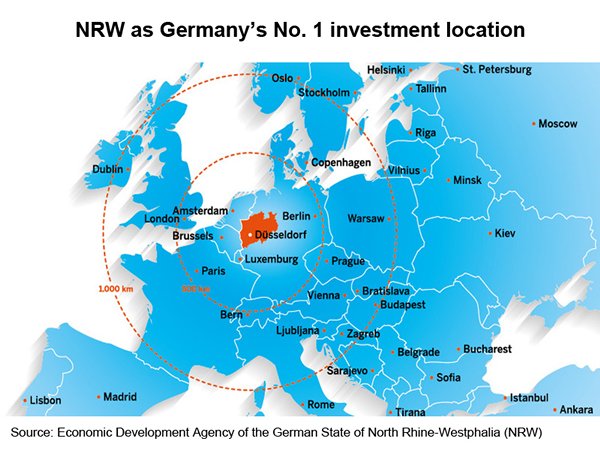
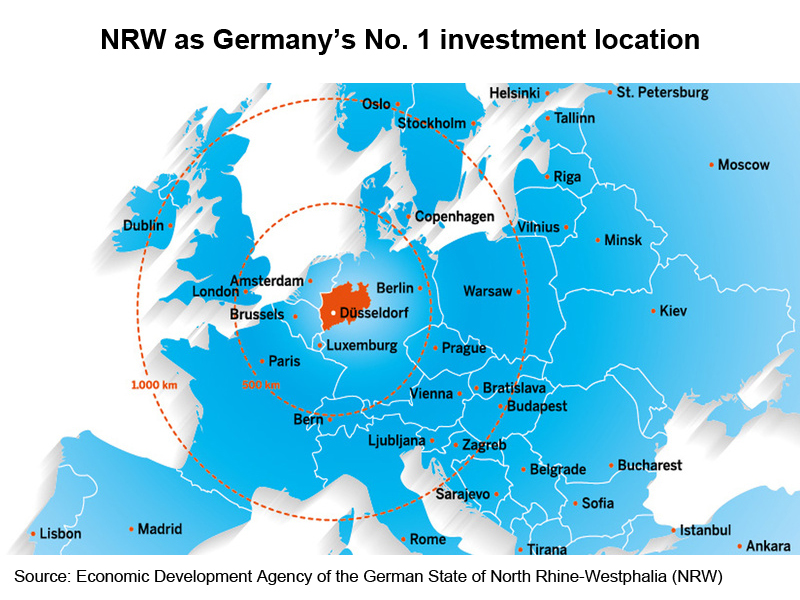
With the new arrival of 81 Chinese enterprises in 2015, nearly 900 Chinese companies including a number of leading Chinese companies in the growth industries such as solar energy and lighting technology, have chosen to settle in NRW. Thanks to the convenient water and land transportation as well as a high concentration of complementing industries, more than two-thirds of these Chinese enterprises are involved in the trade and sale of products from mechanical engineering and industrial plant sectors, household appliances, ICT, the automotive industry to the healthcare industry and metallurgy, followed by services (15%) such as business consultancies or advertising agencies and manufacturing or research and development activities (around 50 companies).
Another stimulus underpinning the growth between Sino-NRW trade and investment is related to the enhanced rail connection between Duisburg and China. Covering a broad swathe of the Eurasian region, the first direct freight train between Chongqing and Duisburg (Yuxinou Railway) in the summer of 2011 via the so-called New Silk Road or the Eurasia land bridge, has showed strong commitment between the two sides to develop NRW into a crucial industrial and logistics hub for Eurasian trade.
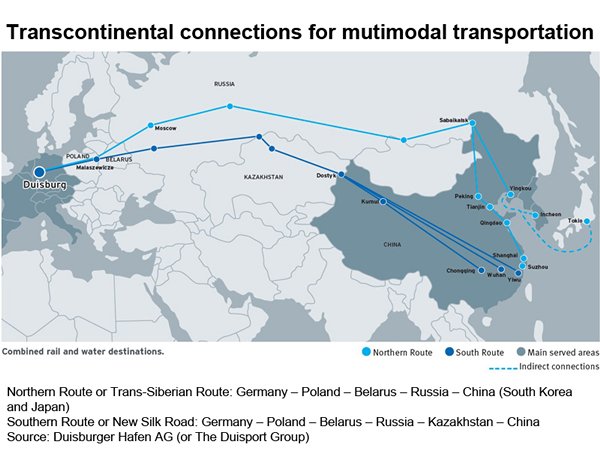
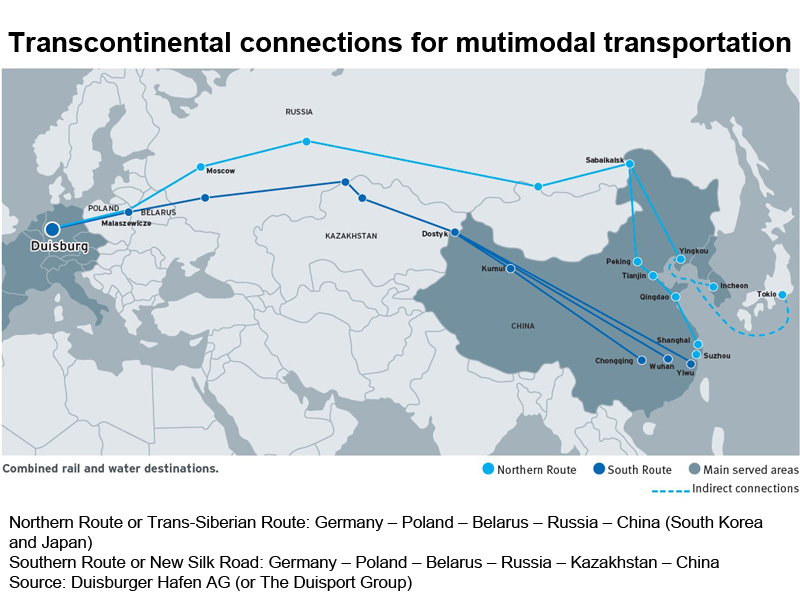
Being a competitive alternative to the existing Eurasian sea-lanes, the 11,000-km Yuxinou Railway has made it possible to ship goods from China by rail to continental Europe in only 11-20 days, compared to 30-45 days by seaborne transport. More frequent direct freight trains via the Eurasia land bridge to a multitude of destinations in China including Wuhan (Hanxinou Railway), Chengdu (Rongxinou Railway) Chongqing (Yuxinou Railway) and Zhengzhou (Zhengxinou Railway) have made railway a more convenient and flexible option for Europe-bound cargo.
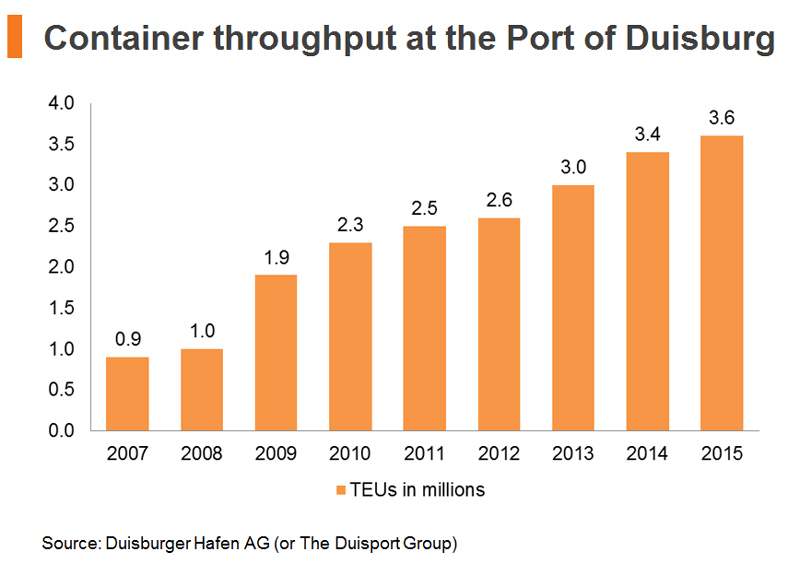
As such an important logistics location in Europe, Duisburg also plays a special role under the BRI, thanks largely to its host of Europe’s leading consolidation hub of containerised cargo. With a total of nine container terminals and 2 million square meters of covered storage space, Duisburg registered another all-time record of 3.6 million Twenty-Foot Equivalent Units (TEUs) (6% year-on-year growth) of containers in 2015, after seeing a 13% expansion to 3.4 million TEUs a year earlier, despite a stagnating logistics market in Europe.
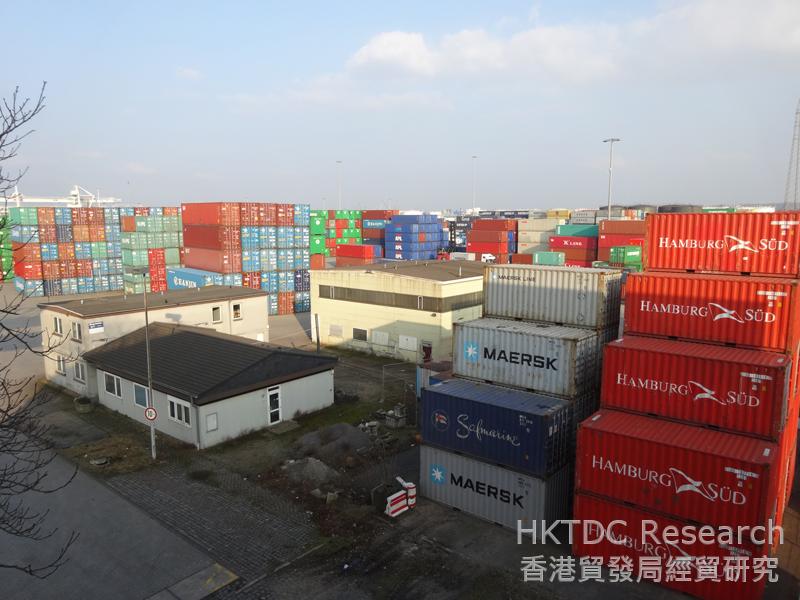
Also of note is the expansion of the cargo traffic passing through Duisburg. The enhanced rail connection has bolstered traders’ interest in not only using rail transport between Asia and Europe, but also using it for a more diversified selection of products. According to Duisburger Hafen AG (or The Duisport Group), the management company and operator of the Port of Duisburg, traders in both Europe and Asia are becoming more open to the new logistics option.
The majority of Duisburg-bound cargo from China is IT, or ICT-related, products including telecoms equipment and associated parts and components, while going the other way most shipments are automobiles, auto parts and machinery. Twice as fast as going by sea and a lot cheaper than air, an increasing number of traders have started to send consumer goods like German food and beverages, infant formulas and other luxury items from Duisburg to China by rail.
As Chinese companies show greater interest in investing and/or developing logistics firms and industrial parks abroad as well as being able to take advantage of ports in countries like Belarus, Kazakhstan and Lithuania along the Belt and Road, Duisburg, thanks to its central location in Europe, will continue to appeal not only to Chinese traders but also other manufacturers and investors as the BRI develops in the coming years.
A new model of investment to combine logistics with manufacturing
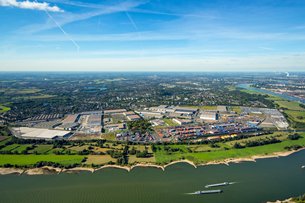
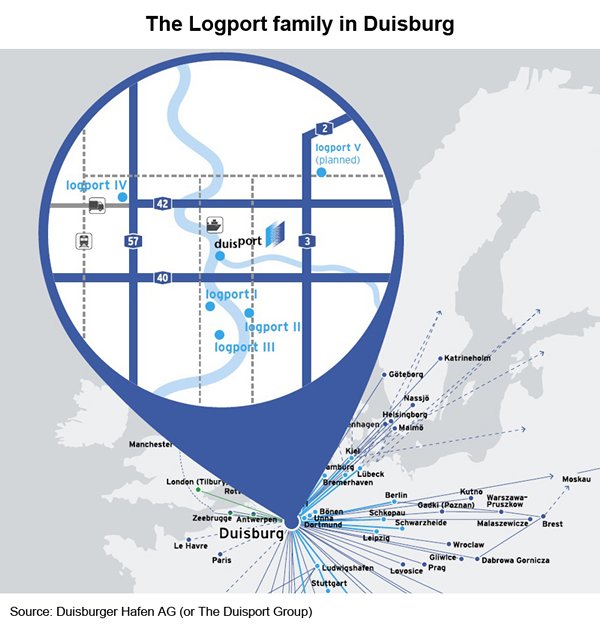
In addition to the strategic advantages of logistics and regional distribution in Europe, Duisburg offers new investment by combining logistics operations with manufacturing. Since 1998, under the Logport brand, the Duisport Group has begun the development and marketing of the 2,650,000 square meters former Krupp smelting works (Logport I) in Duisburg on the left bank of the Rhine.
By converting the disused and badly polluted industrial areas (a former steel plant, inoperative since 1994) in the Ruhr – Germany’s leading industrial centre – into a modern logistics centre for high-quality cargo and international service providers, Logport I is home to around 50 companies including such market leaders as Kühne + Nagel, DB Schenker, DHL and NYK/Yusen Logistics and European distribution centres for companies like Danone Waters, Hewlett Packard, Johnson & Johnson and Siemens.
Source: Duisburger Hafen AG (or The Duisport Group)
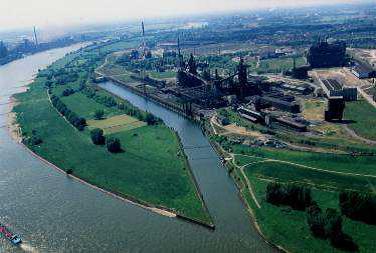
Source: Duisburger Hafen AG (or The Duisport Group)

In developing areas around the port of Duisburg such as Logport II, III, IV and V (planned), more international companies are investing in new facilities there. For instance, the world’s largest CKD logistics centre of Audi AG has been operating in Logport II since August 2013, while Nanjing High Accurate Drive Equipment Manufacturing Group (NGC [1]), a global player in the transmission and drive technology industry, just became the first Chinese company to settle its European headquarters in the Port of Duisburg in March 2015, followed by a 1,000 square meters factory.
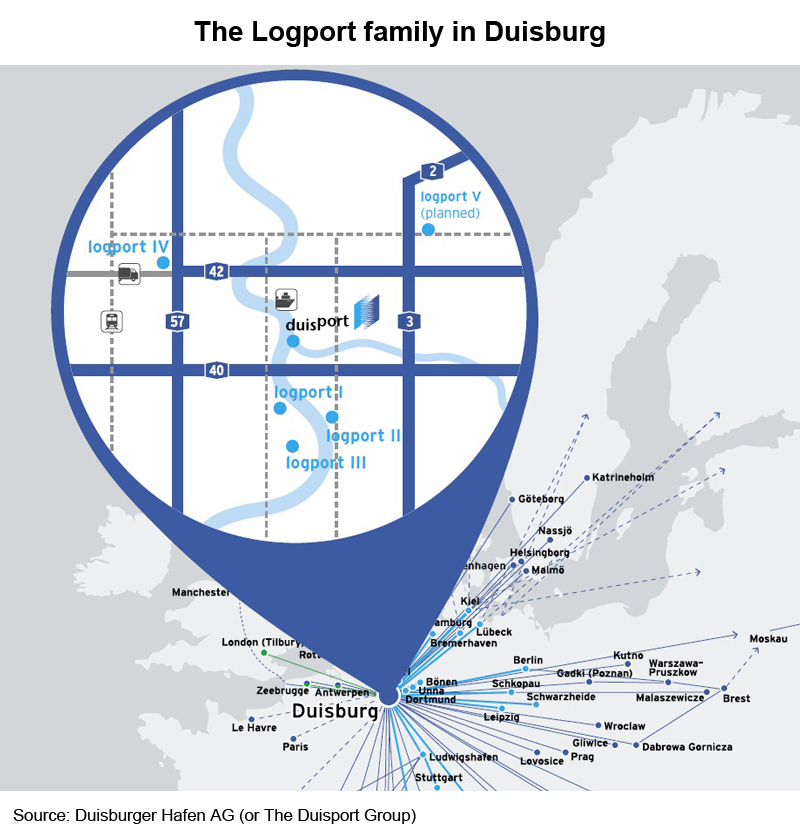
Many German and international companies have shown their interest in putting their European head offices or distribution centres in or near Duisburg to allow their continental customers not only more direct access to sales and distribution, but also manufacturing and other services related to design, procurement, inspection, maintenance and after-sale support. Many believe the proximity to importers and distributors in Europe and ready inventory supplies and product know-how made possible by their presence in Duisburg allows them to deal with their European counterparts and respond more rapidly to market ups and downs.
This new model of investment (a combination of logistics and manufacturing activities) available in Duisburg is expected to draw more attention from Chinese enterprises, which are looking for new operating bases to expand their production and distribution in Europe under China's “Going Out” policy and the umbrella of the BRI, which aims to promote regional economic cooperation.
Taking advantage of Hong Kong’s role as a “superconnector” ready to deliver game-changing solutions for the 60plus countries along the Belt and Road, the formal launch of Cathay Pacific Airways’ direct passenger flights between Hong Kong and Düsseldorf since September 2015 has allowed easier business exchanges in tandem with the growing transcontinental economic ties between Europe and Asia.
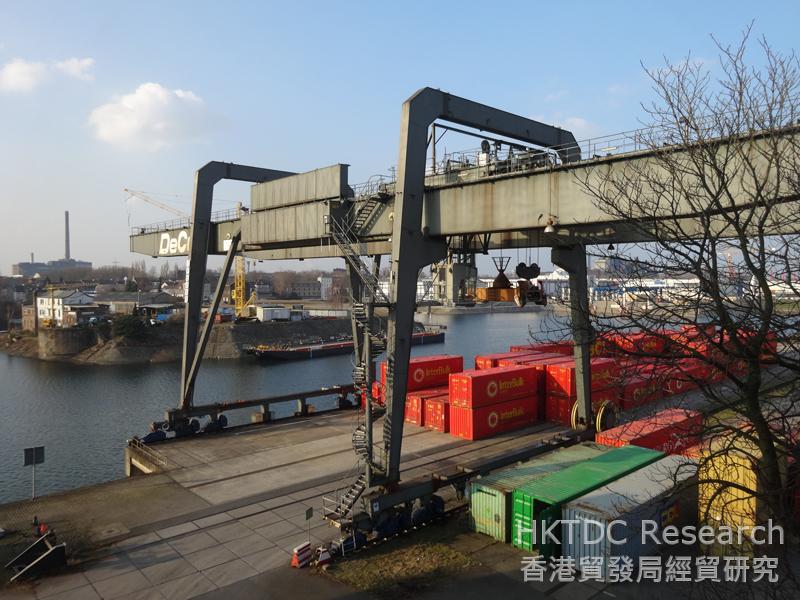
Complementing this new air route are Hong Kong-based Hutchison Port Holdings’ DeCeTe Duisburger Container Terminal in Duisburg, which is well connected by rail and barge with such deep-sea terminals as Rotterdam (the Netherlands), Antwerp (Belgium), Tilbury (UK) and Goole (UK) and Orient Overseas Container Line’s office in Düsseldorf, which is ready to connect Hong Kong traders with Germany and other parts of Europe.
Air and sea transport aside, the opening of the international development office of KTZ Express (a wholly owned subsidiary of Kazakhstan Railways) in Hong Kong in June 2014 to promote multimodal freight logistics between Europe and China via Kazakhstan has made Hong Kong relevant to the promotion, operation and integration of the new rail alternatives – Yuxinou Railway and other international freight rail routes such as the ones linking Wuhan to Mělník and Pardubice in the Czech Republic, Chengdu to Lodz in Poland and Zhengzhou to Hamburg in Germany – for Eurasian trade in global supply chain management.
[1] Founded in 1969, NGC was listed on the Hong Kong stock exchange in 2007 under the name “China Transmission”.
| Content provided by |

|
Editor's picks
Trending articles
30 May 2016
Strengths and Challenges of China’s “One belt, One road” Initiative
Written by Irina Ionela Pop, Centre for Geopolitics & Security in Realism Studies (CGSRS)
China’s “One Belt, One Road” (OBOR) initiative, formally presented on 28 March 2015, is not just another “new Silk Road project”. Rather it is a consistent and ambitious Eurasian strategy of an emergent power. The OBOR initiative is based on existing and planned linkages from various regions of China towards the outside world. Supported by large financial contributions, it seems to be better articulated than other similar projects. Therefore, this paper aims to present the strengths and implementation challenges of China’s OBOR initiative. We took into account several levels on analysis: national, regional and international. In this sense, we focused on domestic constraints, tensions in China's neighbourhood, and great power rivalries. Finally, we tried to offer several suggestions regarding the improvement of China’s initiative. The suggestions concern the initiative’s planning and implementation, the means to improve its bilateral relations with neighbours and great powers, in order to be perceived as a responsible power on the international arena.
Please click here for the full report.
Editor's picks
Trending articles
2 Jun 2016
President Xi Jinping's “Belt and Road” Initiative - A Practical Assessment of the Chinese Communist Party’s Roadmap for China’s Global Resurgence
Written by Christopher K. Johnson, Senior Adviser and Freeman Chair in China Studies, CSIS
In the fall of 2013, Chinese President Xi Jinping put forward the strategic framework of building the “Silk Road Economic Belt” and a counterpart “21st Century Maritime Silk Road”, collectively referred to in abbreviated form in Chinese parlance as the “One Belt, One Road” (OBOR) initiative. …
As such, the new U.S. administration that takes office in January 2017 would be well served in thinking about new approaches to interact with and manage a process that, if President Xi gets his way, will be a force to be reckoned with for the next decade and beyond.
This report was firstly published by CSIS in March 2016.
Please click here for the full report.
Editor's picks
Trending articles
6 Jun 2016
One Belt, One Road, One Singapore – Analysis
By Eurasia Review
In 2015, Singapore exported US$61.3 million worth of goods and services to Central Asia, while importing US$6.1 million, representing 0.015 percent of Singapore’s total exports and 0.002 percent of total imports; and 0.07 percent of Central Asia’s total exports and 0.009 percent of total imports. While Singapore is a global trading and investment powerhouse, business experience and exposure in Central Asia has never been strong. In 2014, only 32 enterprises in Uzbekistan operated with Singaporean capital, and Singapore contributed only US$50 million of direct investment to Kazakhstan over the last ten years in contrast to US$604 billion of total foreign direct investment in 2014 alone. Central Asia is not directly connected to Singapore, and land routes to ports in the region are scant. However, as the One Road-One Belt Initiative links Central Asia to China’s eastern seaboard, Gwadar port and even the impending sanction-free Iran; inter-regional trade is awash with new connections and opportunities.
Please click here for the full article.
Editor's picks
Trending articles
Germany: Frankfurt – an ODI Hub for China
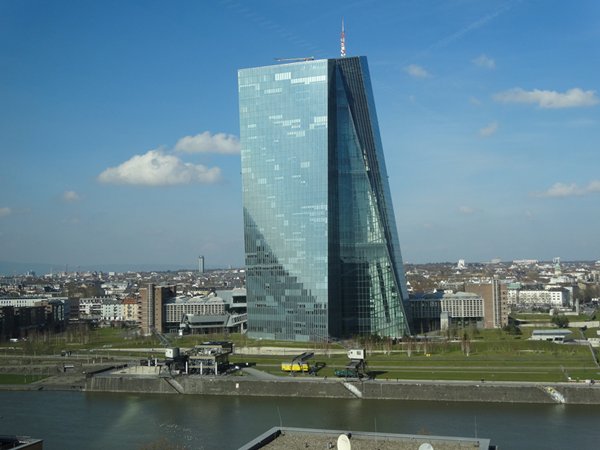
The German city of Frankfurt is the biggest financial services centre in continental Europe. Situated on the banks of the River Main, the city is styling itself as “Mainhattan”, given the presence of a large number of financial industry heavyweights, including the European Central Bank (ECB) and the German Central Bank (Deutsche Bundesbank), which are both headquartered there. This most international of German cities, it is also becoming a focus for the development of the pioneering financial technology (FinTech) industry. Thanks also to Frankfurt’s highly efficient multimodal (sea-air-road/rail) transport system and the city’s emergence as Europe’s first renminbi payment hub, many Chinese companies have taken advantage of its ready access to the European consumer and capital markets, making it a natural outbound direct investment (ODI) hub for Chinese companies interested in conducting business in the European Union (EU).
Frankfurt as a financial centre in continental Europe
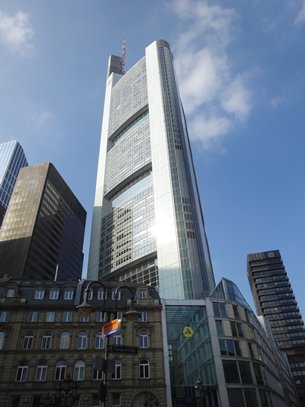
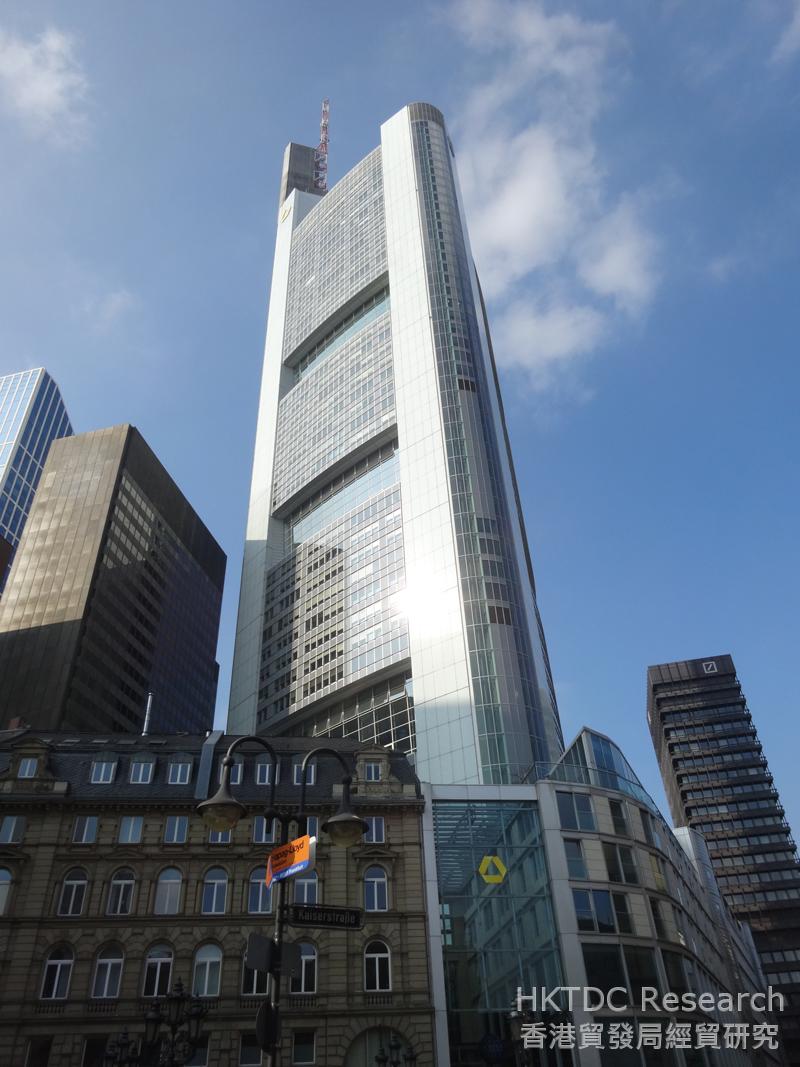
Frankfurt has long been Germany’s financial capital and, more recently, continental Europe’s biggest financial services hub. The city is not only home to the German and European central banks but also to major pillars of the European system of financial market supervision, such as the European Systemic Risk Board (ESRB), the European Insurance and Occupational Pensions Authority (EIOPA), and the European Banking Federation. Germany’s largest banks – Deutsche Bank and Commerzbank – are based there, as is the German Stock Exchange Group, Deutsche Börse AG – the operator of the Frankfurt Stock Exchange (Börse Frankfurt), which generates about 90% of the country’s total stock market turnover. China's five largest banks – Bank of China, Industrial and Commercial Bank of China, China Construction Bank, Bank of Communications, and Agricultural Bank of China, also have a significant presence there.
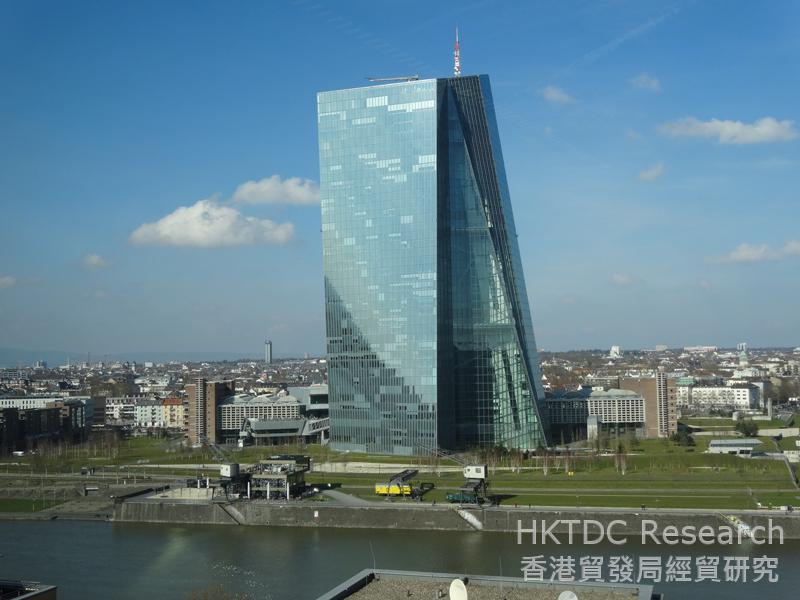
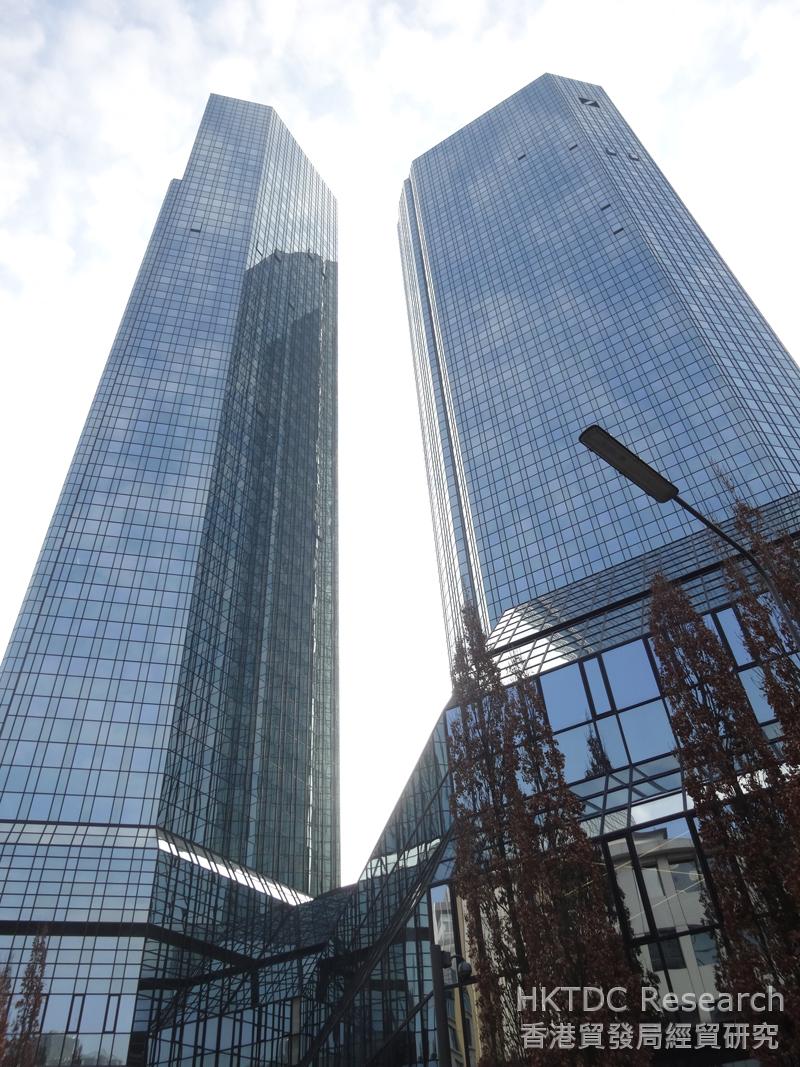
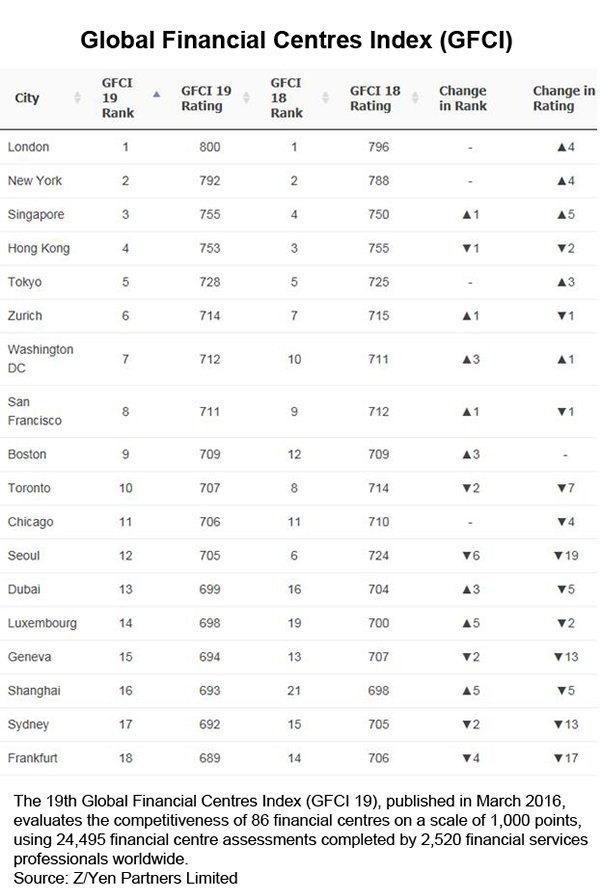
A proposed merger between Deutsche Börse AG and the London Stock Exchange (LSE) would make LSE-Deutsche Börse the world’s biggest stock exchange operator by revenue and the second-largest by market value, trailing only the Chicago Mercantile Exchange (CME) Group. The new company would be jointly headquartered in Frankfurt and London. The merger would also reinforce and enhance Frankfurt’s standing as a financial centre, following a decade in which its competitiveness has been in decline. Tracked by the Global Financial Centres Index (GFCI), Frankfurt was ranked sixth in terms of competitiveness – behind only London (first) and Zurich (fifth) in Europe – when the index was first published in 2007, but 18th – behind London (first), Zurich (sixth), Luxembourg (14th) and Geneva (15th) in Europe – in 2016.
Frankfurt as a darling to Chinese investors
Another unrivalled advantage Frankfurt has as a financial centre is the close link between the financial sector and the real economy. As one of Germany’s advanced manufacturing bases, 9% of all German products are made in the Frankfurt Rhine-Main (FRM) region, which also hosts one of the largest state-of-the-art insulin manufacturing plants in the world, operated by Sanofi.
The region’s all-rounded multimodal connectivity includes Europe’s busiest cargo airport, which handled more than two million tonnes of cargo last year, eight inland cargo ports providing access to important waterways, and the Frankfurter Kreuz – the most heavily used road interchange in the centre of the European highway system. Furthermore, the purchasing power of Frankfurt’s inhabitants, which is 15% above the national average, engenders a strong customer base for Chinese manufacturers and has helped to make Frankfurt a darling for many export-oriented foreign companies.
Since 2005, when the German-Chinese bilateral investment protection agreement came into force, Chinese investment in Germany has risen steadily, from €235 million to €1.2 billion in 2013. Nowadays, some 900 Chinese companies are active in Germany, focusing on sectors such as mechanical engineering, electronics, consumer goods and information and communication technology (ICT).
Frankfurt is the largest city in the German federal state of Hesse. The state is the biggest recipient of Chinese investment, accounting for 60% of the country’s total, and boasts a lively Chinese business community consisting of about 600 companies, including China Telecom, Huawei Technologies, ZTE, TP-Link, KONKA, Midea, Haier, Qube Hotel, Yunda, Hongfa, Kingfa, Air China, China Eastern Airlines & Shanghai Airlines, China Southern Airlines, Sinopec and many SMEs.
To help facilitate the growth in Chinese interests in the region and to support their needs regarding trade and investment in continental Europe, Frankfurt has become the first renminbi (RMB) offshore clearing hub on the continent. Since November 2014, it has been possible to clear and settle payments denominated in RMB directly with the Chinese mainland, Hong Kong and other offshore RMB centres via the Frankfurt branch of the Bank of China (BOC), the clearing bank chosen by the People’s Bank of China (PBoC). As an integral part of the PBoC’s long-term strategy of RMB internationalisation, the strengthening of the RMB offshore market can give international and Chinese mainland traders and investors a more viable option of paying their counterparts in RMB in an efficient and convenient way with lower transaction costs.
With respect to the desire to gain access to the German and European capital markets, more than 30 Chinese companies, including China Specialty Glass AG (specialty glass manufacturing), Ming Le Sports AG (sportswear manufacturing), Ultrasonic AG (footwear manufacturing), United Power Technology AG (engine-driven power equipment manufacturing), Youbisheng Green Paper AG (environment-friendly linenboard manufacturing) and Zhongde Waste Technology (energy from waste technology) have so far listed on the Frankfurt Stock Exchange (Börse Frankfurt).
Last year, 24 companies listed on the Frankfurt Stock Exchange, raising a total of €7 billion (US$7.8 billion). Also in 2015, the Chinese rating agency Dagong Global Credit moved its European headquarters to Frankfurt from Milan after seeing an urgent need for an innovative credit rating system to support the evolving investment trends such as initial public offerings (IPOs) and mergers and acquisitions (M&As) by companies ranging from state-owned enterprises to small, private Chinese entities.
Frankfurt as a FinTech promoter
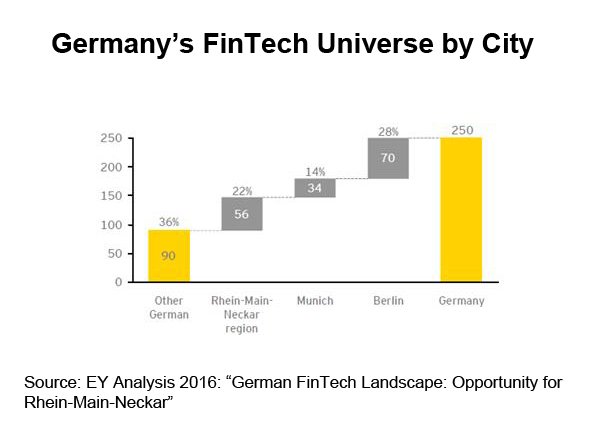
To stay competitive and ahead of the dynamic financial industry development, Frankfurt – riding on its proximity to institutional support and a vibrant industrial base – has been quick to respond to the increasingly popular trend for FinTech start-ups and investment. Home to 56 out of 250 German FinTech start-ups in 2015 (a 22% increase from 46 in 2014), the greater Frankfurt area – or the Rhein-Main-Neckar region – is the second most important FinTech hub in Germany, behind Berlin.
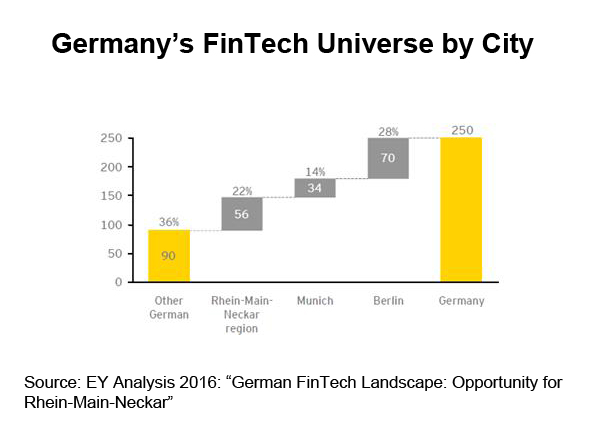
Frankfurt was generally not known in the past for its innovation, especially when compared to other German cities such as Berlin. But the state and federal governments have been lobbying for a fair share of the latest FinTech developments to stay and grow in Frankfurt.
As a step to bolster the FinTech scene, Frankfurt Main Finance – the marketing organisation of the Frankfurt financial centre – has set up Dialogforum FinTech, in which 44 interested parties exchange ideas and coordinate their activities in fields such as services for FinTech start-ups, financing, marketing, regulation, international partnerships, research and academics, networking and the establishment of a strong FinTech hub in Frankfurt.
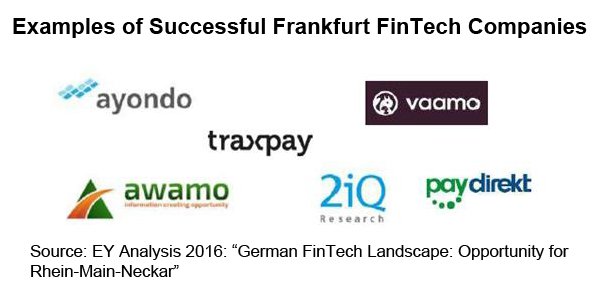
Following Deutsche Börse’s €65-million takeover of 360T AG, a foreign exchange trading platform, in 2015, it has provided fully equipped premises in Frankfurt and on-site support from its Venture Network to help FinTech start-ups develop their business concepts and companies. In addition to such indispensable infrastructure, Deutsche Börse’s new initiative offers young FinTech companies an attractive environment in which to stay close to established financial institutions and market regulators. This is expected to strengthen Frankfurt’s unique role in promoting and expanding knowledge about risk management and regulations such as compliance management under Europe’s big but disintegrated regulatory financial environment, making the city a ready laboratory for many types of FinTechs, especially RegulationTechs.
How Hong Kong can play a role?
Possessing definite advantages and extensive experience in helping Chinese mainland enterprises make overseas investments, Hong Kong can play a pivotal role in the expected surge in Sino-European trade and China’s ODI to Europe under various development visions, including China’s Belt and Road Initiative (BRI) and Germany’s Industrie 4.0, which aims to integrate advanced network and information technology with its industrial production system to further enhance the country’s industrial efficiency.
With about 60% of Chinese outbound direct investment being directed to, or channelled through, Hong Kong, the city, as a regional financial centre in Asia, will continue to be the bridgehead for mainland Chinese enterprises exploring “going out” in innovative ways by investing in greenfield schemes and joint investment projects such as smart cities/factories embedded with digital processes using the Internet of Things (IoT) and Big Data, or conducting M&As. Hong Kong is ideally placed to help German enterprises and technology owners look for investment partners from Asia.
On the back of Hong Kong’s robust protection of intellectual property rights (IPRs) and full range of professional services, the city is an ideal platform to facilitate technology transfer to mainland China from Germany. With respect to the “new” environmental protection and urbanisation development directions stipulated in China’s 13th Five-Year Plan, for instance, Hong Kong’s environmental protection and urban planning and management companies can be ready cooperation partners for related Chinese players who are interested in undertaking technology investment in Germany in order to gain access to advanced German technology and expertise.
Investment opportunities linked to the Belt and Road Initiative include cooperation in logistics along and beyond the Eurasian landbridge, maritime finance (to which KfW Development Bank and Deutche Bank are leading the way in Germany) and infrastructure bidding, management and financing – highly sought-after in Germany by private insurance companies looking for more lucrative investment opportunities in the low interest rate environment across the eurozone.
With respect to the vibrant FinTech development in Germany, although Hong Kong is yet to evolve into the most attractive destination for greenfield FinTech projects, it can serve as a risk manager, assisting German FinTech companies in screening prospective investors from the Chinese mainland and other parts of Asia. This is particularly useful when German companies encounter problems with their potential mainland Chinese investors, and when it comes to advising on such highly sought-after resources as government incentives and incubation schemes, accelerators, angels and venture capitalists, which are commonplace in Hong Kong [1] but less so in Europe.
By representing German start-ups and helping them find partners in Hong Kong and the Chinese mainland, connecting them with relevant financial sector regulators and guiding them through setting up procedures such as office rental, incentive application and contract signing (e.g., the inclusion of the arbitration clauses stipulated by the home-grown Hong Kong International Arbitration Centre), Hong Kong’s financial services companies can be ideal facilitators of Sino-German FinTech collaboration.
[1] Startmeup.hk is a one-stop portal to the start-up community in Hong Kong, listing the latest start-up events and various resources including government incentive and incubation schemes, accelerators, angels and venture capitalists.
| Content provided by |
|