









Thailand
Country Region
China-backed SEZ set to transform transport and manufacturing ties between China, Laos, Thailand and Myanmar.
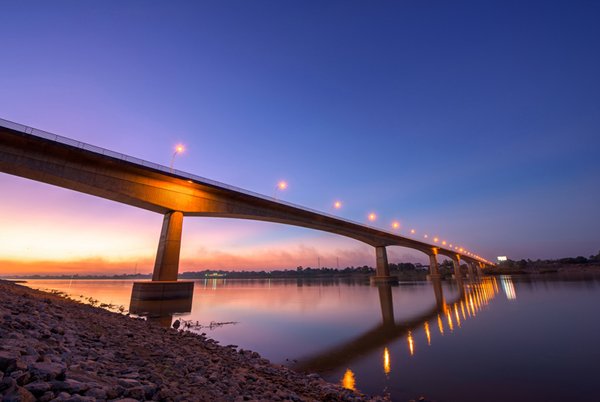
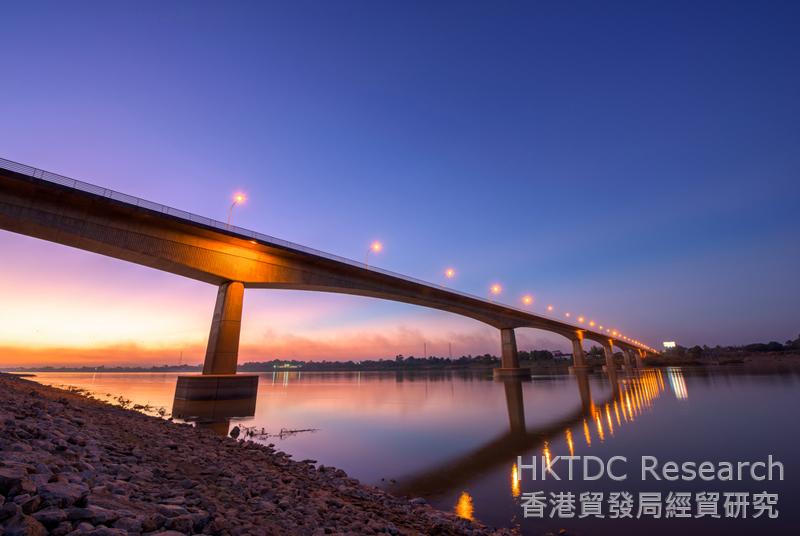
Late last month, the Thai government announced plans to develop a cross-border Special Economic Zone (SEZ) in the Chiang Khong district of Chiang Rai, the country's northern-most province. Once established, it is believed that the new SEZ will act as a nexus for a number of Belt and Road Initiative (BRI) related projects under way in the country, as well as in neighbouring Laos and Myanmar.
More specifically, the SEZ will connect with the existing Mohan-Boten Economic Cooperation Zone (MBECZ), which straddles the Laos-China border. Ultimately, it is anticipated that the zone will act as a hub for the growing economic interconnectedness between Thailand, Myanmar, Laos and China.
Laos' own economic zone development programme has met with considerable success to date and the MBECZ is proving to be no exception. A recent update from the Ministry of Planning and Investment showed that the country's 12 SEZs were already home to 350 Lao and overseas companies, representing total registered capital of US$8 billion, with $1.6 billion of that having already been actively invested.
At present, the SEZ programme has created 14,699 jobs, with 7,564 of these going to local workers. That number is expected to rise imminently following the announcement that a further 40 companies are to set-up within the Boten Specific Economic Zone, which forms part of the MBECZ's core offering.
The Mohan-Boten project, a joint venture between China and Laos, was established in September 2015 at a cost of about $500 million with a remit to focus on agriculture, biotechnology, logistics and cultural tourism. The site was originally developed by the Yunnan Haicheng Group and the Hong Kong Fuxing Tourism and Entertainment Group.
In addition to Mohan-Boten, there are a further two large-scale China-backed clusters in Laos – the Vientiane Saysettha Development Zone and the Vientiane Thatluang Lake Specific Economic Project. The MBECZ, though, has a unique significance in that it interconnects with the border crossing point of the China-Laos Railway, a major BRI project that will ultimately provide the backbone for high-speed train connectivity throughout much of Southeast Asia.
As a consequence, the MBECZ's international trade and finance areas have already attracted investment from many of the companies that are engaged in infrastructure construction activities throughout the country, as well as those actively working on the development of the country's hydropower facilities. It is, however, those businesses that are directly involved with the roll-out of the China-Laos rail link that are most widely represented.
Given the size and prominence of these businesses, it is perhaps reassuring that work on the rail link seems to be proceeding with few notable hindrances. As of March this year, the project was said to be already more than 25% complete and well on course for its officially scheduled 2021 completion date.
Since then, a number of other major project landmarks have been passed, including the completion of the construction work on a 1 km tunnel – the line's longest subterranean stretch – at the end of October. On top of that, the primary construction work on the 7.5 km Nam Khone Bridge – the widest-spanning structure along the course of the route – has also been completed.
In a sign of further progress, October saw China begin to export petroleum products to Laos via the Mohan-Boten border crossing for the first time. Amid much official fanfare, PetroChina delivered 64 tons of diesel to the local importer – the Nationwide Trading Petroleum Public Company – at the China-Laos border. Prior to this first batch arriving, all oil and petroleum shipments to landlocked-Laos had been routed via Vietnam or Thailand.
The opening of this new conduit was given added significance by its clear importance to the future of the recently sanctioned, BRI-backed Laos-China Economic Corridor. Given the numerous construction projects this will entail, demand for fuel across Laos is only set to soar over the coming years.
Geoff de Freitas, Special Correspondent, Vientiane
Editor's picks
Trending articles
Mainland money has triggered a property boom in Thailand's most sought-after locations, with corporate and individual investors increasingly keen to secure a stake in one of the most popular vacation destinations in the Asia-Pacific region.


Tourism in and between many of the countries along the route of the Belt and Road Initiative (BRI) is growing fast, with holidaymakers from China particularly prized for their big-spending ways. These aside, about 85 million trips are expected to be made to China from countries in the BRI region between 2016 and 2020, with the collective spend estimated to be about US$110 billion. After China, one of the other big beneficiaries is likely to be Thailand. In 2017, the country received more than 9.8 million tourists from China alone, representing about 28% of its total arrivals for the year.
For want of a somewhat unfortunate phrase, it has not all been plain sailing, however. In July this year, the tragic capsizing of a tour boat in Phuket, the island province that is one of Thailand's primary tourist destinations, resulted in the deaths of 47 Chinese visitors. Inevitably, this incident has deterred many mainlanders from visiting their southern neighbour.
An immediate consequence was that Chinese tourist arrivals fell 0.9% year-on-year. Although the figures are not yet in, the Thai Tourism Ministry expects the overall figures for August to show a far greater decline, with some estimating the drop to top 14%. As a result, the official target for Chinese visitors in July-December this year has been cut by 669,000 (11.5%) to 5.15 million.
Over the long term, however, the disaster is unlikely to derail the tourism sector's underlying growth. Nor is it set to deter the many overseas investors – with a significant proportion of them mainland-based – who have been only too keen to back the many property- and tourism-related developments spurred by the BRI.
As well as the many major BRI-backed infrastructure projects already under way – including new airports, rail links and road networks – a number of commercial operators have also looked to capitalise on the growing Thai-China tourism trade. Nok Air, a Bangkok-based budget airline, for instance, has opened a direct route between Pattaya and Zunyi, a prefecture-level city in China's Guizhou province, while also announcing plans to introduce flights to several other mainland cities, including Baotou, Linyi, Yichang and Nanchang. Meanwhile, Thai Smile, the budget-flight wing of Thai Airways, the national carrier, has launched a Bangkok-Datong service, linking the Thai capital with one of the most popular tourist destinations in the northerly Shanxi province.
In terms of larger-scale plans, moves are also afoot to develop U-Tapao, currently a joint civil-military airport, into a third Greater Bangkok gateway facility in line with the aims of the Eastern Economic Corridor (EEC) initiative, a key element of the BRI masterplan. The EEC initiative also extends to a planned upgrade to the tourism facilities of Pattaya and Rayong, two of Thailand's primary visitor destinations.
Both resorts have attracted substantial investment from China, a development that has triggered something of a property boom in the two locations. In fact, with 86% of Chinese property buyers first visiting the locations they ultimately invest in as tourists, this has seen Bangkok, as well as Pattaya and Phuket, enjoy a surge in real-estate purchases by mainland Chinese buyers.
Huang Xiaodan is the Founder and Chief Executive of Uoolu, a Beijing-based portal that matches would-be Chinese buyers with overseas properties. Highlighting the appeal of Thai property, he said: "Thai real estate stands out on account of its high value proposition, impressive rental yields and low thresholds. In total, Thailand represented half our total 2017 transactions, driving our turnover up by 307%."
Despite Thailand's clear success in attracting individual mainland investors into its property market, the corporate sector is proving to be a little harder to woo, at least according to Suphin Mechuchep, Managing Director of JLL Thailand, a Bangkok-headquartered commercial-real-estate agency. Assessing the current state of the market, he said: "While Chinese corporations have been actively looking for opportunities to invest in a wide range of real-estate assets in Bangkok and in the major resort markets, actual investment activity has remained limited. To date, most of the deals that have actually gone through have either been joint venture property development projects or acquisitions of stakes in Thai property development companies."
Indeed, a quick look at the projects underway clearly bears out Mechuchep's point. Among the currently active Thai-Chinese joint venture property developments is the Baba Beach Club Phang Nga, comprising 16 hotel villas, 104 residential suites and 42 villas, with the project backed by China's Junfa Real Estate and Charn Issara Development, a Bangkok-based property developer. China-based investors are also working with Thai developers on a number of other projects, including The Terminal Phuket, a mixed-use development, and Artemis Sukhumvit 77, a 30-storey residential project.
Looking to the future, the Thai cabinet recently approved plans for a Southern Economic Corridor (SEC), an infrastructure initiative comprising 28 projects at a combined cost of $6 billion. Stretching down the coastline southwest of Bangkok, it will transform the region into the Thai Riviera, a series of resorts that will form the backbone of the SEC. As part of the plan, four coastal provinces – Phetchaburi, Prachuap Khiri Khan, Chumphon, and Ranong – will be reinvented as high-end tourism hubs.
While the combined scale and scope of these tourism-oriented initiatives may seem daunting, it should be remembered that currently less than 10% of Chinese citizens – the primary target of all these developments – are passport holders, a clear indication of the vast growth potential of the mainland's outward-bound tourism sector.
Geoff de Freitas, Special Correspondent, Bangkok
Editor's picks
Trending articles
With China and Thailand identifying joint economic objectives, Beijing has loosened its purse strings still further.
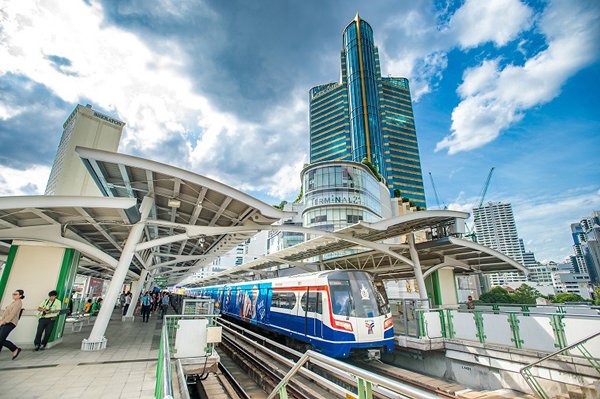
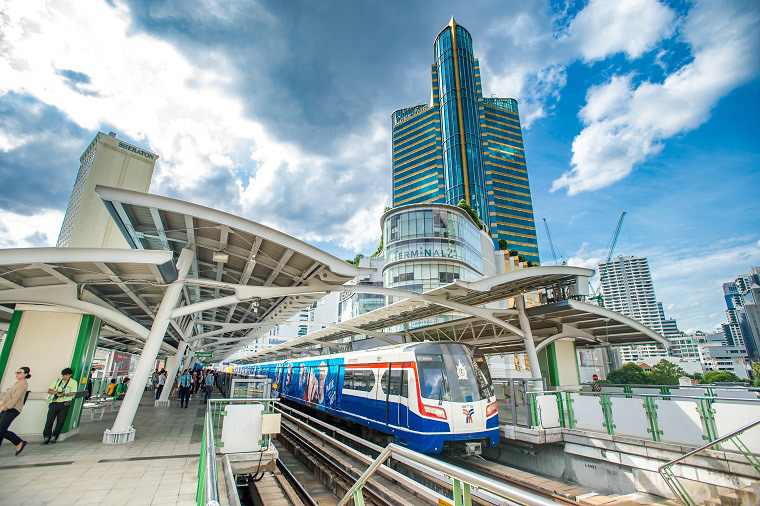
Following the Thai Government's recent formal adoption of the EEC (Eastern Economic Corridor) Act, it's now all systems go for the country's Thailand 4.0 development strategy, a programme expected to neatly dovetail into the objectives of China's Belt and Road Initiative (BRI). Moves to more closely align the Thai economic strategy with China's own international infrastructure development and trade facilitation programme began back in 2017, with the growing trade between the two countries now helping to oil the requisite bureaucratic wheels.
In a formal address last month, Prayut Chan-o-cha, the Thai Prime Minister, highlighted the existing synergy between the two developmental blueprints, saying: "It's natural, logical, and mutually-beneficial that the EEC should link-up with the BRI, as well as with other regional initiatives, such as the Regional Comprehensive Economic Partnership (RCEP) or even the Trans-Pacific Partnership (TPP)."
In order to fully capitalise on these emerging synergies, the two countries have already agreed to establish a joint economic development board. Billed as the Sino-Thai Joint Think Tank Forum, the body held its first meeting in Beijing earlier this month in association with the Chinese Academy of Social Sciences (CASS), with 80 senior academic and government officials from both countries jointly considering how best to capitalise on those economic initiatives deemed to be of mutual benefit.
Speaking after the conclusion of this inaugural session, Gao Peiyong, CASS' Vice-president, said: "Thailand's innovation-driven development program is hugely compatible with the goals of the BRI. Both countries have a genuine need to boost their international connectivity, while also promoting industrial upgrading.
"I see infrastructure, telecommunications, the digital economy, energy and internet technology as the five key areas for bilateral cooperation. I believe these should be the two countries' cooperative priorities for the next five years at least."
In terms of the actual EEC programme, at its core is the development of five economic clusters spread across three of the country's eastern provinces – Chaochoengsao, Chonburi and Rayong. Of the three, the Eastern Airport City Zone is one of the initial priorities. Centered around an upgraded U-Tapao International Airport, the focus will be on developing the facilities required to boost the throughput of tourists, with mainland-originated visitors now the single largest segment of Thailand's tourism sector.
A clear second priority is the Eastern Economic Corridor of Innovation (EECi), a large research and development park set to be sited in Rayon's Wangchan Valley. This will be followed by the development of the Digital Park Thailand (EECd), the Smart Park and the Hemaraj Eastern Seaboard Four Industrial Estate. In order to sustain and service these initiatives, a number of rail transportation projects, air terminal extensions and port enhancements will be initiated simultaneously.
China is already set to play a huge role in bringing many of those initiatives to fruition. In particular, it has taken a lead in the implementation of the BRI-backed Bangkok to Southern China via Laos high speed rail link. On top of that, to date more than 80 Chinese companies that have established manufacturing facilities, research centres or operational hubs in the specially-designated Thai-Chinese Industrial Zone.
As of the end of 2016, China's investment in the EEC had already exceeded US$30 billion. Now, with the more formal alignment of the two nation's development schemes, this figure is expected to soar over the coming months.
Geoff de Freitas, Special Correspondent, Bangkok
Editor's picks
Trending articles
Concerns over China's geopolitical intentions remain a challenge for Belt and Road projects in Southeast Asia.


The Belt and Road Initiative (BRI) has not moved quite as quickly in Southeast Asia as it has in South or Central Asia. This is partly down to ongoing tensions in the South China Sea, which have raised concerns among some countries in the region as to China's geopolitical intentions.
At present, the 10-member Association of Southeast Asian Nations (ASEAN) is caught between these concerns and a desire to enhance its already strong trade relations with China. Overall, there is a recognition that the region would benefit from BRI-driven investment, with the Asian Development Bank maintaining US$1 trillion needs to be spent on infrastructure development by 2020 just to maintain current growth levels.
Xue Li is the Director of International Strategy at the Beijing-based Chinese Academy of Social Sciences' Institute of World Economics and Politics. Outlining the challenge facing the BRI, he said: "We haven't done enough to attract countries in Southeast Asia. On the contrary, their level of fear and worry toward China seems to be rising."
For Southeast Asia, the Singapore-Kumming Rail Link is something of a test case. This high-speed link will run through Laos, Thailand, and Malaysia, before terminating in Singapore, a total distance of more than 3,000km. To date, though, not everything is going the way China might have preferred.
In Laos, construction has been delayed. It is also likely that all of the work will have to be paid for by China, as Laos cannot afford the $7 billion required. In Thailand, meanwhile, negotiations have broken down. The Thais now want to build only part of the line – short of the border with Laos – and finance it themselves without Chinese involvement.
As to which company will build the Singapore-Malaysia stretch, that will be decided next year, with Chinese – as well as Japanese – firms emerging as the current frontrunners. Across the board, though, there is unhappiness at what is considered excessive demands and unfavorable financing conditions on the part of the Chinese. Back in 2014, Myanmar pulled out of the project, citing local concerns over the likely impact of the project.
A similar situation has now arisen in Indonesia. The $5.1 billion Jakarta-Bandung High-speed Railway Project, seen as an early success for the BRI, may now require significantly more funding. Indonesia is also unhappy at what it terms 'incursions' into its waters by Chinese fishing boats. It is, however, trying to downplay their significance as a 'maritime resource dispute' in a bid not to deter Chinese investment in the country. The Philippines is, by comparison, less conciliatory, largely because China is not one of its key trading partners. At present, the Philippines and Vietnam are the ASEAN nations most cynical with regards the ultimate intentions behind the BRI.
Singapore, a country with no direct stake in the South China Sea, remains strongly committed to the Initiative. In March this year, Chan Chun Sing, Minister in Prime Minister's Office, emphasised the importance of BRI as a means of improving links with China and its near neighbours.
He said: "The BRI represents a tremendous opportunity for businesses in Singapore – as well as in the wider Southeast Asian region – to work more closely with China. The more integrated China is with the region and the rest of the world, the greater the stake it will have in the success of the region. The more we are able to work together, the more it will bode well for the region and the global economy."
In line with this, this year has seen a number of Memorandums of Understanding (MOUs) signed between China and Singapore. Back in April, one such undertaking was signed between International Enterprise Singapore (IES) and the state-owned China Construction Bank. Under the terms of the memorandum, $30 billion is now available to companies from both countries involved with BRI projects. At present, the two organisations are in discussion with some 30 companies with regards to developments in the infrastructure and telecommunications sectors.
In June, an additional MOU was signed between IES and the Industrial and Commercial Bank of China. This has seen a further $90 billion earmarked to support Singapore companies engaged in BRI-related projects.
Ronald Hee, Special Correspondent, Singapore
Editor's picks
Trending articles
China's stake in Laos' sustainable-energy sector paves way for closer long-term Belt and Road collaboration.
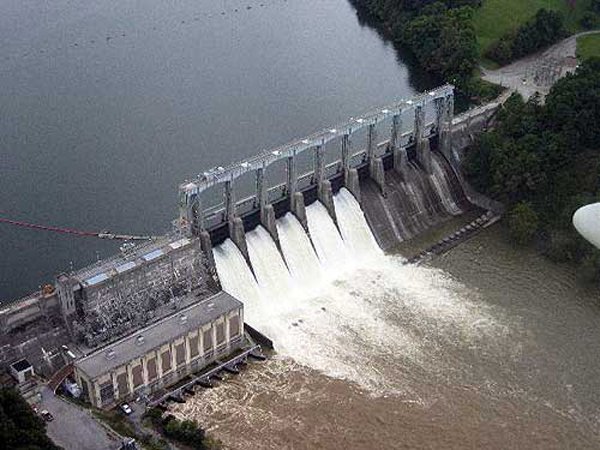
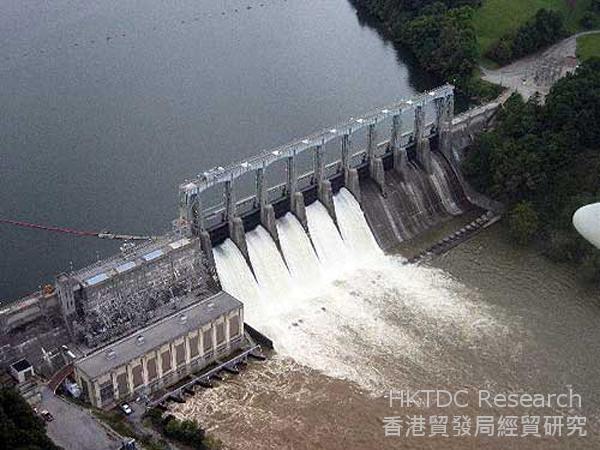
China and Laos jointly initiated work on the second phase of the 1,156 MW Nam Ou Cascade Hydropower Project earlier this year. The project, set on Laos' principal river, is seen as one of the country's key contributions to China's Belt and Road Initiative (BRI).
With Laos' GDP for 2016 recorded at just US$15.9 billion, China has shouldered the bulk of the cost of the $2.8 billion initiative in exchange for the concession to operate the hydropower installation for the next 29 years. Once completed, it will comprise seven dams and hydropower stations and have a projected capacity of 1,156 MW, together with an annual energy output of 5,017 GWh.
The lead on the Chinese side has been taken by Sinohydro, a Beijing-headquartered state-owned hydropower engineering and construction company, which entered into an agreement to develop the project on a joint-venture basis with Electricite Du Laos (EDL), the Laos state electricity corporation, which holds a 15% stake in the site. Under the terms of the project, all electricity generated will be sold to EDL. Significantly, Nam Ou is the first project for which a Chinese enterprise has secured the whole basin rights for planning and development.
With work on Phase One completed more than two years ago – comprising construction of the Nam Ou 2, Nam Ou 5 and Nam Ou 6 plants – the site generated its first electricity on 29 November 2015. In total, the capacity of Phase One is estimated at about 540 MW, almost half the total envisaged for the completed project. The groundbreaking ceremony for the second phase was held some five months later and marked the beginning of the work on the remaining plants – Nam Ou 1, Nam Ou 3, Nam Ou 4 and Nam Ou 7. This second phase is scheduled for completion in 2020.
Emphasising the importance of the initiative, Dr Khammany Inthilath, the Lao Minister of Energy and Mines, said: "Once completed, the Nam Ou Cascade Hydropower Project will have a major role to play in the reduction of poverty across Laos. In particular, it will boost the socio-economic development of Luang Prabang and Phongsaly provinces, immeasurably improving the living standards of local residents.
"It will also play an important role in regulating the seasonal drought problems in the Nam Ou river basin. Ultimately, we hope it will ensure downstream irrigation for the region's plantations on a long-term basis, while also reducing soil erosion."
Despite Inthilath's optimism, the project has attracted criticism on a number of fronts. Firstly, there have been concerns over the possible adverse environmental impact of such large-scale hydropower projects, particularly given the scale and number of hydropower developments currently under way along the Mekong River and its tributaries. In addition to the Nam Ou project, China is also involved with several other hydropower installations, including Don Sahong, Pak Beng and Xayaburi.
A second wave of criticism has come from outside Laos, with a number of neighbouring countries expressing concerns that the cumulative effect of the hydropower projects already under way may adversely impact on the flow of the river. To this end, the governments of Thailand, Vietnam and Cambodia have all gone on record as objecting to the expansion of Laos' hydropower programme.
It is the sheer scale of Chinese investment in Laos, together with the country's resultant indebtedness, that has triggered a third wave of criticism. By the end of 2016, with $5.4 billion worth of funding already in place, China was by far the largest overseas investor in Laos.
According the Lao government's own figures, by the end of 2016 Chinese companies had signed up for $6.7 billion worth of construction projects in the country – some 30.1% of the total earmarked for Laos' infrastructure upgrade. The overall scale of the deals already in place makes Laos the third-largest market for China in the ASEAN bloc.
Overall, though, taking an active role in China's Belt and Road Initiative has been seen as a good fit with Laos' long-held ambition to shift from being a land-locked nation to becoming more of a land-linked economy. Furthermore, Laos' ongoing co-operation with China on a series of energy projects has underlined the positive relationship between the two countries.
Highlighting this, while speaking at the launch ceremony for Phase Two of the Nam Ou Cascade Hydropower Project, Li Baoguang, the Chinese Consul-General in Luang Prabang, Laos' ancient capital, said: "This year marks the 55th anniversary of the establishment of diplomatic ties between China and Laos and there could be no better way of commemorating that than with the commencement of work on this joint venture."
Geoff de Freitas, Special Correspondent, Vientiane
Editor's picks
Trending articles
With work beginning on the Bangkok-Nong Khai link, rapid pan-Asian rail connectivity looks set to become a reality.

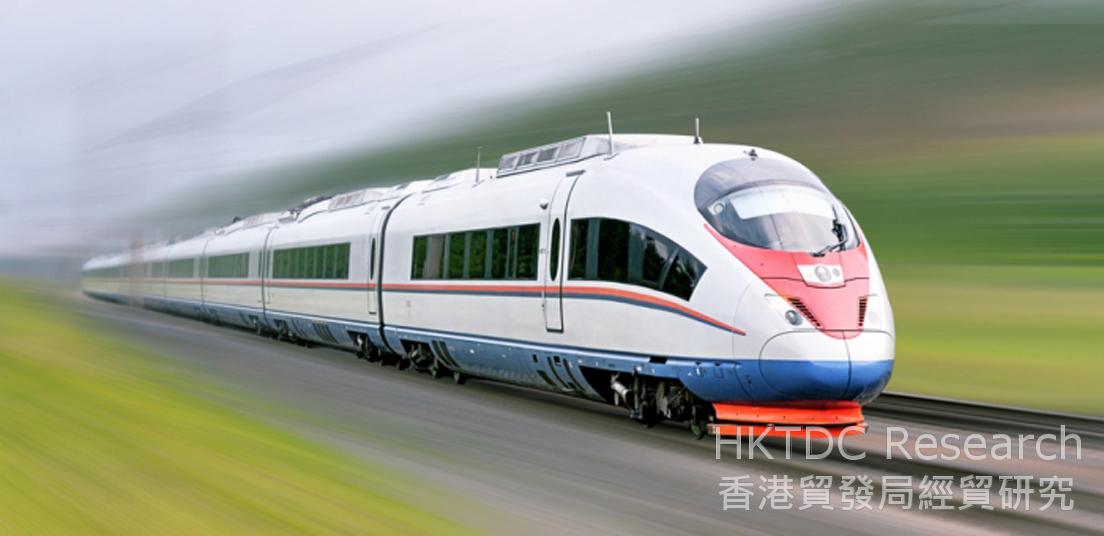
A key element of the High Speed Rail (HSR) connectivity plan for Asia, an integral part of China's Belt and Road Initiative (BRI), was given the go-ahead early last month. This saw the Thai government formally authorise work to begin on phase one of the Bangkok-Nong Khai HSR project, an essential link in the overall network.
Back in 2016, work began on the much-delayed Kunming-Laos link, another key component of the wider network. More recently, Indonesia approved the Jakarta-Bandung HSR route. Meanwhile, the tender process for the 90-minute Singapore-Kuala Lumpur railway is set to commence in Singapore and Malaysia, with the project scheduled for completion by 2026.
In the case of the Bangkok-Nong Khai HSR link, this four-year, THB179 billion (US$5.3 billion) project will result in the creation of a 253km rail connection between Bangkok and Nakhon Ratchasima, the Thai city seen as the gateway to neighbouring Laos. In total, six stations will be constructed along the route – Bang Sue, Don Mueang, Ayutthaya, Saraburi, Pak Chong and Nakhon Ratchasima.
The line actually forms the first part of a three-stage project that will ultimately connect with Nong Khai and then Kaeng Khoi (Sara Buri)-Map Ta Phut (Rayong). At present, no schedule has been agreed for the completion of the final two phases.
Although phase one is primarily being financed from within Thailand, the Thai government is reportedly in negotiations with the Export-Import Bank of China with regard to financing the required high-speed rolling stock. The overall plan is for Thai firms to build the track, while China will supply the trains and signal systems, and provide technical support.
The long-term objective is to establish a trans-Asia high-speed rail link capable of delivering a journey time of just four hours between Bangkok and Vientiane, the Lao capital. Beyond Laos, the proposed link would then extend to Kunming in southwest China, feeding into the mainland's rapidly expanding inter-city HSR network, which had about 22,000km of track as of the end of 2016. Heading south from Bangkok, the high-speed link would also significantly reduce journey times to Kuala Lumpur and Singapore.
Although the negotiations and many of the approval processes have proved to be slow and have faced frequent delays, Thailand remains committed to the proposed high-speed link, seeing it as set to play a key role in its own future economic growth. In the first quarter of 2017, boosted by recovering export levels, the Thai economy expanded by 3.3%, its fastest quarterly growth for four years. Despite this recent rally, the country's economic growth has been trailing its regional peers since 2014.
In 2016, the Thai economy grew 3.2%, with the Asian Development Bank predicting a 3.5% increase for 2017, rising to 3.6% in 2018. Although representing something of an uptick, these figures are still below the projected ASEAN average and remain significantly down on the 7.2% growth the country recorded back in 2012.
The advantages offered by the country's geographic location are central to its hopes of a sustained economic upturn. Set at the heart of continental Southeast Asia, Thailand shares borders with Myanmar, Laos, Cambodia and Malaysia, with the latter sharing a land border with Singapore, home to the world's second-busiest port. With a population of about 69 million and highly developed logistics and finance resources, Thailand is also seen as perfectly positioned to capitalise on the benefits of the free movement of people, products and capital guaranteed under the constitution of the ASEAN Economic Community.
It is also hoped that enhanced rail connectivity will boost tourism, which currently accounts for about 11% of Thai GDP. The country has already committed itself to becoming “the tourism hub of Southeast Asia” and has made considerable progress in terms of delivering on that. In 2016, for instance, it welcomed 32.6 million visitors, generating THB1.64 trillion in revenue. It is now looking to attract ever-increasing numbers of high-spending visitors from China, India and from throughout the ASEAN bloc.
At present, the Tourism Authority of Thailand is strongly promoting the country as a holiday destination in many of the mainland's second-tier and third-tier cities, having identified them as China's primary source of next generation tourists. Last year, about 8.8 million Chinese tourists visited Thailand, while the ASEAN bloc accounted for further 8.6 million visitors. Although the total number of tourists was up for the first half of 2017 year-on-year, the level of mainland visitors dropped by 3.83%.
This was largely seen as the consequence of a crackdown on so-called 'zero-dollar' trips – cheap packages offered to Chinese group travellers who are then pressured into spending at high-priced shopping and dining outlets by commission-only tour agents. Despite the disappointing figures, however, China remains – by a considerable margin – Thailand's number-one tourism source, followed by Malaysia, South Korea and Laos.
With the country's commitment to the pan-Asian HSR project now confirmed, its position as the connective hub for Southeast Asia's emerging high-speed rail links brings the transformation of rail transport across the continent one step closer. That promises to be good news for the wider tourist industry, as well as for exporters and importers across the region.
Geoff de Freitas, Special Correspondent, Bangkok