









Saudi Arabia
Closer mainland-Saudi Arabia links, as well as fuel independence for southwest China, attributed to BRI.
As 2017 drew to a close, Amin Nasser, the Chief Executive of Aramco, the state-owned Saudi Arabian oil giant, confirmed that the company's discussions with PetroChina, the largest oil producer on the mainland, were now at an advanced stage. Should terms be agreed, Dhahran-headquartered Aramco will secure a 30%+ stake in PetroChina's Anning refinery. Located in the southwestern Yunnan province, the refinery – one of China's largest oil-processing facilities – came on line in October last year and currently has a throughput capacity of 260,000 barrels per day (bpd).
At present, the Anning facility solely focuses on supplying local needs. In the longer term, however, it is seen as having an intrinsic role to play in meeting China's future energy demands, with the country estimated to require at least 2.2 million bpd of refining capacity by 2022. In addition to its throughput, however, the site is also seen as having considerable strategic importance.
Set close to the Myanmar border, the refinery is in line for a key role in the Belt and Road Initiative (BRI), China's ambitious international infrastructure development and trade facilitation programme. More specifically, it is expected to help close the development gap between China's megacities and its underdeveloped eastern and western states, while improving China's "connectivity" with the rest of the world – two of the BRI's primary objectives.
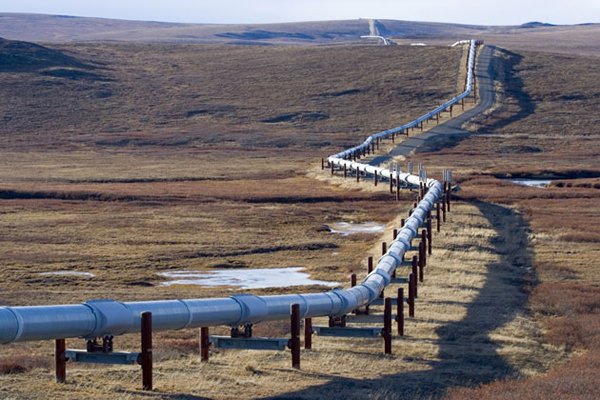
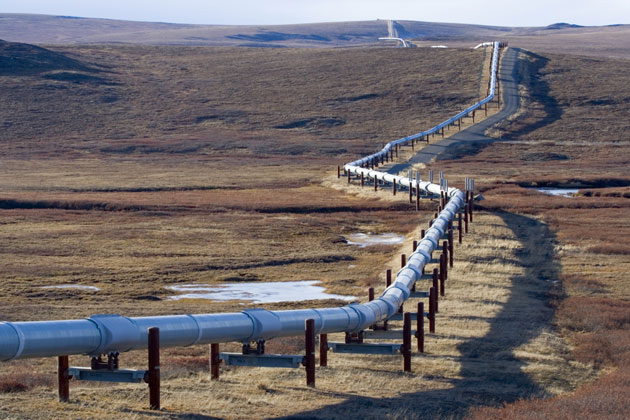
The Anning facility is supplied by the Shwe oil and gas pipelines, which stretch back to the western Myanmar port of Kyaukpyu. With a total length of 770km, the pipelines – jointly funded by the China Development Bank and the Myanmar Foreign Investment Bank – source from a nearby offshore natural gas field and the regular oil shipments arriving at the port. Overall, it is hoped this new arrangement will free southwest China from its reliance on slow and costly oil shipments from the Middle East and Africa, with all of its fuel requirements, instead, offloaded in Myanmar and then piped overland.
For many in China, the Shwe pipelines are seen as among the first fruits of the BRI. From the Saudi point of view, the arrangement also has a number of clear benefits. The investment in Anning – expected to be in the region of US$1-1.5 billion – is the cornerstone of the Kingdom's game plan when it comes to regaining the market share it lost to Russia, currently China's primary supplier of crude oil.
One of the key elements in Aramco's approach has been to strategically invest in a number of target refineries, with the quid pro quo being that these installations are then contractually tied into solely (or largely, at least) processing the company's crude. In line with this, PetroChina has already tacitly acknowledged that the deal will lead to an increase in the proportion of Saudi oil processed in Anning.
The deal also paves the way for more Sino-Saudi joint ventures, while also rebooting relations between the world's biggest oil exporter and the world's largest crude importer, with Saudi Arabia clearly keen to move things along as swiftly as possible. Indeed, addressing the likely legacy of the deal, Khalid al-Falih, Saudi Arabia's Energy Minister and the Chairman of Aramco, has gone on record as saying: "Our goal is to be not only the largest crude exporter to China, but also the largest in-market investor overall."
As a further sign of colliding mutual interest, PetroChina is said to be considering buying into Aramco via its massive initial public offering – possibly the world's largest – that is expected to take place later this year. Meanwhile, for its part, Aramco is believed to be eyeing other petrocarbon assets in China. These will be in addition to its existing agreement with the China North Industries Group (Norinco), one of the mainland's leading defence contractors, to build a new refinery and a chemicals complex in northeast China. It also holds a 25% stake in a Fujian-based refinery operated by Sinopec, another of China's oil and gas giants.
Geoff de Freitas, Special Correspondent, Riyadh
Editor's picks
Trending articles
 656 Views
Hong Kong-based Branded, a live media company, increasingly holds festivals and other events in Belt and Road countries and CEO Jasper Donat sees the Initiative as enhancing business, while Hong Kong is an easy and entrepreneurial centre for operations. With many events like music and YouTube festivals in Southeast Asia, Branded has most recently initiated events in Jeddah, Saudi Arabia.
Speaker: Jasper Donat, Co-Founder & CEO, Branded
Related Links:
Hong Kong Trade Development Council
http://www.hktdc.com
HKTDC Belt and Road Portal
http://beltandroad.hktdc.com/en/


 32 Views
viAct, a leading AI company specializing in ESG solutions, empowers governments and industries with AI-powered tools for streamlined administration and enhanced safety. Our trading and sales network spans the globe, with operations in Singapore, Vietnam, and the United Kingdom.
Our Scenario-based Vision Intelligence platform, proven in hundreds of deployments since 2016, transforms visual data into actionable intelligence for improved decision-making and risk mitigation.
For more details, please visit: https://www.viat.ai
9 Views
Archireef Limited is a nature-tech company providing an end-to-end, compliance-ready platform for ocean-related nature risk mitigation and adaptation. We combine nature strategy and diagnostics, eco-engineering built products, scientific monitoring, and regulatory-grade reporting into a single integrated offering aligned with frameworks such as IFC Performance Standard 6 (PS6) and TNFD. This enables clients to move from risk identification and site assessment to measurable biodiversity outcomes and defensible disclosures - reducing permitting and financing friction while strengthening long-term asset resilience.
Our solutions include 3D-printed Reef Tiles and modular Eco SeaWall Panels, designed to enhance habitat recovery and ecological performance on urban and industrial shorelines. Archireef works with governments, developers, port operators, and corporates, with an active pipeline across the GCC and Asia spanning ports, waterfront developments, energy and utilities, and lender-regulated projects.
9 Views
URBIS Limited was established in Hong Kong in 1977, and opened an office in Shanghai in 2004. URBIS has since undertaken over 2,500 projects ranging in scope from major strategic regional planning studies to design of small private gardens. Projects have included new town planning studies, landscape and recreation studies, major reclamation projects, urban renewal studies, golf and resort planning and design, and detailed design and construction supervision of a wide range of landscape projects for both public and private sector clients.
URBIS employs over 70 staff in Hong Kong (head office) and Shanghai. All key staff are experts in their own fields with a dedication to produce products of the highest calibre. Professions represented within the company include Landscape Architects, Planners, Architects, Urban Designers, Horticulturists and Certified Arborists. URBIS operates a quality assurance system certified under ISO 9001:2015.
URBIS has carried out more than 200 urban planning and landscape projects in China including Macau, most Provinces and the biggest cities. Renowned projects include Chengdu Taikoo Li Daci Temple; Guangzhou PARC Central; Beijing Wanliu World Plaza, Macau Grand Lisboa Palace Resort and The Venetian Macau.
URBIS has been involved in many non-Hong Kong investment projects such as the Qiddiya Race Course in Qiddiya, The Lagoons in Dubai, The Sanctuary Ho Tram Resort in Thailand and VietinBank Business Centre in Vietnam.
URBIS’ dedication to creating landscapes and environments of the highest quality has been widely recognised, with more than 250 local and international awards.