









Hong Kong
 1118 Views
A combination of Hong Kong’s multi-modal transportation model and IT solutions advantage allows On Time Express to cut freight transit times by up to 50 per cent. The Hong Kong-based logistics firm’s Spencer Lam says China’s Belt and Road Initiative also creates many new opportunities for traditional freight forwarding across the more than 60 countries under the Initiative.
Speaker:
Spencer Lam, Managing Director, On Time Express Limited
Related Links:
Hong Kong Trade Development Council
http://www.hktdc.com
HKTDC Belt and Road Portal
http://beltandroad.hktdc.com/en/


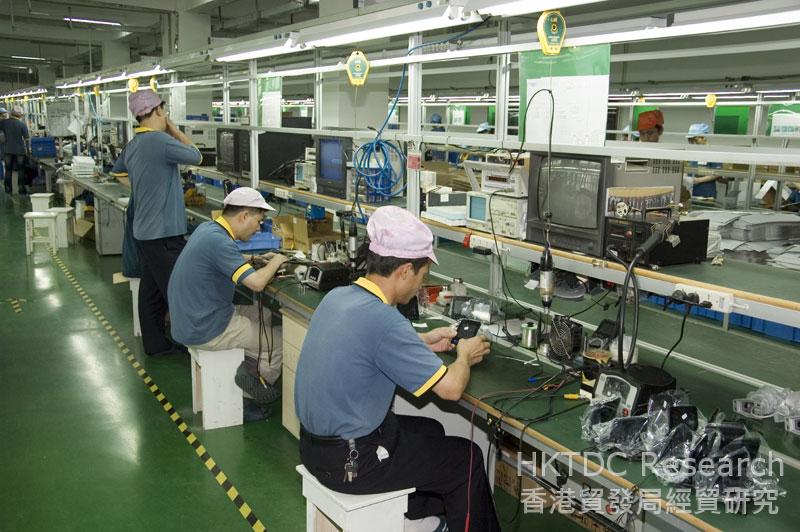
The industrial landscape in Asia is undergoing a fresh round of changes. Following the earlier large-scale relocation of production activities from many of the developed countries to lower cost regions in the late 1990s, industrial production activities soared across Asia, particularly in China, which emerged as a manufacturing power house. In recent years, however, the investment environment in China has begun to change. Rising labour and production costs across the mainland have prompted a number of foreign-invested and domestic enterprises to adjust their business strategies, frequently resulting in the relocation of part of their production activities to other locations within Asia, while their mainland business operations have been upgraded in a bid to enhance their competitiveness.
The Changing Business Strategies of Guangdong and Hong Kong Enterprises
Many of the local and Hong Kong enterprises engaged in production and trade in Guangdong actually began to adjust their strategies several years ago in order to cope with the changing investment environment of the Pearl River Delta (PRD) region. Among the steps taken was the relocation of a number of production and sourcing activities to lower-cost regions on the mainland.
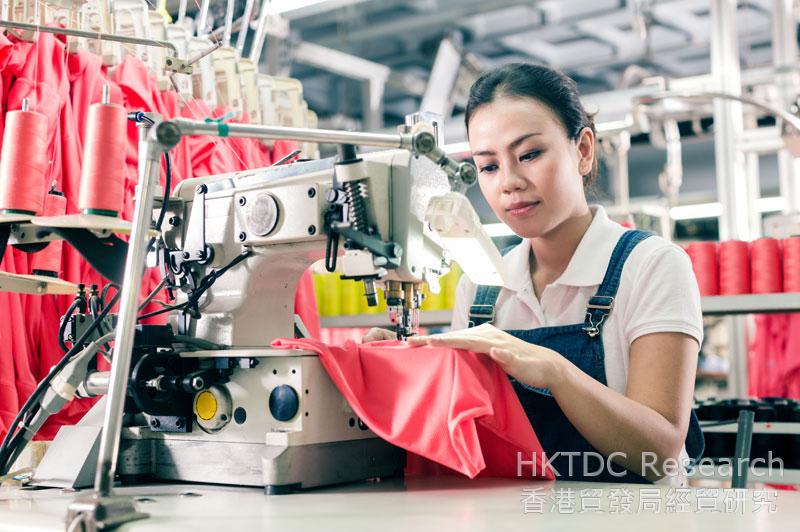
Quite a number of these businesses also opted to set up production facilities in one of the Southeast Asian and other countries set along the Belt and Road routes or to source various products and raw materials from such locations in the hope of reducing costs through the utilisation of external resources. As the growth of both the global and mainland markets has slackened over recent years, amid intensified competition from other low-cost regions, as well as controlling costs, many Guangdong and Hong Kong enterprises have had to take further action with regard to their transformation and upgrading. This has seen many of them aim to switch from labour-intensive production to high value-added business in order to secure sustainable development in the medium to long term.
Many such enterprises have invested heavily in automation in order to alleviate the problem of labour shortages. By using automated production lines, they also hope to produce items of a higher quality with a greater degree of precision in order to meet the increasingly stringent requirements of the international market and to compete more effectively. While some enterprises have increased investment in technological research and development in an effort to develop into a more high-tech business, others have chosen to build their own brands to raise the perceived value of their products. As the pace of globalisation has quickened, the division of labour between different industrial sectors has become increasingly well-defined, a development that has, in turn, made the management of the global supply chain ever more complicated. In this regard, many enterprises in Guangdong and Hong Kong have had to adjust their strategies in light of the changing external environment in order to achieve a more comprehensive transformation and upgrade.
The Developing China/Asia Supply Chain
The advanced supply chain system and range of production support services enjoyed by the PRD is, arguably, unmatched anywhere else in world. In view of this, when mapping out future business plans, the majority of Guangdong and Hong Kong enterprises have opted to retain and even expand their production activities in the PRD, Guangdong its neighbouring regions, often prioritising higher value-added and higher technology content. At the same time, as industrial activities in other low-cost regions across Asia have continued to thrive, the supply chain relationship between China and Asia (including the ASEAN countries) has become increasingly close, a development that, in turn, offers an expanded market and wider sourcing options for Guangdong and Hong Kong enterprises.
At present, many enterprises ship large quantities of industrial materials from the PRD and other mainland regions to Asia and to other countries along the routes of the Belt and Road in order to support local industrial production activities. A number of such enterprises have also relocated to one of these low-cost regions in a bid to enhance their sourcing activities. Typically, the end-products produced/sourced in these regions are then sold on to the more developed countries, while the industrial materials, parts and components sourced there are shipped back to the PRD and other mainland regions in order to support higher-end production activities. Across Asia, the division of labour has become more and more well-defined, while the trading relationships between upstream/downstream suppliers and manufacturers in China and in a number of different Asian regions has become closer and closer. This has, in turn, fuelled the rapid expansion of intra-Asia trade.
Optimising Regional Business Plans
Generally speaking, in many of Asia’s lower cost regions, production conditions are somewhat basic, while the logistics and support services still have much room for improvement and technical personnel remain in short supply. As such, the enterprises that have relocated their production lines to these regions tend to be mainly confined to low-end, labour-intensive processes, producing light industrial goods as well as parts and components with a longer life cycle. Apart from labour costs, enterprises shifting their production offshore must also take into account their overall costs, including transportation, logistics, materials supply and management.
Coupled with the longer turnaround time required for such cross-regional arrangements, this requires the establishment of a highly efficient supply chain management system if industry players are to capitalise on the opportunities arising from changes to the international market. In light of this, when any such enterprise seeks to map out its offshore production plans, it is advised to take into consideration a number of factors, most notably whether the proposed production activity is compatible with the resources of the local market. As additional considerations, the trade barriers and preferential tariff policies implemented by the EU, US and other export markets may also impact on the regional production and sourcing plans of many enterprises.
Overall, as competition in the international market intensifies and the global supply chain continues to evolve, Guangdong and Hong Kong enterprises can no longer solely rely on their facility to lower direct production costs as a way of remaining competitive. Instead, they will have to proactively adopt a number of alternative strategies, including transformation, upgrading and enhancing business value. They will also need to take into consideration such concerns as overall market demand and cost benefits, while looking to optimise their regional business plans in order to increase their competitive edge.
Against this backdrop, Guangdong and Hong Kong should strengthen co-operation when it comes to formulating the necessary policies for promoting the further development of commercial entities in both locations. In particular, every effort will need to be made with regard to the application of smart manufacturing technology as a means of pursuing industrial upgrading, while action should also be taken to promote technological co-operation between enterprises in both locales and to accelerate the pace at which technological achievements are commercialised. Furthermore, both Guangdong and Hong Kong should look to improve the transport and logistics networks that connect them in order to ensure their respective enterprises can effectively plan for business development across the region. Steps should also be taken to encourage all such enterprises to work together when “going out” to capitalise on any emerging Belt and Road opportunities. They should also look to make best use of Hong Kong’s professional services sector in order to formulate long-term developmental strategies and to effectively manage risk. All the while, they need to strengthen their connections with Asia’s growing regional supply chain and make better use of the various regional resources available in order to expand both the mainland market and the wider export opportunities.
Please click here to purchase the full research report.
Editor's picks
Trending articles
1078 Views
The Hong Kong Mass Transit Railway Corporation’s MTR Academy offers the railway’s best experiences and practices for supporting Belt and Road rail developments, says Academy President Morris Cheung. The MTR has a literal and figurative “track record” says Valentin Reyes of Manila’s Light Rail, while Hungary’s MAV learns from MTR’s financial sustainability and service.
Speakers:
Valentin Reyes, HSEQ Director, Light Rail Manila Corp
Morris Cheung, President, MTR Academy
Ilona David, President and CEO, MAV Zrt
Related Links:
Hong Kong Trade Development Council
http://www.hktdc.com
HKTDC Belt and Road Portal
http://beltandroad.hktdc.com/en/
Promoting the Development of Overseas Co-operation Zones: Hong Kong’s Role and Opportunities
From the above cases of economic and trade co-operation zones in Asia, it is apparent that they are beneficial to the “going out” of mainland enterprises to develop overseas business and expand sales opportunities in Belt and Road markets. They are also beneficial to enterprises in fine-tuning their overall production layout by making use of local labour forces and other advantages in concert with existing production activities on the mainland. Meanwhile, with increases in investment and production in Southeast Asia, a regional supply chain network that connects to China has gradually taken shape and is getting increasingly tight-knit and complex, promoting commercial logistics and trade development in the process.
In the course of their development, these co-operation zones can also provide Hong Kong with outbound investment opportunities. An overview of the cases mentioned above indicates that manufacturers and traders in Hong Kong, particularly SMEs, can consider using these co-operation zones as platforms to forge into respective local markets or to set up a base to capitalise on local production advantages to expand into the international market. Those in Hong Kong engaging in housing and infrastructure construction, transportation (including container terminal planning and operating), warehouse management and logistics can also consider collaborating with the co-operation zones through investment or providing related services to facilitate the sustained development and competitive advantages of the zones concerned.
Challenges Facing the Zones and Hong Kong Services
According to a study report published by the World Bank[1], many of the numerous special economic zones and industry parks (inclusive of industrial parks and science parks) around the world fail to develop sustainably. The success or failure of the development of an industry park is dependent not solely on the investment policy and preferential terms offered by the respective host country or region. It also depends very much on factors such as the site location, planning and design, as well as the level of management of the park in question.
This is particularly so because, as competition is intensive among different countries or various regions of the same country, the corporate-tax incentives offered by parks are basically similar. Therefore, an over-reliance on preferential tax treatment but a lack of effective communication and co-ordination between the government and the stakeholders of a park may lead to a poor connection between the park and the surrounding traffic networks as well as an undesirable labour supply and other supportive and promotional services. This would, therefore, be the main obstacle to an industry park’s sustained development and corporate investment.
In the early stages of developing special economic zones and industry parks, some South-east Asian countries have been concerned mostly with promotional activities to attract enterprises and investment, neglecting to establish a set of clear and sound legal and regulatory systems. Such systems would include a co-operative framework for joint public-private development of the zone or park, the specific rights and responsibilities of a zone/park developer and operator, a zone/park design aligned with the planning and infrastructure construction in peripheral cities, and environmental protection and emissions standards.
In the early years in some countries such as Vietnam, in their eagerness to attract private developers to participate in the development of industrial parks, local governments were reliant on signing investment contracts with individual developers without a standardised overall negotiation framework. This led to a large disparity in preferential or concession treatments, resulting in vicious competition among parks and affecting the processes of approving individual local investment projects by the state-level departments concerned. In some cases, even after an investment had been committed, when a project was found to be inconsistent with local conditions or affecting other sectors or economic aspects, the government would only then impose additional restrictions or demand the reopening of negotiations, increasing the investor’s costs and directly affecting the sustainable development of the whole project.
To ensure that special economic zones and industry parks would better serve their purposes – such as attracting investment, creating jobs and driving industrial upgrading – and that the targets of the 2025 development blueprint of the ASEAN Economic Community could be achieved, the ASEAN countries reached consensus at the ASEAN Ministers’ Meeting in August 2016. They agreed to adopt the ASEAN Guidelines for Special Economic Zones Development and Collaboration to serve as a basis for the effective planning and regulation of future zones and industry parks.
Referring to the above case analyses of industry parks in Vietnam, Cambodia and Malaysia, we now attempt to explore possible roles for Hong Kong in promoting the development of China’s overseas co-operation zones regarding location selection, planning/design and management.
Investment Analysis and Due Diligence
The 10 ASEAN countries are not only very different in their economic and population structures, but also in their labour markets, wage levels, stages of economic development, investment policies and in the incentives they offer. Though most ASEAN countries are using industry parks as the main vehicle to drive economic development and attract investment, there are substantial differences in the actual production environment and conditions among individual parks. These include, for example, the park’s location, conditions of the local supply chain, the standards of logistics facilities and services in peripheral areas, the efficiency of inland and international transportation, environmental requirements, the adequacy of skilled and unskilled labour supply, local training of skills and management personnel, etc. All these issues will eventually affect the sustained development capability and competitiveness of a zone.
Therefore, when carrying out investment planning and selecting a location, an investor must properly evaluate the country, the region and the policies concerned to ensure that the development of the zone will align with the local medium- to long-term development plan. This will minimise the hidden risk that an investment project may not have the blessing of the government, and will avoid the difficult scenario of having to co-ordinate and negotiate with the local government to obtain policy incentives and other support. Nevertheless, most enterprises say they do not have sufficient knowledge about the politics, culture and legal regimes of the relatively backward investment locations along the Belt and Road routes, including some of the ASEAN countries. Their problem is compounded by the fact that information is less than transparent in these countries, so it is difficult to ensure that an investment project is in compliance with the legal requirements of the country concerned, or to assess the medium- to long-term benefits and potential risks of the investment in question. Therefore, there is a need to seek professional services support.
Hong Kong’s service providers in this field are not only familiar with the legal and investment regimes of advanced countries, but can also utilise their extensive international networks in carrying out effective risk assessment for mainland enterprises intending to invest in emerging or Belt and Road countries. They can also offer strategic recommendations regarding the feasibility of an investment project, and can conduct special surveys on key or sensitive issues such as the environmental policy and tax incentives of an investment location. This can help investors control risks and ensure the sustainable development of a project after an investment has been made.
Zone/Park Planning and Management
The United Nations Industrial Development Organization (UNIDO) estimates there are more than 1,000 special economic zones in the ASEAN region, of which 893 are industrial parks. In Vietnam alone, there are more than 320 manufacturing-oriented industrial parks. As approximately half of the foreign direct investments entering Vietnam have ended up in industrial parks, competition among them is very keen.
Some industrial parks in Asia are designed so poorly that overcrowding and traffic congestion are common, while a number of old-style park premises lack green spaces and lifestyle recreation facilities, all indirectly leading to a host of labour, pollution and social problems. At the other extreme, some industrial parks are developed so ahead of time that their size and facilities far exceed actual demand. Consequently, enterprises setting up operations in these parks must bear very high management fees, unless they obtain subsidies from the government or the developer.
Furthermore, the designated new economic zones or industrial parks in some emerging countries are located in relatively remote areas in order to play a leading role in regional development and growth. Investors and developers in such cases not only have to concern themselves with the development of these zones, but they must also handle and provide transportation and other infrastructure to connect them to peripheral areas and the main ports.
Take Vietnam’s Longjiang Industrial Park as an example. In response to the expected opening of the Ho Chi Minh City-Trung Luong Expressway in 2010, the management company of the park had been upgrading its internal road system in earnest, as well as speeding up negotiations with the local government to facilitate road construction connecting the park to the expressway and to raise its overall transportation and logistics efficiency.
Hong Kong is a hub for infrastructure and real property services boasting more than 2,100 world-class companies engaging in architectural design, surveying and engineering services. These companies have a lot of experience in developing Hong Kong and overseas businesses and are capable of supporting the mainland in developing various types of industry parks overseas by offering a comprehensive range of project consultancy and management services. These include strategic recommendations in architectural design, project supervision, government-developer collaboration, infrastructure development, sewage and waste treatment, etc. Even for projects as large as the East Coast Economic Region in Malaysia, Hong Kong’s services sector can help add value and inject sustainable development planning concepts through their experience in participating in the development of large-scale integrated communities and the integrative utilisation of infrastructure and land.
|
Hong Kong Experts Participate in Delhi-Mumbai Industrial Corridor Project AECOM provided full programme management services for the Dholera Special Investment Region (DSIR) as part of the Delhi-Mumbai Industrial Corridor (DMIC) Development Corporation’s new cities infrastructure programme. The programme aims to transform India’s manufacturing and service base by developing a number of smart, sustainable and industrial cities along the 921-mile corridor between Delhi and Mumbai, the first to be developed being the 347-square-mile township of DSIR. AECOM’s project scope consists of implementing all base infrastructure including water supply, sewerage, roads, highways, power and rail; performing extensive flood-control and drainage measures to protect the future city; and overseeing the development and execution of all public-private partnership delivered projects, such as the railway connecting Ahmedabad to Dholera, industrial waste-water treatment and a potable water-treatment plant. In the process of developing new towns in Hong Kong, AECOM’s experts had to overcome the land constraints and technical challenges while being able to appreciate the needs of these developments at various stages, from engaging stakeholders, conceptual designs to construction, enhancement to completion, and finally making the entire project more resilient within a short timeframe. The unique experience, advanced technology and knowledge used can be readily put into practice in the Delhi-Mumbai Industrial Corridor. [The Hong Kong specialists of AECOM have also participated in a number of ASEAN infrastructure projects. For details, please visit AECOM’s website at www.aecom.com/hk/about-aecom/]. Remark: The above case is published on HKTDC’s Belt and Road web page: www.beltandroad.hktdc.com/ |
As far as the management of zones and parks is concerned, it should be noted that ASEAN’s guidelines for developing and co-operating in special economic zones permit that the developer and operator of an industry park can be different entities. Professional operation services providers offer management and real properties letting services, public utility services such as water and power supply, as well as waste and sewage treatment. They can also offer a host of value-added services such as the setting up of training centres and the provision of services in healthcare, childcare, transportation and employee recruitment.
In Hong Kong, other than local professional real property management service companies, there are also a large number of major international management services companies and consultancies. In addition to providing outstanding management and operation services, these companies are also in a position to recruit clients and match partners for zones and parks through their transnational client networks.
It is highly advantageous for the development of an industry cluster if a park can identify a suitable anchor investor that matches its positioning. The SSEZ has now attracted an industry cluster of about 100 enterprises from the mainland, Europe, the US and Japan that are engaging in textiles, light-industry products and accessories.
Environmental Protection Services
Belt and Road countries are mostly low- to medium-developing economies, but as they gradually industrialise, more and more of their residents are concerned about the resultant pollution. This has forced government planners and developers to pay more attention to environmental protection in industry related projects, and environmental assessment has become one of the investment requirements in many co-operation zones.
As these zones are mostly established in undeveloped or rural areas, industrial development will inevitably impact on the environment. Residents close to some co-operation zones have staged protests against the pollution brought about by mainland enterprises, impacting the zones’ long-term development. Moreover, planning and building environmental protection infrastructure takes time and requires adequate funding. Should the building of such infrastructure lag behind the zones’ development projects, irreparable environmental and pollution problems may result.
Hong Kong’s environmental-protection firms are adept at providing international-standard services in sewage treatment, pollution control and resource economisation. They are also experienced in advanced environmental management and enjoy a good international reputation. Hence they can provide the co-operation zones concerned with various types of environmental services as well as environmental assessment, environmental protection architectural/system design and related advisory services that are in compliance with the standards in advanced countries.
Production and Logistics Services
Belt and Road countries are mostly lacking in key production materials as well as other industrial materials and parts/components. Nor do they have enough skilled workers, technicians and engineers. While on the one hand they have to rely on the importation of certain materials to support production and operations, on the other hand they need different types of skilled personnel to provide production technology support. By virtue of its extensive international logistics network, Hong Kong is capable of effectively linking up goods transportation networks in mainland China, in Belt and Road countries and other important production bases, providing access to the huge production material support from the mainland and from within the region. Moreover, because of its ready supply of personnel in technology application and production technology, and also because of its convenient transportation network, Hong Kong can at any time provide extensive key parts and components, industrial materials and technological support to the production facilities set up by mainland enterprises in the Belt and Road co-operation zones.
|
Demand for Integrated Logistics Services Kerry Logistics (HK) Ltd points out that as ASEAN’s economy is becoming increasingly buoyant and mainland enterprises often choose to invest in factories in the ASEAN market as part of their “going out” strategy, the demands of ASEAN and mainland enterprises operating there for logistics and transportation services is bound to rise rapidly. In a move to effectively serve ASEAN and mainland clients, Kerry Logistics, as a pioneer service provider in cross-border transportation in ASEAN, has launched Kerry Asia Road Transport (KART), an overland cross-border transport network linking ASEAN countries and China, to supply high-efficiency long-haul overland transport and door-to-door delivery services. (Note 1) As the pioneer in creating an ASEAN-wide cross-border road transportation network, Kerry Logistics has successfully linked Singapore, Malaysia, Thailand, Vietnam, Cambodia, Laos and Myanmar directly with mainland China. It provides customers with long-haul trucking as well as sea-land and air-land services in these geographically challenging areas. (Note 2) In its recently announced 2016 annual results, Kerry Logistics says its business in other parts of ex-Greater China reported healthy performance. Kerry Logistics’ express business, which covers Thailand, Vietnam, Malaysia and Cambodia, continues to capture growth opportunities arising from increased intra-ASEAN e-commerce volume and cross-border logistics activities. (Note 3) Note 1: For further details, please see HKTDC research article (September 2015): Hong Kong Services for Mainland’s Outbound Investment (5): High-end Logistics Services Help Bolster International Business Expansion Note 2: Source Note 3: Source |
Furthermore, as supply chains become increasingly globalised, responsive and efficient, enterprises have to meet their stringent logistics and distribution requirements. Therefore, industrial parks that want to attract enterprises to invest in developing industry clusters have to plan and develop relevant transportation and logistics services.
MCKIP in Malaysia is an example in point. Since it is in collaboration with Kuantan Port to set up a bonded area to attract investment in export-oriented heavy industry and high-tech industries, the future development focus of Kuantan Port is to upgrade its container handling capability and improve its port logistics services. Hong Kong’s logistics services providers have extensive experience in the design of operational processes and the management of operational systems and IT for container terminals. In fact, they have practical experience and track records (including participation in the development of Shenzhen Special Economic Zone) in utilising related infrastructure support, equipment layouts and advanced operational processes in enhancing the overall operational efficiency of ports. Therefore, they are well qualified to offer help to Kuantan Port in developing the business of transporting goods and containers internationally.
Financing and Insurance Services
Enterprises are the main investors in the industrial zones developed overseas by China. Although zones that have passed required assessments are qualified to receive special subsidies and financing services, most funding would still have to be raised in the market. Hong Kong is one the world’s three major international financial centres, and funds are available from various sources and a wide range of financing products. As such, Hong Kong is in a position to match and accommodate funds and meet the insurance needs of different maturation, exchange rates and asset risks.
Adding to this are Hong Kong’s advantages in being an important business platform in the Asia Pacific with a sound legal system, free-flow of capital and information, and a full complement of professional services in law, accounting, etc. In investing in Belt and Road countries, mainland enterprises can make use of Hong Kong’s professional project evaluation and sustainability assessment services to bring in external funds to finance their overseas investment projects and other business ventures. They can also set up a regional office in Hong Kong and capitalise on Hong Kong’s highly efficient business environment to co-ordinate investment projects in mainland China, Asia and Belt and Road countries to enhance overall operational efficiency.
Furthermore, Hong Kong’s services platform can offer different investment options to mainland enterprises, including the use of private-equity investment funds. As a way to diversify risks, mainland investors can also make use of Hong Kong’s international network to identify offshore partners to carry out equity joint investment and other joint-stock co-operations. Mainland enterprises can also make use of their investment partners’ advantages to overcome their own limitations. By generating synergy between their partner’s advantages and their own knowledge and expertise, they can expand the business scopes of their Belt and Road investments.
Conclusion
Over the years, Hong Kong’s service providers have helped many mainland enterprises handle trade and investment business in Hong Kong and overseas markets. In supporting the overseas investment of mainland enterprises, Hong Kong has definite advantages. These include the availability of a full range of international standard professional services in finance, law, taxation as well as risk assessment in sustainable operation and international certification and testing.
As such, Hong Kong is an important springboard from which mainland enterprises can make overseas investments. As the mainland implements the Belt and Road Initiative and encourages the “going out” of enterprises to invest overseas, outbound investment activities, including investment in setting up Sino-foreign co-operative industrial parks, will become increasingly common.
Although mainland enterprises have definite advantages in the general contracting of projects, Hong Kong’s related professional and business services excel when it comes to specialised project segments. Hong Kong also has extensive international experience and is particularly strong when it comes to grasping and analysing overseas information. Therefore, strengthening co-operation between Hong Kong’s services sector and mainland enterprises would be beneficial to promoting China’s overseas economic and trade co-operation zones.
Please click here to purchase the full research report.
[1] Special Economic Zones: Performance, Lessons Learned and Implications for Zone Development, Akinci G and Crittle J, 2008, World Bank
Belt and Road: Development of China’s Overseas Economic and Trade Co-operation Zones (1)
Belt and Road: Development of China’s Overseas Economic and Trade Co-operation Zones (2)
Belt and Road: Development of China’s Overseas Economic and Trade Co-operation Zones (3)
Belt and Road: Development of China’s Overseas Economic and Trade Co-operation Zones (4)
Editor's picks
Trending articles
Malaysia-China Kuantan Industrial Park in Malaysia
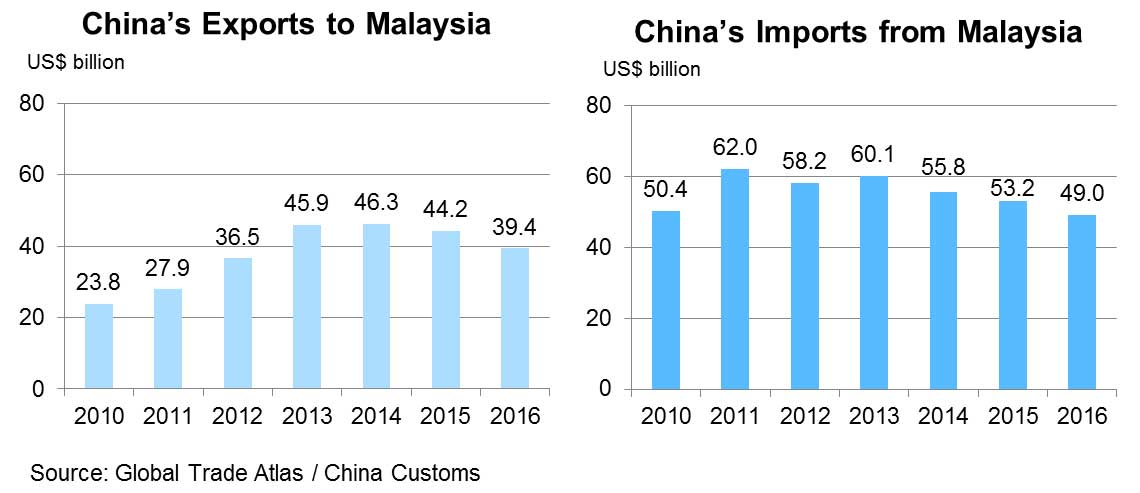
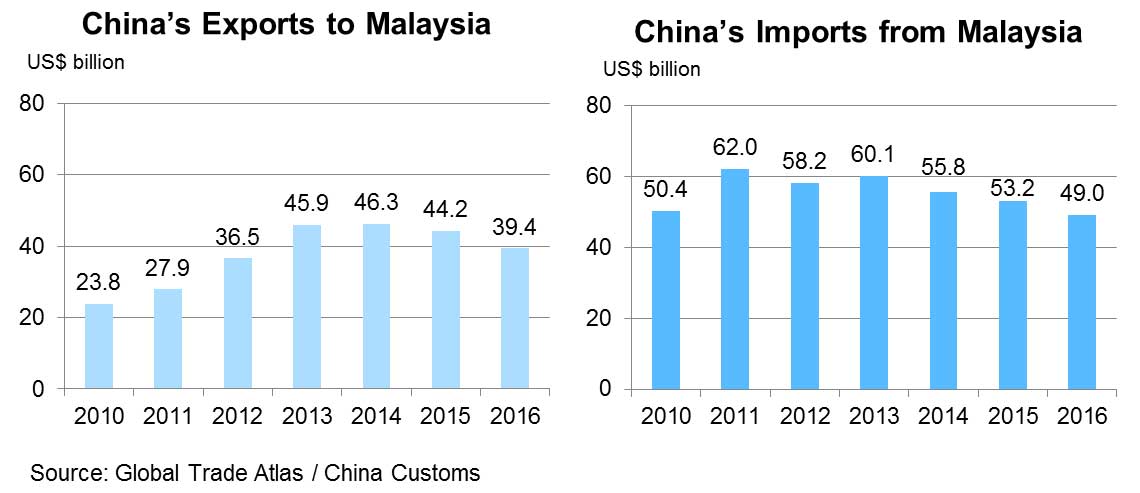
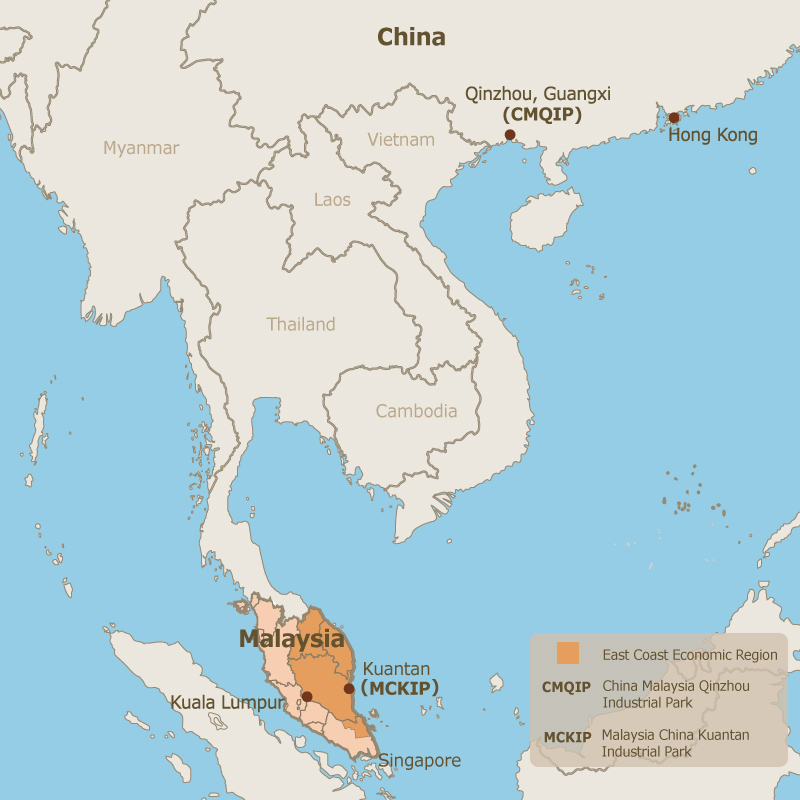
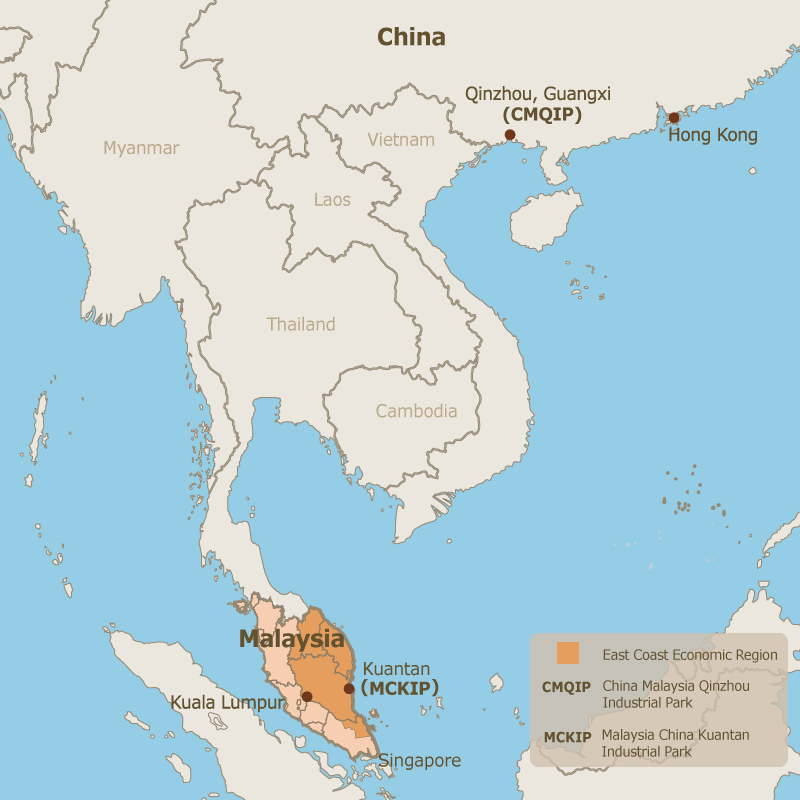
Malaysia, as a major ASEAN economy and an important gateway along the 21st Century Maritime Silk Road, is strengthening its industrial co-operation with China. Industrial parks have been established in Qinzhou in China’s Guangxi Autonomous Region (the China-Malaysia Qinzhou Industrial Park), and Kuantan in Malaysia (Malaysia-China Kuantan Industrial Park, MCKIP). Through this “two countries, twin parks” model of co-operation, China and Malaysia hope to strengthen regional supply chain management, push forward the development of industrial clusters, and promote trade and investment between the two countries. The “Port Alliance” will also be established to improve customs efficiency and expedite trading between the two countries through experiments on joint customs clearance, information sharing and other mechanisms. Malaysia is among China’s largest trading partners and major investment destinations in ASEAN, with the volume of bilateral trade reaching US$88.4 billion in 2016.
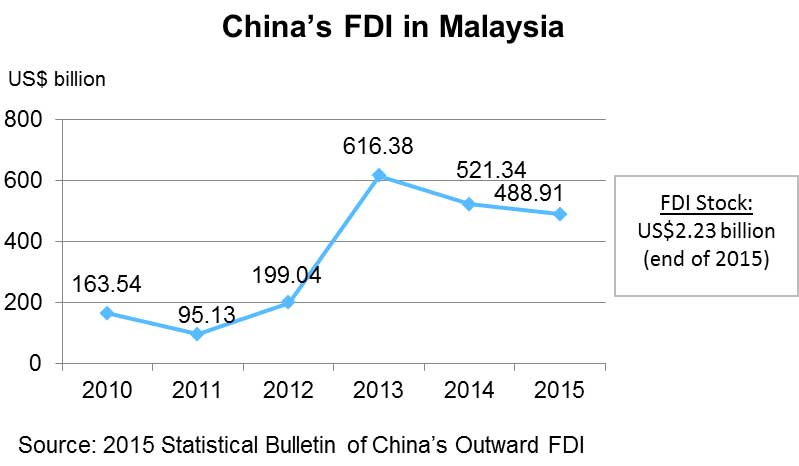
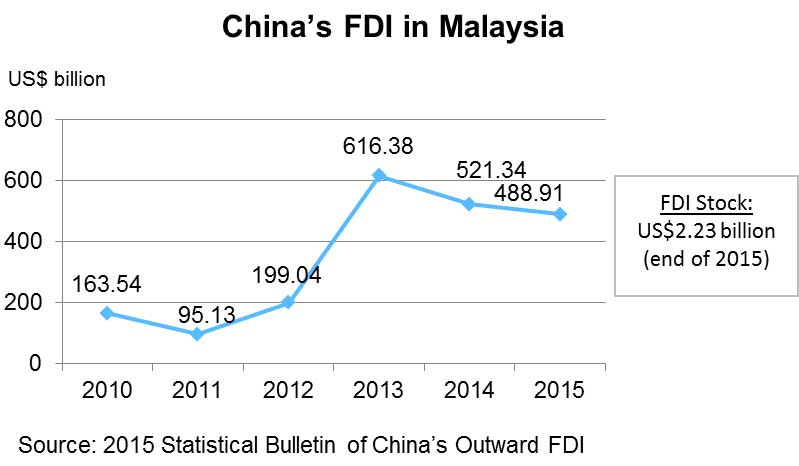
MCKIP is a bilateral Malaysia-China government-to-government collaboration. MCKIP Sdn Bhd (MCKIPSB) is a 51:49 joint venture between a Malaysian consortium and a Chinese consortium. IJM Land holds a 40% equity interest in the Malaysian consortium; together, Kuantan Pahang Holding Sdn Bhd and Sime Darby Property hold 30% and the Pahang State Government holds the remaining 30%. The 49% stake of the Chinese consortium is held between the state-owned conglomerate Guangxi Beibu Gulf International Port Group (with a 95% equity interest) and Qinzhou Investment Company (the remaining 5% interest).
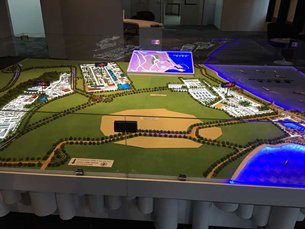
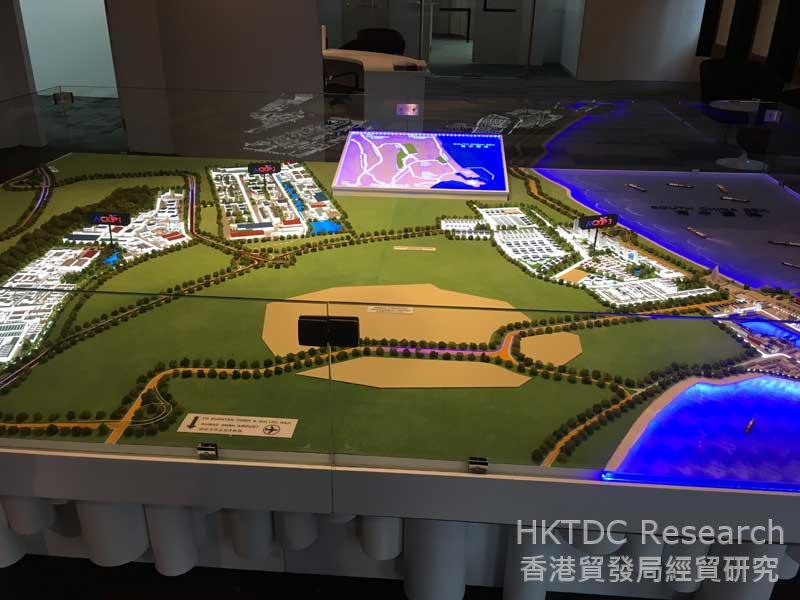
MCKIP is located in the East Coast Economic Region (ECER) in Malaysia. In 2008, the Malaysian government established the East Coast Economic Region Development Council (ECERDC) in order to spearhead the economic development of the East Coast. The five key economic sectors of the ECER are: (1) manufacturing, (2) oil, gas and petrochemicals, (3) tourism, (4) agriculture and (5) human capital development. The launch of MCKIP in 2013 has been one of the key milestones in the economic development of the East Coast.
MCKIP targets heavy industry and high-technology industry. These include energy saving and environment friendly technologies, alternative and renewable energy, high-end equipment manufacturing and the manufacture of advanced materials.
There are three distinct phases within the industrial park. MCKIP 1 consists of 1,200 acres of land. The first investor to be established there is Alliance Steel (M) Sdn Bhd, which was granted approval to invest RM5.6 billion in its facility in 2016. Its production site, which will cover 710 acres, is currently under construction, and the steel mill is expected to be operational by the end of 2017. Once in full service, Alliance Steel expects to generate more than 3,500 jobs.
While MCKIP 2 (1,000 acres) is designated for high-end and high-technology industry development, MCKIP 3 (800 acres) is designated for multi-purpose development (including light industry, commercial property, residential areas and tourism parks). Since MCKIP is intended for an assortment of different business opportunities, it is believed that it will attract foreign investment from a wide variety of countries for various purposes.
Many China-based companies are planning to expand their production bases to MCKIP. For example, Guangxi Zhongli Enterprise Group Co Ltd will invest RM2 billion for the development of manufacturing of clay porcelain and ceramic in MCKIP 1. Meanwhile, ZKenergy (Yiyang) New Resources Science and Technology Co Ltd will invest RM200 million for the development of an engineering and production-based centre that will produce renewable energy for MCKIP’s own consumption. China’s Guangxi Investment Group Co Ltd will invest RM580 million on an aluminium component manufacturing facility. Another is Malaysia’s LJ Hightech Material Sdn Bhd, which will invest RM1 billion in a high-technology production-based plant to produce concrete panels and activated rubber powder for the construction industry. The construction works for these projects in MCKIP are expected to begin in the first quarter of 2017. Once completed, they will create more jobs in Malaysia.
Tax and Investment Incentives
In addition to Malaysia’s current incentives package, the Ministry of International Trade and Industry (MITI), together with the ECERDC, has offered special incentive packages for investors in MCKIP (subject to terms and conditions). Below are some highlights of these fiscal incentives:
- Fifteen years of 100% corporate tax exemption from the year of statutory incomes derived, or 100% Investment Tax Allowance on qualifying capital expenditure incurred for five years. (Corporate income tax rate currently stands at 24% in Malaysia.)
- 15% of income-tax rate for qualified knowledge workers in MCKIP until 31 December 2020. (People in the highest income bracket are currently taxed at 28% in Malaysia.)
- Import duty and sales tax exemption for raw materials, parts and components, and plant machinery and equipment.
- Stamp duty exemption on transfer or lease of land or building used for development.
- Investors can apply for Unit Kerjasama Awam Swasta (UKAS) facilitation fund up to 10% of project cost or RM200 million (whichever is lower) to finance the development of basic infrastructure. UKAS was set up by the Public Private Partnership Unit of the Prime Minister's Department.
Port and Logistics Services
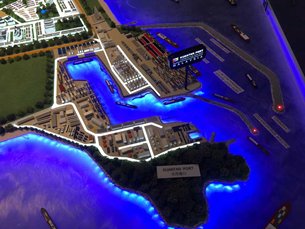
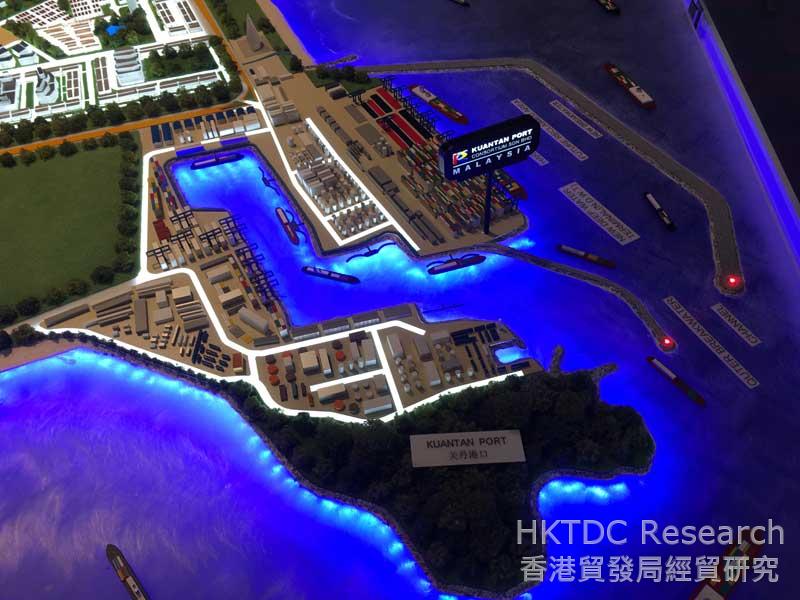
Kuantan Port, located 10km from MCKIP, is the gateway for outbound transportation and logistics services in Malaysia’s East Coast Economic Region. Kuantan Port currently handles mainly break-bulk cargoes and liquid-bulk cargoes, such as steel pipes, sawn timber and plywood, iron ore, fertilisers, palm oil, vegetable oil, mineral oil and petrochemical products. Container business mainly handles automotive components for Pekan Automotive Industrial Park.
Kuantan Port is actively developing new terminals as part of its plan to increase its capability in handling break-bulk cargoes and containers. It is also co-operating with MCKIP in developing a bonded area in order to enhance the business content of the port and the industrial park. It is hoped that the bonded facilities will attract investors to set up export-oriented processing plants in heavy industry and high-technology industry, and that this will in turn boost Kuantan Port’s container-transport business and make it an important container transshipment port in eastern Malaysia.
Phase 1 of the Kuantan Port extension project, which is due for completion in 2018, will continue to handle incoming and outgoing break-bulk cargo. Phase 2 will focus on the construction of a deep-water port for the handling of ocean-going container transport. It is estimated that Kuantan Port will be able to berth and handle 200,000 dwt vessels, including 18,000 TEU ocean-going container ships, and provide port users with incoming and outgoing container transport service to ASEAN and international markets.
Kuantan Port is operated by Kuantan Port Consortium Sdn Bhd (KPC) with a strong network of global shipping connections. At present, major shipping lines that operate at Kuantan Port include Evergreen Marine Corporation Ltd, Jardine Shipping Services, Malaysia International Shipping Corporation Bhd and Pacific International Lines. They mainly serve MCKIP and the Kuantan Port Industrial Area, the Gebeng Industrial Estate and the Pekan Automotive Industrial Park.
KPC told HKTDC Research that since the Kuantan Port was lacking in container business and had little or no experience in operating bonded facilities or international customs mutual assistance, it was keen to seek the co-operation of investors with relevant experience in Hong Kong and elsewhere to develop its container-port business. Since Hong Kong operators have rich experience in business process design, operational systems and information-technology management of container terminals, including using relevant infrastructure facilities, equipment layout and advanced business processes to improve the overall operating efficiency of ports, they should be able to assist Kuantan Port in further developing its international cargo and container shipping business.
Port Business Experience Hutchison Whampoa Limited (HWL) is one of the largest listed companies on the main board of the Hong Kong Exchanges. Its core business includes port and related services. Its flagship company – Hong Kong International Terminals Ltd – is located at the city’s Kwai Chung and Tsing Yi Container Terminals. HWL and its group companies operate a network that covers major ports around the world. In ASEAN, for example, Hutchison Port Holdings Ltd operates container terminals and related businesses in Myanmar (Thilawa in Yangon), Thailand (Laem Chabang Port), Malaysia (Port Klang), Indonesia (Port of Tanjung Priok to the north of Jakarta) and Vietnam (Ba Ria – Vung Tau). Source: Web page of Hutchison Whampoa Limited and Hutchison Port Holdings Ltd |
Future Plans
In June 2016, Kuantan Port received approval from Malaysia’s Ministry of Finance to establish a free-zone port. A bonded area will be set up in some port areas, including sections of MCKIP. Economic activities in the bonded areas will be exempt from tariffs, consumption tax, sales tax and service tax. Companies in the industrial park will be offered a variety of value-added services, including transshipment, trading, unpacking and distribution, inspection and testing, repackaging and labelling. Against this backdrop, Kuantan Port will promote the gradual development of MCKIP into an ideal platform for assisting investors in tapping the market in Malaysia, and even ASEAN.
With regard to the development of ocean-going container transport services and bonded ports, steps will be taken to assist MCKIP in attracting investment from China-based enterprises by helping them leverage the strengths of China and Malaysia in terms of land, energy and production materials to improve their overall production allocation in the Asia-Pacific region and further expand their export markets. Apart from helping these enterprises to cut their overall production costs, this will also help them steer clear of trade barriers, such as anti-dumping measures and countervailing duties imposed by the EU, the US and other countries against some of China’s metal and steel products.
In order to meet these goals, it is necessary not only to comply with the trade measures imposed by the importing countries in Europe and North America on raw materials, place of production and place of origin of the restricted products, but also to satisfy the relevant agreements of international customs organisations and the requirements of the importing countries for bonded arrangements, container terminal operation, international customs clearance procedures and customs declaration system. The “Port Alliance” currently being built by China and Malaysia for co-operation between the 10 Chinese ports of Dalian, Shanghai, Ningbo, Qinzhou, Guangzhou, Fuzhou, Xiamen, Shenzhen, Hainan and Taicang and the six Malaysian ports of Port Klang, Malacca, Penang, Johor, Kuantan and Bintulu is expected to cut total time and costs in the cross-border transportation of goods between the two countries. Connections with the ports and customs in other regions have yet to be developed.
These plans should also leave room for future development and build advance supporting facilities in order to meet future demands for transport and logistics services in the export of high technology and high value-added products as the industrial park develops in the long run. The export mix of MCKIP is expected to shift from heavy industry to other sectors following the completion of future investment projects, such as those in the fields of microelectronics, biomedicine and chemical industry, which would generate a far greater demand for cargo transport and logistics services.
Therefore, it is imperative not just to make early plans for relevant facilities and working rules in areas such as customs, bonded services, and cargo inspection and testing to boost the industrial development of MCKIP, but also to make arrangements for necessary logistics facilities such as cold storage, dangerous-goods warehouses and comprehensive distribution facilities, and make use of new-generation information management systems geared to international standards.
It is necessary not just to improve the efficiency of transport and logistics but also to cater to the globalisation trend of the supply chain and satisfy the exacting requirements of clients in the Asia-Pacific region and other countries for logistics and distribution in an efficient mode of operation and production. Experienced investors in port management and planning are needed both in the planning stage and in the actual operation, while support of professional logistics service providers is also necessary. Therefore, the development of MCKIP and Kuantan Port will generate opportunities for Hong Kong companies.
The majority of heavy-industry and technology industry investors in MCKIP come from China and Malaysia, but the industry park also welcomes foreign companies from ASEAN and other countries. For example, the Kuantan Port extension and related infrastructure construction projects, as well as the multi-purpose area in MCKIP 3, all need investment in logistics facilities, commercial real estate, residential property management and hospitality services. MCKIP will generate opportunities for direct investment for Hong Kong and regional investors. As an international financial centre, Hong Kong could also provide project financing, risk management and other services to mainland and other investors, and make use of its rich international market resources to collect market information to help investors reduce their investment risks.
China is one of the world’s major sources of outbound investment and was the second-biggest cross-border investor, after the US, in 2015. More and more China-based enterprises have gone overseas to make direct investment on their own or through acquisitions or mergers in order to open new markets or secure manpower and other resources and promote their long-term development. As a major service platform for Chinese enterprises “going out”, Hong Kong can provide one-stop financial and other professional services to Chinese enterprises investing in MCKIP. For example, Chinese enterprises investing in Malaysia could use Hong Kong to arry out overseas financing for their investment projects and secure more funding for their long-term development. They could also make use of Hong Kong’s deep and broad financial market and choose suitable financing channels to optimise their sources of funds, lower their overall financing costs and open the ASEAN and world markets through MCKIP.
Co-ordinating the Interests of Different Partners Ironsides Holdings Limited is a Hong Kong-based private-equity investment firm that sources funds from Hong Kong, the US and other territories. The firm invests directly into private companies and projects in a number of areas, including healthcare, agriculture, logistics and technology. Its current investments cover, among others, the Southeast and Central Asian regions. Alex Downs, the Director of the company, said: “Chinese enterprises seem to prefer taking a controlling stake when conducting investment in overseas projects or companies. There is, however, always the choice for them to have a much bigger presence in the overseas markets and explore new business opportunities via co-operation with their foreign counterparts, something that could result in decent profits with reduced risks.” Assessing the pro and cons of equity co-investment, Downs said: “Ultimately, Chinese enterprises may not have the controlling stakes in such co-investment models, with success resting on the participants’ contributions and the effective co-operation among the partners. On the upside, the Chinese enterprises would be given the opportunity to participate in a bigger project and have access to markets beyond that of their original business, thus generating sustainable incomes from their overseas investment. This would be a viable option for those ‘going-out’ enterprises without enough experience, exposure and/or resources.” Remarks: For further details, please see HKTDC research article (August 2016) |
Alliance Steel plans to tap the growing demand for steel in the ASEAN and international markets by setting up production facilities in MCKIP. This modern steel complex will make use of advanced Chinese technologies and manufacturing processes and introduce automated production equipment to make top quality high-carbon steel rods, wire and H-shaped bars, while green measures will minimise the environmental impact. The company will also provide training to improve workers’ grasp of metallurgical technology.
Hong Kong’s financial services may directly offer financing to these projects, but can also provide other investment options and help them co-operate with overseas counterparts in the heavy-industry and technology sectors, allowing them to use their investment in MCKIP to expand their overseas market and beef up their strength.
For example, Hong Kong private-equity investment companies could use their extensive global business links to find overseas partners for mainland investors. Through equity co-investment and other forms of joint-stock co-operation, they could provide more investment options to mainland investors who want to expand their overseas presence while containing investment risks. Through equity co-investment, mainland enterprises will not only be able to find partners to share their investment risks but will also be able to draw synergy from the strong points of their partners to venture into new areas and further advance their businesses.
Please click here to purchase the full research report.
Belt and Road: Development of China’s Overseas Economic and Trade Co-operation Zones (1)
Belt and Road: Development of China’s Overseas Economic and Trade Co-operation Zones (2)
Belt and Road: Development of China’s Overseas Economic and Trade Co-operation Zones (3)
Belt and Road: Development of China’s Overseas Economic and Trade Co-operation Zones (5)
Editor's picks
Trending articles
Background
China is currently promoting the development of the Belt and Road, namely the outward development strategy of the Silk Road Economic Belt and the 21st Century Maritime Silk Road. In March 2015, China published a document entitled Vision and Actions on Jointly Building the Silk Road Economic Belt and 21st Century Maritime Silk Road (Vision and Actions), which put forward the initiative to speed up the development of the Belt and Road with the intention of promoting economic co-operation among countries along its routes. The initiative has been designed to enhance the orderly free-flow of economic factors and the efficient allocation of resources, while furthering market integration and creating a regional economic co-operation framework of benefit to all.
Vision and Actions specifically states that investment and trade co-operation are the major components of the Belt and Road Initiative. In co-operation with the Asian, European and African countries along the routes, the initiative strives to improve investment and trade facilitation, and remove investment and trade barriers for the creation of a sound business environment within the region and in all related countries. This can be done by pushing forward the negotiations on bilateral investment protection agreements and double taxation avoidance agreements with a view to protecting the lawful rights and interests of investors and expanding the scope of mutual investment.
Actions should also be taken to improve the division of labour and distribution of industrial chains by encouraging the entire chain and related industries to develop in concert so as to enhance the industrial supporting capacity and general competitiveness of the region. Co-operation is encouraged in order to build all forms of industrial parks, such as overseas economic and trade co-operation zones and cross-border economic co-operation zones. It is hoped that all countries along the Belt and Road routes can work together to promote the cluster development of various industries.
Development of Overseas Economic and Trade Co-operation Zones
China has embarked on the development of overseas economic and trade co-operation zones since 2006, mainly spearheaded by the Ministry of Commerce. Prior consensuses are reached with the governments of countries that are politically stable and on good terms with China, for approved Chinese enterprises to serve as the principal executors in entering into agreements with these governments for investing in and undertaking development projects in their countries.
Alternatively, these Chinese enterprises may co-operate with enterprises of the host countries in jointly investing in, and undertaking the development of, local industrial parks with comprehensive infrastructural facilities, distinct leading industries and sound public service functions. They will then invite other related enterprises from China, the host countries and other countries to invest and develop in the parks in order to form industrial clusters and build up relatively comprehensive industrial chains. Such a development model is equivalent to direct investment with economic and trade co-operation in the form of group projects.
To further innovate and promote the development of overseas economic and trade co-operation zones and optimise their service provision, the Ministry of Commerce and Ministry of Finance jointly drew up the Administrative Measures on the Accreditation Assessment and Annual Assessment of Overseas Economic and Trade Co-operation Zones (Administrative Measures) in 2013. Under the Administrative Measures, a co-operation zone refers to an industrial park set up with comprehensive infrastructural facilities, distinct leading industries as well as clustering and outreaching effects by a Chinese-funded holding enterprise registered in the People’s Republic of China (excluding Hong Kong, Macau and Taiwan regions) as a separate legal entity (hereinafter referred to as the “executing enterprise”) through an independent corporate body (hereinafter referred to as the “founding enterprise”) established overseas and held by a Chinese-funded enterprise.
Co-operation zones applying for accreditation assessment should play a pivotal role in leading the priority industries of China to “go out” while optimising the country’s industrial structures. They should facilitate the utilisation of resources and the enhancement of resource allocation capacity. They should also contribute in setting up commercial and trade logistics networks and opening up further room for trade development; in securing technological co-operation and raising technological innovation standards; and in promoting the economic and social development of the host countries with a view to achieving mutual benefits with foreign partners.
Co-operation zones passing the accreditation assessment or annual assessment under the Administrative Measures may apply for financial support from a specific central fund. For example, related financial institutions may actively provide the necessary credit support and complementary financial services to the founding enterprises and the enterprises operating in the zones (operating enterprises) that meet China’s policy requirements and related loan financing terms.
According to the Notice of Ministry of Commerce and China Development Bank on Issues Concerning the Support for the Construction and Development of Overseas Economic and Trade Co-operation Zones published in 2013, the Ministry of Commerce and China Development Bank work together to set up a joint mechanism on the co-ordination and information sharing for co-operation zone projects, and provide investment and financing policy support to eligible executing enterprises and operating enterprises of these co-operation zones.
Specifically, China Development Bank supports the industrial clusters that meet the needs of the country’s outward development strategies to “go out” by providing investment and financing services for the development of co-operation zones. It also provides financing support to the executing enterprises of the co-operation zones by actively exploring the financing options of relying on the credits offered by overseas financial institutions, or taking the projects, other assets or the account receivables from land sales as pledges. It provides financing services in the form of sub-loans, syndicate loans and others to operating enterprises in collaboration with well-established financial institutions of the hosting countries.
Overseas economic and trade co-operation zones have become a major format for Chinese enterprises to “go out”, and serve as their important carrier and platform for foreign investment and co-operation. According to the Ministry of Commerce, by the end of 2016, Chinese enterprises had set up 77 co-operation zones in 36 countries with a cumulative investment of US$24.19 billion, drawing in 1,522 operating enterprises with a total output value of US$70.28 billion.
The achievement of overseas economic and trade co-operation zones is particularly impressive in the countries along the Belt and Road routes. These countries are mostly at the initial stage of industrialisation, with good potential for market development and aspirations for drawing foreign investment. At present, China is developing 56 co-operation zones in 20 countries along the Belt and Road routes, accounting for 72.7% of the total number of overseas co-operation zones under construction, involving a cumulative investment of US$18.55 billion and drawing in 1,082 operating enterprises with a total output value of US$50.69 billion. These zones have created about 180,000 jobs for the local communities, helping to promote the industrialisation of the host countries and the development of their related industries – particularly the development and upgrade of key industries such as light textiles, home appliances, steel, building materials, chemicals, automobiles, machinery, and mineral products. [1]
Economic and Trade Co-operation Zones in Asia
China has set up co-operation zones across the continents of Europe, Asia and Africa along the Belt and Road routes. Co-operation zones in different localities show various advantages in respect of resources, markets, traffic and transport, as well as infrastructure. In particular, Asia is the key region for China to launch economic and trade co-operation under the Belt and Road Initiative. Most Asian countries, particularly those in Southeast Asia, have been actively drawing investment through the establishment of special economic zones such as industrial parks, and promoting economic development and creating job opportunities in recent years. China can capitalise on this trend and use economic and trade collaborative development as a major tactic to step up co-operation with the Southeast Asia region and hence establish the China-Indochina Peninsula Economic Corridor.
It seems that the small- and medium-sized enterprises on the Chinese mainland and Hong Kong are more inclined to focus on the development opportunities unfolding in Southeast Asia. Whether it calls for direct investment to set up manufacturing plants for processing trade, for co-operation in production capacity with local partners of host countries, or for exploration of the local industrial materials and consumer markets, these small- and medium-sized enterprises are keen to seize the opportunities offered by Southeast Asia. With their rapid expansion in the industrial production sector alongside investment growth in their infrastructural development in recent years, Southeast Asian countries have gradually formed a close-knit supply chain with China.
Findings of a questionnaire survey conducted by the HKTDC Research in South China in mid-2016 shows that the majority (83%) of the responding enterprises on the Chinese mainland choose the Southeast Asia region, including ASEAN countries, as their desirable destinations for tapping Belt and Road opportunities, followed by South Asia (27%), and Central and Eastern Europe (24%). While many enterprises want to increase their sales of various products to the Belt and Road markets (88%), some would like to set up manufacturing plants in these regions (36%), or purchase various kinds of consumer goods/food items or raw materials from the local markets (35%).
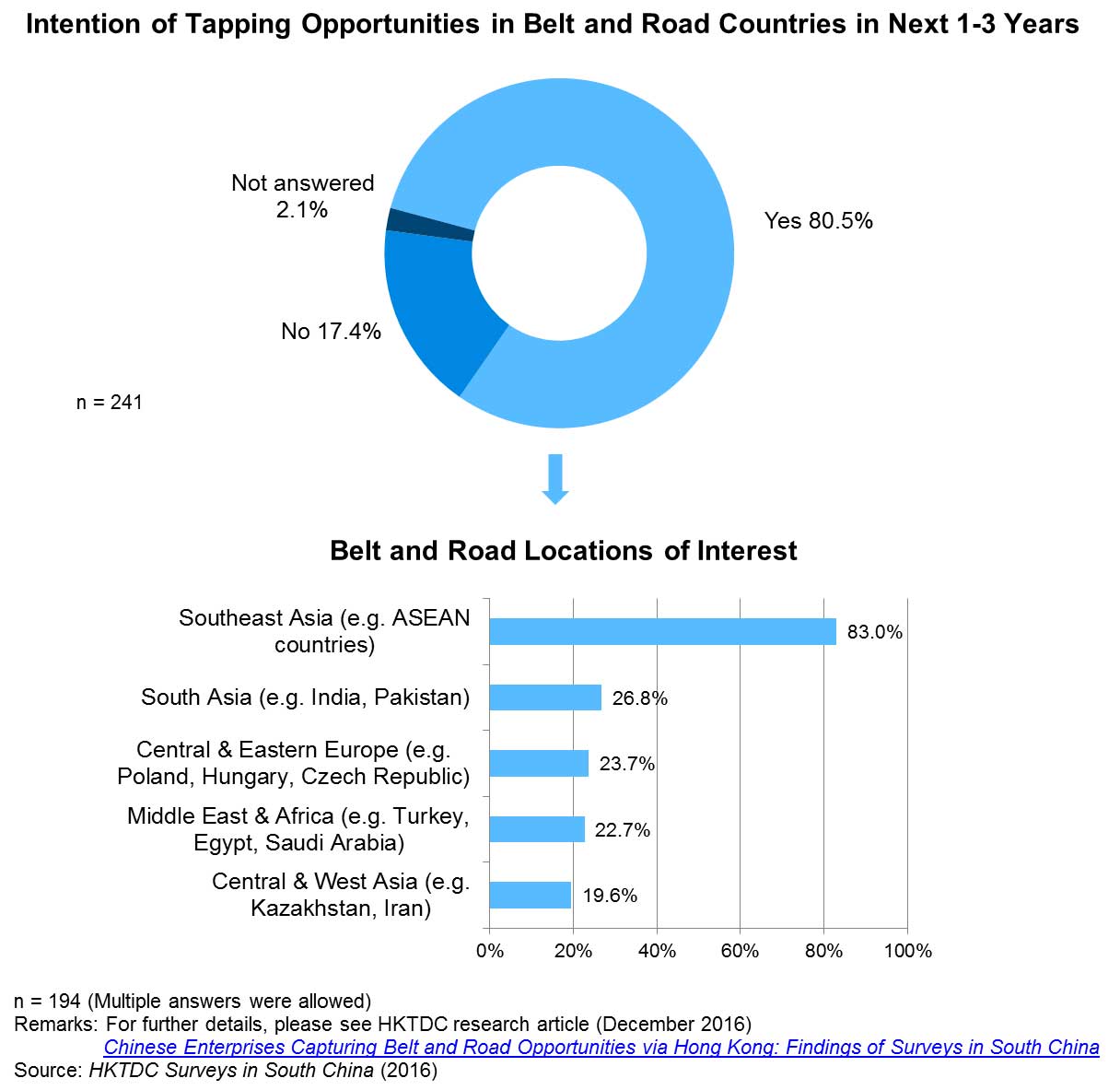
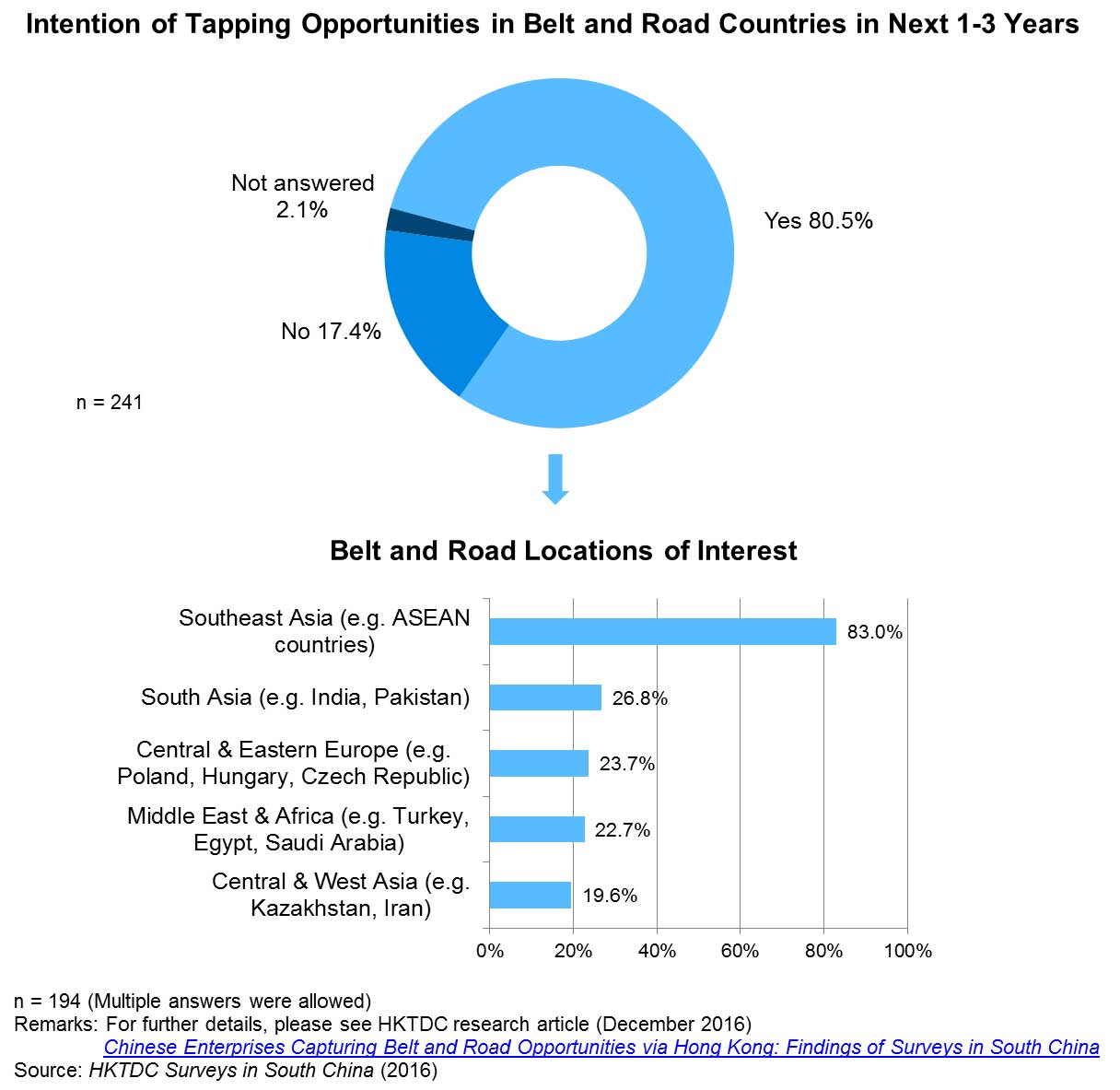
Approved co-operation zones set up by Chinese investors in ASEAN countries include: (1) China-Indonesia Julong Agricultural Industry Co-operation Zone; (2) Laos Saysettha Development Zone; (3) Cambodia Special Economic Zone; (4) Thai-China Rayong Industrial Park; and (5) Vietnam Longjiang Industrial Park. In addition, the governments of China and Malaysia have jointly devised the international production capacity co-operation format of “two countries, twin parks”, whereby two industrial parks have been set up in Kuantan of Malaysia and Qinzhou in Guangxi of China. These parks are expected to serve as the pioneer economic co-operation projects explored and implemented by the Chinese government under the Belt and Road development strategy.
Please click here to purchase the full research report.
[1] Source: Ministry of Commerce
Belt and Road: Development of China’s Overseas Economic and Trade Co-operation Zones (2)
Belt and Road: Development of China’s Overseas Economic and Trade Co-operation Zones (3)
Belt and Road: Development of China’s Overseas Economic and Trade Co-operation Zones (4)
Belt and Road: Development of China’s Overseas Economic and Trade Co-operation Zones (5)
Editor's picks
Trending articles
830 Views
China’s Belt and Road Initiative provides countries with lagging technology the opportunities to install state-of-the-art systems, says Michael Gazeley of Hong Kong-based Network Box. With dangers to cyber security lurking across the Internet, Hong Kong has the environment to nurture talent locally and from around the world to keep systems safe. See Part 1 for comment on Hong Kong’s “dream” connection for technology.
Speaker:
Michael Gazeley, Managing Director, Network Box Corporation Limited
Related Links:
Hong Kong Trade Development Council
http://www.hktdc.com/
HKTDC Belt and Road Portal
http://beltandroad.hktdc.com/en/
China has become a major trading country and important source of foreign investment around the world as its economic activities with other countries continue to grow. Under the Belt and Road development strategy, Chinese enterprises have stepped up their efforts in “going out” to engage in trade and investment activities in countries along the Belt and Road routes. This has spurred demand for professional services to support these enterprises' growing international business.
China’s coastal areas, including the Pearl River Delta adjoining Hong Kong and the Yangtze River Delta (YRD), have always been major areas for economic co-operation with foreign countries. More and more enterprises in Shanghai and the adjacent areas have been heading for the Belt and Road regions in search of opportunities to boost the development of their businesses.
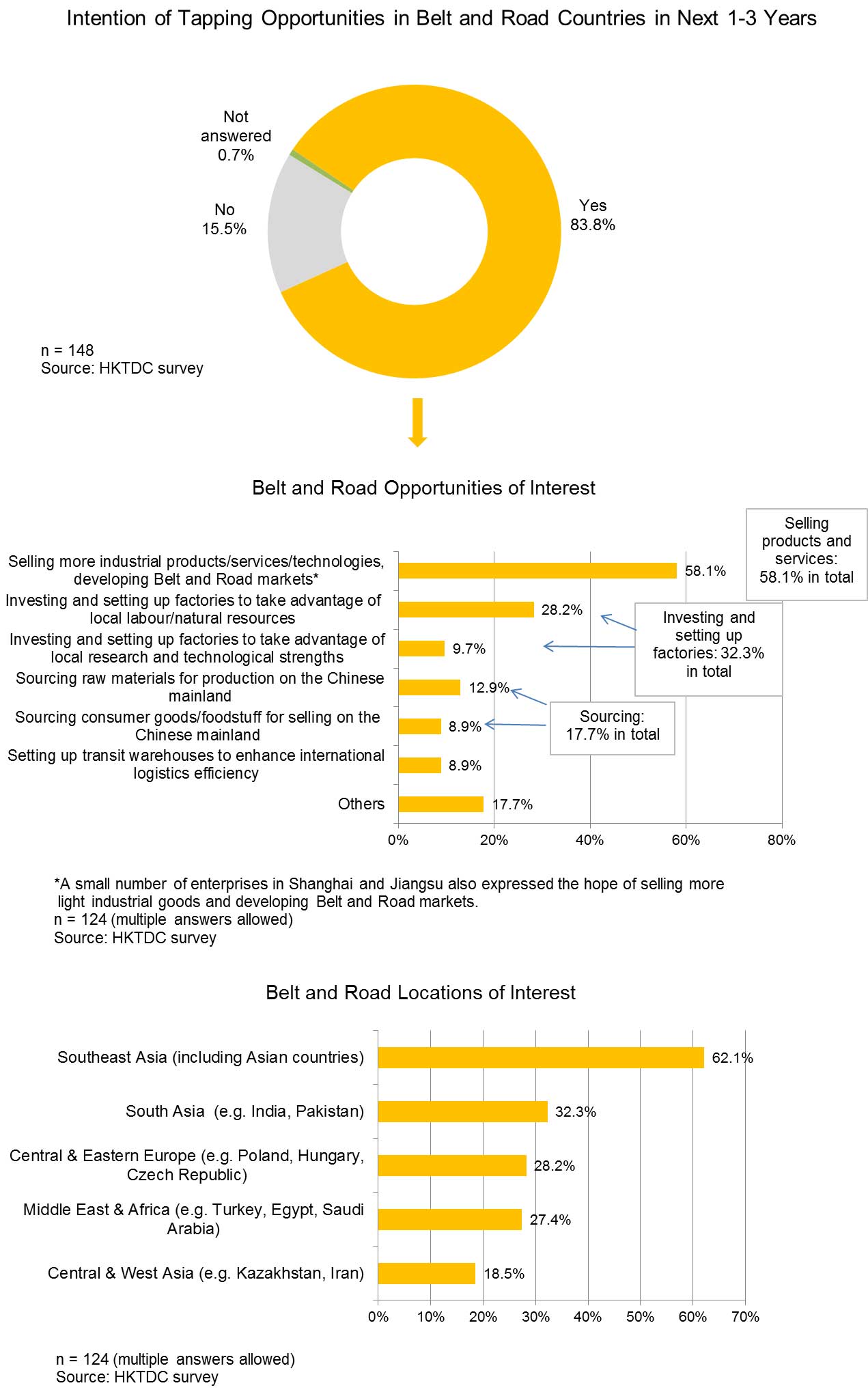
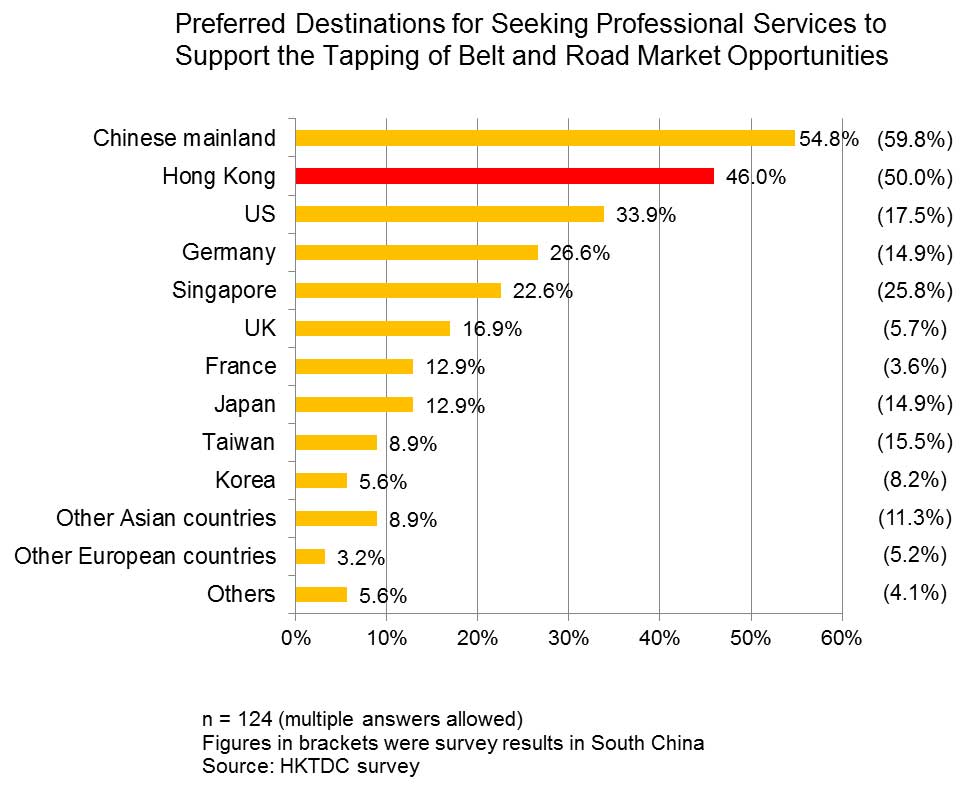
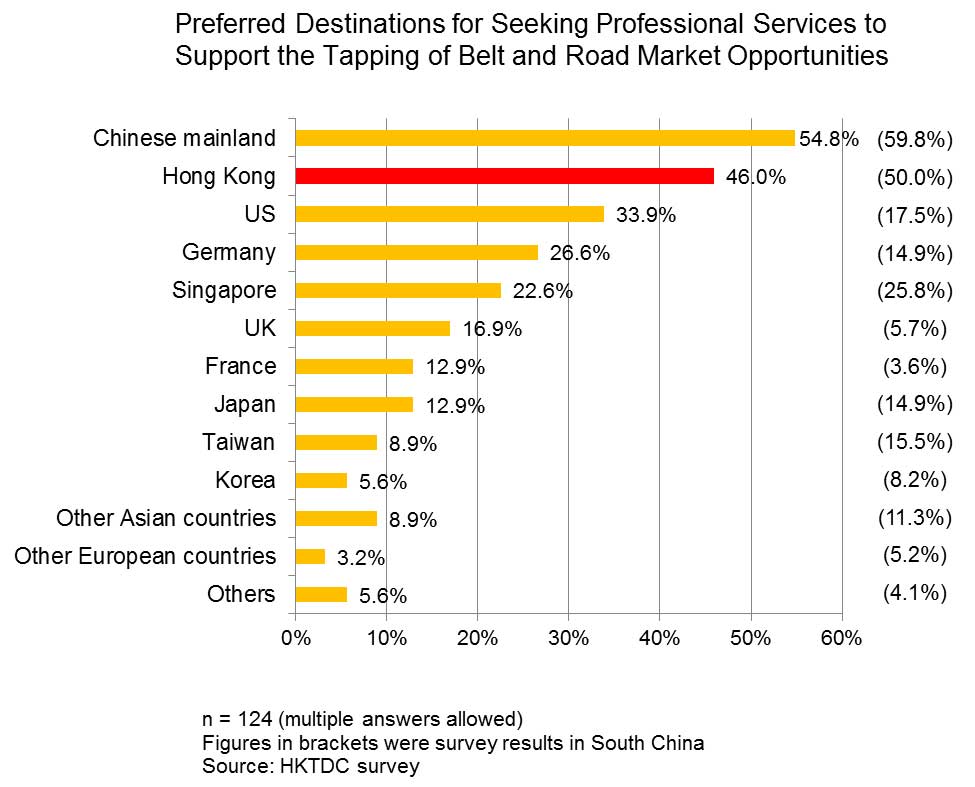
HKTDC conducted a questionnaire survey in Shanghai, Jiangsu and other places in the YRD in the first quarter of 2017 to gauge the situation. The survey results indicate that the great majority of domestic respondents (84%) would consider tapping business opportunities in Belt and Road countries in the next one to three years. Among these, many enterprises (46%) said that Hong Kong was their preferred destination for seeking professional services outside the mainland for capturing business opportunities. This matches with the findings of a similar HKTDC survey in South China last year. [1]
The Belt and Road destinations that respondents showed the greatest interest in were Southeast Asia (62%), South Asia (32%), and Central/Eastern Europe (28%). Most enterprises (58%) expressed the hope of selling more industrial products, relevant services and technologies to Belt and Road markets, while one in three (32%) would consider investing and setting up factories in Belt and Road countries.
There is no doubt that Hong Kong is the preferred platform for mainland enterprises “going out” to invest overseas. Hong Kong service providers have been helping mainland enterprises handle their trade and investment businesses in Hong Kong and overseas markets for many years. Further efforts by mainland enterprises, including those in the YRD, to tap Belt and Road opportunities are bound to generate more business for Hong Kong. (For more details on China’s foreign investment and Hong Kong as the preferred platform for mainland enterprises “going out” to invest overseas, see: China Takes Global Number Two Outward FDI Slot: Hong Kong Remains the Preferred Service Platform)


Belt and Road: Hotspot for China’s Foreign Trade and Investment
China has become a major world economy and the economic activities of Chinese enterprises abroad have gradually extended from trade to other fields of investment. China’s foreign trade volume stood at US$3.69 trillion in 2016, second only to the US with US$3.71 trillion. [2] During the same period, China’s foreign direct investment (FDI) flows (excluding financial sector investment) reached US$170 billion [3], which was among the highest in the world and exceeded foreign capital inflow. It is now a country with net capital outflow.

China’s trade and investment in Belt and Road countries will see sustained growth particularly under the Belt and Road initiative and development strategy. Figures released by the Ministry of Commerce showed China’s total trade with Belt and Road countries rose by 0.6% to RMB6.3 trillion (equivalent to US$1 trillion) in 2016, accounting for just over a quarter (26%) of China’s total foreign trade during the period. Direct investment made by Chinese enterprises in non-financial sectors in 53 Belt and Road countries totalled US$14.53 billion, accounting for 8.5% of China’s total non-financial FDI during this period. Most of the investment went to Singapore, Indonesia, India, Thailand and Malaysia.
As China gears up for the Belt and Road development strategy and encourages businesses to develop trade and investment with the countries and regions concerned, the Belt and Road initiative has become an important factor in driving the “going out” of Chinese enterprises for all kinds of economic activities. As Hong Kong has consistently been the preferred service platform for these enterprises [4], the development of the Belt and Road initiative is expected to spur demand for various Hong Kong support services from mainland enterprises.
HKTDC joined hands with the Shanghai Municipal Commission of Commerce in conducting a questionnaire survey among related enterprises in Shanghai and Jiangsu of the YRD in the first quarter of 2017 to find out about the challenges facing mainland enterprises in the region, their transformation, upgrading and investment strategies, their intention of “going out” to capture Belt and Road opportunities, and their demand for related professional services.
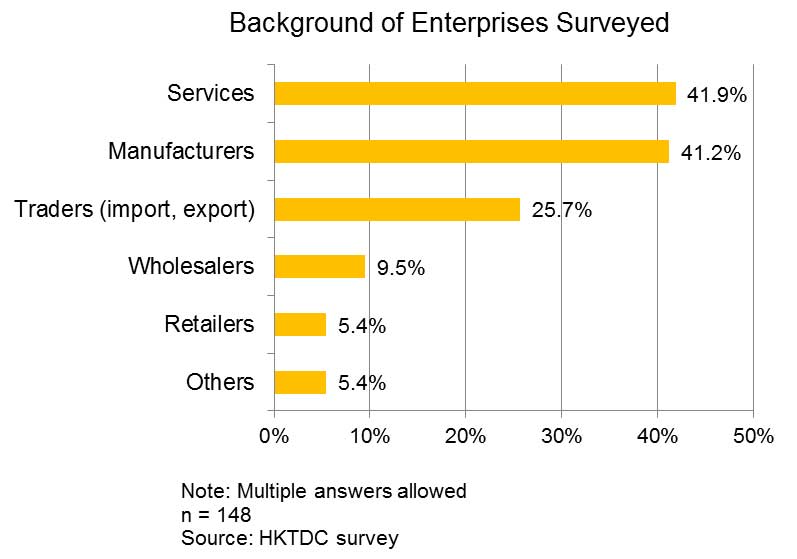
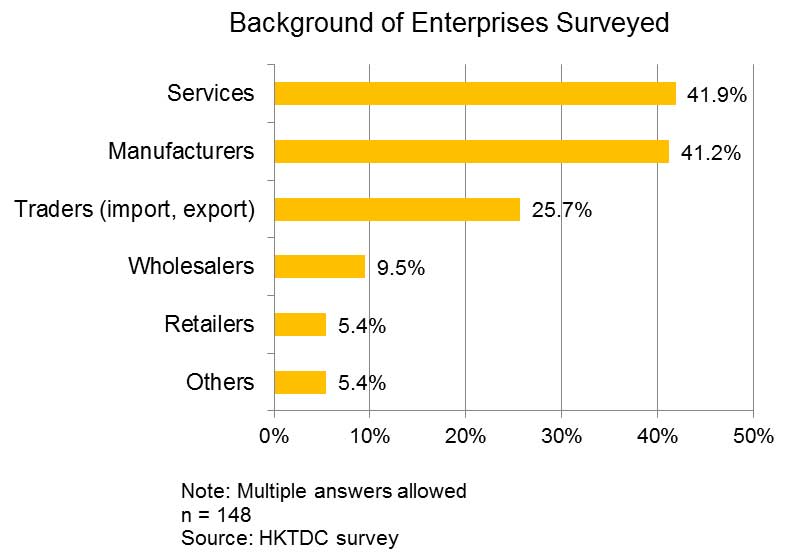
This survey was similar to the one conducted by HKTDC in South China in 2016. [5] A total of 163 completed questionnaires were collected. Of these, 148 were completed by mainland enterprises, including service suppliers, manufacturers and traders. What follows is a summary of the views expressed by these 148 mainland enterprises on “going out” to capture Belt and Road opportunities.
Challenges in Business Operation
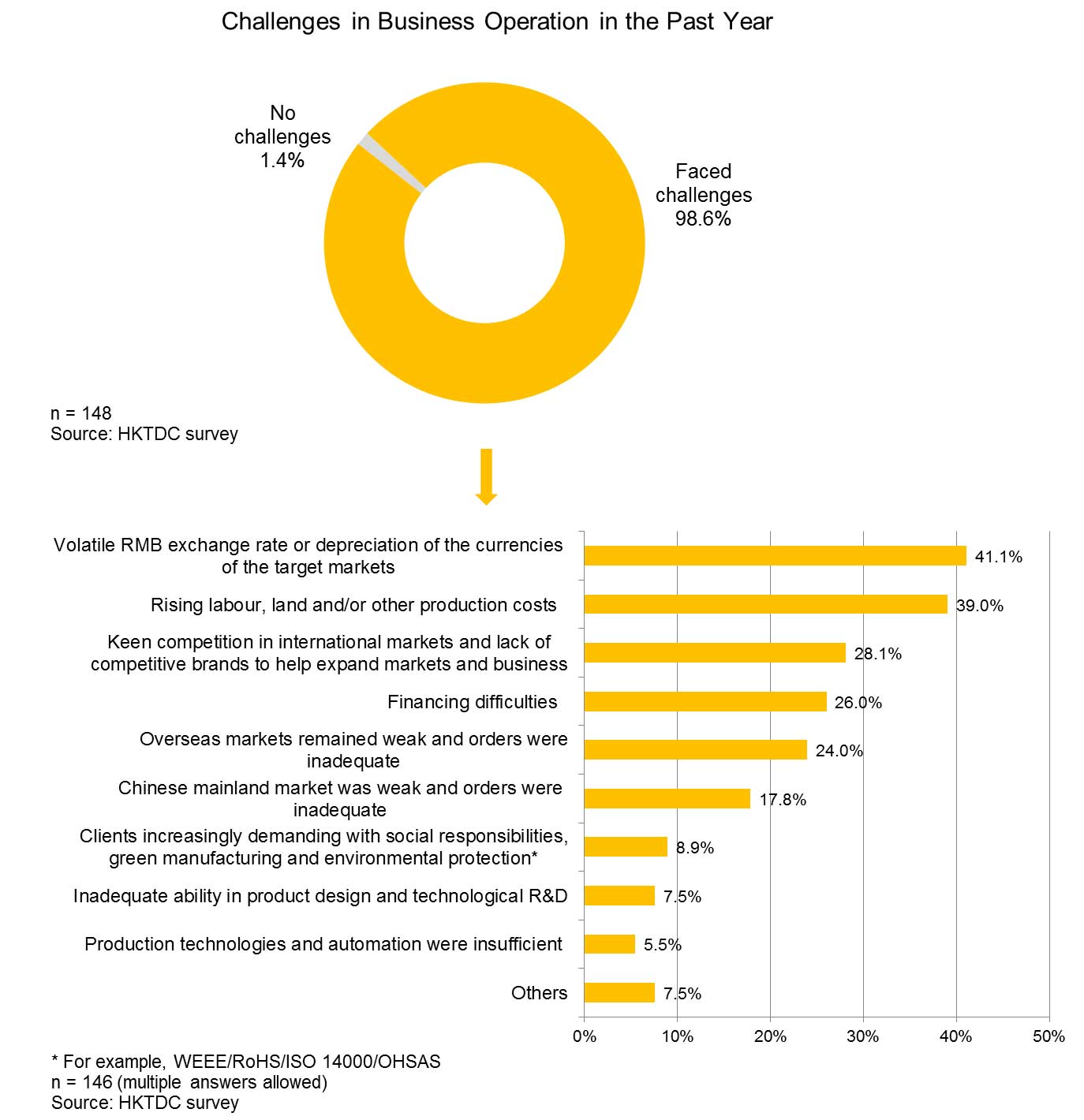
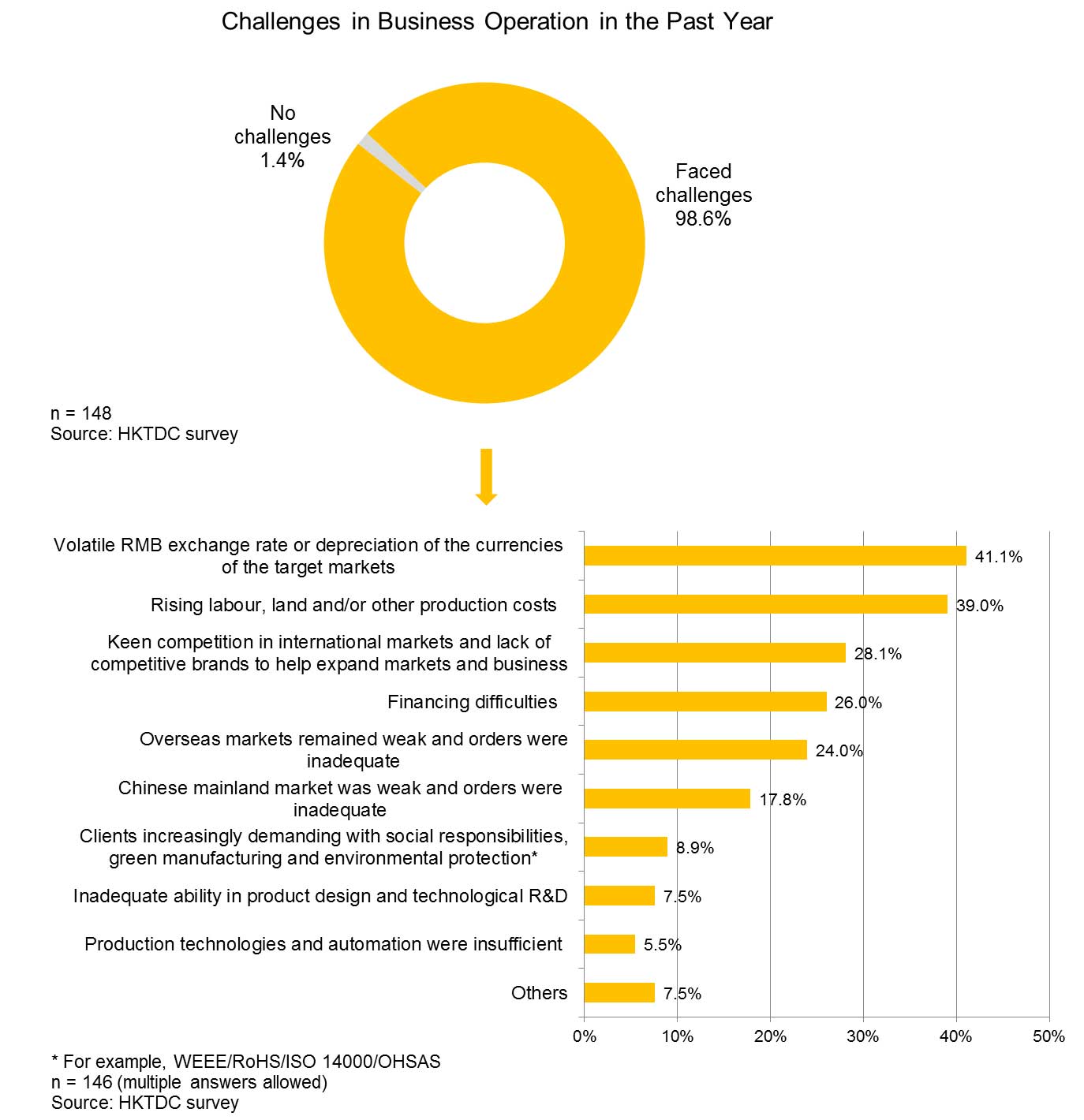
Virtually all respondents (99%) said that their business operations faced a variety of challenges over the past year. Their foremost concerns were the volatile RMB exchange rate (41%) and rising labour, land and/or other production costs (39%). Other challenges included keen competition in international markets (28%), financing difficulties (26%) and weak overseas markets and inadequate orders (24%).
Most Important Countermeasure: Develop Overseas Markets
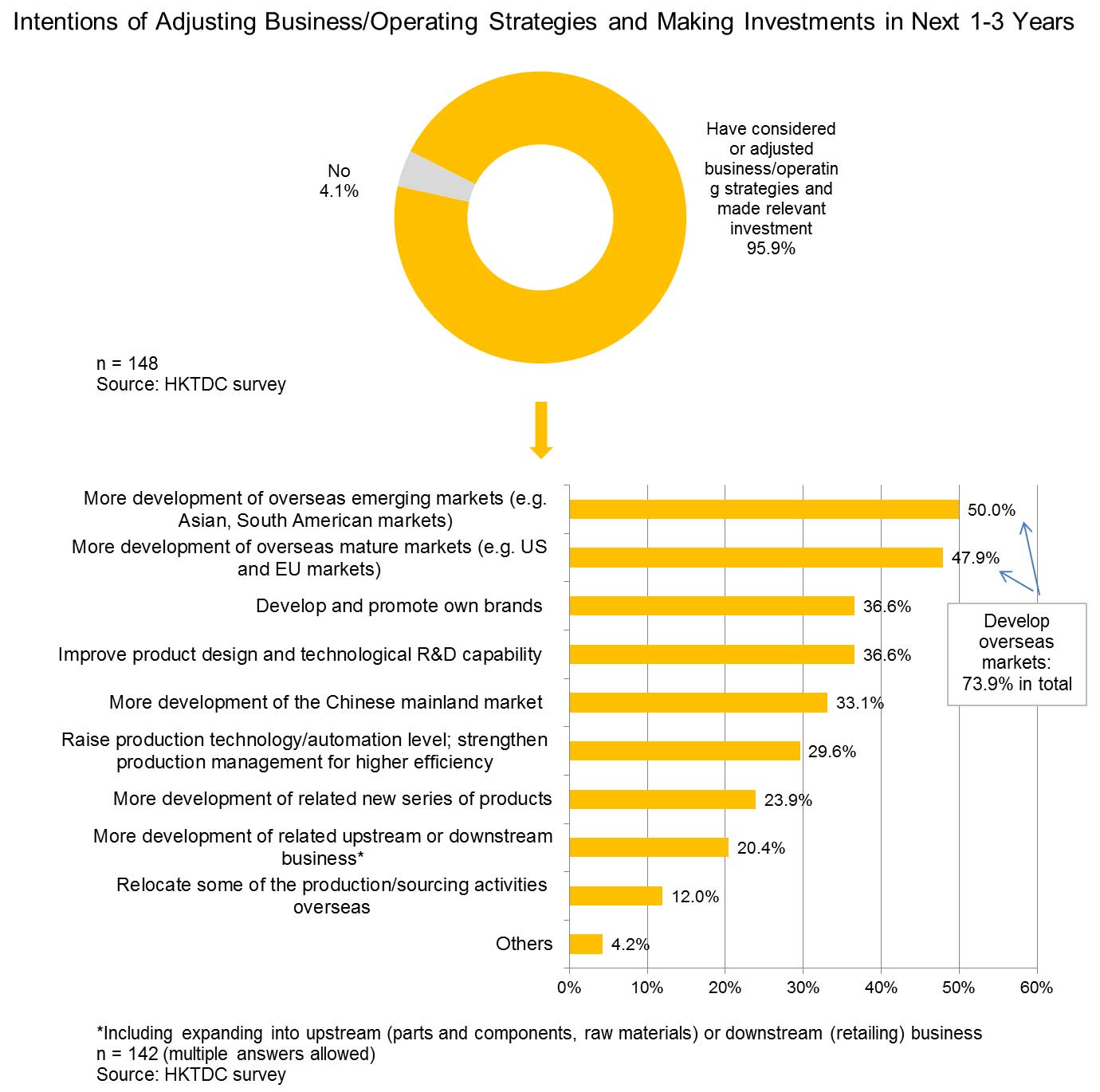
In order to tackle these challenges, over 95% of the respondents said either they would consider adjusting their business/operating strategies and making relevant investment in the next one to three years or they had already done so. Almost three out of every four (74%) of the respondents said they would first exert themselves to develop overseas markets. Of these, half (50%) said they would develop further overseas emerging markets and 48% said they would focus on overseas mature markets. More than one in three (37%) said they would develop/promote their own brands, while the same number said they would work on the improvement of product design and technological R&D capability.
Belt and Road Opportunities: Focusing on Southeast Asian Markets
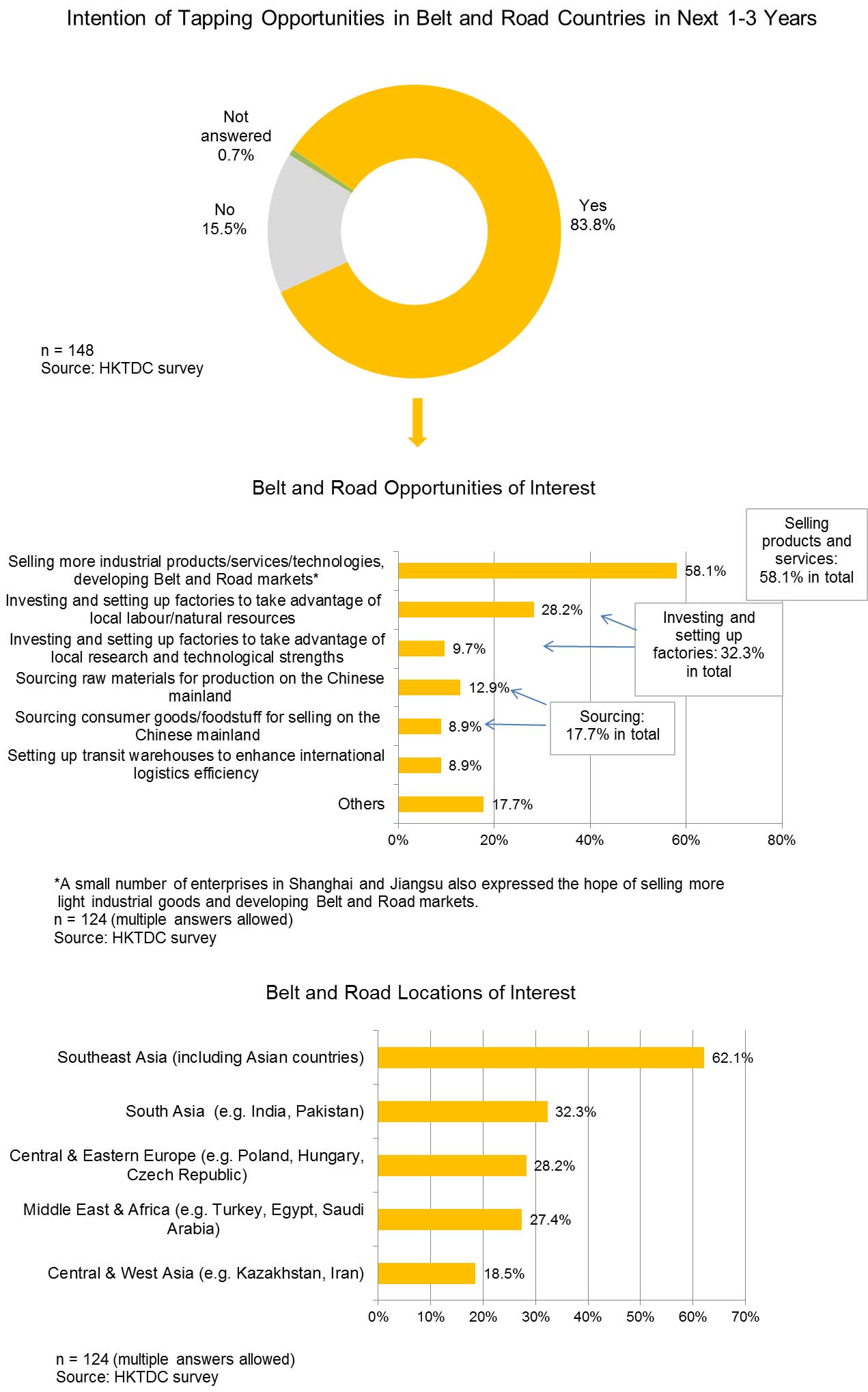
As China continues to promote the Belt and Road development strategy, 84% of the respondents said they would consider tapping business opportunities in Belt and Road countries in the next one to three years.
Among those enterprises that would consider tapping Belt and Road opportunities, most said they wanted to sell more industrial products and related services and technologies to the Belt and Road markets. Just under a third (32%) said they wanted to go to Belt and Road countries to invest and set up factories for production, while 18% said they would like to go to source consumer goods/foodstuff for selling on the Chinese mainland and source raw materials for production on the Chinese mainland. Another 9% said they hoped to set up transit warehouses in Belt and Road countries to improve their international logistics efficiency.
Among those enterprises interested in tapping opportunities in Belt and Road markets, almost two thirds (62%) said they would focus on Southeast Asia, including ASEAN countries. Fewer respondents chose other regions, with a third (32%) picking South Asia (32%), just over one in four going for Central and Eastern Europe (28%) and the Middle East and Africa (27%), and one in five choosing Central and West Asia (19%).
Although there is a slight difference between the preferences of the respondents in this survey and the one conducted in South China last year, the preferences for Belt and Road opportunities and locations of interest are similar, suggesting that most mainland enterprises have the same intentions of tapping Belt and Road opportunities, regardless of where they are based.
Comparison of Survey Findings in South China and YRD
| Opportunities of Interest | Survey in South China | Survey in YRD |
| Selling products | 88% | 58% |
| Investing and setting up factories | 36% | 32% |
| Sourcing | 35% | 18% |
| Setting up transit warehouses | 22% | 9% |
| Locations of Interest | Survey in South China | Survey in YRD |
| Southeast Asia | 83% | 62% |
| South Asia | 27% | 32% |
| Central & Eastern Europe | 24% | 28% |
| Middle East & Africa | 23% | 27% |
| Central & West Asia | 20% | 19% |
Source: HKTDC survey
Need to Seek Services Support
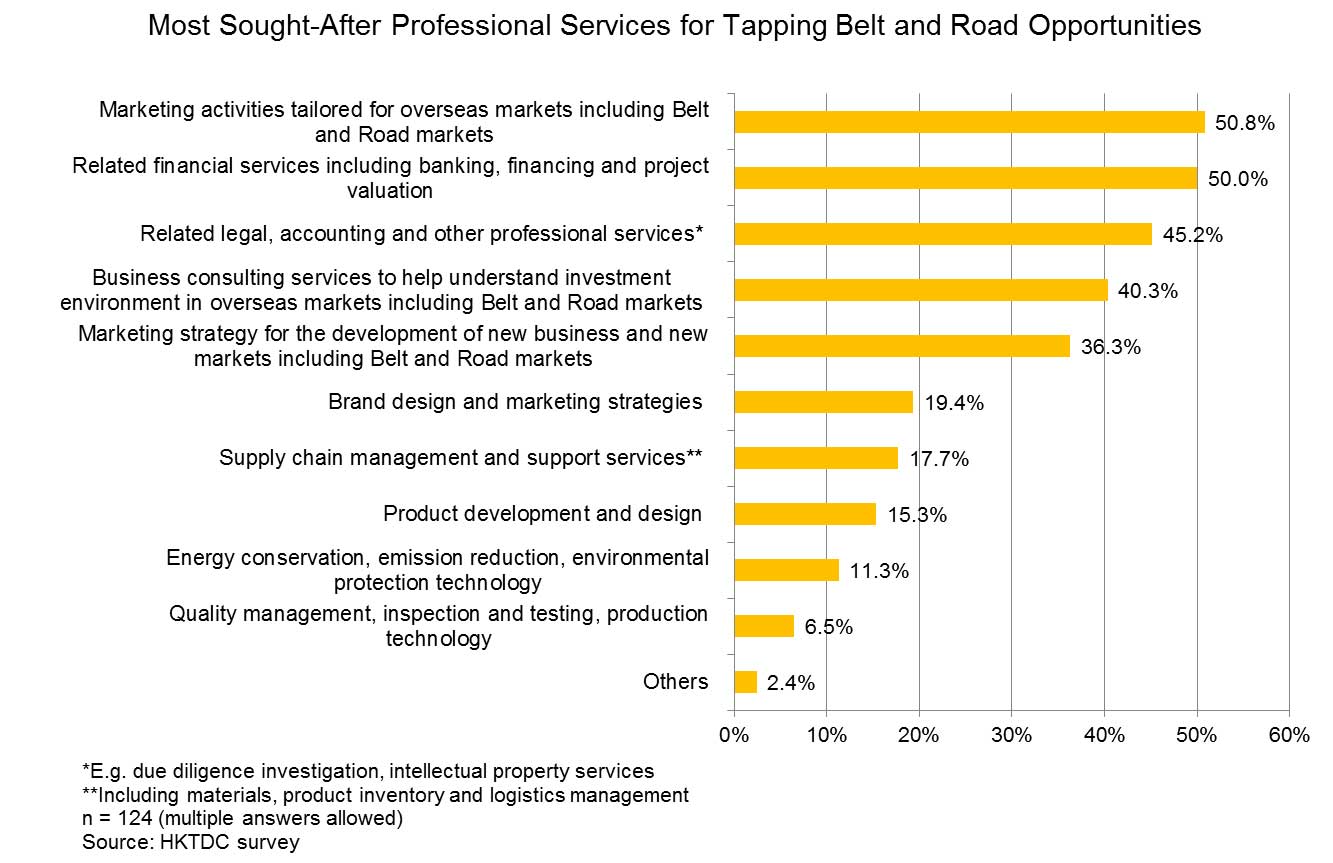
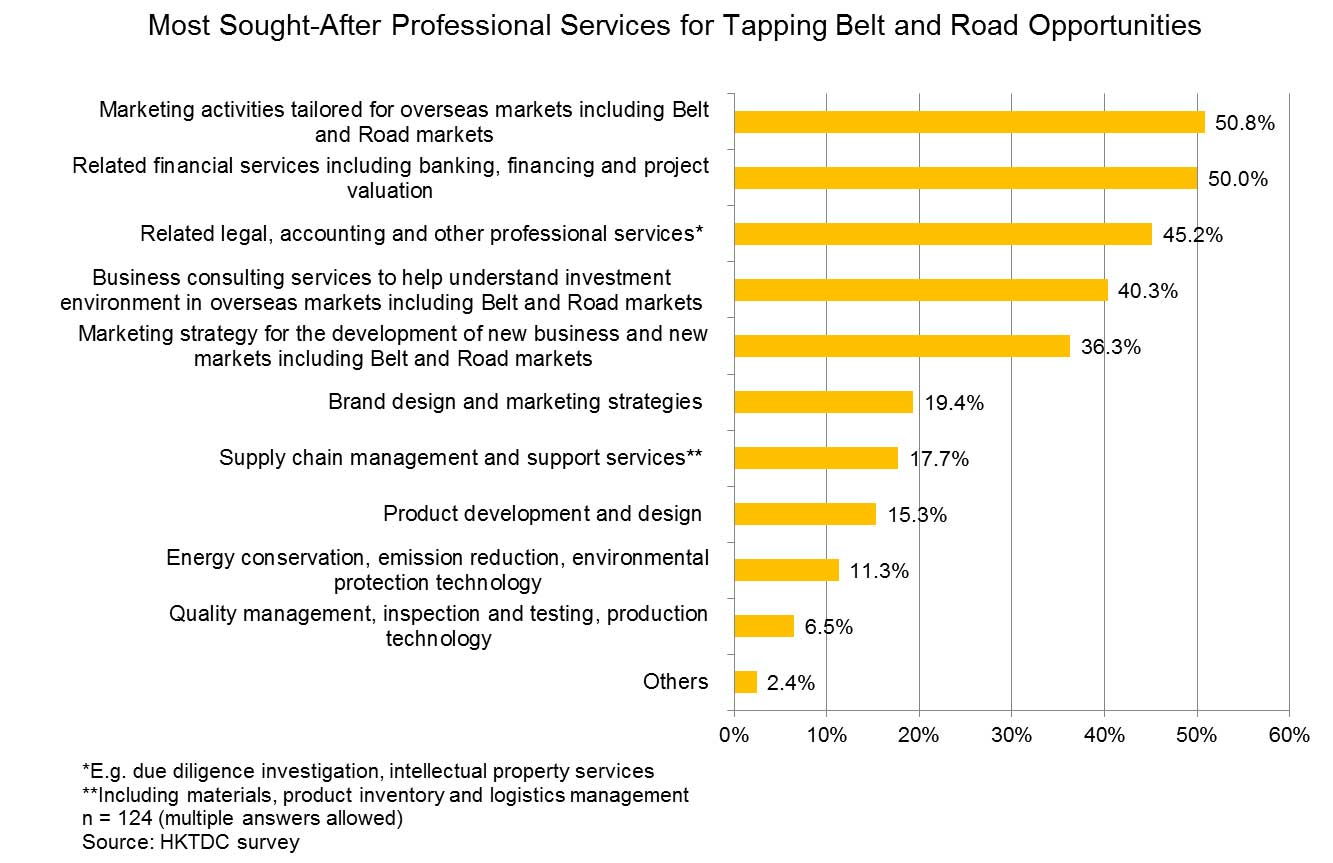
Of those enterprises looking to tap into Belt and Road opportunities, half (51%) said they would like to become involved in marketing activities tailored for Belt and Road and other overseas markets. Half (50%) said they would require related financial services, including banking, financing and project valuation. Just under half (45%) said they would like to seek related legal, accounting and other professional services. 40% said they would require business consulting services to help understand the investment environment in overseas markets, including Belt and Road markets.
Seeking Services Support in the Chinese Mainland and Hong Kong
In order to locate these aforementioned professional services, more than half (55%) of the respondents looking to tap Belt and Road opportunities said they would first source these support services locally. However, a significant number said they would also seek various professional services outside the mainland. Hong Kong was the most preferred destination for most enterprises, accounting for almost half (46%) of all respondents who would like to tap into Belt and Road markets. This again matched the findings of the survey conducted by HKTDC in South China last year. Other destinations highlighted as of interest included the US (34%), Germany (27%) and Singapore (23%).
HKTDC Research would like to acknowledge the help extended by the Shanghai Municipal Commission of Commerce in conducting the survey.
[1] For details about the survey in South China, please see: Chinese Enterprises Capturing Belt and Road Opportunities via Hong Kong: Findings of Surveys in South China
[2] Source: Customs Administration of China; World Trade Organisation
[3] Source: Ministry of Commerce of China
[4] On Hong Kong as the preferred service platform for mainland enterprises “going out”, please see: Guangdong: Hong Kong Service Opportunities Amid China’s “Going Out” Strategy, Jiangsu/YRD: Hong Kong Service Opportunities Amid China's "Going Out" Initiative, China’s “Going Out” Initiatives: Professional Services Demand in Bohai and China's “Going Out” Initiative: Service Demand of Western China to Tap Belt and Road Opportunities.
[5] Please see: Chinese Enterprises Capturing Belt and Road Opportunities via Hong Kong: Findings of Surveys in South China
Editor's picks
Trending articles
The lower labour costs, improved infrastructure and preferential tax treatment have all led to Vietnam attracting a significant inflow of foreign direct investment (FDI). Increasingly, the country is now targetting investment from higher value-added industries, with potential investors advised to look beyond labour cost advantages. There are, however, genuine concerns as to the lack of engineering expertise and ancillary industries within the country, a particular challenge for any business undertaking more sophisticated production with higher degree of automation.
In order to tackle this shortfall, certain investors – including a number from Hong Kong, are making use of the technical and other services, as well as material supplies from the Chinese mainland as a means of supporting their Vietnamese operations. Even for the infrastructural development, such as those in Northern Vietnam bordering China, one of Vietnam’s development directions is to strengthen the country’s access to the Chinese supply chain. In the circumstances, effective management and efficient logistics services are crucial when it comes to ensuring foreign investors and other related companies can properly orchestrate their cross-border arrangements and achieve the maximum operational efficiency.
Enhancing the Infrastructure of Northern Vietnam
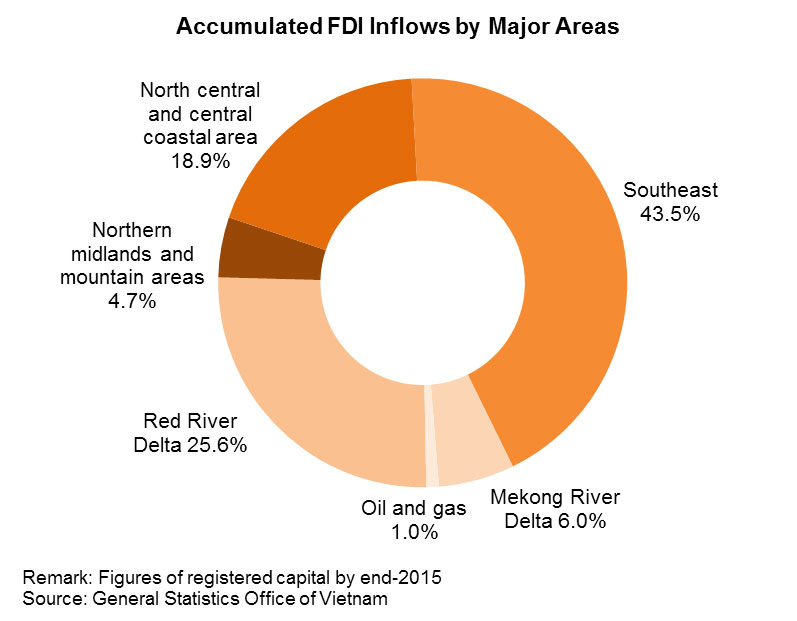
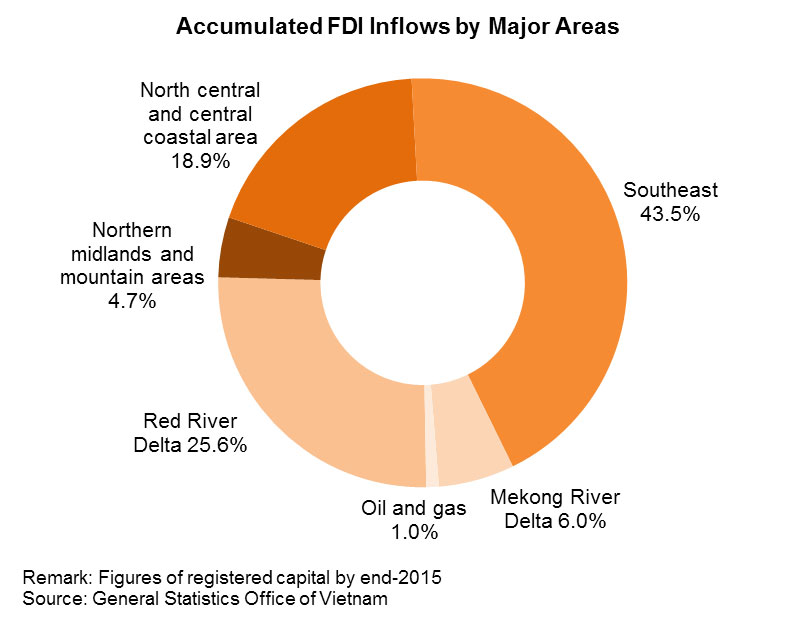
Northern Vietnam is being increasingly targetted by foreign investors, many of whom had previously favoured business opportunities in the south of the county. Highlighting this traditional preference, at the end of 2015, the southeast part of the country – extending across Ho Chi Minh City, Dong Nai and Ba Ria-Vung Tau – accounted for 43.5% of the total accumulated FDI inflow. By comparison, the Red River Delta – including Hanoi, Bac Ninh and Hai Phong – accounted for just 25.6% of the cumulative total. More recently, nonetheless, the northern cities and provinces have started to attract a greater proportion of overall FDI. This is down to both a greater effort on the part of the government to promote the economy of the north and a marked improvement to the infrastructure across the region.
A sign of this change in emphasis is the city of Hai Phong, which attracted the second highest level of FDI in Vietnam in 2016, solely trailing Ho Chi Minh City. Hai Phong is set within the Hanoi-Hai Phong-Ha Long economic triangle. It is also the site of Northern Vietnam’s largest seaport. Of late, sea freight connections between Hai Phong and the ASEAN, US and European markets have been bolstered by the increased availability of container liner services, the consequence of a shift in focus by the international shipping companies.
Cat Bi International Airport, Hai Phong’s principal air transportation hub, has direct links to several other Vietnamese regions, including Ho Chi Minh and Da Nang, as well as offering flights to other Asian countries. The completion of a new highway connecting the city to Hanoi, the country’s capital, has also provided a boost to business and industrial activities in the Hai Phong region. The highway also extends to Ha Long, capital city of the resource-rich Quảng Ninh province. Additionally, Hai Phong’s access to the markets and supply chains of southwest China have been further improved by the completion of highway connections to Mong Cai and Lang Son, the two Vietnamese cities that respectively border the Chinese townships of Tongxing and Pingxiang of Guangxi region.
Hai Phong: The Cost Benefits
Overall, the improvements to its infrastructure have made Hai Phong far more attractive to a range of business and industrial investors, with the success of the VSIP Hai Phong Industrial Park being an example of this. Jointly established in 2008 by a Singapore consortium and a Vietnamese state-owned enterprise, it has a total area of 1,600 hectares, of which 500 hectares are reserved for industrial development. The remaining space has been given over to a range of commercial and residential projects.
As well as benefitting from improvements to the local transportation network, VSIP Hai Phong also owes much to its success to its access to all the required utilities, including reliable electricity, water supplies and optical fibre telecommunication services. This has seen it attract projects largely related to higher value-added industries. To date, these include companies specialising in:
- Electrical and electronics
- Precision engineering
- Pharmaceuticals and healthcare
- Supporting industries
- Consumer goods
- Building and specialty materials
- Logistics and warehousing
In line with the latest government regulations, industrial investors in VSIP Hai Phong are entitled to claim a range of tax benefits, including preferential corporate income tax rates and exemption from certain import taxes (those related to export processing enterprises[1]). Employees working in the park also pay a lower level of personal import tax[2]. In addition to this, labour costs are relatively low in Hai Phong and its neighbouring regions, with the total monthly cost per worker – factoring in statutory contributions, such as insurance – starting at around US$200-250. This is a relatively low cost when compared to the current wage levels in China.
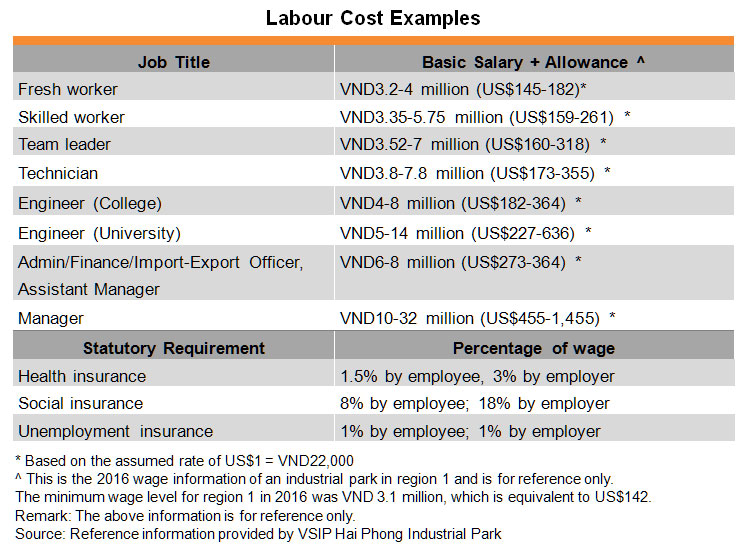
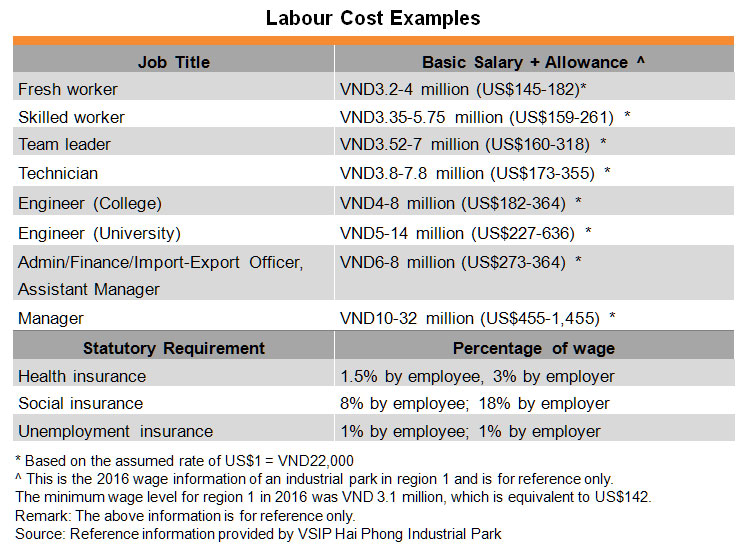
(Remark: For more information regarding labour costs, please see: Vietnam’s Youthful Labour Force in Need of Production Services.)
Seeking Production Supports from China
According to VSIP Hai Phong, the park is currently home to some 35 industrial projects, with investments sourced from ASEAN, Japan, Korea, Taiwan and Hong Kong. An estimated 70% of its industrial areas have already been occupied by such projects. For the future, the park plans to attract more high-end investments, specifically those related to production of technology products and the supporting industries. Any such investments, of course, will be obliged to comply with all the statutory environmental regulations, although any potentially polluting industry that demonstrates it can meet the required emission standards may not be refused.
Many of the industrial projects based in the park are related to processing production, particularly with regard to textiles and clothing items, electronic products and packaging materials. Among the other investors are several companies engaged in the manufacture of intermediate goods, the majority of which are utilised as production inputs by downstream clients in Hai Phong and Northern Vietnam. Production of this kind, however, relies heavily on imported industrial goods and raw materials. One foreign-invested company, which undertakes the assembly production of electronic products and office machinery, for instance, has indicated that it is sourcing competitively-priced, high quality parts and components from elsewhere in Asia in order to support its Hai Phong production activities.
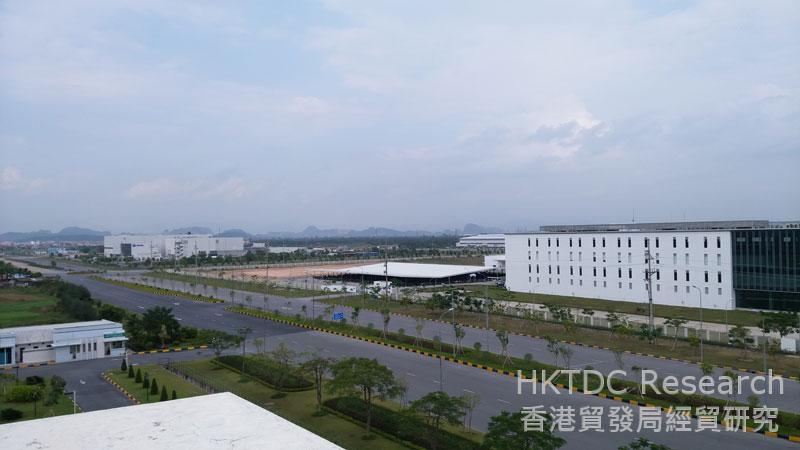
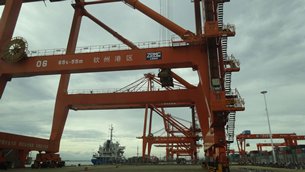
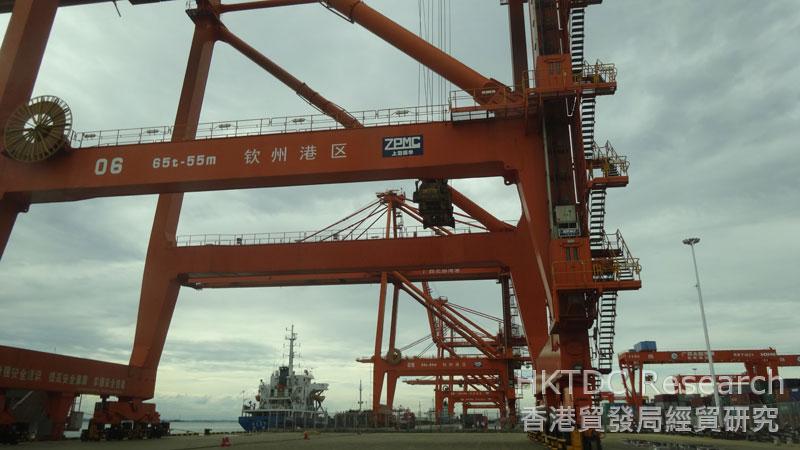
Several Hong Kong-invested companies are also operating in VSIP Hai Phong. One of them, which has a focus on plastic injection moulding, metal stamping and die-casting, told HKTDC Research that it had established a manufacturing operation in Vietnam in order to follow in the footsteps of one its downstream clients. Typically, the plastic and metal outputs of its Hai Phong factory are mainly used for the processing production of IT and other electronic products by its clients in Vietnam. As such, maintaining the Hai Phong factory saves the company money when it comes to logistics costs, while shortening the delivery lead time to its downstream clients. As another plus point, it also enjoys the accrued tax benefits of being based in Vietnam.
While acknowledging a number of clear advantages of being based in Vietnam, maintaining an operation in Hai Phong has not been without its challenges for the company. One of its particular problems is related to the relatively low skill levels of many local workers, with their productivity, consequently, a bit lower than that of their counterparts in southern China. While Vietnamese labour costs are lower, in productivity terms, the labour cost differential between Vietnam and China is far from substantial. In order to enhance its production efficiency, the company is now planning to further automate its operations, a development that will see it requiring lower staff levels. Labour costs, therefore, will ultimately become relatively insignificant when it comes to considering further investments at the site.
The fact that Vietnam lacks a number of the key supporting industries, such as precision tool-making and engineering support, has huge significance for the future industrial development of the country. This lack of technicians and engineers, for instance, has already deterred the aforementioned Hong Kong company from establishing an in-house manufacturing moulds and tooling facility in Hai Phong.
In order to tackle these problems, the company has to buy in various services and supplies from the Chinese mainland. For one thing, the company needs to orchestrate their in-house engineering talents and facilities like computer numeric control machines to make the moulds and tooling in south China, which would then be shipped to Hai Phong for use in processing production. As the plastics and metal raw materials are mainly sourced from China, as well as certain other Asian countries, the company is obliged to utilise efficient logistic services for the delivery of such materials to Hai Phong. The company, then, is making the best use of a variety of supports from China in order to facilitate its bid follow its client’s downstream investments in Vietnam.
[1] For details of the preferential treatment, please see: Vietnam Utilises Preferential Zones as a Means of Offsetting Investment Costs.
[2] According to VSIP Hai Phong, all local and expatriate labours working in Dinh Vu-Cat Hai Economic Zone (including VSIP Hai Phong) enjoy 50% reduction of personal income tax.
Editor's picks
Trending articles
569 Views
Hong Kong has an online environment that other countries can “only dream about”, says Michael Gazeley of locally-based but global cyber security firm, Network Box. He says China’s Belt and Road Initiative consists of online (as well as land and sea) trading links and Hong Kong can rely on its fast, stable Internet and world class infrastructure to safely connect up the cyber Belt and Road. Catch Part 2 on Hong Kong’s expertise in cyber security.
Speaker:
Michael Gazeley, Managing Director, Network Box Corporation Limited
Related Links:
Hong Kong Trade Development Council
http://www.hktdc.com/
HKTDC Belt and Road Portal
http://beltandroad.hktdc.com/en/