









Georgia
Georgia has huge potential as a new trading partner for Hong Kong, with a substantial number of business opportunities arising from its combination of firm support for the Belt and Road Initiative (BRI), its open and business-friendly economy and its strategic location in the central Caucasian region of Eurasia. A country of 3.7 million people, its prime setting at the very crossroads of China and Europe, as well as its extensive array of Free Trade Agreements (FTAs) – including treaties with the Chinese mainland and Hong Kong – sees it offering a host of new trade and investment possibilities.
Its appeal has been boosted by a number of ongoing reforms, including a greater emphasis on open governance, improvements to the local business environment and an ambitious infrastructure development programme. In the case of the latter, this has seen a number of landmark investment projects being given the greenlight, including the US$2.5bn Anaklia Deep Sea Port and Special Economic Zone, the Baku-Tbilisi-Kars Railway and ongoing railway track modernisation work. Taken together, these projects are not only seen as representing major steps forward for Georgia’s international connectivity, but also as playing a key role in the country’s evolution from being a simple transit hub to becoming a true regional logistics and industrial centre. Hong Kong investors and professional service providers, of course, could clearly play a huge role in facilitating this ambitious and capital-intensive reinvention process.
A Leading Reformer in Europe and Central Asia
Georgia, which borders Russia to the north, the Black Sea to the west and Turkey, Armenia and Azerbaijan to the South, is a leading reformer and significant emerging Caucasian market. According to the World Bank, it has implemented 47 business-friendly reforms in the past 15 years, topping the ranking of European and Central Asian countries.
Owing to these reforms, all tax procedures and customs clearances in the country are now web-based and unified under one tax code. This has reduced the average number of days and procedures to register a new business greatly, from 25 days and nine procedures in 2003 to just two days and two procedures now.
The 2005 tax code changes were especially significant, transforming the country’s fiscal landscape. The types of taxes applicable in Georgia were slashed from 21 in 2004 to six simple, flat taxes with rates so low that the country has once been ranked fourth in the world (after Qatar, the UAE and Hong Kong) in terms of how much it taxes its citizens. Today, to introduce new taxes or increase existing rates, the Georgian government would have to call a national referendum as required by its constitution.
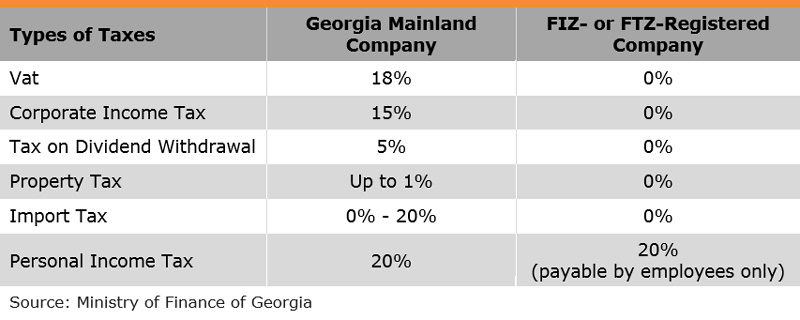
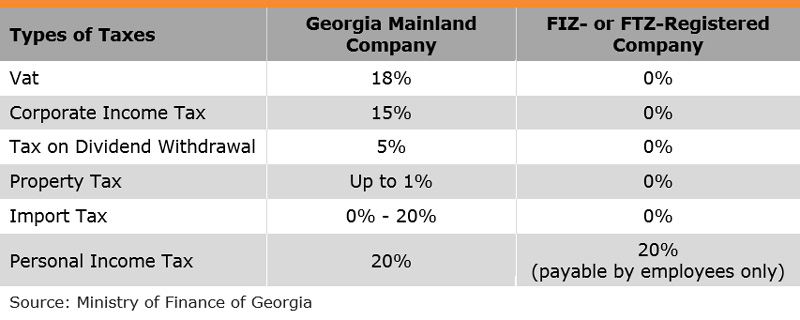
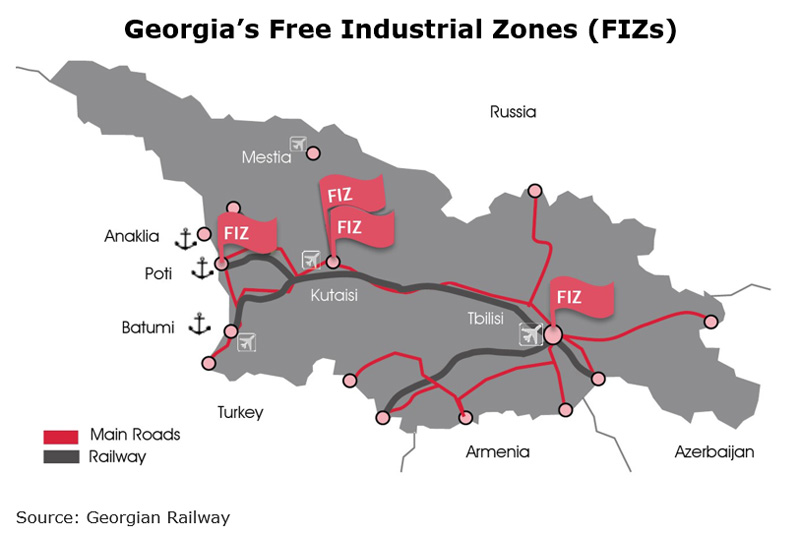
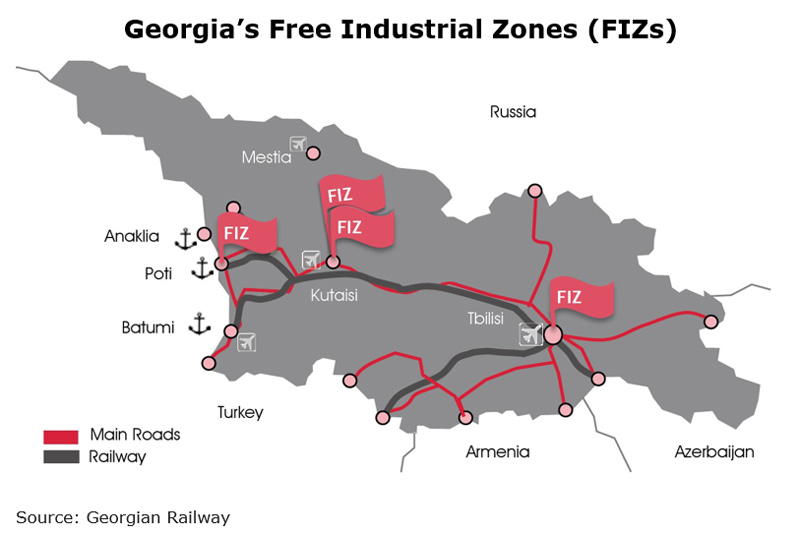
While most of the taxes are already exempted in the country’s four free industrial zones (FIZs) and two free tourism zones (FTZs), the Georgian government also introduced a new growth-oriented model of corporate income tax in 2017. The relevant tax payment is postponed or deferred until actual profit distribution in a bid to promote re-investment of earned profits into existing and/or new business endeavours.
The reform-driven economic success has helped Georgia lay a solid foundation for continued economic progress. In the two decades ending 2017, the country registered an average economic growth of more than 5%, a pace far higher than many of its Commonwealth of Independent States (CIS) peers, such as Russia, Ukraine, Belarus and Kyrgyzstan.
A Staunch Supporter of Free Trade
Georgia, given its strategic geographical location and dearth of natural resources beyond agribusiness, has developed a transit-oriented economy, where up to 60% of the cargo flows the country handles are actually in transit. This is in stark contrast to its Caucasian neighbours, such as Russia and Armenia, which are rich in mineral resources such as oil and gas, iron, copper, molybdenum, lead, zinc, gold, silver, antimony, aluminium, as well as other rare metals.
To facilitate trade and strengthen its role as a transit hub, Georgia supports free trade and has entered into an extensive network of FTAs. Agreements are in place with most, if not all, of its key trading partners, including European Union (EU) and CIS countries, European Free Trade Association (EFTA) members, Turkey, Mainland China and Hong Kong. Apart from the unfettered market access to a 2.3 billion-strong market under this web of FTAs, Georgia also enjoys preferential Generalised System of Preferences (GSP) treatments on some 3,400 products from Canada, Japan and the US.
As a historic step in the continued effort to support the BRI, Georgia signed the FTA with Mainland China in May 2017, coming into force on 1 January 2018. The Sino-Georgia FTA is not only the first FTA China has signed with a Eurasian country, but also the first Chinese-initiated FTA since the BRI was put forward in 2013.
Under the Sino-Georgia FTA since 1 January 2018 Georgia imposes zero tariffs on 96.5% of mainland products, covering 99.6% of the total imports from Mainland China. The mainland imposes zero tariffs on 93.9% of Georgia’s products, covering 93.8% of China's total imports from Georgia, of which 90.9% of product types (taking up 42.7% of imports) will have zero tariffs immediately and the remaining 3% of product types (51.1% of imports) will be phased out within five years.
In a similar vein, Hong Kong and Georgia signed an FTA on 28 June 2018, scheduled to come into effect by the end of the year, after completion of the necessary procedures. The Hong Kong-Georgia FTA is comprehensive in scope; encompassing trade in goods, trade in services, investment, dispute settlement mechanisms and other related areas in 18 chapters. On coming into effect, Georgia will eliminate all import tariffs for products of Hong Kong origin, with the exception of 3.4% of tariffs lines, comprising mainly agricultural products, such as a fruits and nuts and their preparations, as well as beverages and spirits, due to domestic sensitivity.
In addition to merchandise trade, both Sino-Georgia and Hong Kong-Georgia FTAs have chapters for trade in services, under which both sides will further open their markets to each other on the basis of their WTO commitments. Broad consensus has been reached in many fields, such as environment and trade, competition, intellectual property, investment and e-commerce.
These FTAs will bring legal certainty and better access to the Georgian market for Hong Kong and mainland businesses, while offering potential opportunities as a gateway to the Caucasian region of Eurasia covered under the BRI. They will also enhance trade and investment flows between Hong Kong, the Chinese mainland, Georgia and the greater Eurasian region.
Unique Taste and Fashion Ready for Export
Among the many export sectors likely to benefit from the new FTAs are Georgia’s wine, food and fashion industries. Georgia has an 8,000-year wine-making history and 525 indigenous grape varieties, such as Kristel, Mtsvane and Saperavi highly popular in former soviet republics, but novel to many Asian drinkers. Georgian wine has already become a rising star in the Chinese wine market, with exports increasing exponentially since 2008[1]. Last year, the mainland, buying 7.6 million bottles of Georgian wine, became its third largest wine export market after Russia and Ukraine.
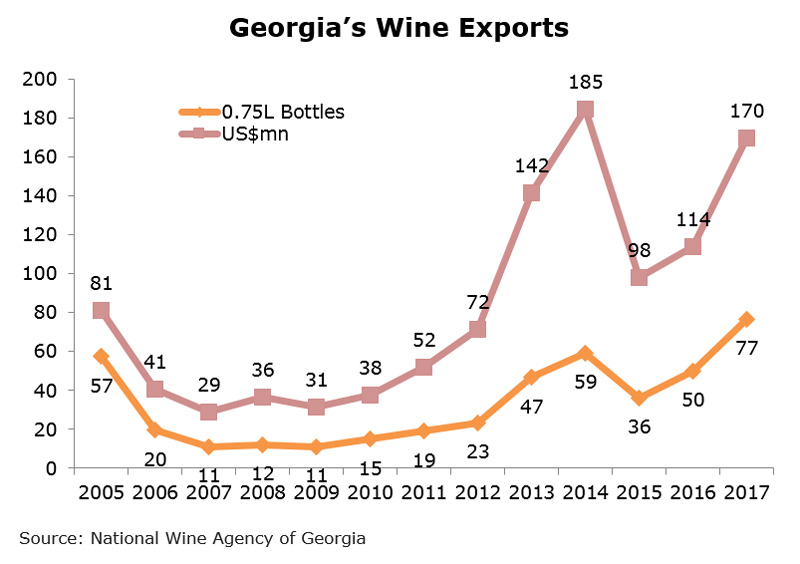
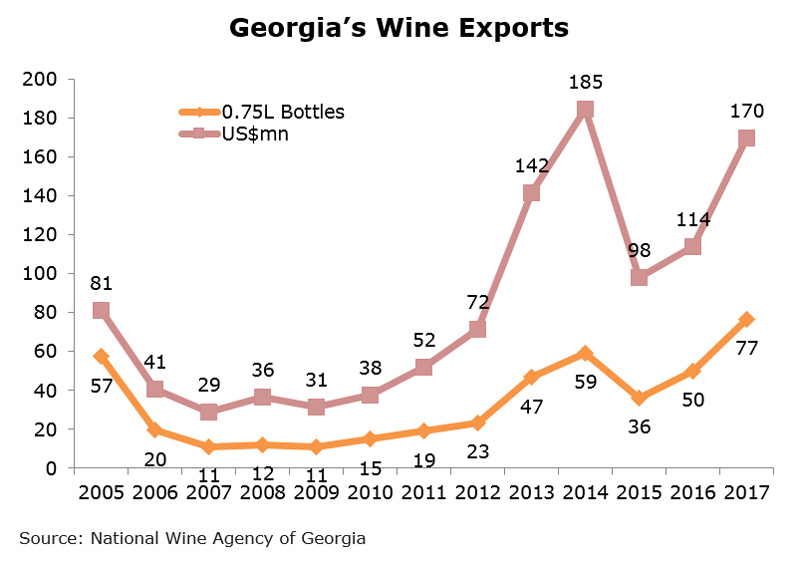
Riding on the success in the mainland, Georgian winemakers are looking for new growth opportunities in the burgeoning Asian market. Some of them, with the state support from the National Wine Agency of Georgia, have been actively exhibiting in wine fairs, organising wine-tasting activities and appointing agents/distributors in the region. Exports aside, the National Wine Agency of Georgia is also keen on promoting wine-related investment opportunities in Georgia to Asian investors.
Irakli Cholobargia, Head of the Marketing and Public Relations Department of the National Wine Agency of Georgia, said: “Although there are more than 500 companies producing wine in Georgia, only about 25 out of the country’s 525 indigenous grape varieties have been widely used in the industry. There is plenty room for growth and foreign investment.”
Hong Kong, with zero duty and duty-related customs/administrative controls for wine as well as widely-recognised neutrality in trading and promoting wine is a ready trading and distribution hub for Georgia wine in Asia. Hong Kong can also offer a good platform for Georgia winemakers to meet prospective Asian investors who are now the prime movers in global wine investment, with a growing appetite not just for fine wines, but vineyards and wineries.
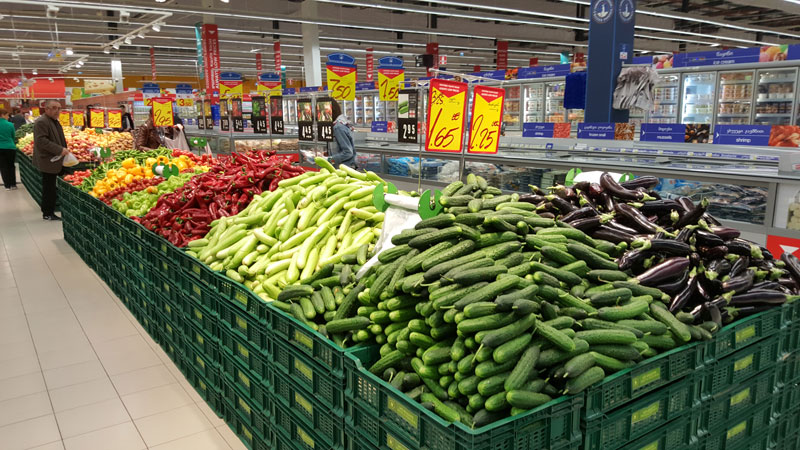
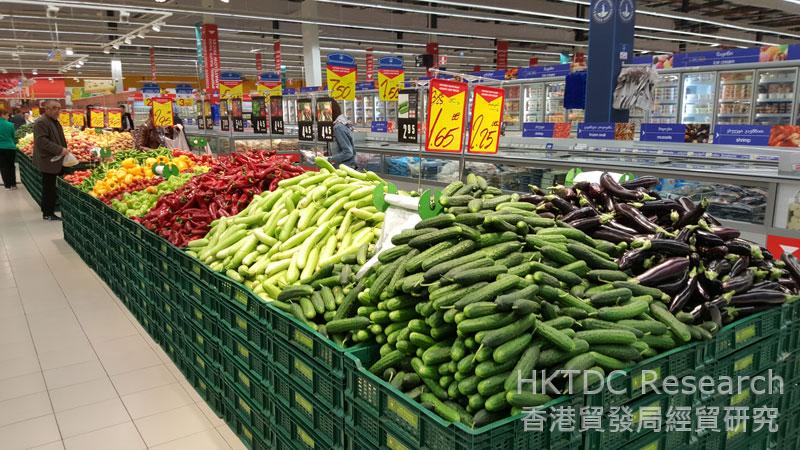
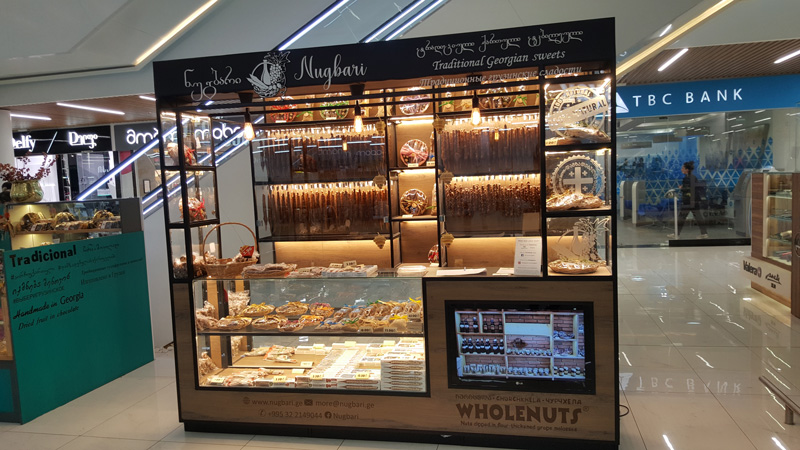
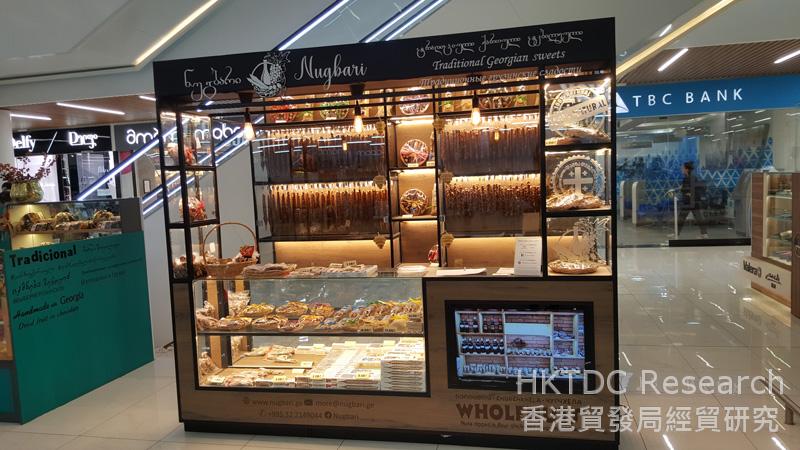
Wine aside, Georgia, with 22 micro-climates varying from cool and dry to warm and humid, was also seen as a quality food supplier during soviet era. Nowadays, Georgian fresh fruits and vegetables are still well-regarded as healthy and of good quality in the CIS region. Also, the country’s traditional delights, such as the sausage-shaped churchkhela[2] confectionary and Borjomi fizzy mineral water, are reportedly gaining more attention from the increasingly health-conscious consumers worldwide.
Long dubbed the culinary capital of Asia, with some 14,000 restaurants serving an array of cuisines from all over China, the rest of Asia and the world, Hong Kong can be a good showroom for Georgian food companies to launch into Asia. In particular, Hong Kong businessmen, who have a good understanding of mainland consumer tastes, can help Georgian food exporters show how their produce can be used with Asian ingredients and culinary skills to complement favours found in Asian cuisines.
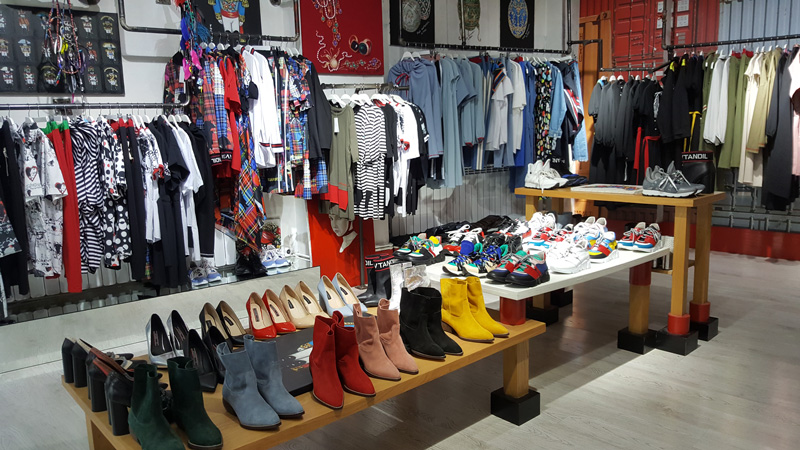
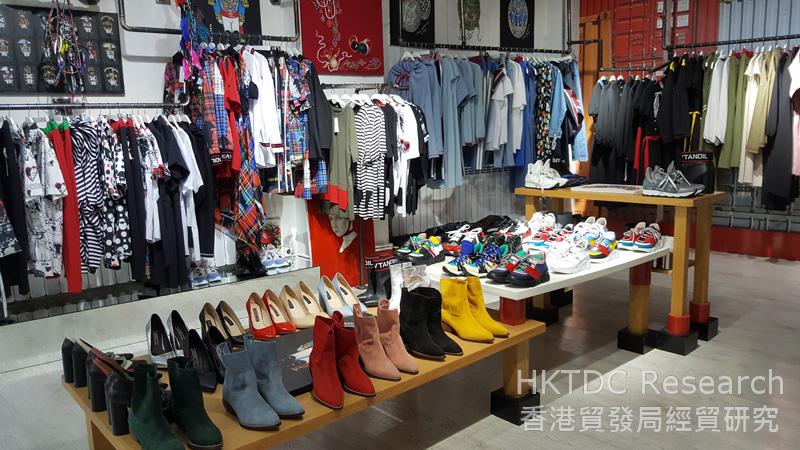
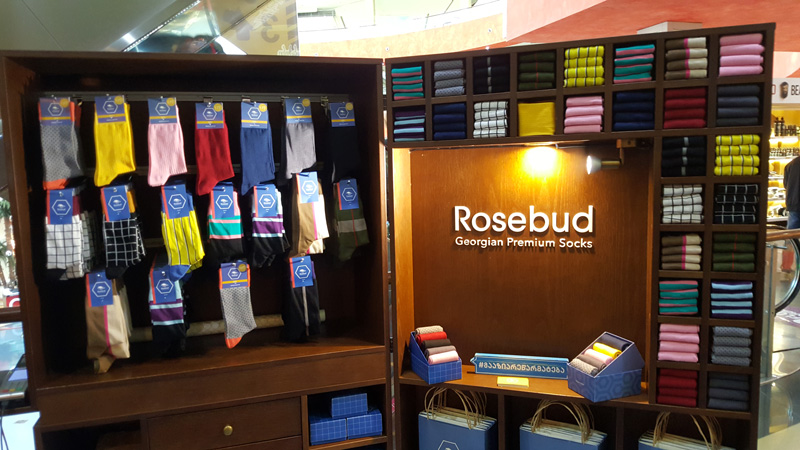
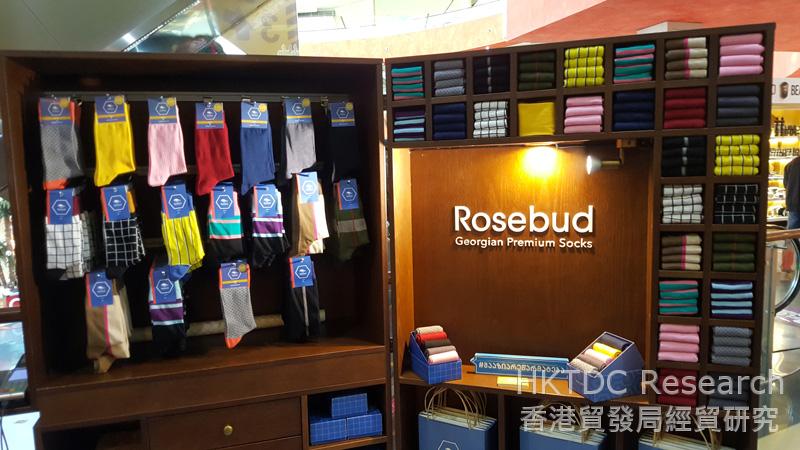
In addition to agribusiness, design – including fashion – is booming in Georgia, as the government promotes the use of modern design to convey core values, such as administrative transparency. This goes hand in hand with Georgian consumers, especially the younger generation, becoming more fashion savvy. This demand is driven by increases in income as well as a reaction to the soviet era when outfits tended to be more standardised.
The greater willingness and ability to spend on fashion has also led to the emergence of a number of designer brands such as Avtandil and Rosebud that have built a following in both the domestic and international markets. Given their relatively small production volume, they usually either only sell online or rely on fashion houses and showrooms in West Europe (including Milan and Paris) to reach out to Asian fashion lovers. These budding fashion brands are therefore ready clients for Hong Kong fashion traders able to offer extensive industry knowledge and distribution networks in the Asian region.
Growing Chinese Foothold in Georgian Trade and Investment
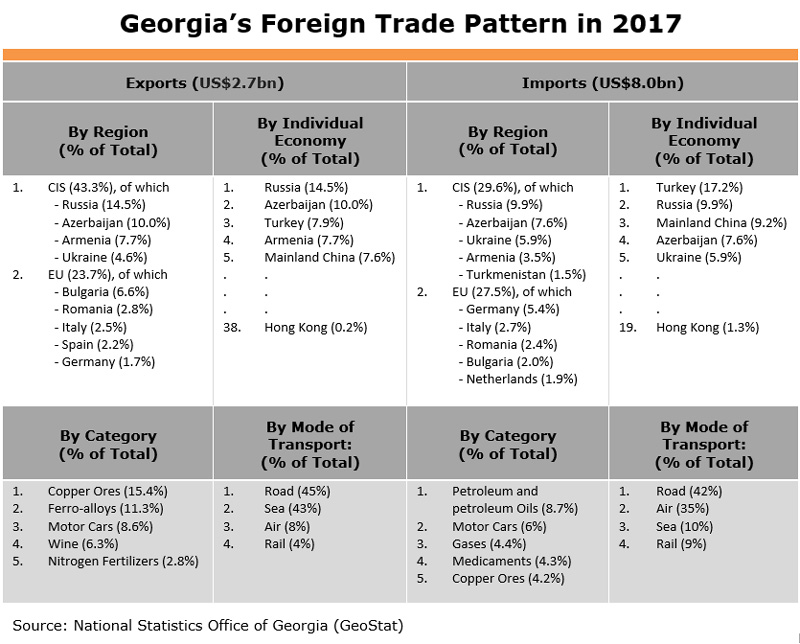
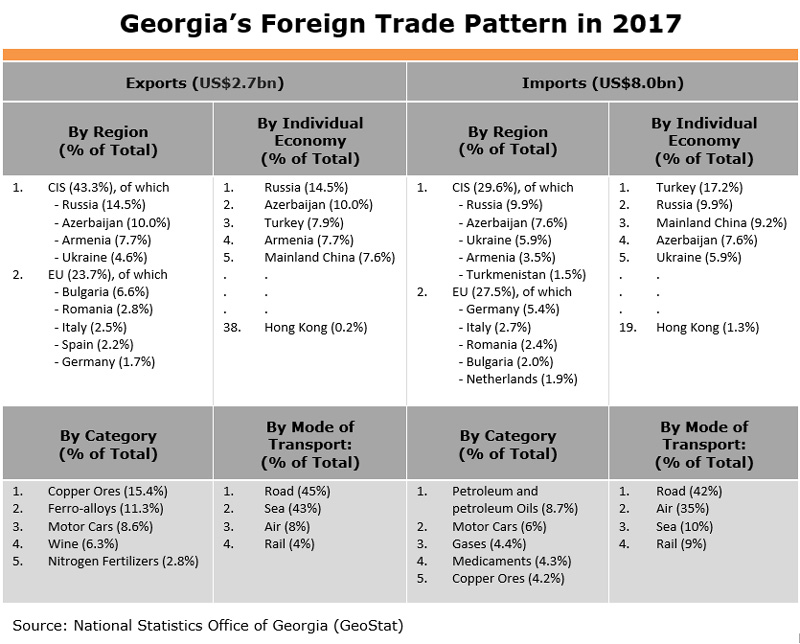
Given the geographical proximity and historic ties, CIS members, EU countries and Turkey are Georgia’s principal trading partners. In 2017, these key partners accounted for 75% of Georgia’s total trade. Thanks to the BRI and wider presence of Chinese enterprises in Georgia, the mainland has fast gained a foothold in Georgia and has become the country’s biggest Asian trading partner.
Last year, Mainland China was Georgia’s fifth-largest export market and third-largest import source, accounting for 7.6% of the country’s total exports and 9.2% of its total imports. Hong Kong sold US$103 million worth of goods to Georgia and bought US$6.3 million in 2017, accounting respectively for 0.2% and 1.3% of Georgia’s total imports and exports.
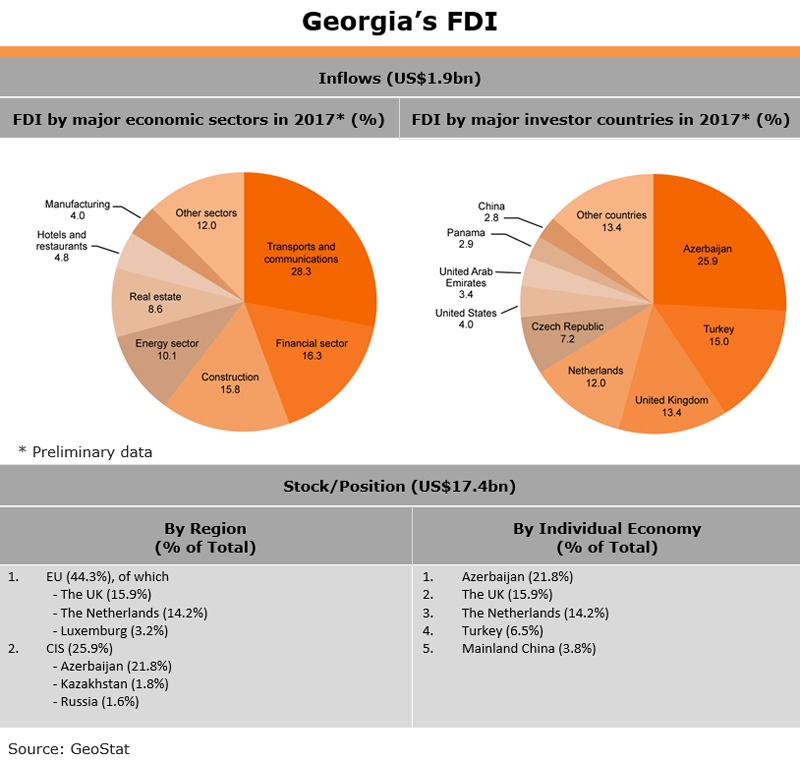
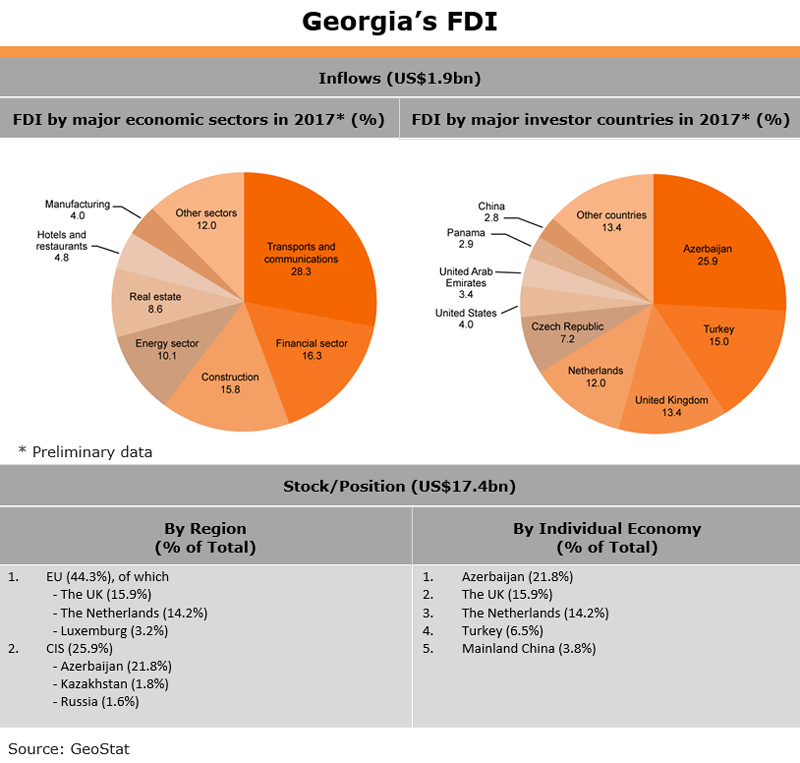
The growing Chinese presence permeates not only in trade, but also investment in Georgia. In spite of a similar EU and CIS dominance, the mainland is estimated to have grown to be the country’s fifth-largest foreign investor, growing from a US$590 million position in 2015 to US$656 million in 2017. An estimated US$51.9 million of the US$1.9 billion annual FDI inflow to Georgia last year came from China, accounting for some 2.8% of the total.
Falling largely in line with Georgia’s economic strengths, Chinese investors have a diversified investment portfolio in the country. Investment span many different sectors such as infrastructure development, engineering contracting, project contracting, trading, banking and finance, hospitality and real estate, telecommunication, forest resources development, building materials processing, manufacturing, renewable energy and mineral exploitation.
Examples of leading Chinese investors in Georgia include Xinjiang Hualing Group Corporation, CEFC China Energy, Sichuan Electric Power Import and Export Company, China State Grid International Development Corporation, Georgia Sinohydro, China 20th Metallurgical Construction Co., Ltd., Huawei Technologies, ZTE Corporation and Manzhouli Heyuan Economic and Trade Co., Ltd.
As the largest Chinese investor in Georgia, Xinjiang Hualing Group Corporation, for example, has already realised eight projects, including a landmark real estate development in Tbilisi, the capital. The Youth Olympic Village was converted into a residential and commercial complex, comprising Hualing Tbilisi Sea New City, Hualing Tbilisi Sea Plaza and Hualing Hotels & Preference Tbilisi, with abundant warehousing, retailing, wholesaling and meetings, incentives, conferences and exhibitions (MICE) capacity.
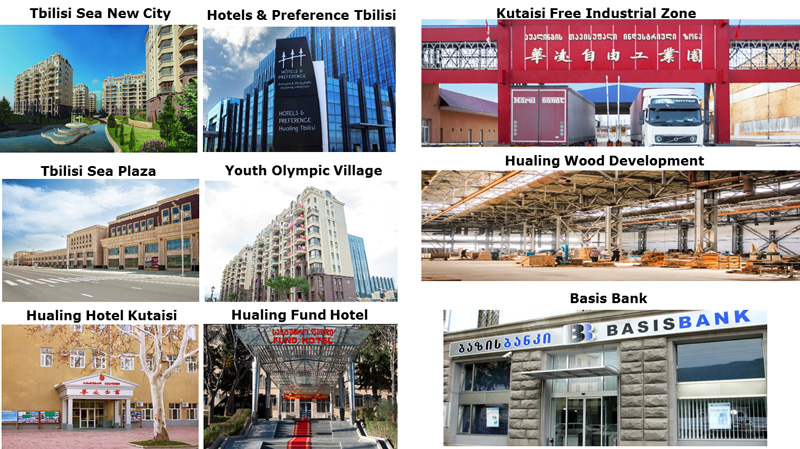
Source: Hualing Group
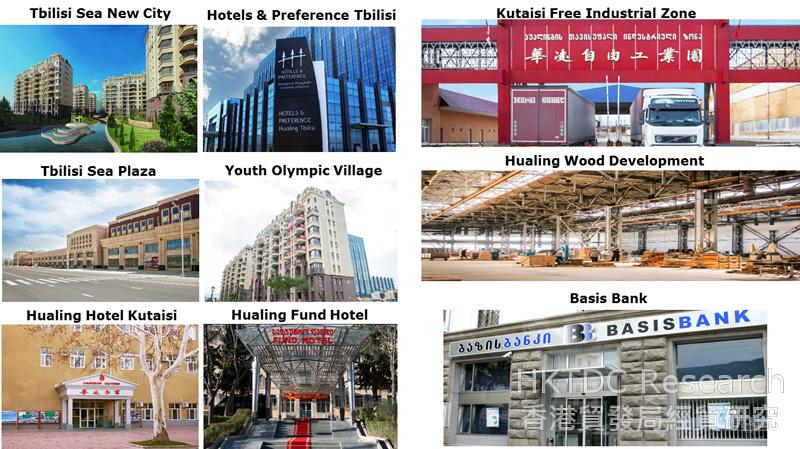
In consonance with Georgia’s vision to transform itself from a logistic junction into an industrial hub, Hualing has also strengthened its investment in the country’s manufacturing sector by taking a stake in the Kutaisi Free Industrial Zone (FIZ). This, together with CEFC China Energy’s recent investment in Poti FIZ on the eastern Black Sea coast to build an export hub for Chinese goods and services to Europe and Central Asia, has made Chinese investors vital for the future of two of the country’s four FIZs, and important partners in realising Georgia’s industrial potential.
Also worth noting is the growing visibility of Chinese investors in Georgia’s banking and finance sector. A good example is Hualing’s purchase of the Basis Bank in 2012, with an aim to grow RMB cross-border settlement businesses between China and Georgia. This was to facilitate bilateral trade and investment, and became one of the leading cases of Chinese private enterprises purchasing commercial banks abroad.
On a similar note, CEFC China Energy is reportedly planning to work with the Georgian government to set up a Georgian Development Bank. This will bolster RMB-denominated financial services and cross-border RMB settlement, while co-operating with the Georgian National Sovereign Fund to establish a Georgian Construction Fund to invest in financial services for projects such as roads, electric power, telecommunications and other infrastructure.
Also of interest to Chinese investors are the country’s strategic infrastructure projects, including hydropower plants and the ongoing railway modernisation. The recognition gained by a handful of Chinese investors and builders, such as China Railway 23rd Bureau Group, taking part in various signature projects in Georgia, will give Chinese investors a better position in the country’s future infrastructure development.
Situated on the shortest land route between China and Europe and being a key component of the Trans-Caspian International Transport Route (TITR) or the Middle Corridor, which stretches from Southeast Asia and China to Europe via Central Asia and the Caspian Sea, Georgia is an important BRI partner. Its strategic role as a logistic hub has been further strengthened with the October 2017 opening of the Baku-Tbilisi-Kars (BTK) railway route, which starts on the Caspian Sea in Azerbaijan and runs through Tbilisi and the eastern part of Turkey before merging with the Turkish and European railway systems.
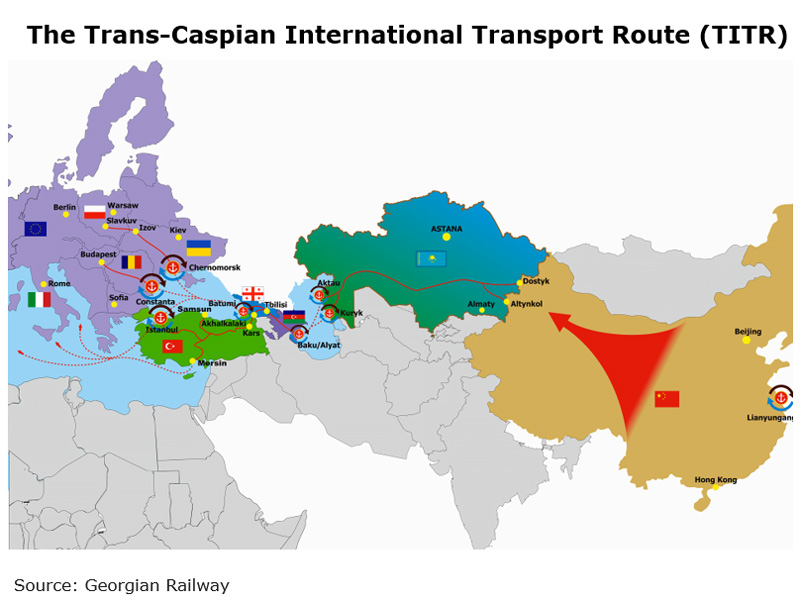
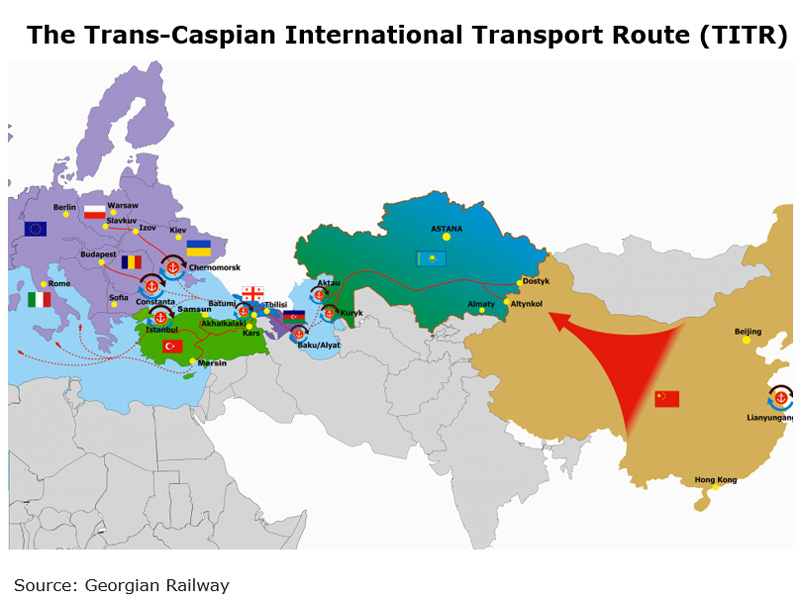
Cargo trains from North-West China can now take as little as eight days to reach Georgia’s Black Sea coast, compared to sea voyages which can take up to 45 days. But to realise the target of receiving more than 250 cargo trains in 2018 and fully exploit the BTK, further local road and rail infrastructure enhancement work would have to be carried out in order to better connect the domestic rail networks and industrial facilities with the BTK. The route has a current annual capacity of 1 million passengers and 5 million tonnes of freight and the potential to expand to 3 million passengers and 17 million tonnes of freight.
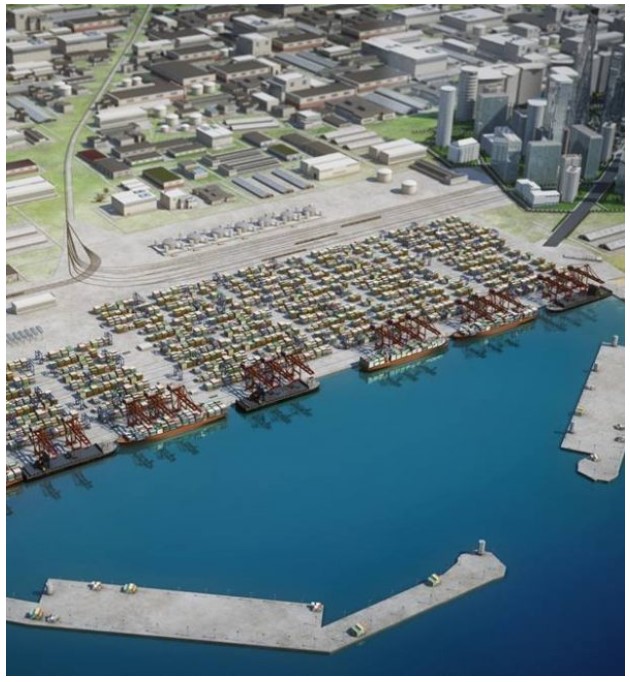
Source: Anaklia Development Consortium
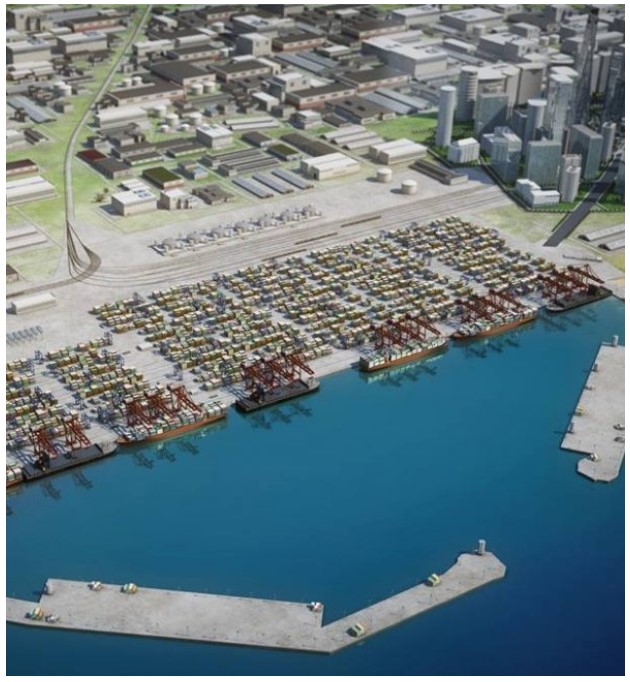
High on the country’s keynote project list is the US$2.5 billion Anaklia Deep Sea Port and Special Economic Zone (SEZ) project. This is the first deep sea port and the largest greenfield maritime infrastructure development in Georgia’s history, marking the beginning of the country’s transformation from a transit economy into a regional logistics and industrial hub capable of attracting Panamax and Post-Panamax vessels from Asia and Europe.
Under the 52-year build-own-transfer (BOT) concession agreement, the Georgian government has committed US$120 million for the construction and development of railway and road transportation links connecting the port to the region to help establish a new maritime trade corridor from Asia to Europe. Expected to receive the first vessels by 2020, the port will open new trade routes to the landlocked Caucasus, Caspian and Central Asian regions and provide badly-needed[3] infrastructure to support regional economic and trade development there.
Anaklia SEZ is close to the port and boasts an initial land plot up to 400ha, with the possibility of expanding to a city-scale project of up to 2,000ha. As a pioneering step to promote the development of light manufacturing and assembly, logistics, warehousing, distribution centres, retail and other service businesses, the SEZ will not only feature a green and smart city concept, but also enjoy a special status to provide a more favourable regulatory environment and tax system (e.g. British Common Law, international arbitration, IP laws, etc.).
Highlights of the Anaklia Deep Sea Port and SEZ Project
| Anaklia Deep Sea Port | Anaklia City and Special Economic Zone |
| Build-own-transfer (BOT) with a 52-year concession | Special Economic Zone (SEZ) adjacent to the deep-sea port site |
| 340ha port development area | Initial project land plot up to 400ha, with expansion to a city-scale project up to 2,000ha |
| Port depth of 16m CD | Focus on light manufacturing, logistics, warehousing, manufacturing and assembly, distribution centres, retail and other essential businesses |
| 14mn tonne capacity by 2030 (Phases 1 & 2) | New legislation to provide regulatory grounds for Anaklia City and Special Economic Zone development |
| Able to accommodate vessels up to 10,000 TEU | Green and Smart City concept with full pledge on urban and spatial planning from the outset |
| Up to 100mn tonne annual capacity following completion of all development phases | |
| Total cost estimated at US$2.5bn in nine development phases |
Source: Anaklia Development Consortium
As a long-term project with nine development phases spanning over more than 50 years, the Anaklia Deep Sea Port and SEZ is set to become a focal point for not only international businesses exploring new manufacturing relocation and regional distribution possibilities, but also investors looking for lucrative investment opportunities and partnerships in Georgia for many years to come.
In order to reach out to prospective investors across Asia and in other Belt and Road- connected regions, the Anaklia Development Consortium participated in the 2018 Belt and Road Summit in Hong Kong. The same event saw the signing of the Hong Kong-Georgia FTA and the promotion of the Anaklia Deep Sea Port and SEZ project to a 5,000-strong audience of investors, project operators and service providers from 55 countries and regions.
[1] According to Meiburg Wine Media, Georgia’s wine exports to China have been growing at an annual rate of more than 100% since 2008.
[2] Churchkhela is made from natural grape juice and different kinds of nuts.
[3] Existing Georgian ports are expected to reach full capacity limit with five years.
Editor's picks
Trending articles
 162 Views
3E Accounting Limited. is a Hong Kong-based accounting firm that specialises in providing affordable and quality professional incorporation, accounting, tax, and compliance services, based on Three Es: efficiency, effectiveness and economy – as part of our One-Stop Solution services for our clients. Our office is conveniently located in Central with a local team familiar with Hong Kong legislation. Founded by Chartered Accountant Lawrence Chai, we are recognized by ACCA as an Approved Employer. The ACCA Approved Employer Program only accepts companies that ACCA recognizes for having high standards of staff training and development. With this recognition, you are assured that 3E Accounting meets or exceeds global standards for teaching and developmental support. 3E Accounting Limited. is an independent member of 3E Accounting International Network, with presence in more than 80 countries to support clients in their overseas expansion to Asia, North and South America, Europe, Oceania, and Africa.
4178 Views

Colliers International (Hong Kong) Limited is a member of Colliers International Group Inc.
Colliers International Group Inc. (NASDAQ: CIGI) (TSX: CIGI) is a top tier global real estate services provider operating in 68 countries with a workforce of more than 14,000 professionals, including 2 offices in Hong Kong and 11 offices in mainland China. Through cooperation among members within Colliers International Group Inc., we provide service covering the Belt and Road countries.
We deliver a full range of services to real estate occupiers, owners and investors across all sectors worldwide. From property search and selection, to project management, to valuation and appraisal, we provide creative solutions to our clients’ most complex requirements. We also provide business enterprise valuation and advisory services for our clients for different purposes including IPO, Merge & Acquisition, investment, financial reporting, etc.
1787 Views
FedEx Express is one of the world's largest express transportation company, providing fast and reliable delivery to more than 220 countries and territories. FedEx Express uses a global air-and-ground network to speed delivery of time-sensitive shipments by a definite time and date supported by a money-back guarantee1.
1Subject to relevant terms and conditions
1551 Views
As attorneys, tax advisers, management and IT consultants and auditors, we are present with 111 own locations in 50 countries. Worldwide, our clients trust our 4,900 colleagues. Roedl & Partner is the leading German speaking consulting firm in Asia with more than 20 offices in 10 countries. Our interdisciplinary and multilingual team in Hong Kong has been operating since 2008 through three offices, providing a wide range of services to our clients, including to legal, tax, audit, accounting and BPO.
7415 Views
Kerry Logistics is an Asia-based, global 3PL with the strongest network in Asia. Its core businesses encompass integrated logistics, international freight forwarding, express and supply chain solutions. With its head office in Hong Kong, Kerry Logistics has a global footprint in 53 countries and territories, supported by an agency network across six continents.
Currently, Kerry Logistics is serving more than 40 of the world’s Top 100 Brands ranked by Interbrand across a spectrum of industries. Its core competence is to provide highly customised solutions to multinational corporations and international brands, meeting their needs from sourcing, manufacturing to selling in Asia and across the globe. The benefits to customers include enhanced supply chain efficiency, reduced overall costs and improved response time to market.
By managing 60 million sq ft of land and logistics facilities, Kerry Logistics provides customers with high reliability and flexibility to support their expansion and long-term growth. With the most extensive rail and road freight network across Eurasia, it provides customers with flexible and cost-efficient multimodal solutions.
In 2018 and 2019, Kerry Logistics received several international recognitions: Best 3PL and Best Logistics Service Provider - Air Freight at the Asian Freight, Logistics and Supply Chain Awards 2019, and Logistics Award at the Lloyd’s List Asia Pacific Awards 2018.
Kerry Logistics Network Limited is listed on the main board of The Stock Exchange of Hong Kong Limited (Stock Code 0636.HK) and is a selected Member of the Hang Seng Corporate Sustainability Index Series 2017-2018.
691 Views
Hong Kong is the Asia Pacific headquarters for one of the world's leading public relations agencies, FleishmanHillard (FH). FH has 85 offices in 30 countries around the world specialising in public relations, public affairs, marketing, paid media, and transmedia and social content.
The FH team in Hong Kong combines a global view with local insights to serve top multinational, Chinese and Hong Kong businesses operating in Greater China, and the Asia Pacific region, including ASEAN markets.
FH Hong Kong supports companies on communications for any point of their business journey, from market entry to cross-border M&A, crisis mitigation to reputation management. With a full spectrum of communications services, offline to online, boardroom to mobile, FH provides clients with complete, global solutions that are integrated across audiences and communications channels.
With a team of 70, spanning 10 nationalities with extensive experience managing strategic communications across multiple markets and multiple sectors, FH Hong Kong is well-positioned to advise companies on how communications with stakeholders, be they government, investors, media or employees, can be harnessed to ensure business opportunities are realized to their full potential.
FleishmanHillard Hong Kong was named In-country Consultancy of the Year by PublicAffairsAsia in 2015 and is an accredited agency in the Council of Public Relations Firms of Hong Kong.
12296 Views
Deloitte is one of the region's leading professional services networks with more than 16,000 specialists in 22 offices across the Mainland China, Hong Kong, Macau and Mongolia. Since establishing a presence in Hong Kong more than four decades ago, we have grown to more than 2,600 staff including 191 partners and gained extensive market recognition:
· named to top tier in CICPA’s Comprehensive Assessment of the Top 100 Accounting Firms for 14 consecutive years
· Central Banking Publications’ Advisory Services Provider of the Year 2019
· Recognized as a leader in Information Security Consulting by Forrester
· Awarded 5A Designation, the highest honor in China’s tax profession
· China TOP5 Most Influential M&A Service Provider to Listed Companies
Deloitte serves more than 80% of Chinese companies in the Fortune Global 500 and ranks No.1 in HK IPO and HKEX-listed company services.
Deloitte offers innovative, one-stop BRI solutions across Audit & Assurance, Risk Management, M&A consulting and Human Capital advisory, helping Chinese and international businesses expand their global footprints. Bringing the full extent of our regional and global resources to bear, we provide deep insights into BRI markets and policies through research reports, participation in events including the Belt and Road Forum for International Cooperation, as well as internal initiatives like our Belt and Road Roundtable and Deloitte with B&R WeChat campaign. Our insights and expertise in BRI projects has supported the expansion journeys of dozens of large SOEs including the Silk Road Fund, China Railway Group and State Power Investment Corporation.
15850 Views
KPMG China is part of a global network of professional firms providing Audit, Tax and Advisory services. KPMG operates in 155 countries and has more than 162,000 people working in member firms around the world. The independent member firms of the KPMG network are affiliated with KPMG International Cooperative (“KPMG International”), a Swiss entity. Each KPMG firm is a legally distinct and separate entity and describes itself as such.
In 1992, KPMG became the first international accounting network to be granted a joint venture licence in mainland China. KPMG China was also the first among the Big Four in mainland China to convert from a joint venture to a special general partnership, as of 1 August 2012. Additionally, the Hong Kong office can trace its origins to 1945. This early commitment to the China market, together with an unwavering focus on quality, has been the foundation for accumulated industry experience, and is reflected in the Chinese member firm’s appointment by some of China’s most prestigious companies.
Today, KPMG China has around 9,000 professionals working in 16 offices: Beijing, Chengdu, Chongqing, Foshan, Fuzhou, Guangzhou, Hangzhou, Nanjing, Qingdao, Shanghai, Shenyang, Shenzhen, Tianjin, Xiamen, Hong Kong SAR and Macau SAR. With a single management structure across all these offices, KPMG China can deploy experienced professionals efficiently, wherever our client is located.
1316 Views
Aon plc (NYSE:AON) is a leading global professional services firm providing a broad range of risk, retirement and health solutions. Our 50,000 colleagues in 120 countries empower results for clients by using proprietary data and analytics to deliver insights that reduce volatility and improve performance.
As the largest majority-owned risk advisory network in the industry, Aon deliver:
- Advice in managing risks associated with growing business along the belt and road countries
- Consistency and accountability for our multinational risk management services
- Global platform to empower strategic global risk management engagement
- Unparalleled market analytics to efficiently design state-of-the-art risk financing options
- China experts embedded within our local offices all over the world, and working as a global team to deliver resources to your operations worldwide
- 360-degree risk management services supporting China overseas investment, construction and infrastructure projects, in compliance with local laws and regulations
Our China Global Solutions (CGS) maintains a global network of dedicated Chinese national professionals that provide the best of Aon to the Chinese community, responding to the special needs of Chinese-owned businesses and their expatriate employees, no matter they are operating along Belt and Road countries for the first time, working to optimize risk management strategies, or in need of help navigating the changing international insurance regulatory environment.