









Djibouti
Country Region
Federal Express (Hong Kong) Limited
Logistics and Transportation Services
 1787 Views
Company Profile
FedEx Express is one of the world's largest express transportation company, providing fast and reliable delivery to more than 220 countries and territories. FedEx Express uses a global air-and-ground network to speed delivery of time-sensitive shipments by a definite time and date supported by a money-back guarantee1.
1Subject to relevant terms and conditions

Mazars CPA Limited
Professional Services
3251 Views
Company Profile

Project Experience
Company Profile
We are an international audit, tax and advisory firm committed to helping our clients confidently build and grow their businesses. We always seek to understand our clients and their environments, adjusting our recommendations and support accordingly.
Present in over 90 countries and territories, we work together as one team across borders and functions to deliver exceptional and tailored services. We combine our skills and expertise with both a global perspective and local knowledge to provide clients with a broad array of professional services in audit and accounting, as well as tax, financial advisory, consulting and legal services*. We empower our people to help clients make the most of opportunities, operate with conviction, and give confidence to their stakeholders.
Mazars is a multicultural and united partnership with shared goals, values and service standards across the world. We take pride in our technical expertise and the quality of our work. With over 350 highly skilled professionals in Mazars in Hong Kong, we operate as one integrated firm through 40 cities in China with more than 5,000 staff. We have the skills and the scale to serve clients of all sizes, across all sectors, while remaining agile, personal and distinct in our approach.
We approach every piece of work with independence, accountability and a social conscience, and we take responsibility for shaping a sustainable industry as well as helping build the economic foundations of a fair and prosperous world.
*where permitted under applicable country laws.
Project Experience
Africa
Power and Energy, Natural Resources (including oil and gas), Water and Waste Management, Transport and Logistics Infrastructure
Australasia
Power and Energy, Telecommunications, Natural Resources (including oil and gas), Water and Waste Management, Agriculture and Rural Development, Transport and Logistics Infrastructure, Urban Development
Western Europe
Power and Energy, Telecommunications, Natural Resources (including oil and gas), Water and Waste Management, Transport and Logistics Infrastructure, Urban Development
Central and Eastern Europe
Water and Waste Management, Transport and Logistics Infrastructure
North America
Power and Energy, Telecommunications, Natural Resources (including oil and gas), Water and Waste Management, Transport and Logistics Infrastructure
Latin America
Power and Energy, Natural Resources (including oil and gas), Transport and Logistics Infrastructure
South Asia
Transport and Logistics Infrastructure
Central Asia
Natural Resources (including oil and gas)
Southeast Asia
Power and Energy, Natural Resources (including oil and gas), Water and Waste Management, Transport and Logistics Infrastructure
Northeast Asia
Power and Energy, Transport and Logistics Infrastructure
Chinese Mainland
Power and Energy
Middle East
Power and Energy, Natural Resources (including oil and gas), Water and Waste Management, Transport and Logistics Infrastructure
Kerry Logistics (Hong Kong) Limited
Logistics and Transportation Services
7291 Views
Company Profile
Project Experience
Company Profile
Kerry Logistics is an Asia-based, global 3PL with the strongest network in Asia. Its core businesses encompass integrated logistics, international freight forwarding, express and supply chain solutions. With its head office in Hong Kong, Kerry Logistics has a global footprint in 53 countries and territories, supported by an agency network across six continents.
Currently, Kerry Logistics is serving more than 40 of the world’s Top 100 Brands ranked by Interbrand across a spectrum of industries. Its core competence is to provide highly customised solutions to multinational corporations and international brands, meeting their needs from sourcing, manufacturing to selling in Asia and across the globe. The benefits to customers include enhanced supply chain efficiency, reduced overall costs and improved response time to market.
By managing 60 million sq ft of land and logistics facilities, Kerry Logistics provides customers with high reliability and flexibility to support their expansion and long-term growth. With the most extensive rail and road freight network across Eurasia, it provides customers with flexible and cost-efficient multimodal solutions.
In 2018 and 2019, Kerry Logistics received several international recognitions: Best 3PL and Best Logistics Service Provider - Air Freight at the Asian Freight, Logistics and Supply Chain Awards 2019, and Logistics Award at the Lloyd’s List Asia Pacific Awards 2018.
Kerry Logistics Network Limited is listed on the main board of The Stock Exchange of Hong Kong Limited (Stock Code 0636.HK) and is a selected Member of the Hang Seng Corporate Sustainability Index Series 2017-2018.
Project Experience
Africa
Transport and Logistics Infrastructure, Logistics Business
Australasia
Transport and Logistics Infrastructure, Logistics Business
Western Europe
Transport and Logistics Infrastructure, Logistics Business
Central and Eastern Europe
Transport and Logistics Infrastructure, Logistics Business
North America
Transport and Logistics Infrastructure, Logistics Business
Latin America
Transport and Logistics Infrastructure, Logistics Business
South Asia
Transport and Logistics Infrastructure, Logistics Business
Central Asia
Transport and Logistics Infrastructure, Logistics Business
Southeast Asia
Transport and Logistics Infrastructure, Logistics Business
Northeast Asia
Transport and Logistics Infrastructure, Logistics Business
Chinese Mainland
Transport and Logistics Infrastructure, Logistics Business
Middle East
Transport and Logistics Infrastructure, Logistics Business
KPMG
Professional Services
15790 Views
Company Profile
Project Experience
Company Profile
KPMG China is part of a global network of professional firms providing Audit, Tax and Advisory services. KPMG operates in 155 countries and has more than 162,000 people working in member firms around the world. The independent member firms of the KPMG network are affiliated with KPMG International Cooperative (“KPMG International”), a Swiss entity. Each KPMG firm is a legally distinct and separate entity and describes itself as such.
In 1992, KPMG became the first international accounting network to be granted a joint venture licence in mainland China. KPMG China was also the first among the Big Four in mainland China to convert from a joint venture to a special general partnership, as of 1 August 2012. Additionally, the Hong Kong office can trace its origins to 1945. This early commitment to the China market, together with an unwavering focus on quality, has been the foundation for accumulated industry experience, and is reflected in the Chinese member firm’s appointment by some of China’s most prestigious companies.
Today, KPMG China has around 9,000 professionals working in 16 offices: Beijing, Chengdu, Chongqing, Foshan, Fuzhou, Guangzhou, Hangzhou, Nanjing, Qingdao, Shanghai, Shenyang, Shenzhen, Tianjin, Xiamen, Hong Kong SAR and Macau SAR. With a single management structure across all these offices, KPMG China can deploy experienced professionals efficiently, wherever our client is located.
Project Experience
Central and Eastern Europe
Power and Energy, Telecommunications, Natural Resources (including oil and gas), Water and Waste Management, Ports, Terminals and Airports, Rail and Mass Transit, Highways, Bridges and Tunnels
South Asia
Power and Energy, Telecommunications, Natural Resources (including oil and gas), Water and Waste Management, Ports, Terminals and Airports, Rail and Mass Transit, Highways, Bridges and Tunnels, Smart City, Logistics Parks/Centres
Southeast Asia
Power and Energy, Telecommunications, Natural Resources (including oil and gas), Water and Waste Management, Ports, Terminals and Airports, Rail and Mass Transit, Highways, Bridges and Tunnels, Smart City, Logistics Parks/Centres
Chinese Mainland
Power and Energy, Ports, Terminals and Airports, Rail and Mass Transit, Smart City, Logistics Parks/Centres
Middle East
Power and Energy, Telecommunications, Natural Resources (including oil and gas), Water and Waste Management, Ports, Terminals and Airports, Rail and Mass Transit, Highways, Bridges and Tunnels, Smart City, Logistics Parks/Centres
Linklaters
Professional Services
4650 Views
Company Profile
Linklaters is a leading global law firm, supporting clients in achieving their strategies wherever they do business. We use our expertise and resources to help clients pursue opportunities and manage risk across emerging and developed markets around the world.
We specialise in advising the world’s leading companies, financial institutions and governments on their most important and challenging transactions and assignments. We have advised on significant deals in over 100 countries. In addition to serving clients from our 29 offices and via our alliance with Allens and Webber Wentzel, Linklaters’ lawyers have expertise in key jurisdictions across Asia, emerging Europe, the Middle East and Africa.
Linklaters is currently advising on three of the 14 Prioritised Projects (with total installed capacity of approximately 10,400 MW) under the Agreement on the China-Pakistan Economic Corridor Energy Project Cooperation between the Government of the People's Republic of China and the Government of the Islamic Republic of Pakistan, which is part of China's 'One Belt, One Road' initiative.
Our global project finance team is renowned for its particular strength in advising on complex, international projects. We have advised on over US$1 trillion of closed project finance transactions around the world. We specialise in large scale, award winning and market-leading projects across the world – covering, oil and gas, petrochemicals, LNG, power, renewables, mining, ports, nuclear, water and waste, telecoms, stadia, airports, roads, bridges and rail-related transactions.
 Djibouti

GDP (US$ Billion)
2.92 (2018)
World Ranking 163/193

GDP Per Capita (US$)
2,787 (2018)
World Ranking 134/192

Economic Structure
(in terms of GDP composition, 2018)
Services
(79.13%)
Industry
(12.4%)
Agriculture
(1.43%)

External Trade (% of GDP)
327.7 (2018)

Currency (Period Average)
Djiboutian Franc
177.72per US$ (2019)

Political System
Multiparty republic
Sources: CIA World Factbook, Encyclopædia Britannica, IMF, Pew Research Center, United Nations, World Bank
The Addis Ababa-Djibouti Railway is the latest beneficiary of China's African investment programme, with the BRI set to ensure that the number of such projects is set to increase, but are China and Africa's agendas truly compatible?
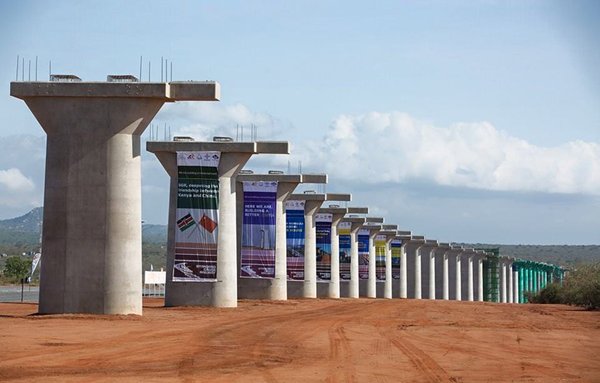
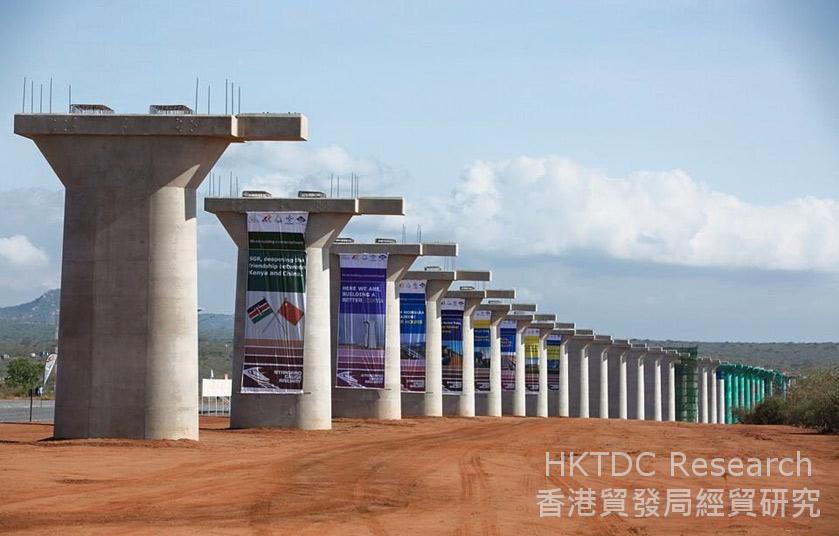
Djibouti is among the tiniest of all of the African nations, while Ethiopia has long been considered the economic powerhouse of the Horn region of East Africa. Both, however, are clear beneficiaries of the Belt and Road Initiative (BRI), China's massive international infrastructure and trade development programme.
While Djibouti may be diminutive, its port packs a punch, occupying, as it does, a strategic position straddling the entrance to the Red Sea. The country also has a substantial military presence, including the largest American military base in Africa. By contrast, Ethiopia, a nation with the second-largest population on the continent, is a true regional economic bright spot.
These two countries, although markedly different, have now been linked by the Addis Ababa-Djibouti Railway, a project largely realised through Chinese engineering and investment. Officially opened in October 2016, Africa's first cross-border electric railway was built by the China Railway Group and the China Civil Engineering Construction Corporation, while most of the US$4 billion financing came from the Exim Bank of China.
The new 750km railway provides a much improved import-export corridor for landlocked Ethiopia. Most significantly, it slashes the seven-day road-freight journey from Addis Ababa to the port of Djibouti to just 10 hours. The outcome of a strategic partnership between China and Africa, the rail link is viewed as an integral part of the BRI.
More recently, in June this year, another China-funded/managed project, the Mombasa-Nairobi Line, went into operation. The 485km line is actually phase I of a much bigger project – a $14 billion standard-gauge railway network that will eventually extend from Kenya on to Uganda then to Rwanda.
Once completed, it is hoped that this network will open up many of the landlocked East African markets to Chinese manufactured goods via the port of Mombasa. It is also anticipated that it will improve the supply chain for African mineral commodity exports, resources that China increasingly relies upon.
The two rail projects are just the latest in a long line of engineering initiatives that have seen China establish a substantial presence in Africa. Back in the 1970s, China built the Tazara Railway, which connected landlocked Zambia and its copperbelt with the Tanzanian port of Dar es Salaam. At the time, this was China's largest aid project in Africa.
More recently, China's commitment to major infrastructure projects across Africa has formed a key element of its BRI agenda. It is also clear that China is keen to play a major role in Africa's economic development, a policy that will only enhance its commercial presence on the continent.
Acknowledging this, during the 2015 Forum on China-Africa Cooperation Xi Jinping, China's President, committed to a generous US$60 billion package of development assistance for Africa. Much of this was earmarked for investment in several major infrastructure projects, including the new Ethiopia-Djibouti Railway and a series of port upgrades along the East African coast.
Assessing China's game plan, David Monyae, a political analyst at Johannesburg University's Confucius Institute, said: "China has enhanced its role on the continent with a no-strings-attached approach to investment and commercial engagement. This has created the impression that Beijing is ready and willing to support Africa's development efforts."
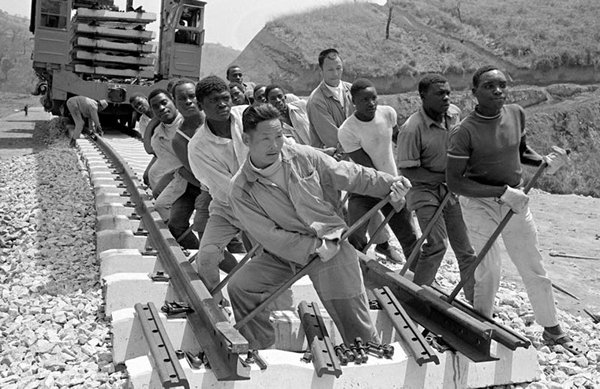
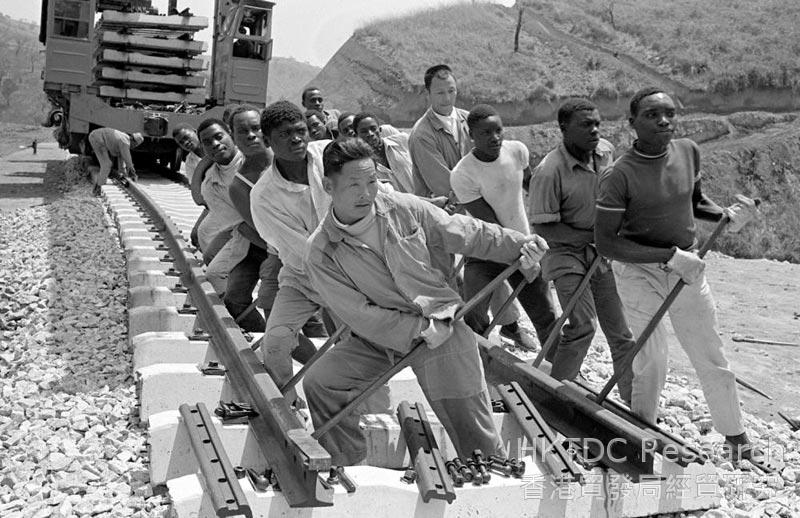
Other analysts, however, have been more cynical, asserting that the BRI is a means for China to create not only a global trading bloc, but also to establish a "zone of influence". One such commentator, Peter Fabricius, a consultant for South Africa's Institute for Security Studies, said: "Xi may be taking advantage of a fortuitous opportunity to extend China's economic and political influence as a world leader. This could see it capitalising on a moment of American global capitulation under Donald Trump, the notoriously isolationist US President."
Fabricius is not alone in seeing a clear indication that a new international economic order may be emerging. As a sign of this, China recently established a military base in Djibouti, alongside those already leased to several other countries, including the US and France.
Others, however, refute that the BRI projects underway across the continent form part of a clandestine power grab. Instead, they maintain that China's investments in East Africa are purely part of a wider trade network, one intended to improve access to Africa's one-billion strong consumer market. As such, it is thought, they should be seen as a development drive that is looking to nurture joint progress through enhanced trading pathways.
Whether the two – geopolitical assertiveness and an increased global trading network – can be genuinely separated out is something of contentious issue. Either way, as one writer – Peter Bruce, one of South Africa's leading business journalists – said: "Chinese influence in Africa is immense, visible and spreading fast."
For many, the key question is whether what works for China will also work for Africa. The African Union, a body that represents all 55 countries across the continent, is optimistic that it will. It has long made it clear that it is keen for China to partner with many of Africa's infrastructure and technology programmes.
Perhaps going some way to explain the Union's enthusiasm, Greg Mills, a South African economist, said: "Chinese contractors and businesses are willing to go to places and work in conditions that few in the West would contemplate."
Made in ChinAfrica
It's not just infrastructure deals, however, that are attracting Chinese investors to Africa. According to the World Bank, an estimated 86 million low-skilled manufacturing jobs are set to be outsourced from China, a consequence of the rising cost pressures caused by higher wage expectations. Ultimately, it is expected that Africa will be the primary beneficiary of this shift in labour demand.
Assessing this likely change, Mills said: "Low-tech, high-labour manufacturing cannot be done virtually and, as China moves up the development scale, Africa can realistically hope to meet this demand."
One sector where such a process is underway is the textile industry, with China having relocated some production facilities to Africa. In particular, China has invested heavily in several large manufacturing projects in Ethiopia, with the East African country set to become the continent's garment manufacturing hub.
Ethiopia is already one of Africa's fastest-growing economies, with the country having pursued a policy of deliberately keeping labour costs low in order to create a competitive advantage. One industrial park, near Addis Ababa, the nation's capital, now houses some 80 Chinese textile firms, all attracted by low or zero tariffs and cheaper labour – comparative industry wages are 15 times lower in Ethiopia than in China. The Huajian Group, a Zhejiang-based footwear manufacturer, has also invested heavily in a large plant in the park, which currently has more than 3,000 employees.
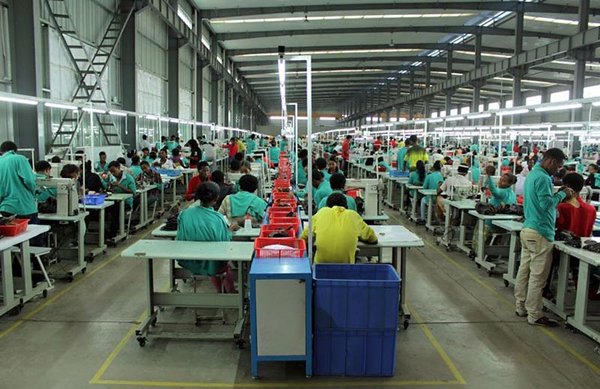
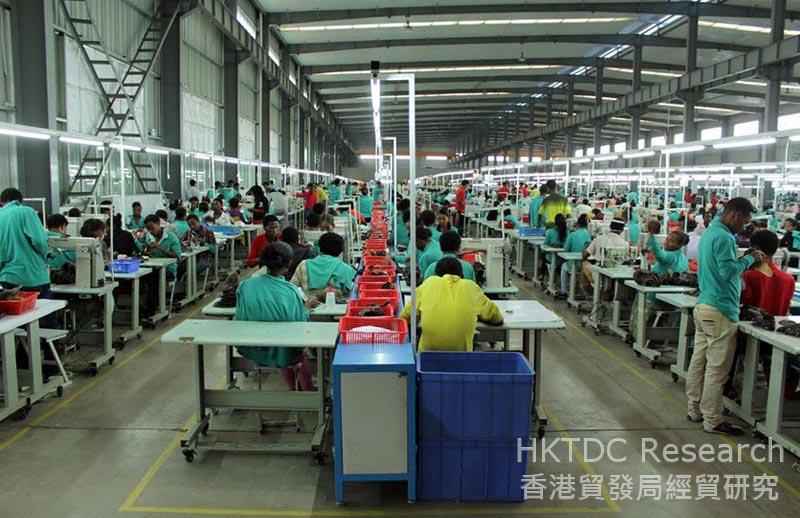
Overall, improved transport infrastructure – much of it funded by China – has led to manufacturing efficiency improving across Africa. Once landlocked Ethiopia, for example, now has direct access to a port following the opening of the Addis-Djibouti Line.
It should be no surprise then that several other African countries, notably Morocco, South Africa, Cameroon and Togo, are now said to be angling for Beijing's attention. Given that Chinese companies have already created some 600,000 jobs across Africa, it is pretty much inevitable that every country on the continent would look to capitalise on the possible spoils of the BRI.
For its part, China clearly believes that outsourcing some of its manufacturing requirements will help make certain African countries more self-sufficient. The naysayers argue, however, that China is taking advantage of cheap labour, demonstrating that it's indifferent to the repressive regimes and poor governance that characterise many of its partner countries across Africa.
Despite these concerns, it's indisputable that Africa needs to create a larger manufacturing sector if its economies are to achieve sustainable growth in a global environment where falling commodity revenues seem a long-term reality. It is also clear that China is looking to capitalise on this need.
Ultimately, as with all other investors, China wants to ensure it is getting a good return on its capital, a policy that is more than apparent in its approach to its African infrastructure projects. Highlighting this, Bruce said: "China does almost no work in Africa from which it does not derive some form of benefit, either political or economic."
As was the case with China several years ago, Africa is now keen to participate more fully in the globalised economy. For many, if the BRI can help boost development across Africa and drive economic activity, then that can only be a positive for the continent.
Mark Ronan, Special Correspondent, Cape Town