









Content Group 4 of Iran
Country Content
Foreign Direct Investment
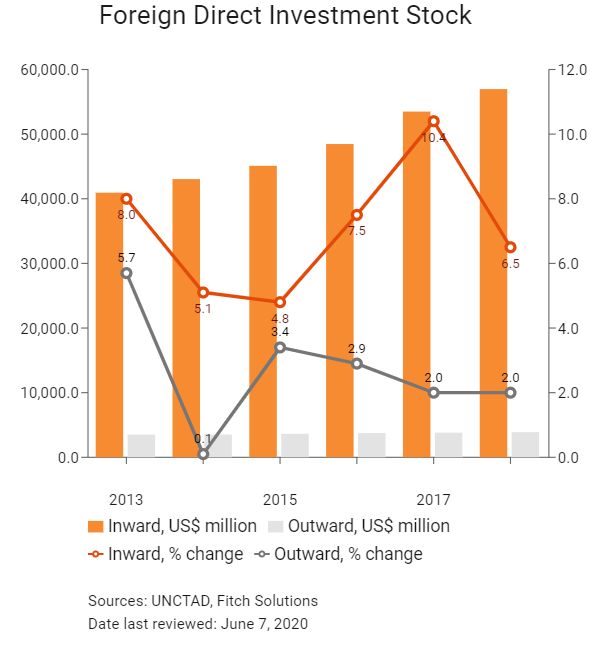
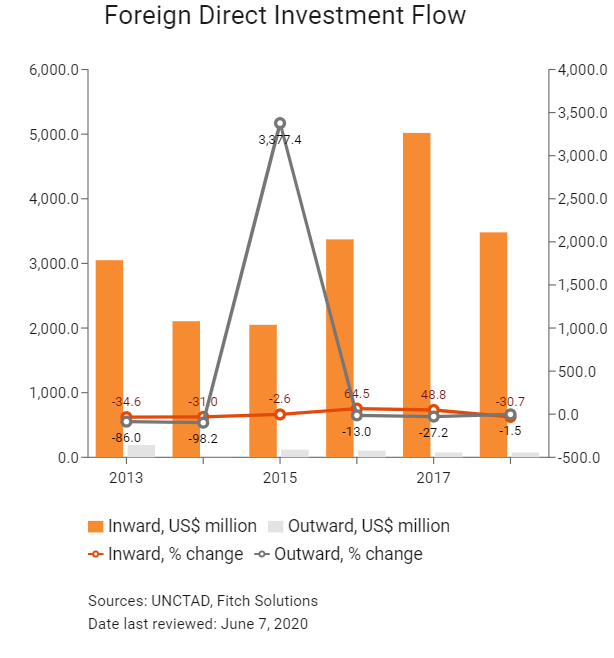
Foreign Direct Investment Policy
- Iran offers one of the most difficult markets in the world for foreign investors to navigate. This is largely owing to the international sanctions placed on the country by the United States, which precluded investment by Western businesses in many sectors, including the valuable oil and gas industry, and continue to severely limit access to financing for firms based in Iran.
- Foreign direct investment (FDI) inflows continued during the sanctions regime, particularly from Mainland China, while South Korean and Indian firms have also been among the first to secure investment in infrastructure development following the lifting of sanctions.
- Sanctions imposed by the United States primarily focused on Iran's economically vital oil and gas industry and its financial sector, specifically preventing Western companies from involvement in the financing of oil exploration, production and refining. Iran's banking industry was excluded from global financial markets through the banning of trade in precious metals from Europe and expelling Iranian banks from SWIFT. By targeting these sectors in particular, the sanctions imposed a blanket ban on investment in Iran by Western firms. United States primary sanctions remain in place, causing difficulties for businesses with United States interests and preventing the use of United States dollars for transactions.
- Despite ongoing talks between Europe and Iran aimed at salvaging the nuclear deal and keeping European businesses in Iran, major European companies are already leaving the Iranian market in order to avoid United States sanctions.
- Ownership of natural resources is confined to the Iranian state. In the oil industry, private investment is restricted to buyback contracts (which allow private firms to provide the capital and expertise required for extraction) and require production sites to be returned to the ownership of the National Iranian Oil Company after the initial set-up.
- Foreign companies are required to strike joint venture agreements with state-owned enterprises in order to invest in some industries.
- Foreign investment is currently coordinated under the Foreign Investment Promotion and Protection Act, which was introduced in 2002.
- Iran has revealed several measures designed to encourage investment. These include abolishing restrictions on the percentages of foreign shareholding within a company, a three-year residence licence for foreign investors, directors and experts, as well as tax incentives and reduced administrative obligations for foreign investors.
Sources: US Department of Commerce, Fitch Solutions
Free Trade Zones and Investment Incentives
Free Trade Zone/Incentive Programme | Main Incentives Available |
| Free Trade Zones (FTZs) located at Kish, Qeshm, Chabahar, Aras, Anzali, Maku, Abadan | - Visa-free entry for foreign nationals - Freedom to repatriate profits and obtain foreign currency - 100% foreign ownership permitted - Profit tax exemption for 20 years - Customs duties exemption on capital goods - Fewer and more streamlined bureaucratic procedures |
Sources: US Department of Commerce, Fitch Solutions
Country Title
Investment Policy