



基建及房地产服务

2018年07月17日 中国对外承包工程商会
2017年,在国际工程市场需求总体萎缩、国际贸易主义抬头的严峻形势下,对外承包工程企业围绕“一带一路”倡议加大市场投入,增强开拓力度,整体业务规模稳步攀升,实现完成营业额1686亿美元,同比增长5.8%,新签合同额2653亿美元,同比增长8.7%。行业企业「走出去」积极性不断提升,队伍逐步扩大,不少企业将促进海外业务发展上升到公司战略层面,积极进行业务转型升级,有效实现了业务发展,国际影响力得到了不断提升。   2017年行业发展特点 一、从市场分布来看,业务加速向“一带一路”沿线国家集中 2017年,行业企业在“一带一路”沿线国家市场新签合同额1443亿美元,占同期新签合同额的54.4%,完成营业额855亿美元,占同期总额的50.7%,主要合作领域涉及互联互通和基础设施建设、产能合作、能源、产业园区等。 亚�
2017年11月09日 中国对外承包工程商会
信用保险项下项目融资业务是指我公司中长期保险和投资保险项下融资,针对的是出口买方信贷项目和出口卖方信贷项目以及海外投资项目,它适用于大型工程承包、机电成套设备出口及海外投资企业的融资。我公司通过对银行贷款提供风险保障支持银行满足相关企业项目融资需求或通过赔款转让协议将银行对相关企业的融资风险提供保障。   一、出口卖方信贷保险项下融资 是我公司提供的一类政策性保险产品,它以扩大我国出口、保障企业收汇为目的,对因政治风险或商业风险引起的出口方在商务合同项下应收的延付款损失承担赔偿责任。经我公司同意,出口方在将保单项下的赔偿权益转让给贷款银行,可以向银行申请融资。如进口方未按商务合同规定偿还到期款项致使出口方无法获得货款归还银行贷款时,我公司根据《赔款权益转�
2019年05月24日 中国对外承包工程商会
黨的十九大報告指出,我國經濟已由高速增長階段轉向高品質發展階段,正處在轉變發展方式、優化經濟結構、轉換增長動力的攻關期。這是我國根據國際國內環境變化,特別是我國發展條件和發展階段變化做出的重大判斷。 對外承包工程行業的高品質發展,離不開企業的高品質發展,而企業的高品質發展離不開高品質的基礎設施項目。在「一帶一路」倡議的指引下,越來越多的中資企業投身沿線重大項目建設,推動對外承包工程行業發展取得長足進步。同時,在行業快速發展的過程中,各種挑戰、矛盾、風險開始逐漸顯現。 近年來,中國鐵建堅持「共商、共建、共用」基本原則,牢固樹立新發展理念,以打造高品質的基礎設施為目標,深入推動理念創新、模式創新、管理創新,在參與「一帶一路」重大項目建設上取得了歷史性突破,在推�
2017年12月29日 中国对外承包工程商会
本文以商务部对外劳务合作业务统计数据为依据,从国家(地区)、行业、企业三个维度对2017年1-11月中国劳务合作业务情况进行分析,供会员企业了解行业情况,未经授权不得转载或镜像。 请按此阅览原文。
2017年11月09日 中国对外承包工程商会
信用保险项下项目融资业务是指我公司中长期保险和投资保险项下融资,针对的是出口买方信贷项目和出口卖方信贷项目以及海外投资项目,它适用于大型工程承包、机电成套设备出口及海外投资企业的融资。我公司通过对银行贷款提供风险保障支持银行满足相关企业项目融资需求或通过赔款转让协议将银行对相关企业的融资风险提供保障。   一、出口卖方信贷保险项下融资 是我公司提供的一类政策性保险产品,它以扩大我国出口、保障企业收汇为目的,对因政治风险或商业风险引起的出口方在商务合同项下应收的延付款损失承担赔偿责任。经我公司同意,出口方在将保单项下的赔偿权益转让给贷款银行,可以向银行申请融资。如进口方未按商务合同规定偿还到期款项致使出口方无法获得货款归还银行贷款时,我公司根据《赔款权益转�
2017年12月29日 中国对外承包工程商会
本文以商务部对外劳务合作业务统计数据为依据,从国家(地区)、行业、企业三个维度对2017年1-11月中国劳务合作业务情况进行分析,供会员企业了解行业情况,未经授权不得转载或镜像。 请按此阅览原文。
2018年07月17日 中国对外承包工程商会
2017年,在国际工程市场需求总体萎缩、国际贸易主义抬头的严峻形势下,对外承包工程企业围绕“一带一路”倡议加大市场投入,增强开拓力度,整体业务规模稳步攀升,实现完成营业额1686亿美元,同比增长5.8%,新签合同额2653亿美元,同比增长8.7%。行业企业「走出去」积极性不断提升,队伍逐步扩大,不少企业将促进海外业务发展上升到公司战略层面,积极进行业务转型升级,有效实现了业务发展,国际影响力得到了不断提升。   2017年行业发展特点 一、从市场分布来看,业务加速向“一带一路”沿线国家集中 2017年,行业企业在“一带一路”沿线国家市场新签合同额1443亿美元,占同期新签合同额的54.4%,完成营业额855亿美元,占同期总额的50.7%,主要合作领域涉及互联互通和基础设施建设、产能合作、能源、产业园区等。 亚�
2019年05月24日 中国对外承包工程商会
黨的十九大報告指出,我國經濟已由高速增長階段轉向高品質發展階段,正處在轉變發展方式、優化經濟結構、轉換增長動力的攻關期。這是我國根據國際國內環境變化,特別是我國發展條件和發展階段變化做出的重大判斷。 對外承包工程行業的高品質發展,離不開企業的高品質發展,而企業的高品質發展離不開高品質的基礎設施項目。在「一帶一路」倡議的指引下,越來越多的中資企業投身沿線重大項目建設,推動對外承包工程行業發展取得長足進步。同時,在行業快速發展的過程中,各種挑戰、矛盾、風險開始逐漸顯現。 近年來,中國鐵建堅持「共商、共建、共用」基本原則,牢固樹立新發展理念,以打造高品質的基礎設施為目標,深入推動理念創新、模式創新、管理創新,在參與「一帶一路」重大項目建設上取得了歷史性突破,在推�
2017年11月17日 凯达环球有限公司
A straw poll of work colleagues will quickly confirm that few know the geographical location of Djibouti despite it being a strategically key port on the busiest shipping route in the world. The Belt and Road Initiative will have a transformational effect on a place known as the Crossroads Nation. The highly distinctive and recognisable Aedas strategic master plan for Djibouti will reinvigorate the city and encourage the growth in trade of capital, goods and services through the whole of East Africa. The strategic military bases within the city make it very secure. Its political stability is an additional asset. Its people incredibly polite and always smiling and the potential for growth is huge. Already its telecommunications system ranks among the best in Africa. The strategic master plan is a progressive and sustainable model for regeneration that not only looks to the future but also draws from the rich heritage and culture of the city and the country. The astonishing
2017年11月17日 凯达环球有限公司
A straw poll of work colleagues will quickly confirm that few know the geographical location of Djibouti despite it being a strategically key port on the busiest shipping route in the world. The Belt and Road Initiative will have a transformational effect on a place known as the Crossroads Nation. The highly distinctive and recognisable Aedas strategic master plan for Djibouti will reinvigorate the city and encourage the growth in trade of capital, goods and services through the whole of East Africa. The strategic military bases within the city make it very secure. Its political stability is an additional asset. Its people incredibly polite and always smiling and the potential for growth is huge. Already its telecommunications system ranks among the best in Africa. The strategic master plan is a progressive and sustainable model for regeneration that not only looks to the future but also draws from the rich heritage and culture of the city and the country. The astonishing
2019年09月04日 奥雅纳
“People tend to look at output… but actually, we should look at the outcome. What does this piece of infrastructure have to do with the social and economic development of that location?” points out Arup’s East Asia Region Chair, Michael Kwok. “That is why Belt and Road makes so much sense – not only in terms of supporting the development of a country, but actually in supporting the ambitions of shaping a better world.” Speaking in a video for the Hong Kong Trade Development Council, Michael described the BRI – an ambitious, large-scale programme to connect Asia, Africa and Europe via land and maritime networks – as a very important initiative not just for China, but for the world. He believes that Hong Kong is playing a vital role in helping to shape the Belt and Road Initiative due to its internationalism, openness and pragmatism. Pioneering digital transformation work in Hong Kong, particularly around 3D printing, automation and artificial intelligence,
2019年09月04日 奥雅纳
Image used under license from shutterstock.com The government of the Philippines has embarked on an ambitious “Build, Build, Build” infrastructure programme to spur economic growth throughout the country. According to the government, a total of PhP8.4 trillion (US$170 billion) will be spent for infrastructure during the six-year term of the Duterte administration. This will increase the infrastructure spending in the GDP from 3.4% in 2016 to 7.4% by 2022.   Challenges facing The Philippines is one of the fastest growing economies in Asia averaging more than 6% growth over the past decade. However, infrastructure spending has lagged behind its neighbours. The crumbling infrastructure has resulted in transport and economic woes and has been identified as one of the most significant constraints sustaining to the country’s economic growth.   Underdeveloped infrastructure is attributed to the following factors: inadequate infrastructure investment
2018年06月27日 奥雅纳
The Belt and Road Initiative (BRI) undoubtedly offers tremendous opportunities for countries along each of the corridors and for the countless organisation who will play a part in its progress. Yet the project also faces a number of issues that will be critical to the eventual success of the initiative, not least the challenge of social acceptance. For design and engineering firms such as Arup, it is easy to look at BRI as a series of large-scale infrastructure projects. In reality though, it is a multi-faceted development whose core principles cover everything from policy coordination and trade freedoms to financial integration and globalization. Ultimately, infrastructure is – always and everywhere – political. There are always strategic interests involved and there can be losers as well as winners. So even when the number of winners far outstrips the losers and there is a compelling case to build, we must always do our best for those who don’t see a critical new rail lin
2018年01月19日 奥雅纳
Rail networks are an important part of the Belt and Road initiative to improve connectivity along the historical Silk Road trading routes, and stations are powerful catalysts for development and regeneration. How are transport hubs evolving to meet local needs? What can we learn from trends in Europe and North America? Malcolm Smith, Arup’s Global Masterplanning and Urban Design Leader shares his perspective.   Train stations were places of wonder in the 19th century. The buildings, like the trains within, symbolised technological progress and economic power. These ‘palaces’ of the industrial age were awe-inspiring in their sheer size, dramatic in architecture and feats of engineering. St Pancras Station in London was one such example and on its completion in 1868, was the largest enclosed space in the world. This has allowed it to be remodeled into today’s spectacular transport hub. © Hufton+Crow The redevelopment of King’s Cross station represents a co
2017年12月06日 奥雅纳
Preparing for widespread growth Rapid growth in energy demand across Asia is seeing LNG become the fuel of choice. Driven by expanding populations, rising standards of living, and sprawling urbanisation, demand will only keep growing. With LNG production and transportation at an all-time high, Asia is seeing new opportunities for both land-based import terminals as well as floating storage and regasification facilities. This trend is set to keep on going, with energy growth predictions for Asia much higher than the rest of the world. Japan and Korea have long relied on LNG for energy security and power generation, but we’re now seeing a change across Asia. China, India, Indonesia, the Philippines, Thailand, Vietnam and Bangladesh have followed suit with the recent introduction of gas into their import markets and are helping to drive demand across the region. As demand increases, new ways of bringing large-scale power generation online quickly needs to be found to meet thes
2017年10月18日 奥雅纳
Sustainable and resilient infrastructure design is vital for the Belt & Road… not just for Asia, but for the world as well Just over four years after President Xi Jinping first launched his vision for the Belt and Road Initiative (BRI), the concept is fast becoming a reality. With a vision of reform, development, trade and innovation at the heart of the concept, BRI is set to reshape and revitalise trade links around the globe. The countries along the various corridors account for some two-thirds of the world’s population, but only one third of the world’s GDP. So there is tremendous potential for growth. And the new infrastructure developed under the BRI banner will be the key to the unlocking this potential. That is not to say that some of this infrastructure would not be built without BRI, of course. In fact, the Asia Development Bank estimated that some US$1.7 trillion per annum would be required for infrastructure investment in Asia between 2016-2030 at current
2017年10月18日 奥雅纳
Sustainable and resilient infrastructure design is vital for the Belt & Road… not just for Asia, but for the world as well Just over four years after President Xi Jinping first launched his vision for the Belt and Road Initiative (BRI), the concept is fast becoming a reality. With a vision of reform, development, trade and innovation at the heart of the concept, BRI is set to reshape and revitalise trade links around the globe. The countries along the various corridors account for some two-thirds of the world’s population, but only one third of the world’s GDP. So there is tremendous potential for growth. And the new infrastructure developed under the BRI banner will be the key to the unlocking this potential. That is not to say that some of this infrastructure would not be built without BRI, of course. In fact, the Asia Development Bank estimated that some US$1.7 trillion per annum would be required for infrastructure investment in Asia between 2016-2030 at current
2017年12月06日 奥雅纳
Preparing for widespread growth Rapid growth in energy demand across Asia is seeing LNG become the fuel of choice. Driven by expanding populations, rising standards of living, and sprawling urbanisation, demand will only keep growing. With LNG production and transportation at an all-time high, Asia is seeing new opportunities for both land-based import terminals as well as floating storage and regasification facilities. This trend is set to keep on going, with energy growth predictions for Asia much higher than the rest of the world. Japan and Korea have long relied on LNG for energy security and power generation, but we’re now seeing a change across Asia. China, India, Indonesia, the Philippines, Thailand, Vietnam and Bangladesh have followed suit with the recent introduction of gas into their import markets and are helping to drive demand across the region. As demand increases, new ways of bringing large-scale power generation online quickly needs to be found to meet thes
2018年01月19日 奥雅纳
Rail networks are an important part of the Belt and Road initiative to improve connectivity along the historical Silk Road trading routes, and stations are powerful catalysts for development and regeneration. How are transport hubs evolving to meet local needs? What can we learn from trends in Europe and North America? Malcolm Smith, Arup’s Global Masterplanning and Urban Design Leader shares his perspective.   Train stations were places of wonder in the 19th century. The buildings, like the trains within, symbolised technological progress and economic power. These ‘palaces’ of the industrial age were awe-inspiring in their sheer size, dramatic in architecture and feats of engineering. St Pancras Station in London was one such example and on its completion in 1868, was the largest enclosed space in the world. This has allowed it to be remodeled into today’s spectacular transport hub. © Hufton+Crow The redevelopment of King’s Cross station represents a co
2018年06月27日 奥雅纳
The Belt and Road Initiative (BRI) undoubtedly offers tremendous opportunities for countries along each of the corridors and for the countless organisation who will play a part in its progress. Yet the project also faces a number of issues that will be critical to the eventual success of the initiative, not least the challenge of social acceptance. For design and engineering firms such as Arup, it is easy to look at BRI as a series of large-scale infrastructure projects. In reality though, it is a multi-faceted development whose core principles cover everything from policy coordination and trade freedoms to financial integration and globalization. Ultimately, infrastructure is – always and everywhere – political. There are always strategic interests involved and there can be losers as well as winners. So even when the number of winners far outstrips the losers and there is a compelling case to build, we must always do our best for those who don’t see a critical new rail lin
2019年09月04日 奥雅纳
Image used under license from shutterstock.com The government of the Philippines has embarked on an ambitious “Build, Build, Build” infrastructure programme to spur economic growth throughout the country. According to the government, a total of PhP8.4 trillion (US$170 billion) will be spent for infrastructure during the six-year term of the Duterte administration. This will increase the infrastructure spending in the GDP from 3.4% in 2016 to 7.4% by 2022.   Challenges facing The Philippines is one of the fastest growing economies in Asia averaging more than 6% growth over the past decade. However, infrastructure spending has lagged behind its neighbours. The crumbling infrastructure has resulted in transport and economic woes and has been identified as one of the most significant constraints sustaining to the country’s economic growth.   Underdeveloped infrastructure is attributed to the following factors: inadequate infrastructure investment
2019年09月04日 奥雅纳
“People tend to look at output… but actually, we should look at the outcome. What does this piece of infrastructure have to do with the social and economic development of that location?” points out Arup’s East Asia Region Chair, Michael Kwok. “That is why Belt and Road makes so much sense – not only in terms of supporting the development of a country, but actually in supporting the ambitions of shaping a better world.” Speaking in a video for the Hong Kong Trade Development Council, Michael described the BRI – an ambitious, large-scale programme to connect Asia, Africa and Europe via land and maritime networks – as a very important initiative not just for China, but for the world. He believes that Hong Kong is playing a vital role in helping to shape the Belt and Road Initiative due to its internationalism, openness and pragmatism. Pioneering digital transformation work in Hong Kong, particularly around 3D printing, automation and artificial intelligence,

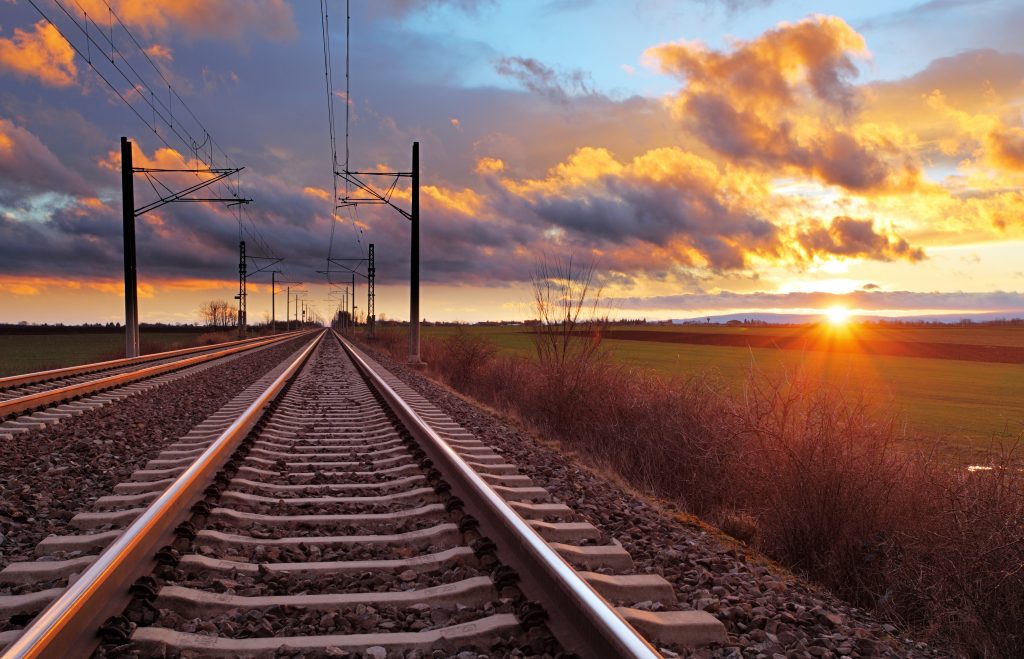
The challenge of building a safe and efficient high-speed rail route involves looking beyond just the new high-speed section, say rail specialists Edwin Marks and Mat Brough.

As the new generation of high-speed rail starts to be designed and built, some routes will be run solely on dedicated high-speed rail track, but others will use a combination of high-speed and existing main line. For high-speed train drivers the transition from high-speed to main line can be an exaggerated version of what car drivers experience when they come off the motorway onto a winding country road. These transitions are among the key considerations where safety requires special attention.

Towards a safer high-speed rail

The first step towards a safer new railway is quantifying the change in velocity between high-speed rail and conventional main line to understand the need to focus on the transitions. As an example, Britain’s new HS2 trains will travel on dedicated track at speeds of up to 400km/h. Contrast that with the UK’s current ‘fast’ West Coast Main Line, parts of which were first built 180 years ago, with a top speed of around 200km/h. Phase one of HS2 between London and Birmingham will be using existing main line to take passengers further north.

Safer track transitions

Compliance to standard has gone a long way to designing out risk on new high-speed infrastructure, but evidence suggests that interfaces between old and new networks are potential weak points, For example, high-speed trains behave unpredictably when moving between the two predominant track forms – ballasted and slab. Work is currently under way on the potential of a third trackform with good high speed rail applications – asphalt track. A midway option between ballasted and slab, and taking the best from both, asphalt is currently the subject of a study being undertaken for the Rail Safety and Standards Board by AECOM. The outcome includes an asphalt track design toolkit and transition design solutions to minimize issues at trackform interfaces.

Other key challenges

Previous safety incidents around the world highlight two major issues where robust risk assessment is essential by those designing, maintaining and operating interfaces between new and existing routes:

The first is lower speed curves. High-speed line is designed to be as straight as possible and any curves are ­angled to suit high velocity. For example, at Santiago de Compostela in Spain in 2013 the driver braked too late at the end of the high speed route, entering the following curve too fast and the entire train overturned against a retaining wall. Because the accident site was not considered part of the high speed route it was not fitted with the same level of train protection to govern speed. 79 died and 140 were injured.

And the second – lineside structures not built to accommodate high speed traffic. At Eschede in Germany in 1998 on a historic route upgraded for high speed, a wheel defect derailed the front part of the train which then brought down a bridge resulting in the catastrophic pile-up of the rest of the train. 101 died and 100 were injured.

In addition, further important considerations include risk assessments on operational interface issues such as:

  • changes in the signalling system and complex signalling interfaces

  • changes in the operation control centre and who is supervising the train

  • changes in operational procedures and expected driver behaviour

  • change in power supply and electromagnetic compatibility

  • maintenance at the transition between the track forms.

Safer solutions

Spain’s recent investment in high-speed networks provides exemplary solutions for reducing risk.

In managing lower speed curves for example, AECOM’s centre of rail excellence in Madrid has designed alignments that keep similar speeds on adjacent parameters. In addition, signalling systems are designed to govern train speed thus significantly reducing the possibility of human error.

In terms of lineside structures, the centre has designed ‘greenfield’ lines. Structures, such as overpasses, are designed according to Spanish guidelines keeping structural piles at a safe distance from tracks. Derailment is more likely at switches and crossings, so these are not allowed under or in the vicinity of overpasses

Meanwhile, on the other operational interface issues, continuity in areas such as communications and compatibility between systems are key to safety. The Madrid centre’s work has included numerous safety enhancements. In signalling for example, an integration process has been developed for different signalling systems and providers at interfaces to reduce risk of communication being lost. In another project, tools were developed to manage the interface between different control centres. Usually control for the high-speed line is not the same as that for the conventional one and both can be managed by separate companies, so the procedure for alerting one another about the handover of trains has to be carefully managed.

Innovation case study – World first in rail track testing

Reducing rail maintenance and increasing passenger safety, the innovative, mechanized Rail Trackbed Stiffness Tester (RTST) has been designed for use on rail networks worldwide. By gathering vital data quickly, safely and accurately, the award-winning machine provides engineers with important track structure performance information which can be used for design, construction validation or understanding of failure sites. Before the machine was developed, gathering track stiffness measurements was labour and time intensive. The machine is currently being programmed for use on several high speed railway infrastructure maintenance liability sites to assess causes of failure. Results can hopefully be used to guide future best practice in high speed track formation design.

By EDWIN MARKS, Associate Director, AECOM and MAT BROUGH, Asset Management Leader, Rail, AECOM

更多文章

2017年05月15日 艾奕康有限公司
A holistic and integrated approach to urban development and growth is pointing the way to the future for cities in the Middle East writes IQ reporter Hilary Hastings. Iconic buildings and mega developments have long been a feature of sky-lines and development in many Middle Eastern cities; their silhouettes instantly recognizable and standing as powerful symbols of success. However, with growing populations and fluctuating oil prices there is a changing emphasis in the approach to urban development which is less about landmarks and more about the future and long-term sustainability. “In many cities we are seeing a shift from the construction of one-off buildings and developments to a more holistic and strategic view of urban development and attracting investment,” says Dr. Erin Brady, AECOM’s Principal of Design, Planning and Economics, Middle East, based in Abu Dhabi. “Cities compete for trade, tourism and investment and the changing oil market has strengthened
2017年07月06日 艾奕康有限公司
The challenge of building a safe and efficient high-speed rail route involves looking beyond just the new high-speed section, say rail specialists Edwin Marks and Mat Brough. As the new generation of high-speed rail starts to be designed and built, some routes will be run solely on dedicated high-speed rail track, but others will use a combination of high-speed and existing main line. For high-speed train drivers the transition from high-speed to main line can be an exaggerated version of what car drivers experience when they come off the motorway onto a winding country road. These transitions are among the key considerations where safety requires special attention. Towards a safer high-speed rail The first step towards a safer new railway is quantifying the change in velocity between high-speed rail and conventional main line to understand the need to focus on the transitions. As an example, Britain’s new HS2 trains will travel on dedicated track at speeds of up to 400k
2017年05月15日 艾奕康有限公司
A holistic and integrated approach to urban development and growth is pointing the way to the future for cities in the Middle East writes IQ reporter Hilary Hastings. Iconic buildings and mega developments have long been a feature of sky-lines and development in many Middle Eastern cities; their silhouettes instantly recognizable and standing as powerful symbols of success. However, with growing populations and fluctuating oil prices there is a changing emphasis in the approach to urban development which is less about landmarks and more about the future and long-term sustainability. “In many cities we are seeing a shift from the construction of one-off buildings and developments to a more holistic and strategic view of urban development and attracting investment,” says Dr. Erin Brady, AECOM’s Principal of Design, Planning and Economics, Middle East, based in Abu Dhabi. “Cities compete for trade, tourism and investment and the changing oil market has strengthened
2017年05月15日 艾奕康有限公司
A holistic and integrated approach to urban development and growth is pointing the way to the future for cities in the Middle East writes IQ reporter Hilary Hastings. Iconic buildings and mega developments have long been a feature of sky-lines and development in many Middle Eastern cities; their silhouettes instantly recognizable and standing as powerful symbols of success. However, with growing populations and fluctuating oil prices there is a changing emphasis in the approach to urban development which is less about landmarks and more about the future and long-term sustainability. “In many cities we are seeing a shift from the construction of one-off buildings and developments to a more holistic and strategic view of urban development and attracting investment,” says Dr. Erin Brady, AECOM’s Principal of Design, Planning and Economics, Middle East, based in Abu Dhabi. “Cities compete for trade, tourism and investment and the changing oil market has strengthened
2017年07月06日 艾奕康有限公司
The challenge of building a safe and efficient high-speed rail route involves looking beyond just the new high-speed section, say rail specialists Edwin Marks and Mat Brough. As the new generation of high-speed rail starts to be designed and built, some routes will be run solely on dedicated high-speed rail track, but others will use a combination of high-speed and existing main line. For high-speed train drivers the transition from high-speed to main line can be an exaggerated version of what car drivers experience when they come off the motorway onto a winding country road. These transitions are among the key considerations where safety requires special attention. Towards a safer high-speed rail The first step towards a safer new railway is quantifying the change in velocity between high-speed rail and conventional main line to understand the need to focus on the transitions. As an example, Britain’s new HS2 trains will travel on dedicated track at speeds of up to 400k
帮助我们改进