









Vietnam
Country Region
Mainland and Hong Kong contractors drafted in to steer struggling coal-fired power station developments.
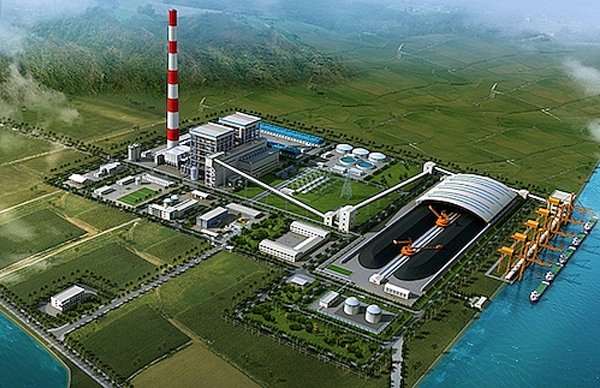
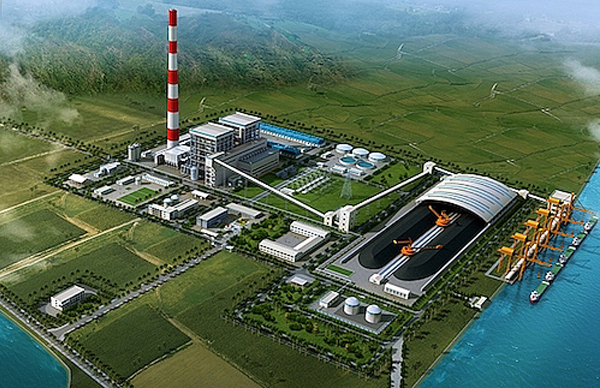
Two of Vietnam's major coal-fired thermal power station projects have been turned over to mainland / Hong Kong developers following fears that local contractors lacked the funds and know-how required to see the initiatives through. With much of the country's power-renewal programme reliant on financial backing funnelled via the Belt and Road Initiative (BRI), relinquishing control of such projects to the primary backers has been widely seen as making sound logistical and operational sense.
The first project to be handed over, in June this year, was the Quynh Lap 1 Power Plant, which was originally being developed by the Vietnam National Coal and Mineral Industries Holding Corporation (Vinacomin), a state-owned mining conglomerate. Responsibility will now fall to Geleximco-HUI, a joint venture between Geleximco, a Hanoi-based investment house, and Hong Kong United Investors (HUI). According to a statement issued by the Vietnamese government, the move follows growing concerns that Vinacomin's position was becoming increasingly untenable, given that the company had debts in excess of VND78 trillion (US$3.4 billion) and a debt-to-equity ratio of 2.5.
The following month, the transfer of the investment rights relating to the Long Phu III Thermal Power Plant was also mooted. Prior to that, the project had been handled by PetroVietnam, the Hanoi-headquartered state-owned oil and gas giant.
While a final decision has yet to be made, a shortlist of two proposed new operators has been agreed upon, both of which are largely China-backed. This sees, in one corner, a consortium of five mainland firms (including Zhejiang Energy International, a Hong Kong-headquartered utility business) and WIN Energy, a Hanoi-headquartered privately-owned power business, squaring up against the China Southern Power Grid Company (CSG), a Guangzhou-based state-owned energy supplier, in the other.
In CSG's favour, it is no stranger to the Vietnamese market. It is already the lead contractor on the $1.75 billion Vinh Tan 1 Thermal Power Project, China's biggest single investment in the country. Due to come online before the end of the year, the project will supply Vietnam's national grid with 7.2 billion KWh on an annual basis once its construction and testing period has been completed. The company already supplies Vietnam with about 33.4 billion kWh of electricity through a number of other, previously delivered projects.
The moves to reallocate responsibility for these projects come at a time when the Vietnamese government has been under increasing pressure from the country's environmental lobby to scale back on its plans for thermal-coal powered plants. Despite the obvious depth of local feeling, ministers have maintained that there is little option but to continue to pursue the current programme.
Defending the government's position, Hoang Quoc Vuong, the Deputy Minister of Industry and Trade, said: "Due to the high costs of renewable energy and the annual 10-15% rise in domestic demand for power that we are continuing to see, we have no choice but to boost the development of the coal-fired power sector.
"While we dearly want to develop renewable energies, that remains a very real challenge. This is largely down to a combination of technical difficulties and a lack of stability with regard to the country's wind and solar power generation facilities."
Of the country's coal-fired projects, China is now by far the largest financier. According to a report by the Green Innovation and Development Centre (GreenID), a Hanoi-based champion of renewable energy, as of the end of 2017, of the country's 27 coal-fired thermopower plants, 14 had been built by Chinese contractors. At the same time, some $8 billion (or 50%) of the total foreign capital flowing into Vietnam's coal-fired thermal power sector was derived from mainland China.
It is also proving harder to find non-mainland based funding for coal-fired electricity-generating projects. Indeed, the London headquartered Standard Chartered Bank is the latest of a growing number of Asia-Pacific-active banks to put a block on coal-related power projects. To date, Singapore's three leading banking groups – DBS, the Oversea-Chinese Banking Corporation and the United Overseas Bank – as well as Japan's Sumitomo Mitsui Banking Corporation, Mitsubishi UFJ Financial Group and Mizuho Financial Group, have all adopted a policy of vetoing such investments.
Marilyn Balcita, Special Correspondent, Hanoi
Editor's picks
Trending articles
Concerns over China's geopolitical intentions remain a challenge for Belt and Road projects in Southeast Asia.


The Belt and Road Initiative (BRI) has not moved quite as quickly in Southeast Asia as it has in South or Central Asia. This is partly down to ongoing tensions in the South China Sea, which have raised concerns among some countries in the region as to China's geopolitical intentions.
At present, the 10-member Association of Southeast Asian Nations (ASEAN) is caught between these concerns and a desire to enhance its already strong trade relations with China. Overall, there is a recognition that the region would benefit from BRI-driven investment, with the Asian Development Bank maintaining US$1 trillion needs to be spent on infrastructure development by 2020 just to maintain current growth levels.
Xue Li is the Director of International Strategy at the Beijing-based Chinese Academy of Social Sciences' Institute of World Economics and Politics. Outlining the challenge facing the BRI, he said: "We haven't done enough to attract countries in Southeast Asia. On the contrary, their level of fear and worry toward China seems to be rising."
For Southeast Asia, the Singapore-Kumming Rail Link is something of a test case. This high-speed link will run through Laos, Thailand, and Malaysia, before terminating in Singapore, a total distance of more than 3,000km. To date, though, not everything is going the way China might have preferred.
In Laos, construction has been delayed. It is also likely that all of the work will have to be paid for by China, as Laos cannot afford the $7 billion required. In Thailand, meanwhile, negotiations have broken down. The Thais now want to build only part of the line – short of the border with Laos – and finance it themselves without Chinese involvement.
As to which company will build the Singapore-Malaysia stretch, that will be decided next year, with Chinese – as well as Japanese – firms emerging as the current frontrunners. Across the board, though, there is unhappiness at what is considered excessive demands and unfavorable financing conditions on the part of the Chinese. Back in 2014, Myanmar pulled out of the project, citing local concerns over the likely impact of the project.
A similar situation has now arisen in Indonesia. The $5.1 billion Jakarta-Bandung High-speed Railway Project, seen as an early success for the BRI, may now require significantly more funding. Indonesia is also unhappy at what it terms 'incursions' into its waters by Chinese fishing boats. It is, however, trying to downplay their significance as a 'maritime resource dispute' in a bid not to deter Chinese investment in the country. The Philippines is, by comparison, less conciliatory, largely because China is not one of its key trading partners. At present, the Philippines and Vietnam are the ASEAN nations most cynical with regards the ultimate intentions behind the BRI.
Singapore, a country with no direct stake in the South China Sea, remains strongly committed to the Initiative. In March this year, Chan Chun Sing, Minister in Prime Minister's Office, emphasised the importance of BRI as a means of improving links with China and its near neighbours.
He said: "The BRI represents a tremendous opportunity for businesses in Singapore – as well as in the wider Southeast Asian region – to work more closely with China. The more integrated China is with the region and the rest of the world, the greater the stake it will have in the success of the region. The more we are able to work together, the more it will bode well for the region and the global economy."
In line with this, this year has seen a number of Memorandums of Understanding (MOUs) signed between China and Singapore. Back in April, one such undertaking was signed between International Enterprise Singapore (IES) and the state-owned China Construction Bank. Under the terms of the memorandum, $30 billion is now available to companies from both countries involved with BRI projects. At present, the two organisations are in discussion with some 30 companies with regards to developments in the infrastructure and telecommunications sectors.
In June, an additional MOU was signed between IES and the Industrial and Commercial Bank of China. This has seen a further $90 billion earmarked to support Singapore companies engaged in BRI-related projects.
Ronald Hee, Special Correspondent, Singapore
Editor's picks
Trending articles
China's stake in Laos' sustainable-energy sector paves way for closer long-term Belt and Road collaboration.
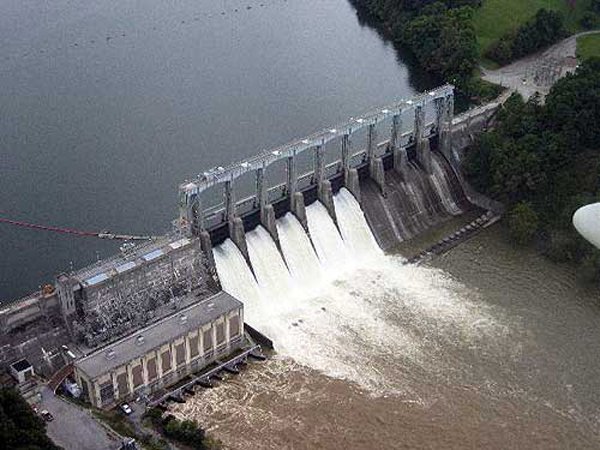
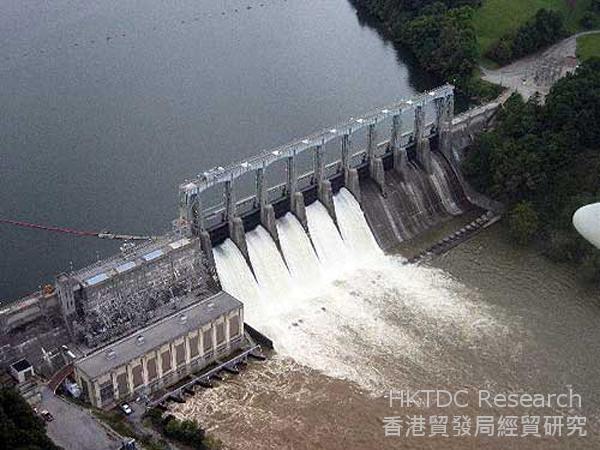
China and Laos jointly initiated work on the second phase of the 1,156 MW Nam Ou Cascade Hydropower Project earlier this year. The project, set on Laos' principal river, is seen as one of the country's key contributions to China's Belt and Road Initiative (BRI).
With Laos' GDP for 2016 recorded at just US$15.9 billion, China has shouldered the bulk of the cost of the $2.8 billion initiative in exchange for the concession to operate the hydropower installation for the next 29 years. Once completed, it will comprise seven dams and hydropower stations and have a projected capacity of 1,156 MW, together with an annual energy output of 5,017 GWh.
The lead on the Chinese side has been taken by Sinohydro, a Beijing-headquartered state-owned hydropower engineering and construction company, which entered into an agreement to develop the project on a joint-venture basis with Electricite Du Laos (EDL), the Laos state electricity corporation, which holds a 15% stake in the site. Under the terms of the project, all electricity generated will be sold to EDL. Significantly, Nam Ou is the first project for which a Chinese enterprise has secured the whole basin rights for planning and development.
With work on Phase One completed more than two years ago – comprising construction of the Nam Ou 2, Nam Ou 5 and Nam Ou 6 plants – the site generated its first electricity on 29 November 2015. In total, the capacity of Phase One is estimated at about 540 MW, almost half the total envisaged for the completed project. The groundbreaking ceremony for the second phase was held some five months later and marked the beginning of the work on the remaining plants – Nam Ou 1, Nam Ou 3, Nam Ou 4 and Nam Ou 7. This second phase is scheduled for completion in 2020.
Emphasising the importance of the initiative, Dr Khammany Inthilath, the Lao Minister of Energy and Mines, said: "Once completed, the Nam Ou Cascade Hydropower Project will have a major role to play in the reduction of poverty across Laos. In particular, it will boost the socio-economic development of Luang Prabang and Phongsaly provinces, immeasurably improving the living standards of local residents.
"It will also play an important role in regulating the seasonal drought problems in the Nam Ou river basin. Ultimately, we hope it will ensure downstream irrigation for the region's plantations on a long-term basis, while also reducing soil erosion."
Despite Inthilath's optimism, the project has attracted criticism on a number of fronts. Firstly, there have been concerns over the possible adverse environmental impact of such large-scale hydropower projects, particularly given the scale and number of hydropower developments currently under way along the Mekong River and its tributaries. In addition to the Nam Ou project, China is also involved with several other hydropower installations, including Don Sahong, Pak Beng and Xayaburi.
A second wave of criticism has come from outside Laos, with a number of neighbouring countries expressing concerns that the cumulative effect of the hydropower projects already under way may adversely impact on the flow of the river. To this end, the governments of Thailand, Vietnam and Cambodia have all gone on record as objecting to the expansion of Laos' hydropower programme.
It is the sheer scale of Chinese investment in Laos, together with the country's resultant indebtedness, that has triggered a third wave of criticism. By the end of 2016, with $5.4 billion worth of funding already in place, China was by far the largest overseas investor in Laos.
According the Lao government's own figures, by the end of 2016 Chinese companies had signed up for $6.7 billion worth of construction projects in the country – some 30.1% of the total earmarked for Laos' infrastructure upgrade. The overall scale of the deals already in place makes Laos the third-largest market for China in the ASEAN bloc.
Overall, though, taking an active role in China's Belt and Road Initiative has been seen as a good fit with Laos' long-held ambition to shift from being a land-locked nation to becoming more of a land-linked economy. Furthermore, Laos' ongoing co-operation with China on a series of energy projects has underlined the positive relationship between the two countries.
Highlighting this, while speaking at the launch ceremony for Phase Two of the Nam Ou Cascade Hydropower Project, Li Baoguang, the Chinese Consul-General in Luang Prabang, Laos' ancient capital, said: "This year marks the 55th anniversary of the establishment of diplomatic ties between China and Laos and there could be no better way of commemorating that than with the commencement of work on this joint venture."
Geoff de Freitas, Special Correspondent, Vientiane