









Myanmar
Country Region
Kerry Logistics – Cross-border road transportation network
 1639 Views
Hong Kong was created as a trading post of the British East India Company for 19th century China trade. A new China trade is flowing, much bigger than the one before, which is what the Belt and Road signifies. It is natural that Hong Kong should again be a major node for it. Hong Kong has strong links to China and the rest of Northeast Asia. For Hong Kong to be a super connector for the new China trade, it must also develop strong links to the rest of Asia, in particular, to Southeast, South and West Asia. Hong Kong's full range of capabilities can then be brought into full play.
Riding on the Initiative and taking advantage of ASEAN’s economic integration, Kerry Logistics continues to expand its ASEAN-wide cross-border road transportation network – KART which connects regional MNCs in ASEAN with the Chinese mainland and Hong Kong. One of the company’s successful showcases is a well-known toothpaste brand in which Kerry Logistics transports the raw materials in barrels packing (e.g. sodium salt, calcium salt) from the origin in Kunming to the client’s factory in Bangkok through the Kunming-Bangkok highway. Compared to the traditional land-sea solution – from Kunming to Guangdong by land and then to Bangkok by sea, the client can significantly shorten the transportation lead time from two weeks to less than four days.

Market(s)

Sector(s)

Country(ies) / Region(s)
With funding for phase one finally agreed, the development of the Kyaukphyu Port no longer seems remote prospect.
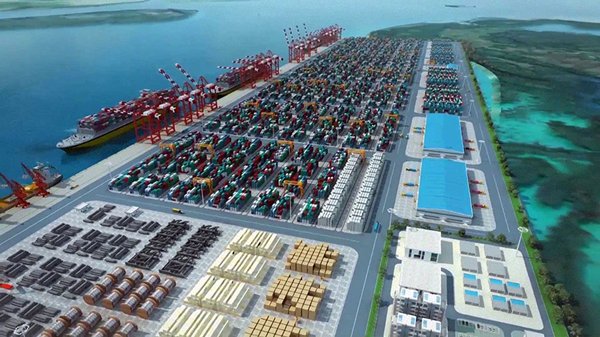
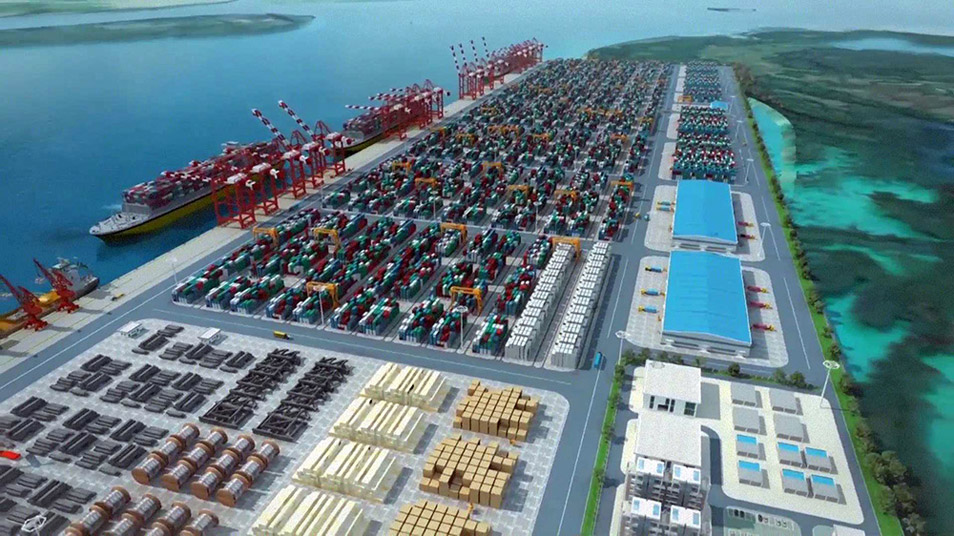
After two long years of negotiations, one of the key Myanmar Belt and Road Initiative (BRI) projects reached a significant approval milestone early last month. This saw CITIC, the Beijing-headquartered investment group, commit to underwriting the US$1.3 billion cost of developing phase one of the Kyaukphyu Deep-Sea Port project.
The deal, agreed with representatives of the Kyaukphyu SEZ Management Committee (KSMC), represents a major leap forward in terms of clearing the way for work to begin on the port, a vital component of the BRI, China's ambitious infrastructure development and trade facilitation programme. Perhaps just as significantly for CITIC, it also marks the company's first substantial venture into China's relatively undeveloped neighbour.
One completed, the Kyaukphyu Deep-Water Port, set in the western coastal state of Rakhine, will join Pakistan's Gwadar, Bangladesh's Chittagong and Sri Lanka's Hambantota as one of the region's four primary, BRI-backed marine cargo-handling facilities. Its geographical advantages see it ideally positioned to connect to western China, while it could also function as an effective interchange hub for goods in transit to and from Bangladesh, India, the Middle East and East Africa.
In another plus, it will substantially cut the volume of shipping obliged to round the Malay Peninsula in order to service China's Southern and Eastern ports via the South China Sea. With China already operating two oil and gas pipelines between Kyaukphyu and Kunming, the capital of the southwestern Yunnan Province, the logistical significance of the new facility is more than apparent.
From Myanmar's point of view, the port should prove to be a further boon to its already booming economy. With its year-on-year growth expected to hit 6.8% for 2018, the country – albeit from a relatively low base – is now home to one of the fastest-expanding economies in Asia. Even before it comes on line, the port is expected to make a considerable contribution to the country's ongoing success story, with 100,000 new local jobs in the offing, while CITIC has also promised that 90% of managerial roles will be filled by Myanmarese staff.
Given the clear win-win nature of the project, it is perhaps surprising that it has taken so long to come to fruition. In truth, though, it is a proposal that has been dogged with problems, with a number of them yet to be resolved.
To date, the most obvious issue has been cost. As originally envisioned, the total bill for redeveloping the site would be somewhere in the region of $7.5 billion, a figure that the would-be Chinese investors understandably baulked at. To circumvent this particularly thorny problem, the project has now been broken down into four more easily-fundable chunks.
Similarly, rather than committing to develop the whole site simultaneously, a more sequential approach has been agreed. This will see one, somewhat scaled-down, terminal completed first, while plans for two further terminals – on Made and Ramree, two nearby islands – have been put on indefinite hold.
Aside from budgets, the other hugely-divisive issue was ownership. As originally envisaged, CITIC would have had an 85% stake in the completed project, with only the remaining 15% state owned. A subsequent change of government saw it politically expedient for CITIC to cut its expected stake to 70%. This will give the Myanmar government the facility to sell on 15% of the project to local, privately owned businesses – some 50 of which are said to have already expressed an interest – while still retaining 15%.
Despite the progress made on both of these former sticking points, there are still a number of contractual issues that need to be resolved before CITIC breaks ground. The issues relate both to the port proper and to the adjacent industrial park that forms part of the overall development scheme. In each instance, separate investment, shareholder and leasing agreements need to be signed, while the port also requires a mutually acceptable concession agreement putting in place. Given the structure of the deal, nothing can be finalised until everything is finalised, meaning it may be a while before the first Chinese supertanker drops anchor in Kyaukphyu.
Geoff de Freitas, Special Correspondent, Naypyidaw
Editor's picks
Trending articles
China-backed SEZ set to transform transport and manufacturing ties between China, Laos, Thailand and Myanmar.
Late last month, the Thai government announced plans to develop a cross-border Special Economic Zone (SEZ) in the Chiang Khong district of Chiang Rai, the country's northern-most province. Once established, it is believed that the new SEZ will act as a nexus for a number of Belt and Road Initiative (BRI) related projects under way in the country, as well as in neighbouring Laos and Myanmar.
More specifically, the SEZ will connect with the existing Mohan-Boten Economic Cooperation Zone (MBECZ), which straddles the Laos-China border. Ultimately, it is anticipated that the zone will act as a hub for the growing economic interconnectedness between Thailand, Myanmar, Laos and China.
Laos' own economic zone development programme has met with considerable success to date and the MBECZ is proving to be no exception. A recent update from the Ministry of Planning and Investment showed that the country's 12 SEZs were already home to 350 Lao and overseas companies, representing total registered capital of US$8 billion, with $1.6 billion of that having already been actively invested.
At present, the SEZ programme has created 14,699 jobs, with 7,564 of these going to local workers. That number is expected to rise imminently following the announcement that a further 40 companies are to set-up within the Boten Specific Economic Zone, which forms part of the MBECZ's core offering.
The Mohan-Boten project, a joint venture between China and Laos, was established in September 2015 at a cost of about $500 million with a remit to focus on agriculture, biotechnology, logistics and cultural tourism. The site was originally developed by the Yunnan Haicheng Group and the Hong Kong Fuxing Tourism and Entertainment Group.
In addition to Mohan-Boten, there are a further two large-scale China-backed clusters in Laos – the Vientiane Saysettha Development Zone and the Vientiane Thatluang Lake Specific Economic Project. The MBECZ, though, has a unique significance in that it interconnects with the border crossing point of the China-Laos Railway, a major BRI project that will ultimately provide the backbone for high-speed train connectivity throughout much of Southeast Asia.
As a consequence, the MBECZ's international trade and finance areas have already attracted investment from many of the companies that are engaged in infrastructure construction activities throughout the country, as well as those actively working on the development of the country's hydropower facilities. It is, however, those businesses that are directly involved with the roll-out of the China-Laos rail link that are most widely represented.
Given the size and prominence of these businesses, it is perhaps reassuring that work on the rail link seems to be proceeding with few notable hindrances. As of March this year, the project was said to be already more than 25% complete and well on course for its officially scheduled 2021 completion date.
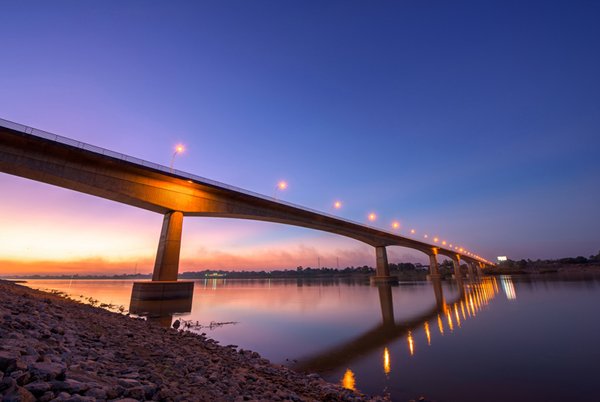
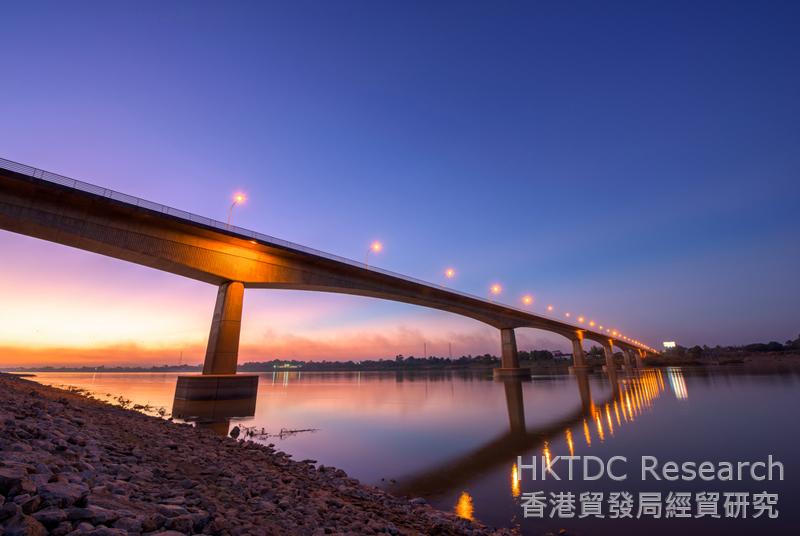
Since then, a number of other major project landmarks have been passed, including the completion of the construction work on a 1 km tunnel – the line's longest subterranean stretch – at the end of October. On top of that, the primary construction work on the 7.5 km Nam Khone Bridge – the widest-spanning structure along the course of the route – has also been completed.
In a sign of further progress, October saw China begin to export petroleum products to Laos via the Mohan-Boten border crossing for the first time. Amid much official fanfare, PetroChina delivered 64 tons of diesel to the local importer – the Nationwide Trading Petroleum Public Company – at the China-Laos border. Prior to this first batch arriving, all oil and petroleum shipments to landlocked-Laos had been routed via Vietnam or Thailand.
The opening of this new conduit was given added significance by its clear importance to the future of the recently sanctioned, BRI-backed Laos-China Economic Corridor. Given the numerous construction projects this will entail, demand for fuel across Laos is only set to soar over the coming years.
Geoff de Freitas, Special Correspondent, Vientiane
Editor's picks
Trending articles
With the win-win nature of the relationship clearly established, it's full-steam ahead on the Burmese BRI front.

Early last month, the planned development of the China-Myanmar Economic Corridor (CMEC) was given the formal go-ahead, with representatives of both parties agreeing the terms of the 15-point Memorandum of Understanding (MoU) that defines the scope and intent of the project, while also allocating the specific responsibilities and entitlements. With the wording and the fine detail in place, the MoU is expected to be signed before the end of the year, with work on the project – a key element of the Belt and Road Initiative (BRI) – expected to begin soon after.
Plans to establish the CMEC were first mooted last year when officials from the two countries jointly floated the idea of establishing rapid-transit links between Kunming, the capital of China's southwestern Yunnan province, and Mandalay, Myanmar's second-largest city, and then on to Yangon, its former capital. The route would also branch off to the west, connecting the Kyaukphyu Special Economic Zone and its deep-water port to the wider transport network.
In addition, with enhanced connectivity the overall priority, it was also envisaged that a number of additional roads, railways and pipelines would be constructed with a view to linking up many of the megaprojects already under way in Myanmar, including the Kyaukphyu Port and the China-Mandalay High-Speed Railway. This would be a precursor to the establishment of an enhanced logistics network across the region, together with an upgraded telecommunications system and a series of new agricultural projects.
Prior to that, agreement had already been reached on the implementation of a number of other joint projects, including the construction of the Kwanlon Bridge and the implementation of a road / rail link between Chinshwehaw, a town on the Myanmar / China border and Lashio, the administrative capital of Shan, Myanmar's largest state. Discussion has also focused on upgrading Chinshwehaw to international border gate status and the construction of a nearby Special Economic Zone (SEZ) as a means of boosting cross-border trade and tourism between the two neighbouring countries.
It is the CMEC, however, that is seen as offering the biggest benefits to both countries. In China's case, it will secure access to Kyaukphyu, its second deep-water Indian Ocean port. Together with Pakistan's Gwadar Port, both offer considerable strategic advantages in line with the long-term aims of the BRI. Additionally, it will be well-placed to up its level of trade with resource-rich Myanmar, while playing a leading role in upgrading its neighbour's infrastructure will also use up much of its surplus construction capacity.
For its part, Myanmar gets access to China's massive consumer market, while also gaining an international state-of-the-art port facility in its less-developed north. In the same region, the Corridor could also make a considerable contribution to ending the enduring ethnic unrest through the provision of better employment prospects and a higher level of overall prosperity.
The go-ahead for the CMEC has also seen a number of the previously stalled Myanmar-sited BRI projects suddenly restored to active duty. Most notably, the apparently becalmed plan to complete work on the Kyaukphyu Deep-sea Port has taken on a new lease of life.
Another key project, the China-Mandalay High-Speed Railway – not long ago put on indefinite hold following uncertainties over its forward financing – now also appears to be back on track. The news of its return to active status was announced by the senior team of Myanmar government officials that attended the HKTDC Belt and Road Summit in Hong Kong in June. At the time, it was reported that not only was work on the project set be resumed imminently, but also that the line would now extend to Yangon and then on to Kyaukphyu, the site of the China-backed Special Economic Zone and deep-sea port.
Geoff de Freitas, Special Correspondent, Yangon
Editor's picks
Trending articles
Concerns over China's geopolitical intentions remain a challenge for Belt and Road projects in Southeast Asia.


The Belt and Road Initiative (BRI) has not moved quite as quickly in Southeast Asia as it has in South or Central Asia. This is partly down to ongoing tensions in the South China Sea, which have raised concerns among some countries in the region as to China's geopolitical intentions.
At present, the 10-member Association of Southeast Asian Nations (ASEAN) is caught between these concerns and a desire to enhance its already strong trade relations with China. Overall, there is a recognition that the region would benefit from BRI-driven investment, with the Asian Development Bank maintaining US$1 trillion needs to be spent on infrastructure development by 2020 just to maintain current growth levels.
Xue Li is the Director of International Strategy at the Beijing-based Chinese Academy of Social Sciences' Institute of World Economics and Politics. Outlining the challenge facing the BRI, he said: "We haven't done enough to attract countries in Southeast Asia. On the contrary, their level of fear and worry toward China seems to be rising."
For Southeast Asia, the Singapore-Kumming Rail Link is something of a test case. This high-speed link will run through Laos, Thailand, and Malaysia, before terminating in Singapore, a total distance of more than 3,000km. To date, though, not everything is going the way China might have preferred.
In Laos, construction has been delayed. It is also likely that all of the work will have to be paid for by China, as Laos cannot afford the $7 billion required. In Thailand, meanwhile, negotiations have broken down. The Thais now want to build only part of the line – short of the border with Laos – and finance it themselves without Chinese involvement.
As to which company will build the Singapore-Malaysia stretch, that will be decided next year, with Chinese – as well as Japanese – firms emerging as the current frontrunners. Across the board, though, there is unhappiness at what is considered excessive demands and unfavorable financing conditions on the part of the Chinese. Back in 2014, Myanmar pulled out of the project, citing local concerns over the likely impact of the project.
A similar situation has now arisen in Indonesia. The $5.1 billion Jakarta-Bandung High-speed Railway Project, seen as an early success for the BRI, may now require significantly more funding. Indonesia is also unhappy at what it terms 'incursions' into its waters by Chinese fishing boats. It is, however, trying to downplay their significance as a 'maritime resource dispute' in a bid not to deter Chinese investment in the country. The Philippines is, by comparison, less conciliatory, largely because China is not one of its key trading partners. At present, the Philippines and Vietnam are the ASEAN nations most cynical with regards the ultimate intentions behind the BRI.
Singapore, a country with no direct stake in the South China Sea, remains strongly committed to the Initiative. In March this year, Chan Chun Sing, Minister in Prime Minister's Office, emphasised the importance of BRI as a means of improving links with China and its near neighbours.
He said: "The BRI represents a tremendous opportunity for businesses in Singapore – as well as in the wider Southeast Asian region – to work more closely with China. The more integrated China is with the region and the rest of the world, the greater the stake it will have in the success of the region. The more we are able to work together, the more it will bode well for the region and the global economy."
In line with this, this year has seen a number of Memorandums of Understanding (MOUs) signed between China and Singapore. Back in April, one such undertaking was signed between International Enterprise Singapore (IES) and the state-owned China Construction Bank. Under the terms of the memorandum, $30 billion is now available to companies from both countries involved with BRI projects. At present, the two organisations are in discussion with some 30 companies with regards to developments in the infrastructure and telecommunications sectors.
In June, an additional MOU was signed between IES and the Industrial and Commercial Bank of China. This has seen a further $90 billion earmarked to support Singapore companies engaged in BRI-related projects.
Ronald Hee, Special Correspondent, Singapore