







Northeast Asia
Thursday 25 April 2019 (Beijing) – It was announced today that 27 global institutions have signed up to a set of voluntary principles – the Green Investment Principles (GIP) for the Belt and Road -- to promote green investment in the Belt &Road region.
The announcement was made at the GIP signing ceremony as part of the Financial Connectivity Forum organized by the People’s Bank of China (the Central Bank) and the Ministry of Finance in Beijing during the second Belt and Road High-level Forum. Deputy Governor Chen Yulu from the People’s Bank of China attended the GIP signing ceremony.

Chen Yulu, Deputy Governor of the People’s Bank of China
As a mandate from the China-UK Economic and Financial Dialogue in 2017, the Green Finance Committee of China Society for Finance and Banking and the City of London Corporation’s Green Finance Initiative led the initiative to develop the GIP, which was first published in London in November 2018. The World Economic Forum, UNPRI, Belt & Road Bankers Roundtable, the Green Belt and Road Investor Alliance and the Paulson Institute are also part of the drafting group. A full list of the principles is provided at the bottom of this release.
Building on existing responsible and ESG investment initiatives, the GIP aims to incorporate low-carbon and sustainable development practices into investment projects in Belt and Road countries, which will host the majority of the world’s infrastructure investments in coming decades.
Since its launch five months ago, the GIP has received strong backing from the global financial industry, including commercial banks, development banks, institutional investors, stock exchanges and other stakeholders that invest or help mobilize investment in the Belt and Road. As of April 25, 2019, twenty-seven institutions have signed up to the GIP. These institutions include (in alphabetical order):
Agricultural Bank of China, Agricultural Development Bank of China, Al Hilal Bank, Astana International Exchange, Bank of China, Bank of East Asia, China Construction Bank, China Development Bank, China International Contractors Association, China International Capital Corporation, Crédit Agricole-CIB, DBS Bank, Deutsche Bank, Export-Import Bank of China, First Abu Dhabi Bank, Habib Bank of Pakistan, Hong Kong Exchanges and Clearing, Industrial and Commercial Bank of China, Industrial Bank, Khan Bank, Luxembourg Stock Exchange, Mizuho Bank, Natixis Bank, Silk Road Fund, Standard Chartered Bank, Trade and Development Bank of Mongolia and UBS Group.
These signatories include all major banks from China that invest in the Belt & Road region and some of the largest financial institutions from (in alphabetical order) France, Germany, Hong Kong, Japan, Kazakhstan, Luxembourg, Mongolia, Pakistan, Singapore, Switzerland, United Arab Emirates and the United Kingdom. Several service providers, including Deloitte, Ernst & Young, KPMG and PWC, have also expressed their support for the GIP.
Ma Jun, Chairman of China’s Green Finance Committee, announced at the GIP signing ceremony that a Secretariat would be established to support future work of the GIP. The GIP Secretariat will work on expanding the membership, the development of implementation tools and case studies, a green project database for the Belt & Road, as well as compiling the progress report.
Chen Yulu, Deputy Governor of the People’s Bank of China, said at the signing ceremony: “The financial institutions represented here today are the leading institutions of green investment for the Belt and Road. I hope that all signatories can seize the great opportunity of the BRI, and actively promote the GIP and enhance their capacity for green investment.”
Dr. Ma Jun said: “The majority of global infrastructure investment in the coming decades will be in the Belt and Road region and they will have a significant impact on the implementation of the Paris Agreement and UN Sustainable Development Goals. The aim of the GIP is to ensure that environmental friendliness, climate resilience, and social inclusiveness are built into new investment projects in the Belt and Road.”

Ma Jun, Chairman of China Green Finance Committee
Catherine McGuinness, Chair of Policy at City of London Corporation commented: “While there is some way to go to ensuring the Belt and Road is truly green, today’s announcement is another step in the right direction, and a powerful statement of intent from financial firms in China, the UK and across the world.”

Catherine McGuinness, Chair of Policy at City of London Corporation

Family photo of major GIP Signatories
David Aikman, Chief Representative Officer of China and Member of the Executive Committee, World Economic Forum, addressed the importance of making GIP an opportunity for green transformation in the region and said: “It will be a shared opportunity for inter-connectivity, environmental friendliness and economic development through green investment in many countries around the world.”
Signatories also expressed their commitment to greening their investment practices with the implementation of GIP. “Business and economic ties between China, Europe, and BRI countries continue to strengthen”, said Werner Steinmueller, Deutsche Bank Management Board Member and Chief Executive Officer for Asia Pacific. “We are one of the most active foreign banks participating in BRI with full corporate and investment banking offerings along the route. By committing to the GIP, we are pledging that we will not only help steer BRI’s open collaboration across countries from China to Europe, but also strive to ensure these projects are as sustainable as possible.”
Gu Shu, President of Industrial and Commercial Bank of China, commented: “Green investments play a critical role in addressing environmental and climate challenges along the Belt and Road. ICBC has participated actively in the drafting of the GIP. We have also invited BRBR members to sign up to the GIP and integrate environmental factors into the BRI-related financing decisions, operations, product development and risk management.”

Gu Shu, President of Industrial and Commercial Bank of China
Bill Winters, Group Chief Executive of Standard Chartered PLC, stated: “We have been supporting our clients in managing their environmental and social risks for decades and are committed to working with all parties to implement the Green Investment Principles and contribute to commerce and prosperity across the Belt and Road markets.”

Benjamin Hung Pi Cheng, Regional CEO of Greater China & North Asia, Standard Chartered
Philippe Brassac, CEO of Crédit Agricole S.A and the Chairman of Crédit Agricole CIB, said: “Today, we reaffirm our ambition to be your long-term banking partner for your energy transition projects. A partner that is both realistic and demanding concerning the climate.”
“As China’s development finance institution and its major bank for the Belt and Road, the China Development Bank will stay committed to green finance, implement green investment principles, increase the provision of green finance, and grow the capacity for green development, to contribute to sustainable economic and social development along the Belt and Road”, said Hu Zhirong, Director of International Finance Bureau of China Development Bank.
Huang Liangbo, Vice President of Export-Import Bank of China, said: “To cater to the needs of the BRI participating parties to conserve resources, protect the environment and cope with climate change, the Export-Import Bank of China has been diversifying its financial products and services related to green projects, and played a major role in investing and financing green infrastructures.”
Lin Jingzhen, Vice President of Bank of China, said: “By signing up to the GIPs, it marks a milestone for Bank of China to integrate green development strategy into our efforts of supporting the construction of the Belt and Road ‘financial artery’. We look forward to working with international counterparts to foster the green and sustainable development along the Belt and Road.”
Qian Wenhui, President of Agricultural Development Bank of China, said: “Agricultural Development Bank of China will gather forces from all sides and assist domestic agriculture-related enterprise and projects to participate in the Belt and Road green investments.”
Tao Yiping, President of Industrial Bank, commented: “By proactively supporting the low-carbon, green and sustainable development of countries along the Belt and Road, GIP will support global financial institutions to establish more extensive and intensive corporations within multilateral frameworks and to increase environmental and social risk management ability.”
Xie Duo, Chairman of the Silk Road Fund, commented: “The Silk Road Fund, being a medium to long-term development and investment fund to support the BRI, is committed to implementing and promoting green investment philosophy, and dedicated to building a green Silk Road.”
Muhammad Aurangzeb, President and CEO of Habib Bank of Pakistan, said: “It is a great initiative taken by China Green Finance Committee and City of London for this GIP signing. As Pakistan’s largest Bank, and the largest executor of CPEC related financing in Pakistan, HBL is positioned to play an integral role towards a greener CPEC, with the ultimate goal of a greener BRI.”
Tim Bennett, CEO of Astana International Exchange, said: “The sign up to the GIP emphasizes the regional perspective of AIX to support infrastructure and economic development in Kazakhstan and in the region in accordance with environmentally and socially friendly international practices.”
Abdulhamid Saeed, Group Chief Executive Officer of First Abu Dhabi Bank, stated: “By becoming one of the first signatories to the GIP, we intend to take a more active role in the Belt and Road Initiative and in supporting global efforts to promote green investments within the UAE and beyond.”
For more information, please contact:
CHENG Lin
China Coordinator of the GIP, China Green Finance Committee
Tel: +86 (10) 8302 1702
Email: lin.cheng@greenfinance.org.cn
Simon Horner
Head of Policy and Innovation, City of London
Tel: +44 (0) 7721 977119
Email: simon.horner@cityoflondon.gov.uk
ANNEX: GREEN INVESTMENT PRINCIPLES FOR THE BELT AND ROAD
Principle 1: Embedding sustainability into corporate governance
We will embed sustainability into our corporate strategy and organisational culture. Our boards and senior management will exercise oversight of sustainability-related risks and opportunities, set up robust systems, designate competent personnel, and maintain acute awareness of potential impacts of our investments and operations on climate, environment and society in the B&R region.
Principle 2: Understanding Environmental, Social and Governance Risks
We will strive to better understand the environmental laws, regulations, and standards of the business sectors in which we operate as well as the cultural and social norms of our host countries. We will incorporate environmental, social and governance (ESG) risk factors into our decision-making processes, conduct in-depth environmental and social due diligence, and develop risk mitigation and management plans, with the help of independent third-party service providers, when appropriate.
Principle 3: Disclosing environmental information
We will conduct analysis of the environmental impact of our investments and operations, which should cover energy consumption, greenhouse gas (GHG) emissions, pollutants discharge, water use and deforestation, and explore ways to conduct environmental stress test of investment decisions. We will continually improve our environmental/ climate information disclosure and do our best to practice the recommendations of the Task Force on climate-related Financial Disclosure.
Principle 4: Enhancing communication with stakeholders
We will institute stakeholder information sharing mechanism to improve communication with stakeholders, such as government departments, environmental protection organizations, the media, affected communities and civil society organizations, and set up conflict resolution mechanism to resolve disputes with communities, suppliers and clients in a timely and appropriate manner.
Principle 5: Utilizing green financial instruments
We will more actively utilize green financial instruments, such as green bonds, green asset backed securities (ABS), Yield Co, emission rights based financing, and green investment funds, in financing green projects. We will also actively explore the utilisation of green insurance, such as environmental liability insurance and catastrophe insurance, to mitigate environmental risks in our operations.
Principle 6: Adopting green supply chain management
We will integrate ESG factors into supply chain management and utilize international best practices such as life cycle accounting on GHG emissions and water use, supplier whitelists, performance indices, information disclosure and data sharing, in our investment, procurement and operations.
Principle 7: Building capacity through collective action
We will allocate funds and designate personnel to proactively work with multilateral organizations, research institutions, and think tanks to develop our organizational capacity in policy implementation, system design, instruments development and other areas covered in these principles.
Editor's picks
Trending articles
 1091 Views
China Aircraft Leasing Group Holdings Ltd (CALC), an aircraft operating lessor founded in Hong Kong, specialises in providing aircraft full-life solutions, such as aircraft leasing, purchase and leaseback, structured financing to airlines around the world. It also provides value-added services including fleet planning, fleet upgrade and aircraft recycling. In a dynamic market that has been gaining traction year after year, CALC is one of the market players that stand to benefit from the boom. Today, the company has grown to become China’s largest independent aircraft operating lessor, Asia’s first large-scale aircraft recycling facility operator, and one of the top 10 global aircraft lessors in terms of the combined asset value of its fleet and orders placed. Its global presence is continuing to expand.
CALC’s business is mainly divided into two areas: CALC itself is responsible for the leasing of new aircraft; its member company, Aircraft Recycling International (ARI), focuses on the disassembling and recycling of used aircraft and spare parts supply. This unique business model means the company’s services cover an aircraft’s full life cycle – from its days as a new plane to the time it comes to the end of its lifespan. As the first full value-chain aircraft solutions provider in Asia, CALC currently owns and manages 130 aircraft in its fleet and is on track to expand its fleet to more than 300 by year 2023.
Over the past three decades, the aviation leasing industry has been growing at a remarkable speed as more and more airlines prefer to lease, rather than own, their aircraft for operation flexibility and efficiency. The outlook for the industry has become even more positive in recent years, with low interest rates and surging demand for air travel providing strong tailwinds. Amid the boom, CALC launched in 2014 a “globalisation strategy” aimed to carve out a global presence for the company. In less than two years, CALC’s clientele expanded to include airlines in Asia Pacific, Southeast Asia, Europe, Middle East and the United States, many of which are flag carriers or top-tier airlines in their markets.
The aircraft lessor first set its sights on Harbin, the pivot hub of the Longjiang Silk Road Economic Belt under the Belt and Road framework, which connects Eurasia with the Pacific and Baltic countries through a comprehensive land and sea transportation network. In 2014, CALC signed an agreement with the Harbin Municipal Government on the establishment of China’s first and largest aircraft disassembly project, the China Aircraft Disassembly Centre. The centre features an ageing aircraft material recycling system, which provides services to countries including those along the Belt and Road routes.
Also in 2014, CALC entered into leasing agreements with Air India – its first non-Chinese customer – for five new Airbus A320 aircraft. The first of the five planes was delivered during Indian Foreign Minister Sushma Swaraj's trip to China in February 2015.
As the “Aviation Silk Road” continued to gather momentum, CALC expanded its reach into more and more Belt and Road countries. In 2016, it delivered two new Airbus A320 aircraft to Pegasus Airlines, Turkey’s leading low-cost carrier, and four Airbus A320 aircraft to Jetstar Pacific, Vietnam’s first low-cost carrier. In 2017, CALC continued to deliver aircraft to airlines in various parts of the world, including in Russia, one of the largest markets on the Belt and Road.
Currently, aviation is one of the key areas of focus of the Belt and Road Initiative. As of the end of December 2016, China had signed bilateral air transportation agreements with 120 countries and regions. Mike Poon, Chief Executive Officer of CALC, said CALC sees great growth opportunities arising from the Belt and Road Initiative.
“In China, demand for domestic and international air transport services, including different aviation financial services, is growing rapidly. Meanwhile, many Belt and Road countries are emerging economies with an underdeveloped aviation sector. We believe our growth potential is high since we are the first-mover in the industry and one of the few operators that provide full value-chain aircraft solutions and value-added services to our clients around the world,” Poon said.
That is not to say there is no challenge. As with many other cross-border industries, the aircraft lessor sector is exposed to different operational risks, including political instability, credit risk and interconnectivity risk. To counter the risks, which are not unusual in Belt and Road countries, CALC relies on its own professional team with substantial experience in global financing and a comprehensive risk management system. This enables the company, which is listed on the Hong Kong Stock Exchange, to keep risks under control when expanding internationally.
According to Poon, in its continued effort to expand its international presence, CALC, being a Hong Kong company, also enjoys a diversity of advantages that the city offers. They include an open economy, the city’s sophisticated banking and financial sector, the common law system, and Hong Kong’s role as a facilitator of Belt and Road opportunities. In addition, the Hong Kong government’s move last year to grant aircraft leasing tax concessions to qualifying lessors has taken the city a step towards establishing itself as an international aircraft leasing hub. All these local advantages stand CALC in good stead, enabling it to grow fast and in the right direction while playing an effective role in building the “Aviation Silk Road”.


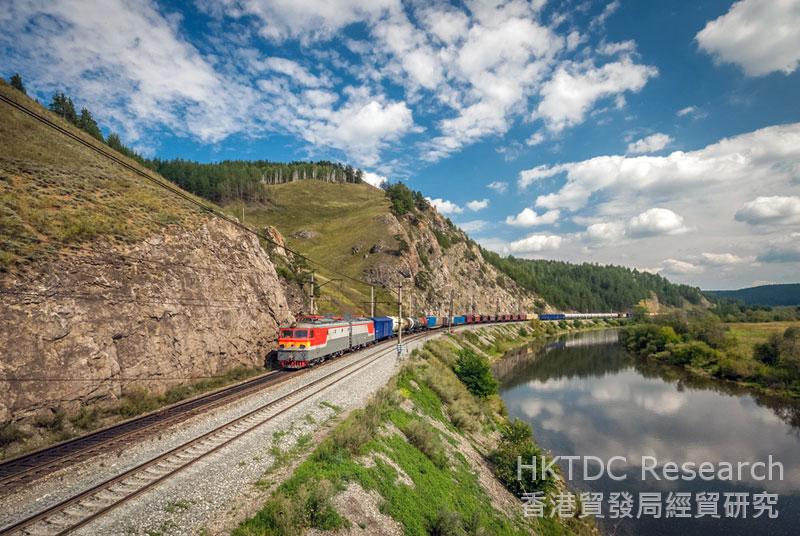
China is actively promoting economic and trade co-operation with countries and regions along the Belt and Road routes. This includes expansion of the China-Europe Railway Express (CR Express) network running between the Chinese mainland and Europe, providing express rail freight as an alternative to sea and air transport.
Since the 2011 launch of the CR Express service from Chongqing in western China to Duisburg in Germany, freight volume has risen considerably. Not only are western region Chinese manufacturers making greater use of CR Express trains to replace Europe-bound sea freight, coastal cities in the eastern region are also launching railway services, one after another.
Against this backdrop, logistics companies have begun to integrate rail freight services with sea and air networks in order to provide a more comprehensive international logistics service to clients. For example, Nippon Express (Shanghai) Co Ltd[1], a Japanese-funded company located in the Waigaoqiao Free Trade Zone, plans to provide rail freight services to Europe through the CR Express lines running from China’s coastal and inland cities. This is intended to support Nippon Express clients in capturing trade development opportunities between China and Europe, as well as the BRI. (For further details, see Leveraging CR Express to Tap “Belt and Road” Markets.)

Nippon Express (Shanghai)’s parent company is Nippon Express Group (NE Group), a global logistics company, providing comprehensive logistics and supply chain management and related services. It serves the Chinese market through international transport networks in the Yangtze River Delta (YRD) and Hong Kong.
According to the NE Group, it is necessary to keep up to date with mainland economic development and trade policies. It has, therefore, actively set up logistics operating points in various bonded areas and pilot free trade zones to provide clients with faster and more convenient services through customs facilitation. The group also uses Hong Kong facilities to support the mainland network to optimise logistics. It relies on Hong Kong to handle financial dealings and investment, as well as manage its information technology for the East Asia region.
Seizing opportunities presented by the rapid development of rail freight through the CR Express network in recent years, NE Group is targeting higher-value goods from the coastal and western regions of China to Europe. As freight trains between the mainland and Asia as well as Europe are on the increase, the group plans to launch a rail freight service between Japan and Europe via the mainland in 2018, providing Japanese clients with an alternative to sea and air.
Under the current trend of industrial transformation and upgrade on the mainland, many high-tech or high-value-added enterprises have become more demanding of logistics services. For example, most electronics manufacturers require logistics providers to have specialised logistics facilities and valuables storage systems for handling higher-value goods, enabling reduced shipping time. In view of this, some logistics service providers, such as NE Group, have not only upgraded logistics facilities to meet client requirements, but have also integrated sea and air freight with the CR Express network. This takes advantage of the relatively fast service and convenient customs clearance offered by the CR Express.
At present, areas served by the CR Express network have already been expanded from the mainland’s western region to the YRD and other coastal cities. CR Express is less costly than airfreight. While not as cheap as sea transport to Europe, it is faster and therefore suitable for higher added-value and shorter life span goods. Suitable items include machinery, high-value electronics, and fast-moving consumer goods where a short delivery lead time is more important than transport costs. Undoubtedly, the CR Express would provide an additional cost-effective option to enterprises with time sensitive shipping needs.
Capitalising on China’s promotion of Belt and Road development, the NE Group has taken the lead among Japanese freight agencies, providing logistics solutions to Europe through the CR Express network since 2016. Its service area has already expanded to cover 14 mainland cities and six European cities. With an intermodal rail freight service from Shanghai or Shenzhen to Europe, it has also integrated with European transport networks to expand coverage.
NE Group has recently launched sea-rail and air-rail multi-modal freight services in Japan, Taiwan and Korea, with the CR Express network at the core. A brand-new logistics service has also been introduced, where the fastest freight transport from Japan to Germany could be completed in 23 days.
Note: For details of the company interviews conducted jointly by HKTDC Research and the Shanghai Municipal Commission of Commerce, please refer to other articles in the research series on Shanghai-Hong Kong Co-operation in Capturing Belt and Road Opportunities.
[1] Nippon Express Shanghai was interviewed jointly by HKTDC Research and the Shanghai Municipal Commission of Commerce in Q1 2018.
Editor's picks
Trending articles
By Asian Development Bank
Highlights
- Developing Asia will need to invest $26 trillion from 2016 to 2030, or $1.7 trillion per year, if the region is to maintain its growth momentum, eradicate poverty, and respond to climate change (climate-adjusted estimate). Without climate change mitigation and adaptation costs, $22.6 trillion will be needed, or $1.5 trillion per year (baseline estimate).
- Of the total climate-adjusted investment needs over 2016–2030, $14.7 trillion will be for power and $8.4 trillion for transport. Investments in telecommunications will reach $2.3 trillion, with water and sanitation costs at $800 billion over the period.
- East Asia will account for 61% of climate-adjusted investment needs through 2030. As a percentage of gross domestic product (GDP), however, the Pacific leads all other subregions, requiring investments valued at 9.1% of GDP. This is followed by South Asia at 8.8%, Central Asia at 7.8%, Southeast Asia at 5.7%, and East Asia at 5.2% of GDP.
- The $1.7 trillion annual estimate is more than double the $750 billion Asian Development Bank (ADB) estimated in 2009. The inclusion of climate-related investments is a major contributing factor. A more important factor is the continued rapid growth forecasted for the region, which generates new infrastructure demand. The inclusion of all 45 ADB member countries in developing Asia, compared to 32 in the 2009 report, and the use of 2015 prices versus 2008 prices also explain the increase.
- Currently, the region annually invests an estimated $881 billion in infrastructure (for 25 economies with adequate data, comprising 96% of the region’s population). The infrastructure investment gap—the difference between investment needs and current investment levels—equals 2.4% of projected GDP for the 5-year period from 2016 to 2020 when incorporating climate mitigation and adaptation costs.
- Without the People’s Republic of China (PRC), the gap for the remaining economies rises to a much higher 5% of their projected GDP. Fiscal reforms could generate additional revenues equivalent to 2% of GDP to bridge around 40% of the gap for these economies. For the private sector to fill the remaining 60% of the gap, or 3% of GDP, it would have to increase investments from about $63 billion today to as high as $250 billion a year over 2016–2020.
- Regulatory and institutional reforms are needed to make infrastructure more attractive to private investors and generate a pipeline of bankable projects for public–private partnerships (PPPs). Countries should implement PPP-related reforms such as enacting PPP laws, streamlining PPP procurement and bidding processes, introducing dispute resolution mechanisms, and establishing independent PPP government units. Deepening of capital markets is also needed to help channel the region’s substantial savings into productive infrastructure investment.
- Multilateral development banks (MDB) have financed an estimated 2.5% of infrastructure investments in developing Asia. Excluding the PRC and India, MDB contributions rise above 10%. A growing proportion of ADB finance is now going to private sector infrastructure projects. Beyond finance, ADB is playing an important role in Asia by sharing expertise and knowledge to identify, design, and implement good projects. ADB is scaling up operations, integrating more advanced and cleaner technology into projects, and streamlining procedures. ADB will also promote investment friendly policies and regulatory and institutional reforms.
This article was first published by the Asian Development Bank. Please click to read the full report.
Editor's picks
Trending articles
738 Views
Tax incentives and financing expertise for Belt and Road Initiative projects offer huge opportunities for Hong Kong as a treasury centre, says Paul She of global accounting and consultancy firm, Mazars. The firm is focusing on technology clients related to the Belt and Road – some for IPO launch on the Hong Kong Stock Exchange – companies “often missed by the market”.
Speaker:
Paul She, Practising Director, Mazars CPA Limited
Related Links:
Hong Kong Trade Development Council
http://www.hktdc.com
HKTDC Belt and Road Portal
http://beltandroad.hktdc.com/en/
651 Views
Hong Kong’s success as an art hub for the Belt and Road includes “perfect” logistics, a proliferation of arts venues and international trade connections, says Kevin Ching of top auction house, Sotheby’s. With Hong Kong being Sotheby’s headquarters for Asia, he says the emergence of Chinese and Southeast Asian art in global markets are joined by work by other talented artists from Belt and Road areas that include the Caucuses and Central Asia.
Speaker:
Kevin Ching, CEO Asia, Sotheby’s
Related Links:
Hong Kong Trade Development Council
http://www.hktdc.com
HKTDC Belt and Road Portal
http://beltandroad.hktdc.com/en/
912 Views
“Distributed power” is a flexible and cost-effective means of energising both developing and developed markets within the Belt and Road Initiative, says Rorce Au Yeung of Hong Kong’s VPower Group. Using toy Lego building blocks as a metaphor, VPower stations can be extended or re-deployed according to a market’s requirements. Mr Au Yeung says Hong Kong is pivotal for finance, investment and project control.
Speaker:
Rorce Au Yeung, Co-Chief Executive, VPower Group
Related Links:
Hong Kong Trade Development Council
http://www.hktdc.com
HKTDC Belt and Road Portal
http://beltandroad.hktdc.com/en/
2410 Views
Based in Hong Kong with a history spanning more than a century, China Construction Bank (Asia) Corporation Ltd (“China Construction Bank (Asia)” or “CCB (Asia)”) is the flagship subsidiary of China Construction Bank Corporation (“CCB”) with the largest and most comprehensive operation, the most diverse range of products, and a pool of exceptional talents for CCB’s overseas business. With the establishment of its Credit Approval Centre Asia-Pacific in Hong Kong, CCB (Asia) will continue to play a pivotal role working in partnership with other CCB affiliates in Hong Kong in supporting Chinese mainland enterprises’ “going global” as well as participation in the Belt and Road Initiative.
As an international financial hub, Hong Kong is a key strategic link within the Belt and Road Initiative. As most mainland enterprises have chosen to set up their offshore headquarters or fund management platforms in Hong Kong, the Special Administrative Region has become the “going global” bridgehead for mainland enterprises, presenting CCB (Asia) with tremendous opportunities. Hong Kong is one of Asia’s most dynamic markets in syndicated loans, bonds, IPOs, asset management and corporate treasury management. It is also the world’s leading offshore renminbi market with a high degree of connectivity to global markets. To mainland enterprises, Hong Kong possesses a distinctive talent edge by virtue of its biliterate and trilingual financial talent pool armed with global insight and vision, its wealth of professionals in accounting, law and tax, as well as its high level of marketisation in human resources and flexible employment mechanism.
CCB (Asia) has in recent years assembled and cultivated a pool of specialists who, by playing key roles in major overseas financing projects in the past, have been instrumental in driving the development of CCB’s overseas financing business. As CCB’s largest comprehensive banking platform outside of the mainland, CCB (Asia) is a key financing centre for major overseas projects involving mainland enterprises. Its independent Structured Finance Team and Syndication Team are in a position to offer companies a suite of financial services products ranging from international syndication and M&A loans to project financing and asset financing. Its services include deal structuring, project evaluation and advisory services, financial modelling, syndicated loan distribution, loan documentation negotiation, arrangement for signing of legal documents and loan drawdown.
The establishment of the Credit Approval Centre Asia-Pacific in Hong Kong signifies an important milestone in CCB’s internationalisation and will help to elevate the quality and efficiency of the loan approval process. It also underscores Hong Kong’s status as a “super-connector” between the mainland and international practices and standards. With the accumulation of valuable experience through execution of live deals, CCB's Hong Kong Training Centre leverages Hong Kong’s advantage in having a concentration of resources, information and talents to provide CCB staff with the mentorship of experienced professionals and the kind of international exposure vital to understanding offshore business. Furthermore, they will benefit from the synergies between enterprises and the financial services community. These advantages make Hong Kong the ideal location for CCB to provide superior support for Chinese enterprises’ “going global”.